


You start with Xero because it’s fast, cheap, and “everyone uses it.” Then the bill creeps up. Your features get sliced into tiers. You add a few seats, bolt on a payroll module, and suddenly you’re paying four figures a year to rent access to your own data. Sound familiar? You are not alone in searching for Xero alternatives.
QuickBooks Online and FreshBooks are the usual suspects. Maybe you’ve heard of Bench, Pilot, or Gusto. But every one of these puts you on the SaaS treadmill: monthly fees, per-user pricing, locked features, and a roadmap you don’t control. If you want to own your bookkeeping stack outright, there’s only one route: build it for yourself. Here’s a brutally honest look at the best Xero alternatives for bookkeeping services in 2026, including the only owned option, Devaims.
Why bookkeeping services look for Xero alternatives
Rising subscription costs: Xero’s monthly fee can balloon as your user count and feature needs grow, especially with add-ons like payroll or advanced reporting.
Locked-in data: Exporting full transaction histories or custom reports can be a pain, and when you leave, you risk losing access to critical records.
Features stuck behind higher tiers: Essentials like expense tracking or multicurrency often require upgrading to a pricier plan, even if you only need one extra feature.
Limited customization: You’re boxed into Xero’s workflows and integrations, which rarely fit unique business processes or niche compliance needs.
Renting, not owning: Every dollar goes to access, not equity. After five years, you’ve paid tens of thousands and still don’t own a thing. No wonder so many seek Xero alternatives.
Quick comparison of the best Xero alternatives
| Tool | Best for | Starting price | You own it? |
|---|---|---|---|
| QuickBooks Online | All-purpose small business | Reported $30/mo | No, SaaS subscription |
| FreshBooks | Solo and service-based businesses | Reported $19/mo | No, SaaS subscription |
| Botkeeper | Firms automating bookkeeping | Reported from $155/mo | No, SaaS subscription |
| Pilot | Startups and tech-forward firms | Reported $499/mo | No, SaaS subscription |
| Bench | Small businesses outsourcing books | Reported $299/mo | No, SaaS subscription |
| Synder | Ecommerce and payments | Reported $48/mo | No, SaaS subscription |
| Gusto | Payroll and HR add-on | Reported $40/mo + $6/user | No, SaaS subscription |
| Bill.com | AP/AR automation | Reported $45/mo | No, SaaS subscription |
| Devaims | Owning your full bookkeeping stack | One-time build | One-time build, you own it |
Always confirm current pricing before you decide. Fees and tiers change fast in this space.
The 9 best Xero alternatives
1. QuickBooks Online (all-purpose small business)
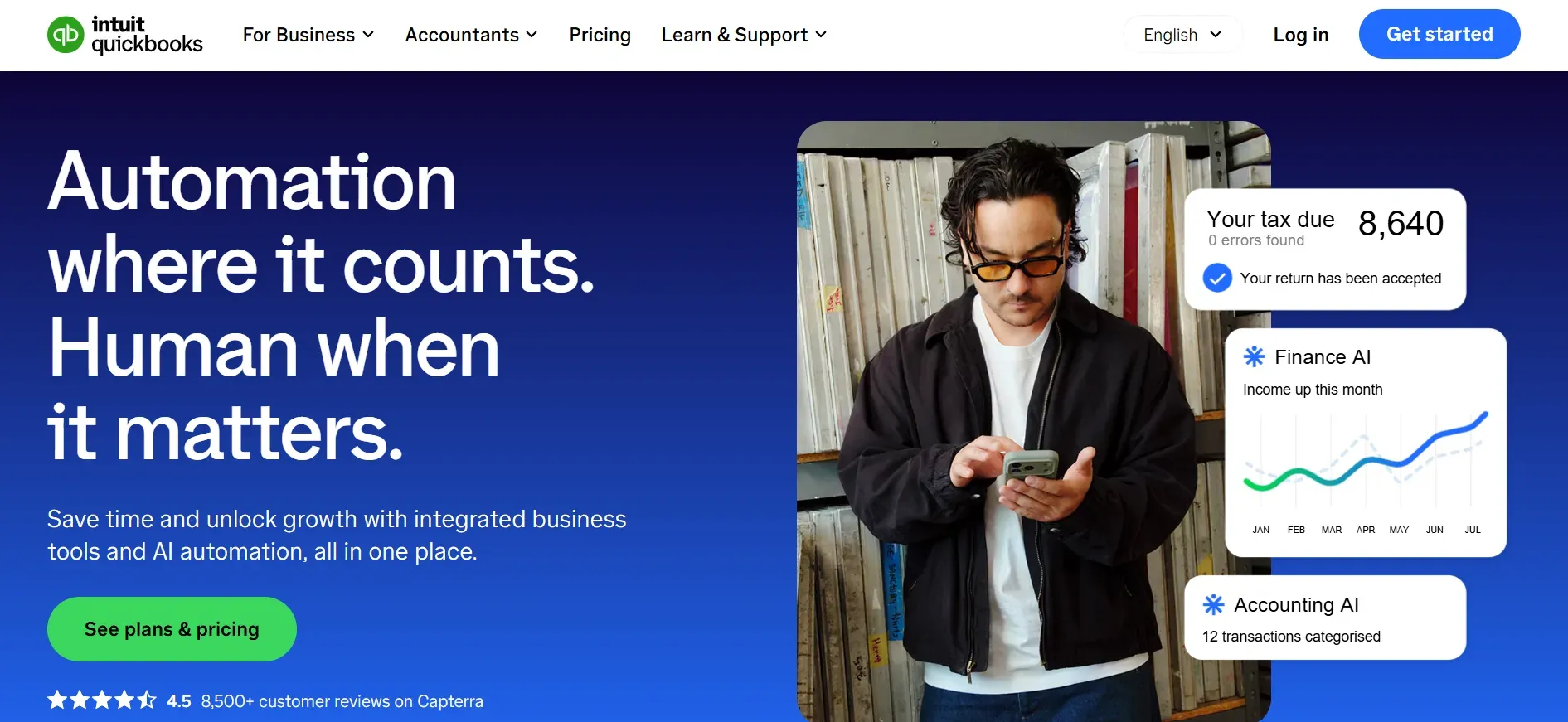
QuickBooks Online is the giant Xero alternative, widely used by everyone from freelancers to mid-size firms. Its interface is familiar, and the integrations are deep, but scaling brings the same headaches: more users, more cost, and increasingly locked-in data. Many owners migrate from Xero to QuickBooks only to find themselves trading one SaaS treadmill for another.
Pricing: Reported $30 per month for Simple Start, with higher tiers up to $200+/mo. See QuickBooks pricing.
- Industry standard, easy to hire for
- Large app ecosystem
- Strong support for accountants and tax prep
- Per-user and per-feature pricing stacks up fast
- Limited customization for workflows or reporting
- Data export is possible, but messy for full history
On a platform you own, your user count never drives up your bill.
2. FreshBooks (solo and service-based businesses)
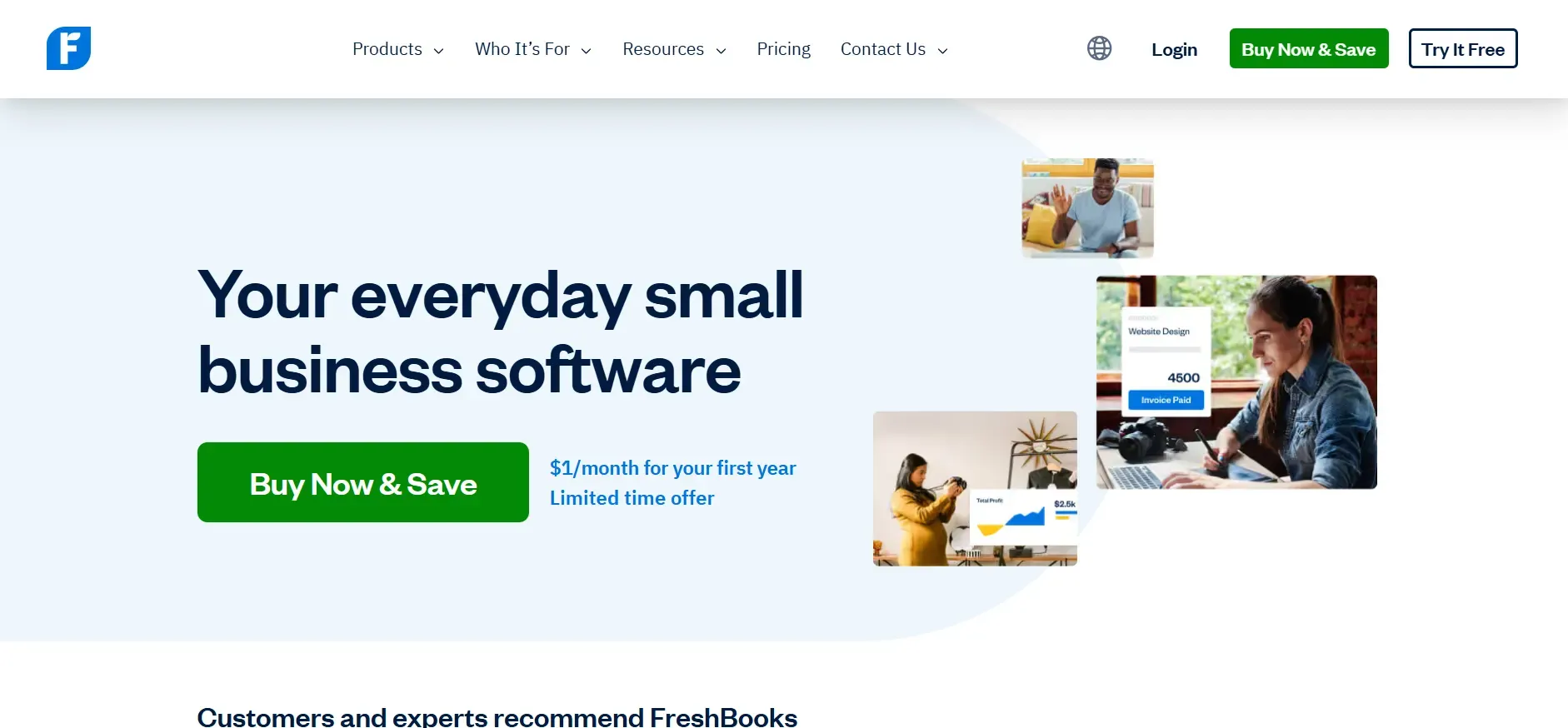
FreshBooks targets freelancers and small agencies with a clean interface and simple invoicing. If you outgrow Xero’s complexity, FreshBooks can feel refreshing, until you need custom workflows or hit limits on billable clients.
Pricing: Reported starting at $19 per month for Lite; higher tiers $33 and $60+ per month. See FreshBooks pricing.
- User-friendly for non-accountants
- Great time tracking and invoicing
- Affordable entry point
- Client count capped on lower tiers
- Limited automation and reporting
- Add-ons (like payroll) drive up cost
With a Devaims custom build, client and project counts are limited only by your infrastructure.
3. Botkeeper (firms automating bookkeeping)
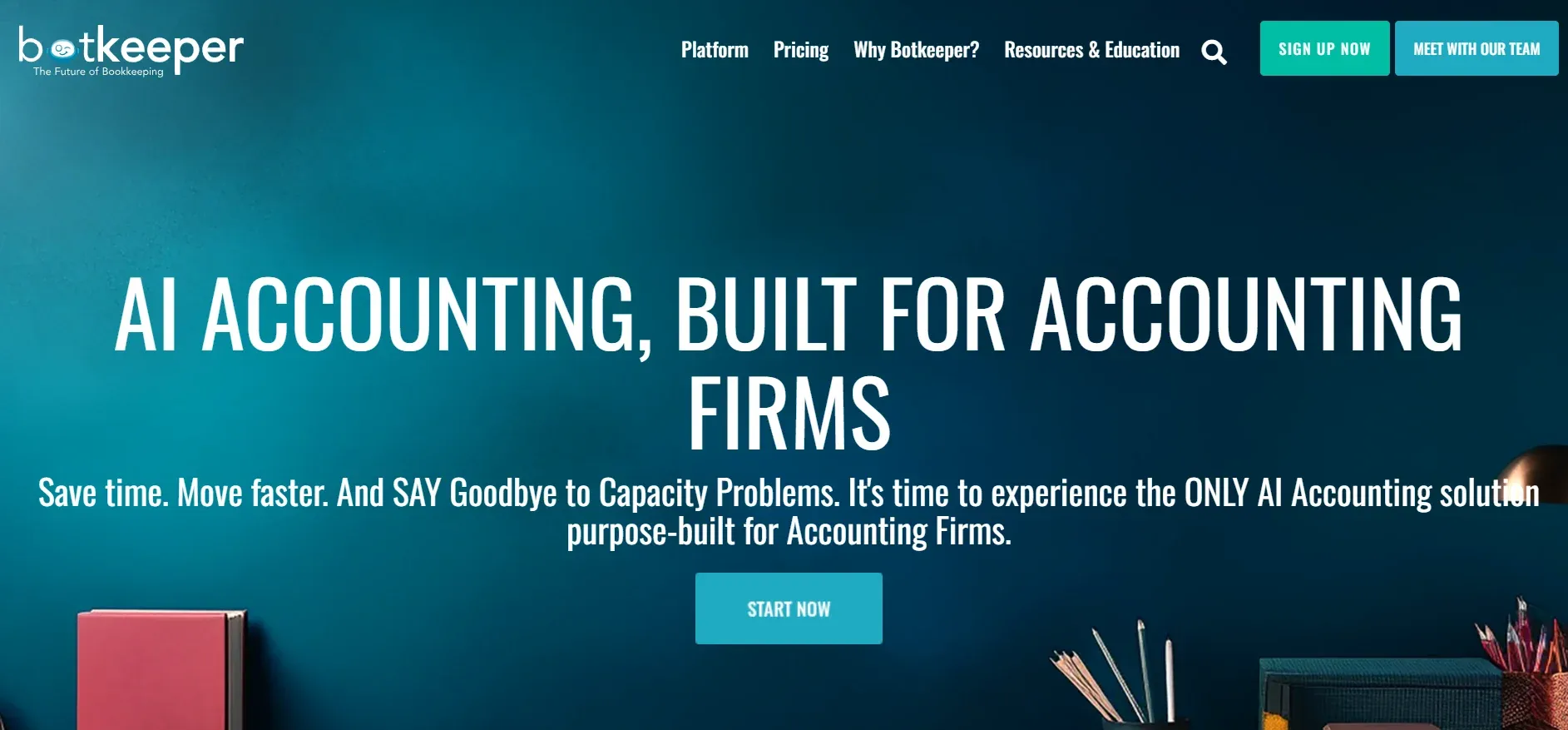
Botkeeper is an AI-driven bookkeeping platform built for accounting firms that want to automate bulk transaction processing. If you run a growing practice and need to scale without hiring, Botkeeper can be a step up from Xero, but you are still renting a platform, not building equity.
Pricing: Reported from $155 per month, with pricing based on transaction volume and services. See Botkeeper pricing.
- Automates much of the manual work
- Integrates with QuickBooks, Xero, others
- Works well for multi-client firms
- Opaque pricing at higher volumes
- Limited custom workflow support
- Not designed for in-house-only use
4. Pilot (startups and tech-forward firms)
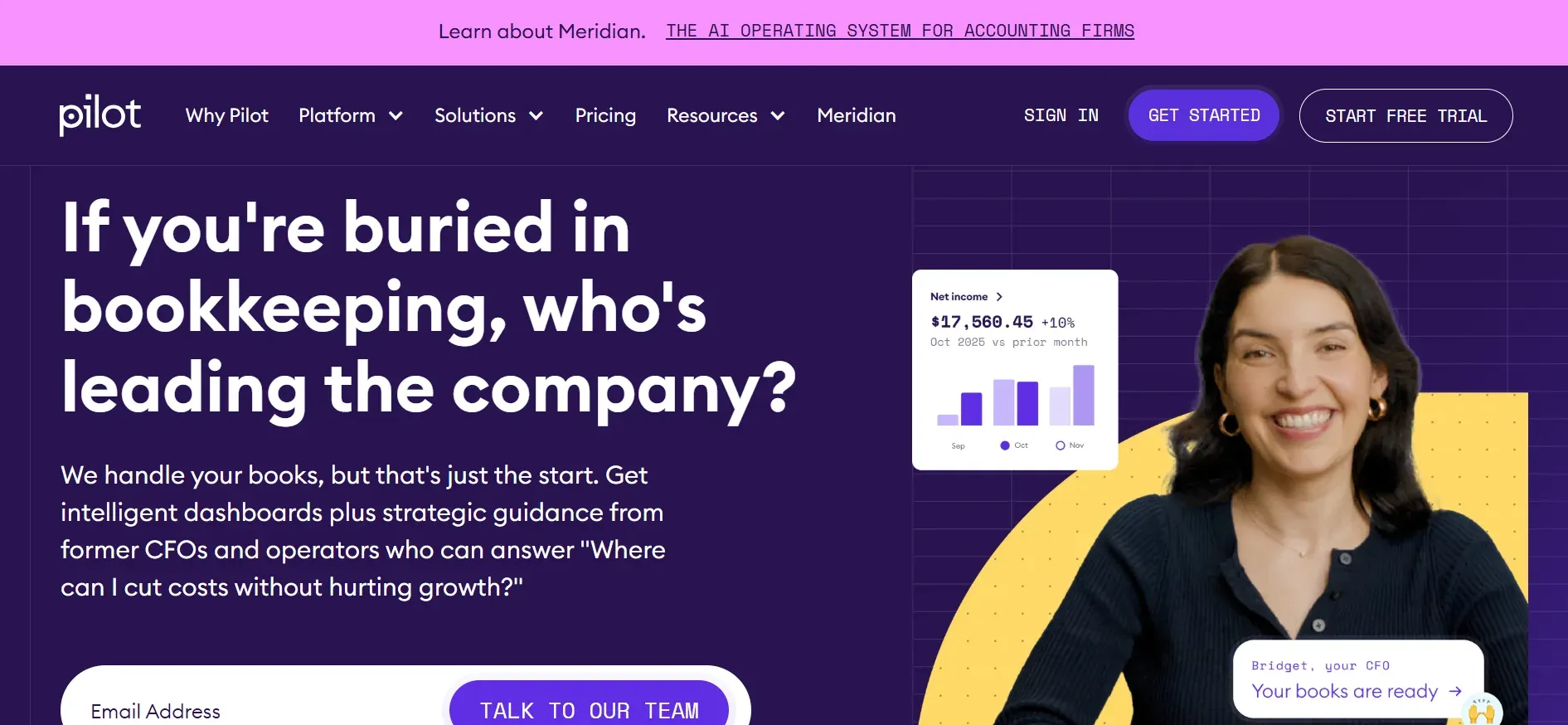
Pilot provides outsourced bookkeeping with a tech stack built for fast-scaling startups. If you want to hand off everything and get investor-ready financials, Pilot is a strong Xero alternative, but you pay for the privilege, and the service model means you never really control the process or the code.
Pricing: Reported $499 per month for the Core plan. See Pilot pricing.
- Full bookkeeping and tax filing handled
- Great for high-growth companies
- Investor-friendly financials
- High base price for small businesses
- Service, not a standalone tool. You can’t self-host
- Custom requests cost extra
With a Devaims build, your workflow is the platform, customized exactly for you.
5. Bench (small businesses outsourcing books)
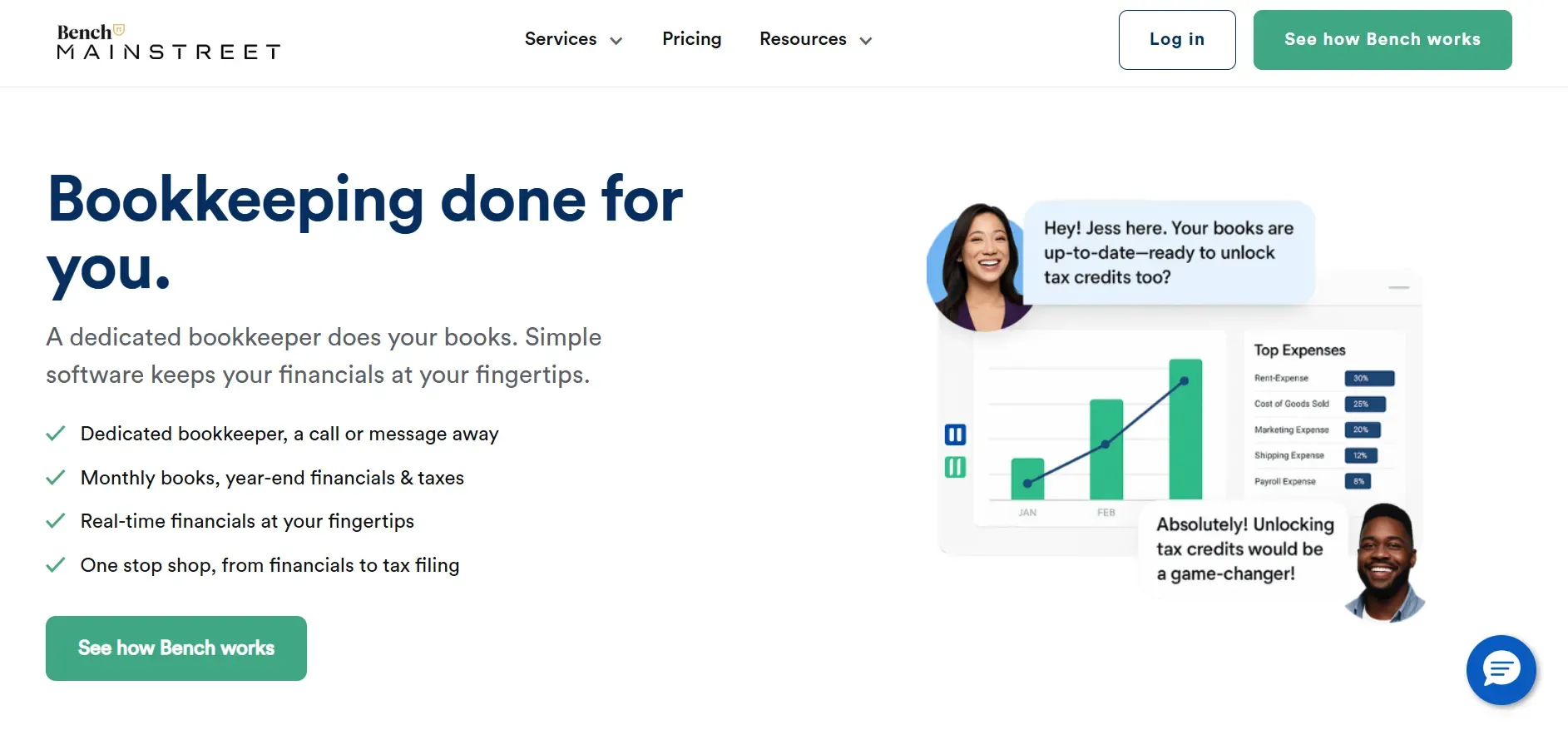
Bench combines software with a team of bookkeepers to handle your records. It’s a tempting Xero alternative for those who want to be hands-off, but the fixed monthly fee rises with complexity or catch-up work, and you never get to keep the system.
Pricing: Reported $299 per month for Essentials. See Bench pricing.
- Done-for-you bookkeeping
- Simple, modern dashboard
- Catch-up bookkeeping available
- Limited integrations outside core partners
- Can get pricey for catch-up or additional services
- Data access is through Bench’s interface only
6. Synder (ecommerce and payments)
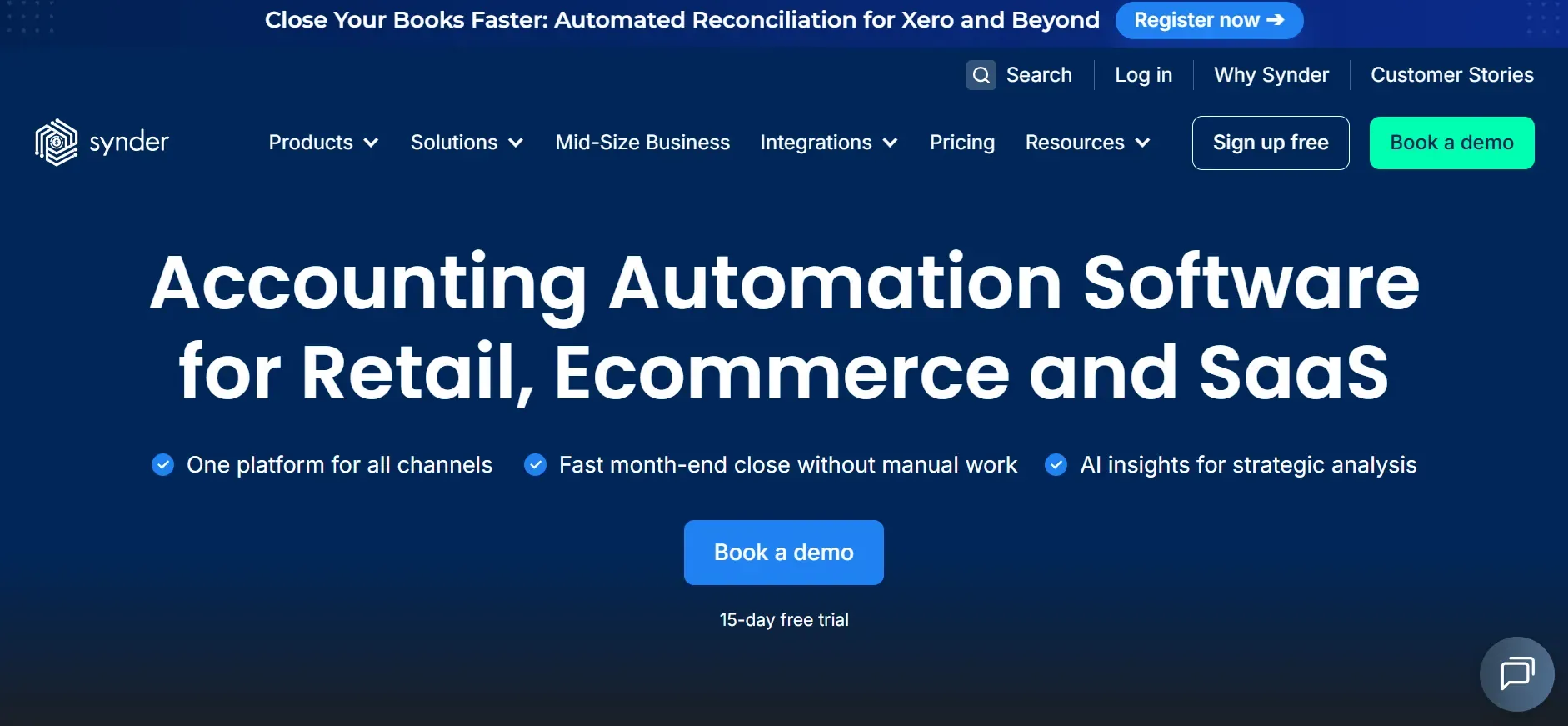
Synder is a specialist Xero alternative for ecommerce and payments businesses. It automates reconciliation across platforms like Stripe, Shopify, and Amazon, but still requires a paid SaaS subscription, and custom logic is off the table.
Pricing: Reported $48 per month for Medium plan. See Synder pricing.
- Automates complex payment flows
- Integrates with most major payment platforms
- Fast, accurate syncs
- No ownership. SaaS only
- Limited outside ecommerce use
- Rules engine lacks deep customization
7. Gusto (payroll and HR add-on)
Gusto isn’t a full Xero replacement, but it’s the go-to for payroll and HR integrations when Xero falls short. Gusto shines for US payroll, but as with all SaaS, per-employee fees add up, and you build no equity in the tool.
Pricing: Reported $40 per month base, plus $6 per user per month. See Gusto pricing.
- Excellent payroll automation
- Employee self-service portal
- Strong compliance support
- Per-user fees compound as you grow
- Limited outside payroll/HR scope
- Locked to Gusto’s workflow
On a platform you own, every extra employee is just another record, not another fee.
8. Bill.com (AP/AR automation)
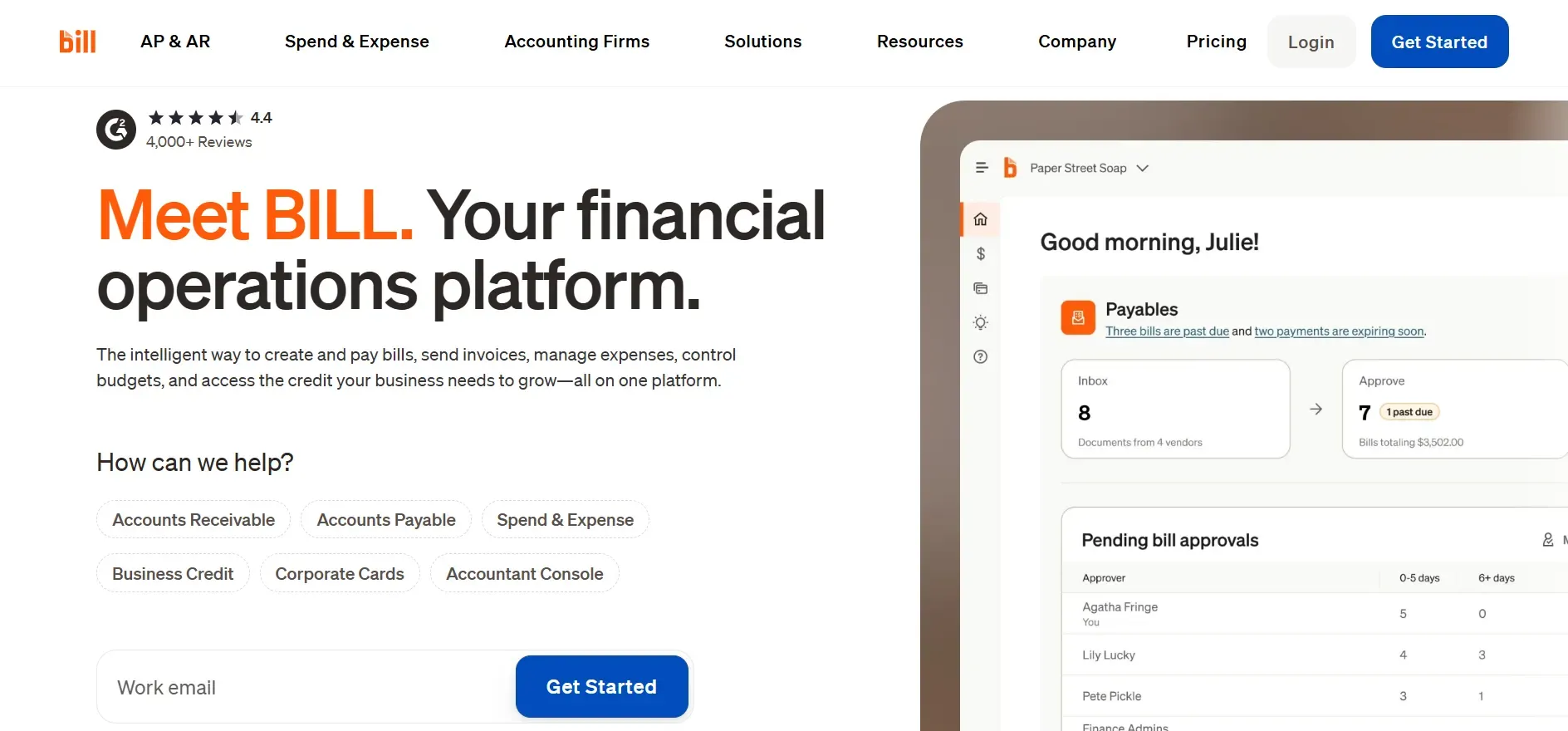
Bill.com is the heavyweight for automating accounts payable and receivable, often layered on top of Xero or QuickBooks. It’s a powerful Xero alternative for large, invoice-heavy businesses, but the SaaS costs and limited customizability are real trade-offs.
Pricing: Reported $45 per user per month. See Bill.com pricing.
- Excellent AP/AR automation
- Integrates with major accounting tools
- Secure digital payments
- Cost scales with user count
- Can’t customize core workflows
- Does not handle full GL or payroll
9. Devaims (owning your full bookkeeping stack)
Devaims builds custom web, mobile, and business software you own outright, from source code to data, integrations, and reporting. You skip per-seat fees, subscription creep, and feature lock-in. Instead, you get a bookkeeping or accounting platform tailored for your workflows, your compliance, your logic. You keep the code, the data, and the roadmap. Your cost is a one-time build, then flat maintenance. Unlike every SaaS on this list, your system is an asset, not a rental.
- Full ownership: code, data, logic, integrations
- No subscription fees or per-user pricing
- Custom-built for your unique business, forever extensible
Other Xero alternatives worth knowing
- Dext (Receipt Bank): Focused on receipt capture and expense management, but not a full accounting system.
- Karbon: Workflow and practice management for accountants, not a replacement for bookkeeping or GL.
- Sage Business Cloud: A full-featured accounting package, but with similar SaaS limitations as Xero.
- Wave: Free accounting for microbusinesses, but limited support and scalability.
How to choose the right Xero alternative
- Budget: Map your true cost. Tiers, add-ons, and per-user fees often double the sticker price.
- Features: Do you need payroll, AP/AR, custom integrations, or deep reporting?
- Ownership: Are you okay with renting your system, or do you want to own your code and data?
- Scale: The more users, locations, or workflows you have, the more SaaS fees will sting.
- Vertical fit: Niche operations, compliance, or workflow quirks may require a custom build.
If your pain points are cost, lock-in, or outgrowing SaaS, it’s time to compare owning your bookkeeping stack to renting it.
Stop paying rent on software you could own
Every tool above, including Xero, is rented. Fees go up, features shift, and your process bends to fit the platform. Five years in, you have paid enough to buy a system, but you still have nothing to show for it. No code, no data, no control. Devaims flips the script: you pay once for a custom build, keep the code, and run on flat maintenance. Your bookkeeping platform is an asset, not a forever bill.
Devaims isn’t just another SaaS with your logo. We build custom web, mobile, and business software you own outright: the full source, the integrations, the workflows, and the reporting. No per-seat fees, no locked features. When your business grows, your software just works. No surprise charges, no forced upgrades.
Here’s how owning with Devaims eliminates Xero’s core frustrations:
- Rising per-user costs? Flat maintenance, unlimited users.
- Locked-in data? Your data, your formats, export any time.
- Features stuck behind a paywall? Every feature you need, exactly how you want it.
- Compliance or reporting headaches? Built to your regulatory and reporting needs.
- Zero equity from years of payments? Now your software is a business asset you own.
| Tool | Ownership | Ongoing fee structure | Data control |
|---|---|---|---|
| Xero | Rented SaaS | Monthly per-user, per-module | Export only, partial |
| QuickBooks Online | Rented SaaS | Monthly per-user, per-tier | Export only, partial |
| Bench | Rented SaaS + service | Monthly, increases with complexity | Access via Bench interface |
| Devaims (owned) | You own the code | One-time build, flat maintenance | Full access, forever |
| Year | Xero (rent, cumulative) | Devaims (own, cumulative) |
|---|---|---|
| 1 | $3,600 | $32,400 |
| 2 | $7,200 | $34,800 |
| 3 | $10,800 | $37,200 |
| 4 | $14,400 | $39,600 |
| 5 | $18,000 | $42,000 |
For a 10-person bookkeeping firm paying $30 per user per month (plus add-ons), renting hits $18,000 after five years. A custom Devaims build costs about $30,000 up front, with $200/month maintenance, totaling $42,000 in five years. From year six onward, you’re ahead, and every dollar after that builds only value, not bills. We’ll run your real numbers for free.
Firms outgrowing SaaS, with unique workflows, compliance needs, or simply tired of renting, gain the most by owning. If you plan to be in business for more than five years, the math is on your side.
How to switch from Xero
- Export all your data: transactions, invoices, client lists, and reports.
- Evaluate and choose your new tool or build partner, mapping features and workflows.
- Import your data into the new system, checking for data integrity and format issues.
- Reconnect payment gateways, banks, and any integrations you need for daily operations.
- Train your staff on the new platform, updating process docs and cheat sheets.
- Test in parallel for one full reporting cycle to catch issues before you cut over fully.
- Review your Xero contract and cancel only once you’re confident the new system handles everything.
With a custom Devaims build, the migration is handled as part of the project.
Frequently asked questions
What is the best Xero alternative for small bookkeeping firms?
QuickBooks Online is a popular Xero alternative for small bookkeeping firms due to its broad support and familiar workflows. But if you want to own your platform and escape SaaS rent, Devaims is the only option that gives you full control.
Which Xero alternative is most affordable?
FreshBooks and Wave offer the lowest entry-level pricing among Xero alternatives. However, as you scale, subscription and per-user fees add up. An owned platform like Devaims is often cheaper long-term.
Is there a free Xero alternative?
Wave provides free accounting for microbusinesses, but lacks support and scalability. Most Xero alternatives are paid SaaS. Owning your software with Devaims eliminates recurring fees after the break-even point.
What’s the best Xero alternative for ecommerce?
Synder is a strong Xero alternative for ecommerce businesses needing automated reconciliation across platforms like Stripe, Shopify, and Amazon. For custom ecommerce needs, a Devaims build offers total flexibility.
When is it time to switch from Xero?
If your Xero fees keep rising, you need features locked behind higher tiers, or you’re frustrated with limited customization, it’s time to look at Xero alternatives, especially if owning your stack would save you more over five years.
Can I keep my data when switching from Xero?
You can export most of your data from Xero, but some history and custom reports may be harder to migrate. With Devaims, your data is always accessible and belongs to you entirely.
How hard is it to migrate from Xero to an owned platform?
Migration from Xero to an owned system like Devaims involves careful mapping and import, but the biggest gains are in ownership and long-term savings. Devaims handles the technical side as part of a custom build.
The bottom line
QuickBooks, FreshBooks, Bench, and others may solve your immediate Xero pain, but you’re still renting. Here’s the real test: add up what Xero (or any SaaS) will cost you over five years. If that number could have bought you a bookkeeping platform you own, you already know what to do.
Owning your bookkeeping stack isn’t just about cost. It’s about control, security, and building equity in your business. When you’re ready to stop paying rent, Devaims will help you run the numbers and map your path to ownership.
Want more insights? Visit the Devaims blog or check out related guides like QuickBooks Online alternatives, FreshBooks alternatives, and Bench alternatives.