


The moment you realize your monthly bookkeeping bill is higher than your phone plan, you know it’s time to look at Bench alternatives. Maybe it’s the per-entity fees, the extra cost for basic reports, or that subtle pressure to “upgrade” every time your business grows or your needs evolve. You’re not alone, owners across industries hit the same wall with Bench once their books get even slightly complex or their business outpaces the assumptions built into Bench’s service model.
QuickBooks Online, Xero, and FreshBooks always come up as the go-to alternatives. But every SaaS in this space is rented, not owned. For business owners who want to control their costs and keep their data, a custom Devaims build is the only way off the treadmill. Let’s walk through the best Bench alternatives for bookkeeping services in 2026, and why owning might finally make more sense than renting, especially as your company matures, diversifies, or seeks to streamline operations for the long haul.
Why bookkeeping services look for Bench alternatives
Bench is a trusted entry point for outsourced bookkeeping, but it’s not uncommon to outgrow it. Here’s why many businesses start searching for a replacement:
- Monthly subscription creep: Bench’s base price rarely covers everything you need. Add more accounts, entities, or users, and your bill climbs quickly, sometimes unpredictably, as you discover additional needs or as your transaction volume grows.
- Locked features behind higher tiers: If you need custom reporting, multi-currency support, advanced analytics, or deeper integrations, those are usually upsells, often with long-term contracts that are tough to exit. This can stifle agility, especially for businesses adapting to new markets or regulations.
- Limited automation and integrations: Bench covers the basics, but if you want to automate complex workflows, trigger custom alerts, or integrate with less-common tools (like niche CRMs or inventory software), you’ll often have to resort to manual workarounds or pay for third-party connectors.
- Data export headaches: Extracting your full financial history out of Bench can be slow and incomplete, with reports and attachments sometimes requiring support tickets or special requests. You never truly own the software or the process, and this can complicate audits, mergers, or software migrations.
- Long-term cost: Over five years, renting can cost far more than building your own system, especially as your business scales. Extra add-ons, per-entity pricing, and surprise price hikes can turn what seemed like a manageable expense into a major overhead. That’s why so many search for Bench alternatives.
Quick comparison of the best Bench alternatives
| Tool | Best for | Starting price | You own it? |
|---|---|---|---|
| QuickBooks Online | DIY and most small businesses | around $30/mo | No, always a subscription |
| Xero | Global businesses | around $15/mo | No, always a subscription |
| FreshBooks | Service providers and freelancers | around $19/mo | No, always a subscription |
| Botkeeper | Automated bookkeeping | reported $155/mo | No, always a subscription |
| Pilot | Startups and funded companies | reported $499/mo | No, always a subscription |
| Synder | E-commerce integrations | around $48/mo | No, always a subscription |
| Gusto | Payroll and HR add-on | starts $40/mo + $6/user | No, always a subscription |
| Dext | Receipt capture and expense management | around $22/mo | No, always a subscription |
| Devaims | Custom, owned bookkeeping | One-time build, you own it | YES |
Always confirm current pricing before you decide. Rates and tiers can change with little notice. Consider total cost of ownership, not just the sticker price.
The 9 best Bench alternatives
1. QuickBooks Online (Best for DIY and most small businesses)
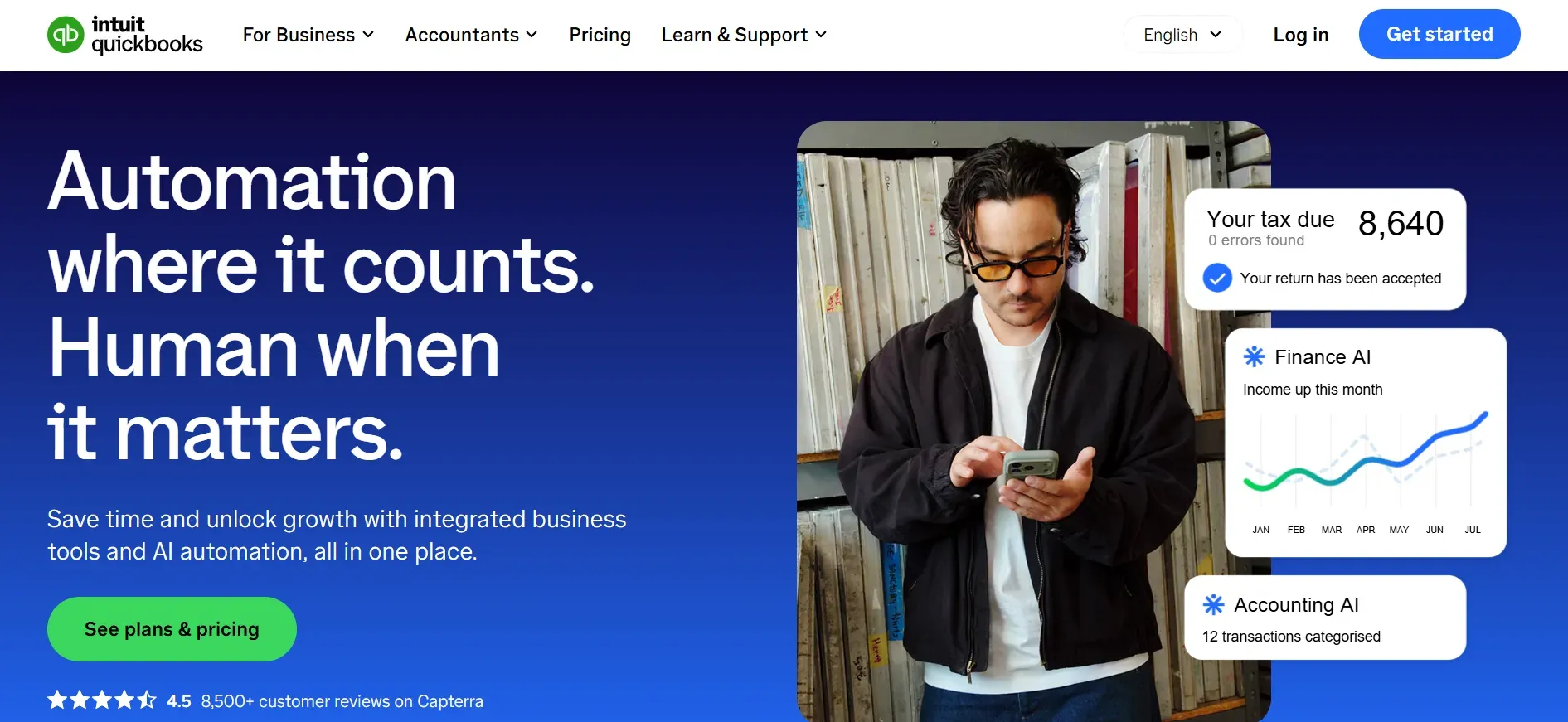
QuickBooks Online is the default for many business owners leaving Bench. It offers a robust general ledger, strong invoicing, payroll add-ons, and a vast ecosystem of accountants and bookkeepers familiar with the platform. Its reporting suite is flexible, and the audit trail features are reliable for compliance. QuickBooks Online integrates with hundreds of third-party apps, covering payroll, time tracking, inventory, and more.
Pricing: Starts around $30/month, with additional fees for payroll, advanced reporting, and extra users.
- Widely supported by accountants
- Flexible reporting and integrations
- Scales with business growth
- Costs add up with users and add-ons
- Advanced features require higher tiers
- No true ownership, access lost if you stop paying
If you want to automate recurring tasks or need integrations outside Intuit’s ecosystem, a custom build from Devaims could save you time and headaches, especially for unique workflows or proprietary business processes.
2. Xero (Best for global businesses)
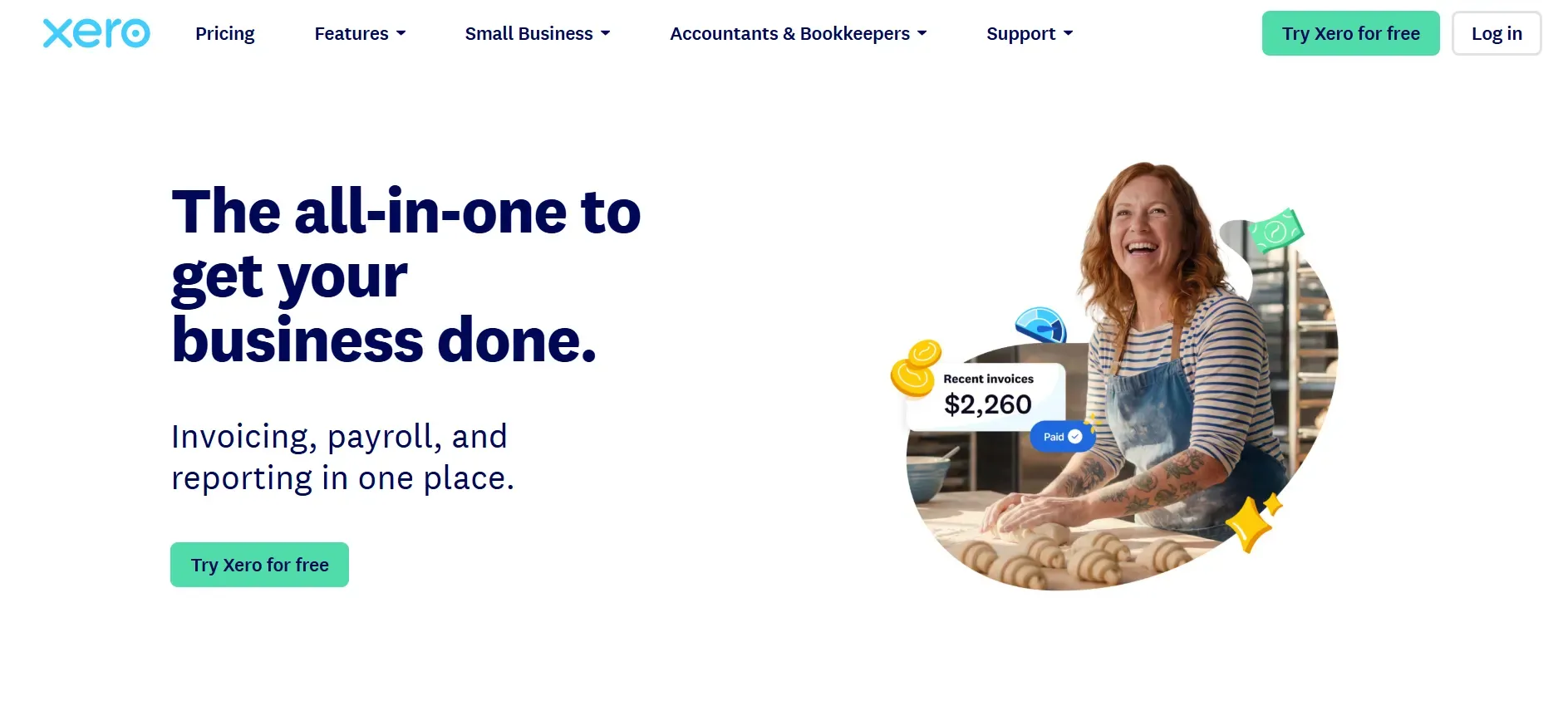
Xero is popular internationally and with businesses needing multi-currency support or operating across multiple countries. Xero’s clean interface and intuitive navigation make it popular among business owners and accountants alike. It’s cloud-based, offers a wide app marketplace, and is known for its smooth bank reconciliation process.
Pricing: Starts around $15/month, with higher tiers for multi-currency and advanced features.
- Unlimited users on all plans
- Excellent for international businesses
- Clean interface and strong app marketplace
- Entry plan limits invoices and bills
- Advanced features locked to higher tiers
- Some US payroll integrations less mature
If your business needs a workflow or integration not found in Xero’s app directory, Devaims can build it to fit your exact process, ensuring no compromises or awkward workarounds.
3. FreshBooks (Best for service providers and freelancers)
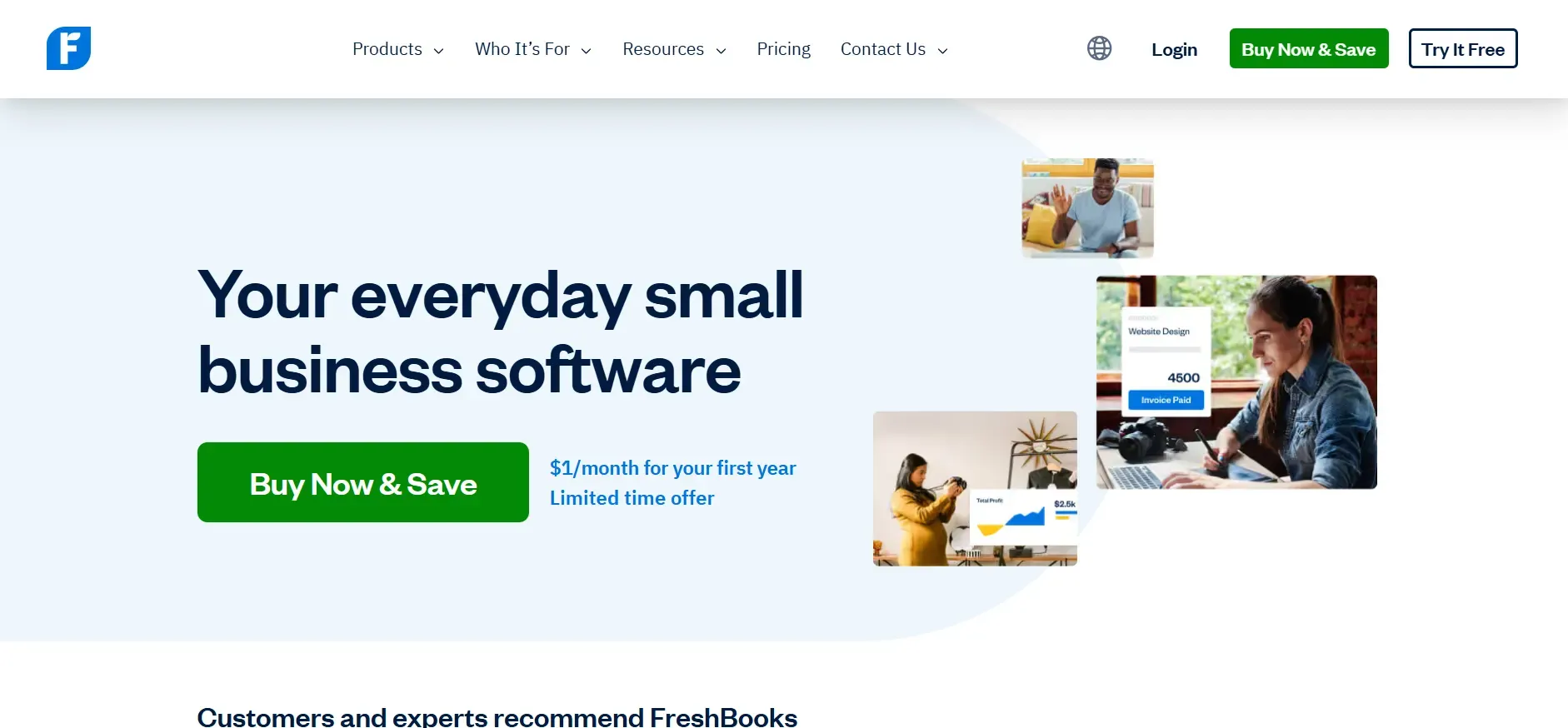
FreshBooks is known for its user-friendly interface, time tracking, client management, and invoicing features. It’s lighter on double-entry accounting than QuickBooks or Xero, but excels at automating client-facing workflows and expense tracking. In recent years, FreshBooks has added more robust accounting features, but its core strength remains with freelancers, consultants, and small agencies.
Pricing: Starts around $19/month, with higher tiers for more clients and advanced features.
- Easy to use and set up
- Strong invoicing and time tracking
- Good for freelancers and small agencies
- Limited advanced accounting features
- No ownership or local install
- Not ideal for complex or multi-entity businesses
On a custom platform, you’d simply have the features you need, built for your business, not locked behind a paywall or forced into a service provider's workflow assumptions.
4. Botkeeper (Best for automated bookkeeping)
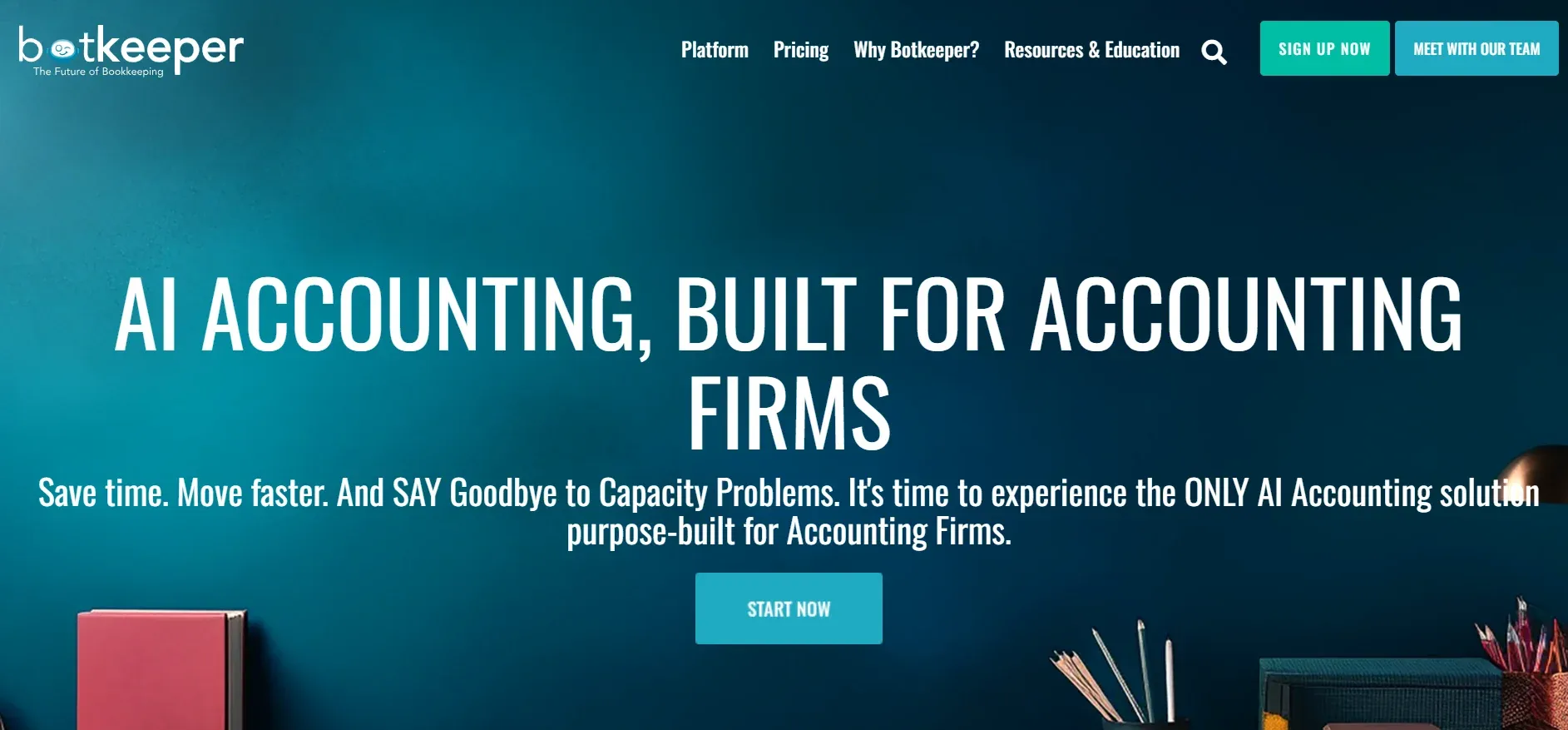
Botkeeper blends AI-driven automation with human accounting oversight. The platform uses machine learning to process transactions, categorize expenses, and reconcile accounts, aiming to reduce manual bookkeeping labor. Botkeeper is often marketed to accounting firms and mid-sized businesses looking to automate routine tasks and scale without hiring more staff.
Pricing: Starts at $155/month, with pricing based on transaction volume and complexity.
- Reduces manual bookkeeping labor
- Combines automation with human oversight
- Integrates with major accounting platforms
- High minimum spend for small teams
- AI categorization may require manual review
- Workflow automation limited to platform capabilities
With Devaims, you’d own your automation logic and keep every improvement as an asset, ensuring your process evolves with your business, not with a vendor’s roadmap.
5. Pilot (Best for startups and funded companies)
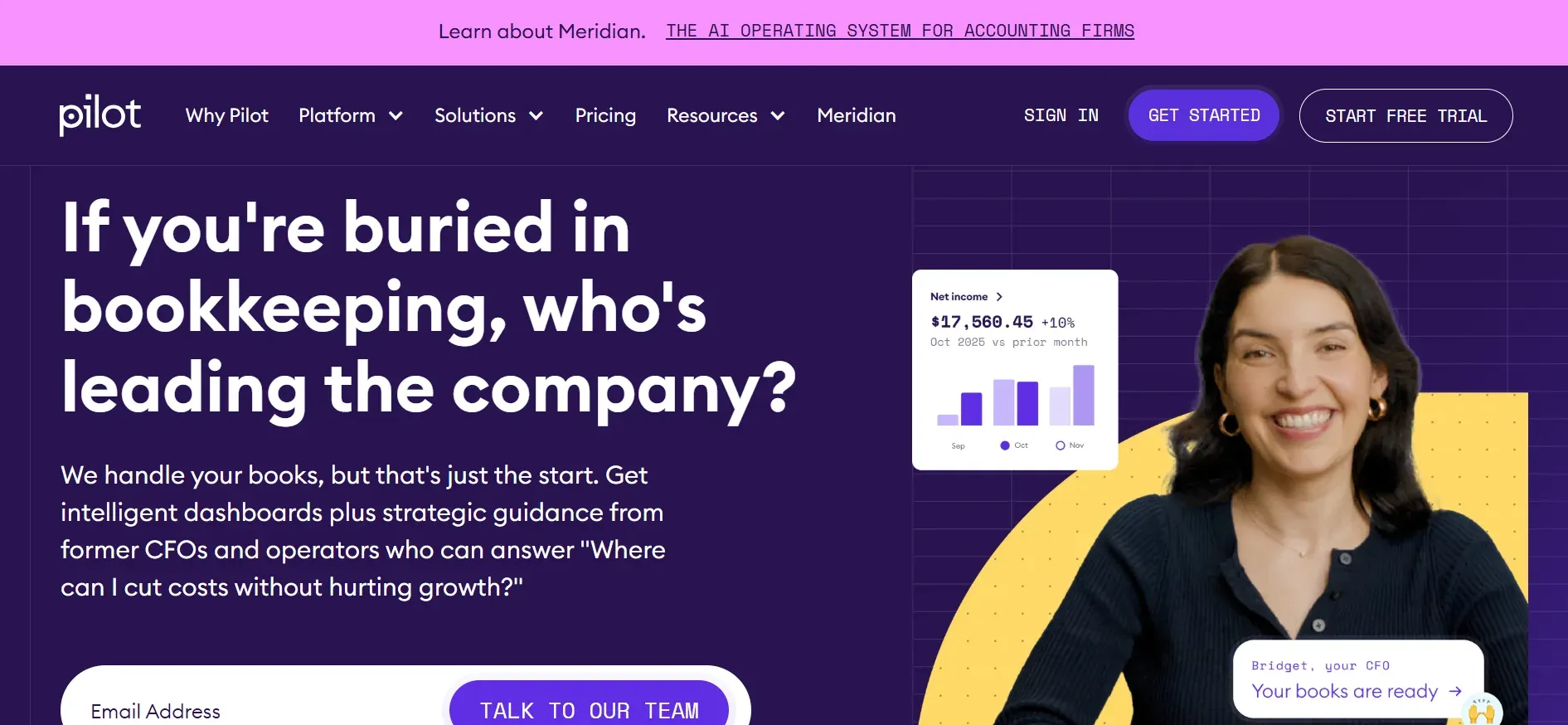
Pilot is a full-service bookkeeping and CFO advisory platform built for startups, SaaS companies, and VC-backed businesses. Pilot combines software automation with a dedicated team of accountants, handling everything from transaction processing to complex equity and payroll scenarios. The platform is especially adept at working with companies preparing for audits, due diligence, or rapid scaling.
Pricing: Starts at $499/month, with additional fees for CFO services and advanced support.
- White-glove onboarding and support
- Handles complex equity and reporting needs
- Ideal for high-growth startups
- High price point excludes most small businesses
- Limited workflow customization
- No software ownership or code access
6. Synder (Best for e-commerce integrations)
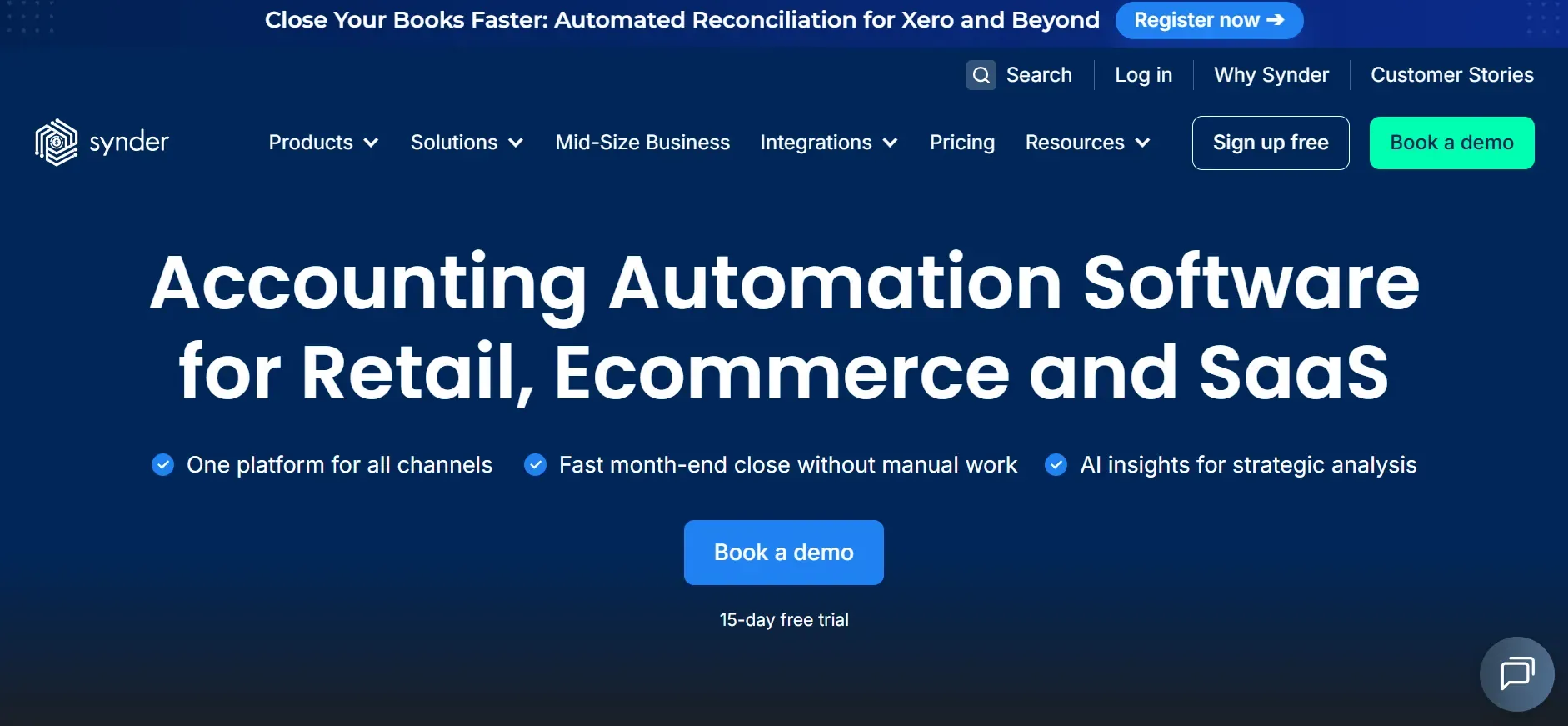
Synder is built for automating the synchronization of sales, payments, and taxes across e-commerce platforms and payment processors. Unlike Bench, which requires manual entry for many e-commerce flows, Synder can automate reconciliation of thousands of sales transactions per month, making it a favorite among online sellers.
Pricing: Starts around $48/month, with plans based on transaction volume and integrations.
- Automates e-commerce reconciliation
- Supports many payment processors
- Integrates with QuickBooks and Xero
- Setup can be complex for multi-channel sellers
- Requires a core accounting platform
- Costs rise with transaction volume
7. Gusto (Best for payroll and HR add-on)
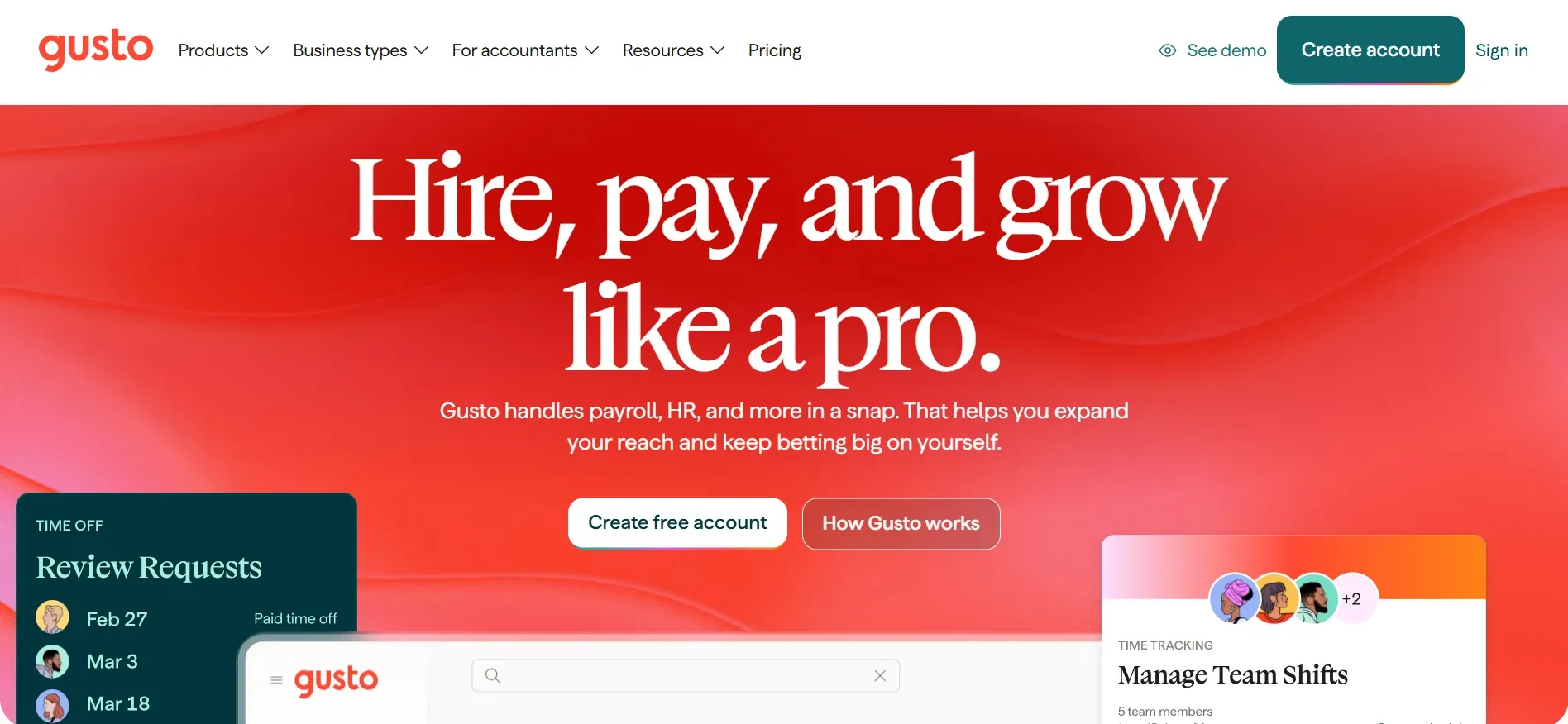
Gusto focuses on payroll, benefits, and HR workflows, not core bookkeeping, but it is often used alongside accounting tools to fill payroll gaps. Gusto automates salary calculations, tax filings, benefits administration, and compliance, with a modern, easy-to-use interface for employees and admins.
Pricing: Starts at $40/month plus $6/user, with additional fees for benefits administration.
- Automates payroll and compliance
- Easy onboarding and employee self-service
- Integrates with major accounting tools
- Core bookkeeping not included
- Per-employee fees add up as you grow
- No ownership or source code access
With a Devaims build, payroll features can be integrated directly into your bookkeeping platform, no extra per-user bill or data silos.
8. Dext (Receipt Bank) (Best for receipt capture and expense management)
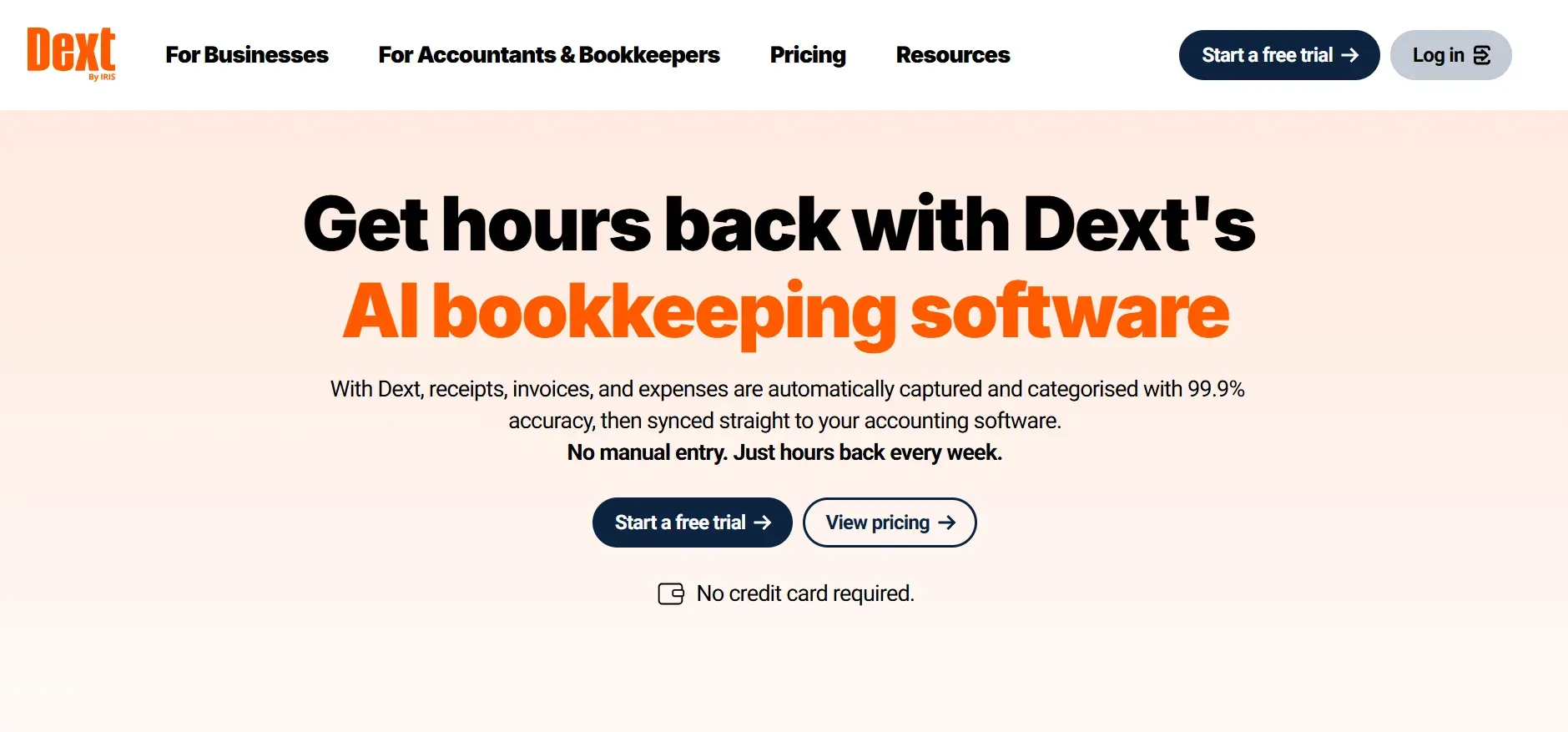
Dext (formerly Receipt Bank) specializes in automated receipt and expense capture. It’s designed to eliminate manual entry by scanning, extracting, and categorizing receipts and invoices. Dext is a companion tool, not a full accounting platform, but it fills an important gap for businesses with high volumes of expense paperwork.
Pricing: Starts around $22/month, with plans based on document volume and features.
- Automates receipt and expense capture
- Integrates with major accounting platforms
- Speeds up expense management
- Not a full accounting solution
- Subscription required for all features
- Customization is limited
For businesses already using a custom-built platform, this functionality can be integrated directly, eliminating another recurring fee.
9. Devaims (Best for owning your bookkeeping platform)
Devaims builds custom bookkeeping, accounting, and business software that you own outright. Instead of stacking subscriptions and cobbling together workflows across multiple rented tools, you get exactly the features, automations, and integrations you want. You keep the source code, control every integration, and never pay per user, per entity, or per month again.
- One-time build, then flat maintenance, no recurring rental
- All features tailored to your business, not a generic template
- Your data, your code, your rules
- No feature gating, no upgrade pressure, no contract lock-in
- White-glove migration and ongoing support included
Other Bench alternatives worth knowing
- Hubdoc is great for document capture and automated statement fetching, but not a full bookkeeping system. It is often used in tandem with Xero or QuickBooks to streamline document management.
- Karbon is a workflow and practice management tool for accounting firms, not direct bookkeeping. It helps teams manage communication, tasks, and deadlines, but does not handle transactions or general ledger.
- Wave offers free invoicing and basic bookkeeping for microbusinesses, but limited scalability, support, and integrations. For freelancers or very small businesses, it’s an entry point, but most outgrow it.
Niche tools can fill gaps, but most don’t replace a core bookkeeping platform or solve the rent-vs-own problem. For a deeper dive, see PCMag’s accounting software roundup or Capterra’s reviews.
How to choose the right Bench alternative
- By budget: Under $30/month? Try Xero or FreshBooks. Scaling fast? Factor in add-ons and per-user fees, as these can double or triple your cost over time.
- By workflow: E-commerce? Synder may fit. Need hands-off bookkeeping? Pilot or Botkeeper. Complex multi-entity or proprietary workflows? Consider custom.
- By team size: Small team? QuickBooks or FreshBooks. Multiple entities, locations, or departments? Custom solutions scale without multiplying your cost.
- By ownership: If you want to stop renting forever, Devaims is the only path to full control and future-proofing.
If you keep running into feature walls, rising subscription bills, or integration headaches, it’s time to consider owning your platform for good.
Stop paying rent on software you could own
Bench, like every SaaS alternative, is rented, meaning you pay forever, lose features if you cancel, and have zero leverage when pricing goes up. With Devaims, you keep the code, the data, and the flexibility to evolve your bookkeeping as your business grows. This is especially important as privacy regulations, audit requirements, or new revenue models emerge and you need to adapt, something rented SaaS platforms rarely allow without a price hike or a wait for the next product update.
Devaims is a custom software agency that builds bookkeeping and business platforms you own outright. You get exactly the automations, reports, and integrations you want, designed for your workflow, not a generic template. There’s no per-user fee, no forced upgrades, and no contract lock-in, just a one-time build and flat maintenance.
- No more per-entity charges: Add as many companies, locations, or users as you want, your cost stays flat. This is a major advantage for holding companies, franchises, or multi-brand organizations.
- No feature gating: Every report, permission, or integration is built for you, never locked behind a paywall. Need a custom dashboard for board meetings or a special integration with your CRM? It’s yours, with no extra monthly fee.
- No data hostage risk: You own your books, your audit trail, and your workflows forever. If you want to integrate with a new tool or migrate to a different system in the future, you can, because you own the source code and the database.
| Platform | Ownership | Recurring fees | Feature flexibility |
|---|---|---|---|
| Bench | Rented | $299/mo and up | Locked tiers |
| QuickBooks Online | Rented | $30/mo and up | Tiered |
| Botkeeper | Rented | $155/mo and up | Limited customization |
| Devaims (Custom Build) | Owned | One-time build, then flat maintenance | Full customization |
| Year | Rent (Bench or similar) | Own (Devaims custom) |
|---|---|---|
| Year 1 | $299 x 12 = $3,588 | $28,000 build + $180 x 12 = $30,160 |
| Year 2 | $299 x 24 = $7,176 | $28,000 + ($180 x 24) = $32,320 |
| Year 3 | $299 x 36 = $10,764 | $28,000 + ($180 x 36) = $34,480 |
| Year 4 | $299 x 48 = $14,352 | $28,000 + ($180 x 48) = $36,640 |
| Year 5 | $299 x 60 = $17,940 | $28,000 + ($180 x 60) = $38,800 |
For businesses with multiple entities, high transaction volumes, or recurring add-ons, the break-even often comes much sooner. If you’re paying for five years of subscriptions, you could already own your system and gain the ability to customize, integrate, and future-proof your processes.
How to switch from Bench
- Export your full data set from Bench (transactions, reports, attachments, and supporting documents). Be sure to request all available data, including archived statements and team notes.
- Choose your new platform or custom build partner. Evaluate based on your current pain points, future growth, and the total cost of ownership. Consider who will handle migration and training.
- Import balances, customers, vendors, and history. Map your chart of accounts, customer/vendor lists, and historical transactions to the new system. Clean up duplicates or errors during import.
- Reconnect bank feeds, payment gateways, and integrations. Ensure all financial sources flow into your new platform, and test for data accuracy. Custom solutions can connect directly to banks and tools not supported by SaaS providers.
- Train your team on new workflows and permissions. Provide documentation, live walkthroughs, and support channels. Devaims includes training as part of every deployment.
- Test in parallel for a month to catch issues before going live. Run your new and old systems side by side for a billing cycle to validate reports, balances, and automations. Fix any discrepancies before full cutover.
- Review and cancel your Bench contract. Ensure you have all data and documents, then formally end your subscription to avoid double billing.
With a custom Devaims build, the migration is handled as part of the project, including data cleaning, testing, and ongoing support.
Frequently asked questions
What’s the best overall Bench alternative for bookkeeping?
QuickBooks Online is the most popular switch for small businesses, due to its flexibility, ecosystem, and broad support. Xero and FreshBooks fit different workflows and budgets. For businesses seeking to own their platform, Devaims is the only option that delivers full code and data control, custom workflows, and future-proofing. The right choice depends on your growth plans, need for customization, and tolerance for recurring SaaS fees.
Which Bench alternative is the cheapest?
Wave offers free basic bookkeeping for small businesses, but with limited features, scalability, and integrations. Xero’s entry tier is low-cost ($15/month), but advanced needs quickly raise the bill with add-ons and higher-tier features. Over five years, Devaims can be cost-effective if you want to eliminate monthly payments and avoid price hikes. Always compare total cost of ownership, not just entry price.
Are there any free Bench alternatives?
Wave is the main free alternative for microbusinesses and sole proprietors, but you sacrifice integrations, support, and advanced features. Most robust bookkeeping tools are paid subscriptions. Open-source options exist (like GnuCash), but require self-hosting and more technical maintenance. Devaims is not free to build, but eliminates ongoing rent and can be tailored to your needs.
What’s the best Bench alternative for e-commerce?
Synder is built for Shopify, Amazon, and Stripe integration, automating sales tax, reconciliation, and multi-channel sales flows. QuickBooks Online offers e-commerce add-ons and integrations, but may require extra configuration. Devaims can build direct integration for your specific storefronts, marketplaces, and payment processors, ensuring no manual workarounds or missing data.
When should I switch from Bench to an alternative?
If you’re frustrated by recurring fees, feature gating, lack of customization, or data export issues, it’s time to look at Bench alternatives. The switch makes sense when your total cost or lost flexibility outweighs the comfort of staying put. If you’re planning to scale, add new business units, or require custom workflows, transitioning sooner can save you money and future migration headaches.
Can I keep my historical data if I switch from Bench?
Yes, you can export your transaction and report data from Bench for import into your new platform. The process may require some manual work to map fields and ensure completeness, especially for attachments and notes. Devaims handles data migration for you, so you don’t lose history or audit trails in the process. Always request a full data dump before closing your Bench account.
What’s the ownership advantage of a custom Devaims build?
With Devaims, you own the software, source code, and workflow outright, including all future modifications. That means no more rent, no per-user fees, and no platform lock-in. You dictate how your bookkeeping evolves, control your data, and can integrate with any tool or process you choose. This is especially valuable for businesses in regulated industries, those with proprietary processes, or anyone seeking to future-proof their finance stack.
The bottom line
The best Bench alternative depends on your workflow, team size, and appetite for ongoing fees. But here’s the real decision rule: add up what you’ll pay to rent your bookkeeping stack for the next five years. If that’s close to what it would cost to build your own, you already know the answer. Ownership means freedom, no fee hikes, no missing features, and your process on your terms. Ready to run the numbers?
Check out more insights on the Devaims blog, or explore other alternatives like QuickBooks Online alternatives, Xero alternatives, and FreshBooks alternatives.