


Ever tried to pull a simple report in AbacusLaw and run into a paywall or a support queue? Or maybe you hit the ceiling on users and the quote doubled overnight. Law firms get sold "practice management in a box," but the real surprise comes later, when you realize you never actually own the box.
Here’s the truth: every big-name AbacusLaw alternative on the list below comes with its own subscription clock, price escalators, and lock-in moments. Clio, MyCase, PracticePanther, sure, they solve the basics, but five years in you’ve paid more in rent than you’d ever spend to own. That’s why some firms are calling time on SaaS and building their own with Devaims. But first, let’s size up the competition honestly.
Why law firms look for AbacusLaw alternatives
The legal technology landscape is changing fast. Firms are under pressure to boost efficiency, support hybrid work, and deliver a better client experience, all while keeping costs predictable. Here’s why so many are actively seeking alternatives to AbacusLaw:
Rising per-user fees: Most solutions start affordable, but add $40 to $100 per user per month as your team grows. For a mid-sized firm, that compounds fast. A 12-person team on a $59/user plan is out $8,500+ per year, before add-ons.
Feature paywalls: Core features like document automation, advanced reporting, or e-signature often require pricey add-ons or higher tiers. Firms are often surprised to find that what they assumed was included, like custom reporting or workflow automation, is only available at the top tier or as a costly module.
Data lock-in: Migrating away is painful. Export tools are limited, and you risk losing notes, custom fields, or even full case files. Many SaaS vendors restrict bulk export or charge for data handoff, making it hard to leave without friction or loss.
Long contracts and opaque pricing: Yearly commitments, hidden onboarding fees, or surprise "compliance" surcharges are common. The sticker price is rarely the real price. Some solutions require multi-year contracts or auto-renewals with steep cancellation penalties.
Update risk: SaaS tools change under your feet. UI shifts, integrations break, and sometimes features you rely on quietly disappear. Law firms operating in regulated environments can’t afford to have crucial workflows disrupted by forced updates or third-party outages.
These pain points drive law firms to search for AbacusLaw alternatives that offer more control, transparency, and a better long-term deal.
Quick comparison of the best AbacusLaw alternatives
| Tool | Best for | Starting price | You own it? |
|---|---|---|---|
| Clio | All-in-one legal SaaS | Reported $39/user/mo | No |
| MyCase | Client portals | Reported $49/user/mo | No |
| PracticePanther | Billing automation | Reported $49/user/mo | No |
| Lawmatics | CRM & intake | Reported $59/user/mo | No |
| CosmoLex | Integrated accounting | Reported $89/user/mo | No |
| Rocket Matter | Time tracking | Reported $39/user/mo | No |
| Smokeball | Document automation | Reported $29/user/mo | No |
| ProLaw | Enterprise firms | Custom quote | No |
| Filevine | Case collaboration | Custom quote | No |
| Devaims | Ownership, custom-fit | One-time build, you own it | Yes |
Always confirm current pricing before you decide. Fees and tiers change often, and hidden costs can surface as your needs grow.
The 10 best AbacusLaw alternatives
1. Clio (All-in-one legal SaaS)
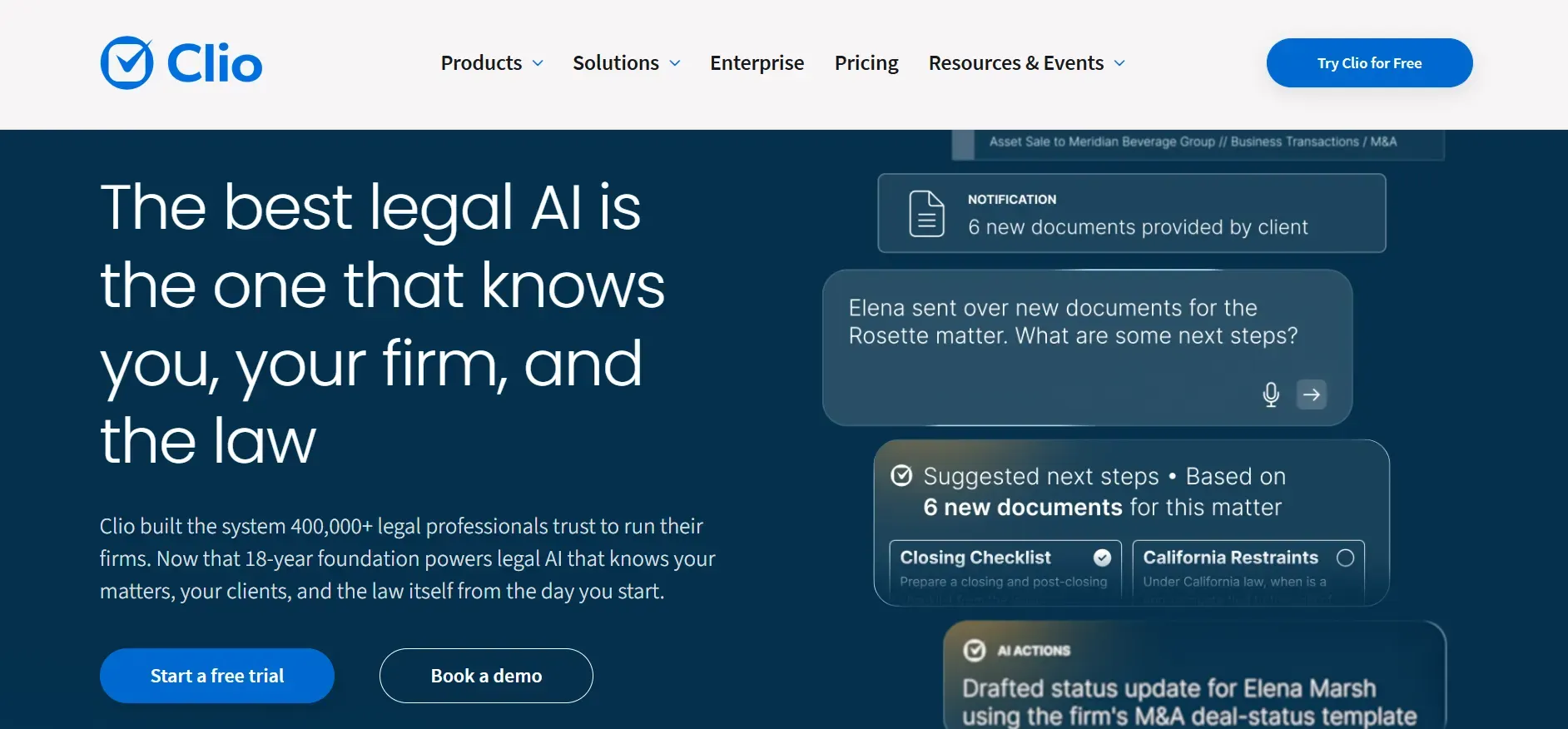
Clio is one of the most widely adopted cloud-based legal practice management platforms globally, serving tens of thousands of law firms. It’s known for its modern, intuitive interface and a comprehensive feature set that covers the essentials for most small and midsize law practices. Clio offers two core products: Clio Manage (practice management) and Clio Grow (CRM and intake), both accessible via web and mobile apps.
Pricing: $39 to $129 per user per month (annual billing), with extra charges for Clio Grow and some integrations. See Clio pricing.
-
Key limitations:
- Advanced features and reporting require higher tiers
- Per-user costs escalate quickly as your firm grows
- Data export and migration can be incomplete or require paid support
-
Strengths:
- Modern, intuitive interface with strong support
- Extensive integrations and open API
- Reliable for small and midsize firms moving to the cloud
2. MyCase (Client portals and payments)
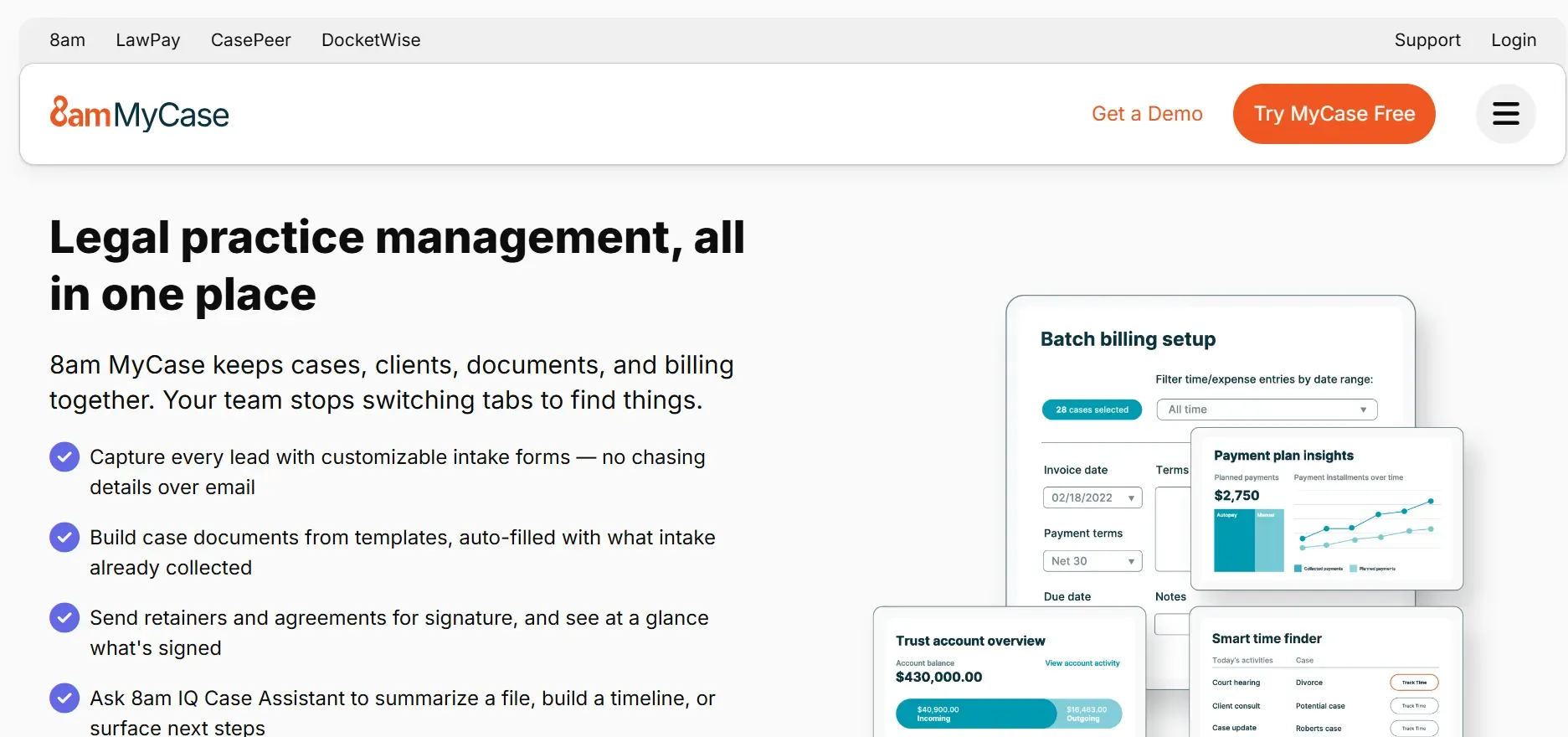
MyCase is designed to make client interaction, document sharing, and billing simple. Its user interface is clean, and the client portal is a standout for firms that want to keep clients engaged and informed without phone tag or email chains. E-signature, secure messaging, and online payment tools are built in, making it a favorite for solo and small firms focused on client service.
Pricing: $49 to $89 per user per month, plus payment processing fees. See MyCase pricing.
-
Key limitations:
- Workflow automation and reporting are less advanced
- E-signature and SMS notifications are paid add-ons
- Customization is limited for complex workflows
-
Strengths:
- Excellent client portal and secure messaging
- Easy online payments and mobile access
- Onboarding support for small firms
3. PracticePanther (Automated billing)
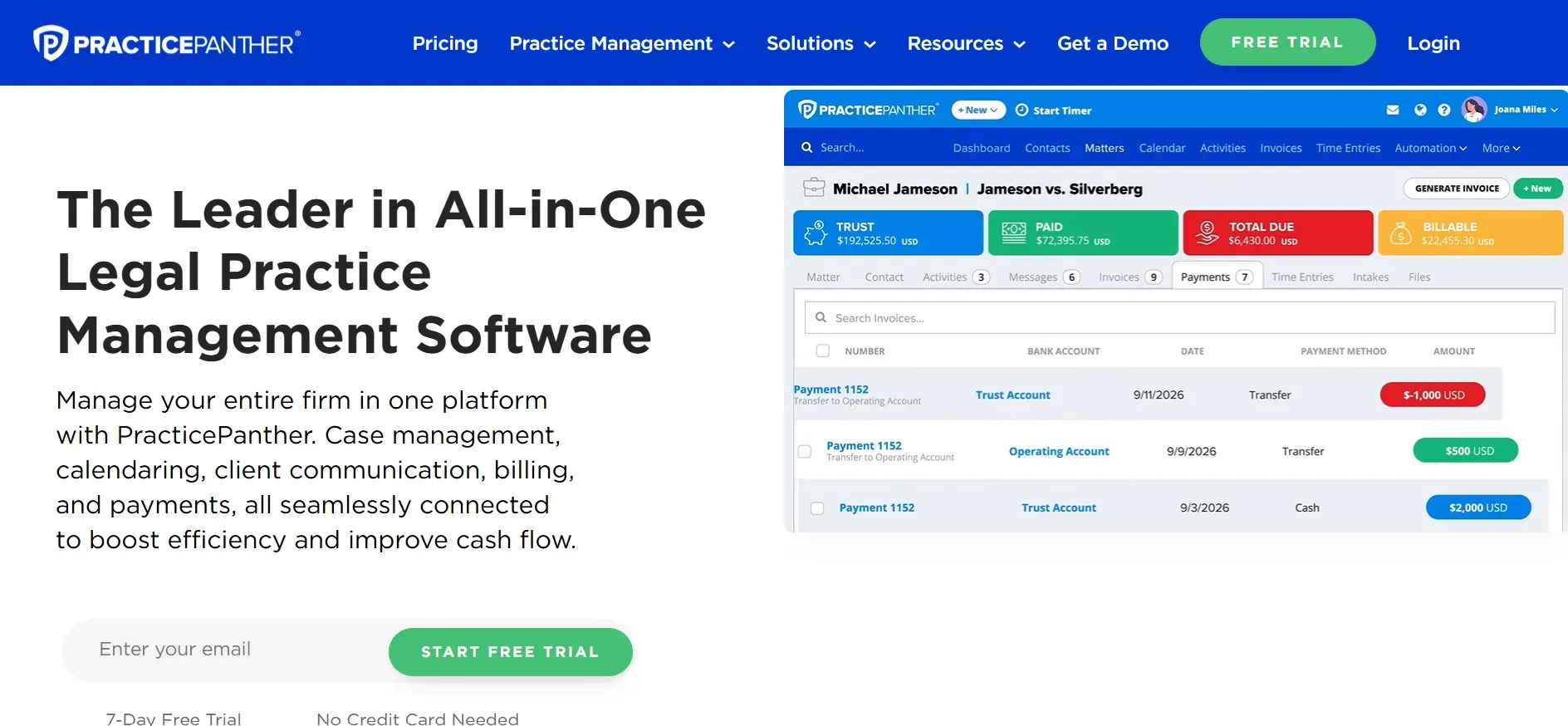
PracticePanther is built around automation. It streamlines repetitive tasks (like time tracking, invoice reminders, and payment follow-ups), making it a good fit for growing firms that want to reduce manual admin. The interface is modern and customizable, and it supports a wide range of integrations.
Pricing: $49 to $89 per user per month (annual billing). See PracticePanther pricing.
-
Key limitations:
- Document management is less advanced than legacy tools
- Advanced automation and reporting require top-tier plans
- Exporting all data can be complex
-
Strengths:
- Strong automation for billing and reminders
- Customizable interface and workflow triggers
- Wide range of integrations for back office automation
4. Lawmatics (CRM and client intake)
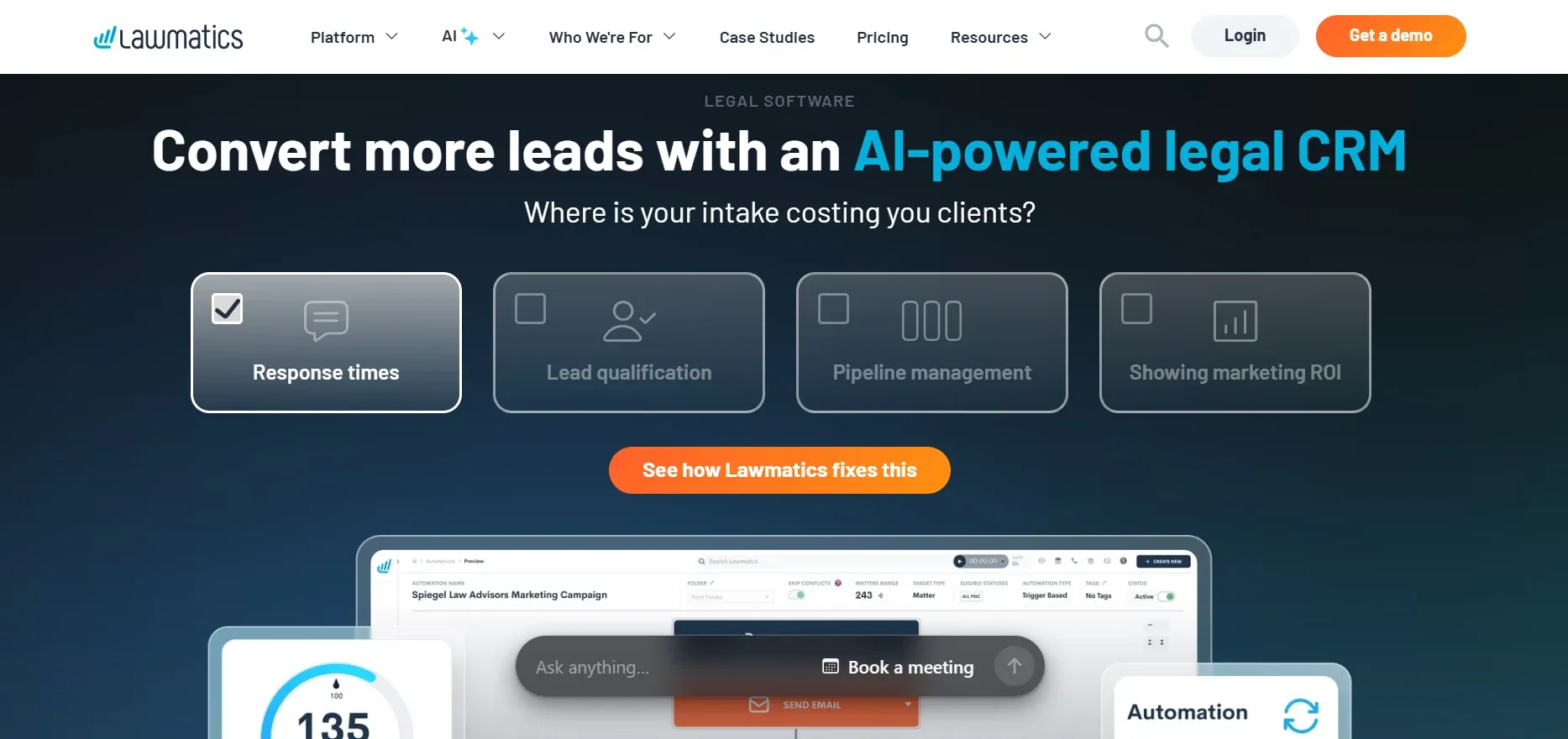
Lawmatics fills a gap in legal technology: true CRM and marketing automation. Where most practice management tools stop at case management, Lawmatics focuses on the client journey from first contact to signed engagement. It’s not a full practice management suite, but integrates with others to round out intake and retention.
Pricing: $59 to $99 per user per month. See Lawmatics pricing.
-
Key limitations:
- Not a full practice management platform
- Costs increase with users and advanced features
- Exporting full engagement histories can be challenging
-
Strengths:
- Powerful intake and marketing automation
- Integrates with leading case management tools
- Customizable forms and analytics for lead tracking
5. CosmoLex (Integrated accounting)
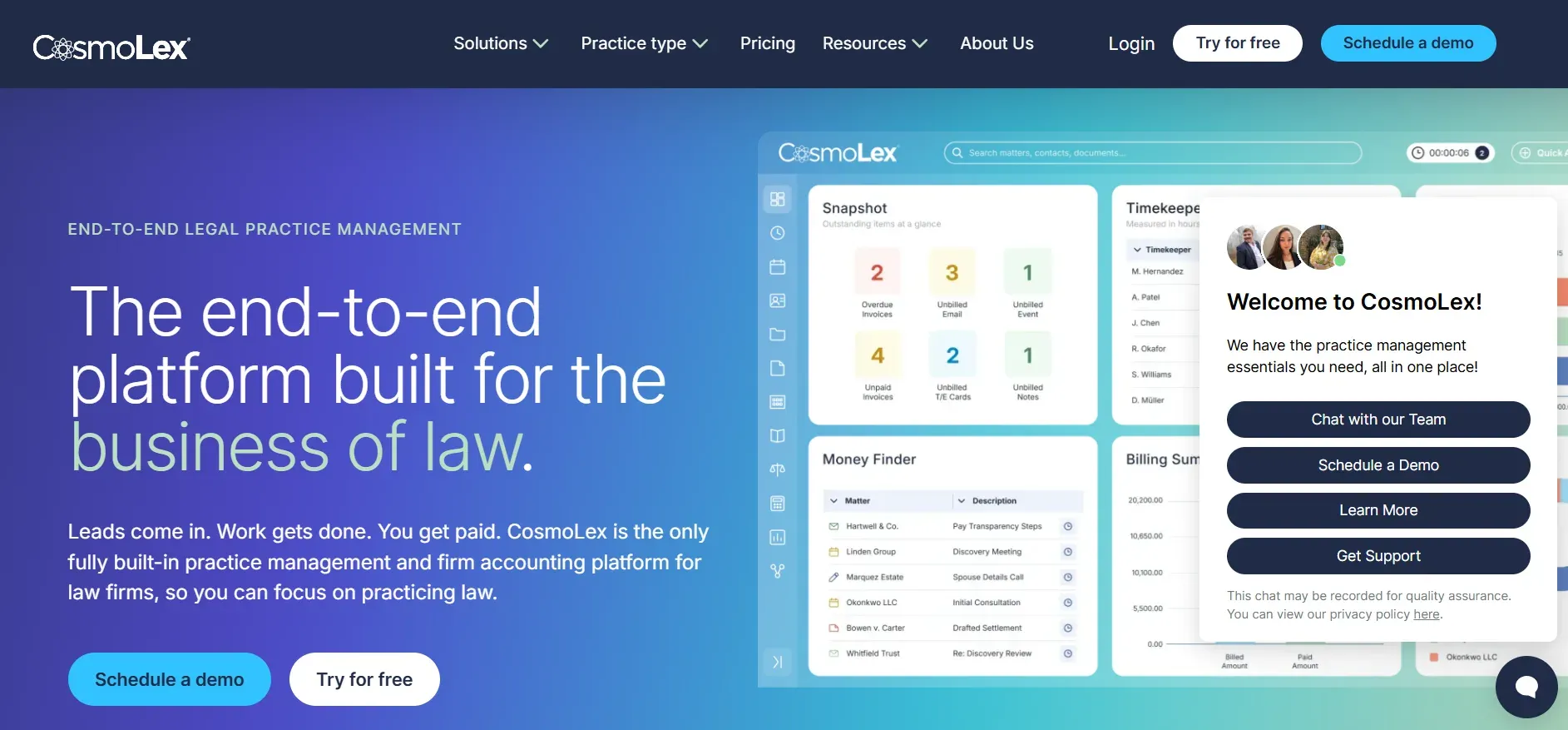
CosmoLex is unique among legal SaaS platforms for its fully integrated accounting. Unlike most competitors, which require a separate QuickBooks or Xero subscription, CosmoLex builds trust accounting, general ledger, billing, and compliance rules directly into the platform. This is a major plus for firms that want to avoid reconciliation headaches and reduce compliance risk.
Pricing: $89 per user per month. See CosmoLex pricing.
-
Key limitations:
- Higher entry price than most alternatives
- Fewer integrations than top competitors
- Reporting is less customizable for case analytics
-
Strengths:
- Integrated trust and business accounting
- Compliance features for audits and reconciliation
- Consolidates billing and accounting in one platform
6. Rocket Matter (Time tracking & reporting)
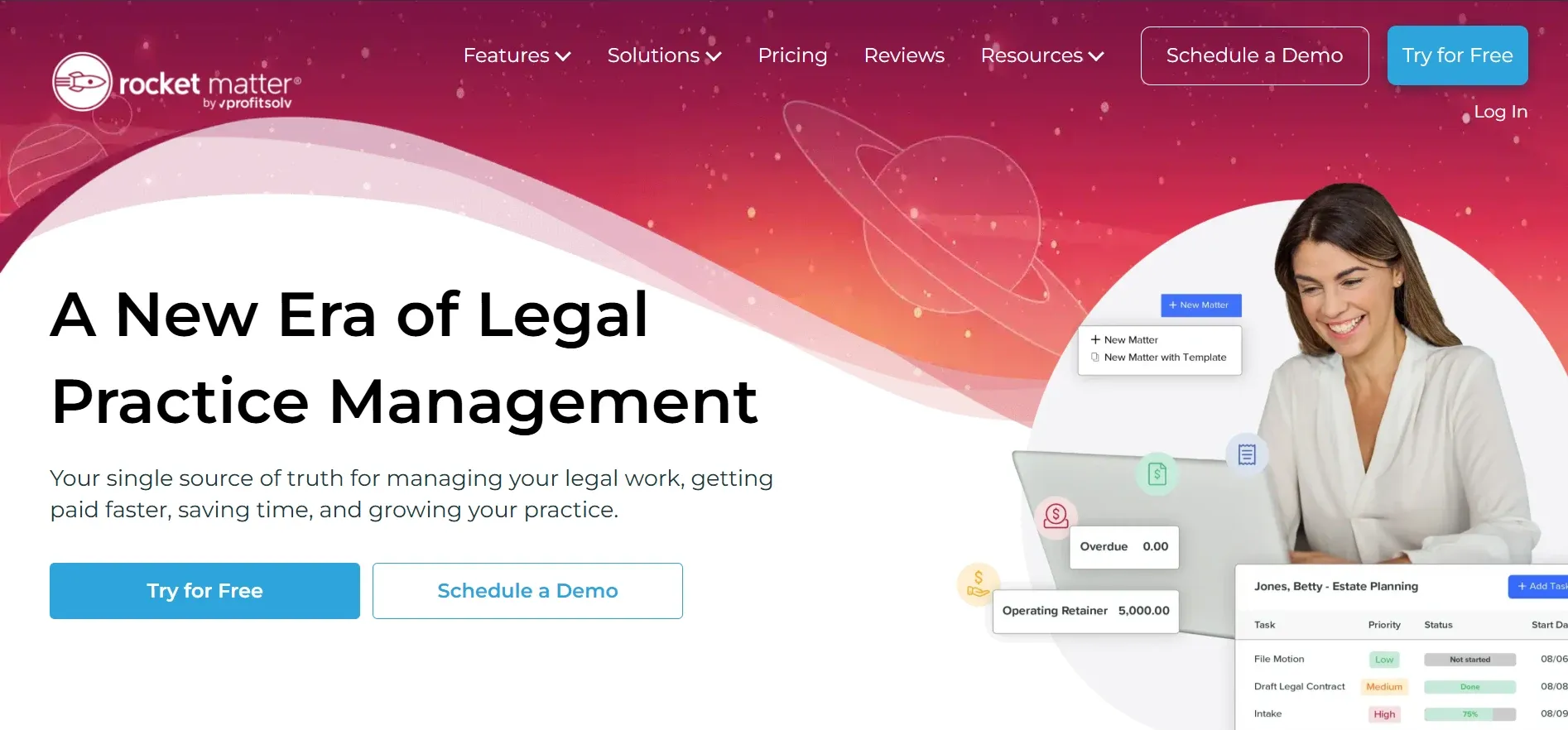
Rocket Matter is built for fast, accurate time tracking and billing, with a user interface that emphasizes simplicity. It was among the first cloud-based legal tools and has a loyal following among small and midsize firms. Rocket Matter’s mobile apps and batch billing features make it a favorite for busy attorneys who need to capture time on the go.
Pricing: $39 to $69 per user per month (annual billing). See Rocket Matter pricing.
-
Key limitations:
- Document management and workflow automation are less advanced
- Some features require add-ons or higher tiers
- Full data migration can be challenging
-
Strengths:
- Fast, accurate time tracking and batch billing
- Mobile apps for on-the-go attorneys
- Custom invoice templates and LEDES billing
7. Smokeball (Document automation)
Smokeball stands out for document automation and passive time tracking. Unlike fully cloud-based tools, Smokeball is a desktop app (Windows only), which appeals to firms that want local performance but cloud-connected data. Smokeball’s library of legal document templates and auto-fill features are a major timesaver for document-heavy practices.
Pricing: $29 to $99 per user per month. See Smokeball pricing.
-
Key limitations:
- Windows-only, no Mac or full web version
- Advanced features require higher tiers
- Data portability can be an issue if you outgrow the platform
-
Strengths:
- Extensive document automation and templates
- Passive time tracking saves billable hours
- Centralized communication logs and workflow management
8. ProLaw (Thomson Reuters) (Enterprise legal ops)
ProLaw is designed for larger law firms and corporate legal departments with complex needs. Owned by Thomson Reuters, ProLaw is an enterprise-grade platform with deep integration into Microsoft Office and Westlaw research tools. It’s available as an on-premise solution or a hosted cloud service.
Pricing: Custom quotes, often five-figure annual contracts. See ProLaw.
-
Key limitations:
- High upfront and ongoing costs
- Complex implementation and migration
- Customization can complicate upgrades and exits
-
Strengths:
- Deep integration with Microsoft Office and Westlaw
- Advanced workflow automation and compliance features
- Enterprise support for large, multi-office firms
9. Filevine (Case collaboration and workflow)
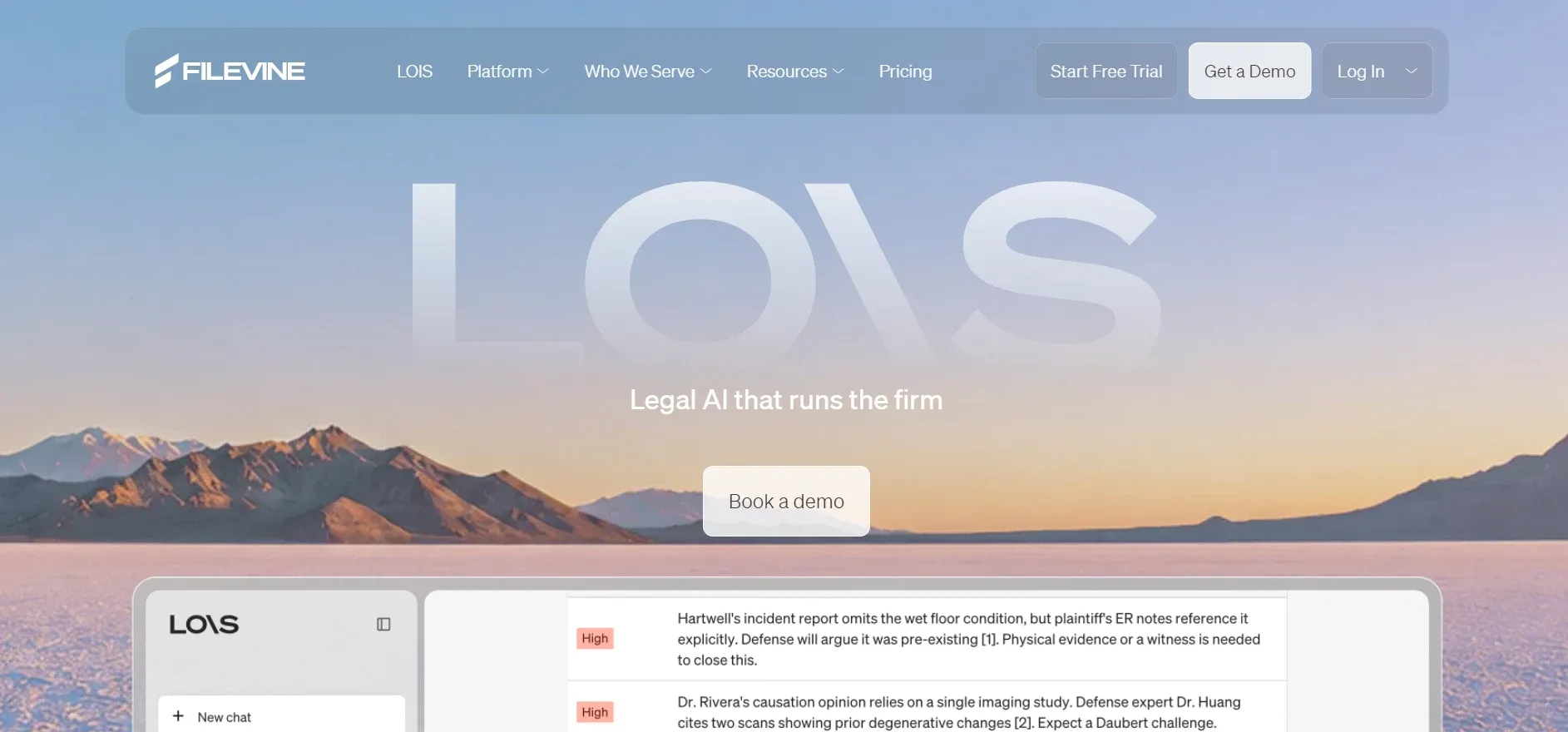
Filevine is a modern, cloud-based platform focused on team collaboration, workflow customization, and granular task management. It’s especially popular with litigation and plaintiff firms that need to track every detail of a case and coordinate across teams, clients, and experts. Filevine’s flexible data model lets you build custom fields, templates, and automation unique to your practice.
Pricing: Custom quotes, typically $60 to $100 per user per month for full feature set. See Filevine pricing.
-
Key limitations:
- Learning curve for non-technical staff
- Pricing increases with modules and users
- Still rented, no code or data ownership
-
Strengths:
- Highly customizable workflows and fields
- Strong collaboration and task management tools
- Open API for integrations and automation
10. Devaims (Own your legal software for good)
Devaims is not a SaaS product, but a custom legal software development service. Instead of paying subscriptions or renting features, your firm gets a tailored system delivered as source code and documentation that you own. The platform is built around your workflows, branding, and integration needs, with no ongoing per-user or per-feature fees. You choose your hosting, customize as you grow, and never face lock-in again.
- One-time build, then flat maintenance, no per-user rent
- You own your data, the source code, and every feature
- Custom workflows, branding, and integrations as needed
- Zero lock-in, migrate, extend, or host wherever you want
Other AbacusLaw alternatives worth knowing
- LexisNexis PCLaw: Strong for legal accounting, but feels dated and is still rented. Best for firms that require robust trust accounting but can live with a legacy UI and on-premise setup.
- Needles: Case management for PI firms, but migration is tough and UI is old-school. Good fit for large PI practices that need complex case tracking but are willing to manage a steeper learning curve.
- Zola Suite: Modern SaaS, especially for smaller firms needing built-in email and accounting. Well-reviewed for ease of use and integrated time tracking, but add-ons can increase costs.
- Actionstep: Workflow-heavy but can overwhelm smaller teams. Highly customizable for firms with process-heavy practices, but setup and training require time and attention.
How to choose the right AbacusLaw alternative
- Budget: Add up your real per-user, per-feature, and add-on costs for five years. Include onboarding, migration, and support fees in your calculation.
- Firm size: What fits a 5-attorney shop may not scale to 50. Consider user caps, performance, and admin controls as you grow.
- Specialty needs: Look for tools (or custom builds) that match your practice area: PI, family, defense, etc. Some platforms offer practice-specific templates or integrations.
- Data ownership: Decide if you want to rent forever or own your platform and your data. True ownership means you’re never at risk from a vendor shutting down or raising prices beyond your control.
- Migration pain: Consider how easily you can bring your data and workflows across. Ask about full export capabilities, if you may leave, you want a clear exit path.
If you’re tired of spending more each year and want true control, owning may be your next move.
Stop paying rent on software you could own
The elephant in the room: every AbacusLaw alternative above is rented. Even if you jump to the slickest SaaS, you’ll pay more the longer you use it. The per-user fees never stop, the price hikes keep coming, and your data is always on their terms.
Devaims builds custom legal platforms that you own: your workflows, your data, your branding. No more per-seat surprises, no more "contact us for pricing". You get full source code, designed around your firm, and the keys to your own system for life.
- No per-user fees: Hire, scale, or run lean, your costs stay flat.
- No feature paywalls: Every feature you want is built in, not locked behind a tier.
- No lock-in: Move, extend, or integrate however you want, whenever you want.
- Your data, your terms: Export, back up, or migrate without begging support.
Here’s how Devaims compares to the biggest names:
| Tool | Ownership | Per-user fees? | Contract |
|---|---|---|---|
| AbacusLaw | No | Yes | Annual |
| Clio | No | Yes | Annual |
| MyCase | No | Yes | Annual |
| ProLaw | No | Yes | Multi-year |
| Devaims | Yes | No | No contract, you own it |
Now, the five-year math for a mid-sized firm (12 users):
| Year | Rented (Clio, 12 users) | Owned (Devaims) |
|---|---|---|
| Year 1 | $5,616 | $28,000 (build + maint) |
| Year 2 | $11,232 | $29,800 |
| Year 3 | $16,848 | $31,600 |
| Year 4 | $22,464 | $33,400 |
| Year 5 | $28,080 | $35,200 |
Break-even: Year 5 (first year owned total is less than rented total). After five years, owning is already ahead, and every year after, the gap widens. Firms with 15, 25, or more staff see the break-even even sooner. If you want real ownership and long-term savings, Devaims is the alternative that ends the rent cycle.
How to switch from AbacusLaw
- Export all case, contact, and billing data (use built-in tools or request export from support). Create a detailed data map, include custom fields, attachments, and notes.
- Shortlist and trial your chosen AbacusLaw alternative. Run a pilot with real cases and staff to test fit and usability.
- Map and import data into the new system, checking custom fields and documents. Validate accuracy with sample cases and review for missing information.
- Rebuild integrations: payments, court calendaring, document storage, e-signature, and accounting. Test each connection before go-live.
- Train staff on new workflows and features. Offer hands-on sessions and cheat sheets tailored to your practice areas.
- Run the new and old systems in parallel for at least two weeks. Compare outputs, ensure all data is present, and resolve any gaps.
- Review your AbacusLaw contract for auto-renewal clauses and notify of cancellation. Secure written confirmation from the vendor.
With a custom Devaims build, the migration is handled as part of the project, including data mapping, validation, and staff onboarding, reducing the risk of disruption.
Frequently asked questions
What is the best AbacusLaw alternative for midsize law firms?
Clio and PracticePanther are popular for midsize firms thanks to their balance of features, modern UX, and support. However, as user counts and workflow complexity grow, the cost and rigidity of SaaS can become limiting. For firms seeking full control, over features, data, and cost, a custom Devaims build is the only alternative that lets you own the system outright and adapt it as you grow.
Which AbacusLaw alternative is most affordable?
Smokeball and Rocket Matter typically offer the lowest entry pricing among SaaS options, with plans starting around $29 to $39 per user per month. But the most affordable solution over five years (especially for growing or midsize firms) is often a custom Devaims build, since the upfront investment is offset by the elimination of recurring per-user fees and add-ons. The more you scale, the greater the savings.
Is there a free AbacusLaw alternative?
There are no truly free, full-featured alternatives for legal practice management at the level of AbacusLaw. Some open-source options exist (like Casebox or LegalKarma), but these require significant IT expertise, lack support, and may not meet compliance needs. Owning your platform with Devaims means you pay once to build, then run on flat maintenance, with no hidden fees or restrictions.
Which alternative is best for legal accounting and trust management?
CosmoLex stands out for integrated legal accounting and trust features, providing three-way reconciliation, compliance tracking, and full financial reporting in one system. However, it is still a subscription model. If you want accounting built exactly for your workflow, including unique compliance or reporting needs, Devaims can integrate those tools as part of your owned platform, with the flexibility to evolve as regulations or your practice change.
How hard is it to migrate from AbacusLaw to another platform?
Migrations are rarely painless, exports can be messy, and some data types (like custom fields, notes, attachments, or workflow rules) may not map cleanly. Most SaaS vendors offer partial migration tools, but manual cleanup is often needed. If you choose a custom Devaims build, migration is included in the project and tailored to your data and needs, including validation and staff training to ensure a smooth transition.
Can I keep my old data when switching from AbacusLaw?
Most leading alternatives support CSV or Excel imports for contacts, matters, and billing. However, you may lose custom fields, notes, or document attachments unless you pay for a full migration. With Devaims, you control your data and can ensure a full, accurate import, no more negotiating for access or paying for your own information.
Why do law firms move away from AbacusLaw?
Common reasons include rising per-user costs, dated interface, limited cloud features, frustration with data lock-in, and lack of modern integrations. Law firms searching for "AbacusLaw alternatives" want more control, modern features, and a better long-term cost model, especially as their practices grow or regulatory demands increase.
The bottom line
The best AbacusLaw alternatives deliver slicker interfaces and more automation, but you’re still renting and the meter never stops. Here’s the decision rule: add up all your per-user, per-feature, and support costs for five years. If that number could have built you the system you actually want, you’re ready to own instead of rent.
Owning your legal platform isn’t just about cost, it’s about control, flexibility, and never having to switch again because of a price hike or a feature sunset. Start with a call and see what the math looks like for your firm.
See more insights on the Devaims blog, or explore related posts: Clio alternatives, MyCase alternatives, PracticePanther alternatives.