

Tired of Athenahealth’s percent-of-collections model eating into your margins? Or maybe you’ve hit the wall with three-year contracts, auto-renewals, and yet another “surprise” fee when you try to scale. If you run a dermatology practice, you know the pain: every new provider adds more cost, while features you need are often buried in higher tiers or tangled in fine print.
Here’s the truth: most Athenahealth alternatives just swap one flavor of rent for another. But a few stand out, such as Modernizing Medicine (EMA) for specialty workflows, Nextech for advanced customization, Kareo (Tebra) for billing, and Practice Fusion for transparent pricing. Still, only Devaims lets you actually own your dermatology platform. If you’re ready to keep your code (and your profits), keep reading, because that’s the real alternative.
Why dermatology practices look for Athenahealth alternatives
Percentage-based fees add up fast. Athenahealth’s percent-of-collections pricing model means the more revenue your practice generates, the more you pay. While this can seem aligned with your success, the reality is that EHR costs can balloon without corresponding improvements in software value. Dermatology, with its high-volume, high-revenue procedures, feels this pain acutely. Practices report that Athenahealth’s take can easily reach five or even six figures annually as you grow, with little flexibility to negotiate rates.
Three-year contracts with auto-renewal. Athenahealth typically requires long commitments, often with automatic renewals that are easy to overlook. If you need to switch, due to a merger, acquisition, or dissatisfaction, early termination penalties can be steep, sometimes amounting to the remainder of the contract. This creates real friction for dermatology clinics that want to adapt quickly to market changes or expand without constraints.
Hidden costs for add-ons and integrations. Many features that seem basic, such as patient portal access, e-prescribing, or direct billing integrations, are often add-ons or require higher subscription tiers. Dermatology clinics with complex needs (like image management or teledermatology) often find themselves paying more than expected once all the “must-have” features are included. Predicting your total cost with Athenahealth is difficult unless you scrutinize every line item and anticipate future needs.
Scaling pain for multi-provider clinics. Athenahealth’s pricing model penalizes growth: every new provider, nurse, or ancillary staff member incurs an added fee. If you open a satellite clinic or bring on new clinicians, your EHR bill scales right along with your team, even though your core workflows may not require more from the software itself. This creates a ceiling on your practice’s profitability and can discourage expansion.
Limited flexibility for unique dermatology workflows. Athenahealth is built for broad use across many specialties. Dermatologists often need workflows that are image-heavy, procedure-oriented, and tailored to unique documentation and billing codes. Customizing Athenahealth to fit these needs can be challenging, requiring workarounds or reliance on third-party vendors. As a result, many dermatology practices are actively searching for Athenahealth alternatives that better fit their clinical and business models.
Quick comparison of the best Athenahealth alternatives
| Tool | Best for | Starting price | You own it? |
|---|---|---|---|
| Modernizing Medicine (EMA) | Dermatology specialty workflows | Quote only | No |
| Nextech | Customizable EHR | Quote only | No |
| Kareo (Tebra) | Billing and practice management | Quote only | No |
| DrChrono | Mobile EHR | Quote only | No |
| Practice Fusion | Transparent pricing | $199/mo/provider | No |
| Greenway Health | All-in-one EHR/PM | Quote only | No |
| DermEngine | Imaging and AI tools | Quote only | No |
| PatientNow | Med spa and aesthetic practices | Custom quote | No |
| Aesthetic Record | Aesthetic practices | Quote only | No |
| Devaims | Owning your EHR | One-time build, you own it | Yes |
Always confirm current pricing with vendors before you decide. Rates and feature tiers change often, and many vendors adjust their pricing annually or even mid-contract. Ask for a full breakdown of total cost of ownership, including onboarding, training, integrations, and support.
The 10 best Athenahealth alternatives
1. Modernizing Medicine (EMA) (Best for dermatology-specific workflows)
Modernizing Medicine (EMA) is purpose-built for dermatologists. Its cloud-based platform stands out for deep specialty content, an intuitive interface, and a large library of dermatology-specific templates and macros. EMA’s adaptive learning engine remembers your most-used procedures and diagnoses, helping you chart faster over time. The system is designed to handle high-volume, image-heavy workflows, making it a favorite for both medical and cosmetic dermatology practices.
Pricing: Quote only. Multi-year contracts are typical, and costs rise with added features and providers.
-
Key limitations:
- Opaque pricing and multi-year contracts
- Customization outside dermatology templates is limited
- Some users report lag or glitches during updates
-
Strengths:
- Deep dermatology content and templates
- Integrated image management and coding automation
- Mobile app for iPad and iPhone
2. Nextech (Best for advanced EHR customization)
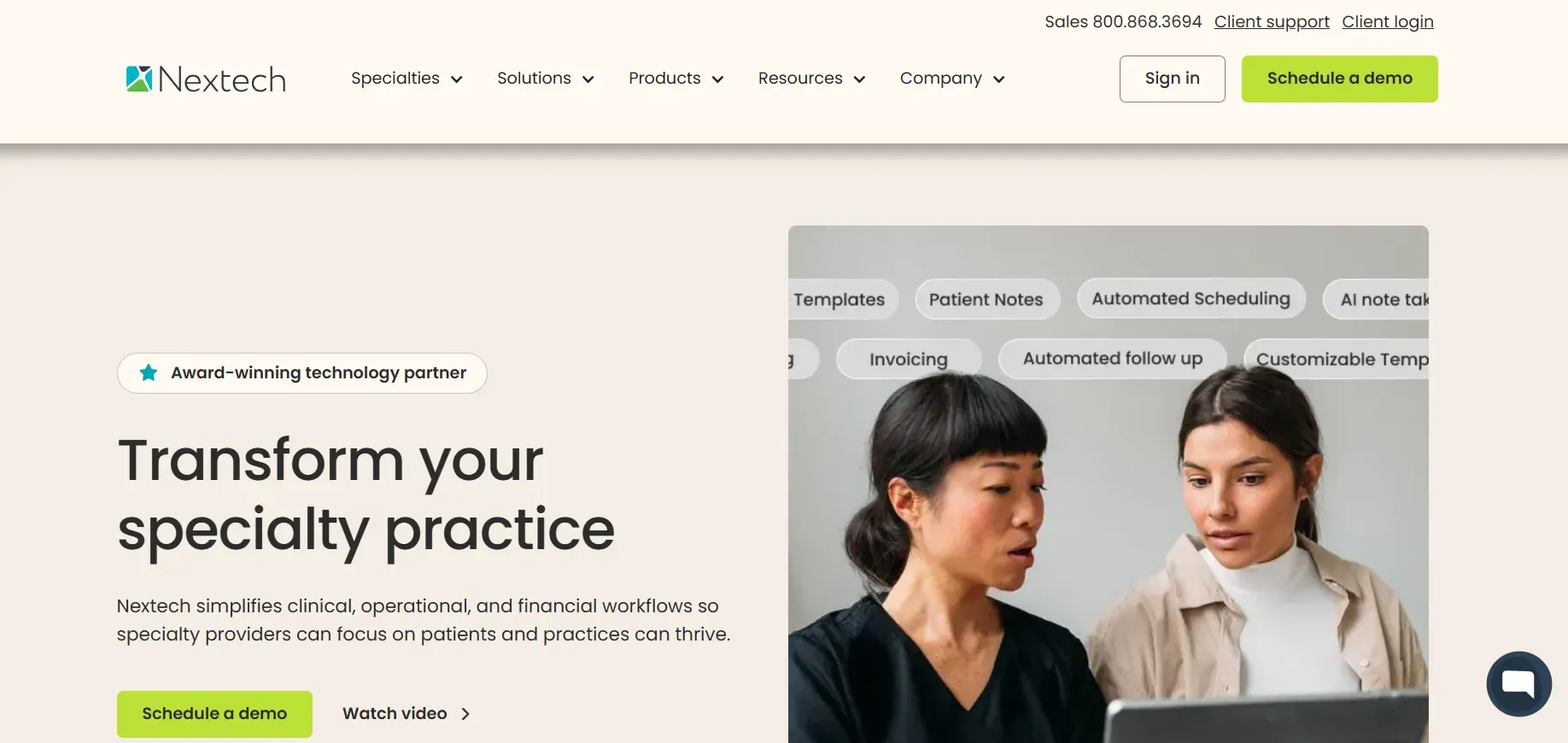
Nextech is built for practices that want to shape their EHR to fit unique clinical and business needs. It combines EHR, practice management (PM), and revenue cycle management (RCM) in a single platform. Nextech’s standout feature is its powerful customization: you can design forms, workflows, templates, and reports to match your exact requirements, something Athenahealth generally resists.
Pricing: Quote only. Pricing is not public and varies by configuration and practice size.
-
Key limitations:
- Resource-intensive setup and onboarding
- Support quality can vary by region and contract
- Upgrades or new features may disrupt workflows
-
Strengths:
- Highly customizable workflows and templates
- Integrated EHR, PM, and RCM in one platform
- Open API for custom integrations
3. Kareo (Tebra) (Best for billing and practice management)
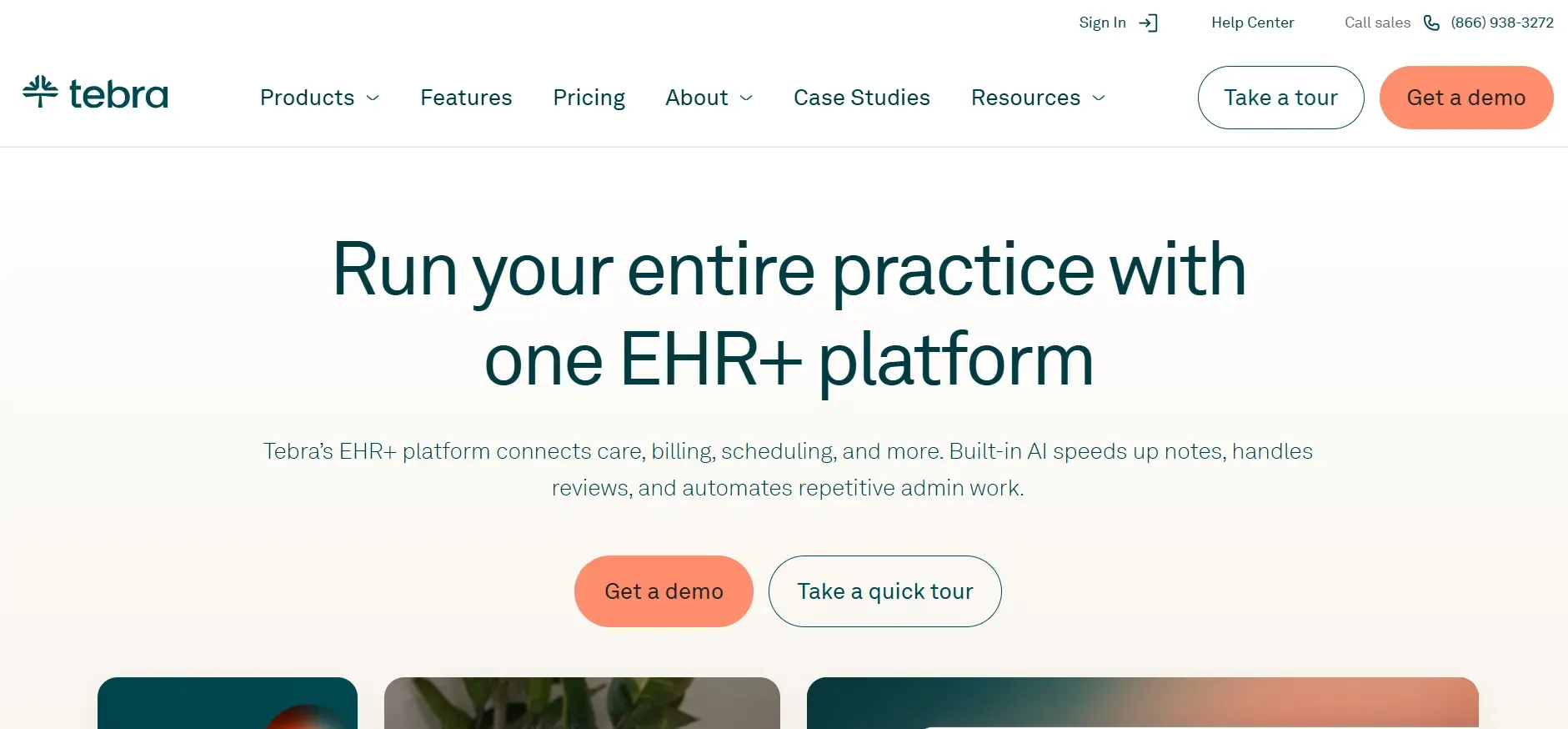
Kareo (now part of Tebra) is known for its strong billing and revenue cycle management tools. For dermatology clinics that struggle with Athenahealth’s billing limitations or want more control over claim management, Kareo offers a focused solution. It combines EHR, practice management, billing, and patient engagement in a cloud-based platform.
Pricing: Quote only. Pricing and contract terms are not transparent and may vary by practice size and features.
-
Key limitations:
- Opaque pricing and contract terms
- Advanced dermatology workflows may need customization
- Mixed customer support experiences
-
Strengths:
- Comprehensive billing and claim management
- Integrated EHR and practice management
- Customizable financial and clinical reports
On a custom Devaims build, billing rules and reports are tailored to your exact payer mix. No more generic templates or workarounds.
4. DrChrono (Best for mobile-first clinics)
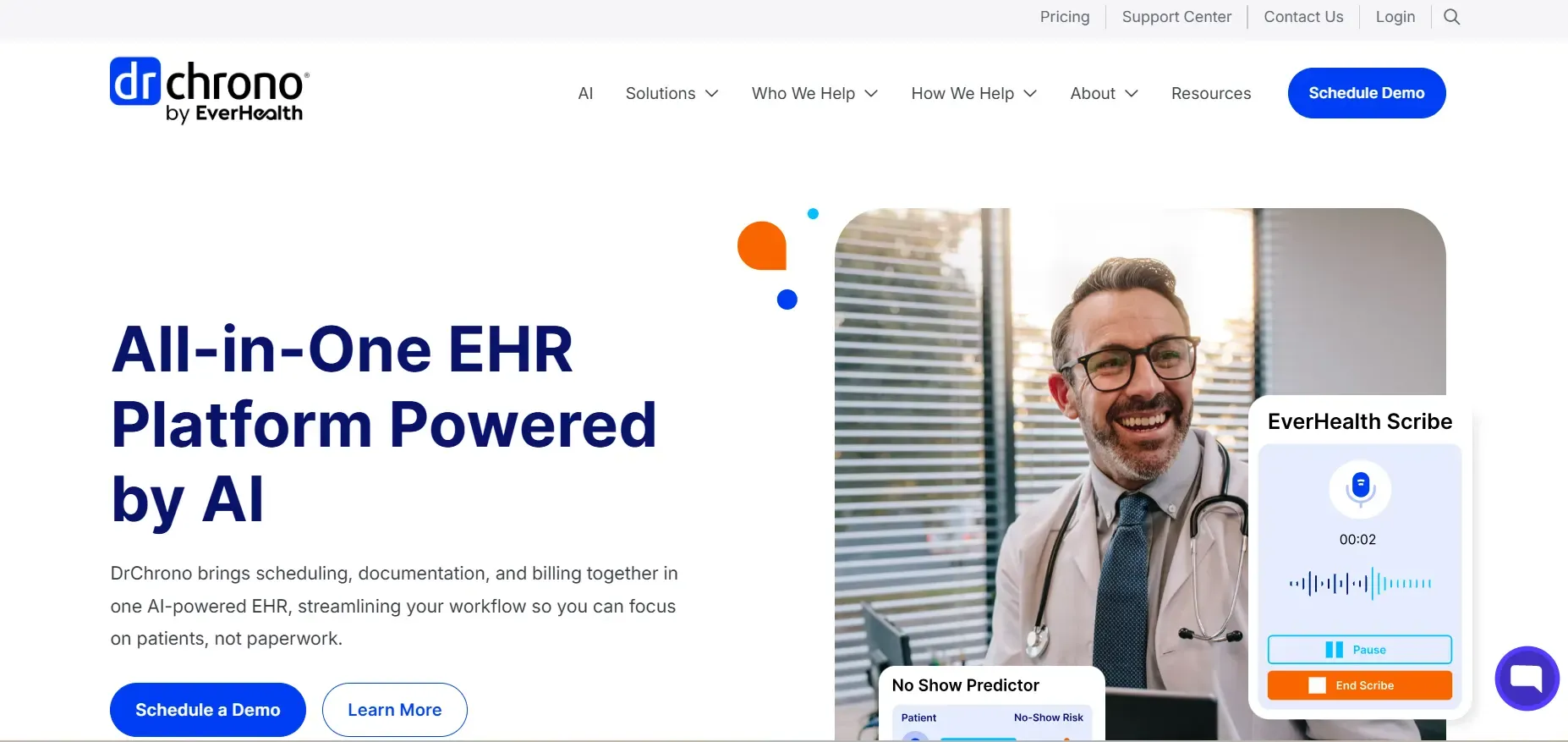
DrChrono is designed for clinicians who want to chart on the go. Its native iPad and iPhone apps are among the most mature in the EHR market, offering touch-based charting, photo capture, and e-prescribing at the point of care, something that appeals to dermatologists who move between exam rooms or want to document directly during procedures.
Pricing: Quote only. Pricing depends on features and provider count.
-
Key limitations:
- Advanced features may require higher-tier plans
- Support response times can be inconsistent
- Reliability issues as practice size grows
-
Strengths:
- Best-in-class mobile EHR experience
- Customizable clinical forms and templates
- App marketplace for add-on tools
When you own your system, mobile features can be built to your staff’s actual workflows, not just what the vendor offers.
5. Practice Fusion (Best for transparent pricing)
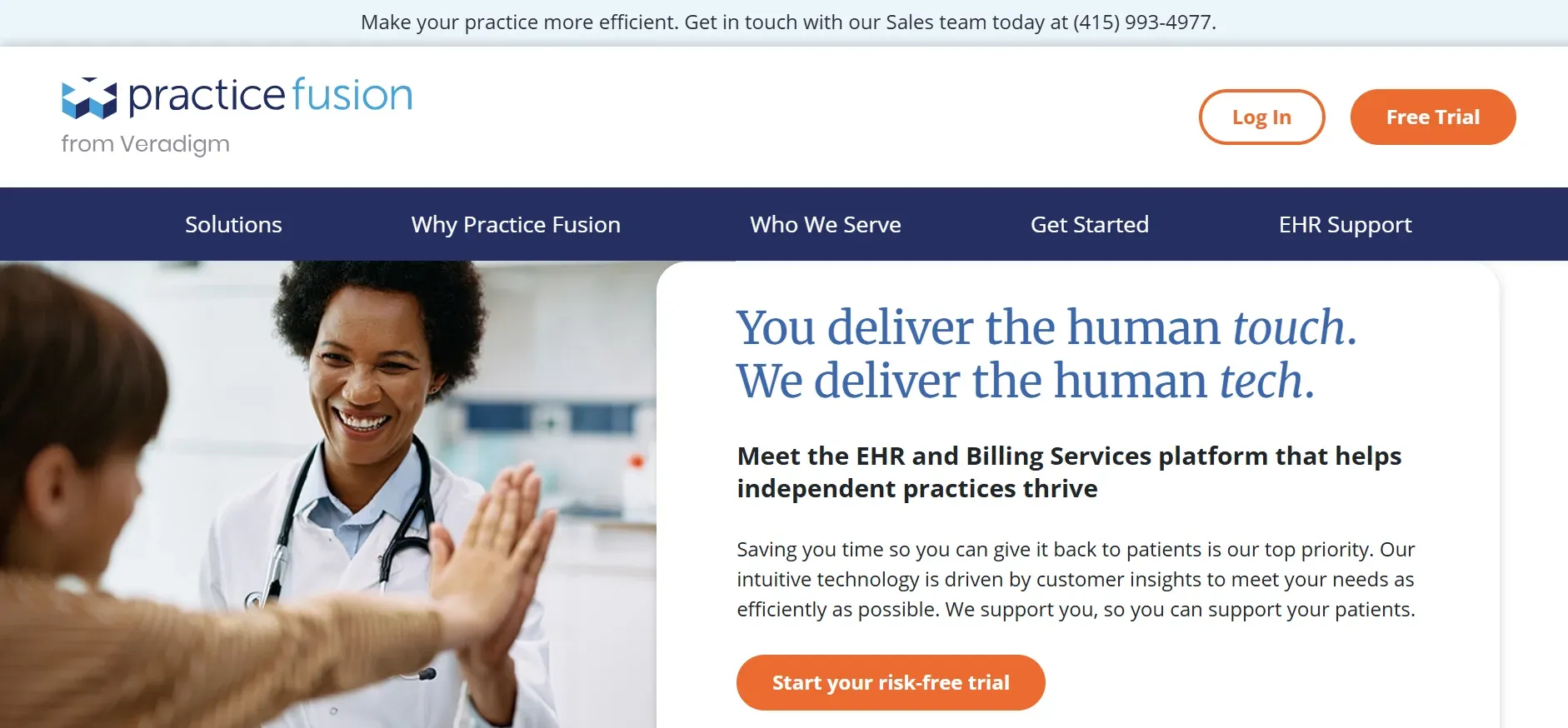
Practice Fusion distinguishes itself with public, predictable pricing: $199 per provider per month (annual contract). For dermatology clinics wary of opaque contracts or surprise fees, this transparency is a breath of fresh air. Practice Fusion offers a simple, cloud-based EHR with basic dermatology templates, e-prescribing, and reporting, making it a solid choice for budget-conscious practices.
Pricing: $199/mo/provider (annual contract). Unlimited non-signing staff licenses at no extra cost.
-
Key limitations:
- Limited customization and specialty features
- System downtimes have been reported
- Annual contract required
-
Strengths:
- Transparent, predictable pricing
- Easy onboarding and cloud-based access
- Basic dermatology templates and reporting
With Devaims, once the platform is built, adding a new provider doesn’t cost you more. That’s the power of owning your EHR.
6. Greenway Health (Best for all-in-one EHR/PM integration)
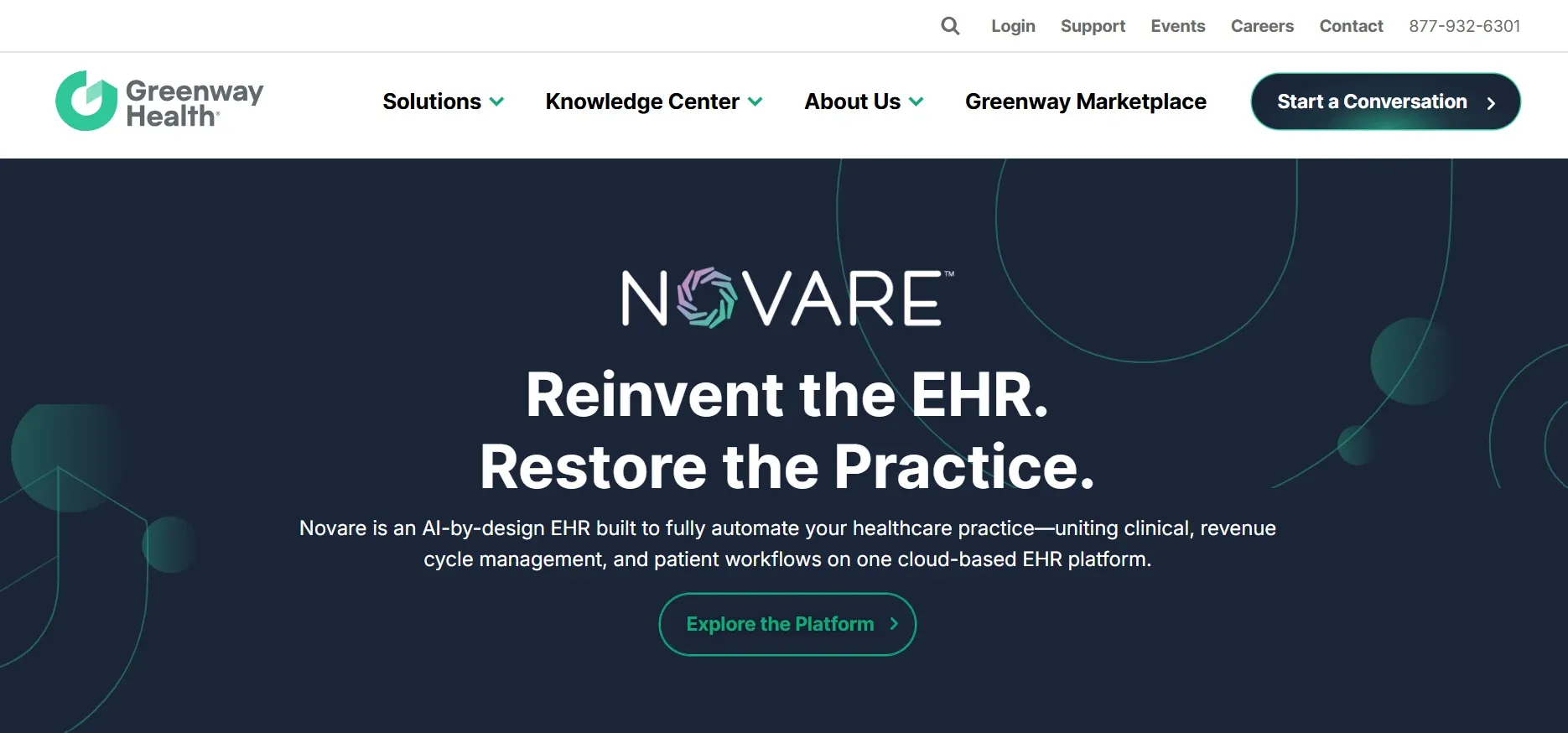
Greenway Health offers a comprehensive suite of EHR and practice management tools. It is well-established in the ambulatory care space, with strong features for scheduling, billing, and analytics. Dermatology practices using Athenahealth often turn to Greenway for its all-in-one integration and reputation for reliability in multi-provider settings.
Pricing: Quote only. Pricing varies by configuration and practice size.
-
Key limitations:
- Pricing and contract terms are not public
- Updates can disrupt workflows or require retraining
- Support quality varies by client size
-
Strengths:
- Integrated EHR and PM platform
- Customizable templates and analytics
- Strong interoperability with labs and registries
7. DermEngine (Best for imaging and AI analysis)
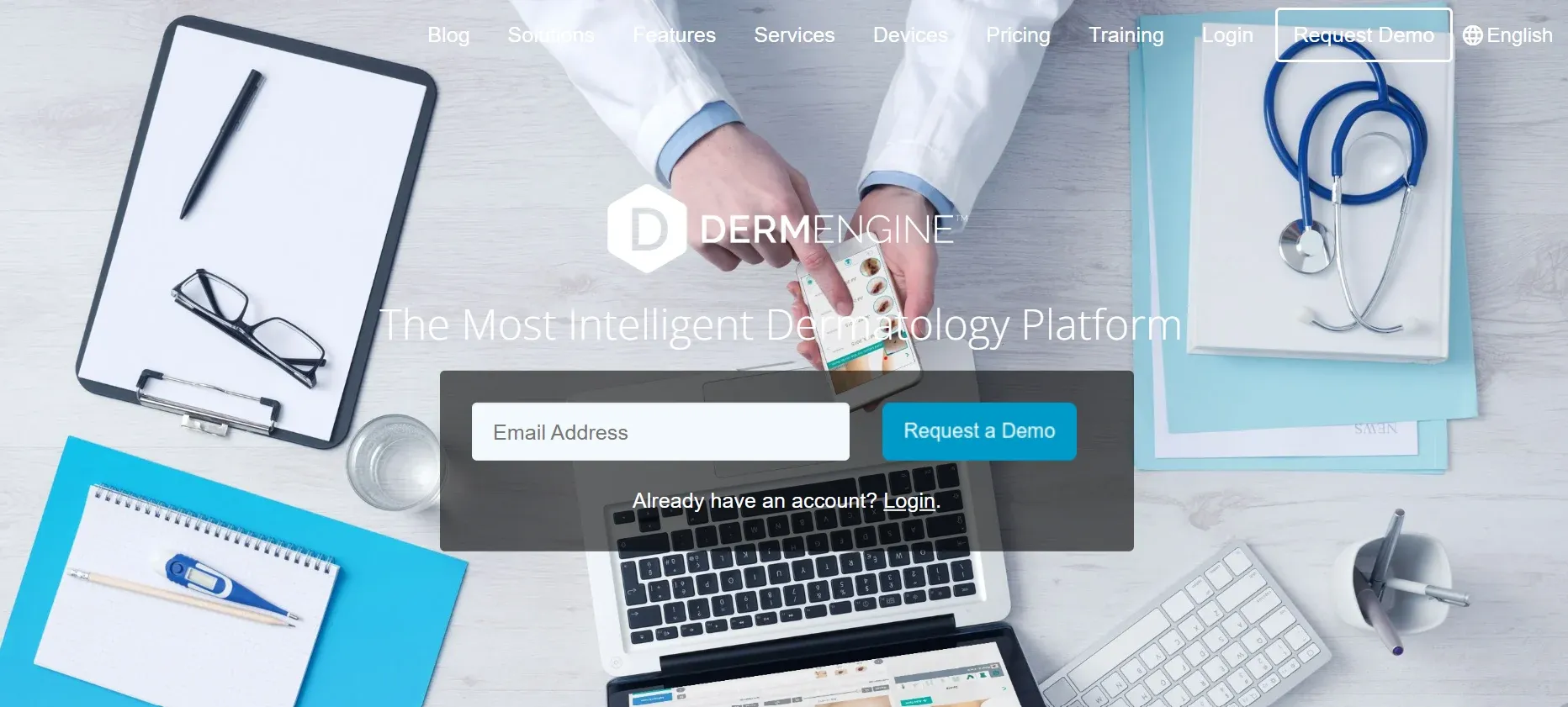
DermEngine is a specialized EHR platform focused on dermatology imaging, artificial intelligence, and teledermatology. It provides advanced tools for capturing, analyzing, and tracking skin lesions, with AI-powered decision support that can help flag suspicious findings or changes over time. DermEngine is cloud-based, accessible from any device, and designed to integrate with imaging hardware.
Pricing: Quote only. Costs may rise with image storage volume or advanced AI modules.
-
Key limitations:
- Learning curve for advanced imaging features
- May require integration with a separate EHR
- Pricing is not public
-
Strengths:
- Advanced imaging and AI analysis tools
- Teledermatology modules and patient portal
- Integration with dermatoscopes and imaging devices
If imaging is core to your business, Devaims can build AI and teledermatology features into your owned platform from day one.
8. PatientNow (Best for med spa and aesthetic practices)
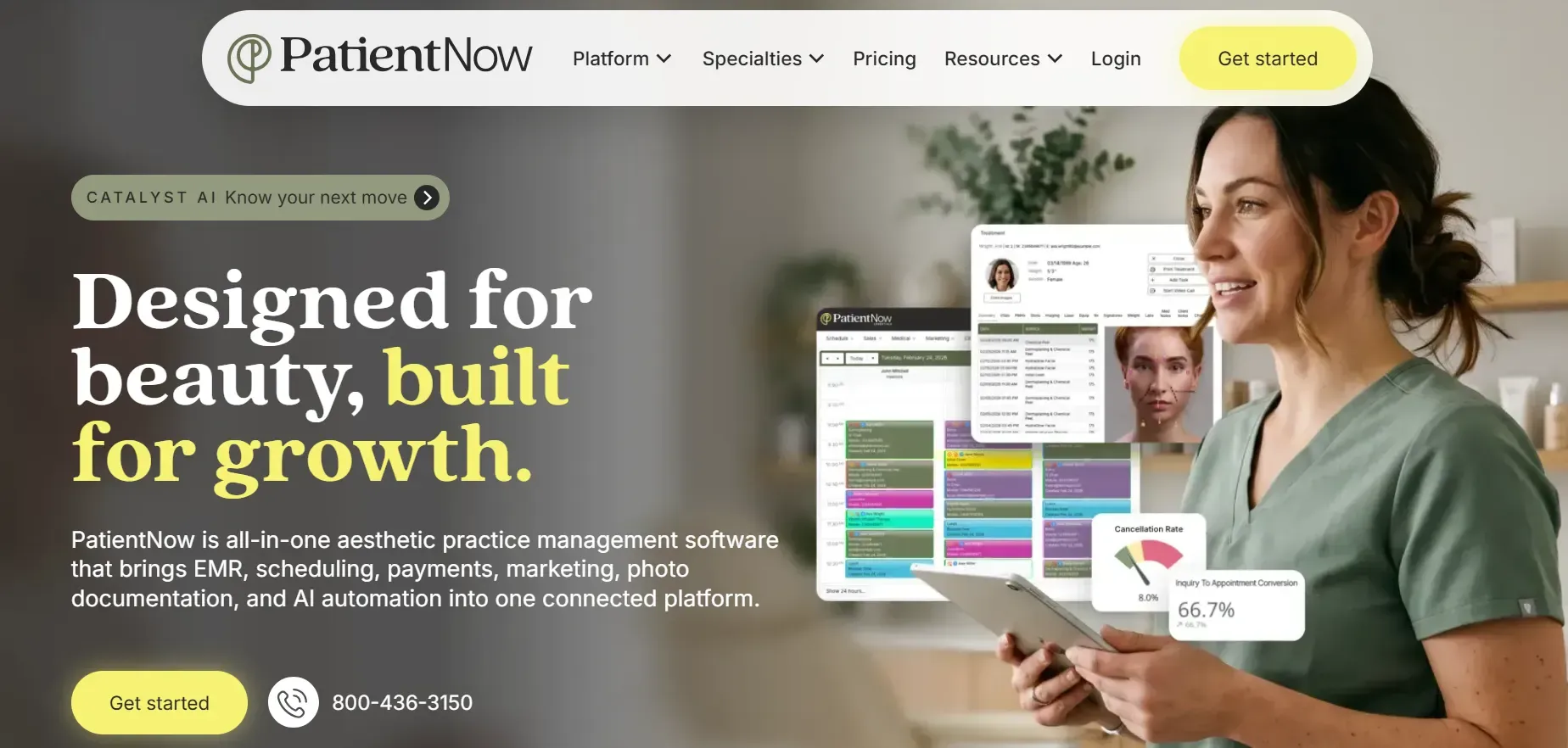
PatientNow is tailored for practices at the intersection of medical dermatology, aesthetics, and med spa services. It combines EHR, CRM, marketing automation, and inventory management in one platform. PatientNow’s focus on client engagement, before-and-after photos, and retail workflows makes it a good fit for hybrid dermatology practices offering both medical and cosmetic services.
Pricing: Custom quote. Pricing depends on features and practice size.
-
Key limitations:
- Platform breadth can be overwhelming for medical-only clinics
- Customization can be complex
- Some features may be unnecessary for non-spa practices
-
Strengths:
- Integrated EHR, CRM, and marketing tools
- Before-and-after photo management
- Inventory and product sales tracking
9. Aesthetic Record (Best for aesthetic dermatology)
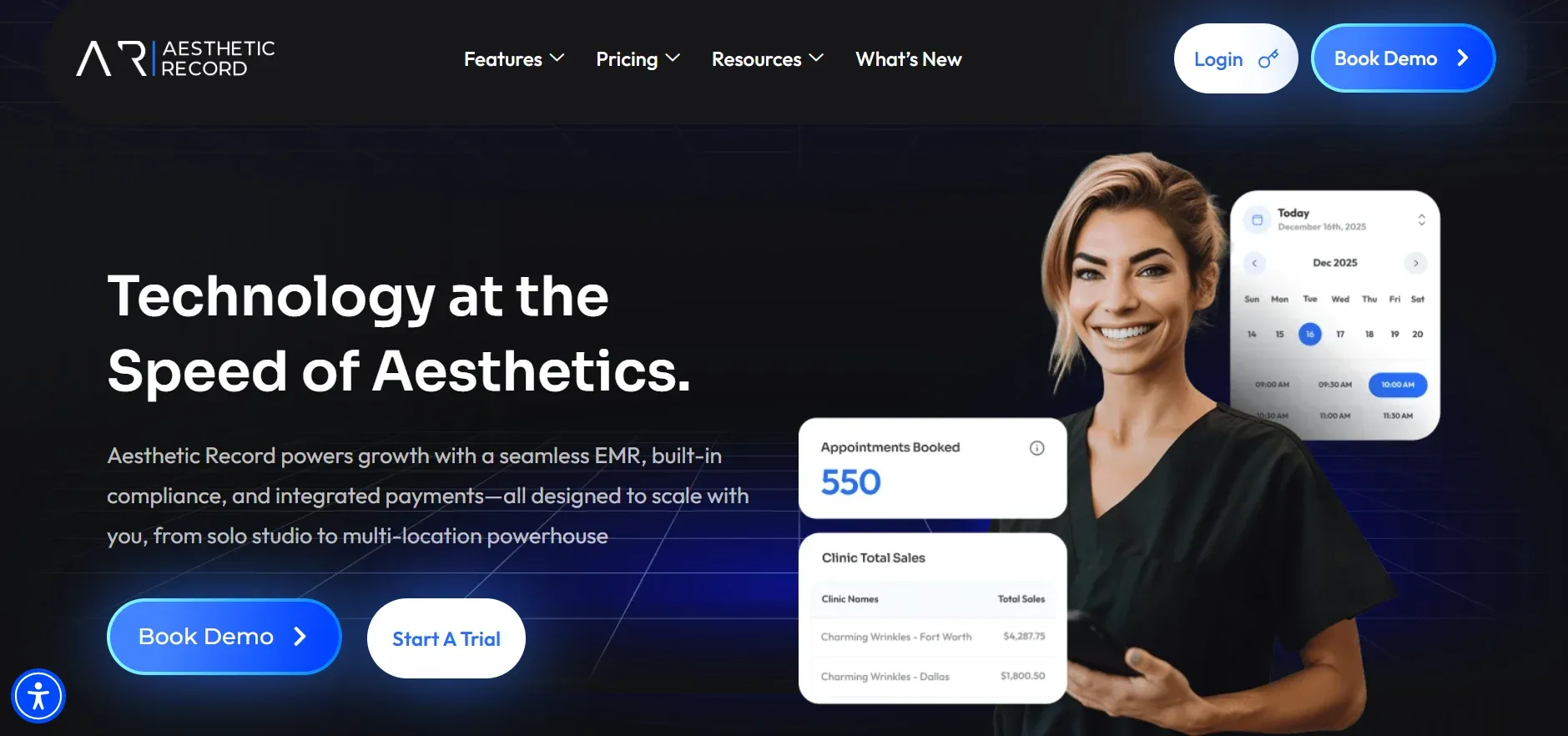
Aesthetic Record is a cloud-based EHR designed for aesthetic medicine and dermatology clinics that focus on procedures like injectables, laser treatments, and cosmetic consultations. Its strengths lie in visual documentation, client tracking, and integrated payments, features that are often lacking in general medical EHRs like Athenahealth.
Pricing: Quote only. Pricing and contract details are not public.
-
Key limitations:
- Not ideal for heavy medical dermatology or insurance billing
- Customization options are limited
- Lab and imaging integrations are limited
-
Strengths:
- Strong before-and-after photo management
- Integrated point-of-sale and inventory tools
- Client relationship management features
10. Devaims (The only alternative you own)
Devaims is the only option on this list where you commission a custom dermatology EHR and practice management system, own the source code, and control every feature and integration. There are no per-provider fees, no percent-of-collections contracts, and no vendor lock-in. Devaims works with you to design and build a platform that fits your exact workflows, integrates with your billing and imaging tools, and adapts as your practice grows, without recurring rent or forced upgrades.
- One-time build, then flat maintenance, no recurring rentYou own the code, the data, and every workflowZero per-user or per-provider fees, scale without penaltyCustom reporting, integrations, and specialty features by designDirect support from the development team, no ticket queuesFull control over upgrades, security, and compliance
- One-time build, then flat maintenance, no recurring rent
- You own the code, the data, and every workflow
- Zero per-user or per-provider fees, scale without penalty
- Custom reporting, integrations, and specialty features by design
- Direct support from the development team, no ticket queues
- Full control over upgrades, security, and compliance
Integrations: Devaims can integrate with any lab, billing service, imaging device, or third-party system you use. APIs and data connections are designed around your needs, not a vendor’s roadmap.
Migration friction: Devaims handles migration as part of the build, including extracting and mapping all patient records, images, and custom fields from Athenahealth or other EHRs. The process is tailored to minimize downtime and ensure clinical continuity.
Use cases: Ideal for practices with unique workflows, high provider count, or a mix of medical and cosmetic services. Also suited to clinics that want to future-proof their operations, own their data, and avoid the escalating costs of rented software.
Other Athenahealth alternatives worth knowing
- Cerner: A leading hospital EHR, best suited for large health systems. Overkill for most outpatient dermatology clinics due to complexity, cost, and implementation overhead.
- Intergy (by Allscripts): Geared toward primary care and multispecialty clinics, with less focus on dermatology-specific workflows or image management.
- OpenEMR: Open-source and free, but requires significant IT resources to deploy, customize, and maintain. Lacks dermatology templates and integrated imaging features.
- CareCloud: Well-regarded for multi-site practices and mid-size clinics, but costs can rise quickly with user count and add-ons. Dermatology specialty content is improving but not as deep as EMA or Nextech.
How to choose the right Athenahealth alternative
- Budget: Look beyond sticker price. Calculate your five-year cost per provider, including all add-ons, training, integrations, and support. Use real data from your practice to forecast total spend. Ask for a total cost of ownership (TCO) worksheet from each vendor.
- Specialty workflows: Dermatology practices need image management, procedure tracking, and custom coding tools. Shortlist systems built for dermatology or with proven customization in the field.
- Scalability: Model your EHR costs as you add providers or locations. Most per-seat or per-provider pricing models become expensive fast. If you plan to grow, prioritize solutions that won’t penalize success.
- Contract flexibility: Insist on clear terms for early termination, auto-renewal, and feature upgrades. Find out what happens if your needs change or you want to switch vendors.
- Ownership: If owning your data, workflows, and code matters, only a custom build delivers true ownership. Everything else is rent, no matter how it’s branded.
For clinics tired of paying the vendor every month, an owned solution like Devaims is the only way out of the rent cycle. For more on the math and strategy, see Software Advice’s EHR comparison and Chilmark Research for deep industry analysis.
Stop paying rent on software you could own
Every Athenahealth alternative on this list, from EMA to Practice Fusion, is still rented. The names change, but the math is the same: monthly fees, annual contracts, and per-user pricing that grows as you do. The only way to break the cycle is to own your dermatology platform outright, and that’s where Devaims comes in.
Devaims builds custom software for web, mobile, and business, handing you the source code and full ownership. You set the workflows, keep the data, and never pay per-user rent again. Whether you need complex imaging, AI tools, or just a system that fits your unique practice, it’s built for you. No contract lock-in, no surprise renewals, and no fees that scale with your success.
- No more percent-of-collections fees: Your revenue is yours, not shared with a vendor.
- No per-user or per-provider charges: Add staff at zero marginal cost.
- No forced upgrades or surprise hikes: Your features, your terms.
- Custom integrations and reports: Built to your needs, not a generic template.
- Source code in your hands: You own everything, forever.
| Tool | Ownership | Contract | Scalability Fees |
|---|---|---|---|
| Athenahealth | No | 3-year, auto-renew | Percent of collections |
| Practice Fusion | No | Annual | Per-provider ($199/mo) |
| Modernizing Medicine (EMA) | No | Multi-year typical | Per-provider, add-ons |
| Devaims | Yes | No contract | Flat maintenance only |
| Year | Rented (Practice Fusion) | Owned (Devaims) |
|---|---|---|
| 1 | $11,940 | $27,000 (build) + $1,800 (maint) = $28,800 |
| 2 | $23,880 | $29,400 |
| 3 | $35,820 | $30,600 |
| 4 | $47,760 | $31,800 |
| 5 | $59,700 | $33,000 (now ahead) |
In this scenario, owning pulls ahead in year 5 and keeps widening the gap. For practices with more providers, the break-even comes even sooner. If you’re scaling or tired of paying rent for your own data, Devaims is the alternative that changes the math.
How to switch from Athenahealth
- Export all patient records, clinical notes, images, billing records, and key practice data from Athenahealth. Request a full data dump, including structured and unstructured data, in industry-standard formats (such as HL7, CCD, or FHIR).
- Choose your new EHR or custom Devaims build. Confirm that your chosen vendor supports data import and has experience with Athenahealth migrations. Ask for references from similar practices.
- Import records into the new system, mapping each field to the new EHR’s structure. For dermatology, pay special attention to images, procedure codes, and historical documentation.
- Reconnect payments, labs, and third-party integrations. Verify that all connections (lab ordering, e-prescribing, imaging devices, payment processors) are active and tested.
- Train staff on new workflows, templates, and documentation standards. Run parallel systems for 2 to 4 weeks, validating that all clinical, billing, and scheduling processes work as intended.
- Review your Athenahealth contract. Time your switch to avoid auto-renewals or termination penalties, and ensure all outstanding claims are processed before shutting off access.
With a custom Devaims build, the migration is handled as part of the project, including data mapping, testing, and staff training. You retain full ownership of the data and platform from day one.
Frequently asked questions
What is the best Athenahealth alternative for dermatology?
Modernizing Medicine (EMA) is a leading commercial EHR for dermatology-specific workflows, with deep specialty content and imaging tools. However, if true ownership, unlimited scalability, and custom workflows are your priorities, Devaims is the only alternative where you own the platform, code, and data. Most other options remain subscription-based, with multi-year contracts and per-user fees.
What is the cheapest Athenahealth alternative?
Practice Fusion is the most transparent on price, starting at $199 per provider per month (annual contract). However, for clinics with more than three providers, the five-year cost quickly matches or exceeds what it would cost to own a custom platform with Devaims. When comparing costs, include all add-ons, support, and migration fees.
Is there a free Athenahealth alternative for dermatology?
Open-source platforms like OpenEMR are technically free, but they lack dermatology templates, image management, and integrated billing features. Most clinics find that the IT, security, and compliance costs of open-source solutions outweigh the savings. No major commercial EHR offers a truly free tier for dermatology practices.
Which Athenahealth alternative is best for imaging and AI?
DermEngine is a leader for advanced imaging and AI analysis, especially for teledermatology and skin cancer screening. However, Devaims can custom-build imaging, AI, and telehealth features directly into your owned EHR, eliminating per-image or per-module fees and giving you full control over data and workflows.
Can I keep my patient data when switching from Athenahealth?
Yes. With proper export and migration, you can retain all patient records, images, and notes. Devaims ensures you own your data and handles the migration, including validation and staff training. Always back up your data before making the switch, and request a full export in a standard format.
Why do so many dermatology clinics leave Athenahealth?
The top reasons are percent-of-collections fees, rigid contracts, and lack of dermatology-specific features (especially image management and procedure templates). Many clinics also cite hidden costs for add-ons, slow support, and frustration with auto-renewals or forced upgrades. That’s why the search for Athenahealth alternatives continues to grow among dermatology practices.
When does owning your EHR make more sense than renting?
If your five-year subscription cost would cover a custom build, or if you plan to scale providers, locations, or services, owning with Devaims is usually the smarter long-term move. Practices with unique workflows, advanced integration needs, or a desire for total data control also benefit most from ownership. We can run the numbers for your clinic, factoring in all hidden costs and growth plans.
The bottom line
Most Athenahealth alternatives just trade one kind of rent for another. The only honest way to break the cycle is to own your dermatology platform, no per-user fees, no contract lock-in, and no monthly surprises. Devaims is the only option here that gives you the code and control from day one.
Here’s the test: add up what your EHR will cost you over the next five years. If that number would have built you something you own, you already have your answer.
For more insights on owning your software, visit the Devaims blog or check out our deep dives on Tebra alternatives, Practice Fusion alternatives, and DrChrono alternatives.