



You know the drill: another quarterly invoice, another reminder that your legal management platform is someone else’s asset, not yours. Smokeball can feel like it’s optimized for billable hours, except they’re billing you. That creeping frustration isn’t just about price. It’s about being boxed into workflows, forced upgrades, and the sense you’re always renting your own firm’s operating system.
If you’ve started searching for Smokeball alternatives, you’re not alone. Clio, MyCase, PracticePanther, and their peers all promise smoother client intake and case management, but at the end of the day, you still don’t own the platform. The honest answer: if you want to stop paying by the user and start controlling your stack, the only real exit is a custom system built for you and owned by you. We’ll walk through the best rented options, then show why more firms are choosing to own with Devaims.
Why law firms look for Smokeball alternatives
Surprise fee creep: Smokeball’s per-user and add-on pricing means your monthly bill grows as your team does, and every integration or advanced feature can trigger a new charge. For example, adding a new associate or even a part-time paralegal can tack on hundreds annually. Integrations with e-signature, accounting, or court calendaring often cost extra, and these "hidden" add-ons can become a significant budget line item.
Feature gating and forced upgrades: Essential functions like advanced reporting, custom fields, or e-signatures are often locked behind higher tiers, prompting firms to pay for capacity they don’t need just to access one tool. Smokeball, like many SaaS legal tools, uses feature gating as a lever to upsell, which means you may find a must-have feature (such as document automation or robust analytics) only available if you move to a pricier plan, even if you don’t need the rest of that tier’s offerings.
Contract lock-in: Multi-year contracts and early termination fees can make switching out of Smokeball painful, even when your needs change or the platform doesn’t keep up. Some law firms discover that their renewal date is buried in fine print, requiring months of advance notice to avoid auto-renewal, and early exits can trigger costly penalties.
Data portability headaches: Exporting all your matters, contacts, and billing records is rarely as simple as they make it sound, and you risk losing history with every move. Firms switching away from Smokeball often find that attachments, custom fields, and even billing histories are not easily mapped to new systems, requiring manual work or costly migration services.
You never own it: After years of payments, your firm still doesn’t own its core system or data architecture. This is perhaps the most important reason legal teams are researching Smokeball alternatives: after five or ten years, you may have spent tens of thousands on a system you cannot modify, move, or truly call your own.
Quick comparison of the best Smokeball alternatives
| Tool | Best for | Starting price | You own it? |
|---|---|---|---|
| Clio | All-in-one, scalable firms | Reported $39/user/mo | No, subscription |
| MyCase | Integrated billing | Reported $39/user/mo | No, subscription |
| PracticePanther | Automation | Reported $49/user/mo | No, subscription |
| Lawmatics | Client intake | Reported $99/user/mo | No, subscription |
| CosmoLex | Accounting | Reported $89/user/mo | No, subscription |
| Rocket Matter | Time tracking | Reported $39/user/mo | No, subscription |
| AbacusLaw | Document automation | Reported $69/user/mo | No, subscription |
| Filevine | Workflow customization | Custom quote | No, subscription |
| Devaims | Owning your platform | One-time build | One-time build, you own it |
Always confirm current pricing before you decide, as most tools update tiers and add-ons yearly. Remember to factor in onboarding, migration, and integration costs, which are often not included in headline pricing and can materially affect your total spend.
The 9 best Smokeball alternatives
1. Clio (All-in-one, scalable firms)
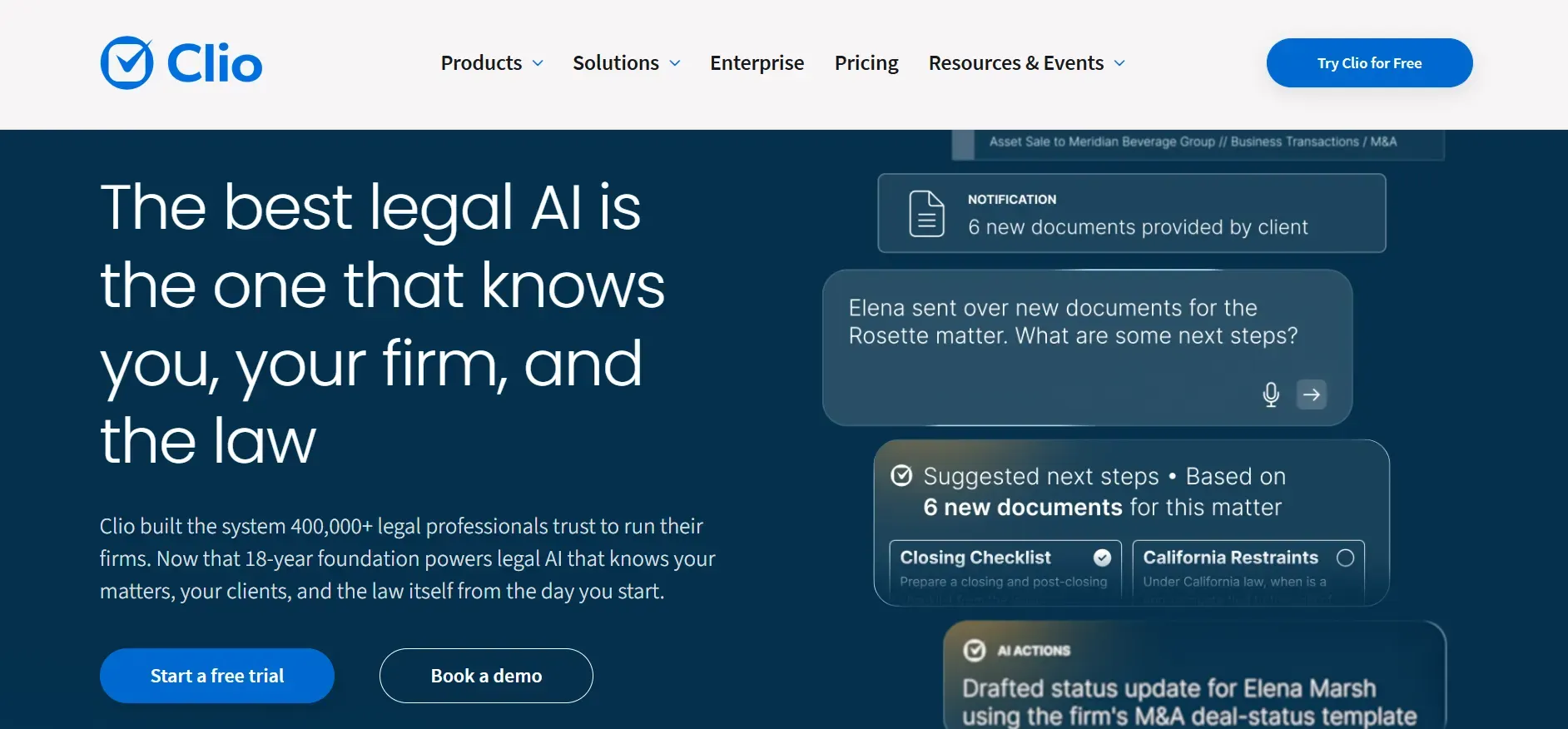
Clio is the most widely adopted cloud-based legal practice management system globally, with over 150,000 users and a strong reputation for reliability. Its two main products, Clio Manage (for core practice management) and Clio Grow (for CRM and intake), cover most firm needs from intake to invoicing. Clio’s interface is consistently praised for its intuitive design, and its mobile apps (iOS and Android) are among the best in legal tech, allowing time tracking, document access, and client communication on the go.
Clio excels in integrations, with over 200 available, including Dropbox, QuickBooks, DocuSign, and Microsoft 365. This ecosystem means most law firms can extend Clio’s functionality without custom development. Its API is open, allowing more advanced firms to build their own add-ons or integrations.
On a Devaims build, that per-user fee never returns, so your team size is your business.
Pricing: Starts at $39/user/month for basic plans. Advanced features require higher tiers or add-ons.
- Extensive integration ecosystem (200+ apps)
- Intuitive interface and strong mobile apps
- Reliable support and regular updates
- Advanced features like document automation and analytics require higher-priced tiers or add-ons
- Per-user pricing accumulates quickly for growing teams
- Customization is limited to what’s offered or available via the API
2. MyCase (Integrated billing)
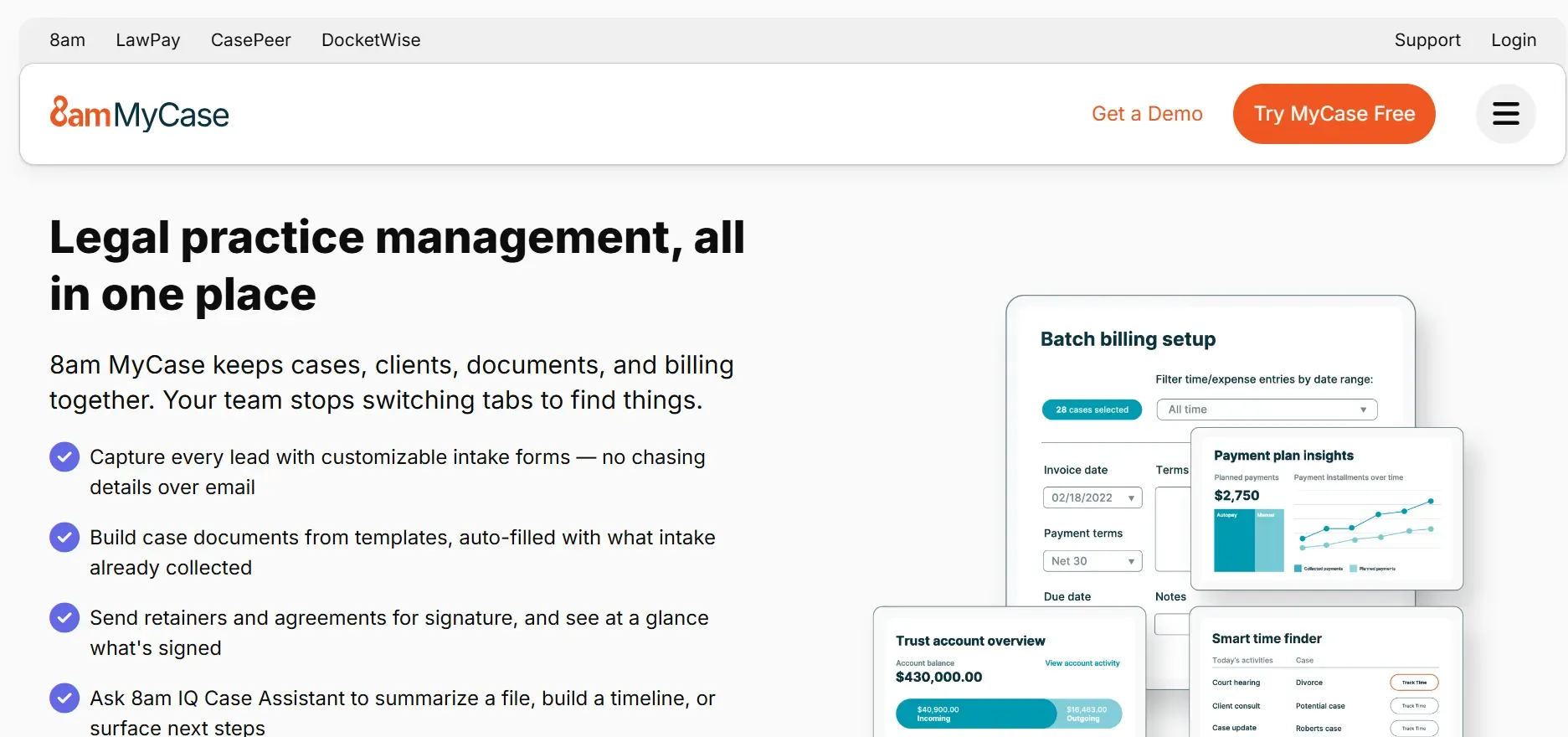
MyCase is designed for law firms that want an all-in-one platform with a particular focus on billing, payments, and client communications. Its client portal is a highlight: clients can securely message your firm, view documents, and pay invoices, all in one place. MyCase offers integrated time tracking, calendaring, task management, and workflows, which are especially helpful for solo and small firms looking to reduce admin time.
With a Devaims custom system, texting fees and integration walls disappear, and you own the workflow.
Pricing: Starts at $39/user/month. Add-ons for text messaging and advanced accounting are extra.
- Integrated client portal for communication and payments
- Easy onboarding and user-friendly interface
- Automated reminders and batch billing
- Per-user and per-add-on pricing can escalate
- Accounting module is less comprehensive than CosmoLex
- Integration ecosystem is smaller than Clio
3. PracticePanther (Automation)
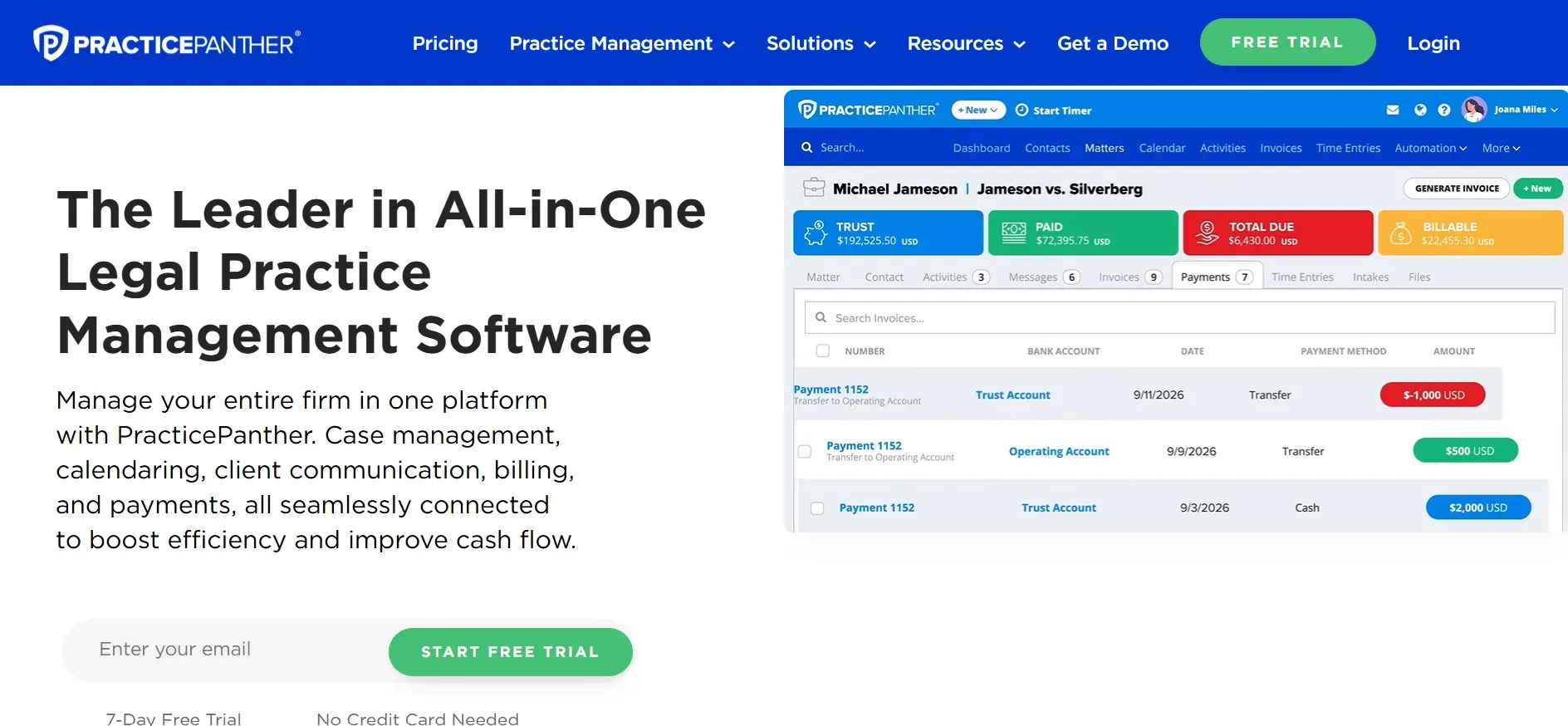
PracticePanther is built for firms that want to automate as much as possible. Its workflow engine supports conditional triggers, template-based document assembly, and automated reminders. The platform is highly customizable: you can create custom fields, automate task lists, and build custom reporting dashboards. PracticePanther’s interface is modern, with color-coded dashboards and drag-and-drop workflows.
Pricing: Starts at $49/user/month. Full automation suite is only on higher-priced plans.
- Highly customizable workflows and dashboards
- Modern interface with automation tools
- Good range of integrations (QuickBooks, LawPay, Zapier)
- Full automation suite only on higher-priced plans
- Document automation may lack flexibility of dedicated tools
- Custom reporting is less granular than some competitors
4. Lawmatics (Client intake)
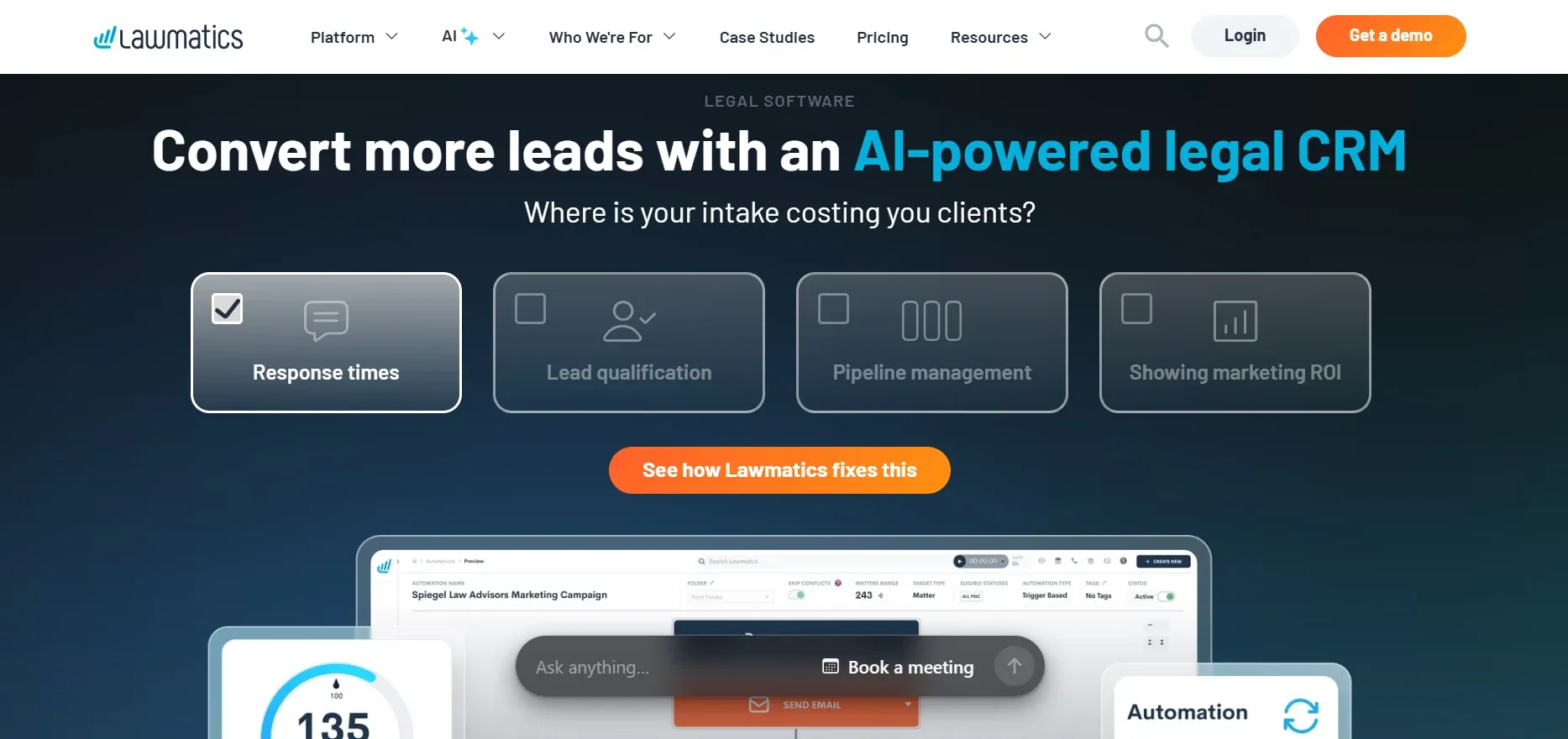
Lawmatics is a CRM and client intake powerhouse, designed to automate the entire client journey from lead to signed engagement letter. Its visual workflow builder allows firms to create multi-step automations, such as sending follow-up emails, assigning tasks, and triggering reminders based on client responses or document uploads.
Pricing: Starts at $99/user/month. Advanced automations and integrations may require higher tiers.
- Powerful intake and marketing automation
- Customizable client journey analytics
- Integrates with leading legal SaaS platforms
- Expensive if used only for case management
- Steep learning curve for advanced automations
- Best used alongside another practice management tool
5. CosmoLex (Accounting)
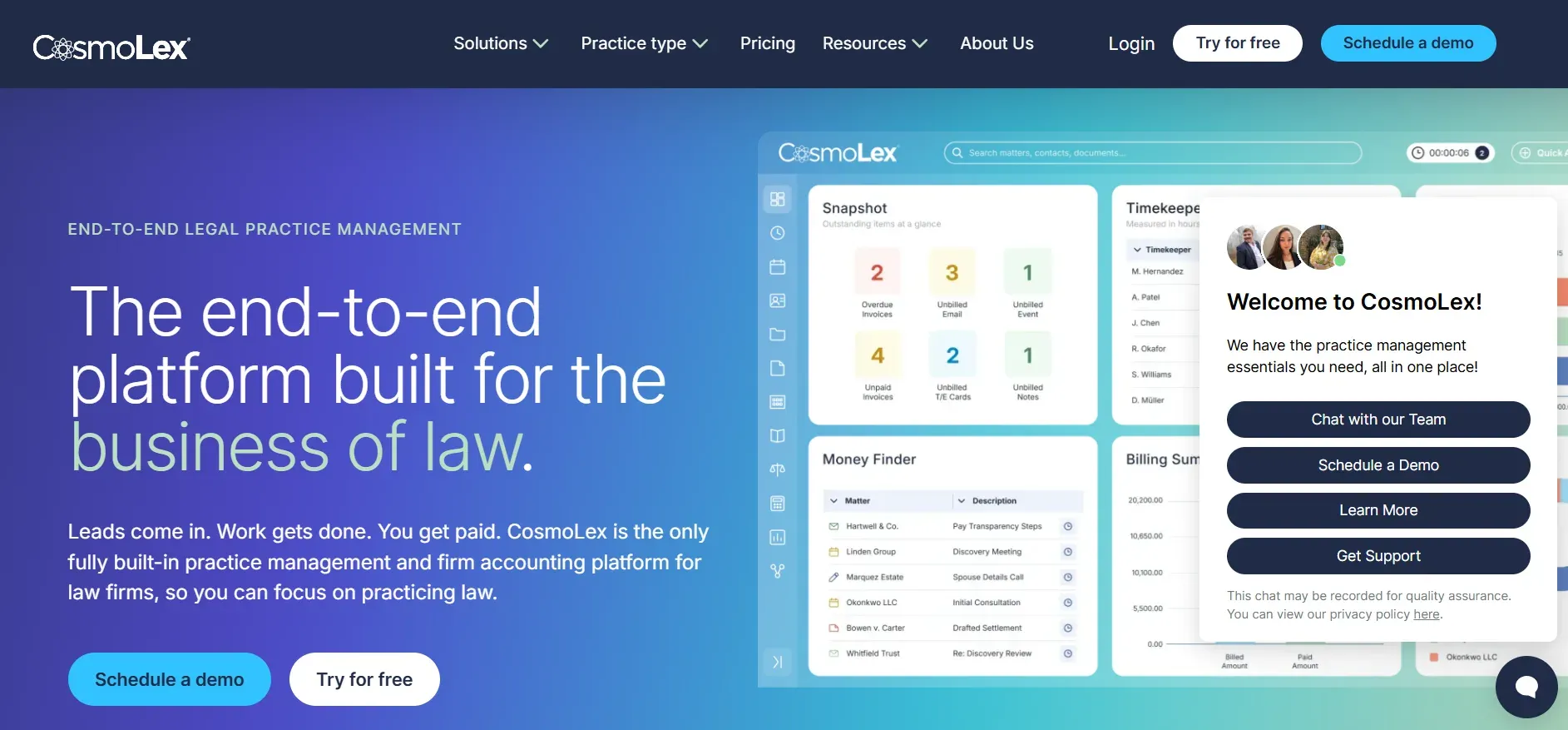
CosmoLex is unique for its built-in, legal-specific accounting, including trust accounting and compliance tools that meet state bar requirements. Unlike most competitors, CosmoLex eliminates the need for a separate QuickBooks subscription by including accounting, billing, and practice management in one interface. It supports full double-entry accounting, three-way reconciliations, and audit trails, which are critical for firms with complex trust requirements.
With Devaims, you get accounting tailored to your process, not the other way around.
Pricing: Starts at $89/user/month. Includes accounting and practice management.
- Full legal accounting and trust compliance built-in
- Consolidates billing, payments, and accounting
- Strong onboarding and compliance support
- Higher price per user than many competitors
- Customization is limited to platform templates
- Fewer native integrations for advanced automation
6. Rocket Matter (Time tracking)
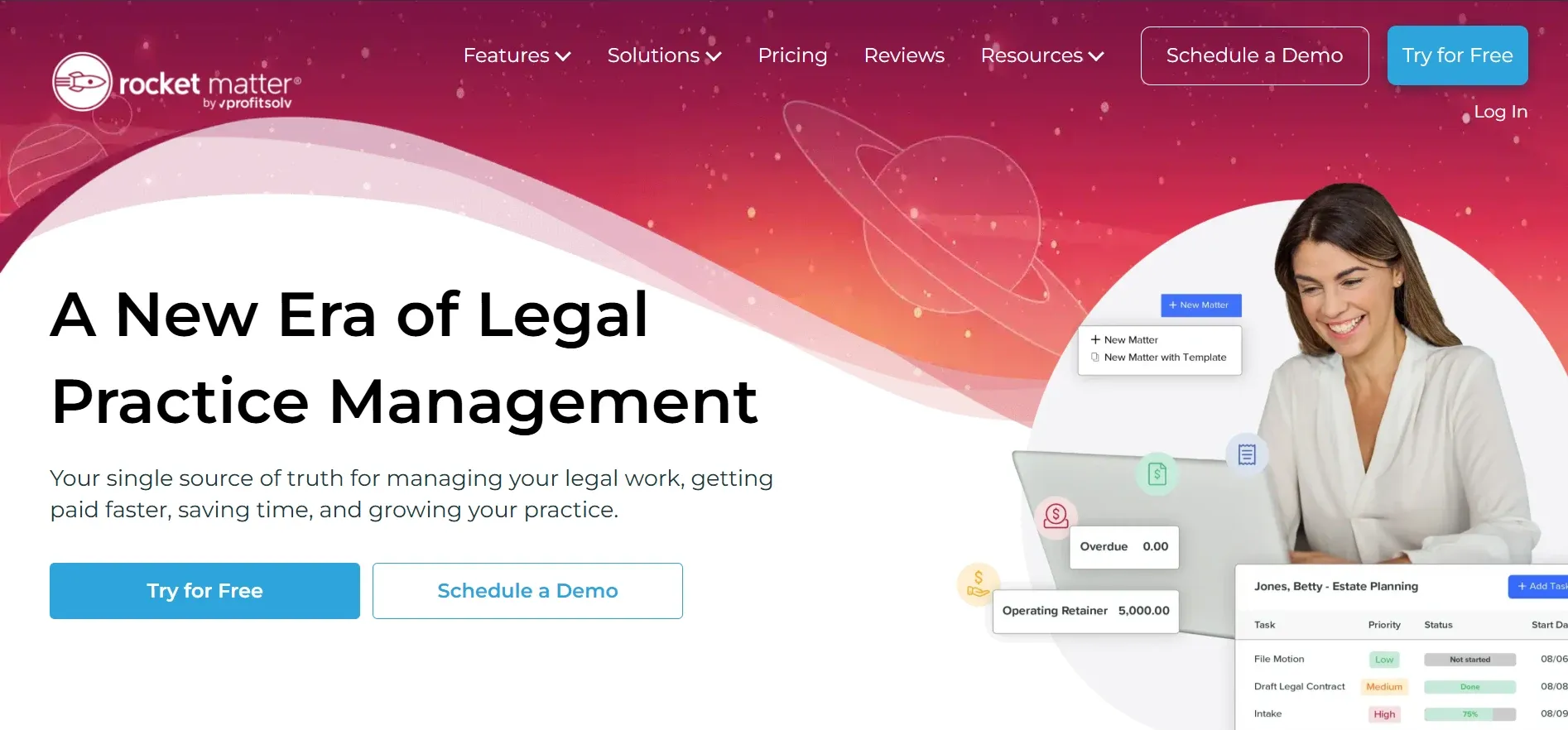
Rocket Matter is a veteran in the legal SaaS space, known for fast and user-friendly time tracking. Its mobile app lets attorneys track time and expenses from anywhere, and its batch billing tools are designed for firms with high invoice volumes. Rocket Matter offers a classic, list-based interface, which some firms love for its simplicity and speed.
Pricing: Starts at $39/user/month. Add-ons for text messaging and advanced analytics are extra.
- Fast, reliable time tracking and batch billing
- Mobile app for on-the-go attorneys
- Strong reporting suite for productivity and billing
- User interface can feel dated
- Key features only in higher-priced plans
- Integration ecosystem is smaller than Clio’s
7. AbacusLaw (Document automation)

AbacusLaw is a mature, feature-rich platform with a reputation for deep document automation and calendaring. Unlike most modern cloud tools, AbacusLaw is often deployed on-premise or in a private cloud, giving firms more control over their data location and compliance. Its document assembly engine lets users build complex, rule-driven templates for everything from pleadings to engagement letters.
Pricing: Starts at $69/user/month. On-premise deployments may require setup fees.
- Deep document automation and calendaring
- Customizable workflows and forms library
- On-premise or private cloud deployment options
- Legacy user interface can be unintuitive
- Onboarding and support require more hands-on setup
- Fewer integrations with modern cloud apps
8. Filevine (Workflow customization)
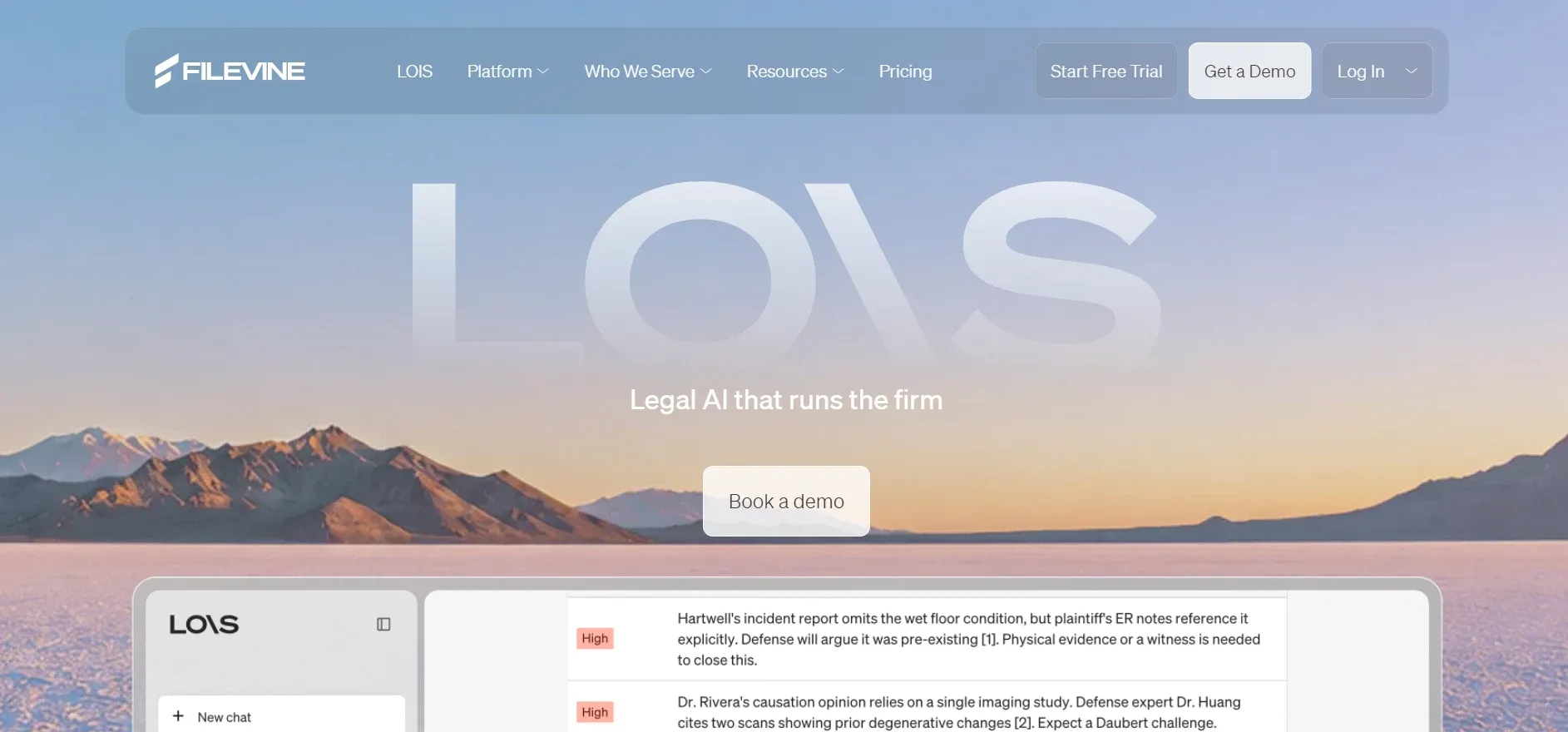
Filevine is built around workflow automation and custom project management, making it a popular choice for firms that have outgrown the rigid structure of Smokeball. Its interface is modern and flexible, allowing firms to create custom fields, workflows, and document templates for any practice area. Filevine’s document management is robust, with versioning and full-text search, and its communication tools include internal chat and client texting (with audit trails).
With Devaims, you can build exactly the workflow you want and keep it.
Pricing: Custom quote. Add-ons and advanced modules may increase costs.
- Highly customizable workflows and fields
- Robust document management and communication tools
- API for custom integrations
- Pricing is opaque and often higher as add-ons accumulate
- Steep learning curve for advanced customization
- Data export and migration can be challenging
9. Devaims (Owning your platform)
Devaims builds custom legal practice management software you own outright. Your code, your data, your workflows. Instead of renting someone else’s platform, you define your intake, billing, and reporting, with no per-user or per-feature fees. Every function, from matter management to billing to custom dashboards, is built to your specifications. You can match your firm’s unique workflow, integrate with any system you need (from legacy accounting to modern e-signature), and keep your data in your cloud or on your servers.
- One-time build, then flat maintenance, no per-user or per-feature rent
- Custom workflows, features, and branding made for your firm
- You own the code and data, with no contract lock-in
- Integrates with your existing stack, not the other way around
- Migration and training handled as part of the project
- Unlimited users, unlimited data, and full control over hosting and compliance
With a Devaims platform, you’re never forced into upgrades or artificial limitations. It’s your system, built for your firm, and you keep every bit of it.
Other Smokeball alternatives worth knowing
- LexisNexis PCLaw: Strong for accounting and billing, but not a full cloud practice management stack. It’s best suited for firms that want robust financials and are comfortable with on-premise or hosted solutions.
- Needles: Great for personal injury case management and type specialization, but its old-school desktop UI and limited cloud features make it less appealing for firms wanting modern, mobile access.
- Zola Suite: Offers a middle ground between cloud and desktop, with good accounting and document automation, but lacks the depth of customization and wide adoption of top competitors.
- LEAP: Popular in Australia, the UK, and some US regions. Powerful for template-driven workflows, but high per-user fees and limited workflow flexibility can frustrate firms looking for more control.
How to choose the right Smokeball alternative
- Budget: Do the math on per-user and add-on fees at your current or planned headcount, not just the headline price. Include onboarding, migration, and any "hidden" costs like required add-ons or annual maintenance.
- Core needs: If billing, document automation, or client intake is your bottleneck, focus on tools that do that best. For example, CosmoLex is best for accounting, Lawmatics for intake, and Filevine for workflow automation.
- Firm size: Small teams value simplicity, while large or fast-growing firms need scalability, advanced reporting, and integration. Consider future growth, as outgrowing your platform can be costly.
- Data control: If owning your data and workflows matters, rented SaaS won’t deliver true control. Only custom or open-source solutions provide true ownership and portability.
- Migration support: Switching only works if your new partner helps you move and supports your team during the transition. Ask about migration timelines, validation, and user training.
If you’re tired of contracts and want something that scales without surprise fees, it may be time to consider owning instead of renting.
Stop paying rent on software you could own
Here’s the rub: every Smokeball alternative above is still rented. No matter how slick the features or how friendly the onboarding, you’re signing up to pay per user, per month, forever. That’s the model, because the platform is never truly yours. Even if you negotiate a better rate or get a year of free onboarding, the long-term math is inescapable: SaaS is designed for recurring revenue, not ownership.
Devaims builds custom legal practice management platforms that your firm owns outright. You get the source code, unlimited users, and the freedom to evolve your workflows as your practice grows. No more worrying about forced upgrades, surprise add-ons, or contracts that outlast your needs. You also gain the ability to host your data wherever you want, meeting even the strictest data sovereignty and privacy requirements.
- No per-user rent, ever: Add or remove users as you need, with zero impact on your costs.
- Own your features: If you want a report, dashboard, or workflow, it’s built for you, not gated by a tier.
- Take your system anywhere: Host on your own cloud, integrate with your stack, and export data any time.
- Flat, predictable maintenance: Your only recurring fee is a stable, low monthly maintenance plan, covering hosting, updates, and support.
| Tool | Ownership | Per-user fees | Contract lock-in |
|---|---|---|---|
| Clio | Rented | Yes | Yes |
| MyCase | Rented | Yes | Yes |
| Filevine | Rented | Yes | Yes |
| Devaims | You own it | No | No |
| Year | Rented software (e.g. Clio, $49/user/mo x 12 users) | Devaims (one-time build: $32,000, $190/mo maint) |
|---|---|---|
| Year 1 | $7,056 | $34,280 |
| Year 2 | $14,112 | $36,560 |
| Year 3 | $21,168 | $38,840 |
| Year 4 | $28,224 | $41,120 |
| Year 5 (break-even) | $35,280 | $43,400 |
In this example, the rented SaaS and Devaims cross at year five. After that, every new user and year makes owning your platform the smarter move. The larger your team gets, the faster you pull ahead. We’ll run the math for your firm, no strings attached. And if your firm grows faster than planned, the per-user savings accelerate even more.
How to switch from Smokeball
- Export all matters, contacts, and documents from Smokeball (CSV/XML export tools). Verify that attachments, custom fields, and billing histories export cleanly. If needed, request a full data export from Smokeball support for best results.
- Choose your new software or custom build partner and confirm your migration plan. Ask for a detailed migration checklist and a timeline for each step.
- Import your data into the new system, double-checking field mapping and document links. Test with a subset of data first to ensure accuracy.
- Reconnect payment processors, e-signature, and other integrations. Validate that all workflows (billing, intake, calendaring) function as expected.
- Train your staff on the new workflows and any interface changes. Schedule hands-on sessions and provide documentation or video tutorials.
- Run both systems in parallel for at least one billing cycle to test and validate data. Confirm that nothing is missed and that invoices, time entries, and matters are correct.
- Review your Smokeball contract for exit fees or auto-renewal clauses. Provide any required notice to avoid renewal penalties.
With a custom Devaims build, the migration is handled as part of the project. You have a dedicated project manager to coordinate every step, from data mapping to final training and support.
Frequently asked questions
What is the best Smokeball alternative for small law firms?
For small law firms, MyCase and Clio are popular due to easy onboarding, affordable entry points, and strong support. MyCase is especially good for firms that want integrated billing and a client portal without complex setup, while Clio offers a broader integration ecosystem. However, if you want to avoid subscription creep as you grow, owning with Devaims is the only way to escape monthly rent and future-proof your investment.
What is the cheapest Smokeball alternative?
Entry-level plans from Rocket Matter and Clio start at around $39/user/month, making them the lowest-cost options for very small firms. However, as your team grows or you need advanced features (such as document automation, advanced reporting, or custom workflows), the real costs rise sharply. Over five years, especially for teams larger than five users, a Devaims build can be dramatically cheaper and delivers total ownership.
Is there a free alternative to Smokeball?
There is no full-featured, free practice management platform for law firms at the level of Smokeball. Open source tools like Casebox or Legal Case exist, but they lack legal compliance features, reliable support, and the integrations modern practices expect. The only way to avoid monthly fees and maintain professional standards is to own your system outright with a custom build from a provider like Devaims.
Which Smokeball alternative is best for accounting and compliance?
CosmoLex stands out for legal accounting and trust compliance, with built-in tools to satisfy even the strictest state bars. Clio offers decent accounting integrations, but you’ll likely need QuickBooks or Xero for full compliance. With Devaims, you can have accounting workflows designed specifically for your firm’s needs, including custom trust accounting, compliance dashboards, and audit trails tailored to your jurisdiction.
Can I migrate all my data from Smokeball to a new platform?
Most leading alternatives support data import, but the process can be complex. Attachments, custom fields, and multi-year billing histories often require professional migration help. Some vendors provide migration specialists for a fee, while Devaims manages the migration as part of your build, ensuring that all matters, contacts, documents, and billing records are preserved and mapped correctly so you start on day one with your history intact.
When should a law firm switch from Smokeball?
Consider switching when subscription costs outpace value, you’re hitting feature walls, or your growth is limited by per-user fees and contract lock-in. If you need features that require expensive upgrades, or if you want full control and ownership of your platform and data, it’s time to look beyond rented platforms to a custom solution. Many firms switch when they calculate their five-year spend and realize they could have built something better for less.
Can I keep my firm’s workflow if I switch to a new tool?
Most SaaS alternatives require you to adapt to their workflow and processes, which can be disruptive for established teams. With a Devaims custom build, your workflow is the blueprint, your intake, billing, reporting, and document management are mapped exactly as you want them, so nothing is forced or left behind. You can even replicate legacy workflows or automate new ones as your firm evolves.
The bottom line
Most Smokeball alternatives are rented, not owned. If you want to break free from per-user fees, contract lock-in, and artificial feature gates, owning your own platform is the only true alternative. The difference is not just in cost, but in control, flexibility, and long-term value.
Here’s the test: add up what your current tool will cost you over the next five years. If that number could have built you a system you own, you already have your answer. Sometimes, the smart money is on ownership, and control over your own future.
For more insights, visit the Devaims blog or check out related guides: Clio alternatives, MyCase alternatives, and PracticePanther alternatives.