



You know the moment: another price hike, another integration that turns into a six-week ticket, another year of rent paid on software you never really own. Orthopedic clinics running on Raintree feel that pain. By year three, the math stings, with monthly fees, add-ons, and "premium" support that never quite delivers. Then you realize: that money could have built you something permanent.
So what are the best Raintree alternatives? Modernizing Medicine, Nextech, Kareo, AdvancedMD, and Athenahealth are the big names. WebPT and Greenway are strong for rehab or multi-specialty. But every SaaS option comes with lock-in and fees that pile up. The only way out of the rent spiral? Own your EMR. Devaims is the route for clinics ready to break free, and we'll show you how the numbers work, right down to the five-year cost.
Why orthopedic clinics look for Raintree alternatives
Orthopedic practice management is complex and highly specialized. Raintree, while established, often leaves clinics feeling boxed in. Here are the most common reasons clinics start looking for alternatives:
- Locked-in contracts: Raintree typically requires multi-year agreements, making it hard to leave without penalties or disruption. For clinics that want flexibility and leverage in vendor relationships, this can be a dealbreaker. Breaking a contract early usually means paying out the remaining term or facing hefty termination fees, especially if custom integrations or data migrations are involved.
- Surprise add-on fees: Essential features, like advanced reporting, custom dashboards, or patient portal access, often require extra charges or higher subscription tiers. Clinics that grow or diversify services are often forced into more expensive plans just to access the tools they need. Over time, this can double your original quoted price.
- Integration headaches: Connecting with imaging (PACS), billing, labs, or custom workflows usually means more tickets, more delays, and more spend. Many Raintree users report waiting months for HL7 or FHIR integrations, and even then, ongoing support may be limited. If you want to connect to newer telehealth, e-prescribing, or analytics platforms, you may find the integration options limited or costly.
- Scaling costs: As your clinic grows, per-provider, per-location, or per-visit pricing means bills can double or triple, without any added ownership or value. If you add part-time providers, locums, or expand to new sites, your costs rise linearly with no volume discounts.
- Slow feature updates: New compliance needs (like CURES, MIPS, or evolving state reporting) or workflow requests often wait months in the vendor's queue if they don't fit the company's roadmap. For clinics with unique requirements, this can mean paying for outside consultants or living with outdated workflows.
For many, these are the triggers that send them searching for Raintree alternatives. The real pain point? After years of payments and workarounds, you still don't own a system that fits your practice.
Quick comparison of the best Raintree alternatives
| Tool | Best for | Starting price | You own it? |
|---|---|---|---|
| Modernizing Medicine (Ortho) | Full-featured ortho clinics | Reported $799+/provider/mo | No, SaaS |
| Nextech | Customizable workflows | Custom quote | No, SaaS |
| Kareo (Tebra) | Small to mid-size practices | Reported $125+/user/mo | No, SaaS |
| AdvancedMD | Integrated billing and PM | Starts $429+/provider/mo | No, SaaS |
| Athenahealth | Large, multisite clinics | Reported 4%+ of collections | No, SaaS |
| ChartLogic | Voice-driven charting | Custom quote | No, SaaS |
| OpNote | Surgical documentation | Custom quote | No, SaaS |
| Greenway Health | Multi-specialty clinics | Reported $799+/provider/mo | No, SaaS |
| WebPT | Rehab & PT clinics | Starts $3+/day/provider | No, SaaS |
| Devaims | Clinics that want to own | One-time build, you own it | One-time build, you own it |
Always confirm current pricing before you decide, as list prices can change and real costs depend on add-ons and usage. If you have highly specialized needs, always ask for a detailed quote that includes integration, support, and migration, not just the base price.
The 9 best Raintree alternatives
1. Modernizing Medicine (Ortho) (best for full-featured ortho clinics)
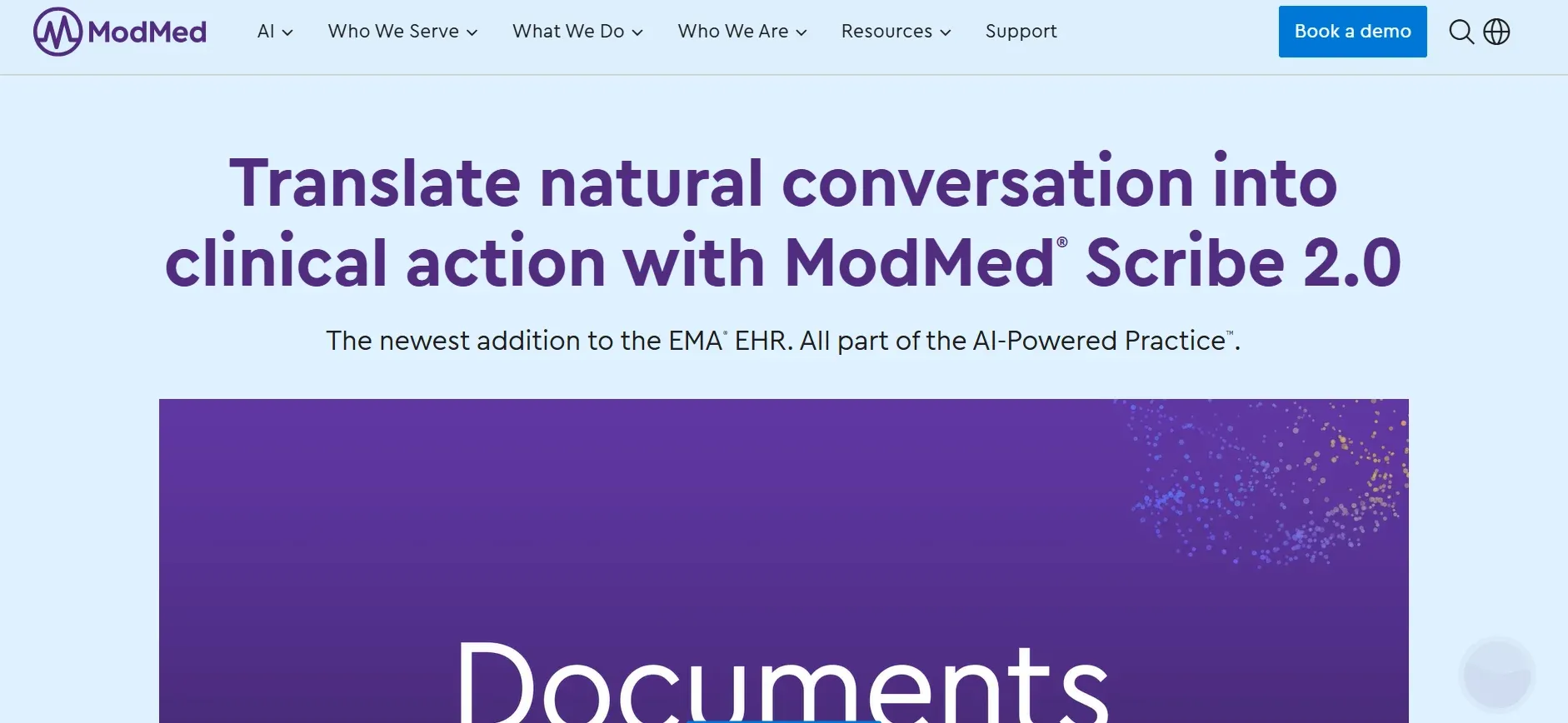
Modernizing Medicine’s EMA Ortho is a cloud-based EMR platform purpose-built for orthopedic practices. Its main draw is the depth of specialty content, with preloaded templates for hundreds of common diagnoses and procedures. The system leverages structured data, which means documentation can be fast and coding suggestions are provided in real time, helping clinics maximize reimbursement and minimize compliance risk.
Pricing: Reported $799+/provider/month. Confirm with vendor for your clinic size and needs.
- Deep orthopedic content and specialty templates
- Mobile and iPad-optimized charting
- Integrated analytics and compliance tools
- High per-provider cost, especially for larger clinics
- Customization limited to platform-supported options
- Advanced integrations and template tweaks often require extra fees
If you need more control over integrations or want to avoid ongoing per-provider fees, Devaims can build a system tailored to your workflows and budget.
2. Nextech (best for customizable workflows)
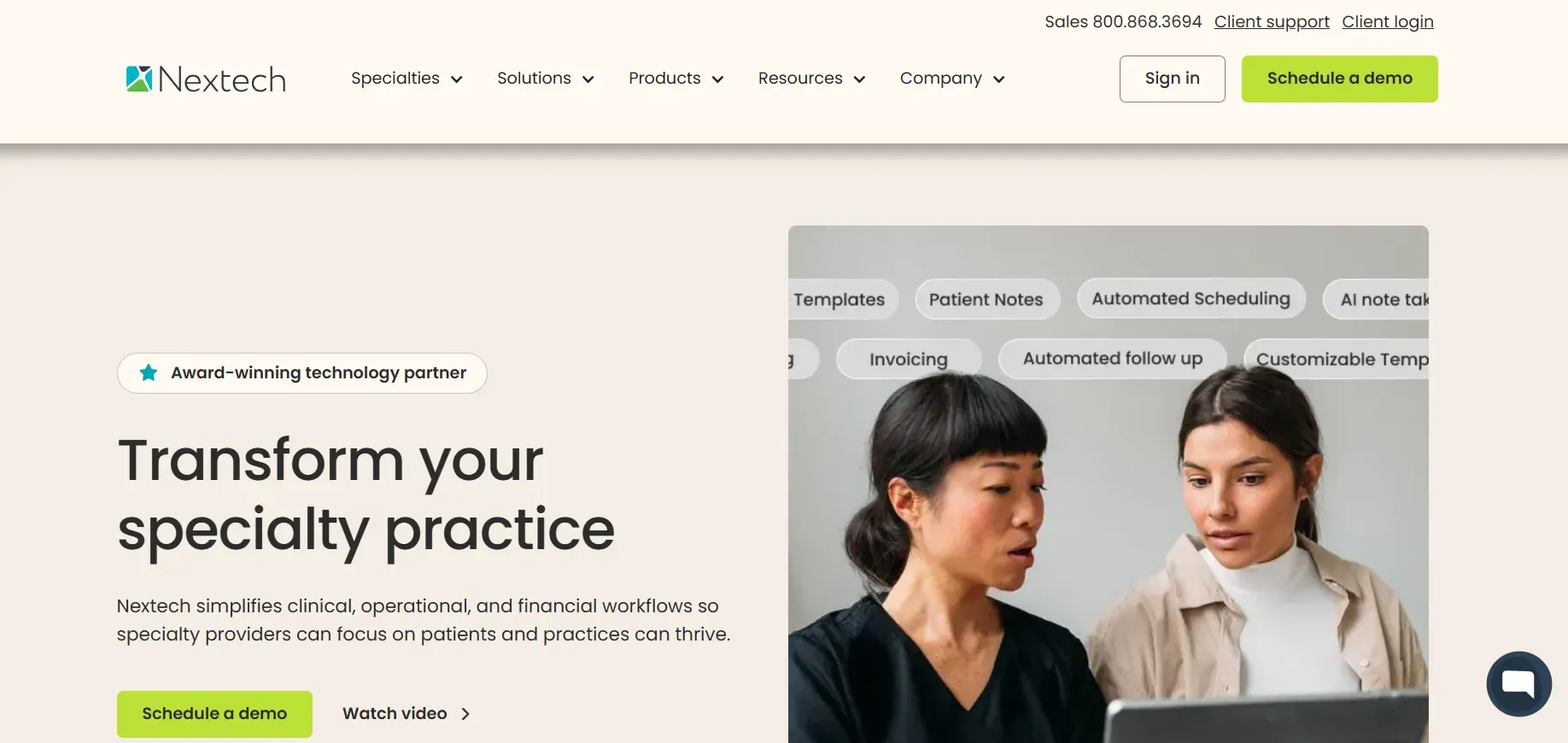
Nextech specializes in specialty EMRs with a strong orthopedic offering. Its standout feature is deep workflow customization: clinics can tailor templates, encounter types, and even UI layouts. Nextech’s platform is also known for its speed and stability, often cited as an upgrade over Raintree’s sometimes clunky interface.
Pricing: Custom quote required. Pricing varies by clinic size and modules.
- Highly customizable workflows and templates
- Integrated practice management and billing
- Comprehensive imaging and e-prescribing support
- Enterprise-level costs for mid-sized clinics
- Customizations may require ongoing vendor involvement
- Annual contracts and feature upgrades depend on vendor roadmap
For clinics that want to own their customizations and avoid vendor lock-in, Devaims offers a fully owned solution with no recurring seat fees.
3. Kareo (Tebra) (best for small to mid-size practices)
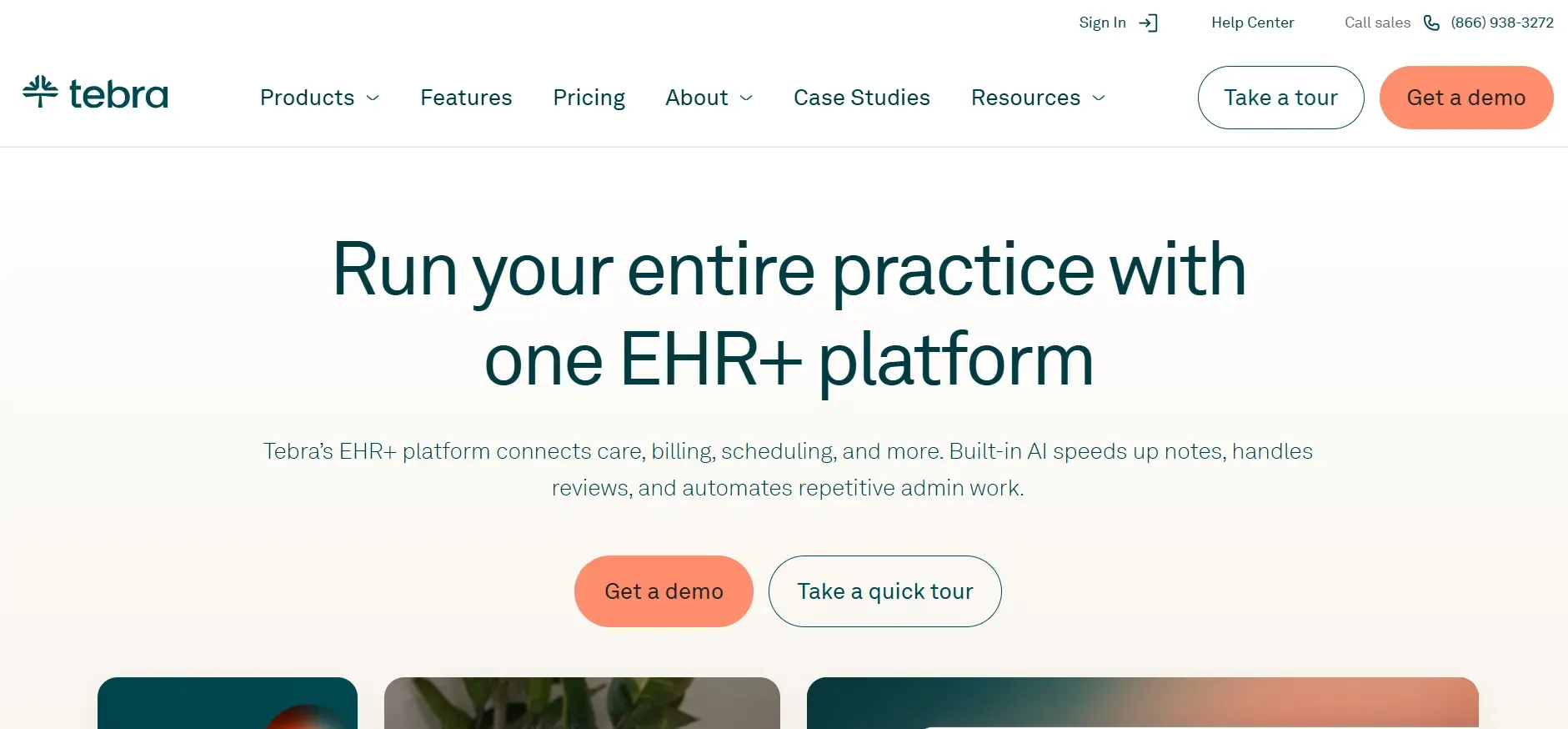
Kareo, now operating as Tebra, positions itself as a user-friendly cloud EMR for independent practices. Its simple pricing and fast onboarding make it attractive for solo providers or small groups making their first switch from paper or outdated systems. The platform focuses on the essentials: charting, scheduling, billing, and telehealth.
Pricing: Starts at $125+/user/month. Add-ons and integrations may increase total cost.
- Simple, intuitive interface
- Fast onboarding and migration for small practices
- Integrated billing and telehealth
- Limited advanced reporting and analytics
- Specialty workflows for orthopedics are basic
- Integration options are limited for complex needs
If you expect to grow or need advanced customization, Devaims can build a platform that scales with your clinic and never charges per user.
4. AdvancedMD (best for integrated billing and PM)
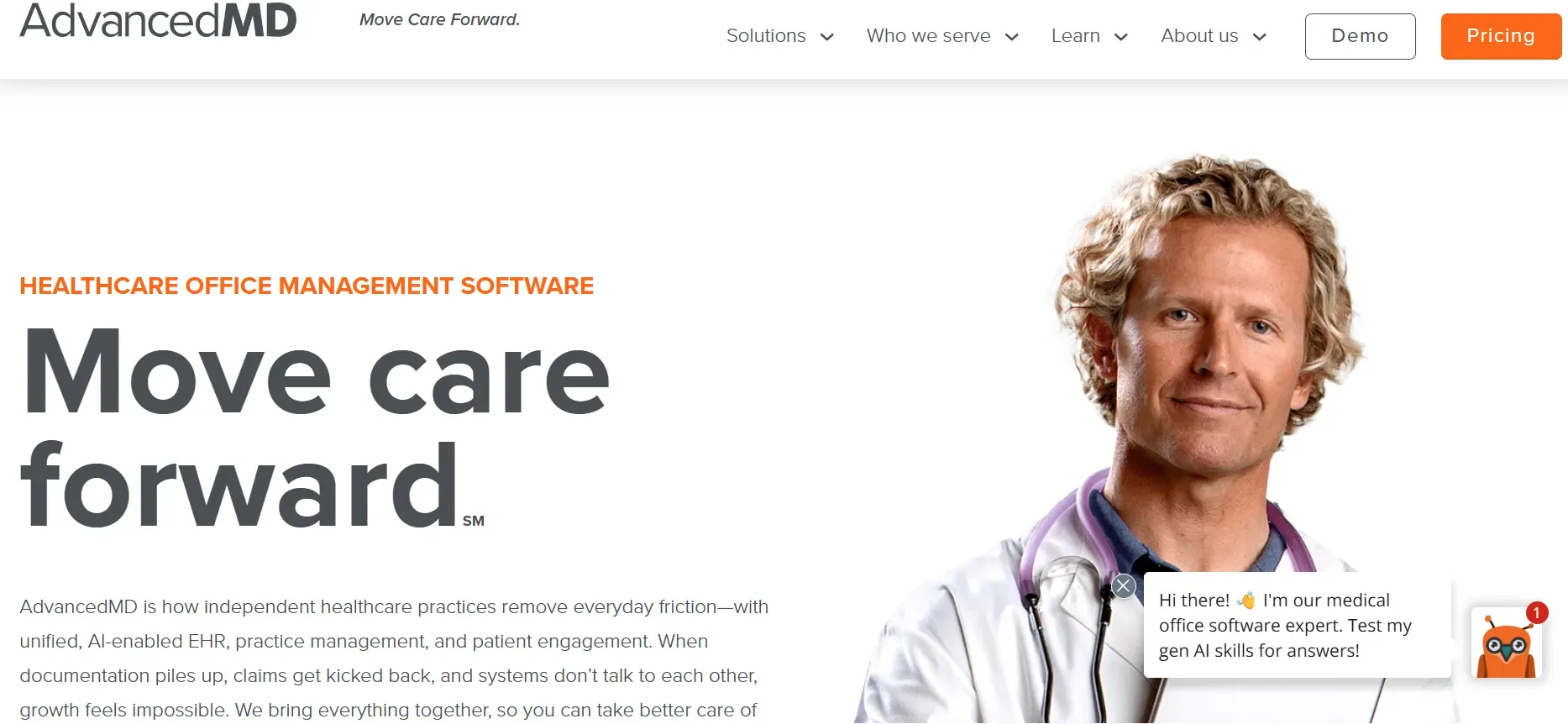
AdvancedMD is a robust, cloud-based platform that combines EMR, practice management, and billing in one solution. Its biggest differentiator is the depth of its billing and revenue cycle management tools, making it a fit for clinics that want everything under one roof.
Pricing: Starts at $429+/provider/month. Add-ons for telehealth and advanced reporting are extra.
- All-in-one EMR, billing, and PM
- Advanced claims and denial management
- Customizable templates for orthopedic workflows
- Per-provider pricing makes scaling expensive
- Some features are not included in base price
- Customization can be slow and vendor-dependent
For clinics seeking predictable costs and full ownership, Devaims offers a custom build with flat maintenance and no per-provider fees.
5. Athenahealth (best for large, multisite clinics)
Athenahealth is a leading cloud EMR and revenue cycle platform, widely used by large, multi-location practices and health systems. Its key selling point is its ability to centralize operations across sites and specialties, with powerful reporting and a broad partner network.
Pricing: Typically 4%+ of collections. Custom modules and integrations may add to cost.
- Centralized operations for multi-site clinics
- Robust analytics and reporting
- Extensive third-party marketplace
- Cost rises as collections increase
- Complex contract terms and add-on fees
- Ownership and full customization not possible
If you want to avoid percentage-based pricing and own your platform, Devaims can deliver a custom solution with no revenue-based fees.
6. ChartLogic (best for voice-driven charting)
ChartLogic is designed for clinics that want to minimize typing and maximize provider efficiency through voice-driven charting. Its speech recognition is tightly integrated, allowing providers to dictate notes, orders, and even templates. This can be a major time-saver for orthopedic surgeons who prefer dictation over point-and-click.
Pricing: Custom quote required. Pricing depends on modules and clinic size.
- Advanced voice-driven charting
- Customizable orthopedic templates
- Integrated practice management and billing
- Voice recognition requires staff training and buy-in
- Custom integrations may be limited or require extra fees
- Ongoing SaaS fees with no ownership
If you want to own your documentation tools and have full control, Devaims can build custom voice and workflow features for your clinic.
7. OpNote (best for surgical documentation)
OpNote is a niche solution focused entirely on perioperative and surgical documentation. It streamlines operative note creation, ensuring compliance and fast turnaround for surgical reports. While not a full EMR, it excels at what it does.
Pricing: Custom quote. Typically per user or per procedure.
- Fast, standardized surgical documentation
- Automatic coding from operative notes
- Easy to implement alongside existing EMRs
- Not a full EMR; lacks scheduling and billing
- Customization limited to surgical templates
- Integrations are typically one-way exports
If you need full EMR functionality with surgical customization, Devaims can build a platform that covers all your clinical and perioperative needs.
8. Greenway Health (best for multi-specialty clinics)
Greenway Health's Intergy platform is built for clinics that span multiple specialties, including orthopedics, pain management, sports medicine, and rehab. Its strength is flexibility and a wide range of integrations, making it a fit for clinics that do not want to juggle multiple systems.
Pricing: Reported $799+/provider/month. Confirm with vendor for your needs.
- Multi-specialty templates and workflows
- Integrated PM, scheduling, and billing
- Wide array of third-party integrations
- High per-provider costs as you add specialties
- Custom modules and integrations can add up
- Support can be slow during major upgrades
For clinics wanting to manage all specialties in one owned system, Devaims can build a unified platform with no per-provider fees.
9. WebPT (best for rehab and PT clinics)
WebPT is the dominant EMR for outpatient physical therapy, making it a top choice for orthopedic clinics with large rehab operations. Its focus is on fast, compliant PT documentation, scheduling, and billing.
Pricing: Starts at $3+/day/provider. Add-ons for analytics and integrations are extra.
- Specialized PT, OT, and SLP documentation
- Integrated scheduling and outcomes tracking
- Large partner network for add-ons
- Not suited for surgical or complex medical documentation
- Add-ons for e-prescribing and analytics cost extra
- Ongoing per-provider fees with no ownership
If you want to own your rehab documentation and integrate with surgical workflows, Devaims can build a custom platform for your full team.
Other Raintree alternatives worth knowing
- Epic and Cerner: These are the giants of hospital EMRs, offering deep functionality, scalability, and compliance. However, their complexity and cost put them out of reach for most orthopedic clinics, unless you are part of a large health system with 100+ providers. Implementation can take a year or more, and customization is expensive.
- Practice Fusion: A popular cloud EMR for small clinics, with a free tier supported by ads. Lacks orthopedic-specific templates and advanced workflows. Good for solo providers or low-volume practices, but not for surgical or multi-specialty groups.
- DrChrono: Mobile-friendly, with easy charting and scheduling. Customization is limited, and per-user fees rise quickly as you scale. Integrations with imaging and billing are available but may not match the depth needed for complex orthopedic workflows.
- OpenEMR: The only true open-source EMR. It is free to use, but clinics must supply their own IT support, hosting, and customization. Specialty templates are limited, so orthopedic clinics often need to invest heavily in development and maintenance. Best for tech-savvy teams with in-house IT.
How to choose the right Raintree alternative
- By budget: Look beyond the monthly sticker price. Calculate your five-year total cost, including all provider licenses, modules, support, and integration fees. Ask for a full quote with all expected costs, not just the base rate.
- By workflow: If your clinic has unique charting, reporting, or compliance needs, prioritize platforms that allow real customization. If no SaaS option fits, consider building your own with a custom developer.
- By integrations: Inventory your imaging, billing, lab, and communication systems. Ask vendors for references or demos of real-world integrations. Beware of platforms that require expensive custom work for standard connections.
- By growth: Plan for scale. Some platforms double or triple in cost as you add providers or locations. Others, like Devaims, never charge by seat, so your cost stays flat as you grow.
- By ownership: If you want to own your data, code, and future, only a custom build truly lets you keep it all. SaaS platforms can change terms, raise prices, or sunset features at any time.
If you’re tired of renting and want your EMR to fit your clinic, not the other way around, here’s how owning with Devaims stacks up.
Stop paying rent on software you could own
Here’s the catch nobody says out loud: Every Raintree alternative is rented. You’ll sign the contract, pay the monthly, and when you leave, you start over. Per-provider fees, per-visit pricing, "premium support", it adds up. By year five, most clinics have paid $60,000 to $120,000 for a system they’ll never own. That’s money you could have put into software that’s yours to keep.
Devaims builds full-featured orthopedic EMRs and practice management platforms from the ground up, custom workflows, integrations, and reports. You get the source code, you own the data, and you pay a flat maintenance fee (not a per-seat toll). No contracts, no forced upgrades, no lock-in. The system is yours, forever.
Here’s how the rent-vs-own math plays out for an orthopedic clinic with 7 providers:
- Every SaaS platform: $799 per provider per month x 7 = $5,593/month, plus add-ons, support, and transaction fees. That’s $67,116 per year, and after five years, you still own nothing.
- Devaims: One-time build (say $32,000 for a full EMR and PM suite), flat maintenance ($200/month), and zero per-provider fees. After five years, you own it outright.
| Platform | Ownership | Per-provider fee | 5-year cost |
|---|---|---|---|
| Raintree | No, SaaS | $799+/mo | $67,116 x 5 = $335,580 |
| Modernizing Medicine | No, SaaS | $799+/mo | $335,580 |
| AdvancedMD | No, SaaS | $429+/mo | $36,036 x 5 = $180,180 |
| Devaims (owned) | Yes, you own it | None | $32,000 build + $12,000 maint = $44,000 |
| Year | Rented (cumulative) | Owned (cumulative) |
|---|---|---|
| 1 | $67,116 | $32,000 + $2,400 = $34,400 |
| 2 | $134,232 | $32,000 + $4,800 = $36,800 |
| 3 | $201,348 | $32,000 + $7,200 = $39,200 |
| 4 | $268,464 | $32,000 + $9,600 = $41,600 |
| 5 | $335,580 | $32,000 + $12,000 = $44,000 (now ahead) |
For clinics with 5 or more providers, the break-even comes fast, and every year after that, you’re saving tens of thousands. The math works even better if you’re paying extra for billing, imaging, or custom modules. If you want to run your real numbers, Devaims will walk you through it.
How to switch from Raintree
- Export all patient, billing, and scheduling data: Request exports from Raintree in standard formats (HL7, CSV, PDF, CCD/CCR as needed). Insist on full data, including attachments and imaging links, not just demographics or recent visits.
- Choose your new platform and confirm migration support: Before signing, ask your new vendor for a detailed migration plan, including data mapping, template conversion, and support for custom fields. If going custom, ensure your developer can handle all legacy data types.
- Import records and validate templates: Load your exported data into the new EMR, then rigorously test templates, forms, and workflows. Pay special attention to clinical notes, scanned documents, and custom fields, these often require manual review.
- Reconnect third-party integrations: Re-establish connections with imaging (PACS), labs, billing, payment processors, and any other mission-critical systems. Test all interfaces for accuracy and reliability.
- Train your staff and clinicians: Schedule hands-on training sessions for all roles. Build cheat sheets for new workflows and assign "super users" to support peers during the transition.
- Run parallel systems: Operate both Raintree and the new platform in parallel for 2 to 4 weeks. This parallel run helps catch missed data, workflow mismatches, or integration gaps before you fully cut over.
- Review your Raintree contract: Check for termination clauses, penalties, and your rights regarding data retention. Make sure you are not obligated to pay for support or hosting after migration is complete.
With a custom Devaims build, the migration is handled as part of the project, including data extraction, mapping, staff training, and support during parallel run and cutover.
Frequently asked questions
What is the best Raintree alternative for orthopedic clinics?
Modernizing Medicine and Nextech are top choices for full-featured orthopedic EMRs, offering deep specialty content and high customization. However, every SaaS alternative comes with recurring fees, contract lock-ins, and limited ownership. For clinics that want full control, owning their system, workflows, and data, a custom build from Devaims is the only route to permanent independence and cost predictability.
Which Raintree alternative is most affordable?
Kareo (Tebra) is the lowest cost for solo or very small clinics, starting at $125 per user per month. But as you add providers, costs escalate quickly and can exceed those of larger platforms. Over five years, a custom Devaims build is often the lowest-cost option for medium to large orthopedic practices, especially when factoring in add-on and integration fees. Always run the true five-year total cost, not just the first-year quote.
Are there any free Raintree alternatives?
OpenEMR is the only truly free, open-source EMR. However, it is not plug-and-play for orthopedics: you will need IT staff or consultants to host, secure, and customize the system. Specialty templates, integrations, and compliance features are limited or must be built from scratch. For most clinics, "free" software ends up costing more in staff time and support than a well-scoped build or subscription.
What is the best Raintree alternative for surgical orthopedics?
OpNote is the leading choice for perioperative documentation, offering standardized, fast surgical note creation. For clinics needing a full EMR with robust surgical workflows, Modernizing Medicine offers strong built-in content, while Nextech allows deep template customization. If your surgical team has unique reporting, research, or workflow needs, a custom Devaims build will deliver exactly what you want, no compromises.
When should I switch from Raintree?
If your per-provider fees exceed $500 per month, you are facing repeated integration headaches, or you are blocked by slow feature updates, it is time to run the five-year rent-vs-own math. The break-even point for ownership is often sooner than clinics expect, especially for groups with 5 or more providers. If you want to future-proof your workflows and own your data, start planning your transition now.
Can I keep my old Raintree data?
Yes. Raintree supports data export, and most alternatives, especially custom developers like Devaims, will fully import and map your legacy data. Plan for a parallel run to validate records, especially for clinical notes, attachments, and custom fields. Always request a full data export before terminating your Raintree contract.
What’s the key advantage of owning vs renting my EMR?
Owning your EMR locks in your workflows, data, and integrations with no ongoing seat fees or contract restrictions. You control upgrades, integrations, and compliance features. Over five years, clinics typically save $50,000 to $200,000 compared to renting SaaS platforms, and they never face forced migrations, price hikes, or vendor sunset risk. Ownership is the only way to guarantee long-term stability, cost control, and true data privacy.
The bottom line
Every Raintree alternative on this list can work for some clinics, but the five-year math is the real test. If you’re tired of paying rent on your own data, it’s time to consider building something you own. The switch isn’t as daunting as it sounds, and with Devaims, you get migration, ownership, and support built in.
Here’s the test: Add up what your next five years of SaaS will cost. If that number would have built you a system you own, your answer is clear. When you own your EMR, you control your future.
See more insights on the Devaims blog. Related reads: Athenahealth alternatives, AdvancedMD alternatives, WebPT alternatives.