


Your EMR and PM should work for you, not the other way around. Yet too many orthopedic clinics find themselves boxed in by recurring fees, surprise add-ons, and the sense that they're renting their own data back, month after month. Nextech may have checked the boxes at first, but as the practice grows and workflows get complex, the cracks show: rising subscription costs, clunky customizations, and a support queue that gets longer every year.
If you're searching for Nextech alternatives, you're not alone. Clinics across the country are weighing options like Modernizing Medicine, Kareo, and AdvancedMD, hoping for better fit or fairer terms. But here's the honest truth: almost every alternative comes with its own brand of lock-in. The only real escape is owning your own system, and that's where Devaims stands apart. Let's break down the options, the costs, and the one way to stop renting for good.
Why orthopedic clinics look for Nextech alternatives
Recurring subscription fees climb fast. Most clinics start with a manageable monthly payment, but as you add providers, locations, or modules, Nextech's costs rise sharply. Even modest growth means the total bill can double or triple within a few years, especially as you add imaging, telehealth, or advanced analytics. Clinics often find that what began as a $1,500/month cost balloons into $5,000/month or more as the practice scales, making long-term planning difficult.
Customization is limited or pricey. Orthopedic workflows can be highly specialized, from templated joint injections to surgical scheduling and implant tracking. Nextech offers basic customization, but anything beyond standard templates typically incurs added fees or requires vendor intervention. Integrating with imaging (PACS), DICOM viewers, or third-party devices may be impossible or require expensive custom projects. Over time, this limits your ability to adapt your EMR/PM to new clinical needs or regulatory requirements.
Long-term contracts and tricky data export. Many clinics discover the hard way that leaving Nextech is not as simple as signing a new contract. Multi-year agreements are common, often with stiff penalties for early termination. When it’s time to move, exporting your data, especially imaging, notes, and attachments, can be slow, incomplete, or require significant fees. Data is usually delivered in vendor-specific formats, making migration to a new system a technical challenge that can take weeks or months.
Add-ons and hidden fees drive up the total. Nextech, like many competitors, relies on tiered pricing and add-on modules. Need advanced reporting? That’s extra. Want e-prescribing, telehealth, or patient engagement tools? Each comes at a premium. These extras can double your bill compared to the base price, especially if you want a comprehensive, integrated workflow.
No real ownership. Always renting. At the end of five years, you've paid a fortune but still don't control your platform. You’re at the mercy of vendor roadmaps, support queues, and annual price increases. If you want to innovate or integrate with new tools, you’re often told to wait for a future release or pay for a custom project you can’t keep. That’s why so many are searching for Nextech alternatives.
Quick comparison of the best Nextech alternatives
| Tool | Best for | Starting price | You own it? |
|---|---|---|---|
| Modernizing Medicine (Ortho) | Integrated specialty EMR | Reported $800+/provider/month | No |
| Kareo (Tebra) | Small to mid practices | Reported $125+/provider/month | No |
| AdvancedMD | Flexible scheduling | Reported $429+/provider/month | No |
| Athenahealth | Enterprise clinics | Reported 4%+ of collections | No |
| ChartLogic | Dictation/voice | Reported $350+/provider/month | No |
| OpNote | Surgical reporting | Custom, contact for quote | No |
| Greenway Health | Multi-specialty clinics | Reported $400+/provider/month | No |
| WebPT | Rehab/therapy | Reported $99+/user/month | No |
| Raintree | Large clinics, PT/OT | Custom, contact for quote | No |
| Devaims | Own your platform | One-time build, you own it | Yes |
All pricing is reported, often negotiated, and may change. Confirm current pricing before you decide.
The 10 best Nextech alternatives
1. Modernizing Medicine (Ortho) (Best for integrated specialty EMR)
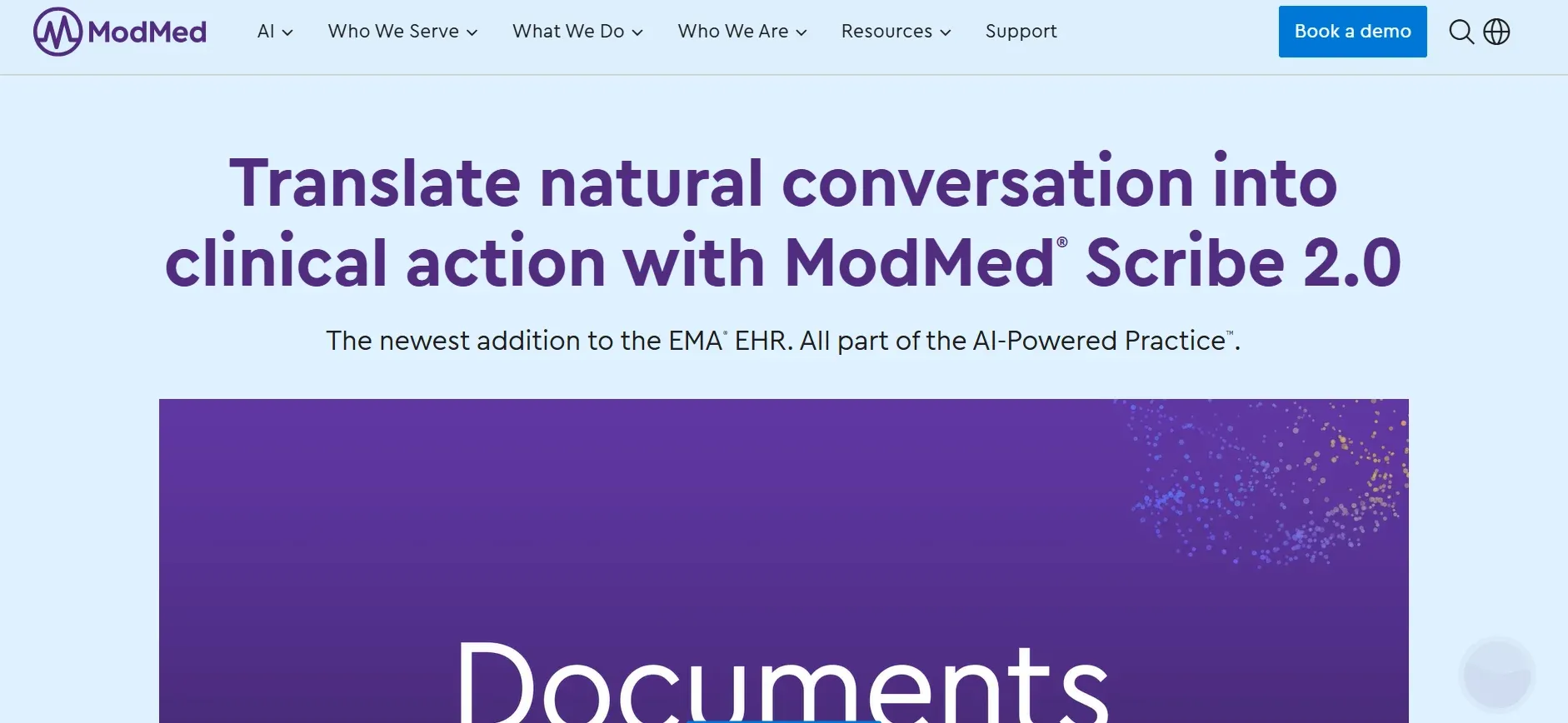
Modernizing Medicine’s EMA Orthopedics is widely regarded as a gold standard for orthopedic-specific EMR, offering a highly visual, adaptive interface. Its “adaptive learning” charts remember physician preferences and suggest relevant diagnoses, orders, and templates based on prior encounters. This is a major leap beyond Nextech’s more rigid templates, especially for subspecialties like sports medicine or joint replacement.
Key features include real-time coding assistance, native iPad application (with support for touch and image annotation), integrated PACS for imaging review, inventory management for implants and supplies, and analytics dashboards tailored for orthopedic KPIs. The platform also handles e-prescribing, telehealth, and MIPS/MACRA quality reporting.
Integrations: Modernizing Medicine offers certified integrations with a range of PACS systems, labs, and billing clearinghouses. Its marketplace includes patient engagement, reputation management, and remote patient monitoring tools, but deep integrations may require additional contracts or vendor coordination.
Migration friction: Data import from Nextech or other EMRs is possible, but often requires a dedicated project manager and vendor coordination. Imaging and attachments may need to be migrated manually or via third-party tools. Expect at least several weeks for a full transition, with possible data mapping headaches for custom fields.
Concrete use cases: Multi-physician orthopedic clinics with high surgical volumes, subspecialty workflows, or on-site imaging benefit most. For example, a sports medicine group can use adaptive charting for rapid documentation, while a practice focused on joint replacements can track implant inventory and surgical outcomes.
- Deep orthopedic specialty content
- Adaptive charting and visual interface
- Integrated imaging and analytics
- High per-provider pricing increases total cost
- Customizations require paid services
- Multi-year contracts and complex data export
On a platform you own, those customizations are built in from day one.
2. Kareo (Tebra) (Best for small to mid-sized practices)
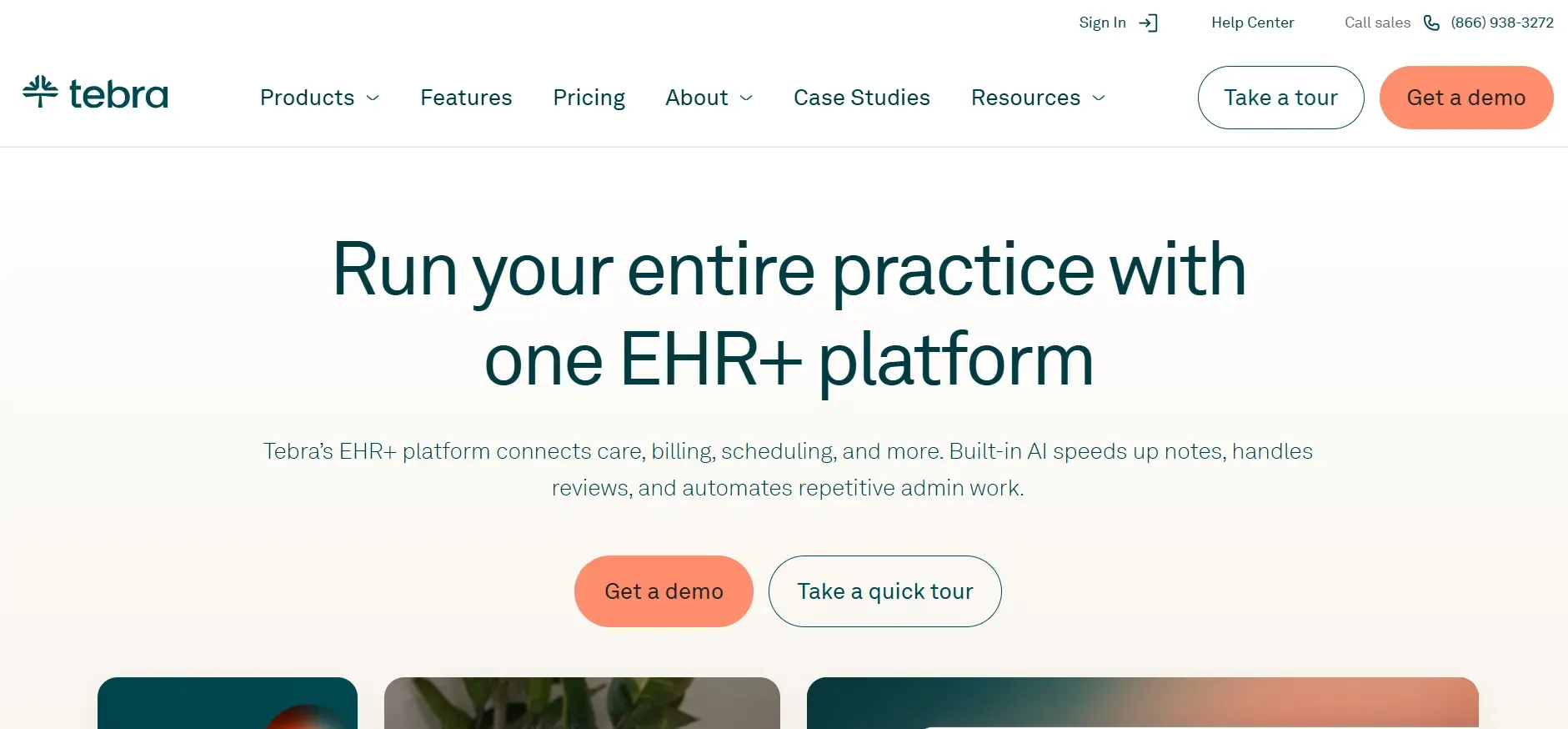
Kareo, now part of Tebra, is designed for independent practices seeking a cloud-based EMR and billing solution that is both affordable and easy to implement. It offers integrated scheduling, e-prescribing, and billing, with a user-friendly web interface. Its setup is simple enough for solo or small group practices to get started without a dedicated IT team.
Features: Kareo’s strengths are its intuitive appointment scheduling, insurance eligibility checks, and claims management. The EMR includes customizable templates, but orthopedic-specific content is limited compared to Modernizing Medicine or Nextech. Telehealth is available as an add-on, and Kareo integrates with several patient engagement and payment platforms.
Integrations: The system connects with major labs, e-prescribing networks, and clearinghouses. Third-party add-ons are available for patient reminders, telehealth, and analytics, but advanced integrations (such as imaging or device connectivity) may not be supported natively.
Migration friction: Data migration is straightforward for basic patient demographics and clinical notes, but complex chart data, attachments, or custom fields may not transfer cleanly. Support for migration is available, but often at an additional cost. Transitioning from a specialty EMR like Nextech may require manual recreation of templates.
- Affordable entry pricing
- User-friendly interface
- Quick setup for small clinics
- Limited orthopedic-specific features
- Per-provider fees add up with growth
- Advanced integrations may be lacking
When you own your platform, per-provider costs don't multiply every year.
3. AdvancedMD (Best for flexible scheduling and telehealth)
AdvancedMD is a modular, cloud-based EMR and PM platform that targets growing practices seeking flexibility and modern features. Its suite includes strong scheduling tools (drag-and-drop calendars, waitlists, resource management), telehealth with integrated video, and workflow automation for prior authorizations, reminders, and billing.
Features: The system’s scheduling and telehealth modules are among the best in class, supporting multi-location and multi-provider clinics. Its workflow engine allows for automated task assignments, configurable alerts, and custom queues. AdvancedMD supports e-prescribing, document management, and integrated billing; reporting is robust, with dashboards for revenue cycle and clinical outcomes.
Integrations: AdvancedMD connects with labs, imaging centers, and clearinghouses, and offers an API for custom integrations. Specialty content for orthopedics exists, but deep customization (such as surgical templates or implant tracking) may require professional services or third-party vendors. Telehealth and patient engagement modules are native but cost extra.
Migration friction: The onboarding process is more involved than with Kareo or WebPT, especially for larger clinics. Data migration from Nextech can be comprehensive, but mapping custom templates, attachments, or imaging data may require significant manual work. Expect a multi-week to multi-month implementation for complex setups.
- Flexible, modular platform
- Strong scheduling and telehealth features
- Comprehensive reporting tools
- Add-ons and modules increase total cost
- Steep learning curve for new users
- Customization often requires vendor help
With Devaims, no feature is locked to a higher tier. It's just part of your system.
4. Athenahealth (Best for enterprise and multi-site clinics)
Athenahealth is a cloud EMR and revenue cycle management (RCM) platform designed for enterprise-scale clinics, health systems, and multi-location orthopedic groups. Unlike most competitors, Athenahealth charges a percentage of collections (typically 4-7%), aligning their incentives with your revenue cycle but making costs unpredictable as you grow.
Features: The platform includes comprehensive scheduling, patient portal, population health management, care coordination, and robust analytics. Its RCM module automates claims submission, denial management, and payer follow-up, reducing the administrative burden on clinic staff. Specialty content exists but may not match the depth of Modernizing Medicine for orthopedics.
Integrations: Athenahealth’s cloud infrastructure supports connections with labs, imaging centers, e-prescribing, and more. Its marketplace offers third-party apps for patient engagement, telehealth, and analytics. Custom integrations are possible via APIs, but deep surgical or imaging workflow integration may require additional vendor work or partnerships.
Migration friction: Migrating from Nextech or other EMRs to Athenahealth is a significant undertaking. Data mapping, conversion, and validation are complex, and the process can take months for large or multi-site clinics. Vendor-led migration services are available but come with additional costs. Staff retraining is essential due to the platform’s unique workflows.
- Enterprise-scale features
- Integrated RCM and analytics
- Scalable for large organizations
- Percentage-of-collections pricing can be costly
- Customization is limited to platform options
- Complexity may not suit smaller clinics
Owning your platform means your revenue stays with you, not as a cut to your software.
5. ChartLogic (Best for dictation and voice workflows)
ChartLogic is a specialty EMR and PM platform known for its voice-powered charting and dictation tools. It’s a favorite among orthopedic surgeons who prefer hands-free documentation, offering a fast, natural way to create notes, orders, and encounter summaries. ChartLogic’s “command-and-control” voice navigation allows users to open charts, enter findings, and complete documentation using spoken commands.
Features: In addition to voice charting, ChartLogic includes customizable templates, e-prescribing, document management, and integrated billing. Orthopedic content is available, but may require setup to match specific clinical workflows. The platform’s “PrecisionVoice” engine is designed to recognize medical terminology and adapt to individual accents and speech patterns.
Integrations: ChartLogic supports HL7 interfaces for labs, imaging, and billing clearinghouses. It can integrate with select PACS systems for imaging review, but deep integration may require vendor assistance. Third-party speech recognition tools (such as Dragon Medical) are supported, but may need additional licensing.
Migration friction: Migrating from Nextech to ChartLogic is feasible for structured data, but attachments, imaging, and custom forms may require manual re-entry. Training is crucial for optimizing voice workflows, and some users report a learning curve before achieving maximum speed and accuracy.
- Fast, hands-free documentation
- Strong voice recognition tools
- Customizable for surgical workflows
- Voice focus may not suit all users
- Custom templates require setup
- Annual contracts and slow data export
6. OpNote (Best for surgical reporting)
OpNote is a cloud-based surgical documentation platform built specifically for operative reports, checklists, and perioperative workflows. Unlike full-suite EMRs, OpNote zeroes in on the needs of surgeons and OR teams, providing a streamlined interface for documenting procedures, capturing images, and generating compliant operative notes.
Features: OpNote supports rapid note creation with customizable templates, auto-populated fields, and dropdowns for common procedures. It allows for image and video attachments, standardized checklists, and automated coding suggestions. The system is designed for AORN and Joint Commission compliance, making it suitable for both ambulatory surgery centers and hospital-based clinics.
Integrations: While OpNote is not a full EMR or PM, it offers export capabilities to major EMRs (including Epic, Cerner, and athenahealth) and can be integrated with hospital IT systems via HL7. Some integrations, such as with scheduling or inventory management, may require manual processes or third-party middleware.
Migration friction: Since OpNote is focused on surgical documentation, migration is usually limited to importing provider and patient lists. Full historical chart migration is not supported. Implementation is quick, often within a week, but integrating with your main EMR for seamless data flow may require IT resources.
- Streamlined surgical note creation
- Compliance-focused features
- Quick implementation
- Not a complete EMR or PM
- Separate systems needed for non-surgical documentation
- Integration with billing/analytics may require manual steps
7. Greenway Health (Best for multi-specialty and group practices)
Greenway Health’s Intergy platform is a cloud-based EMR and PM solution designed for multi-specialty clinics, including orthopedic groups that share resources with other specialties. It emphasizes regulatory compliance, population health management, and flexible workflow design.
Features: The system includes customizable templates for multiple specialties, integrated scheduling, e-prescribing, telehealth, and chronic care management. Population health tools allow clinics to track outcomes, identify care gaps, and manage value-based care programs. Reporting tools are robust, supporting MIPS/MACRA and other regulatory requirements.
Integrations: Greenway Health supports HL7 interfaces with labs, imaging, and billing clearinghouses. Its API enables custom integrations, and the platform can connect with patient engagement, telehealth, and analytics vendors. Specialty content exists for orthopedics, but deep customization may require professional services.
Migration friction: Migrating from Nextech to Greenway is possible, but mapping specialty templates, attachments, and custom fields can be a project. Multi-specialty clinics may face additional complexity in aligning workflows for different provider types. Implementation timelines vary from a few weeks to several months, depending on clinic size and needs.
- Multi-specialty support
- Strong compliance and reporting
- Flexible workflow design
- Complexity can slow adoption for small teams
- Deep customization may require extra services
- Multi-year contracts are common
8. WebPT (Best for rehab and therapy)
WebPT is the leading EMR for physical, occupational, and speech therapy. While not a full orthopedic EMR, it is often used by orthopedic practices for managing rehab workflows, therapy billing, and outcomes tracking.
Features: WebPT offers therapy-specific templates, quick evaluation and progress note documentation, customizable outcome measurement tools, and a robust patient portal. The platform supports scheduling, billing, and telehealth, with specialized features like home exercise program management and automated appointment reminders.
Integrations: WebPT connects with billing clearinghouses, patient engagement tools, and select EMRs. Some orthopedic clinics integrate WebPT with their main EMR via HL7 interfaces or manual data exchange, but seamless two-way integration may require IT support.
Migration friction: Onboarding is fast for new therapy clinics, but integrating with an existing orthopedic EMR may require middleware or manual processes. Migrating therapy data from Nextech is limited to patient demographics and basic notes. Full chart migration is not supported.
- Therapy-focused features
- Quick onboarding
- Efficient outcomes tracking
- Not a full EMR for surgical workflows
- Per-user fees increase with team size
- Limited surgical documentation and analytics
9. Raintree (Best for large, multi-location practices)
Raintree is a comprehensive, enterprise-grade EMR, PM, and billing suite designed for large orthopedic, rehab, and multi-location clinics. Its platform is highly configurable, supporting complex workflows, custom forms, and detailed analytics for organizations with hundreds of users or multiple sites.
Features: Raintree includes advanced scheduling (with support for multiple locations, providers, and resources), integrated billing, document management, and patient engagement modules. Its workflow engine enables automation of intake, authorizations, and referral management. Reporting tools provide deep insights into clinical and financial performance.
Integrations: The system offers HL7 interfaces for labs, imaging, and billing clearinghouses, and can integrate with external analytics platforms, telehealth vendors, and patient engagement tools. Custom interfaces are available via API, but may require professional services to implement.
Migration friction: Implementation is a major project, taking several months for large organizations. Data migration from Nextech is possible, but mapping complex workflows, custom templates, and multi-site data can be challenging. Training is extensive, and ongoing support is essential for success.
- Highly configurable for large groups
- Advanced scheduling and workflow automation
- Comprehensive analytics
- Complex onboarding and training
- Monthly fees scale with usage
- Customizations may incur extra charges
When you own the platform, onboarding and customization are one-time projects, not recurring bills.
10. Devaims (Best for clinics who want to own their software)
Devaims builds custom web, mobile, and business software for orthopedic clinics and hands you the full source code. No recurring per-provider fees, no contracts, no renting your own data. You define the features, workflows, and reporting you need. Devaims delivers a platform you own outright. Integrate imaging, tailor surgical workflows, automate referrals, and launch new modules as your clinic grows, all on your own terms.
Features: Every Devaims build is customized for your clinic’s exact needs. You can include imaging integration (PACS/DICOM), custom surgical templates, device tracking, advanced analytics, patient portals, telehealth, and interoperability with labs and payers. Workflows are tailored to your staff, not the other way around.
Integrations: Devaims can integrate with any system that supports industry standards (HL7, FHIR, DICOM, X12), as well as proprietary APIs. Imaging, billing, analytics, and patient engagement tools can be woven directly into your platform. No need to wait for vendor approval or pay for add-ons you don’t use.
Migration friction: Devaims manages the entire migration process, including data export from Nextech, data mapping, integrity checks, and parallel system running to ensure nothing is lost. You get full access to your data and code, so future migrations are never a problem.
Use cases: Clinics with unique workflows, rapid growth, or a desire for true data control. Multi-location groups, specialty centers, and practices with advanced reporting or integration needs benefit most. Even small clinics tired of rent math can come out ahead.
- You own the source code. No more renting
- Custom features, workflows, and reports built for your clinic
- Flat maintenance, no per-provider or surprise fees, full data control
Other Nextech alternatives worth knowing
- Epic and Cerner: Enterprise-grade EMRs, but overkill for most private orthopedic clinics unless you are hospital-owned. These systems offer unmatched integration and scalability but require major IT investments, long implementation timelines, and ongoing vendor dependency. Most private practices find them cost-prohibitive and overly complex.
- Practice Fusion: Cloud EMR with low entry cost, but lacks specialty depth for ortho and limited PM features. It’s a viable option for solo providers or those with basic documentation needs, but reporting and imaging integration are minimal, and support is limited.
- DrChrono: Good for mobile charting, but less tailored for orthopedic surgery workflows. Its iPad-first approach is popular with small clinics, but surgical documentation, implant tracking, and integration with imaging are weaker than specialty-focused competitors.
- eClinicalWorks: Used by some ortho groups, but customization and reporting remain ongoing challenges. The platform is robust for general medicine but may require significant effort to tailor for orthopedic-specific needs, especially for operative and imaging workflows.
How to choose the right Nextech alternative
- By budget: Calculate true five-year costs, not just the monthly sticker. Include add-ons, support, and per-provider fees. Consider the cost of future migrations, downtime, and lost productivity during changeovers. Ask for detailed quotes and compare apples to apples, factoring in the cost of customizations and integrations.
- By need: Prioritize specialty content, imaging integration, and surgical reporting if those drive your workflow. Ask for demos of orthopedic-specific templates, imaging review, and operative note generation. Make sure the platform supports your unique scheduling, billing, and compliance requirements.
- By size: Larger clinics may need enterprise features. Solo or small groups do better with lighter, more focused tools. Don’t overbuy. Choose a platform that fits your current needs but can scale as you grow, without locking you into unnecessary complexity or costs.
- By ownership: If owning your data and platform matters, short-list only those options that let you keep the code. Ask vendors direct questions about data export, source code access, and migration rights. If you want true independence, consider a custom build.
- By contract: Watch for multi-year lock-in that can trap you with rising costs or limited export options. Negotiate early termination terms and data export guarantees before you sign.
For clinics tired of renting, owning your platform outright is finally on the table.
Stop paying rent on software you could own
The dirty secret in orthopedic EMR and PM is that whether you pick Nextech or any of its competitors, you’re still renting. Add up the per-provider fees, the add-ons, and the annual "support" hikes. After five years, you’ll have paid out enough to build a custom platform you’d own forever. The only real way out is to build something truly yours.
Devaims builds custom web, mobile, and business software for orthopedic clinics, fully tailored to your workflows, and delivered with the source code so you own it outright. No contracts, no surprise price hikes, no renting your own data or paying for features you'll never use.
- Recurring fees disappear. One-time build plus flat maintenance, not endless per-provider charges. This means your costs are predictable and stay flat, even as your practice grows. Maintenance can be handled by your own IT team or by Devaims, with no lock-in.
- Customizations are built in. Imaging, surgical templates, niche reporting, the tools you need from day one. If your workflows change, updates are yours to direct. You’re not waiting for a vendor roadmap or paying for features you don’t need.
- You keep your data and code. No more migration headaches or export fees. You control your system, not a vendor. This means you can easily integrate with new tools, meet regulatory demands, or expand into new services without vendor permission.
- Scale on your terms. Add providers, locations, even new modules, with no "per-seat" surprises. Whether you double your provider count or open new sites, your software cost stays predictable.
Here’s how Devaims compares:
| Tool | Ownership | Per-provider fees | Customization | Data export/control |
|---|---|---|---|---|
| Nextech | Rented, subscription | Yes | Limited, extra cost | By vendor, sometimes fee-based |
| Modernizing Medicine | Rented, subscription | Yes | Strong, but costly | Export requires project |
| AdvancedMD | Rented, subscription | Yes | Modular, extra cost | Export for a fee |
| Devaims | Owned, you keep the code | No | Built for you | You own it, no restrictions |
Now the five-year cost math. Let's say your clinic has 7 providers, with a typical rented solution running $450/provider/month.
| Year | Rented (cumulative) | Devaims owned (cumulative) |
|---|---|---|
| 1 | $37,800 | $28,800 |
| 2 | $75,600 | $31,560 |
| 3 | $113,400 | $34,320 |
| 4 | $151,200 | $37,080 |
| 5 | $189,000 | $39,840 (now ahead) |
You break even before year five. After that, every dollar you would have paid in rent is yours to keep. If your provider count grows, renting gets even more expensive, but your owned platform cost stays flat. This math does not include the hidden costs of downtime during migrations, productivity lost to vendor-driven updates, or the value of true data control.
Clinics with complex workflows, rapid growth, or unique integration needs get the most value from owning. But even a single-location group tired of rent math can come out ahead. If you’re planning to add providers, open new sites, or launch new services, the savings multiply with every year you own your platform.
How to switch from Nextech
- Export your data (patients, records, images) from Nextech. Plan for extra time and support if needed. Request a complete extract in industry-standard formats (such as HL7, FHIR, or CSV), and clarify what is and isn’t included. Attachments, imaging, and custom fields may require special handling.
- Choose your new platform and clarify your exact workflow requirements. Document every workflow, template, and integration you need. Don’t assume defaults will match your current processes.
- Import or migrate your data to the new system, verifying data integrity. Test sample records for completeness, accuracy, and formatting. For imaging and attachments, ensure links or files are correctly transferred.
- Reconnect payment processors, imaging, and third-party integrations. Work with your new vendor or IT team to ensure all external systems (labs, billing, PACS, patient portals) are connected and functional.
- Train staff on the new workflows, templates, and reporting tools. Provide hands-on training, reference guides, and support during the transition. Expect a learning curve, especially for custom or specialty workflows.
- Run both systems in parallel for a short time to catch any issues. Use this window to validate data, test claims, and ensure clinical workflows are uninterrupted.
- Review your Nextech contract for final termination and ensure you have all historical data. Save confirmation of data delivery and keep copies of all exports for audit purposes.
With a custom Devaims build, the migration is handled as part of the project. You get a dedicated migration team, detailed project plan, and post-go-live support to minimize disruption.
Frequently asked questions
What is the best Nextech alternative for orthopedic clinics?
Modernizing Medicine is a strong contender for specialized orthopedic workflows, offering deep specialty content and adaptive charting. AdvancedMD and Athenahealth are well-suited for larger, multi-site clinics that need enterprise features and robust billing. But if you want to own your platform outright, Devaims is the only true ownership option among Nextech alternatives. No per-provider fees, no vendor lock-in, and unlimited customization.
Which Nextech alternative is most affordable?
Kareo (Tebra) and WebPT offer the lowest entry prices, often appealing to solo providers or small clinics. However, be sure to add up all per-provider or per-user fees, plus the cost of add-ons and support. Over five years, a custom Devaims build can cost less than renting, especially as your clinic grows or if you need advanced integrations or custom workflows. The real math favors ownership if you plan to scale.
Is there a free Nextech alternative?
Practice Fusion is the most well-known low-cost EMR, but it lacks the orthopedic depth and practice management features most clinics need. Free tools typically require major trade-offs in features (such as imaging integration, surgical templates), support, or control over your data. Hidden costs can include advertising, limited export options, or paywalled features. For serious orthopedic practices, free solutions rarely deliver.
Can I keep my data if I leave Nextech?
You can request a data export, but the format and completeness may vary. Some clinics encounter extra fees or delays, and imaging or attachments may not be included by default. It’s critical to clarify what is included in your contract and to test sample exports before you commit to a switch. Owning your system with Devaims means you always have full access and control of your data, with no vendor-imposed barriers or fees.
How do Nextech alternatives handle orthopedic imaging and surgery?
Modernizing Medicine, AdvancedMD, and ChartLogic offer imaging and surgical modules, but full customization may cost extra or require third-party integrations. Some platforms support PACS integration, but may not allow for custom imaging workflows, device tracking, or surgical analytics. With Devaims, your imaging and surgical reporting tools are built for your exact needs, with DICOM/PACS integration, custom templates, and direct access to your data for analytics or research.
When is the right time to switch from Nextech?
If your subscription costs keep rising, you’re hitting customization walls, or you want to own your data and workflows, now is a good time to look at Nextech alternatives. The sooner you switch, the sooner you stop paying rent on your own platform. Major transitions (such as adding providers or locations, or changing compliance requirements) are also ideal times to consider a new system.
What’s the process for migrating from Nextech to a custom platform?
Migration involves exporting all data (patients, clinical notes, attachments, imaging), mapping workflows, integrating third-party tools, training staff, and running parallel systems. With Devaims, the migration is managed as part of your custom build. You get a dedicated team, project plan, and phased go-live approach to minimize downtime and errors. Post-launch support ensures a smooth transition for your staff and patients.
The bottom line
Every rented EMR and PM platform for orthopedics eventually feels the same: recurring fees, limited ownership, and the sense that you’re working for your software, not the other way around. Here’s the test: add up what your platform will cost over five years. If that number would have built you something you own, you already have your answer.
Ownership isn’t just about saving money. It’s about putting your clinic in control. Ready to own your future?
See more insights on the Devaims blog, or explore related alternatives: Modernizing Medicine alternatives, AdvancedMD alternatives, Athenahealth alternatives.