



Your practice runs on software that you rent, not own. Run the math: $729 per provider per month for AdvancedMD bundles. Add in setup fees, annual contracts, and every claim or encounter, and you are deep into five figures before you blink. Then you try to grow, and the costs just multiply.
If you are searching for AdvancedMD alternatives, you probably already know the pain: sudden price increases, tier-locked features, support that takes days. The market is crowded, but not every option is created equal. Kareo (Tebra) and DrChrono offer flexibility. Practice Fusion is cheap, but at a cost. And there is one move most clinics never consider: building and owning the exact system you want, with Devaims.
Below, you will find the smartest AdvancedMD alternatives for general medical and primary care clinics in 2026, honest pros and cons, and the real numbers on when renting software stops making sense. Let’s get you off the hamster wheel.
Why primary care clinics look for AdvancedMD alternatives
Rising per-provider costs: Adding providers means multiplying your monthly fee. AdvancedMD starts at $429 per provider, and bundled EHR/PM jumps to $729, which quickly snowballs as your clinic grows.
Annual contracts and setup fees: Most vendors, including AdvancedMD, lock you into one-year deals and can hit you with $1,000 to $6,000 in onboarding costs, especially if your workflows are complex. Even switching between vendors can incur new setup fees, migration costs, and retraining expenses that are rarely advertised upfront.
Fee creep and unpredictable billing: Encounter-based pricing ($0.87 to $2.17 per claim) stacks on top of subscription costs, blurring your true monthly spend and making budgeting a headache. Many clinics report surprise charges for e-prescribing, patient messaging, or 'premium' support tiers that were not part of their initial quote.
Support and reliability frustrations: Reports of slow customer service, unresolved billing disputes, and software hiccups are common with AdvancedMD and its competitors. Downtime or laggy interfaces can disrupt patient flow, and escalations often take days to resolve.
Locked-in features and limited control: Want a report or integration? Often, it’s locked behind a higher tier or a custom development fee. That’s when people start searching for AdvancedMD alternatives. Many clinics discover that even basic analytics or exports are tiered, and custom data connections (such as to labs or local HIEs) may require both technical and financial negotiations.
Vendor lock-in and data migration pain: Moving away from any SaaS EHR can be difficult, as exporting your full patient and billing data is often cumbersome. Some vendors provide only partial exports or charge extra for migration assistance, making it hard to leave without losing historical data or facing long downtime.
Quick comparison of the best AdvancedMD alternatives
| Tool | Best for | Starting price | You own it? |
|---|---|---|---|
| Kareo (Tebra) | Small to midsize practices | $300/mo per provider | No |
| DrChrono | Mobile-first clinics | $250/mo per provider | No |
| athenahealth | Practices tied to collections | 3-7% of collections | No |
| eClinicalWorks | Feature-rich EHR seekers | $449/mo per provider | No |
| NextGen Healthcare | Larger, multi-site practices | $800/mo per provider | No |
| Practice Fusion | Cost-focused solo clinics | $149/mo per provider | No |
| Elation Health | Clinician-centric practices | ~$3,600-$6,000/yr per provider | No |
| Devaims (Custom Build) | Clinics ready to own | One-time build, you own it | Yes |
Always confirm current pricing with vendors before you decide. Fees change, and fine print matters. Ask about data export options, support SLAs, and integration capabilities in writing before you sign.
The 8 best AdvancedMD alternatives
1. Kareo (Tebra) (Best for small to midsize practices)
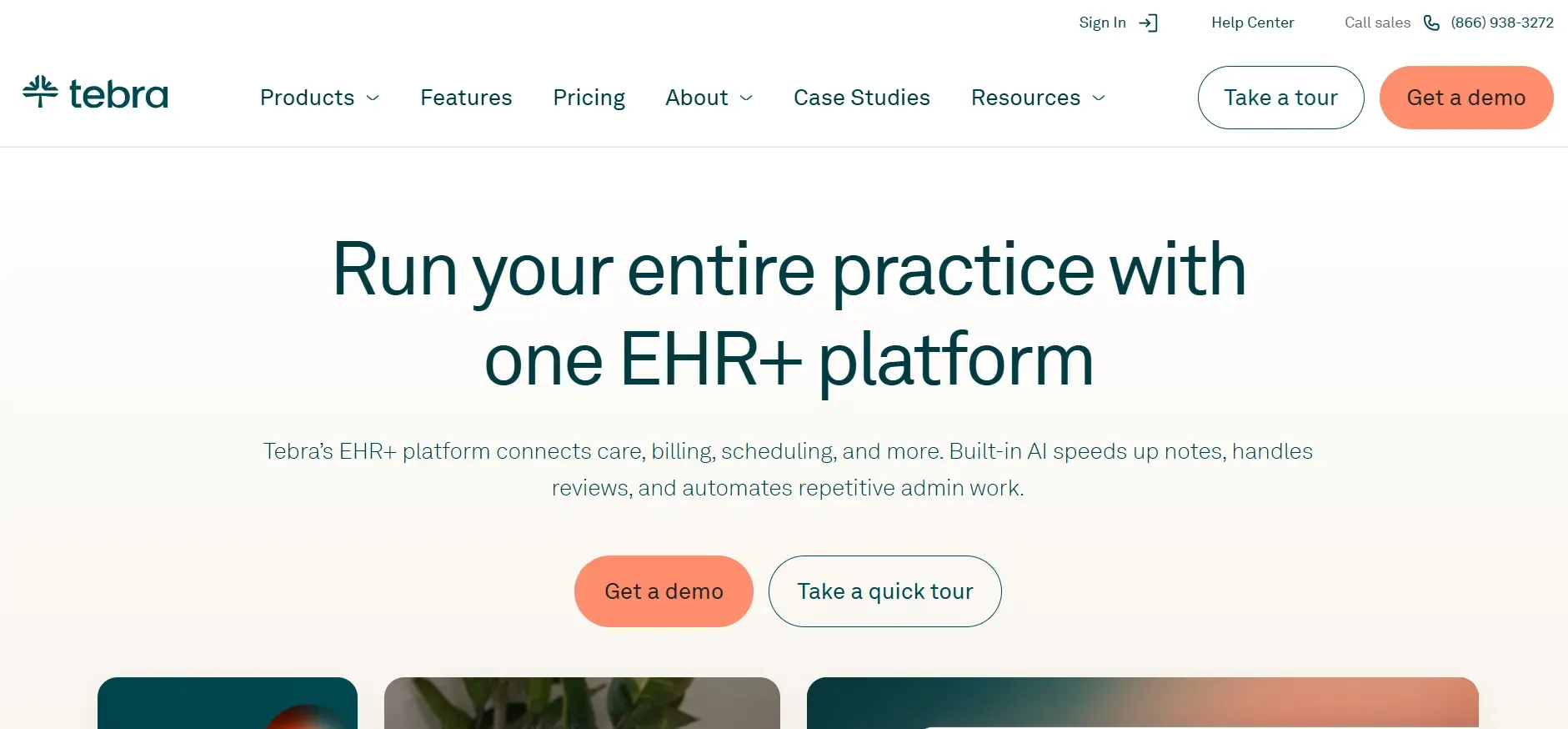
Kareo, now part of Tebra, targets small and midsize primary care clinics needing integrated clinical and billing tools. Kareo's cloud-based platform offers both EHR and practice management, with appointment scheduling, e-prescribing, and billing workflows all in one place. The interface is approachable for generalists, and the onboarding process is typically shorter than for enterprise competitors.
Pricing: Starts at $300 to $450 per provider per month, with annual contracts and setup fees.
-
Key limitations:
- Costs rise linearly with each new provider
- Some advanced features require higher-tier plans
- Support can be slow during peak times
-
Strengths:
- Integrated EHR and billing in one platform
- Approachable interface and fast onboarding
- Solid patient portal and telehealth tools
On owned software, adding providers is just a settings change, not a bigger monthly bill.
2. DrChrono (Best for mobile-first clinics)
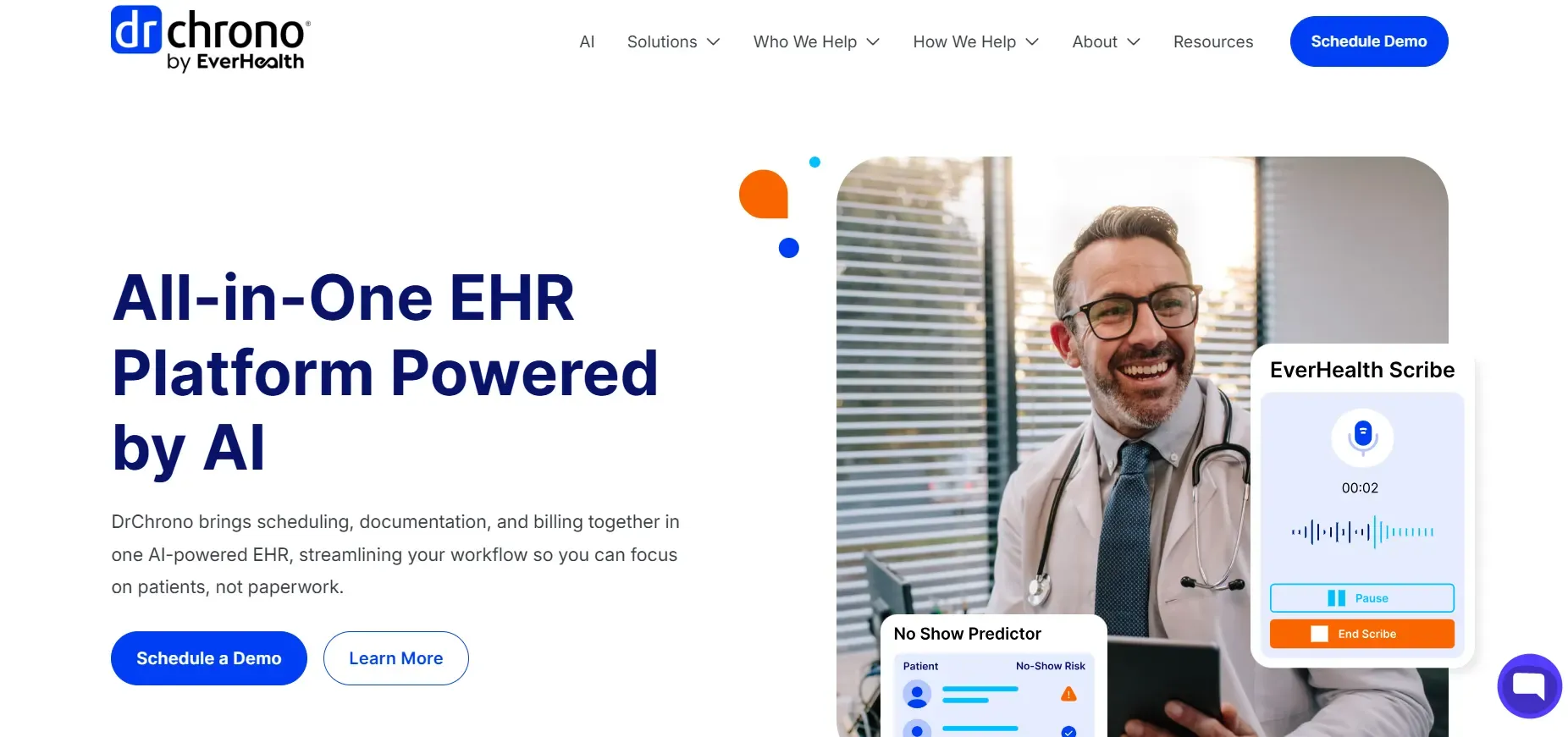
DrChrono is popular with clinics that want a mobile-first EHR and billing platform. Its iPad app is a standout, offering real-time charting, patient intake, and e-signature collection right at the point of care. DrChrono's cloud infrastructure makes it a compelling choice for providers who want flexibility in location or device.
Pricing: Starts at $250 to $400 per provider per month, with annual contracts and optional add-ons.
-
Key limitations:
- Advanced features locked behind higher tiers
- Annual price increases are common
- Offline access is limited
-
Strengths:
- Best-in-class iPad and mobile charting
- Flexible for mobile and telehealth clinics
- Customizable templates and forms
With Devaims, your mobile features are built to spec and priced once, not every year.
3. athenahealth (Best for practices tied to collections)
athenahealth takes a percentage of your collections instead of a flat monthly fee, which can seem attractive for smaller or variable-volume clinics. Their EHR and practice management suite is cloud-based and includes patient engagement, revenue cycle management, and population health modules.
Pricing: 3% to 7% of collections, with setup fees and annual contracts.
-
Key limitations:
- Costs increase as collections grow
- Customization is limited compared to some rivals
- Some advanced features require negotiation
-
Strengths:
- End-to-end revenue management
- Large partner ecosystem and integrations
- Strong support for value-based care
4. eClinicalWorks (Best for feature-rich EHR seekers)
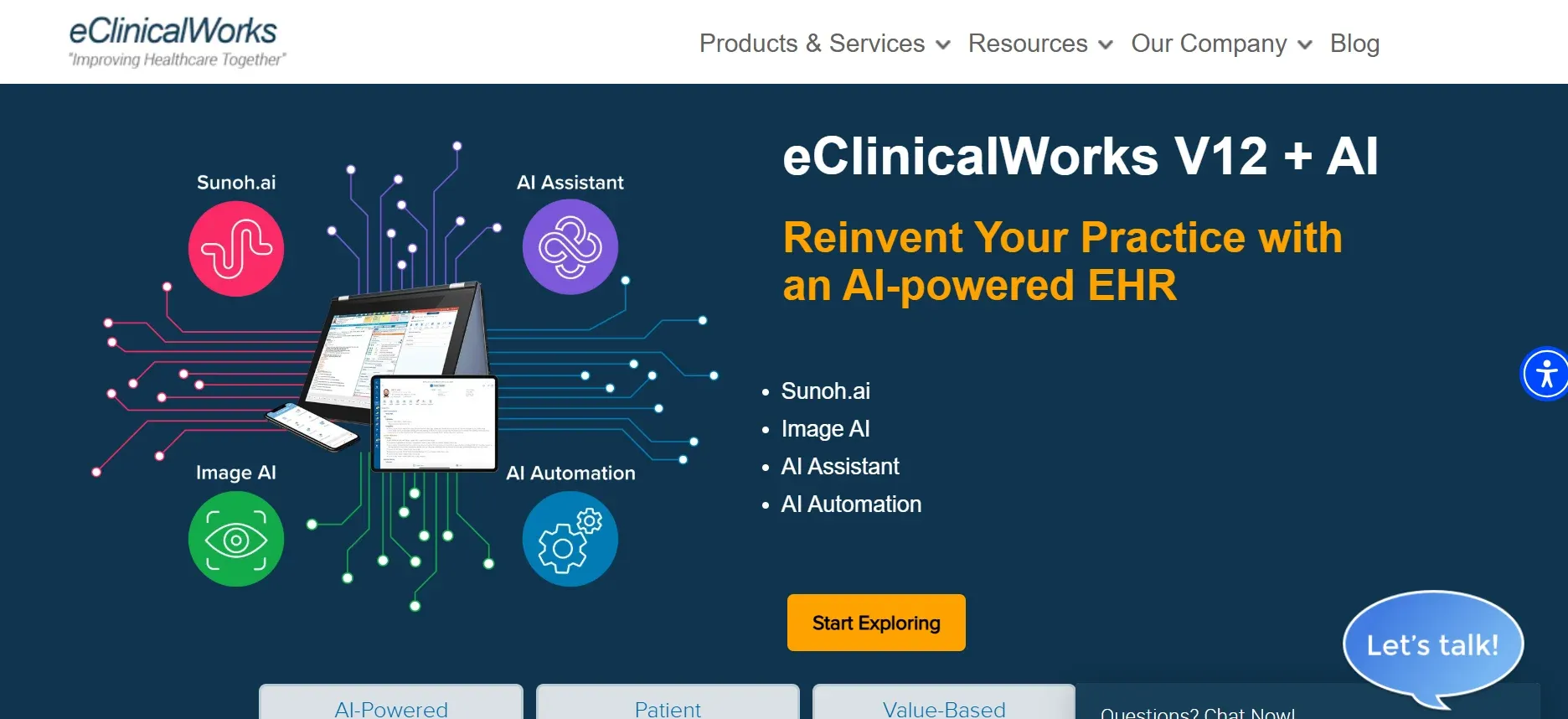
eClinicalWorks is a comprehensive EHR and practice management platform known for its breadth of features and adaptability to complex clinical workflows. It is used by both small practices and large healthcare networks, and its interoperability credentials are among the best in the market.
Pricing: $449 per provider per month plus optional add-ons, with annual contracts.
-
Key limitations:
- Can be overwhelming for small teams
- Add-ons can double the cost
- Support can be slow at times
-
Strengths:
- Highly customizable and feature-rich
- Strong interoperability and analytics
- Used by both small and large practices
When you own your software, every feature is part of the build, not a future upsell.
5. NextGen Healthcare (Best for larger, multi-site practices)
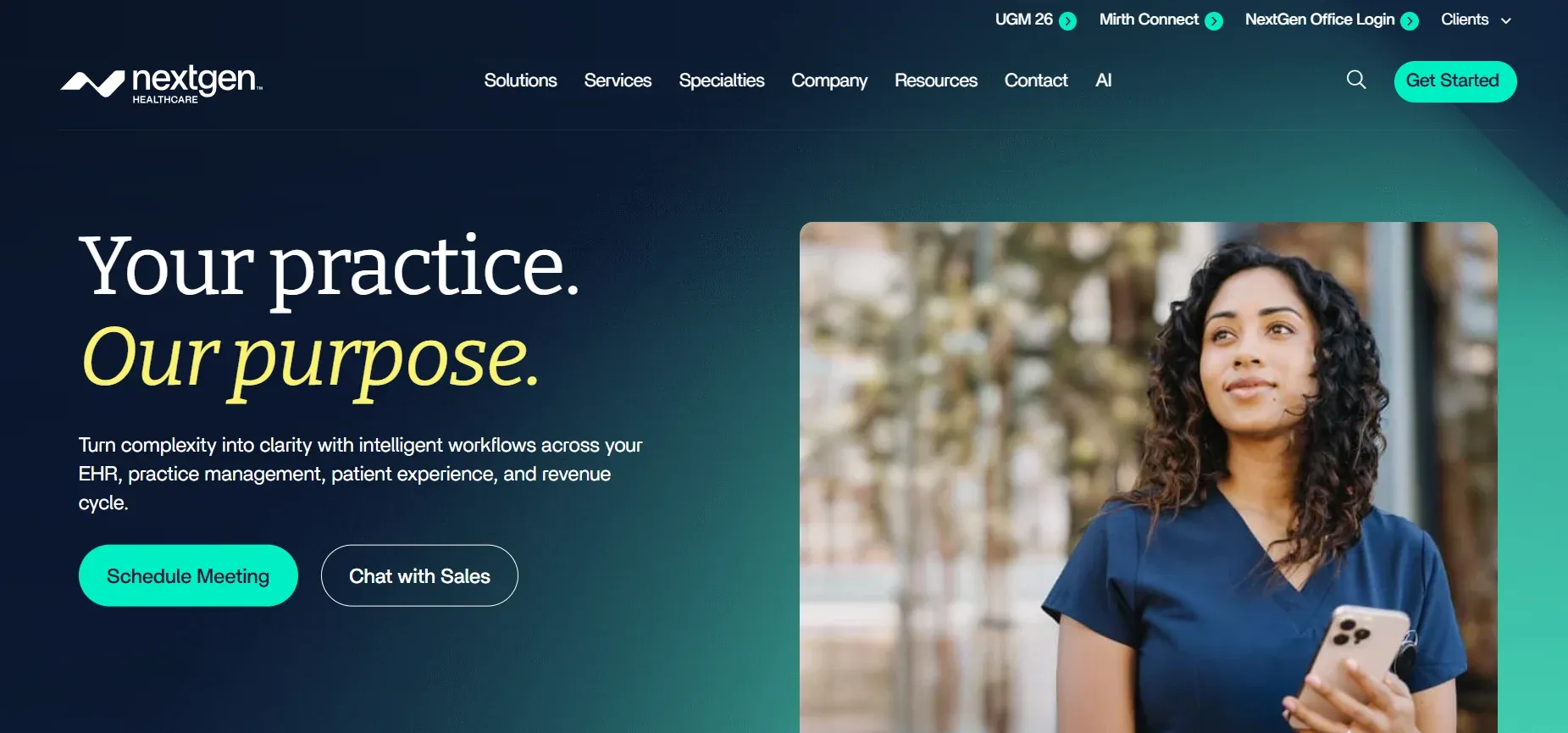
NextGen Healthcare is designed for larger clinics, multi-site operations, and organizations with complex needs. Its suite includes EHR, practice management, analytics, and population health tools, with extensive customization potential. NextGen is used by many FQHCs and enterprise-level practices.
Pricing: $800 per provider per month and up, with annual contracts and setup fees.
-
Key limitations:
- Highest base cost among these options
- Customization can require extra fees
- Steep learning curve for staff
-
Strengths:
- Deep functionality and reporting
- Scalable for multi-site and enterprise groups
- Regulatory and compliance support
6. Practice Fusion (Best for cost-focused solo clinics)
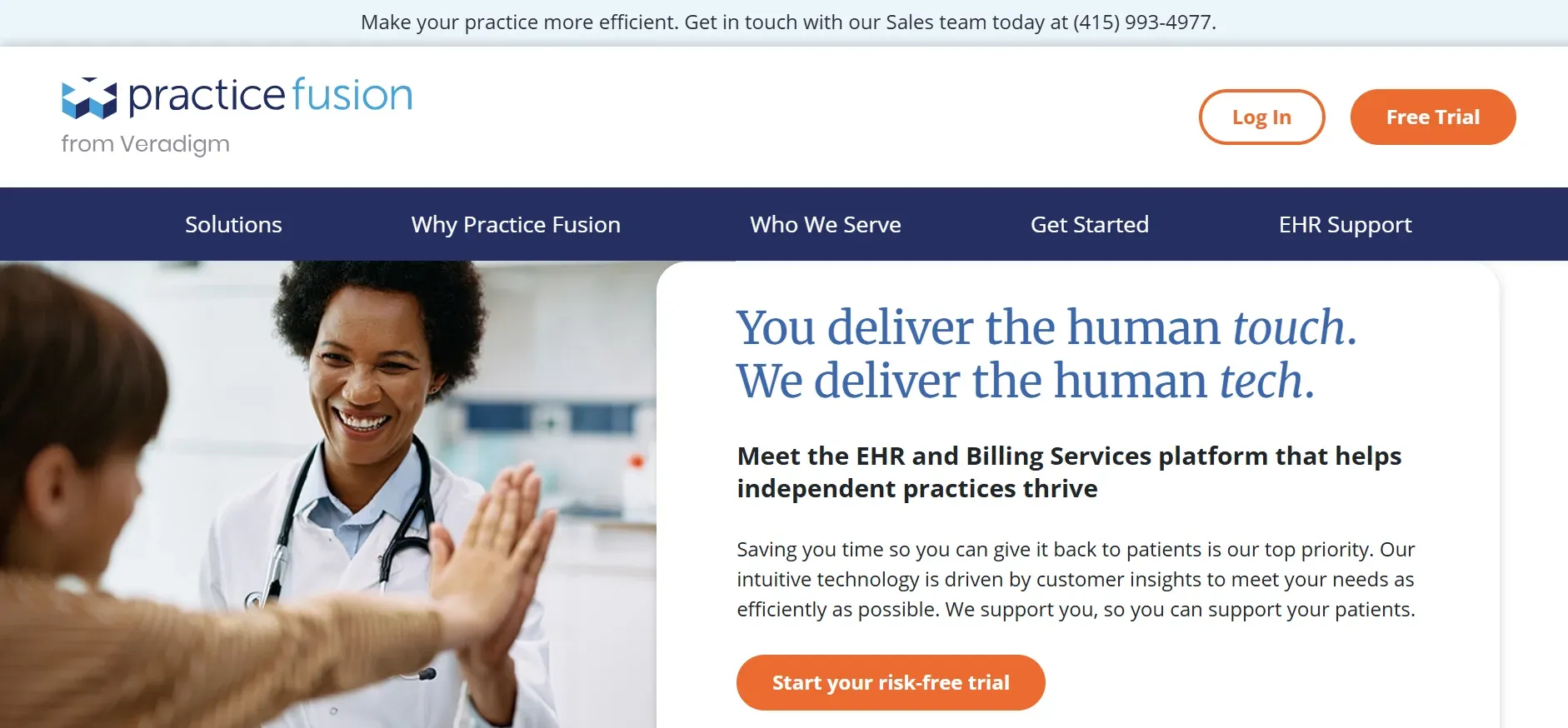
Practice Fusion is the budget pick for solo or very small clinics. At $149 per provider per month, it is the lowest-cost EHR on this list. The platform is cloud-based, with a focus on simplicity and ease of setup. Owned by Veradigm, Practice Fusion is certified for Meaningful Use and supports e-prescribing, charting, and basic reporting.
Pricing: $149 per provider per month, with minimal setup fees and annual contracts.
-
Key limitations:
- Limited features and integrations
- Reporting is basic
- Support can feel stretched thin
-
Strengths:
- Lowest monthly cost for solo clinics
- Simple setup and onboarding
- Certified for Meaningful Use and MIPS
The moment you need more, an owned platform grows with you, never locks features behind a paywall.
7. Elation Health (Best for clinician-centric practices)
Elation Health is known for its clinician-focused EHR and strong commitment to usability. Designed by physicians, for physicians, Elation prioritizes rapid charting and minimal administrative burden. Its interface is clean, and the platform supports both primary care and some specialties.
Pricing: $300 to $500 per provider per month (or $3,600 to $6,000 per year), with annual contracts.
-
Key limitations:
- Feature set is narrower than enterprise rivals
- Advanced reporting may require add-ons
- Annual contracts and custom pricing can add up
-
Strengths:
- Fast, clinician-friendly charting
- Strong usability and workflow automations
- Good for direct primary care and small groups
8. Devaims (Best for clinics ready to own their software)
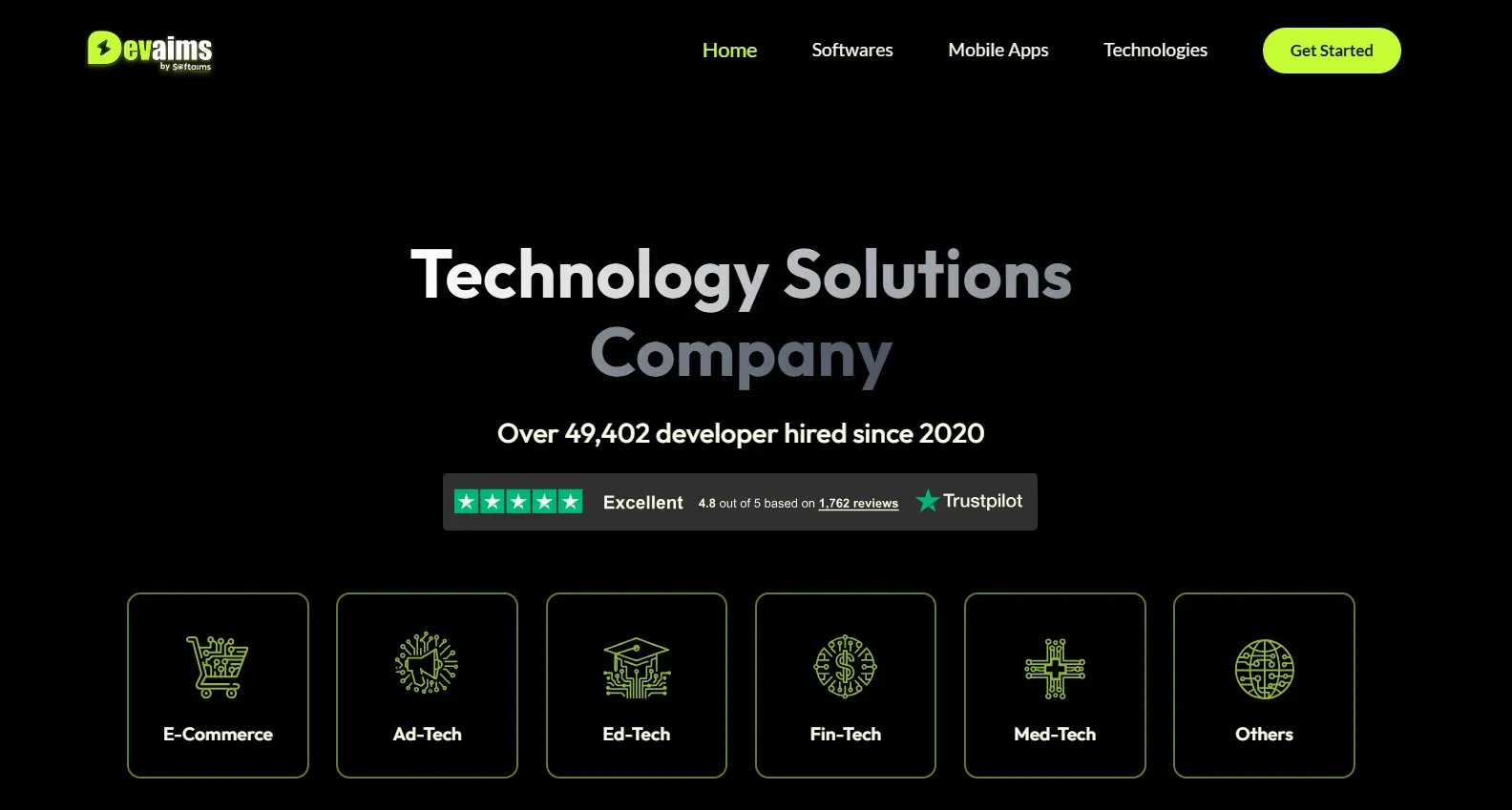
Devaims builds custom web, mobile, and business software for clinics that want out of the never-ending subscription cycle. Instead of renting, you get a system tailored to your exact workflows, integrations, and reporting needs, and you own the code outright, forever.
Pricing: One-time build (typically $27,000 for a 3-provider clinic), plus a flat maintenance fee (e.g., $230/month). No per-provider or per-claim fees, and no annual contract required.
- Custom-built EHR, practice management, and billing modulesFull control over features, integrations, and reportingOwn your code, data, and platform with no recurring rent
- Custom-built EHR, practice management, and billing modules
- Full control over features, integrations, and reporting
- Own your code, data, and platform with no recurring rent
With Devaims, you pay once to build your system, then a flat maintenance fee. No more per-provider surprises, no annual contract stress, and no feature lockout.
Other AdvancedMD alternatives worth knowing
- Modernizing Medicine: Strong for specialty practices (dermatology, orthopedics), but less ideal for general primary care. Integrates with specialty devices and offers robust MIPS reporting.
- Epic: The hospital giant, but rarely feasible for smaller clinics due to cost, complexity, and infrastructure requirements. Epic is best known for interoperability across large networks and compliance with national data standards, but implementation and support are resource-heavy.
- Cerner (Oracle Health): Another large-hospital EHR, often overkill for independent practices. Cerner excels at enterprise-scale operations, but cost, customization, and long timelines make it impractical for most primary care groups.
- Healow: Focuses on patient engagement and telehealth, not a full EHR/PM replacement. Healow can be a useful add-on for clinics that want to expand virtual care or patient self-service options, but it does not replace core practice management tools.
How to choose the right AdvancedMD alternative
- Budget: Solo clinics may get by with Practice Fusion, while growing groups need to factor in the true cost of per-provider pricing. Calculate five-year costs, not just year one.
- Feature needs: If you need advanced analytics or custom workflows, eClinicalWorks or a custom Devaims build may be a better fit. Check if features you consider essential (custom reports, integrations, specialty modules) are included or require extra fees.
- Practice size: Larger, multi-site operations might look to NextGen or Devaims for scalability without per-seat pricing. Consider how easy it is to add locations, manage providers, and customize workflows as you grow.
- Contract flexibility: If annual contracts and setup fees are a pain, Devaims offers ownership with no ongoing lock-in. Even among SaaS vendors, contract terms vary, so read the renewal and termination clauses carefully.
- Integration needs: For specific integrations (labs, billing, specialty modules), owning your platform means every connection is possible. With SaaS options, ask for examples of live integrations and get references if possible.
The right AdvancedMD alternative is the one that fits your growth, not just your current headcount. Always request a demo, get a trial (where possible), and talk to real users in your specialty before committing.
Stop paying rent on software you could own
Here is the hard truth: whether you pick AdvancedMD, Kareo, or any SaaS EHR, you are still paying rent. Every new provider, every encounter, every extra report is a new line on your invoice. And as you grow, the costs never level off, they just keep climbing. With Devaims, you pay to build your system once, own every line of code, and pay a flat maintenance fee. No more per-provider surprises, no more annual contract stress, no more feature lockout.
Devaims builds custom web, mobile, and business software that fits your clinic exactly. You keep the platform, the source code, and the integrations. No one can raise your price or turn off your data. Every workflow, report, and interface is built to match how you really operate, no more fighting a vendor’s roadmap.
- No per-provider or per-claim fees: Your platform is yours, whether you have 2 or 30 clinicians. You are not penalized for growth, and operational costs become predictable.
- No annual contracts: You set the terms, not the vendor. Cancel maintenance or request enhancements as needed, with no fear of lockout.
- No feature upsells: Everything you need is built in from the start. If your workflows change, your platform evolves with you.
- Full data ownership: You keep your data, your code, and your clinic’s future. Data export, reporting, and analytics are yours to control, not hidden behind paywalls.
| Tool | Ownership | Per-provider fees? | Custom integrations? | Contract required? |
|---|---|---|---|---|
| AdvancedMD | Rented | Yes | Limited | Annual |
| Kareo (Tebra) | Rented | Yes | Some | Annual |
| DrChrono | Rented | Yes | Some | Annual |
| Devaims (Custom) | Owned | No | Yes, fully | No |
5-year cost comparison: rent versus own
| Year | AdvancedMD (3 providers) | Kareo (3 providers) | eClinicalWorks (3 providers) | Devaims (owned) |
|---|---|---|---|---|
| 1 | $26,244 | $16,200 | $18,432 | $27,760 |
| 2 | $52,488 | $32,400 | $36,864 | $30,520 |
| 3 | $78,732 | $48,600 | $55,296 | $33,280 |
| 4 | $104,976 | $64,800 | $73,728 | $36,040 |
| 5 | $131,220 | $81,000 | $92,160 | $38,800 (now ahead) |
Math assumes AdvancedMD bundle ($729/mo/provider), Kareo at $450/mo/provider, eClinicalWorks at $449/mo + $2,500/yr add-ons per provider, and Devaims at $27,000 build + $230/mo maintenance. Your real numbers may differ, so let us run the math for you.
Owning your platform makes the most sense if you are growing, have unique workflows, or are tired of annual contract drama. Devaims is your break from the rent-forever cycle. You gain control and reduce risk, especially as regulatory requirements and integration needs change over time.
How to switch from AdvancedMD
- Export all patient, billing, and encounter data from AdvancedMD (request a complete export from support if needed). Review the data for completeness and accuracy.
- Choose your new platform, whether another SaaS or a custom Devaims build. Evaluate contract terms, integration options, and migration support.
- Map and import your data into the new system, validating for accuracy. This includes patient demographics, clinical notes, billing records, and appointment history. Use test patients and trial runs to verify integrity.
- Reconnect payment processors, insurance clearinghouses, and integrations. Coordinate with vendors and IT to ensure all connections function as expected.
- Train your staff in the new workflows and tools. Offer hands-on sessions, documentation, and access to a support contact during the transition.
- Run the new and old systems in parallel for a few weeks to catch any gaps. Monitor for missing data, workflow mismatches, or integration issues.
- Review your AdvancedMD contract and provide notice to avoid auto-renewal. Ensure billing is stopped and data is fully exported before final shutdown.
With a custom Devaims build, the migration is handled as part of the project. You get a dedicated project manager, technical support, and a migration plan tailored to your clinic’s data and workflows. No loose ends, no lost data, and no downtime beyond what you schedule.
Frequently asked questions
What is the best AdvancedMD alternative for small clinics?
If low cost is your top priority, Practice Fusion is the lowest-priced SaaS EHR for solo and very small clinics. However, its limited feature set can become restrictive as you grow. For clinics needing more customization, integrations, or advanced reporting, a custom Devaims build is a better long-term investment. DrChrono is also worth considering for mobile-first solo providers, if you are willing to pay a bit more for flexibility and better mobile tools.
Which AdvancedMD alternative is cheapest over five years?
For most clinics, Practice Fusion has the lowest initial monthly fee, but over five years, owning your platform with Devaims can be cheaper for groups of three or more providers. As your team grows or your needs become more complex, the recurring per-provider model quickly outpaces the one-time build plus maintenance of an owned system. Always run your own numbers, factoring in setup, migration, and any hidden fees.
Is there a free AdvancedMD alternative?
Most reputable EHRs for primary care are paid. Some open-source options exist (such as OpenEMR), but these often require significant IT support, manual configuration, and may lack ONC certification or key integrations. Devaims can build on open-source foundations if you want the ultimate in ownership, combining the flexibility of open source with expert support and compliance assurance.
Which AdvancedMD alternatives have the best mobile features?
DrChrono is known for its mobile-first design and iPad app, which enables real-time charting, intake, and e-prescribing from anywhere. Kareo offers a mobile app for basic tasks, but is less robust. Devaims can build mobile features custom to your clinic’s real needs, whether that means offline access, custom intake flows, or tailored notifications, with no recurring app fee or forced updates from a third-party vendor.
What is the catch with owning my own EHR?
With Devaims, there’s no catch: you pay for the build, then flat maintenance. You own the code, set the terms, and grow without surprise fees or annual contracts. You are responsible for infrastructure (cloud or on-prem), but Devaims provides support and updates as part of your maintenance. The main consideration is the upfront investment and the need for a trusted partner to manage enhancements over time. You gain control, flexibility, and a true asset for your clinic.
How do I know if it's time to switch from AdvancedMD?
If your monthly costs are ballooning, support is lagging, or you feel trapped by annual renewals, it is time to review AdvancedMD alternatives. Other signs: you need integrations or reports that are always upsold or delayed, or your clinic’s workflows are constantly bending to fit the software instead of the other way around. Run your five-year cost and see if ownership makes sense for your clinic.
Can I keep my old patient data if I leave AdvancedMD?
You have the right to export your data, but the process can be tricky and sometimes requires AdvancedMD support. Always request a full data export (preferably in both human-readable and structured formats, like CSV or XML) before your contract ends. Devaims handles full data migration as part of the project, including mapping, validation, and troubleshooting any issues that arise during the transition.
The bottom line
The best AdvancedMD alternatives in 2026 all make the same tradeoff: flexibility for rent. If your clinic is scaling, or you are tired of annual contracts and per-provider fees, building and owning your software with Devaims is the only way to break the cycle. You gain control, predictability, and the ability to evolve your platform as your clinic grows, without asking permission or paying extra for every change.
Here is the test: add up what your current stack will cost you over five years. If that number could have built you a system you own forever, it is time to stop renting and start owning. Reach out for a detailed, personalized cost comparison and see what your clinic could save by making the switch.
See more advice on the Devaims blog. Compare other options in Kareo alternatives, DrChrono alternatives, and athenahealth alternatives.