


Every dermatology owner has that moment with PatientNow: the quote comes in, the numbers are vague, and the feeling is you’re renting a black box. You want to grow, but every new provider or feature means calling for a new price, and hoping support picks up. Over five years, you’ll pay tens of thousands and still own nothing but exported PDFs. If you’re hunting for PatientNow alternatives, you want more than the same rent-forever treadmill. Here’s the honest breakdown: Nextech, Practice Fusion, Athenahealth, and the usual suspects all patch one gap, but most just trade one set of fees and contracts for another. The only way off the EMR rental carousel? Own your platform. That’s where Devaims comes in.
Why dermatology practices look for PatientNow alternatives
PatientNow is far from alone in frustrating practice owners, but it highlights the core EMR problem: you rarely get clarity, control, or real value for what you pay. Here’s why so many dermatology clinics start searching for alternatives:
- Opaque pricing models: PatientNow and most competitors don’t publish real prices. You get a quote only after a sales call, and even then, the numbers shift based on features, provider count, and negotiation. This makes it nearly impossible to plan your costs as you add providers or locations. For dermatologists looking to budget for growth, this uncertainty is a dealbreaker.
- Long-term commitments and lock-in: While PatientNow claims to offer month-to-month options, most alternatives require annual or multi-year contracts. These agreements often hide auto-renewal clauses, steep early termination fees, and limits on how, or if, you can export your data. Once you’re in, switching is expensive and time-consuming.
- Annual price hikes: Many EMR vendors raise rates each year, sometimes by 10 to 15%. You may start at $200 per provider per month and see that balloon to $300+ within three years, with no added value or features. This can quickly make a “good deal” unsustainable for growing practices.
- Hidden implementation and add-on fees: The onboarding process is rarely included in the headline price. Implementation often runs from $5,000 to $30,000 or more, depending on your needs. Features like e-prescribing, telemedicine, or advanced reporting are frequently add-ons, not included in your base package.
- Limited data ownership: Even if you pay for years, you rarely own your data in a usable format. Exports are often limited to PDFs or partial data sets, making it hard to migrate or analyze your own clinical/business information. If you want to integrate new tools or build custom workflows, you’re stuck waiting on the vendor, or paying extra for custom development.
These headaches fuel the search for PatientNow alternatives. But most options on the market simply swap one set of limitations for another.
Quick comparison of the best PatientNow alternatives
| Tool | Best for | Starting price | You own it? |
|---|---|---|---|
| Nextech | Enterprise dermatology | Reported $300/mo/user | No |
| Practice Fusion | Small practices | $199/mo/provider | No |
| Athenahealth | Multi-location groups | 4 to 7% of collections | No |
| DrChrono | Mobile-first clinics | Custom per provider | No |
| Modernizing Medicine (EMA) | Specialty EMR | Quote only | No |
| Kareo (Tebra) | Billing + EMR | Quote only | No |
| Greenway Health | Integrated health systems | Quote only | No |
| DermEngine | Imaging and AI | Quote only | No |
| Devaims (Custom Build) | Practices who want to own | One-time build, you own it | Yes |
Always confirm current pricing and contract terms before you decide. Fees, features, and commitments change quickly in this space. Ask for a detailed quote that spells out all recurring and one-time costs.
The 9 best PatientNow alternatives
1. Nextech (best for enterprise dermatology)
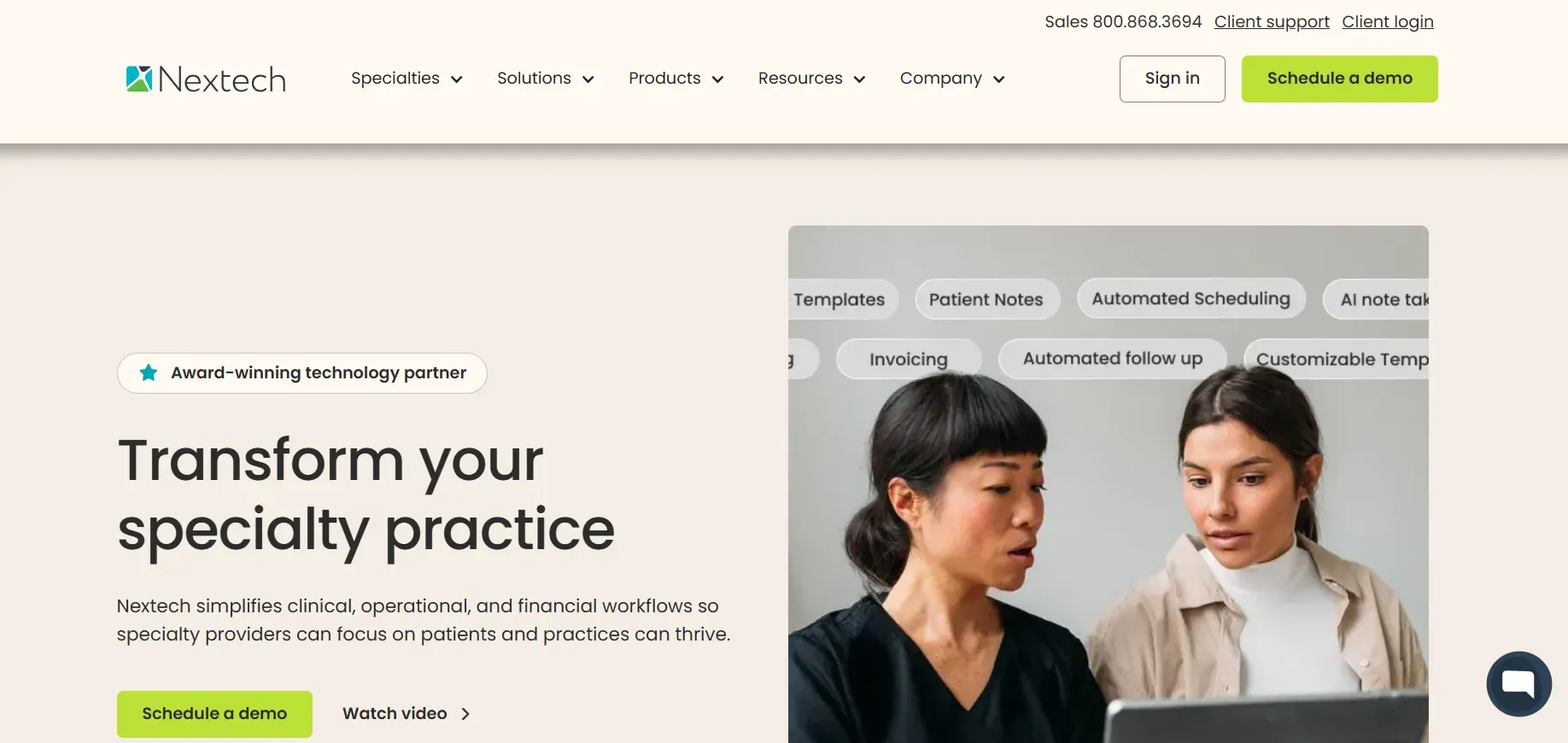
Nextech is a heavyweight in specialty EMR for dermatology, plastic surgery, and ophthalmology. It’s designed for large clinics who demand deep customization, advanced reporting, and strong integrations. Nextech’s platform features highly customizable templates, advanced scheduling, e-prescribing, and full revenue cycle management (RCM) modules. Integration with labs, imaging systems, and practice management tools is a core strength, making it popular among multi-site, high-volume practices.
Pricing: Reported $300 to $399 per user per month, with implementation fees ranging from $5,000 to $30,000+ (source). The actual cost depends on provider count, modules selected, and any customizations. Renewal contracts often include annual increases.
- Deep specialty features for dermatology
- Enterprise-grade reporting and analytics
- Strong integrations with labs and imaging
- Steep learning curve for new users
- Per-user pricing increases costs as you scale
- Customization often requires paid consulting
On software you owned, adding a new provider would cost nothing. That’s the Devaims difference.
2. Practice Fusion (best for small practices)
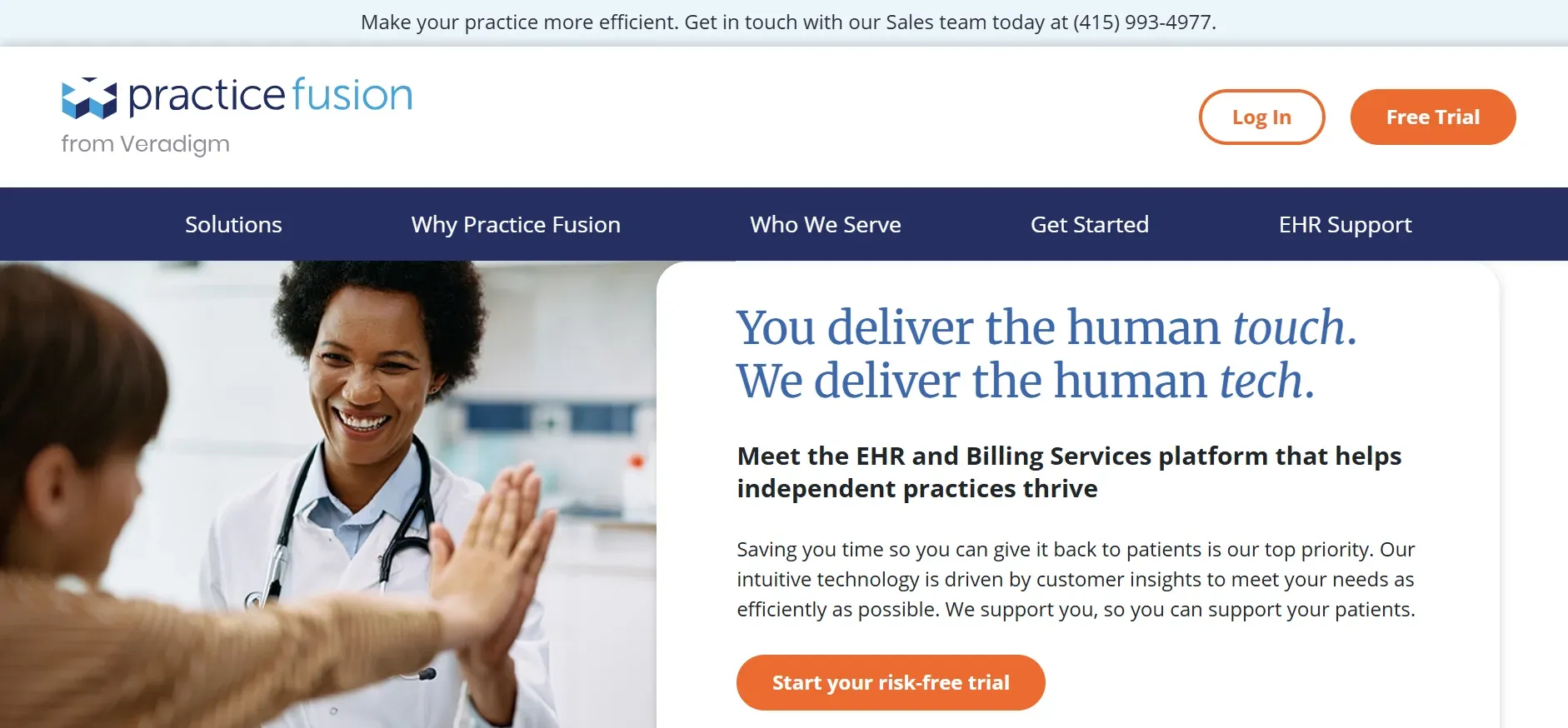
Practice Fusion is a cloud-based EMR known for its ease of use and transparent pricing. It’s a favorite among solo dermatologists and small clinics who want a solution that "just works" without complex setup. Practice Fusion offers basic charting, e-prescribing, appointment scheduling, and patient portal features. It is certified for Meaningful Use and e-prescribing of controlled substances (EPCS).
Pricing: $199 per provider per month, annual commitment required (pricing page). There are no setup fees for most users, but optional add-ons (e.g., faxing, clearinghouse integrations) may add to your bill. You must pay for each licensed provider; non-clinical staff are often free.
- Transparent, published pricing
- Simple onboarding for small practices
- Certified for e-prescribing and compliance
- Limited dermatology-specific features
- Annual contracts lock you in
- Data migration can be challenging
When you own your EMR, you can tailor every workflow to your practice, not just what’s built in.
3. Athenahealth (best for multi-location groups)
Athenahealth is a cloud-based EMR and revenue cycle management platform popular with larger groups and organizations seeking a fully managed solution. Its all-in-one platform covers clinical documentation, medical billing, patient engagement, and analytics. Athenahealth is known for its strong reporting tools, population health modules, and ability to handle complex, multi-site organizations.
Pricing: 4 to 7% of monthly collections, with a 3-year initial contract (source). This percentage-based pricing means your costs scale with your revenue. Implementation fees are typically quoted separately and can be substantial for larger groups.
- Robust analytics and reporting
- Handles multi-location and complex groups
- Wide range of integrations
- Percentage-of-collections model can get costly
- Strict 3-year contract with auto-renewal
- Customization requires working with their services team
With Devaims, you keep the code and never face auto-renewal fees or percentages off your top line.
4. DrChrono (best for mobile-first clinics)
DrChrono is a mobile-first EMR designed for clinics that love iPads and want flexibility in where and how they work. Its user interface is optimized for tablets, making it easy to chart on the go, capture images, and manage appointments. DrChrono offers e-prescribing, patient portal, billing, and telehealth features, with an emphasis on mobility and cloud access.
Pricing: Custom per provider, with three main tiers: Foundation, Growth, and Premium. Expect annual price increases of 10 to 15% (source). Implementation fees may apply, and advanced features (e.g., billing automation, custom forms) are often only available in higher tiers.
- Excellent tablet and mobile experience
- Telehealth and e-prescribing built in
- API access for custom integrations
- Mobile-first focus means some desktop features are less robust
- Pricing is variable and increases over time
- Customization can get expensive
5. Modernizing Medicine (EMA) (best for specialty EMR needs)
Modernizing Medicine (EMA) is a cloud-based EMR built specifically for dermatology and other specialties. Its standout feature is adaptive learning: EMA "remembers" your most-used diagnoses, treatments, and workflows, streamlining documentation. It comes pre-loaded with thousands of specialty-specific templates, lesion mapping, and built-in clinical decision support.
Pricing: Quote only. Pricing is based on provider count, modules (e.g., Pathology, Analytics, Telehealth), and implementation scope. Expect five-figure onboarding fees and recurring per-provider charges. Add-ons like Pathology or Practice Management are billed separately.
- Deep dermatology content and templates
- Adaptive charting and decision support
- Strong specialty integrations
- No public pricing, requires sales call
- Advanced features add up quickly
- Less flexible for fully custom workflows
6. Kareo (Tebra) (best for billing + EMR)
Kareo (Tebra) blends medical billing and EMR with a focus on independent practices. Its user interface is straightforward, and it offers scheduling, charting, e-prescribing, and integrated claims management. Kareo’s billing-first approach makes it a strong fit for practices that want to handle all revenue cycle tasks in one place.
Pricing: Quote only. Pricing is based on provider count, selected modules (e.g., Telehealth, Analytics), and claims volume. Some features are only available in higher tiers. Implementation fees may apply for larger or multi-location practices.
- Integrated billing and EMR
- User-friendly interface
- Partner marketplace for add-ons
- Limited dermatology-specific features
- Opaque pricing and multi-year contracts
- Advanced reporting requires higher tiers
7. Greenway Health (best for integrated systems)
Greenway Health targets clinics needing a full EHR, practice management, and patient engagement suite. Its platform, Intergy, is designed to support multi-specialty groups and integrated care teams, with strong scheduling, billing, and population health features. Greenway is certified for regulatory programs and offers extensive reporting options.
Pricing: Custom quote only; pricing depends on provider count, modules, and implementation complexity. Expect onboarding fees for larger practices. Greenway often requires multi-year agreements.
- Comprehensive EHR and practice management
- Certified for compliance programs
- Strong reporting and analytics
- Generalist platform, less depth for dermatology
- Multi-year contracts and opaque pricing
- Customization may require professional services
8. DermEngine (best for imaging and AI)
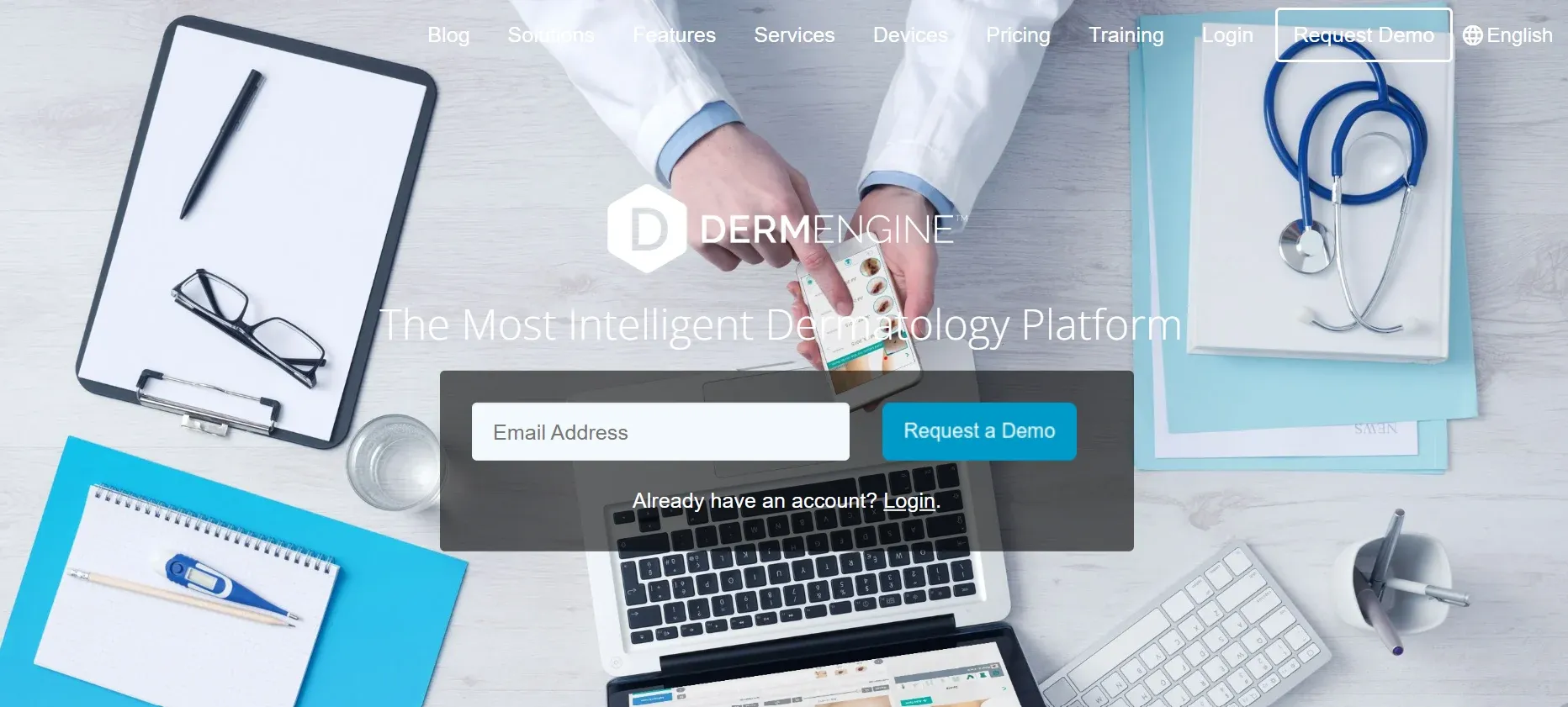
DermEngine is purpose-built for dermatologists who rely heavily on imaging, AI-powered lesion analysis, and teledermatology. It supports high-resolution photo capture, automated mole mapping, and secure image storage. DermEngine’s AI tools help identify suspicious lesions and streamline clinical documentation. The platform also offers remote consults and patient engagement tools.
Pricing: Custom quote; pricing depends on provider count, imaging volume, and feature set. Add-ons like teledermatology and AI analytics may be billed separately.
- Advanced imaging and AI diagnostics
- Teledermatology features
- Integrates with digital dermatoscopes
- Not a complete EMR, lacks full charting and billing
- Opaque pricing and reliance on add-ons
- Integration with EMRs may require technical help
9. Devaims (best for practices who want to own their EMR)
Devaims builds custom dermatology EMR platforms you own outright: no per-provider fees, no contract, no lock-in. You get the source code, the database, and the freedom to scale or adapt as you wish. Devaims projects start with a discovery phase, mapping your workflows, compliance needs, and unique brand requirements. The result is a platform tailored to you: patient intake, charting, imaging, e-prescribing, billing, and reporting, fully customized.
- One-time build cost, then flat maintenance
- You own the code and database
- Fully tailored to your workflows and branding
- No contracts or per-user pricing
- Built for long-term ROI
- Integrates with your billing, labs, and third-party tools as needed
Integrations: Devaims platforms can connect to any lab, imaging, billing, or analytics tool you use. Because you own the code, integrations are fully customizable. You can build new connections as your practice evolves, without waiting on a vendor road map.
Migration friction: Devaims handles the full migration process, including mapping and importing your legacy data, aligning custom fields, and testing for completeness. Because you control the database, you can access your data directly for analytics or future integrations.
Use cases: Best for growing dermatology practices, multi-location groups, or clinics with unique workflows or branding needs. Also ideal for practices frustrated by opaque pricing, annual increases, or lack of data ownership.
With Devaims, you never worry about annual price hikes or losing access if you miss a payment. Your platform, your rules.
Other PatientNow alternatives worth knowing
- Intergy (Greenway): A generalist EHR with some dermatology modules. Good for integrated practices but lacks advanced specialty features.
- Cerner: Enterprise EHR for large health systems. Robust but often overkill for private dermatology clinics, complex to implement and expensive.
- OpenEMR: Open-source and free, but requires substantial IT expertise to deploy, maintain, and customize. Lacks dermatology-specific templates and imaging tools.
- Pabau: UK-focused, strong for medspa and aesthetics, but weaker for US dermatology compliance and billing.
Other platforms like eClinicalWorks and NextGen are also used in dermatology, but both require significant customization and come with their own pricing and contract caveats.
How to choose the right PatientNow alternative
- By budget: Small practices may prefer predictable per-provider rates, while scaling clinics should run the five-year math on rental versus ownership. Consider not only monthly fees but also implementation, add-ons, and annual increases. Ask for a total 5-year cost projection before signing.
- By workflow: If you need specialty dermatology templates, imaging, or AI tools, prioritize platforms that offer these natively. Generalist EMRs can be made to work, but require more customization and staff training.
- By contract tolerance: If you hate long-term lock-in, filter out vendors with strict multi-year commitments or auto-renew clauses. Read contracts carefully: termination fees and export restrictions are common.
- By ownership: If you want to own your data and platform, only a custom build like Devaims delivers true ownership. This also gives you the flexibility to integrate new tools, support new workflows, and adapt as your clinic grows.
- By support: Ask real users about support responsiveness and issue resolution. Online reviews and peer referrals are more reliable than vendor promises.
Ready to get off the rental treadmill? Here’s how owning with Devaims changes the math.
Stop paying rent on software you could own
Every PatientNow alternative listed above rents you the privilege of using their software, and every year, you pay again. Nextech, Athenahealth, and the rest may wrap it in better features or support, but the model is the same: your data, your workflows, but always their platform. That means annual price hikes, per-provider fees, and never really knowing what it will cost to grow.
Devaims builds custom EMR and practice platforms for dermatology, and you own every line of code. There’s no per-user charge, no forced upgrades, no contract. You decide how it works, how it looks, and who gets to use it. When you need a new workflow or feature, you build it, or we do.
- Pricing opacity: You get a fixed build quote and flat monthly maintenance. No hidden fees, ever. Your costs are predictable, and you can add providers, locations, or features without renegotiating a contract.
- Contract lock-in: With Devaims, there is no contract. You own the platform from day one. If you ever want to switch to another provider, you have the code and database, no more ransom for your own data.
- Annual price hikes: There are none. Costs are predictable for five years and beyond. Maintenance fees are fixed, and you decide when and if to invest in new features.
- Data ownership: You have the source code, the database, and the power to move, integrate, or grow without asking permission. You can run analytics, build new integrations, or even license your platform to others if you choose.
| Feature | PatientNow | Nextech | Practice Fusion | Devaims (owned) |
|---|---|---|---|---|
| Pricing model | Custom, per provider/month | $300+/user/month | $199/provider/month | One-time build, flat maintenance |
| Contract term | Month to month | Annual/multi-year | Annual | No contract |
| Data ownership | Export only | Export only | Export only | You own 100% |
| Custom workflows | Limited | Consulting required | Limited | Fully custom |
| Per-unit fees | Yes | Yes | Yes | No |
| Year | Rented (at $1,800/mo x 12 for 5 providers) | Owned (build $32,000 + $200/mo maint) |
|---|---|---|
| 1 | $21,600 | $34,400 |
| 2 | $43,200 | $36,800 |
| 3 | $64,800 | $39,200 (now ahead) |
| 4 | $86,400 | $41,600 |
| 5 | $108,000 | $44,000 |
For most growing dermatology practices, owning pays for itself by year three or four. The bigger your team, the faster you break even. Want to see your real math? We’ll run it for free, no pressure, just clarity.
How to switch from PatientNow
- Export all patient records, scheduling, and billing data from PatientNow: Request this well in advance. PatientNow’s export options may be limited to PDFs or CSVs. If possible, ask for a full database export to preserve structured data.
- Choose your new EMR or custom platform provider and confirm data import capabilities: Not all EMRs can accept the same data formats. Ask for a migration plan and list of supported fields (e.g., demographics, appointments, clinical notes, attachments).
- Map and import data into the new system: This step involves aligning old fields with new ones. For custom builds like Devaims, the platform can be tailored to match your legacy structure, reducing data loss and manual re-entry.
- Reconnect payment processors, labs, and third-party integrations: Ensure all billing, lab, and imaging workflows are tested before go-live. Some integrations may require new credentials or setup steps.
- Train staff on new workflows and run parallel for at least one billing cycle: Parallel runs help catch missing data or process gaps. Schedule training sessions and provide support resources.
- Review your PatientNow contract and formally terminate access when ready: Confirm your data is fully migrated and accessible in the new system before ending your PatientNow subscription. Keep your license active until you’re confident nothing is missing.
With a custom Devaims build, the migration is handled as part of the project, including data mapping, staff training, and go-live support.
Frequently asked questions
What is the best PatientNow alternative for dermatology?
The strongest PatientNow alternatives for dermatology are Nextech and Modernizing Medicine (EMA) for advanced specialty features, Practice Fusion for price transparency and simplicity, and Devaims if you want to own your platform. Nextech and EMA offer deep dermatology content, lesion mapping, and integrations, but at a premium price and with long-term contracts. Practice Fusion is affordable and easy for small practices, but lacks specialty depth. Devaims is the only solution that gives you lasting ownership, full customization, and no recurring per-provider fees.
Which PatientNow alternative is most affordable?
Practice Fusion is among the lowest published rates at $199 per provider per month, but over five years, total rental costs often exceed a custom build with Devaims. If your practice is growing or has more than three providers, Devaims can cost less in the long run, especially when factoring in annual price increases, add-on fees, and the value of owning your data and workflows.
Is there a free PatientNow alternative?
Open-source EMRs like OpenEMR are technically free, but require significant IT resources to install, secure, and maintain. They lack dermatology-specific features, imaging tools, and reliable support. For most private dermatology practices, the cost and risk of DIY outweigh the savings. No major commercial PatientNow alternative offers a true free tier for clinical use.
Can I keep my data if I switch from PatientNow?
You can export data from PatientNow, but often only in PDFs or limited formats. True database exports are rare and may require negotiation. Most commercial EMRs will only import basic demographics and select clinical data. With Devaims, you own the full database and code, so you have total control, no more worrying about partial exports or being held hostage by a vendor.
When should I switch from PatientNow to an alternative?
If annual costs are rising, workflows are limited, or you lack ownership and flexibility, it's time to consider alternatives. Run the five-year math: add up your current costs (including add-ons and increases), compare to the total cost of ownership for a custom build, and factor in the value of customization and data control. Practices planning to add providers or locations, or those with unique workflow needs, see the fastest ROI from switching to an owned solution.
Which PatientNow alternatives are best for multi-location dermatology groups?
Athenahealth and Nextech both handle multi-location practices well, with strong scheduling, permissions, and reporting. However, both come with high costs and strict contracts. Devaims offers ownership, full customization, and no per-location or per-user fees, making it the best choice for scaling groups who value control and want to avoid recurring price hikes.
The bottom line
Eight out of nine PatientNow alternatives just swap one set of fees and contracts for another. The only way to stop renting your workflows is to own them outright. Here’s the decision rule: Add up what the platform will cost you over the next five years. If that would buy you a custom system you own, you already have your answer.
See more on the Devaims blog, or check out our other alternatives posts: Nextech alternatives, Athenahealth alternatives, and Practice Fusion alternatives.