


Sticker shock usually hits right after you see the full Nextech quote. $300 per user per month, plus a five-figure setup fee, and a multi-year contract with a maze of add-ons. If you’ve ever tried to cancel mid-term, you know the drill: hidden penalties, slow support, and the feeling you’re renting your own data.
That’s why so many specialty clinics start searching for Nextech alternatives. Epic, AdvancedMD, and Kareo (Tebra) are all household names, but every big platform brings its own headaches: more fees, more lock-in, and more hoops to jump through. If you want out of the endless rental cycle, a custom build from Devaims is the only path to full ownership. Let’s break down your real options and show when owning finally wins.
Why medical specialty clinics look for Nextech alternatives
High per-user pricing: Nextech typically runs $300 to $399 per user per month, which adds up fast for even a modest-sized clinic. This model punishes growth: add a provider, your bill climbs. Many teams find that after a couple of years, they’re spending six figures annually on software rental alone.
Steep setup and implementation fees: Getting started can cost anywhere from $5,000 to $30,000 just in onboarding and consulting charges. These upfront costs are often non-refundable, even if you leave early or never fully implement the platform.
Multi-year contracts with tough cancellation: Most users face strict multi-year agreements. If you attempt to exit before the term ends, you may face large penalties, lose access to your data, or need to pay for extra months of service. The exit process is rarely user-friendly.
Opaque pricing and surprise add-ons: The real cost often balloons after you discover key features or necessary support are add-ons at extra cost. Many clinics are surprised to find that basic reporting, integrations (such as labs, imaging, or e-prescribing), or even customer support are not included in the base rate.
Limited extensibility and ownership: You never own the code or your system, and custom integrations are slow and expensive. If you want to build new workflows, integrate with third-party apps, or adapt the system as your clinic evolves, you’re at the mercy of the vendor’s roadmap and timelines, which may not align with your needs. These frustrations drive the search for Nextech alternatives that offer more transparency and control.
Quick comparison of the best Nextech alternatives
| Tool | Best for | Starting price | You own it? |
|---|---|---|---|
| Epic | Enterprise clinics | $200/user/mo | No |
| AdvancedMD | All-in-one EHR/PM | $429/provider/mo | No |
| Kareo (Tebra) | Small practices | $160/provider/mo | No |
| Modernizing Medicine | Specialty-focused | Custom quote | No |
| Allscripts | Scalable clinics | Custom quote | No |
| Greenway Health | Interoperability | Custom quote | No |
| Netsmart | Behavioral health | Custom quote | No |
| Athenahealth | Cloud, collections | 4 to 8% of collections | No |
| eClinicalWorks | Integrated platform | $449/provider/mo | No |
| Devaims | Fully owned system | One-time build | One-time build, you own it |
Always confirm current pricing before you decide. Vendors revise terms often. Consider not just sticker price, but total cost of ownership, contract length, and how much flexibility you really have.
The 10 best Nextech alternatives
1. Epic (enterprise clinics)
Epic is the gold standard for enterprise EHRs, used by the largest health systems, academic medical centers, and multi-site specialty groups. Its scale, depth, and maturity are unmatched, but those strengths come with a heavy price tag and significant complexity.
Pricing: Custom quote, typically $200+ per user per month, plus high setup fees.
- Deep specialty modules and analytics
- Industry-leading interoperability
- Trusted by large, multi-site organizations
- Very high upfront and ongoing costs
- Complex onboarding and migration
- Customization is expensive and tightly controlled
Devaims insight: If Epic's complexity or cost is a barrier, owning your own platform with Devaims means you can scale without vendor-imposed limits.
2. AdvancedMD (all-in-one EHR/PM)
AdvancedMD is an all-in-one EHR, practice management, and billing platform aimed at mid-sized specialty clinics. Its modular approach lets clinics pick and pay for only the features they need.
Pricing: Starts at $429 per provider per month, with add-on fees for extra modules.
- Flexible, modular system
- Modern interface and mobile app
- Robust billing integrations
- Each add-on increases total cost
- Annual contracts limit flexibility
- Variable quality of migration support
Devaims insight: If you want to avoid annual contracts and per-user fees, Devaims lets you own your system outright with no recurring rental charges.
3. Kareo (Tebra) (small practices)
Kareo, now operating under the Tebra brand, is designed for independent practices and smaller clinics. Its clear pricing, simple interface, and month-to-month contracts appeal to startups and solo practitioners.
Pricing: Starts at $160 per provider per month, with optional add-ons.
- Fast onboarding and easy to use
- Month-to-month contracts
- Affordable for small clinics
- Limited advanced specialty features
- Mixed reviews on billing accuracy
- Smaller app ecosystem
Devaims insight: Outgrowing Kareo? Devaims builds can scale with your clinic, so you never have to migrate again.
4. Modernizing Medicine (specialty-focused)
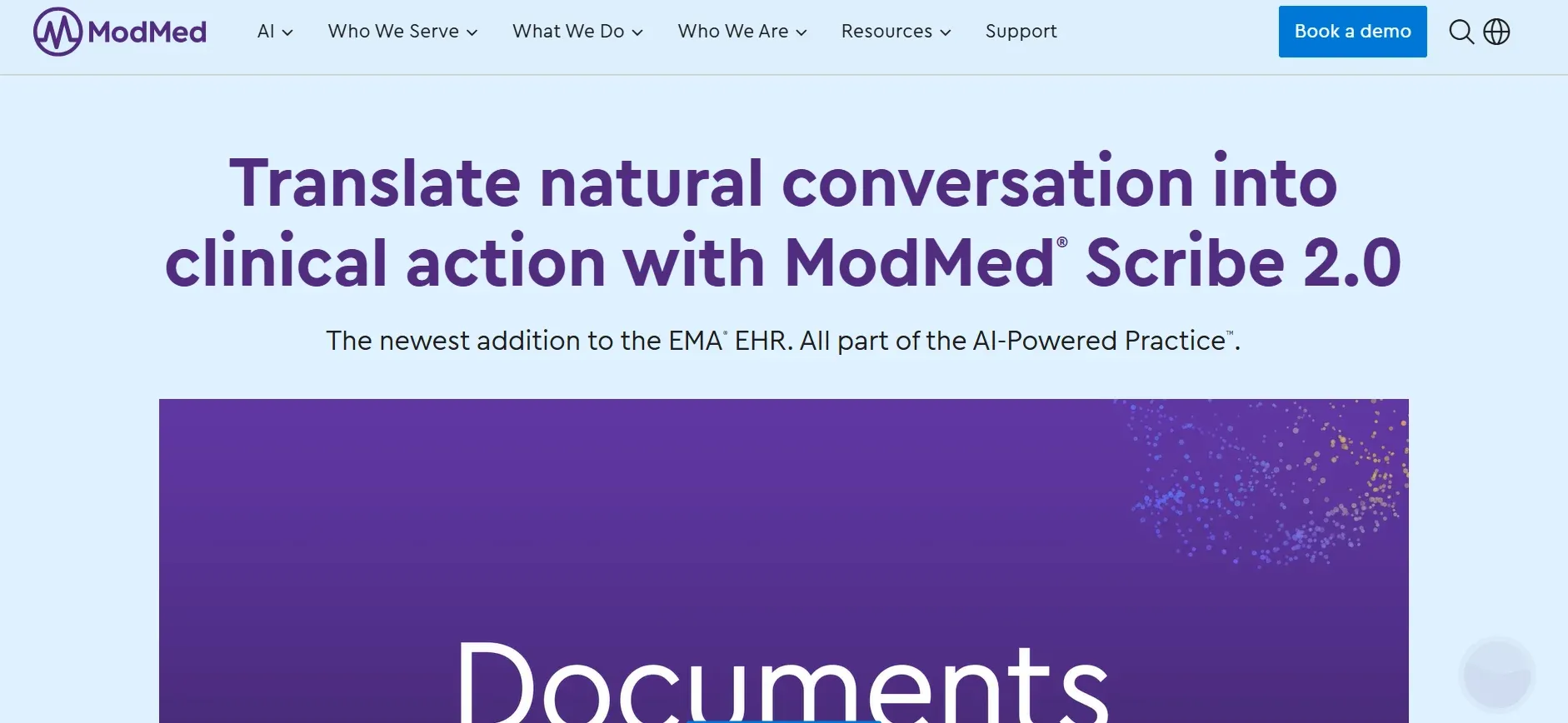
Modernizing Medicine (ModMed) was built for specialties like dermatology, ophthalmology, and orthopedics. Its focus is on deep clinical content and specialty workflows, making it a compelling alternative to Nextech for clinics that need documentation and templates tailored to their field.
Pricing: Custom quote, typically higher than generalist EHRs.
- Rich specialty documentation
- Adaptive learning for providers
- Integrated telehealth and image management
- Non-public pricing, often requires negotiation
- Steep learning curve for new users
- Custom integrations may take time
Devaims insight: If you want specialty workflows with no SaaS lock-in, Devaims builds are tailored to your exact needs and owned by your clinic.
5. Allscripts (scalable clinics)
Allscripts is a long-time EHR vendor with solutions for small practices to large multisite clinics. Their scalable approach means you can start small and expand, but the system is often seen as less modern than newer entrants.
Pricing: Custom quote, varies by clinic size and modules.
- Highly scalable and flexible
- Open architecture for integrations
- Strong reporting and compliance tools
- Interface less modern than competitors
- Performance can lag with heavy usage
- Support quality is inconsistent
Devaims insight: If you want to avoid legacy interfaces and support issues, Devaims delivers a modern, custom platform you fully control.
6. Greenway Health (interoperability)
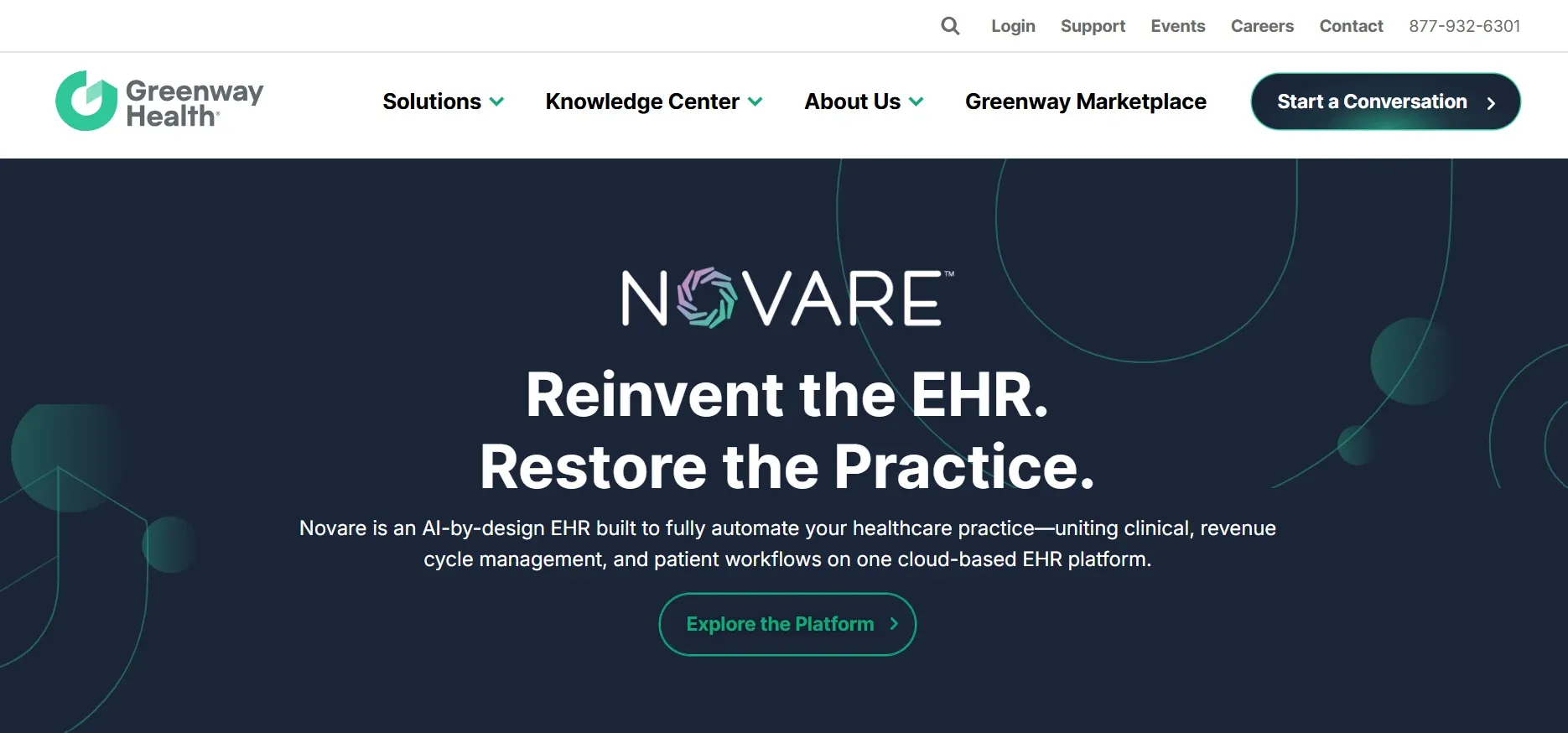
Greenway Health is recognized for its focus on interoperability and compliance. It is a good fit for clinics that need to exchange data with external systems or participate in health information exchanges.
Pricing: Custom quote, based on modules and clinic size.
- Certified for major interoperability standards
- Active in health information exchanges
- Customizable forms and telehealth
- Specialty content not as deep as some competitors
- Customizations may require extra investment
- System updates can cause temporary outages
Devaims insight: With Devaims, you get full interoperability and the freedom to integrate with any partner, on your terms.
7. Netsmart (behavioral health)
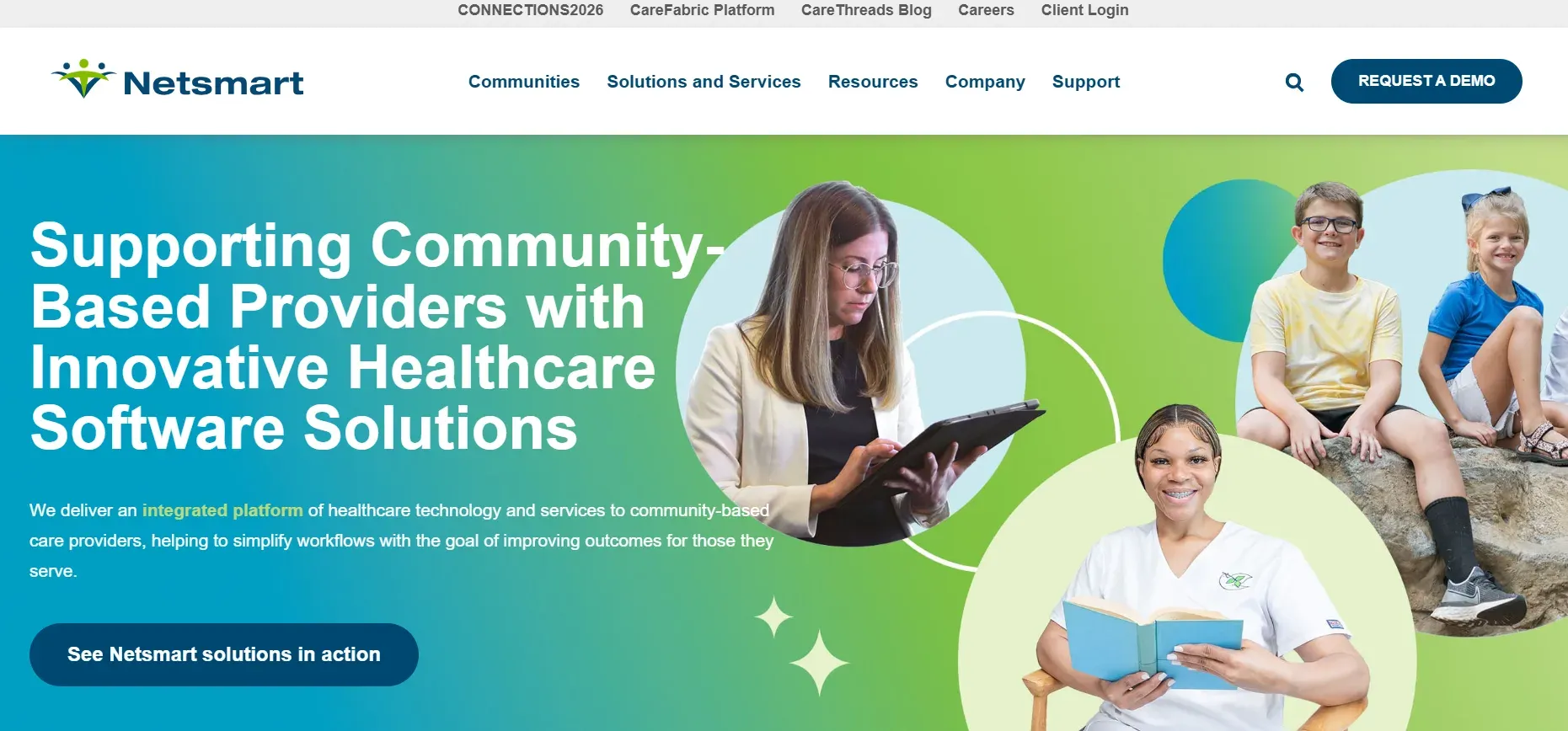
Netsmart is a specialist in behavioral health, post-acute, and human services EHRs. Its focus on compliance, privacy, and behavioral workflows makes it unique among major EHR vendors.
Pricing: Custom quote, varies by organization and modules.
- Tailored for behavioral health and compliance
- Advanced documentation and outcomes tools
- Strong privacy and regulatory support
- Limited features for non-behavioral specialties
- Integration with external systems can be difficult
- Support quality varies
Devaims insight: If you need behavioral health features plus full ownership, Devaims can build a system for your exact compliance and workflow needs.
8. Athenahealth (cloud, collections)
Athenahealth is known for its cloud-based platform and unique pricing: clinics pay a percentage of collections instead of a fixed monthly fee. Its strengths are in revenue cycle management, billing, and ease of use.
Pricing: 4 to 8% of collections, plus possible setup fees.
- Turnkey billing and compliance
- Modern, web-based interface
- Streamlined onboarding and integrations
- Percentage pricing grows as your clinic grows
- Advanced reporting may require extra investment
- Data stored in proprietary formats
Devaims insight: With Devaims, your costs stay flat as you grow, and your data is always yours.
9. eClinicalWorks (integrated platform)
eClinicalWorks is a leading EHR and practice management solution for clinics that want a single, integrated platform. Its large user base and robust features make it a direct competitor to Nextech.
Pricing: Starts at $449 per provider per month, with add-on fees for premium modules.
- Comprehensive feature set
- Strong integration and analytics options
- Scalable for multi-location practices
- Long onboarding process
- Complex pricing and add-on fees
- Interface can be hard to learn
Devaims insight: If you want to avoid complex pricing and onboarding, Devaims delivers a system built to your specs, with no hidden fees.
10. Devaims (fully owned system)
Devaims builds custom EHR and practice management software for specialty clinics that want to own their system outright. Unlike SaaS vendors, Devaims delivers the source code, allowing full control, customization, and ownership with no per-user or per-month fees.
Pricing: One-time build fee (e.g., $30,000), plus flat monthly maintenance (e.g., $150/month).
- You own the code and data, with no rental fees
- Fully customized to your specialty and workflows
- Unlimited users and locations at no extra cost
Devaims insight: With Devaims, you break free from SaaS contracts and own your platform for good.
Other Nextech alternatives worth knowing
- Practice EHR: Affordable for small clinics, with simple onboarding and basic features. Limited specialty content and customization. Good for startups or solo practices, but may not scale for complex specialty workflows.
- Cerner: One of the largest EHR vendors, now part of Oracle. Powerful for hospitals and enterprise clinics, but often too complex and expensive for most specialty practices. Migration and customization can be daunting.
- Practice Fusion: Once known for its free model, now offers low-cost cloud EHR. Lacks deep specialty features and customizations. Ads in the free version, and data export can be challenging. Best for very small clinics.
- OpenEMR: Open source and free to use. Highly customizable, but requires significant technical resources to implement, secure, and maintain. No dedicated support, best for clinics with in-house IT expertise.
How to choose the right Nextech alternative
- Budget: Calculate your all-in cost (including setup, support, and extras) over five years, not just the monthly sticker price. Consider hidden costs like support fees, integration charges, and user-based pricing. Run different scenarios for team growth or new locations.
- Practice size: Large, multi-site clinics may need enterprise features and robust interoperability. Smaller teams can often get by with leaner tools or a custom build, avoiding the complexity and cost of enterprise platforms.
- Specialty fit: Dermatology, ophthalmology, plastic surgery, orthopedics, and behavioral health all have unique clinical documentation and workflow needs. Check the depth of specialty templates, the ability to customize, and whether your unique workflows are supported out of the box or require costly add-ons.
- Ownership vs. rental: If you want to own your software and avoid SaaS forever, only a custom build (like Devaims) offers that route. SaaS solutions always carry the risk of price hikes, forced upgrades, and changing contract terms.
- Migration and support: Factor in the pain of moving your data, retraining staff, and future-proofing your workflows. Some vendors offer white-glove migration, while others leave you to manage the process. Ask for references from clinics that have migrated successfully.
If you’re tired of paying for every provider, every month, owning your platform could be the move.
Stop paying rent on software you could own
The truth: every Nextech alternative above is still a rental. Per-user fees, percentage-of-collections models, and long-term contracts are the business. They lock you in and keep your data just out of reach. Devaims is the only route where you keep what you pay for: the source code, your data, your workflows, your platform.
Devaims builds custom, ownable EHR and practice management systems for specialty clinics. You pay a one-time build fee, a flat monthly maintenance, and get the full source code, so you’re never locked out and never hostage to price hikes or forced upgrades. Everything from specialty templates to unique integrations is built to fit your practice, not the other way around.
- No per-user or per-month rental fees: After the upfront build, your cost is flat and predictable. No surprise increases as your team grows.
- Your data, your code: You own every line and can integrate or expand as you wish. No more waiting for a vendor to approve a feature or integration.
- No contract lock-in: No multi-year agreement, just your system, yours to keep. If you want to take over support or switch IT vendors, you can.
- Custom workflows: Everything is tailored to your specialty, not a generic template. You decide the features, the branding, and the future direction.
| Tool | Pricing model | Ownership | Contract |
|---|---|---|---|
| Nextech | $300 to $399/user/mo | Never | Multi-year |
| AdvancedMD | $429/provider/mo | Never | Annual |
| Athenahealth | 4 to 8% of collections | Never | Annual |
| Devaims | One-time build, flat maint. | You own it | No contract |
| Year | Rented cumulative | Owned cumulative |
|---|---|---|
| 1 | $43,200 | $31,800 |
| 2 | $86,400 | $33,600 |
| 3 | $129,600 | $35,400 |
| 4 | $172,800 | $37,200 (now ahead) |
| 5 | $216,000 | $39,000 |
Math explained: For a 12-provider specialty clinic, at $300 per user per month, you spend $3,600 per month, or $43,200 per year. Over five years, that’s $216,000 and you still rent. A Devaims build at $30,000 plus $150/month maintenance totals $39,000, after four years, you’re ahead, and you own the platform. The bigger your team, the faster you break even. Let us run your real numbers for free.
The cost advantage grows with practice size. For clinics with 20, 30, or more providers, the savings over SaaS rental can approach or exceed $200,000 in just a few years. Plus, every dollar you spend builds long-term equity in a platform you control.
How to switch from Nextech
- Export all patient, medical, and billing data from Nextech using available tools or by request. This may involve CSV, XML, or proprietary formats. Work closely with Nextech support to ensure completeness.
- Evaluate and select your new EHR or practice management platform. Consider specialty fit, migration support, and integration needs.
- Plan and execute a data import into the new system, mapping all fields carefully. Validate that demographics, clinical notes, lab results, and billing histories are correctly transferred.
- Reconnect payment processing, labs, and integrations to the new platform. Test each connection before going live to avoid workflow interruptions.
- Train staff on new workflows and test all major features in parallel before going live. Schedule training sessions and provide documentation to minimize disruption.
- Review your Nextech contract for exit terms and ensure all data is fully migrated. Confirm that no data remains locked in the old system before terminating your agreement.
With a custom Devaims build, the migration is handled as part of the project, including data validation, integration setup, and staff training, reducing risk and downtime.
Frequently asked questions
What is the best Nextech alternative for specialty clinics?
For most specialty clinics, AdvancedMD and Modernizing Medicine are strong SaaS options, offering robust specialty content and reasonable support. However, if you want to own your platform and avoid never-ending fees, Devaims is the only true ownership alternative on the market. Each clinic’s needs differ, feature depth, specialty content, and control all matter. Consider your long-term goals: if you plan to grow, customize, and control your data, ownership is often the smarter investment.
Which Nextech alternative is cheapest?
Kareo (Tebra) offers the lowest starting pricing at $160 per provider per month, making it attractive for small or new practices. However, watch for add-on fees (billing, telehealth, integrations) and feature gaps that can raise your total cost. Over five years, a custom Devaims build can actually cost less than renting, especially if you have more than a handful of providers or plan to grow. Always calculate your five-year total cost of ownership before deciding.
Are there any free Nextech alternatives?
Practice Fusion and OpenEMR are free or open-source, but they’re basic and require significant technical effort to use. Practice Fusion’s free tier is ad-supported and lacks advanced specialty features. OpenEMR is highly customizable but demands IT expertise for setup, security, and ongoing support. For established clinics, these are rarely viable replacements for Nextech unless you have dedicated technical staff and can accept a barebones feature set.
What is the best Nextech alternative for dermatology?
Modernizing Medicine is well-regarded for dermatology, with deep specialty templates, image management, and automated coding. Its EMA platform is designed with dermatologists in mind. However, many clinics still run into SaaS pricing, support variations, and feature tiers. Devaims can build dermatology-specific workflows that are fully owned by your clinic, so you have every tool you need with no subscription. You control the roadmap, integrations, and reporting.
How hard is it to migrate away from Nextech?
Migration can be complex: exporting clean data, mapping it to the new system, reconnecting integrations, and retraining staff all take time. The level of difficulty depends on how much historical data you need, the complexity of your custom templates, and the compatibility of your new platform. Some SaaS vendors offer migration services, but they may charge extra or limit support. The right partner (like Devaims) will handle the migration as part of the custom build, minimizing disruption and ensuring data integrity.
Will I lose my data if I switch from Nextech?
No, you can export your data from Nextech, but it may take time and help from their support team. Always ensure you have a full backup before ending your contract. Understand what formats your data will be provided in, and work with your new vendor to ensure nothing is lost in translation. A Devaims build guarantees you own every byte moving forward, no more data lock-in or hostage situations if you need to switch vendors again.
Can I keep my custom reports and templates?
Most SaaS tools make it hard to port custom templates and reports, as they are stored in proprietary formats or locked behind feature tiers. With Devaims, every workflow, template, and report is yours to keep and modify as you see fit. You can recreate, enhance, or automate any report or workflow your clinic needs, with full access to the underlying code and data.
The bottom line
Epic, AdvancedMD, and Kareo (Tebra) are all strong Nextech alternatives, but every SaaS solution means you keep paying rent on your own data. The real question is not just "what fits today?" but "what will it cost you over five years, and what will you actually own at the end?"
Here’s the decision rule: add up your five-year cost for any rented platform. If that number could have built you a system you own, you’re ready to make the switch. Owning with Devaims means your software is an asset, not a recurring bill. You control the roadmap, the integrations, and your own future.
Explore more on the Devaims blog. Related reads: AdvancedMD alternatives, Athenahealth alternatives, Kareo alternatives.