
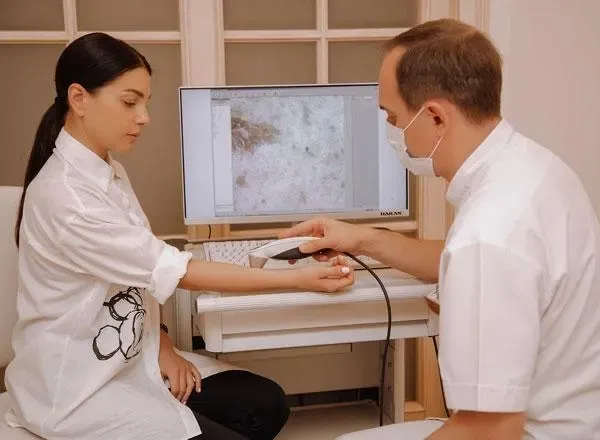


Bills for $399 per provider, surprise add-on fees, a multi-year lock, if you run a dermatology clinic, you've felt the Nextech pinch. Maybe you inherited it, maybe you picked it for those specialty EHR features, but you are starting to wonder why the price keeps climbing while your control over the system shrinks. Every year you hand over thousands, but after five years, what do you actually own?
If you're searching for Nextech alternatives, you're not alone. Modernizing Medicine (EMA), Kareo (Tebra), DrChrono, Athenahealth, and more all promise a smoother workflow and better support. But most still rent you access instead of handing you the keys. Below, I break down what each platform gets right, where each gets expensive or frustrating, and show why a custom Devaims build is where dermatologists go to finally own their software, and their data.
Why dermatology clinics look for Nextech alternatives
High per-user costs: Nextech's reported $300 to $399 per provider per month adds up quickly, especially for growing practices. A 10-provider clinic can spend nearly $4,000 monthly before even factoring in support or expansion fees. For many, this recurring expense becomes a budget anchor, limiting hiring and growth.
Steep setup and implementation fees: With onboarding costs between $5,000 and $30,000, even opening the door is expensive. Many clinics are surprised by the scope of "implementation consulting," which can balloon if you need custom templates, data migration, or specialty integrations.
Rigid, multi-year contracts: Most clinics face long-term commitments, and users report that canceling isn't simple or cheap. Contracts often include strict exit clauses, auto-renewal terms, and sometimes require legal review to unwind.
Hidden add-on and consulting charges: Core modules often require costly add-ons, and consulting can mean more surprise bills. Want e-prescribing? Imaging integration? Patient portal? Each can trigger extra fees or contract amendments.
Technical glitches and upload issues: Regular complaints include bugs, slow image uploads, and lost time dealing with support. Dermatology practices, which rely heavily on high-resolution imaging, often find upload and retrieval speeds lag behind expectations, resulting in workflow bottlenecks.
For many, the hunt for Nextech alternatives is about breaking this cycle of cost and contract, not just swapping vendors. The goal is more than a new logo, it's about owning your data, your workflow, and your business trajectory.
Quick comparison of the best Nextech alternatives
| Tool | Best for | Starting price | You own it? |
|---|---|---|---|
| Modernizing Medicine (EMA) | Specialty EHR, dermatology focus | Custom quote | No, subscription |
| Kareo (Tebra) | Small to mid-size practices | $160/provider/mo | No, subscription |
| DrChrono | Mobile-first clinics | $199/provider/mo | No, subscription |
| Athenahealth | Integrated billing | 4% to 7% collections | No, subscription |
| Practice Fusion | Budget-conscious clinics | $149/provider/mo | No, subscription |
| Greenway Health | Larger or multi-site groups | Custom quote | No, subscription |
| DermEngine | Imaging-heavy practices | $100/provider/mo | No, subscription |
| PatientNow | Aesthetic and medspa focus | Custom quote | No, subscription |
| Devaims | Full ownership, any workflow | One-time build | One-time build, you own it |
Always confirm current pricing before you decide, vendor rates and terms change fast, and published prices may not reflect your clinic's size or workflow needs. Some platforms charge extra for core features, so read the fine print and request demos tailored to dermatology.
The 9 best Nextech alternatives
1. Modernizing Medicine (EMA) (Best for specialty dermatology EHR)
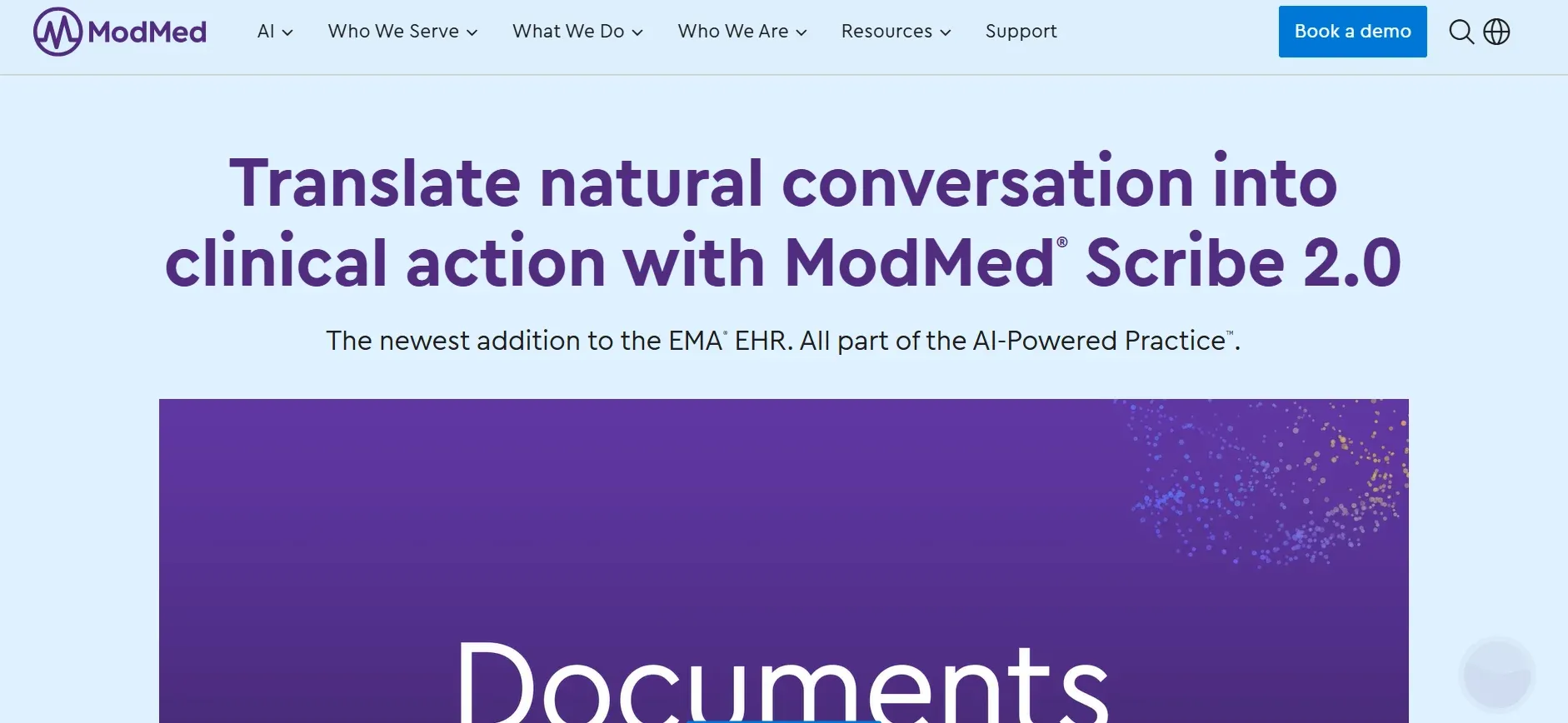
Modernizing Medicine’s EMA platform is widely regarded as a leading choice for dermatology-specific EHRs in the SaaS world. It was built from the ground up for specialty medicine, meaning its templates, workflows, and terminology are tailored for dermatologists. EMA's interface is visually oriented, with touch-friendly charting, built-in lesion mapping, and clinical decision support that draws from a large database of dermatology scenarios.
Pricing: Custom quote, typically per provider per month. Add-ons and integrations may increase total cost.
- Deep dermatology content and specialty templates
- Advanced imaging and lesion mapping tools
- Strong regulatory compliance and analytics
- Opaque pricing, costs can escalate with add-ons
- Strict contract terms, vendor lock-in
- Steep learning curve for new users
For clinics that want to own their support channel and avoid contract surprises, a custom solution like Devaims offers more lasting control.
2. Kareo (Tebra) (Best for small practices on a budget)
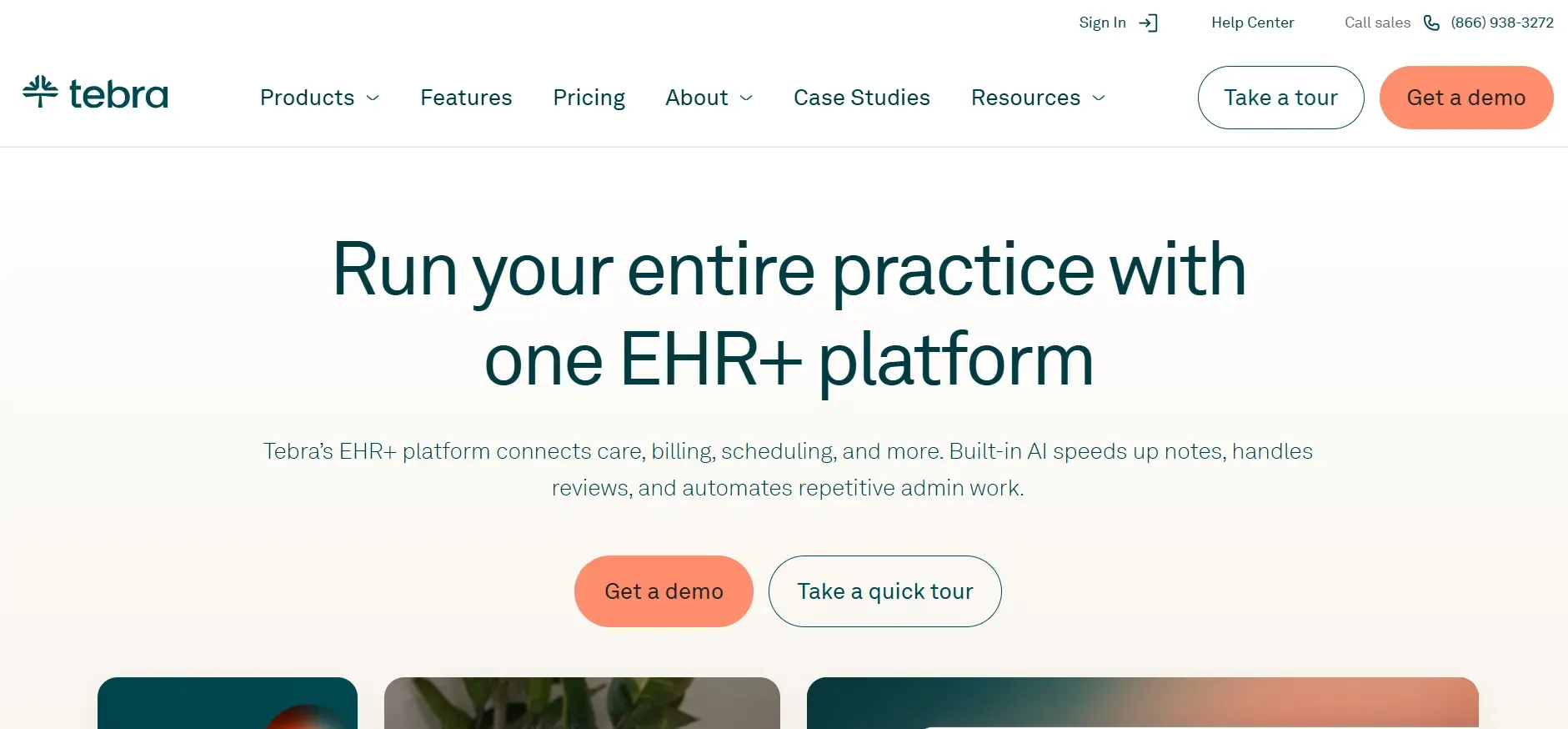
Kareo, now under the Tebra brand, is a cloud-based EHR and practice management suite aimed at small to mid-size clinics. Its main draw is affordability and simplicity: monthly pricing is posted, and there are no setup fees. Kareo’s dermatology features are serviceable, with basic templates and e-prescribing, but it lacks the deep specialty content of EMA or Nextech.
Pricing: $160 per provider per month. No setup fees, but add-ons may cost extra.
- Transparent pricing and month-to-month contracts
- Easy onboarding and mobile apps
- Responsive support for standard needs
- Limited specialty content for dermatology
- Basic analytics and reporting
- Integration depth is limited
3. DrChrono (Best for mobile-first clinics)
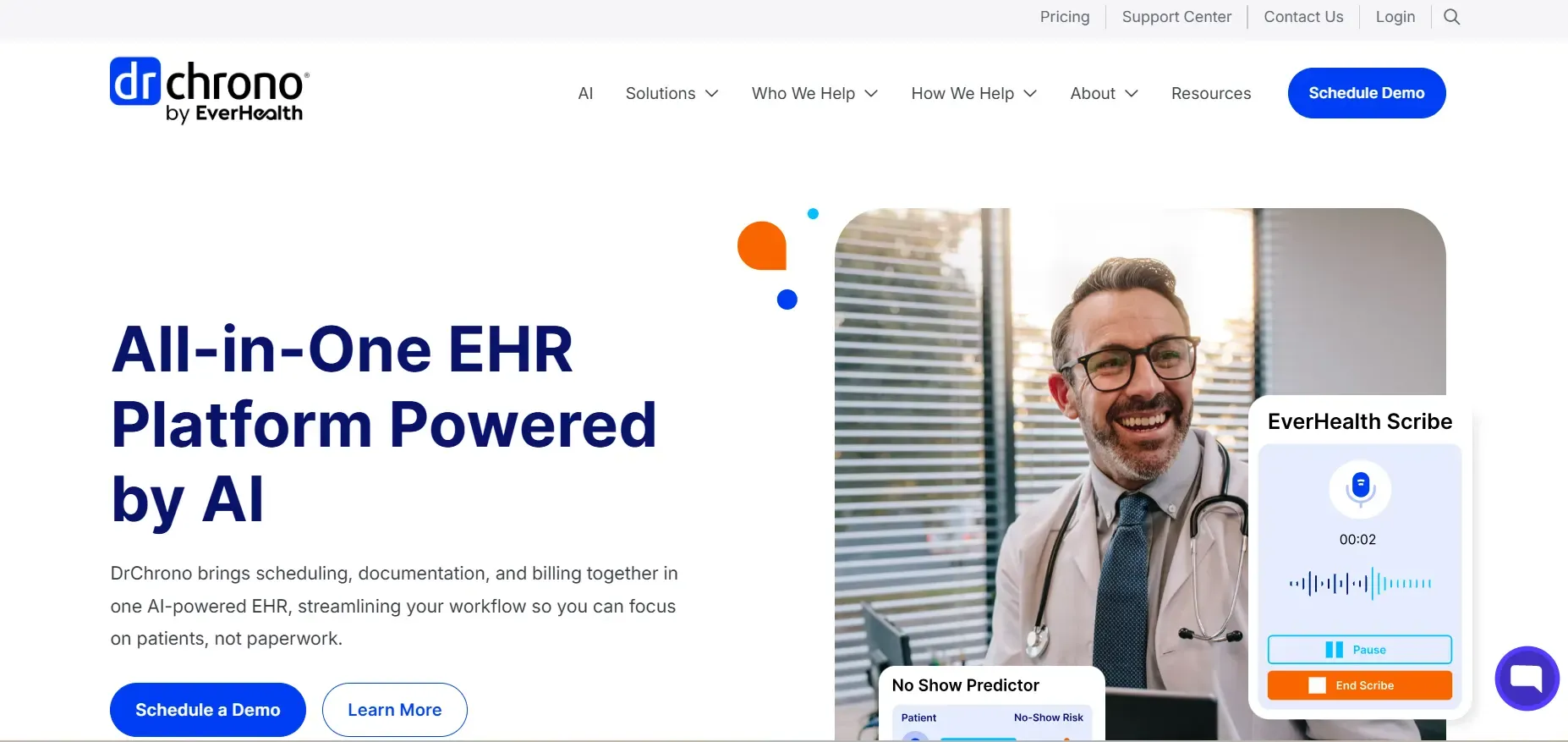
DrChrono is known for its mobile-first approach. Its iPad and iPhone apps are among the most mature in the market, allowing providers to chart, capture images, and manage schedules from anywhere. This flexibility appeals to practices with high patient volume, mobile providers, or those with multiple exam rooms and imaging needs.
Pricing: $199 per provider per month. Add-ons and integrations may increase cost.
- Best-in-class mobile charting and image capture
- Flexible scheduling and patient check-in tools
- Open API for integrations
- Occasional downtime and limited offline capabilities
- Advanced specialty features may be lacking
- Custom integrations can require technical workarounds
4. Athenahealth (Best for integrated billing and large groups)
Athenahealth is a leading EHR and revenue cycle management (RCM) platform, targeting larger clinics and multi-site groups. Its unique pricing model charges a percentage of collections, typically 4% to 7%, rather than a flat monthly fee. This can be attractive for startups but grows expensive as your revenue increases.
Pricing: 4% to 7% of collections. Additional modules may cost extra.
- Comprehensive billing and claims management
- Wide range of integrations via Marketplace
- Strong analytics and compliance tools
- Percent-of-revenue pricing can become costly
- Multi-year contracts are common
- Customization is limited by vendor policies
For clinics that want to own their billing and keep all collections, a custom platform like Devaims is the only way to fully control the revenue cycle.
5. Practice Fusion (Best for budget-conscious practices)
Practice Fusion is a low-cost, cloud-based EHR designed for simplicity and accessibility. It is one of the few platforms with transparent, published pricing and no setup fees. While its dermatology capabilities are basic, it offers enough for small clinics that want to avoid high SaaS bills.
Pricing: $149 per provider per month. No setup fees.
- Transparent, low pricing
- Easy-to-learn interface
- Simple onboarding for small clinics
- Limited customization and specialty features
- Basic reporting and analytics
- Support response can be slow
6. Greenway Health (Best for larger or multi-site clinics)
Greenway Health’s Intergy platform is designed for scalability and flexibility, targeting larger practices and multi-site groups. It combines EHR and practice management in a single platform and supports a broad range of specialties, including dermatology.
Pricing: Custom quote, typically per provider per month. Additional modules may increase cost.
- Comprehensive scheduling and billing tools
- Robust specialty templates and workflow automation
- Custom integrations via API
- Pricing is not public and can be significant
- Learning curve for advanced features
- System slowdowns during peak hours
7. DermEngine (Best for imaging-heavy dermatology)
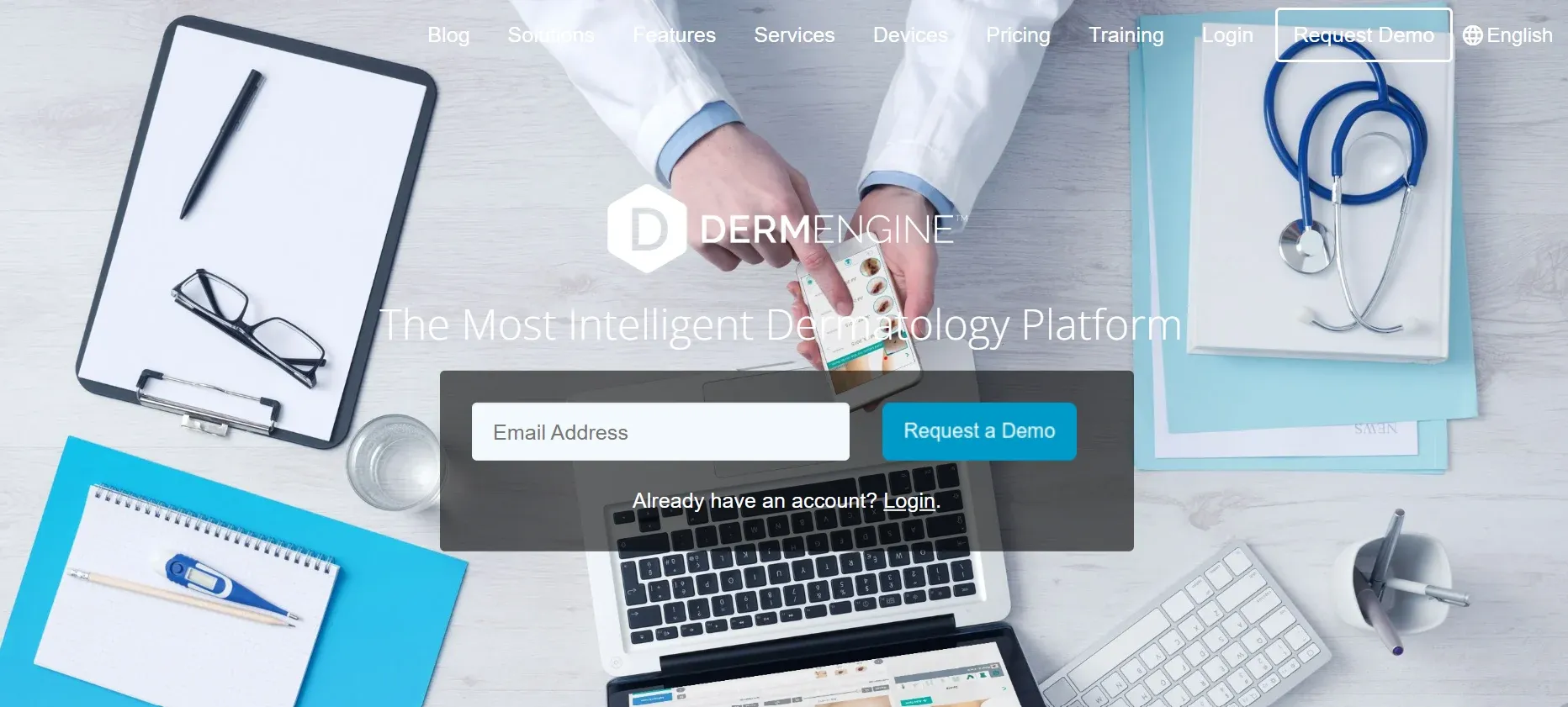
DermEngine is a cloud-based dermatology platform built around advanced imaging, mole mapping, and AI-driven analytics. It’s designed for clinics where high-volume, high-quality imaging is core to the workflow.
Pricing: $100 per provider per month. Add-ons for advanced features may apply.
- Advanced imaging and AI analytics
- Strong teledermatology capabilities
- Easy patient self-registration
- Limited EHR and practice management features
- Integration with billing/scheduling requires workarounds
- Image upload speeds depend on internet quality
With a Devaims custom build, image storage and upload workflows can be tuned to your exact needs, eliminating bottlenecks and ensuring smooth integration with the rest of your stack.
8. PatientNow (Best for medspa and aesthetic practices)
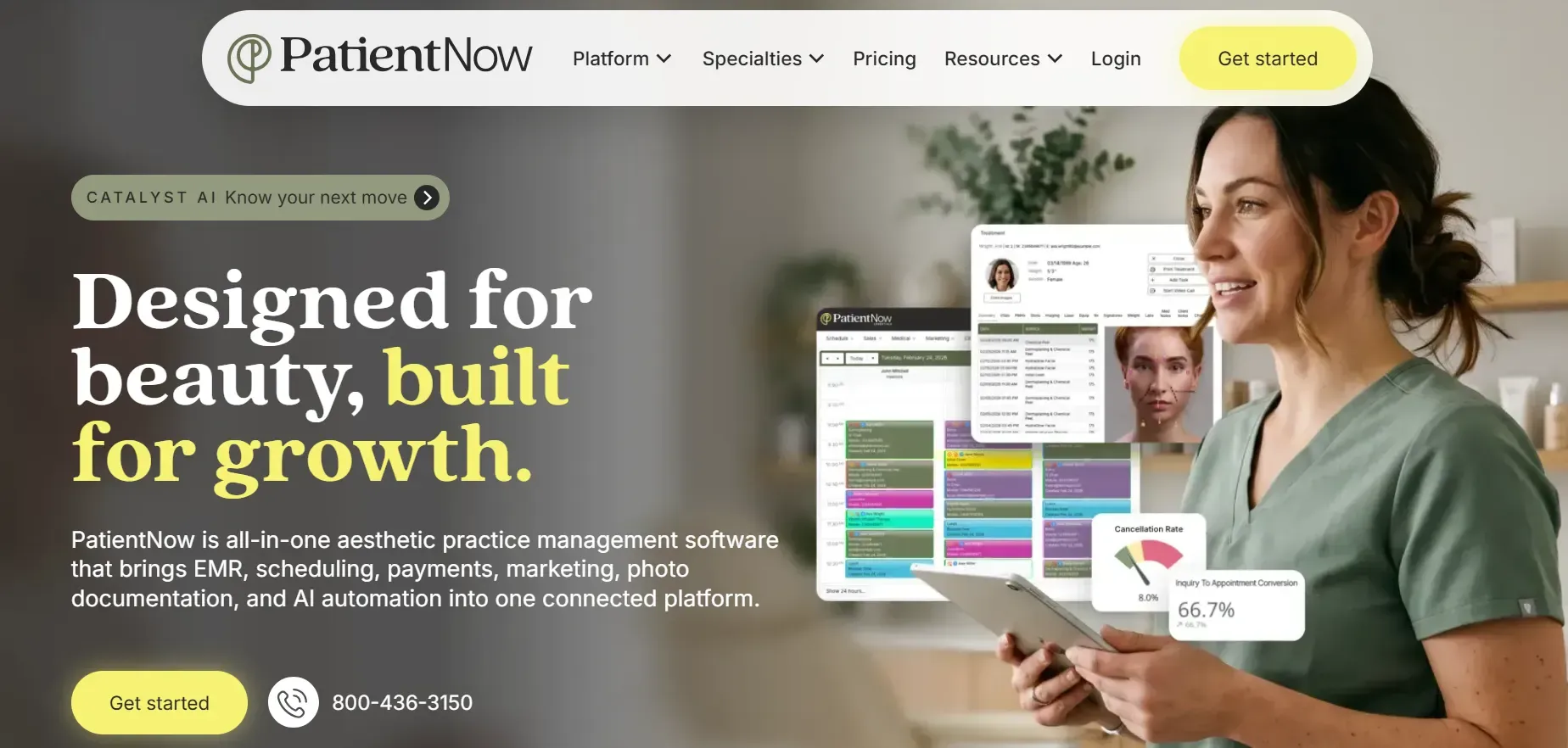
PatientNow is purpose-built for clinics offering both medical dermatology and cosmetic/aesthetic services. Its unique value lies in combining clinical charting with marketing, patient engagement, and payment tools tailored for cash-pay procedures.
Pricing: Custom quote, varies by package and features.
- Integrated clinical, marketing, and payment tools
- Before-and-after photo management
- Automated patient engagement features
- Opaque pricing and potentially high costs
- Lengthy implementation process
- Interface is less modern than newer competitors
9. Devaims (Best for owning your software and scaling on your terms)
Devaims is not a rental SaaS, it’s a custom software build, designed so you own the source code and the entire platform. For dermatology clinics ready to break the rent cycle, Devaims means no more per-user fees, vendor lock-in, or forced upgrades. Your platform is built to your exact needs, and you decide how it grows.
Pricing: One-time build cost (e.g., $31,800 for a typical 10-provider clinic), plus predictable maintenance (e.g., $230/month).
- Full ownership of source code and platform
- Unlimited customization and integration options
- Predictable maintenance and upgrade schedule
With Devaims, the software becomes an asset, something you can improve, extend, or even resell if you wish. You have total data sovereignty and never worry about losing access due to contract disputes or price hikes.
Other Nextech alternatives worth knowing
- Cerner: A major EHR player, Cerner offers deep clinical functionality and is used by large health systems, but its complexity and cost make it a poor fit for most independent dermatology clinics. Implementation can take months, and customization is expensive.
- Intergy (by Greenway): Geared toward larger multi-specialty groups, Intergy is robust but lacks dermatology-specific workflows out of the box. Customization is possible but requires technical resources.
- CareCloud: Known for strong billing and practice management, CareCloud offers a clean interface but thin dermatology features. Best for clinics that want to prioritize revenue cycle over clinical depth.
- OpenEMR: The leading open-source medical record platform. No licensing fees, but implementation, security, and ongoing maintenance require significant IT expertise. Customizing for dermatology is possible but labor-intensive.
Each of these has its niche, but the learning curve, lack of specialty content, or high upfront cost make them less attractive for most dermatology clinics seeking an immediate Nextech replacement.
How to choose the right Nextech alternative
- Budget: Calculate your total cost of ownership over five years. SaaS platforms often look cheaper up front but add up quickly with per-user fees and hidden charges. Custom builds require more up front but can be less expensive over time.
- Specialty needs: Does your clinic rely on high-volume imaging, cosmetic workflows, or surgical procedures? Some platforms only cover the basics, while others go deep into dermatology.
- Ownership goals: If you want to control your data, integrations, and future upgrades, you need a platform you own. SaaS tools limit your ability to customize and often restrict data export.
- Practice size: Solo clinics may find SaaS easier to manage, but as you grow, per-user fees and contract terms become more restrictive. Multi-location groups benefit most from ownership.
- Integration demands: If you need to connect with custom labs, unique billing partners, or marketing tools, only a custom build can guarantee every workflow works your way.
When you run the five-year math, many clinics realize they'd rather own than rent. Even if you start small, planning for growth and integration needs can save you from future migrations or contract headaches. Devaims offers a free cost analysis to help you compare the real numbers.
Stop paying rent on software you could own
The real pain with Nextech and every alternative above is the rent. Whether it's $199 per user or 5 percent of your collections, you pay every month, and the contract never stops. After five years, you still own nothing but your exported PDFs and a support ticket history. This is the core SaaS business model, it works for vendors, not always for clinics.
Devaims lets you flip the script. You get a custom-built dermatology EHR, practice management, imaging, and anything else you need, all delivered as source code you own. Add users as you wish, change billing partners, or even resell the platform. No more per-seat or per-feature charges. No lock-in. Your business, your data, your way.
- No more per-user fees: Add as many providers, locations, or staff as you want for no extra cost. This is especially powerful for growing clinics or those with fluctuating staffing needs.
- Zero contract lock-in: You own the source code and the platform, not just a login. You can host on your own infrastructure, switch IT vendors, or maintain it in the cloud, your choice.
- Custom workflows: Build the exact reports, integrations, and patient journeys you need. If your clinic launches a new service line or adds a surgical suite, your software can adapt instantly.
- Flat, predictable maintenance: Budget stays steady, and upgrades are on your timeline. Unlike SaaS, there are no forced upgrades or surprise price increases.
- Full data ownership: Your patient information, images, and analytics stay with you, always. You can export, back up, or archive data in any format you choose, ensuring regulatory compliance and business continuity.
| Tool | Ownership | Per-user fees | Contract |
|---|---|---|---|
| Nextech | No | $300 to $399/mo | Multi-year, difficult to exit |
| Modernizing Medicine (EMA) | No | Custom quote (per user) | Annual or multi-year |
| DrChrono | No | $199/mo | Month-to-month |
| Devaims | Yes | None | One-time build, yours forever |
| Year | Renting (Nextech) | Owning (Devaims) |
|---|---|---|
| 1 | $47,880 | $34,560 |
| 2 | $95,760 | $37,320 |
| 3 | $143,640 | $40,080 |
| 4 | $191,520 | $42,840 |
| 5 | $239,400 | $45,600 (now ahead) |
Assumptions: 10 providers, Nextech at $399/mo/provider, Devaims build at $31,800, $230/mo maintenance. Break-even in year 5. If you have more providers, the savings come even faster. We'll run your real numbers for free.
Own your platform, and you control the pace and the price, forever. Dermatology clinics ready to scale, add new revenue streams, or finally integrate all their workflows see the most benefit from owning. If you’re considering expansion, mergers, or even selling your practice, owning your software stack can increase your business valuation and make transitions smoother.
How to switch from Nextech
- Export all patient, scheduling, and billing data from your Nextech platform. This often includes HL7 files, CSV exports, and image archives. Plan for several rounds of data review to ensure accuracy.
- Choose your new EHR or practice management system based on your needs and budget. Request vendor demos with your real workflows and ask to see specialty features in action.
- Import your data into the new platform, mapping fields carefully for accuracy. This may require technical support, especially for images, scanned documents, and custom forms.
- Reconnect payment processors, labs, and any specialty integrations. Test each integration before going live to avoid billing or lab delays.
- Train staff on the new workflows, templates, and tools. Schedule hands-on sessions and create cheat sheets for common tasks to speed up adoption.
- Run the new system in parallel for a week or two to catch issues before going live. Monitor for missing data, workflow gaps, or integration hiccups. Fix issues before fully switching over.
- Review your old contract to confirm cancellation and finalize the transition. Make sure you’ve met all notice requirements and have documentation of your data export for compliance.
With a custom Devaims build, the migration is handled as part of the project, including data mapping, integration setup, and staff training. This reduces downtime and ensures a smoother transition.
Frequently asked questions
What is the best Nextech alternative for dermatology?
Modernizing Medicine (EMA) is a feature-rich SaaS alternative for dermatology, offering deep specialty content and advanced imaging. DrChrono stands out for mobile-first workflows. However, for clinics that want to own their platform, Devaims is the only alternative providing full source code and data control, enabling unlimited customization and integration.
Which Nextech alternative is the cheapest?
Practice Fusion and DermEngine have the lowest published monthly rates ($100, $149 per provider), making them ideal for small or solo clinics. For multi-provider practices, a custom Devaims build often becomes cheaper after three to five years, especially as you avoid per-user and add-on fees.
Is there a free Nextech alternative?
OpenEMR is a free, open-source EHR, but it requires significant IT expertise to install, secure, and customize. It lacks dermatology-specific templates, imaging tools, and regulatory support out of the box, so clinics must budget for development and support. Most commercial platforms charge per user.
What's the fastest way to switch from Nextech?
Prepare your data exports and choose a vendor with strong migration support. Schedule the migration for a low-volume period, and run parallel systems for at least a week. Devaims includes migration and training as part of the build, streamlining the process and reducing risk.
Can I keep my data if I leave Nextech?
You can export patient, billing, and scheduling data from Nextech, but re-importing into a new system can be complex, especially for images and custom notes. Some vendors charge for data export or limit the formats available. With Devaims, you control your data structure and can export, back up, or move it as you wish.
Which Nextech alternative is best for aesthetic and cosmetic clinics?
Aesthetic Record and PatientNow are tailored for medspa and cosmetic workflows, with strong before-and-after photo tools and marketing features. If you need to combine medical, cosmetic, and unique workflows, a custom Devaims build provides unlimited flexibility and full ownership.
When should I consider owning instead of renting?
If you have more than five providers, plan to grow, or want to control your data and workflows, owning your platform (with Devaims) can save money and headaches long-term. For solo clinics or startups, SaaS may be easier initially, but ownership becomes more attractive as your needs and user count grow. Ownership also appeals to clinics with strict regulatory or integration requirements, or those seeking to differentiate their patient experience.
The bottom line
Every Nextech alternative on the market is still a rental play, except for Devaims. Here is the real test: add up what you will pay over five years. If that number could have built you a system you own, you already have your answer. Ownership is not just about cost; it’s about flexibility, data sovereignty, and future-proofing your business.
When your software is an asset, not an endless bill, you control your margins and your future. If you're ready to stop renting and start owning, Devaims will run your five-year math and blueprint your stack. Next move is yours.
Find more ownership math and honest tech advice on the Devaims blog. Compare other options: Modernizing Medicine alternatives, DrChrono alternatives, Kareo alternatives. For EHR industry news, see resources like HealthIT.gov and HIMSS.