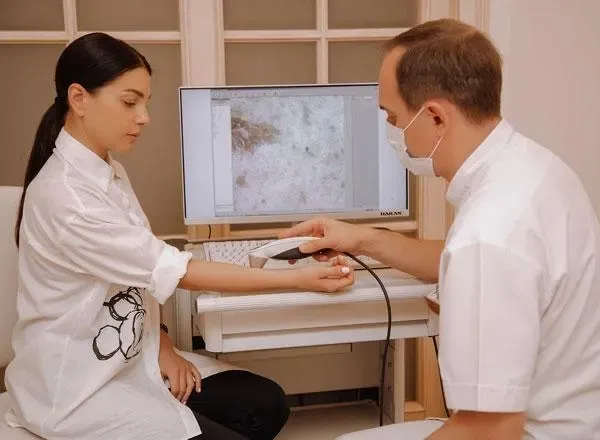



Ever felt the sting of another $199 monthly charge just for adding a new provider or PA to your dermatology team? If you’re running Practice Fusion, you know the drill: per-provider pricing means costs balloon as you grow, and the annual contract leaves you paying whether you’re fully booked or in a seasonal lull. On top of that, unexpected downtime can throw your clinic into chaos, and support tickets may languish while your front desk juggles frustrated patients. It’s no wonder so many dermatology practices start looking for Practice Fusion alternatives.
The reality is most alternatives, such as Tebra, PatientNow, athenahealth, and others, promise more features or a slicker interface, but all keep you in a rental loop. You pay per seat, never truly own your data or code, and remain tied to someone else’s development roadmap. Below, we dig into what these top alternatives actually deliver, from transparent pricing to integration headaches, and highlight the only real path to ownership: a custom Devaims build.
Why dermatology practices look for Practice Fusion alternatives
Dermatology clinics have unique needs, including high patient volume, a mix of medical and cosmetic procedures, imaging requirements, and strict regulatory demands. Practice Fusion’s model, originally designed for primary care, can feel increasingly restrictive as you scale or diversify. Here’s what drives most clinics to seek alternatives:
- Per-provider fees that stack up: At $199 per provider per month, the total can jump quickly. If you add a PA, NP, or even a part-time locum, your monthly bill grows, regardless of patient load. For a team of three, that’s nearly $7,200 per year.
- Annual commitment, no wiggle room: Practice Fusion requires a full-year contract. If your business changes or you want to switch platforms, you’re still on the hook for the remaining term and fees.
- Support that’s hit or miss: When issues arise, wait times can stretch from hours to days. For a busy dermatology clinic, delays in resolving system errors can mean lost revenue and poor patient experience.
- System downtime: Unplanned outages disrupt clinic flow and can force cancellations or manual workarounds. The cost in lost appointments and staff frustration adds up.
- Locked features and integrations: Many features, such as advanced reporting, e-prescribing, teledermatology, or AI documentation, are only available as pricey add-ons or at higher subscription tiers. Integrating with labs, imaging devices, or billing tools can be difficult or impossible without additional fees.
These pain points are why dermatology practices increasingly compare Practice Fusion alternatives. But as you’ll see, most options still keep you renting.
Quick comparison of the best Practice Fusion alternatives
| Tool | Best for | Starting price | You own it? |
|---|---|---|---|
| Tebra | Integrated growth + EHR | $49 to $799/mo | No |
| PatientNow | AI SOAP notes, aesthetics | Custom quote | No |
| athenahealth | Large/multi-location practices | Collections % | No |
| DrChrono | Customizable workflows | Not published | No |
| Greenway Health | Complex integrations | Not published | No |
| DermEngine | Dermatology imaging | Not published | No |
| Aesthetic Record | Medspa operations | Not published | No |
| Cerner | Enterprise health systems | Not published | No |
| Practice Fusion | Budget EHR, small teams | $199/mo/provider | No |
| Devaims | Owning your EMR | One-time build, you own it | Yes |
Always confirm current pricing and terms before you decide. Rates, support models, and contract policies change often, and hidden add-ons can shift your actual cost.
The 10 best Practice Fusion alternatives
1. Tebra (best for integrated growth and EHR)
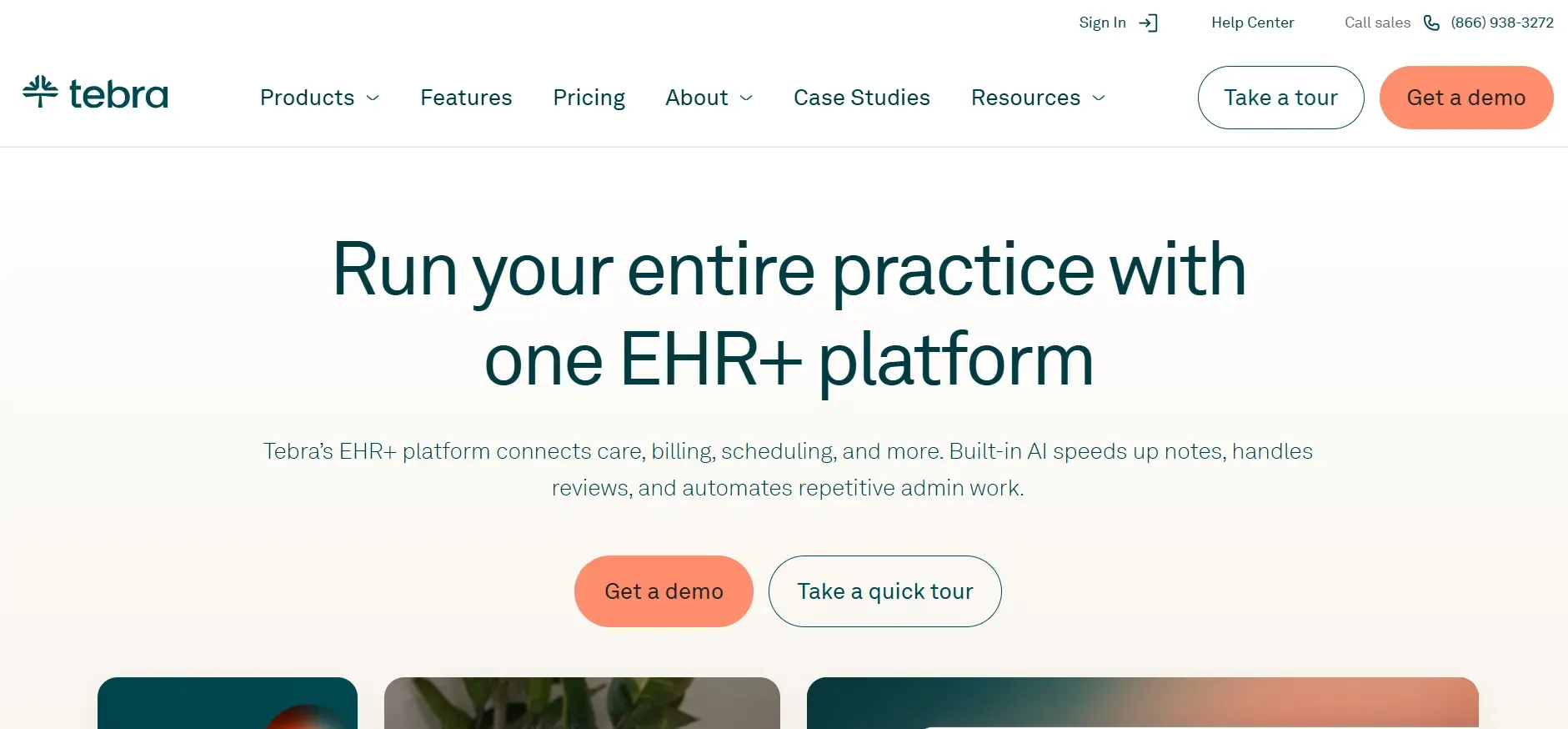
Tebra merges Kareo’s clinical EHR and billing with PatientPop’s marketing automation, aiming to offer an all-in-one solution for growing practices. For dermatology clinics seeking to attract new patients, streamline scheduling, and manage charting from a unified dashboard, Tebra is one of the few platforms that bridges marketing and clinical care under a single login.
Features: Tebra offers appointment scheduling, online intake forms, e-prescribing, telehealth, patient reminders, and practice analytics. The PatientPop side brings website management, SEO, online reputation monitoring, and automated patient communications. The EHR includes customizable templates for dermatology, support for digital imaging uploads, and built-in billing tools.
Integrations: Tebra supports integrations with labs (LabCorp, Quest), clearinghouses, and payment processors. While the platform is cloud-based and API-driven, some clinics have reported integration friction due to the ongoing merging of Kareo and PatientPop systems. Features or data may not always sync smoothly, especially for complex workflows.
Migration friction: Tebra offers onboarding and data migration services, but the process can be challenging for clinics with legacy data formats or custom workflows. Expect some downtime or manual reconciliation if you’re coming from a non-Kareo system.
Use cases: Ideal for dermatology clinics investing in digital marketing and wanting to consolidate clinical and growth tools. Multi-location practices can manage multiple calendars and marketing campaigns from the same dashboard.
Trade-offs: While Tebra offers flexibility on contracts (month-to-month is available), the cost per provider grows quickly as you scale. Some users note that overlapping features from the merger can cause confusion, and the platform is still subscription-only. No ownership of code or data.
Pricing: $49 to $799 per provider per month, depending on features and add-ons (full pricing).
- Unified platform for growth and clinical care, modern interface, no annual contract required.
- Key limitations: Post-merger integration quirks, high-end plans get expensive, still a rental model.
With a custom build from Devaims, you could own a similar unified platform, minus the per-seat pricing.
2. PatientNow (best for AI SOAP notes and aesthetics)
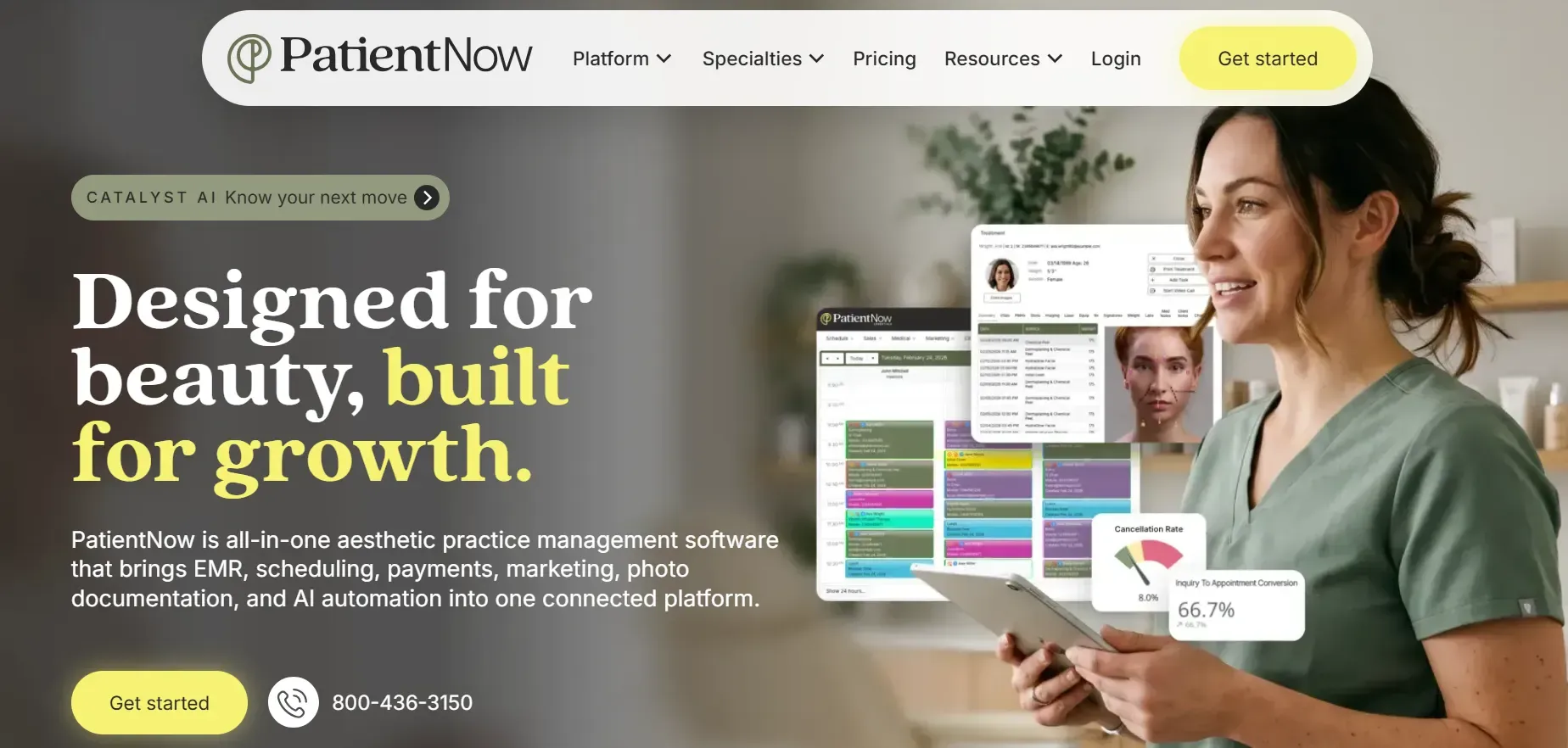
PatientNow is tailored for clinics that blend medical dermatology with aesthetics and medspa services. Its AI Scribe feature uses natural language processing to auto-generate SOAP notes, saving time on documentation. The platform also supports before-and-after photo management, inventory tracking for cosmetic products, integrated e-commerce, and digital consent forms. These features are often missing from generalist EHRs.
Features: AI Scribe, e-prescribe, patient portal, appointment reminders, marketing automation, inventory management, and telehealth. PatientNow’s customizable templates are designed for both medical and cosmetic dermatology, supporting complex workflows like photofinder integration and product sales.
Integrations: PatientNow integrates with payment processors, lab systems, and popular imaging devices. However, more advanced integrations, such as custom billing or legacy EMR imports, may require additional setup and fees.
Migration friction: PatientNow provides free onboarding and migration support, but clinics with highly customized legacy systems may face a learning curve, especially around AI documentation and inventory tracking.
Use cases: Ideal for hybrid clinics that offer both medical and cosmetic dermatology, or medspas needing e-commerce and before/after photo tools. AI Scribe is a major time-saver for providers who want to reduce manual charting.
Trade-offs: Pricing is opaque, every clinic must request a custom quote, making cost comparisons difficult. The system is feature-rich, but the interface can feel overwhelming to new users, and you still rent rather than own.
Pricing: Custom quote based on clinic size and features (pricing info).
- Advanced AI documentation, built-in medspa features, no contracts, free onboarding.
- Key limitations: Steep learning curve, unclear pricing, subscription-only.
Devaims can build and tailor AI features for your exact needs, with no recurring rental.
3. athenahealth (best for scaling up or multi-location)
athenahealth is a leading cloud-based EHR and revenue cycle management platform, built for large, multi-site, or fast-growing practices. It is known for deep interoperability, strong reporting, and enterprise-grade compliance.
Features: athenahealth includes EHR, practice management, patient engagement tools (portal, reminders, telehealth), billing, and analytics. Dermatology-specific templates are available, and the system supports e-prescribe, lab integration, and custom reporting.
Integrations: Extensive API and HL7 support for labs, imaging centers, pharmacies, and billing services. athenahealth is certified for interoperability (see athenahealth interoperability), making it easier to share data across organizations. However, integrating with niche or legacy systems can still require IT support and custom development.
Migration friction: athenahealth provides guided onboarding, but migration can be complex for clinics with siloed or unstructured data. Mapping custom codes, notes, and attachments often requires project management and staff training.
Use cases: Best for multi-location dermatology groups, entities with in-house billing teams, or clinics needing advanced analytics and regulatory reporting.
Trade-offs: Pricing is a percentage of collections, so your bill fluctuates with revenue, helpful in slow seasons, but unpredictable during growth. Some users cite a steep onboarding curve, and all features are still rented.
Pricing: Percentage of collections (typically 4 to 8%, varies by volume and services).
- Minimal upfront cost, enterprise-grade reporting, trusted for large clinics, extensive integrations.
- Key limitations: Unpredictable monthly cost, complex migration, subscription-only.
With Devaims, your cost is fixed, no matter your collections.
4. DrChrono (best for customizable workflows)
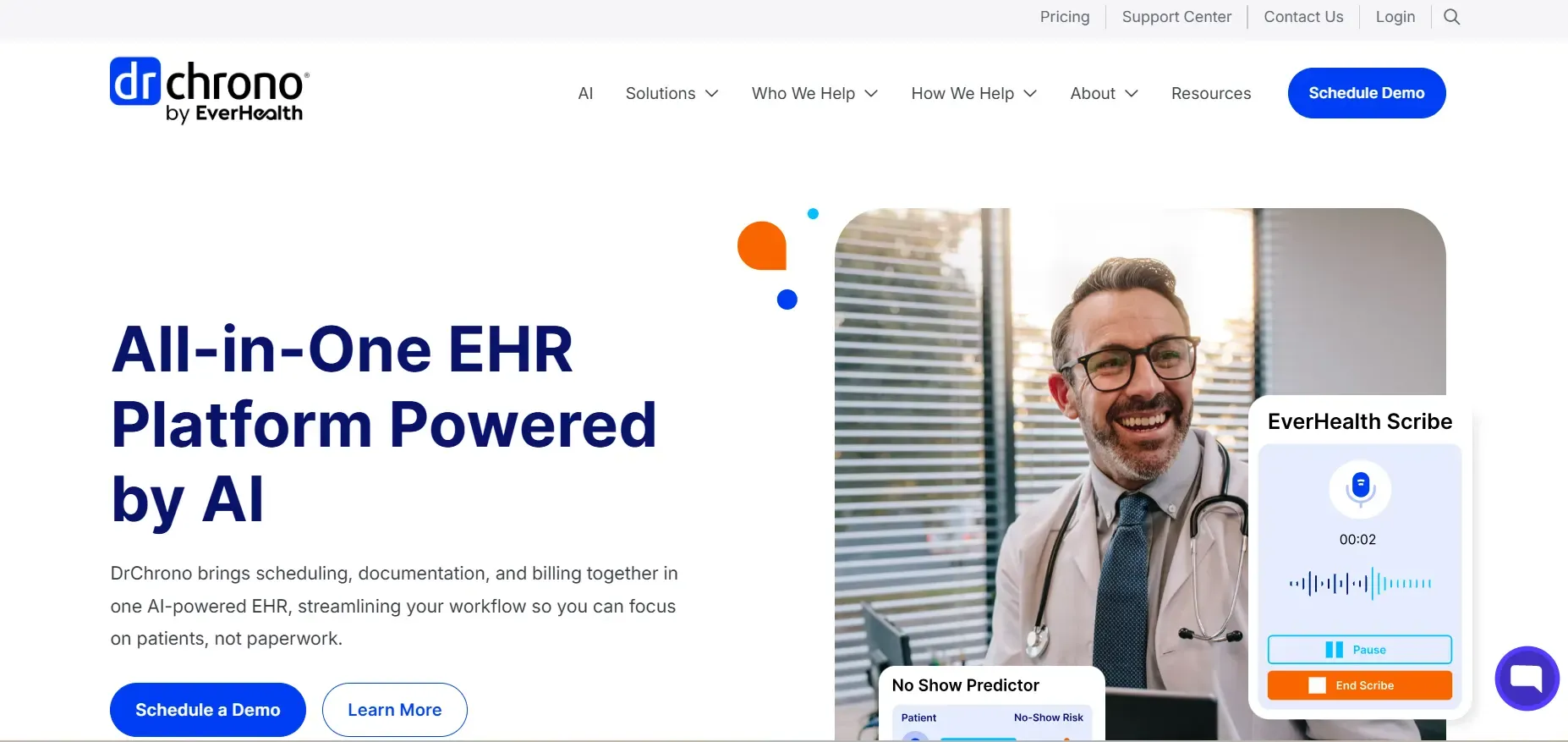
DrChrono is a highly configurable EHR for cloud and iPad, popular with clinics that want to tailor templates, forms, and workflows. Dermatology teams can build custom charting flows, use digital consent forms, and use the platform’s mobile app for point-of-care documentation.
Features: Customizable templates, e-prescribe, patient portal, billing, telehealth, inventory management, and Apple HealthKit integration. The iPad app is a standout for on-the-go documentation, and the system supports digital drawing and image annotation.
Integrations: DrChrono offers open API access, but deep integrations (with labs, billing, or legacy systems) often require technical expertise. Some dermatology clinics report third-party add-ons (like photo management) are necessary for full functionality.
Migration friction: Data migration is available, but custom workflows may require manual rebuilds. Onboarding support varies by plan.
Use cases: Practices wanting to deeply customize workflows, or those prioritizing mobile documentation (e.g., providers moving between exam rooms or sites).
Trade-offs: Pricing is not transparent and can vary widely. Customer support quality is inconsistent, and some users cite reliability issues with the mobile app and cloud sync.
Pricing: Not published, contact sales for a quote.
- Deep customization, mobile-first, integrates with Apple HealthKit.
- Key limitations: Opaque pricing, mixed support, reliability concerns.
5. Greenway Health (best for complex integrations)
Greenway Health targets clinics with complex integration needs, such as multi-specialty groups, large billing operations, or those with legacy systems. Its Intergy platform is known for flexibility and regulatory compliance, but requires significant setup and IT support.
Features: EHR, practice management, population health, billing, and reporting. Dermatology templates are available, and the system can handle multi-specialty workflows, custom reporting, and extensive billing rules.
Integrations: Greenway supports HL7 and API integrations with labs, imaging, and billing services. However, clinics often report friction when connecting to non-standard systems or migrating from highly customized legacy EMRs.
Migration friction: Setup is complex and typically requires Greenway’s professional services. Expect a multi-stage process for data mapping, especially if you have custom fields or attachments.
Use cases: Large dermatology practices with in-house IT or billing, or clinics merging with multi-specialty groups.
Trade-offs: Setup and migration can be lengthy and expensive. Ongoing support is generally good for enterprise clients, but smaller clinics may find the system overwhelming.
Pricing: Not published, contact sales for a quote.
- Flexible integrations, enterprise compliance, scalable for multi-specialty.
- Key limitations: Complex implementation, not transparent on pricing, best for larger organizations.
6. DermEngine (best for imaging and teledermatology)
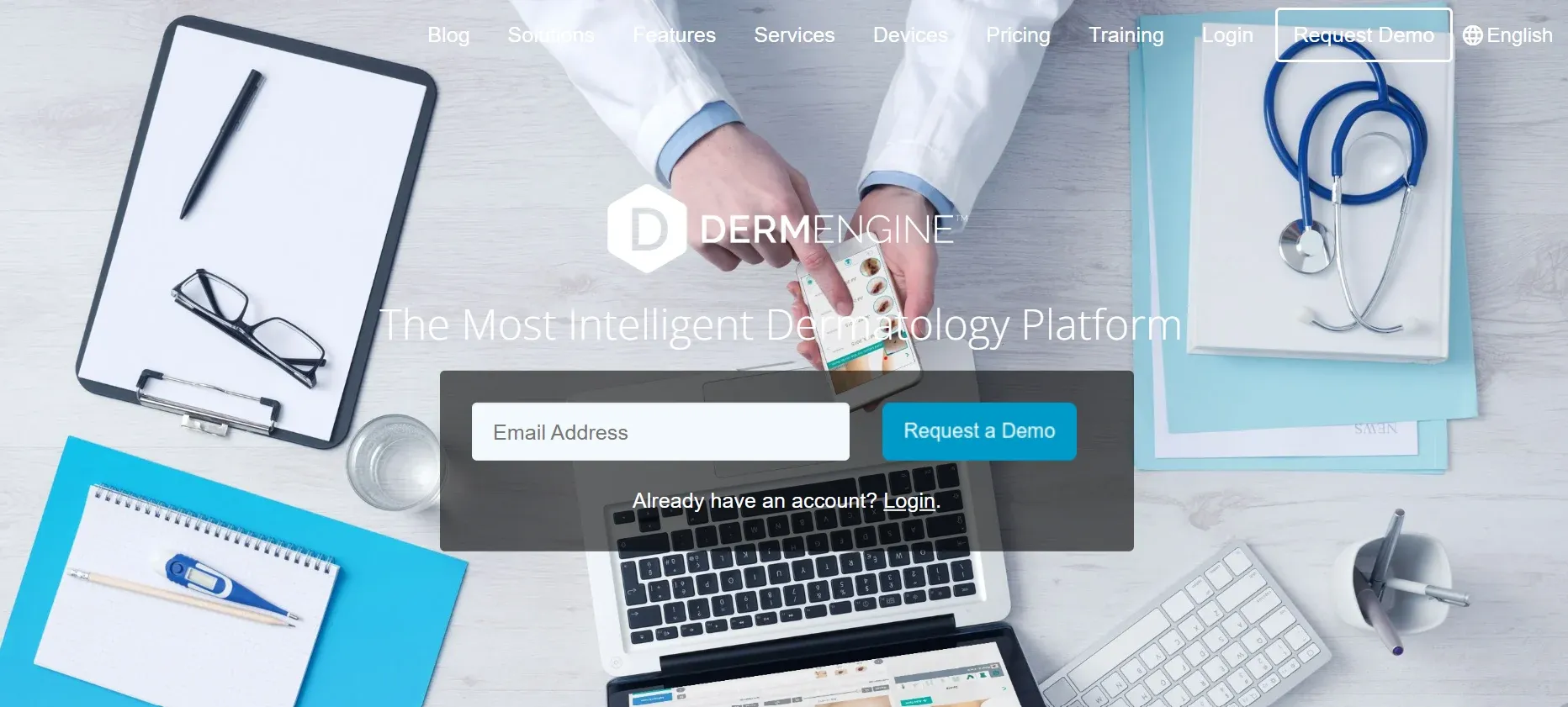
DermEngine is a specialized platform for dermatology imaging and teledermatology, supporting high-resolution photo capture, AI-powered lesion analysis, and secure patient data sharing. It’s designed to enhance diagnostic accuracy and streamline remote consultations.
Features: Imaging capture and annotation, AI lesion detection, teledermatology portal, mole mapping, and analytics. DermEngine is cloud-based and accessible via web or mobile app.
Integrations: DermEngine can connect with some EHRs and imaging devices, but deep integration is limited. Many practices end up using DermEngine alongside their main EMR, resulting in data silos.
Migration friction: Easy onboarding for imaging and teledermatology, but integrating historical patient data or connecting with billing and scheduling tools requires manual effort or custom development.
Use cases: Dermatology clinics focusing on skin cancer screening, mole mapping, or teledermatology services, especially those with multiple providers or remote consultations.
Trade-offs: Limited as a standalone EMR, best used in tandem with another system. Data may be siloed, and monthly subscription fees apply.
Pricing: Not published, contact sales for a quote.
- Best-in-class imaging, AI analysis, supports teledermatology, portable and cloud-based.
- Key limitations: Shallow EHR integration, data silos, subscription model.
Custom builds from Devaims can integrate imaging directly into your EMR workflow, eliminating silos.
7. Aesthetic Record (best for medspa operations)
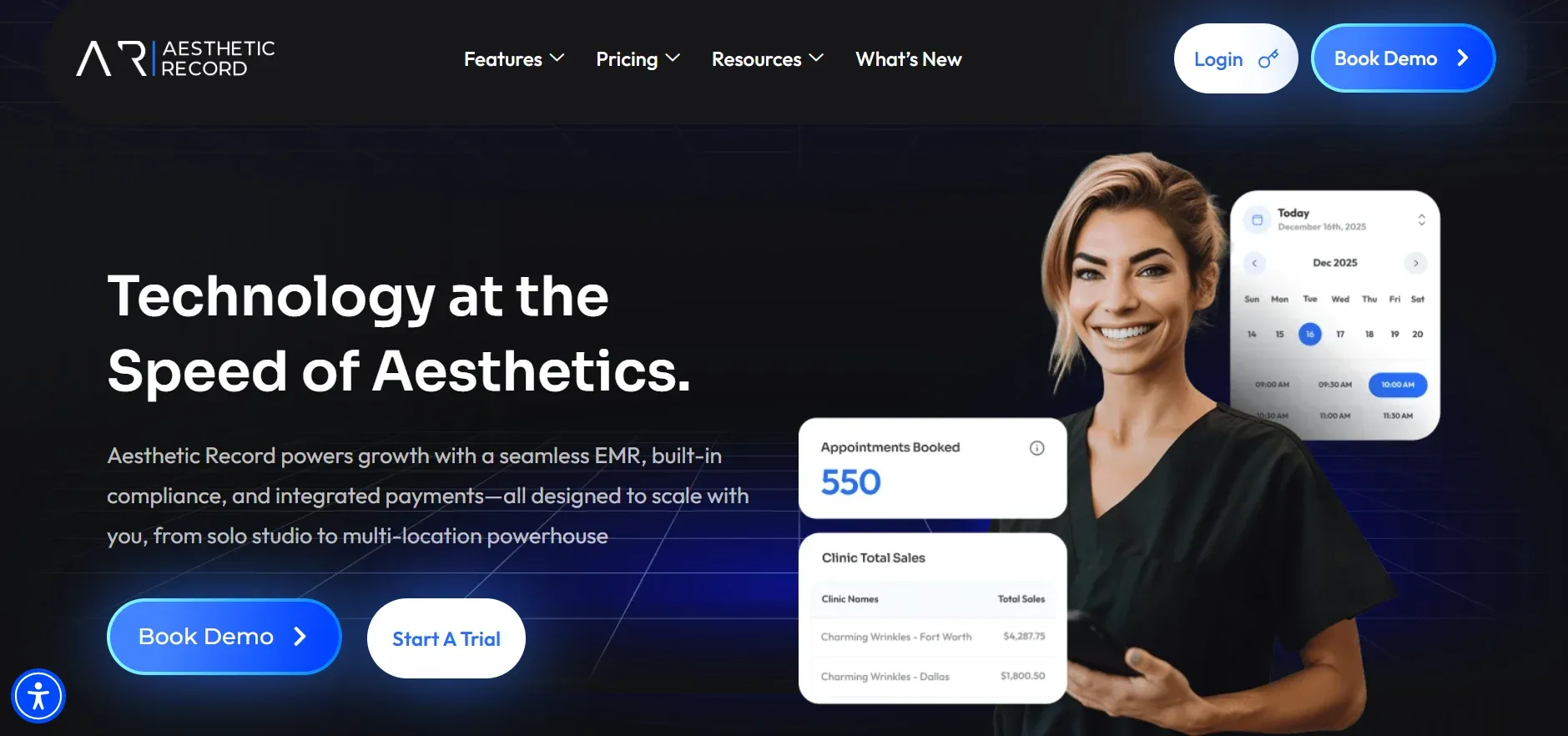
Aesthetic Record is designed for dermatology clinics with a strong cosmetic or medspa business. It offers photo management, e-commerce, inventory, and digital consent, bridging the gap between clinical and retail operations.
Features: Before-and-after photo management, patient portal, e-commerce, inventory tracking, treatment notes, digital consent, and marketing tools. The system supports custom forms, appointment scheduling, and integrated payment processing.
Integrations: Integrates with payment gateways, some EHRs, and marketing tools. However, integration with core clinical systems may be limited, and clinics often need to run Aesthetic Record alongside their main EMR.
Migration friction: Onboarding is relatively straightforward for medspa features, but importing clinical data or connecting with lab/billing systems can be manual.
Use cases: Dermatology clinics with a significant cosmetic or medspa business, or those selling products and needing robust photo documentation.
Trade-offs: Mobile app reliability has been reported as an issue, and you remain locked into a subscription. Data and workflows may be split across platforms.
Pricing: Not published, contact sales for a quote.
- Excellent medspa features, photo management, retail tools, patient-facing interface.
- Key limitations: Mobile app issues, unclear pricing, integration gaps, subscription-only.
8. Cerner (best for enterprise health systems)
Cerner is a global leader in EHR for hospitals and enterprise health systems. It offers deep regulatory compliance, scalability, and interoperability, making it the platform of choice for hospital-affiliated dermatology clinics or academic medical centers.
Features: Full EHR, revenue cycle management, population health, advanced analytics, and custom modules for dermatology. Cerner supports imaging, telehealth, and multi-specialty workflows, with robust audit trails and compliance reporting.
Integrations: Extensive, Cerner connects with labs, imaging, pharmacy, and billing systems using HL7/FHIR standards. Custom integrations are possible but often require dedicated IT resources.
Migration friction: Implementation is complex and can take months. Data migration, staff training, and workflow customization require significant planning and budget.
Use cases: Enterprise clinics, hospital-based dermatology, or large academic practices needing maximum compliance and scalability.
Trade-offs: Overkill for small or mid-sized clinics. Pricing is not public, but expect high upfront and ongoing costs, plus long-term contracts. Ownership is not possible, you’re always renting.
Pricing: Not published, enterprise negotiation required.
- Enterprise-grade security, vast integrations, proven scalability.
- Key limitations: Expensive, complex setup, unsuitable for smaller clinics, rental model.
9. Practice Fusion (best for budget EHR and small teams)
Practice Fusion remains popular among small clinics for its simple interface and predictable monthly pricing. It offers basic EHR features, e-prescribing, lab ordering, and patient portal access. Unlimited non-signing staff licenses are included, but only paid providers may sign charts or prescriptions.
Features: Basic EHR, e-prescribe, scheduling, lab integration, patient portal. Dermatology-specific templates are limited, and advanced features (like telehealth or analytics) require add-ons.
Integrations: Connects with major labs and billing services. However, deeper integrations (imaging, AI, or custom reporting) are often unavailable or require workarounds.
Migration friction: Exports are possible, but data may not map cleanly to more advanced systems. Clinics switching away often need professional help to migrate attachments or custom notes.
Use cases: Solo or small group dermatology practices prioritizing cost and simplicity.
Trade-offs: Annual contract required, per-provider pricing adds up, limited support, and you never own the software or data.
Pricing: $199 per provider per month with annual commitment (see pricing).
- Predictable cost, easy setup, unlimited non-signing staff licenses.
- Key limitations: Locked-in contract, support/downtime issues, feature limitations, rental model.
10. Devaims (best for owning your EMR and ending per-provider fees)
Devaims builds custom EMR and practice management platforms tailored to your dermatology clinic’s workflows, and you own the code and data outright. Every feature, integration, and report is designed for your needs, with no per-provider, per-seat, or per-chart fees. You receive the full source code at project completion, so you’re never locked into a vendor or contract.
Features: Fully customized, AI documentation, imaging integration, e-prescribing, teledermatology, patient portal, e-commerce, and any other workflow you need. Integrations with labs, imaging devices, payment processors, or legacy systems are built to spec.
Integrations: Devaims supports any integration you need: labs, imaging, billing, e-prescribe, patient engagement, or marketing. No API or feature is off-limits, because you own the code and can extend it as you grow.
Migration friction: Data migration is included as part of the project. Devaims handles exports from your old EMR, data mapping, and validation, minimizing disruption and ensuring continuity.
Use cases: Clinics frustrated with rental models, those with unique workflows, or any dermatology practice planning to grow and seeking cost control. Also ideal for hybrid med/aesthetic practices needing tailored features or integrations.
- True ownership, no per-seat fees, custom features, no contract lock-in, flat ongoing maintenance, total data control.
Other Practice Fusion alternatives worth knowing
- Nextech: Popular for ophthalmology and dermatology, with strong imaging and workflow tools. Pricing is enterprise-level and not transparent, and ownership is not possible.
- Intergy (Greenway): Designed for multi-specialty groups, more common in primary care, but supports dermatology. Flexible, but complex to implement.
- Modernizing Medicine (EMA): Highly rated for dermatology with deep specialty features, but requires proprietary hardware (EMA Kiosk/iPad) and comes at a premium price. Subscription model only.
These may fit niche or large practices, but all still keep you renting.
How to choose the right Practice Fusion alternative
- By budget: Calculate your true per-provider cost, including hidden fees for add-ons, support, and integrations. Ask for transparent, itemized quotes.
- By features: List must-haves (AI notes, imaging, e-prescribe, patient portal, telehealth, e-commerce) and ask if they’re included or extra.
- By size: Multi-location and enterprise clinics should prioritize integration, compliance, and reporting. Solo or small clinics may value simplicity and predictable cost.
- By ownership: If you want to own your data, code, and workflows, only a custom build like Devaims delivers it.
- By contract flexibility: If you dislike lock-in, filter out options with annual or multi-year terms. Month-to-month is rare, and only Devaims offers no contract at all.
If you’re tired of paying rent on your own clinic’s software, it’s time to look at what owning would actually cost.
Stop paying rent on software you could own
Here’s the hard truth: whether you choose Practice Fusion, Tebra, PatientNow, or any major EMR, you’re always renting. Every “alternative” ties you to per-provider fees, unpredictable price hikes, or annual contracts. The only way to break the cycle is to build something that’s truly yours and keep the code.
You define every workflow, feature, and report with Devaims. On completion, you receive the source code and full documentation. No subscriptions, no forced upgrades, and no vendor lock-in. You keep the keys, and your clinic’s future is in your hands.
- No per-provider fees: Add as many users or providers as you want, at no extra cost.
- No contract lock: Use your system as long as you choose. If you want to switch vendors or make changes, you’re free to do so.
- Features built for you: Get exactly what your clinic needs, no more, no less. Integrate imaging, AI, telehealth, or retail tools as required.
- Data portability and integrations: Integrate with any lab, imaging, billing, or marketing tool. Your data is always accessible and portable.
Here’s how Devaims compares to other top alternatives for dermatology:
| Tool | Pricing Model | Contract | Can you own it? |
|---|---|---|---|
| Practice Fusion | $199/mo/provider | Annual | No |
| Tebra | $49 to $799/mo/provider | Subscription | No |
| athenahealth | % of collections | Subscription | No |
| Devaims | One-time build + flat maintenance | None, you own it | Yes |
Let’s run a five-year cost comparison for a typical 3-provider dermatology clinic:
| Year | Rented (Practice Fusion, 3 providers) | Owned (Devaims) |
|---|---|---|
| 1 | $7,164 | $27,000 (build) + $2,400 (maint.) = $29,400 |
| 2 | $14,328 | $31,800 |
| 3 | $21,492 | $34,200 |
| 4 | $28,656 | $36,600 |
| 5 | $35,820 | $39,000 (break-even year) |
By year five, owning your EMR with Devaims puts you ahead for good. Renting multiplies as you grow, while ownership stays flat. If you plan to expand, the savings and control compound.
How to switch from Practice Fusion
- Export all patient data, records, and attachments: Practice Fusion allows exports in common formats (CSV, PDF, CCD), but attachments and custom notes may require manual handling. Plan for data validation and mapping.
- Choose your next EMR or custom build partner: Evaluate options by cost, features, and migration support. With Devaims, the migration process is included and tailored to your data structure.
- Import your data and map records: Clean and map data to your new system’s fields. Devaims handles this as part of project delivery, ensuring continuity.
- Re-establish integrations: Labs, e-prescribe, payments, and imaging devices must be reconnected. Devaims builds and tests integrations to your requirements.
- Train your staff: Onboard providers and staff on new workflows, features, and interfaces. Devaims provides documentation and live training sessions.
- Test in parallel: Run both systems side by side for a transition period to catch any issues and ensure data accuracy.
- Review and terminate Practice Fusion contract: Once you’re confident in the new system, formally end your Practice Fusion subscription and ensure all data is secured.
With Devaims, these steps are managed as a turnkey service, reducing risk and downtime.
Frequently asked questions
What is the best Practice Fusion alternative for dermatology?
Tebra and PatientNow are the most popular off-the-shelf alternatives for dermatology clinics, offering a mix of clinical and cosmetic features. However, both are subscription-based. If you want true ownership, a custom Devaims build is the only option that delivers full control, no per-seat fees, and unlimited customization.
Which Practice Fusion alternative is cheapest?
Tebra starts at $49 per provider per month, but this is for the most basic tier. Add-ons (billing, marketing, imaging, e-prescribe) and more providers quickly increase your monthly bill. PatientNow and others require quotes, making it hard to compare. Over five years, building and owning your own EMR with Devaims can save money, especially for growing practices, since your costs stay flat and you avoid multiplying fees.
Is there a free Practice Fusion alternative?
Truly free, HIPAA-compliant EMRs for dermatology are rare. Some open-source platforms like OpenEMR exist, but they require significant IT expertise and lack specialty features such as imaging, AI, or e-commerce. Most “free” options have strict usage caps, ads, or require paid add-ons for essential features. For any clinic with real patient volume or specialty needs, a paid solution or custom build is the realistic path.
Which alternative is best for medspa or cosmetic dermatology?
PatientNow and Aesthetic Record are designed for clinics with a medspa focus, offering inventory, e-commerce, and before/after photos. However, both are rental models and may require running alongside a separate EHR for medical dermatology. Devaims can build these features directly into your owned platform, so you have one login, unified data, and no per-user fees.
When should I switch from Practice Fusion?
Switch when you’re frustrated by per-provider fees, contract lock-in, support issues, or missing features. If you’re planning to grow, merge, or add new services such as imaging or teledermatology, the cost of rental models accelerates. Owning your own system is especially smart if you want control, data portability, or the ability to customize for your clinic’s future.
Can I own my EMR and still get support?
Yes. With Devaims, you get ongoing support and maintenance for a flat, predictable monthly rate, regardless of provider count. You’re not locked in, if you ever want to switch support vendors or bring IT in-house, you can, because you own the code. This flexibility is impossible with subscription EMRs.
What happens to my data if I leave my current EMR?
Most EMRs allow data exports, but formats vary and some data, such as attachments or custom fields, may not migrate cleanly. It’s common for clinics to lose access to images, notes, or historical billing data. Devaims handles migration as part of your custom build, ensuring all data and attachments are preserved and mapped correctly, giving you a seamless switch and future-proof data ownership.
The bottom line
Every rented EMR in dermatology, from Practice Fusion to Tebra, keeps you paying per provider and tied to someone else’s roadmap. The single best decision filter? Add up your true five-year cost, including add-ons, support, and growth. If that number could have bought you a platform you own and control, it’s time to make the switch.
Owning your EMR is not just a financial win, it’s about freedom from contracts, per-seat markups, and endless support tickets. It’s the ability to define your workflows, keep your data portable, and adapt your clinic as you grow. When you’re ready to run your practice on your terms, Devaims is the partner who gives you the keys.
For more insights, visit the Devaims Blog or see related alternatives: Kareo alternatives, athenahealth alternatives, and PatientNow alternatives.