


Your bookkeeping team is growing, client complexity is up, and Karbon just sent the latest invoice. The per-user fees, the add-ons, the moments the platform boxes you in. You know the feeling: you want to run your firm, not run into roadblocks. But every alternative seems to come with its own tradeoffs, and nobody talks about what happens when you outgrow the rented model.
If you're hunting for Karbon alternatives, you want specifics: where do rivals shine, where do they annoy, and is there a way off the rent treadmill? Here are the standout options: QuickBooks Online for mainstream workflows, Xero if you like flexibility, FreshBooks for solopreneurs, Botkeeper and Pilot for automation, Bench for hands-off service, Synder for integrations, Gusto and Bill.com for payroll and payments. And if you want to own your tech, Devaims builds the system you keep, not rent. Let's get into it.
Why bookkeeping services look for Karbon alternatives
Per-user and per-client fees pile up fast. Karbon charges based on number of users, and scaling your team means your bill grows with every hire. For rapidly growing firms, this can mean thousands in unexpected costs each year, especially since support and advanced features often require higher-priced users or admin seats.
Feature restrictions tied to plan tiers. Core features like workflow automation, advanced reporting, or integration support often get locked behind higher-priced tiers, making "growth" an expensive word. If your firm wants automated reminders, complex approval chains, or deep analytics, you may need to pay two to three times the entry price.
Integrations can be shallow or costly. Karbon offers some integrations, but connecting to your other tools, like CRMs, payroll, or document management, may require third-party connectors, custom work, or additional licenses. This can create a patchwork of subscriptions and points of failure, and often means relying on external vendors for mission-critical workflows.
Vendor lock-in limits flexibility. Most SaaS platforms make it difficult to fully export your data, customizations, and workflow automations. If you want to move off Karbon, you often face data silos, incomplete exports, and the need to rebuild processes from scratch elsewhere.
Customization stops at what the platform allows. Every firm has unique processes, specific approval flows, document types, or reporting needs. With Karbon, you are limited to what the platform designers anticipated. Workarounds, manual exports, or duplicating work in spreadsheets become the norm for anything outside the default path.
These pain points drive searches for Karbon alternatives. Firms want flexibility, predictable costs, and the ability to truly own their workflows and data.
Quick comparison of the best Karbon alternatives
| Tool | Best for | Starting price | You own it? |
|---|---|---|---|
| QuickBooks Online | All-purpose bookkeeping | Reported $30/mo | No |
| Xero | Flexible accounting | Reported $13/mo | No |
| FreshBooks | Freelancers/small firms | Reported $19/mo | No |
| Botkeeper | Automation at scale | Reported $155/mo | No |
| Pilot | Full-service automation | Reported $599/mo | No |
| Bench | Done-for-you bookkeeping | Reported $249/mo | No |
| Synder | Integrations & sync | Reported $48/mo | No |
| Gusto | Payroll and HR | Reported $40/mo + $6/user/mo | No |
| Devaims | Owning your own platform | One-time build | One-time build, you own it |
Always confirm current pricing before you decide. Vendors update tiers and fees often.
The 9 best Karbon alternatives
1. QuickBooks Online (All-purpose bookkeeping)
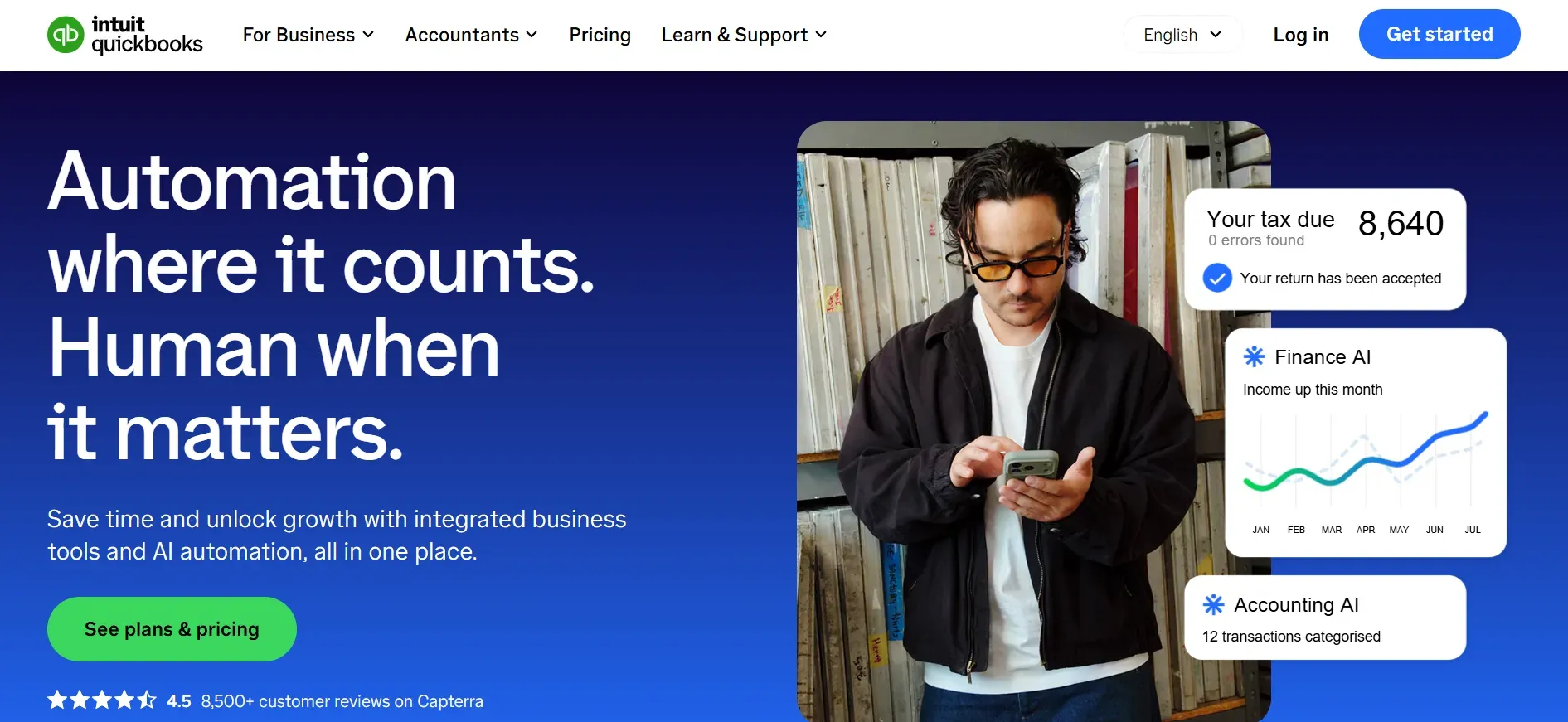
QuickBooks Online (QBO) is the dominant name in small business accounting and is widely used by both solo bookkeepers and multi-staff firms. Its core modules cover invoicing, expense management, bill pay, bank reconciliation, and standard financial reporting. QBO’s interface is familiar to many business owners, making client onboarding easier.
Pricing: Starts at $30/month for Simple Start. Higher tiers add advanced features and users.
- Broad feature set and integration ecosystem.
- Familiar interface for clients and staff.
- Easy onboarding and migration for standard data.
- Per-user pricing increases costs as your team grows.
- Advanced automation and reporting require higher-priced tiers.
- Workflow customization is limited compared to specialist platforms.
On a Devaims-built platform, workflow customizations are built to your spec, not boxed in by tiers.
2. Xero (Flexible accounting)
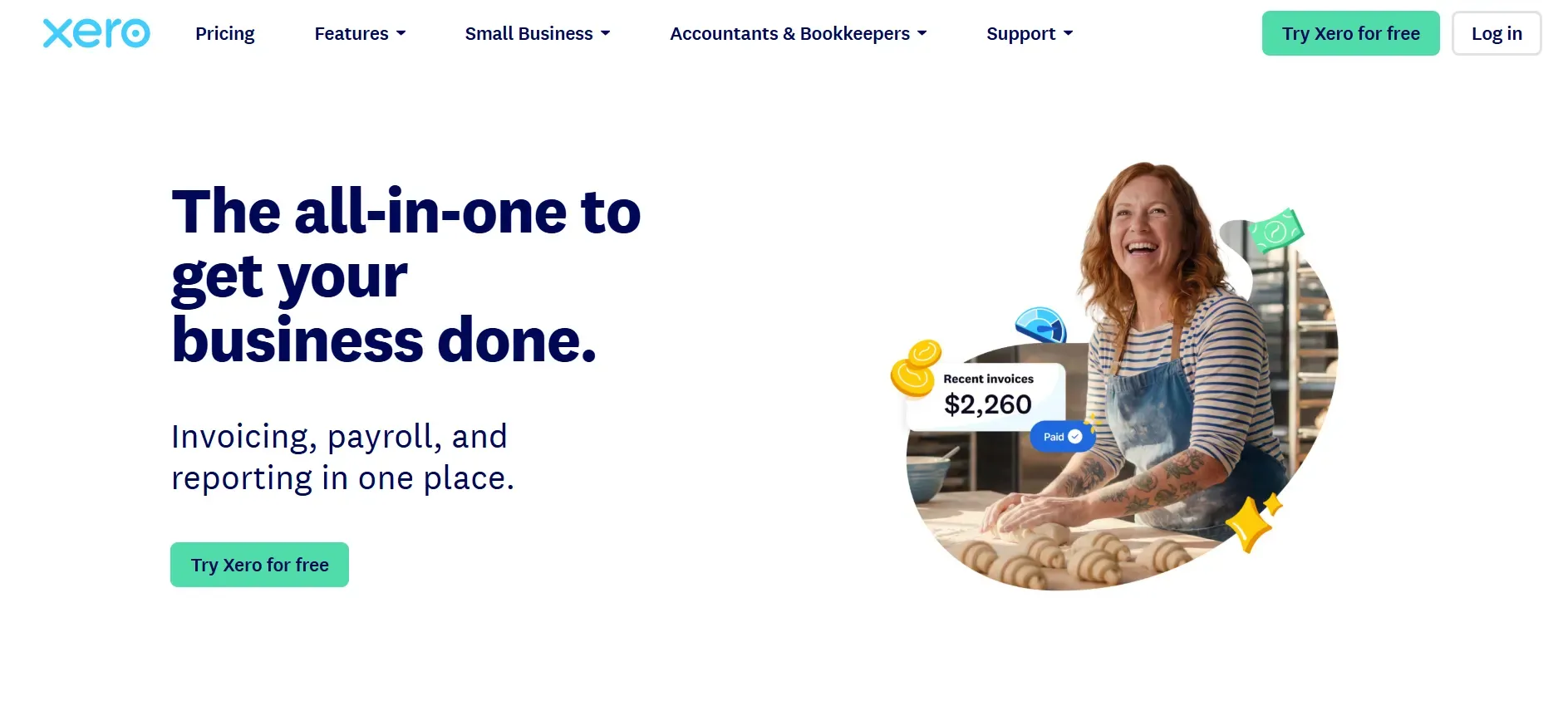
Xero is a cloud-based accounting platform known for its open ecosystem and international focus. Its core features rival QBO: invoicing, bank feeds, bill pay, and reporting. Xero’s clean interface and strong mobile apps are especially popular with tech-forward firms and those serving global clients.
Pricing: Starts at $13/month for Early plan. Higher tiers add features and users.
- Large app marketplace and open API.
- Excellent multi-currency and reporting features.
- Highly customizable user permissions.
- Entry plans have strict invoice and bill limits.
- Advanced features require add-ons or higher tiers.
- API and custom integrations require technical skill.
3. FreshBooks (Freelancers and small firms)
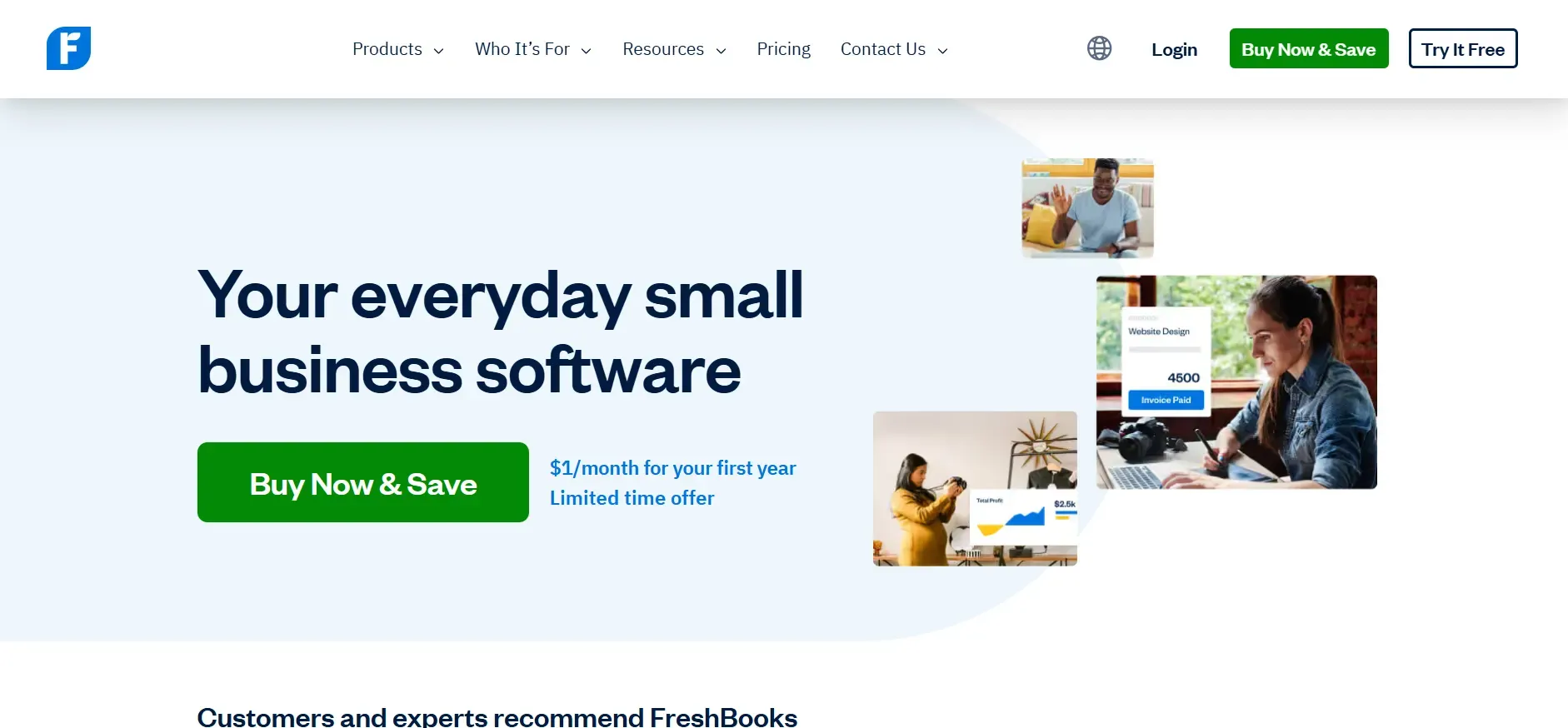
FreshBooks is designed for freelancers, solopreneurs, and small bookkeeping firms that want a simple, client-friendly solution. It puts invoicing, expense tracking, and time tracking front and center, with a focus on ease of use. Its interface is one of the most intuitive in the market, making it ideal for bookkeepers who want to minimize client support.
Pricing: Starts at $19/month for Lite plan. Higher tiers add users and features.
- Very easy for clients and staff to use.
- Strong invoicing and time tracking features.
- Good mobile app for on-the-go work.
- Costs rise quickly as you add users or clients.
- Advanced features and reporting are limited.
- API access is basic and not suited for complex automation.
On software you own, every user is included, so no per-user penalty as you staff up.
4. Botkeeper (Automation at scale)
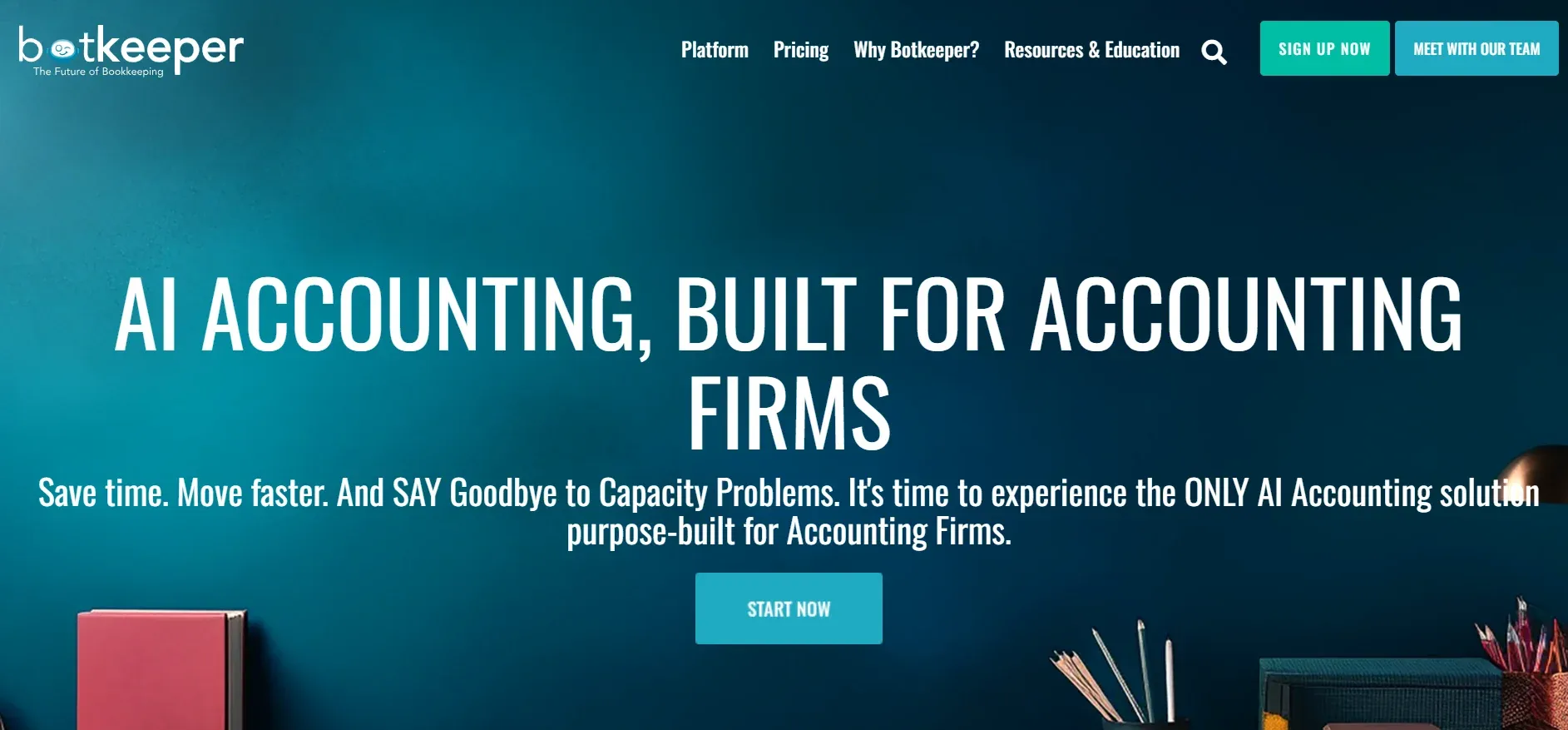
Botkeeper is a hybrid platform that combines machine learning with human accountants to automate bookkeeping workflows. Designed for high-volume firms or those looking to streamline repetitive tasks, Botkeeper handles transaction categorization, reconciliations, data entry, and basic reporting with minimal human intervention.
Pricing: Starts at $155/month, with pricing based on client volume and complexity.
- Significant time savings through automation.
- Human oversight for accuracy and exception handling.
- Integrates with major accounting platforms.
- Custom workflow logic is limited.
- Costs rise with more clients or complex automations.
- API access and custom integrations may require extra fees.
5. Pilot (Full-service automation)
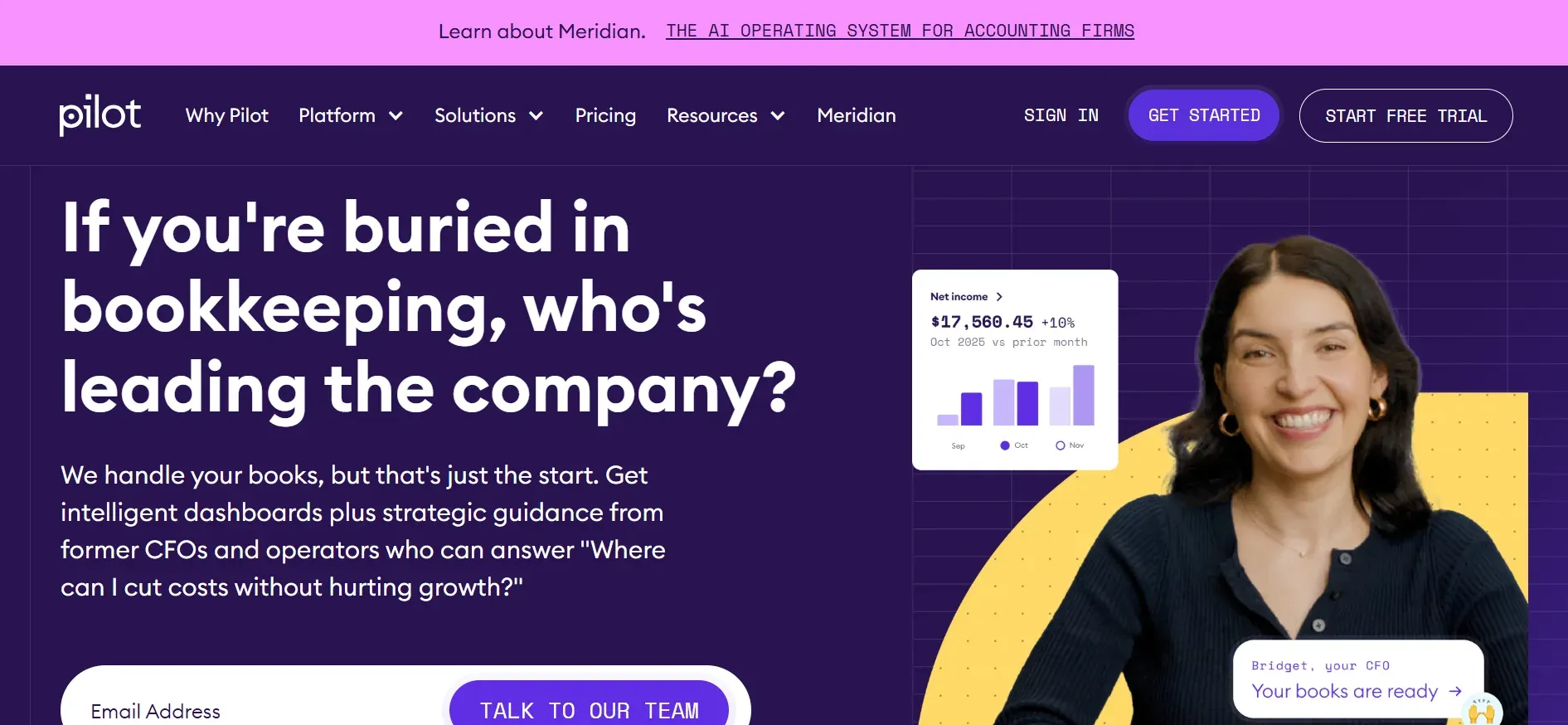
Pilot is a tech-enabled bookkeeping and CFO service that combines proprietary software with a team of experts who manage your books for you. Unlike Karbon, which is a workflow platform for your staff, Pilot aims to replace your in-house bookkeeping entirely. Their team handles categorization, reconciliations, monthly closes, and can provide CFO-level insights as an add-on.
Pricing: Starts at $599/month for basic bookkeeping. Add-ons for CFO and tax services.
- Fully managed bookkeeping and support.
- Access to CFO and tax expertise.
- Streamlined onboarding and reporting.
- High starting cost compared to DIY platforms.
- Little control over workflow customization.
- Data portability is limited if you leave the service.
On a custom Devaims build, your data stays yours and transitions are on your terms.
6. Bench (Done-for-you bookkeeping)
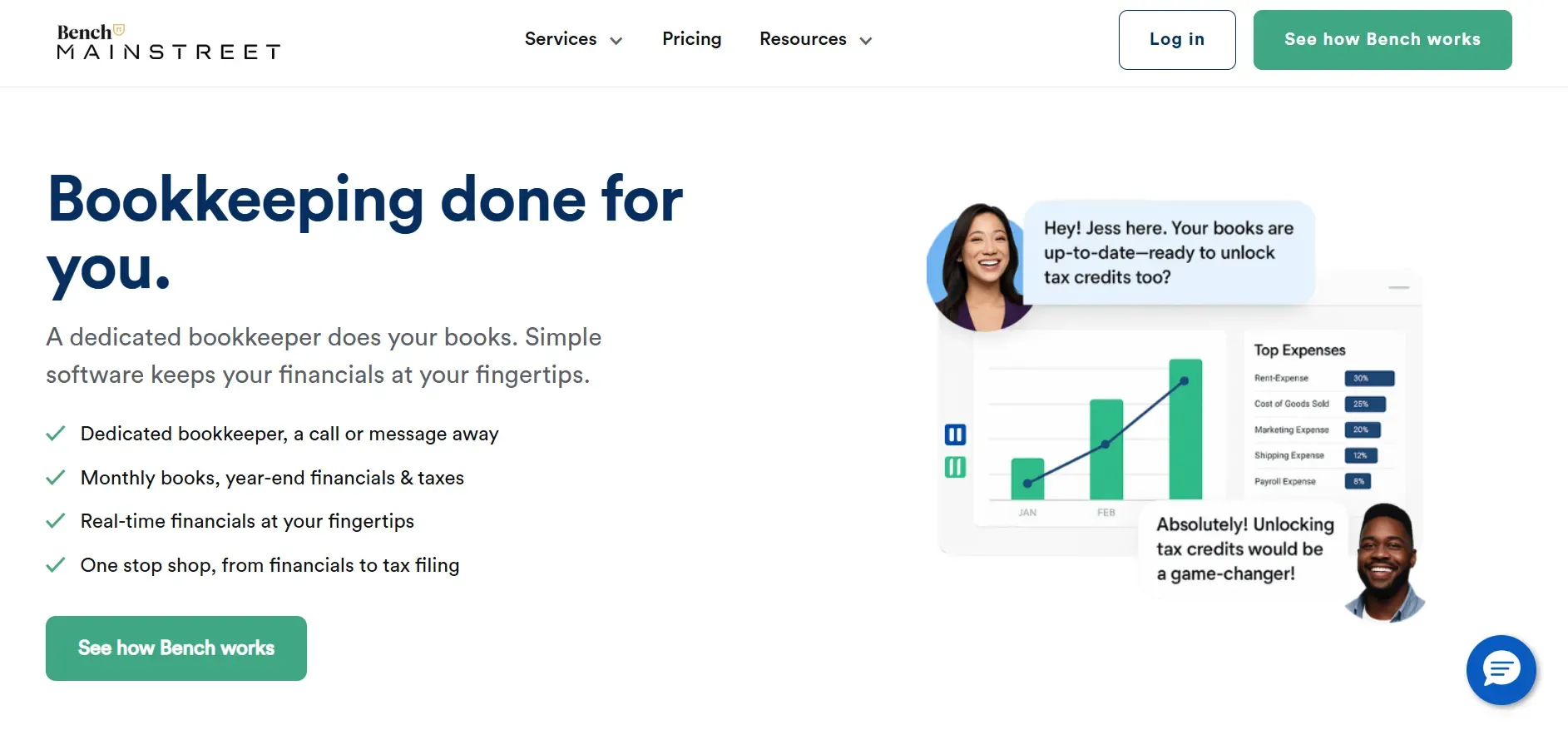
Bench offers a full-service bookkeeping solution with its own proprietary software. Like Pilot, Bench manages the books for you, but its platform is tailored for small businesses and solo bookkeepers who want to offload monthly reconciliations, transaction categorization, and reporting. Bench’s interface is simple and business-owner friendly.
Pricing: Starts at $249/month for core bookkeeping. Tax services are extra.
- Simple, predictable pricing.
- Hands-off bookkeeping for small firms.
- User-friendly client portal and communication.
- Limited integrations with other platforms.
- Not suited for complex workflows or multiple entities.
- Data export is limited to standard reports and CSVs.
7. Synder (Integrations & sync)
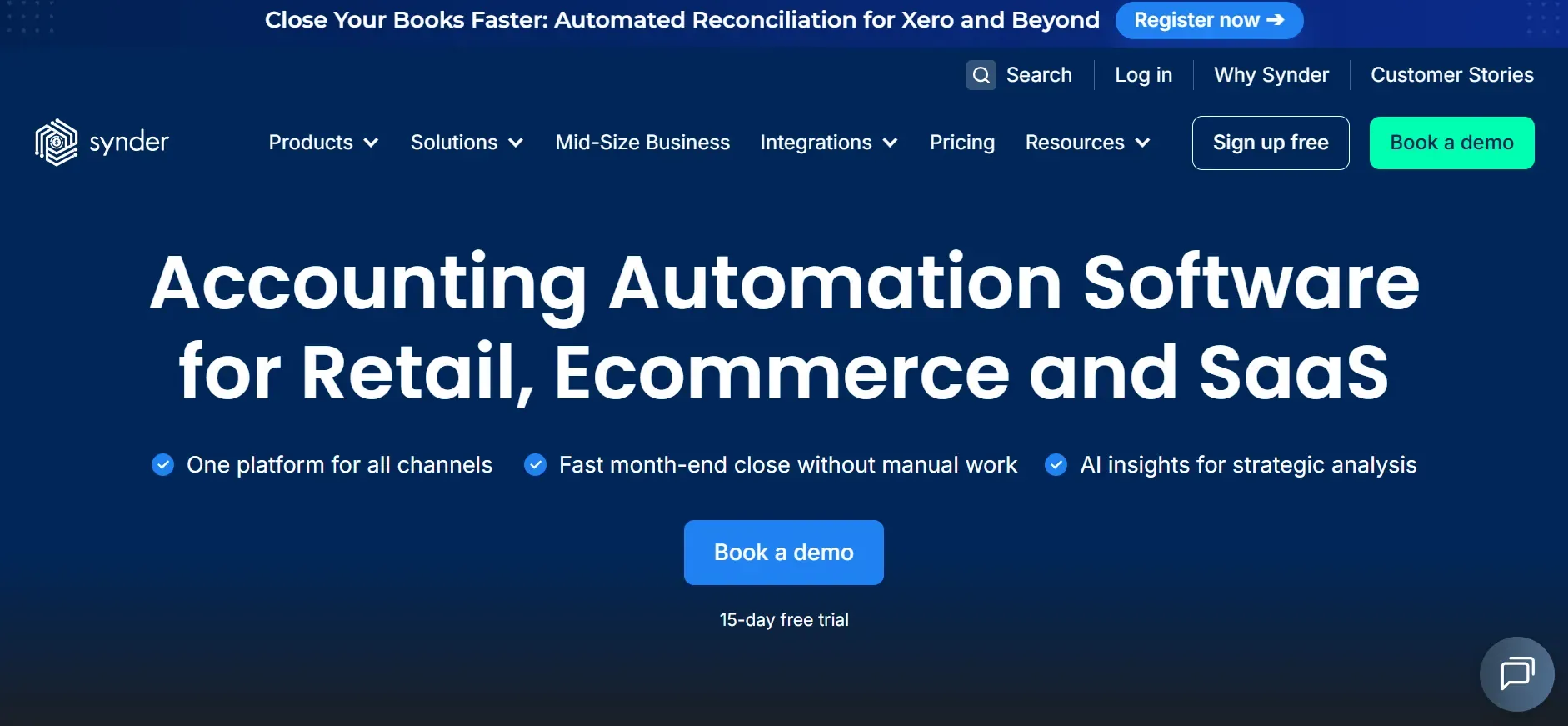
Synder is an automation tool focused on syncing data between payment processors, ecommerce platforms, and accounting systems. It does not replace your core bookkeeping software but acts as a bridge for firms dealing with high transaction volumes from online sales or multiple payment gateways.
Pricing: Starts at $48/month, with pricing based on transaction volume.
- Excellent for ecommerce and multi-channel sales.
- Deep integrations with payment and accounting platforms.
- Reduces manual data entry and errors.
- Not a full bookkeeping suite, requires core accounting software.
- Pricing rises with transaction volume and connections.
- Advanced configuration can be complex.
8. Gusto (Payroll and HR)
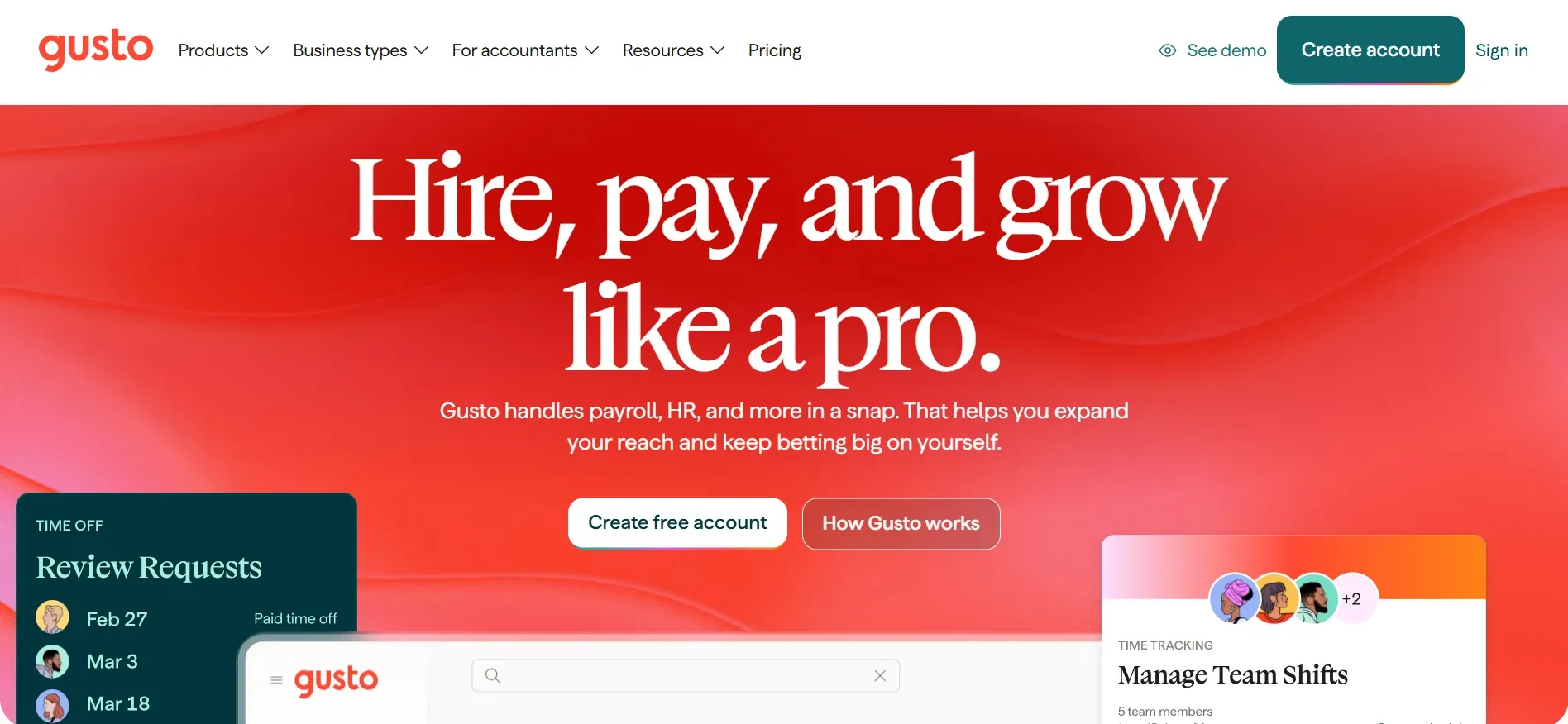
Gusto is a leading payroll and HR platform for small and midsize businesses. Bookkeeping firms often use Gusto alongside their accounting software to manage payroll, benefits, and compliance. Gusto’s interface is clean and its automation reduces administrative burden.
Pricing: Starts at $40/month base plus $6/user/month.
- Automated payroll and compliance features.
- Integrates with major accounting platforms.
- Employee self-service and benefits management.
- Per-employee fees add up as your client base grows.
- Primarily US-focused, limited international payroll support.
- Custom workflow automation is limited.
9. Devaims (Owning your own platform)
Devaims builds custom bookkeeping platforms designed exactly to your specifications. Unlike every SaaS option above, you pay once, own the source code, and control every feature, workflow, and integration. This approach gives you long-term cost predictability, full data ownership, and the power to evolve your system as your firm grows.
Pricing: One-time build cost, tailored to your requirements. No per-user or per-client fees.
- Unlimited customization and workflow automation.
- You own the code, data, and platform forever.
- No recurring subscription or per-user fees.
With Devaims, you break free from vendor lock-in and own your future.
Other Karbon alternatives worth knowing
- Hubdoc: Excellent for document collection, OCR, and automated receipt management. Integrates with Xero and QBO, but does not handle workflow or task tracking. Best as a supplement for firms with heavy document loads.
- Dext (Receipt Bank): Focused on receipt capture, expense categorization, and document management. Integrates with Xero, QBO, and Sage. Limited workflow features, but valuable for expense-heavy clients or industries like hospitality.
- Some firms use Google Workspace (Sheets, Docs, Drive) or Monday.com for custom task tracking and collaboration. These require manual setup and do not provide bookkeeping automation, but can be useful for firms with unique workflow needs and technical resources.
- Airtable and Notion: Increasingly used for custom workflow management, but require significant setup and do not replace accounting features.
How to choose the right Karbon alternative
- By budget: Solopreneurs may favor FreshBooks or Xero’s entry tier; larger firms may need the automation of Botkeeper or the long-term savings of a custom Devaims build.
- By workflow needs: If you have unique processes, approval flows, or reporting requirements, consider Devaims or platforms with open APIs like Xero. SaaS platforms limit customizations to their roadmap.
- By integration stack: Ecommerce-heavy? Synder is best-in-class. Need robust payroll? Gusto is the leader. Firms with complex stacks may need custom integrations, which only Devaims can guarantee on your terms.
- By ownership: If you want the flexibility to migrate, pivot, or scale on your own timeline, only Devaims hands you the keys. With SaaS, you are always subject to vendor pricing and feature changes.
Most platforms limit or charge for the features that make your firm unique. If you want to break out of the box, read on.
Stop paying rent on software you could own
Every Karbon rival is still rented: you pay monthly, you get boxed into features, and your workflow bends to the platform, not the other way around. The real break is owning your system. That’s what Devaims builds, custom bookkeeping platforms that you keep, code and all, with no per-user or per-client fees. Your process, your data, your terms.
Devaims works with bookkeeping firms to design and build tailored software: workflow automations, custom reporting, time tracking, client portals, integrations, whatever your firm needs, made for you. You keep the source code, control the data, and never face a forced upgrade or price hike again.
- No per-user or per-client fees: On your owned platform, staff growth costs nothing extra. SaaS alternatives charge for every seat, and fees multiply as you scale. Within a few years, ownership pays for itself, especially for firms with 10+ staff or hundreds of clients.
- Custom everything: Automate any workflow, pull any report, integrate any tool, no more feature walls or forced upgrades. Your platform evolves as your firm does, not according to a vendor’s roadmap.
- Your data, your control: Migrate, expand, or pivot on your timeline, not the vendor’s. Your data remains accessible and portable, and you never lose access due to vendor decisions or price hikes.
| Tool | Ownership | Customizable workflows | Per-user fees | Migration control |
|---|---|---|---|---|
| Karbon | No | Limited by plan | Yes | No |
| QuickBooks Online | No | Moderate | Yes | No |
| Botkeeper | No | Limited | Yes | No |
| Devaims (owned) | Yes | Unlimited, your spec | None | Full |
| Year | Rented (cumulative) | Owned (cumulative) |
|---|---|---|
| Year 1 | $12,000 | $27,000 |
| Year 2 | $24,000 | $28,800 |
| Year 3 | $36,000 | $30,600 |
| Year 4 | $48,000 | $32,400 |
| Year 5 | $60,000 | $34,200 (now ahead) |
Break-even is just after year 3. From there, the gap widens. For example, a 10-person firm paying $50 per user per month spends $6,000 a year, or $30,000 over five years, without including add-ons or price hikes. The bigger your team, the faster you pull ahead. If you want to see your real numbers, we’ll run the math for you free.
How to switch from Karbon
- Export your client, workflow, and document data from Karbon. Review which data can be exported in bulk and which may require manual extraction.
- Choose your new alternative and map required workflows and permissions. Document what you need to replicate or improve, and note any differences in terminology or process structure.
- Import clients, contacts, and documents into the new platform. For SaaS tools, follow their import guides; for custom builds, Devaims will handle the mapping for you.
- Reconnect payment processors, integrations, and calendars. Test all integrations, as API limits or permission settings may differ from Karbon’s environment.
- Train your team on the new workflows and features. Use sandbox environments or parallel runs to minimize disruption.
- Test critical workflows in parallel before going live. Ensure invoicing, approvals, reconciliations, and client communication all function as expected.
- Review any remaining Karbon contract obligations before cancellation. Some SaaS platforms require 30 to 90 day notice or enforce annual contracts with early termination fees.
With a custom Devaims build, the migration is handled as part of the project, including workflow mapping, data import, and team training, so you can focus on running your firm, not wrangling spreadsheets.
Frequently asked questions
What is the best Karbon alternative for bookkeeping firms?
QuickBooks Online and Xero are the most common alternatives for general bookkeeping, offering broad functionality and strong integration ecosystems. Botkeeper and Pilot excel for firms focused on automation or outsourcing. For firms who want to own their platform, control data, and customize workflows, Devaims is the only alternative that hands you the source code and full control. Your choice should depend on your workflow needs, growth plans, and appetite for customization versus convenience.
Which Karbon alternative is the cheapest?
Xero’s entry tier is reported to start at $13/month, making it one of the lowest-priced options for basic needs. FreshBooks is also affordable for solo bookkeepers. However, low entry pricing often means missing advanced features, integrations, or automation. As your firm scales, per-user and per-client fees add up. For long-term savings (especially for larger teams), owning your own platform with Devaims can become the cheapest option beyond year three.
Is there a free Karbon alternative?
There are no truly free, full-featured Karbon alternatives for professional bookkeeping services. Some platforms offer limited free tiers or 30-day trials (like Wave for basic accounting, or Notion/Airtable for workflow tracking), but these lack the automation, integrations, and compliance features needed by most firms. If your goal is to avoid monthly fees entirely, building your own platform with Devaims is the only way to eliminate rent for good.
What is the most customizable Karbon alternative?
Xero offers an open API and a large app marketplace, allowing for moderate customization. However, you are still limited by Xero’s pricing, user model, and feature roadmap. Devaims is the only solution giving you unlimited customization and true ownership, every workflow, report, or integration can be tailored to your exact needs, and you control the code forever.
When should a firm switch from Karbon?
If you’re hitting feature limits, facing rising per-user costs, or need workflows Karbon can’t deliver, it’s time to look at alternatives. Other signals include: trouble integrating with your clients’ tech stack, needing deeper automation, or wanting to control your firm’s data and processes. For firms planning to scale, or who are frustrated by vendor lock-in, custom software is worth considering earlier rather than later.
Can I keep my data when moving off Karbon?
You can export core data (client lists, tasks, documents) from Karbon, but complex workflows, automations, and communication histories may not transfer cleanly. Most SaaS alternatives have similar limitations. On a Devaims build, you always keep your data and system, and future migrations are entirely under your control.
What about integrating payroll or AP/AR with alternatives?
Gusto and Bill.com are leading choices for payroll and AP/AR automation, and integrate with most SaaS platforms. However, integration depth varies, some platforms require third-party connectors or manual sync. With a custom Devaims solution, payroll, payments, and any other integrations can be built in exactly as you need them, with no extra connector fees or sync headaches. This is especially valuable for firms with unique compliance or reporting requirements.
The bottom line
QuickBooks Online, Xero, and Botkeeper are solid Karbon alternatives, but every subscription adds up, and you never own your tech. Here’s the test: add up what this tool will cost you over the next five years. If that number would have built you something you own, you already have your answer.
Ownership means your firm’s platform works for you, not the other way around. If you’re ready to get off the subscription treadmill, Devaims is the way forward.
For more insights, visit the Devaims blog or see our deep dives on QuickBooks Online alternatives, Xero alternatives, and FreshBooks alternatives. For a broader look at automation and custom software in finance, the Accounting Today Technology section and Journal of Accountancy are also recommended resources.