


Ever had that moment when Hubdoc locks a key feature behind another paywall, or the monthly bill creeps up as your receipts stack? You are not alone. Bookkeeping services are finding that the rent, never own model of document capture and expense automation tools like Hubdoc racks up more costs than expected, and the feeling of being boxed in grows every year.
Maybe you are tired of paying per-user or per-document fees, or the integrations just do not flex the way your business needs. Maybe you have realized that after five years, you have nothing to show for all those subscriptions but a stack of PDFs. If you are searching for Hubdoc alternatives, here is the real-world rundown: Xero, QuickBooks Online, Dext, Bench, and Gusto are the heavy hitters, but every SaaS platform means you rent, not own. The one honest way out? Build your own system, yours to keep, with Devaims.
Why bookkeeping services look for Hubdoc alternatives
Per-document or user-based fees add up fast: Hubdoc's pricing structure, like many SaaS tools, is designed to scale with your usage. This means that as your client roster expands or your document volume increases, your monthly or yearly bill can spike unexpectedly. Firms serving dozens or hundreds of clients often find their costs multiplying, especially when each new client or staff member triggers a higher fee bracket. This dynamic makes it difficult to forecast expenses and can eat into your margins as you grow.
Feature lock-in to higher tiers: Many essential workflow automations, such as automated data extraction, multi-step approval, or advanced export options, are only available in more expensive Hubdoc plans. This can force firms to pay for features or user seats they do not actually need, just to unlock a single workflow or integration. Over time, this "paywall creep" can make the tool less cost-effective than it appeared at the outset.
Data access and export headaches: Migrating away from Hubdoc is seldom straightforward. While it claims to support bulk exports, clients frequently encounter missing metadata, attachments that do not map cleanly, or exported files that require manual reformatting. If you have built up years of client receipts, notes, and audit trails, untangling all that data for a new platform can be tedious and risky, especially if the export tools are limited or slow.
Integration gaps: Hubdoc's marketing highlights integration with accounting platforms like Xero and QuickBooks, but in practice, workflows often require manual intervention. For instance, document syncs can break, categorization rules may not carry over, and custom fields might not map as expected. As your tech stack grows more complex, adding payroll, AP automation, or custom reporting, these gaps can create inefficiency, double-handling, or mistakes.
Zero ownership, always renting: After years of paying, you still do not own the tool or the code. You are beholden to Hubdoc's roadmap, pricing decisions, and support policies. If the company sunsets a feature, changes its API, or gets acquired, your business may be forced to adapt or migrate again. This lack of ownership and control is why more bookkeeping pros are searching for Hubdoc alternatives that offer more security and flexibility.
Quick comparison of the best Hubdoc alternatives
| Tool | Best for | Starting price | You own it? |
|---|---|---|---|
| Xero | All-in-one accounting | Reported $13/mo | No |
| QuickBooks Online | US businesses, integrations | Reported $30/mo | No |
| FreshBooks | Solo bookkeepers | Reported $19/mo | No |
| Botkeeper | Automated bookkeeping | Custom, reported $155/mo | No |
| Pilot | Startups, VC-backed | Reported $499/mo | No |
| Bench | Service + software | Reported $299/mo | No |
| Synder | Ecommerce bookkeeping | Reported $48/mo | No |
| Dext (Receipt Bank) | Receipt capture | Reported $20/mo | No |
| Devaims | Owning your own platform | One-time build | One-time build, you own it |
Always confirm current pricing before you decide. SaaS fees change frequently and discounts may be available for annual payment or bulk licenses.
The 9 best Hubdoc alternatives
1. Xero (All-in-one accounting)
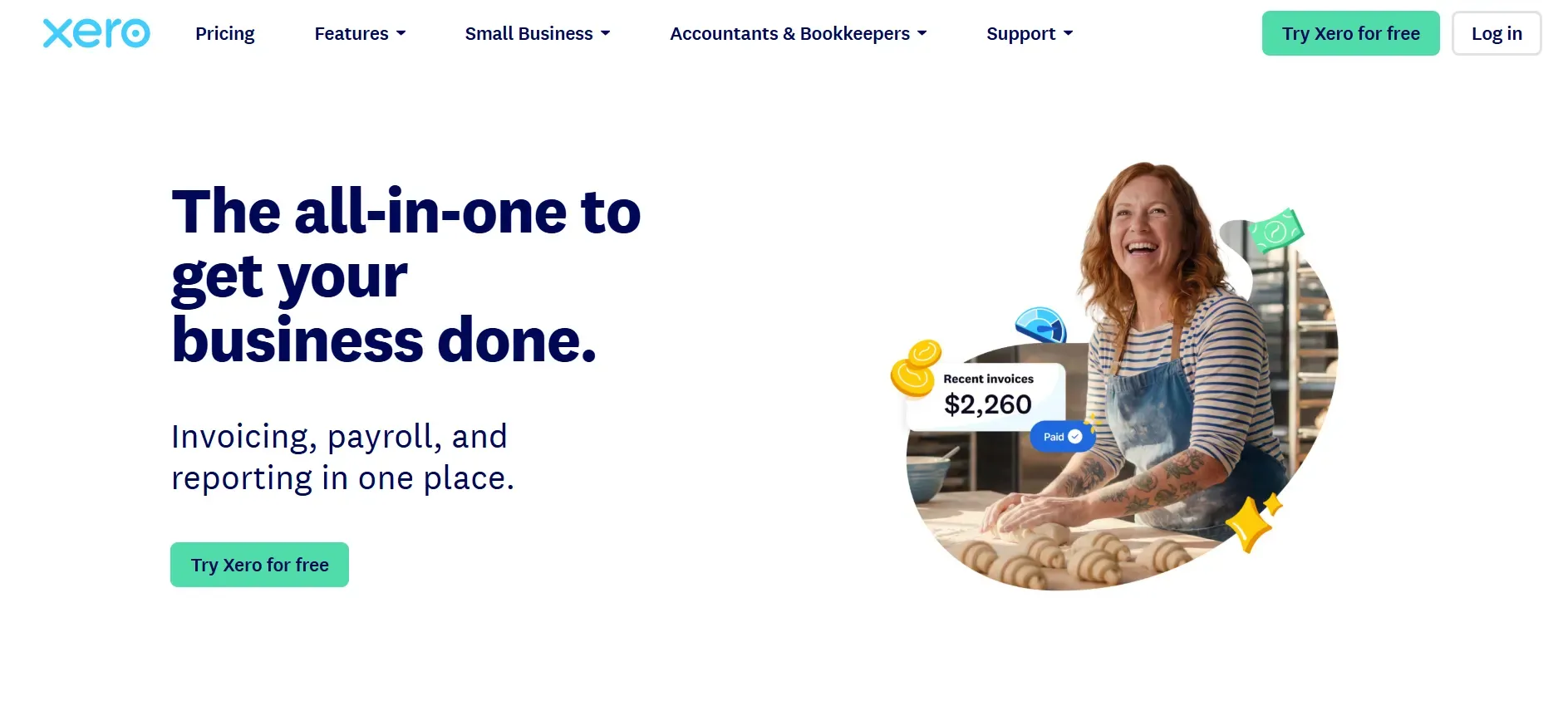
Xero is a mature, cloud-based accounting platform that offers a comprehensive suite for bookkeeping firms. Its built-in document management capabilities, such as file attachments for transactions and receipts, are tightly integrated with core accounting features like invoicing, bank reconciliation, and reporting. Xero’s document capture, known as "Xero Files" and "Xero Expenses," allows users to email or upload receipts directly to the platform, attach them to specific transactions, and use mobile apps for on-the-go capture. Xero also supports bank feeds from hundreds of global institutions, making transaction matching faster for bookkeepers.
Pricing: Starts at $13/month for the Early plan. Higher tiers unlock more features and document automation.
- Integrated accounting and document management
- Large ecosystem of integrations and open API
- Strong client collaboration tools
- Document capture features limited by plan tier
- Advanced automations require higher-priced plans or add-ons
- No ownership, subject to Xero's roadmap and pricing
When Xero's document limits or lack of ownership become a bottleneck, Devaims can build you a platform with unlimited users and custom workflows.
2. QuickBooks Online (US businesses, integrations)
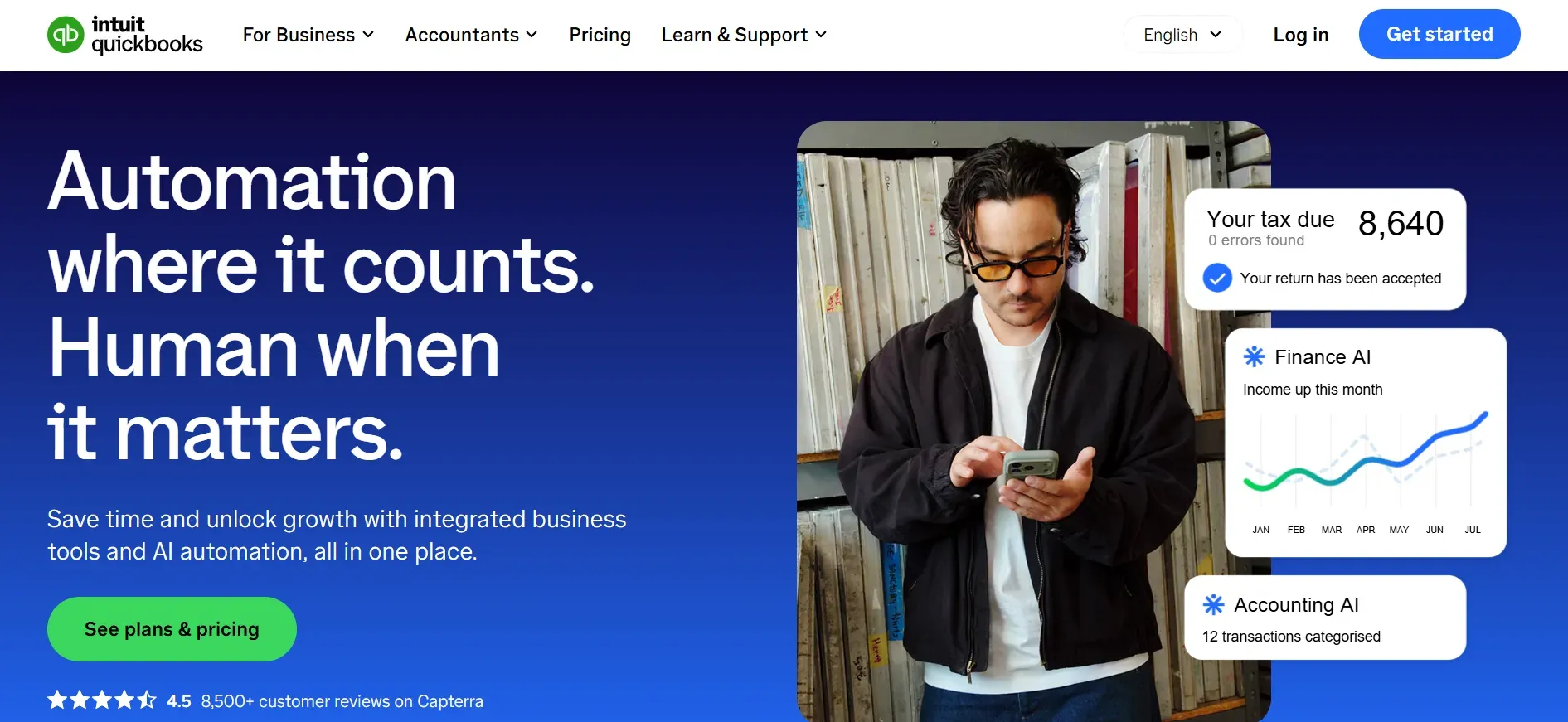
QuickBooks Online (QBO) is the most widely adopted accounting platform for US small businesses and a staple for bookkeepers. QBO includes built-in receipt capture, automated expense tracking, and bank feed reconciliation. Their mobile app allows users to snap photos of receipts, which are then auto-matched to transactions. QBO’s "Receipt Capture" feature supports both manual uploads and email forwarding, streamlining the process for clients and bookkeepers alike.
Pricing: Starts at $30/month for the Simple Start plan. Advanced features require higher tiers.
- Extensive reporting and accountant tools
- Large app marketplace and integrations
- Strong support for US tax and payroll
- Per-user and per-client pricing can escalate quickly
- Advanced features locked behind higher-priced tiers
- No ownership, subject to Intuit's roadmap
If QuickBooks' per-user fees are eating into your margins, Devaims can build a flat-cost platform that scales with your firm.
3. FreshBooks (Solo bookkeepers)
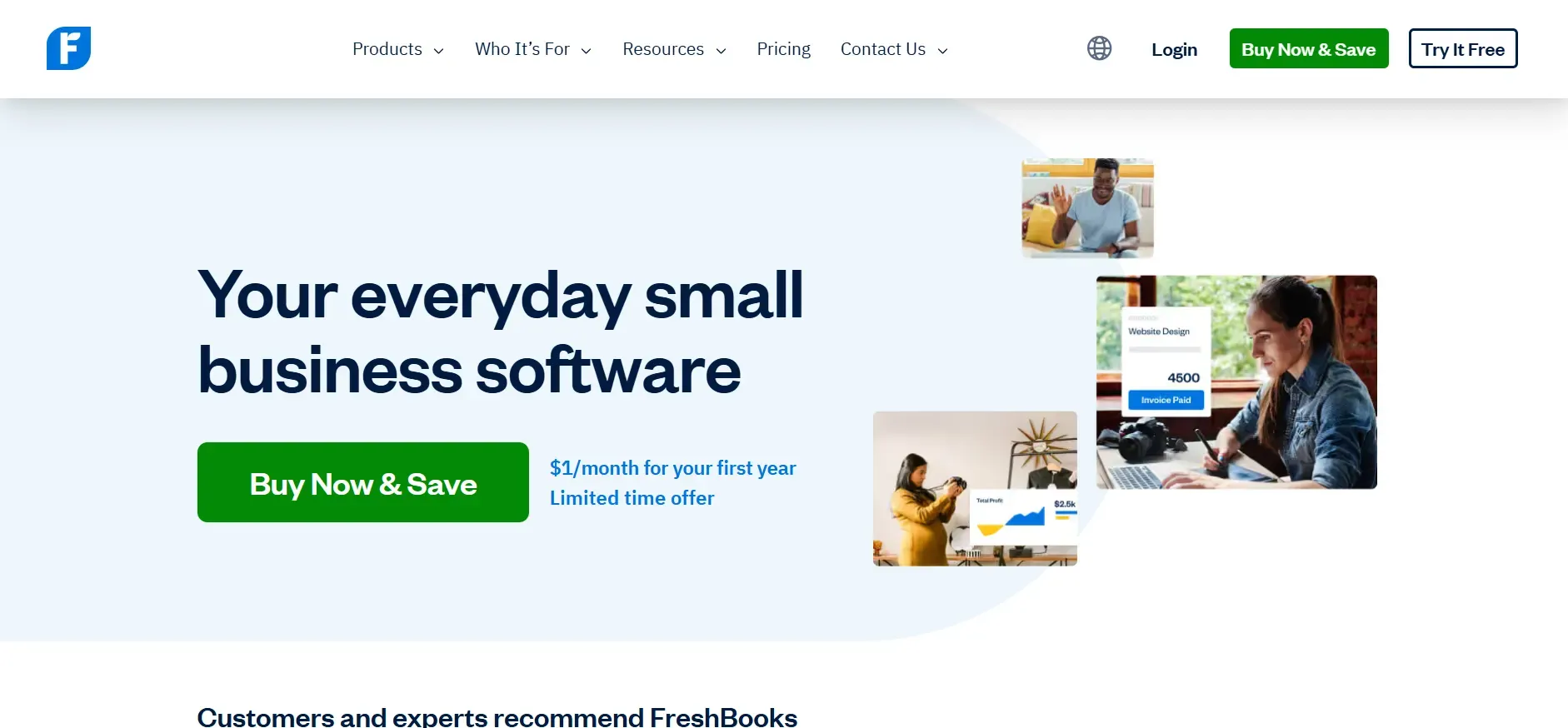
FreshBooks is designed for freelancers, solo practitioners, and very small firms needing easy invoicing, time tracking, and basic expense management. Its document capture is streamlined: users can snap receipts with the mobile app or upload PDFs/images to match expenses. FreshBooks focuses on simplicity, with a clean interface and minimal learning curve.
Pricing: Starts at $19/month for the Lite plan. Higher tiers add more clients and features.
- Simple, intuitive interface
- Fast setup for solo users
- Affordable entry-level pricing
- Lacks bulk upload and advanced automation
- Limited reporting and collaboration as you grow
- No ownership, subject to price increases
4. Botkeeper (Automated bookkeeping)
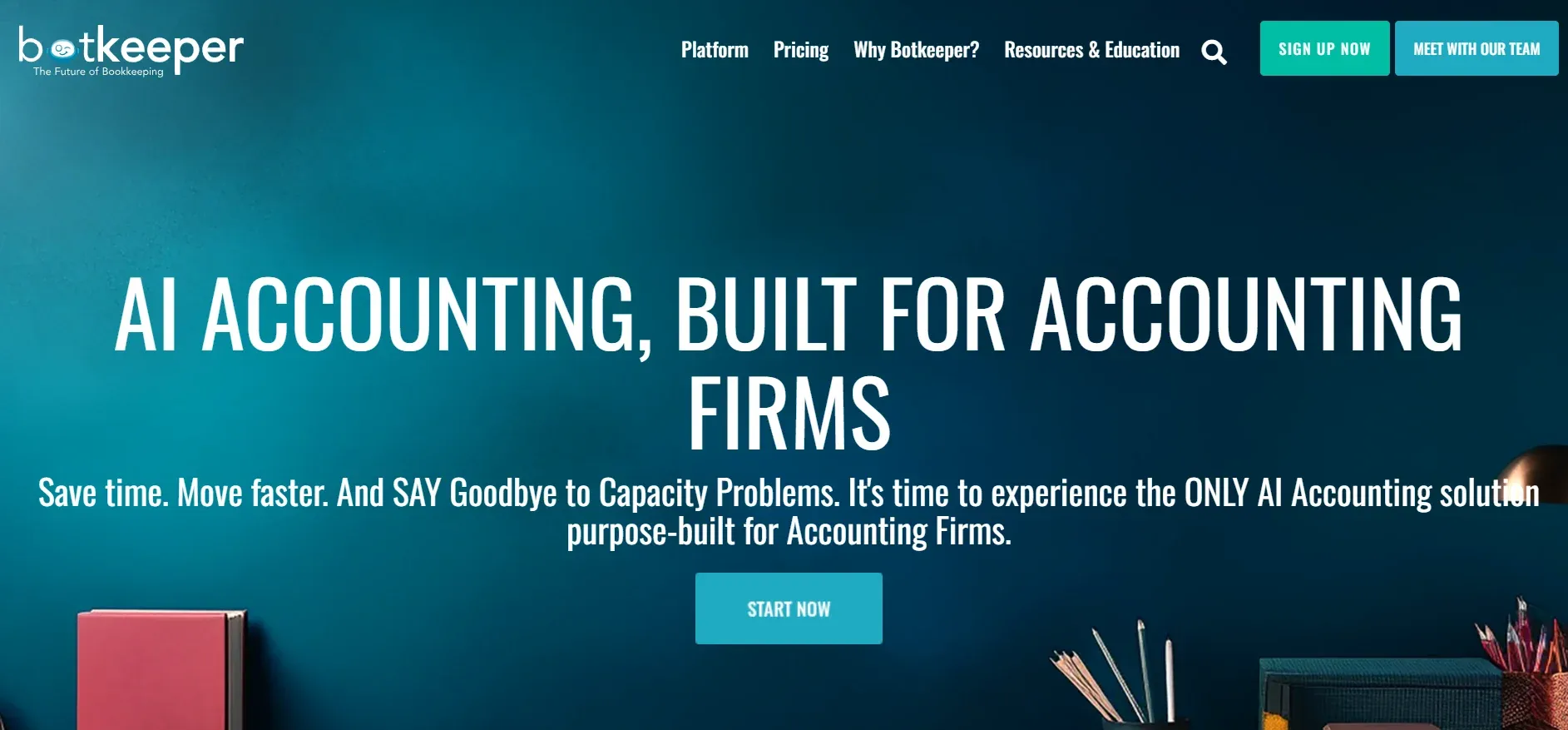
Botkeeper targets accounting and bookkeeping firms seeking to automate high-volume, repeatable tasks. It combines AI/ML-powered document capture with human oversight. Botkeeper ingests receipts, invoices, and bank statements, auto-classifies transactions, and flags anomalies for review. Its goal is to minimize manual data entry and streamline month-end close for firms managing dozens or hundreds of clients.
Pricing: Custom pricing, reported starting at $155/month. Scales with client count and document volume.
- High-volume automation for bookkeeping tasks
- Combines AI with human review
- Integrates with major accounting and payroll platforms
- Custom workflows may not be possible
- Proprietary automation logic, limited transparency
- No ownership, platform is rented
5. Pilot (Startups, VC-backed)
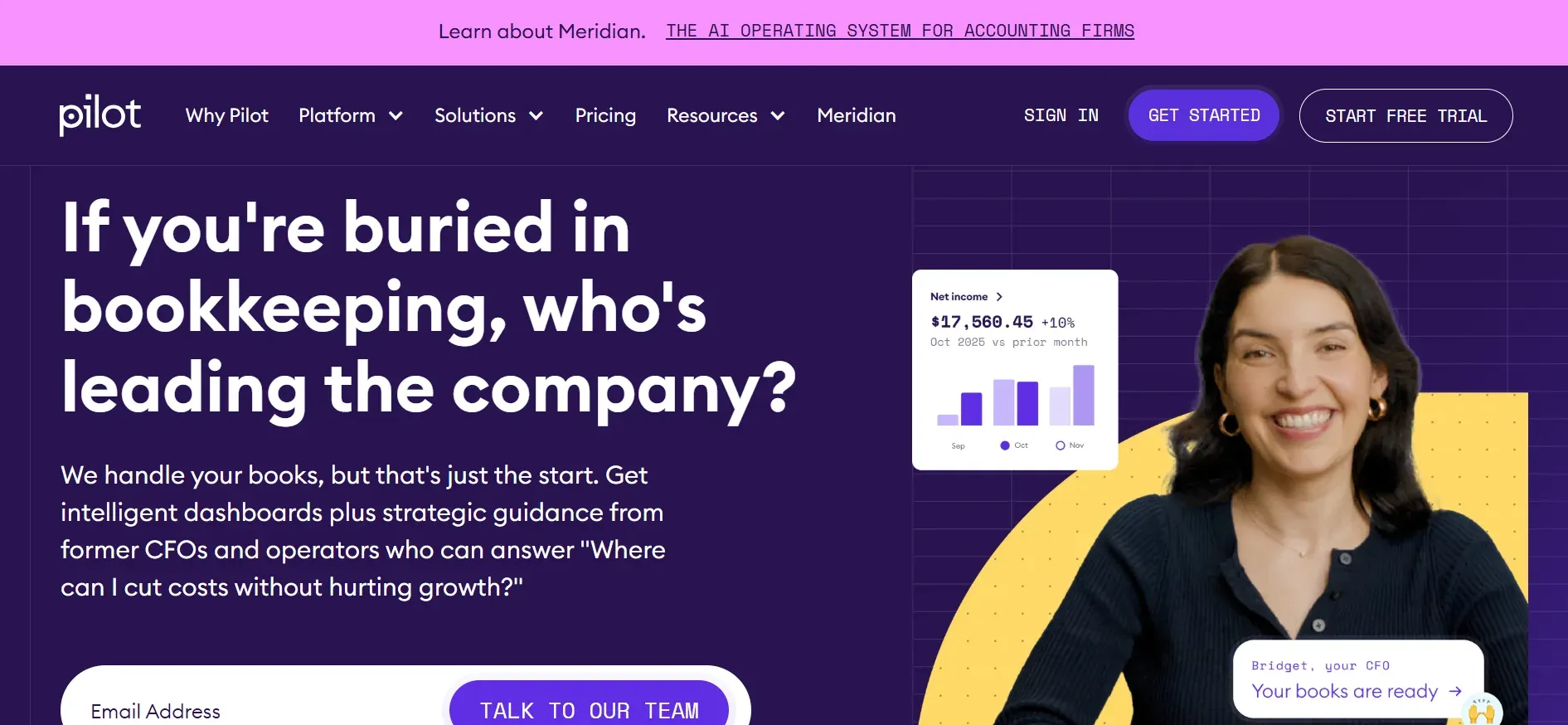
Pilot is a hybrid bookkeeping service and software solution, tailored for startups and fast-growing tech companies. Clients get a dedicated bookkeeping team plus a software dashboard for real-time insights. Pilot handles everything from document capture to monthly close, often integrating directly with payment processors, payroll, and banking APIs.
Pricing: Starts at $499/month. Pricing increases with complexity and volume.
- Done-for-you bookkeeping with dedicated team
- Deep integrations for startups and SaaS
- Centralized dashboard for financial insights
- High minimum monthly fees
- Lack of workflow customization
- No ownership, bundled service model
6. Bench (Service + software)
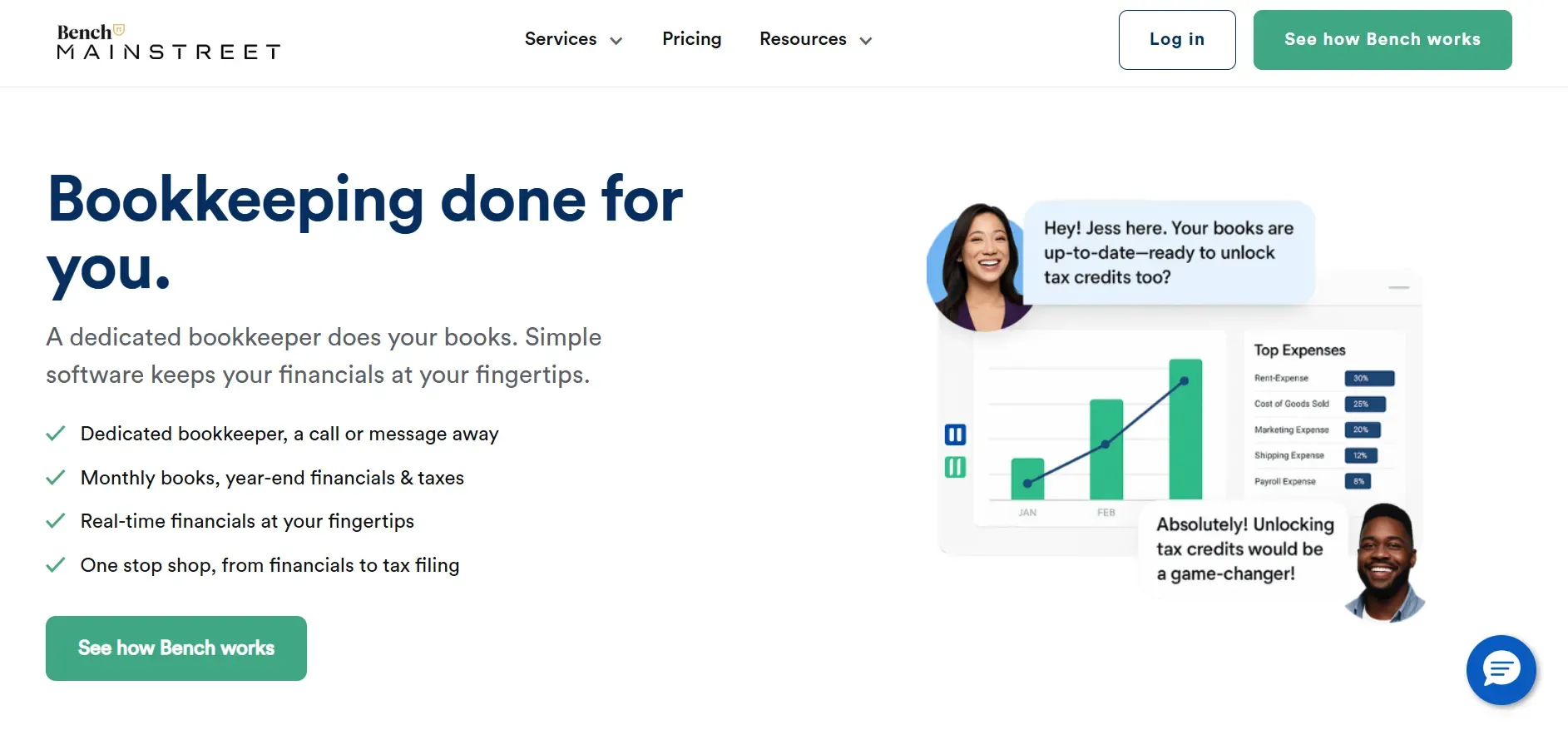
Bench offers bookkeeping-as-a-service with a proprietary dashboard for clients. Clients send documents via mobile app, email, or direct upload, and Bench’s team handles categorization, reconciliation, and reporting. The platform is designed for small businesses that want to outsource bookkeeping but maintain visibility through a modern, easy-to-navigate dashboard.
Pricing: Starts at $299/month. Includes monthly bookkeeping and dashboard access.
- Simple onboarding and client dashboard
- Monthly bookkeeping and tax prep included
- Clear, visual reporting
- Limited data portability when leaving
- No workflow or reporting customization
- No ownership, service model
7. Synder (Ecommerce bookkeeping)
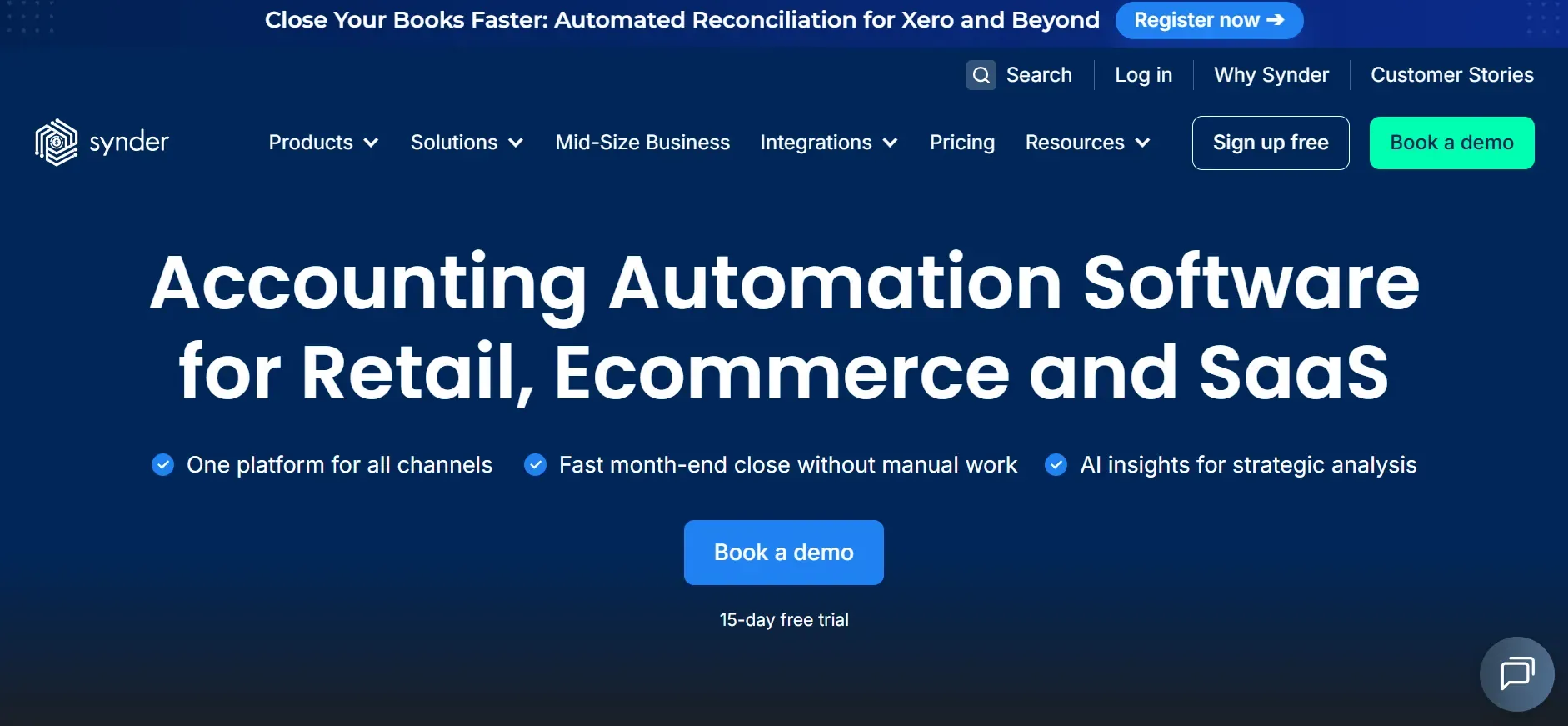
Synder is a specialist tool for ecommerce and SaaS businesses that operate across multiple sales channels. Its core strength is automated transaction syncing from platforms like Shopify, Amazon, WooCommerce, PayPal, and Stripe into your accounting software (QuickBooks Online or Xero). Synder automatically matches payments, fees, refunds, and taxes, minimizing manual reconciliation for high-volume ecommerce firms.
Pricing: Starts at $48/month. Pricing scales with transaction volume and features.
- Automated multi-channel transaction sync
- Strong ecommerce integrations
- Bulk import/export and error correction tools
- Costs rise with transaction volume
- Advanced features require higher tiers
- No ownership, reliant on Synder's roadmap
8. Dext (Receipt Bank) (Receipt capture)
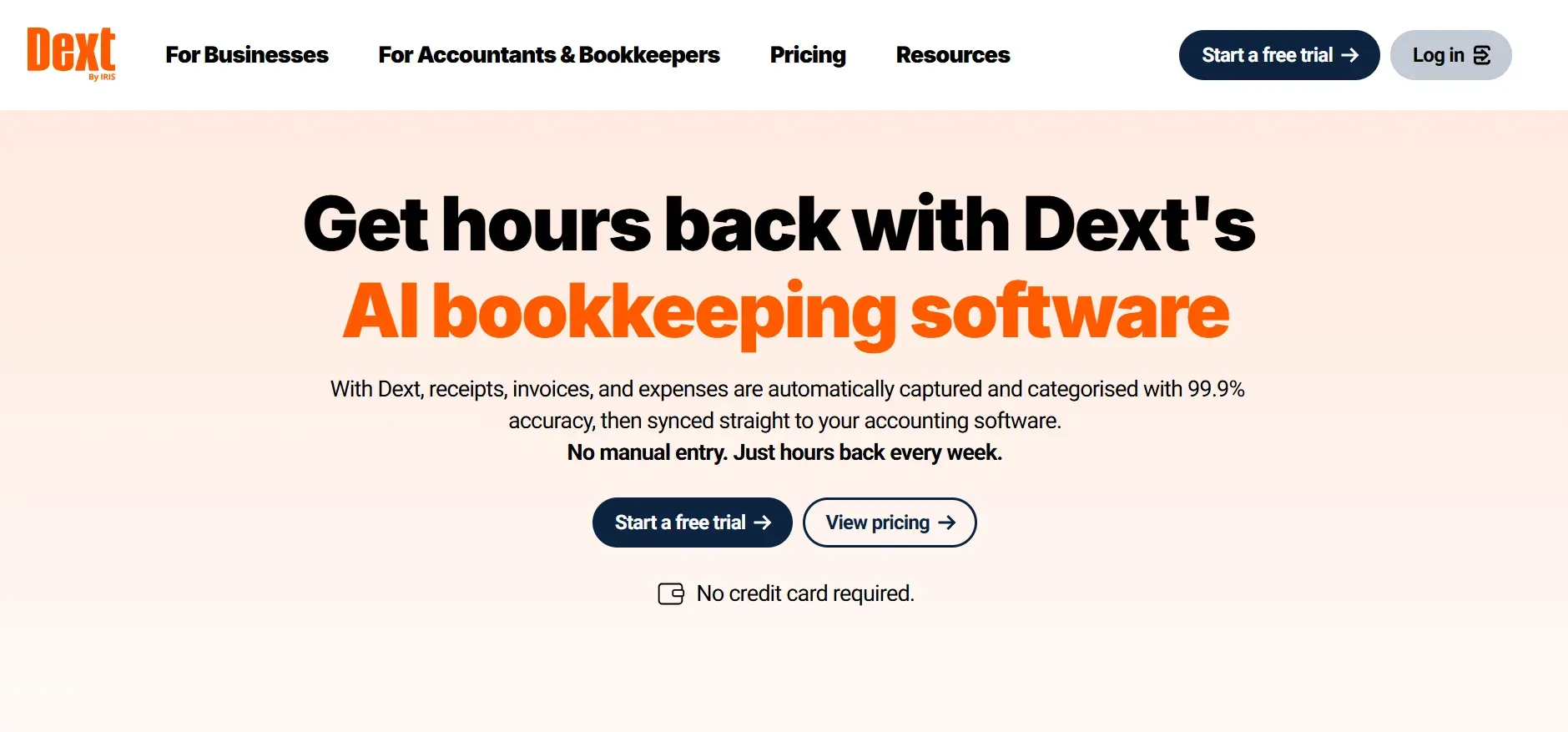
Dext (formerly Receipt Bank) is a leading document capture and expense automation tool for bookkeepers and accountants. Dext is built for bulk receipt scanning, automated data extraction using OCR, and rule-based workflow automation. It excels at handling large volumes of receipts, invoices, and statements, with fast turnaround and high accuracy.
Pricing: Starts at $20/month. Pricing is based on document volume and features.
- Bulk upload and advanced OCR extraction
- Granular client management for firms
- Native integrations with major accounting platforms
- Pricing increases with document volume
- Export and workflow features limited to higher tiers
- No ownership, SaaS model
9. Devaims (Owning your own platform)
Devaims is a custom software development agency that builds document capture, expense management, and bookkeeping automation platforms for firms that want to own their technology. Rather than paying per-user or per-document fees, you invest in a one-time build and receive the full source code, unlimited user access, and complete data control. Every feature and integration is tailored to your workflow, from document ingestion and approval routing to reporting and audit trails.
Pricing: One-time build (typical project $27,000), plus flat maintenance (e.g., $150/month). No per-user or per-document fees.
- Fully custom platform, built for your workflow
- Unlimited users and clients, no recurring SaaS fees
- Complete ownership of code, data, and integrations
When you want to break free from SaaS rental and own your bookkeeping stack, Devaims is the only alternative that puts you in control.
Other Hubdoc alternatives worth knowing
- Bill.com offers AP automation, including invoice capture, approval workflows, and payments. While it supports document capture, it is optimized for accounts payable, not general bookkeeping document management. The platform is comprehensive but may be overkill for firms focused only on receipt capture or expense management.
- Karbon is a practice management solution with strong task and workflow automation for accounting firms. While not a dedicated document capture tool, it can be integrated with Dext, Xero, and other platforms to centralize client communication and task tracking alongside document workflows.
- Shoeboxed specializes in physical receipt scanning and mail-in services. Firms can send boxes of paper receipts to Shoeboxed for digitization, but integrations and workflow automations are limited compared to Dext or Hubdoc. Best for firms dealing with large volumes of physical documents.
- AutoEntry is another document capture platform that rivals Dext, offering advanced OCR, multi-client support, and integrations with major accounting systems. Its tiered pricing is similar to Dext, and it is widely used in the UK and Australia.
How to choose the right Hubdoc alternative
- By budget: Solo practitioners may get by with FreshBooks, Dext, or Shoeboxed, but scaling firms need to add up all per-user or per-document fees across their client base. For firms managing hundreds of clients, SaaS costs can quickly exceed the cost of building a custom solution.
- By workflow: Firms with standard processes can often use SaaS tools out of the box. If you need true end-to-end automation, custom approval chains, or integrations with legacy systems, SaaS may fall short, an owned build is the only way to ensure a perfect fit.
- By client base: High-volume shops should watch for tiered pricing, overage fees, or document limits. If your client base is rapidly expanding, or you process thousands of receipts monthly, owning your platform can yield long-term savings.
- By data control: If you need full export, audit trails, or strict compliance, only an owned system puts you fully in control. SaaS platforms may restrict data exports or change access policies without notice.
When your costs and workflow matter more than fitting into a SaaS box, owning with Devaims is worth a look. For a side-by-side analysis, see G2’s Accounting Software grid and Capterra’s Hubdoc alternative reviews.
Stop paying rent on bookkeeping software you could own
Every tool on this list, from Hubdoc to Dext to Xero, shares the same core limitation: you pay, and pay, and pay, but you never own the platform. The per-unit fees, recurring bills, and sudden price hikes are baked into the SaaS model itself. Devaims offers a different path: you get a custom-built bookkeeping platform tailored to your workflow, with every feature and integration you actually need, and you own it outright. No more renting your own data.
Devaims is a custom software development agency that builds web, mobile, and business platforms for bookkeeping firms that want control. You get the source code, unlimited users, and a platform that scales with you. Maintenance is flat and predictable. When you want a new report or workflow, it is your system to adapt, not someone else's roadmap.
- No more per-document or per-user surprises: Your cost does not climb with your client list. You can onboard hundreds of clients or staff without seeing your bill rise, and you have the flexibility to create as many user roles or document types as you need.
- Data and exports on your terms: Full access, all formats, no "please contact support" runaround. With ownership, you can design your own export tools, maintain full audit logs, and ensure compliance with any regulatory standard.
- Integrations that fit your stack: QuickBooks, Xero, payroll, banks, whatever you use, we build it in. If your workflow changes or you add a new service line, your platform evolves with you, not the other way around.
- Compliance and audit trails by design: Meet your exact needs, not a generic minimum. Whether you need SOC2, GDPR, HIPAA, or custom audit reporting, your owned platform is built to your requirements.
| Tool | Ownership | Pricing model | Custom fit? |
|---|---|---|---|
| Hubdoc | Rented | Monthly, per document/user | Limited |
| Xero | Rented | Monthly, tiered | Some flexibility |
| Dext | Rented | Monthly, per document | Limited |
| Devaims | You own it | One-time build, flat maintenance | Fully custom |
What does five years of renting vs owning actually look like for a scaled bookkeeping firm? Let us do the math:
| Year | Renting (SaaS) | Owning (Devaims) |
|---|---|---|
| 1 | $6,000 | $28,800 |
| 2 | $12,000 | $30,600 |
| 3 | $18,000 | $32,400 |
| 4 | $24,000 | $34,200 |
| 5 | $30,000 | $36,000 (now ahead) |
If your current SaaS stack is running $500 a month (not uncommon with 5-10 users and a few add-ons), you will pay $30,000 after five years and still own nothing. With Devaims, a full-featured build might run $27,000 upfront and $150/month for maintenance. By year 5, you are ahead, and every year after, the gap only widens. Want us to run your exact numbers?
Who benefits most from owning? Firms who plan to scale, want data control, or need to differentiate with custom workflows. If your process is your secret sauce, owning is a strategic move. For more on the cost math, see Software Advice’s SaaS vs Owned guide.
How to switch from Hubdoc
- Export all documents, attachments, and metadata from Hubdoc (CSV, PDF, images). Use Hubdoc’s bulk export tools and check for completeness, some users report missing files or metadata, so audit your export.
- Choose your new platform and confirm it can import the data formats you have. For SaaS tools, test with a sample import. For Devaims, custom import scripts ensure all data is mapped.
- Import your clients, documents, and historical data into the new tool. Map fields carefully, custom notes, tags, or audit trails may need special handling.
- Reconnect accounting software, bank feeds, and payment integrations. Ensure that all automated workflows are tested and working end to end.
- Train your team on any new workflows or automation features. Create documentation and run hands-on sessions to minimize disruption.
- Test in parallel for at least one month to catch issues before going live. Process a full cycle (month-end close, reporting, client uploads) in both systems to verify accuracy.
- Review your old contract and cancel Hubdoc only when you are fully migrated. Ensure all client data is available and that you have a backup of historical records.
With a custom Devaims build, the migration is handled as part of the project. Data integrity checks, mapping, and workflow adaptation are all included for a smooth transition.
Frequently asked questions
What is the best Hubdoc alternative for bookkeepers?
Xero and Dext are the most popular Hubdoc alternatives for most bookkeeping firms, offering strong document capture and accounting features. Xero provides integrated accounting and receipt management, while Dext excels at high-volume document processing and automation. For firms that want to own their platform, Devaims is the only fully custom, build-you-own option, ideal for those who want total workflow control and data security.
Which Hubdoc alternative is the cheapest?
FreshBooks and Dext offer the lowest entry-level subscription prices. However, costs can rise quickly as you add clients or process more documents. Over five years, especially for firms with 100+ clients, owning with Devaims often turns out cheaper due to the absence of per-user or per-document fees. Always calculate your expected usage and compare total five-year costs across options.
Is there a free Hubdoc alternative?
There are no true free alternatives that match Hubdoc’s automation, OCR, and workflow features. Some accounting platforms, such as Wave or Zoho Books, offer basic receipt uploads for free or at low cost, but full-featured document capture and automation are always paid. Open-source tools exist, but require technical skill to deploy and lack support. For firms needing professional-grade automation and support, a paid solution is essential.
Which Hubdoc alternative is best for ecommerce?
Synder is purpose-built for ecommerce and SaaS businesses, with deep integrations for Shopify, Amazon, Stripe, and other online sales platforms. It automates transaction sync, fee categorization, and tax mapping, reducing manual work for high-volume online sellers. For firms needing custom ecommerce workflows, Devaims can build connectors tailored to your stack and reporting needs.
Can I keep all my documents and data when I switch from Hubdoc?
You can export documents and metadata from Hubdoc, but some formatting, notes, or custom fields may require manual intervention. Always audit your exports before decommissioning Hubdoc. With a custom Devaims build, migration scripts ensure all data, documents, notes, audit trails, are preserved and mapped to your new system, eliminating the risk of data loss or format mismatch.
When should I switch from Hubdoc?
Consider switching if your monthly fees are rising, you are hitting tier or document limits, or you need integrations or workflow automations that Hubdoc does not support. If you have outgrown Hubdoc’s capabilities, or want to future-proof your tech stack with ownership and flexibility, now is the time to evaluate alternatives. Owning with Devaims lets you adapt as your firm grows, without SaaS constraints.
Can Devaims build a platform that replaces Hubdoc fully?
Yes. Devaims can build a bookkeeping platform with document capture, workflow automations, multi-user collaboration, approval chains, reporting, and any feature set you require. The platform is fully owned, with no ongoing per-user fees, and can integrate with any accounting, payroll, or banking system you use. Custom migration, support, and ongoing updates are all available.
The bottom line
Here is the decision rule: if the cost of renting Hubdoc and its peers for five years would have built you a platform you own, it is time to stop renting. The best Hubdoc alternatives all have strengths, Xero for all-in-one, Dext for OCR, Bench for service, yet none let you own your process or your code.
Owning your software means you control costs, workflow, and data for good. If you are ready to do the math, Devaims will run your numbers and show you what owning could look like for your bookkeeping firm.
For more real-world ownership guides, visit the Devaims blog or check out Xero alternatives, Dext alternatives, and QuickBooks Online alternatives.