


Ever felt like you’re just renting your own data from NextGen? Or watched your monthly bill creep up as your urgent care grows, thanks to per-provider fees and the endless add-on treadmill? You’re not alone. Most urgent care leaders have hit that moment: the software runs your whole operation, but you don’t truly own any of it, and switching isn’t simple.
That’s why so many are hunting for NextGen alternatives in 2026. Whether you’re stuck in upgrade purgatory, fighting integration headaches, or just tired of surprise price hikes, it’s time to weigh your options. Here’s a straight-shooting look at the best urgent care software alternatives, from Experity and Athenahealth to Epic and a custom Devaims build you own outright. If you’re ready to stop renting forever, keep reading.
The only alternative in this list that hands you the keys? A custom Devaims platform, built for your workflows and owned by you.
Why urgent care centers look for NextGen alternatives
Cost escalates with growth: NextGen’s per-provider or per-location pricing means your bill jumps as you add staff or open new centers, a pain point for any scaling urgent care.
Lock-in and contract terms: Contracts can run 2 to 3 years, with early termination fees and limited data export options that make switching painful.
Add-on fees stack up fast: Core features like telehealth, e-prescribing, or advanced analytics often cost extra, turning your monthly budget into a moving target.
Integration headaches: Connecting NextGen with your billing, lab, or scheduling stack can require expensive middleware or custom workarounds.
Limited control of your data: You don’t own the codebase or hosting, so even your own data can feel like it’s on loan. Each of these drives urgent care centers to consider NextGen alternatives.
Quick comparison of the best NextGen alternatives
| Tool | Best for | Starting price | You own it? |
|---|---|---|---|
| Experity | Urgent cares needing vertical focus | Reported $400+/provider/mo | No |
| Kareo (Tebra) | Small to midsize clinics | Reported $125+/provider/mo | No |
| AdvancedMD | Multi-location practices | Reported $429+/provider/mo | No |
| Healow | Patient engagement | Quote-based | No |
| iPatientCare | Integrated EHR & practice management | Quote-based | No |
| Meditech | Enterprise medical systems | Quote-based | No |
| eClinicalWorks | Larger clinics, urgent care | Reported $449+/provider/mo | No |
| Athenahealth | Scalable cloud EHR | Reported 4% to 7% of collections | No |
| Epic | Large health systems | Quote-based, high setup | No |
| Devaims | Own-your-system clinics | One-time build, you own it | Yes |
Always confirm current pricing before you decide. Vendors change their models often.
The 10 best NextGen alternatives for urgent care
1. Experity (Best for urgent care-specific workflows)
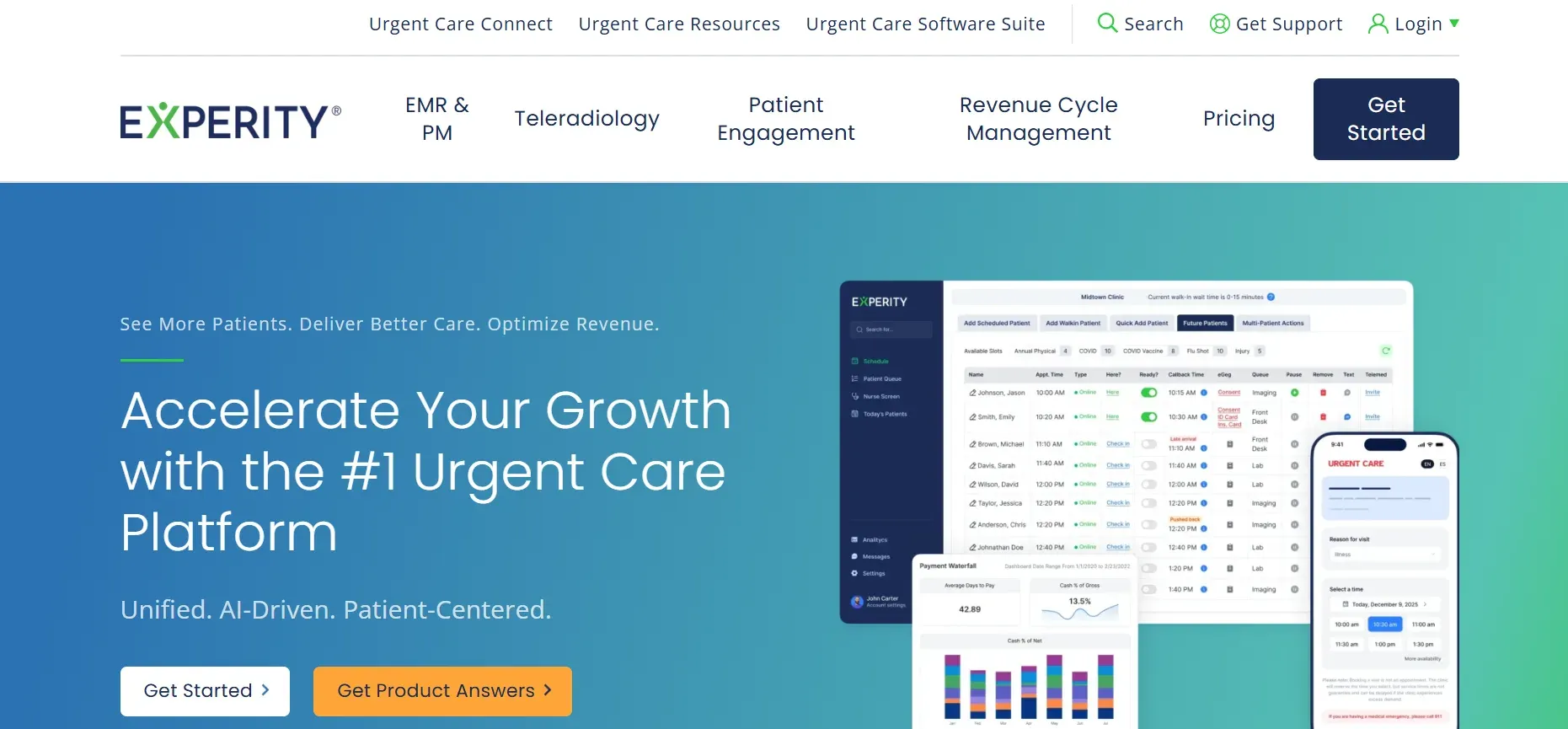
Experity is designed for urgent care, blending EHR, practice management, and scheduling into one platform. If you’re leaving NextGen for something built from the ground up for walk-in clinics and quick throughput, Experity is a strong choice. The tradeoff: it’s still SaaS, so you’re subscribing, not owning.
Pricing: Reported $400+ per provider per month. Contact sales for a custom quote.
- Urgent care-specific templates and workflows
- Smooth check-in and patient engagement tools
- Strong reporting for high-volume clinics
- Per-provider pricing adds up as you grow
- Some integrations require extra fees or vendor help
- Locked into Experity’s roadmap and update cycle
If you ever want a feature Experity doesn’t prioritize, owning the code, like with Devaims, gives you total control.
2. Kareo (Tebra) (Best for small to midsize urgent cares)
Kareo, now part of Tebra, is a cloud EHR and billing platform with a lighter footprint than NextGen. It’s a popular choice for smaller clinics wanting an easier learning curve, though it can feel limited once you need advanced customization.
Pricing: Reported $125+ per provider per month. See Kareo pricing.
- User-friendly dashboard and setup
- Integrated billing and telehealth (with add-ons)
- Transparent pricing for small teams
- Limited urgent care-specific features
- Extra costs for billing services and telehealth
- Some users report slow support response
With Devaims, you can have a system that grows with you, without SaaS seat fees.
3. AdvancedMD (Best for multi-location urgent care)
AdvancedMD targets growing urgent care groups and specialty clinics that have outgrown point solutions. Compared to NextGen, AdvancedMD offers better multi-site scheduling but similar pain around per-provider fees and contract lock-in.
Pricing: Reported $429+ per provider per month. See AdvancedMD pricing.
- Flexible scheduling and telemedicine
- Strong analytics and business reporting
- Built-in clearinghouse for claims
- Setup fee for onboarding and training
- Contracts run one year or more
- Some advanced features only in higher tiers
Certain reports are locked to premium tiers. On a system you own, those are just features, not upsells.
4. Healow (Best for patient engagement)
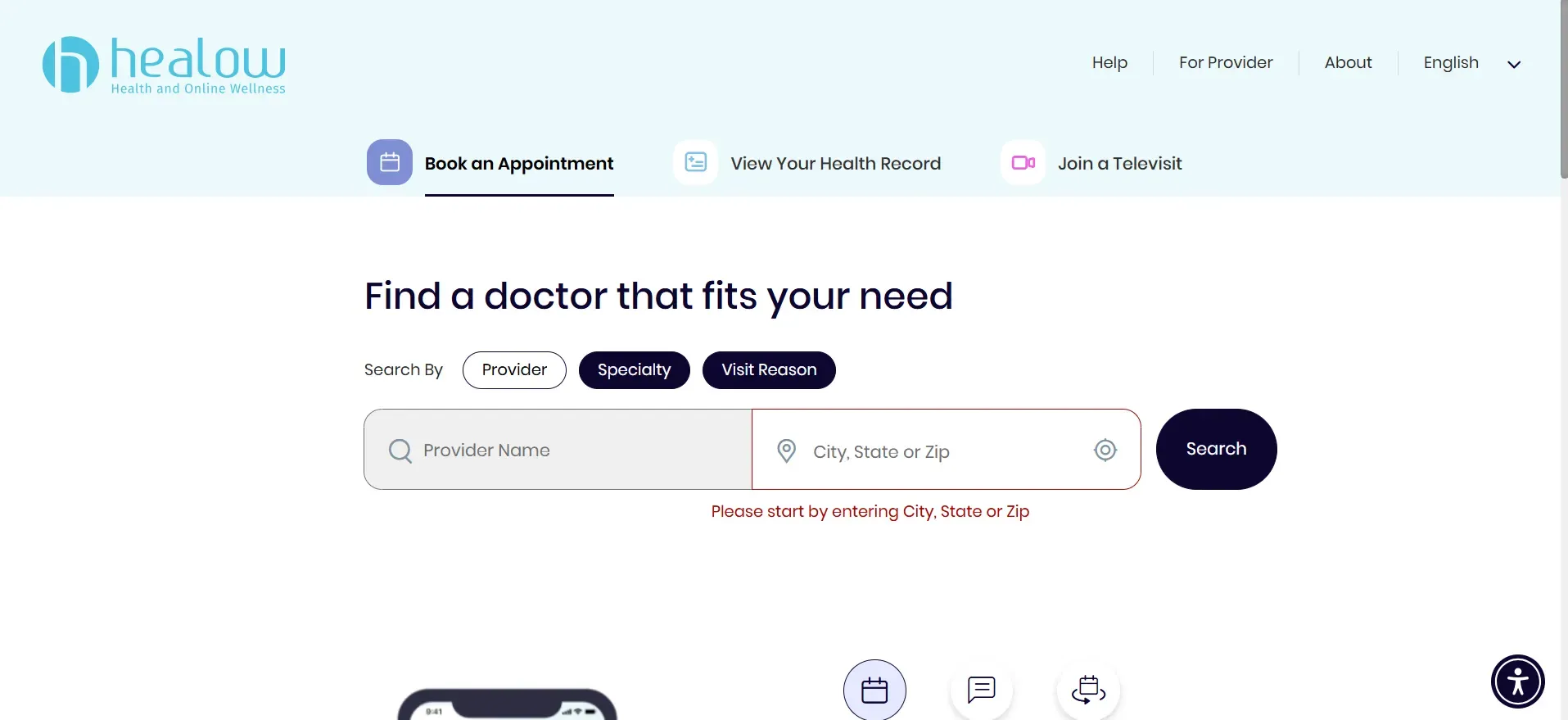
Healow, from the makers of eClinicalWorks, focuses on patient-facing tools: online scheduling, digital forms, secure messaging, and telehealth. Some urgent cares use Healow alongside a primary EHR, but you’re still paying on a subscription basis.
Pricing: Quote-based, often bundled with eClinicalWorks. Request pricing.
- Feature-rich patient portal
- Telehealth and appointment reminders
- Mobile-first design for patient convenience
- Relies on eClinicalWorks for full EHR functionality
- Recurring subscription fees for add-ons
- Limited standalone customization
With a Devaims build, your engagement tools are tailored and yours to keep, no ongoing module fees.
5. iPatientCare (Best for all-in-one medical software)
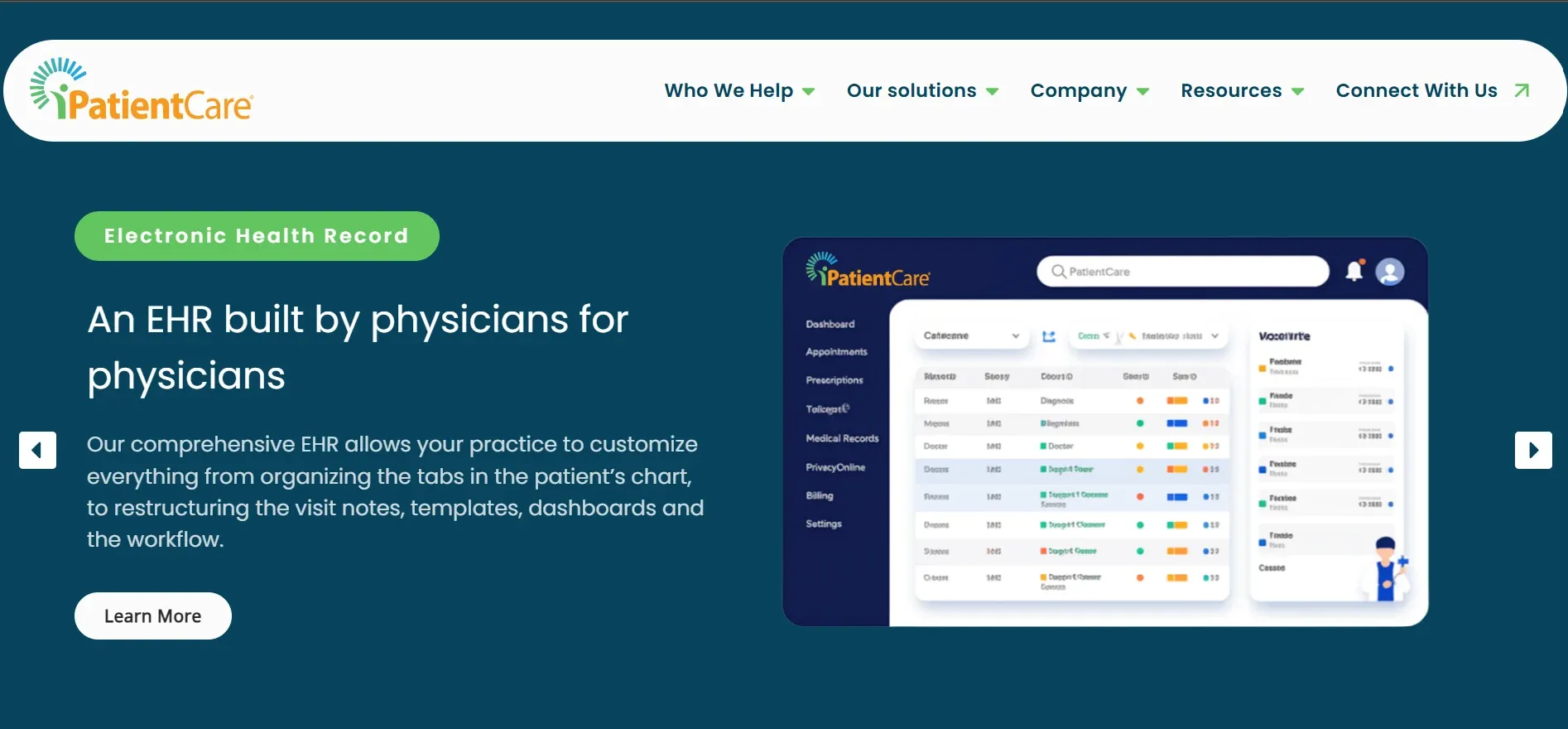
iPatientCare brings EHR, practice management, and RCM into one cloud platform. For urgent cares that want everything in one place, it’s a solid NextGen alternative, but again, you’re renting, code and all.
Pricing: Quote-based. Contact iPatientCare for details.
- Unified billing and scheduling
- Customizable clinical templates
- Quality reporting and MACRA support
- Feature set can be broad but not deep for urgent care
- Some integrations require vendor assistance
- Yearly contracts and recurring billing
For deep urgent care customization, owning your platform, like with Devaims, beats vendor workarounds.
6. Meditech (Best for large enterprise urgent care)
Meditech is a legacy EHR giant serving hospitals and large practices, including some urgent care chains. It’s comprehensive but comes with complex implementation and enterprise-level pricing. If NextGen feels heavy, Meditech can be even more so.
Pricing: Quote-based, typically high initial investment. Request Meditech pricing.
- Fully integrated hospital-grade EHR
- Comprehensive reporting and analytics
- Scales to enterprise urgent care groups
- High upfront and maintenance costs
- Long implementation timelines
- Requires dedicated IT resources
Owning your platform means you can scale at your pace, with maintenance that fits your ops, not dictated by an enterprise vendor.
7. eClinicalWorks (Best for larger urgent care clinics)
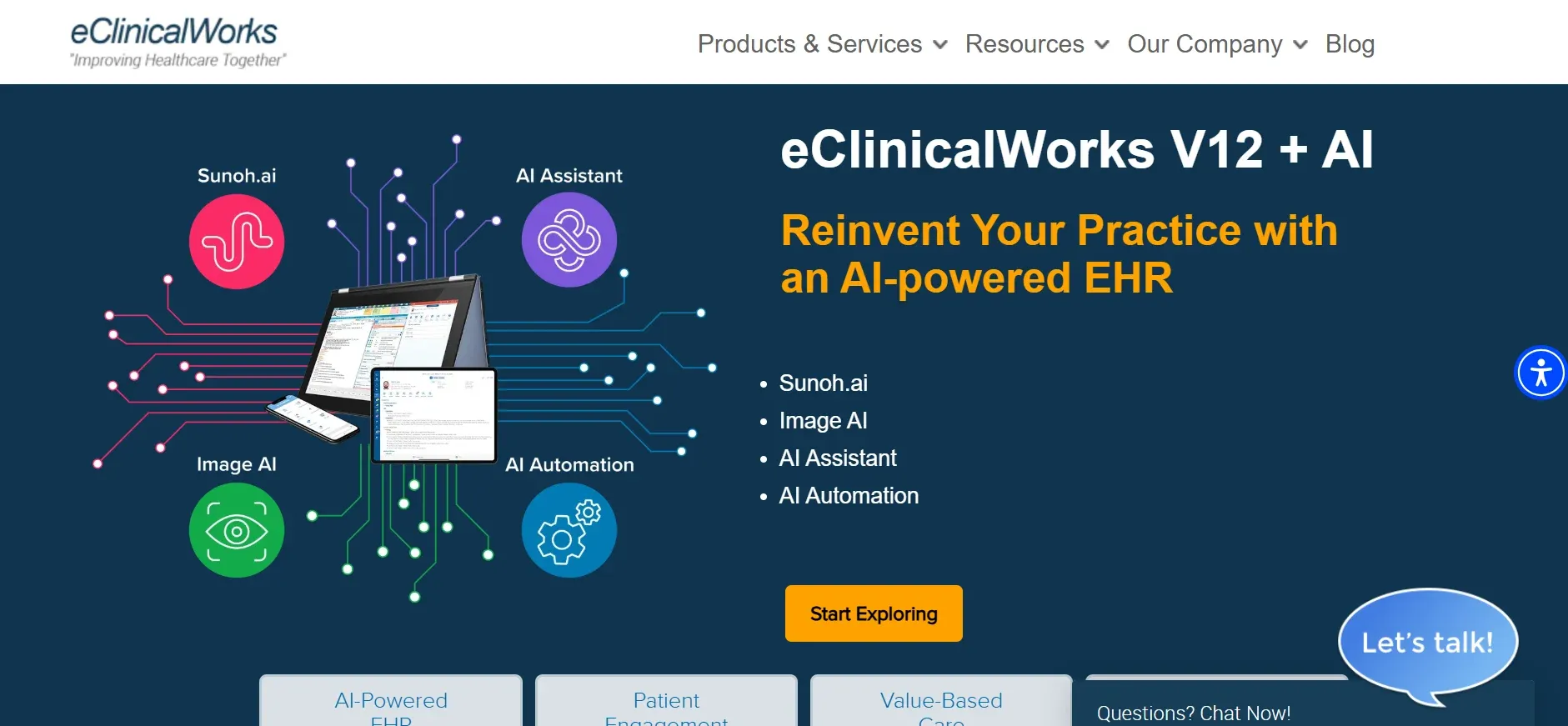
eClinicalWorks has a strong urgent care following thanks to comprehensive scheduling, billing, and telehealth. Compared to NextGen, ECW offers a more modern UX but still ties you into its data model and update cycles.
Pricing: Reported $449+ per provider per month. See ECW pricing.
- Comprehensive feature set for urgent care
- Patient engagement and telehealth
- Good interoperability with labs and imaging
- Upfront setup fee for onboarding
- Annual contracts required
- Customization limited by vendor roadmap
With a Devaims build, you can set your own update schedule and design custom flows, no waiting for a vendor release.
8. Athenahealth (Best for scalable cloud EHR)
Athenahealth is a cloud EHR and billing powerhouse, often seen as a flexible NextGen alternative for urgent care centers ready to grow. It’s priced as a percentage of collections, which can sting as volume rises.
Pricing: Reported 4% to 7% of collections. See Athenahealth pricing.
- Highly scalable for multi-location urgent care
- Cloud-based, no local hardware needed
- Strong RCM and payer connections
- Pricing rises with your revenue
- Some features cost extra
- Vendor controls update cadence
On a Devaims-built platform, your costs stop rising with your revenue. You own the software, not the other way around.
9. Epic (Best for large health systems and enterprise urgent care)
Epic is the EHR of choice for the biggest health systems, with urgent care modules available. If you’re moving on from NextGen to run a chain of clinics, Epic delivers on integration, at a hefty price and with serious implementation timelines.
Pricing: Quote-based, high setup and licensing costs. Request Epic pricing.
- Industry-leading interoperability
- Enterprise-grade analytics
- Deep customization for large networks
- Very high upfront and ongoing costs
- Long onboarding and rollout cycles
- Heavy IT and training requirements
If you want Epic-level control without the red tape, Devaims can build you something just for your needs, owned, not licensed.
10. Devaims (Best for urgent care centers that want to own their software)
Devaims is the alternative when you’re ready to stop renting and start owning. We build custom urgent care platforms, EHR, scheduling, billing, telehealth, analytics, designed for your exact workflows. You own the code, the database, and every feature. No seat fees, no forced upgrades, no lock-in. When you outgrow SaaS or want a stack that fits you perfectly, Devaims is the endpoint other platforms can’t match.
- One-time build and flat maintenance, not per-provider pricing
- You own your code, data, and roadmap forever
- Integrates with your labs, payers, and stack, no vendor limits
- Every feature is tailored to your urgent care’s needs
Other NextGen alternatives worth knowing
- PrognoCIS: Flexible EHR, but more primary care focused than urgent care.
- Nuvolo: Strong for facilities management, less so for urgent care clinical flows.
- Some urgent cares use Practice Fusion or DrChrono, but these platforms often lack urgent care-specific templates or true walk-in workflow support.
How to choose the right NextGen alternative
- By budget: SaaS platforms vary from $125 to $449+ per provider per month. If your staff count is high, the math may favor ownership.
- By workflow: Some tools (Experity, Athenahealth) fit urgent care out of the box. Others need heavy configuration or come from primary care roots.
- By size: Enterprise options like Epic and Meditech work for large chains; smaller clinics may prefer Kareo or a custom Devaims build.
- By integration: If you need tight links to labs, RCM, or scheduling, check what’s included vs. what’s an add-on.
- By contract: Weigh the risks of 2 to 3 year lock-ins versus a system you own and control.
If you’re ready to run the numbers on renting versus owning, the Devaims team can help you see the break-even point for your urgent care.
Stop paying rent on urgent care software you could own
The single biggest pain point with NextGen and every SaaS alternative is this: the bigger your urgent care gets, the more you pay, every month, forever. Whether it’s per-provider fees, per-visit charges, or extra costs for features you thought were core, you’re always renting, and the price goes up as you succeed. Every alternative above, no matter how tailored or polished, keeps you on the subscription treadmill.
Devaims is the way off. We’re a custom software agency that builds urgent care platforms you own outright: source code, data, and integrations are all yours. No contracts, no forced upgrades, no per-seat or per-visit fees. You call the shots on your roadmap, integrations, and data access, now and in five years.
- No per-provider or per-location fees: Flat maintenance cost, no matter how you scale.
- No lock-in or surprise price hikes: You keep the code and can move hosting anytime.
- All your data, always: Full database access, no export fees, no vendor “black box.”
- Every feature tailored: If you need a workflow, report, or integration, we build it for you, no waiting for a vendor to prioritize your request.
| Platform | Ownership | Upfront cost | 5-year cost (est.) |
|---|---|---|---|
| NextGen | Rented | Setup fee + subscription | ~$120,000 (10 providers) |
| Experity | Rented | Setup fee + subscription | ~$240,000 (10 providers) |
| Athenahealth | Rented | Setup fee + % of revenue | ~$180,000 (10 providers) |
| Devaims | Owned | $32,000 (one-time build) | $45,800 (with flat maint.) |
| Year | Rented (cumulative) | Owned (cumulative) |
|---|---|---|
| Year 1 | $48,000 | $34,800 |
| Year 2 | $96,000 | $37,600 |
| Year 3 | $144,000 | $40,400 |
| Year 4 | $192,000 | $43,200 |
| Year 5 | $240,000 | $46,000 (now ahead) |
If you have 10 providers and pay $400 per month per provider, that’s $4,000 a month, $48,000 a year, and $240,000 over five years, and you still don’t own the system. With Devaims, you get a platform built to fit, that’s yours to keep, for a fraction of that over the same period. Most urgent cares break even by year two or three, and the savings accelerate after that. If you want to see the math for your exact operation, we’ll run it for free.
How to switch from NextGen
- Export your patient data, scheduling, and billing records from NextGen (CSV, HL7, or as supported).
- Choose your new platform and finalize your contract or build scope (for Devaims, this means a functional spec and timeline).
- Import records into the new system and map workflows.
- Reconnect payment processors, labs, and other integrations.
- Train your staff on the new workflows and interface.
- Run both systems in parallel for at least one cycle to catch edge cases.
- Review your NextGen contract for any wind-down or data export obligations.
With a custom Devaims build, the migration is handled as part of the project.
Frequently asked questions
What is the best NextGen alternative for urgent care centers?
For urgent care, Experity and Athenahealth are popular SaaS choices. But for clinics that want to own their system and control costs long-term, a custom Devaims build is the only true ownership alternative.
Which NextGen alternative is the cheapest?
For very small clinics, Kareo (Tebra) or AdvancedMD may offer lower per-provider monthly costs. Over five years, however, owning your system with Devaims can be cheaper for most urgent care centers with five or more providers.
Is there a free urgent care EHR?
Truly free EHRs are rare, especially for urgent care workflows. Some clinics try Practice Fusion, but it’s ad-supported and lacks key urgent care features. No free tool gives you data ownership or control like Devaims.
Can I keep my old data when switching from NextGen?
Most NextGen alternatives allow data import, but the process can be complex and may require vendor help. With Devaims, you get full data migration and direct database access so you’re never locked out of your records.
Which NextGen alternative works best for multi-site urgent care?
AdvancedMD, Meditech, and Epic all support multi-location rollouts. But if you want unified workflows and reporting tailored to your network, Devaims builds custom multi-site systems you own.
How do I get urgent care-specific features in my EHR?
Experity and eClinicalWorks offer urgent care templates, but you’ll pay extra for some modules. With a Devaims build, every workflow, report, or integration is designed for your exact needs, no upsells, just features.
When should I switch from NextGen to another platform?
If your costs are rising with each new provider or location, or if you’re hitting integration or upgrade roadblocks, it’s time to research NextGen alternatives. Owning your system with Devaims makes the most sense when your five-year SaaS spend would cover a custom build.
The bottom line: why ownership is the future for urgent care
Most urgent care centers will outgrow renting their EHR. If you’re weighing NextGen alternatives, SaaS gets you live fast, but a custom Devaims build puts you in charge and usually costs less over time.
Here’s the useful test: do the five-year math for your clinic. If your subscription spend could have bought you a system you own, you’re already paying too much to rent. When your urgent care needs control, flexibility, or real cost certainty, owning wins. The only way to get there is with Devaims.
Explore more on the Devaims blog, or check out our guides to Athenahealth alternatives, Experity alternatives, and eClinicalWorks alternatives.