

You start out thinking it’s just another monthly fee, until your podiatry clinic is years in, tens of thousands deep, and the software still isn’t yours. Experity’s pricing is hard to pin down, but what’s certain is you’re always renting. And when you need a report or integration that’s outside the plan? The answer is usually "upgrade your tier" or "pay more per user." That gets old fast.
For clinics ready to stop bleeding cash on subscriptions, the right Experity alternative is out there. AdvancedMD and Practice Fusion stand out for clear pricing and decent features, but even they lock you into the rent cycle. The honest reason to switch: if you want to own your software, not lease it, a custom Devaims build is finally a real option. Let’s dig in.
Why podiatry clinics look for Experity alternatives
Lock-in contracts: Most SaaS EHRs, including Experity, require annual or multi-year contracts. That means if your needs change, you’re stuck until the term is up or you pay a hefty early termination fee. This is especially tough for clinics in growth mode or those adjusting their business model.
Opaque or rising fees: Experity and most rivals rarely publish transparent pricing. You may start with a seemingly reasonable base rate, but as you add providers, require new integrations, or request a feature (like e-prescribing or telehealth), costs can escalate. Many clinics report unexpected price hikes at renewal or after new modules are launched.
No ownership of your data or code: In the SaaS world, you’re renting not only the software but often your access to the data itself. While most vendors technically let you export your data, the process can be slow, incomplete, or require extra fees. You never own the system or the code, so you can’t make deep workflow changes without waiting for the vendor to prioritize your request.
Per-provider pricing that punishes growth: Most EHRs, including Experity, charge per provider per month. Bringing on a new doctor or extender instantly increases your bill. For a growing clinic, this can double or triple software costs in a few years, even if your workflow remains unchanged.
Feature gaps and slow updates: Need a workflow tweak for podiatry? Want a new report or integration with your imaging tools? With SaaS, you’re at the mercy of the vendor’s roadmap. Feature requests are often queued for months or years, and updates may break customizations you rely on. That’s why so many are searching for Experity alternatives.
Quick comparison of the best Experity alternatives
| Tool | Best for | Starting price | You own it? |
|---|---|---|---|
| Kareo (Tebra) | Small to midsize clinics | Not disclosed | No |
| AdvancedMD | Feature-rich SaaS, clear pricing | $399/mo/provider | No |
| DrChrono | iPad-first practices | Quote-based | No |
| Practice Fusion | Budget-focused, lightweight | $199/mo/provider | No |
| Medisoft | Practices wanting legacy systems | Not disclosed | No |
| Office Ally | Billing-heavy shops | Not disclosed | No |
| Amazing Charts | Clinics wanting simple EHR | Not disclosed | No |
| Plexicon | Podiatry specialty features | Not disclosed | No |
| Devaims (custom build) | Full ownership, tailored workflow | One-time build, you own it | Yes |
Prices reflect available 2026 data. Always confirm current pricing before you decide. For a deeper look at the pros and cons of these tools, keep reading below.
The 9 best Experity alternatives
1. Kareo (Tebra) (best for small to midsize clinics)
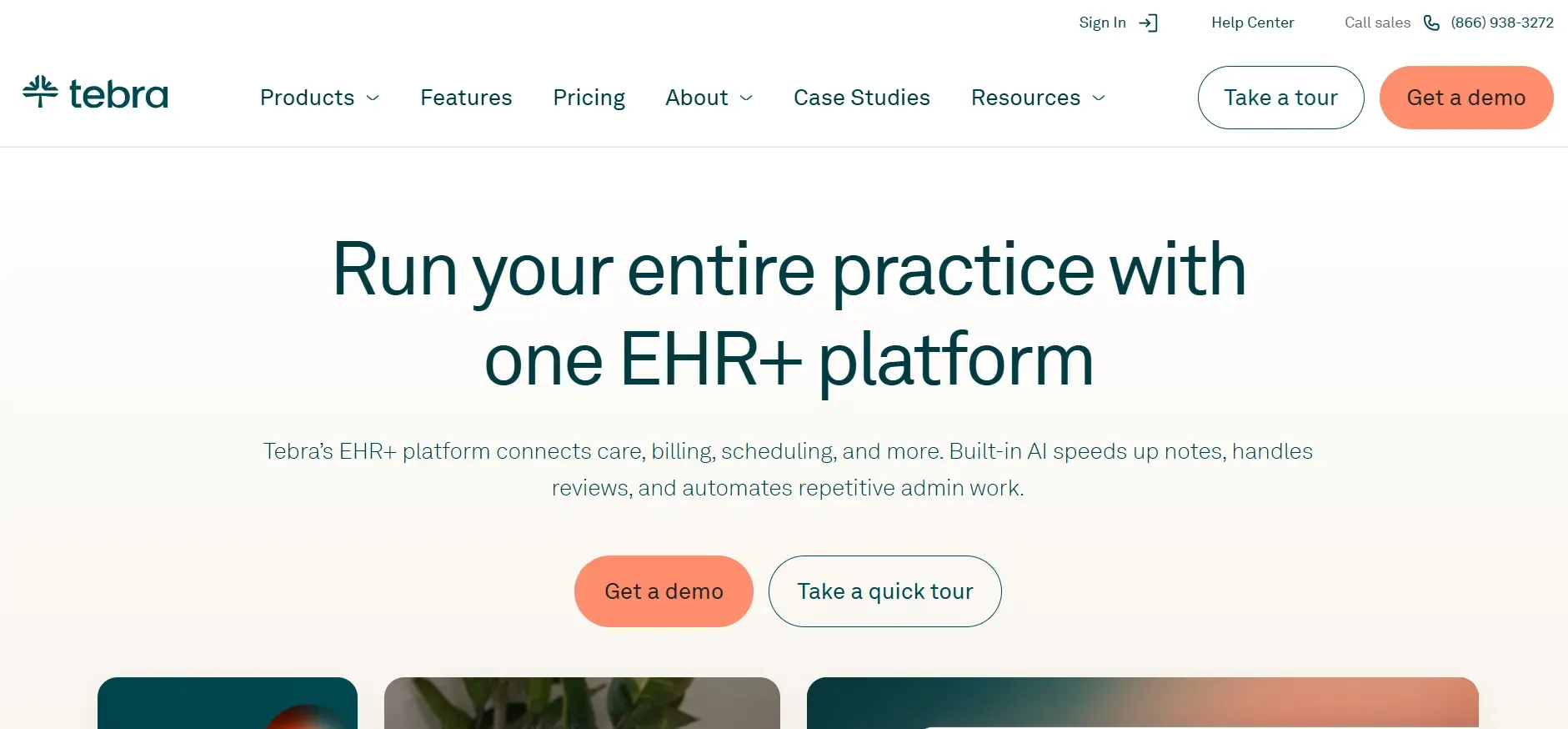
Kareo (Tebra) is a cloud-based EHR and practice management platform designed for independent medical practices, including podiatry. Kareo and Tebra merged, pooling resources to offer a broader suite of features. The platform includes appointment scheduling, e-prescribing, charting, telehealth, billing, and reporting. Kareo’s UI is known for being modern and accessible, making onboarding easier for new staff. Integration with labs and pharmacies is built in, and the system supports e-faxing and patient reminders.
Integrations: Kareo offers connections to major labs, e-prescribing networks, and billing clearinghouses. It integrates with third-party billing services and patient engagement tools. However, deeper integrations (like imaging or custom podiatry tools) may require additional setup or aren’t supported natively.
Migration friction: Kareo provides onboarding support, but migrating large volumes of historical data from Experity or legacy systems can be labor intensive. Some users report partial data imports or the need for manual data cleaning.
Concrete use cases: Kareo is well suited for podiatry clinics with 1 to 10 providers who want to get up and running quickly. It handles basic clinical documentation, appointment reminders, and insurance claims efficiently. For clinics with complex podiatry-specific workflows or extensive reporting needs, customization is limited.
Pricing: Not disclosed. Quote-based, with per-provider fees and add-ons for advanced features.
- Key limitations:
- No transparent pricing, making budgeting difficult
- Limited podiatry-specific customization
- Advanced features may require extra fees
- Strengths:
- Modern, user-friendly interface
- Solid onboarding and support
- Good for small clinics starting out
For clinics frustrated by unclear pricing or limited podiatry features, Devaims offers a custom approach with full cost transparency and specialty workflows you own.
2. AdvancedMD (best for feature-rich SaaS with clear pricing)
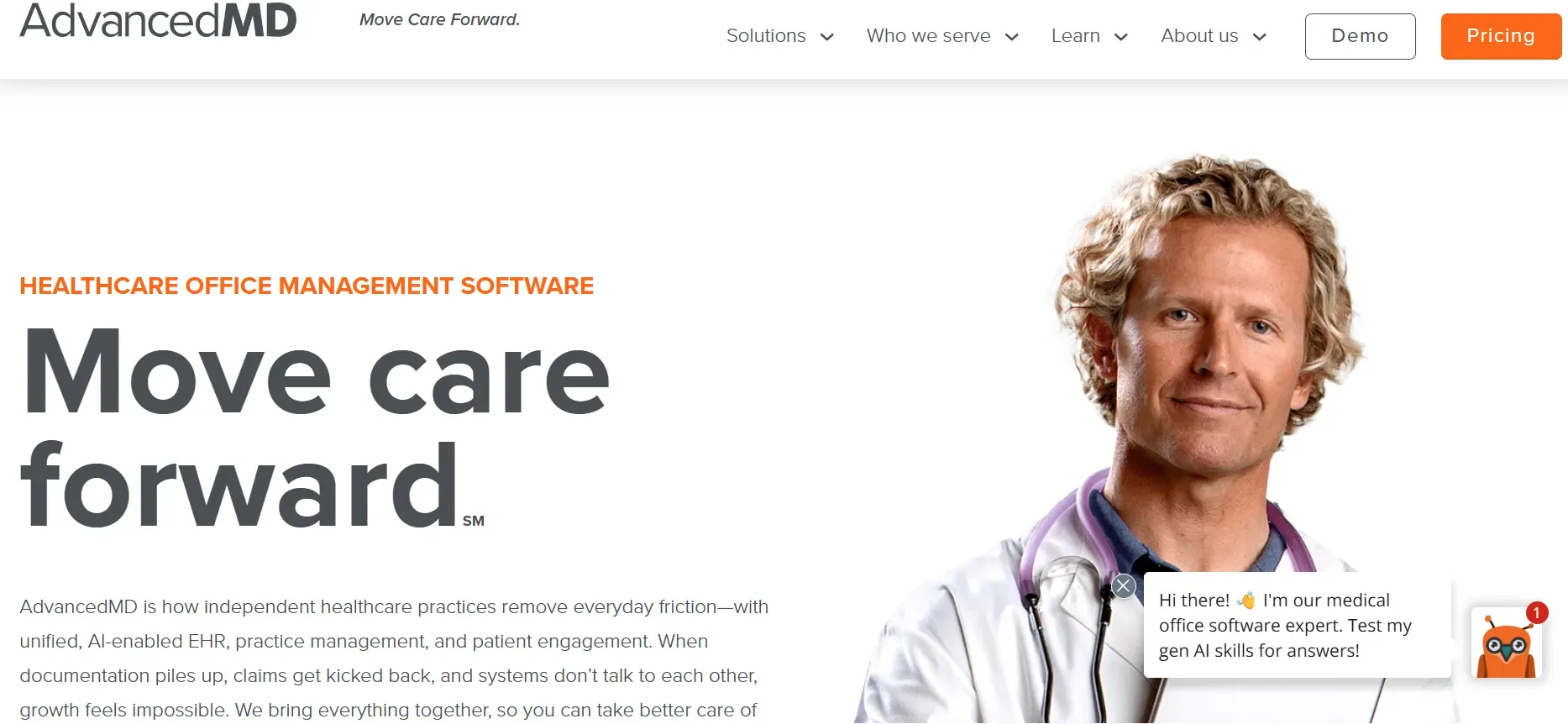
AdvancedMD is one of the most comprehensive SaaS EHR and practice management platforms available to private practices. Its suite covers scheduling, charting, billing, revenue cycle management, telemedicine, patient portals, and analytics. AdvancedMD stands out for its transparent pricing and automation tools.
Integrations: AdvancedMD offers a wide array of integrations, including lab networks, imaging centers, e-prescribing, and third-party billing or clearinghouse services. Its API allows for more advanced connections, but custom integrations may require additional fees or technical support.
Migration friction: AdvancedMD has a structured onboarding process with dedicated migration support. However, clinics switching from platforms like Experity can encounter issues with data mapping, especially when custom fields or podiatry-specific templates are involved. The migration process can take weeks and may require data cleaning.
Concrete use cases: AdvancedMD is ideal for growing podiatry clinics that need deep reporting, automated appointment reminders, and a telemedicine setup. Clinics with in-house billing teams benefit from the advanced claims scrubbing and revenue cycle management tools. For clinics with multiple specialties under one roof, AdvancedMD can support complex workflows.
Pricing: $399/mo/provider. Annual contracts and setup fees apply.
- Key limitations:
- High per-provider costs as you scale
- Some features require add-ons
- Customization limited by vendor roadmap
- Strengths:
- Transparent pricing
- Comprehensive feature set
- Strong automation and reporting
If you want to avoid per-provider fees and own your platform, Devaims lets you scale without multiplying your costs.
3. DrChrono (best for iPad-first practices)
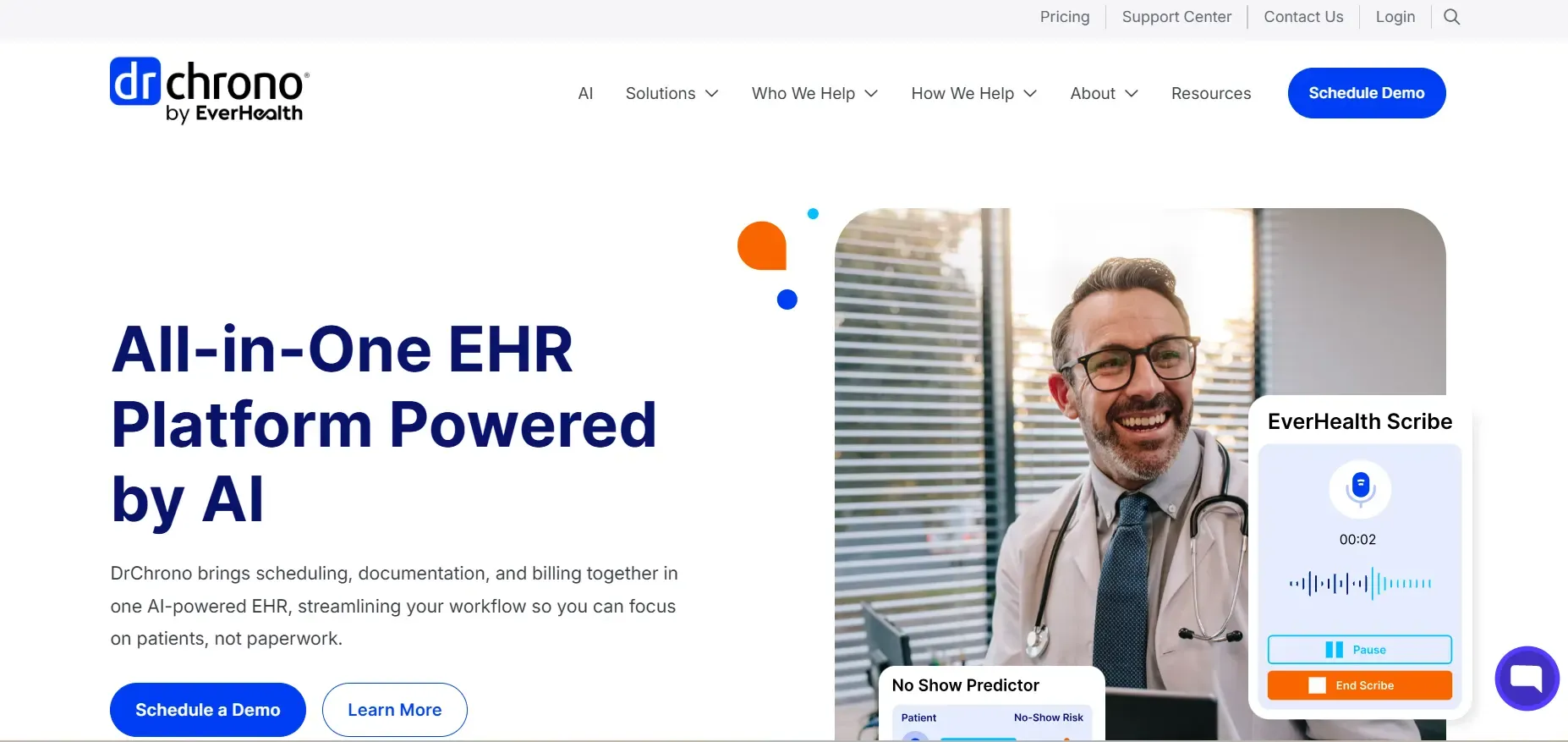
DrChrono was designed from the ground up as a mobile-first EHR, with a native iPad app that enables real-time charting and e-prescribing at the point of care. It also offers practice management, billing, telehealth, and patient engagement tools. DrChrono stands out for its user-friendly interface and mobile flexibility, making it a favorite among clinics that want to chart on the go or bring tablets into every exam room.
Integrations: The platform integrates with labs, pharmacies, and imaging centers, and supports HL7 interfaces for third-party systems. DrChrono’s open API allows for custom integrations, though these often require technical expertise and may not be included in base pricing.
Migration friction: DrChrono offers migration services for patient demographics, appointments, and clinical notes, but full historical data migration (e.g., scanned documents or custom forms) can be uneven. Some clinics report needing to manually re-create templates or workflows.
Concrete use cases: DrChrono is ideal for podiatry clinics that prioritize mobility, such as providers making rounds at multiple locations or those who want to chart directly in the exam room. It’s also well suited to clinics offering telehealth or remote consultations. The customizable forms can be adapted for podiatry, but out-of-the-box templates are generic.
Pricing: Quote-based, with tiered features and per-provider fees.
- Key limitations:
- Pricing is not transparent
- Advanced features require higher tiers
- Customization for podiatry is limited
- Strengths:
- Mobile-first design
- Flexible for on-the-go charting
- Open API for integrations
For clinics that want mobile flexibility but also need deep podiatry customization, Devaims can build a platform that works on any device and matches your specialty workflow.
4. Practice Fusion (best for budget-focused clinics)
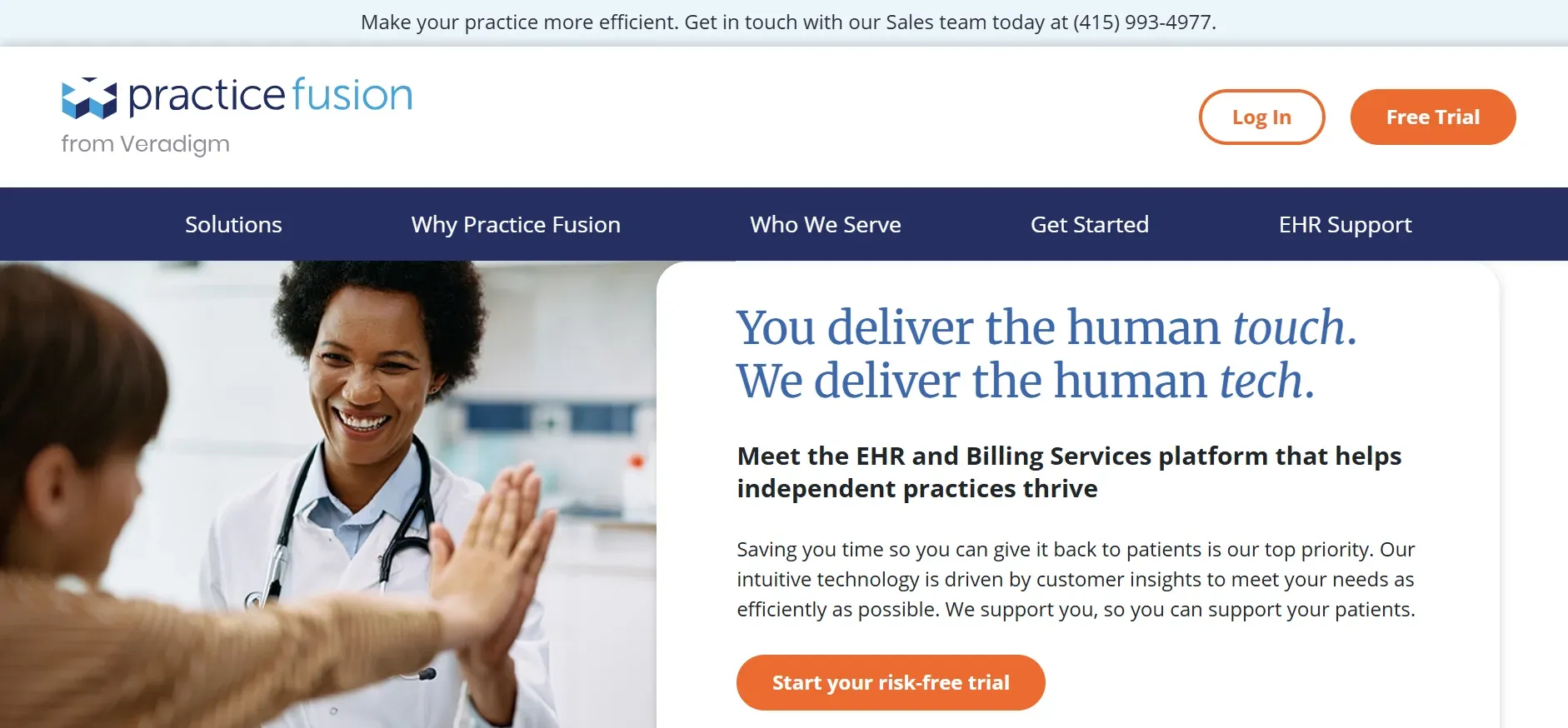
Practice Fusion is a web-based EHR that focuses on ease of use and affordability. It covers core clinical documentation, e-prescribing, basic reporting, and patient management. Practice Fusion is known for its clean, intuitive interface and short learning curve, making it popular among solo providers and small practices.
Integrations: Practice Fusion integrates with many labs and e-prescribing networks. However, integrations with imaging, billing, or specialty tools are more limited compared to larger platforms. Advanced integrations often require manual configuration or third-party services.
Migration friction: The platform provides tools for importing basic patient data, but migrating complex records or custom forms can be challenging. Full data migration from Experity may require outside help, and some data (like scanned documents or custom podiatry templates) may not import seamlessly.
Concrete use cases: Practice Fusion is best for solo podiatrists or small clinics that need basic charting, e-prescribing, and appointment management on a tight budget. It is not well suited for clinics with advanced workflow needs, specialty reporting, or heavy billing requirements.
Pricing: $199/mo/provider. Annual contract required.
- Key limitations:
- Minimal customization
- Advanced features require extra fees or are unavailable
- Limited specialty support
- Strengths:
- Low entry cost
- Simple, intuitive interface
- Quick onboarding
That five-year bill for three providers? $35,820, and you still don’t own a line of code. Devaims flips that equation by letting you keep your platform and data.
5. Medisoft (best for practices wanting legacy systems)

Medisoft is one of the oldest practice management and billing systems on the market. Originally a desktop application, Medisoft now offers cloud-enabled versions, but many clinics still use on-premises deployments. It’s known for reliable claims management, appointment scheduling, and basic patient records.
Integrations: Medisoft integrates with clearinghouses for billing and some EHR modules, but connectivity with modern podiatry tools, labs, or imaging systems is limited. Many integrations require manual setup or third-party add-ons.
Migration friction: Migrating from Experity or another SaaS platform to Medisoft can be complex, especially if you want to preserve custom forms or historical data. Desktop to cloud transitions may require IT support, and data mapping between systems is rarely seamless.
Concrete use cases: Medisoft is a fit for clinics with established billing workflows or those that have used Medisoft for years and want to avoid retraining staff. Some podiatry clinics use Medisoft for billing only, pairing it with a separate EHR for clinical documentation.
Pricing: Not disclosed. Subscription and perpetual license options may be available.
- Key limitations:
- Dated interface
- Limited podiatry support
- Modernization lags behind cloud tools
- Strengths:
- Reliable billing engine
- Familiar workflows for legacy users
- On-premises option for some clinics
If you want modern podiatry features and full ownership, Devaims can migrate your legacy data and workflows into a custom platform you control.
6. Office Ally (best for billing-heavy clinics)
Office Ally is primarily a clearinghouse and practice management solution built for efficient insurance claims and billing. It offers a basic EHR module (Practice Mate) but is best known for its large payer network and low-cost billing tools.
Integrations: Office Ally integrates with thousands of payers for electronic claims and supports ERA/EFT for payments. Clinical integrations, such as labs, imaging, or podiatry-specific tools, are more limited, and advanced EHR features are basic.
Migration friction: Migrating billing data to Office Ally is straightforward, but clinical data migration (from Experity or another EHR) can be cumbersome. Manual entry or data cleaning may be required for custom templates or historical notes.
Concrete use cases: Office Ally is a fit for podiatry clinics with high insurance claim volume or billing complexity. It is often used alongside a separate EHR for clinical notes. For clinics with simple documentation needs, Practice Mate may suffice as a basic EHR.
Pricing: Not disclosed. Subscription fees apply.
- Key limitations:
- Basic EHR features
- Minimal customization
- Interface lags behind modern SaaS
- Strengths:
- Large payer network
- Low-cost billing
- Simple for billing-focused clinics
For clinics that want to unify billing and clinical workflows, Devaims can build a single platform with custom integrations and reporting.
7. Amazing Charts (best for simple EHR needs)
Amazing Charts is an EHR designed for ease of use, with a focus on solo providers and small practices. It covers basic charting, e-prescribing, scheduling, and reporting. Amazing Charts is known for rapid setup and a user-friendly interface that allows providers to document visits quickly.
Integrations: Amazing Charts integrates with select labs, e-prescribing networks, and billing partners. However, support for podiatry-specific tools, advanced imaging, or custom integrations is limited. The platform offers some API access, but deep integrations typically require technical support.
Migration friction: Amazing Charts offers migration support for patient demographics and basic clinical notes. Importing complex historical data or custom podiatry forms can be challenging and may require manual data entry or template re-creation.
Concrete use cases: Amazing Charts is best for solo podiatrists or small clinics that need a straightforward EHR for clinical documentation and e-prescribing. It is less suited to clinics with complex workflows, multi-provider teams, or advanced reporting requirements.
Pricing: Not disclosed. Subscription pricing applies.
- Key limitations:
- Limited podiatry templates
- Minimal customization
- Advanced features require add-ons
- Strengths:
- Fast setup
- User-friendly interface
- Affordable for solo providers
If you need podiatry-specific templates and deeper customization, Devaims can build exactly what your clinic requires.
8. Plexicon (best for podiatry-specific features)
Plexicon is one of the few EHRs built specifically for podiatry. It offers podiatry-focused charting templates, image management, outcomes tracking, and coding tools tailored to foot and ankle care. Plexicon covers appointment scheduling, billing, and compliance, with regular updates for regulatory changes in podiatry.
Integrations: Plexicon integrates with digital imaging systems (such as X-ray and ultrasound), billing clearinghouses, and select labs. It also supports e-prescribing and some patient engagement tools. Custom integrations may be possible but require vendor support.
Migration friction: Because Plexicon is niche, migration from general EHRs like Experity can be smoother for podiatry content, though full historical data transfer depends on compatibility and may require manual review. The vendor offers onboarding and migration support.
Concrete use cases: Plexicon is ideal for podiatry clinics that want templates and workflows designed for their specialty out of the box. It is especially valuable for clinics that rely on imaging, procedure coding, and specialty-specific outcome tracking. Practices with multi-specialty needs or non-podiatry workflows may find it limiting.
Pricing: Not disclosed. Subscription-based contracts.
- Key limitations:
- No published pricing
- Rental model only
- Customization beyond podiatry is limited
- Strengths:
- Podiatry-specific templates
- Strong imaging and coding tools
- Regular regulatory updates
With a Devaims build, you get podiatry features tailored to your practice, and you own it all.
9. Devaims (best for clinics ready to own their platform)
Devaims builds custom software platforms for clinics that are ready to break the SaaS rental cycle. Instead of paying escalating per-provider fees forever, you get a fully tailored EHR and practice management suite, designed around your actual podiatry workflow, not a generic template. You own the source code, the database, and every integration. This means full control over features, reports, and security, with no forced upgrades or seat taxes.
Integrations: Devaims integrates with labs, imaging systems, digital X-ray, billing clearinghouses, telehealth platforms, and any third-party tool you need. Because the platform is custom-built, integrations are designed around your existing workflows rather than forcing you to adapt to a vendor’s roadmap. Future integrations are always possible, since you own the code and are not locked out by licensing restrictions.
Migration friction: Devaims handles end-to-end migration, including complex historical data from Experity or other EHRs. This includes patient records, scanned documents, appointment history, and custom templates. The migration is planned as part of the project, minimizing downtime and ensuring data accuracy. Training and onboarding are included, with workflows matched to your team’s habits.
Concrete use cases: Devaims is ideal for podiatry clinics that want to eliminate per-provider fees, automate unique workflows, and control their data. It’s also a fit for practices with complex reporting, unique scheduling needs, or those requiring custom integrations (e.g., with imaging, labs, or external billing partners). Multi-location clinics can unify workflows and reporting in a single platform.
Pricing: One-time build cost, then flat maintenance. You own the platform.
- True ownership of software and dataInfinite customization for podiatryNo per-provider or seat fees, scale freely
- True ownership of software and data
- Infinite customization for podiatry
- No per-provider or seat fees, scale freely
Devaims is the only Experity alternative that offers full ownership, specialty workflows, and freedom from subscription lock-in.
Other Experity alternatives worth knowing
- Podiatry Hotline EHR: A niche platform built specifically for podiatry, offering specialty templates and workflow tools. The user base is small, and the interface is less polished than leading SaaS options. Support and integration options are limited, but clinics needing only basic podiatry features may find it a sufficient low-cost solution.
- Nuvelo: Designed for multi-specialty clinics, not podiatry-first. It offers broad functionality but lacks deep podiatry customization. May suit large clinics with multiple specialties, but podiatry-specific reporting and templates are limited.
If you need highly specialized features or a unique workflow, custom development like Devaims may be the only way to truly own the outcome.
How to choose the right Experity alternative
- By budget: If you need predictable costs, compare all-in monthly vs. ownership math. Practice Fusion is cheapest on paper, but Devaims pulls ahead over time. Calculate your total cost of ownership over five years. SaaS is affordable upfront, but long-term, custom builds can save six figures for growing clinics.
- By workflow: Look for podiatry-specific templates, charting, and reporting. SaaS tools offer "good enough", but if you want to automate unique steps (like custom imaging workflows or podiatry-specific billing codes), only custom builds deliver exactly what you want.
- By team size: Per-provider pricing punishes growth. For clinics with more than two providers, per-user fees can double or triple your software spend. Owning your platform means you can add providers or locations without penalty.
- By integration: If you’re tired of waiting for vendors to support your clearinghouse, imaging system, or digital X-ray, owning the code means you control the stack. Custom builds also let you design patient portals, telehealth, or analytics dashboards tailored to your needs.
If outgrowing SaaS is your main pain, owning is now on the table. Here’s how it stacks up.
Stop paying rent on software you could own
You’re paying hundreds or thousands each month to rent a system that isn’t really yours. That’s true whether it’s Experity, AdvancedMD, or any SaaS EHR. Every alternative on this list shares one reality: the meter never stops running and your clinic never truly owns the tools you rely on. That’s where Devaims breaks the cycle.
Devaims builds custom platforms for clinics who want to keep the code, the database, and the workflow. You get a podiatry EHR and practice management suite designed around your real-world needs, not a generic template. No more paying extra for each seat, no more waiting for features. Your team owns it, end to end.
- Per-provider fees gone: Add providers without multiplying your costs. Your growth is no longer penalized by the software vendor.
- No forced upgrades: If you need a report or integration, you just build it. You control the roadmap.
- Complete data ownership: Move, export, or integrate however you want, with no restrictions. Your data stays yours, forever.
- Flat maintenance: After the build, it’s just a small predictable support fee. No more surprise hikes or contract renewal shocks.
| Tool | Ownership | Contract | Scalability |
|---|---|---|---|
| AdvancedMD | Rented | Annual | Per-provider fees |
| Practice Fusion | Rented | Annual | Per-provider fees |
| DrChrono | Rented | Annual | Per-provider fees |
| Devaims (custom) | Owned | No contract | Unlimited, no per-user fees |
| Year | Rented SaaS (3 providers) | Owned (Devaims) |
|---|---|---|
| Year 1 | $14,364 | $31,000 |
| Year 2 | $28,728 | $33,760 |
| Year 3 | $43,092 | $36,520 |
| Year 4 | $57,456 | $39,280 |
| Year 5 | $71,820 | $42,040 (break-even) |
For a three-provider podiatry clinic, renting SaaS like AdvancedMD or Experity runs over $70,000 in five years, and you never own a thing. Devaims clients typically pull ahead financially after year four, with every improvement and integration truly theirs. Ownership makes the most sense for clinics who want control, flexibility, and a system that pays off over time. Want to run your numbers? We’ll do the math with you for free.
How to switch from Experity
- Export your data: Request a full export of patient records, billing data, and appointment schedules from Experity. Their support team can assist, but be prepared for delays or partial exports if your contract restricts data access.
- Choose your new platform: Decide between SaaS tools (like AdvancedMD) or a custom Devaims build. Confirm what data formats and migration support are available.
- Import and validate data: Import patient data, schedules, and templates into the new system. Test for accuracy and completeness, especially for custom podiatry fields, scanned documents, and attachments.
- Reconnect integrations: Set up connections to billing, insurance, payment processors, labs, and imaging systems. Custom builds like Devaims make this step easier, since integrations are tailored to your stack.
- Train your team: Provide hands-on training for staff on new workflows, charting, and billing processes. Custom builds allow you to match old workflows or improve them.
- Run in parallel: Operate both Experity and the new system for a few weeks. This catch-all period helps you spot missing data, workflow snags, or integration issues before fully cutting over.
- Review contracts: Check your Experity agreement for termination clauses, fees, or data access limitations. Ensure that you have full copies of all required records before ending your contract.
With a custom Devaims build, the migration is handled as part of the project, including full data mapping, validation, and staff training.
Frequently asked questions
What is the best Experity alternative for podiatry clinics?
AdvancedMD and Practice Fusion are strong Experity alternatives with clear pricing and solid features for podiatry clinics. AdvancedMD is comprehensive and scalable, while Practice Fusion is affordable for solo providers. However, if you want to stop renting and truly own your system, a custom Devaims build is the only way to keep your platform and data for good. Devaims lets you tailor every workflow, own the source code, and control your costs long-term.
Which Experity alternative is cheapest for a small practice?
Practice Fusion is the cheapest major SaaS option at $199 per provider per month, with an annual commitment. This makes it attractive for solo podiatrists or small clinics with basic needs. However, as your team grows or your workflow becomes more complex, SaaS costs add up quickly. For clinics planning to expand, owning with Devaims can be cheaper over several years, especially since there are no per-provider fees after launch.
Are there any free Experity alternatives?
There are no truly free EHRs suited for podiatry that offer the compliance, security, and features most clinics need. Some open-source EHRs (like OpenEMR or OSCAR EMR) exist, but they require significant IT support, self-hosting, and ongoing security management. Most clinics prefer commercial SaaS or custom builds to ensure HIPAA compliance and reliable support.
What are the main drawbacks of Experity and similar SaaS tools?
Lock-in contracts, unpredictable or rising fees, and per-provider pricing are the biggest complaints. Many clinics also get frustrated by slow vendor response to feature requests, limited customization for podiatry, and the lack of true ownership of their workflow and data. If you want control, flexibility, and a system that grows with you, SaaS tools may fall short.
Can I keep my historical patient data when switching?
Yes, you can export your patient data from Experity and most SaaS EHRs, though the process can be complex and sometimes incomplete. Data formats may not match your new system, and scanned documents or custom fields may require manual review. Devaims handles full data migration as part of a custom build, so you never lose access to your records and can validate everything before go-live.
What’s the break-even point for owning vs renting?
For a podiatry clinic with three providers, the break-even point for owning with Devaims is typically after year four. By then, your total spend on a custom build plus flat maintenance is less than the ongoing SaaS fees you’d pay to Experity, AdvancedMD, or similar tools. For clinics with more providers or rapid growth, the break-even comes even sooner.
How do I know if a custom build makes sense for my clinic?
If you’re frustrated by per-provider pricing, feature limitations, or slow vendor support, and you plan to run your clinic for several years, owning your platform can pay off. Custom builds make the most sense for clinics with unique workflows, growth plans, or integration needs that off-the-shelf SaaS tools can’t meet. Devaims offers free consults to run the numbers for your unique situation and show exactly how the math works.
The bottom line
The best Experity alternatives for podiatry clinics are clear on price, but none will ever be yours. Here’s the test: add up what your software will cost over the next five years. If that number could build you something you keep, you already have your answer. Owning means no more surprise hikes, no seat taxes, and no waiting for features. It’s your workflow, your data, your pace. When you’re ready to stop renting your own system, Devaims is here to build it for you.
Explore more at the Devaims blog. Related: AdvancedMD alternatives, Practice Fusion alternatives, DrChrono alternatives.