


If you run a dermatology clinic, the promises of Kareo, now branded as Tebra, can seem compelling at first. Slick demos, specialty templates, and the lure of an all-in-one EHR and billing suite. But after the first year, the reality sets in: monthly SaaS bills, onboarding and support fees, and price hikes that feel like they come with every renewal. At $599 per physician per month (often more, with add-ons), the math gets painful, especially as your clinic grows or your needs change.
What’s worse, you are always a renter. The workflows, the data, the system itself, none of it is yours. You are locked into contracts, automatic renewals, and support that may not match your evolving practice. It is no surprise that more dermatology clinics are searching for Kareo (Tebra) alternatives that give them real control, predictable costs, and, most of all, ownership.
This guide gives you a detailed, honest look at the top Kareo (Tebra) alternatives for 2026: from industry SaaS leaders to imaging specialists to the only true path to owning your dermatology platform. Expect real pricing, trade-offs, and a clear-eyed look at migration, integrations, and the cost math. If you are ready to stop renting your workflow, read on.
Why dermatology clinics look for Kareo (Tebra) alternatives
The motivations behind the search for Kareo (Tebra) alternatives are not just about price, but about the very foundation of how your clinic operates and grows. Here are the most common reasons clinics decide to look elsewhere:
- Escalating subscription costs: Kareo (Tebra) starts at $599/month per physician. But that is just the entry fee. As you add more providers, front-desk staff, or want features like telehealth, e-prescribing, or patient engagement, the costs rise steeply. Many clinics report spending double the sticker price once their workflows are fully online.
- Automatic contract renewals and rigid terms: Kareo (Tebra) requires written 60-day notice to avoid auto-renewal. Miss it, and you are locked in for another year. Fees are non-refundable, even if you need to scale down, merge, or change EHRs. For practices in transition or growth, this rigidity is a real risk.
- Hidden fees and onboarding charges: Many clinics are surprised by one-time onboarding fees, mandatory training packages, or extra charges for integrations and interfaces. These costs often appear after you have already committed, making accurate budgeting nearly impossible.
- Annual price increases: It is common for clinics to face 10 to 15 percent annual hikes, with little recourse. Over five years, that adds up to a significant, unpredictable financial burden, especially compared to a fixed-cost platform you own.
- No ownership of platform or data: Years of payments, but you never own the software or even have full, unfettered access to your data. If you ever want to switch, you may face data export fees, limited formats, or delays. This lack of control is a major driver for clinics wanting a more stable, future-proof solution.
These pain points are not unique to Kareo (Tebra). They are structural to the SaaS model that dominates the medical software market. For many clinics, the only way out is to rethink the ownership equation entirely.
Quick comparison of the best Kareo (Tebra) alternatives
| Tool | Best for | Starting price | You own it? |
|---|---|---|---|
| Modernizing Medicine (EMA) | Specialty dermatology EHR | Contact for quote | No |
| Nextech | Enterprise dermatology practices | Contact for quote | No |
| DrChrono | Mobile-first clinics | Custom per provider | No |
| Athenahealth | Integrated practice management | Contact for quote | No |
| Practice Fusion | Small clinics | Contact for quote | No |
| Greenway Health | Growing practices | Contact for quote | No |
| DermEngine | Imaging and AI diagnostics | Reported around $200+/mo | No |
| PatientNow | Aesthetic dermatology | Contact for quote | No |
| Devaims (custom build) | Clinics wanting to own their system | One-time build, you own it | Yes |
Pricing and terms shift quickly, so always confirm with vendors. Some clinics have negotiated better rates or custom integrations, but recurring fees and lack of ownership remain the core limitations of SaaS.
The 9 best Kareo (Tebra) alternatives
1. Modernizing Medicine (EMA) (Best for specialty dermatology EHR)
Modernizing Medicine’s EMA is often considered a leading choice for specialty dermatology EHR. EMA offers dermatology-specific templates, integrated pathology ordering, and built-in image management. Its adaptive learning engine customizes notes and workflows based on your practice patterns, which can save time for high-volume clinics.
Pricing: Contact for quote. Pricing is not published and varies by clinic size and configuration.
- Dermatology-specific templates and image management
- Integrates with pathology labs and in-office devices
- Adaptive learning engine for workflow efficiency
- You never own the software or data structures
- Pricing is not transparent, and upgrades may increase costs
- Custom workflows are limited to vendor-supported options
If you need more control over integrations or want to avoid recurring fees, Devaims can build a platform tailored to your exact dermatology workflows.
2. Nextech (Best for enterprise dermatology practices)
Nextech is designed for large, multi-location dermatology groups and practices with complex scheduling, billing, and reporting needs. Its all-in-one stack covers EHR, practice management, and revenue cycle tools, making it a direct competitor to Kareo (Tebra) for enterprise clinics.
Pricing: Contact for quote. Pricing is typically higher for large groups and multi-site practices.
- Advanced analytics and reporting for large practices
- Multi-location scheduling and centralized billing
- Comprehensive dermatology templates
- Rarely cost-effective for small clinics due to per-user pricing
- Customization limited to platform capabilities
- No source code or data ownership
If you want to avoid per-user fees and own your system, Devaims offers a custom platform with no recurring seat costs.
3. DrChrono (Best for mobile-first clinics)
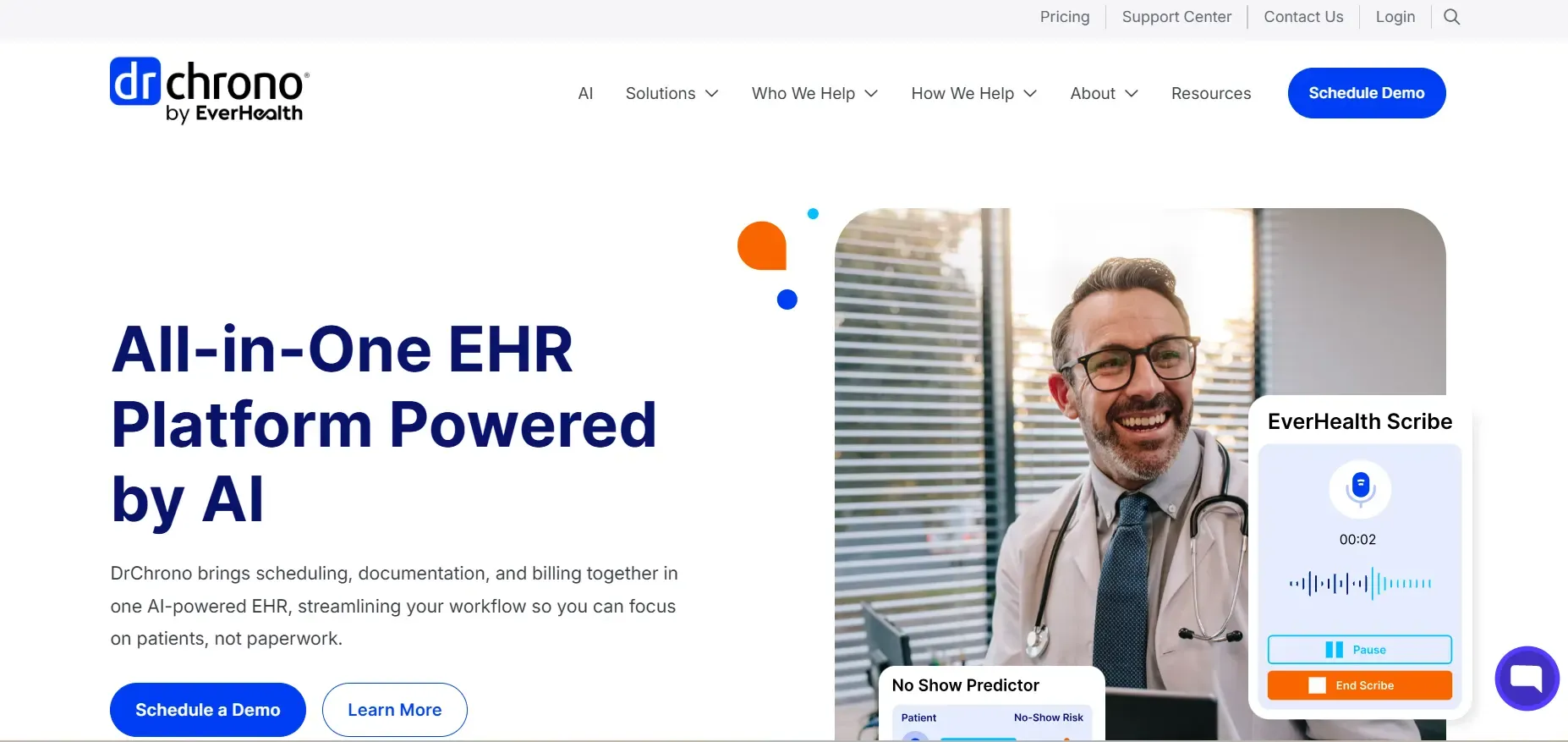
DrChrono is a cloud-based EHR platform with a strong emphasis on mobility. Its native iPad and iPhone apps, combined with telehealth and e-prescribing, make it popular among dermatologists who want to document on the go or see patients in multiple settings.
Pricing: Custom per provider. Pricing increases with added features and users.
- Strong mobile documentation and telehealth tools
- Customizable clinical templates
- API for some custom integrations
- Recurring subscription fees increase with providers and features
- Advanced analytics and imaging require higher tiers
- Data export may not be fully comprehensive
If you want mobile workflows without ongoing fees, Devaims can build mobile apps or responsive web tools you own and control.
4. Athenahealth (Best for integrated practice management)
Athenahealth is one of the largest cloud-based practice management and EHR platforms in the US. It offers a unified solution for scheduling, billing, EHR, telehealth, and patient communications. Its scale means frequent updates, a large support community, and integrations with many third-party services.
Pricing: Contact for quote. Pricing depends on modules and user count.
- Comprehensive practice management suite
- Large integration ecosystem
- Frequent updates and strong support community
- Subscription costs rise with added modules and users
- Dermatology-specific features are less developed
- Customization and data ownership are limited
For clinics needing deeper dermatology workflows or ownership, Devaims can deliver a custom platform with full data control.
5. Practice Fusion (Best for small clinics)
Practice Fusion is a cloud-based EHR best known for its simple, accessible interface and low entry costs. While it is not designed specifically for dermatology, it is popular among solo and small group practices that need a straightforward, affordable EHR with basic functionality.
Pricing: Contact for quote. Entry-level pricing is lower than most specialty EHRs.
- Simple, web-based interface
- Low entry cost for solo or small practices
- Customizable chart note templates
- No built-in dermatology-specific features
- Limited integrations with imaging and billing systems
- Data export may be incomplete for complex migrations
For clinics planning to grow or needing advanced features, Devaims can build a scalable system you own from day one.
6. Greenway Health (Best for growing practices)
Greenway Health offers a suite of EHR and practice management tools designed for clinics that expect to scale. Its flagship platform, Intergy, supports a broad range of specialties, including dermatology, and is known for its stability and customization options (within the limits of SaaS).
Pricing: Contact for quote. Pricing varies by configuration and provider count.
- Customizable templates and patient engagement tools
- Multi-location scheduling and integrated billing
- Population health and compliance modules
- Subscription fees increase as your practice expands
- Custom workflows limited to platform constraints
- No ownership of data or source code
For practices wanting to avoid rising subscription costs, Devaims offers a fixed-cost, owned solution that grows with you.
7. DermEngine (Best for imaging and AI diagnostics)
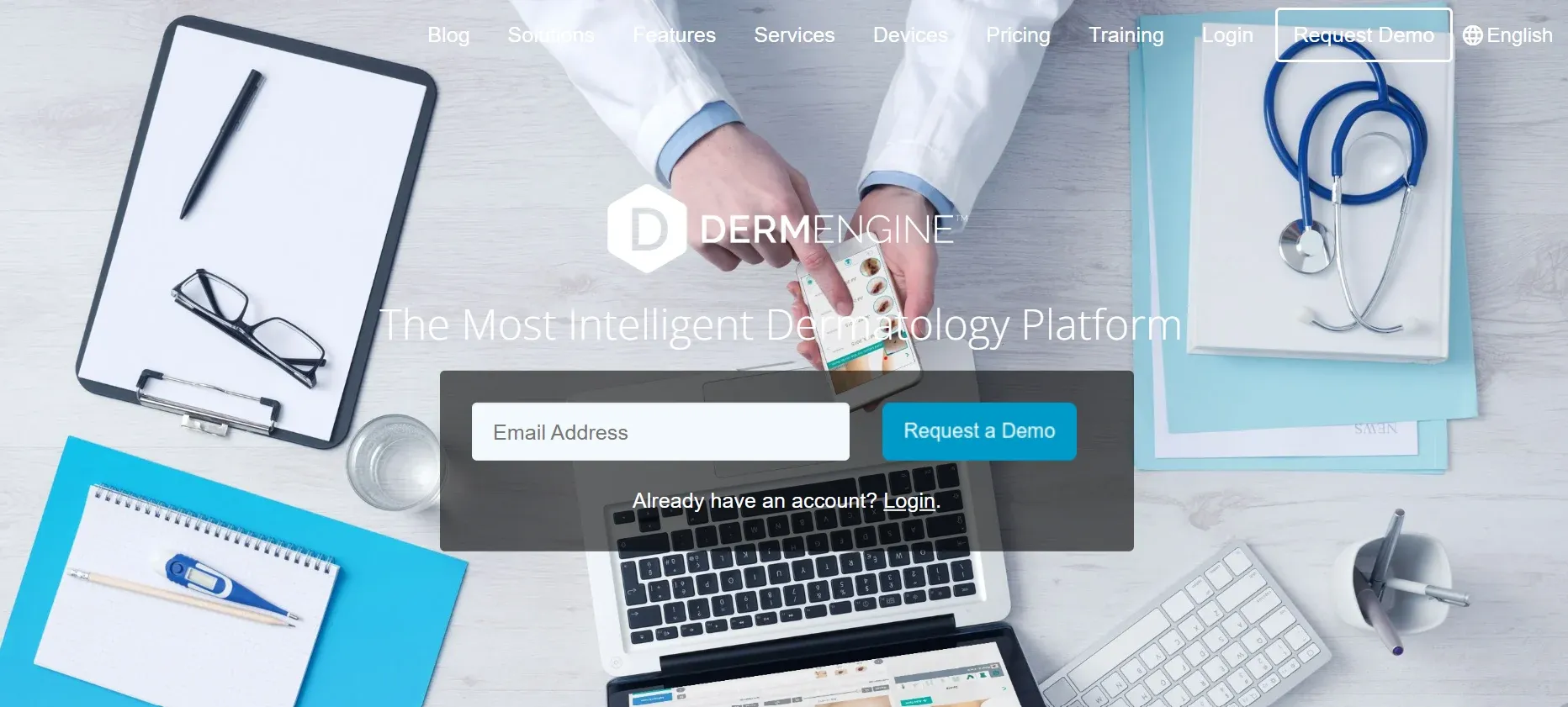
DermEngine is a dermatology-specific imaging and analytics platform, offering advanced lesion tracking, AI-powered diagnostic support, and centralized photo management. It is often used alongside a main EHR, rather than as a replacement.
Pricing: Reported around $200+/mo per user. Advanced features and storage tiers increase cost.
- AI-powered imaging and lesion tracking
- Teledermatology and patient portals included
- Integrates with digital dermatoscopes and EHRs
- Not a full EHR, so requires a separate core system
- Subscription fees rise with advanced features
- Exporting images and annotations may be limited
If you want imaging and analytics built into your owned EHR, Devaims can develop custom modules for your clinic.
8. PatientNow (Best for aesthetic dermatology)
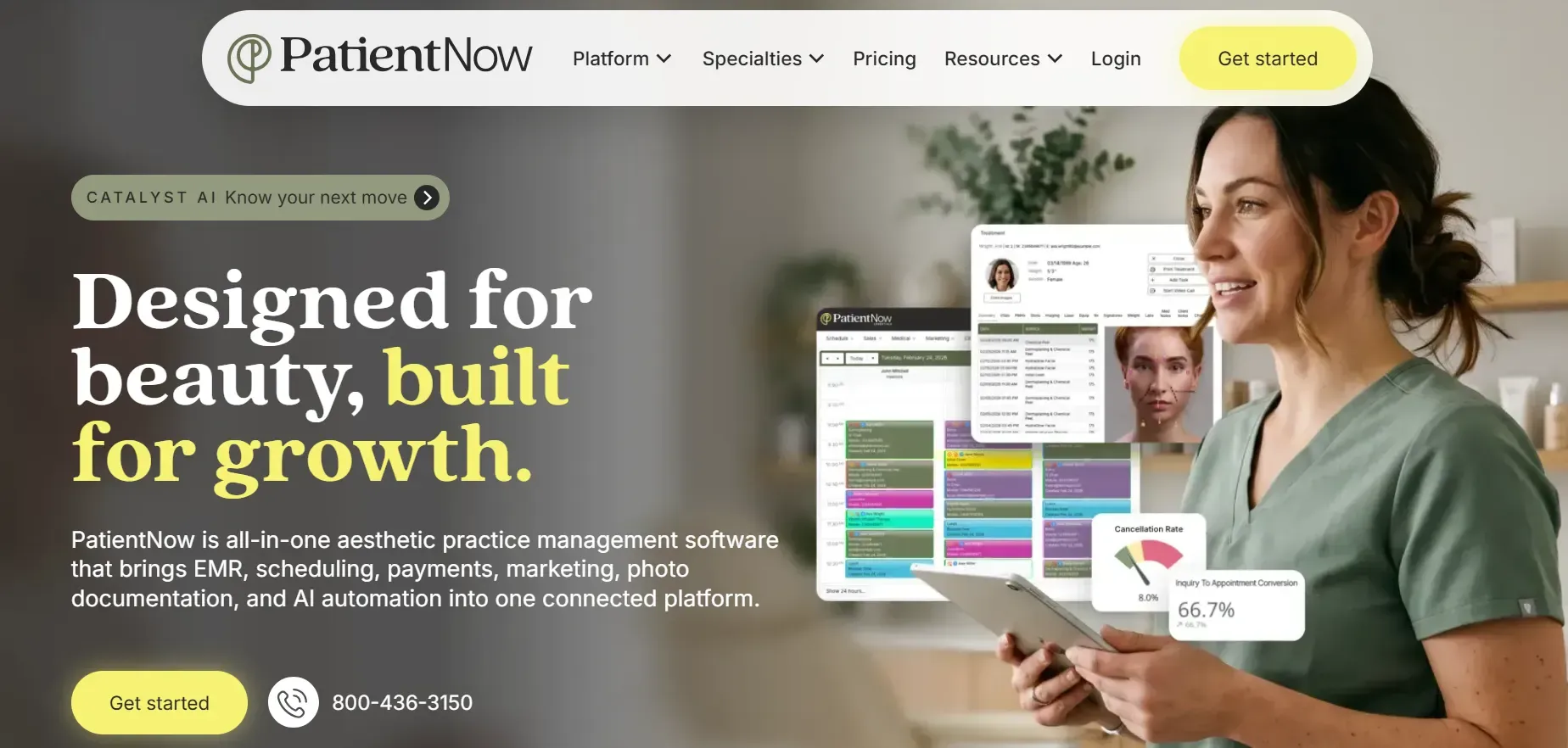
PatientNow is built for cosmetic and aesthetic dermatology clinics, med spas, and practices that focus on elective procedures. Its feature set is tailored to the unique needs of this market: marketing, inventory, before-and-after photo management, and patient engagement.
Pricing: Contact for quote. Pricing depends on modules and clinic size.
- Marketing automation and loyalty programs
- Inventory tracking and before-and-after galleries
- Integrated payment processing and e-records
- Ongoing subscription fees and add-on charges
- Not a replacement for a full medical EHR
- No data or platform ownership
For clinics offering both medical and aesthetic services, Devaims can unify all workflows in a single owned platform.
9. Devaims (Best for owning your dermatology workflow)
Devaims is not a SaaS product, but a custom software development service that builds a dermatology platform tailored to your clinic’s exact workflows. Unlike every other solution on this list, you own the source code, platform, and data. There are no per-provider fees, no forced upgrades, and no contract lock-in. You decide what features, integrations, and reporting tools you need, and they are built for you.
- Full ownership of software, data, and workflows
- No recurring seat or provider fees, one-time build and flat maintenance
- Custom integrations, features, and reporting on your terms
Devaims manages migration and training, so your transition is smooth and low-risk. You control your platform, costs, and future, no more rent-forever cycle.
Other Kareo (Tebra) alternatives worth knowing
- Cerner: A hospital-grade EMR, Cerner is designed for large hospital systems and academic centers. It offers unmatched scale and integration, but is far more complex (and expensive) than most dermatology clinics require. Implementation costs can exceed $1 million, and customization is slow.
- Intergy: Greenway Health’s enterprise EHR, Intergy is strong on compliance and reporting. It is best suited to large, multi-specialty groups rather than pure dermatology practices. Customization is possible but limited by the vendor’s architecture.
- OpenEMR: The main open-source alternative, OpenEMR is free to use but requires significant IT investment. It is highly flexible, but clinics must handle hosting, support, security, and compliance. For practices with in-house IT, it can be a viable foundation for a custom system, but is rarely plug-and-play for dermatology.
These alternatives are worth considering for clinics with unique IT capabilities or specialized needs, but most outpatient dermatology clinics find them too complex or resource-intensive.
How to choose the right Kareo (Tebra) alternative
- By clinic size: Solo and small group practices often prefer turnkey SaaS for speed and simplicity, but as you grow, the economics change. Clinics with five or more providers typically save by owning their system over time.
- By workflow needs: If your clinic uses highly specific workflows, custom forms, or needs integrations beyond what SaaS vendors support, a custom build is the only way to avoid compromise. SaaS platforms are designed for the average clinic, not your unique needs.
- By budget: Add up all recurring fees, per-provider, onboarding, support, and add-ons, over five years. If that total exceeds the one-time build cost of a custom system, ownership is the clear winner. For clinics planning to add providers or locations, the savings multiply.
- By compliance: All major EHRs are HIPAA-compliant, but owning your data and platform gives you ultimate control over security, audit trails, and regulatory changes. Practices in states with unique privacy laws may find ownership the safest path.
The decision comes down to what you value: short-term convenience or long-term control and cost predictability. If you want out of the rent-forever cycle, ownership is the only true exit.
Stop paying rent on software you could own
The core issue with Kareo (Tebra) and every SaaS alternative is the rent-forever model. You pay by the provider, by the feature, by the year, without ever building equity in your system. Contract terms may change, support may lag, and your data is always subject to vendor policies. Even if you switch, the SaaS model remains the same: you are always a tenant, never the owner.
Devaims changes this equation. Instead of renting, you invest in a system built for your clinic, EHR, scheduling, patient engagement, imaging, analytics, and more. You receive the source code, full data access, and the freedom to grow or adapt as you see fit. No per-user fees. No forced upgrades. No lock-in. Your platform, your rules.
- No recurring seat or provider fees. Your cost is a one-time build and flat maintenance, no matter how many doctors join.
- No forced upgrades or mysterious price jumps. You control your system roadmap.
- Your data, your way. Full export, full audit, full compliance.
- Integrate labs, imaging, telehealth, or AI, whatever your clinic actually needs.
| Tool | Ownership | Monthly/annual cost | Per-provider fee? | Contract lock-in? |
|---|---|---|---|---|
| Kareo (Tebra) | No | $599+/physician/mo | Yes | Yes |
| Modernizing Medicine (EMA) | No | Contact for quote | Yes | Yes |
| DrChrono | No | Custom per provider | Yes | Yes |
| DermEngine | No | $200+/mo | Yes | Yes |
| Devaims (custom build) | Yes | One-time build, flat $180/mo maint | No | No |
What does this mean for your bottom line? Here is a five-year cost comparison for a five-physician dermatology clinic, assuming $599/month per provider (a typical SaaS rate) and a Devaims custom build with flat maintenance:
| Year | Rent (Tebra etc.) | Own (Devaims) |
|---|---|---|
| 1 | $35,940 | $32,160 |
| 2 | $71,880 | $34,320 |
| 3 | $107,820 | $36,480 |
| 4 | $143,760 | $38,640 |
| 5 | $179,700 | $40,800 (now ahead) |
For clinics with more providers, or for SaaS platforms with higher fees or frequent price hikes, ownership comes out ahead even faster. Ownership also means you are never forced to change your workflows, pay for features you do not need, or risk data access if a vendor changes hands or policies.
How to switch from Kareo (Tebra)
- Export all patient records and billing data from Kareo (Tebra): Use Kareo’s export tools or API to download patient demographics, clinical notes, billing records, and images. Request full data in CSV, PDF, and native image formats. Be proactive, some vendors impose export fees or throttle large requests.
- Review and select your new system: Whether choosing a SaaS alternative or a custom Devaims build, ensure your new platform supports all required workflows and integrations. Ask vendors for a migration plan and reference clients who have switched from Kareo.
- Import records, images, and schedules: Work with your new vendor or developer to map data fields, import images, and validate that all records are accurate and complete. For custom builds, you have full control over data formats and validation.
- Reconnect payment processors and third-party integrations: Re-link labs, pharmacies, payment gateways, and other integrations. For custom systems, you can build exactly the integrations you need, with no vendor limitations.
- Train your team: Invest in thorough training, especially if workflows or user interfaces are changing. Custom builds allow for user-driven design, making adoption smoother for clinicians and staff.
- Run both systems in parallel briefly: Maintain access to Kareo (Tebra) during the transition to catch missing data or workflow gaps. Dual operation for a few weeks is common for clinics switching EHRs.
- Review contract terms: Carefully read your Kareo (Tebra) contract to avoid unwanted auto-renewals or early termination fees. Plan your cutover date to align with your billing cycle and contract expiration.
With a custom Devaims build, the full migration and training process is managed for you, ensuring a smooth, low-risk transition.
Frequently asked questions
What is the best Kareo (Tebra) alternative for dermatology clinics?
If you want specialty dermatology features and a fast, mainstream deployment, Modernizing Medicine (EMA) and DrChrono are strong choices. Both offer specialty templates, imaging, and integrations. However, neither allows you to own your software or data. For clinics that prioritize long-term cost control, workflow flexibility, and data ownership, a custom Devaims build is the only alternative that delivers full ownership and control.
What Kareo (Tebra) alternative is cheapest for a small practice?
For solo or small practices, Practice Fusion offers lower entry pricing and simple onboarding. However, keep in mind that low monthly costs can add up over five years, especially if you plan to add providers or need more features. A custom Devaims build may cost more upfront, but for clinics planning to grow or requiring custom workflows, ownership can be cheaper in the long run and eliminates surprise fees.
Is there a free Kareo (Tebra) alternative?
The only truly free option is OpenEMR, an open-source EHR. It is highly flexible and can be customized for dermatology, but requires significant IT support for hosting, security, and compliance. Most clinics choose paid solutions to avoid the technical burden and ensure regulatory compliance. For resource-limited clinics with strong IT capabilities, OpenEMR is worth exploring, but it is rarely a plug-and-play alternative.
Which Kareo (Tebra) alternative is best for mobile workflows?
DrChrono and DermEngine are strong for mobile documentation and imaging. DrChrono’s iPad app allows in-room charting, image capture, and e-prescribing. DermEngine’s mobile tools excel at photo management and teledermatology. However, both charge per provider and for advanced features. If you want mobile workflows without ongoing fees, a custom Devaims build can include mobile apps or responsive web tools you own and control.
Can I keep my data when switching Kareo (Tebra) alternatives?
Yes, but the process varies by vendor. Kareo (Tebra) allows data export (often for a fee), but image formats, scanned documents, and custom fields may not export cleanly. Always request data in multiple formats and validate completeness. With Devaims, your data is yours by design, structured for full export, audit, and migration at any time with no vendor-imposed barriers.
How do I avoid contract lock-in with Kareo (Tebra) or alternatives?
Read contracts closely for auto-renewal clauses and notice periods (often 60 days or more). Negotiate for month-to-month terms if possible, and get all promises in writing. The only way to avoid lock-in completely is to own your platform, source code, data, and workflows, so you are never at risk of being trapped by contract language or vendor policy changes.
The bottom line
Kareo (Tebra) alternatives are plentiful, but every SaaS option keeps you paying rent, forever. The single best decision rule: add up your total cost over five years, including every provider, every upgrade, every integration. If that number looks like it could have built you something you own, you have your answer.
Owning your dermatology platform means no more price hikes, no more lock-in, and no more rented data. For clinics ready to control their destiny, Devaims is how you keep what you pay for.
Read more insights on the Devaims blog, or check out other alternative guides: DrChrono alternatives, Athenahealth alternatives, Modernizing Medicine (EMA) alternatives. For further reading, consider the American Academy of Dermatology’s EHR resource center and the ONC’s EHR basics.