
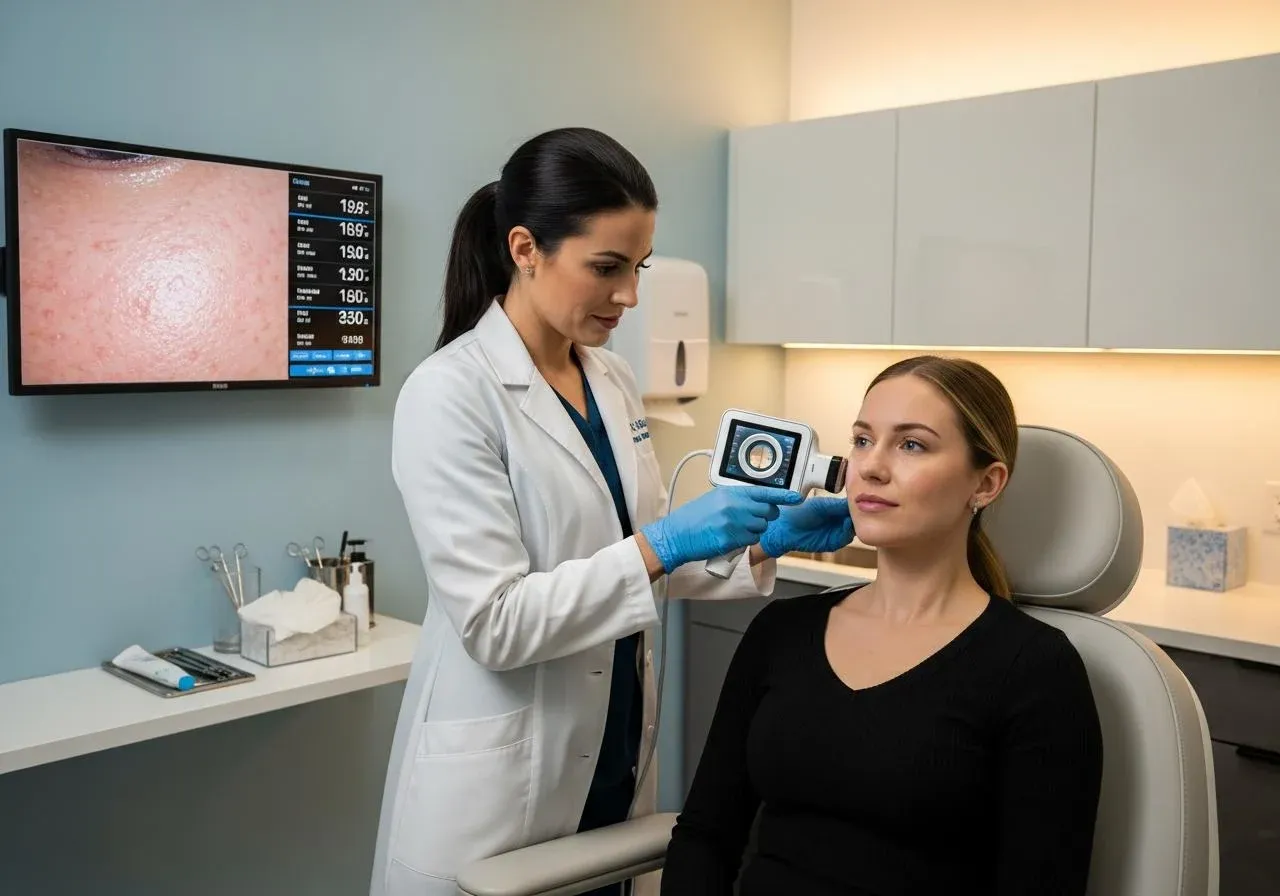


If you’ve ever stared at a Modernizing Medicine (EMA) renewal, seeing $800+ per provider every month for five years straight, you know the pain of renting your own workflow. Dermatology practices are searching for Modernizing Medicine (EMA) alternatives not because they want to uproot their staff, but because the price never stops climbing and the contract never lets go.
Here’s the blunt truth: almost every EMR system is just a different flavor of rental. Practice Fusion tempts with low up-front fees, DrChrono slices features into add-ons, and Athenahealth wants a cut of your collections. Each one has its own gotcha. The best Modernizing Medicine (EMA) alternatives for dermatology in 2026 are Practice Fusion, DrChrono, Intergy, Athenahealth, Kareo (Tebra), DermEngine, Nextech, PatientNow, and, if you want to stop renting altogether, your own custom build from Devaims. Only one option lets you own the code, control the stack, and break the cycle for good.
Let’s dig into the numbers, the fine print, and the real reason ownership is finally worth a look.
Why dermatology clinics look for Modernizing Medicine (EMA) alternatives
Sticky five-year contracts: EMA locks you in tight, with almost no flexibility even if your practice changes. That’s five years of monthly bills. This rigidity can be especially painful if your volume fluctuates, you hire more providers, or need to downsize, you're stuck paying for seats you might not use. Early termination is rare without hefty penalties, and contract auto-renewals can catch clinics off guard.
Sky-high per-provider pricing: At $800+ per user per month, even a modest two-provider dermatology clinic will spend nearly $20,000 a year just to keep the lights on digitally. If you have NPs, PAs, or support staff who need access, costs escalate fast. For larger groups, this can push annual EMR spend well into six figures.
Add-ons that should be core: Many EMR vendors charge extra for essentials like e-prescribing, lab integrations, and clearinghouse access. For example, Greenway’s Intergy charges over $90/month per provider just for clearinghouse access, and another $49 for labs. Features such as patient reminders, advanced analytics, or telehealth often require separate modules, driving up the true cost above sticker price. Over time, this nickel-and-diming means you’re paying far more than you budgeted.
Annual price hikes and hidden fees: Even once you lock in a contract, most SaaS EMR vendors include clauses allowing for annual price increases, often 10 to 15 percent, regardless of your usage. DrChrono, for instance, is known among users for regular annual increases, and charges for services like SMS reminders, eFax, or even basic API access. These hidden costs can turn a "bargain" into a budget buster.
Data you don’t own: All of these systems, including EMA, keep your patient data on their servers and on their terms. If you decide to leave, you can expect to pay data export fees, face delays, or receive data in a format that’s difficult to import elsewhere. Some vendors impose limits on what you can export (e.g., only CCDs, not images or scans). The risk: if your relationship sours or the company is acquired, your data access and business continuity are at their mercy. True data ownership is rare in the EMR world.
Quick comparison of the best Modernizing Medicine (EMA) alternatives
| Tool | Best for | Starting price | Ownership model |
|---|---|---|---|
| Practice Fusion | Budget-conscious clinics | $199/mo/provider | Subscription, vendor-owned |
| DrChrono | All-in-one workflow | Custom, reported annual hikes | Subscription, vendor-owned |
| Intergy (Greenway Health) | Add-on flexibility | $799/mo/provider | Subscription, vendor-owned |
| Athenahealth | Large practices | 3-7% of collections | Subscription, vendor-owned |
| Kareo (Tebra) | Integrated RCM and billing | Not disclosed | Subscription, vendor-owned |
| DermEngine | Imaging-heavy practices | Not disclosed | Subscription, vendor-owned |
| Nextech | Enterprise dermatology | Not disclosed | Subscription, vendor-owned |
| PatientNow | Aesthetic and medspa clinics | Not disclosed | Subscription, vendor-owned |
| Devaims | Clinics that want to own | One-time build | One-time build, you own it |
Always confirm current pricing before you decide. Add-ons and negotiated rates can shift the math quickly, and many vendors offer "bundled" discounts that vanish after year one.
The 9 best Modernizing Medicine (EMA) alternatives
1. Practice Fusion (best for budget-conscious clinics)
Practice Fusion is a cloud-based EMR designed for independent practices wanting to minimize overhead. Its interface is streamlined, and it covers the core charting, e-prescribing, and scheduling needs. For dermatology, it offers basic templates, but lacks some image management and procedure tracking found in more specialized systems.
Pricing: $199 per provider per month with annual commitment (see pricing). No setup fee, but add-ons (e.g., eFax) incur charges.
- Key limitations:
- Limited dermatology-specific features and imaging tools
- Basic reporting and analytics
- Support response can be slow during peak times
- Strengths:
- Low up-front cost and easy setup
- Browser-based, no local install required
- Integrates with major labs and pharmacies
If you outgrow Practice Fusion’s basic dermatology features, Devaims can build advanced imaging and workflow tools tailored to your clinic’s needs.
2. DrChrono (best for all-in-one workflow)
DrChrono is a cloud-based EMR with integrated scheduling, billing, telehealth, and mobile-first design. Now part of EverHealth, it targets clinics wanting an "all-in-one" solution that’s accessible via iPad, web, and iPhone. Dermatology practices appreciate its photo capture and annotation features, as well as eRx and billing tools.
Pricing: Custom per provider, three tiers; users report $300, $500/month per provider for standard features, with regular increases (see user reports).
- Key limitations:
- Annual price hikes and add-on fees are common
- Support quality can be inconsistent
- Advanced customization may require vendor assistance
- Strengths:
- Mobile-first design with photo capture
- Integrated billing and telehealth
- Extensive app marketplace for add-ons
If you’re frustrated by DrChrono’s recurring price increases, Devaims offers a one-time build with flat maintenance and no per-user fees.
3. Intergy (by Greenway Health) (best for add-on flexibility)
Intergy is a robust EMR/PM solution for practices needing tailored workflows and modular add-ons. It offers deep reporting, customizable forms, and solid integrations, but the pricing structure can be opaque, base fees are high, and nearly every core feature is an upcharge.
Pricing: $799 per provider per month, plus $93 for clearinghouse and $49 for labs; setup from $5,000 to $25,000 (findemr.com).
- Key limitations:
- High up-front and ongoing costs
- Fragmented pricing for add-ons
- Complex migration and onboarding
- Strengths:
- Highly customizable workflows and templates
- Deep reporting and analytics
- Wide range of integrations
For clinics needing custom workflows without ongoing rental fees, Devaims can build a system tailored to your exact requirements.
4. Athenahealth (best for large, high-volume practices)
Athenahealth is a leading cloud-based EMR and RCM platform used by many enterprise medical groups. Its "percentage of collections" pricing model is attractive for some, but means that as your practice grows, so do your costs, often dramatically.
Pricing: 3-7% of collections, translating to $6,000, $70,000+ per provider per year (athenahealthpricing.com).
- Key limitations:
- Costs scale with practice revenue
- Customization often requires vendor involvement
- Data export at contract end may incur fees
- Strengths:
- Enterprise-grade charting and analytics
- Extensive integrations and national network
- Strong support for large practices
If you want to avoid percentage-of-collections pricing, Devaims lets you own your EMR with no revenue-based fees.
5. Kareo (Tebra) (best for integrated RCM and billing)
Kareo, now part of Tebra, is an EMR and billing platform favored by practices wanting integrated revenue cycle management. Its dermatology modules cover medical and cosmetic procedures, but details on pricing and contract terms are not public, making budgeting and long-term planning difficult.
Pricing: Not publicly disclosed; must contact sales for a quote.
- Key limitations:
- Opaque pricing and contract terms
- Manual migration for images and custom templates
- Feature set less deep for advanced imaging
- Strengths:
- Integrated billing and RCM services
- Dermatology templates for medical and cosmetic
- Responsive support for onboarding
When Kareo’s pricing or integration limits become a barrier, Devaims can build a unified platform with transparent costs and full data ownership.
6. DermEngine (best for imaging-focused dermatology)
DermEngine is purpose-built for dermatology practices with heavy imaging needs and interest in artificial intelligence. Its cloud platform excels at standardized photo capture, lesion tracking, and teledermatology, making it a strong fit for clinics focused on skin cancer screening and cosmetics.
Pricing: Not publicly disclosed; contact for a quote. Expect per-provider or per-seat pricing and additional costs for device integrations.
- Key limitations:
- Lacks core EMR features like billing and scheduling
- Integration with practice management software required
- Per-user pricing can add up for larger teams
- Strengths:
- Advanced imaging and AI lesion analysis
- Teledermatology and patient portal features
- Integrates with leading imaging devices
If you need both imaging and full EMR features, Devaims can build a platform that combines both in one system.
7. Nextech (best for enterprise dermatology)
Nextech is a mature, feature-rich EMR/PM platform for dermatology groups needing enterprise-level tools. It’s designed to support large teams, multi-location practices, and diverse service lines, offering deep customization and robust analytics.
Pricing: Not disclosed; custom contracts are the norm. Expect multi-year commitments and significant up-front costs.
- Key limitations:
- Expensive for small clinics
- Onboarding and migration can be lengthy
- Long-term contracts with per-user fees
- Strengths:
- Deep customization and workflow automation
- Enterprise reporting and compliance tools
- Supports complex, multi-location practices
For clinics wanting enterprise features without vendor lock-in, Devaims delivers ownership and full customization.
8. PatientNow (best for aesthetic and medspa clinics)
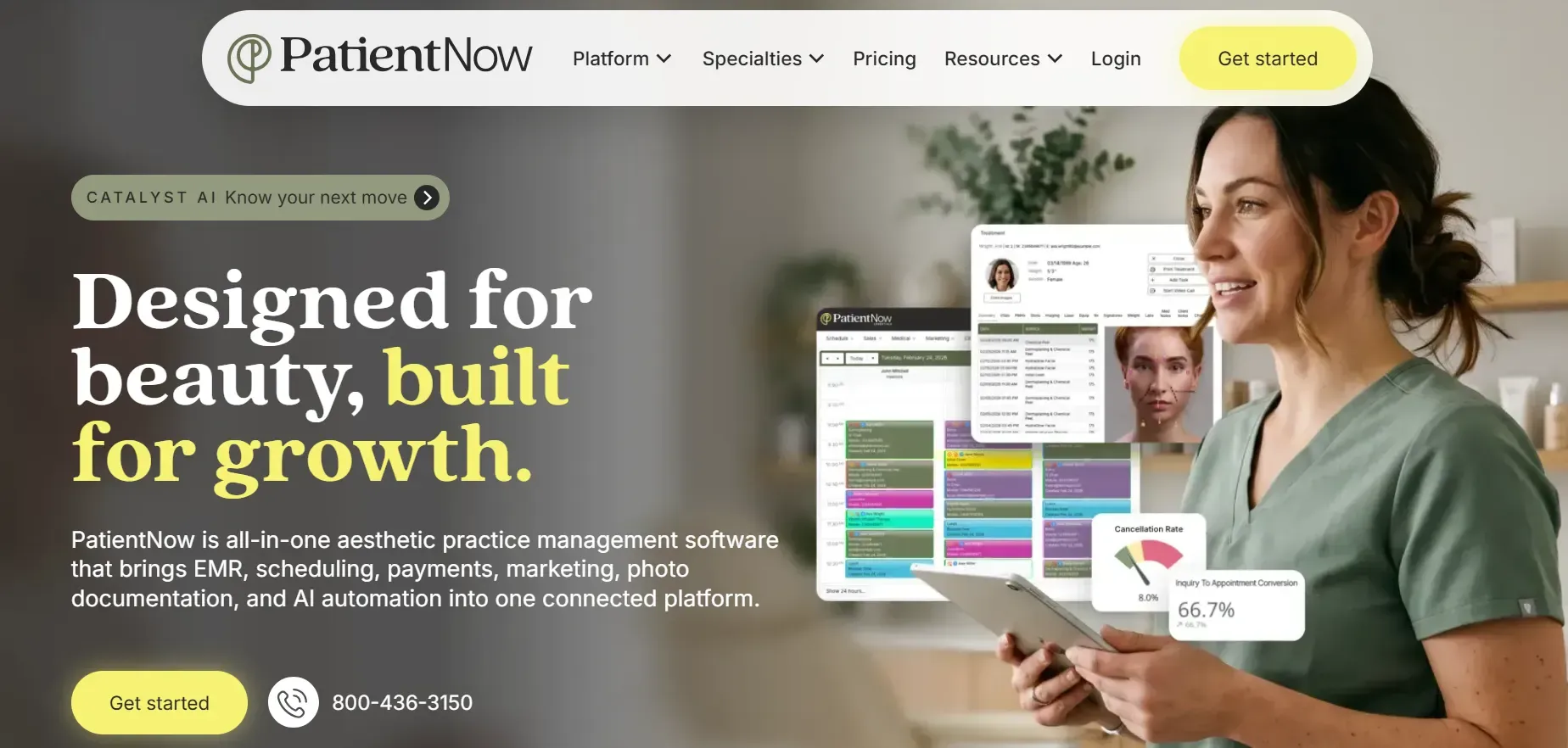
PatientNow is tailored for aesthetic dermatology, medspas, and practices blending medical and elective services. It provides workflow support for cosmetic consults, photo management, loyalty programs, and marketing, filling gaps left by traditional EMRs.
Pricing: Not publicly disclosed; must request a quote. Expect per-user and per-feature pricing.
- Key limitations:
- Less robust for insurance billing and reporting
- Feature updates focus on aesthetics market
- Manual migration for images and documents
- Strengths:
- Integrated photo and consent management
- Marketing automation and loyalty tracking
- Supports both medical and elective workflows
If you want to unify clinical and marketing workflows with full data control, Devaims can build a custom solution for your practice.
9. Devaims (best for clinics ready to own their software)
Devaims builds custom dermatology software that you own outright, source code and all. This approach is unique: you pay for a one-time build (with optional flat maintenance), receive the full codebase, and control every feature, integration, and workflow. No per-user, per-transaction, or per-feature fees. The platform is tailored to your clinic’s needs, branding, and growth plans, and can be expanded over time as you add services or locations.
- You own the entire stack and codebase
- No per-user or recurring SaaS fees
- Tailored to your clinic’s workflows and branding
- Integrates with labs, imaging, billing, on your terms
- Support and enhancements are transparent and predictable
Other Modernizing Medicine (EMA) alternatives worth knowing
- Cerner: Large, hospital-focused, often overkill for outpatient dermatology. Expensive and complex, but robust for enterprise or academic settings.
- Greenway Health Prime Suite: Older platform, being phased out in favor of Intergy. Support is winding down, and migration is recommended.
- EZDERM: Dermatology-specific, but smaller install base and limited support. Good imaging tools, but users report slow updates and data migration challenges.
- OpenEMR: Free and open source, but requires significant IT effort and lacks integrations out of the box. HIPAA compliance is possible with careful setup, but most clinics need outside support.
How to choose the right Modernizing Medicine (EMA) alternative
- Budget constraints: If you need to minimize monthly outlay, Practice Fusion or Aesthetic Record are cheapest up front. For clinics with limited capital, these platforms offer a way to get started quickly, but costs rise as you add providers or features.
- Feature depth: For deep dermatology, Intergy, Nextech, or PatientNow cover more workflows, including procedural tracking, robust imaging, and detailed analytics. If you do a mix of medical and cosmetic work, or need advanced reporting, these fit the bill.
- Practice size: Athenahealth and Nextech scale to large groups, with enterprise support, workflow automation, and multi-location management. DrChrono, Kareo, and DermEngine are better for small to midsize clinics, especially those blending medical and cosmetic services.
- Ownership vs. rent: If you want to own your stack, only a custom Devaims build gives you the source code and freedom to grow without extra fees. This is especially important for clinics planning to expand, merge, or add new services in the future.
- Integration needs: Check which systems handle your labs, imaging, and billing natively. Some, like DermEngine, excel at imaging but lack billing; others, like Practice Fusion, rely on third-party billing solutions. Custom builds let you choose exactly what connects and how.
The only way to break out of the rent cycle for good is to own your software.
Stop paying rent on software you could own
Here’s the hard truth: every EMR vendor makes you pay and pay, whether it’s per provider, per claim, or as a percentage of collections. Modernizing Medicine (EMA) is just the most visible example, but the rest all follow the same model. None of them let you walk away with your system after five years of payments. You rent, they own.
Devaims changes that equation. We build custom dermatology EMRs and workflow software for clinics that want to own, not lease, their digital backbone. You keep the source code, set the rules for integrations, and never pay another per-user or per-feature fee. Maintenance stays flat, enhancements are on your terms, and your data is always yours.
- No five-year contracts, just a build, then your clinic owns it
- No per-user, per-seat, or per-feature fees, add staff without a bigger bill
- No surprise price hikes, maintenance is flat and predictable
- Tailored to your exact workflows and reporting needs
- Integrates with labs, imaging, and billing as you require
| Tool | Ownership | Recurring fees | Customization |
|---|---|---|---|
| Modernizing Medicine (EMA) | Vendor-owned | $800+/provider/mo | Limited |
| Practice Fusion | Vendor-owned | $199/provider/mo | Limited |
| DrChrono | Vendor-owned | $300+/provider/mo (reported) | Moderate |
| Devaims | You own it | One-time build, flat maintenance | Full |
5-year cost comparison for a 2-provider dermatology clinic
| Year | EMA (rent) | Practice Fusion (rent) | DrChrono (rent) | Devaims (own) |
|---|---|---|---|---|
| 1 | $19,200 | $4,800 | $7,200 | $32,000 |
| 2 | $38,400 | $9,600 | $14,400 | $34,760 |
| 3 | $57,600 | $14,400 | $21,600 | $37,520 |
| 4 | $76,800 | $19,200 | $28,800 | $40,280 |
| 5 | $96,000 | $24,000 | $36,000 | $43,040 (now ahead) |
By year five, Devaims is $53,000+ cheaper than EMA, with every future year widening the gap. For clinics with multiple providers or custom workflow needs, the math makes ownership the smarter play. If you want to see how the numbers shake out for your practice, we’ll run a custom projection, no charge, no obligation.
How to switch from Modernizing Medicine (EMA)
- Export all patient data and documents from EMA. EMA allows data export, but expect to pay fees for bulk exports. Images and documents may be delivered in non-standard formats, requiring extra mapping. Start this process early to avoid delays.
- Choose your new EMR or custom solution and finalize your build or onboarding timeline. Compare features, integration needs, and long-term cost. For custom builds, plan for a 3 to 6 month project timeline. For SaaS EMRs, onboarding can take 4 to 12 weeks depending on data complexity.
- Import data into the new platform, mapping fields and testing for accuracy. Work with your new vendor or IT team to ensure all fields (demographics, notes, images, labs) are mapped correctly. Run test imports and validate with sample patient records.
- Reconnect labs, payment processors, and third-party integrations. Each EMR has its own process for connecting to labs (LabCorp, Quest), imaging devices, and billing/clearinghouses. Confirm all integrations are functional before going live.
- Train your staff on the new system, with shadowing and parallel runs as needed. Schedule hands-on training, and consider running dual systems for a week or two to identify workflow issues. Assign "super users" to support the rest of your team.
- Test the new workflow in parallel for at least a week to catch any issues. Validate that all documentation, billing, and imaging workflows are working as expected. Address any gaps before fully transitioning.
- Review your old EMA contract for cancellation steps and timelines. Many contracts require 60 to 90 days notice for termination. Ensure data export is complete and all balances are settled before final cutoff.
With a custom Devaims build, the migration is handled as part of the project, including data mapping, image transfer, and staff training.
Frequently asked questions
What is the best Modernizing Medicine (EMA) alternative for dermatology?
The right alternative depends on your clinic’s size, budget, and workflow needs. Practice Fusion is the most affordable for solo providers who need basic charting and e-prescribing. Intergy and Nextech serve large clinics needing deep customization, robust reporting, and integrated billing. For imaging-heavy practices, DermEngine is a strong choice. If you want to own your EMR, avoid per-user fees, and control your data and integrations, Devaims is the only alternative that gives you true software ownership and long-term savings.
Which Modernizing Medicine (EMA) alternative is cheapest?
Practice Fusion starts at $199 per provider per month with an annual commitment, making it the cheapest commercial EMR for dermatology. However, this does not include advanced dermatology features or imaging tools. OpenEMR is free and open source, but requires significant IT investment for setup, hosting, and ongoing support, which can offset the lack of license fees. For clinics planning to grow or needing more than basic features, low up-front costs often give way to higher long-term expenses.
Is there a free Modernizing Medicine (EMA) alternative?
OpenEMR is open source and free to download, but you’ll need to handle server hosting, security, HIPAA compliance, and support yourself. Most clinics find commercial tools or a custom build more reliable and compliant, especially if you need integrations, automated backups, or responsive technical support. OpenEMR can work for IT-savvy clinics or those with in-house technical staff, but most find it requires more resources than expected.
How do I know when to switch from EMA?
If you’re facing a contract renewal, price hike, or need features EMA doesn’t offer (e.g., better imaging, new integrations, or custom workflows), it’s time to compare alternatives. If your 5-year rent is higher than an ownership build, switching makes financial sense. Other signs: recurring support frustrations, slow feature updates, or data export headaches. Clinics planning to expand, merge, or add new service lines should consider switching before growth amplifies costs and complexity.
Can I keep my data if I leave Modernizing Medicine (EMA)?
EMA lets you export your data, often for a fee, but you may need technical help mapping it to your new system. Data is usually provided in CCD or CSV format, and images may be delivered as bulk downloads. Some data (e.g., custom forms, scanned documents) may require manual transfer. With Devaims, your data is always yours in a format you control, and migration support is included as part of the project.
What’s the difference between renting and owning my EMR?
Renting means monthly or per-visit fees, contract lock-in, and vendor control over your workflows, data, and system updates. You are subject to price hikes, feature changes, and data export limitations. Owning, with Devaims, means one up-front build, flat maintenance, and full control over your workflows, data, and integrations. You can update, customize, or expand your system as needed, and your data is always accessible, no strings attached.
Is a custom Devaims build right for small practices?
For solo or very small clinics, low-cost subscriptions like Practice Fusion may be cheaper for the first few years. However, as you grow, add providers, or need advanced features, a Devaims build quickly becomes more cost-effective, often paying off after year three to five. The real value is in full workflow control, freedom from vendor lock-in, and the ability to adapt your software as your practice evolves. For clinics with unique needs or growth plans, ownership is almost always the smarter long-term move.
The bottom line
Add up what your EMR will cost over five years. If that number could have bought you a system you own, you’re already overdue for a switch. Every Modernizing Medicine (EMA) alternative on this list rents you a workflow, with the same risk of surprise fees, lock-in, and lost data if you ever leave. Only Devaims lets you own the code, the data, and the future of your practice.
Here’s the test: multiply your per-provider fee by your team size, then by 60 months. If you gasp at the total, it’s time to ask what ownership could do for your clinic.
See more insights on the Devaims blog, or read our deep dives on athenahealth alternatives, Kareo alternatives, and DrChrono alternatives.