



If you have ever had your DrChrono bill jump 10 to 15 percent overnight, you know what it feels like to rent mission-critical software. Maybe you start at a few hundred per provider, but after the annual hikes, hidden fees, and a contract you can’t escape, it gets expensive fast. The stack gets clunky, the support line gets slower, and you wonder if it’s worth riding it out, or if it’s time to look at DrChrono alternatives that actually fit your practice.
Let’s be blunt: most alternatives are still rented, with per-provider pricing and the same gotchas, just reshuffled. Kareo, Athenahealth, eClinicalWorks, and the rest all have their quirks and fees. But there is one way out of this cycle: building your own, so you own the code and the costs. Here are the top DrChrono alternatives for 2026, including the only option you own outright, Devaims.
Why primary care practices look for DrChrono alternatives
Annual price increases sting. DrChrono users report 10 to 15 percent price hikes each year, which makes budgeting a moving target. Even if you negotiate a discount in year one, the compounding effect of annual increases means your cost can double in just a few years. Practices have found their bills ballooning without any corresponding increase in value or improvement in software performance.
Locked into per-provider fees. Most alternatives, including DrChrono, bill by provider, $300, $400, even $450 per month per seat adds up as your team grows. If you add a new physician, nurse practitioner, or even a part-time clinician, your costs immediately jump. Some platforms even charge for non-clinical staff who need access, further inflating the monthly expense.
Setup and professional fees up front. DrChrono charges onboarding and pro fees that are non-refundable, so switching isn’t cheap. Many practices are surprised by these costs, which can range from a few thousand dollars to over $10,000 for larger groups. These fees often cover basic training and migration, but deeper customization or integrations may cost extra, making the transition more expensive than expected.
Add-ons and integrations cost extra. Billing, advanced reporting, RCM, telehealth, and e-prescribing all add new lines to your monthly bill. For example, you may find that lab integrations or custom forms are only available at higher tiers or as paid add-ons. This can make the total cost unpredictable, especially if your workflow requires several integrations to operate efficiently.
Long contracts and support frustrations. Many providers require annual contracts, and users often report slow, unresponsive support for urgent issues. Some platforms auto-renew unless you provide notice months in advance, trapping you for another year. Delays in support responses during critical moments, like billing outages or system errors, can disrupt patient care and revenue cycles. This is why so many search for DrChrono alternatives every year.
Quick comparison of the best DrChrono alternatives
| Tool | Best for | Starting price | You own it? |
|---|---|---|---|
| Kareo (Tebra) | Small practice EHR | $300-450/month/provider | No |
| AdvancedMD | Mid-size practices | Reported, not public | No |
| Athenahealth | Insurance billing | 3-7% of collections | No |
| eClinicalWorks | All-in-one EHR/PM | $450/month/provider | No |
| NextGen Healthcare | Enterprise groups | Not public | No |
| Practice Fusion | Small practices | $150/month/provider | No |
| Modernizing Medicine | Specialty EHR | Not public | No |
| Epic | Large health systems | Not public | No |
| Cerner (Oracle Health) | Hospitals | Not public | No |
| Devaims | Practices that want to own | One-time build, you own it | Yes |
Always confirm current pricing before you decide. Quotes and packages change. Some vendors offer discounts for long-term contracts, but those may come with restrictions on cancellation or upgrades. Ask for a complete quote breakdown, including add-ons and integration fees, before making your choice.
The 10 best DrChrono alternatives
1. Kareo (Tebra) (Best for small practice EHR)
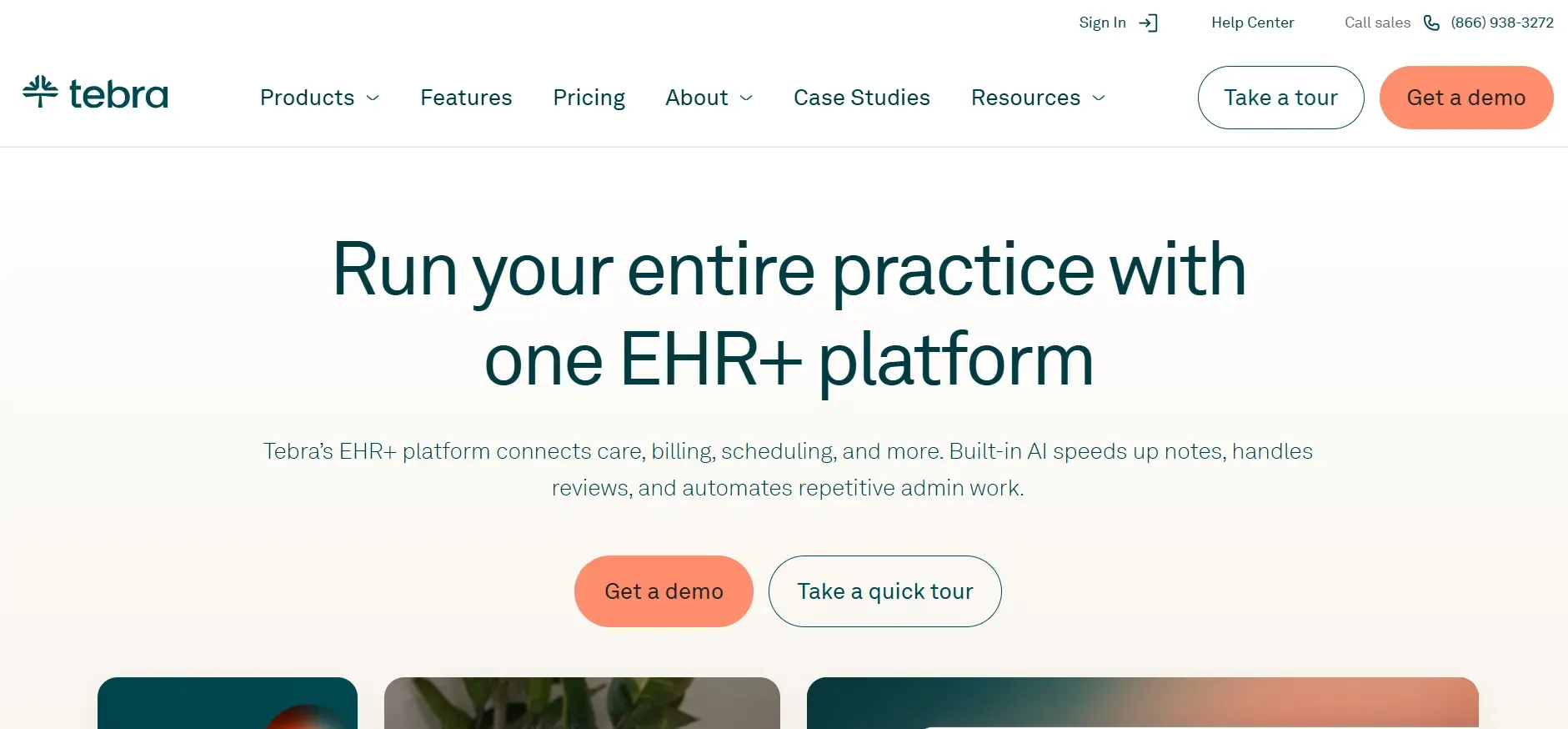
Kareo (now Tebra) is a familiar name for independent practices wanting an all-in-one EHR and billing platform. Kareo is often seen as a DrChrono alternative with friendlier onboarding for small groups. The cloud-based platform combines clinical charting, scheduling, and billing in a single interface, which appeals to practices that want to avoid piecing together multiple tools.
Pricing: $300-450/month per provider, plus add-ons for RCM and advanced analytics.
- Integrated billing and scheduling in one platform
- Easy onboarding for small practices
- Affordable entry price for solo providers
- Per-provider pricing increases costs as you grow
- Support response times can be slow
- Advanced analytics and customization are limited
If you want to own your system or deeply customize the interface, Kareo is not the answer. Devaims lets you own the code and tailor every workflow.
2. AdvancedMD (Scalable for mid-size practices)
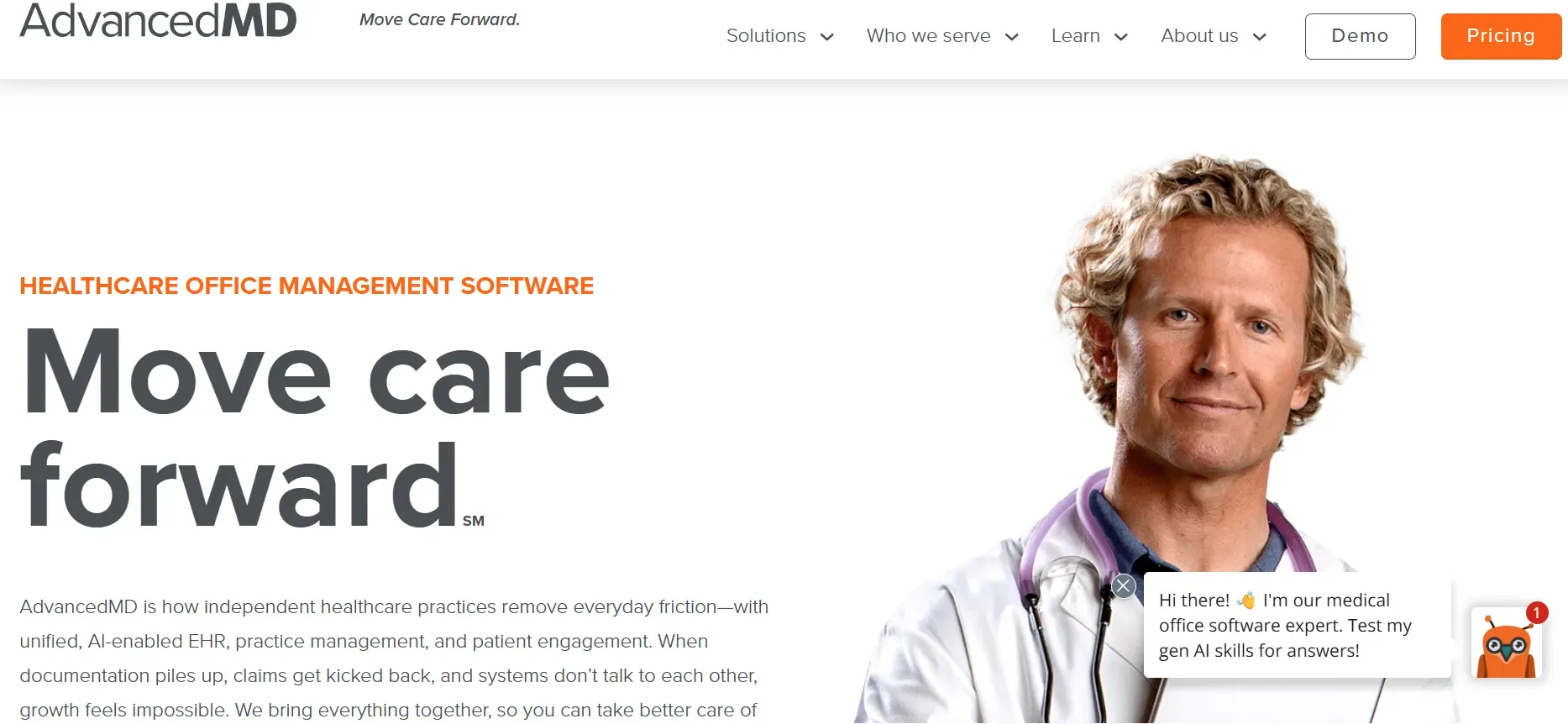
AdvancedMD targets growing practices that need deeper scheduling and workflow tools. The platform covers EHR, practice management, telemedicine, and patient engagement in a single system. Its modular approach lets you add features as your practice grows, making it popular among clinics outgrowing DrChrono’s lighter EHR.
Pricing: Custom quotes only, typically higher for larger teams and advanced features.
- Flexible modules for growing practices
- Advanced scheduling and workflow automation
- Comprehensive analytics and reporting
- Opaque pricing makes budgeting difficult
- Customization often requires paid support
- Learning curve for staff onboarding
With Devaims, you get full ownership and can scale features without per-user fees or opaque contracts.
3. Athenahealth (Best for insurance-driven practices)
Athenahealth is well-known for its revenue cycle management (RCM) and payer connectivity. The platform automates much of the insurance billing and collections process, reducing administrative overhead for practices that rely heavily on third-party payers.
Pricing: 3-7% of collections, with additional fees for advanced modules and integrations.
- Strong RCM and insurance billing automation
- Wide range of integrations via Marketplace
- Cloud-based, accessible from anywhere
- Costs rise as your revenue grows
- Some features require higher spend levels
- Onboarding and training can be time-consuming
On a custom Devaims build, you keep 100 percent of collections, no revenue sharing.
4. eClinicalWorks (All-in-one platform for larger offices)

eClinicalWorks is a comprehensive EHR and practice management suite aimed at clinics that want more than just charting. The platform offers deep customization, a broad range of modules, and integrated RCM, making it a frequent upgrade path from DrChrono for growing practices.
Pricing: $450/month per provider, plus fees for RCM and advanced integrations.
- Comprehensive EHR and PM features
- Strong interoperability with other EHRs
- Customizable templates and analytics
- High per-provider and add-on costs
- Migration and onboarding can be complex
- Support response is inconsistent
With Devaims, you own the workflows and interface, custom-built for your users, not generic.
5. NextGen Healthcare (Best for enterprise and multi-site groups)
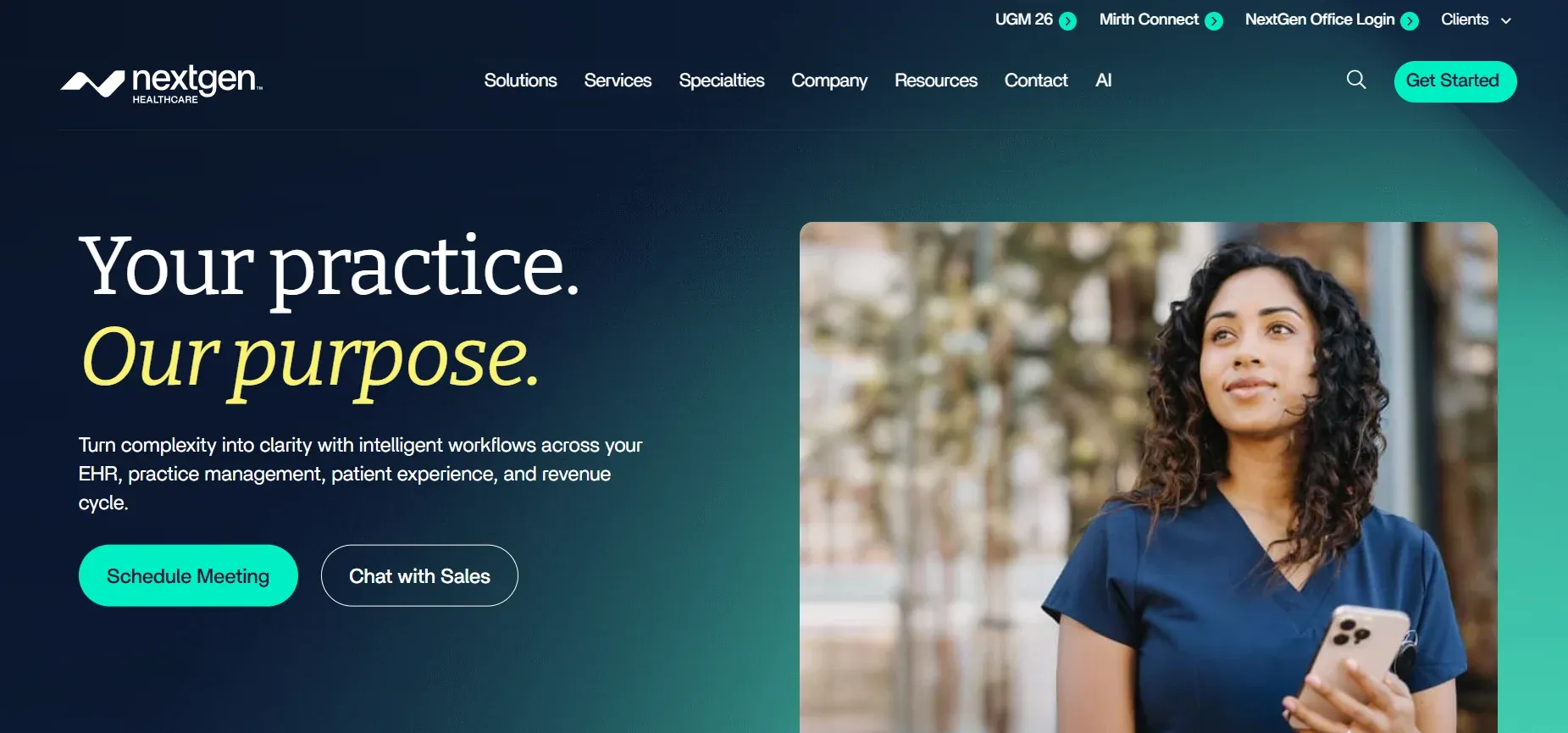
NextGen Healthcare is designed for large practices, multi-site groups, and enterprise health organizations. The platform offers deep customization, compliance, and reporting features, supporting complex workflows and regulatory requirements.
Pricing: Custom quotes only, typically for enterprise-scale groups.
- Enterprise scheduling and resource management
- Advanced analytics and compliance tools
- Open API for integrations
- Complex interface can overwhelm staff
- Customization often requires paid consulting
- Long-term contracts are typical
With Devaims, you own the workflows and interface, custom-built for your users, not generic.
6. Practice Fusion (Budget option for solo and micro-practices)

Practice Fusion is a cloud-based EHR tailored for solo providers and small practices. Its low cost and ease of setup make it attractive for those starting out or operating on tight budgets.
Pricing: $150/month per provider, with additional fees for add-ons and integrations.
- Low entry price for solo providers
- Simple setup and onboarding
- Pre-built templates for primary care
- No integrated billing, requires third-party solution
- Limited customization and reporting
- Support and advanced features are minimal
If you plan to grow or need more than basic EHR, you may quickly outgrow the platform. Devaims lets you scale and customize as you grow.
7. Modernizing Medicine (Best for specialty practices)
Modernizing Medicine (ModMed) offers EHR and practice management solutions tailored for specialty practices, including dermatology, ophthalmology, orthopedics, and more. Its specialty-specific workflows and adaptive learning features set it apart from more generic EHRs.
Pricing: Custom quotes only, with specialty modules as paid add-ons.
- Specialty-specific templates and workflows
- Adaptive learning remembers provider preferences
- Integrated PM, billing, and inventory
- Steep learning curve and onboarding time
- Specialty modules priced separately
- Support can be slow during onboarding
ModMed is not ideal for general primary care or practices seeking full ownership. Devaims builds for any specialty and you own the result.
8. Epic (Best for large health systems)
Epic is the dominant EHR in large hospitals and integrated health networks. Its breadth of features, compliance tools, and interoperability make it the industry standard for enterprise-scale organizations.
Pricing: Not public, typically high for licensing and support.
- Comprehensive EHR and analytics suite
- Strong interoperability and compliance
- Patient portal and telehealth included
- High cost and complex implementation
- Requires dedicated IT and admin teams
- Customization is slow and expensive
You do not own the code or have true control over the system’s evolution. Devaims gives you full ownership and flexibility.
9. Cerner (Oracle Health) (Best for hospitals and enterprise)
Cerner (Oracle Health) is another leading EHR for hospitals and enterprise organizations. Its platform supports clinical, financial, and operational workflows at scale.
Pricing: Not public, enterprise-scale pricing and contracts.
- Comprehensive clinical and financial suite
- Strong interoperability with external systems
- Population health and care coordination tools
- High implementation and support costs
- Long contract commitments
- Customization cycles are slow
You do not own the code and are dependent on Oracle for system evolution and support response. Devaims puts you in control of your platform and data.
10. Devaims (The only option you own outright)
Devaims is the alternative that breaks the rent cycle. You get a custom-built EHR, billing, or workflow platform designed for your practice, not the average. You own the source code, the database, and the stack. There are no per-provider fees, no price hikes, and no forced upgrades. Everything is built to match your needs and priorities, and your team keeps full control.
Pricing: One-time build (e.g., $30,000), then flat maintenance (e.g., $200/month). No per-provider fees, no contracts.
- Full ownership of code, data, and system roadmap
- Custom EHR, PM, billing, and reporting modules
- Easy integrations with labs, pharmacies, telehealth, and more
Devaims handles migration, training, and ongoing support as part of the project. You keep your data, avoid per-seat fees, and control your future.
Other DrChrono alternatives worth knowing
- Elation Health: Good for relationship-driven practices, with a focus on clinical-first workflows and patient engagement, but less feature-rich for large groups or those needing advanced billing.
- Healow: Offers patient engagement, appointment scheduling, and telehealth tools that bolt onto existing EHRs, but is not a full replacement for core EHR or billing needs.
- PracticeSuite: Budget-friendly EHR and PM with basic features, but limited depth in reporting, analytics, and billing compared to top-tier alternatives.
If you just want a scheduling or telemedicine add-on, these can work, but for a true DrChrono replacement, the main list is where to look. Always evaluate the fit for your practice’s size, specialty, and integration requirements before selecting a niche tool.
How to choose the right DrChrono alternative
- By budget: Solo providers may prioritize low monthly cost, but add up the price over five years, it gets eye-opening fast. For example, $150/month may seem affordable, but with annual increases and add-ons, you could spend over $10,000 in five years for basic features.
- By workflow: If your team is fighting the UI daily, look for an alternative with customizable screens or a custom build. A poor interface slows down providers and increases burnout, customization can pay for itself in efficiency.
- By billing model: If revenue sharing or per-provider fees drive you nuts, look at options that flatten or eliminate those costs. Consider the impact as you grow, will adding a nurse or part-time provider double your bill?
- By integrations: Do you need lab, pharmacy, or telehealth in one place? Some platforms require extra contracts for each. Make a list of your current integrations and check if they are included, available as add-ons, or require custom work.
- By ownership: If you want to own your data and code, Devaims is the only real alternative. This gives you leverage for future changes, compliance, and system evolution.
When you are tired of rent and want to keep control for the long haul, owning your platform changes the math. It is worth running a five-year cost analysis to see where your current or prospective system lands versus an owned solution.
Stop paying rent on software you could own
The catch with DrChrono, and every alternative so far, is you pay every month, per provider, forever. Surprise price hikes, forced add-ons, and contracts mean you are always negotiating from behind. The result? You are renting your own data and your workflow, with little leverage to influence the roadmap or cost structure.
Devaims builds exactly what your practice needs, hands you the source code, and never locks you out. You keep the code, the database, and the keys. There are no per-seat fees, no percent-of-collections, and no price hikes. Maintenance is predictable and you can add features when you want. You decide how your system evolves, not a vendor with thousands of clients and conflicting priorities.
- No more per-provider fees: Add new doctors or nurses without renegotiating a contract or paying extra. If your team grows from 5 to 10 providers, your costs stay flat, no surprise bills.
- No surprise hikes: Your costs are clear from the start and stay predictable. Maintenance and support are set at a flat rate, with no hidden fees for upgrades or support tickets.
- Custom features, not forced upgrades: If you want a new report, workflow, or integration, it is built for you, not forced into a new tier. No waiting for a vendor’s roadmap or paying for features you will never use.
- You keep your data and code: No more export headaches or vendor lock-in. If you want to switch hosting or bring development in-house, you can, because you own everything.
| Tool | Ownership | Pricing model | Contract |
|---|---|---|---|
| DrChrono | Vendor owns code | Per provider, per month | Annual, auto-renew |
| Kareo (Tebra) | Vendor owns code | Per provider, per month | Annual/Monthly |
| eClinicalWorks | Vendor owns code | Per provider, per month + RCM | Annual |
| Devaims | You own code | One-time build, flat maintenance | No contract lock-in |
| Year | Rented EHR (e.g., $400/mo x 5 providers) | Owned (Devaims: $30,000 build + $200/mo maint) |
|---|---|---|
| 1 | $24,000 | $32,400 |
| 2 | $48,000 | $34,800 |
| 3 | $72,000 | $37,200 |
| 4 | $96,000 | $39,600 |
| 5 | $120,000 | $42,000 (now ahead) |
For practices with five or more providers, the numbers flip fast. You pay off the build in year two, and by year five, you are saving $78,000, and the system is yours. This does not include the value of owning your data, avoiding migration headaches, and having a system that evolves with your needs. If you want to see the math for your team size or feature set, we will run the numbers for you, no strings.
How to switch from DrChrono
- Export all patient and practice data from DrChrono. This typically includes patient demographics, clinical notes, scanned documents, billing history, and custom forms. Be sure to request a complete export in a standard format (such as CCDA or CSV) and clarify timelines with DrChrono support.
- Choose your new platform, rent or own. Evaluate features, integrations, support, and long-term cost. If you choose Devaims, the team will help plan the migration, including mapping custom workflows and fields.
- Import data into the new system and map fields. This is a critical step, mismatched data can cause workflow disruptions or compliance issues. Devaims and most top vendors provide migration specialists to assist with this process.
- Reconnect billing, payments, labs, and integrations. Ensure your new system links to all necessary partners, clearinghouses, labs, pharmacies, and payment gateways. Test each integration before going live.
- Train your team and run in parallel to catch issues. Schedule staff training sessions and consider running both systems in parallel for a week or two. This reduces risk and allows you to catch errors before fully switching over.
- Review your DrChrono contract to avoid auto-renew traps. Many practices forget to give timely notice and get locked in for another year. Double-check your contract terms and send notice of termination as early as allowed.
With a custom Devaims build, the migration is handled as part of the project, including data mapping, integration setup, and staff training. The goal is a smooth transition with minimal downtime.
Frequently asked questions
What is the best alternative to DrChrono for small practices?
Kareo (Tebra) and Practice Fusion are popular among small and solo providers, offering lower entry prices and basic EHR features. Kareo provides integrated billing and scheduling, while Practice Fusion is easy to set up for basic charting. However, both charge per provider and have limited customization. If you want to avoid per-provider rent, keep control, and tailor the system to your workflow, Devaims is the only option you own outright. With Devaims, your costs do not rise as you add staff, and you can customize the interface and reports for your exact needs.
What is the cheapest DrChrono alternative?
Practice Fusion is the lowest-cost mainstream EHR at $150/month per provider, but it lacks integrated billing and has limited reporting. Add-ons and separate billing software can bring the total cost up quickly. Always calculate your five-year total, including add-ons and annual increases, before jumping for the lowest sticker price. For practices with more than two providers or those needing integrated billing, the cost advantage may disappear.
Are there any free DrChrono alternatives?
There are no truly free, full-featured EHRs for primary care in 2026. Some open-source projects like OpenEMR exist, but they require significant IT resources to deploy, secure, and maintain. Support is community-driven, and compliance with HIPAA or other regulations may require paid consulting. If you want a platform tailored for your practice without recurring rent, a Devaims build is the only ownable route with professional support and compliance baked in.
When is the right time to switch from DrChrono?
Switch when annual price hikes, support delays, or feature gaps start impacting your bottom line or patient care. If your five-year rent would pay for a custom build, you are ready to consider Devaims or another alternative. Other triggers include poor integration with your billing or labs, lack of customization for your specialty, or growing frustration with vendor support.
Can I migrate all my data from DrChrono?
Most platforms, including Devaims, support data migration. You will export your data from DrChrono and map it into the new system, so you keep patient records and history intact. The right alternative will handle this as part of onboarding. Some niche data (like custom forms or scanned documents) may require manual review, but experienced migration teams can minimize data loss.
What is the real five-year cost of DrChrono compared to owning?
At $400/month per provider for five providers, you pay $120,000 over five years to rent DrChrono or similar. A custom Devaims build might cost $30,000 up front plus $200/month maintenance, $42,000 total over five years, and you own it. The gap widens as you add providers or require more integrations. Always ask vendors for a complete five-year quote, including all fees and add-ons, before deciding.
Can I keep my custom workflows with a DrChrono alternative?
Most rented EHRs offer limited customization, often tied to higher tiers or paid add-ons. With a Devaims build, every workflow and report is designed for your practice, and you keep the code for future changes. If your workflow changes or regulations shift, you can update the system without waiting for a vendor’s roadmap or paying for upgrades you do not need.
The bottom line
There are plenty of DrChrono alternatives, but nearly all keep you on the rent treadmill, per-provider fees, annual hikes, and support headaches. Devaims is the only option where you own the code, skip the seat fees, and decide what features matter. You get to control your costs, your data, and your future.
Here is the test: add up what you will pay to rent your EHR over the next five years. If that number could have built you a platform to own, you already have your answer. Owning your software is not for everyone, but for growing practices, it is the move that puts you in control and saves you more every year.
For more honest takes on medical software, visit the Devaims blog or check out our comparisons: Kareo alternatives, Athenahealth alternatives, and eClinicalWorks alternatives.