


If you manage an urgent care center, you probably know the frustration: Healow promises integration, but you end up juggling workarounds, dodging surprise fees, or waiting on support for the simplest tweaks. That “included” feature? Actually an upgrade. The monthly bill creeps up, and you realize you’re renting your own data.
You’re not alone. Many urgent care clinics hit the wall with Healow and start hunting for alternatives. The best picks? Experity (for urgent care focus), Athenahealth (for larger practices), and Epic (for scale), but every one is a subscription. If you want out of the rent cycle, there’s a different path: a custom Devaims build, where you own the software and the code.
Why urgent care centers look for Healow alternatives
Escalating per-provider fees: As your team grows, costs jump, sometimes doubling with a new location or a handful of extra users. Healow, like most legacy EHRs, charges by provider, so your software spend is directly tied to your expansion. This makes budgeting unpredictable and can discourage healthy growth.
Locked-in contracts: Annual renewals and multi-year terms make it tough to leave if you outgrow the system or want new features. Most vendors require a 12 to 36 month commitment, and early termination usually means a penalty. This lack of flexibility is especially painful for urgent care, where market demands shift fast.
Add-on fatigue: Core features like telehealth, advanced reporting, or e-prescribing are often tiered add-ons, hiking the price well beyond the headline rate. What seems affordable in the sales demo quickly balloons as you realize every must-have tool is an extra line item on your bill.
Slow, ticket-based support: Simple changes can take days, with every tweak routed through a support queue. For urgent care, where speed matters, waiting days for a template change or a new workflow is unacceptable. Many clinics report long waits and a lack of context from support staff unfamiliar with urgent care needs.
Limited data ownership: Exporting your data is rarely as simple as the sales pitch makes it sound, often it’s a paid service or has format restrictions. Some platforms only provide partial exports or data in proprietary formats, making switching costly and risky.
This is why so many clinics start searching for Healow alternatives that fit their real needs, and why some ultimately decide to own their platform through a Devaims build.
Quick comparison of the best Healow alternatives
| Tool | Best for | Starting price | You own it? |
|---|---|---|---|
| Experity (Clockwise.MD) | High-traffic urgent care | Reported $600+/mo | No |
| Kareo (Tebra) | Small to medium clinics | Reported $125+/provider/mo | No |
| AdvancedMD | Multi-location practices | Custom, typically $429+/provider/mo | No |
| eClinicalWorks | Integrated EHR & practice management | Reported $499+/provider/mo | No |
| Athenahealth | Enterprise urgent care | Custom quote, often % of collections | No |
| NextGen | Larger urgent care networks | Custom | No |
| Epic | Large-scale, hospital-affiliated centers | Enterprise, custom | No |
| Meditech | Health systems, multi-site | Custom | No |
| Devaims | Owning your platform | One-time build, you own it | Yes |
Always confirm current pricing before you decide. Rates and terms change often in this market. True cost is rarely just the sticker price: add-ons, support, and migration fees can dramatically impact your bottom line.
The 9 best Healow alternatives
1. Experity (Clockwise.MD) (Best for high-traffic urgent care)
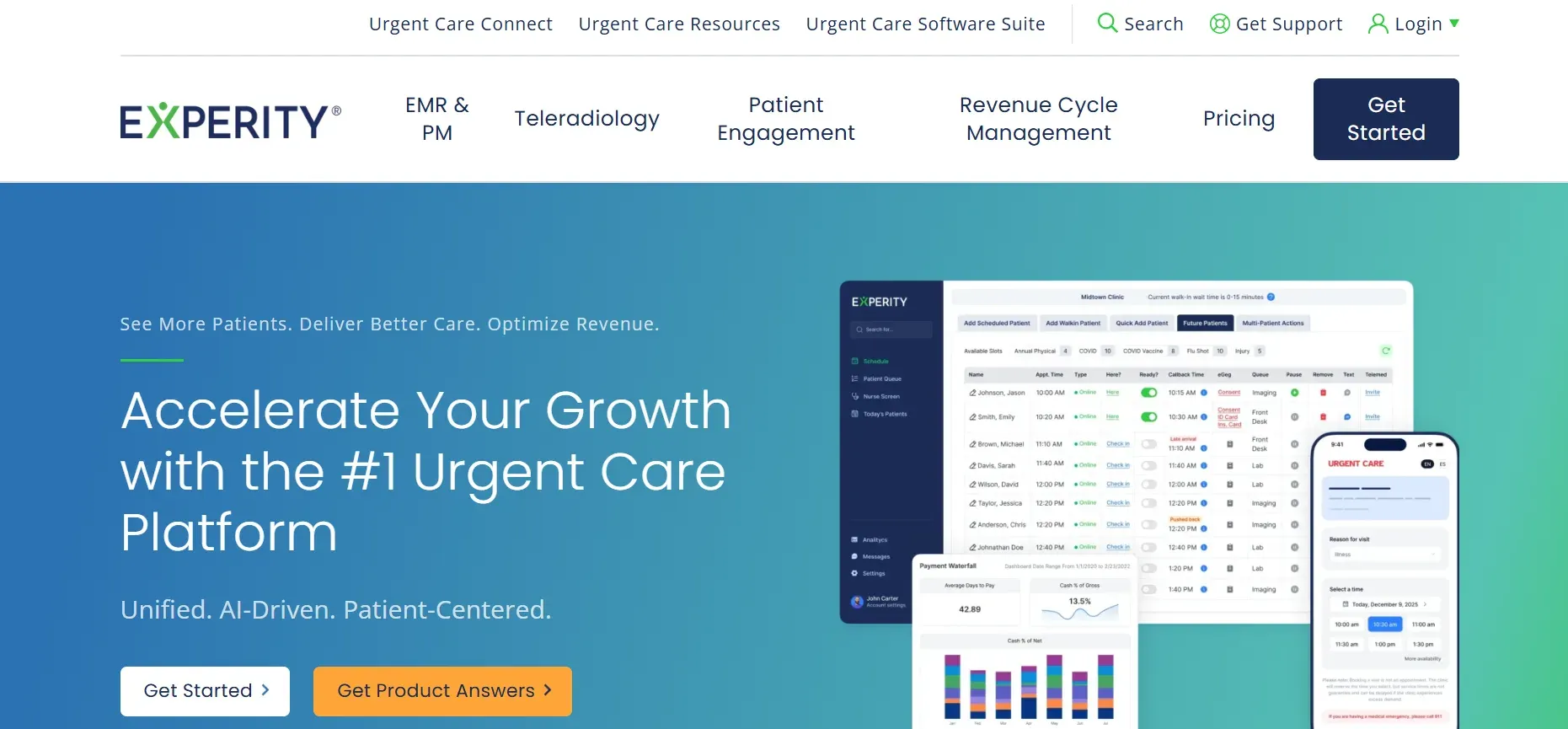
Experity is purpose-built for urgent care, making it a leader among clinics that value speed, high patient throughput, and urgent care-specific workflows. Clockwise.MD, its patient engagement module, handles online check-in, waitlist management, and digital intake, streamlining the patient journey from arrival to discharge. The software is designed to minimize lobby congestion and maximize provider efficiency, which is vital for clinics seeing dozens or hundreds of walk-ins daily.
Key features:
- Integrated patient queue management and digital intake
- Real-time insurance eligibility checks
- Lab and imaging order management
- Automated follow-up and recall workflows
- Pre-built urgent care templates and charting shortcuts
- Analytics and reporting dashboards
Integrations: Experity connects with popular labs (LabCorp, Quest), e-prescribing platforms, revenue cycle management tools, and has an API for custom integrations. However, deeper integrations (for example, with hospital EHRs or third-party billing) may require additional setup fees and vendor involvement.
Migration friction: Experity offers migration support, but moving from Healow often means manual mapping of custom fields and workflows. Data extraction from Healow can be slow, and Experity’s implementation team typically handles the process over several weeks. Expect downtime or dual systems during transition.
Concrete use cases: High-traffic urgent care centers seeking to reduce patient wait times, automate check-ins, and manage multiple providers per shift. Multi-location groups benefit from centralized reporting and standardized workflows.
Pricing: Reported around $600 per month for basic packages, plus add-ons. See Experity pricing.
- Key limitations:
- Per-provider and per-location pricing can make budgeting complex as you grow
- Customization is limited to what Experity supports
- Every module (telemedicine, advanced analytics, patient communications) is an extra cost
- Strengths:
- Purpose-built for urgent care workflows
- Streamlines patient flow and check-in
- Centralized analytics and reporting
2. Kareo (Tebra) (Best for small to mid-size clinics)
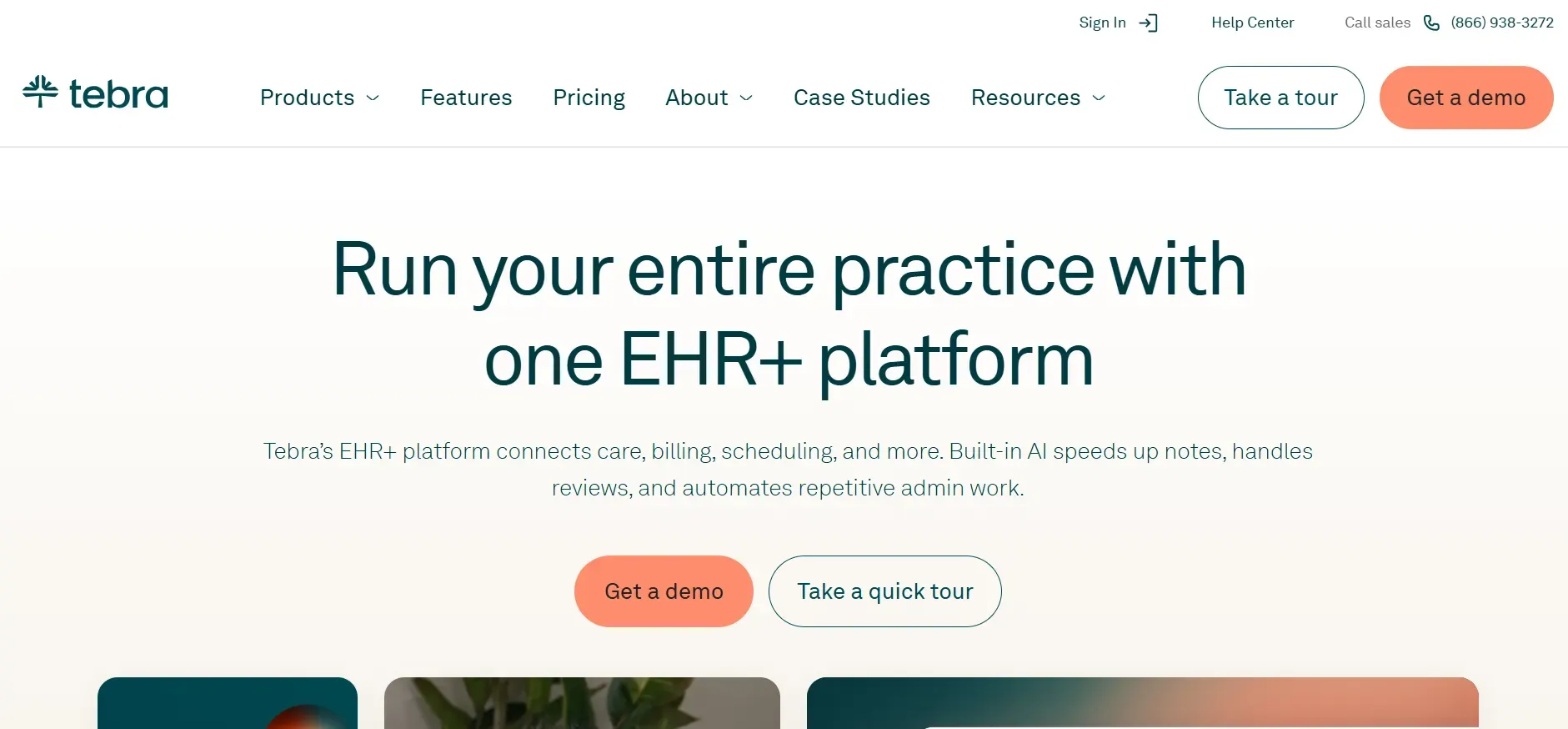
Kareo, now part of Tebra, is a lightweight, cloud-based EHR and practice management solution. Its hallmark is simplicity, most clinics can be up and running in days, not weeks. The interface is less cluttered than Healow and is built for the realities of small teams with limited IT resources.
Key features:
- Basic scheduling, charting, and billing
- Automated appointment reminders
- Integrated claims and revenue cycle tools
- Optional telehealth module
- Mobile app for on-the-go access
- Patient portal with secure messaging
Integrations: Kareo connects with clearinghouses, common labs, and some pharmacy networks. However, integrations with urgent care-specific tools (like digital check-in kiosks or custom analytics) are limited, and custom integrations often require outside development.
Migration friction: Kareo’s onboarding is straightforward for clinics migrating from basic EHRs. However, advanced custom data fields or complex workflows from Healow may not map directly and could require manual setup. Data exports from Healow may incur fees or delays.
Concrete use cases: Solo urgent care providers, startup clinics, and small groups that prioritize ease of use and low upfront costs. Ideal for those who want to minimize training time and have basic scheduling and billing needs.
On a custom-built platform, you’d add features as you grow, not when the vendor makes them available.
Pricing: Starts around $125 per provider per month. See Kareo pricing.
- Key limitations:
- Telehealth, e-prescribing, and advanced analytics are all separate add-ons
- Support can be slow during peak times
- Customization is limited as you scale
- Strengths:
- Simple, intuitive interface
- Fast onboarding for small teams
- Affordable entry pricing
3. AdvancedMD (Best for multi-location urgent care)
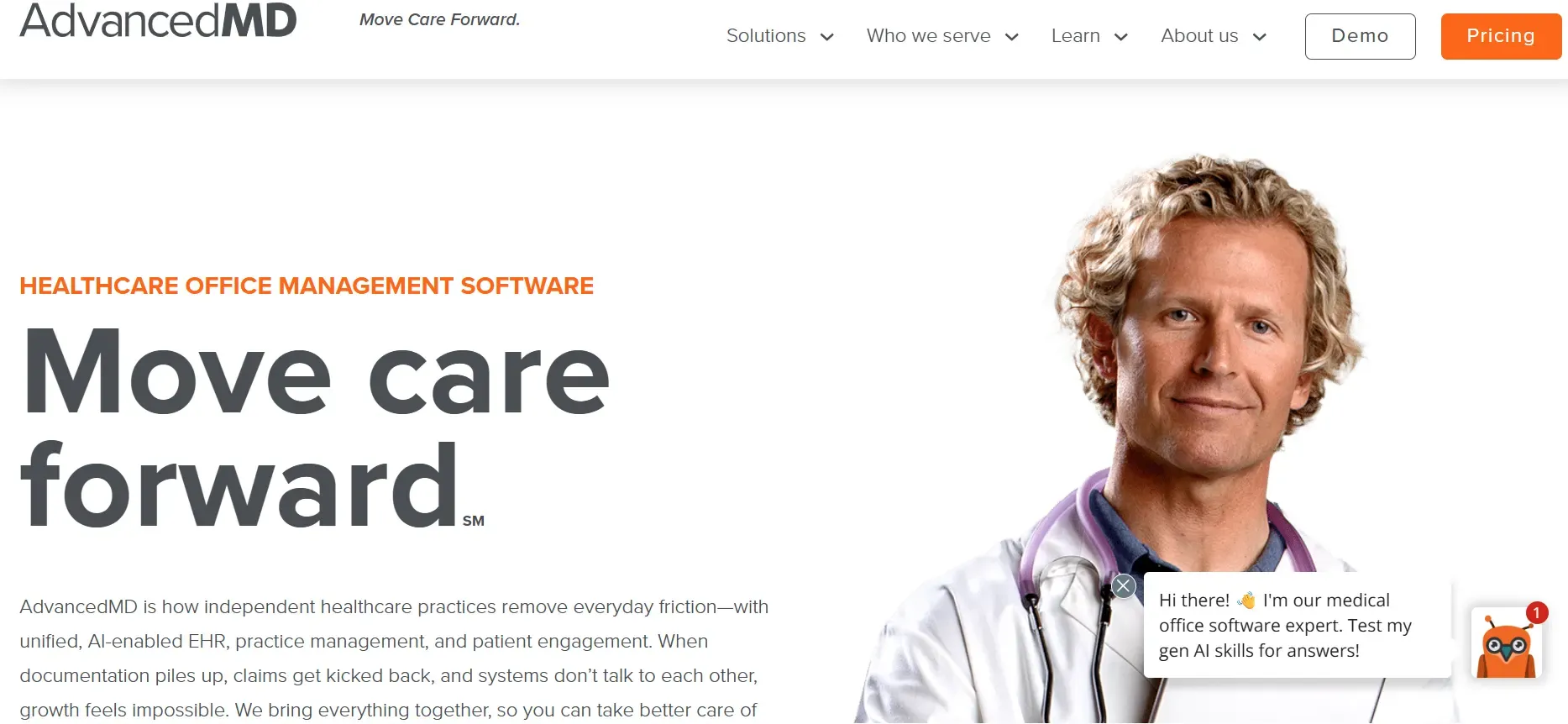
AdvancedMD is a cloud-based EHR and practice management suite that shines for multi-location urgent care practices. Its flexibility in scheduling, charting, and billing workflows allows larger groups to standardize across locations while maintaining the option for site-specific customization.
Key features:
- Advanced scheduling with resource management
- Configurable clinical templates for urgent care
- Integrated telemedicine (video and messaging)
- Revenue cycle management with denial tracking
- Automated patient reminders and online bill pay
- Customizable dashboards and analytics
Integrations: AdvancedMD offers native integrations with leading laboratories, major pharmacies, and clearinghouses. It also supports HL7 and FHIR standards for interoperability, making it possible to connect with hospital systems or third-party analytics tools. However, custom integrations often require professional services, adding to upfront costs.
Migration friction: Migration from Healow is supported, but the process can be time-consuming due to AdvancedMD’s complex data model. Expect a detailed mapping and testing phase. Training is necessary for staff to adapt to the more powerful but less intuitive interface.
Concrete use cases: Multi-location urgent care networks that need consolidated reporting, centralized billing, and the flexibility to adapt workflows for different sites. Useful for practices that want to scale while maintaining some operational autonomy at each location.
Pricing: Custom, but typically $429+ per provider per month. See AdvancedMD pricing.
- Key limitations:
- Smaller clinics may find it overwhelming
- Per-provider model means scaling is expensive
- Some advanced features are only available in higher tiers or as paid add-ons
- Strengths:
- Flexible for multi-location groups
- Strong reporting and analytics
- Customizable clinical templates
4. eClinicalWorks (Best for integrated EHR + PM)
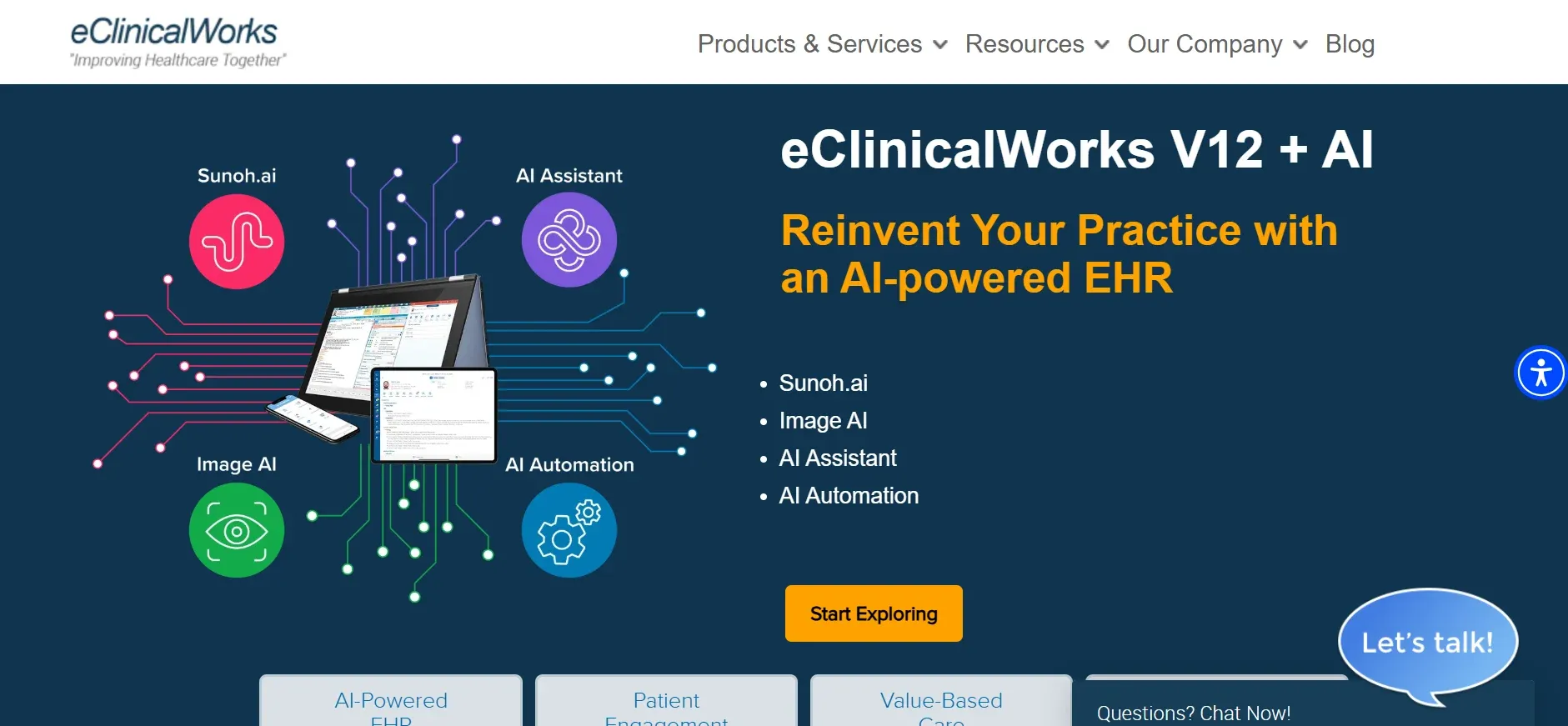
eClinicalWorks is a widely used EHR and practice management platform, known for its all-in-one approach. It blends clinical charting, billing, population health, and patient engagement into a single interface. The system is more feature-rich than Healow and is a common upgrade for clinics outgrowing basic EHRs.
Key features:
- Comprehensive clinical documentation and templates
- Population health management and risk stratification
- Integrated telemedicine (Healow TeleVisits)
- Patient portal with secure messaging and online scheduling
- Automated reminders and recalls
- Revenue cycle management tools
Integrations: eClinicalWorks supports HL7 and FHIR APIs, allowing data exchange with labs, imaging centers, and hospital EHRs. The Healow patient engagement suite is deeply embedded, but integrating with non-eClinicalWorks tools can be challenging and sometimes costly.
Migration friction: Data migration from Healow is relatively smooth, given their shared ecosystem, but custom fields and workflows may not port seamlessly. Full migration support is available but may be billed as a professional service. Training is critical due to the system’s depth and complexity.
Concrete use cases: Urgent care centers wanting a tightly integrated platform with population health tools, robust billing, and patient engagement features. Suitable for clinics managing value-based contracts or those needing strong reporting for payers.
On Devaims, customization is yours, no need to wait on a vendor’s roadmap.
Pricing: Reported $499+ per provider per month. See eClinicalWorks pricing.
- Key limitations:
- High per-provider cost
- Steep learning curve
- Customization is limited to what eClinicalWorks allows
- Strengths:
- All-in-one platform with deep feature set
- Strong patient engagement tools
- Integrated population health management
5. Athenahealth (Best for enterprise urgent care)
Athenahealth is designed for enterprise-scale, multi-location clinics and outpatient networks. Its cloud-based platform offers deep analytics, comprehensive clinical workflows, and a broad set of integrations for labs, pharmacies, and payers. Athenahealth’s network effect is a major selling point: you benefit from millions of shared clinical rules, payer edits, and benchmarking data across its user base.
Key features:
- Integrated EHR, practice management, and revenue cycle
- Real-time insurance eligibility and claims scrubbing
- Patient engagement suite (scheduling, reminders, messaging)
- Population health and care coordination tools
- Analytics dashboards for financial and clinical KPIs
- Telehealth built-in (video and asynchronous visits)
Integrations: Athenahealth offers APIs and a marketplace of third-party apps for everything from lab integration to advanced analytics. It supports HL7 and FHIR, making interoperability with hospital systems and external partners possible, though complex integrations may require professional services and ongoing fees.
Migration friction: Athenahealth’s implementation team handles migration, but the process can take months for multi-location groups. Data mapping from Healow is feasible, but custom workflows and templates may need to be rebuilt. Expect significant staff training and a phased go-live.
Concrete use cases: Enterprise urgent care networks, regional groups, and hospital-affiliated clinics who need granular control over billing, compliance, and operations. Useful for organizations pursuing value-based care or complex payer contracts.
Pricing: Custom, often based on a percentage of collections. See Athenahealth pricing.
- Key limitations:
- Pricing often tied to a percentage of collections
- Contracts are typically multi-year
- Workflow customization usually requires vendor involvement
- Strengths:
- Enterprise-grade analytics and reporting
- Broad integrations and interoperability
- Network effect for payer edits and compliance
6. NextGen (Best for scaling urgent care networks)
NextGen targets larger urgent care networks and health systems. Its modular approach allows clinics to choose only the features they need, clinical documentation, practice management, revenue cycle, analytics, or patient engagement, making it scalable and flexible for growing organizations.
Key features:
- Configurable templates for urgent care workflows
- Integrated practice management and billing
- Compliance management (HIPAA, MACRA, MIPS)
- Multi-site scheduling and resource allocation
- Patient portal and self-scheduling tools
- Customizable analytics and reporting
Integrations: NextGen supports HL7, FHIR, and integrates with labs, imaging centers, and payer networks. The company maintains a network of third-party vendors for extended functionality, but some modules (like advanced analytics or telehealth) may require extra licenses or setup fees.
Migration friction: Switching from Healow to NextGen involves a detailed implementation project. Data migration is supported, but custom workflows, forms, and templates may need to be rebuilt. Expect a longer go-live period and dedicated project management from both sides.
Concrete use cases: Multi-location urgent care organizations that need to standardize documentation, billing, and compliance across sites while retaining some local autonomy. Particularly suited to growing groups planning to add locations or providers rapidly.
Pricing: Custom, varies by size and modules. See NextGen pricing.
- Key limitations:
- Pricing is not transparent and can escalate with added modules
- Implementation is resource-intensive
- Interface can feel dated compared to newer cloud competitors
- Strengths:
- Modular and scalable for growth
- Strong compliance and reporting
- Customizable workflows
7. Epic (Best for hospital-affiliated urgent care)
Epic is the EHR giant, dominating the hospital and health system market. Its urgent care modules are typically implemented within larger hospital systems, offering interoperability, analytics, and the ability to share records across organizations using Epic’s Care Everywhere network. For independent urgent care centers, Epic is rarely cost-effective, but for hospital-affiliated clinics, the integration is unmatched.
Key features:
- Comprehensive clinical modules (urgent care, ED, primary care)
- Real-time data sharing with hospitals, specialists, and payers
- Automated order entry, lab, and imaging integration
- Patient portal (MyChart) for scheduling and results
- Population health and care coordination tools
- Compliance, audit, and security controls
Integrations: Epic integrates with major labs, imaging centers, and pharmacies, and supports HL7, FHIR, and custom APIs. Its interoperability is a key differentiator, enabling transitions of care across providers and organizations.
Migration friction: Migrating to Epic is a major project, often requiring months of planning, data mapping, and testing. For urgent care centers within hospital systems, this is managed centrally; for independent clinics, the cost and complexity are usually prohibitive.
Concrete use cases: Hospital-owned urgent care centers or large regional networks needing seamless data exchange with inpatient, outpatient, and specialty services. Ideal for organizations prioritizing compliance and cross-organization care coordination.
Pricing: Enterprise custom; often high six or seven figures to implement. Contact Epic for pricing.
- Key limitations:
- High costs and long implementation cycles
- Customization often requires Epic’s approval
- Oversized for most standalone urgent care clinics
- Strengths:
- Unmatched interoperability for hospital systems
- Deep analytics and compliance tools
- Comprehensive clinical modules
8. Meditech (Best for health systems, multi-site)
Meditech is a legacy EHR platform favored by major hospital systems and multi-site healthcare organizations. Its urgent care modules are typically deployed as part of a larger clinical platform, offering compliance, security, and centralized management for large networks.
Key features:
- Centralized clinical documentation and order management
- Multi-site scheduling and provider management
- Integrated billing and revenue cycle tools
- Compliance and audit controls
- Patient portal for communication and results
- Customizable analytics and reporting
Integrations: Meditech supports interoperability via HL7, FHIR, and direct interfaces to hospital systems, labs, and imaging centers. Custom integrations are possible but typically require vendor services and ongoing maintenance contracts.
Migration friction: Moving from Healow to Meditech is complex and typically only attempted by organizations with in-house IT and dedicated project management. Data mapping, staff training, and phased rollout are all required. Expect downtime or parallel system use during migration.
Concrete use cases: Health systems and hospital-owned urgent care centers needing unified patient records, centralized billing, and compliance across multiple sites.
Pricing: Custom enterprise pricing. See Meditech pricing.
- Key limitations:
- High upfront costs and vendor lock-in
- Limited agility for independent clinics
- Customization managed by vendor and can be slow
- Strengths:
- Centralized management for large networks
- Strong compliance and security
- Comprehensive reporting
9. Devaims (Best for urgent care centers who want to own)
Devaims builds custom software for urgent care that you own outright, source code, data, and all. Instead of paying rent forever, you invest once and get a platform tailored to your clinic’s exact workflow, branding, and integrations. No more waiting on vendor roadmaps, per-provider fees, or restrictive contracts.
Key features:
- Custom EHR, scheduling, and billing modules built for your workflows
- Integrated telemedicine, patient portal, and reporting as you define
- Direct integrations with labs, payment processors, and referral networks
- Role-based permissions, audit trails, and compliance controls
- Full access to source code and data in standard formats
- Ongoing support and maintenance at a flat, predictable rate
Integrations: Anything you need, Devaims builds direct connections to your labs, pharmacies, telehealth providers, and analytics tools. No waiting for a vendor’s roadmap or paying for “premium” APIs.
Migration friction: Devaims manages the full migration from Healow or any other platform. This includes exporting all patient, billing, and scheduling data, mapping custom fields, and importing into your new system. Parallel testing and staff training are included, and the process is customized to your clinic’s timeline to minimize disruption.
Concrete use cases: Urgent care centers frustrated by escalating monthly fees, slow support, or limited customization. Multi-location groups that want to standardize operations without multiplying costs. Clinics needing unique workflows, branding, or integrations not available from off-the-shelf vendors.
- You own the code and your data, foreverNo monthly per-provider or per-location feesCustom features and integrations built for your workflowFlat, predictable maintenance costsRapid support from the team that built your platform
- You own the code and your data, forever
- No monthly per-provider or per-location fees
- Custom features and integrations built for your workflow
- Flat, predictable maintenance costs
- Rapid support from the team that built your platform
Other Healow alternatives worth knowing
- iPatientCare: Good for small practices needing a certified EHR, but not urgent care-specific. Integrates with labs and offers telehealth, but lacks urgent care templates and queue management.
- Nuvolo: More focused on healthcare operations and asset management than clinical EHR. Useful for facilities management rather than patient care.
- Doxy.me: Popular for telemedicine only, not a full urgent care solution. Can be integrated with other EHRs for standalone video visits, but lacks billing, scheduling, or clinical charting.
- Practice Fusion: Free for basic EHR, but limited for urgent care and owned by Allscripts. Add-ons and integrations are minimal, and the platform is not designed for high-volume walk-in clinics.
How to choose the right Healow alternative
- Budget: Calculate your true 5-year spend, including all add-ons and provider-based fees. Consider not just the sticker price, but the cost of scaling, support, and hidden fees for data export or integrations.
- Urgent care fit: Prioritize tools built for walk-in, high-volume clinics, not just general practices. Features like digital intake, real-time queue management, and rapid charting templates save time and reduce errors.
- Scalability: Consider how pricing and features change as you grow locations or providers. Some platforms penalize growth with escalating fees, while others (like Devaims) offer flat costs regardless of scale.
- Data ownership: If controlling your data matters, avoid platforms that make export difficult or costly. Ask vendors for a written guarantee of full data export in standard formats.
- Custom needs: If you want unique workflows or integrations, think about whether a vendor can deliver, or if you want to own your platform. Many clinics find that only a custom build can truly match their operational needs.
If you’re hitting the ceiling with monthly fees or need total control, a custom Devaims build puts you in the driver’s seat.
Stop paying rent on software you could own
The core problem with Healow, and every alternative above, is that you’re always renting. Every month, the meter runs. Add a provider? The bill goes up. Need a new workflow or reporting tweak? It’s a support ticket, a paid add-on, or a “coming soon” promise. Over five years, those “affordable” monthly fees become a six-figure sunk cost, and you still don’t own the system running your business.
Devaims is different. We build your urgent care platform custom, and when we’re done, you keep the source code, the data, and the right to run it anywhere. No more platform lock-in, no per-provider fees, no paying extra for your own reports. You pay once to build, then only flat, predictable maintenance. It’s yours, period.
- Per-provider fees? Gone. Add staff as you like, no extra charge.
- Contract lock-in? None. You own the code and can run it on your terms.
- Reporting and workflow tweaks? Your system, your priorities.
- Data export headaches? All data is yours, accessible in standard formats.
| Platform | Ownership | Typical monthly fees | Contract term |
|---|---|---|---|
| Healow | Vendor-owned | $400 to $1,000+ | 1+ years |
| Experity | Vendor-owned | $600 to $2,000+ | 1+ years |
| Athenahealth | Vendor-owned | % of collections (~$1,000+/mo typical) | Multi-year |
| Devaims (custom) | You own it | One-time build, $150 to $230/mo maint | No contract |
| Year | Rented (monthly $800) | Owned (build $32,000, $200/mo maint) |
|---|---|---|
| 1 | $9,600 | $34,400 |
| 2 | $19,200 | $36,800 |
| 3 | $28,800 | $39,200 |
| 4 | $38,400 | $41,600 |
| 5 | $48,000 | $44,000 (now ahead) |
For an urgent care center running three locations at $800/month, renting totals $48,000 over five years, with nothing to show for it at the end. Owned, you break even early in year five, and after that, every year is pure savings. For larger clinics, the break-even comes even sooner. If you want your system to work for you, not the other way around, Devaims is the only option you truly own.
How to switch from Healow
- Export all clinical, billing, and scheduling data from Healow: Request a full-format export from Healow support. Insist on standard formats (CSV, XML, or HL7) to ensure compatibility with your new platform. Be aware that some vendors charge for this service or may delay the process.
- Review and choose your new platform: Assess urgent care workflow needs, integrations, and reporting requirements. Involve stakeholders from clinical, administrative, and IT teams to avoid surprises after go-live.
- Import or migrate data to the new system: Map patient records, appointments, billing codes, and custom fields. Work closely with your new vendor or development partner to validate data accuracy and completeness.
- Reconnect payment processors, labs, and integrations: Ensure real-time eligibility checks, lab orders, e-prescribing, and telehealth modules are connected and tested before going live.
- Train your staff and run parallel testing: At least two weeks of dual system operation is recommended. Use real scenarios to test charting, billing, and scheduling workflows. Address any data gaps or workflow issues before full cutover.
- Review your Healow contract and formally terminate: Give notice in accordance with your contract terms. Confirm that all data has been successfully exported and that no ongoing fees remain.
With a custom Devaims build, the migration is handled as part of the project, including staff training, data validation, and go-live support.
Frequently asked questions
What is the best Healow alternative for urgent care centers?
For most urgent care centers, Experity offers urgent care-specific features, while Athenahealth and Epic scale for larger groups. However, all keep you on a subscription. If you want to own your platform, Devaims is the only alternative that puts you in control of the code and your data. Ownership means you set the pace for feature development, integrations, and compliance, not your vendor.
What is the cheapest Healow alternative?
Kareo (Tebra) and PrognoCIS are among the most affordable for small urgent care clinics, with entry pricing around $125 to $250 per provider per month. However, over time, these monthly fees add up, especially as you add providers or locations. By contrast, Devaims offers a path to ownership and long-term savings, breaking even after a few years and eliminating per-provider fees entirely.
Is there a free Healow alternative?
Practice Fusion is one of the few free EHRs, but it’s not tailored to urgent care and comes with limited features. It lacks walk-in scheduling, digital queue management, and urgent care-specific charting. Most urgent care clinics will eventually need to upgrade to a paid solution or build their own to avoid hidden costs and limitations. Free platforms often make money on data or advertising, which can raise security and compliance concerns.
What is the best Healow alternative for multi-location urgent care?
AdvancedMD and NextGen both support multi-location urgent care, with features for centralized scheduling, reporting, and billing. However, their pricing scales with each added provider and site, which can quickly become expensive. A Devaims custom build lets you grow locations without multiplying your costs, giving you full control over operations and data across your network.
When should I switch from Healow?
If you’re frustrated by rising monthly costs, slow support, or limited customization, it’s time to look for Healow alternatives. Clinics planning to scale, open new locations, or who want to own their data often benefit most from switching to a custom solution like Devaims. The earlier you switch, the sooner you start saving and gaining control over your operations.
Can I keep my existing patient data when switching from Healow?
Yes, you can export patient, billing, and scheduling data from Healow, though the process may involve support tickets or fees. The completeness of the export depends on your contract and the cooperation of the vendor. Devaims ensures all your data migrates smoothly into your new owned platform as part of the project, including validation and mapping of custom fields.
How long does migration from Healow take?
Migration timelines vary. For small clinics with basic workflows, the process can take 2 to 4 weeks. For multi-location groups, plan on 6 to 12 weeks to ensure data accuracy, staff training, and parallel testing. With Devaims, migration is managed as a turnkey project, minimizing disruption and ensuring all critical data is preserved.
What if I need to add new features after going live?
With subscription platforms, you are limited to the vendor’s roadmap and support queues. With Devaims, you can commission new features at any time, either through Devaims or your own developers. This means your software evolves with your clinic, not with a vendor’s priorities.
The bottom line
The best Healow alternatives for urgent care are tailored to your clinic’s scale and workflow, but all the big names keep you on the hook for monthly fees, add-ons, and contracts. Even the most affordable options lock you into a rental model and restrict your ability to customize or control your data.
Here’s the test: add up what your software will cost over the next five years. If that number could have built you a system you own, it’s time to stop renting. Own your platform, keep your data, and control your future with Devaims.
See more on the Devaims blog, or compare other options: Athenahealth alternatives, Epic alternatives, and eClinicalWorks alternatives.