


Your home care agency operates on tight margins, but each year your software costs seem to grow, sometimes faster than your business. eRSP, once considered the gold standard for all-in-one home care management, now often leaves agency leaders frustrated with per-client fees, hidden add-ons, and the feeling that you’re renting a system that fits someone else’s business better than your own. For many, this means shopping for eRSP alternatives, hoping to find a better fit, more transparency, or a path to true ownership.
If you’ve ever been locked out of a critical feature until you pay more, watched your bill rise with your census, or struggled with rigid workflows, you’re not alone. Most agencies migrate from eRSP to another rental, but a growing number are exploring what it means to truly own their platform. In 2026, the strongest eRSP alternatives are AlayaCare, WellSky, Brightree, MatrixCare, PointClickCare, Caremerge, CareVoyant, Sandata, HHAeXchange, and for those ready to control their destiny, Devaims. Each has its place, but only one lets you keep what you pay for and shape your tech to your agency.
This guide offers a detailed, practical look at every major eRSP alternative, covering features, integrations, migration friction, concrete use cases, and honest trade-offs. We’ll break down the cost math over five years, explain when building your own platform with Devaims flips the equation, and answer the most common questions agencies face when considering a switch.
Why home care agencies look for eRSP alternatives
Per-client fees stack up fast. Most eRSP alternatives charge per-client or per-caregiver, regardless of how much you actually use the system. As your agency grows, your software bill grows with it, even though the vendor’s costs do not. For agencies with stable or increasing census, this can quickly become the largest monthly expense outside payroll.
Contract lock-ins limit flexibility. Multi-year agreements, often with automatic renewals and steep penalties for early exit, mean you’re stuck if your needs change or the platform stops meeting your standards. Some agencies discover that even after paying for years, they must keep paying just to access their own data or avoid disruptions.
Add-ons and surprise charges. Features that seem standard, like Electronic Visit Verification (EVV), advanced reporting, e-learning modules, or family portals, are often not included in the base price. Instead, they’re gated as add-ons, sometimes with per-user or per-feature fees. This makes budgeting unpredictable and can delay adoption of important tools.
Customization is limited or expensive. Rental platforms are designed for the average agency. If your workflows, reporting needs, or integrations are unique, customization can be slow, costly, or simply not possible. Many vendors prioritize features that benefit the largest client segment, not your specific needs.
Data ownership is never truly yours. Exporting your data is possible, but often cumbersome and incomplete. You may only receive partial exports, or have to pay for full data access. If you leave, you risk losing access to historical billing, notes, or compliance records. This lack of true ownership can be a deal-breaker for agencies focused on long-term growth and compliance.
Agencies hitting one or more of these walls are often the first to look for eRSP alternatives that fit their real-world needs and budget.
Quick comparison of the best eRSP alternatives
| Tool | Best for | Starting price | You own it? |
|---|---|---|---|
| AlayaCare | Enterprise agencies | Reported $12,000/year | No, subscription |
| WellSky | Large multi-location | Custom quote | No, subscription |
| Brightree | Compliance-focused | Custom quote | No, subscription |
| MatrixCare | Post-acute networks | Custom quote | No, subscription |
| PointClickCare | Senior living | Custom quote | No, subscription |
| Caremerge | Resident engagement | Custom quote | No, subscription |
| CareVoyant | Multi-service agencies | Reported $500/month | No, subscription |
| Sandata | EVV compliance | Reported $5,000/year | No, subscription |
| HHAeXchange | Medicaid billing | Custom quote | No, subscription |
| Devaims | Full ownership | One-time build, you own it | Yes, you own it |
Always confirm current pricing before you decide. Quotes and starting tiers change fast in this market. Many vendors offer custom pricing, so what you pay may differ from public numbers.
The 10 best eRSP alternatives
1. AlayaCare (Best for enterprise agencies)
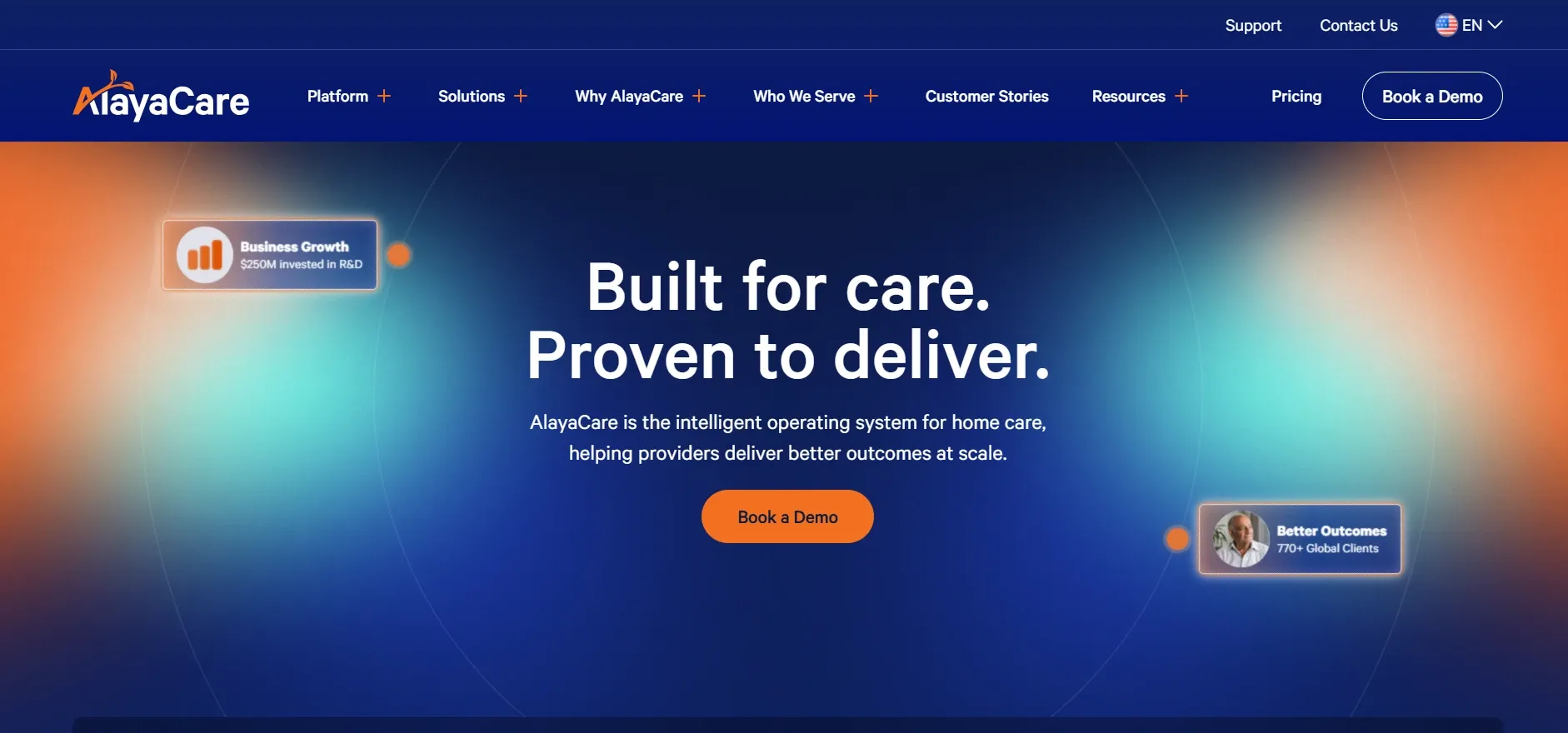
AlayaCare is a leading home care platform that emphasizes clinical quality, workflow automation, and a modern, mobile-first experience. It is especially popular with large and enterprise-level agencies that need comprehensive care management, advanced analytics, and a flexible API ecosystem.
Features and integrations: AlayaCare covers intake, scheduling, care planning, billing, payroll, and mobile documentation. Its mobile app allows caregivers to clock in and out with GPS, access care plans, and communicate securely with coordinators. The platform integrates with major payroll, HR, and accounting systems, as well as third-party EVV vendors and state Medicaid systems. The built-in business intelligence module offers custom dashboards for executive and compliance reporting.
Migration friction: AlayaCare has a formal onboarding process, including data migration, staff training, and go-live support. However, migration can be complex for agencies with legacy workflows or large historical datasets. Agencies report that mapping custom fields and reconciling billing data can require vendor support, sometimes at additional cost.
Concrete use cases: Large agencies with hundreds of caregivers, multi-state operations, or those needing to demonstrate compliance with Medicaid, Medicare, and private insurance requirements. AlayaCare is also chosen by agencies with a mix of skilled and non-skilled services.
Trade-offs: While AlayaCare stands out for its breadth and depth, the per-client and per-feature pricing model can escalate rapidly. Some agencies find that customization requests are slow to implement, and fees for custom workflows or integrations are significant. Data exports are possible but not as straightforward as owning your own platform. Annual contracts are standard, so flexibility is limited.
Pricing: Reported starting at $12,000 per year, per agency. See pricing details. Actual cost varies widely based on census, modules, and support level.
- Mobile-optimized for field staff
- Powerful analytics and reporting
- Deep integration with payers and state systems
- Strong support for clinical documentation and compliance
- Escalating costs as you grow
- Customization requires vendor involvement and extra fees
- Locked into annual contracts
On a platform you own, every added client is just a new record, not a new fee.
2. WellSky (Best for large multi-location agencies)
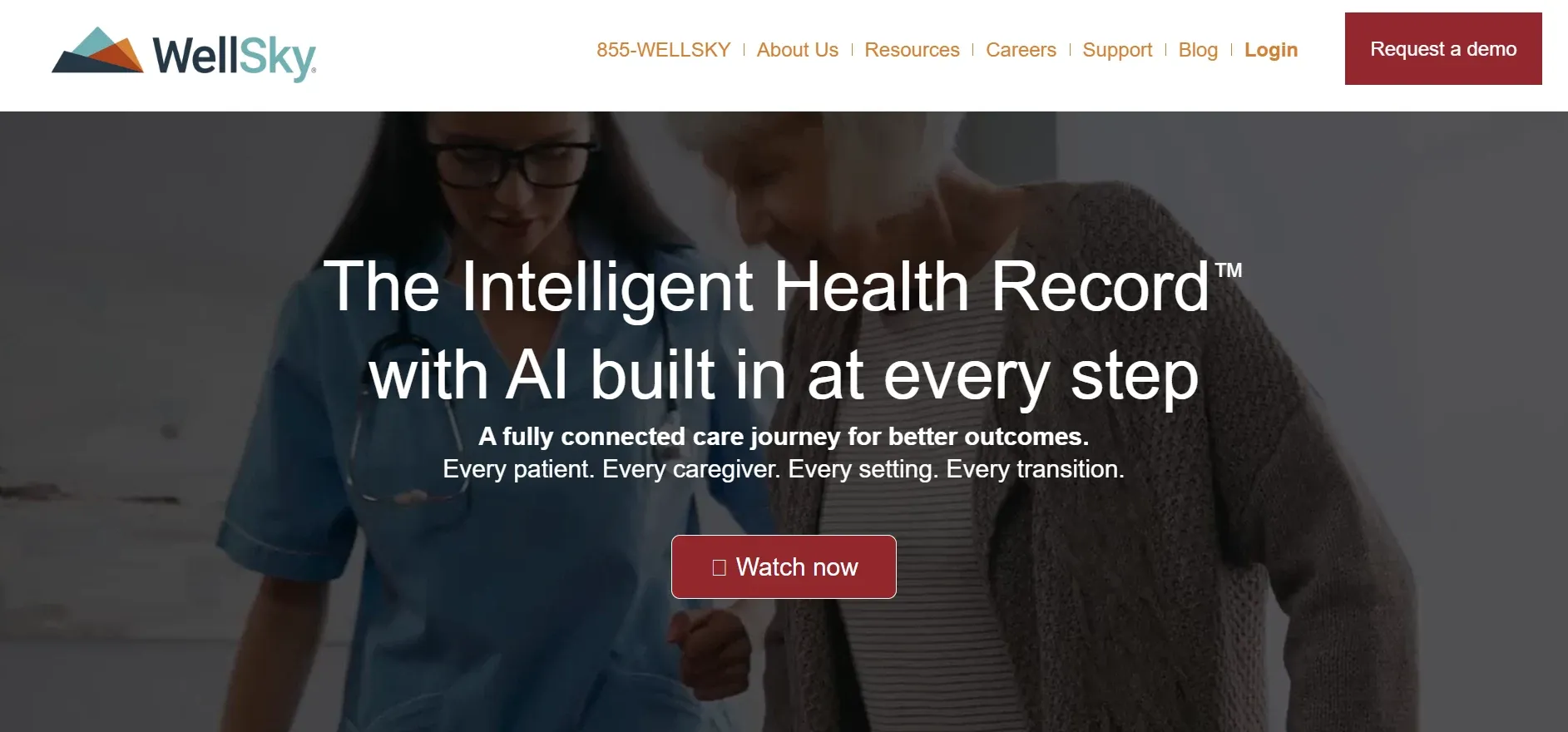
WellSky, which now encompasses the ClearCare platform, is a dominant force in home care, especially among large, multi-location agencies. It offers a broad suite covering scheduling, billing, CRM, HR, EVV, and compliance. WellSky is also known for its deep integrations with referral sources and payers, making it a favorite for agencies with complex networks.
Features and integrations: WellSky provides real-time scheduling and route optimization, integrated marketing/CRM, electronic billing, payroll, and secure family portals. The platform supports EVV mandated by most states and integrates with clearinghouses, Medicaid, and major payroll providers. Advanced modules include business intelligence dashboards, telephony, and caregiver training.
Migration friction: WellSky’s onboarding includes data migration and workflow mapping, but agencies report the process can be time-consuming, especially for those with non-standard workflows or legacy data. Some integrations, like custom HR or accounting systems, may require additional development or incur fees.
Concrete use cases: Multi-site agencies, franchise networks, or those scaling rapidly across states. Agencies seeking to centralize operations and maintain compliance across service lines.
Trade-offs: Pricing is not transparent, with custom quotes for each agency. Many essential features are gated behind higher-priced tiers. Agencies report that workflow customization is limited, and significant changes often require vendor approval or custom contracts. Per-location and add-on costs can quickly add up, and annual commitments are standard.
Pricing: Custom quote based on agency scale and modules. See pricing page.
- Deep integrations with payers, referral sources, and clearinghouses
- Comprehensive compliance support for Medicaid, Medicare, and private pay
- Strong user community and support resources
- Opaque pricing and high costs for multi-location agencies
- Limited flexibility for unique workflows
- Annual contracts with penalties for early exit
With Devaims, features you need are built for you, not locked behind an upsell.
3. Brightree (Best for compliance-focused agencies)

Brightree is designed for agencies that need rigorous documentation and compliance tracking, especially those serving complex payer mixes. It is widely used in home health, hospice, and medical equipment sectors, with a strong reputation for payer integration and regulatory compliance.
Features and integrations: Brightree offers detailed care planning, automated billing, claims management, and compliance alerts. Its platform includes a robust interface for Medicare, Medicaid, and commercial payers, along with HL7 and FHIR integrations for interoperability. The documentation engine is tailored for regulatory audits, with real-time alerts for missing signatures or incomplete visits.
Migration friction: Agencies moving to Brightree often need to invest in data cleaning and mapping, as the system enforces strict data structures. Implementation is guided but can be lengthy, especially for agencies moving from less regulated platforms. Customization of reports or workflows is possible, but usually requires Brightree’s professional services team.
Concrete use cases: Agencies with high compliance burdens, such as those participating in value-based care programs, or those needing seamless integration with hospital systems and payers.
Trade-offs: Brightree’s user interface is powerful but can be overwhelming for new staff. The system is designed for compliance first, sometimes at the expense of workflow speed. Recurring per-client costs are standard, and customizations are limited to what the vendor supports. Exports are available, but true data ownership is not.
Pricing: Custom quote model. See pricing page.
- Industry-leading compliance and documentation tools
- Automated billing and claims workflows
- Rich integrations with payers and hospital systems
- Complex user interface and steeper learning curve
- Recurring per-client and per-feature fees
- Customizations require vendor involvement
4. MatrixCare (Best for post-acute networks)
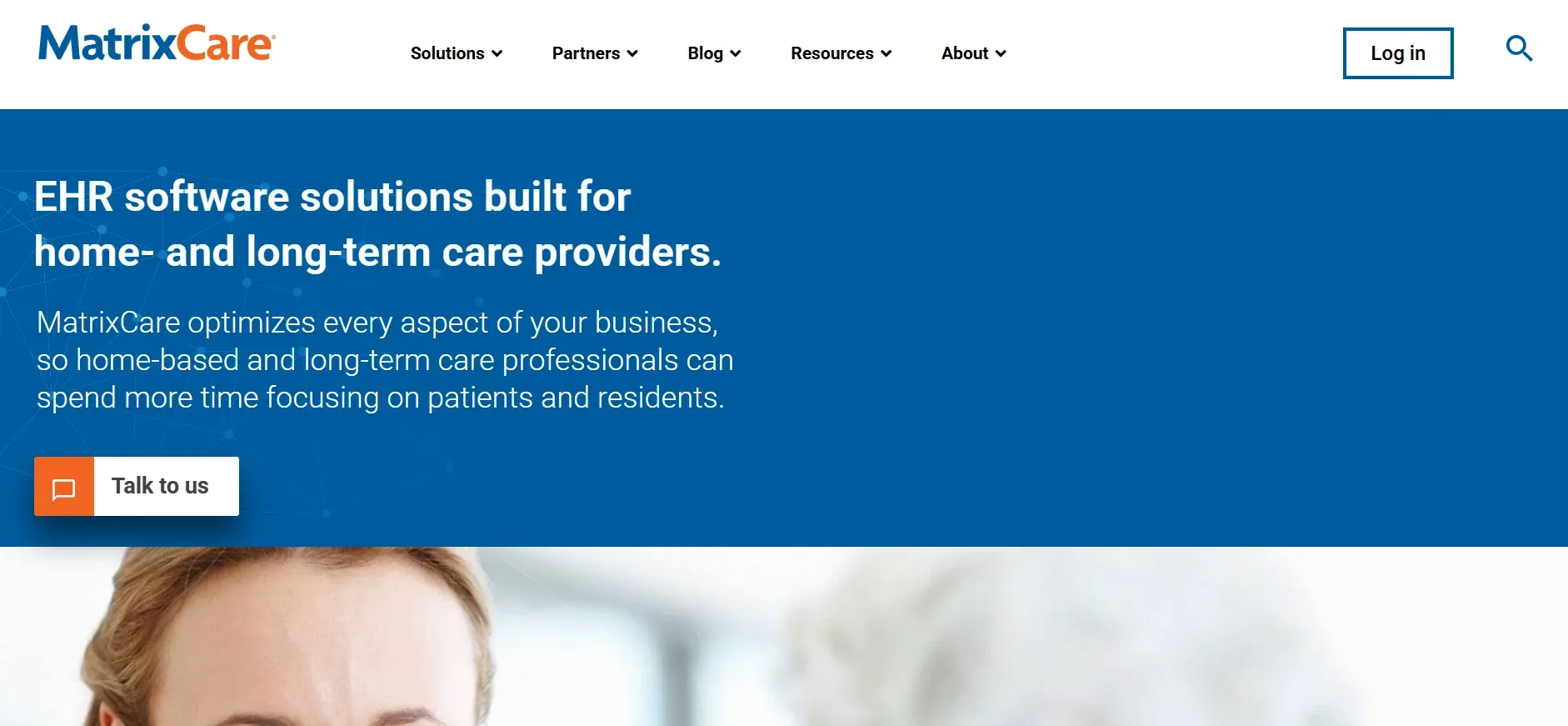
MatrixCare is tailored for agencies and networks operating in post-acute, long-term, and senior care. Its strength is in care coordination across multiple settings, home health, hospice, skilled nursing, and rehab, making it a go-to for organizations bridging home and facility-based care.
Features and integrations: MatrixCare offers intake, scheduling, care planning, referrals, and outcome tracking. The platform integrates directly with hospital and skilled nursing EHRs, allowing for seamless transitions of care. Its analytics modules are robust, supporting quality reporting, readmission tracking, and regulatory compliance. MatrixCare also supports EVV, Medicaid, and Medicare billing.
Migration friction: Implementation is resource-intensive, especially for smaller agencies. Custom field mapping, historical data imports, and workflow reengineering are common. MatrixCare offers implementation specialists, but agencies should budget for a multi-month process.
Concrete use cases: Large post-acute networks, organizations managing both home health and facility-based care, or those needing sophisticated referral management and regulatory reporting.
Trade-offs: MatrixCare’s breadth can be overkill for smaller agencies. Per-module pricing means costs escalate as you add capabilities. Data exports are available, but data ownership is limited to what the platform allows. Custom integrations are possible but may require additional contracts.
Pricing: Custom quote, scale-dependent. See pricing page.
- Deep integration with referral and hospital networks
- Comprehensive documentation and regulatory compliance
- Scalable for multi-site, multi-service organizations
- Complex setup and onboarding
- Per-module and per-user pricing can escalate
- Full data ownership not provided
5. PointClickCare (Best for senior living)
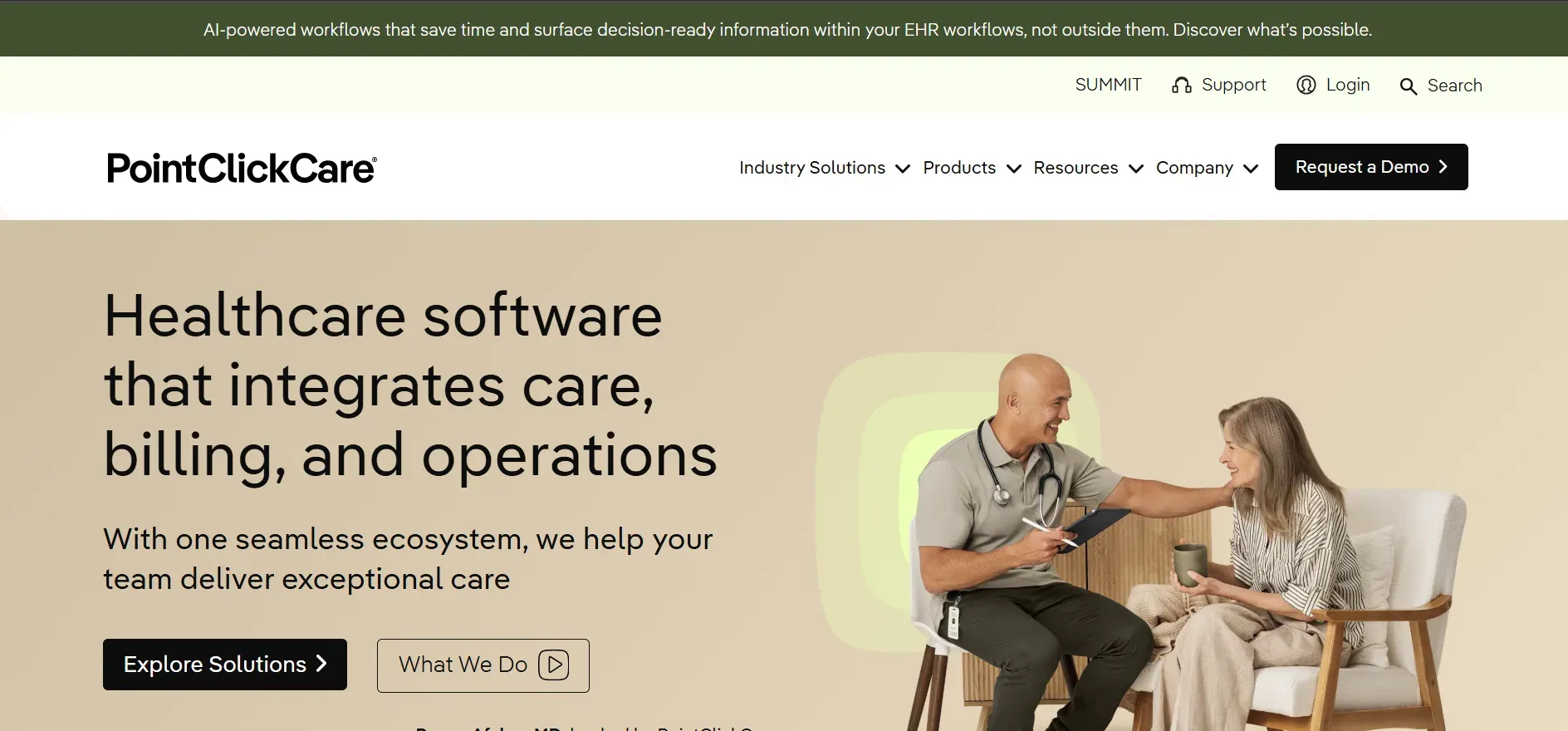
PointClickCare is a market leader in senior living, skilled nursing, and assisted living. Its platform is designed for resident management, care coordination, and compliance across facility-based and in-home care.
Features and integrations: PointClickCare supports census management, medication administration, incident tracking, billing, and family communication. Its interoperability modules allow for health information exchange with hospitals and pharmacies, and it offers integrations with accounting, HR, and analytics tools. The platform’s compliance modules are updated for evolving state and federal regulations.
Migration friction: Implementation can be extensive for agencies moving from non-facility platforms. PointClickCare provides data migration and workflow mapping, but agencies should expect a learning curve for staff. Custom reports and integrations may require additional contracts or professional services.
Concrete use cases: Senior living communities, assisted living facilities, and agencies managing both in-home and facility-based care. Organizations needing robust medication management and resident engagement.
Trade-offs: The platform is less focused on pure in-home care, so some features may be less relevant for non-facility agencies. Per-user and per-feature fees can add up, especially for advanced analytics or third-party integrations. Annual contracts are standard, and customization is limited by the vendor’s roadmap.
Pricing: Custom quote, often based on facility census. See pricing page.
- Best-in-class for senior living and facility-based care
- Powerful regulatory compliance and medication management
- Interoperability with health systems and pharmacies
- Annual contracts required
- Limited features for pure in-home care agencies
- Advanced analytics and integrations are paid add-ons
6. Caremerge (Best for resident engagement)
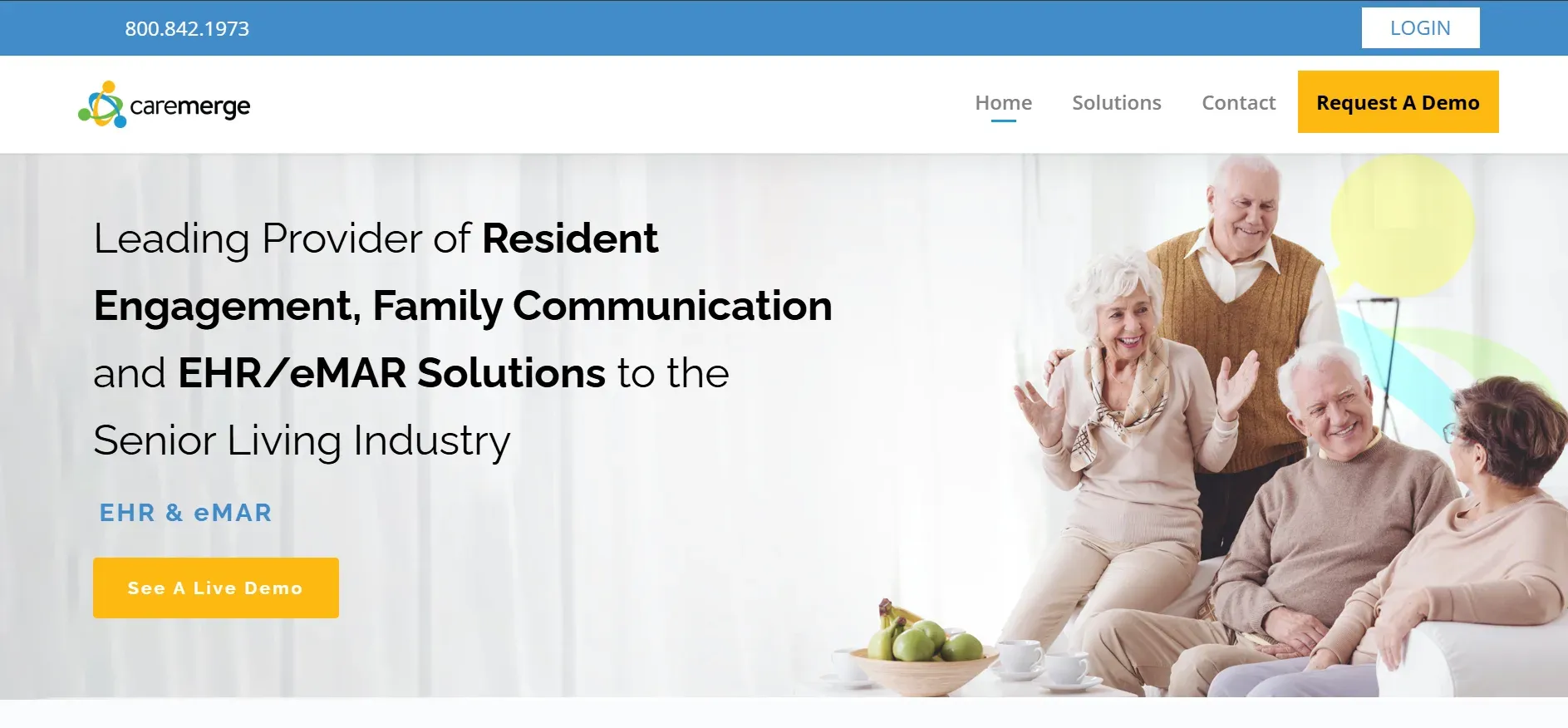
Caremerge specializes in engagement and communication for senior care, focusing on connecting residents, families, and staff. It is not a full back-office platform but excels at resident experience and engagement.
Features and integrations: Caremerge offers real-time messaging, activity calendars, digital signage, and family portals. It integrates with major EHRs and senior living platforms, allowing for data sharing and communication across systems. The resident engagement app is designed for ease of use, with accessibility features for older adults.
Migration friction: Since Caremerge is often layered on top of other systems, migration is usually straightforward. Agencies need to map resident and staff data, and set up integrations with existing EHR or CRM systems. Training for residents and families is recommended but not complex.
Concrete use cases: Senior living communities focused on improving resident engagement, communication, and satisfaction. Agencies looking to enhance family involvement and transparency.
Trade-offs: Caremerge does not provide core operations features like scheduling, billing, or compliance. Monthly per-user pricing can add up in larger communities. The platform is best used as an adjunct to a full agency management suite.
Pricing: Custom quote based on resident census. See pricing page.
- User-friendly for residents and families
- Real-time communication and engagement tools
- Integrates with major senior living systems
- Not a complete back-office solution
- Most features focus on engagement, not care delivery
- Monthly per-user fees
7. CareVoyant (Best for multi-service agencies)
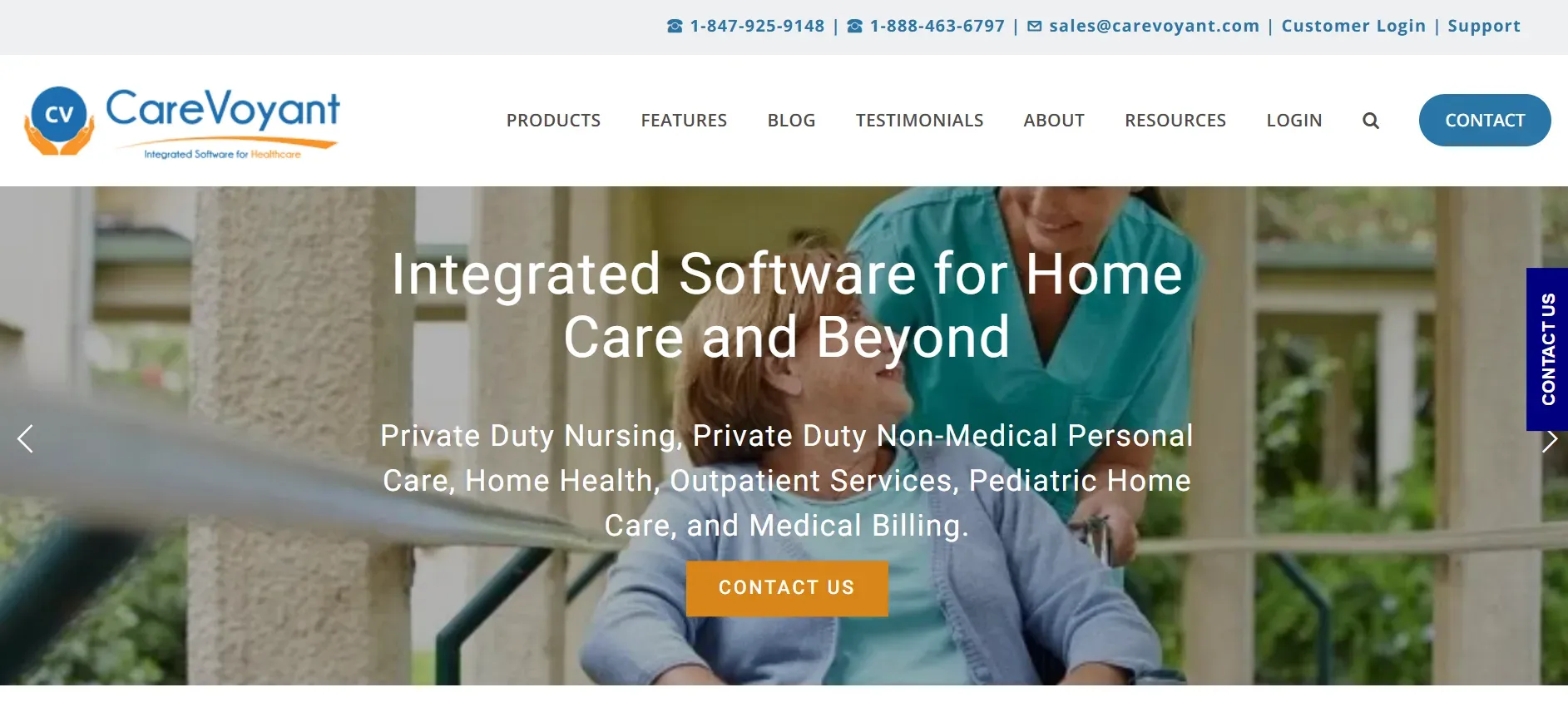
CareVoyant is built for agencies offering multiple lines of service, home health, personal care, therapy, and private duty. Its unified platform streamlines operations for those juggling different payer types and care models.
Features and integrations: CareVoyant covers intake, scheduling, multi-visit care planning, billing, and payroll for all service lines. It includes EVV, compliance automation, and supports Medicare, Medicaid, and commercial billing. The reporting engine is customizable, and integrations are available for HR, accounting, and pharmacy systems.
Migration friction: Agencies moving to CareVoyant must map each service line’s workflows and data. The platform supports data import tools, but custom reports and integrations often require professional services. Training is needed for staff managing multiple care models.
Concrete use cases: Agencies providing both skilled and non-skilled care, or those managing therapy, nursing, and personal care under one roof. Organizations with complex billing and compliance needs.
Trade-offs: Pricing increases with each added module or service line. Custom reports, while possible, often require vendor setup and extra cost. The platform’s flexibility is an advantage, but smaller agencies may find the learning curve steep.
Pricing: Reported starting at $500/month. See pricing page. Actual costs rise quickly with census and modules.
- Unified billing and scheduling for multi-service agencies
- Built-in EVV and compliance automation
- Good support for complex payer mixes
- Price scales with modules and census
- Learning curve for small teams
- Custom reports and integrations may be extra
8. Sandata (Best for EVV compliance)
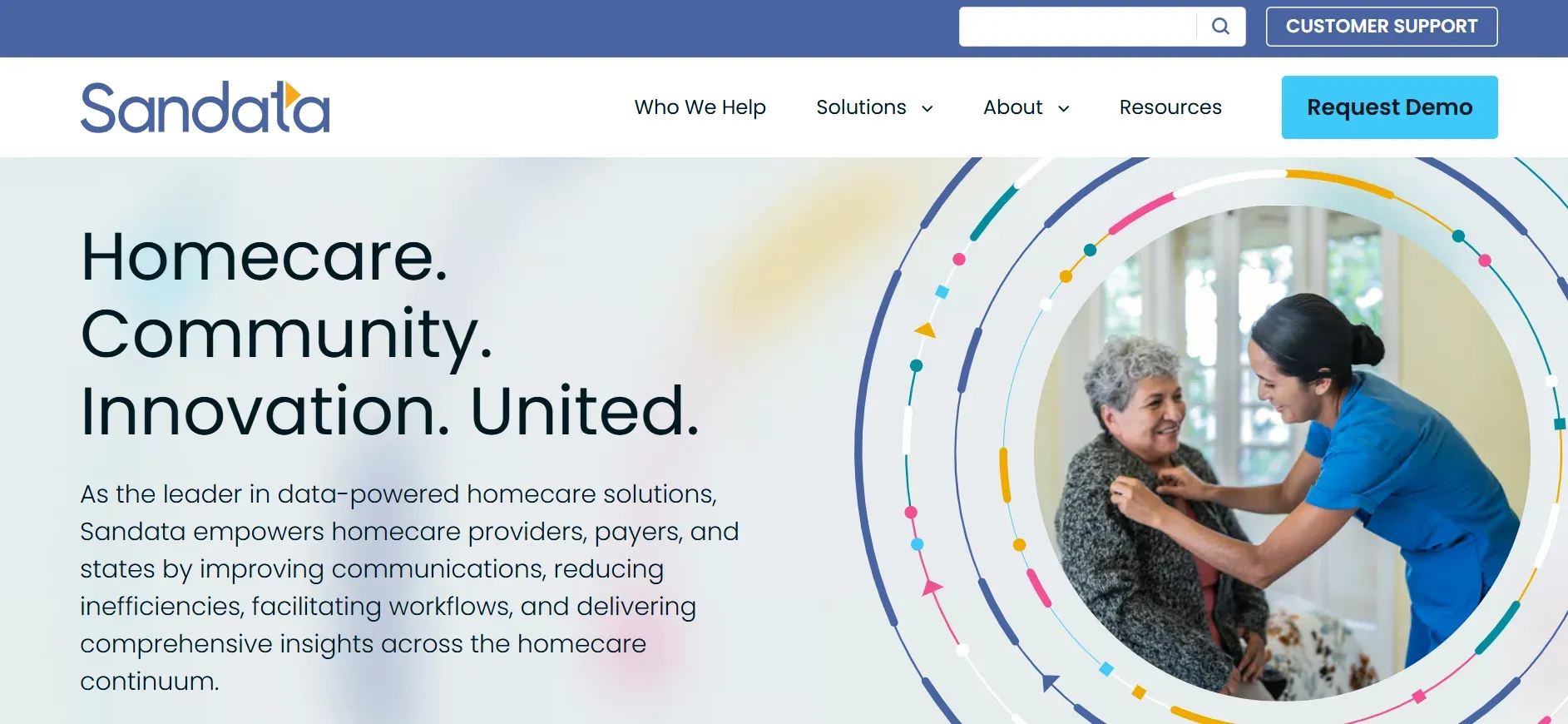
Sandata is the industry standard for Electronic Visit Verification (EVV), required by Medicaid in most states. It is often mandated by state agencies and integrates directly with Medicaid billing systems. Sandata is widely recognized for reliability and compliance, but is not a full agency management suite.
Features and integrations: Sandata provides GPS-enabled mobile EVV, telephony, and real-time visit verification. It integrates with most state Medicaid systems, managed care organizations (MCOs), and clearinghouses. The platform supports basic scheduling and billing, and can feed data to other agency management tools via API.
Migration friction: Onboarding is streamlined for EVV, with quick caregiver training and bulk data import tools. However, agencies needing advanced scheduling, billing, or reporting typically need to integrate Sandata with another platform.
Concrete use cases: Agencies that must comply with state EVV mandates for Medicaid billing, or those operating in states where Sandata is required. Organizations with simple, non-medical workflows.
Trade-offs: Sandata is focused on EVV and compliance, not full agency operations. Agencies often find its workflows rigid and customization limited. Reporting is basic, and custom integrations may incur costs. Annual renewal is standard, and data ownership is limited to what the platform allows.
Pricing: Reported around $5,000/year for small agencies. See pricing page. Larger agencies or more complex integrations cost more.
- Meets state and federal EVV mandates
- Straightforward onboarding for new caregivers
- Integrates with Medicaid and MCOs
- Limited outside core EVV functions
- Rigid workflows, minimal customization
- Annual renewal and recurring costs
With a custom platform, EVV is integrated how you want, not just how the vendor allows.
9. HHAeXchange (Best for Medicaid and large agencies)
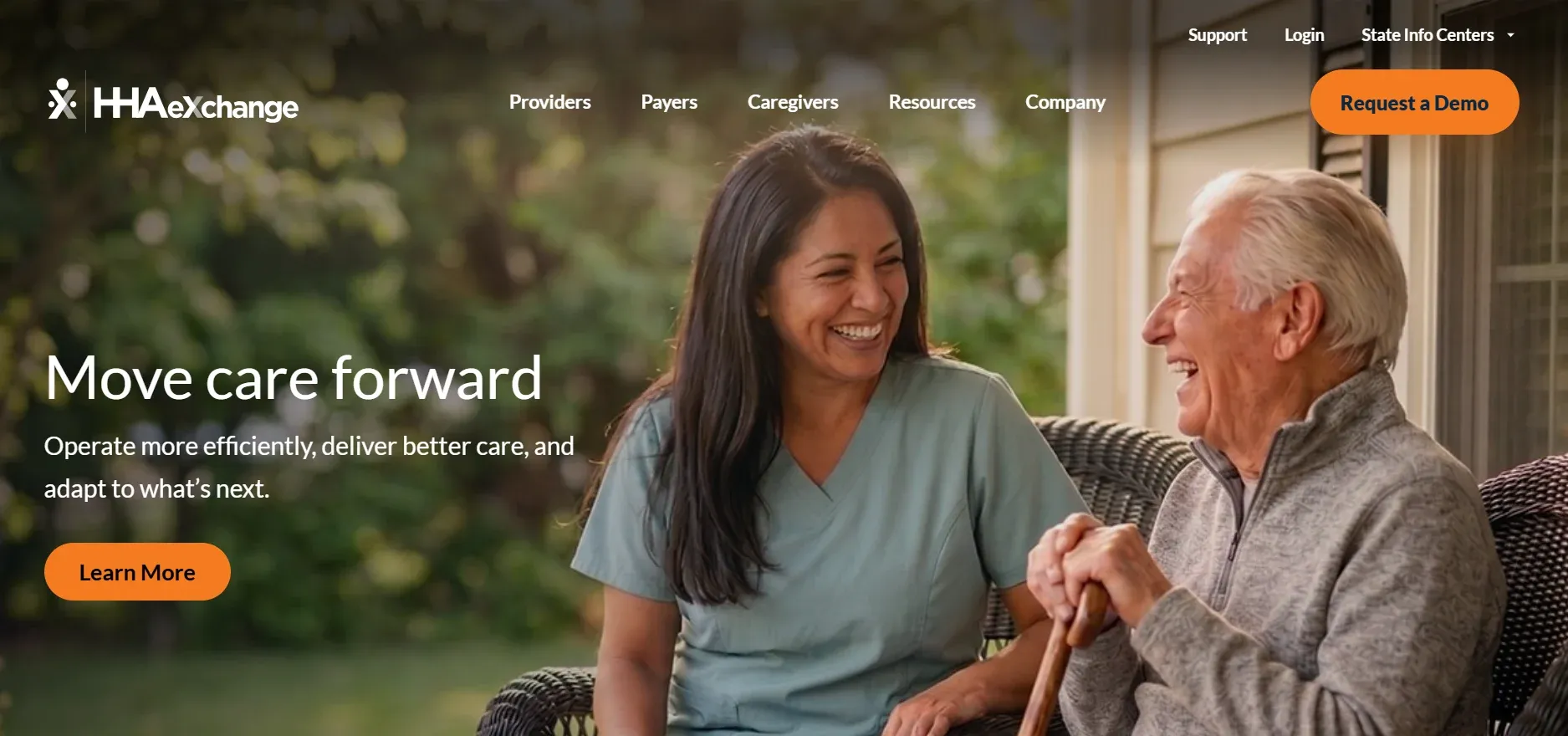
HHAeXchange is purpose-built for Medicaid agencies, with end-to-end support for claims, compliance, and managed care. It is a top choice for large agencies in states where HHAeXchange is the mandated Medicaid platform.
Features and integrations: The platform covers intake, scheduling, EVV, plan of care, claims management, and compliance reporting. HHAeXchange integrates with state Medicaid systems, clearinghouses, payroll, and HR systems. The platform automates prior authorizations, eligibility checks, and remittance advice, reducing manual work for billing teams.
Migration friction: HHAeXchange offers structured onboarding and bulk import tools. Agencies with complex billing workflows may need vendor support for mapping and reconciliation. Custom reports are available, but often require additional fees or development contracts.
Concrete use cases: Large agencies serving Medicaid populations, especially in states where HHAeXchange is required. Organizations managing high claim volumes or complex managed care relationships.
Trade-offs: HHAeXchange’s pricing is based on per-visit or per-transaction fees, which can escalate with high volume. Customization outside standard Medicaid workflows is limited. Contract terms are rigid, and data exports are available but not always comprehensive.
Pricing: Custom quote model. See pricing page.
- Best-in-class Medicaid integrations and compliance
- Automated claims, EVV, and eligibility workflows
- Large support network for agencies
- Per-visit or per-transaction fees
- Limited customization outside Medicaid workflows
- Rigid contract terms
10. Devaims (Best for agencies ready to own it all)
Devaims is not a rental platform, but a custom software development partner that builds your home care platform to your exact needs. You pay once to build your system, then a flat maintenance fee, and the source code is yours. No per-client fees, no upsells, no lock-in. You define your workflows, integrations, and reporting from day one.
Features and integrations: Every Devaims build is tailored to your agency. Features can include intake, scheduling, EVV (with custom integration to state systems), billing, payroll, mobile caregiver apps, family portals, HR, CRM, and custom business intelligence dashboards. Integrations are built as needed, with clearinghouses, payroll, accounting, pharmacy, or third-party training platforms. You own the code and data.
- One-time build, then flat maintenance, no recurring rental fees
- Full source code and data ownership
- Workflows, integrations, and reports built for your agency
- No lock-in, no forced upgrades, no ransom for your data
Other eRSP alternatives worth knowing
- CareAcademy: Focused on caregiver training, certification, and compliance. Not a full agency management platform, but a valuable add-on for agencies needing to manage training at scale.
- Rosemark: Geared toward small agencies or startups. Affordable, with basic scheduling and billing, but limited customization and scalability.
- AxisCare: Popular with midsize non-medical agencies. Offers scheduling, billing, and EVV, but still a rental model with per-client fees.
- ClearCare (legacy): Now merged with WellSky, but some agencies may still encounter the original platform as a standalone brand.
Some of these options, like CareAcademy, are valuable for filling gaps in training and compliance, but are not true replacements for a full agency management suite.
How to choose the right eRSP alternative
- Budget: Calculate total monthly and annual costs, including hidden add-ons, transaction fees, and the cost of upgrades. Cheaper upfront may not be cheaper long-term, especially as you grow.
- Agency size and complexity: Small agencies may not need enterprise features, while large organizations need strong compliance, payer integrations, and customizable workflows.
- Care vertical: Some platforms specialize in Medicaid, others in private duty, others in senior living or post-acute, choose a tool that aligns with your main payer and service line.
- Customization and data access: If your agency requires unique workflows, integrations, or advanced reporting, be wary of rental platforms that limit customization or charge extra for access.
- Ownership preference: Decide if you want to continue renting, or if you’re ready to invest in a platform you own and control.
If you’re tired of paying more every year for the same features, and want to build equity in your tech, owning your platform might finally make sense, especially as you scale.
Stop paying rent on software you could own
The single biggest pain point with eRSP and its rivals is this: you’re always renting. Every “alternative” here is just another landlord, with a different logo and a new set of per-client or per-feature fees. Five years from now, you’ll have paid tens of thousands and still own nothing but your exported data.
That’s why agencies ready to own their future come to Devaims. We build your home care platform to your specs, scheduling, EVV, billing, mobile apps, and custom reporting, then hand over the source code. You keep everything. No lock-in, no forced upgrades, no lost data if you walk away. Your system, your way.
- Per-client fees: Gone. Your cost is flat, no matter how many clients or caregivers you add.
- Add-ons and upsells: If you want a feature, we build it in. No paywall, no surprise.
- Data ownership: Every record, report, and workflow is yours, no more ransom for your own data.
- Customization: Your workflows are built in from day one. No clunky workarounds needed.
| Tool | Pricing Model | Source Code | Contract | Custom Workflows |
|---|---|---|---|---|
| eRSP | Monthly/annual rental, per client | No | 1-3 year contract | Limited, extra cost |
| AlayaCare | Annual rental, per agency + add-ons | No | Annual contract | Some, extra cost |
| Sandata | Annual rental, per agency | No | Annual contract | Minimal |
| Devaims | One-time build + flat maintenance | Yes, you own it | No contract | Bespoke, unlimited |
| Year | Rented (Cumulative) | Devaims Owned (Cumulative) |
|---|---|---|
| 1 | $18,000 | $29,760 |
| 2 | $36,000 | $32,520 |
| 3 | $54,000 | $35,280 (now ahead) |
| 4 | $72,000 | $38,040 |
| 5 | $90,000 | $40,800 |
For a 60-client agency, the annual subscription route costs you about $18,000 a year, and you’ll pay that forever. A custom Devaims build, at $27K up front and $230/month maintenance, breaks even just after year 3. After that, you’re saving tens of thousands and building equity in your tech. The more you grow, the more you save, since adding clients or caregivers does not increase your costs.
The agencies that gain the most are those with stable or growing census, unique workflows, or those tired of being boxed in by generic platforms. If you want to see your own math, we’ll run the numbers for you, no hard sell. For more cost benchmarking, see Software Advice’s home health software cost guide.
How to switch from eRSP
- Export all client, caregiver, and billing data from eRSP (CSV or API if available). Review what data is included and plan for any manual data entry needed.
- Choose your new platform and define must-have workflows and integrations. Document what is essential versus nice-to-have to avoid scope creep.
- Import your data into the new system, mapping fields as needed. Test data integrity and ensure all compliance records are transferred.
- Reconnect payment processors, EVV, and third-party integrations. Plan for downtime and ensure all connections are tested before go-live.
- Train staff on the new workflows and mobile apps. Use role-based training and provide documentation for future reference.
- Run both systems in parallel for 1-2 billing cycles to catch errors. Monitor for missed visits, billing discrepancies, and workflow gaps.
- Review your old eRSP contract for any cancellation windows or data lock-ins. Confirm that all data has been exported before terminating the contract.
With a custom Devaims build, the migration is handled as part of the project, with white-glove support for data mapping, integration, and staff training.
Frequently asked questions
What is the best eRSP alternative for large home care agencies?
For large agencies, AlayaCare and WellSky are strong rental platforms, offering enterprise-grade features, compliance, and integrations. However, if you want to stop paying per-client rents and gain total control, Devaims is the clear endpoint. The trade-off is upfront investment versus ongoing rent. For agencies with stable or growing census, the ownership model often pays off in three to five years.
Which eRSP alternative is most affordable?
Is there a free eRSP alternative?
There is no truly free home care platform with full compliance, EVV, and billing. Some small tools offer limited free trials or basic scheduling, but for real operations, especially those requiring Medicaid or Medicare compliance, expect recurring fees unless you build and own your own system. Open source options exist, but require significant technical resources to implement and support.
What’s the best eRSP alternative for Medicaid billing?
HHAeXchange and Sandata are purpose-built for Medicaid billing and compliance. They integrate directly with state systems and are often mandated. For agencies that want custom Medicaid workflows, hybrid payer models, or full control, Devaims can build exactly what you need, including custom EVV, claims, and reporting modules.
Can I keep my old data when switching from eRSP?
Yes, but the process varies. eRSP allows data exports, typically CSV for clients, caregivers, schedules, and billing, but historical notes, attachments, or custom fields may require manual extraction or vendor assistance. With a Devaims build, all data is migrated for you, with a focus on completeness and data integrity. Your data remains yours, with no risk of lockout or ransom.
When is it time to switch from eRSP to something else?
If your costs keep rising, workflows are awkward, or you’re hitting limits on customization or data access, it’s time to evaluate eRSP alternatives. The best time to own your platform is when your five-year rent total matches (or exceeds) the cost to build your own. Agencies with unique compliance or reporting needs, or those tired of vendor lock-in, often make the switch sooner.
Can I get custom features with rental platforms?
Some rental platforms offer customizations, but these are usually expensive and subject to the vendor’s roadmap and priorities. You may wait months for a feature, or pay high professional services fees. Even then, you never own the code or the feature. With Devaims, every feature is built for your agency, on your timeline, and you keep the code. This is especially valuable for agencies with unique workflows or compliance requirements.
The bottom line
Every eRSP alternative on this list is another rental, until you build your own. The real test: add up what you’ll pay in fees over five years. If that number could have built you a system you own, you already know what’s right for your agency.
Owning your platform is about more than dollars. It’s about control. You move at your speed, not the vendor’s. You decide which features matter, how your data is handled, and when to upgrade. For agencies ready to stop paying rent, Devaims offers a path to true ownership, flexibility, and long-term savings.
Want more insights? Read the Devaims blog, or see our guides to AlayaCare alternatives and WellSky alternatives. For independent reviews and benchmarks, see Capterra’s eRSP reviews and Software Advice’s eRSP profile.