



Your EMR should help you care for patients, not drain your budget with monthly fees that never stop. Epic is the 800-pound gorilla, but when you see $1,200 a month per small clinic, or $45,000 for larger groups, you start doing the math in your head. And then comes the kicker. After five years of paying, you still own nothing.
If you're here, you've probably hit a wall, maybe with Epic's steep learning curve, maybe with surprise upgrade charges, maybe just with the feeling that you're renting your own data back every month. There are other options, and each has strengths, but every one keeps you signing a rental check. Unless you own. The best Epic alternatives for primary care? Kareo (Tebra) for lean clinics, AdvancedMD for bundled practice management, DrChrono for mobile, Athenahealth for billing, eClinicalWorks for flexibility, NextGen for scaling up, Practice Fusion for cost, Modernizing Medicine for specialty needs, Cerner (Oracle Health) for large systems, and at the end, Devaims, the alternative you can own outright.
Owning your software changes the game. Let's dig into the real cost, and why more clinics are looking for Epic alternatives that put them in control.
Why primary care clinics look for Epic alternatives
Sticker shock on monthly fees: Epic starts at $1,200 per month for small clinics, and can hit $45,000 monthly for larger operations. Most alternatives still charge per provider, so your monthly cost keeps climbing as you grow.
Implementation fees that sting: Expect $50,000 to $150,000 just to get started with Epic, plus more for training and integration. Most competitors have setup charges too, even if they don't always publish them.
Locked into contracts and forced upgrades: Multi-year agreements are the norm, with required maintenance and version upgrades bundled in. That means you pay even if the tool no longer fits your needs.
Clunky user experience for staff: Epic's interface is notorious for being dense and overwhelming, especially for new staff. Even with AI charting, navigation slows many clinics down.
Customization comes at a price: Want a workflow tweak or a custom report? With Epic and most alternatives, you'll pay extra or wait months. Renting means you're stuck with what they build, not what your practice needs.
If these pain points feel familiar, you're not alone. Most clinics searching for Epic alternatives are looking to escape the cycle of high fees, contract lock-in, and limited control.
Quick comparison of the best Epic alternatives
| Tool | Best for | Starting price | You own it? |
|---|---|---|---|
| Kareo (Tebra) | Small clinics | $160/mo per provider | No |
| AdvancedMD | Bundled practice management | $749/mo per provider | No |
| DrChrono | Mobile-first clinics | $199/mo per provider | No |
| Athenahealth | Integrated billing | 3% to 7% of collections | No |
| eClinicalWorks | Flexible EHR/PM | $449/mo per provider | No |
| NextGen Healthcare | Scaling mid-size groups | Custom quote | No |
| Practice Fusion | Lean budgets | Reported low monthly | No |
| Modernizing Medicine | Specialties | Custom quote | No |
| Cerner (Oracle Health) | Large systems | Custom quote | No |
| Devaims | Owning your platform | One-time build | One-time build, you own it |
Always confirm current pricing before you decide. Most vendors update their models yearly.
The 10 best Epic alternatives
1. Kareo (Tebra) (Best for small clinics)
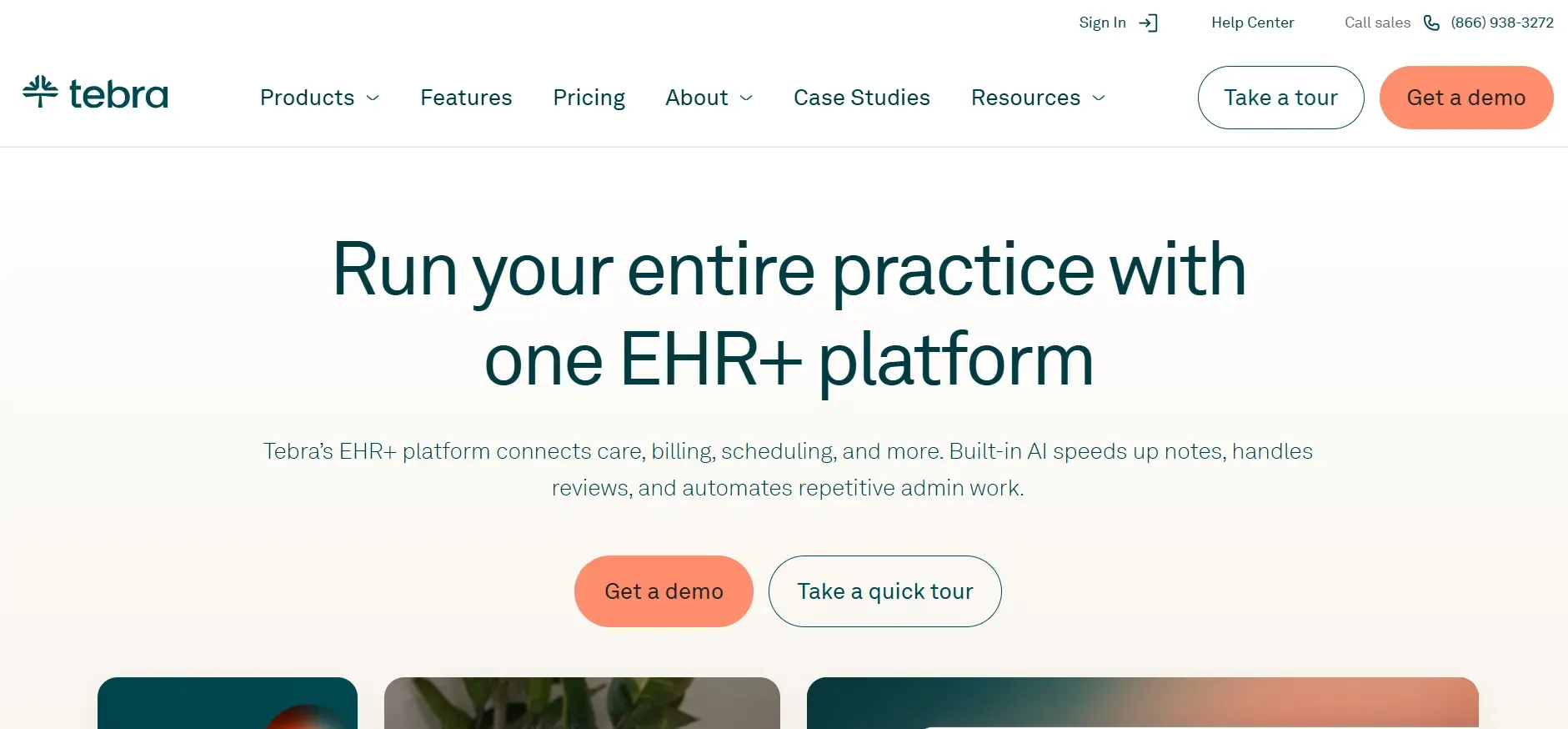
Kareo (now part of Tebra) is a cloud-based EHR and practice management platform designed for small to midsize practices. It delivers a straightforward interface and quick onboarding, appealing if Epic's complexity has bogged your team down. Kareo's per-provider pricing keeps costs predictable for lean operations.
Pricing: Starts at $160 per provider per month (doctor2me.com).
- Affordable entry cost for small practices
- Simple interface compared to Epic
- Integrated practice management features
- Customer support can be slow to respond
- Periodic downtime disrupts workflow
- Limited customization for unique needs
On software you owned, adding a new provider wouldn't bump your monthly bill.
2. AdvancedMD (Best for bundled practice management)
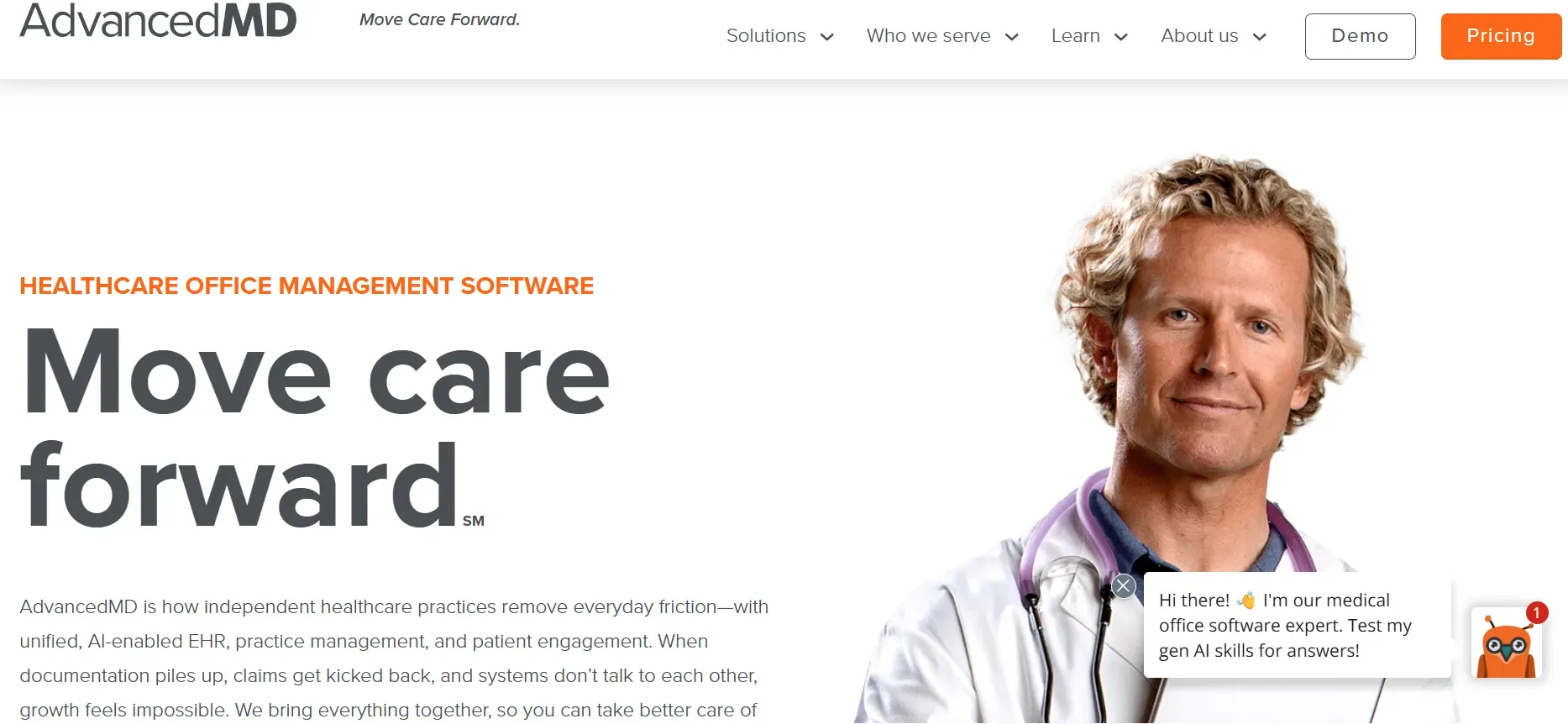
AdvancedMD offers a comprehensive cloud platform with EHR, billing, and scheduling bundled for medical practices. If you're outgrowing basic tools but find Epic's setup daunting, AdvancedMD offers a modular approach, still on a per-provider, per-month model.
Pricing: Starts at $749 per provider per month (Forbes).
- All-in-one EHR and practice management
- Customizable workflows
- Cloud-based access and updates
- Setup can be challenging without paid help
- Additional training is expensive
- Per-encounter pricing for low volumes can add up
With a Devaims build, your onboarding process can be tailored exactly to your team.
3. DrChrono (Best for mobile-first clinics)
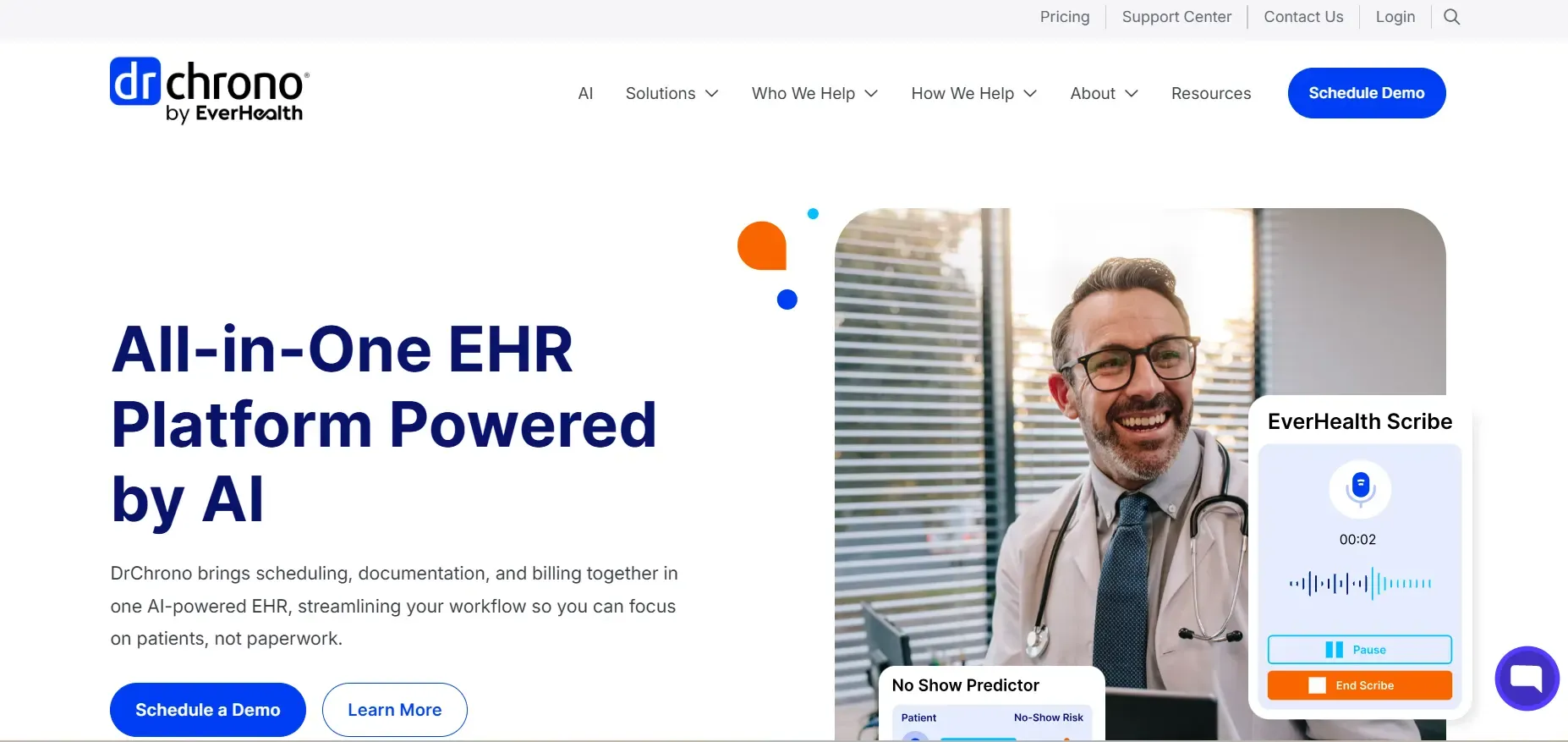
DrChrono stands out with a mobile-first approach, letting providers chart on iPad and iPhone. For teams frustrated by Epic's desktop-centric experience, DrChrono offers flexibility. Still, recurring provider fees and downtime can frustrate fast-growing practices.
Pricing: Starts at $199 per provider per month (itqlick.com).
- Mobile and tablet access
- Customizable forms
- Integrates with billing partners
- Customer support is hit-or-miss
- Occasional system outages
- Features sometimes lag behind desktop peers
4. Athenahealth (Best for integrated billing)
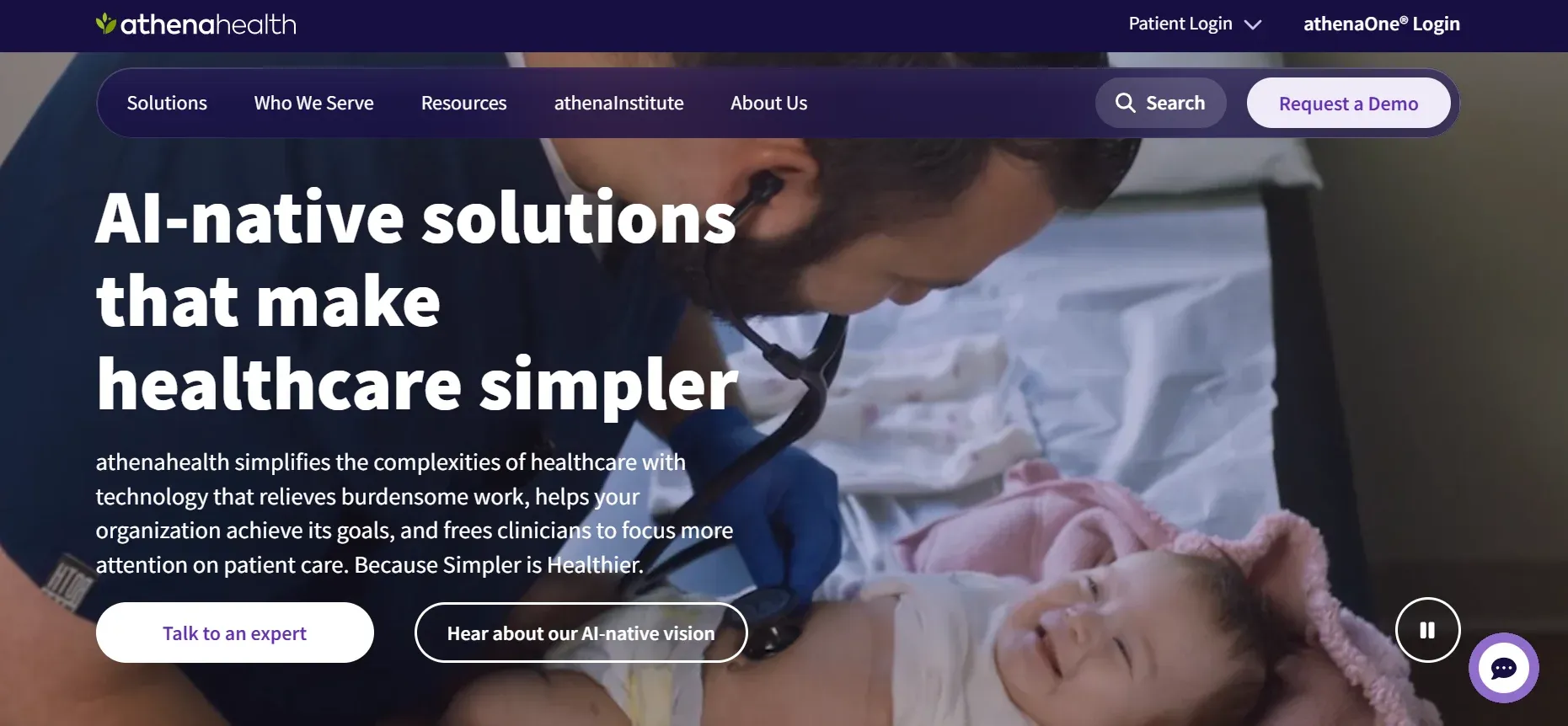
Athenahealth takes a percentage of collections instead of a flat fee, which can be a good fit for practices with fluctuating revenue. Their billing automation and claims management are strong, but you still pay into a contract and can't walk away with your data stack if you leave.
Pricing: 3% to 7% of collections (example: 5.5% on $1.2M/year = $22,000 per provider annually; athenahealthpricing.com).
- Automated billing and claims management
- Strong interoperability
- Regular feature updates
- Support can be slow during busy periods
- System downtime impacts claims
- Pricing grows with your revenue
Owning your system means the cost of getting paid stays flat, year after year.
5. eClinicalWorks (Best for flexible EHR/PM)
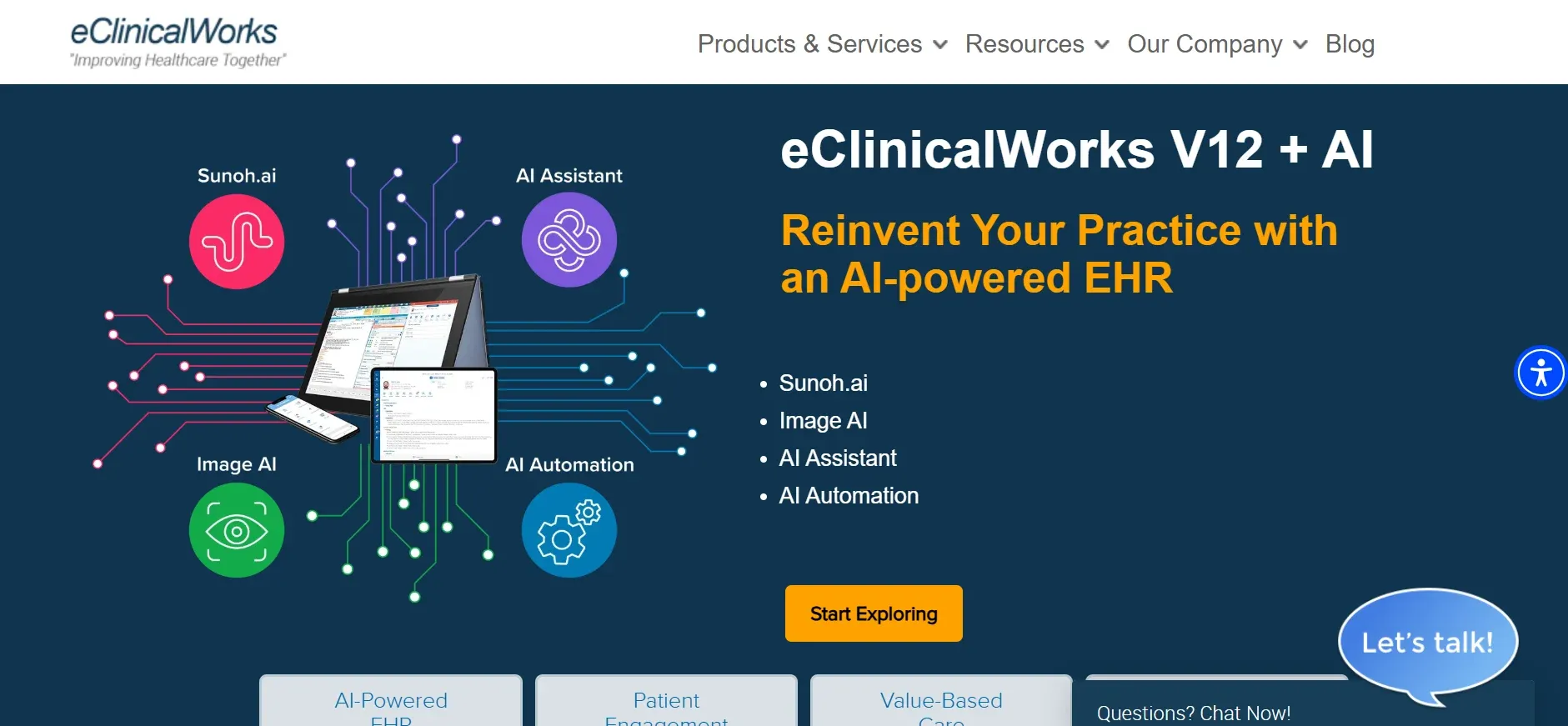
eClinicalWorks delivers a cloud-based EHR and PM suite with a reputation for flexibility. It's popular among small groups scaling up, but user support and system reliability can be inconsistent.
Pricing: Historically around $449 per provider per month (doctor2me.com).
- Flexible feature set
- Customization for different specialties
- Cloud and on-prem options
- Support tickets can take days to resolve
- Outages have been reported
- Add-on modules increase costs
That's the kind of customization you would have from day one if the platform were built for you.
6. NextGen Healthcare (Best for scaling mid-size groups)
NextGen Healthcare is built for growing practices and midsize groups, offering a scalable EHR and PM platform. Its modular architecture helps clinics expand without switching vendors, but you still pay by the seat, and support can be frustrating.
Pricing: Custom quotes only (NextGen Healthcare).
- Modular, scalable platform
- Good reporting tools
- Integrates with labs and pharmacies
- Customer support issues are common
- Recurring per-user fees
- Some features locked to higher tiers
7. Practice Fusion (Best for lean budgets)
Practice Fusion is a cloud EHR that gained popularity for its low monthly cost and straightforward features. It is attractive for solo providers or small practices, but advanced customization and integrations are limited.
Pricing: Reported as low monthly fee, but may vary by package and add-ons.
- Low monthly cost
- Easy to learn and use
- HIPAA-compliant cloud system
- Limited integrations with outside apps
- Basic reporting only
- Support is slow at peak times
8. Modernizing Medicine (Best for specialties)
Modernizing Medicine (ModMed) is an EHR with deep specialty content, especially for dermatology, ophthalmology, and orthopedics. If Epic feels too generic for your specialty, ModMed offers tailored workflows, but at a price and with a subscription you never own.
Pricing: Custom quotes only; contact sales for details.
- Specialty-specific templates
- Strong mobile access
- Integrated telehealth
- Pricing is higher for specialty modules
- Long onboarding times
- All features tied to ongoing subscription
9. Cerner (Oracle Health) (Best for large systems)
Cerner, now part of Oracle Health, is designed for hospitals and large health systems. It's scalable and highly configurable, but comes with steep implementation fees and multi-year contracts, similar to Epic in most ways.
Pricing: Custom quotes required.
- Scalable for enterprise needs
- Comprehensive integration options
- Strong analytics
- High total cost of ownership
- Lengthy implementations
- Complex system for smaller clinics
When you own your code, that integration is yours, not a rented add-on.
10. Devaims (Best for owning your platform)
Devaims builds custom EMR, PM, and business software for medical practices who are finished with the rental treadmill. You get the source code, full data ownership, and a platform tailored to your workflows. There are no per-user fees and no forced upgrades. Just a one-time build cost and predictable flat maintenance.
- One-time build, unlimited use, you own the code
- Fully customized to your workflows and specialty
- No recurring per-provider or per-feature fees
- Direct access to your data and integrations, forever
With Devaims, you never pay another "rental" invoice for your EMR. You keep what you build.
Other Epic alternatives worth knowing
- Elation Health: Good for primary care, but less comprehensive for group practices and still a subscription.
- Healow: Patient engagement add-on, not a full EMR replacement.
- CharmHealth: Popular with micro-practices, but limited for scaling up.
- OpenEMR: Open source, but requires significant IT support and custom development. Closer to an ownable option, but with more DIY than most clinics want.
How to choose the right Epic alternative
- Budget: Look past the monthly sticker and add up setup, training, and add-ons. If you plan to grow, calculate your five-year total.
- Practice size: Solo and micro-practices may favor low-cost, out-of-the-box tools. Mid-size and larger groups need scalability and customization.
- Specialty needs: If you have complex workflows or reporting, check how easily those are handled, or if they're locked behind higher tiers.
- Data control: If owning your data and integrations matters, most alternatives still keep you renting. Only a custom build lets you keep the code.
- Contract flexibility: Multi-year contracts can trap your practice. If you want agility, prioritize tools (or an owned build) that let you move if needs change.
When you want to break the rental cycle for good, it's time to look at owning with Devaims.
Stop paying rent on software you could own
Here's the quiet truth. Every Epic alternative on this list locks you into a subscription, per-user fees, or percentage-of-collections that never ends. Whether it's $160 per provider or $45,000 a month for a large group, you are renting your own workflows back, forever. That is, unless you own the code.
Devaims builds custom EMR, PM, and workflow tools that are yours to keep. You own the source code. You control the data. You decide when and how to upgrade. No per-seat bills, no contracts you can't escape, no "surprise, it's time to upgrade" emails. It's the end of the rental treadmill for your clinic.
- Per-provider fees? Gone. Add staff, scale up, and your monthly cost stays flat.
- Setup and training costs? One-time, baked into your build, not a recurring drain.
- Contract lock-in? None. You own the platform outright.
- Customization headaches? Your workflow, your reports, your integrations. No more waiting for vendor roadmaps.
| Tool | Pricing model | Who owns it? | Contract? |
|---|---|---|---|
| Epic | $1,200+/mo per clinic, $45,000+ for large practices | Vendor | Yes, multi-year |
| Kareo (Tebra) | $160/mo per provider | Vendor | Yes |
| AdvancedMD | $749/mo per provider | Vendor | Yes |
| Devaims | One-time build, then flat maintenance | You | No |
| Year | Rented (Epic/peer) | Owned (Devaims) |
|---|---|---|
| 1 | $36,000 | $35,000 |
| 2 | $72,000 | $37,760 |
| 3 | $108,000 | $40,520 |
| 4 | $144,000 | $43,280 |
| 5 | $180,000 | $46,040 (now ahead) |
For a 5-provider practice paying $600 per provider monthly, that is $36,000 per year, $180,000 after five years, with nothing to show if you leave. Devaims builds typically run $30,000 to $35,000 all-in, plus under $230 a month for maintenance. You break even in year five, and every year after, you are saving against rent. We'll help you run your exact numbers and map out what owning could save you.
How to switch from Epic
- Export all patient data, medical records, and billing files from Epic. Work with your current vendor to ensure you get everything in a portable format.
- Choose your new tool or custom platform. Confirm it can import your existing data and connect to your required integrations.
- Import your records, schedules, and billing info into the new system. Validate data integrity and clean up any migration issues.
- Reconnect payment processors, labs, and third-party integrations. Test for continuity.
- Train your clinical and admin staff on the new workflows and features.
- Run both systems in parallel for a week or two. Double-check reporting, claims, and communications.
- Review your Epic contract for any exit terms or final invoices.
With a custom Devaims build, the migration is handled as part of the project.
Frequently asked questions
What is the best Epic alternative for small primary care clinics?
Kareo (Tebra) is a good fit for small clinics, offering affordable per-provider pricing and a simple interface. For clinics ready to own and control their EMR, a custom Devaims build is the only true alternative that breaks the rental cycle.
Which Epic alternative is cheapest over five years?
Practice Fusion and Kareo offer the lowest monthly entry points, but their costs add up as you scale. For larger practices, owning with Devaims often becomes cheaper after year five, since there are no per-user fees.
Is there a free Epic alternative?
OpenEMR is open source and free, but it requires significant IT investment and ongoing support. Most clinics find that vendor-supported tools or custom builds (like Devaims) provide better reliability and integration.
Which Epic alternatives are best for specialties?
Modernizing Medicine is highly regarded for specialty content, especially in dermatology and orthopedics. Devaims can also build specialty-specific workflows tailored to your exact needs.
When should a clinic switch from Epic?
Consider switching if recurring fees keep climbing, if your workflows are hamstrung by system limits, or if you're facing forced upgrades you don't want. Epic alternatives offer more flexibility, and owning with Devaims gives you total control.
Can I keep my data if I leave Epic or another vendor?
You can export your data, but formats and completeness vary. With Devaims, you own your data and the system it's stored in, no more vendor lock-in.
How do the 5-year costs of Epic alternatives compare?
Most Epic alternatives cost $2,000 to $4,000 per provider annually, plus setup and add-ons. Over five years, this easily surpasses the build-and-maintain cost of owning with Devaims.
The bottom line
The best Epic alternatives let you escape big contracts and get a system that fits your practice, but they all keep you renting. Here is the real test. Add up what you will pay in subscription fees over the next five years. If that number could have built a platform you own, you are already overdue for a change.
Ownership is the quiet advantage most clinics overlook. When you own your EMR, you decide how much it costs, what it does, and when it changes. Ready to see what you could own instead of rent?
For more industry insights, visit the Devaims blog or see our deep dives on Athenahealth alternatives, DrChrono alternatives, and AdvancedMD alternatives.