


Ever gotten the "your monthly invoice is now" email from Epic and wondered if you’re just renting your own clinic out, month after month? You are not alone. Most orthopedic clinics we talk to started with Epic for the features, but got tired fast: the per-seat costs, the integrations you have to pay extra for, the contracts you can’t escape from even when the tool stops fitting your workflow.
Here’s the honest rundown: Modernizing Medicine and Nextech are the go-tos for ortho-specific workflows, Kareo (now Tebra) is the budget play, and AdvancedMD or Athenahealth are the big-stack rivals. But none of them will ever let you own what you run. If you’re ready to stop renting and build something purpose-built, and yours, Devaims is the way out. Let’s dig into the best Epic alternatives for orthopedic clinics in 2026, and why owning your system turns the math in your favor for good.
Why orthopedic clinics look for Epic alternatives
Per-user and add-on fees stack fast. Epic’s base price is just the start. Every new provider, every integration (like imaging, labs, or telehealth), and every reporting module add to your bill. Over time, these charges become a significant recurring expense, and as you grow, your costs accelerate. Even administrative users and part-time staff often require paid seats.
Lock-in contracts limit flexibility. Most Epic contracts are multi-year and come with stiff penalties for early termination. If your clinic pivots, merges, or wants to try new workflows, you're locked in. This rigidity can make adapting to new specialties, locations, or compliance requirements slow and expensive.
Customization is rarely built in. Orthopedic clinics often need unique workflows, custom intake forms, device integration, or tailored surgical documentation. Epic and other big EHRs typically make such customization difficult, requiring extra fees or vendor consulting, if the change is even possible. This slows innovation and forces workarounds or manual processes.
Data migration is a headache. Getting your records out of Epic is rarely straightforward. Data is stored in proprietary schemas, and exporting full, usable clinical and billing histories can be slow and costly. Some clinics report weeks of effort and high fees just to get their own data, and there are risks of data loss or incomplete migration.
Ownership never transfers. With Epic and most competitors, you’ll rent the platform forever, even after five years of monthly payments. You never own the code, the infrastructure, or even full access to your own data. That’s why clinics are searching for Epic alternatives that can break the cycle and give them control and predictability.
Quick comparison of the best Epic alternatives
| Tool | Best for | Starting price | You own it? |
|---|---|---|---|
| Modernizing Medicine (Ortho) | Ortho-specialized EHR & PM | Reported $650/mo per provider | No, monthly contract |
| Nextech | Customizable ortho workflows | Custom quote, often $500+/mo | No, ongoing subscription |
| Kareo (Tebra) | Smaller ortho practices | Starts $125/mo per provider | No, monthly contract |
| AdvancedMD | All-in-one for midsize clinics | From $485/mo per provider | No, monthly contract |
| Athenahealth | Integrated RCM & EHR | % of collections, typically 4% to 8% | No, % contract |
| ChartLogic | Voice-based charting | Custom quote, often $350+/mo | No, monthly contract |
| OpNote | Surgical documentation | Custom quote | No, monthly |
| Greenway Health | Compliance-heavy clinics | Custom quote | No, monthly contract |
| Devaims | Ownable, custom-built platform | One-time build, from $29,000 | One-time build, you own it |
Pricing and terms can change. Always confirm current pricing before you decide.
The 9 best Epic alternatives
1. Modernizing Medicine (Ortho) (Best for specialty ortho practices)
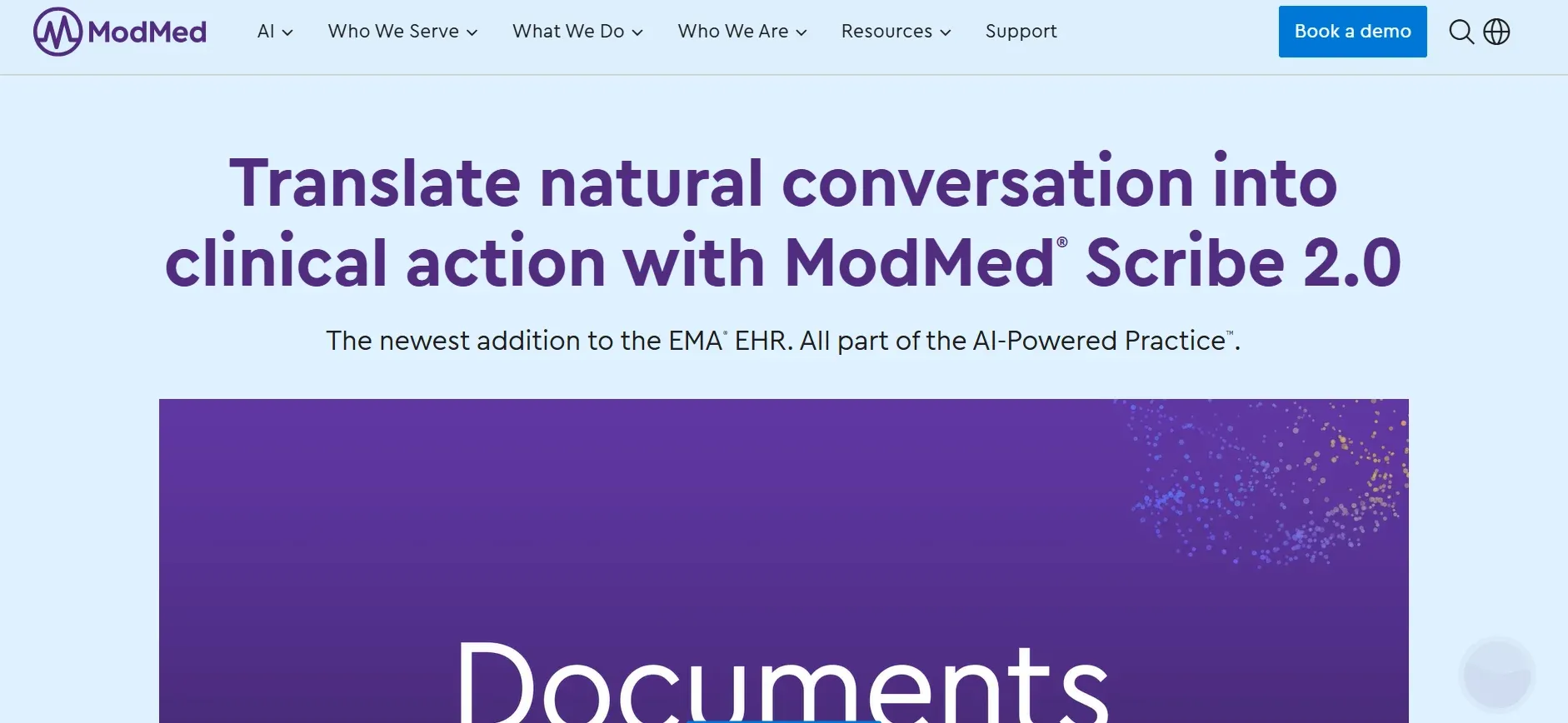
Modernizing Medicine (ModMed) is one of the most widely adopted EHR and practice management platforms for orthopedic clinics. It stands out for its specialty-specific templates, adaptive learning algorithms, and a genuinely modern, iPad-native interface. The platform is engineered for orthopedic workflows, offering pre-built order sets, device and implant tracking, and strong imaging integrations (including direct PACS connectivity). Its "EMA Ortho" module supports everything from sports medicine to joint replacement consults, and the built-in analytics help clinics optimize throughput and outcomes.
ModMed’s integration marketplace is strong. You can connect with billing partners, imaging systems, and even telehealth platforms. Scheduling, patient engagement, and e-prescribing are included, and the mobile interface is built for real-time charting on rounds or in the OR. ModMed’s AI-driven adaptive content can speed up notes by suggesting codes and templates based on your charting history. For clinics that rely on subspecialty workflows or want to minimize clicks, these features are a real efficiency boost.
Migration friction: ModMed’s onboarding team offers data migration services, but clinics coming from Epic often face mapping challenges, especially with custom fields or large volumes of images. Expect a several-week process, with some manual work for legacy data.
Concrete use cases: Multi-provider ortho groups, hospital-affiliated clinics, and high-volume surgical practices.
Trade-offs: You pay for every provider, every year. Custom reports, new device integrations, and non-standard workflows can trigger additional fees. You never own the code, and you are subject to ModMed’s upgrade schedule and pricing changes. If your clinic needs to pivot or wants to deeply integrate with hospital systems, you may run into contractual or technical limits.
Pricing: Reported $650 per provider/month. See Modernizing Medicine pricing.
- Deep ortho-specific features and content
- Mobile and iPad-native charting
- Strong imaging and device integrations
- Adaptive learning for faster note-taking
- Expensive per-provider monthly pricing
- Long-term contracts standard
- Some custom workflows require extra fees
On a custom system, you’d own your workflows, your data, and pay nothing for extra providers.
2. Nextech (Best for customizable specialty EHR)
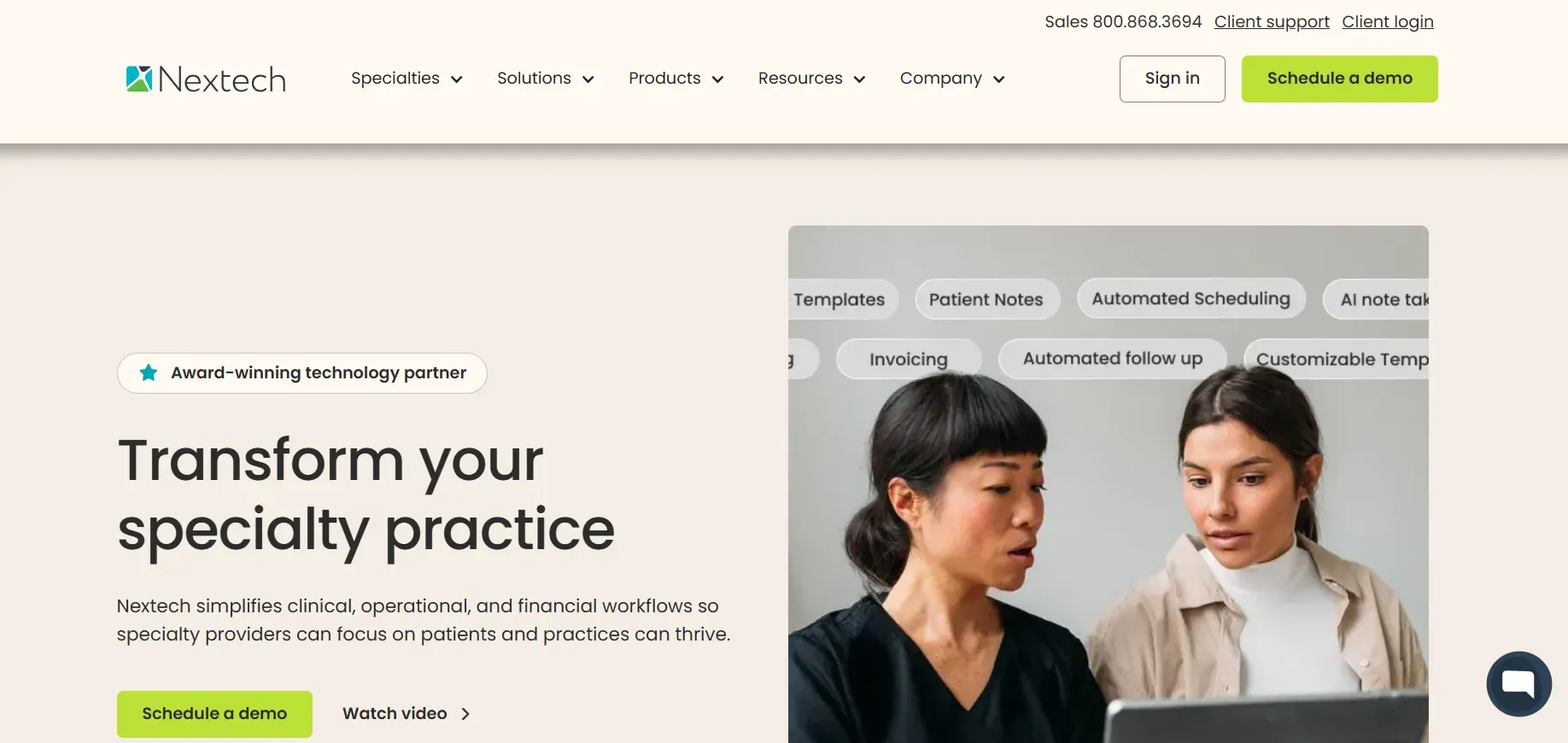
Nextech is a flexible EHR designed for specialty clinics, including orthopedic, ophthalmology, and plastic surgery practices. Its orthopedic module includes customizable templates for consults, surgical planning, and post-op care. Nextech’s document imaging and management tools are well regarded, and the built-in billing module is designed for complex insurance scenarios, including workers’ comp and auto claims.
Nextech integrates with a range of third-party practice management and imaging platforms, and offers a strong API for custom reporting, data exports, and interoperability with labs and hospital systems. Its customization engine allows clinics to build unique workflows, add custom fields, and automate repetitive tasks. Many clinics use Nextech’s patient portal for appointment requests, secure messaging, and pre-visit intake forms.
Migration friction: Nextech offers migration support but, like ModMed, mapping Epic’s custom data fields can take time. Some clinics report the need to reformat historical data or lose certain custom objects.
Concrete use cases: Mid- to large-size orthopedic groups needing flexible workflows and deep billing capabilities, especially those billing complex payers.
Trade-offs: While Nextech is more customizable than Epic, advanced features are often gated behind higher pricing tiers or require paid implementation projects. You are still renting: no source code, and you rely on Nextech’s roadmap and support. If you outgrow the platform or want to integrate with non-standard systems, costs and limits can appear.
Pricing: Custom quote, often $500+ per provider/month. See Nextech pricing.
- Customizable ortho workflows and templates
- Integrated practice management and billing
- Extensive imaging/document management
- Good third-party app integrations and API
- Subscription pricing only
- Advanced features often gated by tier
- Limited ownership: you rent everything
3. Kareo (Tebra) (Best for small, budget-minded clinics)
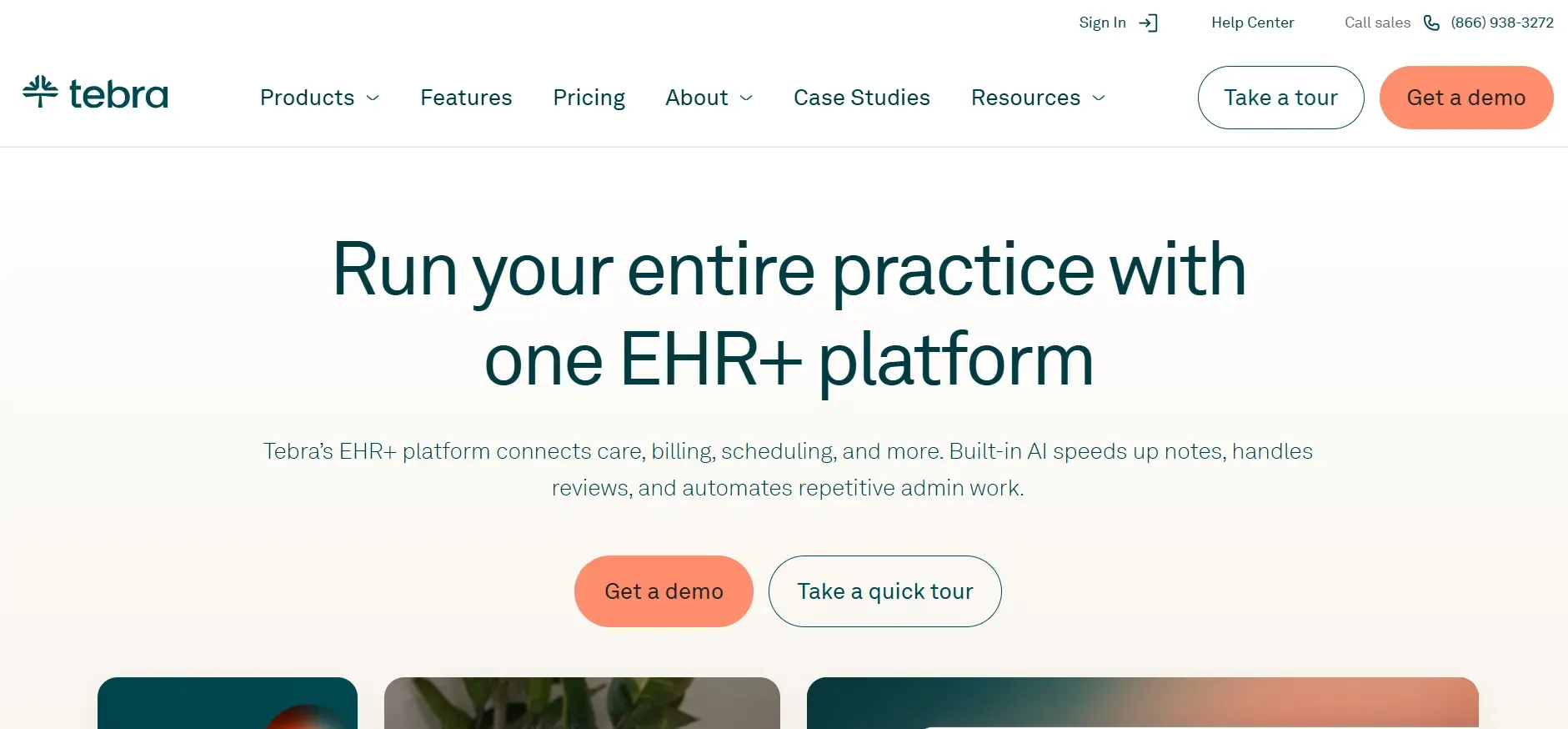
Kareo (now Tebra) is a cloud-based EHR and practice management suite built for small and solo practices. Its interface is simple and onboarding is fast, making it a favorite for clinics that want to get up and running with minimal IT overhead. Kareo includes appointment scheduling, e-prescribing, basic charting, and claim management.
While Kareo offers some specialty templates, its orthopedic support is basic. Integrations with billing partners, labs, and telemedicine vendors are available, but advanced imaging or device integrations are limited. Kareo’s reporting tools are straightforward, and the patient portal covers basic communication needs. The platform’s low entry price is attractive, but as your clinic grows, the cost of adding providers and modules increases.
Migration friction: Kareo supports data import from common EHRs, but migration from Epic often requires third-party help to map custom fields or attachments.
Concrete use cases: Solo and small group ortho practices, clinics just starting out, or those with simple billing needs.
Trade-offs: You trade deep specialty features and advanced integrations for simplicity and price. As you grow or need more customization, Kareo’s limits can force a switch. You do not own the system or data architecture, and your clinic is subject to Kareo’s pace of development.
Pricing: Starts at $125 per provider/month. See Kareo pricing.
- Easy onboarding for small teams
- Low entry price and minimal IT needs
- Decent support for billing and claims
- Cloud-based, accessible from anywhere
- Limited specialty templates for ortho
- Some integrations cost extra
- Subscription required, no ownership
With a custom platform, you’d pay once and scale users as you grow, with no surprise fees or limits.
4. AdvancedMD (Best for midsize orthopedic groups)
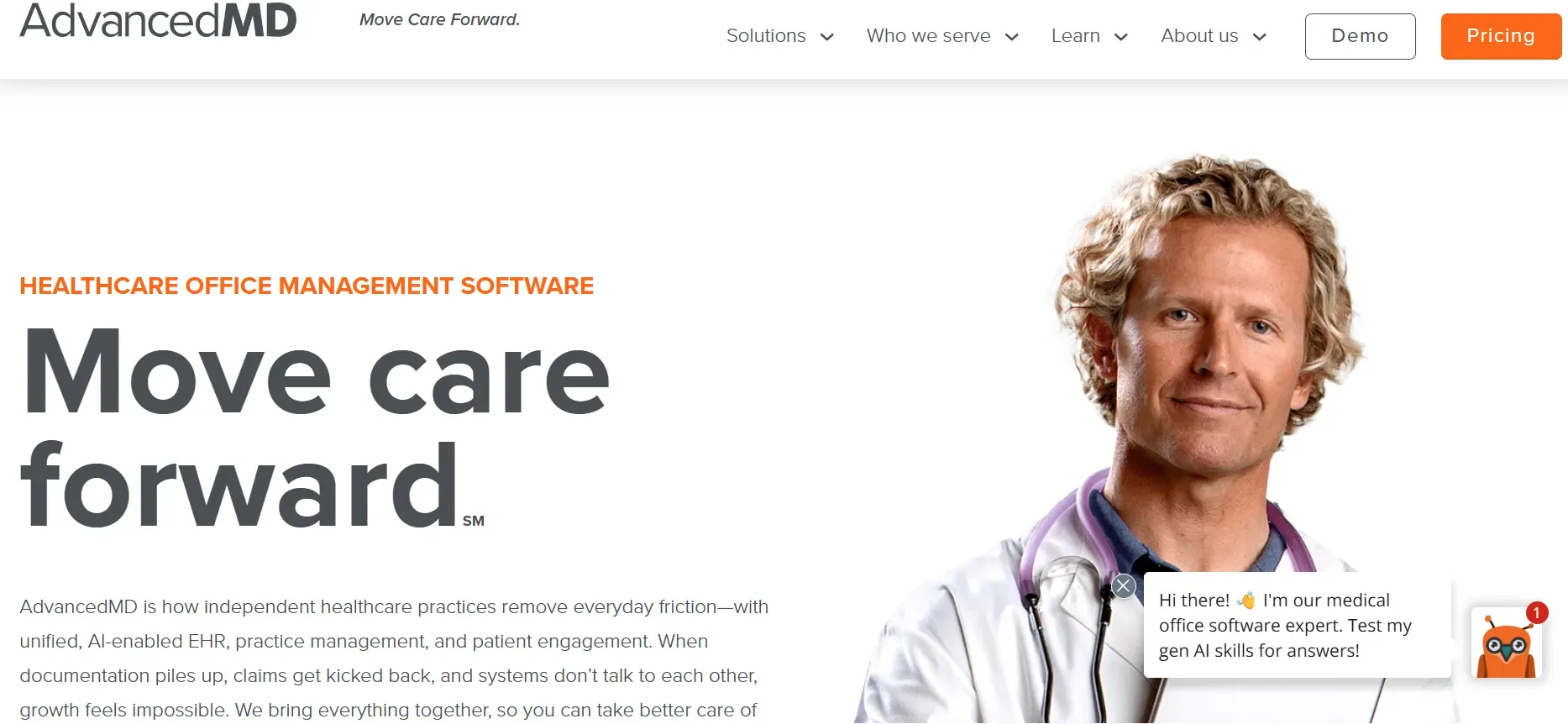
AdvancedMD is a comprehensive EHR and practice management platform aimed at midsize and larger clinics. Its feature set includes scheduling, telemedicine, patient engagement, e-prescribing, and strong reporting. AdvancedMD is known for its workflow automation tools, helping clinics streamline everything from check-in to claims submission.
The platform’s specialty content for orthopedics is solid, with templates for common ortho visits and procedures. AdvancedMD’s telehealth module is tightly integrated, and its patient portal supports secure messaging, online bill pay, and appointment reminders. Integration options are broad. You can connect with labs, imaging, and billing services through built-in APIs or HL7 interfaces.
Migration friction: AdvancedMD offers migration services and has experience moving clinics from Epic and other large EHRs. However, migrating highly customized workflows or unusual data types may require additional consulting or manual mapping.
Concrete use cases: Midsize orthopedic groups, especially those with multiple locations or telehealth needs.
Trade-offs: Every feature and user adds to your monthly bill. Annual contracts are standard, and customizations beyond what’s included can be expensive. You do not own the codebase, and adapting the system to new workflows or integrations is subject to AdvancedMD’s roadmap and policies.
Pricing: From $485 per provider/month. See AdvancedMD pricing.
- Integrated telemedicine and patient engagement
- Strong reporting and analytics
- Workflow automation for efficiency
- Broad integration options
- Per-provider and per-feature pricing
- Annual contracts standard
- Customization is limited without add-ons
5. Athenahealth (Best for integrated RCM and EHR)
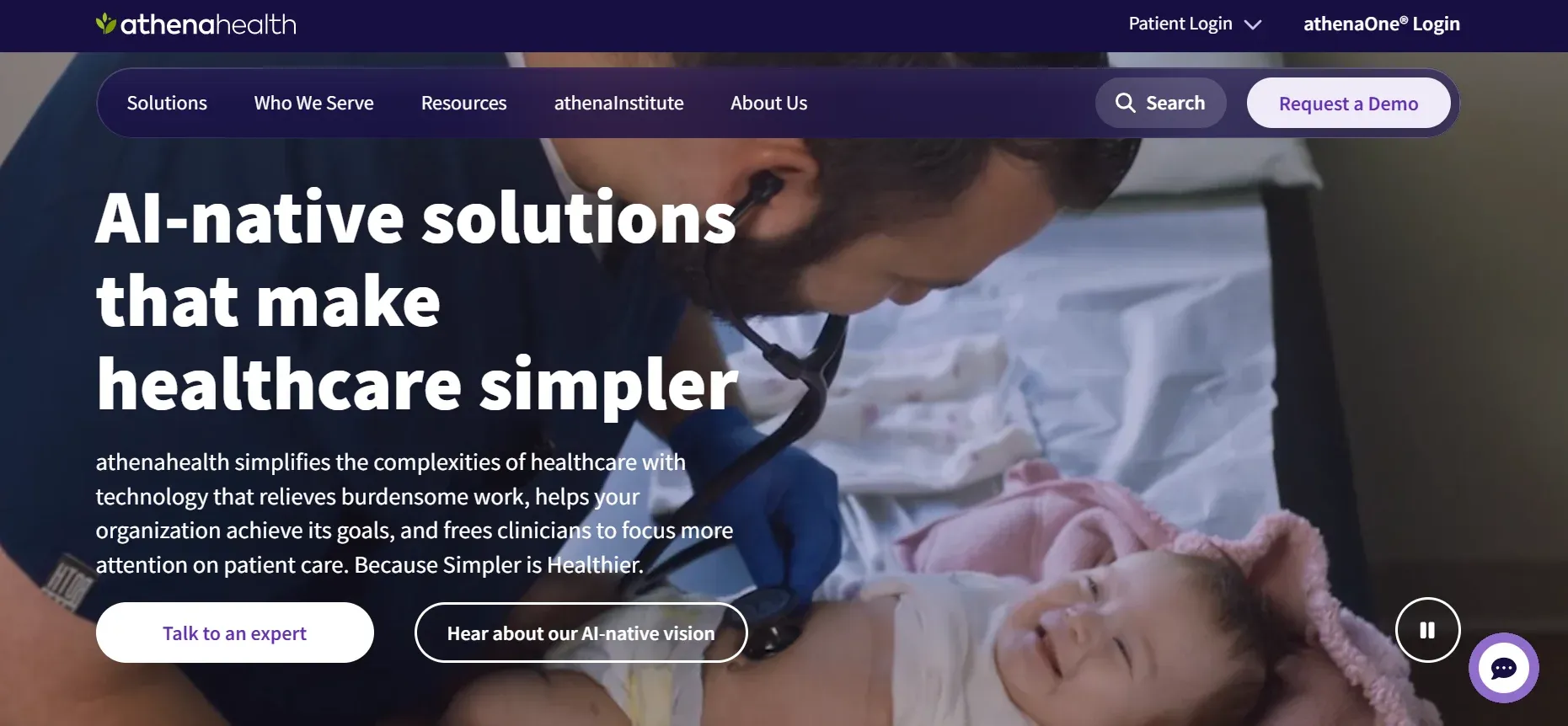
Athenahealth is a cloud-based EHR and revenue cycle management (RCM) platform, popular with multi-location clinics and physician groups. Its unique pricing model charges as a percentage of collections (typically 4% to 8%), aligning incentives between Athenahealth and your clinic’s financial success. The platform offers strong scheduling, e-prescribing, patient engagement, and telehealth modules.
Athenahealth is known for its interoperability. It’s among the best at connecting with external labs, imaging, and hospital systems via industry standards like HL7 and FHIR. The RCM tools are tightly integrated, with automated claims scrubbing, denial management, and analytics for optimizing collections. Athenahealth’s clinical templates support ortho workflows, but are less deep than ModMed or Nextech. The platform’s real-time insurance eligibility and patient cost estimation are standout features for busy clinics.
Migration friction: Athenahealth provides data migration, but clinics with highly customized Epic builds may need to adjust workflows or reconstruct certain data fields. Data extraction from Epic can be costly, and not all data types may map directly.
Concrete use cases: Large, multi-site orthopedic clinics, or those that want RCM and clinical workflows in one stack.
Trade-offs: Your costs scale with your revenue. As you grow, so do Athenahealth’s fees. Feature upgrades and custom integrations may require contract amendments or extra cost. Data extraction, if you ever want to leave, can be expensive and time-consuming.
Pricing: 4% to 8% of collections. See Athenahealth pricing.
- Integrated EHR and RCM
- Strong interoperability and open APIs
- Cloud-based access
- Advanced claims and billing automation
- Fees scale with your revenue
- Feature upgrades often gated by contract
- Data extraction can be costly
6. ChartLogic (Best for voice-driven charting)
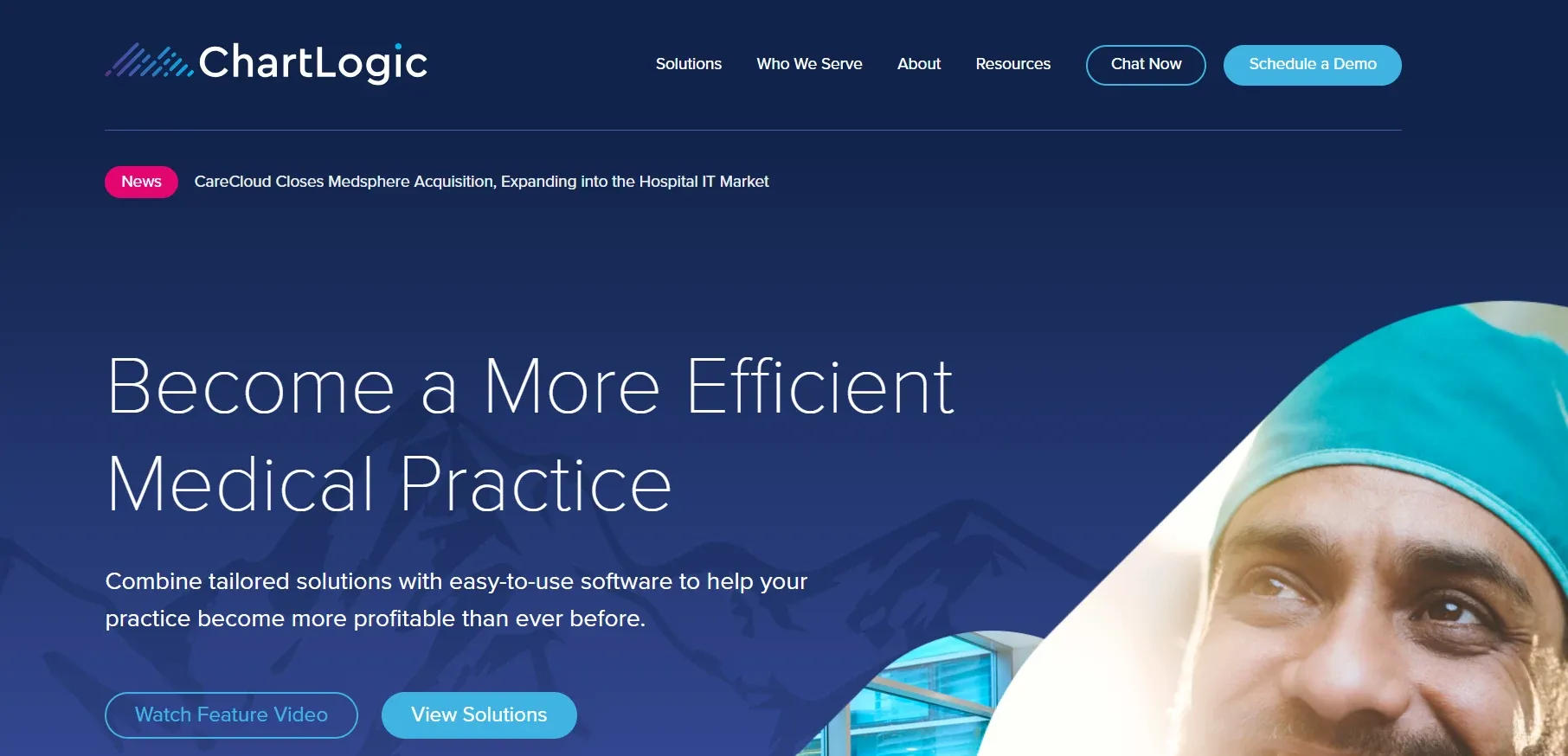
ChartLogic is a specialty EHR focused on fast, voice-powered charting and dictation. Its orthopedic templates cover common procedures, post-op care, and follow-up visits, and the voice recognition engine is tuned for medical vocabulary, reducing charting time for busy providers. ChartLogic includes e-prescribing, scheduling, and a patient portal for basic communication and document sharing.
The platform’s key differentiator is its voice command workflow, which lets providers create notes, order labs, and navigate patient charts hands-free. ChartLogic integrates with imaging and billing partners, and offers an API for custom reporting or connections to third-party tools.
Migration friction: ChartLogic can import patient demographics and basic clinical data from Epic and other EHRs, but highly customized notes or attachments may require manual migration.
Concrete use cases: Clinics with high charting volume, providers who prefer dictation, or those seeking to reduce time spent on documentation.
Trade-offs: ChartLogic’s specialty modules are less comprehensive than ModMed or Nextech. As with other SaaS EHRs, you are renting: no ownership of the platform, and custom integrations or advanced analytics can require extra fees.
Pricing: Custom quote, often $350+ per provider/month. See ChartLogic pricing.
- Fast, accurate voice charting
- Good orthopedic templates
- Easy learning curve for new users
- API for custom integrations
- Limited specialty modules
- Subscription only, no ownership
- Custom integrations cost extra
7. OpNote (Best for surgical documentation)
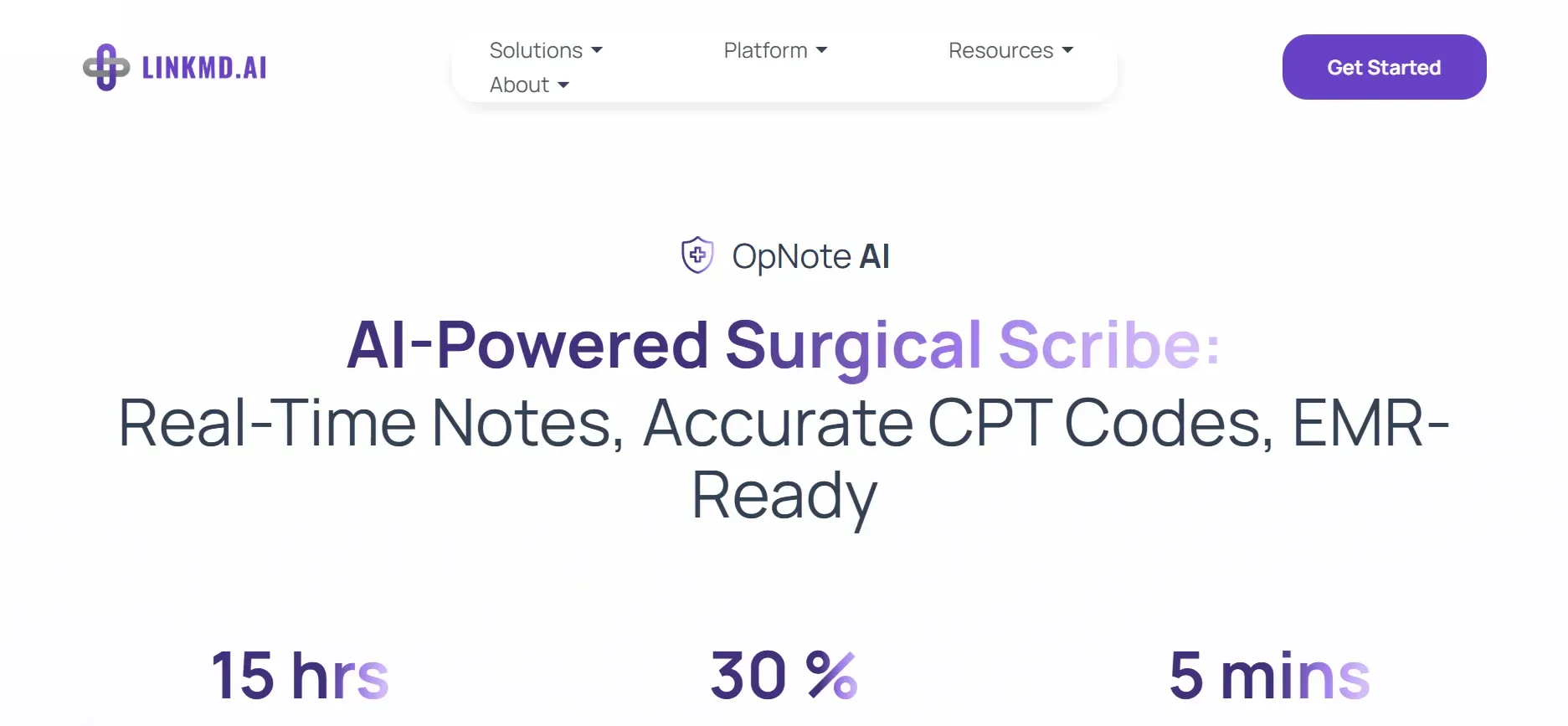
OpNote is a focused tool for surgical notes and perioperative documentation, designed to plug gaps in broader EHRs. It automates operative note creation, tracks implants and devices, and supports e-signatures and mobile access. OpNote is often used as an add-on to Epic or other EHRs, particularly in clinics where surgical volume is high and documentation requirements are strict.
The platform integrates with most major EHRs using HL7 or direct APIs, and can export structured data for billing, coding, and compliance. OpNote’s templates are customizable, and it supports quick note generation by procedure type, surgeon, or device. The mobile app allows for in-theatre documentation and immediate syncing with the main EHR.
Migration friction: Since OpNote is typically deployed alongside your main EHR, migration is minimal. For clinics moving from Epic, mapping surgical case data and historical notes may require some manual effort.
Concrete use cases: High-volume surgical practices, ambulatory surgery centers, or clinics needing detailed, compliant perioperative documentation.
Trade-offs: OpNote is not a full EHR or practice management solution. You need another system for scheduling, billing, and non-surgical workflows. Monthly subscription only, and you do not own the platform or data architecture.
Pricing: Custom quote only. See OpNote pricing.
- Deep surgical note automation
- E-signatures and mobile access
- Easy to integrate with EHRs
- Compliant, structured operative documentation
- Narrow focus: surgical notes only
- Requires an EHR for full workflow
- Monthly subscription model
8. Greenway Health (Best for compliance-heavy clinics)
Greenway Health is an EHR and practice management platform with a strong focus on regulatory compliance, reporting, and audit trails. Its Intergy EHR module is designed for multi-specialty groups and supports advanced population health management, quality reporting, and HIPAA compliance out of the box. Greenway’s reporting tools are among the most granular, making it a good fit for clinics participating in value-based care or subject to frequent audits.
Greenway offers integration with labs, imaging, and billing partners, and its API allows for custom data exports and third-party connections. The platform supports user-defined templates and forms, which can be tailored for ortho practices, though the specialty content is not as deep as ModMed or Nextech. Training and support resources are strong, and Greenway offers a dedicated compliance consulting arm.
Migration friction: Greenway’s migration team can move most structured data from Epic and other EHRs, but complex custom fields or historical attachments may need manual review.
Concrete use cases: Multi-specialty groups, clinics in regulated environments, or those with extensive quality reporting needs.
Trade-offs: Greenway’s setup can be complex for smaller clinics, and contracts are often multi-year with little room for negotiation. You do not own the platform or code, and advanced customizations can be slow or costly to implement.
Pricing: Custom quote; expect several hundred dollars per provider/month. See Greenway Health pricing.
- Advanced compliance tools and reporting
- Extensive audit and population health features
- Strong support for multi-specialty clinics
- Customizable templates and forms
- Complex setup for small clinics
- Long-term contracts common
- Rent-only, no ownership path
9. Devaims (Best for owning your system outright)
Devaims is the path for clinics ready to stop renting and start owning their technology. Devaims builds custom web, mobile, and business software, handing you the source code, so the platform is yours, forever. You get exactly the features you need for your ortho workflows, with no per-user, per-integration, or per-feature upsells. The system grows with your clinic, and you control every update and integration.
Features: Devaims can build EHR, practice management, scheduling, billing, telehealth, imaging integrations, patient portals, and custom reporting modules, all tailored to your exact requirements. You decide the workflows, user roles, automations, and third-party integrations, no gatekeeping or paywalls. Security and HIPAA compliance are built in from day one. The system can integrate with hospital networks, device manufacturers, imaging vendors, and billing services using industry standards (HL7, FHIR, X12, DICOM, etc.).
Migration friction: The Devaims team handles migration from Epic, ModMed, or any other EHR as part of the build. You get a full data mapping plan, custom import tools, and support for legacy data formats. Once live, you own the code, database, and all documentation, with no vendor lock-in or black box.
Concrete use cases: Orthopedic clinics with unique workflows, multi-location groups, or any practice that wants to scale without recurring software rent. Clinics needing custom integrations, reporting, or automation benefit most.
- One-time build, you own the source code
- Fully custom workflows and reports
- No per-user or per-integration fees
- Data is always yours, with no vendor lock-in
- Flat, predictable maintenance costs
- HIPAA compliance and security by design
- Unlimited user scaling at no extra cost
Other Epic alternatives worth knowing
- Raintree, Strong for PT/OT but less comprehensive for ortho clinics.
- Cerner, Major hospital EHR, but often overkill for private ortho clinics.
- DrChrono, Good for small practices, but not tailored to ortho.
- Practice Fusion, Free tier, but lacks deep specialty support.
- eClinicalWorks, Popular for large outpatient groups, but orthopedic customization is limited.
- MEDITECH, Hospital-focused, strong on interoperability, less so on outpatient ortho.
If you only need a billing add-on or a single workflow automated, a custom Devaims module can be faster and more cost-effective than switching platforms.
How to choose the right Epic alternative
- By budget: Calculate your per-provider monthly plus add-ons. Renting can look cheap at first, but grows fast. For three providers, even a $500/month fee is $18,000/year before integrations or upgrades.
- By need: Match features to your real workflows. If you’re mostly surgical, OpNote or a custom build may fit. If you need all-in-one, look at Modernizing Medicine or Devaims. Consider how much manual workarounds cost you in staff time and errors.
- By clinic size: Small clinics may manage with Kareo or WebPT. Larger, multi-location groups need deep integration, where renting gets expensive fast and custom reporting is often essential.
- By ownership: If you want to keep your data and system long-term, only a custom Devaims build delivers true ownership. This ensures you are not forced into upgrades or price hikes and can adapt as your clinic evolves.
- By integration: If you need billing, imaging, and scheduling all in one, factor in the cost of connecting everything, not just the sticker price. Many SaaS EHRs charge extra for each integration, while a custom build can connect to anything you need at no per-connection fee.
When the monthly fees start to match what a one-time build would cost, it’s time to consider owning.
Stop paying rent on software you could own
Here’s the catch no vendor likes to mention: whether you pick Epic, Modernizing Medicine, or any of the big alternatives, you’re still paying rent. The per-user fees, the upgrade paywalls, the "must renew to keep your data" clauses, they never go away. Only a custom build from Devaims lets your clinic truly own its technology, control its data, and stop writing the same check, month after month, year after year.
Devaims builds custom web, mobile, and business platforms for healthcare clinics, and hands you the full source code. No black box. No license fees. It’s your platform, your workflows, your data, forever.
- No more per-seat or per-integration fees. Add users or connect systems at no extra cost.
- No lock-in contracts. You own the code and the database, so you’re never held hostage.
- Custom reporting and automation. Get the exact dashboards and workflows you want, no more "upgrade to unlock" messages.
- Predictable maintenance. Flat, honest support cost. No surprise hikes.
| Platform | Ownership | Customization | Typical 5-yr cost |
|---|---|---|---|
| Epic | Rented | Limited, costly | ~$180,000+ (3 providers) |
| Modernizing Medicine | Rented | Good, but add-on fees | ~$117,000 (3 providers) |
| Nextech | Rented | Customizable, but paywalled | ~$90,000 (3 providers) |
| Devaims | Owned, yours | Fully custom | ~$42,800 (see below) |
Let’s run the five-year math for a typical three-provider ortho clinic with a couple of integrations:
| Year | Rented (Modernizing Medicine) | Owned (Devaims) |
|---|---|---|
| 1 | $23,400 | $29,000 (build) + $2,760 (maint) = $31,760 |
| 2 | $46,800 | $29,000 + $5,520 = $34,520 |
| 3 | $70,200 | $29,000 + $8,280 = $37,280 |
| 4 | $93,600 | $29,000 + $11,040 = $40,040 |
| 5 | $117,000 | $29,000 + $13,800 = $42,800 (now ahead) |
That’s the break-even point: by year five, owning is less than half the cost of renting, and after that, the savings only compound. If you want the real numbers for your clinic size and workflow, we’ll run them for you, no strings attached.
Clinics that gain the most from owning are those with stable provider counts, complex workflows, or unique integrations, where monthly rent adds up fast and customization can’t wait for a release cycle.
How to switch from Epic
- Export your patient records, scheduling, and billing data from Epic: Request full data dumps in all available formats (HL7, CSV, XML). Include attachments, images, and audit trails if possible.
- Choose your new platform or custom solution, and map your workflows: Identify which data fields, templates, and integrations are essential, and ensure your new system can accommodate them.
- Import existing data into the new system, with data clean-up as needed: Use migration tools to map, validate, and clean data, resolving duplicates and formatting errors.
- Reconnect payment processing, billing, and third-party integrations: Test connections to clearinghouses, imaging, labs, and patient engagement tools.
- Train staff on the new workflows and interface. Schedule dry runs if possible: Provide sandbox environments for hands-on practice and feedback.
- Run both systems in parallel for a short period, catching any gaps or issues: Monitor for missing data, workflow bottlenecks, or integration issues.
- Review your contract to ensure no surprise fees or data access issues remain: Confirm all obligations to Epic are closed out, and retain copies of all data exports.
With a custom Devaims build, the migration is handled as part of the project, including documentation, staff training, and post-launch support.
Frequently asked questions
What is the best Epic alternative for orthopedic clinics?
For most orthopedic clinics, Modernizing Medicine and Nextech are strong Epic alternatives for specialty features and workflow fit. Both offer deep templates, device integrations, and ortho-focused content, but you remain in a subscription model. If you want to own your system outright, Devaims is the only true ownership option, giving you full control over features, data, and integrations, with no recurring rent.
What is the cheapest Epic alternative?
Kareo (Tebra) and WebPT offer the lowest entry pricing for small clinics or solo providers. However, as your clinic scales or your needs become more complex, recurring fees can quickly surpass the cost of a custom-owned solution. Over five years, owning your software with Devaims can be cheaper than renting, especially if you have more than two providers or require custom workflows.
Is there a free Epic alternative?
Free options like Practice Fusion exist, but they lack deep specialty support for orthopedics, and often monetize through ads, data analytics, or limited functionality. Free EHRs may also be less secure, have limited support, and make it difficult to extract your data if you outgrow the platform. For real specialty needs and long-term viability, paid or custom is the path.
When should my clinic switch from Epic?
If your monthly fees are approaching what a custom build would cost in a year or two, or if you’re blocked by contract, integration, or workflow limits, it’s time to evaluate Epic alternatives. Clinics with stable provider counts, complex reporting needs, or unique integrations often reach a break-even point within five years by switching to an owned platform.
Can I keep my current integrations when switching?
Most Epic alternatives support standard integrations (HL7, FHIR, X12, DICOM), but you’ll need to check each vendor’s API and migration support. Some SaaS EHRs charge extra for new integrations or limit what you can connect. A custom Devaims system is built around your integrations from day one, with no per-connection fee and full access to all APIs.
Which Epic alternative is best for ortho rehab and PT?
WebPT is a category leader for PT and rehab clinics, with deep templates and billing tools. For clinics combining orthopedic surgery and rehab, Modernizing Medicine or a custom Devaims build offers the flexibility to cover both in one platform, eliminating data silos and duplicate entry.
How does owning my EHR with Devaims actually work?
Devaims delivers the full source code and database to you. You can run it on your own infrastructure (cloud or on-premise), or have Devaims manage hosting and support for a flat, predictable fee. You decide when to upgrade, what features to add, and how to integrate with other systems. No ongoing rent, no contract lock-in, and you can extend or integrate it as your clinic grows or pivots. Data is always accessible, with no export fees or black box limitations.
The bottom line
Add up what you’ll pay over five years. If that number could have bought you a system you own, the rent isn’t worth it. The right Epic alternative for your orthopedic clinic is the one that fits your workflow, doesn’t lock you in, and makes financial sense for the long haul. Ownership is not just about saving money, it’s about control, agility, and the ability to innovate on your terms.
Here’s the test: if your five-year total for rented software is more than a custom build, you’re ready to own. Let’s run your numbers and see if owning is really the better deal for your practice.
See more practical guides at the Devaims blog, or check out Cerner alternatives, AdvancedMD alternatives, and Athenahealth alternatives.