



Your specialty clinic did not open to become a software subscription company. Yet with Cerner (now Oracle Health), that’s often how it feels: every new staff member means another $300 per user per month, every workflow tweak leads to a maze of menus and support tickets, and your data sits locked away behind a contract. The real cost isn’t just the monthly bill, it’s the long-term math that can outstrip the price of owning your own software platform.
If you’re reading this, you’ve probably felt Cerner’s learning curve, unpredictable costs, or the frustration of not being in true control of your clinical data and workflows. The good news? There are serious Cerner alternatives, each with its own strengths, limitations, and honest trade-offs. Epic and AdvancedMD offer strong features at a premium, while Kareo (Tebra) and eClinicalWorks promise affordability but still lock you into ongoing fees. Only Devaims lets you build and own a system tailored to your clinic, with no per-seat fees, no forced upgrades, and no lock-in. Let’s break down the real landscape for 2026.
Why medical specialty clinics look for Cerner alternatives
Pricing multiplies fast: Cerner’s $300/user/month base rate is just the start. Add-ons, integrations, and extra modules often mean your true spend is higher. For a mid-sized specialty clinic with 10 users, that’s $3,000 a month before you even consider premium features or data migration costs.
Locked-in contracts: Cerner, like most enterprise EHRs, locks clinics into multi-year contracts. Early exit fees, data extraction surcharges, and contract minimums make it difficult to switch, even if your needs change or you outgrow the platform.
Complex user interface: Cerner’s interface is designed for scale, not agility. Staff can spend weeks training, and the steep learning curve means more time away from patient care. Customizing workflows requires technical support or expensive consulting.
Ownership and control: You pay for access to Cerner, but the software and data stack remain out of reach. Exporting data for analytics, migration, or compliance can be slow and costly, with some clinics reporting weeks of back-and-forth to get a usable export.
Opaque setup and migration fees: The initial quote often leaves out integration, migration, and training costs. Many clinics discover these only after they are deep in the sales funnel, making it hard to compare vendors or budget accurately.
These pain points send many specialty clinics searching for Cerner alternatives, seeking platforms with clearer pricing, more flexibility, and ideally, true ownership.
Quick comparison of the best Cerner alternatives
| Tool | Best for | Starting price | You own it? |
|---|---|---|---|
| Epic | Large clinics, hospital groups | Over $1 million upfront | No |
| AdvancedMD | Multi-provider, complex specialties | $429, $1,070/provider/mo | No |
| Kareo (Tebra) | Small to midsize clinics | Around $160/provider/mo | No |
| Modernizing Medicine | Dermatology, ortho, specialty | Custom quote | No |
| Nextech | Ophthalmology, plastic surgery | Custom quote | No |
| Allscripts | Enterprise clinics | Custom quote | No |
| Greenway Health | Growing clinics | Custom quote | No |
| eClinicalWorks | General and specialty clinics | $449/provider/mo (EHR) | No |
| Practice EHR | Small specialty practices | $149/provider/mo | No |
| Devaims | Clinics ready to own their stack | One-time build, you own it | Yes |
Always confirm current pricing with the vendor before you decide. EHR pricing changes frequently, and total cost of ownership depends on your clinic’s staff size, specialty, and unique workflow needs.
The 10 best Cerner alternatives
1. Epic (Best for large-scale clinics willing to invest)
Epic is the flagship EHR for major hospital systems and multi-specialty clinics. Its reputation for stability, feature depth, and interoperability is unmatched. Epic’s features include advanced clinical decision support, population health analytics, integrated telehealth, and robust patient engagement portals. Its app marketplace (App Orchard) offers hundreds of certified third-party integrations, from lab systems to patient intake tools, making it a favorite for institutions with complex IT ecosystems.
Integrations: Epic is known for strong integration with lab systems, imaging (PACS), e-prescribing, and large-scale health information exchanges (HIEs). Its interoperability with other EHRs is a key strength, supporting HL7, FHIR, and other standards.
Migration friction: Moving to Epic is a large, months-long project. Epic requires a dedicated project team, data mapping, and extensive staff training. Data migration from Cerner or other EHRs is possible, but often involves significant manual work to ensure data integrity and mapping of legacy codes or templates.
Use case: Large specialty clinics, outpatient departments, and hospital-owned practices that need enterprise-grade reporting, multi-location scheduling, and deep regulatory compliance. For example, a cancer center looking to integrate research protocols, advanced order sets, and real-time analytics.
Pricing: Starts at over $1 million upfront, with annual maintenance in the six figures.
- Unmatched stability and feature depth
- Enterprise-grade interoperability
- Strong vendor viability and support
- Very high upfront and ongoing costs
- Long implementation and training timeline
- Customization often requires Epic-certified consultants
With Devaims, you can achieve Epic-level customization and interoperability, but with full ownership. No multi-year rent, and no waiting on a vendor to approve your workflow changes.
2. AdvancedMD (Best for bundled practice management)
AdvancedMD is a cloud-based EHR and practice management suite built for multi-provider and specialty clinics. Its key features include a customizable EHR with specialty templates (orthopedics, pain management, mental health, etc.), integrated billing and RCM, telemedicine, and patient engagement tools. AdvancedMD also offers document management, e-prescribing, and a patient portal.
Integrations: The platform integrates with dozens of lab and imaging providers, clearinghouses, and payment processors. Its open API allows for third-party add-ons, but some clinics report integration friction with legacy systems or specialty devices.
Migration friction: Data migration from Cerner is possible, with AdvancedMD offering migration support for clinical data, scheduling, and billing records. However, mapping custom fields and templates from Cerner can require manual intervention, and some data types (such as scanned documents) may not transfer automatically.
Use case: Multi-provider clinics looking to streamline scheduling, EHR, and billing in one cloud platform. For example, a pain management group that needs bundled RCM with specialty-specific charting.
Pricing: $429, $1,070 per provider per month.
- Specialty templates and integrated RCM
- Cloud-based and scalable
- Open API for integrations
- Per-provider pricing can strain budgets as staff grows
- Customization is strong but can be complex
- Some clinics report slow customer support
If you want to avoid per-user fees entirely, a custom Devaims build could pay off after a few years.
3. Kareo (Tebra) (Best for small specialty clinics)
Kareo, now part of Tebra, is designed for small to midsize specialty clinics seeking straightforward EHR and billing. Features include customizable templates for dozens of specialties, integrated scheduling, telehealth, and claims management. Its user interface is praised for being approachable, with minimal training required for staff.
Integrations: Kareo supports lab and imaging integrations, e-prescribing, and payment processors. However, its integration library is not as extensive as Epic or AdvancedMD, and deep customization may require technical support.
Migration friction: Kareo offers migration assistance for basic clinical and demographic data, but complex custom fields, historical attachments, or non-standard billing codes may not transfer seamlessly. Some clinics report challenges bringing over legacy data from Cerner.
Use case: Ideal for solo or small specialty practices, such as podiatry, behavioral health, or allergy clinics, where simplicity, cost, and ease of onboarding matter more than advanced analytics.
Pricing: Around $160 per provider per month.
- Affordable for small clinics
- Easy onboarding and user-friendly interface
- Integrated billing and scheduling
- Limited workflow customization as needs grow
- Integration library is smaller than larger competitors
- Support and billing accuracy can be mixed
4. Modernizing Medicine (Best for dermatology and ortho)
Modernizing Medicine (ModMed) is built for specialty clinics, especially dermatology, orthopedics, ophthalmology, and gastroenterology. Its flagship feature is “EMA”, an AI-powered EHR that adapts to specialty workflows, offers adaptive charting, and supports voice commands. ModMed also offers integrated practice management, patient engagement, and analytics.
Integrations: ModMed connects with labs, imaging centers, and pharmacies, and supports e-prescribing and telehealth. Its specialty focus means integrations are often tailored to the needs of your field (e.g., dermatology image management).
Migration friction: ModMed provides migration support, but the process can be lengthy for clinics with large data sets or complex Cerner customizations. Specialty templates are built-in, but some custom forms may need to be recreated.
Use case: High-volume specialty clinics that want deep, specialty-driven workflows out of the box. For example, a dermatology group seeking automated coding, image annotation, and rapid charting.
Pricing: Custom quote required.
- Deep specialty content and adaptive charting
- Integrated practice management and analytics
- Tailored specialty integrations
- Opaque and often higher pricing
- Performance can slow during peak hours
- Upgrades or new features may add costs
With Devaims, you can get specialty features built for you, with no recurring upcharges to unlock the tools your clinic relies on.
5. Nextech (Best for high-complexity specialties)
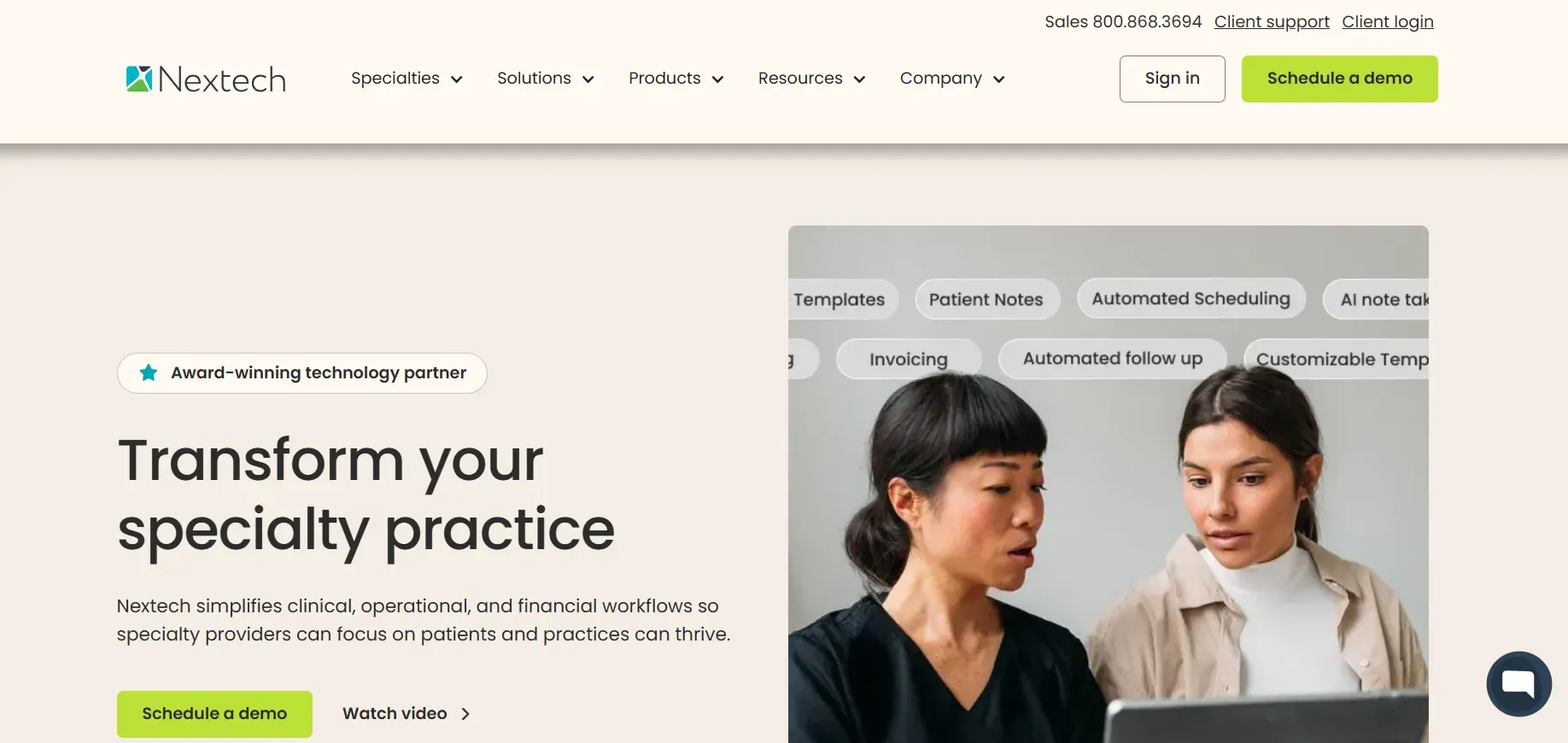
Nextech is a favorite among ophthalmology, plastic surgery, and dermatology clinics that require complex, specialty-driven workflows. Features include robust clinical documentation, imaging management, inventory tracking (for surgical supplies or cosmetic products), and advanced scheduling across multiple providers or locations.
Integrations: Nextech integrates with diagnostic devices, imaging (OCT, fundus cameras), and leading payment and billing platforms. Its specialty modules are among the most comprehensive, but integrating with legacy or non-standard systems can require custom development.
Migration friction: Nextech offers migration support, but onboarding can be intensive. Importing structured data from Cerner is usually possible, but unstructured data (like scanned images or handwritten notes) may need manual review. Training is also a significant investment, as staff often need several weeks to adapt to the interface.
Use case: Ophthalmology clinics needing device integration, surgical scheduling, and detailed outcomes tracking; plastic surgery centers managing inventory and before-after images.
Pricing: Custom quote required.
- Comprehensive specialty modules
- Strong device and imaging integrations
- Advanced scheduling and inventory features
- Steep learning curve for staff
- Annual price increases reported
- Additional costs for new modules
6. Allscripts (Best for large, multi-site clinics)
Allscripts is a mature EHR and practice management platform used by enterprise clinics and large multi-site practices. Its feature set includes advanced scheduling, population health, revenue cycle management, analytics, and patient engagement. Allscripts is also a leader in interoperability, supporting HL7, FHIR, and direct messaging for care coordination.
Integrations: Allscripts connects with hospital systems, labs, imaging, and third-party health apps via its Developer Program. It is designed for clinics operating across multiple locations or needing to share data with hospital partners.
Migration friction: Allscripts has migration teams to assist with data transfer from Cerner, but the process can be lengthy and expensive. Complex customizations may not translate perfectly, and clinics should plan for parallel testing and staff retraining.
Use case: Enterprise clinics, multi-location specialty groups, or outpatient departments that need robust analytics and interoperable workflows. For example, a multi-site cardiology practice integrating with hospital EMRs and regional HIEs.
Pricing: Custom quote required.
- Advanced analytics and reporting
- Strong interoperability
- Suitable for large, multi-site operations
- System slowdowns during busy periods
- Complex user interface
- Long-term contracts and custom pricing
7. Greenway Health (Best for scaling practices)
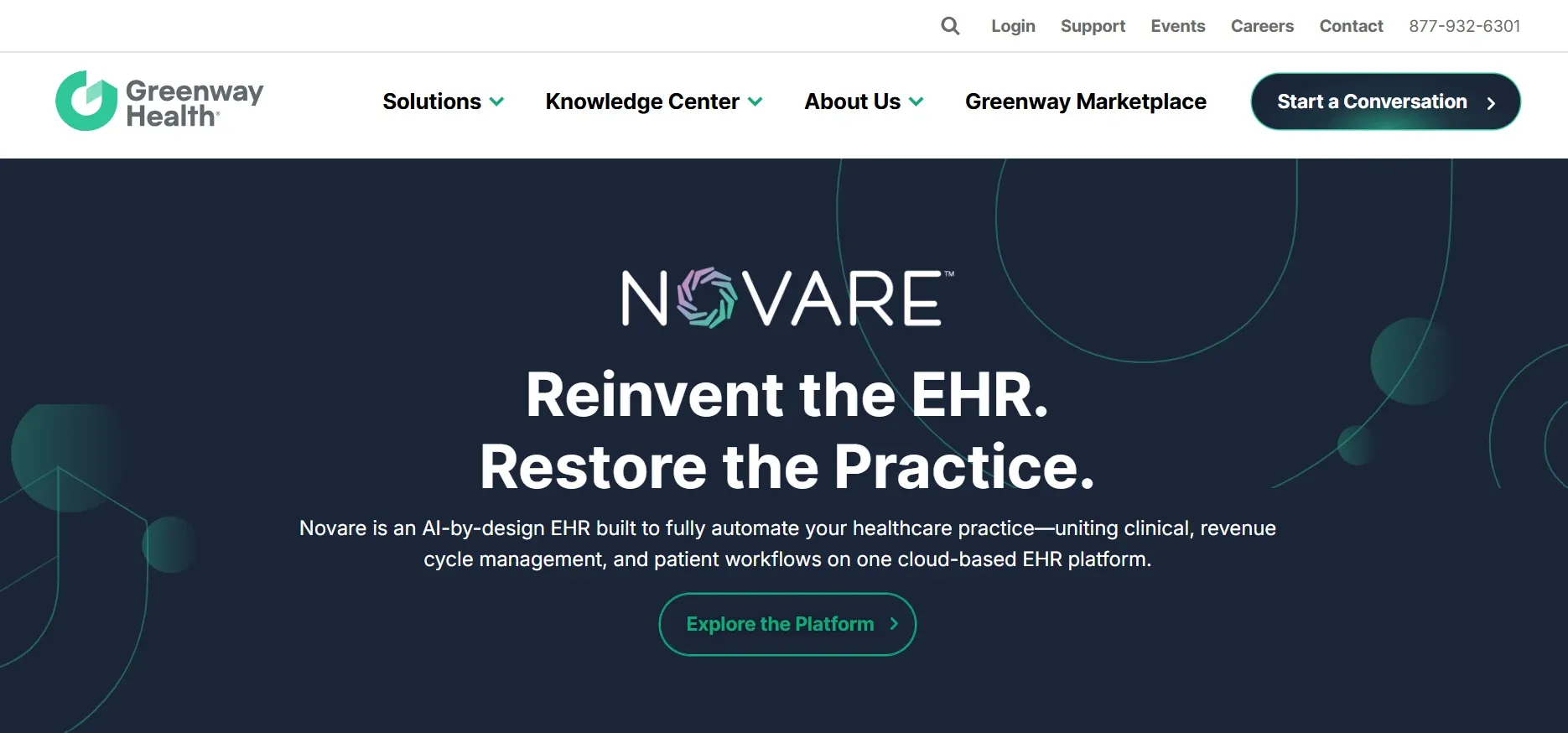
Greenway Health serves clinics on a growth trajectory. Its Intergy EHR is designed to scale from solo practitioners to multi-site groups. Features include specialty templates, integrated practice management, patient engagement, and telehealth. Greenway’s analytics and population health tools are notable for value-based care initiatives.
Integrations: Greenway supports lab, imaging, pharmacy, and payment integrations. Its Marketplace offers vetted partner apps for patient communication, reputation management, and more.
Migration friction: Data migration is supported, but clinics report mixed experiences with support responsiveness, especially for custom reports or legacy Cerner data. Adding new modules often requires negotiation and additional costs.
Use case: Growing specialty clinics, such as OB/GYN or primary care groups expanding to new locations, needing scalable EHR and patient engagement. For example, a multi-location pediatric clinic rolling out telemedicine and reminders.
Pricing: Custom quote required.
- Flexible and scalable platform
- Strong specialty templates
- Marketplace for partner integrations
- Support and software updates can be inconsistent
- Costs rise as you add features or users
- Surprise charges for new integrations
Owning your system means these expansions are a one-time investment, not a recurring fee.
8. eClinicalWorks (Best for clinics needing bundled EHR/PM)
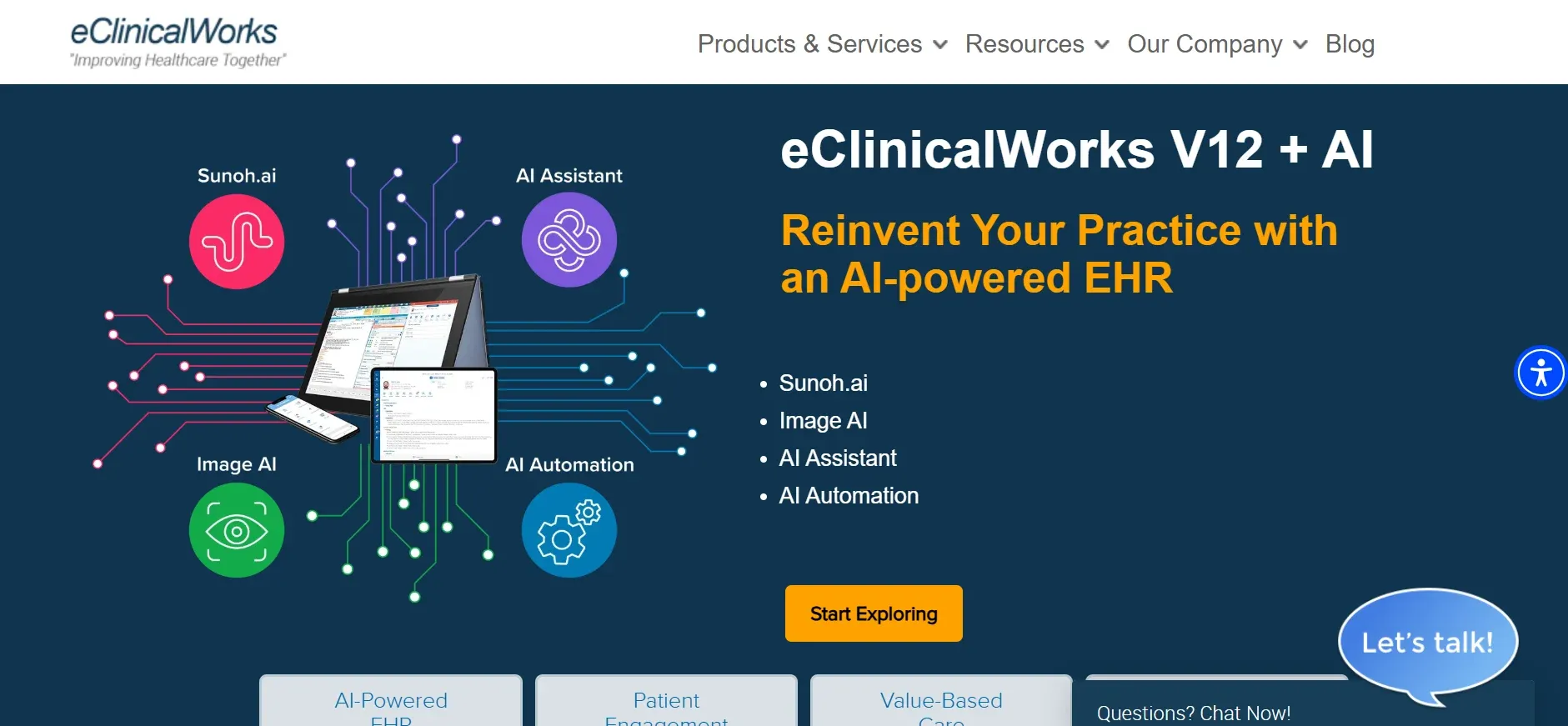
eClinicalWorks is used by over 130,000 physicians and offers a comprehensive EHR and practice management suite. Core features include customizable templates, population health, telehealth, patient portals, and document management. eClinicalWorks offers specialty content for over 50 specialties, from cardiology to urology.
Integrations: The platform connects with labs, imaging, pharmacies, and billing services. Its open API allows for custom integrations, though some clinics report challenges with third-party add-ons.
Migration friction: eClinicalWorks offers data migration packages, but reviews are mixed. While structured data (demographics, allergies, meds) usually migrate well, custom forms, scanned documents, and historical notes may require manual work. No startup fees help reduce initial friction.
Use case: Clinics needing a bundled EHR and practice management platform with broad specialty support. For example, a multi-provider endocrinology clinic that needs integrated scheduling, patient reminders, and telehealth.
Pricing: $449 per provider per month (EHR), $599 with practice management.
- Comprehensive specialty support
- Bundled EHR and practice management
- Open API for integrations
- Costs rise quickly with staff
- Support responsiveness can be inconsistent
- Occasional system glitches
9. Practice EHR (Best for small practices on a budget)
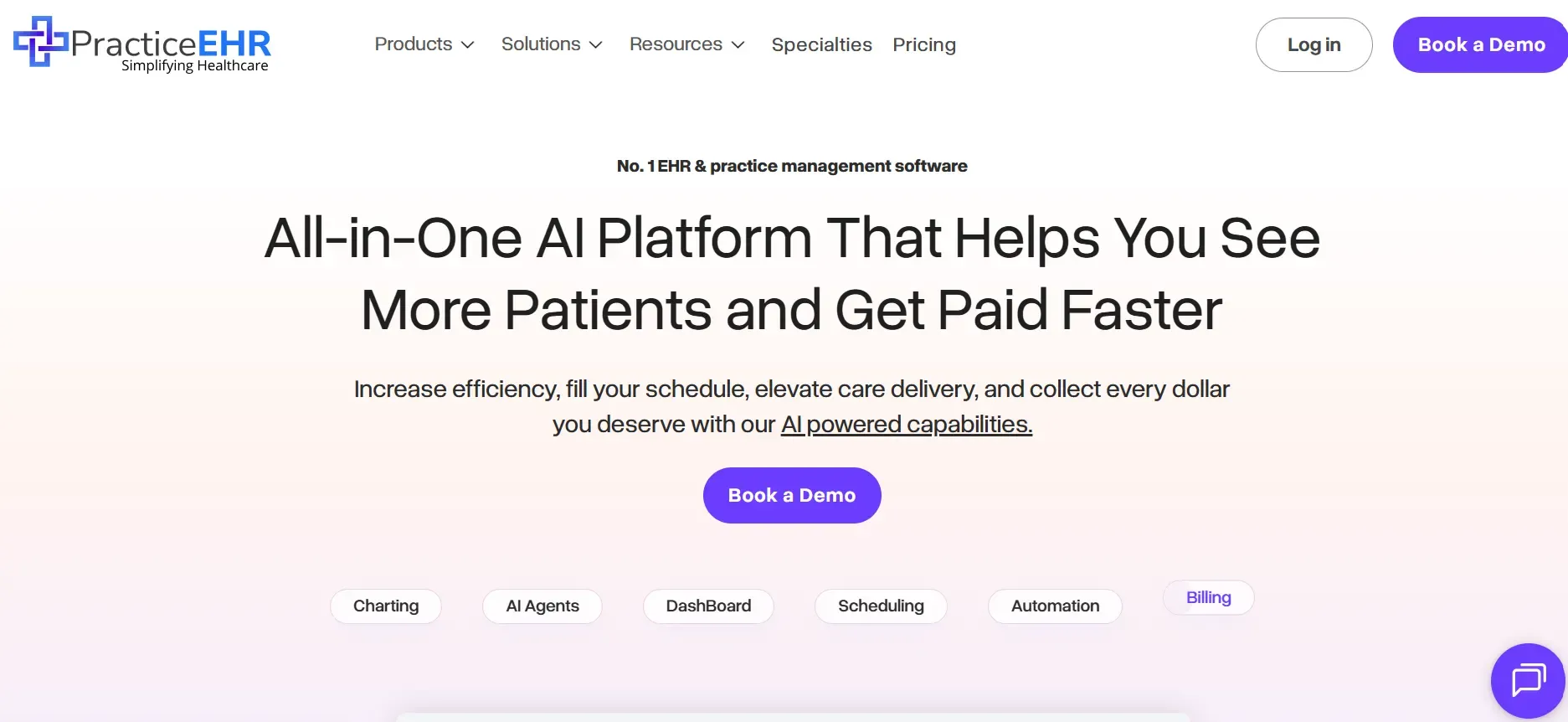
Practice EHR targets small specialty clinics and solo practitioners. Features include basic EHR, scheduling, e-prescribing, and billing. Onboarding is quick, and the interface is simple, making it easy for small teams to get started.
Integrations: Practice EHR offers standard integrations with labs and pharmacies, but options for advanced analytics or specialty devices are limited.
Migration friction: Data migration is offered for basic clinical and scheduling data, but advanced customizations or detailed specialty templates may not transfer. Clinics upgrading from Cerner may need to rebuild some forms or workflows.
Use case: Solo or small specialty clinics, such as podiatry, chiropractic, or behavioral health, needing a cost-effective, no-frills EHR.
Pricing: $149 per provider per month.
- Lowest price on this list
- Simple onboarding and interface
- Quick setup for small teams
- Basic functionality and limited customization
- Not ideal for growing clinics
- Limited advanced reporting
10. Devaims (Best for owning your EHR and avoiding rent)
Devaims by Softaims offers a fundamentally different approach: custom software built for your clinic, which you own outright. Your EHR, practice management, or specialty platform is designed from scratch based on your workflows, specialty needs, and integration requirements. You receive the source code, full database access, and a system tailored to your team, with no recurring user fees, no forced upgrades, and no lock-in contracts.
- Every feature is designed for your clinic: custom charting templates, specialty-specific modules, automated reporting, patient engagement tools, and integrations with labs, imaging, or billing partners.
- Direct integrations for your lab, imaging, pharmacy, or third-party tools, using industry standards (HL7, FHIR, X12) or custom APIs. You control what connects and how.
- Devaims manages the entire migration process, exporting your Cerner data, mapping and importing to your new system, validating records, and providing side-by-side testing. You keep full access to all your historical data, and future migrations (if needed) are simple, since you own the code and database.
- Clinics ready to stop paying rent and start owning their digital infrastructure. For example, a specialty group needing unique scheduling, advanced analytics, or integrations that no vendor will build, or a multi-provider practice tired of per-user fees.
- The upfront investment is higher than a single year of subscription, but after launch your only costs are flat-rate maintenance and any new features you choose to add. There is no ongoing per-user fee, and you are never locked into a contract. You control upgrades and integrations, pay once, own forever.
Other Cerner alternatives worth knowing
- Netsmart is strong in behavioral health, long-term care, and social services, but less relevant for most outpatient specialty clinics. Its focus on care coordination and interoperability is notable for those in those fields.
- DrChrono works well for solo or micro-practices, especially those just starting out, but lacks the specialty depth or customization larger clinics require.
- Meditech is a robust, hospital-grade EHR with deep inpatient features, often overkill for outpatient specialty clinics. Its complexity and cost make it best suited for hospital-affiliated groups.
How to choose the right Cerner alternative
- By budget: Calculate the five-year cost of ownership, including user fees, setup, training, and support. Subscription fees may seem manageable at first, but add up fast as your team grows.
- By specialty: Dermatology, ortho, ophthalmology, and other specialties have unique workflow needs. Choose a tool with proven specialty modules, or consider custom development if you need something unique.
- By practice size: Epic, Allscripts, and Greenway Health are suited for larger or multi-site clinics. Practice EHR and Kareo are better for solo or small groups.
- By ownership: If you want to control your code, data, and integrations, only a custom Devaims build delivers true ownership. All other vendors rent you access and can raise prices or change terms at renewal.
- By workflow: List your must-have integrations, reporting requirements, and specialty modules. Ask vendors for detailed demos and transparent pricing, then see which can deliver without surprise fees or feature gates.
Most clinics end up paying for features they never use, or paying again to unlock the ones they actually need. With Devaims, you pay for exactly what you want, once.
Stop paying rent on software you could own
The common thread among Cerner alternatives? They all rent you access to their platform. Whether it’s $300 per user per month or a “custom” quote, you are paying for permission to use someone else’s software, and your data lives on their servers, under their rules. Over five years, you often pay more than the system is worth, yet you never own a thing.
Devaims is different. Devaims builds your EHR, practice management, or specialty software from the ground up for your clinic. You receive the source code, the database, and a system designed to fit your workflows. No more juggling add-ons, paying again for features you already bought, or negotiating for data access. This is your software, not a rental.
- No per-user or per-month fees: After launch, your only cost is flat-rate maintenance, not a rising subscription tied to your headcount.
- Full ownership: You control your code and your data. You are never locked in, and can move or modify your system as you see fit.
- Custom workflows: Reports, integrations, and specialty modules are built for you, not upsold or restricted.
- Predictable costs: Flat maintenance, no surprise hikes or forced upgrades.
- Freedom to evolve: Add new features when you want, pay once, own forever. You are not dependent on a vendor’s roadmap.
| Tool | Ownership | Per-user/month fee | Contract length |
|---|---|---|---|
| Cerner | Rent (no code access) | $300+ | Multi-year |
| Epic | Rent (no code access) | Varies | Multi-year |
| eClinicalWorks | Rent | $449, $599 | Annual/rolling |
| Devaims | Own (full code + data) | None (after build) | No contract |
| Year | Rented (e.g., Cerner, 5 providers) | Owned (Devaims build) |
|---|---|---|
| 1 | $18,000 | $31,760 |
| 2 | $36,000 | $34,520 |
| 3 | $54,000 | $37,280 |
| 4 | $72,000 | $40,040 |
| 5 | $90,000 | $42,800 (now ahead) |
This math uses $300/user/month for Cerner (5 providers x $300 x 12 months = $18,000/year), and a Devaims build at $29,000 upfront with $230/month maintenance. In year five, ownership pulls ahead and continues saving you money. For larger clinics or higher subscription fees, the break-even point comes even sooner. Devaims will run your real numbers for free, factoring in your specialty, staff size, and integration needs.
How to switch from Cerner
- Export your data: Request a full export of all patient, clinical, and billing data from Cerner. Preferred formats include HL7, FHIR, CSV, or PDF. Be aware that some data types (imaging, scanned documents) may require separate requests.
- Choose your new platform: Decide whether you want another subscription-based EHR or a custom Devaims build. Consider your five-year cost, specialty needs, and integration requirements.
- Import and validate: Import your data into the new system, mapping all fields (patients, encounters, meds, allergies, billing codes). Validate for completeness and accuracy, run parallel testing to catch any discrepancies.
- Reconnect integrations: Re-establish connections to labs, imaging, payment processors, and any third-party apps. For custom builds, Devaims handles this as part of the migration.
- Staff training: Train your team on new workflows, user roles, and specialty features. Provide sandbox environments for hands-on practice before go-live.
- Test side-by-side: Run both systems in parallel for one or two weeks. Use real patient scenarios to ensure all clinical, scheduling, and billing workflows function as expected.
- Review your contract: Check your Cerner contract for termination terms, notice periods, and any data retention or destruction requirements.
With a custom Devaims build, the migration process is managed for you, including data extraction, mapping, staff training, and go-live support. You own your data from day one, with no vendor-imposed barriers.
Frequently asked questions
What is the best alternative to Cerner for a specialty clinic?
If your clinic needs enterprise power, Epic is a well-established alternative, offering deep specialty modules, strong analytics, and broad interoperability. However, it comes with a high price and long-term contract. For clinics seeking full control, Devaims is the only option that gives you ownership of your code, data, and future, eliminating per-user fees and forced upgrades.
Which Cerner alternative is most affordable?
Practice EHR offers the lowest per-user price ($149/provider/month), but its feature set is basic and may not scale with your clinic. Over five years, a custom Devaims build can cost less than a subscription, especially if your clinic has more than a few providers or needs advanced specialty features.
Are there any free Cerner alternatives?
There are open-source EHRs (OpenEMR, OSCAR EMR), but these require significant technical expertise, ongoing IT support, and rarely offer the specialty modules, compliance, or integrations that clinics need. Most serious clinics choose a paid solution for support and regulatory compliance. Devaims isn’t free, but you pay once and own it forever, with predictable maintenance costs.
What is the best Cerner alternative for dermatology or ortho?
Modernizing Medicine is strong for dermatology and orthopedics, with deep specialty content and adaptive charting. However, if your clinic needs unique features or wants to avoid recurring fees, a custom Devaims build lets you specify exactly what you need, owning the result for life.
When should I switch from Cerner?
Consider switching if your annual EHR spend is climbing, your staff struggles with the interface, or you want to own your data and workflows. If your five-year rental cost would cover a custom build, it’s time to review alternatives. Also, if you need integrations or specialty workflows Cerner won’t deliver, moving to a more flexible platform can unlock new efficiencies.
Can I keep my old Cerner data if I switch?
Yes, but the process can be tedious and may require technical help. Cerner exports most structured data, but complex custom fields or scanned documents may need manual extraction. With Devaims, you own all data from day one, and future migrations (if ever needed) are straightforward since you have full access to your database and code.
What’s the real five-year cost difference between renting and owning?
Renting Cerner for five providers is around $90,000 over five years, not including setup, migration, or surprise fees. A Devaims build plus maintenance is about $42,800 in the same period, less if you have more providers or need fewer custom features. After five years, you keep saving, since you own the platform outright and pay only for maintenance or new features you choose to add.
The bottom line
Most specialty clinics searching for Cerner alternatives are tired of paying rent for a system that never feels like theirs. The honest math: if your clinic will use the same core features for three years or more, building your own with Devaims can save you tens of thousands and give you full control over workflows, data, and future upgrades.
The test is simple: estimate your EHR spend for the next five years. If that number would fund a custom platform with your clinic’s name on it and features built for you, you already know the smarter play. When you’re ready to stop renting, Devaims makes true ownership possible.
Explore more on the Devaims blog, plus related reads: Epic alternatives, AdvancedMD alternatives, and eClinicalWorks alternatives.