



The moment your home care agency outgrows AlayaCare’s starter plan, you feel it: another per-user charge, another "must-have" feature locked behind a higher tier, another year-long contract you can't leave. You run the numbers and realize you could be paying six figures over five years, and still not own a line of code. Sound familiar?
If you’re searching for AlayaCare alternatives, you’re not alone. Whether compliance headaches, integration limits, or the sheer cost of renting software is pushing you to look, you’ll find plenty of platforms promising an upgrade. But only one route lets you finally own your own system: a custom build. For home care leaders ready to stop paying rent, here’s how the top contenders stack up, and why ownership is the next logical step.
Why home care agencies look for AlayaCare alternatives
Per-user and per-client fees add up fast. Agencies quickly see costs balloon as their roster grows, with every new caregiver or client carrying a monthly charge. For agencies with high staff turnover or many part-time workers, these fees can be unpredictable and make budgeting difficult. Agencies often find that as they scale, the software bill grows disproportionately, sometimes exceeding projections by 30% or more each year.
Locked features force you up the pricing ladder. Vital tools like advanced reporting, payroll, or integrations with third-party systems often sit behind premium tiers. Agencies may start with a basic plan, only to discover that essential workflow automations or compliance modules require an upgrade. This can lead to unexpected mid-year costs or forced contract renegotiations.
Rigid workflows don’t fit real-life operations. AlayaCare’s out-of-the-box templates rarely match your unique way of running visits or managing compliance, so teams get creative with workarounds. Staff often use spreadsheets or other side systems to fill workflow gaps, increasing the risk of errors and compliance issues. Agencies needing truly custom visit types, multi-step care plans, or unique billing models may feel boxed in.
Integrations are limited or cost extra. Connecting with payroll, billing, or EHR systems can require add-on fees or third-party services, adding both expense and complexity. Many platforms, including AlayaCare, offer a fixed set of integrations and may not support newer or niche systems without additional development. This can slow down onboarding and frustrate IT teams seeking a unified tech stack.
Long-term contracts and data lock-in. Once you’re in, getting your data out or switching vendors is a project, and sometimes a ransom. Data exports may be limited or incomplete, and custom reports can be subject to additional fees. Agencies have reported months-long transitions and hidden costs when migrating away from SaaS platforms, making it critical to consider exit planning before signing a new contract.
Quick comparison of the best AlayaCare alternatives
| Tool | Best for | Starting price | Per-client/user fees? | Ownership |
|---|---|---|---|---|
| WellSky (ClearCare) | Enterprise agencies | Reported $350+/mo | Yes | Subscription |
| Brightree | Medical home care | Custom quote | Yes | Subscription |
| MatrixCare | Post-acute care | Custom quote | Yes | Subscription |
| PointClickCare | Multi-location operators | Custom quote | Yes | Subscription |
| Caremerge | Senior engagement | Custom quote | Yes | Subscription |
| CareVoyant | Integrated billing | Reported $250+/mo | Yes | Subscription |
| Sandata | EVV compliance | Custom quote | Yes | Subscription |
| HHAeXchange | Medicaid agencies | Custom quote | Yes | Subscription |
| Rosemark | Growing small agencies | Reported $125+/mo | Yes | Subscription |
| Devaims (Custom Build) | Full ownership, custom fit | One-time build + flat maint. | No | One-time build, you own it |
Always confirm current pricing before you decide, as costs and tiers change often. Some vendors adjust pricing based on region, agency size, or regulatory requirements.
The 10 best AlayaCare alternatives
1. WellSky (ClearCare) (Best for enterprise agencies)
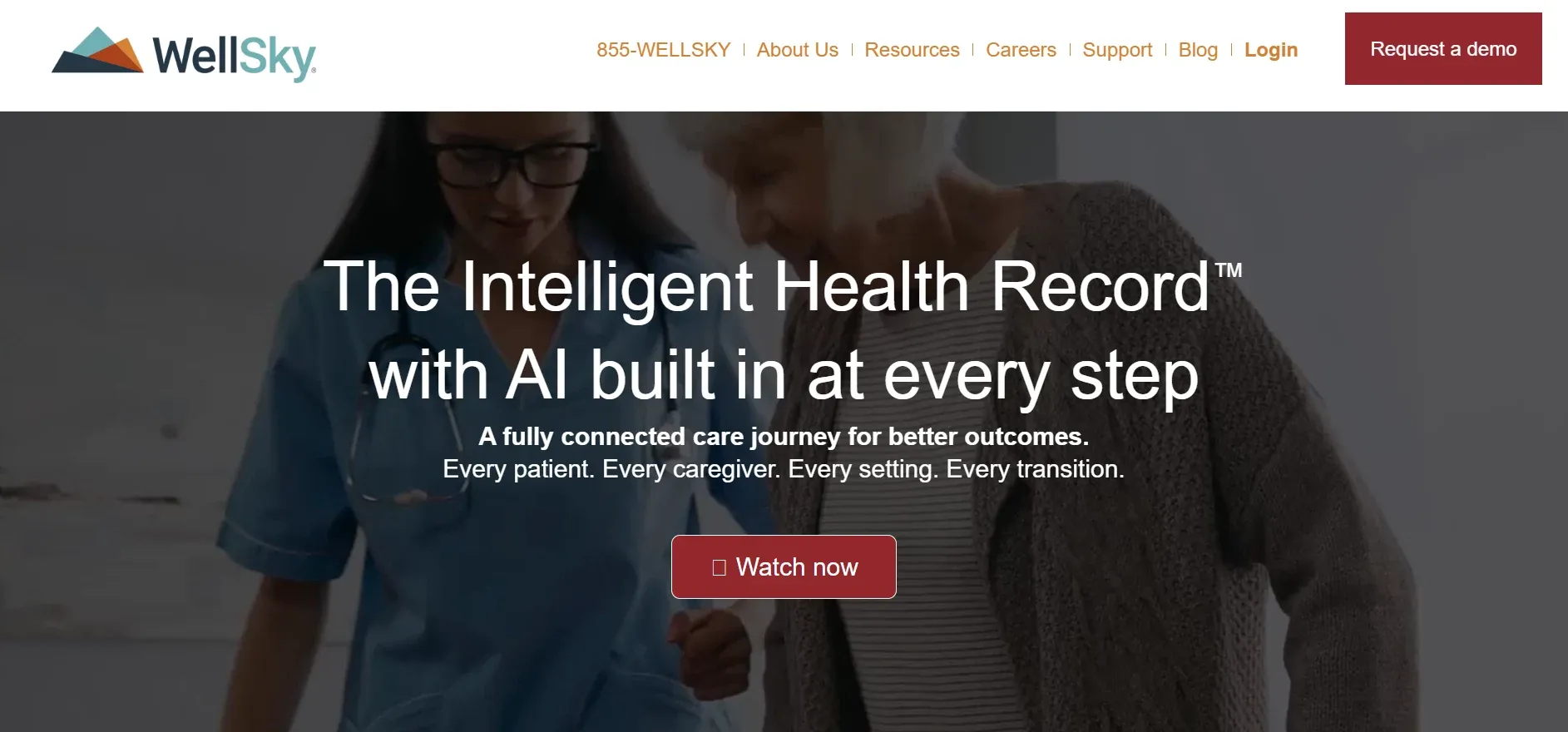
WellSky (formerly ClearCare) is a heavyweight in the home care software space, with deep tools for large agencies and franchise operators. WellSky’s solution is built for scale, providing enterprise-level scheduling, compliance, and analytics. Its reporting engine is one of the most comprehensive on the market, with customizable dashboards for compliance, operations, and financials. The platform offers integrations with major EHRs, payroll processors (like ADP and Paychex), and billing systems, making it a strong fit for agencies with complex back-office needs.
WellSky supports multi-location management, with detailed user role controls and audit trails to meet the demands of franchisors and large independent agencies. Its mobile apps enable real-time visit verification (EVV), time tracking, and care documentation. Agencies can use WellSky’s data analytics for benchmarking against industry KPIs, which is valuable for operators managing multiple branches or seeking accreditation.
Pricing: Reported $350+/mo for mid-sized agencies, but larger agencies often pay significantly more due to per-client and per-user fees. Most contracts are annual with auto-renewal, and add-on modules (like business intelligence or advanced EVV) can increase costs. See WellSky's features.
- Comprehensive compliance and reporting, suitable for accreditation and audits
- Strong integrations for EHR, payroll, billing, and third-party analytics
- Trusted by large-scale operators and franchises
- Dedicated customer success teams for enterprise clients
- Annual contracts with auto-renewals, which can be hard to exit early
- Per-client and per-user fees can spike costs, especially for agencies with high turnover or rapid growth
- Feature bundles, not à la carte, so you may pay for modules you do not need
- Migration from AlayaCare often requires WellSky’s professional services, adding friction and cost
Best for: Large, multi-site agencies, franchises, and those needing deep analytics and compliance tools. Not ideal for small teams or those seeking full ownership.
Migration friction: Expect a multi-week onboarding, data mapping, and retraining process. Agencies must carefully plan to avoid operational disruptions during migration.
2. Brightree (Best for medical home care)

Brightree is best known for its focus on skilled medical home care, serving agencies that deliver nursing, therapy, and complex care at home. Brightree stands out for its clinical documentation workflows, which are tailored to Medicare and Medicaid requirements and help reduce claim denials. The system supports detailed care plans, physician orders, medication management, and outcome tracking, making it highly compliant for skilled care.
Brightree integrates with many health information exchanges (HIEs), major pharmacy systems, and laboratory networks, supporting agencies that need to coordinate with hospitals, physicians, and other care providers. Its billing engine handles Medicare, Medicaid, and private insurance claims, tracking authorizations and managing denials. The platform also offers a mobile app for clinicians, enabling point-of-care documentation and secure messaging.
Pricing: Custom quotes only; costs are based on agency size, number of users, and care types provided. Additional modules for hospice or DME (durable medical equipment) are available. Request Brightree pricing.
- Comprehensive clinical documentation for Medicare compliance
- Integrated medical billing, eligibility checks, and claims management
- Large support network and training resources
- Interoperability with hospitals and health systems
- Long onboarding and training cycles, especially for agencies new to medical billing
- Per-visit billing and add-on modules can make costs unpredictable
- Not tailored for private-duty non-medical agencies; focus is on skilled care
- Some integrations, like custom EHRs, require additional configuration fees
Best for: Agencies providing skilled nursing, therapy, or medical home care needing detailed documentation and insurance billing. Less suitable for non-medical, private-pay agencies.
Migration friction: Agencies moving from AlayaCare will need to retrain clinical staff and may face challenges in mapping non-medical workflows to Brightree’s clinical focus.
3. MatrixCare (Best for post-acute care)
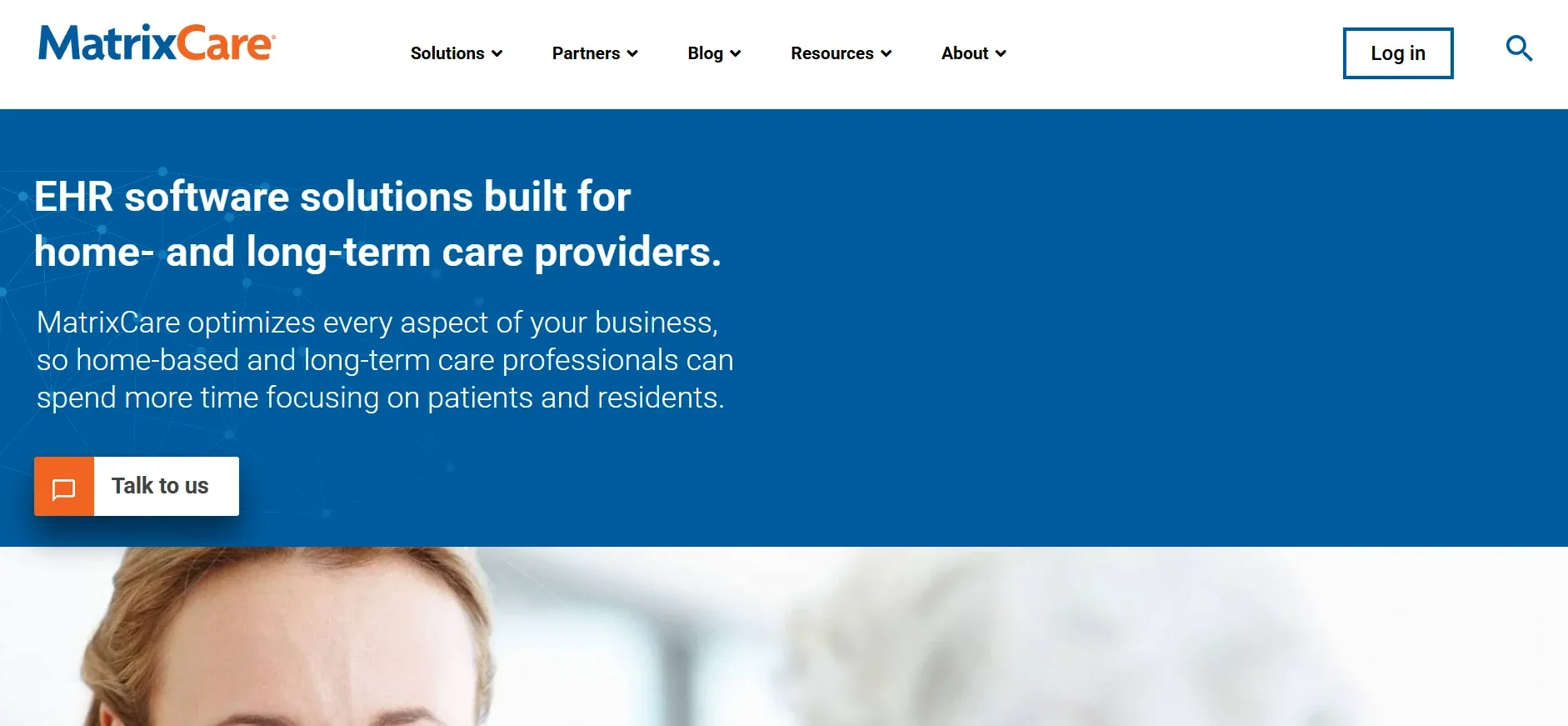
MatrixCare serves agencies in post-acute, hospice, and senior living, with deep clinical and operational tools. MatrixCare’s strength is its support for complex care models, including hospice, palliative care, home health, and skilled nursing. The platform provides outcome-based care planning, medication management, and integrated billing for Medicare, Medicaid, and private insurers.
MatrixCare offers analytics for quality improvement, regulatory tracking, and financial management. Its EVV tools are state-compliant and support multi-payer billing, making it a favorite for agencies with mixed funding sources. Integrations include pharmacy, lab, and health system interfaces, though some require custom development or additional fees.
Pricing: Custom quote only; pricing depends on agency size, care lines, and modules. Implementation fees are common. Request MatrixCare pricing.
- Support for clinical care models and regulatory requirements
- Comprehensive billing and claims management, including appeals
- EVV compliance tools for multiple states
- Scalable for large, multi-service providers
- Complex setup and implementation, often requiring professional services
- No ownership, always a subscription, with annual contract renewals
- Some integrations and advanced analytics cost extra
- Data migration from AlayaCare can be challenging, particularly for custom fields
Best for: Post-acute, hospice, and multi-service agencies that need to coordinate complex care and billing. Less ideal for small, private-pay agencies.
Migration friction: Expect a lengthy onboarding and data mapping process, with significant retraining for staff moving from simpler platforms.
4. PointClickCare (Best for multi-location operators)
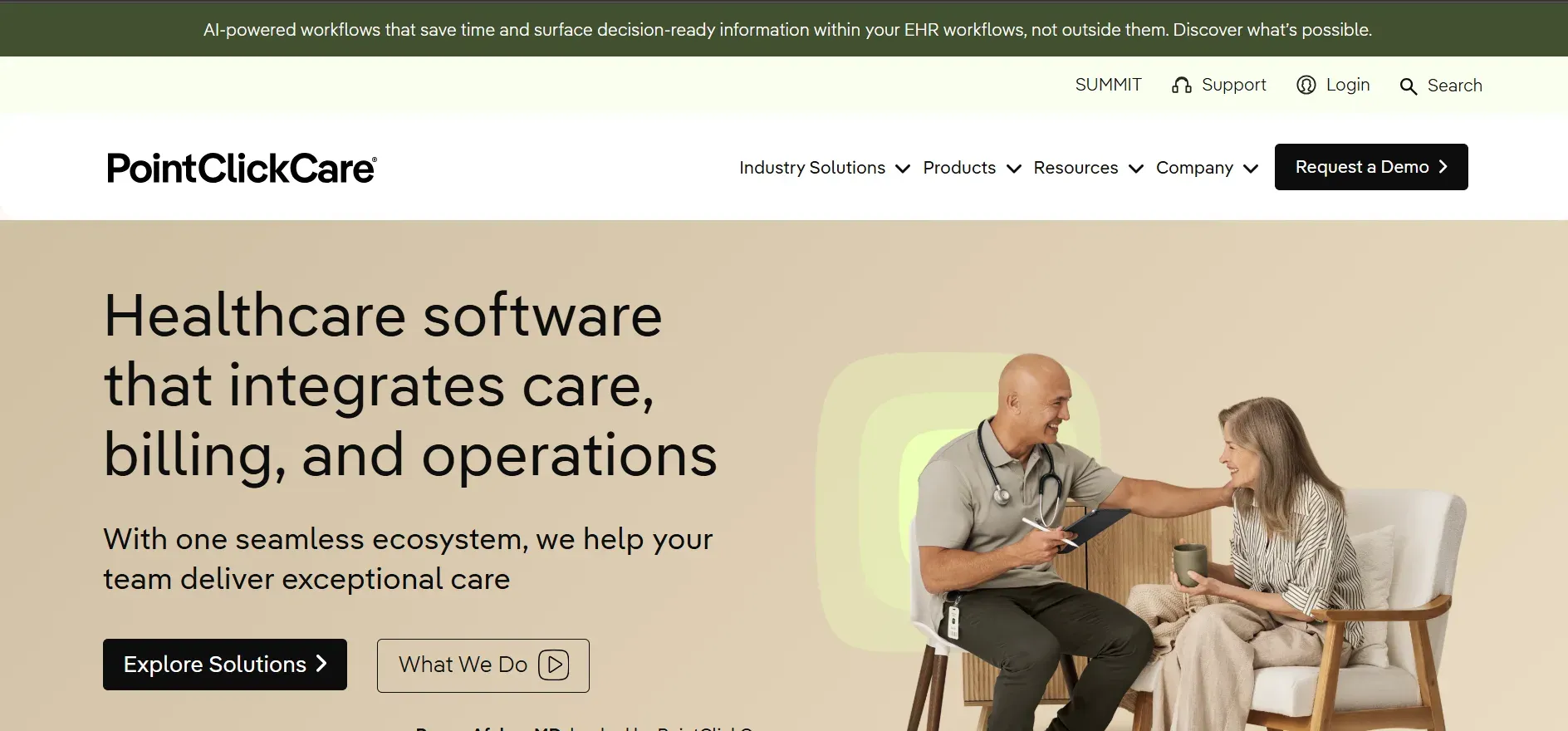
PointClickCare is a cloud platform built for large, multi-site care networks. The platform is widely used in senior living, assisted living, and skilled nursing, with tools for census management, analytics, and resident engagement. PointClickCare’s scheduling, billing, and compliance modules are scalable and support multi-branch reporting, making it a favorite for operators with diverse service lines.
PointClickCare integrates with pharmacy, lab, and EHR systems, supporting interoperability across the care continuum. The analytics suite enables benchmarking, quality tracking, and regulatory reporting. The platform also includes communication tools for staff and families, supporting engagement and transparency.
Pricing: Custom quote; pricing scales with number of locations, residents, and modules. Multi-year contracts are common. Request PointClickCare pricing.
- Analytics and benchmarking for multi-site operators
- Support for multi-branch operations and regulatory compliance
- Training and onboarding resources
- Integrated communication and engagement tools
- Feature sets depend on your contract tier and selected modules
- Long-term contracts required, making switching costly
- Implementation can take several months, with significant change management
- Customizations often require additional fees or vendor involvement
Best for: Senior living, assisted living, and large, multi-location agencies that need analytics and centralized management.
Migration friction: Data mapping and process redesign are often necessary. Agencies moving from AlayaCare may need to adapt workflows to fit PointClickCare’s structure.
5. Caremerge (Best for senior engagement)
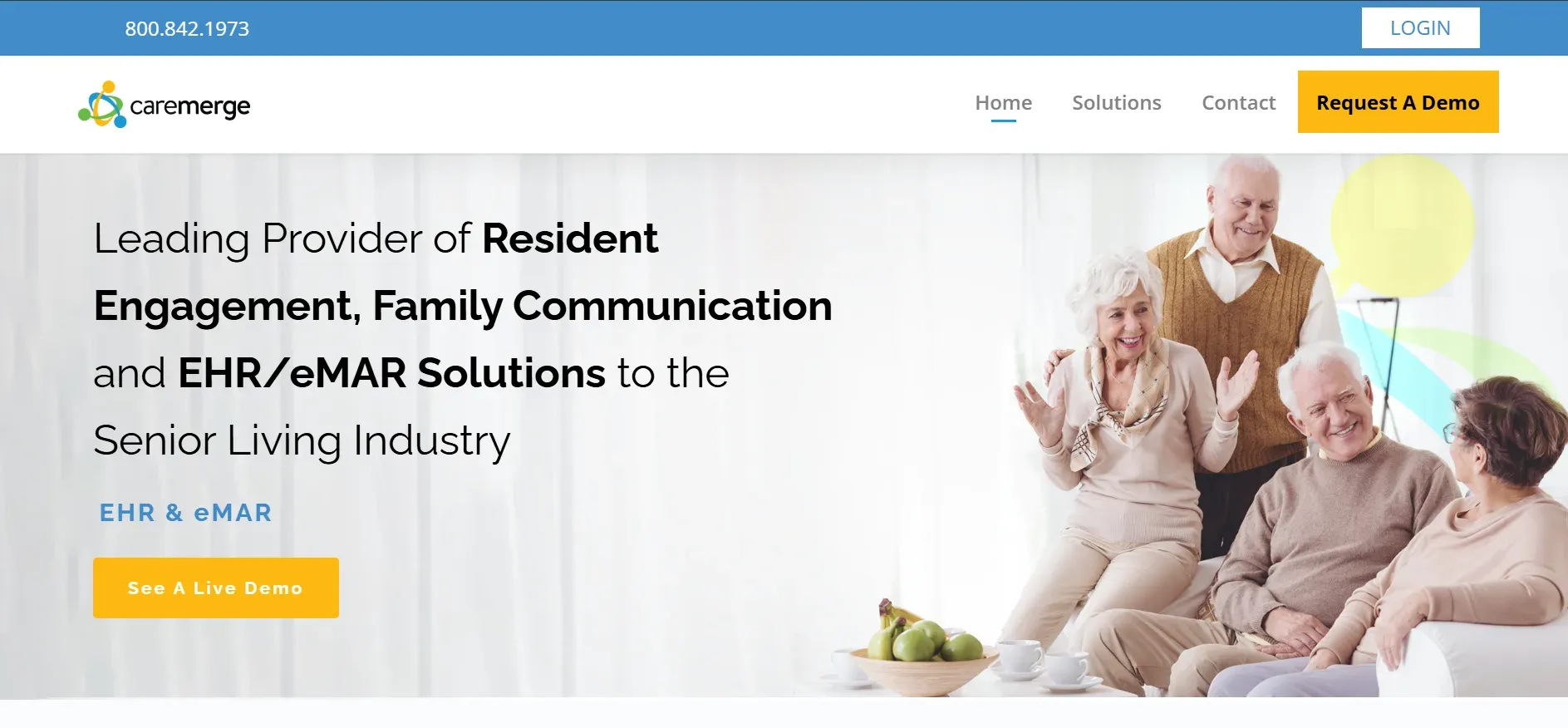
Caremerge focuses on engagement, wellness, and communication in senior living settings. Unlike AlayaCare, Caremerge is not a full agency management suite but excels at resident engagement, activity tracking, and communication between staff, residents, and families.
The platform includes modules for wellness programs, calendar management, digital signage, and two-way messaging. Agencies use Caremerge to improve resident satisfaction, reduce social isolation, and track participation in activities. The system integrates with some EHRs and care management platforms, but is not built for scheduling, payroll, or billing.
Pricing: Custom quote; based on resident count and selected modules. Contact Caremerge for pricing.
- Engagement and wellness tools
- Modern, easy-to-use interface for staff and families
- Supports digital engagement and remote family communication
- Improves resident satisfaction and participation metrics
- Not a full agency management suite; lacks scheduling, billing, and payroll
- Per-resident pricing can add up for large facilities
- Core admin features are limited compared to AlayaCare or WellSky
- Limited reporting for compliance or billing
Best for: Senior living communities focusing on engagement, wellness, and communication. Not a replacement for core agency management.
Migration friction: Minimal, as Caremerge is often layered on top of existing systems rather than replacing them.
6. CareVoyant (Best for integrated billing)
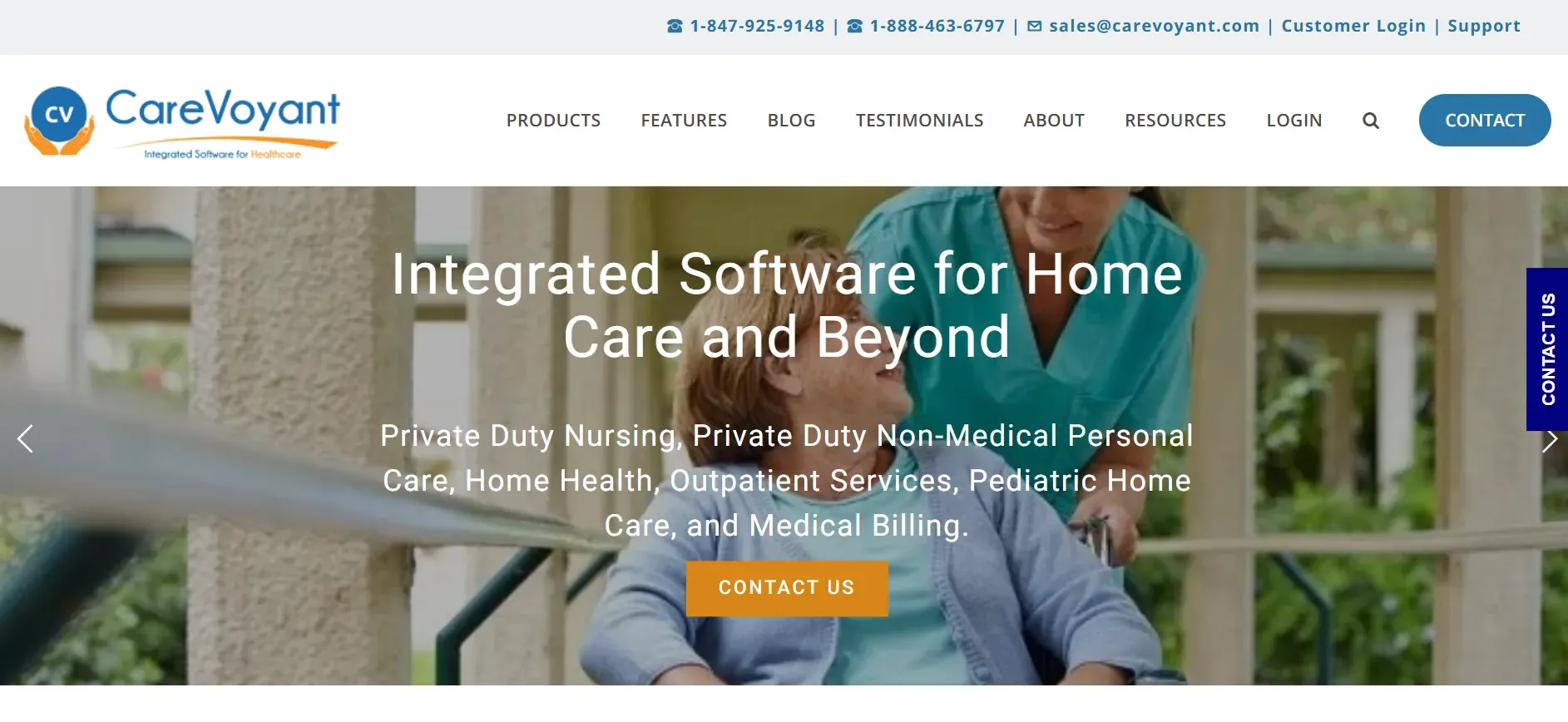
CareVoyant offers an integrated platform for home health, hospice, and private duty, with a focus on unified billing and claims. The platform’s key advantage is its ability to handle multiple payer types (Medicare, Medicaid, private insurance, and private pay) in a single workflow, reducing errors and administrative burden.
CareVoyant features documentation tools, scheduling, EVV, and case management. Its billing engine automates claim creation, submission, and tracking, supporting secondary billing and appeals. The platform integrates with payroll systems and supports electronic remittance advice (ERA), making reconciliation easier.
Pricing: Reported $250+/mo for small agencies, with costs increasing based on user count and modules. Annual contracts are standard. Contact CareVoyant for pricing.
- Unified billing for all payers, reducing need for multiple systems
- Documentation and care planning
- Flexible scheduling and case management
- Customer support for billing and claims issues
- Somewhat dated user interface compared to newer SaaS tools
- Learning curve for staff, particularly in billing workflows
- Annual contracts, with limited flexibility for scaling down
- Custom integrations may require additional development
Best for: Agencies with complex billing needs, especially those serving both private and public payers. Less ideal for tech-forward teams seeking a modern interface.
Migration friction: Data mapping for billing and claims can be complex. Agencies should plan for intensive staff retraining.
7. Sandata (Best for EVV compliance)
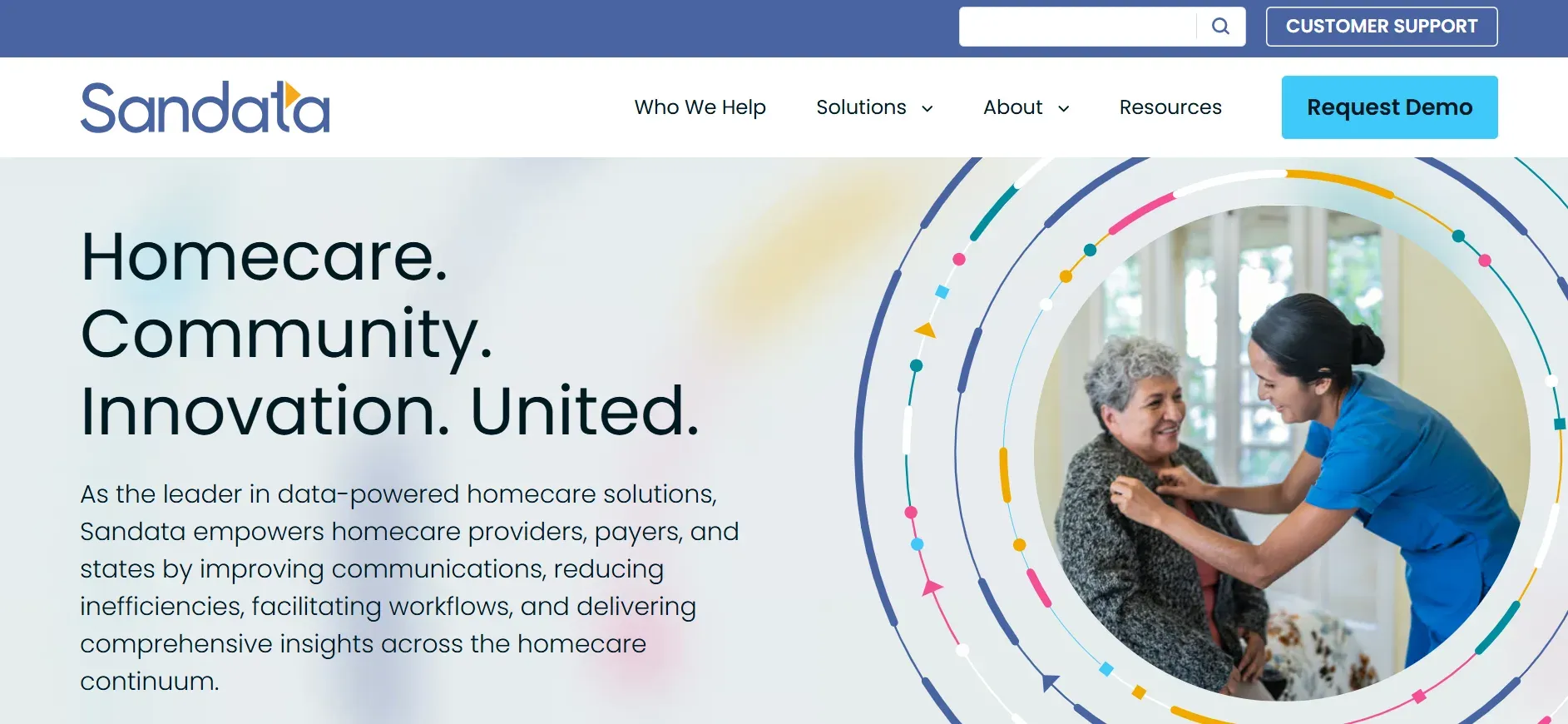
Sandata is widely used in Medicaid home care for its Electronic Visit Verification (EVV) compliance features. Sandata is the state-mandated EVV vendor in several states and integrates directly with Medicaid systems, making it essential for agencies serving Medicaid clients.
The platform covers scheduling, billing, and EVV, with mobile apps for caregivers and real-time visit tracking. Sandata’s workflow templates are designed for compliance and auditability, with automated alerts for missed or late visits. The system supports batch billing and claim submission directly to Medicaid programs.
Pricing: Custom quote; agency size, state requirements, and service lines affect rates. Contact Sandata.
- EVV compliance, state-approved in many regions
- Direct Medicaid integrations for claims and reporting
- Reliable for high-volume agencies with regulatory needs
- Automated compliance alerts and audit logs
- Strict workflow templates with limited customization
- Limited flexibility outside EVV and compliance
- Support queues can be long during peak periods
- Integrations with non-Medicaid systems may require third-party help
Best for: Medicaid-focused agencies, especially in states where Sandata is the official EVV vendor. Not suitable for agencies seeking workflow flexibility or advanced analytics.
Migration friction: Transitioning from AlayaCare often requires workflow redesign and staff retraining on Sandata’s templates.
With custom software, you set your own compliance triggers and reporting, so you never have to bend to a vendor’s workflow.
8. HHAeXchange (Best for Medicaid agencies)
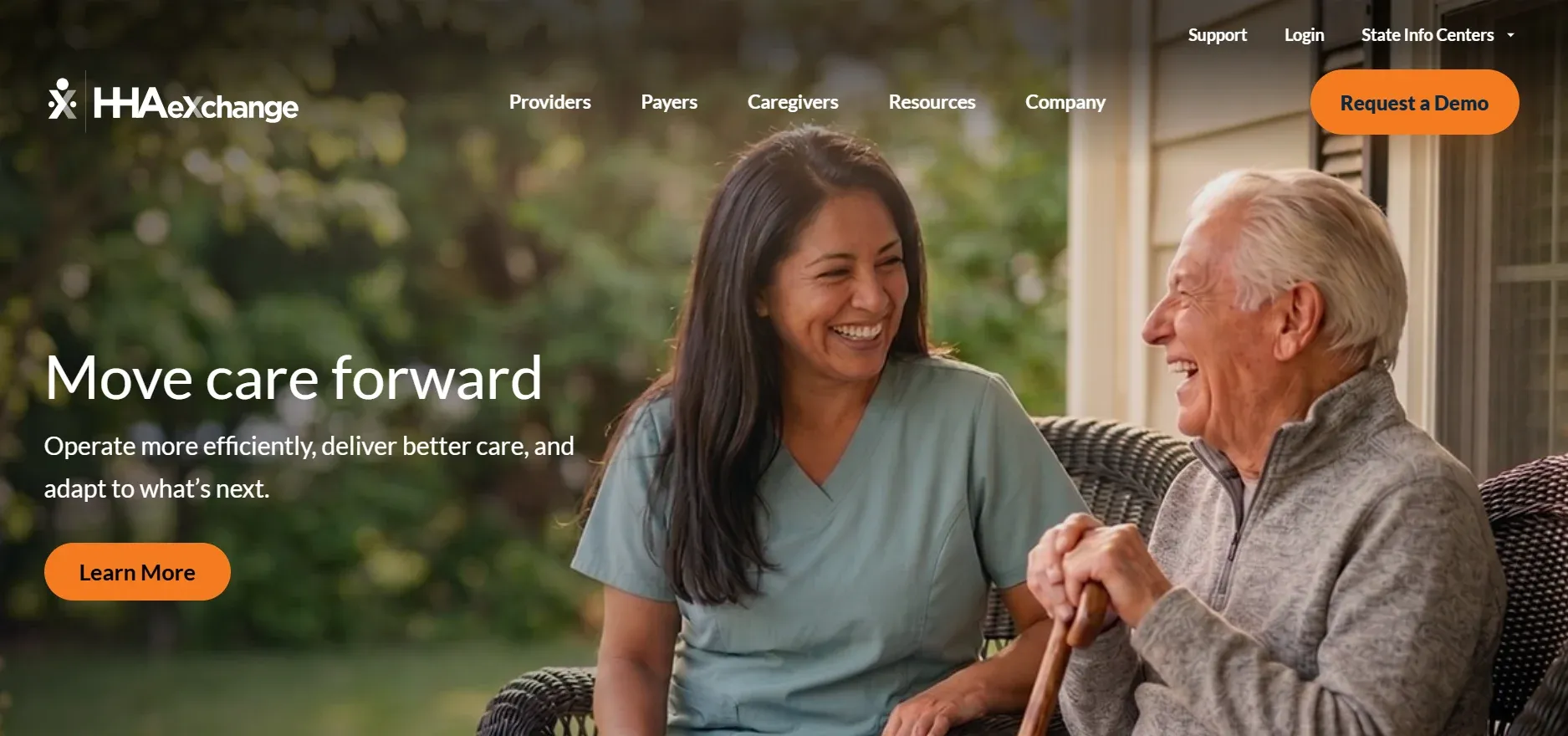
HHAeXchange is purpose-built for Medicaid agencies, with tools for electronic billing, EVV, claims automation, and managed care plan management. The system is approved in many states as an official Medicaid EVV solution and integrates with state Medicaid portals for claims submission.
HHAeXchange features scheduling, case management, timesheets, and communication tools. The platform automates eligibility checks, prior authorizations, and claim submissions for Medicaid and managed care organizations. Its mobile app supports GPS-based EVV and digital documentation.
Pricing: Custom quote; per-client or per-visit fees may apply. Pricing varies by state, contract, and features. Contact HHAeXchange for pricing.
- Medicaid billing and compliance built-in, state-approved in many regions
- EVV and state integrations for claims and reporting
- Automated claims workflows, reducing manual intervention
- Support for Medicaid billing questions
- Focuses on Medicaid, less on private duty or mixed-payer agencies
- Per-visit and per-client fees can escalate with agency growth
- Limited custom reporting and workflow flexibility
- Can be complex to configure for agencies with both Medicaid and private-pay clients
Best for: Medicaid-focused agencies, especially those operating in states where HHAeXchange is a preferred or required vendor.
Migration friction: Data mapping for Medicaid claims is essential. Agencies serving both Medicaid and private clients may need parallel workflows or secondary systems.
9. Rosemark (Best for growing small agencies)
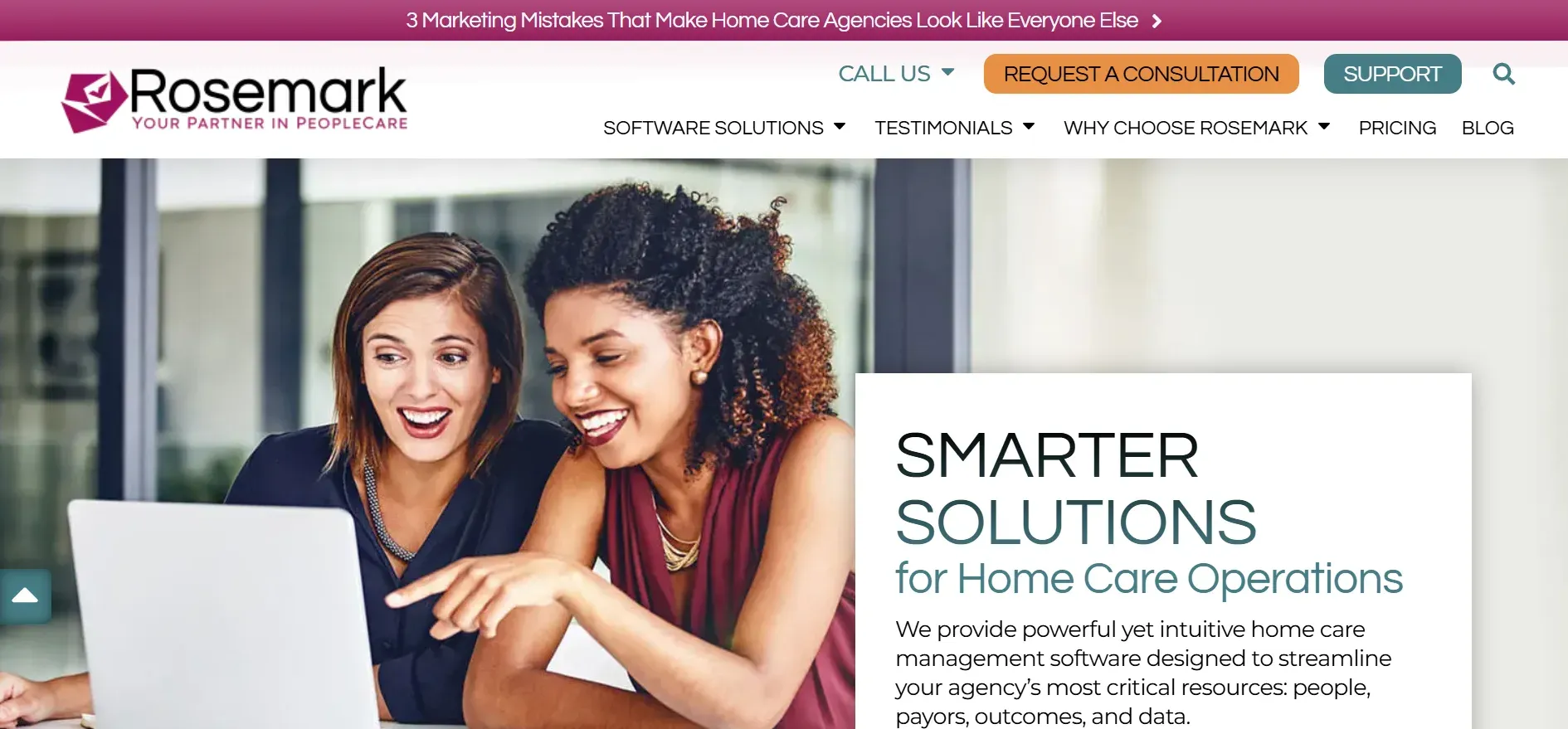
Rosemark is designed for smaller, fast-growing agencies that need core scheduling, billing, and EVV without enterprise-level complexity. The platform offers an approachable interface, easy onboarding, and essential tools for managing client visits, payroll, and compliance.
Rosemark’s EVV tools support state compliance, and its mobile app enables caregivers to clock in, complete care notes, and update visit statuses in real time. The system provides basic reporting and integrates with QuickBooks for payroll. Rosemark is popular among agencies new to software or those transitioning from manual processes.
Pricing: Reported $125+/mo; scales with client count. Add-ons for advanced reporting, custom forms, and integrations are available. See Rosemark pricing.
- Simple onboarding, with guided setup and live support
- Customer service, highly rated by small agencies
- Affordable for new and growing agencies
- EVV compliance and basic reporting
- Limited advanced features, analytics, and customization
- Add-ons cost extra, which can increase total cost as needs grow
- Not built for large, multi-site, or highly regulated agencies
- Integrations are limited to a few accounting and payroll systems
Best for: Small, private-duty agencies and those new to software management. Not recommended for agencies needing advanced analytics or multi-branch support.
Migration friction: Minimal for small agencies, but larger teams may outgrow the platform quickly and need to migrate again in the future.
With Devaims, you can build exactly the features you need now and add more as you grow, with no surprise jumps in monthly price.
10. Devaims (Best for full ownership and custom fit)
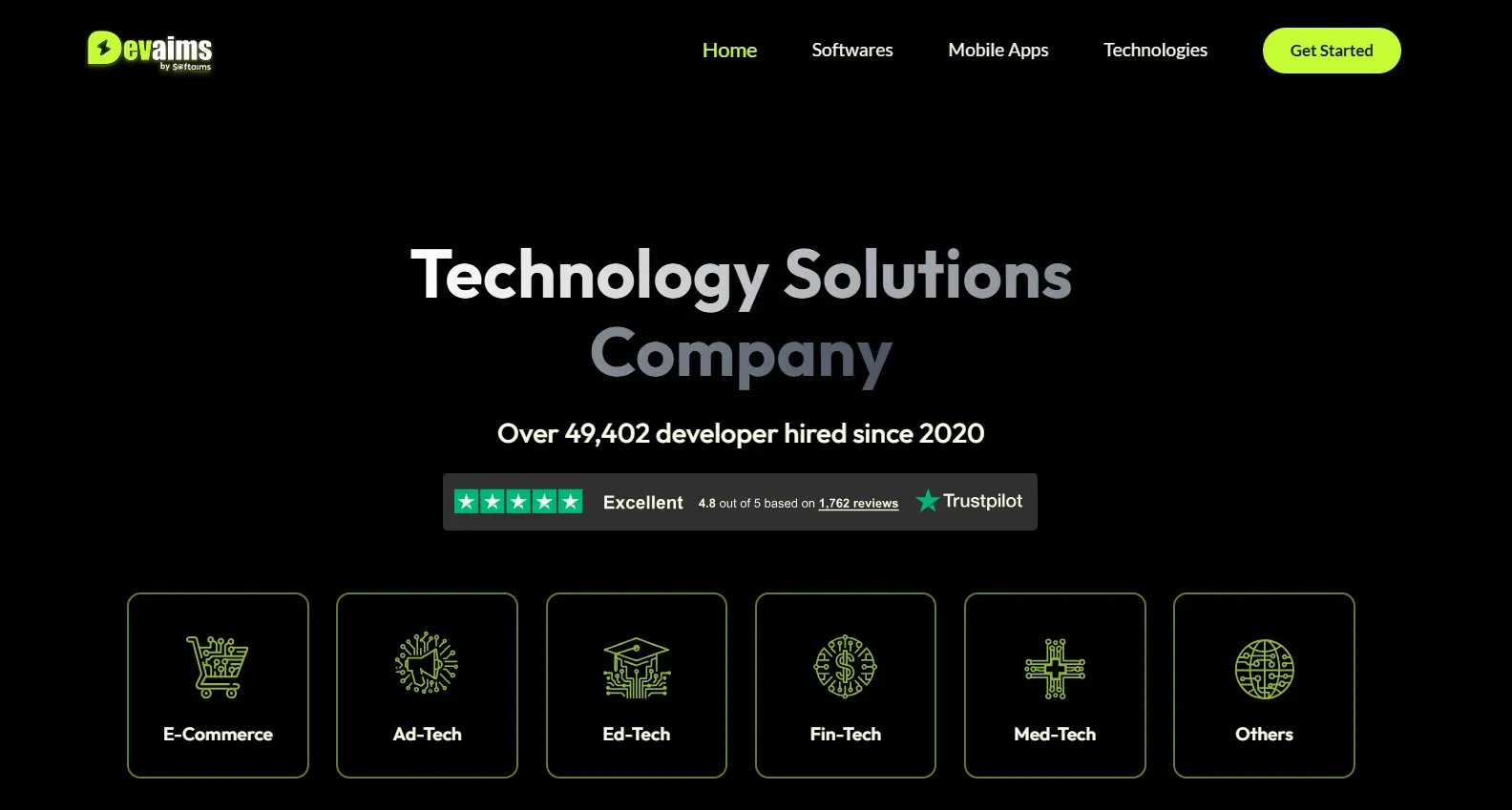
If you’re tired of renting software and want every workflow, dashboard, and report tailored to your agency, Devaims is the only alternative that builds you a system you own outright. Instead of endless fees and locked features, you get the code, the keys, and total control. Devaims builds custom home care platforms that fit your exact operations, with maintenance as simple as a flat monthly support plan.
A Devaims build starts with a deep discovery process, mapping your workflows, compliance needs, and integration requirements. The system is then built to your specifications: scheduling, EVV, payroll, billing, analytics, and any third-party integrations you rely on. You own the source code and can host the platform on your own infrastructure or with a provider of your choice.
- One-time build, you own the source code and all intellectual property
- No per-user, per-client, or per-module fees ever; costs are fixed and predictable
- Custom workflows, reports, and integrations, nothing is locked behind a paywall
- Switch vendors or self-host any time, your data, your rules, and no lock-in
- Flat monthly maintenance and support, with transparent pricing
- Full control over compliance triggers, reporting, and integrations
Best for: Agencies ready to invest in ownership, with specific workflow needs, integration requirements, or plans to scale without per-user pricing surprises.
Migration friction: Devaims handles the migration as part of the project, with custom data mapping to ensure a smooth transition from AlayaCare or any other platform.
Other AlayaCare alternatives worth knowing
- CareAcademy: Focused on staff training and compliance, not a full agency platform, but can be integrated with other systems for ongoing staff education and certification tracking.
- eRSP: Strong for scheduling and payroll, but interface can feel dated and lacks advanced analytics. Some agencies use eRSP as a stepping stone before moving to more advanced solutions.
- HHA Hero: Niche tool for small private-duty agencies; limited integrations and reporting. Good for startups needing basic scheduling and billing.
- DomoHealth: More a remote monitoring platform than a full home care suite. Useful for agencies adding telehealth or remote monitoring to their service lines.
How to choose the right AlayaCare alternative
- By budget: If your monthly spend is over $1,000, run the five-year math, you may already be paying more than a custom build would cost. Consider not just subscription fees, but add-ons, per-user charges, and annual increases.
- By agency size: Small teams may thrive on Rosemark or eRSP, while multi-state groups need enterprise platforms like WellSky or MatrixCare. Agencies planning to grow should factor in scalability and future migration needs.
- By compliance needs: Medicaid-heavy agencies need strong EVV and claims, while private-duty agencies may want more workflow flexibility and client engagement tools.
- By customization: If you’re tired of workarounds, only a custom platform like Devaims lets you own every workflow and report, with no limits on future modifications.
- By integration: If connecting payroll, billing, or EHR is key, check API access and add-on costs closely. Some vendors charge for each integration or limit API access to higher tiers.
When you’re ready to own your platform instead of renting it, Devaims is the last stop you’ll ever need.
Stop paying rent on software you could own
Every AlayaCare alternative on this list, and every other off-the-shelf platform, shares one core problem: you are always renting. The pricing may shift, the UI may feel fresher, but the math never changes. You pay per user, per client, per feature, and you never own a line of code. That’s why Devaims exists: to build you a home care platform that’s yours, forever.
Devaims is a custom software partner for home care agencies who are done paying rent. We deliver a system tailored to your exact workflows: scheduling, EVV, payroll, reporting, and integrations, all designed for how your team truly works. You keep the source code, control every feature, and can switch vendors or self-host anytime. No contracts, no lock-in, no per-user surprises.
- Per-client fees? None. Your cost is fixed, no matter how much you grow.
- Feature locked? Never. Every dashboard or report you want is just built in.
- Data migration? One time, then the data is yours, forever.
- Integrations? Built-in from day one, so you never pay for "extra" connections.
| Tool | Ownership | Per-unit/month fees | Contract required? | Custom workflows? |
|---|---|---|---|---|
| AlayaCare | No | Yes | Yes | Limited |
| WellSky | No | Yes | Yes | Some |
| MatrixCare | No | Yes | Yes | Some |
| Rosemark | No | Yes | No | Limited |
| Devaims (custom build) | Yes | No | No | Unlimited |
The real five-year cost of renting vs owning
| Year | Rented (e.g., AlayaCare) | Owned (Devaims) |
|---|---|---|
| 1 | $24,000 | $27,800 |
| 2 | $48,000 | $29,600 |
| 3 | $72,000 | $31,400 |
| 4 | $96,000 | $33,200 |
| 5 | $120,000 | $35,000 (now ahead) |
If your agency runs 100 clients at $20 per client per month, that’s $2,000 a month, $24,000 a year, and $120,000 over five years, and you still own nothing. With Devaims, you pay once to build and a flat monthly maintenance, and you own the whole platform from year one. Most agencies break even by year 2.5 or 3, then save tens of thousands every year after.
Agencies with over 50 clients or growing teams see the biggest gains. If your subscription bill is already $15,000 or more per year, you can probably own a better system for less than you’ll spend renting.
How to switch from AlayaCare
- Export all client, caregiver, and visit data from AlayaCare (CSV or API where possible). Be sure to request all historical records, care notes, and compliance documents. AlayaCare’s export tools may require administrative permissions or support tickets for full data access.
- Choose your new platform and confirm the migration pathway (import tools, data mapping). Ask your new vendor or developer for a detailed migration plan and test imports with sample data before committing to a go-live date.
- Import your data into the new system, checking for errors and omissions. Validate that all fields (including custom fields and attachments) are mapped correctly, and run sample reports to verify accuracy.
- Reconnect payroll, billing, and third-party integrations. This may require generating new API keys or reauthorizing connections. Test each integration with real data to ensure smooth operations.
- Train staff on the new workflows and perform parallel testing for a full pay cycle. Use this time to gather feedback and identify process improvements before fully decommissioning AlayaCare.
- Review your original AlayaCare contract for final steps and confirm data deletion if needed. Some contracts require written notice or have data retention clauses, so plan accordingly.
With a custom Devaims build, the migration is handled as part of the project, including data mapping, validation, and staff training. This reduces operational risk and ensures a smoother transition.
Frequently asked questions
What is the best AlayaCare alternative for large agencies?
WellSky and MatrixCare are strong contenders for enterprise-scale agencies, offering compliance, analytics, multi-location management, and integrations with EHR and payroll systems. Both platforms support complex billing and regulatory requirements. For agencies wanting full autonomy, Devaims is the only option that lets you own the platform outright, with customization and no per-user fees. The right answer depends on your growth plans, technical resources, and tolerance for ongoing subscription costs.
What is the cheapest AlayaCare alternative?
Rosemark and eRSP offer lower starting prices and are suitable for small agencies or startups. However, per-client fees add up as you scale, and add-ons for advanced features may increase costs over time. Over five years, a custom Devaims build is often cheaper than renting if you’re mid-sized or larger (typically 50+ clients), as your costs remain fixed regardless of growth. Always calculate your five-year total cost, including add-ons and projected growth.
Is there a free AlayaCare alternative?
There are no truly free home care management platforms that meet compliance, billing, and workflow needs for regulated agencies. Some tools offer limited free trials or basic versions (like CareAcademy for training), but these lack core scheduling, billing, and compliance features. Open-source tools exist in adjacent fields, but none are tailored for U.S. or Canadian home care regulations. If you want to avoid ongoing fees, owning your own platform (via Devaims or an in-house build) is the only realistic path.
Which AlayaCare alternative is best for Medicaid billing?
HHAeXchange and Sandata are both built for Medicaid billing and EVV compliance. They are state-approved in many regions and integrate directly with Medicaid portals for automated claims. For agencies with mixed payers or complex requirements, a custom Devaims build can integrate Medicaid, private duty, and commercial billing into a single workflow, eliminating the need for multiple systems and reducing data entry errors.
How hard is it to switch from AlayaCare?
Switching requires exporting your data, mapping it to the new platform, retraining staff, and running parallel for a pay cycle. Most alternatives, including Devaims, offer migration support. The difficulty depends on data complexity, number of custom fields, and third-party integrations. Expect a transition period of several weeks for a typical agency. With Devaims, migration is included in the build process, with custom data mapping and validation to minimize disruption.
Can I keep my data if I switch from AlayaCare?
You can export your core data (clients, caregivers, visits), but historical records, custom fields, and attachments may require API pulls or manual work. Some vendors restrict access to certain data or charge for full exports. With Devaims, you own all your data and the code from day one, making future migrations or integrations simple and risk-free.
Why do so many agencies search for AlayaCare alternatives?
Rising subscription costs, feature lock-in, and frustration with per-user or per-client charges push many agencies to seek out AlayaCare alternatives. Agencies also cite limited customization, integration challenges, and slow vendor support as reasons for switching. The only way to escape the rent cycle and maintain full control is to own your own platform, whether through a custom build or in-house development.
The bottom line
If you’re evaluating AlayaCare alternatives, the honest test is this: add up what you’ll pay over five years, then ask yourself what you’d build if the money went into your own platform. For most growing agencies, renting stops making sense by year three. The right move isn’t just about features, it’s about ownership, control, and building something that grows with you. If you’re ready to run the numbers, let’s talk.
See more expert insights on the Devaims blog, and check out related alternatives: WellSky alternatives, MatrixCare alternatives, Brightree alternatives.