


You know the feeling, another "monthly statement" from Greenway Health lands, and you realize your orthopedic clinic is paying more for software than you ever expected. Per-provider pricing, hidden fees for essential add-ons, and the ever-present risk that your data isn't truly yours. It's enough to make any practice owner ask if there is a better way.
Plenty of clinics look for Greenway Health alternatives hoping for better ortho workflows, faster support, or just a platform that fits the way they actually work. But most alternatives are just another flavor of rent, you still pay per provider, still sign a contract, and still don't own your tech. If you're ready to break the cycle and truly own your EMR, the last option is different. Let's break down the best choices, what each does well, and why ownership finally matters.
Why orthopedic clinics look for Greenway Health alternatives
Per-provider and per-encounter fees add up fast. Each new clinician or increase in patient volume means a bigger bill, even if your workflows stay the same. Over five years, these recurring costs can easily outpace the price of building a system you own. For a clinic with six providers, at $650/provider/month, that's $46,800 a year, before any add-ons or premium modules.
Rented EHRs mean you never truly own your data or platform. Exporting data for a migration is often a slow process, and some vendors charge for bulk exports or limit what you can access. Customizations you pay for rarely transfer if you leave, and reporting formats are often proprietary. This creates friction when you want to switch vendors or innovate on your workflow.
Orthopedic-specific needs often require expensive add-ons. Orthopedic practices need more than generic charting. Operative note templates, implant and hardware tracking, image integration (PACS), and pre-op/post-op workflow features are rarely included in base pricing. Many vendors upsell these as premium modules, making true cost hard to predict.
Long contracts and limited flexibility. Multi-year agreements (often three to five years) with hefty "setup fees" or early termination penalties create lock-in. If your clinic's needs change, or if the vendor sunsets a feature, you're still on the hook for monthly payments. This limits your ability to adapt or pivot quickly.
Clunky integrations and siloed workflows. Most EHRs are closed ecosystems. Connecting to imaging (PACS), billing, analytics, or patient engagement tools can require third-party vendors, manual workarounds, or expensive custom interfaces. This slows down care and frustrates providers who expect seamless digital experiences.
These are the everyday reasons clinics look for Greenway Health alternatives, to regain control, cut recurring costs, and actually own their systems.
Quick comparison of the best Greenway Health alternatives
| Tool | Best for | Starting price | You own it? |
|---|---|---|---|
| Modernizing Medicine (Ortho) | Ortho-specific EMR | Reported $650+/provider/mo | No, subscription |
| Nextech | Multi-specialty clinics | $500+/provider/mo | No, subscription |
| Kareo (Tebra) | Small practices | $125+/provider/mo | No, subscription |
| AdvancedMD | Workflow automation | $429+/provider/mo | No, subscription |
| Athenahealth | Large clinics | Reported 4% to 7% collections | No, subscription |
| ChartLogic | Surgical practices | $350+/provider/mo | No, subscription |
| OpNote | Operative notes | $50+/provider/mo | No, subscription |
| Devaims | Owning your clinic's platform | One-time build, you own it | One-time build, you own it |
Always confirm current pricing before you decide, as rates and contract terms change. Many vendors will negotiate, but the underlying fee structure almost always favors the subscription model.
The 9 best Greenway Health alternatives
1. Modernizing Medicine (Ortho) (Best for ortho workflows)
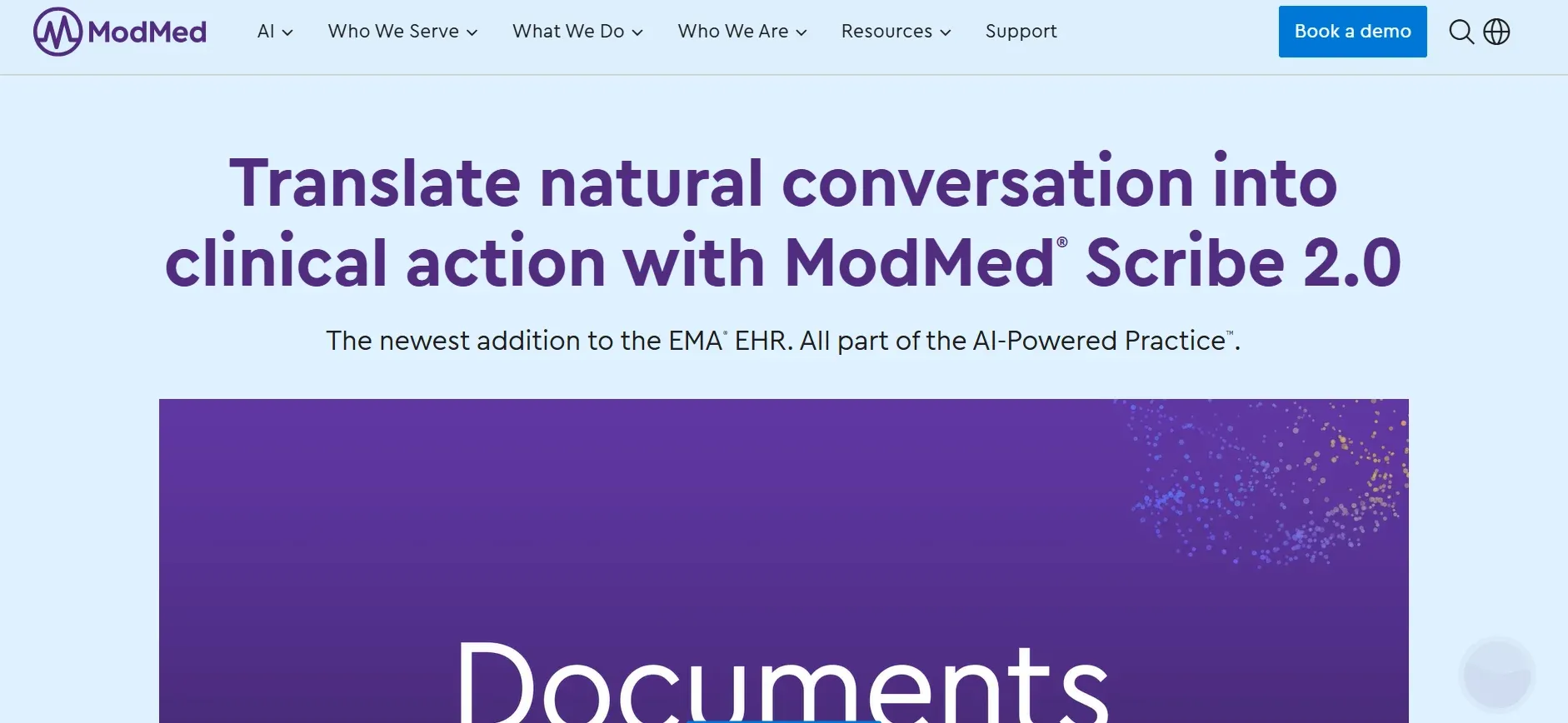
Modernizing Medicine's Ortho EHR is a leader for orthopedic clinics. Its flagship feature, EMA Orthopedics, comes with hundreds of pre-built templates for joint, spine, trauma, and sports medicine, all designed with input from orthopedic surgeons. The system’s drag-and-drop interface is a major usability leap from Greenway Health’s legacy workflows, letting providers chart faster and with fewer clicks. Deep procedural support lets you document complex surgeries, track implants, and generate operative notes that meet insurance and regulatory requirements.
Integrations: Modernizing Medicine supports direct integration with PACS for imaging, as well as e-prescribing, billing, and lab interfaces. Its API ecosystem is limited, so connecting to third-party analytics or custom apps can be challenging. The platform is cloud-based and offers mobile access, which is convenient for surgeons on the go.
Migration friction: Data migration from Greenway Health to Modernizing Medicine can take weeks, especially if you have custom templates or complex billing rules. The company offers migration services, but historical data (especially scanned documents or non-standard fields) may not transfer perfectly.
Concrete use cases: High-volume joint replacement centers, sports medicine clinics, and multi-provider orthopedic groups benefit most. The system shines in environments where template-driven charting and rapid procedure documentation are critical.
Pricing: Reported $650+/provider/month, plus onboarding fees. See official pricing.
- Key limitations:
- Per-provider pricing adds up quickly
- Custom modules require vendor involvement
- Limited API ecosystem for third-party apps
- Strengths:
- Deep orthopedic content and templates
- Efficient drag-and-drop charting
- Direct PACS and imaging integration
When you hit a wall with per-provider fees, Devaims lets you own your platform and avoid these recurring costs entirely.
2. Nextech (Best for multi-specialty clinics)
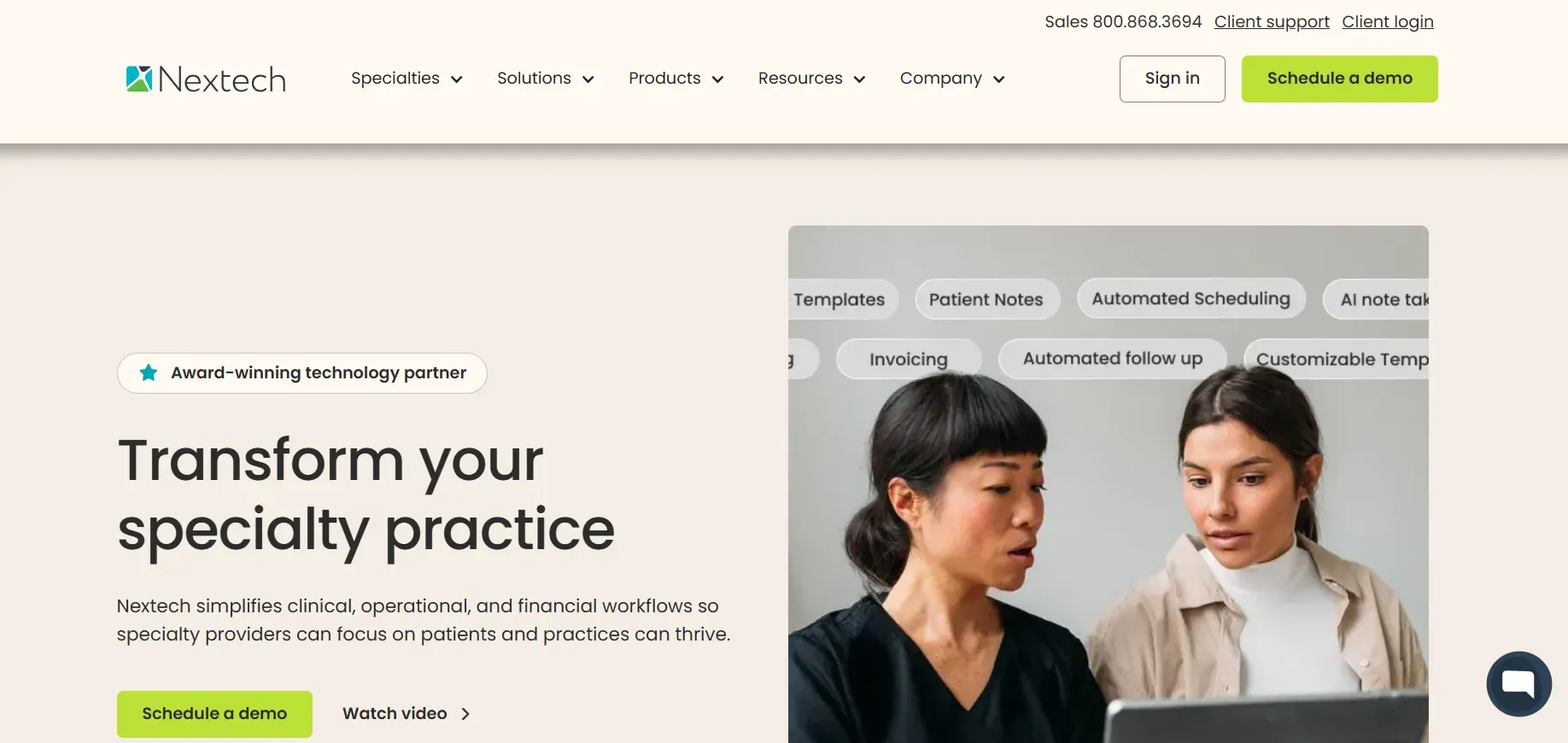
Nextech is built for clinics that span multiple specialties, orthopedics, ophthalmology, plastics, and more. Its scheduling engine is highly flexible, supporting complex provider rotations and multi-location practices. Charting is modular, with specialty-specific templates and customizable fields, making it easier to tailor workflows for both surgical and non-surgical providers.
Integrations: Nextech offers a broad range of integrations, clearinghouses for billing, patient engagement tools, and limited imaging connectivity. Its API is available for a fee, but custom integrations often require vendor involvement. The patient portal is robust, supporting appointment requests, results, and online payments.
Migration friction: Migrating to Nextech from Greenway Health is a managed process, with data mapping and field alignment handled by Nextech’s team. However, clinics with complex custom fields or unique reporting needs may find some data requires manual cleanup.
Concrete use cases: Large orthopedic groups that also offer pain management, physical therapy, or hand surgery under one roof. Clinics needing granular scheduling, flexible charting, and unified reporting benefit most.
Pricing: Roughly $500+ per provider per month, plus implementation costs.
- Key limitations:
- Higher cost for small, single-specialty clinics
- Advanced features often priced as add-ons
- Complexity can lengthen onboarding
- Strengths:
- Flexible scheduling and charting
- Multi-specialty support
- Robust patient portal
If you want to avoid complex contracts and add-on fees, Devaims gives you a single, owned platform with no per-provider charges.
3. Kareo (Tebra) (Best for small practices)
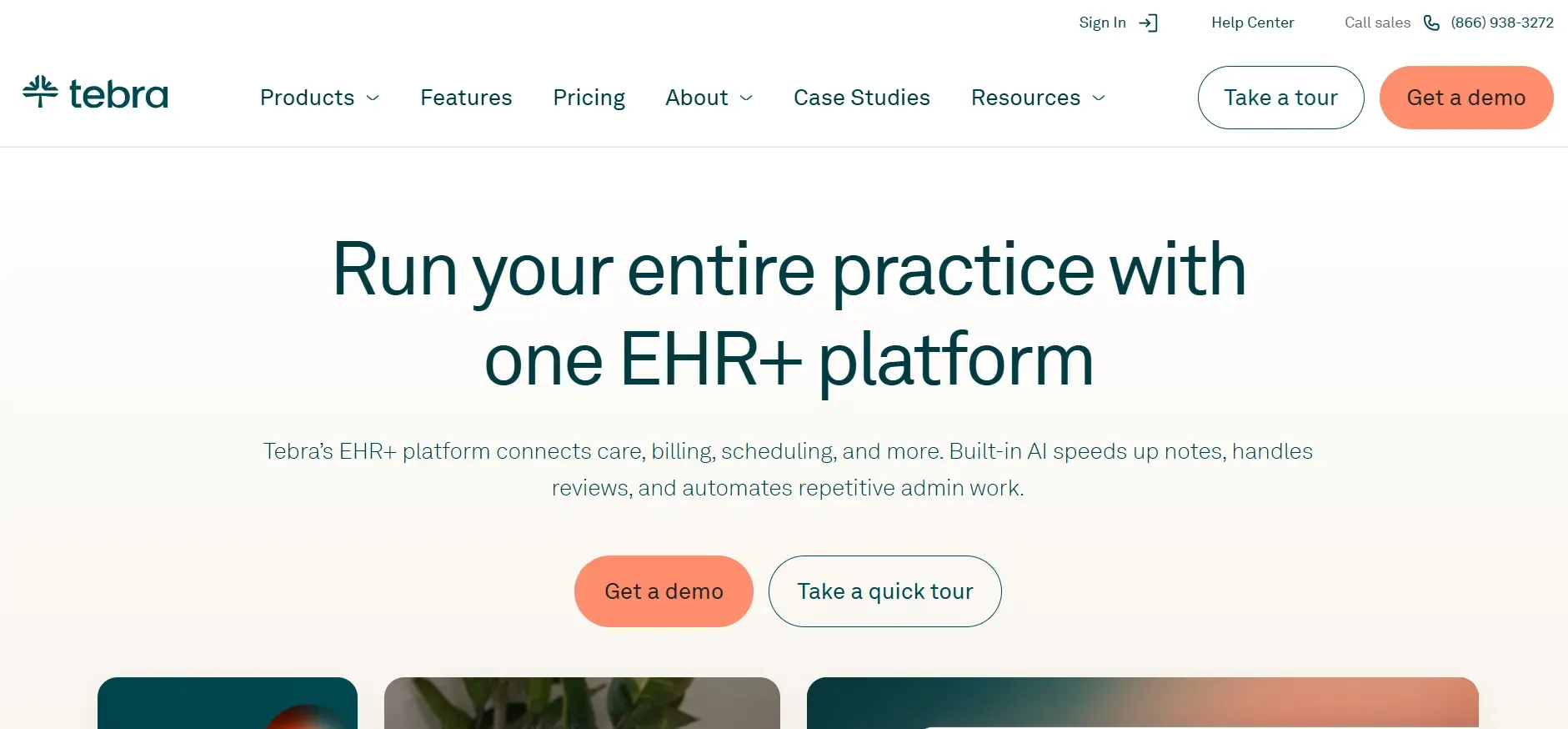
Kareo (now part of the Tebra platform) is a cloud EHR and billing system designed for small to mid-sized practices. Its interface is clean and easy to learn, with minimal training required for front-desk and clinical staff. Charting is straightforward, but orthopedic-specific templates are limited, so clinics often have to customize forms or rely on general musculoskeletal templates.
Integrations: Kareo’s built-in billing is a highlight, and it integrates with common labs and e-prescribing networks. For imaging, you’ll need to use third-party solutions or manual uploads, as PACS integration is basic. The platform supports telehealth and online patient scheduling, both as paid add-ons.
Migration friction: Small clinics can migrate from Greenway Health to Kareo relatively quickly, but only structured data (demographics, appointments, basic clinical records) moves easily. Custom templates and scanned documents may not transfer cleanly.
Concrete use cases: Start-up orthopedic clinics, solo providers, or satellite offices that need a low-cost, low-complexity EHR and billing solution. Kareo is also suitable for clinics that outsource advanced imaging or surgical documentation.
Pricing: Starts around $125+ per provider per month. See Kareo pricing.
- Key limitations:
- Costs scale quickly as you add providers
- Limited orthopedic templates
- Reporting is basic
- Strengths:
- Low entry cost for small clinics
- Simple, user-friendly interface
- Integrated billing and telehealth
When your clinic outgrows Kareo, Devaims lets you own a platform that scales with you, no new contracts or fees.
4. AdvancedMD (Best for workflow automation)
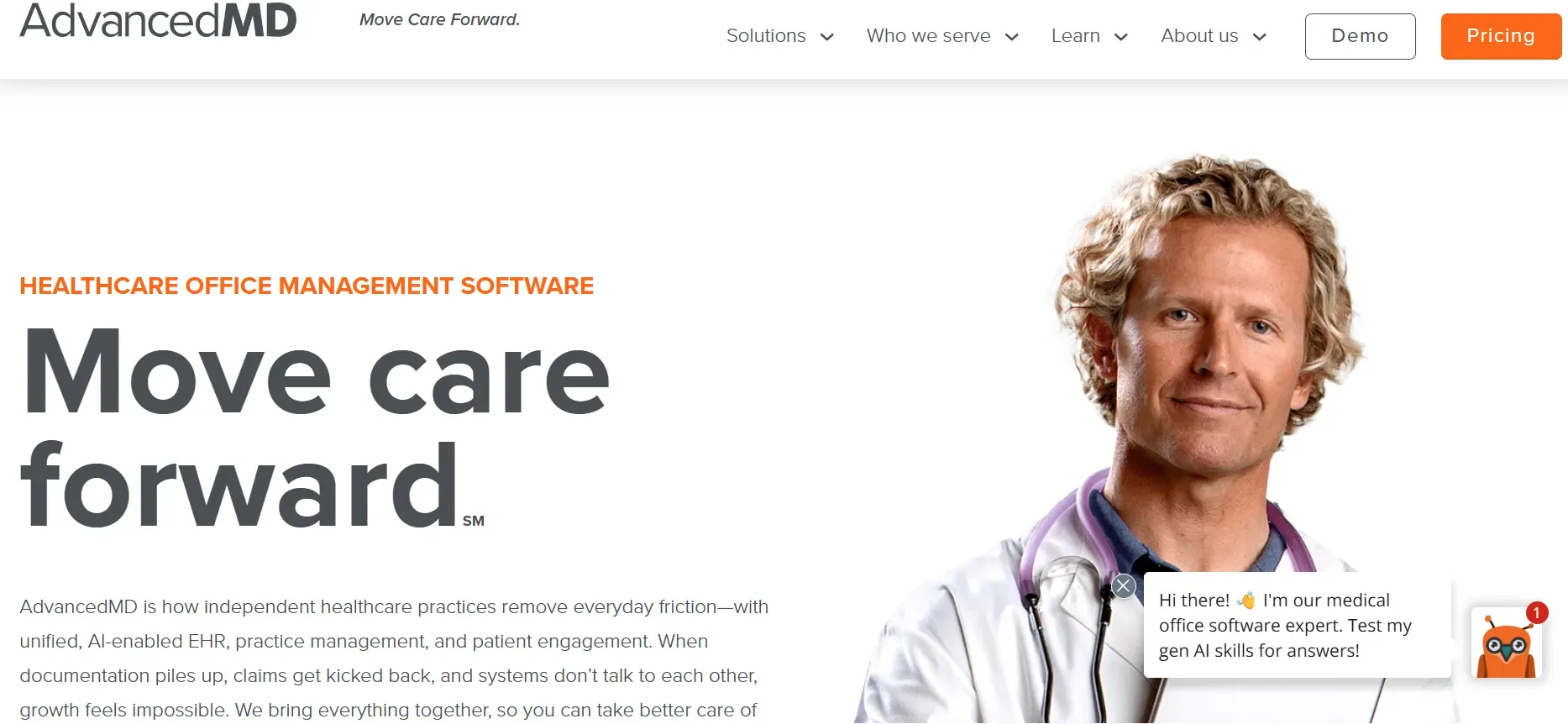
AdvancedMD is known for its automation capabilities. The platform automates appointment reminders, insurance eligibility checks, patient intake, and even some elements of claims processing. Its workflow engine can be configured to match your clinic’s processes, reducing manual data entry and administrative errors.
Integrations: AdvancedMD integrates with a wide array of billing solutions, labs, and telehealth vendors. Imaging integration is available, but true PACS connectivity often requires a third-party interface. Its API is robust, but building custom integrations may require technical support from the vendor or your IT partner.
Migration friction: The company offers managed migration, but because AdvancedMD uses a modular structure, mapping complex workflows from Greenway Health can take time. Historical billing and clinical data may require manual validation.
Concrete use cases: Medium to large orthopedic practices with high appointment volumes and complex insurance billing. Clinics looking to automate repetitive admin tasks and reduce no-shows see the most benefit.
Pricing: Starts at $429+ per provider per month. See pricing.
- Key limitations:
- Modular pricing can increase costs
- Data export can be complicated
- Fees grow with provider count
- Strengths:
- Strong workflow automation
- Configurable to clinic processes
- Wide range of integrations
5. Athenahealth (Best for large clinics)
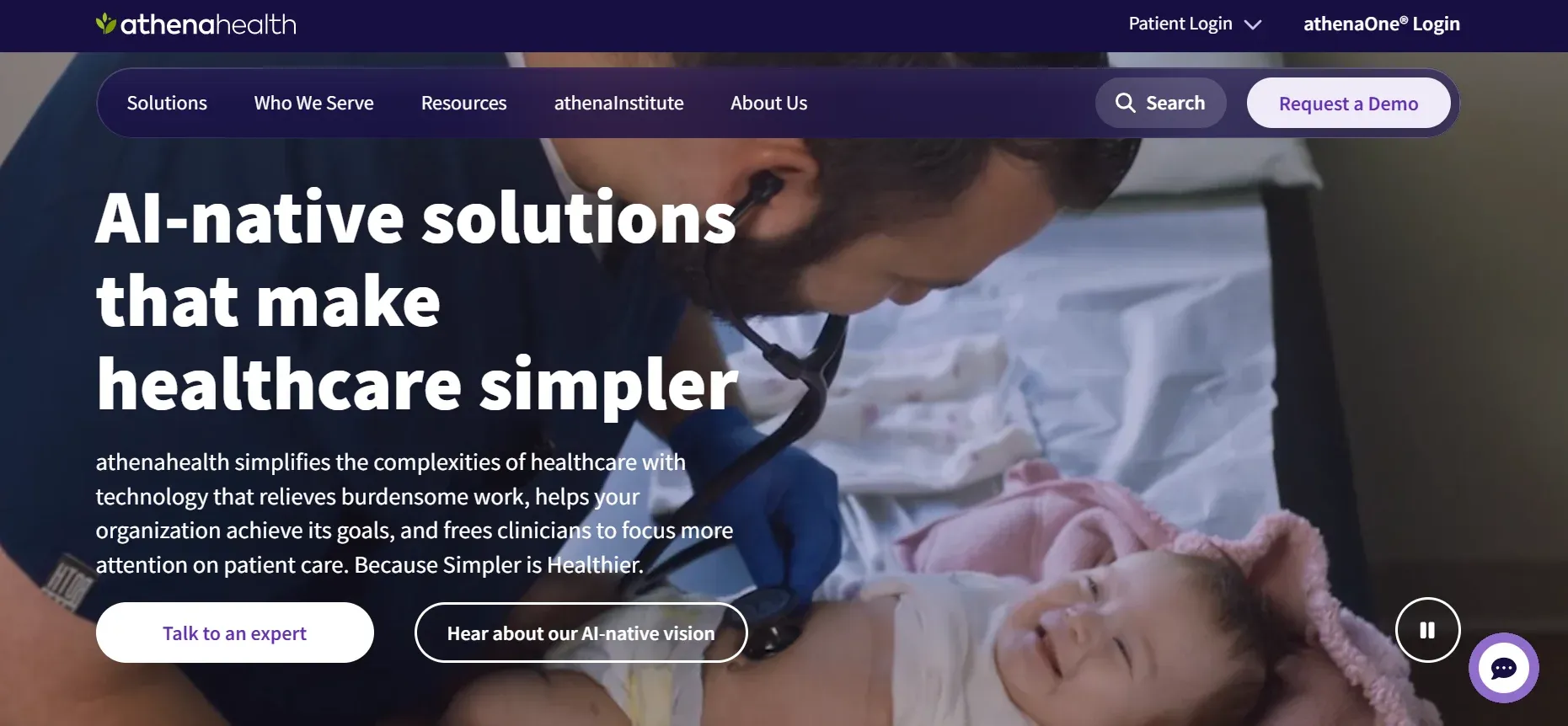
Athenahealth is one of the largest cloud EHRs in the US, used by multi-location orthopedic groups and even some hospital-owned practices. It replaces up-front fees with a percentage-of-collections model, so costs are tied to your revenue, not your provider count directly. The platform offers integrated revenue cycle management (RCM), patient engagement, and telehealth, all under one login.
Integrations: Athenahealth boasts an open API and a large "Marketplace" of third-party apps, including imaging, analytics, and patient engagement tools. However, some integrations are only available at higher pricing tiers or require additional contracts. Imaging integration is solid, but deep customization of clinical workflows is limited compared to custom or specialty-focused systems.
Migration friction: Athenahealth’s onboarding team handles data import, usually migrating demographics, appointments, and basic clinical history. Custom templates, advanced reporting, and scanned documents may require manual conversion. Large data sets can take several weeks to migrate fully.
Concrete use cases: Large orthopedic practices, academic medical centers, and clinics with high patient throughput. Athenahealth is ideal if you need enterprise-grade RCM and scalable infrastructure.
Pricing: 4% to 7% of collections, plus add-ons.
- Key limitations:
- Percentage-based pricing can become expensive
- Specialty features are often add-ons
- Limited workflow customization
- Strengths:
- Enterprise-grade RCM
- Open API and app marketplace
- Scalable for large clinics
6. ChartLogic (Best for surgical documentation)
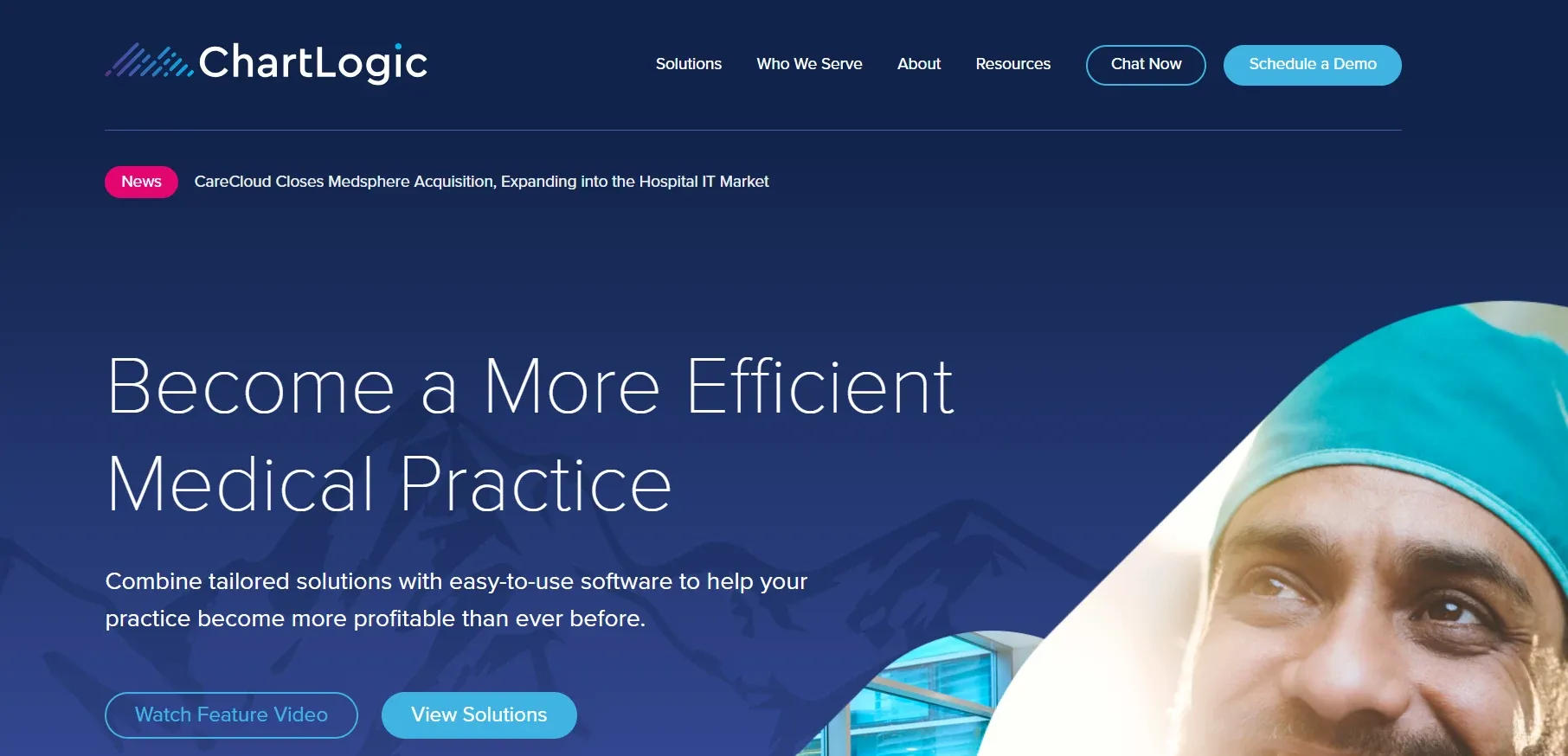
ChartLogic is designed for surgical practices, with a particular focus on efficient documentation. Its standout feature is voice-powered charting, letting surgeons dictate operative notes that are automatically structured for compliance and billing. The system comes with orthopedic, spine, and pain management templates, and supports custom procedure documentation.
Integrations: ChartLogic integrates with billing software, labs, and some imaging solutions. PACS integration is available, but may require additional setup. The platform supports e-prescribing and basic patient portals, but advanced analytics require third-party tools.
Migration friction: Data migration is managed, and the vendor specializes in moving surgical and procedure documentation. However, the interface is older than some rivals, so staff may face a learning curve. Customization often requires ChartLogic’s team.
Concrete use cases: Orthopedic surgical centers, spine clinics, and high-volume outpatient surgery practices. Clinics that rely heavily on detailed operative notes and voice dictation benefit most.
Pricing: Around $350+ per provider per month; setup fees apply. Request a quote.
- Key limitations:
- Per-provider fees persist
- Vendor-dependent customization
- Interface feels dated
- Strengths:
- Voice-powered charting
- Strong surgical templates
- Managed data migration
7. OpNote (Best for operative notes)
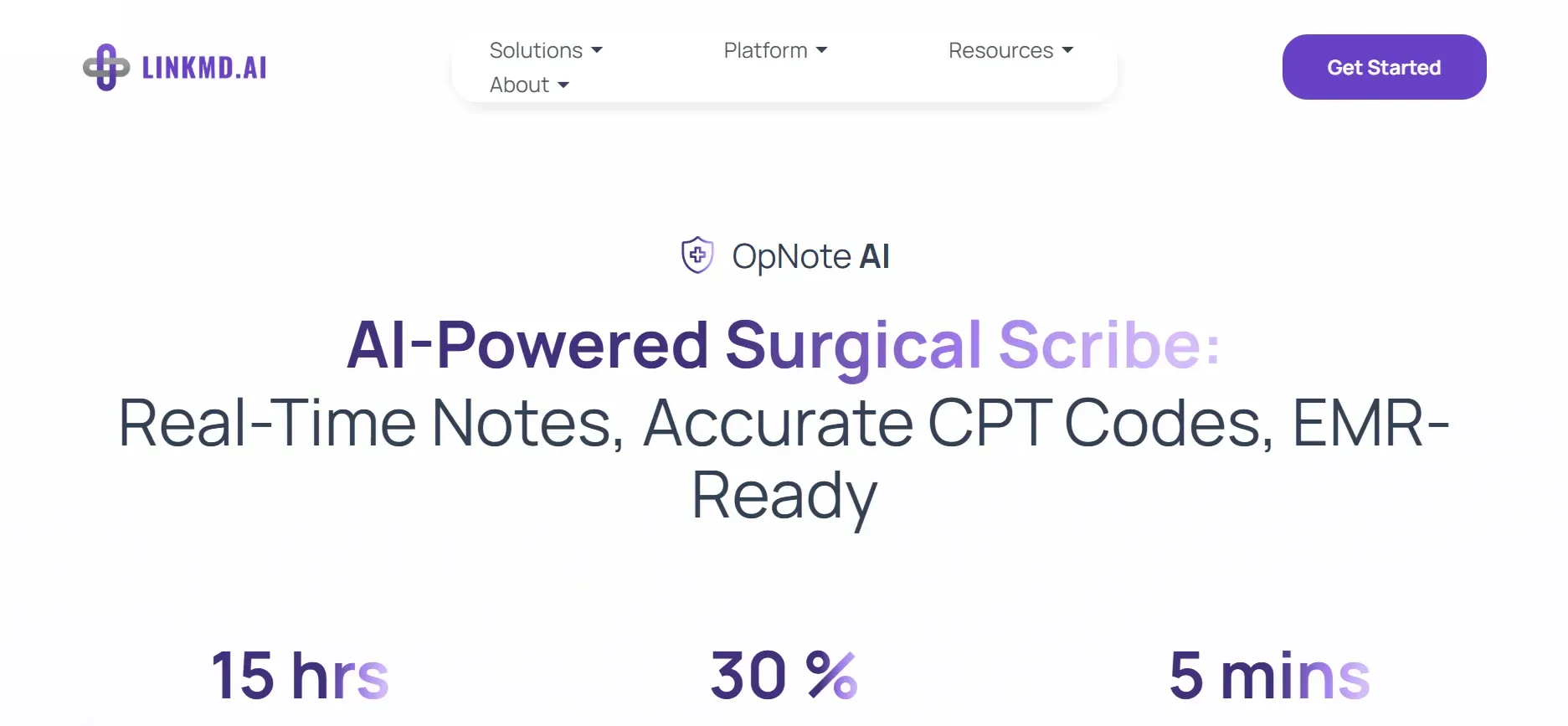
OpNote is a focused solution for operative note documentation. It’s not a full EHR, but rather a cloud-based platform that integrates with your main EMR. OpNote’s structured templates speed up procedure documentation and improve compliance, with built-in coding assistance and customizable checklists.
Integrations: OpNote offers HL7 interfaces and can push finalized notes to most EHRs, including Greenway Health. Direct integration with PACS or billing may require additional setup. Its API is available for advanced clinics with IT resources.
Migration friction: Since OpNote is typically added as an overlay, migration is minimal. Clinics simply begin using it for new operative notes while maintaining their existing EHR for other functions.
Concrete use cases: Orthopedic practices and ambulatory surgery centers needing rapid, compliant operative note generation. It’s particularly valuable for clinics dissatisfied with generic EHR templates or those needing to improve coding and reimbursement speed.
Pricing: Starts at $50+ per provider per month.
- Key limitations:
- Not a full EHR, so you still pay for another system
- Some duplication of data entry
- Billing integration requires extra configuration
- Strengths:
- Fast, compliant operative notes
- Customizable templates
- Easy overlay with existing EHR
8. WebPT (Best for rehab/PT integration)
WebPT is the dominant EHR for physical therapy and rehab clinics, with a user interface tailored for therapists and rehab techs. For orthopedic clinics with in-house PT or occupational therapy, WebPT offers seamless scheduling, documentation, and outcome tracking. It’s much more user-friendly for rehab workflows than Greenway Health.
Integrations: WebPT integrates with billing solutions, outcome measurement tools, and some EHRs. However, it’s not a full medical EHR, so surgical documentation and imaging integration are limited. It offers a patient portal and telehealth, but advanced analytics require add-ons.
Migration friction: For clinics adding WebPT to an existing EHR, the transition is smooth. For those replacing Greenway Health entirely, migration is more complex, as WebPT does not support full medical charting or surgical workflows.
Concrete use cases: Orthopedic clinics with on-site rehab, standalone PT practices, or multi-location therapy groups. WebPT is also popular for clinics participating in value-based care contracts that require outcome tracking.
Pricing: Starts at $99+ per provider per month. See pricing.
- Key limitations:
- Not a full orthopedic EHR
- Per-provider fees add up as you scale
- Limited medical-rehab data sharing
- Strengths:
- Excellent for rehab workflows
- Outcome tracking tools
- User-friendly interface for therapists
9. Devaims (Best for clinics that want to own their platform)
Devaims is unique, it builds custom EHR, scheduling, and practice management platforms that your clinic owns outright. Instead of paying per provider or per encounter forever, you invest in a one-time build and keep the source code. Every feature, integration, and report is tailored to your surgeons, therapists, and admins.
Integrations: Devaims can integrate with any system supporting industry standards (HL7, FHIR, DICOM), including PACS, billing, labs, imaging, analytics, and patient engagement tools. API access is unrestricted, and you can add new integrations as your clinic evolves, no vendor lock-in.
Migration friction: Devaims manages the entire migration process, exporting from Greenway Health, mapping and converting data, building custom import tools, and validating everything before go-live. This minimizes downtime and ensures your workflows are preserved.
Concrete use cases: Orthopedic clinics frustrated by recurring rent, multi-location practices needing custom workflows, and groups planning to add new specialties or services over time. Devaims is also ideal for clinics wanting to build custom analytics, patient portals, or mobile apps.
- One-time build, no per-provider or per-encounter feesYour clinic owns the code, data, and platformCustom integrations: PACS, imaging, rehab, billing, analyticsEasy to add features, specialties, or locations over timeSupport and maintenance on your termsNo contract lock-in or forced upgrades
- One-time build, no per-provider or per-encounter fees
- Your clinic owns the code, data, and platform
- Custom integrations: PACS, imaging, rehab, billing, analytics
- Easy to add features, specialties, or locations over time
- Support and maintenance on your terms
- No contract lock-in or forced upgrades
With Devaims, you can finally stop paying rent and own a platform that grows with your clinic.
Other Greenway Health alternatives worth knowing
- Epic: The industry giant, used by hospitals and very large groups. Epic offers deep customization, world-class interoperability, and a massive third-party app ecosystem. However, implementation can run into the millions, and it is rarely cost-effective for independent orthopedic clinics.
- Cerner: Strong for enterprise and hospital-owned practices. Cerner offers modules for orthopedics, imaging, and population health, but requires significant IT resources and is not tailored for small to mid-size clinics.
- OpenEMR: Open source and free, with a growing community and basic EHR features. OpenEMR requires in-house technical expertise to deploy, secure, and maintain, and lacks orthopedic-specific templates and support.
- DrChrono: Good for mobile-first workflows, especially clinics wanting to chart on iPads. Fewer orthopedic templates and limited integration with imaging or advanced billing.
How to choose the right Greenway Health alternative
- By budget: Small clinics may gravitate toward Kareo or OpNote for low initial costs, but should run the true five-year math, recurring fees often exceed the cost of ownership by year three or four.
- By specialty: If your practice needs deep orthopedic workflows, Modernizing Medicine or ChartLogic provide more out-of-the-box value. For clinics with mixed specialties or in-house rehab, consider Nextech or WebPT.
- By scale: Growing practices often outgrow per-provider pricing. If you plan to add providers, specialties, or locations, owning your platform (with Devaims) avoids expensive contract renegotiations and recurring rent.
- By integrations: If you depend on imaging, custom billing, or rehab, look for platforms with open APIs and strong integration support. Custom builds offer the most flexibility and future-proofing.
The right choice depends on whether you want to keep renting or finally own your clinic's software. Most clinics find that true ownership pays for itself sooner than expected.
Stop paying rent on software you could own
Every Greenway Health alternative above is rented. Subscription fees, per-provider charges, and contracts never stop. As your clinic grows, your costs grow, and when it’s time to leave, you face data export headaches and possible loss of custom workflows. Owning your platform changes that math.
Devaims builds custom software for orthopedic clinics. You get a one-time build, keep the code, and pay flat maintenance, not per provider, not per claim, not per click. The platform is yours to improve, adapt, and scale as your practice changes.
- No per-provider or per-encounter fees: Add providers without more bills. Grow as fast as you want, without penalty.
- Own your data, workflows, and reports: No forced upgrades, no feature lockouts, and no data held hostage. You have full access to your records, templates, and analytics.
- Integrated exactly how you need: Imaging, billing, rehab, analytics, and patient engagement, all in one place, designed for your workflows.
- Flat, predictable costs: No contract lock-in, no surprise price hikes, and no hidden fees. You control your IT destiny.
| Platform | Ownership | Recurring fees | Custom fit? |
|---|---|---|---|
| Greenway Health | Rented | Per provider, per year | Limited |
| Modernizing Medicine | Rented | Per provider, per year | Good, not custom |
| Athenahealth | Rented | % of collections, add-ons | Limited, modular |
| Devaims | Owned | One-time build + flat maintenance | Fully custom |
| Year | Rented total (6 providers) | Owned total (Devaims) |
|---|---|---|
| 1 | $46,800 | $32,400 |
| 2 | $93,600 | $34,800 |
| 3 | $140,400 | $37,200 |
| 4 | $187,200 | $39,600 (now ahead) |
| 5 | $234,000 | $42,000 |
For a six-provider orthopedic clinic, renting your EHR runs about $46,800 per year and climbs with each new hire. A Devaims build (at $30,000 up-front, $200/month maintenance) costs less than half by year four, and you own the result. Clinics with stable provider counts recoup even faster. If you plan to add providers, locations, or new specialties, the savings multiply.
If you want to see what owning would cost for your clinic, we will run the numbers for you, no obligation.
How to switch from Greenway Health
- Export all patient, scheduling, and billing data from Greenway Health in available formats (CSV, HL7, CCD, or PDF). Request a full data dump, including scanned documents and custom fields, to minimize data gaps.
- Choose your new platform and plan integrations. Map out which systems (PACS, billing, rehab, analytics) you need to connect, and confirm that your new vendor or custom developer can support them.
- Import historical data and test for accuracy. Clean and map your exported data to your new system’s fields. Run test imports and validate that all records, appointments, and notes match the originals.
- Reconnect payment, claims, and referral integrations. Ensure your clearinghouse, payment processor, and referral sources are connected and tested before go-live.
- Train staff on the new system. Build training sessions around your actual workflows, not generic vendor demos. Assign super-users to support peers during the transition.
- Test in parallel. Run both systems in parallel for at least a week to catch errors and ensure compliance. Validate that all claims, appointments, and chart notes are flowing correctly.
- Review and terminate Greenway Health contract. Follow the contract’s termination process, confirming that all outstanding claims and payments are processed before shutting down access.
With a custom Devaims build, the migration is handled as part of the project. This includes custom data mapping, parallel testing, and live support to minimize disruption.
Frequently asked questions
What is the best Greenway Health alternative for orthopedic clinics?
For out-of-the-box specialty workflows, Modernizing Medicine is a strong pick due to its rich orthopedic content and usability. However, for clinics that want to own their system, eliminate recurring rent, and future-proof their workflows, Devaims is the only alternative that delivers full control and cost predictability.
Which Greenway Health alternative is the cheapest?
For solo or very small clinics, Kareo (Tebra) and OpNote offer the lowest entry costs. However, once you reach three or more providers, the cost of per-provider and per-claim fees rises quickly. Over five years, most multi-provider clinics find that a custom Devaims build is cheaper and delivers better ROI, especially if you plan to grow.
Is there a free alternative to Greenway Health?
OpenEMR is open source and free to download, but you must host, secure, and maintain it yourself. It lacks orthopedic-specific templates, integrated support, and certified compliance features. Clinics with in-house IT teams may consider it for experimentation, but most practices need a supported, specialty-focused system for day-to-day care.
What is the most orthopedic-focused EMR?
Modernizing Medicine and ChartLogic both offer orthopedic templates, operative notes, and workflow tools. However, these are still rented solutions. Devaims builds platforms tailored to your surgeons, therapists, and admin staff, so you can design the system around your exact needs and keep the code.
How hard is it to migrate away from Greenway Health?
Migration requires exporting all patient, scheduling, and billing data (including scanned documents and custom fields), mapping fields to your new system, and validating the import. For clinics with years of customizations, this can be complex. Devaims handles this process as part of the build, providing dedicated support and minimizing downtime and errors. With subscription vendors, you may have to coordinate data export and import across multiple teams.
Can I own my clinic's EMR and avoid per-provider fees?
Yes. Devaims delivers a platform you own outright, with no per-provider or per-encounter charges. You keep full access to the code and data, and can add providers, locations, or specialties without new contracts or fees. Maintenance is flat-rate and optional.
When should an orthopedic clinic switch from Greenway Health?
If your per-provider costs, frustration with workflows, or contract terms outweigh the benefit, or if you want to own your system, it is time to look at Greenway Health alternatives. Most clinics switch when their practice grows, when they hit a major technology limitation, or when they want to stop paying rent for basic software functions.
The bottom line
Most Greenway Health alternatives swap one set of subscription fees for another. The real decision, do you want to keep renting, or own your clinic's platform?
Here is the test, add up what Greenway Health or its rivals will cost you over the next five years. If that number would have built you something you own, you already have your answer. Ownership brings control, flexibility, and long-term savings, especially for growing orthopedic clinics.
For more insights, visit the Devaims blog or see other alternatives like Athenahealth alternatives, AdvancedMD alternatives, and Modernizing Medicine alternatives. For industry-wide EHR comparisons, see the ONC Health IT Dashboard or KLAS Research for unbiased vendor ratings.