


Ever felt like your dermatology EHR is a treadmill that only gets faster and pricier with time? Greenway Health has helped plenty of practices get digital, but between click-heavy routines, auto-renewing contracts, and surprise buyout fees, many owners are rethinking the math. After a few years, those monthly SaaS bills start to feel less like support and more like a leash.
If you’ve ever added up your five-year spend and wondered what you actually own at the end, you’re not alone. The good news: there are serious Greenway Health alternatives for dermatology in 2026, each with their own strengths and gotchas. Modernizing Medicine (EMA) and Nextech are familiar faces, but even the best SaaS tools are still rented. The only way off that ride? Build and own your own platform, and Devaims makes that possible.
Below, you’ll find the real pros and cons, pricing, contract quirks, and the honest reason many clinics are switching. If you want out of the rent-forever cycle, read to the end.
Why dermatology clinics look for Greenway Health alternatives
Dermatology clinics are increasingly dissatisfied with the limitations and hidden costs of Greenway Health and similar SaaS EHRs. The main driving factors behind this shift include:
- Surprise contract lock-ins: Greenway Health and several rivals use auto-renewing contracts with hefty buyout fees if you want to leave early. This means that if your clinic needs to change direction, expand, or even downsize, you could be on the hook for significant penalties. Some clinics have reported that their contract terms auto-renew with little warning, making it difficult to plan or budget for change.
- Click fatigue and workflow friction: Many dermatology EHRs, Greenway Health included, require multiple clicks to complete basic tasks like documenting common skin procedures, ordering labs, or prescribing. In a high-volume dermatology clinic, these extra steps translate to real time lost, lower patient throughput, and increased frustration for providers and staff. Workflow friction also contributes to burnout as clinicians feel like they are working for the software, not the other way around.
- Opaque pricing and hidden costs: Most SaaS EHRs, including Greenway Health, do not publish clear pricing online. Costs can escalate quickly when you add on modules for billing, telehealth, e-prescribing, or patient engagement. Some clinics find that their monthly bill is substantially higher than the advertised base rate, once all required features are included.
- Annual price hikes: Vendors like DrChrono and others have been known to raise prices by 10 to 15 percent each year, often with little advance notice. This makes long-term financial planning difficult and can lead to an ever-increasing total cost of ownership with no path to true software ownership.
- Limited data ownership: With almost all SaaS platforms, you’re renting access to your EHR and patient records rather than truly owning them. Exporting data for migration can be complex, incomplete, or come with additional fees. This creates a disincentive to switch even when the software no longer meets your needs.
These pain points are pushing dermatology clinics to look for alternatives that give them more control, transparency, and the possibility of true software ownership.
Quick comparison of the best Greenway Health alternatives
| Tool | Best for | Starting price | You own it? |
|---|---|---|---|
| Modernizing Medicine (EMA) | Dermatology-focused, specialty workflows | Not disclosed | Rented |
| Nextech | Large practices, customizable workflows | Not disclosed | Rented |
| Kareo (Tebra) | Billing integration, small to midsize clinics | Not disclosed | Rented |
| DrChrono | iPad-first, tech-savvy clinics | Not disclosed | Rented |
| Athenahealth | Integrated practice management | 4% to 7% of collections | Rented |
| Practice Fusion | Budget-friendly, small practices | $199/provider/mo | Rented |
| DermEngine | Imaging and AI, mole mapping | Not disclosed | Rented |
| PatientNow | Medspa and cosmetic practices | Not disclosed | Rented |
| Devaims | Ownership, custom fit | One-time build, you own it | One-time build, you own it |
Always confirm current pricing before you decide. Vendors update rates and packages often. Asking for a detailed quote that includes all add-ons and integration fees is the best way to avoid surprises.
The 9 best Greenway Health alternatives
1. Modernizing Medicine (EMA) (Best for dermatology-focused workflows)
Modernizing Medicine's EMA is widely recognized as one of the most advanced specialty EHRs for dermatology. EMA was built from the ground up with input from dermatologists, and it shows in its specialty-specific templates, workflows, and diagnostic pathways. Unlike generic EHRs, EMA includes prebuilt forms for hundreds of dermatological conditions, lesion tracking, and procedure documentation. Its visual workflow allows providers to draw directly on body diagrams, annotate images, and track changes over time, which is critical for skin exams and follow-up care.
Pricing: Not disclosed. Pricing is custom-quoted based on practice size and modules.
- Deep dermatology-specific features and templates
- Integrated imaging and visual documentation
- Strong analytics and reporting tools
- Pricing is not transparent and must be negotiated
- Customization of workflows can be limited compared to a fully custom build
- Customer support may be slow during peak times
2. Nextech (Best for large practices and customization)
Nextech is built for high-volume, multi-provider dermatology and specialty clinics that demand deep customization. The platform includes a comprehensive EHR, practice management, revenue cycle, and patient engagement suite. Nextech's greatest strength is its flexibility: clinics can tailor documentation templates, workflows, scheduling rules, and reporting dashboards to fit their unique needs.
Pricing: Not disclosed. Pricing is custom-quoted and can be significant for larger groups.
- Highly customizable workflows and templates
- Comprehensive analytics and reporting
- Robust inventory and cosmetic modules
- Steep learning curve due to customization depth
- Migration for complex data can be time-consuming
- Support may be slower for highly customized setups
With Devaims, your team gets a system built for your actual processes, so no retraining is needed.
3. Kareo (Tebra) (Best for billing integration)
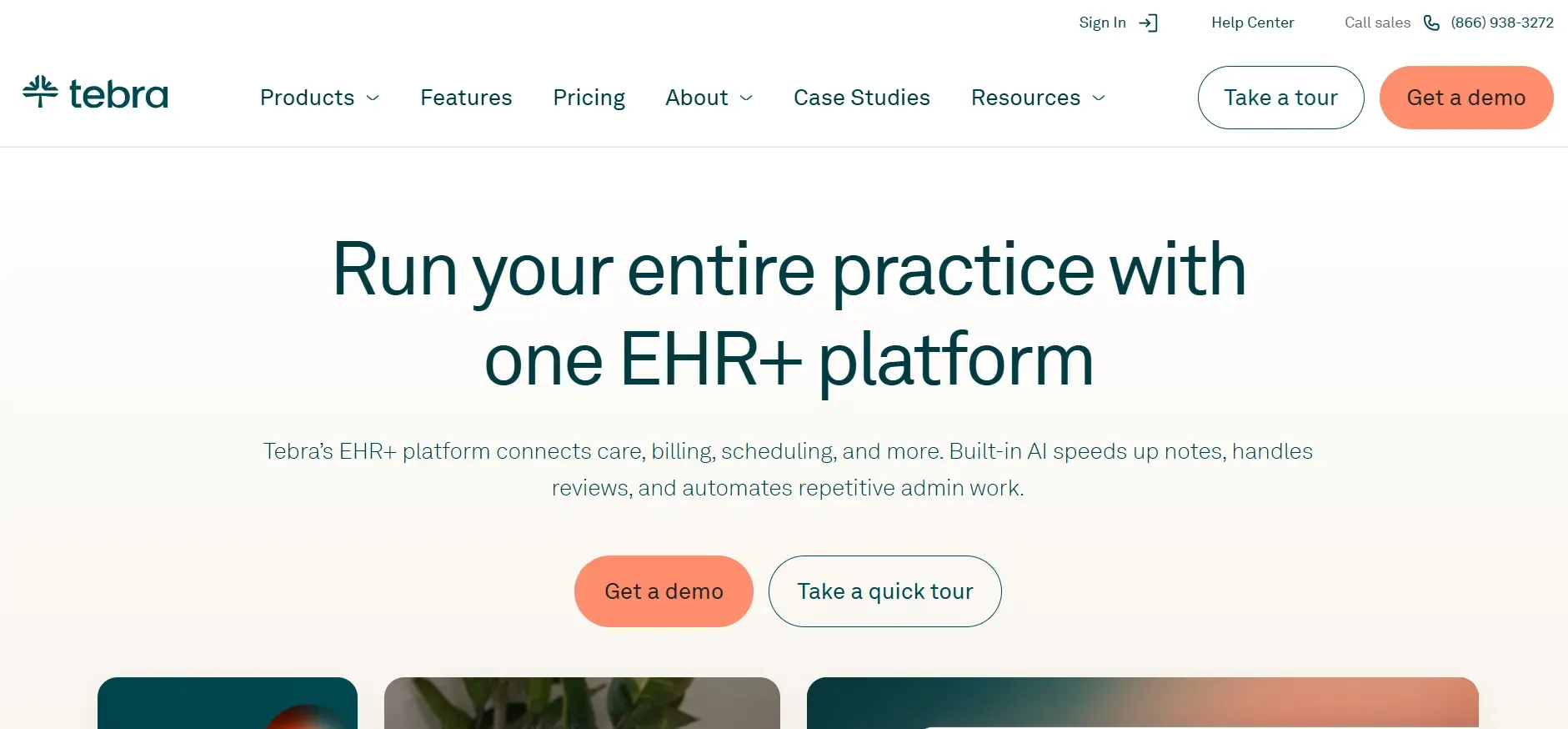
Kareo, now operating under the Tebra brand, is known for its user-friendly EHR and integrated billing platform. Targeted at small to midsize dermatology practices, Kareo offers a streamlined interface for charting, scheduling, and claims management. Its biggest draw is the seamless integration between clinical documentation and revenue cycle operations, reducing billing errors and improving collections.
Pricing: Not disclosed. Pricing varies by features and provider count.
- Integrated billing and claims management
- User-friendly interface and quick onboarding
- Telehealth and patient engagement tools included
- Limited customization compared to enterprise systems
- Some users report billing glitches or support delays
- Pricing rises with add-ons and practice growth
On a Devaims build, you decide exactly how billing and messaging flow, so no more workarounds.
4. DrChrono (Best for iPad-first clinics)
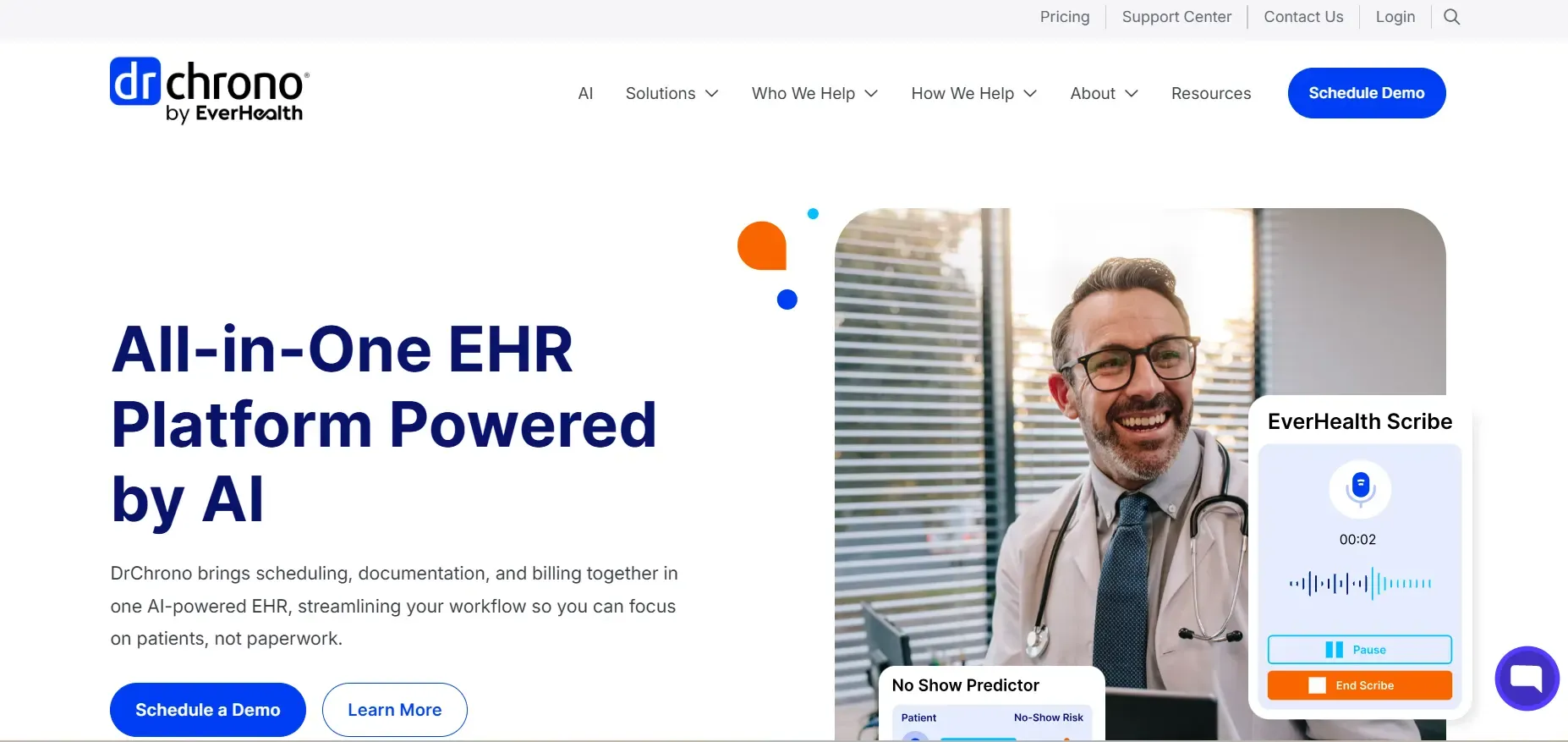
DrChrono is a pioneer in mobile-first EHRs, making it especially popular among dermatologists who want to chart on the go. The platform’s iPad app allows providers to document visits, annotate images, and prescribe, all from a tablet. This can streamline workflows in exam rooms, enable bedside charting, and improve patient engagement.
Pricing: Not disclosed. Pricing depends on modules and provider count.
- Mobile-first, iPad-optimized workflows
- Customizable clinical forms and photo capture
- Marketplace for third-party add-ons
- Annual price increases can impact long-term budgeting
- Image management less advanced than some competitors
- Support and product direction may shift with ownership changes
On software you own, you never face forced price hikes or roadmap surprises.
5. Athenahealth (Best for integrated practice management)
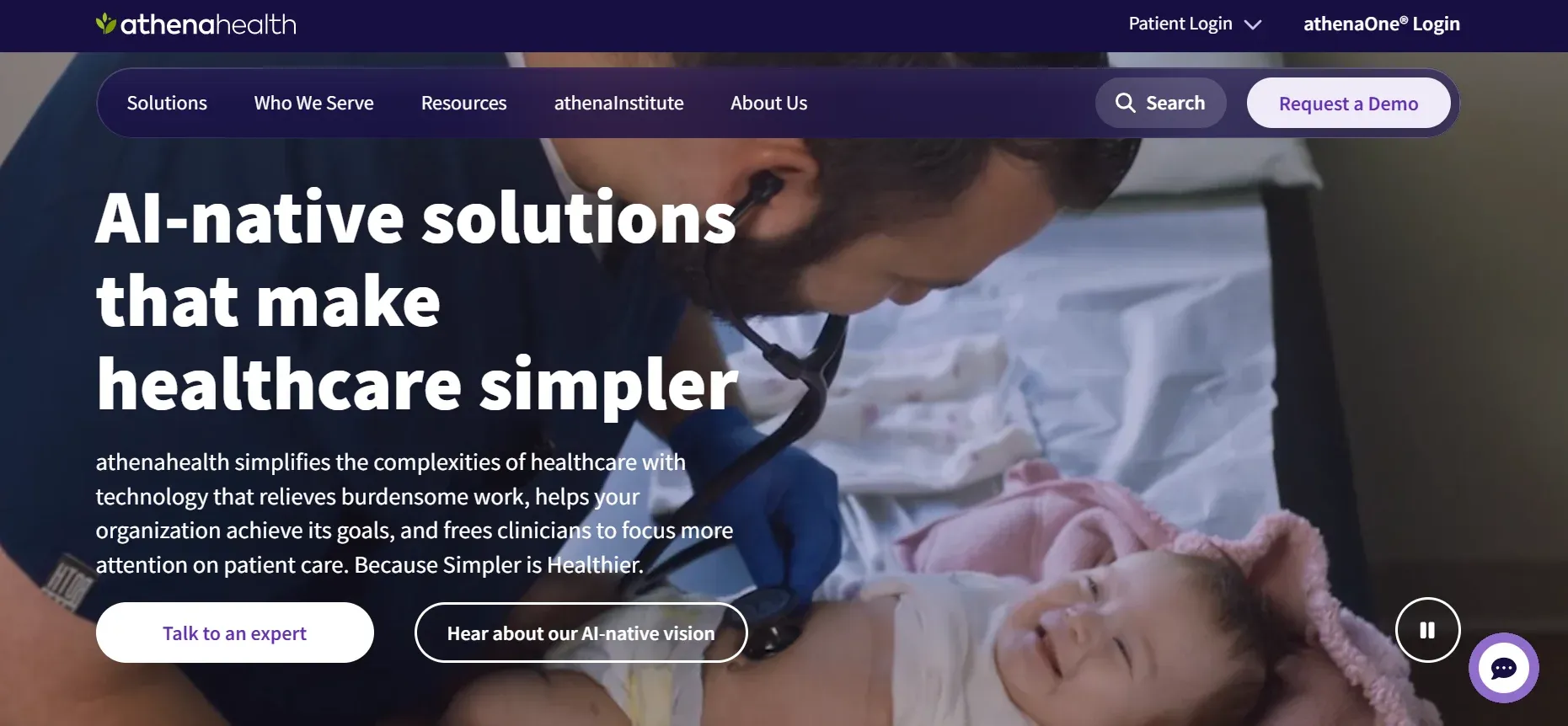
Athenahealth is a comprehensive EHR, practice management, and revenue cycle solution popular with midsize and larger groups. Its claim to fame is the breadth of its integrated platform. Clinics can handle scheduling, charting, billing, analytics, and patient engagement all in one place. Athenahealth’s cloud-based system is designed to scale with growing practices and support multi-site, multi-provider organizations.
Pricing: 4% to 7% of collections. Three-year contract with auto-renewal.
- All-in-one platform for EHR, billing, and analytics
- Strong payer and clearinghouse integrations
- Advanced analytics and reporting
- Percent-of-collections pricing adds up as you grow
- Multi-year contract with early termination fees
- Platform can feel overwhelming for smaller practices
6. Practice Fusion (Best for budget-minded clinics)
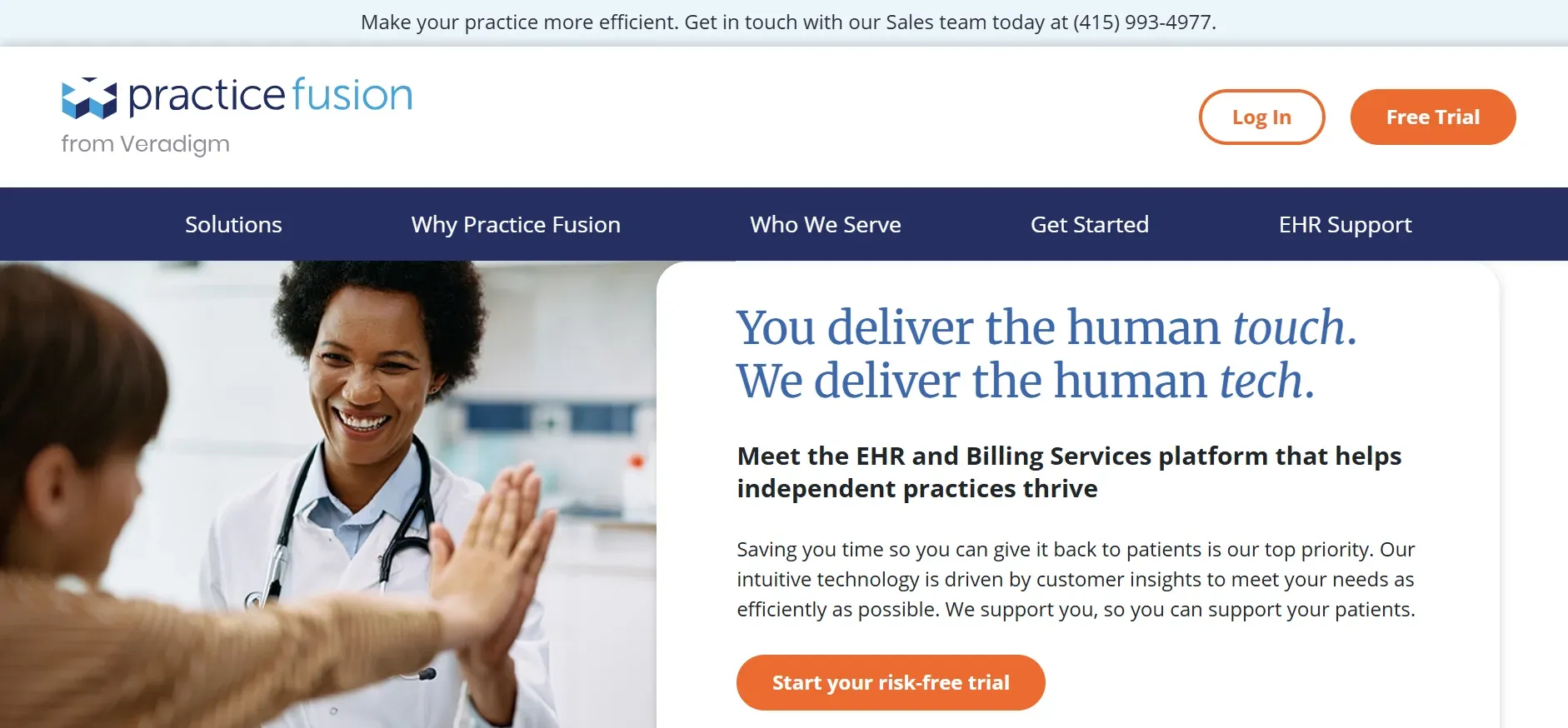
Practice Fusion stands out for its transparent pricing and browser-based EHR. Originally known as a free EHR, it now charges a flat fee of $199 per provider per month, making it one of the most affordable options for small or startup clinics. Its cloud-based design means there’s no software to install, and updates are automatic.
Pricing: $199 per provider per month. Annual commitment required.
- Transparent, affordable pricing
- Simple, browser-based interface
- No auto-renewing contracts
- Limited specialty features for dermatology
- No Android app available
- Platform may not scale for cosmetic or complex practices
7. DermEngine (Best for imaging and AI tools)
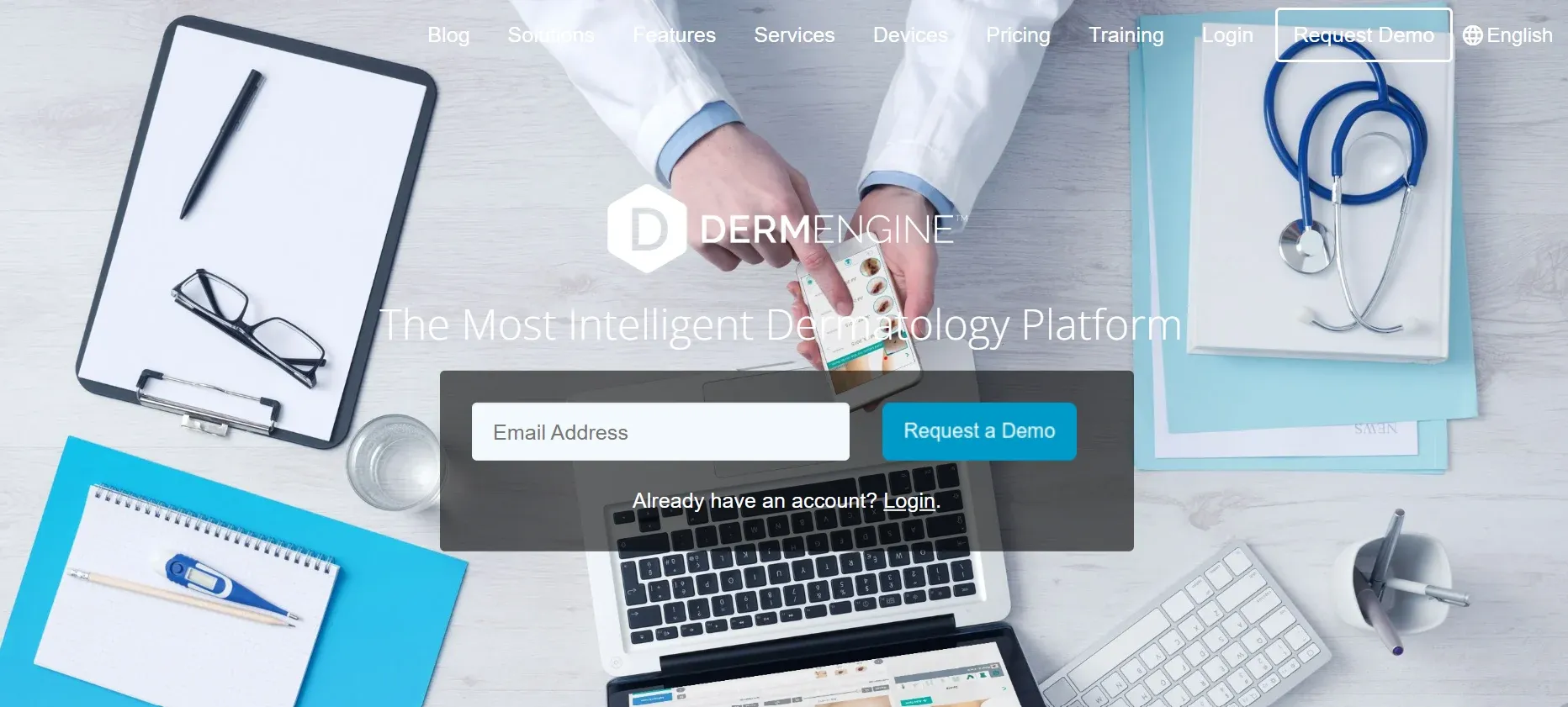
DermEngine is a dermatology imaging platform focused on advanced photo documentation, mole mapping, and AI-powered lesion analysis. It is not a full EHR, but rather a complement to your primary system. Many clinics use DermEngine alongside Greenway Health or another EHR to strengthen their imaging and diagnostic capabilities.
Pricing: Not disclosed. Pricing varies by storage and imaging volume.
- Advanced imaging and AI lesion analysis
- Teledermatology and mobile photo capture
- Useful for mole mapping and longitudinal tracking
- Not a full EHR or billing platform
- Integration with EHRs may require manual steps
- Costs can rise with imaging volume
8. PatientNow (Best for medspa and cosmetic dermatology)
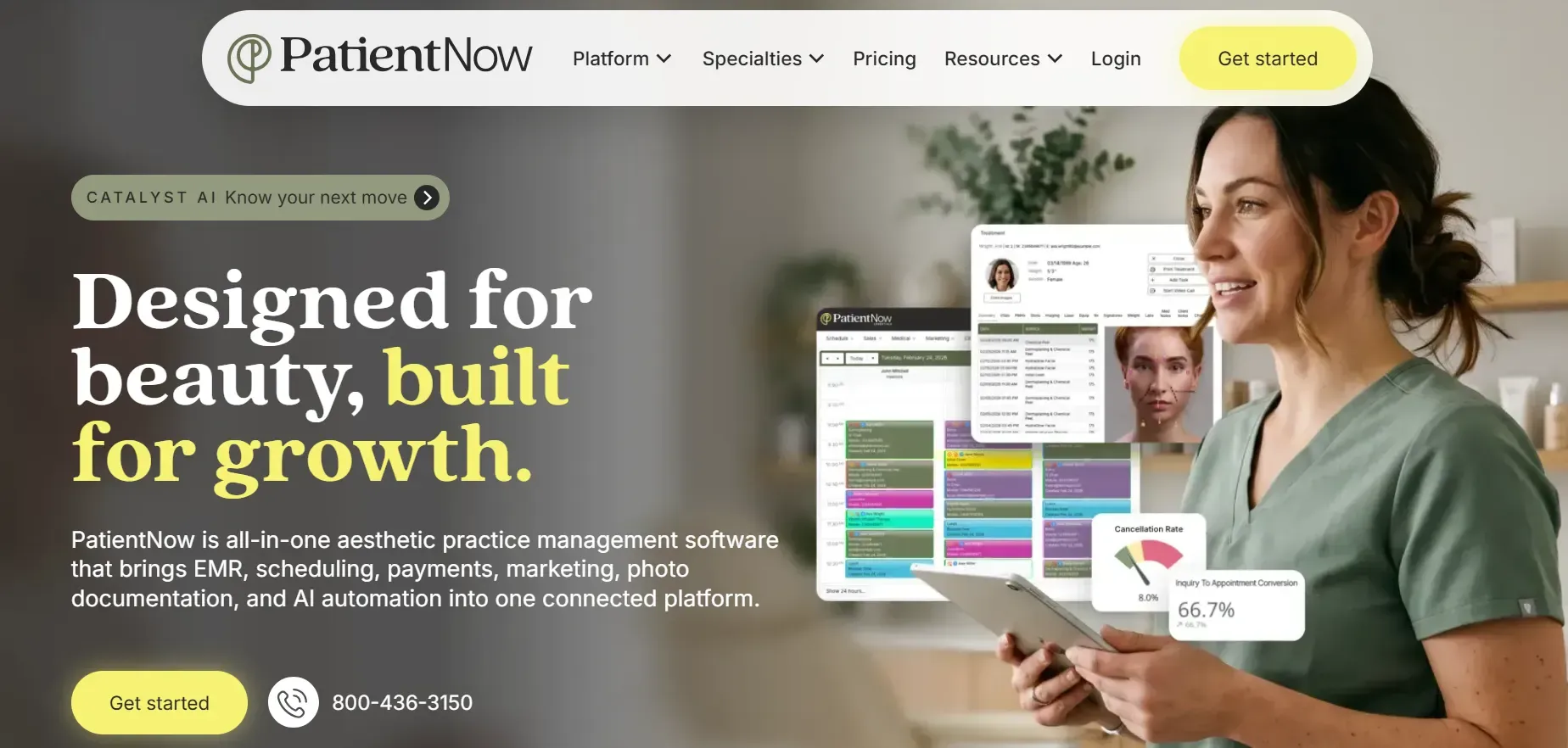
PatientNow is designed for dermatology practices and medspas that offer cosmetic procedures such as injectables, laser treatments, and aesthetic surgery. It combines EMR, practice management, marketing, and photo management in a single platform, helping clinics grow their cosmetic business alongside medical dermatology.
Pricing: Not disclosed. Pricing is custom-quoted and may include fees for advanced modules.
- Strong cosmetic and photo documentation tools
- Integrated marketing and loyalty programs
- Supports both medical and cosmetic workflows
- Medical dermatology features may be less robust
- Learning curve for marketing and loyalty modules
- Pricing and feature access can be unclear
9. Devaims (Best for owning your dermatology workflow)
Devaims is unique among Greenway Health alternatives: it builds custom dermatology software that your clinic owns outright. Instead of paying monthly per-provider fees or getting tied to auto-renewing contracts, you receive a platform designed for your exact needs, with the source code and data under your exclusive control.
Pricing: One-time build investment (typically $25,000 to $35,000), plus flat annual maintenance (e.g., $2,400/year). No per-user or per-provider fees.
- Full software and data ownership, no contracts or lock-in
- Custom workflows, features, and integrations tailored to your clinic
- Long-term cost savings and freedom to scale or pivot as needed
With Devaims, your team size doesn’t change your cost, and your data is always accessible and under your control.
Other Greenway Health alternatives worth knowing
- Intergy: A well-known EHR in primary care and multispecialty settings, Intergy offers dermatology modules but lacks the specialty depth of EMA or Nextech. Integration options are solid, but customization is limited compared to a custom build. Pricing is not public and follows the typical SaaS model.
- Cerner: One of the largest enterprise EHRs, Cerner is often used by hospital-affiliated dermatology practices. However, its complexity, implementation costs, and focus on hospital workflows make it impractical for most independent dermatology clinics. Ownership remains with the vendor, and contracts are long-term.
Some regional EHRs offer dermatology add-ons, but nearly all follow the rent-forever SaaS model and lack the flexibility or ownership advantages of a custom build.
How to choose the right Greenway Health alternative
- Budget: Calculate your true five-year cost, including all modules, support, and expected price hikes, not just the sticker price. Ask vendors for a detailed quote and review for hidden fees.
- Practice size: Consider whether the platform scales for solo providers, mid-sized clinics, or multi-site groups. Some tools charge per provider, while others offer flat-rate models or unlimited users.
- Specialty needs: Evaluate whether you need advanced imaging, mole mapping, cosmetic modules, or just basic medical dermatology features. Not all platforms are equally strong across the spectrum.
- Contract flexibility: Review contract terms for auto-renewals, early termination fees, and data export policies. If you value agility, avoid vendors that lock you in for multiple years or penalize you for leaving.
- Ownership: If you want to truly own your software and data, only an owned solution like Devaims delivers it. This gives you freedom to customize, scale, and pivot without vendor approval or added costs.
The right choice balances cost, features, and long-term control. If your clinic is tired of rent-forever contracts and wants an EHR that fits like a glove, owning with Devaims may be the next step.
Stop paying rent on software you could own
Every tool on this list, Greenway Health included, is rented. The contract, the per-user fees, the forced updates, they all come with the SaaS territory. It makes sense for new practices or those with minimal IT support, but after three or four years, it’s clear: you’re paying to use, not to own. The math gets worse as you add providers or locations.
Devaims is different. We build custom dermatology platforms that your clinic owns outright. The code is yours, the data is yours, and the workflow is tuned to fit how you actually operate. No contracts, no per-provider fees, and no vendor lock-in. You keep the source code, forever.
- Annoyed by endless per-provider charges? With Devaims, your team size doesn’t change your cost.
- Worried about data export or switching costs? Your data is always accessible, structured, and under your control. You decide where it lives and who can access it.
- Need a report or integration the SaaS won’t build? With a custom platform, you just have it. Add features as your clinic grows, without waiting for a vendor’s roadmap.
- Frustrated by contract auto-renewals? Devaims never locks you in. You own everything and can pivot at any time.
| Tool | Pricing model | Ownership | Contract |
|---|---|---|---|
| Greenway Health | Monthly subscription | Vendor-owned | Auto-renew, buyout fees |
| Practice Fusion | $199/provider/mo | Vendor-owned | Annual |
| Athenahealth | 4 to 7% of collections | Vendor-owned | 3-year, auto-renew |
| Devaims | One-time build + flat maintenance | You own it | No contract |
Let’s do the math for a midsize dermatology clinic with 5 providers. Market rates put SaaS at about $250 per provider per month (including modules and support). That’s $1,250 per month, or $15,000 per year. Over five years, that’s $75,000, and you never own it. With Devaims, a typical build might be $30,000 upfront, plus $2,400 per year for maintenance. By year four, you’re saving money, and every year after, the gap widens.
| Year | Rented (SaaS, cumulative) | Owned (Devaims, cumulative) |
|---|---|---|
| Year 1 | $15,000 | $30,000 (build) + $2,400 (maintenance) = $32,400 |
| Year 2 | $30,000 | $30,000 + $4,800 = $34,800 |
| Year 3 | $45,000 | $30,000 + $7,200 = $37,200 |
| Year 4 | $60,000 | $30,000 + $9,600 = $39,600 (now ahead) |
| Year 5 | $75,000 | $30,000 + $12,000 = $42,000 |
And that’s before factoring in price hikes, module add-ons, or the cost of switching vendors. For high-volume clinics or those tired of vendor handcuffs, ownership wins big. If you want to run your own numbers, Devaims will walk you through a free, zero-obligation estimate.
How to switch from Greenway Health
Switching EHRs is a major project, but with the right plan, you can minimize disruption and protect your data. Here’s how a typical migration works:
- Export all data: Begin by exporting all patient demographics, clinical notes, billing histories, and images from your Greenway Health account. Request data in standard formats (e.g., HL7, CCD, CSV) where possible. Ask your vendor for help with custom fields or attachments.
- Choose your new platform: Select your new EHR or owned solution (like Devaims) and review migration requirements. Ask for a detailed data mapping plan and migration timeline.
- Import and validate: Import patient records, images, and billing data into the new system. Validate that all records are complete and match your source data. Pay special attention to images, procedure histories, and billing codes.
- Reconnect integrations: Reconnect payment gateways, labs, e-prescribing, and third-party tools. Test each integration to ensure smooth operations.
- Staff training: Train your staff on new workflows, forms, and charting tools. Offer hands-on sessions and quick reference guides. If you’re moving to a custom build, training can be tailored to your exact processes.
- Parallel run: Run both systems in parallel for a few weeks. Check for missing data, migration errors, or workflow hiccups. Address any issues before the final cutover.
- Review contracts: Review your Greenway Health contract for early-termination clauses, buyout fees, or notice requirements. Plan your final transition date to avoid double billing.
With a custom Devaims build, the migration is handled as part of the project, with dedicated support for data mapping, import, and validation.
Frequently asked questions
What is the best alternative to Greenway Health for dermatology clinics?
For many clinics, Modernizing Medicine (EMA) and Nextech are strong Greenway Health alternatives, thanks to their specialty features and deep workflow support. EMA is particularly well-suited for clinics performing a high volume of dermatology procedures, while Nextech is better for larger, multi-provider organizations that need custom configurations. If you want to own your software and data, Devaims is the only alternative that delivers full control, customization, and the ability to scale without ongoing rent or contract restrictions.
Which Greenway Health alternative is the cheapest?
Practice Fusion is the most transparent about pricing at $199 per provider per month. However, this low monthly fee comes with limited specialty features and less flexibility for growing or diversifying practices. Over five years, even "cheap" SaaS adds up quickly, often exceeding the one-time investment required for an owned platform like Devaims. Always compare the total five-year cost, not just the monthly rate.
Is there a free Greenway Health alternative?
There are no reputable, fully free EHR solutions tailored for dermatology. Open-source EHRs like OpenEMR or OSCAR EMR exist, but they require significant IT resources to install, customize, and maintain, and lack dermatology-specific workflows out of the box. Most practices opt for low-cost SaaS or invest in a custom build with Devaims for long-term savings, predictability, and specialty fit.
What’s the best Greenway Health alternative for cosmetic dermatology?
PatientNow and Aesthetic Record are popular for cosmetic and medspa practices, offering marketing, loyalty, and before/after photo tools. They are designed to grow cosmetic revenue and manage inventory for injectables and retail products. For clinics that want to own every feature and integrate medical and cosmetic dermatology, a Devaims build is fully tailored to your unique workflows, with no compromises or double data entry.
How does Devaims compare to Greenway Health on cost?
Devaims requires an upfront build investment (typically $25,000 to $35,000 for most clinics), plus a flat annual maintenance fee. Over three to four years, the total cost is lower than renting a SaaS solution with per-provider fees and annual price hikes. You own the code, avoid contract traps, and never pay for features or users you don’t need. The financial break-even point is usually reached by year four, after which your savings compound.
Can I keep my patient data if I leave Greenway Health?
You can export data from Greenway Health, but the process can be cumbersome. Data may be delivered in raw or proprietary formats, requiring additional work to import into a new system. Some clinics report that images, attachments, or custom fields are not fully exportable. With Devaims, your data is always truly yours, stored in open formats, accessible at any time, and never subject to export fees or vendor delays.
When should I switch from Greenway Health to another platform?
If your practice is growing, facing rising SaaS costs, or needing custom workflows, it’s time to explore Greenway Health alternatives. The best time to switch is before your contract auto-renews or when your five-year SaaS spend approaches the cost of building an owned solution. Consider switching if you’re adding providers, expanding services, or frustrated by workflow limitations. Devaims can help you run the numbers and plan a smooth migration.
The bottom line
Greenway Health and its SaaS peers will always be rented. Your bills and your contract never go away. The single most useful test? Add up your five-year spend. If that number would have built you an owned platform, you’re paying rent when you could already own.
Owning your dermatology EHR means no more handcuffs, no more surprise fees, and no more workarounds. If you want to see what that looks like for your clinic, Devaims will run the math, with no obligation, just clarity.
Explore more at the Devaims blog, or see our deep dives on Athenahealth alternatives, Practice Fusion alternatives, and DrChrono alternatives.