


You start with Office Ally because it’s free for basic claims. But every podiatrist knows what comes next: feature gaps, per-provider charges, and the endless feeling of renting your own patient data. If you’ve ever run the five-year math, you know the surprise: that “affordable” SaaS turns expensive fast.
This is the real cost of Office Ally and its lookalikes, locked-in pricing, features on the wrong tier, and the nagging sense you’re building value for someone else. So let’s cut through the fog. Here are the 9 best Office Ally alternatives for podiatry in 2026, from the big SaaS players to a new way: custom software you own outright. DrChrono, AdvancedMD, and Practice Fusion are strong, but only Devaims puts you in the owner’s seat.
Ready for a side-by-side view and the honest math? Let’s dive in.
Why podiatry practices look for Office Ally alternatives
Podiatry clinics often start with Office Ally for its low (sometimes free) entry point, but discover its limitations as soon as they need more robust features. Here’s why so many podiatrists begin searching for alternatives:
- Per-provider pricing balloons as you scale. What starts as $0 can quickly jump to hundreds per month once you need more than basic claim submission, especially with multiple providers. For example, adding a second provider may double your costs, and as you grow, the price per provider rarely decreases. This model punishes growth, making it difficult for practices to expand without a steep increase in expenses.
- Annual contracts and tier upgrades trap flexibility. Most Office Ally alternatives require a year-long commitment or push must-have features (like e-prescribing, telehealth, or advanced reporting) into higher-priced tiers. If your practice’s needs change mid-contract, you may be stuck paying for features you do not use or missing ones you need.
- Fees for essential features add up. The base price often omits crucial podiatry features. Patient engagement, analytics, e-faxing, appointment reminders, and telehealth are usually add-ons, each with its own price tag. Over time, these incremental costs can rival or exceed the base system fee.
- Data ownership and export headaches. With most options, your data is on their servers. Exporting complete patient records, chart notes, or billing data can be limited, time-consuming, or expensive. Some systems restrict export formats, making migration to a new tool a technical challenge. This lack of control can put clinics at risk if a vendor sunsets a product or changes pricing unexpectedly.
- Renting, not owning, your core system. Over five years, “affordable” SaaS often costs more than a custom build, see the 5-year cost table below. That’s why so many search for Office Ally alternatives. Owning your system means you’re building equity in your process and technology, not just paying for temporary access.
These issues are not unique to Office Ally. Nearly every SaaS EHR or billing system operates under the same model, monthly or annual fees, add-ons, and control that ultimately rests with the vendor.
Quick comparison of the best Office Ally alternatives
| Tool | Best for | Starting price | You own it? |
|---|---|---|---|
| DrChrono | All-in-one EHR/billing | Quote | No |
| AdvancedMD | Robust features, larger groups | $399/mo/provider | No |
| Practice Fusion | Solo/small practices | $199/mo/provider | No |
| Medisoft | Billing-focused clinics | Quote | No |
| Podiatry Hotline EHR | Podiatry-specific EHR | Quote | No |
| Experity | Urgent care, specialty clinics | Quote | No |
| Amazing Charts | Independent providers | Quote | No |
| ClinicTracker | Behavioral/therapy practices | Quote | No |
| Devaims (custom build) | Podiatry practices ready to own | One-time build, you own it | Yes |
Always confirm current pricing before you decide, costs and tiers change fast, and some vendors negotiate aggressively based on practice size or specialty.
The 9 best Office Ally alternatives
1. DrChrono (Best for all-in-one EHR and billing)
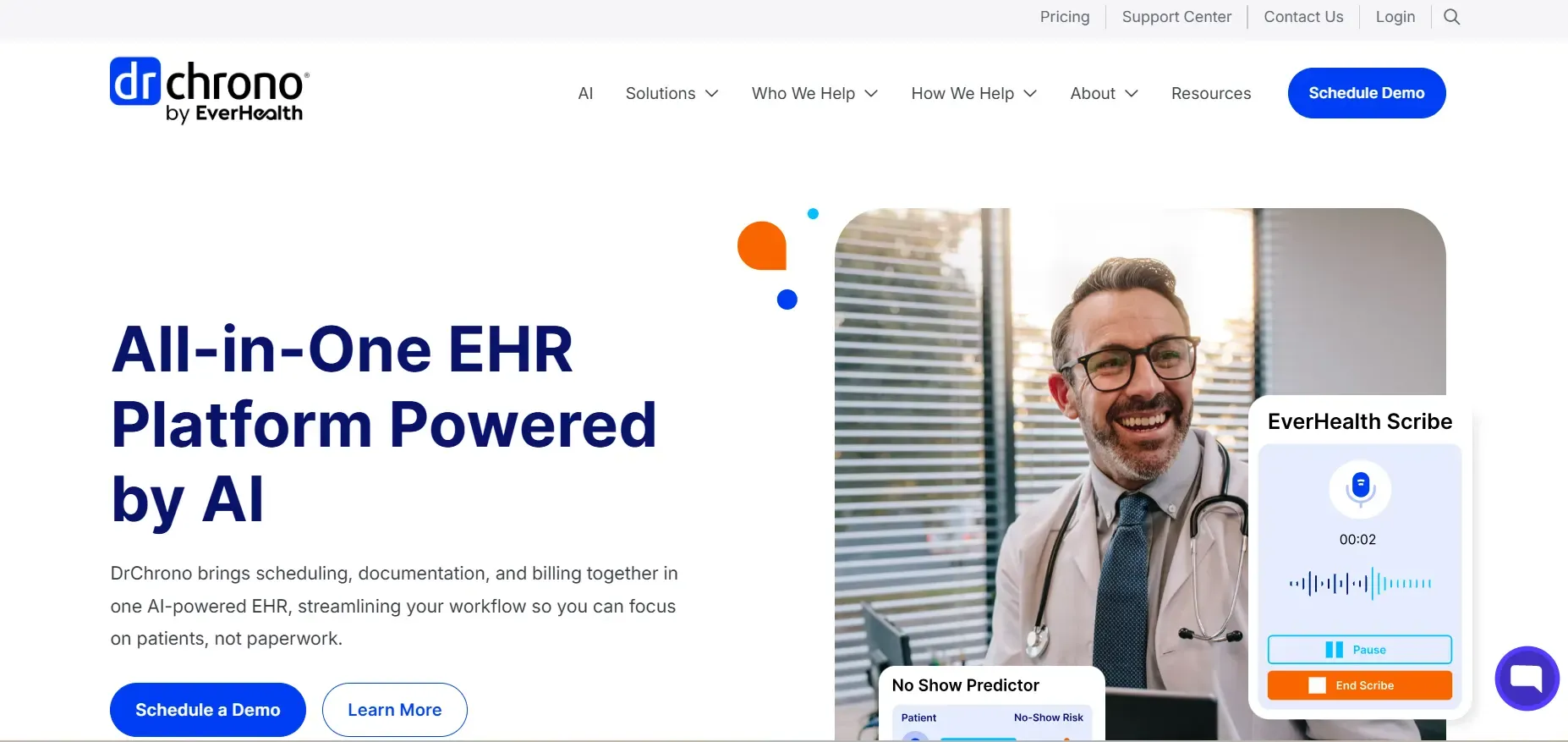
DrChrono is a cloud-based EHR, practice management, and medical billing platform that has become a go-to for podiatry groups who outgrow Office Ally’s basics. It offers a wide range of features, including specialty-specific charting, e-prescribing, and revenue cycle management. DrChrono stands out with its mobile-first approach, offering native iPad and iPhone apps that allow providers to chart, schedule, and access records on the go.
Features & Integrations: DrChrono’s customizable templates include podiatry-specific forms, enabling faster charting and improved accuracy. The platform integrates with labs (Quest, LabCorp), imaging centers, and leading billing services. Its API allows some custom integrations, though deep customization is limited to what the platform supports. The patient portal, telehealth, and e-prescribing are built in, but features like advanced analytics, custom reports, and inventory management are only available on higher-priced tiers.
Migration friction: Data import from Office Ally or other EHRs is supported, but often requires manual mapping for custom podiatry fields. Some practices report challenges with getting legacy data (such as historical images or scanned documents) to display properly in DrChrono. The company does provide onboarding specialists, but the migration window can stretch to several weeks for larger clinics.
Concrete use cases: DrChrono suits busy podiatry groups who want a modern, cloud-based workflow with mobile charting, e-prescribing, and integrated billing. It is also popular among clinics with multiple locations, as scheduling and user permissions are robust. Practices using in-house billing teams appreciate the integration, but those outsourcing billing may find the system’s RCM services more expensive than third-party options.
Pricing: Quote-based, typically per provider per month.
- Mobile-first charting and scheduling
- Specialty templates for podiatry
- Strong integrations with labs and billing
- Tiered pricing, essential features may require higher plans
- Per-provider fees add up quickly for larger clinics
- Limited deep customization, data export can be complex
Devaims can help you avoid per-provider fees entirely, with unlimited users and locations for a flat support cost.
2. AdvancedMD (Best for robust features and large groups)
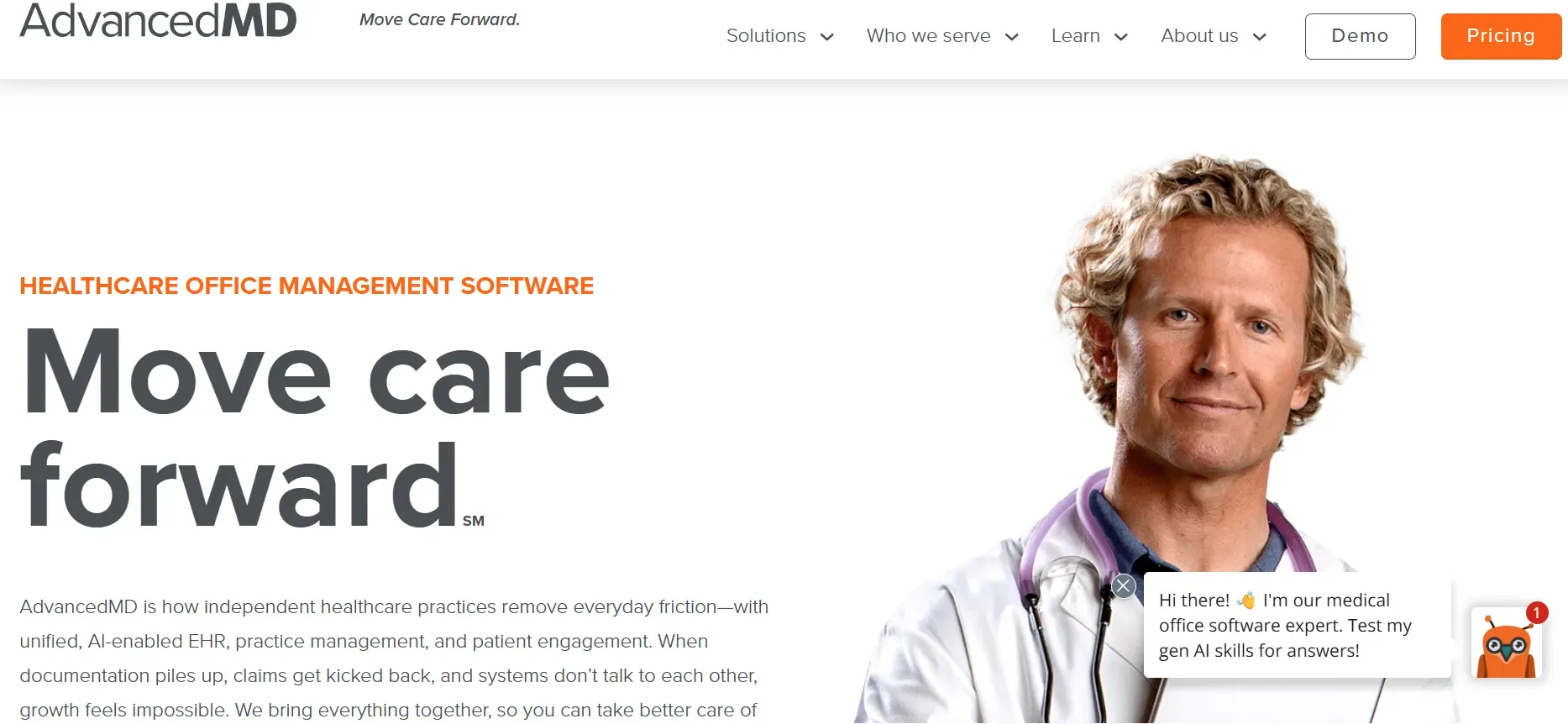
AdvancedMD targets practices wanting more depth and scalability than Office Ally, especially as you expand to multiple providers or locations. Its platform bundles EHR, practice management, patient engagement, telemedicine, and analytics. AdvancedMD is known for its robust reporting and workflow customization, making it a strong choice for growing clinics.
Features & Integrations: AdvancedMD offers customizable chart templates (including podiatry-specific options), appointment reminders, e-prescribing, and a sophisticated scheduling engine. Integrations with labs, imaging centers, and pharmacies are available out of the box. The system’s patient portal and telehealth modules are HIPAA-compliant and can be tailored to your branding. For billing, AdvancedMD supports both in-house and outsourced RCM, with robust denial management and claims tracking.
Migration friction: The platform offers structured onboarding and migration services, but the process is involved, especially if you have complex custom templates or workflows in Office Ally. Data mapping for podiatry-specific charting can require manual adjustments, and practices should budget for a few weeks of parallel running. AdvancedMD’s support team can assist, but expect some staff downtime during transition.
Concrete use cases: AdvancedMD fits mid-size to large podiatry groups who need advanced workflow automation, detailed analytics, and integrated telehealth. Practices with high claim volume or multi-location operations benefit from its robust scheduling and reporting. Clinics seeking granular user permissions, such as role-based access for providers, billers, and admins, will find AdvancedMD’s security model strong.
Pricing: $399/mo/provider (typical), annual contract.
- Robust analytics and reporting
- Customizable workflows and templates
- Strong multi-location and user permission support
- High per-provider cost, especially as you add clinicians
- Many features are add-ons or require higher tiers
- Customization may require paid support or technical expertise
Devaims lets you avoid annual contracts and per-provider fees, with a one-time build and flat maintenance.
3. Practice Fusion (Best for solo and small podiatry practices)

Practice Fusion is popular with solo and small podiatry practices seeking a simple, cloud-based EHR with a clean interface and basic charting. Its transparent pricing and easy onboarding make it a frequent upgrade from Office Ally’s basic claim tools.
Features & Integrations: Practice Fusion provides essential EHR functions, charting, e-prescribing (including controlled substances), scheduling, and patient portal. While not podiatry-specific, its templates can be adapted for common foot and ankle procedures. Integrations are available for labs and pharmacies, but third-party integrations are limited. The billing module is basic, so many users pair Practice Fusion with external billing software or clearinghouses.
Migration friction: Practice Fusion supports CSV import for patient demographics and some chart data, but historical claims and detailed podiatry notes may require manual entry. There is no built-in migration pathway from Office Ally, so expect some data loss or manual work, especially for imaging and custom templates.
Concrete use cases: Solo podiatrists or small clinics needing a fast, affordable EHR with e-prescribing and basic scheduling. It’s also a fit for practices outsourcing billing, as Practice Fusion can export claim files for use in other billing platforms.
Pricing: $199/mo/provider, annual contract.
- Simple, clean interface
- Affordable for solo/small practices
- Quick onboarding and e-prescribing included
- Limited customization and advanced analytics
- Annual contracts reduce flexibility
- Data export may not be comprehensive
With Devaims, you can customize every workflow and template to your exact needs, no matter your practice size.
4. Medisoft (Best for billing-focused clinics)

Medisoft is a legacy billing and practice management platform that many podiatry clinics consider when they need more robust billing features than Office Ally offers. It is a desktop-first solution, which appeals to offices wanting to keep data local or who have limited internet reliability.
Features & Integrations: Medisoft shines in insurance claims, collections workflows, and appointment scheduling. The software integrates with clearinghouses, but EHR features are minimal or require third-party add-ons. Some versions offer limited patient portal and e-prescribing functions, but these often feel dated compared to modern cloud platforms. Integration with labs or imaging is minimal, usually relying on manual uploads or printouts.
Migration friction: Medisoft can import patient demographics and insurance data, but complex EHR records or imaging do not transfer smoothly. Transitioning from cloud to desktop may require new hardware or IT support, and remote access is only possible via VPN or third-party remote desktop tools.
Concrete use cases: Small podiatry clinics focused on insurance billing and claims management, especially those with existing in-house billers. It is also popular where internet outages are common, or where data residency is a regulatory concern.
Pricing: Quote-based, typically one-time license plus annual support.
- Strong billing and claims management
- Local data storage for regulatory needs
- Popular with billing-focused clinics
- Dated user interface and learning curve
- Limited EHR functionality, often needs a second system
- Ongoing upgrade and support costs
Devaims can combine robust billing with modern EHR features, all in one custom platform.
5. Podiatry Hotline EHR (Best for podiatry-specific needs)

Podiatry Hotline EHR is designed specifically for podiatric medicine, offering tailored charting, imaging, and documentation tools. It addresses the unique needs of foot and ankle specialists, with pre-built templates for common procedures and diagrams for clinical notes.
Features & Integrations: The system includes podiatry-specific chart templates, image management for wound care and surgical documentation, and built-in coding for common procedures (CPT/ICD-10). However, integrations with external billing, labs, or hospitals are limited compared to larger platforms. Some practices supplement with third-party billing systems or manual claim submission.
Migration friction: Podiatry Hotline EHR supports import of basic patient data but full migration of historical chart notes or images may require manual transfer. The vendor provides onboarding, but with a smaller support team, timelines can be longer than with larger SaaS providers.
Concrete use cases: Solo or small group podiatry clinics wanting a quick start with specialty charting, digital imaging (for wounds, orthotics, etc.), and minimal setup. It is especially valued in practices where documentation of complex foot and ankle conditions is central to care.
Pricing: Quote-based, may include setup or per-feature fees.
- Podiatry-specific charting and imaging
- Quick setup for specialty clinics
- Pre-built templates for common procedures
- Limited integrations with external systems
- Opaque pricing and potential setup fees
- Small vendor, less frequent updates
6. Experity (Best for urgent care and specialty clinics)
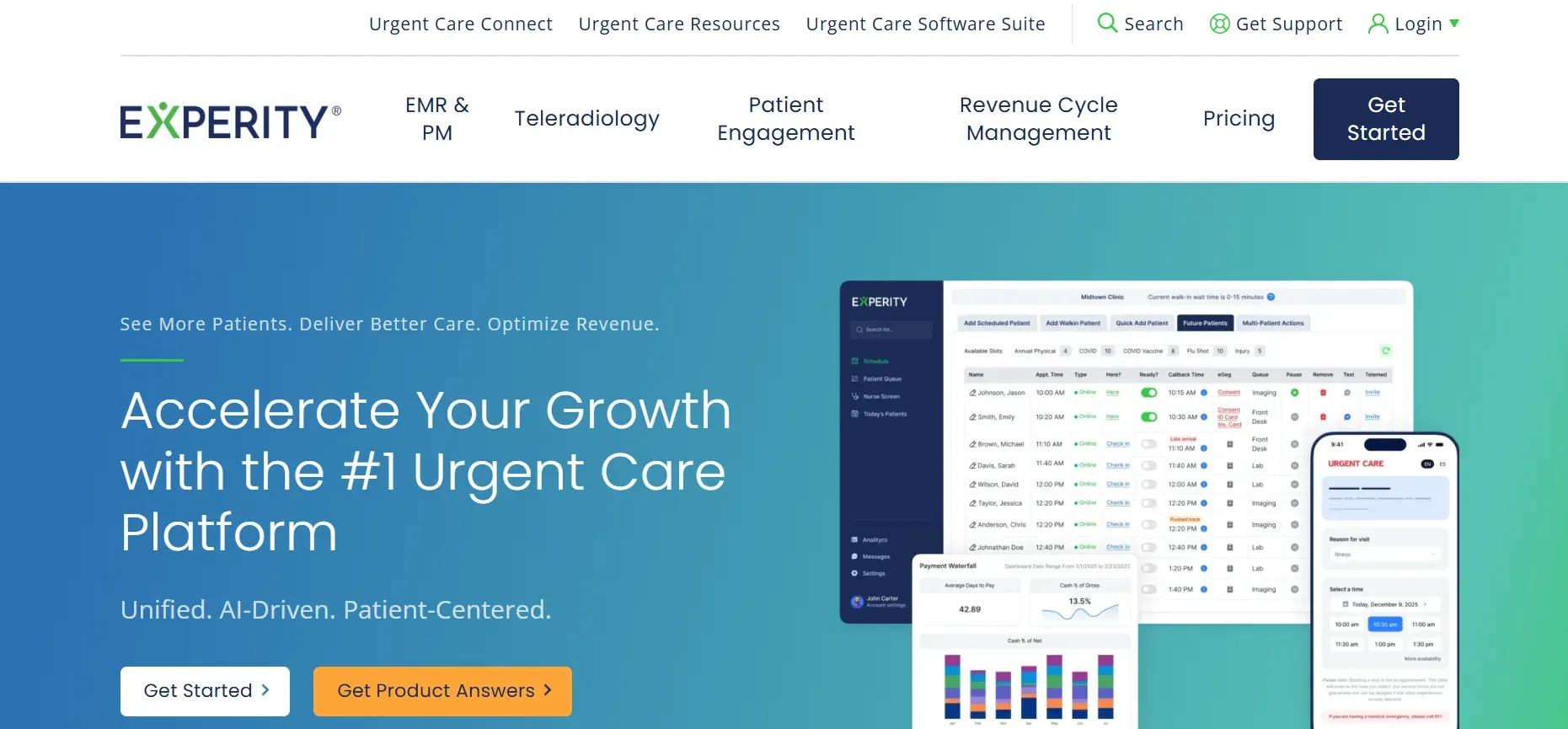
Experity is a comprehensive EHR and practice management suite built for urgent care and specialty clinics, including multi-specialty groups with podiatry. It delivers tight integration between clinical documentation, scheduling, billing, and reporting.
Features & Integrations: Experity supports rapid patient intake, real-time eligibility checks, and configurable charting templates. Telehealth, patient queuing, and automated reminders are included. Integrations with labs, imaging, and pharmacy partners are strong, and the system is scalable for multi-location practices. The built-in analytics dashboard allows administrators to track performance across sites.
Migration friction: Experity offers migration support, but onboarding is complex. Mapping podiatry-specific workflows from Office Ally may require additional configuration or consulting. Historical data import for images and custom notes may be limited by source system compatibility.
Concrete use cases: Large podiatry groups operating in urgent care or multi-specialty settings, especially those needing rapid patient throughput, centralized scheduling, and robust reporting. Practices with multiple locations benefit from Experity’s scalability and centralized admin tools.
Pricing: Quote-based, varies by modules and users.
- Strong for urgent care and multi-specialty clinics
- Integrated analytics and reporting
- Scalable for multi-location practices
- Opaque pricing, costs can rise with modules/users
- Complex onboarding and training required
- Not all features are podiatry-specific
7. Amazing Charts (Best for independent providers)
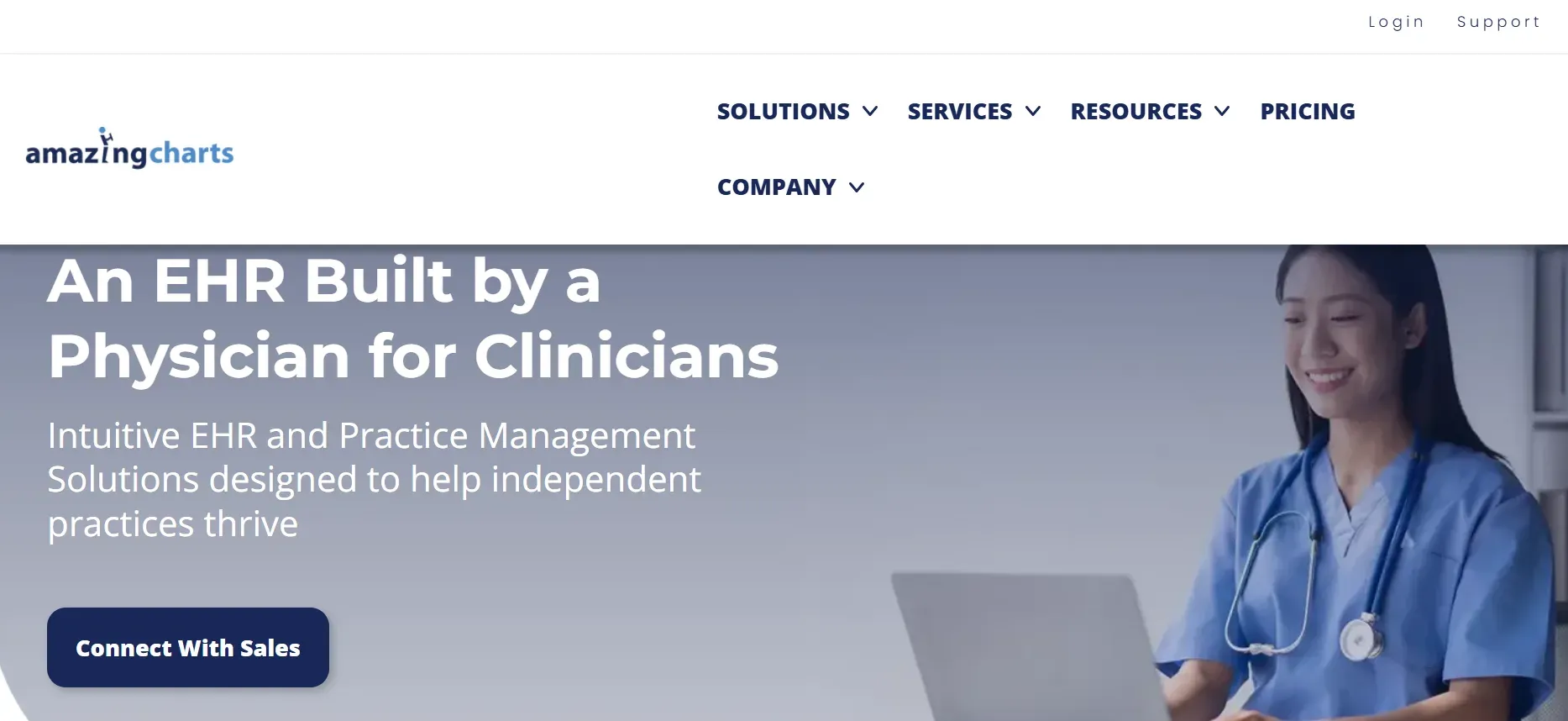
Amazing Charts is a long-standing EHR and practice management system aimed at independent providers and small clinics. It is known for its ease of use and affordability, making it a common step up from Office Ally for clinics wanting more customization without enterprise-level costs.
Features & Integrations: Amazing Charts provides customizable charting, scheduling, and patient portal features. Its billing module is an add-on, and lab integrations are available through partner networks. While not podiatry-specific, templates can be adapted. The system offers both desktop and cloud versions, though transitioning between them can be complex.
Migration friction: Patient demographic and basic chart data can be imported, but detailed podiatry templates or imaging may require manual setup. Practices moving from Office Ally should expect to rebuild custom workflows and retrain staff.
Concrete use cases: Independent podiatrists or small group practices seeking a simple, affordable EHR with basic customization. Clinics comfortable with do-it-yourself workflow tweaks and willing to manage some IT tasks benefit most.
Pricing: Quote-based, desktop or cloud options.
- Affordable entry for small clinics
- Customizable charting and scheduling
- Desktop and cloud deployment options
- Add-on costs for billing and advanced features
- Not podiatry-specific, requires workarounds
- Support responsiveness varies
8. ClinicTracker (Best for behavioral and therapy clinics)
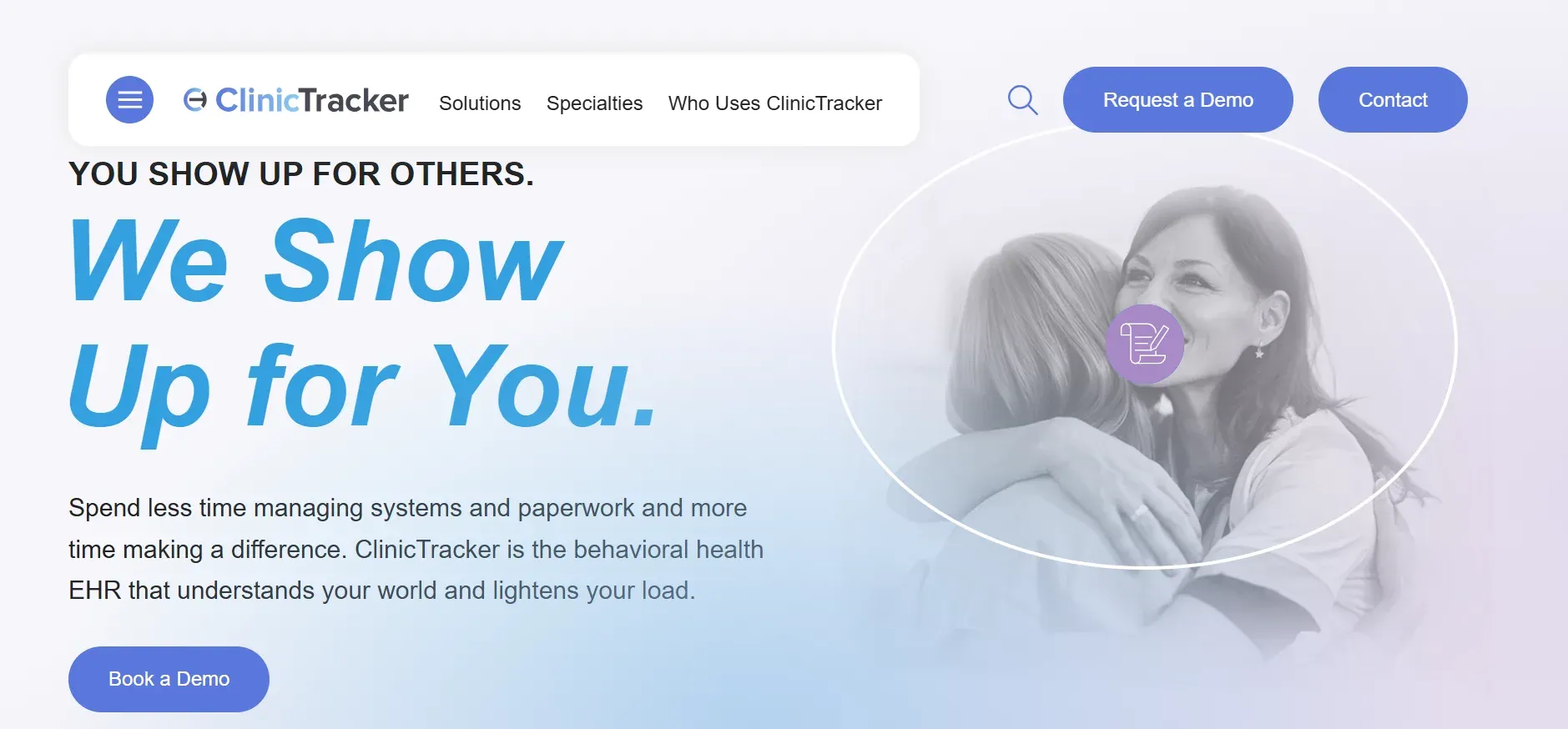
ClinicTracker is a specialized EHR for behavioral health, but sometimes serves multi-specialty clinics with podiatry services. Its strength lies in documentation, workflow automation, and telehealth integration.
Features & Integrations: ClinicTracker offers highly customizable documentation templates, appointment scheduling, telehealth, and patient engagement tools. Integrations are available for labs and billing, but podiatry-specific features are limited. The platform excels in automated reminders, outcome tracking, and compliance management.
Migration friction: ClinicTracker can import standard patient data, but complex podiatry charting or imaging may need manual setup. The system’s flexibility can be a double-edged sword, requiring significant configuration time during migration.
Concrete use cases: Multi-specialty clinics with both behavioral health and podiatry, or settings where advanced documentation and workflow automation are priorities. It is also a fit for clinics needing detailed telehealth documentation and outcome analytics.
Pricing: Quote-based, annual contract typical.
- Highly customizable documentation
- Strong telehealth and compliance tools
- Workflow automation for multi-specialty clinics
- Not purpose-built for podiatry, requires custom templates
- Can be overwhelming for small clinics
- Opaque pricing and annual contracts
9. Devaims (Best for practices ready to own their system)
Devaims builds custom web, mobile, and business software for podiatry practices who are ready to stop renting and start owning. Instead of a monthly fee, you pay once for the build, then a flat fee for maintenance, and you own the code, the data, and every future workflow.
Features & Integrations: Every Devaims build starts with a deep dive into your workflows. Charting, billing, scheduling, inventory, imaging, and reporting are designed around your exact needs, not what a vendor thinks a podiatry clinic should do. Integrations can include labs, imaging, payment processors, or custom APIs, whatever your practice needs. The system supports unlimited users and locations, with granular permissions and audit trails. You can add new features as your practice evolves, without waiting for a vendor’s roadmap.
- You own the code, data, and workflows
- Unlimited users and locations, no per-provider fees
- Custom integrations and features tailored to your practice
With Devaims, you never pay per-user or per-location fees, and your investment grows in value over time.
Other Office Ally alternatives worth knowing
- Plexicon: A podiatry EHR with some imaging features. Its small vendor size means limited support and slower feature development, but some clinics appreciate its focused charting and image annotation tools.
- Nuvelo: Focused on medical billing, not podiatry-specific. It lacks integrated EHR or imaging, but may work for billing-only setups. Support and upgrades depend heavily on the reseller.
- Podiatry-specific add-ons for generic EHRs: Some EHRs (like Athenahealth or eClinicalWorks) have podiatry templates or add-ons available. These can fill specialty gaps but rarely offer true integration with imaging or billing workflows unique to podiatry.
Some of these tools are niche or not podiatry-focused, but may suit very small or highly specialized clinics wanting to keep costs low or avoid major migrations.
How to choose the right Office Ally alternative
- By budget: Solo and small practices may do best with clear, low-cost SaaS. Larger groups should run the 5-year math, if your total rent approaches the cost of ownership, a custom build becomes attractive.
- By core needs: If you require advanced reporting, podiatry-specific charting, or integrated imaging, scrutinize which features are on which tier. Avoid platforms that hide essentials behind expensive upgrades.
- By growth: If you plan to add providers or locations, beware per-seat or per-location pricing. These models can stifle expansion and force contract renegotiations. Ownership means your costs remain predictable as you grow.
- By data control: Review the vendor’s data export and portability policies. If you ever plan to switch again, or need to provide records for audits or research, full access to your data is essential. With SaaS, exports may be partial or incur fees; with ownership, you control your data destiny.
- By integrations: If your workflows depend on third-party labs, imaging, or custom billing, confirm the platform’s API and integration support. Some SaaS EHRs are closed systems; custom builds can integrate anything your practice needs.
If you’re tired of paying rent on your core system year after year, it’s time to ask what owning could do for your practice.
Stop paying rent on software you could own
Here’s the honest math: every Office Ally alternative shares the same core problem, they rent you access, month after month, while you do the heavy lifting. Whether it’s Office Ally, DrChrono, or Practice Fusion, the bills stack up as your podiatry practice grows. Add a few providers, tack on some modules, and five years in, you’ve paid enough to have built something you actually own.
Devaims builds custom platforms for podiatry clinics who are done with per-provider fees and tired of working around someone else’s workflow. You get a system built for your exact needs, charting, billing, scheduling, patient comms, and you keep the source code. No lock-in, no forced upgrades, no paying for features you never use.
- Per-provider fees: Gone. Unlimited users, unlimited locations, fixed support cost.
- Feature bloat and tier locks: Only what you need, nothing you don’t.
- Data control: You own your patient data and can export anytime.
- Integrations: Connect any billing, imaging, or lab system you want, because it’s yours.
| Tool | Ownership | Typical contract | 5-year total cost* |
|---|---|---|---|
| Practice Fusion | Rented SaaS | Annual, per provider | $35,820 |
| AdvancedMD | Rented SaaS | Annual, per provider | $71,820 |
| DrChrono | Rented SaaS | Annual, per provider | Reported: $50,000 to $65,000 |
| Devaims (custom) | You own it | No contract, flat maint. | $36,200 (see below) |
*Based on 3 providers, typical pricing, and real SaaS fees. Your numbers may vary, ask us for a free run with your data.
| Year | Rented (e.g., $1,197/mo) | Owned (build $25,000 + $200/mo) |
|---|---|---|
| 1 | $14,364 | $27,400 |
| 2 | $28,728 | $29,800 |
| 3 | $43,092 | $32,200 (now ahead) |
| 4 | $57,456 | $34,600 |
| 5 | $71,820 | $37,000 |
In this example, you break even around year 3, and after that, every year you own puts thousands back in your pocket. Clinics with more providers or custom needs win even bigger. Ownership means your investment grows in value, the more you use your system, the lower your effective cost per year. By contrast, SaaS fees only go up, and you are always one vendor decision away from a price hike or forced migration.
How to switch from Office Ally
- Export your patient and billing data from Office Ally: Use the platform’s export tools to download patient demographics, appointments, claims, and any available clinical notes. Check if images or scanned documents can be exported, as some formats may require third-party tools.
- Choose your new tool and map out needed features and workflows: Identify what you need in your next system (charting, billing, imaging, inventory, reporting, etc.). Map your current workflows to the new platform and identify gaps or opportunities for improvement.
- Import your records, patients, and claims into the new system, test for missing fields: Most platforms support CSV import for basic data. For custom fields or podiatry-specific notes, manual mapping or data entry may be required. Test sample records to ensure data integrity.
- Reconnect billing, insurance, and payment integrations: Set up connections to clearinghouses, insurance payers, payment processors, and any other third-party integrations. Confirm eligibility checks and claim submissions work as expected.
- Train your staff on new workflows and test for accuracy: Provide hands-on training for providers, front desk, and billers. Run through common scenarios (charting, scheduling, billing) and adjust workflows as needed.
- Run in parallel for at least one billing cycle before going live: Use both Office Ally and your new system side by side to catch errors and ensure nothing is missed. This dual-running period helps identify workflow gaps and build staff confidence.
- Review your Office Ally contract for any termination or notice requirements: Check for early termination fees, required notice periods, or data retention policies. Make sure you have downloaded all necessary data before closing the account.
With a custom Devaims build, the migration is handled as part of the project, including data mapping, workflow redesign, and parallel testing, so you can focus on patient care, not technical headaches.
Frequently asked questions
What is the best Office Ally alternative for podiatry clinics with multiple providers?
For larger podiatry groups, AdvancedMD and DrChrono are the most robust SaaS alternatives, offering advanced workflow automation, analytics, and multi-location support. However, both come with high per-provider fees and annual contracts, which can make costs skyrocket as you add clinicians or locations. If long-term cost control and flexibility are priorities, a Devaims custom build lets you own your system outright, no per-user fees, no contract lock-in, and every feature tailored to your group’s needs.
Which Office Ally alternative is the cheapest for solo podiatrists?
Practice Fusion at $199 per month per provider is one of the lowest-priced, cloud-based EHRs suitable for solo podiatrists. It offers basic charting, scheduling, and e-prescribing with minimal setup. However, it requires an annual commitment and lacks advanced podiatry features. Medisoft can be affordable if you only need billing, but its EHR capabilities are limited and the interface is dated. For clinics willing to invest up front, a lightweight custom solution from Devaims can pay for itself over a few years, especially if you plan to grow.
Is there a free alternative to Office Ally?
Office Ally’s clearinghouse remains one of the few "free" tools for basic insurance claims. Most EHRs and practice management systems charge per provider, either monthly or annually. Some vendors offer limited-time free trials, but there are no fully free, long-term alternatives that meet podiatry’s clinical and billing needs. For clinics with very simple requirements, a combination of Office Ally clearinghouse and paper charting is the only zero-cost option, but this limits efficiency and growth.
What is the best Office Ally alternative for podiatry-specific charting and imaging?
Podiatry Hotline EHR is built specifically for podiatry, offering charting templates, imaging, and procedure tracking out of the box. However, it is less customizable and may lack integrations with billing, labs, or external systems. For total flexibility, a Devaims custom build is the only route where you get exactly the charting, imaging, and workflow tools your clinic needs, without compromise or feature bloat.
When should a podiatry practice switch away from Office Ally?
If your practice pays hundreds per month in add-ons, struggles with missing features, or wants to control patient data and workflow, it’s time to consider alternatives. The trigger point is often when the total cost over five years approaches the price of owning a custom system. Other red flags: lack of podiatry-specific charting, slow support, or being forced into expensive contract renewals. Always run the five-year math before committing to another SaaS contract.
Can I keep my historical claims and data when switching from Office Ally?
Yes, but the process requires care. Office Ally supports export of patient demographics, claims, and some clinical notes (usually as CSV or PDF). Most SaaS EHRs allow import of basic data, but detailed chart notes, imaging, and custom fields may need manual transfer or mapping. With a Devaims build, full data migration, including images and custom documents, is included as part of the project, ensuring your historical records are preserved and accessible in your new system.
The bottom line
No matter which Office Ally alternative you pick, run the five-year math, if the total rent could have bought you ownership, it’s time to stop paying for the same features twice.
Here is the test: add up what this tool will cost you over the next five years. If that number could have built you something you own, you already have your answer. There’s freedom in owning the system your practice runs on. Ownership means control, flexibility, and long-term savings, while renting means you’re always subject to someone else’s rules and pricing.
See more at the Devaims blog. Related reads: DrChrono alternatives, AdvancedMD alternatives, Practice Fusion alternatives.