



That sinking feeling when your EHR contract auto-renews, the price jumps, and you realize you still do not actually own your system? If you are using Elation Health, you know the drill: $349 per provider per month, annual commitment, and little leverage to change the rules. Practices scaling up watch their software bill balloon without ever building equity in the tech they run on.
But you do not have to keep renting forever. Whether you are tired of inflexible reporting, hidden per-claim fees, or just want to break the cycle of vendor lock-in, there are better options. Kareo (Tebra) is popular with small groups, DrChrono is a favorite for mobile-first workflows, and Practice Fusion is the budget pick. Still, most alternatives keep you on the software treadmill, except for one. If you want an EHR you own outright, a custom Devaims build lets you step off the rental ride for good.
Why primary care practices look for Elation Health alternatives
Annual contracts with no short-term escape. As of September 2023, Elation Health dropped month-to-month contracts. You are locked in for a year, even if your needs change. This rigidity can be particularly challenging for practices that are growing, merging, or navigating uncertain payer landscapes. If your volumes drop, or you need to pivot your business model, you are still on the hook for the full contract term.
Per-provider fees that add up fast. $349 per doctor per month is manageable for one, but at ten providers, that is $3,490 every month, and only rising as you grow. Support staff and mid-levels can also incur fees, and while some platforms offer 'lite' pricing for non-clinical users, the costs are rarely transparent. Over five years, you could pay well over $200,000 for a mid-sized clinic, with no asset to show for it.
Surprise add-on charges. Need to mail patient statements or paper claims? That is $0.95 or $1.15 each, on top of your subscription. Want e-prescribing, integrated telehealth, or custom reports? Often these are billed a la carte, and the nickel and diming is a common user complaint in online reviews. These charges can be difficult to predict, making budgeting a challenge.
Support slowdowns at crunch time. Real-world users report sluggish response and downtime when you need help most. Many EHR vendors, including Elation Health, have been acquired or have grown quickly, sometimes stretching support teams thin. Practices report long ticket queues, especially during system updates or outages, which can directly impact patient care and revenue cycle operations.
No ownership stake. After years of payments, you own nothing but your data, if you can export it. If you want to customize the platform, build your own reports, or integrate with emerging health tech, you are limited by the vendor's roadmap and APIs. This lack of control is a leading reason many search for Elation Health alternatives that put them back in control.
Quick comparison of the best Elation Health alternatives
| Tool | Best for | Starting price | Ownership/Fees |
|---|---|---|---|
| Kareo (Tebra) | Small to mid-size clinics | $300/provider/mo | Per-provider, recurring |
| AdvancedMD | Large, complex groups | Custom quote | Per-provider, recurring |
| DrChrono | Mobile-first practices | $250/provider/mo | Per-provider, recurring |
| Athenahealth | Integrated billing | 3%-7% of collections | Revenue % + fees |
| eClinicalWorks | All-in-one EHR/PM | $450/provider/mo | Per-provider, recurring |
| NextGen Healthcare | Enterprise groups | Custom quote | Per-provider, recurring |
| Practice Fusion | Budget-minded clinics | $150/provider/mo | Per-provider, recurring |
| Modernizing Medicine | Specialty workflows | Custom quote | Per-provider, recurring |
| Devaims | Practices ready to own | One-time build | One-time build, you own it |
Pricing and contract terms change quickly. Confirm current pricing before you decide. Always ask about onboarding, migration, and support fees, which can often be hidden in the fine print.
The 9 best Elation Health alternatives
1. Kareo (Tebra) (Best for small to mid-size clinics)
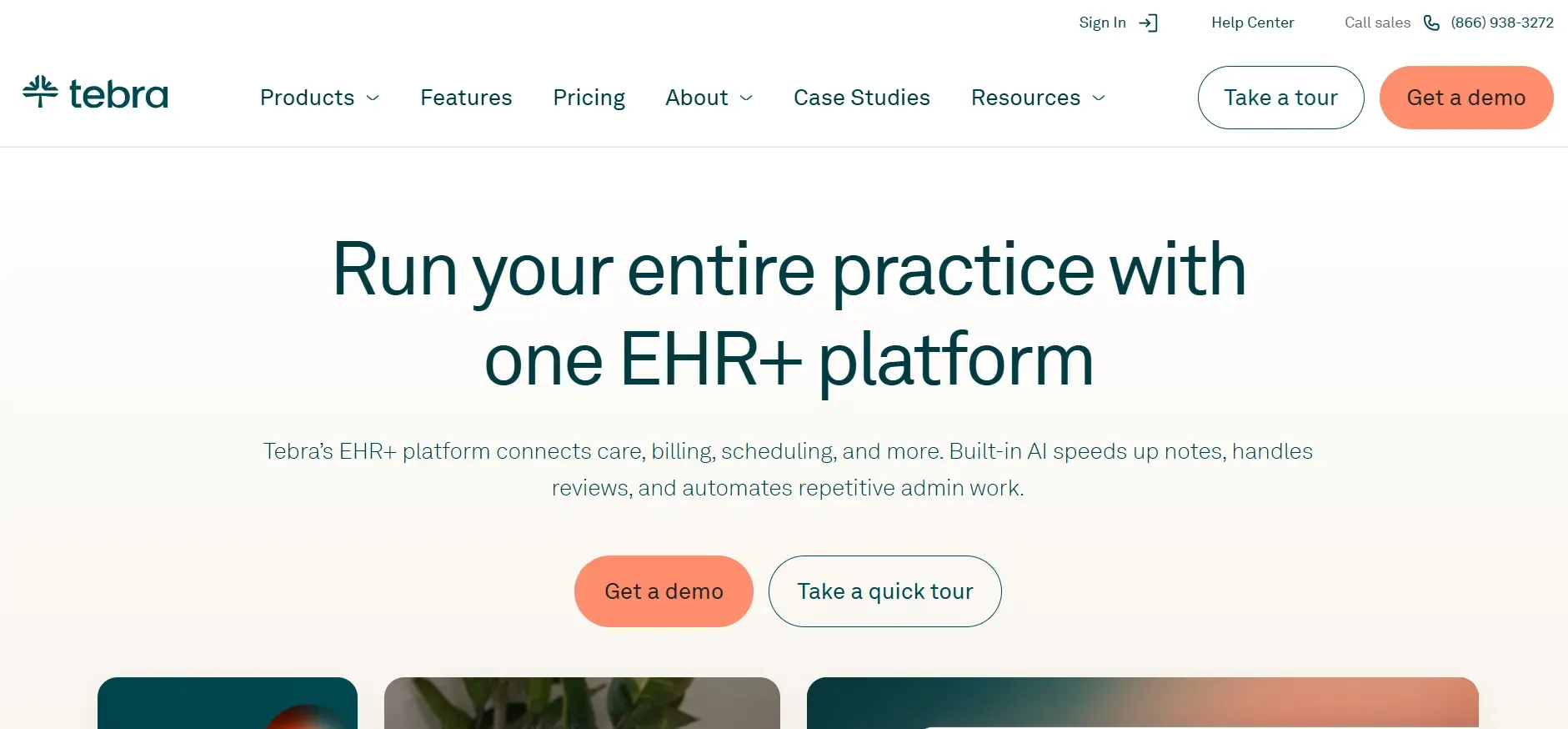
Kareo, now part of the Tebra platform, is one of the most widely adopted cloud-based EHR and practice management solutions for independent clinics and small groups. Kareo is especially strong in billing and revenue cycle management, offering tools for claims scrubbing, denial management, and payer rules built in. The system’s interface is modern and easy for new users to learn, with dashboards and navigation designed for day-to-day efficiency.
Integrations: Kareo offers built-in integrations for labs (LabCorp, Quest), e-prescribing, and clearinghouses, as well as a patient portal. It also connects with a variety of telehealth and patient engagement tools, and has a public API for deeper custom integrations, though API access may require higher-tier plans or additional fees.
Migration friction: Kareo provides guided onboarding, but data migration from other EHRs can be bumpy, especially for custom fields or historical attachments. Some users report manual cleanup is needed post-import, and timelines are often 4 to 8 weeks for a typical small group. They offer support, but high-touch hand-holding may cost extra.
Use cases: Kareo is a fit for primary care clinics that want to streamline billing, improve claim acceptance rates, and get a handle on accounts receivable. It is also popular in behavioral health and therapy practices due to its flexible scheduling and documentation templates.
Trade-offs: The biggest trade-off is the recurring per-provider fee, which can escalate rapidly as your staff grows. While Kareo’s billing is strong, some users note quirks in its reporting tools and that customer support can lag during peak times or major updates. If your practice has complex specialty workflows or needs deep customization, Kareo may fall short compared to enterprise options.
Pricing: $300 to $450 per provider per month. See Kareo pricing.
- Key limitations:
- Recurring per-provider fees increase with staff size
- Reporting tools less flexible than enterprise platforms
- Customer support can be slow during peak periods
- Strengths:
- Modern, intuitive interface for quick onboarding
- Strong billing and revenue cycle management tools
- Flexible scheduling and documentation templates
If you are frustrated by recurring per-provider fees, Devaims offers a custom solution you own outright, eliminating monthly rental costs.
2. AdvancedMD (Best for large, complex groups)
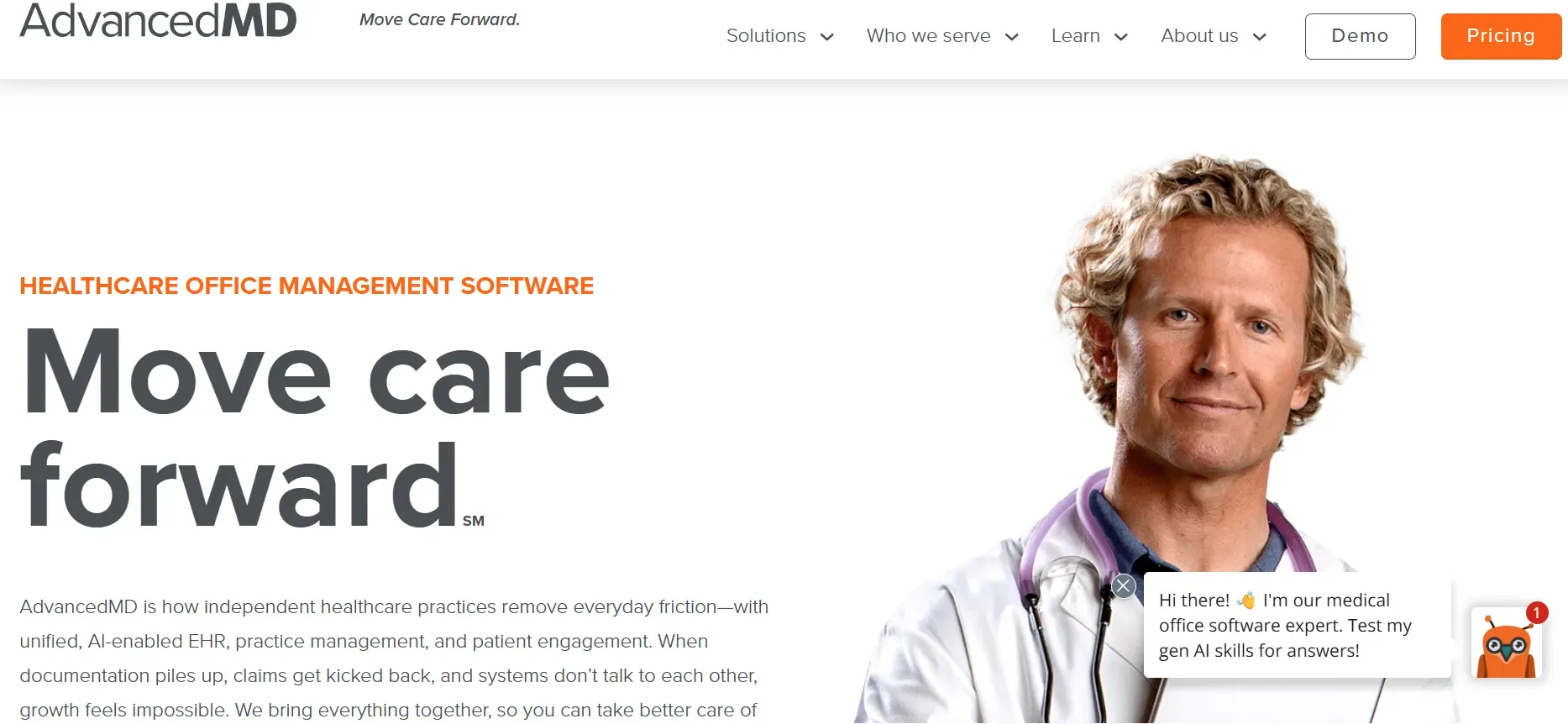
AdvancedMD is a comprehensive EHR and practice management platform designed for multi-location groups, enterprise clinics, and specialty practices. Its strength is in workflow customization, deep analytics, and modular add-ons (including telehealth, patient engagement, and population health tools). AdvancedMD’s reporting engine is among the most powerful in its class, letting practices build custom dashboards, track provider productivity, and drill into financial metrics in real time.
Integrations: AdvancedMD connects with nearly all major labs, imaging, and pharmacy networks, and offers open APIs for custom integrations. Its marketplace includes dozens of certified partners for patient engagement, analytics, and third-party billing. Integration setup, however, can require IT support or consulting.
Migration friction: Data migration is typically managed by AdvancedMD’s onboarding team, but the complexity of the platform means longer timelines, often 8 to 12 weeks for enterprise practices. Custom templates, rules, and forms may need to be rebuilt manually. Staff retraining is essential due to the system’s breadth.
Use cases: Large primary care groups, multi-specialty practices, and clinics with complex reporting, compliance, or multi-location needs. If your practice is consolidating, merging, or scaling rapidly, AdvancedMD’s configurability is a major asset.
Trade-offs: The platform’s power comes with a steep learning curve. Many users report that onboarding and training require significant time investment. Recurring per-user and per-module fees can add up quickly, and support responsiveness is inconsistent, especially for smaller clients or during major upgrades.
Pricing: Custom quotes based on practice size and needs. Get a quote.
- Key limitations:
- Steep learning curve for onboarding and training
- Recurring per-user and per-module fees add up
- Support responsiveness varies for smaller clients
- Strengths:
- Highly customizable workflows and reporting
- Deep analytics and dashboard capabilities
- Wide range of integrations and add-ons
If you want to avoid recurring module fees and own your platform, Devaims can build a custom solution tailored to your group’s needs.
3. DrChrono (Best for mobile-first practices)
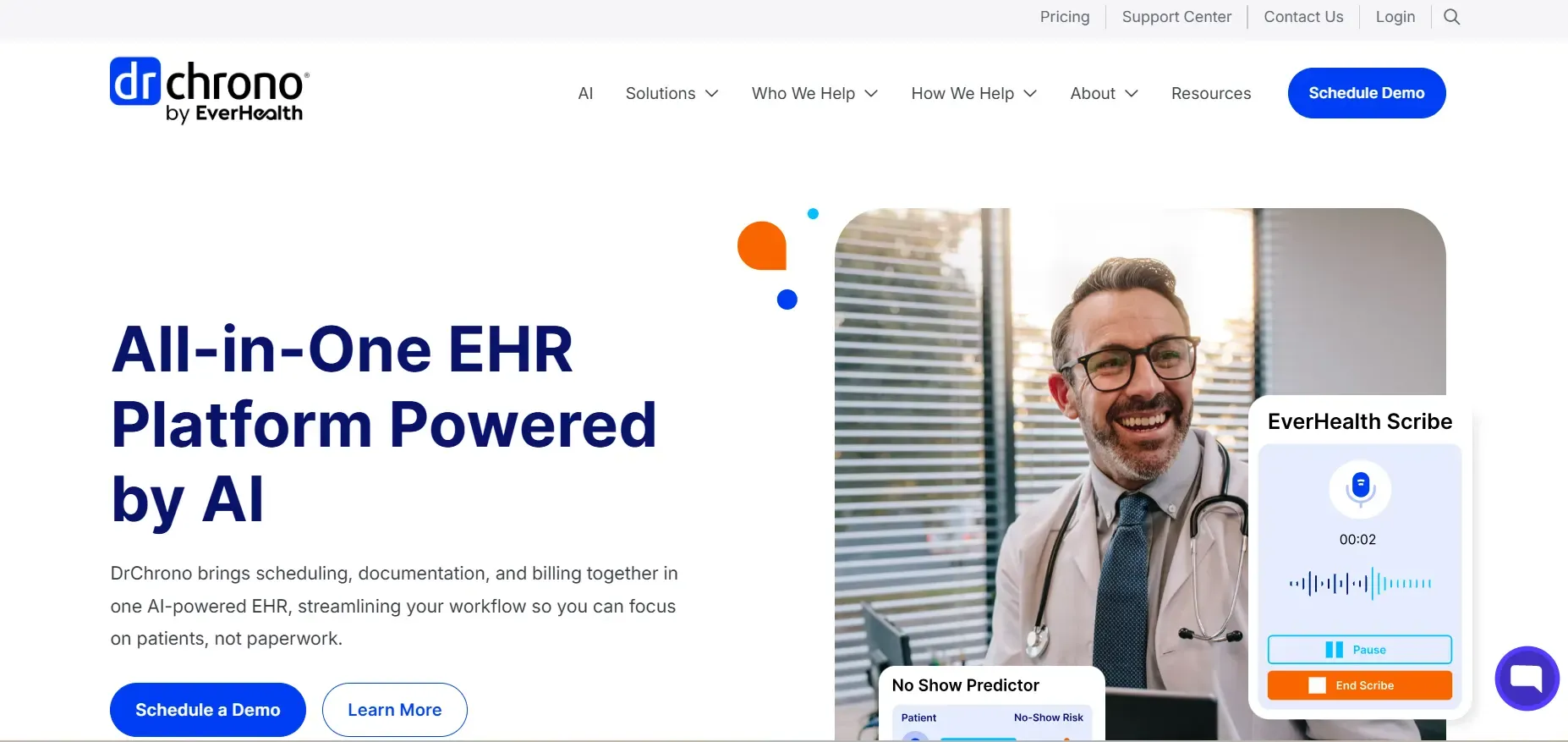
DrChrono is a pioneer in mobile EHR, built from the ground up for iPad and iPhone use. Its interface is touch-optimized, making it ideal for clinicians who are constantly moving between exam rooms or working outside the office. DrChrono’s charting tools are fast and flexible, with voice dictation, e-prescribing, and customizable forms that can be filled out on the go.
Integrations: DrChrono supports integrations with labs, imaging, billing clearinghouses, and popular telehealth platforms. Its API allows for custom connections, and it offers a growing app marketplace for add-ons like wearable device data and remote monitoring. However, some advanced integrations (like with hospital systems or state registries) may require custom development.
Migration friction: DrChrono provides migration assistance, but importing complex data (such as scanned documents, custom templates, or non-standard fields) can be challenging. Many practices report that some manual data entry is needed, especially when coming from legacy EHRs.
Use cases: Ideal for smaller, tech-forward practices, house-call providers, and clinics that value mobility and patient engagement (including text reminders, online scheduling, and telemedicine). DrChrono’s app is also used by traveling therapists and specialists who need full EHR access at the bedside or in the field.
Trade-offs: While DrChrono is highly usable on mobile, its depth of customization and reporting is lighter than enterprise platforms. Some users note occasional system glitches and that support can be slow for advanced issues. Recurring subscription costs remain, and advanced features may require higher-tier plans.
Pricing: $250 to $500 per provider per month. See DrChrono plans.
- Key limitations:
- Less depth in customization and reporting
- System glitches and slow support for advanced issues
- Recurring subscription costs for advanced features
- Strengths:
- Mobile-first, touch-optimized interface
- Fast charting and flexible forms
- Strong patient engagement tools
For practices needing mobile flexibility but wanting to own their platform, Devaims can build a mobile-optimized EHR tailored to your workflow.
4. Athenahealth (Best for integrated billing)
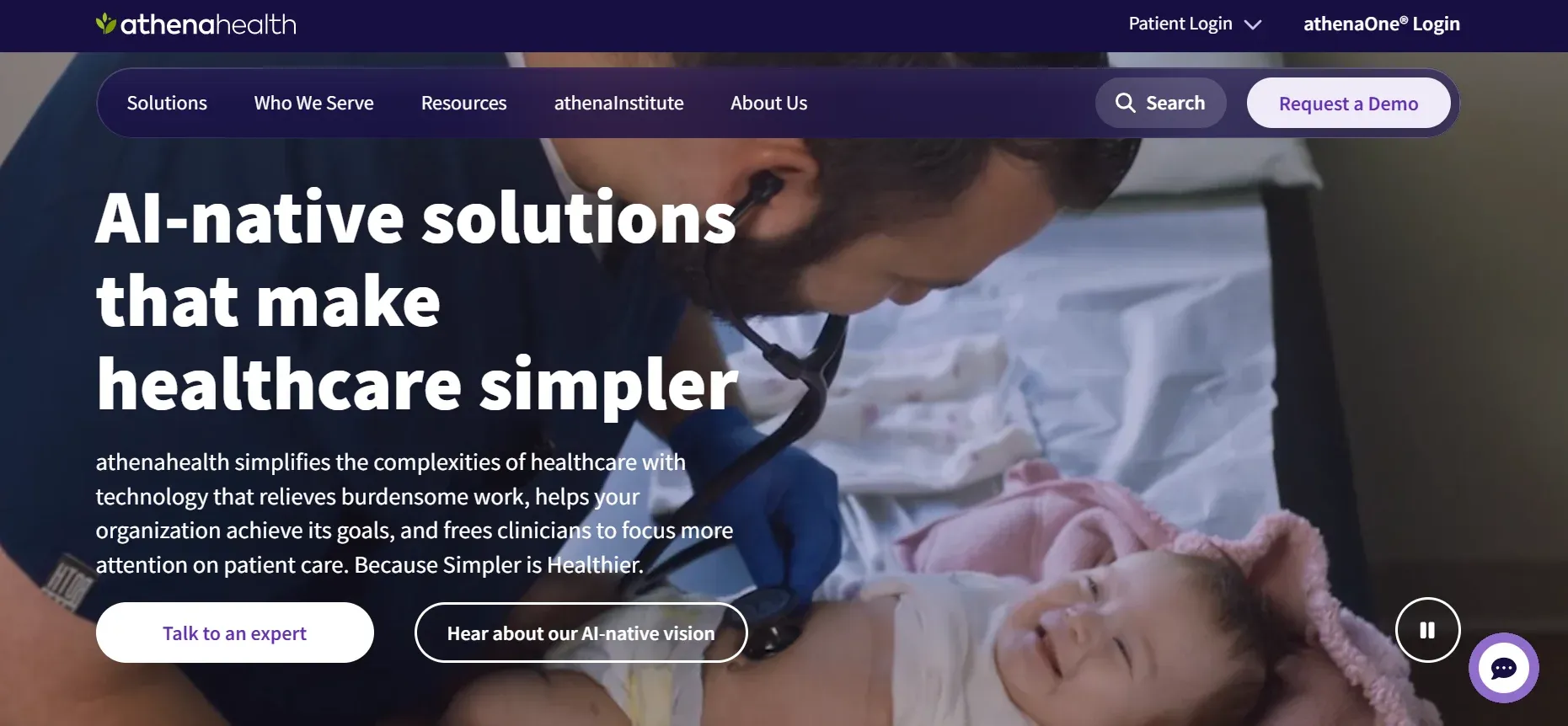
Athenahealth is a cloud-based EHR with a focus on integrated revenue cycle management and payer connectivity. Its standout feature is a billing engine that automatically updates for payer rule changes, denial patterns, and regulatory shifts, helping practices improve collections and reduce billing errors. Athenahealth’s large network means frequent updates and shared best practices across thousands of providers.
Integrations: Athenahealth offers strong integrations with labs, imaging, pharmacies, and referral networks. It also connects with a variety of patient engagement and telehealth tools, and has an API for custom integrations, though some advanced connections may require vendor support.
Migration friction: Athenahealth provides a dedicated onboarding team, but data migration (especially for notes, attachments, and custom codes) can be time-consuming. Many practices report parallel system running for 4 to 12 weeks and significant staff retraining needs, especially for billing workflows.
Use cases: Best for primary care practices focused on billing efficiency, reducing claim denials, and maximizing revenue. Athenahealth is also a fit for clinics that want to offload billing operations to a trusted partner, as its service model includes hands-on revenue cycle support.
Trade-offs: The percent-of-collections pricing can become costly for successful practices, and annual contracts are standard. Reporting tools are powerful but can be complex to configure. As with Elation, you remain a renter, not an owner.
Pricing: 3% to 7% of collections. Athenahealth pricing.
- Key limitations:
- Percent-of-collections pricing can be expensive as you grow
- Complex reporting configuration
- Annual contracts, no ownership
- Strengths:
- Integrated revenue cycle management
- Automatic payer rule updates
- Large provider network for shared best practices
If you want to avoid percentage-based fees and own your billing platform, Devaims can deliver a custom solution with no recurring rent.
5. eClinicalWorks (Best for all-in-one EHR/PM)
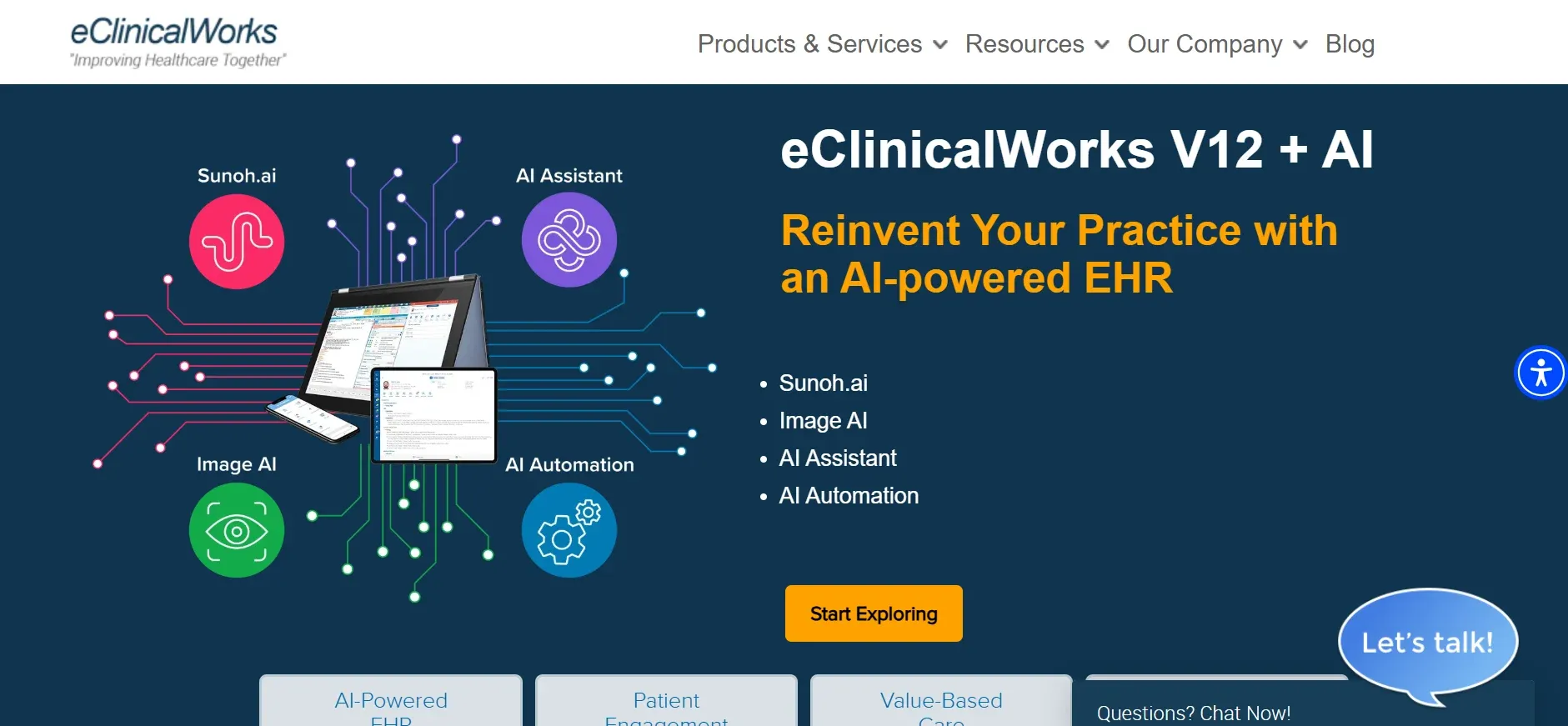
eClinicalWorks is a full-featured EHR and practice management platform serving both small clinics and enterprise health networks. Its breadth includes telehealth, population health, chronic care management, and patient engagement modules. eClinicalWorks is known for customizable templates and workflow automations that can reduce admin time and help with compliance (such as MIPS/MACRA reporting).
Integrations: The platform integrates with most major labs, imaging centers, and pharmacies, and offers an API for deeper connections. eClinicalWorks also supports interoperability through Carequality and CommonWell, making it easier to exchange data with hospitals and other practices.
Migration friction: eClinicalWorks has a dedicated migration team, but the process can be lengthy, especially for practices with years of historical data. Custom templates and forms may need to be rebuilt, and user retraining is a must. Some users report that support for data mapping and troubleshooting can be slow.
Use cases: Ideal for primary care groups that want a single platform for scheduling, charting, billing, and patient engagement. Its automation features are valuable for clinics with high patient volumes or those participating in value-based care programs.
Trade-offs: Higher price point ($450/provider/mo), and support quality can be inconsistent. Some users cite issues with software updates and occasional system outages. Like most, you pay a recurring fee and do not own the platform.
Pricing: Starts at $450 per provider per month. eClinicalWorks pricing.
- Key limitations:
- Higher price point for small clinics
- Support quality can be inconsistent
- Recurring fees, no ownership
- Strengths:
- Comprehensive all-in-one platform
- Customizable templates and workflow automations
- Strong interoperability with hospitals and networks
Devaims offers a custom all-in-one platform you own, with no recurring per-provider fees.
6. NextGen Healthcare (Best for enterprise groups)
NextGen Healthcare is built for large, multi-site clinics and enterprise medical groups. Its strengths include advanced interoperability, customizable templates, and deep analytics for both clinical and financial reporting. NextGen’s population health and care coordination modules are valuable for clinics involved in ACOs or value-based contracts.
Integrations: NextGen supports HL7, FHIR, and other healthcare data standards, making it a strong option for organizations that need to connect with hospitals, HIEs, or specialty systems. It also integrates with labs, imaging, and third-party billing solutions.
Migration friction: Migration is a major project, often requiring months of planning and IT support. NextGen provides migration services, but custom forms, legacy data, and unique workflows can make the process complex. Training and change management are critical for successful adoption.
Use cases: Best for enterprise health groups, FQHCs, and clinics with complex compliance and reporting requirements. NextGen is also popular with organizations that need to manage multiple locations and specialties under a single umbrella.
Trade-offs: The complexity of the platform can be overwhelming for smaller groups. Customization and integration projects can be costly, and annual contracts with per-provider pricing remain. Support quality varies, and some users report difficulty getting issues resolved quickly.
Pricing: Custom quote. NextGen pricing.
- Key limitations:
- Complexity can overwhelm smaller groups
- Customization and integration projects are costly
- Annual contracts and per-provider pricing
- Strengths:
- Advanced interoperability and data standards
- Deep analytics for clinical and financial reporting
- Strong for multi-location and multi-specialty groups
If you want advanced analytics and interoperability but also want to own your platform, Devaims can build a custom solution for your enterprise group.
7. Practice Fusion (Best for budget-minded clinics)
Practice Fusion is the budget option in the EHR market, best known for offering a cloud-based, easy-to-use platform at a low monthly rate. It covers core charting, scheduling, e-prescribing, and basic billing, making it a solid choice for clinics that need to get up and running fast with minimal IT investment.
Integrations: Practice Fusion connects with most major labs and pharmacies, and offers a patient portal. Integration depth is limited compared to enterprise tools, and APIs for custom connections are not as strong or well-documented as others on this list.
Migration friction: Data import is supported for basic demographics and chart notes, but custom fields, attachments, and billing records may require manual migration. Support for onboarding is available, but expect some DIY effort, especially for custom forms or legacy systems.
Use cases: Ideal for small primary care clinics, solo providers, and startups with tight budgets and simple workflow needs. The low cost and web-based access make it accessible for part-time providers or clinics with remote staff.
Trade-offs: Customization is limited, and the platform can struggle with advanced reporting or specialty workflows. Downtime and support delays are reported by some users. As with most, there is no path to ownership, and you are subject to annual contract renewals and price changes.
Pricing: Starts at $150 per provider per month. (Pricing page not available.)
- Key limitations:
- Limited customization and reporting
- Support delays and occasional downtime
- No ownership, subject to contract renewals
- Strengths:
- Low monthly cost for small clinics
- Simple, web-based interface
- Quick onboarding for new users
For clinics wanting to avoid recurring rent, Devaims can build a budget-friendly EHR you own, with features tailored to your needs.
8. Modernizing Medicine (Best for specialty workflows)
Modernizing Medicine (ModMed) is a specialty-focused EHR used widely in dermatology, ophthalmology, orthopedics, and other specialties, but also supports general medical and primary care. Its key feature is adaptive charting, which streamlines documentation by learning from user input and surfacing relevant templates and codes as you chart.
Integrations: ModMed integrates with specialty imaging, labs, and billing clearinghouses, and offers an API for custom connections. The platform also includes a patient portal, telehealth, and analytics modules.
Migration friction: ModMed provides migration services, but the process can be lengthy, especially for practices with complex specialty data or years of historical attachments. Custom templates are often rebuilt during onboarding, and staff training on adaptive workflows is essential.
Use cases: Best for clinics that require deep specialty templates, rapid charting, and compliance with specialty-specific regulations. ModMed’s adaptive engine is especially valued by clinicians who want to minimize clicks and maximize time with patients.
Trade-offs: Pricing is opaque and can be significant, especially when adding modules or users. Annual contracts are standard, and per-user charges can escalate as your team grows. Some users report that support and customization for less common specialties can lag.
Pricing: Custom quote based on specialty and modules. Request pricing.
- Key limitations:
- Opaque pricing and significant costs for add-ons
- Annual contracts and per-user charges
- Support can lag for less common specialties
- Strengths:
- Adaptive charting for specialty workflows
- Strong specialty-specific compliance features
- Comprehensive patient engagement tools
If you need specialty workflows but want to own your EHR, Devaims can build adaptive charting and compliance features tailored to your specialty.
9. Devaims (Best for practices ready to own)
If you are done paying rent on your software and want to build equity in your digital infrastructure, Devaims is the alternative that lets you own it all. Devaims builds custom EHR, practice management, and billing software for clinics that want to control their tech stack. You get every feature your team needs, built for your workflows, with the source code handed to you. No per-user fees, no annual contracts, no surprise add-ons. Just your system, running on your terms.
- Custom integrations with labs, imaging, registries, and billing tools
- Full data migration and staff training included in the project
- Ideal for unique workflows, scaling groups, or strict data control
- Ownership of your platform and code, with no recurring rent
Other Elation Health alternatives worth knowing
- Cerner (Oracle Health): Major hospital EHR, overkill for most primary care groups but valuable for large networks seeking enterprise interoperability.
- Healow: Excellent for patient engagement and telehealth, with tools for secure messaging, appointment reminders, and virtual visits. Not a full EHR replacement but a strong add-on for practices looking to modernize patient communication.
- OpenEMR: Free, open-source EHR. Highly customizable but requires significant IT resources and in-house support for deployment, updates, and compliance. Best for tech-savvy clinics or those with IT staff.
- CharmHealth: Cloud EHR for small practices with affordable pricing and basic charting, scheduling, and telehealth. Less depth in reporting and integrations compared to larger platforms, but a good entry point for micro-practices.
How to choose the right Elation Health alternative
- Budget: Add up your total monthly and yearly cost, including all per-provider and per-claim fees. Factor in onboarding, migration, and support, as these can add thousands per year. Consider how costs scale as you add providers or locations.
- Practice size: Small clinics often do better with simpler tools, while large groups need deep customization and reporting. If you expect to grow or diversify, choose a solution that scales with you.
- Specialty needs: Specialty-specific platforms (like ModMed) can save time on charting and compliance. If you have unique documentation, billing, or regulatory requirements, generic EHRs may fall short.
- Ownership: If you want to build equity and control, only a custom build like Devaims delivers true ownership. This is especially important if you want to develop proprietary workflows, reporting, or integrations.
- Migration: Factor in data export, training, and integrations, as some vendors make it easier than others. Ask for references and case studies to understand real-world migration timelines and pitfalls.
If you are tired of paying a monthly premium for a platform you will never own, it might be time to talk about building your own system.
Stop paying rent on software you could own
The biggest frustration with Elation Health and nearly every alternative is the same: no matter how much you pay, you are always renting. Per-provider fees. Annual contracts. Surprise add-ons. Even after five years and tens of thousands spent, you are still just a subscriber.
Devaims builds custom software for clinics and practices that are ready to break the cycle. Instead of paying a monthly software bill forever, Devaims delivers a platform tailored to your workflows, with the source code delivered to you. You own it, upgrade it, and keep every dollar of value you build.
- No more per-user fees: Add as many providers as you want without a bigger bill. This is especially valuable for growing groups, multi-site organizations, or those hiring part-time clinicians.
- No lock-in: You own the code and your data, so you are never stuck. If you want to switch IT vendors, integrate new modules, or even sell your practice, your digital assets stay with you.
- No contract games: Pay once to build, then a flat maintenance fee. No surprise renewals, auto-increases, or forced upgrades.
- Your features, your way: Custom reports, billing logic, and integrations out of the box. If your workflows change, your software can change with you, on your timeline, not the vendor's.
| Tool | Ownership | Contract | Fees |
|---|---|---|---|
| Elation Health | Rented | Annual only | $349/provider/mo + add-ons |
| Kareo (Tebra) | Rented | Annual, recurring | $300-$450/provider/mo |
| Practice Fusion | Rented | Annual, recurring | $150/provider/mo |
| Devaims | You own it | No lock-in | One-time build, flat maint. |
Here is what that looks like across five years for a 10-provider clinic:
| Year | Elation Health (rented) | Devaims (owned) |
|---|---|---|
| 1 | $41,880 | $32,200 |
| 2 | $83,760 | $34,960 |
| 3 | $125,640 | $37,720 |
| 4 | $167,520 | $40,480 |
| 5 | $209,400 | $43,240 (now ahead) |
For this scenario, we used a $30,400 build cost and $150 monthly maintenance for Devaims. Renting stays cheaper for about 1.5 years, but by year five, owning puts over $166,000 back in your pocket and leaves you with an asset you control. If you want the real math for your practice, we will run the numbers for free.
Practices with five or more providers stand to gain the most from owning. If you are scaling, adding locations, or need to control your own data and reporting, a custom build from Devaims flips the script on software costs. Consider that with every new provider or location, the relative cost of a custom system goes down, while per-provider fees with rented platforms only rise.
How to switch from Elation Health
- Export all patient data, charts, and billing records from Elation Health. This often requires coordination with Elation’s support team, and you may need to request data in specific formats (such as CCD, CSV, or PDF). Plan for at least 2 to 4 weeks for data extraction and validation, especially for large practices.
- Choose your new platform and verify data import capabilities. Not all EHRs accept the same formats or support custom fields. Ask your new vendor for a data mapping plan before you sign any contract.
- Map and import your data into the new EHR. This step often involves cleaning up duplicates, verifying patient records, and testing imports in a sandbox environment. Many vendors offer migration support for a fee.
- Reconnect clearinghouses, payment processors, and key integrations. This includes labs, imaging, pharmacies, and any third-party billing or scheduling tools. Some integrations may require new credentials or additional contracts.
- Train staff on new workflows and features. Schedule hands-on training and allow for parallel running of both systems for at least 1 to 2 weeks, to catch errors before fully switching over.
- Test in parallel before fully cutting over. Run both systems for a short period to ensure all data, billing, and scheduling are accurate. This reduces risk of revenue loss or patient care disruptions.
- Review and close out your old Elation Health contract. Make sure all data has been exported, confirm final billing, and formally terminate your contract to avoid auto-renewal fees.
With a custom Devaims build, the migration is handled as part of the project, including custom data mapping and staff training.
Frequently asked questions
What is the best Elation Health alternative for small primary care clinics?
Kareo (Tebra) and Practice Fusion are popular for small clinics due to their lower starting prices, simple interfaces, and fast onboarding. Kareo is stronger in billing and claims, while Practice Fusion is ideal for core charting and scheduling. However, both are recurring rentals. For clinics wanting full control, custom workflows, and no per-provider fees, a custom build from Devaims becomes more cost-effective over several years, especially as staff grows.
Which Elation Health alternative has the lowest starting price?
Practice Fusion is the lowest among major platforms at $150 per provider per month, making it attractive for solo or small group practices. However, this price can increase with add-ons, and there is no path to ownership. Over five years, even the lowest monthly fee can exceed the total cost of a custom Devaims build for clinics with five or more providers.
Is there a free Elation Health alternative?
OpenEMR is a free, open-source EHR that covers basic charting and scheduling. However, it requires technical expertise to deploy, maintain, and secure. Compliance with HIPAA, as well as integration with labs and billing, are DIY projects. Most primary care practices find paid options like Practice Fusion or a custom Devaims build more practical for support, security, and regulatory needs.
Can I keep my data if I leave Elation Health?
You can export your data from Elation Health, but the process may require support, and exported files may have format limitations (such as missing attachments or custom fields). Some vendors charge fees for data export, or limit the number of exports per year. When you own your system with Devaims, you control both the data and the code, making future migrations or integrations far simpler.
What is the biggest reason practices switch from Elation Health?
Unpredictable per-provider costs, annual contract lock-in, and limited reporting or customization are the top reasons. Many practices seek alternatives that offer more billing transparency, better integration, or a path to true ownership and control.
How long does it take to migrate from Elation Health?
Migration timelines depend on data volume, system complexity, and staff training needs. Most transitions to a new EHR take 4 to 12 weeks, including parallel system running and staff onboarding. With Devaims, the migration is managed as part of the custom project build, including custom data mapping, integration setup, and on-site or remote training.
Can Devaims integrate with my existing practice management tools?
Yes, Devaims specializes in building solutions that integrate with your current billing, scheduling, and reporting tools. Whether you use legacy billing software, custom lab interfaces, or third-party analytics, Devaims can build connectors, APIs, or data pipelines so you keep what works and improve what does not. This flexibility is a key advantage of owning your software.
The bottom line
Most Elation Health alternatives just swap one rented contract for another. Even the lowest-priced options keep you on a monthly treadmill, with costs rising as you grow and limited control over your platform. If you are tired of annual price hikes and never owning your system, it is time to do the math: add up five years of fees, then compare with building your own. Practices ready to invest in their tech stack will find that Devaims flips the ownership equation back in their favor.
Here is the test: add up what this tool will cost you over the next five years. If that number would have built you something you own, you already have your answer. For practices with five or more providers, or those planning to expand, ownership is often the clear winner and puts you in control of your digital future.
For more insights, visit the Devaims blog. If you are considering other software, check out our guides to Kareo alternatives, Practice Fusion alternatives, and Athenahealth alternatives. For additional research, see independent reviews at Software Advice and Capterra.