


Ever looked at your DermEngine bill and wondered how much you’ll pay by year five? Or found yourself stuck in a contract just to keep your data accessible? You’re not alone. Most dermatology leaders reach a point where the monthly fees, hidden add-ons, and lock-in feel less like progress and more like someone renting you back your own workflow.
DermEngine is popular for a reason, but it’s far from the only game in town. If you’ve ever run into rigid plans, unclear pricing, or the endless treadmill of SaaS rent, you’re probably searching "DermEngine alternatives" for a good reason. Below, I’ll break down the top contenders, Nextech, DrChrono, and more, plus the one route that lets you own your dermatology platform outright: a custom build from Devaims.
Why dermatologists look for DermEngine alternatives
Per-user fees add up fast: Even a small clinic quickly racks up $29 per user per month, with no end in sight as the team grows. Over years, these fees multiply and can outpace the cost of owning a custom solution. For example, a 10-person clinic will pay $3,480 per year, but with turnover or growth, that number can jump dramatically. Some SaaS platforms also charge for “inactive” users, so you may find yourself paying for accounts you no longer need.
Annual contracts limit flexibility: Most SaaS platforms, including DermEngine, push annual plans with discounts only if you pay upfront, locking you in for a full year or more. This can be problematic if your clinic’s needs change, or if you want to try another solution. Early termination fees are common, and contract renewals often come with price increases that are difficult to contest. For many clinics, this means less agility in responding to regulatory changes, expansion, or new technology trends.
Limited control over your data: You may use the software, but your patient data and imaging workflow remain on someone else’s servers, subject to their export rules. Migrating away often means dealing with data export fees, incomplete exports, or proprietary formats that make true portability challenging. If you want to use your data for research, analytics, or integrations, you’ll likely need to work within vendor constraints or pay extra.
Feature upgrades locked to higher tiers: Essential reporting or teledermatology features often sit behind pricier plans, forcing you to pay more for basic needs. Some vendors even restrict API access or integrations to premium tiers. As your clinic grows or diversifies, you may find yourself forced into a more expensive package just to access a single must-have feature.
Integration headaches: Adding new tools or syncing with your existing EHR often means extra fees, slow support, or outright workarounds. Many SaaS platforms have limited integration capabilities, and connecting with lab systems, imaging devices, or billing software may require custom development or third-party middleware. These headaches can slow down your workflow and increase your reliance on outside IT consultants.
If you recognize these issues, you’re not alone. These are the top reasons clinics and practices look for DermEngine alternatives. For many, the search is about regaining control, predictability, and the ability to truly own the technology that underpins their patient care.
Quick comparison of the best DermEngine alternatives
| Tool | Best for | Starting price | You own it? |
|---|---|---|---|
| Nextech | Enterprise clinics | Contact for quote | No |
| DrChrono | Integrated EHR | Contact for quote | No |
| PatientNow | Flexible contracts | Contact for quote | No |
| Athenahealth | Broad EHR coverage | Contact for quote | No |
| Practice Fusion | Small practices | Contact for quote | No |
| Greenway Health | Customizable workflows | Contact for quote | No |
| Aesthetic Record | Aesthetic-focused clinics | Contact for quote | No |
| Cerner | Hospital systems | Contact for quote | No |
| Devaims (custom build) | Ownership, full control | One-time build, you own it | Yes |
Always confirm current pricing and contract terms before you decide. Vendors update often, and hidden fees can change the math fast. Look for implementation and onboarding costs, integration fees, and any charges for data exports or upgrades. Some vendors change pricing structures year to year, so it’s important to get clear, written estimates before you commit.
The 9 best DermEngine alternatives
1. Nextech (Enterprise clinics)
Nextech is a veteran in specialty EHR and practice management, designed for larger, multi-location dermatology groups. Nextech stands out for its comprehensive, fully integrated suite: EHR, practice management, revenue cycle, and even patient engagement are all under one roof. Its dermatology templates are deep, with support for complex workflows, pathology integration, and image management. Nextech is often chosen by practices that need advanced scheduling, multi-location inventory, and comprehensive analytics.
Pricing: Contact Nextech for a custom quote. Pricing is not published and varies by clinic size and features.
- Deep dermatology templates and workflow automation
- Enterprise-grade integrations and analytics
- Comprehensive suite for large, multi-location practices
- No published pricing, making budgeting difficult
- Long-term contracts required for best rates
- Onboarding and training can be burdensome for smaller practices
2. DrChrono (Integrated EHR)
DrChrono is an all-in-one EHR and practice management platform favored by tech-forward dermatology clinics. Its mobile-first approach, especially the robust iPad app, makes it unique among EHRs. DrChrono is known for ease of use, customizable forms, and a strong API ecosystem for integrations.
Pricing: Contact DrChrono for a quote. Pricing is per user and varies by feature tier.
- Mobile-first design and modern interface
- Strong API and integration marketplace
- Flexible for growing practices
- Advanced features and telehealth require higher tiers
- Per-user fees can climb quickly as staff grows
- Imaging tools less specialized than DermEngine
With Devaims, you only pay for new features when you want them. No tiered upgrades or feature gating.
3. PatientNow (Flexible contracts)
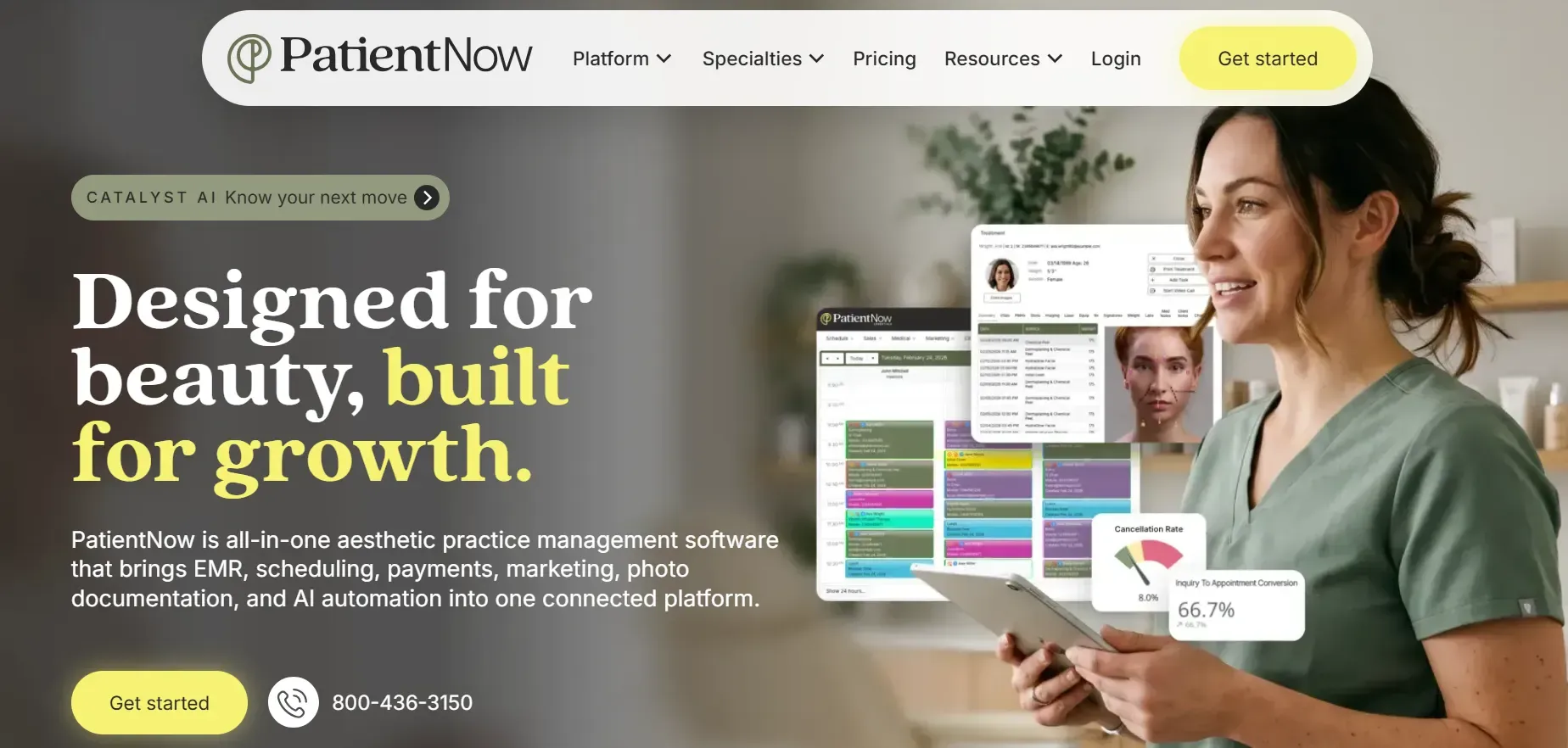
PatientNow is designed for medical aesthetics and dermatology, offering a blend of EHR, scheduling, marketing automation, and photo management. Its standout feature is flexible, month-to-month billing, which is rare among SaaS vendors. PatientNow appeals to clinics that want to avoid long-term commitments and value marketing integration alongside clinical tools.
Pricing: Contact PatientNow for a quote. Month-to-month contracts available.
- Flexible contracts and billing
- Integrated marketing and patient engagement tools
- Photo management for before-and-after galleries
- Platform is always rented, never owned
- Clinical features less robust than medical-dermatology-focused tools
- Complex imaging imports may require manual effort
4. Athenahealth (Broad EHR coverage)
Athenahealth is a cloud-based EHR and revenue cycle management solution used across many specialties, including dermatology. Its strength lies in its comprehensive functionality and a large partner ecosystem, making it a good fit for clinics needing both clinical and administrative depth.
Pricing: Contact Athenahealth for a quote. Pricing is not transparent and depends on clinic size and features.
- Comprehensive EHR and billing features
- Large integration marketplace
- Strong compliance and reporting tools
- Opaque pricing and standard contracts
- Customization comes at extra cost
- Onboarding process is longer than average
5. Practice Fusion (Small practices)
Practice Fusion is a cloud EHR tailored for small, independent practices. It’s recognized for its simple interface, fast setup, and low entry cost. While it lacks advanced dermatology imaging features, it covers most basic needs for charting, e-prescribing, and scheduling.
Pricing: Contact Practice Fusion for a quote. Pricing is typically lower than enterprise solutions.
- Affordable for small clinics
- Simple, fast setup
- Secure patient portal and e-prescribing
- Basic feature set, not tailored for advanced dermatology
- Limited customization and integrations
- Imaging support is basic
6. Greenway Health (Customizable workflows)
Greenway Health delivers EHR and practice management software with a reputation for configurable, specialty-specific workflows. Its Prime Suite and Intergy products are used by multi-specialty and specialty clinics that need to adapt the system to their unique processes.
Pricing: Contact Greenway Health for a quote. Pricing varies by product and customization level.
- Highly customizable workflows and templates
- Strong analytics and reporting
- Specialty content libraries for dermatology
- Customization often incurs extra fees
- Ownership remains with the vendor
- Migration can be lengthy for complex imaging data
Devaims can match this level of customization, but you’d own the blueprint, not rent it.
7. Aesthetic Record (Aesthetic-focused clinics)
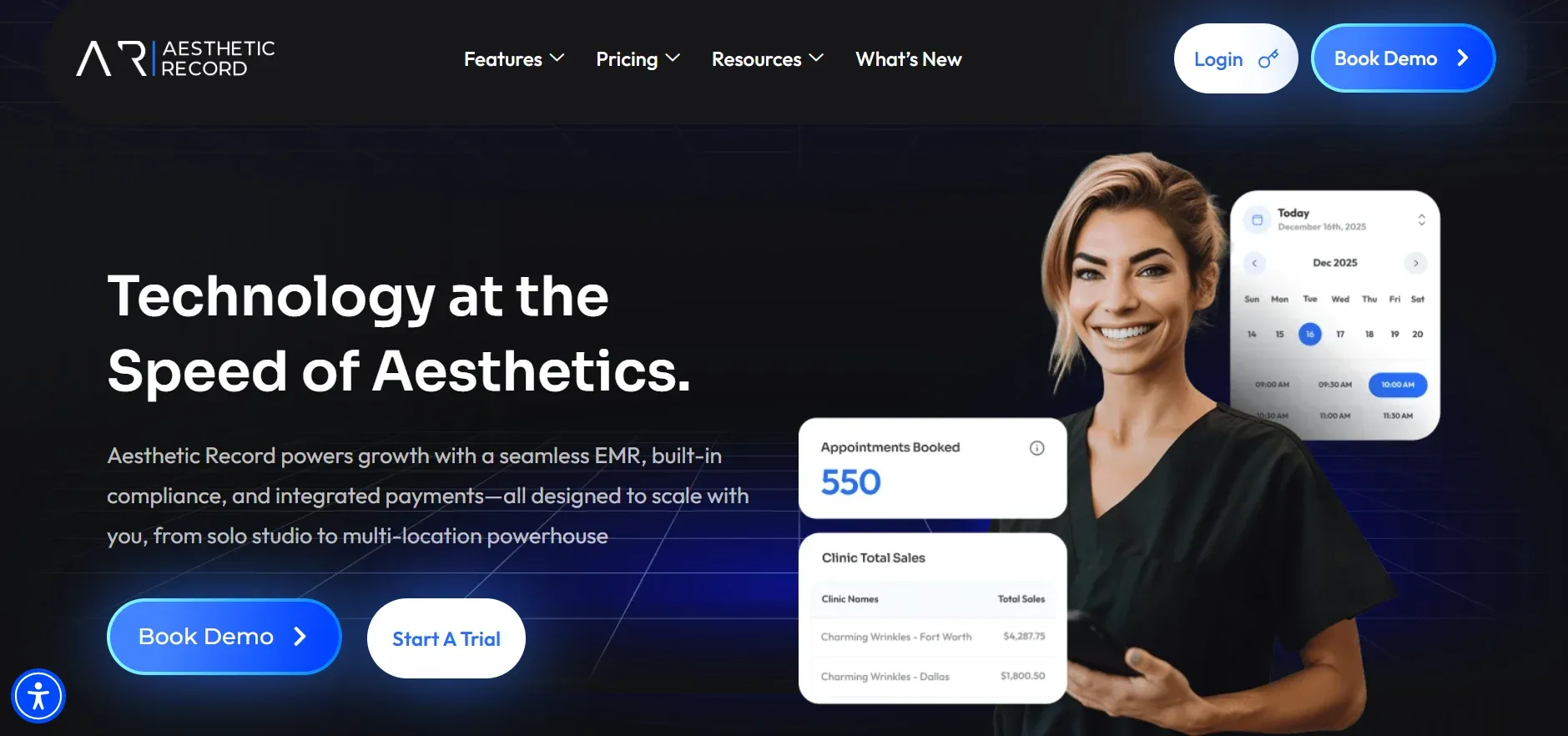
Aesthetic Record is purpose-built for cosmetic and aesthetic practices, blending EHR, patient photo management, and point-of-sale features. Its workflow is centered on before-and-after imaging, treatment tracking, and retail product sales.
Pricing: Contact Aesthetic Record for a quote. Pricing is not published.
- Excellent for cosmetic and aesthetic clinics
- Photo and video capture tools
- Patient engagement and retail management
- Less robust for medical dermatology workflows
- Limited API access and deep integrations
- Ownership and customization options are limited
8. Cerner (Hospital systems)
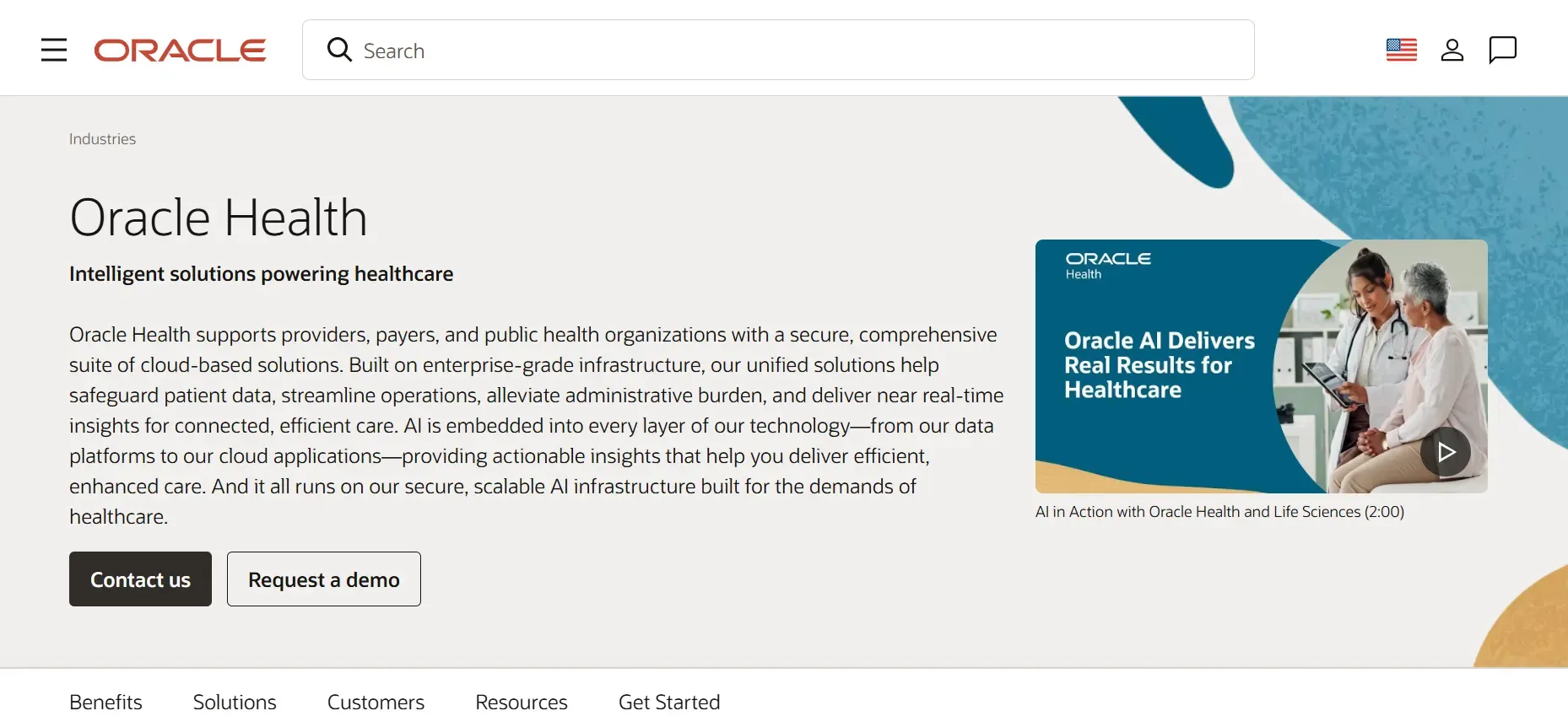
Cerner is a global leader in EHR technology, primarily used by hospitals, health systems, and multi-specialty organizations. Cerner’s Millennium platform offers advanced clinical documentation, analytics, and interoperability for enterprise-scale operations.
Pricing: Contact Cerner for a quote. Pricing is enterprise-level and varies by implementation.
- Enterprise-grade security and compliance
- Comprehensive EHR and analytics
- Strong interoperability for large organizations
- High cost and steep learning curve
- Lengthy implementation and migration
- Ownership and customizations are vendor-mediated
9. Devaims (Ownership, full control)
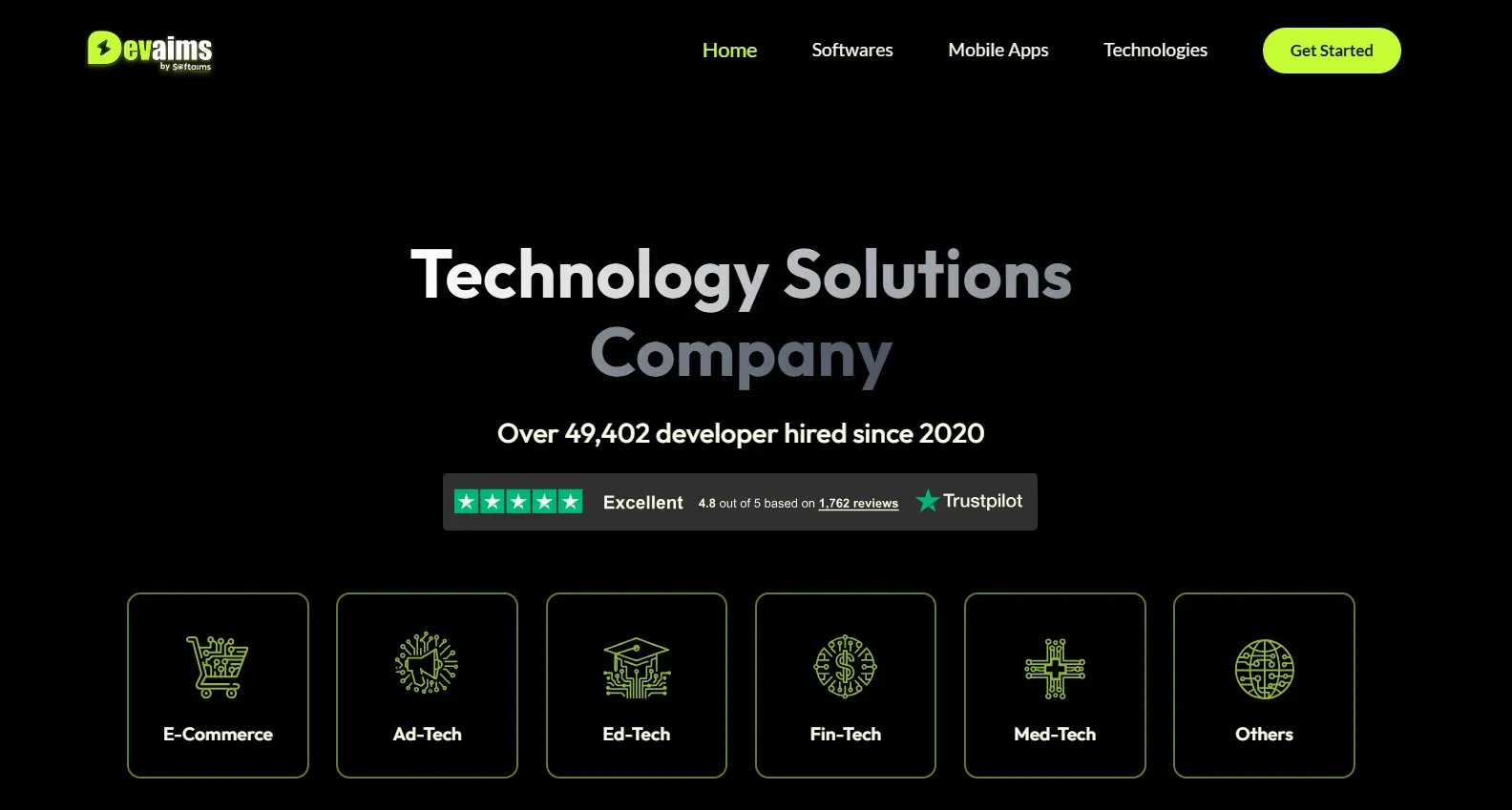
Devaims builds custom dermatology software tailored to your clinic’s exact needs. Unlike every SaaS alternative above, you receive the source code and full rights. No contracts, no per-user fees, no forced upgrades.
Pricing: One-time build cost plus flat, predictable maintenance. No per-user or recurring SaaS fees.
- True ownership and source code access
- Fully customizable to your workflows and integrations
- No per-user fees or feature gating
With Devaims, you can add users, features, or integrations as your clinic grows, without renegotiating contracts or facing surprise fees.
Other DermEngine alternatives worth knowing
- EMA by Modernizing Medicine: Focused on dermatology with deep specialty content, including structured charting, photo management, and pathology integration. It has a robust mobile app and supports teledermatology. However, contracts are standard and per-user pricing applies. Migration can be complex, especially for clinics with large imaging datasets.
- Kareo (now Tebra): Cloud-based EHR and billing with a focus on small to mid-sized practices. Kareo is easy to set up and integrates with many billing and scheduling systems. Pricing is subscription-based, and feature depth for dermatology is more basic than dedicated platforms.
- OpenEMR: Open-source and free, with a large community and broad customization options. Not tailored for dermatology out of the box, so significant IT effort is required for imaging and workflow customization. Best for clinics with internal development resources.
- EZDERM: Dermatology-focused EHR with advanced imaging and charting. Pricing and features are locked behind demos and sales calls. Data export and migration options are less transparent than larger vendors.
How to choose the right DermEngine alternative
- Budget: SaaS platforms offer low upfront costs but can become expensive as your team grows and you need more features. Custom builds are a larger initial investment, but often pay off over time. Always calculate your five-year total cost of ownership, including setup, monthly fees, integrations, and hidden charges.
- Feature needs: List the features you use daily (imaging, teledermatology, e-prescribing, custom reports). Some platforms excel in imaging but lag in billing, and vice versa. Think about future needs, will you need research data exports, AI analysis, or patient self-scheduling?
- Clinic size: Large practices often need multi-location support, advanced inventory, and custom workflow automation. Small clinics may prioritize simplicity and affordability. Consider your growth plans and staff turnover when choosing a solution.
- Ownership preference: If you want to keep your workflows, data, and IP, only an owned build (like Devaims) delivers true control. Assess how important it is to avoid lock-in, control your roadmap, and export your data at will.
Ultimately, your choice should reflect your clinic’s goals, risk tolerance, and appetite for change. If you’re tired of contracts and fee creep, it’s time to think about owning your dermatology platform.
Stop paying rent on software you could own
The core problem with DermEngine (and every alternative above) is that you’re always renting. Per-user fees, tiered features, and annual contracts stack up, and you never actually own the platform or your data workflow. Devaims is the only alternative in this list that hands you the source code and true ownership from day one.
Devaims builds custom web, mobile, and business software for dermatology clinics. You keep the code, the data, and the power to adapt the system as your practice evolves. No contracts, no surprise hikes, and no more renting your own records. This means you can add users, locations, features, or integrations without renegotiating with a vendor or facing higher fees for every change. Your data remains accessible forever, and you’re not at risk if a SaaS provider is acquired, sunsets a product, or changes their roadmap in ways that don’t suit your practice.
- No per-user fees: Add as many team members as you like, at no extra cost. This is especially valuable for growing clinics or those with rotating trainees and staff.
- Custom integrations: Connect to labs, imaging, or billing, your way, not the vendor’s. If you acquire new hardware or change billing partners, your system adapts.
- Source code ownership: You control updates, security, and feature roadmap. Want to add AI tools, analytics dashboards, or new compliance features? You decide when and how.
- Flat, predictable maintenance: No more annual renewals or forced upgrades. Maintenance costs are agreed up front and remain stable. You choose when to upgrade or expand.
- Data portability: Your data, your rules, never locked in again. Export or back up anytime, integrate with research registries, or run custom analytics without vendor approval.
| Platform | Pricing model | Ownership | Customizable? |
|---|---|---|---|
| DermEngine | $29/user/month | Vendor-owned | Limited |
| Nextech | Quote-based | Vendor-owned | Yes, at a cost |
| DrChrono | Quote-based, per user | Vendor-owned | Some |
| Devaims | One-time build + flat maintenance | You own it | Fully |
| Year | Renting ($29 x 10 users/mo) | Owning (Devaims) |
|---|---|---|
| 1 | $3,480 | $34,560 |
| 2 | $6,960 | $37,320 |
| 3 | $10,440 | $40,080 |
| 4 | $13,920 | $42,840 |
| 5 | $17,400 | $45,600 (now ahead) |
For a 10-person clinic, renting DermEngine costs $3,480 per year. A typical Devaims build is $31,800 up front, plus $230/month for maintenance. By year five, owning is the better deal, and every year after that, your savings compound. If you add more users or locations, the cost advantage grows even faster. This math holds for most SaaS dermatology solutions, not just DermEngine.
Consider the long-term math: SaaS platforms may seem cheaper at first, but after five years, most clinics have paid enough in fees to have built a system of their own. Even factoring in periodic upgrades and IT support, ownership typically yields lower total cost of ownership and much greater flexibility.
How to switch from DermEngine
- Export your existing patient data, images, and records (request from DermEngine support if needed). Be sure to clarify export formats and whether there are additional fees for bulk image downloads or data dumps.
- Choose your new solution, SaaS or a custom Devaims build. Consider running a pilot or parallel trial if possible.
- Import patient data and images into the new platform. This may require data mapping, especially for imaging and custom fields.
- Reconnect payment processing, lab integrations, and third-party tools. Test integrations thoroughly before going live.
- Train staff on the new workflows and features. Schedule hands-on sessions and provide documentation to ease the transition.
- Test systems in parallel to catch issues before going live. Running both systems for a few weeks helps ensure clinical continuity and data accuracy.
- Review and close out your old DermEngine contract. Confirm that all data has been exported and that no additional fees will accrue.
With a custom Devaims build, the migration is handled as part of the project. Devaims will coordinate data extraction, transformation, and import, minimizing downtime and ensuring all critical workflows are preserved. They also provide staff training and post-launch support to help your clinic adjust smoothly.
Frequently asked questions
What is the best DermEngine alternative for dermatology?
For most clinics, Nextech and DrChrono are strong SaaS alternatives, with deeper customization and integrations. Nextech is ideal for large, multi-location practices needing enterprise-grade features and support. DrChrono is a fit for clinics seeking modern, mobile-first EHR with flexible integrations. However, if your goal is to own your system and avoid endless fees, a Devaims custom build is the only real alternative. Devaims is especially suited for clinics with unique workflows, research needs, or those planning significant growth.
Which DermEngine alternative is cheapest?
Practice Fusion and PatientNow often offer lower monthly pricing, especially for small teams. However, true costs depend on your clinic size, required features, and contract terms. Over five years, building with Devaims can actually be cheaper as you avoid ongoing per-user fees and feature gating. Always calculate total cost of ownership over your expected time horizon, including migration, training, and any hidden fees.
Is there a free alternative to DermEngine?
OpenEMR is a free, open-source option, but it requires significant IT resources and isn’t tailored for dermatology. You’ll need to customize templates, build imaging workflows, and manage your own hosting and security. Most clinics outgrow OpenEMR quickly due to the overhead and risk. Nearly all other alternatives are paid and contract-based.
Which alternative is best for large clinics?
Nextech and Cerner are strong for large or multi-location practices, offering enterprise-grade features, deep integration, and compliance tools. They are suited for organizations with IT staff and complex requirements. Devaims can match these capabilities with a system you own outright, giving you more flexibility and control. Consider Devaims if you want to avoid vendor lock-in or plan to innovate beyond standard EHR features.
Can I keep my patient images and data when I switch?
Most vendors allow data exports, but the process can be complex and sometimes costly. Imaging data may be exported in proprietary formats, requiring manual conversion. With Devaims, you always own your data and can migrate or back up as needed. Ask any vendor for a sample export before you sign, and clarify what is included (images, attachments, custom fields).
When is it worth building custom dermatology software?
If your monthly fees are above $300 and you need features or integrations SaaS vendors won’t deliver, owning makes sense. The break-even comes around year five for most clinics, and the advantages in flexibility and data control often justify the investment sooner. Custom software is also worth considering if you have research, analytics, or regulatory requirements that off-the-shelf tools cannot meet.
How do DermEngine alternatives compare on integrations?
Most SaaS tools offer standard integrations with labs, pharmacies, and billing partners, but custom workflows often require extra fees or are not possible at all. Some vendors restrict API access to higher tiers. With a Devaims build, integrations are tailored to your exact needs, and you’re never stuck waiting for a vendor’s roadmap. This is particularly valuable if you use specialized devices or plan to add new services in the future.
The bottom line
If you’re tired of paying rent for your own workflows, most DermEngine alternatives feel like a lateral move. Same contracts, same recurring fees, just a different logo. The one way to break free is to own your dermatology platform outright.
Add up your five-year spend. If it’s close to or higher than the cost to build something you control, you’ve already answered your own question. That’s the point when owning turns from a luxury to a smart investment. Ownership means stability, flexibility, and the ability to adapt as your clinic evolves, without asking for permission or paying more each year.
Read more on the Devaims blog, or check out our deep dives on Nextech alternatives, DrChrono alternatives, and Athenahealth alternatives.