


Ever look at your Athenahealth bill and wonder why it climbs every year, even when your practice stays the same size? Orthopedic clinics keep running into the same wall: per-provider pricing, add-on fees, and the unshakable feeling that you are renting your own workflow. You lose leverage as soon as your data is locked in. Support feels distant, basic customizations drag out, and every new feature seems to cost extra.
Modernizing Medicine, Nextech, and Kareo (Tebra) are some of the biggest names in the orthopedics EMR game. But every one of them follows the same model, monthly subscriptions, feature tiers, and contracts that keep you on the hook. If you want to compare Athenahealth alternatives that actually fit how orthopedic clinics work, you are in the right place. And if you are tired of renting, there is one way out: own your software with a custom build from Devaims.
Why orthopedic clinics look for Athenahealth alternatives
Per-provider pricing stacks up fast. Adding new doctors or mid-levels means a bigger monthly bill, not just a one-time bump. Many clinics find their software costs doubling as they expand, even when the amount of work for the vendor remains the same. This model works for vendors, but clinics with growth ambitions or part-time providers can feel penalized for success.
Add-on modules cost extra. Features like imaging integrations, advanced analytics, or telehealth are often locked behind higher tiers or require additional contracts. What starts as an affordable EMR can balloon into a patchwork of extra fees as your needs evolve. For orthopedics, imaging and surgical templates are essential, yet these are rarely included in base pricing.
Data access is limited. Exporting your patient records for migration or analysis is not as easy as it should be. Many vendors provide only partial exports (such as PDFs rather than structured data), making it hard to leave or even run deep analytics on your own data. Data ownership is essential for compliance, research, and long-term planning, yet most SaaS EMRs make access cumbersome.
Support can be slow or generic. Enterprise vendors prioritize bigger clients, leaving smaller clinics waiting. When you need a workflow tweak or run into downtime, response times can be frustrating. Even "dedicated support" often means navigating a ticketing system and repeating your story to new reps.
Locked-in workflows frustrate staff. Customizing templates or automations is slow, expensive, or simply not possible. Orthopedic clinics have unique needs, multi-modality imaging, surgical scheduling, and complex billing. If your EMR vendor does not build exactly what you need, you are forced to adapt your workflows to the software, rather than the other way around.
If you have hit these pain points, you are not alone. Many search for Athenahealth alternatives because they want more control, transparency, and value. The move to own your software is about reclaiming leverage, reducing recurring costs, and gaining the freedom to adapt as your clinic grows.
Quick comparison of the best Athenahealth alternatives
| Tool | Best for | Starting price | You own it? |
|---|---|---|---|
| Modernizing Medicine (Ortho) | Ortho-focused practices | Reported $700+/provider/mo | No, subscription |
| Nextech | Multi-location clinics | Custom quote, often $600+/provider/mo | No, subscription |
| Kareo (Tebra) | Small to mid practices | Reported $125+/provider/mo | No, subscription |
| AdvancedMD | Cloud-based practices | Reported $429+/provider/mo | No, subscription |
| ChartLogic | Ortho and surgical clinics | Custom quote | No, subscription |
| OpNote | Surgical documentation | Reported $100+/provider/mo | No, subscription |
| Greenway Health | All-in-one practices | Custom quote | No, subscription |
| WebPT | Physical therapy | Reported $3+/visit, or $149+/provider/mo | No, subscription |
| Devaims | Owning your software | One-time build from $33,000 | One-time build, you own it |
Always confirm current pricing before you decide. Most vendors change rates and packaging frequently. Also consider the total cost over five years, including implementation, support, and any migration or data access fees.
The 9 best Athenahealth alternatives
1. Modernizing Medicine (Ortho) (Best for ortho-specialized workflows)
Modernizing Medicine is purpose-built for orthopedic clinics and surgical practices. Its flagship feature is EMA (Electronic Medical Assistant), which provides deep orthopedic templates, pre-built exam flows, and native integration with imaging and PACS systems. The platform supports mobile and tablet devices, allowing providers to document exams at the bedside or in the operating room. Modernizing Medicine’s specialty content covers everything from fracture management to joint replacement workflows. The system also offers patient engagement tools, e-prescribing, and outcome tracking.
Integrations: Modernizing Medicine directly integrates with leading PACS/imaging vendors, billing clearinghouses, and some third-party analytics tools. However, custom integrations or those outside their preferred ecosystem often incur extra charges or require vendor intervention. HL7 and FHIR interfaces are available but can be limited by contract.
Migration friction: Moving to Modernizing Medicine from Athenahealth typically involves full data mapping and conversion, which can be complex due to differences in charting structures and imaging metadata. The company offers migration support but expects clinics to clean and validate much of their data.
Concrete use cases: Multi-physician orthopedic groups who rely on digital imaging, clinics with advanced surgical documentation needs, and those seeking a mobile-first EMR.
Pricing: Reported starting at $700+ per provider per month. Pricing details.
- Rich orthopedic-specific content and templates
- Mobile and tablet friendly for exam room and OR use
- Integrated imaging and outcome tracking
- High per-provider monthly cost, especially for larger teams or multi-site groups
- Custom features and integrations require vendor approval and additional fees
- No source code ownership or export
If you want a feature or workflow outside their roadmap, you wait. With Devaims, you set the roadmap and own every feature.
2. Nextech (Best for multi-location orthopedic groups)
Nextech is a comprehensive EHR, practice management, and revenue cycle solution with a strong focus on specialty clinics, particularly orthopedics. Nextech distinguishes itself with strong multi-location management: centralized scheduling, cross-site patient records, and sophisticated billing tools for practices with several locations or subspecialties. Their reporting suite can consolidate performance metrics across your entire network. Nextech offers built-in e-prescribing, custom form creation, and integration with diagnostic imaging tools.
Integrations: Nextech supports interfaces for imaging, labs, and clearinghouses, as well as some API access for data extraction. However, deeper integrations (such as custom analytics dashboards or third-party patient engagement platforms) may require additional contracts or vendor development, which can slow deployment.
Migration friction: Moving from Athenahealth or another EMR to Nextech is a structured process. The vendor provides migration assistance, but data mapping is limited to supported fields; custom or legacy data may be lost or require further manual handling. Practices with unique templates or workflows may need to rebuild them in Nextech’s environment.
Concrete use cases: Large orthopedic groups with multiple clinics, practices seeking consolidated scheduling and billing, or those planning to scale rapidly.
Pricing: Custom quote, generally $600+ per provider per month. Pricing info.
- Strong revenue cycle management and billing
- Advanced multi-location and multi-specialty support
- Specialty-specific scheduling and reporting
- Customizations limited to platform tools; outside-the-box requests are slow or denied
- Annual contracts and per-site fees can penalize growth
- No true data or code ownership
Many clinics hit the wall with per-site fees. With Devaims, adding a new location does not trigger a new bill.
3. Kareo (Tebra) (Best for smaller orthopedic practices)
Kareo (Tebra) is designed for independent practices, offering a streamlined EHR, billing, and telehealth suite. Its biggest selling point is simplicity: onboarding is fast, the UI is intuitive, and clinics can get started with minimal training. Kareo provides basic orthopedic templates and supports e-prescribing, electronic labs, and integrated billing. Patient engagement tools (such as reminders and intake forms) are available as add-ons.
Integrations: Kareo supports standard HL7 interfaces for labs and imaging, but deeper integrations with specialty orthopedic tools are limited. Connecting to custom analytics or external scheduling systems may require third-party middleware. The platform is designed for plug-and-play with popular billing and clearinghouses, but less so for advanced orthopedic imaging or surgical planning tools.
Migration friction: Transitioning from Athenahealth to Kareo is relatively smooth for small clinics, but complex data (such as detailed surgical histories or imaging metadata) may not map perfectly. Kareo provides migration guides and support, but expects clinics to handle validation and training.
Concrete use cases: Solo or small group orthopedic practices, urgent care centers with a musculoskeletal focus, and new clinics seeking a low-cost, low-barrier EMR.
Pricing: Starts around $125 per provider per month. Pricing page.
- Low entry cost for small practices
- Simple, clean user interface
- Fast onboarding and minimal training required
- Limited orthopedic-specific content and templates
- Extra fees for billing, telehealth, and advanced reporting
- No code or data ownership
Every extra feature is gated behind a new add-on. With Devaims, every report or workflow you need is built in from day one, no upsells.
4. AdvancedMD (Best for cloud-based and mobile clinics)
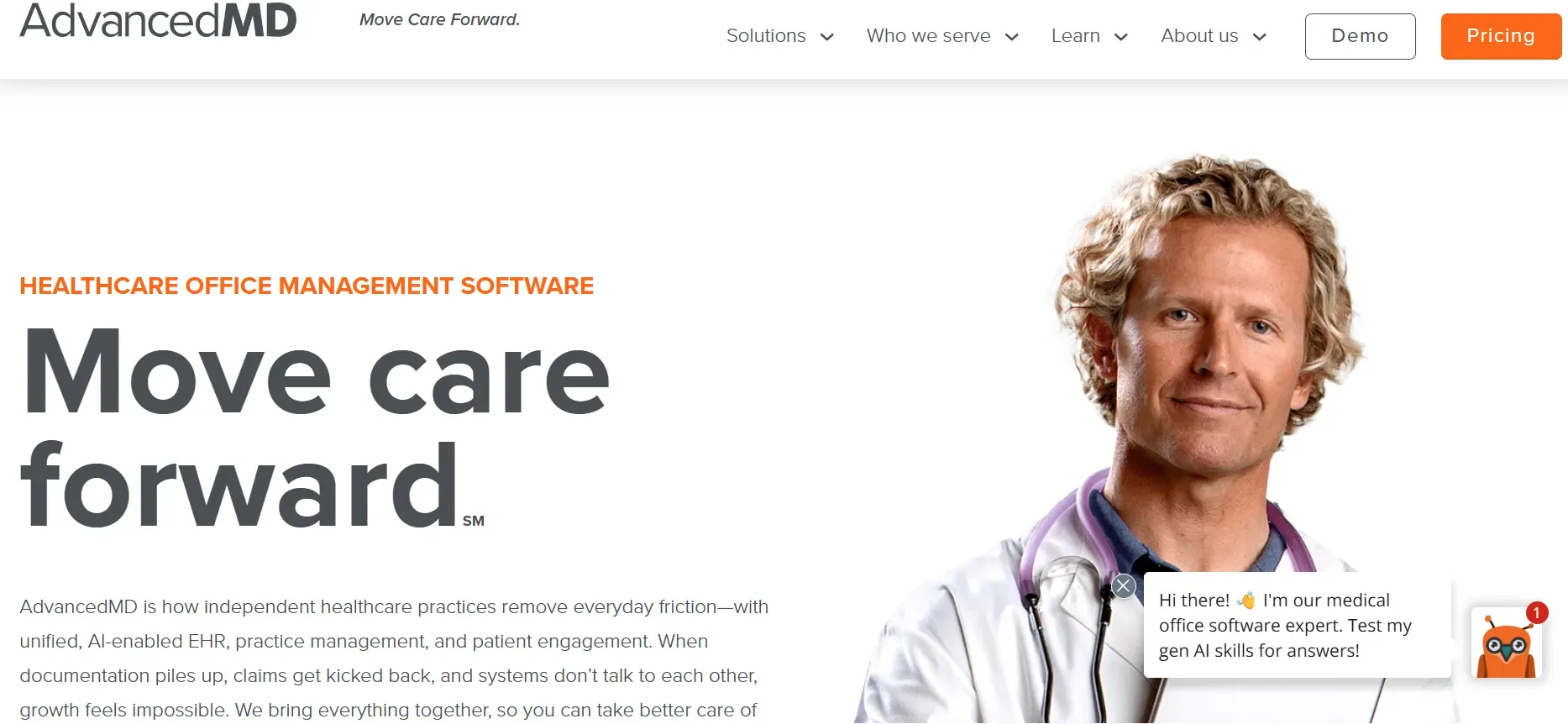
AdvancedMD is a cloud-based EMR and practice management suite popular among clinics seeking mobile access and telehealth capabilities. The platform offers a broad set of features: customizable templates, e-prescribing, telemedicine, patient portal, and integrated billing. AdvancedMD emphasizes workflow automation, with tools for scheduling, reminders, and claims management. The system’s mobile app is strong, supporting charting, messaging, and task management from any device.
Integrations: AdvancedMD provides APIs for labs, imaging, and billing, and supports HL7 and FHIR standards. However, integrations with niche orthopedic imaging or surgical planning systems may not be available out of the box. Custom development is possible but typically requires additional contracts and fees.
Migration friction: Data migration from Athenahealth is supported, but clinics often experience challenges with custom templates, imaging links, and historical data mapping. The vendor provides onboarding support, but clinics need to allocate staff for validation and workflow testing.
Concrete use cases: Orthopedic clinics with mobile providers, satellite locations, or a high volume of telemedicine visits. Practices looking for automated reminders, strong scheduling, and flexible billing.
Pricing: Starting at $429 per provider per month. Pricing page.
- Mobile-first experience for providers and administrators
- Comprehensive telemedicine and patient engagement tools
- Automated scheduling and billing workflows
- Steep price for larger teams or practices with many providers
- Add-on fees for telehealth, e-prescribing, and analytics
- Customization only within vendor framework
With Devaims, mobile-first can mean your own custom iPad workflows, not just what the vendor offers.
5. ChartLogic (Best for surgical documentation)
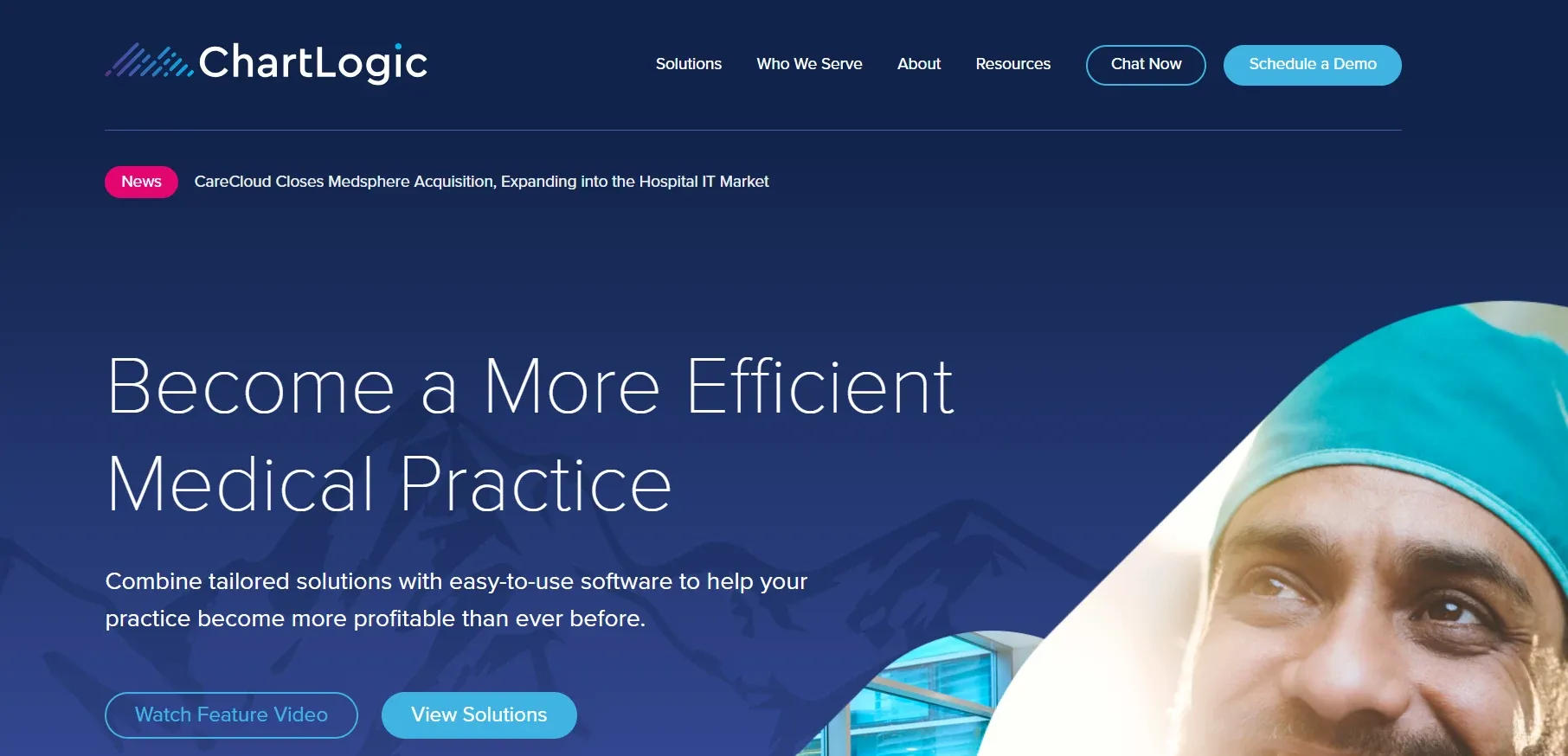
ChartLogic is a specialty EMR designed for surgical and orthopedic practices. Its standout feature is voice-powered charting: providers can dictate operative notes directly into structured templates. ChartLogic’s surgical workflows cover pre-op, intra-op, and post-op documentation, including implant tracking and surgical inventory. The platform also supports e-prescribing, electronic labs, and patient portal access.
Integrations: ChartLogic integrates with select imaging systems, labs, and billing platforms, but its ecosystem is more limited than larger vendors. Custom interfaces (such as with advanced analytics or external scheduling) are possible but often come with implementation fees and slower timelines.
Migration friction: Data migration from Athenahealth or other EMRs can be challenging, especially for surgical histories and custom templates. ChartLogic offers migration support, but clinics with complex legacy data may need to invest in additional data cleaning and manual entry.
Concrete use cases: Orthopedic surgery centers, ambulatory surgical facilities, and multi-specialty practices with a heavy surgical focus.
Pricing: Custom quotes, often similar to other mid-market EMRs.
- Detailed, structured surgical documentation
- Voice dictation and rapid charting workflows
- Good for specialty surgical clinics
- Reporting limited on entry tiers; analytics is a paid upgrade
- Surgical templates are vendor-locked
- No exportable code or open data access
Custom reports are just another module to upsell. With Devaims, you own the reporting engine and get any dashboard you need.
6. OpNote (Best for fast case documentation)
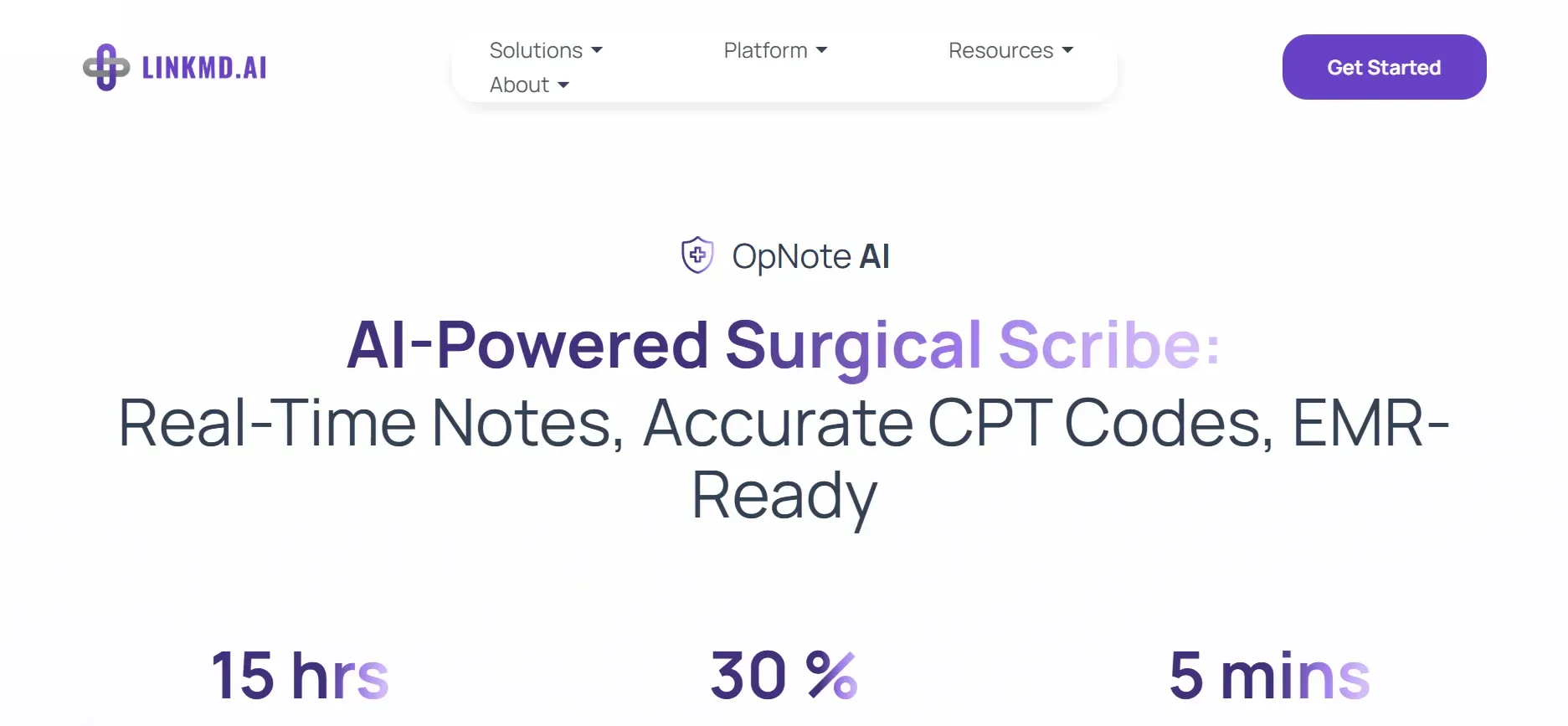
OpNote is a focused tool for surgical documentation, used primarily by orthopedic and surgical clinics seeking rapid, structured operative notes. The platform is web-based and emphasizes speed: providers select procedure templates, customize findings, and generate notes in minutes. OpNote is not a full EMR but fills a gap for clinics with high surgical volumes and limited documentation needs.
Integrations: OpNote integrates with some EMRs via HL7 or API, allowing operative notes to be imported into broader patient records. However, it does not offer full practice management, billing, or patient portal features. Linking OpNote to imaging or advanced scheduling systems requires third-party solutions.
Migration friction: Since OpNote is a documentation-only platform, migration is straightforward: providers can start using it alongside their existing EMR. However, migrating historical operative data may not be supported.
Concrete use cases: Ambulatory surgery centers, orthopedic clinics with a high volume of procedures, and hospital-based orthopedic teams seeking to streamline op notes.
Pricing: Around $100 per provider per month.
- Extremely fast, structured operative note creation
- Easy to learn and use for surgical teams
- Integrates with some EMRs for documentation transfer
- Does not cover full EMR or practice management needs
- No billing, scheduling, or patient engagement modules
- Subscription only; no ownership or export
7. Greenway Health (Best for all-in-one practices)
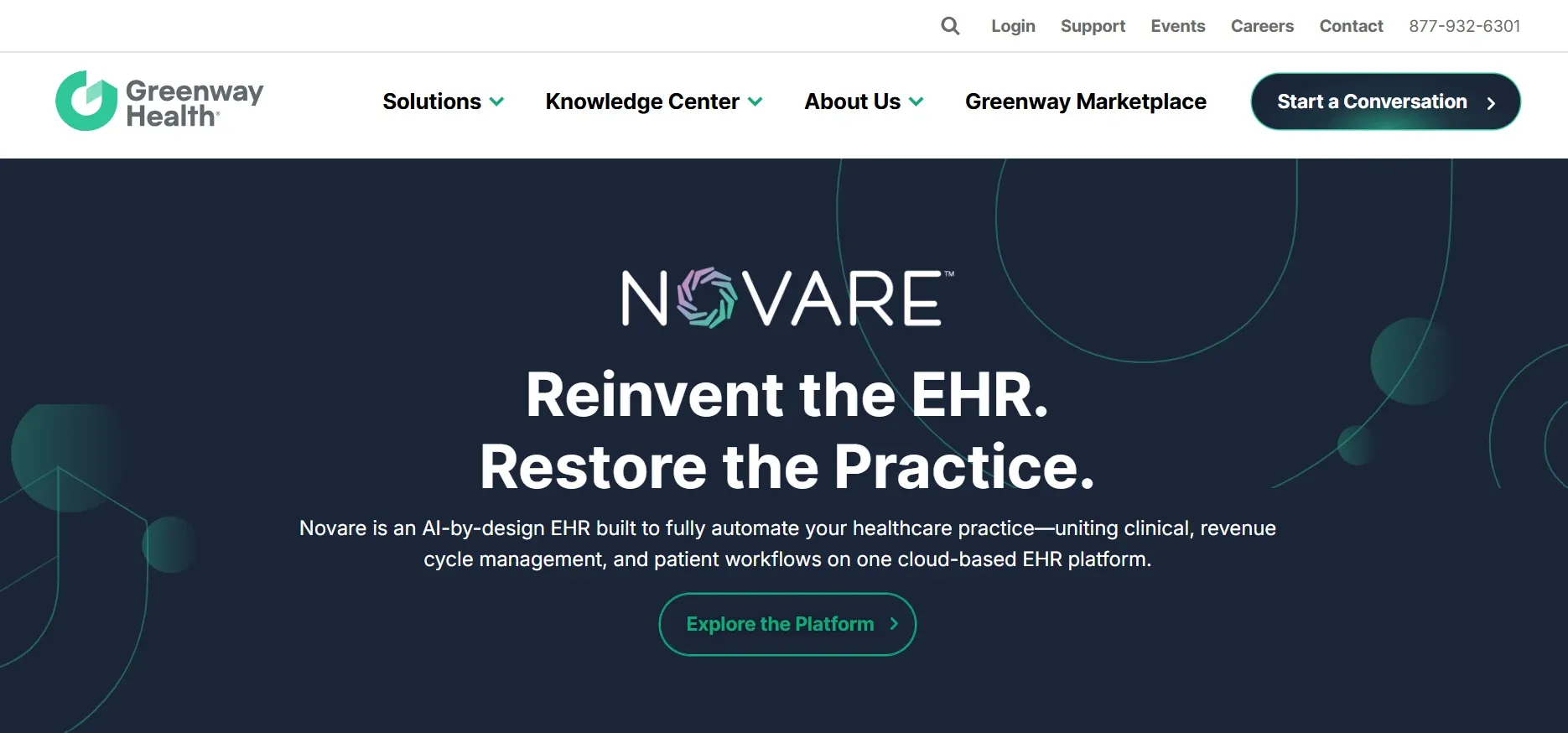
Greenway Health is a veteran in the EHR space, offering an integrated suite of EHR, practice management, billing, and patient engagement. Its Intergy platform supports orthopedic templates, imaging, e-prescribing, and compliance features. Greenway focuses on regulatory compliance (MIPS/MACRA), population health, and revenue cycle optimization. The platform is modular, allowing clinics to choose which features to implement.
Integrations: Greenway supports HL7, FHIR, and API integrations for labs, imaging, and billing. Third-party patient engagement and analytics tools can be connected, but deep custom integrations may require Greenway’s professional services, which can be costly and slow.
Migration friction: Greenway offers structured onboarding and migration support, but clinics with complex historical data or highly customized workflows often face additional fees and longer timelines. Custom templates may need to be rebuilt within the platform.
Concrete use cases: Multi-specialty clinics wanting a single vendor for EHR, billing, and practice management, or orthopedic practices needing strong compliance and population health tools.
Pricing: Custom quote needed, typically mid to upper market pricing.
- Integrated EHR, billing, and practice management suite
- Longstanding vendor with a stable platform
- Strong regulatory compliance and population health tools
- Support can be slow, especially for smaller clinics
- Platform customization is limited, with extra fees for advanced changes
- Per-user and per-module billing
8. WebPT (Best for orthopedic PT and rehab)
WebPT is the leading EMR for physical therapy and rehabilitation clinics, including orthopedic rehab. The platform is designed for therapists, with templates for PT, OT, and SLP. WebPT supports per-visit and per-provider pricing, making it flexible for clinics with fluctuating staff or high patient volumes. The platform includes scheduling, billing, outcome tracking, and compliance features (including Medicare reporting).
Integrations: WebPT integrates with select billing and clearinghouse partners, as well as some EHRs for data exchange. However, it is not designed for surgical documentation or imaging integration. Custom APIs are limited and usually only available to enterprise clients.
Migration friction: WebPT offers onboarding and data import for patient records and appointments, but surgical histories or complex orthopedic data may not transfer directly. Practices may need to maintain a separate EMR for surgery or imaging.
Concrete use cases: Orthopedic clinics with in-house PT/rehab, standalone physical therapy centers, and multi-location rehab providers.
Pricing: From $3+ per visit, or $149+/provider/mo. Pricing info.
- Deep PT/rehab specialization and compliance tools
- Simple user interface and onboarding
- Strong reporting for therapy outcomes
- Limited for surgery or general orthopedic workflows
- Per-visit fees increase costs for busy clinics
- Few surgical or imaging templates
With Devaims, a PT module could be built right into your main EMR, no need to pay for a second system.
9. Devaims (Best for owning your orthopedic EMR)
Devaims is not another rented platform. We build your orthopedic clinic a custom EMR, PM, or surgical workflow platform and hand you the code. After launch, you own the software, run it where you want, and pay only flat-rate maintenance if you choose. Every workflow, report, and feature is built for your clinic, not the average. No monthly per-user fees, no forced upgrades, no lock-in. The difference is ownership, you set the roadmap, you keep your data, and you never rent again.
- One-time build, you own the code and data, no more renting
- Any workflow, integration, or report you want, delivered to spec
- No per-user, per-provider, or per-location fees ever
- Flat, transparent maintenance costs; optional ongoing support
- Unrestricted data access for analytics, research, or compliance
Other Athenahealth alternatives worth knowing
- Epic: The hospital EMR giant. Powerful, but rarely cost-effective or agile for independent ortho clinics. Implementation costs are in the six- or seven-figure range, and customization is controlled by the vendor. Data extraction is possible but complex.
- Cerner: Similar to Epic, strong in hospital systems but overkill for most clinics. Cerner offers deep integration and analytics but is best suited to large health systems, not independent practices.
- DrChrono: Popular for small practices, with cloud-based charting and e-prescribing. Lacks orthopedic depth, advanced imaging, and surgical workflows.
- Practice Fusion: A low-cost, cloud-based EMR for basic charting and e-prescribing. Not suited for surgical or specialty orthopedic workflows, but may work for non-surgical musculoskeletal clinics.
How to choose the right Athenahealth alternative
- Budget: Calculate your 5-year total, not just the monthly rate. Add up per-provider or per-visit fees, plus modules and support. Include migration, onboarding, and data access charges in your cost model.
- Specialty fit: Does the EMR have ortho templates and imaging built-in, or will you need costly workarounds? Ask for demos of surgical and imaging workflows, not just general charting.
- Scalability: Will adding providers, locations, or services trigger new contracts or surprise costs? Check if the platform supports your growth plans without multiplying fees.
- Ownership: Are you OK renting forever, or do you want to own your workflow and data? Ownership means control, flexibility, and the ability to adapt over time.
- Support: Is support responsive and knowledgeable about orthopedic needs? Ask for references from similar clinics and review support SLAs in your contract.
If you want off the rent treadmill, owning your software flips the math in your favor. Devaims is the only Athenahealth alternative that hands you the code at the end.
Stop paying rent on software you could own
Every tool above, from Athenahealth to Modernizing Medicine and Nextech, is a rental. Contracts lock you in. Per-user fees climb as you grow. Exports are limited. Your data and workflow live on someone else's roadmap. The math gets ugly: five years in, you have paid enough to build your own platform, and you still do not own a line of code.
Devaims changes the equation. We build your orthopedic clinic a custom EMR or practice platform, then hand you everything: code, data, integrations. You keep it, run it anywhere, and adapt it as you grow. No more per-provider fees or forced upgrades. You own the system, set the rules, and pay a flat maintenance fee if you want continued support.
- Per-user pricing: On Devaims, you pay once, not forever. Add as many providers as you want, your cost stays flat, even as you grow or add locations.
- Feature lock-in: Any workflow or report you need is built in, no upsells or "premium modules". You decide what gets built and when.
- Data control: Your data, your hosting, your compliance. No more vendor delays on exports or integrations; you have direct access for research, analytics, or reporting.
- Customization: The platform adapts to your real workflows, not the other way around. Need a new surgical template or integration? It's your system; add what you want.
| Tool | Pricing model | Ownership | Customization | Per-user fee? |
|---|---|---|---|---|
| Athenahealth | Subscription | No | Limited | Yes |
| Modernizing Medicine | Subscription | No | Some | Yes |
| Nextech | Subscription | No | Some | Yes |
| Devaims | One-time build + flat maintenance | Yes | Full | No |
| Year | Rented (Athenahealth/Nextech) | Owned (Devaims) |
|---|---|---|
| 1 | $72,000 | $35,760 ($33,000 build + $2,760 maint) |
| 2 | $144,000 | $38,520 |
| 3 | $216,000 | $41,280 |
| 4 | $288,000 | $44,040 |
| 5 | $360,000 | $46,800 (now ahead) |
If your clinic has 10 providers, a $600 per-provider monthly fee is $6,000/month or $72,000/year. Over five years, that's $360,000, and you still do not own the software. A typical Devaims build ($33,000) plus $230/month maintenance costs $46,800 over five years. The break-even is just after year one, then you keep saving every year after.
Clinics planning to grow, add new locations, or integrate imaging and billing tightly gain the most from owning. If you want to run the real numbers for your practice, we will help you compare, no strings attached. For more cost analysis and EMR math, see this HealthIT.gov guide and Becker's ASC Review on EMR costs.
How to switch from Athenahealth
- Export all patient, scheduling, and billing data from Athenahealth (request full record set, not just PDFs). Insist on structured data exports (such as CSV or XML) for charts, appointments, and billing history.
- Choose your new EMR or custom build partner (Devaims or another alternative). Evaluate migration support and data mapping capabilities.
- Migrate and import data, mapping fields for charts, patients, and appointments. Validate data integrity, especially historical imaging and surgical records.
- Reconnect payments, imaging, and any third-party integrations. Test all workflows before going live.
- Train staff on new workflows and features; update practice policies as needed. Provide hands-on sessions to ensure adoption and compliance.
- Run both systems in parallel for at least two weeks, checking for missing data and workflow snags. Use this time to identify gaps and retrain as needed.
- Review your Athenahealth contract for termination windows and ensure access to data. Avoid early termination penalties by timing your move correctly.
With a custom Devaims build, the migration is handled as part of the project, including full mapping, validation, and staff training. For more on EMR migration best practices, see HIMSS EHR migration guide.
Frequently asked questions
What is the best Athenahealth alternative for orthopedic clinics?
Modernizing Medicine is favored for its deep orthopedic workflows, imaging, and templates. Nextech is popular with larger, multi-site clinics that need advanced scheduling and billing. Kareo works for small practices on a tight budget. If you want to own your software and control your data, Devaims is the only alternative that delivers true ownership, unlimited customization, and unrestricted data access. The best fit depends on your size, specialty needs, and appetite for ownership versus convenience.
Which Athenahealth alternative is the most affordable?
Kareo (Tebra) offers the lowest entry price for small practices, but costs rise as you grow and need more features. If you have more than five providers or expect to add locations, subscription costs quickly overtake the upfront investment of a Devaims build. Over five years, a custom Devaims build can actually cost less than renting, especially for clinics with multiple providers or complex needs.
Is there a free Athenahealth alternative?
There are no truly free EMRs that meet orthopedic clinic needs. Practice Fusion is a low-cost option for simple charting and e-prescribing, but lacks advanced orthopedic, imaging, and surgical features. Open-source EMRs exist (such as OpenEMR), but require significant IT investment and rarely meet specialty needs out of the box. Owning your own system with Devaims removes recurring fees, but the upfront investment is higher. For most orthopedic clinics, "free" means trading off on features, compliance, or support.
Which alternative is best for multi-location orthopedic groups?
Nextech is widely used by multi-site practices for its centralized scheduling, billing, and reporting. It is designed for growth, but per-site and per-provider fees can add up. For custom multi-location workflows without per-site charges and with full ownership, Devaims is the best Athenahealth alternative you can own outright. With Devaims, you can add locations, specialties, or new workflows without renegotiating your contract.
How does Devaims compare to Athenahealth for orthopedic EMRs?
Devaims builds a custom, owned solution for your clinic, no per-provider or per-location fees, no feature gating, and you keep the code. Athenahealth is rented and locks you into their roadmap. With Devaims, you set the direction, adapt as you grow, and maintain unrestricted access to your data for compliance, analytics, or research. If you want the freedom to evolve your tech stack and own the underlying system, Devaims is the only true ownership path.
Can I keep my historical data when switching from Athenahealth?
Yes, you can export your full medical records, but you may need to request a complete data dump from Athenahealth support. Be specific in your request: ask for all structured data, not just PDFs or summaries. Many clinics have to push for full exports, especially for imaging and billing histories. Devaims includes data migration as part of every build, ensuring that nothing is left behind and all data is imported, mapped, and validated in your new system.
The bottom line
If you are weighing Athenahealth alternatives, know this: almost every replacement is another rental, with the same per-user fees and lock-in. The only way off the treadmill is to own the software, and the math often surprises people.
Here is the test: add up what you will pay in rent over five years. If that number could have built you a platform you own, the answer is clear. Devaims is the only alternative that lets you stop renting and start owning your practice tech. Ownership means control, flexibility, and long-term savings, plus the ability to adapt your workflows as your clinic evolves.
Want more real-world guides? Read the Devaims blog, or check out our latest comparisons: Modernizing Medicine alternatives, Nextech alternatives, and Kareo alternatives.