



Your practice runs on software that never feels quite yours. You pay per therapist, per feature, plus card-processing fees that eat into every session. Then, the upgrade prompt hits, again. If SimplePractice keeps you up at night, you are not alone. Plenty of mental health professionals are looking for alternatives that fit their workflow, budget, and long-term plans.
TherapyNotes, TheraNest, and Valant are some of the most popular SimplePractice alternatives, each with their own take on scheduling, notes, and billing. But all of them share the same core problem: you are renting. If you ever want to own your platform, only a custom build, like Devaims, gives you the keys. Let’s break down the best options, what they cost, and how you can finally stop renting.
Why mental health practices look for SimplePractice alternatives
Mental health practices are increasingly scrutinizing their software subscriptions. The reasons why so many search for SimplePractice alternatives every year are not just about cost, they are about control, flexibility, and the ability to serve clients efficiently as regulations, payer demands, and practice models change.
- Steep per-user pricing: Each new clinician, admin, or support staff member adds another monthly fee, making growth expensive fast. For group practices or those expanding into new markets, this can turn software into one of the top recurring expenses, often outpacing rent or utilities. The cost per user is rarely static, either; some platforms raise rates as you scale, bundle features only at higher tiers, or require you to pay for a minimum number of seats even if your team is in flux.
- Locked features behind higher tiers: Want group therapy scheduling, robust analytics, or advanced reporting? Prepare to upgrade, again. Many platforms segment key features behind premium plans, which means what starts as an affordable solution can become costly as your needs evolve. This is especially frustrating for practices that discover their workflows require "enterprise" features just to run efficiently.
- Data portability headaches: Exporting your full clinical history is rarely as easy as advertised. While most platforms provide some form of export function, the reality is often partial data, awkward formats, or time-consuming manual steps. There’s a real risk of lock-in, especially when you need to migrate notes, billing records, and client communications. Regulatory requirements for record retention and audit trails add another layer of complexity.
- Transaction and add-on fees: Credit card processing, telehealth sessions, appointment reminders, and even claim submissions may mean extra charges, sometimes through third-party integrations with their own fee structures. Over time, these add-ons can double your base monthly cost, especially if you rely on telehealth, automated communications, or integrated billing.
- Rigid workflows: If your team needs something outside the standard template, like unique intake forms, specialized progress note templates, or custom scheduling logic, you are out of luck or forced to kludge workarounds. The lack of workflow flexibility can hinder efficiency or force clinicians into time-consuming manual processes. Platforms often prioritize "average" workflows, leaving practices with unique needs underserved.
These issues push practices to search for alternatives, not just for better pricing, but for a platform that truly fits their clinical, administrative, and business needs.
Quick comparison of the best SimplePractice alternatives
| Tool | Best for | Starting price | You own it? |
|---|---|---|---|
| TherapyNotes | Insurance billing & compliance | Reported $49/mo | No |
| TheraNest | Solo to midsize practices | Reported $39/mo | No |
| Luminare Health | Integrated EHR | Contact for pricing | No |
| Valant | Larger groups & psychiatry | Contact for pricing | No |
| Procentive | Complex billing needs | Contact for pricing | No |
| Kareo Behavioral (Tebra) | Integrated practice management | Reported $80/mo | No |
| Greenspace | Client outcomes tracking | Contact for pricing | No |
| BreezyNotes | Small practices | Reported $39/mo | No |
| Devaims | Owning your platform | One-time build, you own it | Yes |
Always confirm current pricing before you decide. Rates, tiers, and add-on fees change frequently. For deeper analysis, check vendor terms, integration support, and migration assistance. The right choice depends on your practice's scale, clinical focus, and appetite for long-term investment.
The 9 best SimplePractice alternatives
1. TherapyNotes (insurance billing & compliance)

TherapyNotes stands out for practices that bill insurance or operate in highly regulated environments. Its interface is familiar to SimplePractice users, but the backend is more comprehensive, especially for claims management. The platform automates much of the insurance workflow, from eligibility checks to electronic claims and remittance advice, reducing administrative time and error rates. TherapyNotes is also known for its audit-friendly note templates, which help clinicians stay compliant with payer and regulatory demands.
Integrations & Features: TherapyNotes integrates with clearinghouses for insurance claims, supports e-prescribing (for psychiatrists), and offers a client portal for scheduling, document sharing, and secure messaging. Telehealth is built-in, though some users note video quality is not as high as standalone options. The platform allows for basic customization of forms and templates, but deep workflow changes are limited to what is on their roadmap.
Migration & Use Cases: Migration from SimplePractice is possible via CSV export/import, but some data (like historical notes or attachments) may require manual handling. TherapyNotes is best for group practices, clinics working with multiple payers, and organizations that need detailed audit trails. Its reporting tools are solid for compliance but less customizable for advanced analytics.
Pricing: Starts at $49/month per user.
- Excellent insurance billing and compliance support
- Audit-friendly note templates and reporting
- Integrated telehealth and client portal
- Per-user pricing increases costs as you grow
- Advanced analytics and custom forms are limited
- No platform ownership or full data portability
Devaims can build insurance billing and compliance features tailored to your exact needs, with no per-user fees or data lock-in.
2. TheraNest (solo to midsize practices)
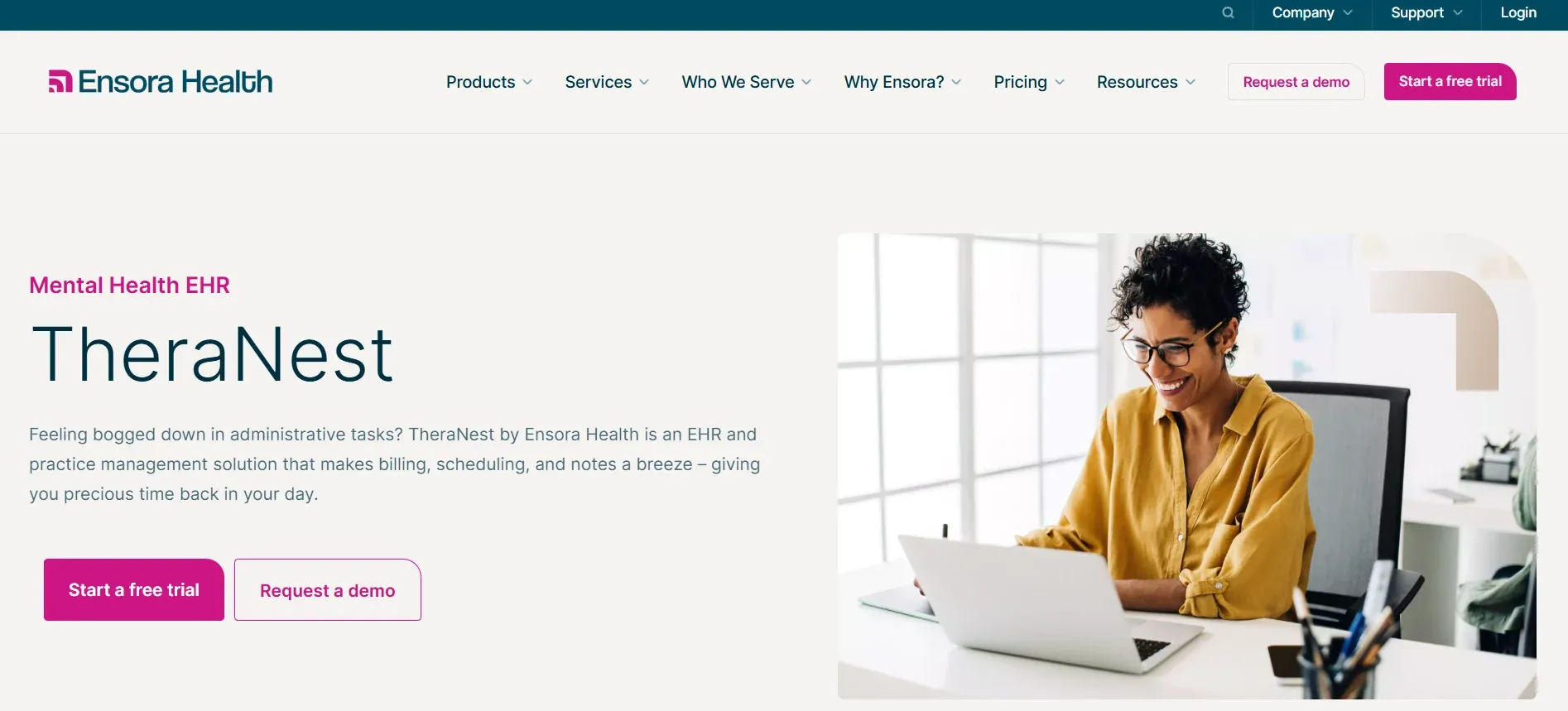
TheraNest is designed for solo clinicians and small-to-midsize groups that want to streamline scheduling, notes, and billing without the complexity of enterprise EHRs. Its interface is intuitive, making onboarding fast for new users. TheraNest supports individual, couples, family, and group appointments, with customizable note templates and basic outcome tracking.
Integrations & Features: The platform integrates with telehealth providers (video sessions are HIPAA-compliant), payment processors, and several clearinghouses for insurance billing (available as an add-on). Client portals allow for intake, communication, and billing. Automated reminders, progress tracking, and calendar syncing with Google or Outlook are included. TheraNest also offers a basic mobile app for clinicians on the go.
Migration & Use Cases: Migration from other platforms is possible, but like most SaaS tools, full historical data import requires careful planning. TheraNest is ideal for solo therapists, small clinics, or practices transitioning from paper to digital systems. Its group therapy support is notable, allowing for flexible scheduling and documentation across multiple clients.
Pricing: Starts at $39/month, pricing based on active clients.
- Easy onboarding and intuitive interface
- Group therapy and flexible scheduling support
- Affordable for solo and small practices
- Pricing tied to active client count, not just users
- Insurance billing and reporting are paid add-ons
- Limited workflow customization and no platform ownership
Devaims lets you design your own workflows and pricing model, so you never pay more as you grow or change your practice structure.
3. Luminare Health (integrated EHR)

Luminare Health targets practices that need a true EHR with deep integration across clinical, scheduling, and billing functions. Its platform is built to handle complex care coordination, HIPAA compliance, and multi-provider workflows. Luminare Health is especially attractive to organizations that need to bridge behavioral and physical health records within a unified system.
Integrations & Features: Luminare Health offers API integrations with labs, pharmacies, and health information exchanges (HIEs). Its EHR features include custom clinical templates, medication management, e-prescribing, and population health analytics. The platform supports telehealth, secure messaging, and workflow automation for referrals and authorizations. It is certified for ONC and CMS compliance, making it suitable for practices that participate in quality programs.
Migration & Use Cases: Migration is typically managed by the vendor, but the process can be lengthy and expensive for practices with large historical data sets. Luminare Health is best for clinics that need to document behavioral and physical health in one system, or that work with external providers and agencies. Its reporting and analytics are robust for compliance and quality improvement.
Pricing: Contact for pricing (varies by organization size and needs).
- Deep EHR integration for behavioral and physical health
- Certified for ONC and CMS compliance
- Robust analytics and reporting tools
- Pricing is not transparent and can be high for small practices
- Major workflow changes require vendor involvement
- No platform ownership or code access
With Devaims, you can integrate behavioral and physical health records in a system you own, with custom workflows and analytics built for your team.
4. Valant (larger groups & psychiatry)
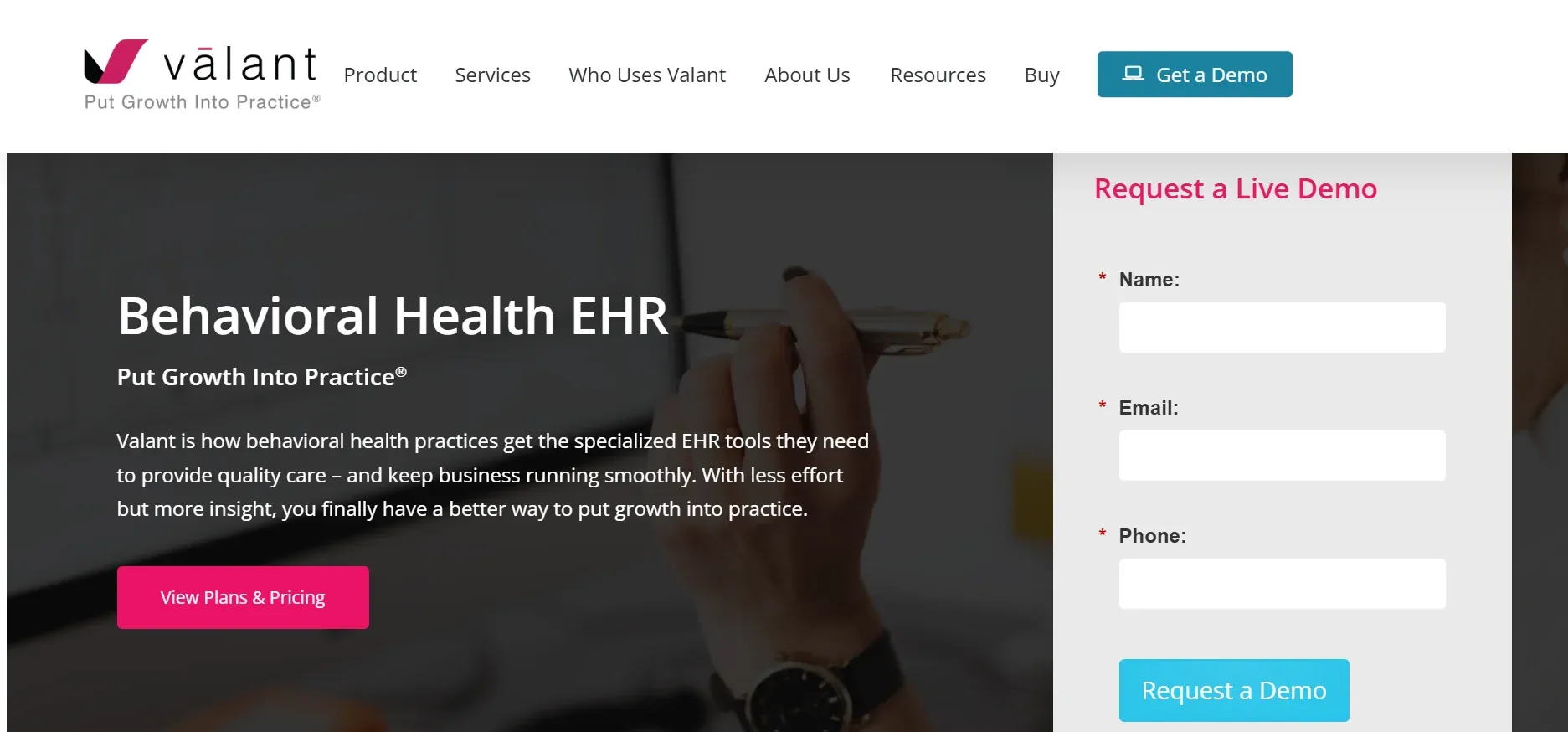
Valant is purpose-built for psychiatric and large-group practices that need advanced scheduling, e-prescribing, and analytics. Its platform is designed to handle high-volume, multi-location organizations with complex workflows and payer mix.
Integrations & Features: Valant integrates with e-prescribing networks, clearinghouses, and laboratory systems. It offers advanced scheduling (including recurring and group appointments), robust custom reporting, patient engagement tools, and a telehealth module. For psychiatry, it supports medication management, controlled substance e-prescribing (EPCS), and symptom tracking.
Migration & Use Cases: Onboarding is guided by the Valant team, but can take weeks or months depending on data complexity. Migration of legacy notes, billing, and custom templates may require vendor services and incur additional fees. Valant excels for multi-site practices, those with psychiatric prescribers, and organizations needing detailed analytics on productivity, outcomes, and financials.
Pricing: Contact for pricing (typically higher for large groups).
- Advanced scheduling and analytics for large groups
- Strong support for psychiatry and e-prescribing
- Multi-site and role-based access features
- High costs and annual contracts
- Customization limited to available modules
- Data export may not preserve all metadata
Devaims can build advanced analytics and multi-site management into your own platform, with no annual contracts or data export worries.
5. Procentive (complex billing needs)
Procentive is built for practices with complex billing or multi-payer setups, including Medicaid, managed care organizations, and multi-state operations. It is popular among clinics that need to manage diverse payer rules and compliance requirements.
Integrations & Features: Procentive offers deep billing automation, including rules engines for payer-specific requirements, automated claim scrubbing, and real-time eligibility checks. Its EHR supports customizable forms, treatment plans, and progress notes. Procentive integrates with clearinghouses, labs, and external referral networks. Reporting tools allow for custom financial, clinical, and compliance reports.
Migration & Use Cases: Migration is supported, but data mapping can be complex due to the platform’s highly configurable structure. Procentive is best for organizations with heavy billing needs, such as community mental health centers or multi-payer clinics. Its compliance modules help track authorizations, credentialing, and licensing across states.
Pricing: Contact for pricing (varies by organization size and needs).
- Powerful billing automation and compliance tools
- Customizable forms and reporting
- Multi-state and multi-payer support
- Steep learning curve for small teams
- Significant costs for advanced features
- No platform ownership or code access
6. Kareo Behavioral (Tebra) (integrated practice management)
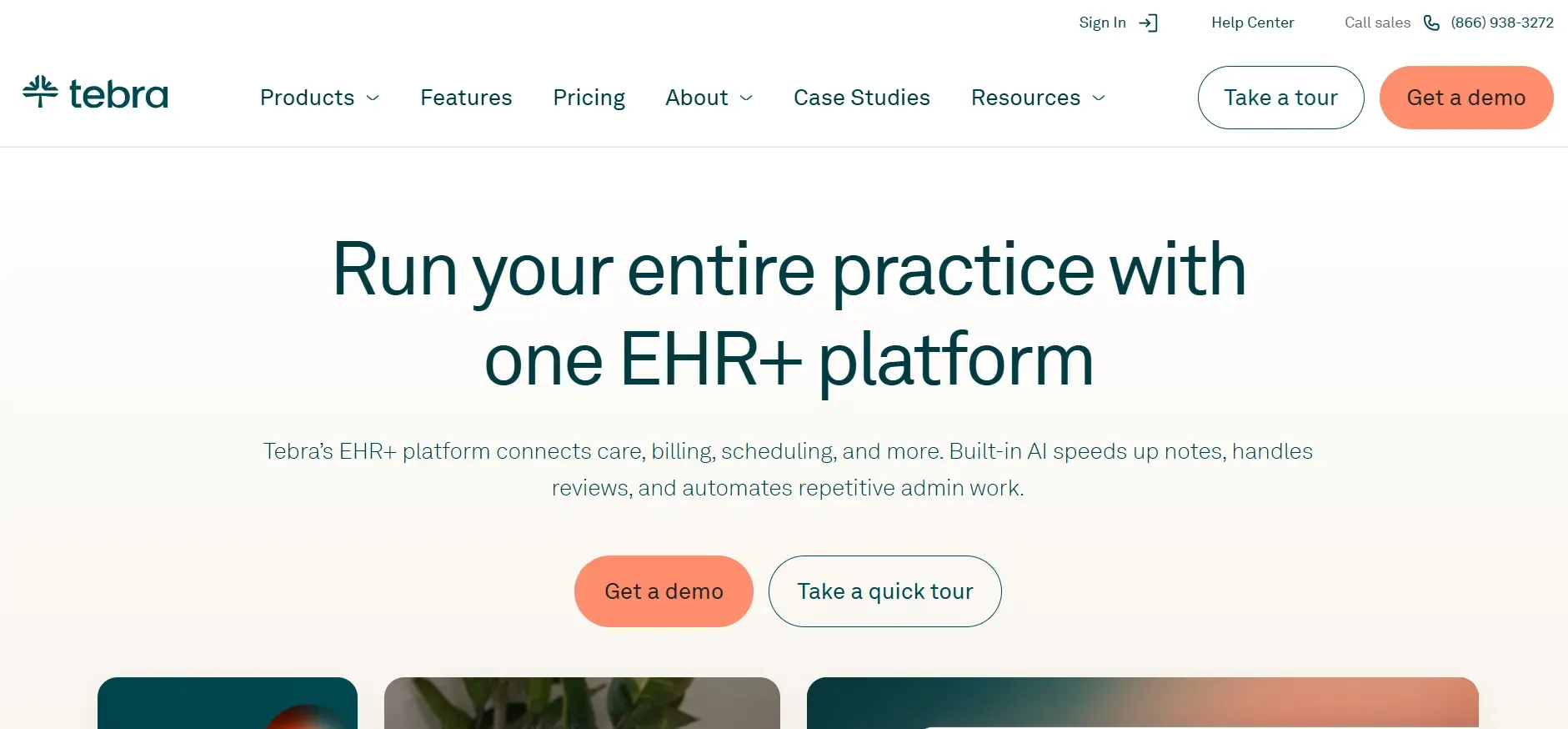
Kareo Behavioral (Tebra) is a full practice management suite that combines medical and behavioral health tools in one interface. Its platform is designed for practices that want to integrate scheduling, billing, telehealth, and clinical documentation without relying on multiple vendors.
Integrations & Features: Tebra offers integrated telehealth (with HD video), e-prescribing, electronic claims, and a patient portal. The system syncs with labs, pharmacies, and external billing providers. Its analytics dashboard provides real-time insights into appointments, revenue cycle management, and clinician productivity. The platform supports customizable templates and workflows, but only within the boundaries of its modular system.
Migration & Use Cases: Migration support is available, with structured onboarding for practices transitioning from other platforms. Kareo/Tebra is best for practices that want a single system for both mental and physical health services or that need robust billing and telehealth integrations. Its national support network is a plus for multi-location practices.
Pricing: Starts at $80/month per provider.
- Integrated medical and behavioral health management
- Comprehensive telehealth and billing features
- Strong onboarding and support network
- Higher per-provider pricing than most competitors
- Generic feature set may lack depth for specialized workflows
- Customization and ownership are limited
7. Greenspace (client outcomes tracking)

Greenspace is focused on measurement-based care and client outcomes tracking. Its platform is designed to run alongside your primary EHR or practice management system, providing tools for standardized assessments, progress monitoring, and client engagement.
Integrations & Features: Greenspace supports integration with top EHRs and practice management platforms via API. It includes a library of validated outcome measures (PHQ-9, GAD-7, etc.), automated assessment delivery, real-time progress dashboards, and client-facing portals for self-reporting. Reports can be exported for compliance, research, or payer requirements.
Migration & Use Cases: Greenspace is best used as an adjunct tool, not a full EHR replacement. It is ideal for practices participating in value-based care, research studies, or those seeking to improve client engagement and treatment outcomes. Migration involves connecting your existing systems and importing client lists, but full clinical data migration is not required.
Pricing: Contact for pricing (add-on to existing EHR).
- Excellent for outcomes tracking and measurement-based care
- Integrates with many EHRs and practice management tools
- Automated assessments and progress dashboards
- Does not replace core scheduling or billing systems
- Requires juggling multiple platforms
- Limited platform ownership
8. BreezyNotes (small practices)
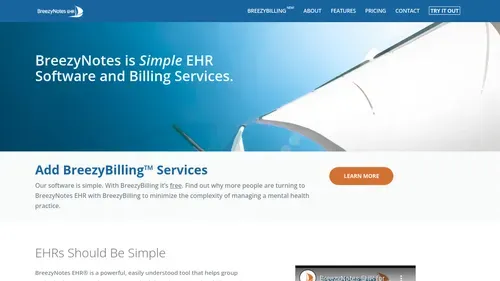
BreezyNotes is tailored to solo clinicians and very small group practices that want simple scheduling, note-taking, and billing in an affordable package. Its interface is clean, with minimal learning curve, and it covers the essentials without overwhelming users with options.
Integrations & Features: BreezyNotes offers integrated scheduling, basic progress notes, invoicing, and electronic claims for insurance billing. It includes automated reminders and a client portal for appointment management and secure document sharing. However, it does not offer telehealth, advanced analytics, or deep integrations with labs or pharmacies.
Migration & Use Cases: Migration is straightforward for practices moving from paper or basic digital tools, but importing complex historical data is limited. BreezyNotes is best for solo therapists, part-time clinicians, or those just starting out who want to avoid the overhead of larger platforms.
Pricing: Starts at $39/month per user.
- Affordable and easy to use for solo practices
- Essential scheduling and billing features
- Quick onboarding and minimal setup
- Limited feature set and no telehealth
- No group therapy or advanced reporting
- Platform ownership not included
9. Devaims (owning your platform)
Devaims builds custom, fully-owned platforms for mental health practices. You get the source code, keep your data, and pay a one-time build fee with flat maintenance. With Devaims, you define your workflows, integrations, reports, and user experience. Whether you need unique intake forms, custom scheduling logic, or integration with local health systems, your platform is tailored to your exact needs.
- Full platform ownership, no per-user or per-feature rent
- Custom workflows, integrations, and reporting
- Migration and support included in the build process
Devaims lets you control your costs, scale without penalty, and own your data and technology roadmap for the long term.
Other SimplePractice alternatives worth knowing
- Netsmart: Enterprise-level EHR with deep behavioral health functionality, but typically overkill for private practices due to cost and complexity.
- Qualifacts: Known for compliance and large-scale implementations, but a steep learning curve and price point make it less suitable for solo providers.
- CarePaths: Affordable, cloud-based EHR with essential features, but limited customization and reporting. Good for solo therapists who want low overhead.
- Jane: Popular for multi-discipline clinics (PT, chiropractic, mental health), but less focused on mental health-specific workflows and compliance.
How to choose the right SimplePractice alternative
- Budget: Add up per-user and add-on fees for your whole team, not just the base price. Consider long-term scaling, not just what you need today. Factor in migration, training, and potential contract minimums.
- Feature needs: Prioritize must-have workflows, insurance billing, group therapy, telehealth, advanced reporting, or outcomes measurement. Do not settle for "close enough" if it will slow your team or compromise compliance.
- Practice size: Some tools are optimized for solo providers (BreezyNotes, CarePaths), others for large groups (Valant, Procentive), and some scale up or down with limitations. If you plan to grow, avoid platforms that penalize expansion with steep per-user fees.
- Data ownership: Decide if you ever want to keep your data and code in-house. Most SaaS platforms let you export some data, but rarely the full database or platform logic. True ownership only comes with custom builds.
- Compliance: Ensure your platform covers your reporting and audit needs, HIPAA, payer audits, licensing boards, and value-based care programs. Ask vendors for documentation and references.
- Integration: If you rely on labs, pharmacies, external billing, or outcomes tracking, check API availability and real-world integration case studies. Migration friction increases with more integrations.
If you want to stop worrying about scaling costs, lock-in, or missing features, it may be time to look at owning your platform outright.
Stop paying rent on software you could own
The common thread across SimplePractice and every alternative above is rent. Whether it is per-user, per-feature, or per-integration, you never get to keep the system you rely on. That means your costs climb as your practice grows, and you are always one price hike away from a budget crisis.
Devaims builds custom software for mental health practices, web, mobile, business platforms, and more. You get the full source code, set your own terms, and own your data. No subscription, no forced upgrades, no lock-in.
- No more multiplying per-user costs. Add as many clinicians as you want, no extra fee. Ownership means you are free to grow your team, open new sites, or add contractors without calling your vendor or renegotiating your bill.
- Feature set built for you. Every workflow, report, or reminder can be exactly what your team needs. If your practice runs group therapy, needs custom intake or outcome measures, or has unique compliance rules, your software can match, no compromises.
- Your data is truly yours. Move it, back it up, integrate any way you want. When you own your platform, you control retention, access, and security on your terms, not a vendor’s.
| Platform | Ownership | Per-user/month | Custom features | Contract |
|---|---|---|---|---|
| SimplePractice | Rented | $39, $99+ | Limited, tiered | Month-to-month |
| TherapyNotes | Rented | $49, $59+ | Template-based | Month-to-month |
| Valant | Rented | $200+ | Preset options | Annual |
| Devaims (custom) | You own it | $0 | Anything you want | No contract |
5-year cost math for a 6-clinician practice:
| Year | Rent (6 users x $65/mo x 12) | Own (build $32,000 + $180/mo maint) |
|---|---|---|
| 1 | $4,680 | $34,160 |
| 2 | $9,360 | $36,320 |
| 3 | $14,040 | $38,480 |
| 4 | $18,720 | $40,640 |
| 5 | $23,400 | $42,800 (now ahead) |
By year 5, you have paid more in rent than it would have cost to build your own system. After that, every year widens the gap, and your software is truly yours. This model pays off fastest for growing practices, multi-site groups, and those frustrated by recurring fees or inflexible workflows. Want to see the numbers for your team? Devaims will run the math for you, no pressure. For a detailed calculator, see Software Advice or talk to a consultant who specializes in mental health IT.
How to switch from SimplePractice
- Export your client data, notes, and billing history from SimplePractice. Use the export tools in your admin panel. For full compliance, export in every available format, including PDFs and CSVs.
- Choose your new platform or custom build and confirm migration tools. Ask your new vendor for migration guides or hands-on support. Some platforms offer data mapping tools or will manage the migration for you (usually for a fee).
- Import records, contacts, and documents into the new system. Test import processes with a small batch before committing the full data set. If you are building custom, Devaims will script and test the migration for you.
- Reconnect payment processors, telehealth, and integrations. This may require re-registering with clearinghouses, payment gateways, and telehealth providers. Plan for downtime or parallel testing.
- Train clinicians and staff on new workflows and features. Plan for at least a week of dual-system operation. Provide video tutorials or live support to minimize disruption.
- Test in parallel before fully switching over. Run both systems side by side for a week or more to ensure no data or workflow gaps remain. Use this period to gather feedback from clinicians and admins.
- Review your old contract and cancel SimplePractice once ready. Make sure all critical data is exported and backed up before closing your account. Check for any notice periods or termination fees.
With a custom Devaims build, the migration is handled as part of the project, with custom scripts and white-glove support to minimize downtime and data loss. For complex migrations, consider hiring a healthcare IT consultant to audit the process.
Frequently asked questions
What is the best SimplePractice alternative for insurance billing?
TherapyNotes is highly rated for insurance billing and claims management, offering deeper payer support than most competitors. Its clearinghouse integrations, eligibility checks, and claim scrubbing reduce denials and administrative overhead. For Medicaid-heavy or multi-payer practices, Procentive is also strong. Always check that your most common payers are supported natively.
What is the cheapest SimplePractice alternative?
BreezyNotes and TheraNest report lower entry prices, around $39/month, especially for solo providers or small practices. However, add-ons (insurance billing, telehealth, extra users) and scaling can increase costs over time. Factor in all fees and potential price hikes before committing.
Are there any free SimplePractice alternatives?
There are few truly free alternatives in mental health. Most platforms, including SimplePractice alternatives, charge by user, feature, or client count. Free options, like TherapyAppointment’s limited free trial or open-source EHRs, often lack compliance and security, making them risky for real-world use. Always verify HIPAA compliance before considering a free tool.
What is the best option for large group practices?
Valant and Procentive support large groups with complex billing and advanced analytics. Both offer multi-site management, role-based access, and compliance modules. For practices wanting to own their platform, a custom build with Devaims can scale without per-user fees and can be tailored to unique workflow or integration needs.
Can I keep my data if I switch from SimplePractice?
You can export some or all data from SimplePractice, but the process may not be seamless. Most SimplePractice alternatives have similar data export limitations, expect CSVs for basic records and PDFs for notes, but you may lose metadata, attachments, or historical logs. With Devaims, you own your data and code from day one, with full database access and backup options.
When should I consider a custom Devaims build?
If your practice has outgrown rented platforms, needs unique workflows, or wants to stop paying per-user, owning a platform with Devaims makes sense, especially when five-year costs cross the break-even point. Custom builds are also ideal for multi-site groups, organizations with unique compliance needs, or those planning to integrate with local health systems or research projects.
Is it hard to migrate from SimplePractice?
Migration requires careful planning: export data, set up your new system, and retrain staff. The main friction points are incomplete data exports and adapting workflows to the new platform. With a custom Devaims build, migration support is part of the package, with custom scripts, test migrations, and hands-on training to make the transition as smooth as possible.
The bottom line
The best SimplePractice alternatives give you more features, better billing, or specialty focus, but all keep you renting. If you add up the real five-year cost, you may find it is close to buying your own system outright.
Here is the test: add up what this tool will cost you over the next five years. If that number would have built you something you own, you already have your answer. Whether you choose a SaaS platform or a custom build, make sure it fits your needs now and in the future, and that you are not stuck paying rent on software that should work for you, not the other way around.
Want more insights? Visit the Devaims blog or see our deep dives on TherapyNotes alternatives, Valant alternatives, and TheraNest alternatives.