


Your front desk calls, again: "Valant's down, and support's quoting two days." You check your monthly bill, more than last year, more again next year. You start counting seats, not clinicians. Welcome to the club. Every mental health practice that scales up hits the same wall: Valant's subscription model drifts up as you grow, and every new feature is a new upsell. You pay rent, but you never own the building.
If you are searching for Valant alternatives, you are not alone. The best-known contenders, TherapyNotes, SimplePractice, TheraNest, and a handful of others, each fix one pain point and introduce another. The punchline: unless you own your system, you're always renting. For a growing practice, the real pivot is building a platform you own outright. That's where Devaims comes in, and it's why more clinics are running the five-year math.
Why mental health practices look for Valant alternatives
Per-user pricing climbs quickly: Valant charges per clinician and sometimes per staff seat. Add a few new clinicians, and your cost jumps, sometimes by hundreds per month.
Add-on fees stack up: Features like e-prescribing, telehealth, billing automation, or analytics are often locked to higher tiers or carry separate fees. You start with a base plan and end up paying for "essentials" that feel basic.
Limited flexibility in workflows: Practices with unique group therapy, specialty billing, or custom documentation templates often find Valant's workflows rigid and slow to adapt.
Data lock-in and migration headaches: Exporting your data or migrating to another system is not easy. You risk downtime, data loss, or contract penalties.
Long-term cost is a black hole: Subscription models add up. Over five years, you might spend enough to have built your own platform, and still, you don't own a line of code. That's why so many clinics start looking for Valant alternatives that break the rent cycle.
Quick comparison of the best Valant alternatives
| Tool | Best for | Starting price | You own it? |
|---|---|---|---|
| SimplePractice | Private practices | Reported $29/mo per clinician | No |
| TherapyNotes | Integrated billing & notes | Reported $49/mo first user, $30/additional | No |
| TheraNest | Group practices | Reported $39/mo for up to 30 clients | No |
| Luminare Health | Mid-size clinics | Reported, custom quote | No |
| Procentive | Complex billing | Reported, custom quote | No |
| Kareo Behavioral (Tebra) | Insurance & compliance | Reported, starts at $135/mo per provider | No |
| Greenspace | Client outcomes | Reported $50/mo per provider | No |
| BreezyNotes | Small practices | Reported $39.95/mo per user | No |
| Devaims (Owned Build) | Clinics who want to own | One-time build, then flat maintenance | One-time build, you own it |
Always confirm current pricing before you decide. Rates and fee structures change fast.
The 9 best Valant alternatives
1. SimplePractice (Best for private practices)
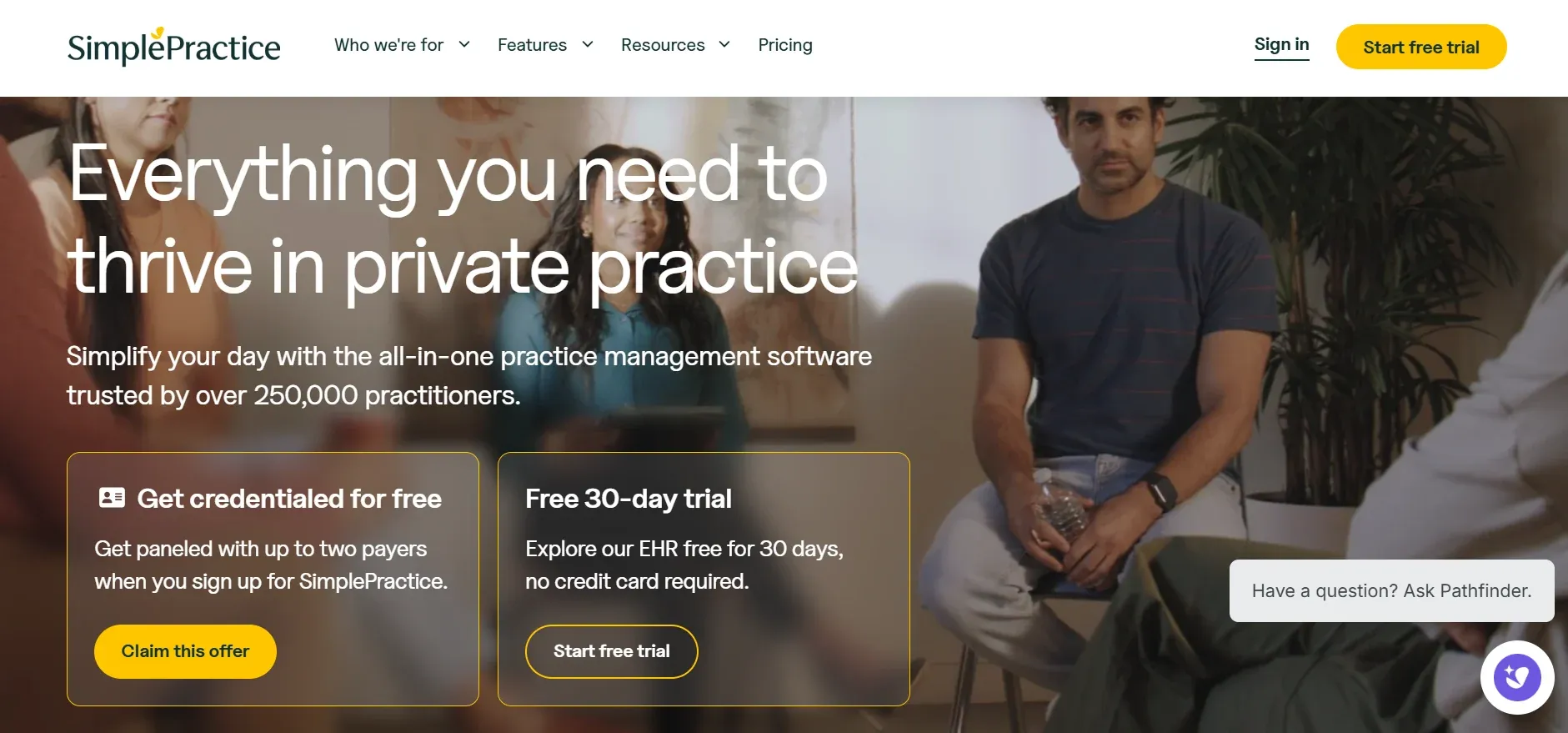
SimplePractice is the go-to for solo therapists and small counseling groups. It's simpler than Valant, with an intuitive interface and quick onboarding. But as you add clinicians or want more advanced billing, the per-clinician model gets expensive, and some features you expect are locked to higher tiers.
Pricing: Reported at $29 to $99 per month per clinician. See pricing.
- Clean interface, easy for new staff to learn
- Wide adoption means easier hiring and onboarding
- Integrated telehealth and document management
- Per-clinician pricing adds up quickly for larger groups
- Advanced features (billing, analytics) require top-tier plans
- Custom workflows are limited
On a platform you own, adding clinicians would not increase your monthly cost, it is your system.
2. TherapyNotes (Best for integrated billing and notes)

TherapyNotes is favored by practices that need tight billing and insurance integration. It outshines Valant in customer support and reliability, but like most SaaS, you pay per user, and complex reporting can require workarounds.
Pricing: Reported at $49/month for the first user, $30/month per additional user. See pricing.
- Excellent billing and insurance claim workflows
- Responsive US-based support
- HIPAA-compliant telehealth included
- Per-user pricing increases costs for larger teams
- Some reporting features require external exports
- Customization limited to standard clinical flows
Features like custom reports or specialty billing would be standard if your system was built for your practice from the start.
3. TheraNest (Best for group practices)
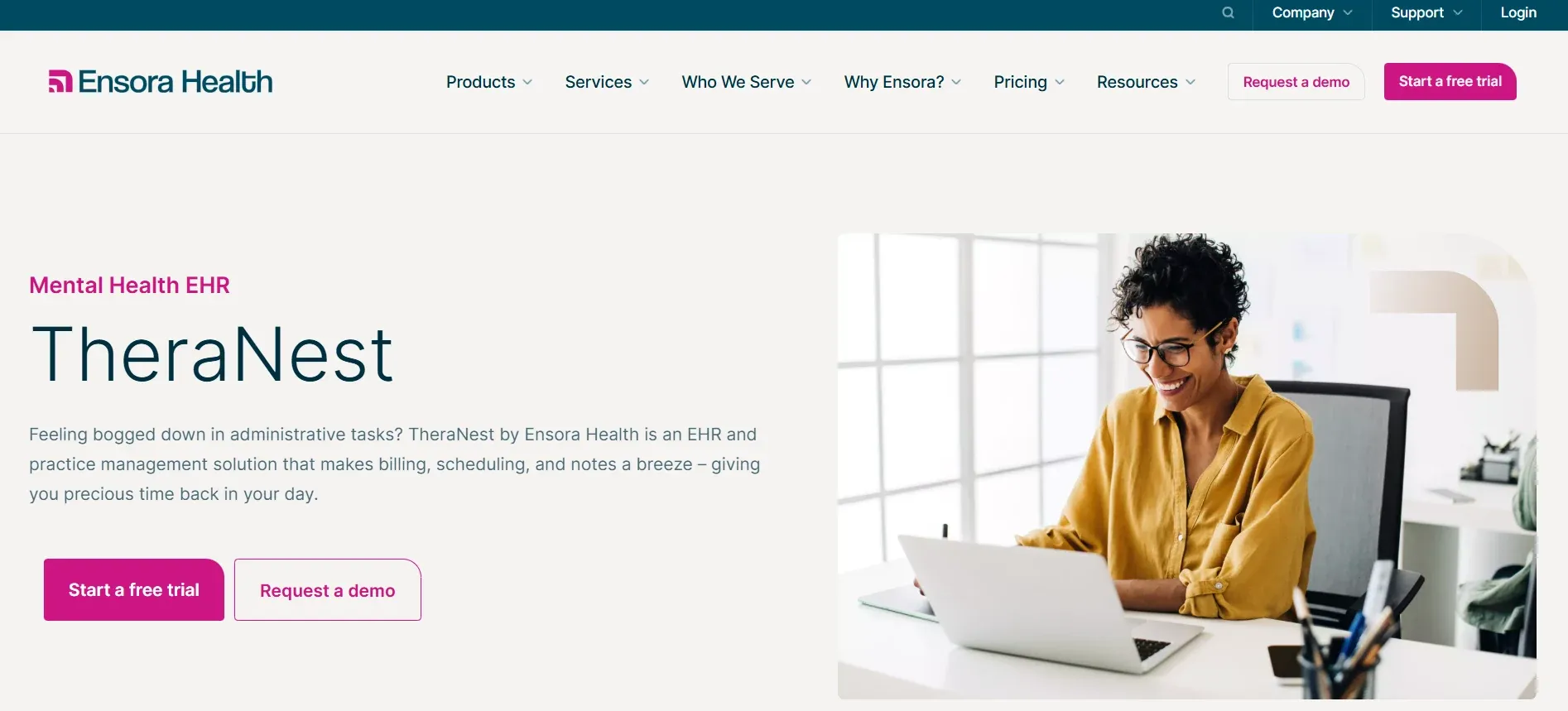
TheraNest targets group therapy providers, with features for progress notes, group scheduling, and billing. It is more affordable at the entry tier than Valant, but you pay more as your client load grows, and advanced analytics require upgrades.
Pricing: Reported at $39/month for up to 30 active clients. See pricing.
- Flexible group notes and scheduling
- Patient portal and telehealth options
- No long-term contract required
- Pricing is based on active clients, not just users
- Analytics and advanced billing features are add-ons
- Limited API integrations for custom workflows
With an owned platform, analytics and advanced billing can be tailored to your exact needs, no add-ons required.
4. Luminare Health (Best for mid-sized clinics)

Luminare Health is designed for clinics that want customizable EHR workflows with strong regulatory compliance features. It often outpaces Valant on security and integration, but pricing is opaque and heavily quote-based, and many integrations are paid add-ons.
Pricing: Custom quote required; reported to be competitive for mid-large clinics.
- Strong compliance and security features
- Customizable EHR templates
- Dedicated onboarding support
- Opaque pricing, hard to predict total cost
- Integration fees can add up
- Customization can require implementation fees
5. Procentive (Best for complex billing needs)
Procentive is built for behavioral health clinics with complicated billing: think multi-payer, Medicaid, and custom claim workflows. It beats Valant on flexibility but has a learning curve and a long onboarding process. Pricing is quote-based and can climb with added modules.
Pricing: Custom quote required; typically tailored to clinic size and requirements.
- Highly configurable billing
- Strong claims management
- Custom forms and templates
- No transparent pricing online
- Module-based fees add up for full functionality
- Training required for effective use
If you owned your billing workflow, training would be tailored to your team and your processes, not a generic system.
6. Kareo Behavioral (Tebra) (Best for insurance and compliance)
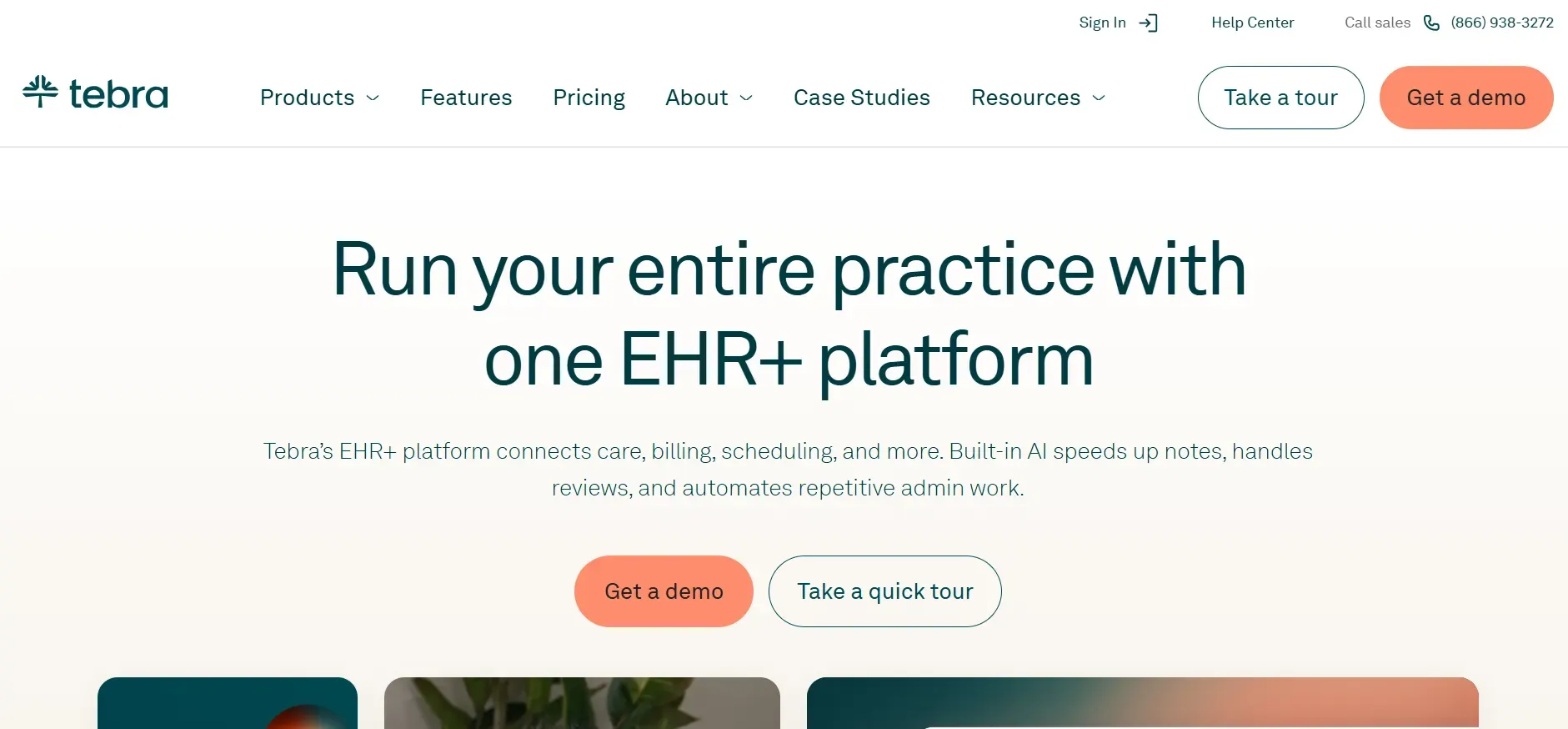
Kareo Behavioral (now part of Tebra) is known for deep insurance rules, credentialing, and compliance tracking. It is a solid Valant alternative for insurance-heavy practices, but costs escalate with providers, and custom reporting is limited.
Pricing: Starts at $135/month per provider. See pricing.
- Strong insurance claim workflows
- Credentialing and compliance tools included
- Good support for multi-location practices
- High per-provider cost, especially as you grow
- Custom reports require exports or manual work
- Some integrations require paid setup
7. Greenspace (Best for client outcomes tracking)

Greenspace stands out for outcome measurement, patient progress tracking, and digital assessments. Used alongside or instead of an EHR, it is more focused than Valant but not a full practice management suite. Pricing is per provider, and integration with EHRs may require technical help.
Pricing: Reported at $50/month per provider. See pricing.
- Best-in-class outcome tracking
- Easy digital assessment tools
- Integrates with leading EHRs
- Not a full practice management tool
- Pricing per provider adds up
- Limited billing and scheduling features
8. BreezyNotes (Best for small practices on a budget)

BreezyNotes is a simple, budget-friendly EHR for solo and small group practices. It is less feature-packed than Valant but gets the basics right: notes, scheduling, and simple billing. As you scale, you may outgrow its functionality, and customizations are limited.
Pricing: Reported $39.95/month per user. See pricing.
- Easy learning curve
- Affordable for solo providers
- Responsive support
- Limited advanced features
- Few integrations beyond basics
- Per-user pricing
9. Devaims (Best for clinics who want to own their platform)

Devaims builds custom software for mental health practices who want to own their EHR, client portal, billing, and workflows. You pay once for the build, then a flat maintenance. No per-user or per-feature fees. You get the source code and full control: your data, your rules, no lock-in, and the ability to add or change features as your practice evolves.
- One-time build, you own the platform and the code
- No per-user, per-feature, or hidden fees. Flat maintenance only
- Workflows, forms, and analytics tailored to your exact needs
- Integration with any system you use, on your terms
- Full data portability. No migration headaches if you ever change direction
Other Valant alternatives worth knowing
- Netsmart: Large enterprise EHR for behavioral health; overkill for most clinics unless you have a complex, multi-site organization.
- Qualifacts: Focused on large behavioral health agencies; highly configurable but expensive and contract-heavy.
If your practice is small to medium, these options can be too complex or costly, but they're worth a look for enterprise-scale needs.
How to choose the right Valant alternative
- Budget: Know your all-in cost at your current and projected size, include add-ons and per-user fees.
- Practice type: Solo, group, or large clinic? Some tools work better at different scales.
- Workflow needs: Do you need custom forms, complex billing, or unique scheduling?
- Ownership vs. rental: Are you comfortable paying rent forever, or is it time to own?
- Integration: Does your new system need to play nice with labs, payers, or other tech?
If you keep running into feature or cost walls, it might be time to consider owning your platform.
Stop paying rent on software you could own
Here is the truth: every Valant alternative on this list (except Devaims) rents you access and keeps your data and workflows on their terms. The rent may be lower or the features slicker, but you are still paying someone else's mortgage. Devaims is different: Devaims builds your mental health practice a platform you own, with every workflow, report, and integration made to fit how you actually operate, not how a SaaS vendor thinks you should.
When your team outgrows per-user pricing, or you need a feature the vendor will not build, or you want to integrate with a local lab, Devaims hands you the code. You keep the data, the rules, and the ability to change anything as your practice evolves. Owning your platform means you never get surprise hikes, never lose features to "tier changes," and never worry about being forced to migrate again.
- No per-user, per-feature, or add-on fees. Flat maintenance only
- Workflows and analytics built for your clinicians, not the lowest common denominator
- You own all patient data and the full source code
- Integrates with exactly what you need, no waiting on a roadmap
- Freedom to switch vendors or expand, because you are not locked in
| Vendor | Ownership | Customization | Ongoing cost |
|---|---|---|---|
| Valant | No | Limited to vendor roadmap | Monthly, per-user, rising with scale |
| SimplePractice | No | Basic templates | Monthly, per clinician |
| TherapyNotes | No | Standard clinical flows | Monthly, per user |
| Devaims (Owned) | Yes (You keep the code) | Fully bespoke to your workflows | One-time build, then flat maintenance |
| Year | Rent (Valant, $525/mo) | Own (Devaims, $30,000 build + $180/mo) |
|---|---|---|
| Year 1 | $6,300 | $32,160 |
| Year 2 | $12,600 | $34,320 |
| Year 3 | $18,900 | $36,480 |
| Year 4 | $25,200 | $38,640 |
| Year 5 | $31,500 | $40,800 |
For a 10-clinician practice spending $525 per month on Valant, renting seems cheaper for the first 3 to 4 years. By year 5, owning is ahead, and the gap only widens from there. Clinics planning to grow or stick around for the long term benefit most. Ask us to run your actual numbers for free.
How to switch from Valant
- Export patient records, billing data, and documents from Valant (CSV, PDF, and HL7 formats if available).
- Choose your new platform and complete contracting or build scoping.
- Import data into your new system, map fields and verify transfer integrity.
- Reconnect payment processors, telehealth, and any integrations.
- Train staff on new workflows and test with a pilot group.
- Run both systems in parallel for 2 to 4 weeks, then review compliance and data completeness.
- Check your Valant contract for notice requirements and finalize the switch.
With a custom Devaims build, the migration is handled as part of the project.
Frequently asked questions
What is the best Valant alternative for solo providers?
SimplePractice and BreezyNotes are popular choices for solo therapists. Both have lower entry pricing and easy onboarding, but if you want to grow or customize, TherapyNotes is worth a look. The real pivot for solo providers is whether to rent or eventually own. Devaims is the only option that puts you in the owner's seat.
Which Valant alternative is cheapest for a small group practice?
TheraNest and BreezyNotes tend to be most affordable for small groups, with pricing based on active clients or users. Always check how costs will scale as your practice grows, since per-user fees add up. If you want to avoid that curve, owning with Devaims fixes your costs.
Are there any free Valant alternatives?
There are open-source EHRs like OpenEMR, but they require significant IT effort and may not be HIPAA-ready out of the box. Most practices find "free" options are not truly free when you factor in compliance and support. Devaims is not free, but it's the only route where your investment builds equity.
What is the best Valant alternative for complex billing and insurance?
Procentive and Kareo Behavioral (Tebra) are top picks for clinics with complex billing, insurance, and Medicaid workflows. Both handle multi-payer scenarios better than Valant. For full control, a Devaims build can automate your exact billing requirements, no workarounds needed.
When should a clinic consider switching from Valant?
If your costs are rising faster than your practice, workflows are held back by the software, or you are planning to grow, it is time to evaluate Valant alternatives. When you are frustrated by lock-in or see that five years of rent equals ownership, Devaims becomes the logical next step.
Can I keep my Valant data if I switch?
Yes, but exporting all patient records and billing data from Valant can be complex, plan for careful mapping and validation. With Devaims, you own the data and the platform, so data migration is built into the project.
What makes Devaims different from other Valant alternatives?
Devaims is the only option that builds your platform to your needs, hands you the source code, and lets you own it outright. All other Valant alternatives keep you on a subscription and control your features and data. If you are tired of renting, Devaims is the ownership path.
The bottom line
Most Valant alternatives just swap one subscription for another, and every extra feature or user adds to your bill. The real breakthrough is ownership: if your five-year rent would buy you a platform, you have outgrown SaaS.
Run the numbers: what you pay in fees every month could be building equity in your own platform, with your rules, your data, and no lock-in. If you are ready to see what ownership could mean for your practice, we will show you the math and the roadmap.
Explore more on the Devaims blog or see related alternatives: SimplePractice alternatives, TherapyNotes alternatives, TheraNest alternatives.