



You know the drill, the monthly invoice from TherapyNotes shows up, and your first thought is, "What am I actually getting for this?" Maybe it is the support ticket that sits unanswered, or the report you need that is locked to the next tier up. Or maybe it is the creeping realization that, after years of paying, you still do not own a thing.
Switching software is a hassle, but the long-term math never lies. SimplePractice and TheraNest are the most popular TherapyNotes alternatives, with unique strengths and their own set of trade-offs. But if you are ready to stop renting and actually own your system, only a custom Devaims build lets you break the cycle. Here is the honest take on the leading options and the one way out.
Why mental health practices look for TherapyNotes alternatives
TherapyNotes remains a popular EHR, but its limitations become clear as practices grow or need more flexibility. Here is why many seek an alternative:
- Rising monthly fees: Most cloud EHRs, including TherapyNotes, charge per provider and tack on extras for e-prescribe, telehealth, or billing integrations. Over time, the cost adds up fast. These incremental increases are rarely matched by additional value and can become a significant line item in your budget, especially as you expand.
- Feature gating: Core features like custom forms, advanced analytics, or reporting are often locked behind higher-priced tiers or add-ons. This can be extremely frustrating for practices that want to tailor documentation, track outcomes, or automate workflows without being forced into expensive enterprise plans.
- Vendor lock-in: Your data sits on someone else’s servers. Migrating is difficult, with risk of data loss or incomplete exports, and staff retraining is a real cost. Most platforms use proprietary formats, and full data portability is rare. You never really own your workflow or your client records.
- Limited customization: Every practice is unique, but off-the-shelf platforms force you to work their way. If you need a custom intake process, unique note templates, or specific insurance workflows, you are often out of luck or must pay for costly custom development, if it is even allowed.
- Support bottlenecks: With big vendors, you are a ticket number. Long wait times and generic responses can delay billing, reporting, or even impact client care. Many practices report slow response times, especially during high-traffic periods or after major updates.
If you are searching for TherapyNotes alternatives, you are not alone. Many practices are looking for more control, lower costs, and software that truly fits their needs.
Quick comparison of the best TherapyNotes alternatives
| Tool | Best for | Starting price | You own it? |
|---|---|---|---|
| SimplePractice | Solo and small group practices | Reported $29/mo | No, subscription |
| TheraNest | Growing practices | Reported $39/mo | No, subscription |
| Luminare Health | Integrated care teams | Reported $49/mo | No, subscription |
| Valant | Group practices, psychiatry | Reported $145/mo | No, subscription |
| Procentive | Large behavioral orgs | Custom | No, subscription |
| Kareo Behavioral (Tebra) | Insurance billing focus | Reported $80/mo | No, subscription |
| Greenspace | Client progress tracking | Reported $25/mo | No, subscription |
| ICANotes | Psychiatric documentation | Reported $59/mo | No, subscription |
| Devaims | Full ownership, custom fit | One-time build, you own it | Yes |
Always confirm current pricing before you decide, as vendor rates change frequently and add-ons can stack up. For a deeper look at the cost math, see below.
The 9 best TherapyNotes alternatives
1. SimplePractice (Solo and small group practices)
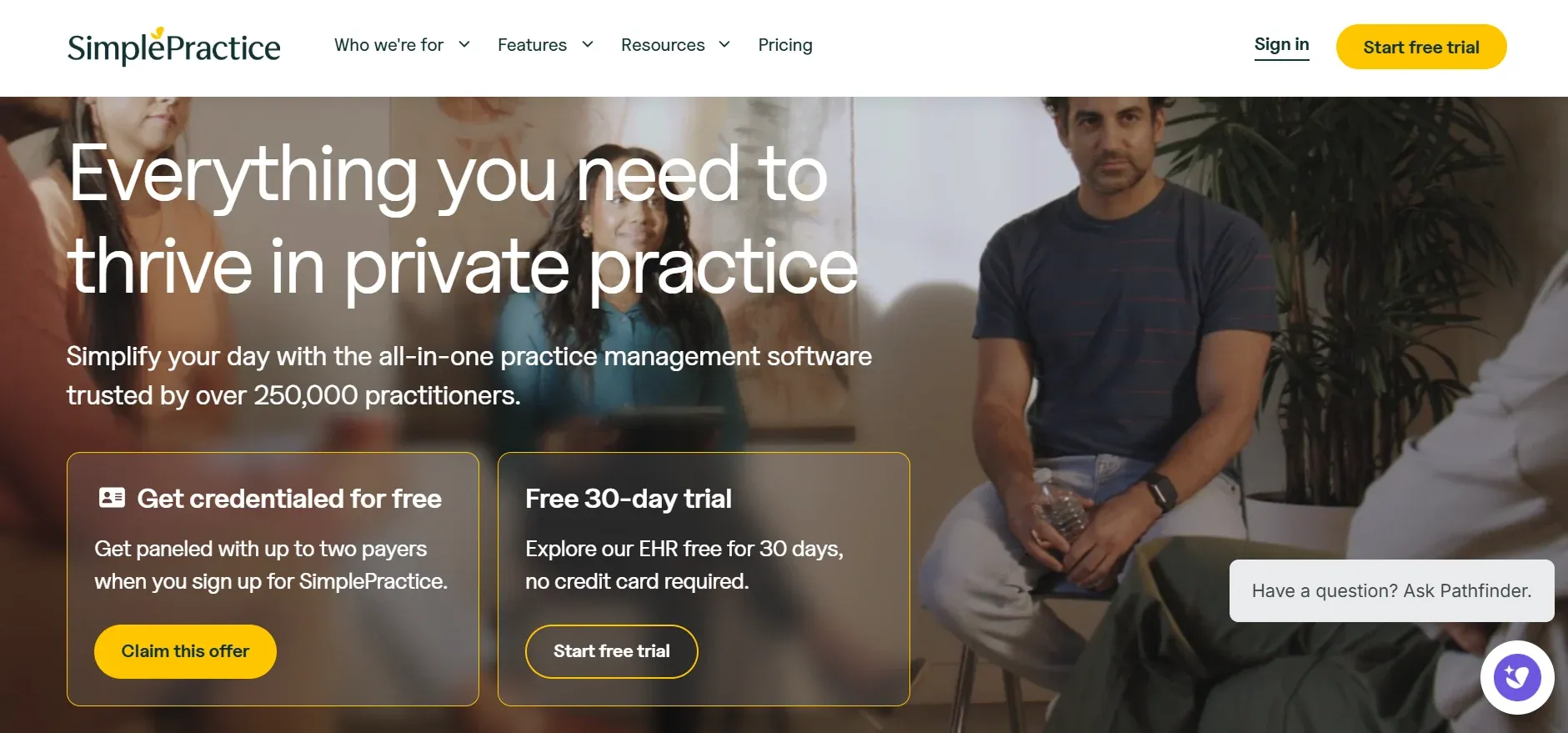
SimplePractice is the most widely used platform for solo therapists and small group practices looking for a modern, cloud-based EHR. Its clean interface and simple onboarding process make it a top choice for those new to digital practice management. The platform offers appointment scheduling, client portal access, telehealth, and insurance billing, all in a mobile-friendly package.
Pricing: Starts at $29/month for solo providers. Higher tiers unlock more features and add-ons.
-
Key limitations:
- Custom forms and advanced reporting require higher-priced plans
- Data export/import can be limited for attachments or custom fields
- No ownership of software or data structure
-
Strengths:
- Intuitive interface and easy onboarding
- Integrated telehealth and billing
- Mobile app for clinicians
On a custom Devaims build, you would just have custom forms included, no tier upgrade required.
2. TheraNest (Growing practices)
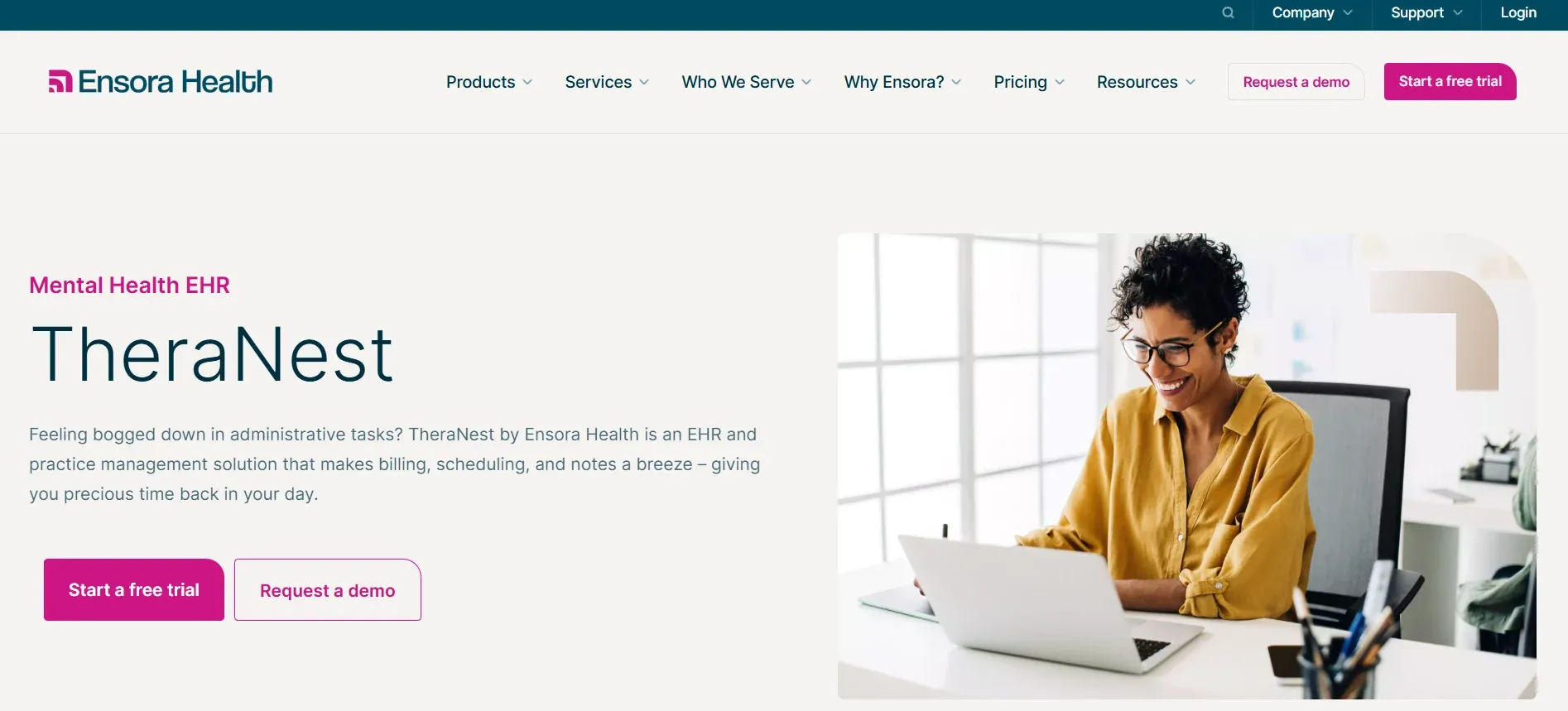
TheraNest serves small to midsize practices, offering more advanced scheduling, billing, and documentation features than many entry-level EHRs. It stands out for its support of family and group therapy workflows and robust reporting.
Pricing: Starts at $39/month, with per-client pricing. Add-ons for telehealth and e-prescribe.
-
Key limitations:
- Advanced analytics restricted to higher tiers
- Per-client pricing can get expensive as caseload grows
- Limited customization outside native features
-
Strengths:
- Strong group and family therapy support
- Comprehensive reporting dashboard
- Migration support available
3. Luminare Health (Integrated care teams)

Luminare Health is built for multidisciplinary practices that bridge mental and physical health. Its strength is in care coordination, making it a fit for practices involved in collaborative care, integrated clinics, or those that need to manage referrals and communication across teams.
Pricing: Starts at $49/month per user. Custom pricing for larger teams.
-
Key limitations:
- Complexity may be overkill for small practices
- Custom integrations can incur extra fees
- Subscription fees rise as teams grow
-
Strengths:
- Robust care coordination tools
- HIPAA-compliant and audit-ready
- Supports interdisciplinary teams
If you owned your stack, adding integrations would be a one-time project, not a recurring charge.
4. Valant (Group practices, psychiatry)
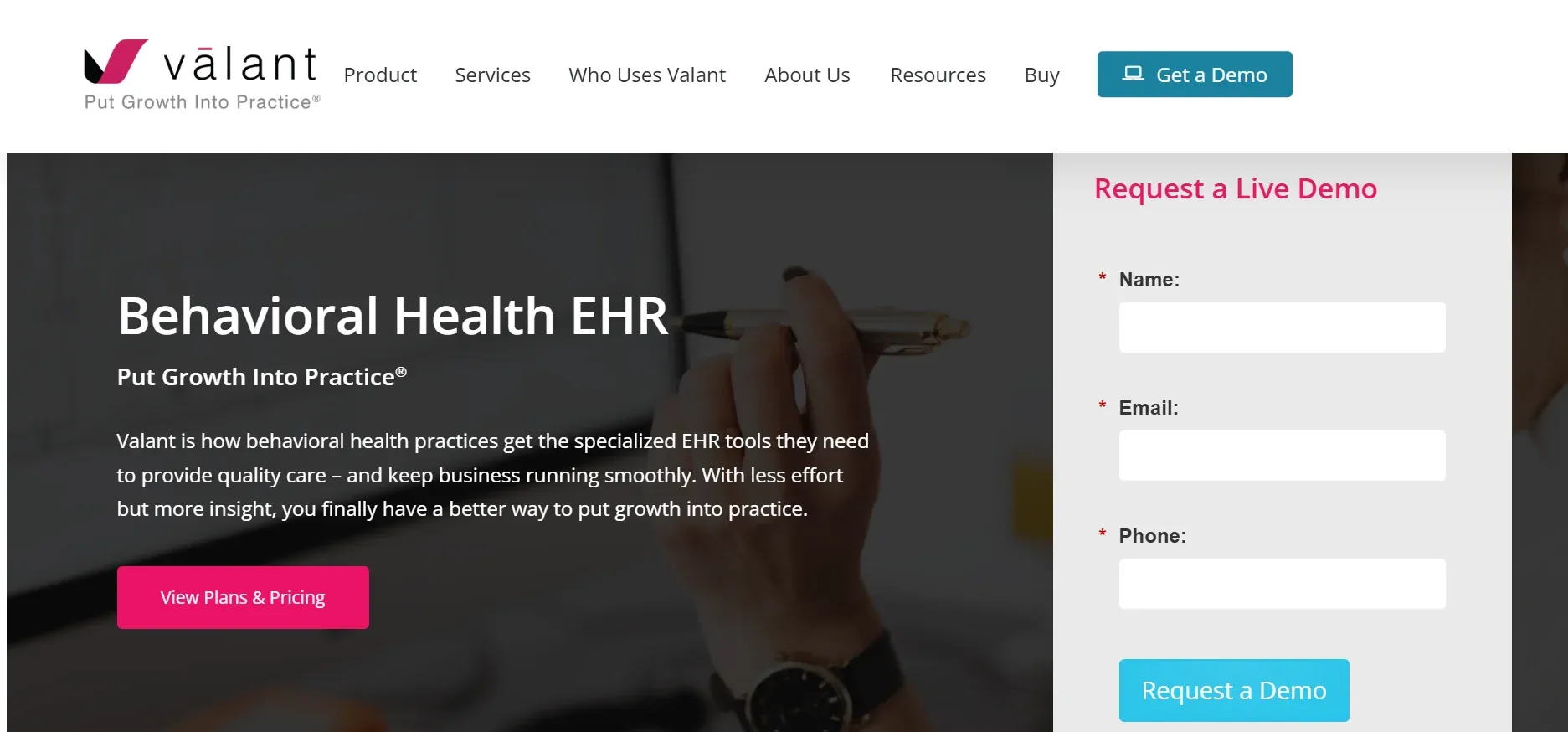
Valant is designed for group mental health practices, especially those with psychiatric providers. Its emphasis is on psychiatry-specific documentation, e-prescribing, and complex billing workflows.
Pricing: Starts at $145/month per provider. Enterprise plans available.
-
Key limitations:
- Premium features require enterprise plans
- Customization limited to platform options
- Higher cost as provider count increases
-
Strengths:
- Advanced e-prescribing and psychiatry tools
- Detailed reporting and analytics
- Patient engagement features
5. Procentive (Large behavioral organizations)
Procentive targets large behavioral health organizations, including multi-site clinics and agencies. Its platform is built to handle complex workflows, extensive compliance needs, and high-volume billing.
Pricing: Custom pricing based on organization size and needs.
-
Key limitations:
- High upfront and ongoing costs
- Onboarding can be lengthy and resource-intensive
- Customization may require extra development fees
-
Strengths:
- Handles multi-location and high-volume practices
- Granular compliance and reporting tools
- Customizable clinical templates
6. Kareo Behavioral (Tebra) (Insurance billing focus)
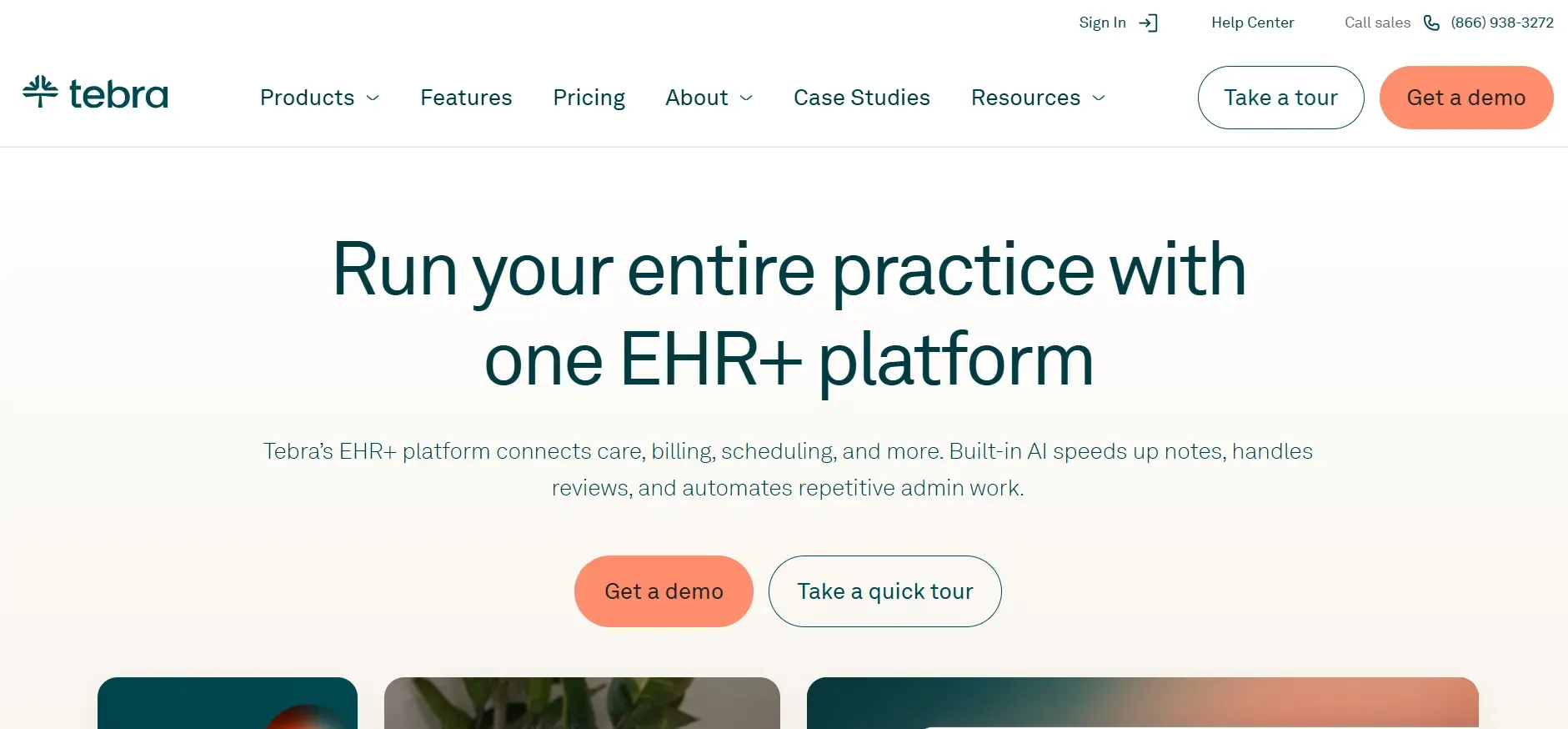
Kareo Behavioral (now part of Tebra) is a cloud-based EHR that specializes in insurance billing and revenue cycle management for behavioral health. Its focus is on helping practices maximize collections and streamline insurance workflows.
Pricing: Starts at $80/month per provider. Add-ons for analytics and telehealth.
-
Key limitations:
- Less customizable for therapy-specific documentation
- Some features require additional fees
- No ownership of system or data
-
Strengths:
- Strong insurance billing and denial management
- Electronic claims and eligibility verification
- Onboarding and migration support
7. Greenspace (Client progress tracking)

Greenspace is a measurement-based care platform, not a full EHR. It is designed to supplement your main practice management tool by tracking client progress and outcomes using validated assessments.
Pricing: Starts at $25/month per user. Add-ons for advanced analytics.
-
Key limitations:
- Not a standalone EHR, must be used with another system
- Managing two platforms adds complexity
- Exporting detailed history may be limited
-
Strengths:
- Excellent for standardized outcomes measurement
- Integrates with major EHRs
- Automated client reminders and dashboards
8. ICANotes (Psychiatric documentation)
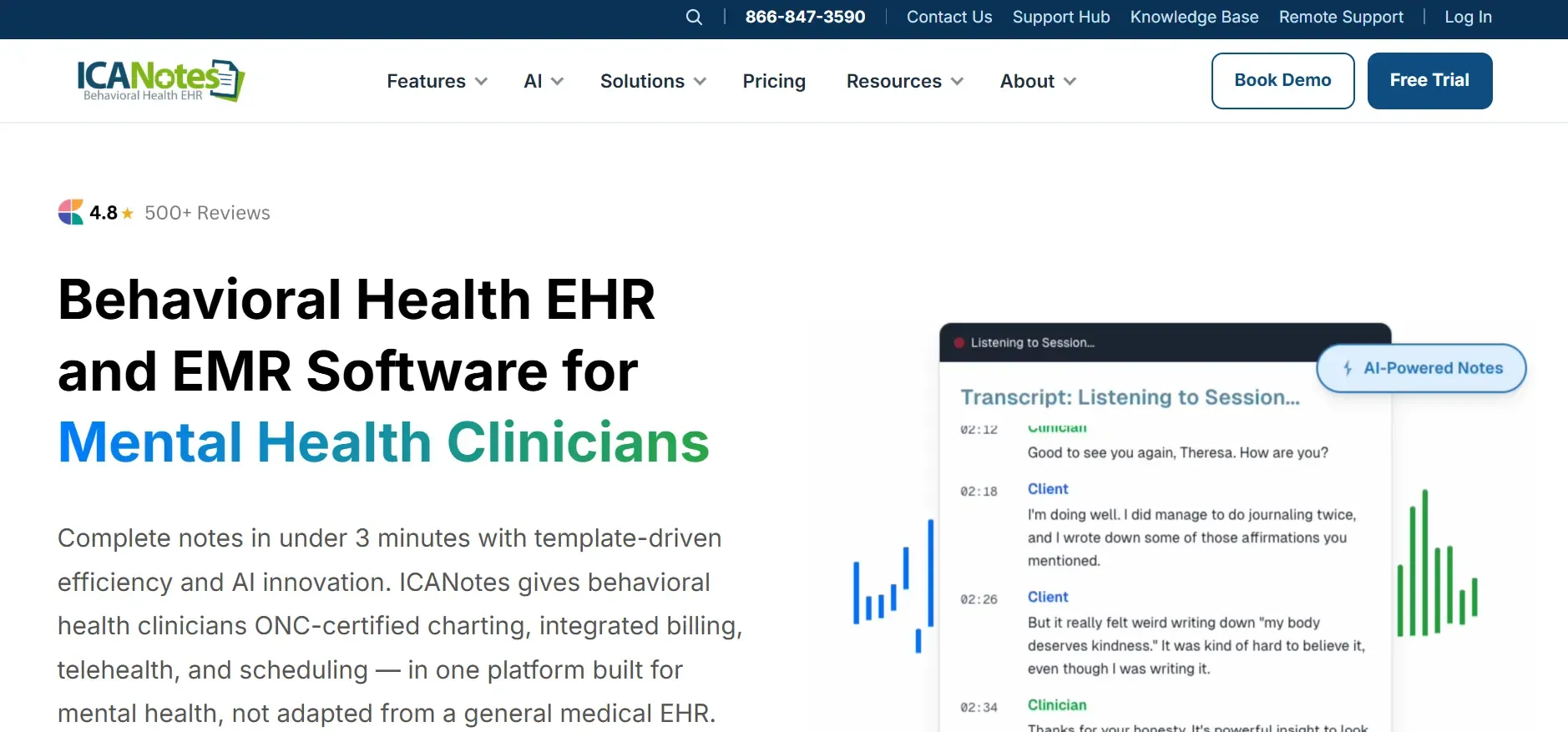
ICANotes is purpose-built for psychiatric providers who need fast, structured, and compliant documentation. Its unique "point-and-click" note builder enables rapid charting, especially for medication management and complex psychiatric histories.
Pricing: Starts at $59/month per user. Add-ons for telehealth and e-prescribe.
-
Key limitations:
- Dated interface and steeper learning curve
- Some features cost extra
- No ownership of platform or templates
-
Strengths:
- Extensive psychiatric templates
- Automated coding and compliance tools
- Supports outcome tracking
On a custom Devaims build, you would own your templates and could adapt them freely.
9. Devaims (Full ownership, custom fit)

Devaims is the only option on this list that lets you fully own your mental health software. Instead of renting, Devaims builds your practice a custom EHR and practice management platform tailored to your exact needs, workflows, forms, integrations, and reports, then hands you the source code and the keys.
Pricing: One-time build cost, then flat maintenance. No per-user or per-feature fees.
- You own the source code and keep your data on your termsNo recurring per-user or per-feature chargesCustom workflows, forms, and integrations built for your needsFlat maintenance only, no rent, no lock-in
- You own the source code and keep your data on your terms
- No recurring per-user or per-feature charges
- Custom workflows, forms, and integrations built for your needs
- Flat maintenance only, no rent, no lock-in
Other TherapyNotes alternatives worth knowing
- Netsmart: Enterprise EHR for inpatient and community behavioral health, with deep compliance and reporting. Typically requires long contracts and dedicated IT resources. Not recommended for small or mid-size outpatient practices.
- Qualifacts: Strong for large agencies and state-funded programs. Offers advanced compliance, data warehousing, and population health tools. Significant onboarding investment and a steep learning curve.
- Luminello and TherapyAppointment: Both are used by some clinics as simpler, lower-cost EHRs, but often lack the depth, flexibility, or integrations required for larger or rapidly growing practices.
For a full list of behavioral EHRs, see resources from Software Advice and Capterra.
How to choose the right TherapyNotes alternative
- Budget: Solo practices may prefer lower-cost tools like SimplePractice or BreezyNotes, but the price climbs fast as you add clinicians or features. For larger groups, a custom build may break even in a few years.
- Required features: Make a list of must-haves (telehealth, custom forms, e-prescribe, advanced reporting) and check which features are included vs. locked to higher tiers. Many EHRs advertise features but restrict them to premium plans.
- Practice size: Large and multidisciplinary practices benefit from robust platforms like Valant or Procentive, but these come with complexity and cost. If you have unique workflows, consider a custom system you own.
- Data ownership: If you want control of your records, templates, and workflows, only a custom build like Devaims delivers true ownership. This is especially important for practices with compliance or privacy requirements.
- Long-term math: Add up five years of subscriptions, including all add-ons, then compare to the one-time build and flat maintenance of an owned platform. For most practices, owning pays off within 3 to 5 years.
When your practice is ready to stop renting and start owning, Devaims is the only TherapyNotes alternative that breaks the cycle for good.
Stop paying rent on software you could own
Every TherapyNotes alternative above is another flavor of the same, you pay each month, the price creeps up, and you still do not own the engine of your practice. The features you need most are gated, and the moment you want something truly custom, you are out of luck. Owning your system flips the script, you decide what is included, how it works, and what it costs over time.
Devaims is a custom software agency that builds mental health platforms to your exact spec. You get the source code, full ownership, and the freedom to host or integrate however you want. No subscriptions, no feature gates, just your system, forever.
- No per-provider or per-feature pricing
- All your data, templates, and records are yours to keep
- Flat, predictable maintenance instead of rent that never stops
- Custom fit, get precisely the workflows and reports your practice needs
Let’s look at how owning compares to renting over time.
| Platform | Ownership | Monthly/Yearly cost | Features locked? |
|---|---|---|---|
| TherapyNotes | Rented | $59/mo/provider | Yes, higher tiers |
| SimplePractice | Rented | $29/mo (solo) | Yes, higher tiers |
| Valant | Rented | $145/mo/provider | Yes, enterprise features |
| Devaims | Owned | One-time build, then $180/mo support | No |
And here is the five-year cost math for a 4-provider practice:
| Year | TherapyNotes (rent) | Devaims (own) |
|---|---|---|
| Year 1 | $2,832 | $28,320 |
| Year 2 | $5,664 | $30,480 |
| Year 3 | $8,496 | $32,640 |
| Year 4 | $11,328 | $34,800 |
| Year 5 | $14,160 | $36,960 (now ahead) |
In this example, renting stays cheaper for about three years. By year five, owning with Devaims puts you ahead, and every year after, the gap widens. If your practice is larger, you hit break-even even sooner. We can run your actual numbers for free, obligation-free.
How to switch from TherapyNotes
- Export all client records, notes, and billing data from TherapyNotes. TherapyNotes allows data export in CSV and PDF formats. For HIPAA compliance, ensure encrypted transfer, especially for sensitive notes or attachments.
- Choose your new platform and review its import requirements. Most EHRs provide import templates or onboarding support. Custom platforms like Devaims will map your old data to the new system’s structure.
- Import client and billing data into your new system, or work with your vendor to map fields. This includes demographics, appointment history, notes, treatment plans, and billing. Attachments may need to be uploaded separately.
- Reconnect payment processing, insurance integrations, and telehealth links. Coordinate with your billing and telehealth vendors to ensure claims and video sessions work smoothly from day one.
- Train staff on new workflows and documentation. Schedule live or recorded training, provide guides, and allow for a transition period where staff can test the platform before going live.
- Test the new platform in parallel for at least one billing cycle. Run both systems side by side to catch any gaps or issues in documentation, billing, or scheduling.
- Review your old contract or subscription for cancellation terms. Some vendors require 30 days’ notice or have early termination fees. Plan accordingly to avoid double billing.
With a custom Devaims build, the migration is handled as part of the project, including full data mapping, import, and staff training.
Frequently asked questions
What is the best TherapyNotes alternative for solo therapists?
SimplePractice is the most popular for solo therapists due to its intuitive design, ease of use, and broad feature set. It covers scheduling, notes, billing, and telehealth out of the box. TheraNest is also a contender, offering stronger reporting and family/couples support. Both are subscription-based, so you still face recurring fees and feature gates as your needs grow. For solo practitioners who want to own their system (and avoid future price hikes), a lightweight custom build is possible but usually makes sense as your practice grows.
What is the cheapest TherapyNotes alternative?
Greenspace offers the lowest reported entry price at around $25/mo, but it is not a full EHR. For all-in-one management, BreezyNotes and SimplePractice are the most affordable, but be aware of per-user fees, add-ons for telehealth or e-prescribe, and price increases as your practice expands. Always calculate the full cost, including any integrations or required modules, before choosing.
Is there a free TherapyNotes alternative?
There is no truly free, HIPAA-compliant EHR with full practice management and billing. Some platforms offer limited-time trials or restricted free versions (such as TherapyAppointment’s trial), but all major players, including SimplePractice, TheraNest, and Valant, require a paid subscription for ongoing use. Open-source EHRs exist but are not tailored for mental health and require significant IT investment and compliance validation.
What is the best TherapyNotes alternative for psychiatry practices?
Valant and ICANotes are both strong for psychiatric workflows and e-prescribe features. Valant offers advanced revenue cycle tools and analytics, while ICANotes excels at fast, compliant psychiatric charting. Both come at a higher monthly price than TherapyNotes and are best for practices with prescribers or complex medication management. If you want to fully own and customize your psychiatry platform, a Devaims build is the only real path.
When should I switch from TherapyNotes?
If you are frustrated by rising fees, need features locked behind higher tiers, or want more control over your data and workflows, it is time to consider an alternative. Practices often switch when the cost of subscriptions exceeds the value received, when workflows are forced to fit the software (not the other way around), or when compliance or integration needs are unmet. The five-year math often makes a custom solution the smarter move, especially for growing groups.
Can I keep my existing client data if I switch?
Most platforms, including TherapyNotes, allow you to export client and billing data in CSV or PDF formats. Some data, such as custom forms, attachments, or detailed history, may require manual work to migrate. A custom Devaims build includes full data migration, so you keep everything, notes, attachments, billing history, and even custom templates. Always confirm data export/import capabilities before switching.
How does Devaims differ from subscription EHRs?
With Devaims, you own the source code and set your own workflows. You pay a one-time build cost and a flat maintenance fee, with no per-user or per-feature charges. You control your data, integrations, and future changes. Subscription EHRs, including every TherapyNotes alternative listed, are rented, the vendor controls features, pricing, and data structure, and can change terms at any time. Owning your platform means you are no longer at the mercy of external vendors or annual price hikes.
The bottom line
TherapyNotes alternatives offer relief from some pain points, but every subscription is still rent. Here is the test, add up what this tool will cost you over the next five years. If that number would have built you something you own, you already have your answer. Owning your platform is not for everyone, but for practices who want control and predictability, it is the only real exit from the rent cycle. For more on the EHR landscape, see resources from HealthIT.gov and Psychology Today.
Read more on the Devaims blog and explore related posts like SimplePractice alternatives, TheraNest alternatives, and Valant alternatives.