


Ever felt like your dermatology clinic is stuck on an endless treadmill, paying month after month for EMR software that never really becomes yours? For too many practices, Record Cerner is just that: a critical system you can never actually own. The hidden add-ons, per-provider fees, and inflexible contracts leave you wondering if your practice or the software vendor is really coming out ahead.
By 2026, the search for "Record Cerner alternatives" is more active than ever. Rising costs, slow innovation, and the need for dermatology-specific workflows push clinics to look elsewhere. The top contenders, Modernizing Medicine (EMA), Nextech, Kareo (Tebra), DrChrono, Athenahealth, Practice Fusion, Greenway Health, DermEngine, and PatientNow, each have their strengths. But every one operates on a rental model. Only a custom Devaims build lets you own your EMR, your data, and your future. Let’s dive into the real details of these alternatives, so you can make a decision that fits your practice for years to come.
Why dermatology clinics look for Record Cerner alternatives
Per-provider and per-visit fees stack up fast. Cerner’s pricing model, like most major EMRs, is built on recurring charges for every provider, every staff login, and often per visit or transaction. A solo dermatologist might see a manageable bill, but add nurse practitioners, support staff, or a second location, and the costs multiply. Since these fees never end, the total cost over five years often exceeds what it would cost to build a system you own outright.
Locked-in contracts and slow customizations. Dermatology is a visual, fast-moving specialty. You need workflows for biopsies, lesion mapping, and cosmetic procedures. With Cerner and most alternatives, you’re limited to what the vendor offers. Want a new workflow, template, or integration? Prepare for a long wait, extra fees, or a flat "not possible." Your data is in their hands, but their priorities come first, and contract terms can lock you in for years.
Add-ons for essentials. Basic features like e-prescribing, teledermatology, or secure image storage are often not included in base packages. You may need to upgrade to a higher tier or pay per module. This piecemeal approach makes budgeting unpredictable and can leave you without critical tools unless you pay more.
Integration headaches. Dermatology clinics often need to connect with labs, imaging systems, pharmacies, and billing services. With Cerner, integrating these can mean costly custom interfaces, unreliable third-party bridges, or manual workarounds that slow your staff and introduce errors. True interoperability is rarely as simple as the sales pitch suggests.
Opaque cost structures. The initial quote from a vendor may seem reasonable, but after onboarding, training, support, and "mandatory" modules, the real cost becomes clear. Many practices report surprise fees months after signing. Transparent, predictable costs are rare in the EMR world, which is why many clinics seek out alternatives that offer more clarity and control.
Quick comparison of the best Record Cerner alternatives
| Tool | Best for | Starting price | You own it? |
|---|---|---|---|
| Modernizing Medicine (EMA) | Derm-focused SaaS | Reported $600/mo/provider | No |
| Nextech | All-in-one practice management | Custom quote | No |
| Kareo (Tebra) | Billing-centric practices | From $150/mo/provider | No |
| DrChrono | Mobile-first clinics | Reported $199/mo/provider | No |
| Athenahealth | Large or multi-site groups | Custom quote, % of collections | No |
| Practice Fusion | Small practices | Reported $149/mo/provider | No |
| Greenway Health | Integrated RCM | Custom quote | No |
| DermEngine | Imaging-heavy practices | From $99/mo/provider | No |
| PatientNow | Aesthetic/derm crossover | Custom quote | No |
| Devaims | Clinics that want to own | One-time build, you own it | Yes |
Always confirm current pricing before you decide, vendors change terms often and add-ons can quickly change the bottom line.
The 9 best Record Cerner alternatives
1. Modernizing Medicine (EMA) (Best for derm-specific features)
EMA is built from the ground up for dermatology. Its core strength lies in its specialty-focused templates, rapid charting, and natural integration of clinical photography. EMA’s interface allows providers to annotate images directly, use visual diagnosis aids, and access a library of dermatology-specific codes and protocols. This makes it a favorite for clinics prioritizing clinical accuracy and efficiency.
Pricing: Reported $600+/month per provider, plus add-ons for telehealth, analytics, and storage.
- Dermatology-native templates and image tools
- Fast charting and coding suggestions
- Strong integration with labs and telehealth
- High per-provider cost, especially with add-ons
- Customization limited to vendor-approved changes
- Feature requests and support can be slow
If you need deep derm workflows but want to avoid per-provider fees, Devaims can build custom templates and image tools you own outright.
2. Nextech (Best for practice management integration)
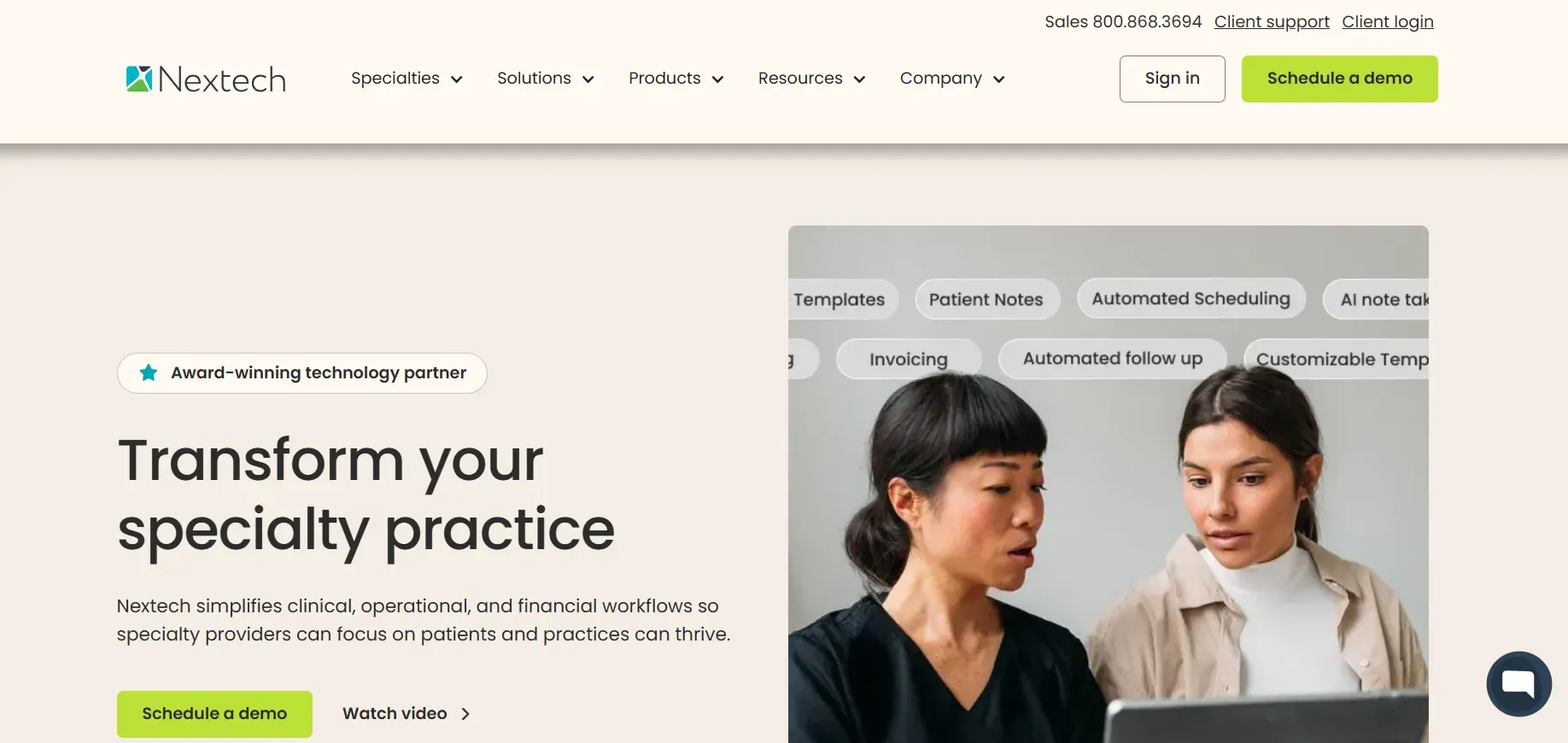
Nextech stands out as a comprehensive practice management suite for dermatology. It combines EMR, scheduling, billing, and revenue cycle management (RCM) in one system. Unlike Cerner, Nextech’s workflows are more configurable and its reporting tools are tailored to the needs of specialty practices.
Pricing: Custom quote, typically annual contracts with per-user fees.
- Integrated billing and business analytics
- Configurable dermatology workflows
- Strong patient engagement tools
- Opaque pricing and multi-year contracts
- Deep customization still limited by vendor
- Major upgrades can disrupt workflows
For clinics frustrated by contract lock-in, Devaims offers a custom build with no recurring user fees or forced upgrades.
3. Kareo (Tebra) (Best for insurance billing)
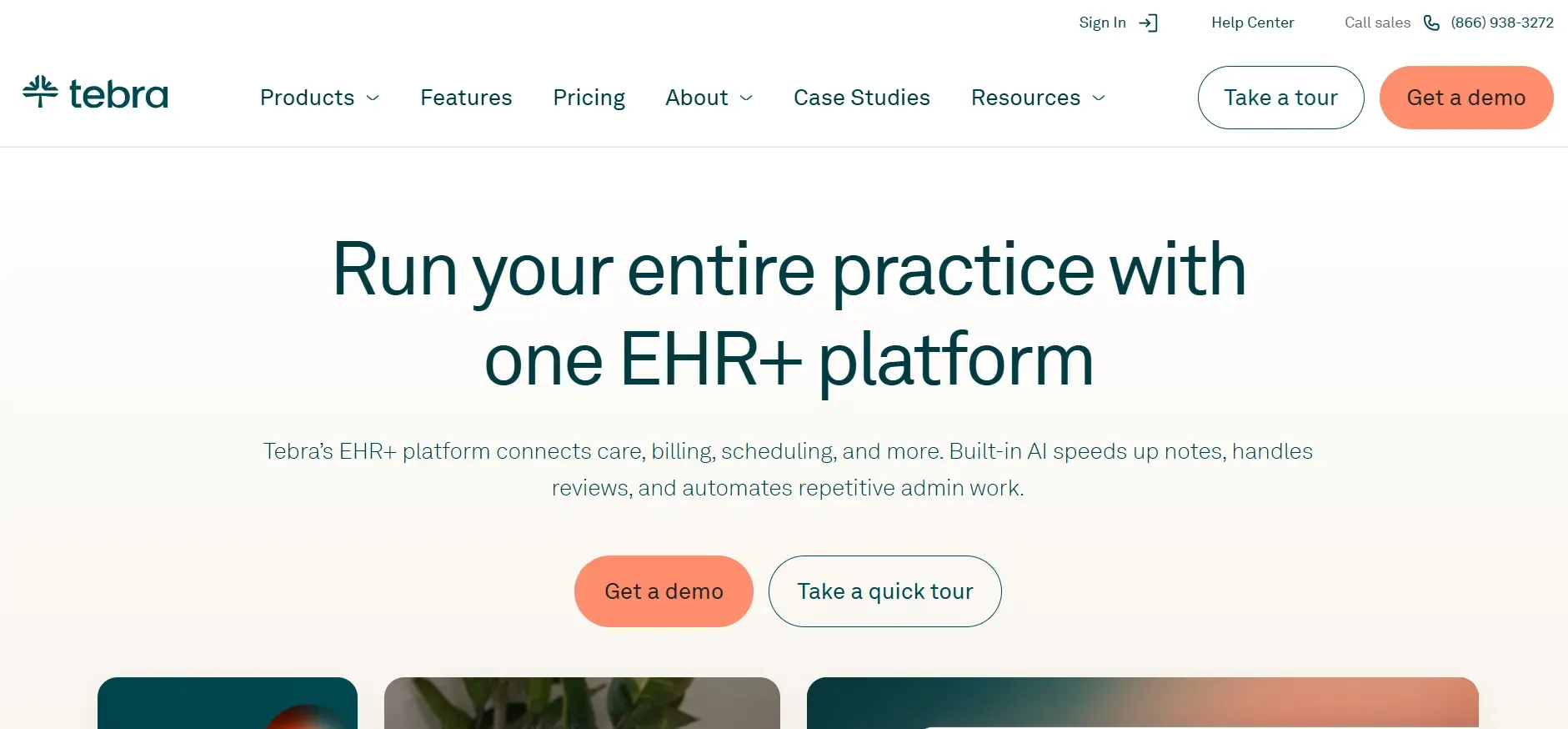
Kareo, now operating as Tebra, is known for its user-friendly billing and insurance claims management. Its EMR is more generalist, but with some dermatology templates. Kareo’s real strength is in helping practices get paid quickly and stay compliant with insurance requirements.
Pricing: From $150/month per provider, plus add-ons for telehealth and patient engagement.
- Excellent billing and claims tools
- Easy onboarding for small practices
- Simple, intuitive interface
- Dermatology templates are basic
- Essential features are add-ons
- Per-user fees increase with growth
If you want to avoid add-on fees as you grow, Devaims can build billing and charting workflows tailored to your dermatology business.
4. DrChrono (Best for mobile-first clinics)
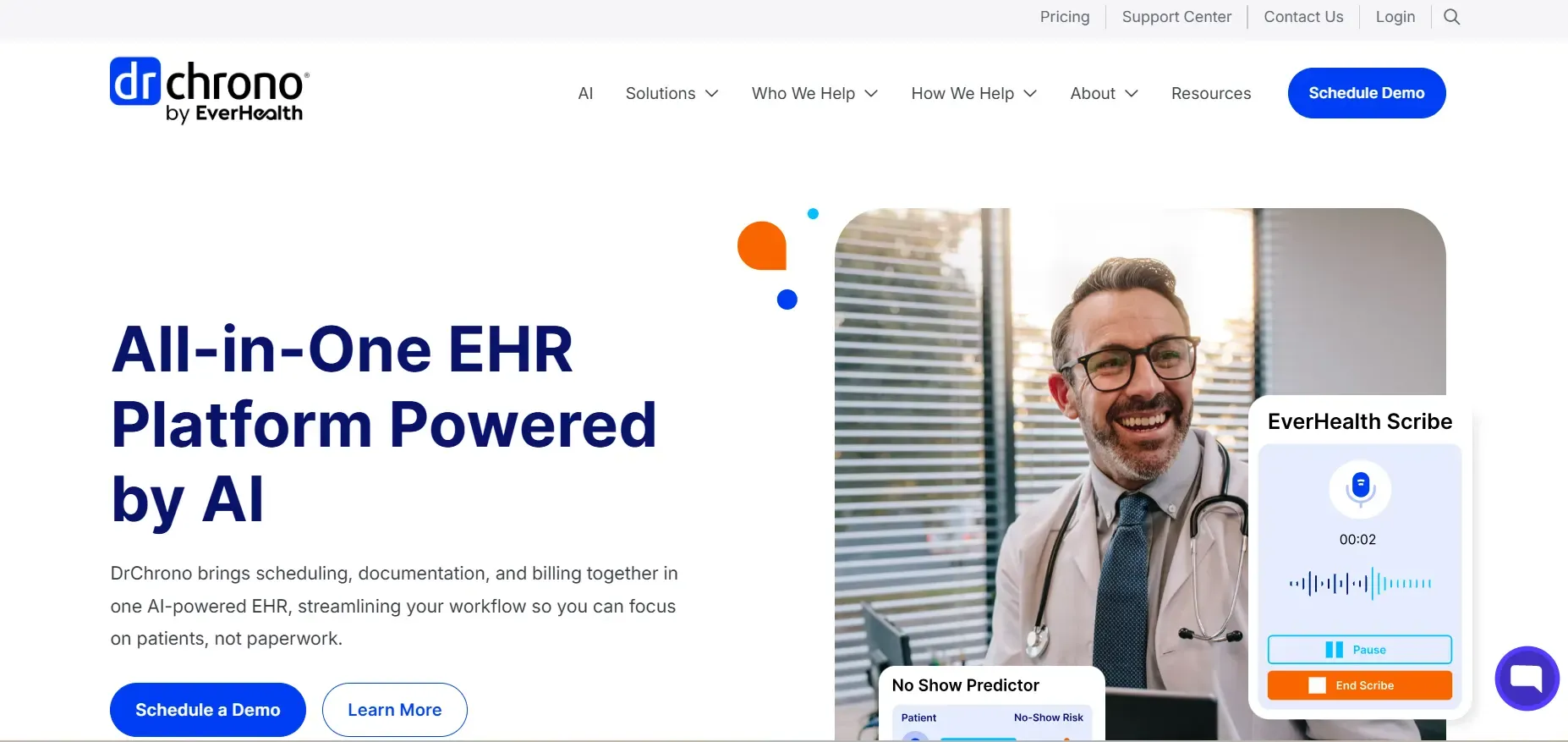
DrChrono is unique in its mobile-first approach, built specifically for iPad and iPhone use. It’s popular with dermatologists who want to chart at the exam chair or capture images quickly. The platform is cloud-based and has a modern, easy-to-use interface.
Pricing: Reported $199/month per provider, with premium features as add-ons.
- Optimized for mobile charting and image capture
- Fast, modern interface
- Voice dictation and annotation tools
- Desktop features less robust than mobile
- Advanced features require higher tiers
- Customization is limited
Need mobile charting but want to own your workflows? Devaims can build a mobile-ready EMR tailored to your clinic’s needs.
5. Athenahealth (Best for enterprise and multi-site)
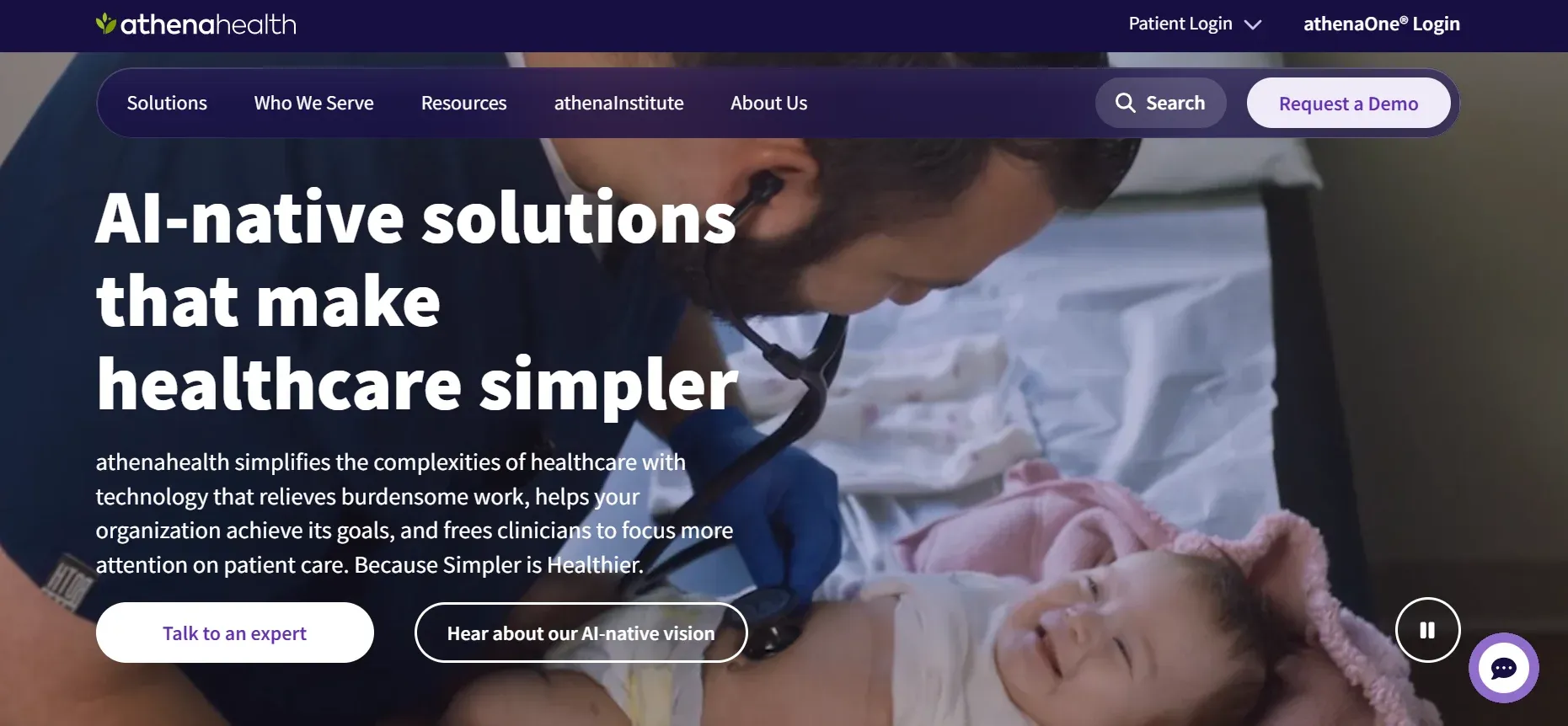
Athenahealth is a heavyweight in the EMR space, designed for large, multi-site, or enterprise-scale practices. It offers deep revenue cycle management, analytics, and population health tools. Athenahealth’s cloud platform is highly scalable, making it a Cerner alternative for fast-growing or multi-specialty dermatology groups.
Pricing: Custom quote, typically a percentage of collections with long-term contracts.
- Enterprise-grade analytics and RCM
- Scalable for multi-location groups
- Broad integration marketplace
- Pricing increases with revenue
- Onboarding is resource-intensive
- Customization must fit vendor framework
For clinics wanting enterprise features without recurring revenue-based fees, Devaims can build scalable solutions you own.
6. Practice Fusion (Best for small dermatology groups)
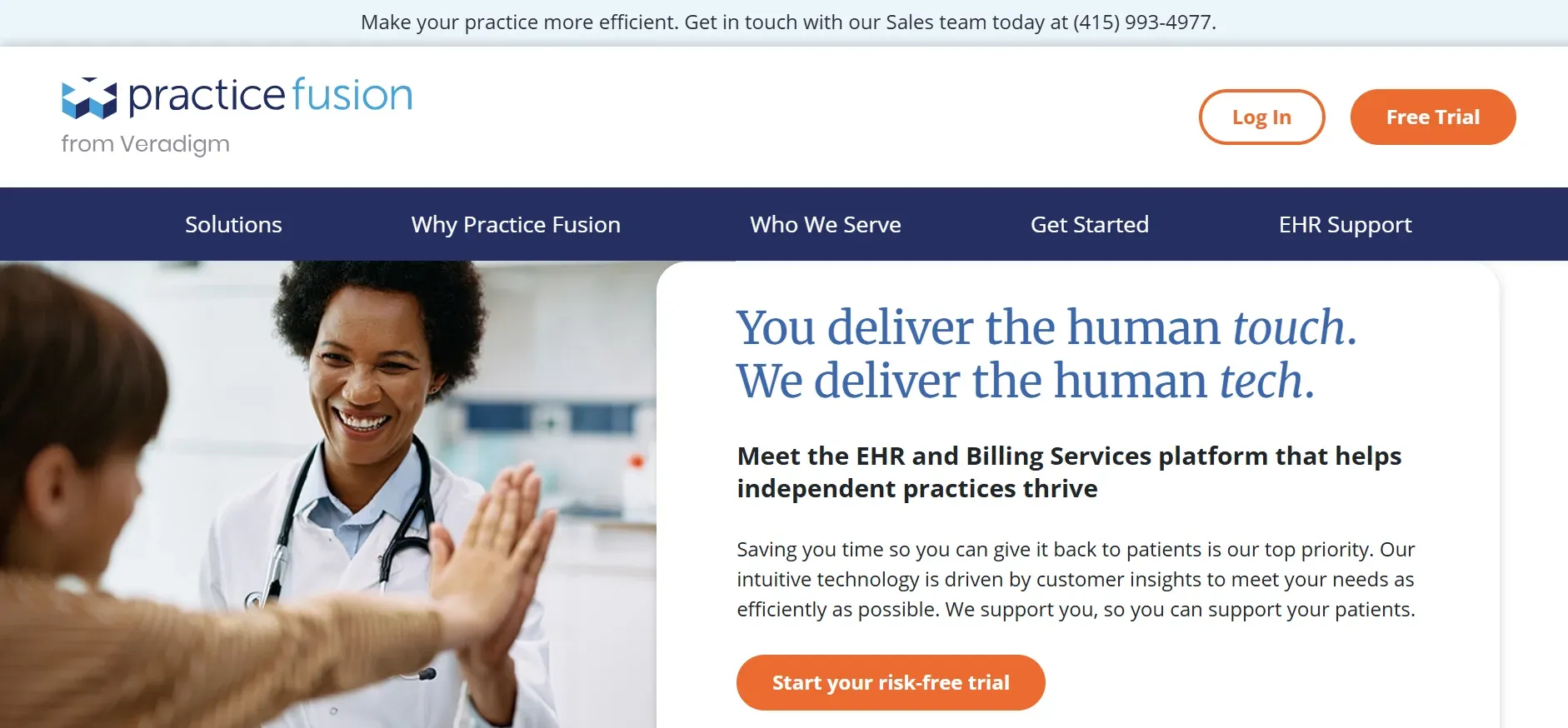
Practice Fusion is a cloud-based EMR aimed at small and solo practices. It’s known for its straightforward interface, low cost, and relatively fast setup. Dermatology features are basic, but it covers the essentials for general medical documentation and e-prescribing.
Pricing: Reported $149/month per provider, with some add-ons for advanced features.
- Affordable for small clinics
- Fast setup and onboarding
- Simple, user-friendly interface
- Limited specialty workflows
- Basic reporting and analytics
- Minimal customization
If you outgrow basic features, Devaims can build a system that evolves with your practice and is fully owned.
7. Greenway Health (Best for integrated RCM)
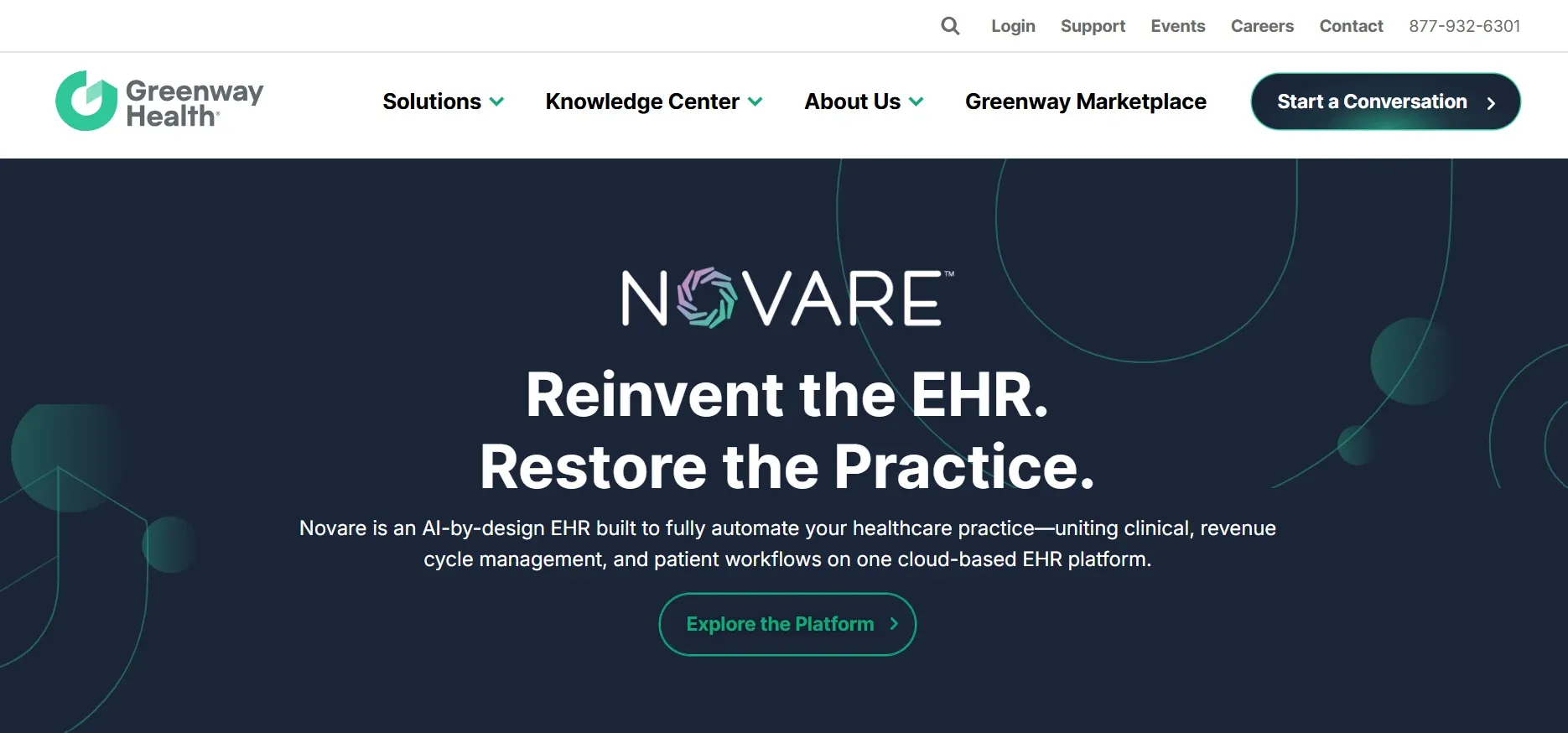
Greenway Health is a strong contender for clinics seeking tight integration between EMR and revenue cycle management. Its platform combines clinical documentation with billing, analytics, and compliance tools suitable for both medical and cosmetic dermatology.
Pricing: Custom quote, with costs rising for advanced analytics and users.
- Integrated RCM and compliance tools
- Dermatology templates and analytics
- Custom workflow support via API
- Custom pricing can be high for advanced features
- Deep customization limited by vendor roadmap
- Support for niche workflows varies
For clinics needing custom RCM and compliance, Devaims can build tailored solutions with no recurring user fees.
8. DermEngine (Best for imaging workflows)
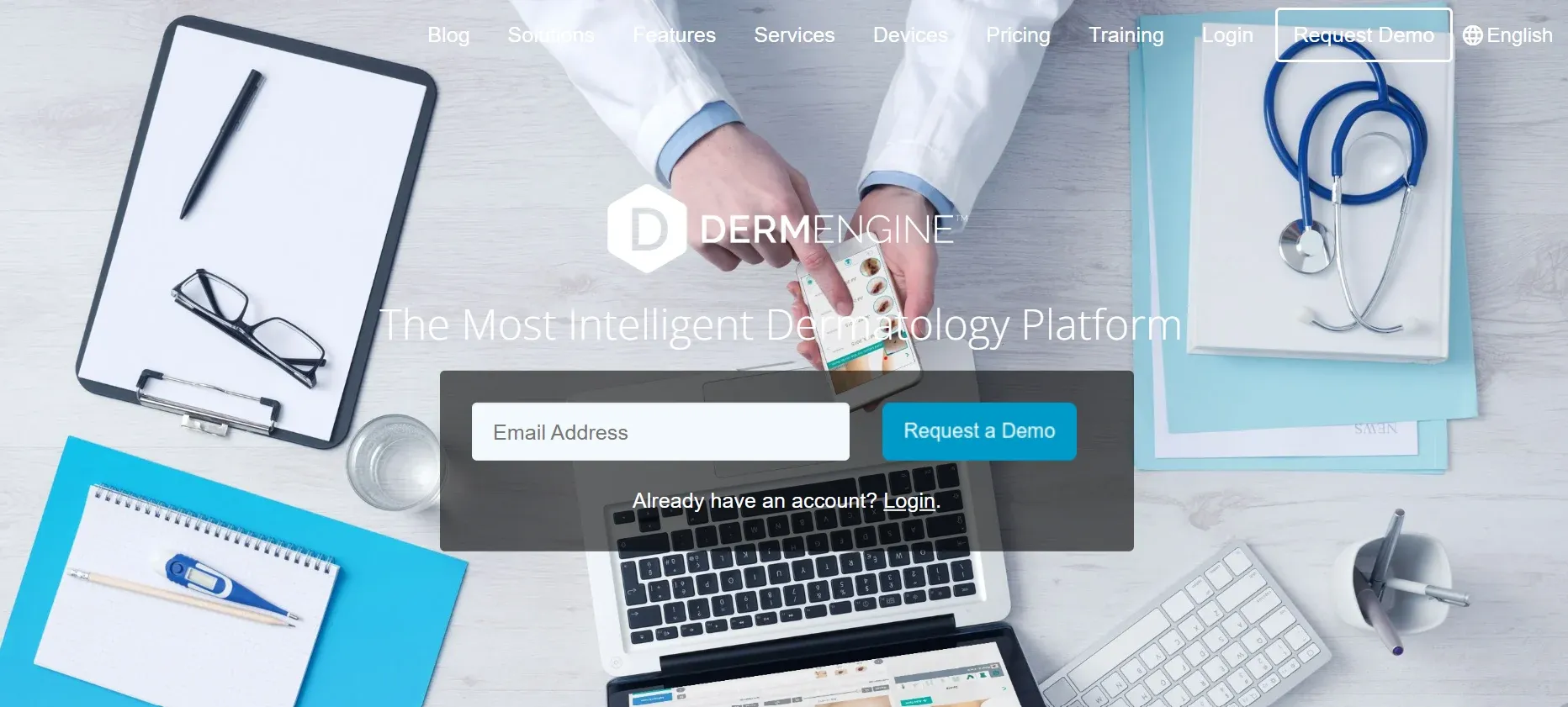
DermEngine is built for dermatologists who rely on clinical photography, lesion mapping, and teledermatology. It leverages AI to assist in diagnosis and image analysis, making it ideal for imaging-heavy practices and those offering remote consultations.
Pricing: From $99/month per provider, with premium AI features as add-ons.
- Best-in-class imaging and lesion tracking
- AI-powered diagnostic support
- Teledermatology and patient portal features
- Not a full EMR, lacks billing and scheduling
- Advanced AI features are premium add-ons
- Exporting image data can be limited or costly
Want unified imaging and EMR? Devaims can build a platform that combines both, fully owned by your clinic.
9. Devaims (The only owned alternative)
Devaims is not a SaaS platform but a custom EMR and practice management solution built to your specifications. You own the code, the data, and the workflows. There are no per-provider, per-visit, or per-feature fees. You decide which features matter, how integrations work, and when updates happen. This is true ownership, not a rental agreement.
- Fully custom dermatology workflows and features
- One-time build, no recurring user or feature fees
- You own the code, data, and integrations
For clinics ready to invest in their future and escape SaaS rent, Devaims is the path to true control and cost certainty.
Other Record Cerner alternatives worth knowing
- Aesthetic Record is a popular medspa and cosmetic EMR with strong before/after photo tools, but less robust for clinical dermatology or insurance billing.
- Intergy is a general EMR with some dermatology templates, but lacks deep specialty features and may require significant customization.
- eClinicalWorks is widely used in primary care and general specialties, but dermatology clinics often find it requires heavy configuration and does not natively support derm imaging or lesion tracking.
How to choose the right Record Cerner alternative
- Match your clinic size: Solo, group, or multi-location? SaaS platforms scale easily, but costs multiply with each provider or staff login. Custom solutions like Devaims are more cost-effective for larger or growing practices.
- Specialty fit: Do you need deep derm tools such as lesion mapping, high-volume image storage, or cosmetic workflows? Look for platforms with native dermatology templates and imaging support, or build exactly what you need with Devaims.
- Budget for the long term: Calculate five years of provider and add-on fees for SaaS options. Compare this to a one-time build plus flat maintenance for a custom system. For most growing clinics, owning wins by year five or sooner.
- Integration needs: Will you need to connect labs, billing, imaging, or marketing tools? Some SaaS platforms limit integrations to their preferred vendors, while custom solutions like Devaims can connect anywhere with an API.
- Ownership: Decide if you want to rent forever or own your software and data. Ownership means no contract lock-in, no forced upgrades, and complete control over your clinical and business workflows.
If you’re ready to stop paying rent on your dermatology software, Devaims is the one alternative that puts you in control from day one.
Stop paying rent on dermatology software you could own
Every Record Cerner alternative above is a rented platform. No matter how many features or integrations you buy, you’re paying someone else to let you use your own data, and the meter never stops running. With Devaims, you pay once for a system built around your dermatology practice, then it’s yours to keep.
Devaims builds custom EMR, scheduling, and imaging platforms for dermatology clinics. You get the source code, full control, and zero per-user or per-visit fees. Your workflows, your integrations, your data, owned outright. No contracts, no forced upgrades, just software that works for your business, not the vendor’s bottom line.
- Per-provider and per-visit fees? Gone. You add providers and rooms as you grow, with no extra charges.
- Feature locked behind a premium tier? If you want it, it’s built in from the start.
- Integration limits? Your system connects where you need, not just where the vendor allows.
- Contract lock-in? You own the code and data, no strings attached.
| Tool | Pricing model | Ownership | Customization |
|---|---|---|---|
| Record Cerner | Monthly/annual SaaS, per provider | Vendor-owned | Limited, slow |
| Modernizing Medicine (EMA) | Monthly SaaS, per provider | Vendor-owned | Derm-focused, but locked |
| Nextech | Annual contract, per user | Vendor-owned | Configurable, not custom |
| Devaims | One-time build, flat maint | You own it | Fully custom |
Here’s how the five-year numbers stack up for a typical dermatology group (5 providers, 8 staff, 1 location):
| Year | Rented (Cerner/EMA/etc) | Owned (Devaims) |
|---|---|---|
| 1 | $36,000 | $34,000 |
| 2 | $72,000 | $36,760 |
| 3 | $108,000 | $39,520 |
| 4 | $144,000 | $42,280 |
| 5 | $180,000 | $45,040 (now ahead) |
For most clinics, owning pays off by year five, often sooner if you add providers, expand services, or need custom features. With each new user or location, the cost advantage of ownership grows. And after five years, your system is a long-term asset, not a recurring liability.
Want a real projection for your clinic? We’ll run the numbers and show you what owning your dermatology software could look like, no obligation.
How to switch from Record Cerner
- Export all patient, scheduling, and billing data from Cerner (request in a standard format such as CSV or HL7, and include images if possible).
- Choose your new platform based on your clinic’s size, specialty needs, integration requirements, and ownership goals.
- Work with your vendor or development partner to map and import your data into the new system. Pay close attention to images, attachments, and custom fields, these are often the hardest to migrate.
- Reconnect payment processors, labs, imaging devices, and third-party integrations. Test each connection for accuracy and speed.
- Train your staff on new workflows, including documentation, scheduling, and clinical photography. Identify super-users to support the team during transition.
- Run both systems in parallel for a period (often 2 to 4 weeks) to ensure all data is accurate and workflows are reliable.
- Review and terminate your Cerner contract only when the new system is fully live and tested. Keep backups of your exported data for compliance.
With a custom Devaims build, the migration is handled as part of the project, including data mapping, validation, and staff training. The goal is to minimize downtime and ensure continuity of care.
Frequently asked questions
What’s the strongest Record Cerner alternative for dermatology?
Modernizing Medicine (EMA) and Nextech are the most dermatology-centric SaaS alternatives, offering deep specialty features and templates that fit typical derm workflows. EMA excels at image capture and lesion tracking, while Nextech offers strong practice management and business analytics. However, both operate on a recurring fee, rental model. If you want full ownership, customization, and no recurring software rent, Devaims is the only alternative that puts your clinic in full control, with the code and data belonging to you.
Which Record Cerner alternative is cheapest?
Practice Fusion and DermEngine are the lowest-cost SaaS options, starting at $99 to $149 per provider monthly. They are suitable for small or startup clinics with basic needs. However, over five years, the cumulative cost of renting, even at low prices, can exceed the cost of a custom build if your clinic grows. Devaims may cost more upfront, but for multi-provider clinics, it often becomes more affordable by year five, especially if you plan to expand or need custom features.
Is there a free Record Cerner alternative?
There are no truly free, supported EMRs for dermatology that match Cerner’s or EMA’s core features. Open-source systems (like OpenEMR) exist, but they require significant IT resources, self-hosting, and custom development to be viable for dermatology. This often means hidden costs in support, compliance, and integration. Most clinics opt for SaaS or a custom solution like Devaims to avoid these headaches and ensure compliance.
What’s the best Record Cerner alternative for imaging?
DermEngine is the leader for image-heavy workflows, especially for mole mapping and teledermatology. Its AI-powered tools and lesion tracking are strong for visual documentation. However, it is not a full EMR, so most clinics pair it with another platform. For practices wanting a unified system with custom imaging workflows, a Devaims build can combine EMR, imaging, and telehealth into one platform, tailored to your exact needs.
Can I keep my old Cerner data if I switch?
Yes, but the process requires careful planning. Cerner allows export of patient data, scheduling, and billing records, usually as CSV or HL7 files. Images and attachments may be harder to export and import. Most alternatives support data import, but always confirm with your new vendor or developer before switching. Devaims manages the entire migration process, ensuring all clinical notes, images, and custom fields transfer cleanly.
When is it time to switch from Cerner?
If your costs keep rising, you can’t get the features or integrations you need, or you’re frustrated by slow support and contract lock-in, it’s time to look for Record Cerner alternatives. The five-year cost math makes this clear for many clinics, especially those planning to grow, add providers, or expand into cosmetic services. If you want to own your data and software, the sooner you switch, the sooner you stop paying rent.
Can Devaims build a system that matches my current EMR?
Yes. Devaims specializes in replicating and improving your current workflows, whether they’re from Cerner, EMA, or another system. You can specify which features, templates, and integrations matter most, and Devaims will build them into your new platform. The result is a system that feels familiar, but is fully owned and can evolve as your clinic grows, without waiting for vendor updates or approvals.
The bottom line
You have more Record Cerner alternatives than ever, but almost all still mean renting your software for life. The real decision is not just about features or integrations: it’s about ownership. Do you want to keep paying per provider, or build a dermatology platform that belongs to your clinic forever?
Here’s the test: Add up the total you’ll spend over five years on SaaS rent. If that number could have built you a system you own, you already have your answer. Stop letting vendors set your limits. Build what your clinic actually needs, and keep it.
Want more honest takes? Read the Devaims blog or check out our alternatives guides for Athenahealth alternatives, Nextech alternatives, and Kareo alternatives.