



Your bookkeeping stack is supposed to keep the chaos at bay, not sneak in new headaches. If you've ever watched Pilot’s "all-in-one" service pile up monthly fees or realized you don’t even own the data you’re paying to manage, you know the frustration. Five years in, you could have bought a system for what you’ve spent, and you still can’t walk away with your books in your own hands.
For owners ready to compare Pilot alternatives, the options are wide and varied: QuickBooks Online, Xero, Bench, Botkeeper, and more. Each top pick solves a different frustration, some bring better integrations, some automate more, others just cost less. But if you’re tired of renting, only one option lets you truly own your stack: a custom build with Devaims. Here’s how the major contenders stack up, and where ownership changes the math.
Why bookkeeping services look for Pilot alternatives
Bookkeeping service providers and small businesses are increasingly scrutinizing their tech stacks. Here’s why more firms are actively seeking alternatives to Pilot:
- Surprise add-on costs: Pilot’s core monthly fee can look reasonable at first glance, but key features, payroll, advanced reporting, tax prep, often come as expensive add-ons. Over time, these incremental costs can double or triple your total spend, especially as your firm grows or your needs change.
- Locked into their stack: Once your books live on Pilot, migrating away can be daunting. Exporting your data is possible, but often incomplete. Custom integrations and automations rarely transfer cleanly, so you may need to rebuild or rewire processes from scratch. This ‘switching friction’ is a major pain point for scaling firms, especially those with more than one legal entity or complex workflows.
- Per-entity pricing: Pilot, like many SaaS platforms, charges per business entity. If you manage books for multiple companies, even if they share staff or processes, you’ll pay for each one separately. This multiplies quickly for holding companies, franchisees, or firms expanding into new markets.
- Limited customization: Pilot’s workflows are built for the average case, not your unique process. Need a custom dashboard, non-standard report, or integration for a niche tool? You’ll likely hit a wall, or be told it’s only available on a premium plan, if at all.
- Ownership frustration: At the end of the day, you’re renting both the software and your own financial history. If you want out, you start over. This is especially painful for firms that value data sovereignty, want to build proprietary workflows, or simply dislike being beholden to a vendor’s roadmap and pricing.
For many, these issues add up to a simple conclusion: renting is fine for a while, but eventually you want ownership, flexibility, and control.
Quick comparison of the best Pilot alternatives
| Tool | Best for | Starting price | You own it? |
|---|---|---|---|
| QuickBooks Online | All-around bookkeeping | Reported $30/mo | No |
| Xero | Integrations | Reported $15/mo | No |
| FreshBooks | Invoicing | Reported $19/mo | No |
| Botkeeper | Automation | Custom, around $155/mo | No |
| Bench | Hands-off | Reported $299/mo | No |
| Synder | E-commerce | Reported $48/mo | No |
| Gusto | Payroll | Reported $40/mo base + $6/person | No |
| Bill.com | AP/AR Automation | Reported $45/mo | No |
| Devaims | Owning your system | One-time build, you own it | Yes |
Prices change frequently, and some platforms offer custom or volume discounts. Always confirm current pricing and request quotes that fit your specific use case before making a decision.
The 9 best Pilot alternatives
1. QuickBooks Online (All-around bookkeeping)
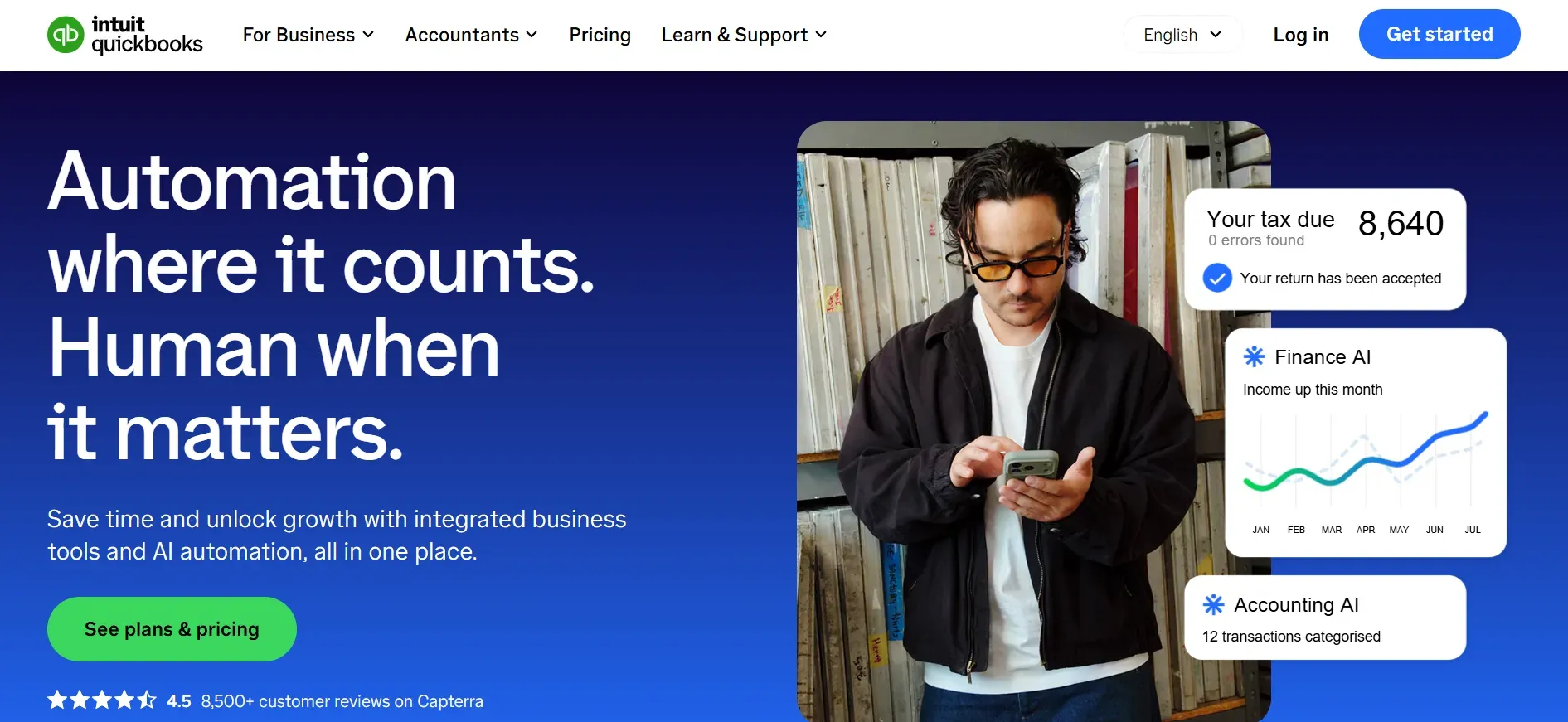
QuickBooks Online is the industry standard for small and midsize business bookkeeping, used by millions of firms and bookkeepers worldwide. Its strong feature set covers nearly every core accounting need, general ledger, bank reconciliation, invoicing, expense tracking, and reporting. It’s also supported by a vast ecosystem of accountants and third-party apps.
Pricing: Starts at $30/month, with add-ons for payroll, inventory, and advanced reporting.
- Comprehensive accounting features and reporting.
- Extensive integration marketplace for third-party tools.
- Large support community and accountant familiarity.
- Per-user and per-entity pricing can escalate costs for growing firms.
- Customization is limited to what QuickBooks supports.
- Data exports may require manual cleanup for migration.
On a Devaims-owned system, every user and workflow is yours, no per-seat surprises, and you control the data model.
2. Xero (Integrations)
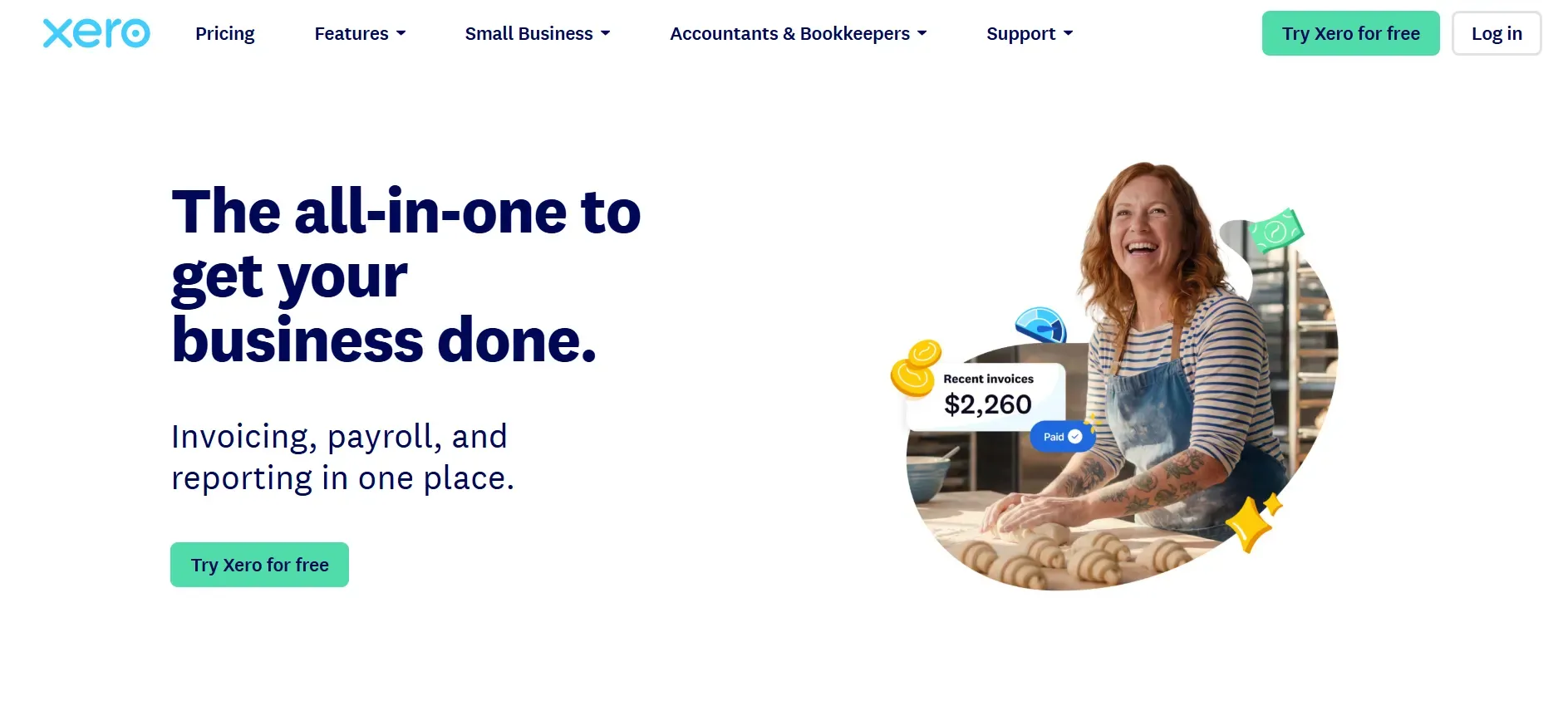
Xero is a modern cloud accounting platform built with an emphasis on integrations, automation, and international support. Its user interface is widely praised for clarity and ease of use. Xero’s open API and strong app marketplace make it a favorite for firms looking to connect their bookkeeping to a broader fintech stack.
Pricing: Starts at $15/month, with higher tiers for advanced features.
- Excellent multi-currency and international support.
- Over 1,000 integrations for SaaS and fintech tools.
- User-friendly interface and mobile app.
- Advanced analytics and automations require premium plans.
- Customization is limited to platform-supported workflows.
- Full historical data migration may require manual effort.
Reporting you wish Xero offered? With Devaims, you have it built for your exact workflow, no waiting for feature requests.
3. FreshBooks (Invoicing)
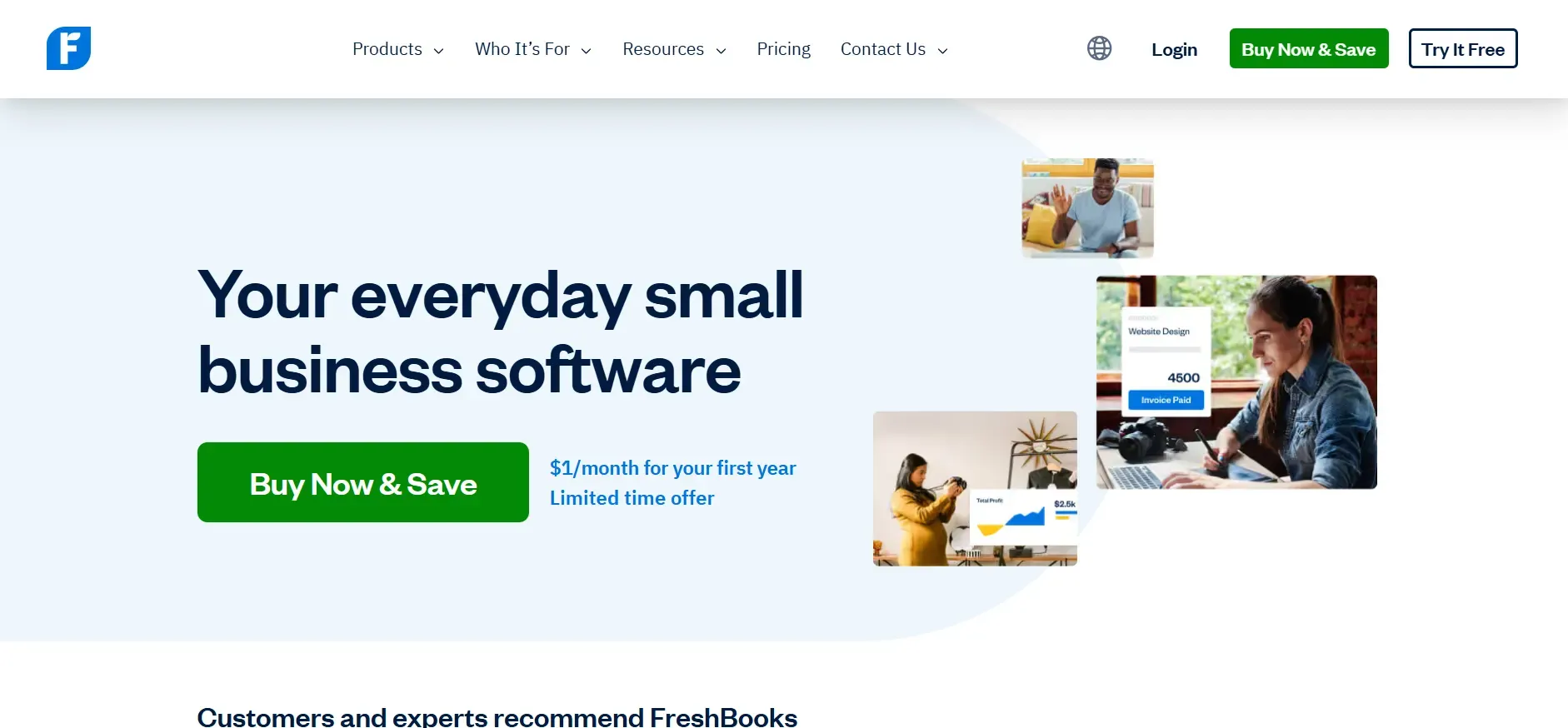
FreshBooks is designed for small service-based businesses, freelancers, and micro-firms. Its standout feature is simple, professional invoicing, but it also covers time tracking, expense management, and basic reporting. FreshBooks is less suited for complex accounting, but it excels at making billing and payments frictionless for solo operators and consultants.
Pricing: Starts at $19/month, with additional fees for extra users and advanced features.
- Easy, professional invoicing and payment collection.
- Built-in time tracking and expense capture.
- Simple dashboard for non-accountants.
- Lacks advanced accounting features unless on higher tiers.
- Multi-user support is limited or costly.
- Migration can be challenging for multi-year data.
4. Botkeeper (Automation)
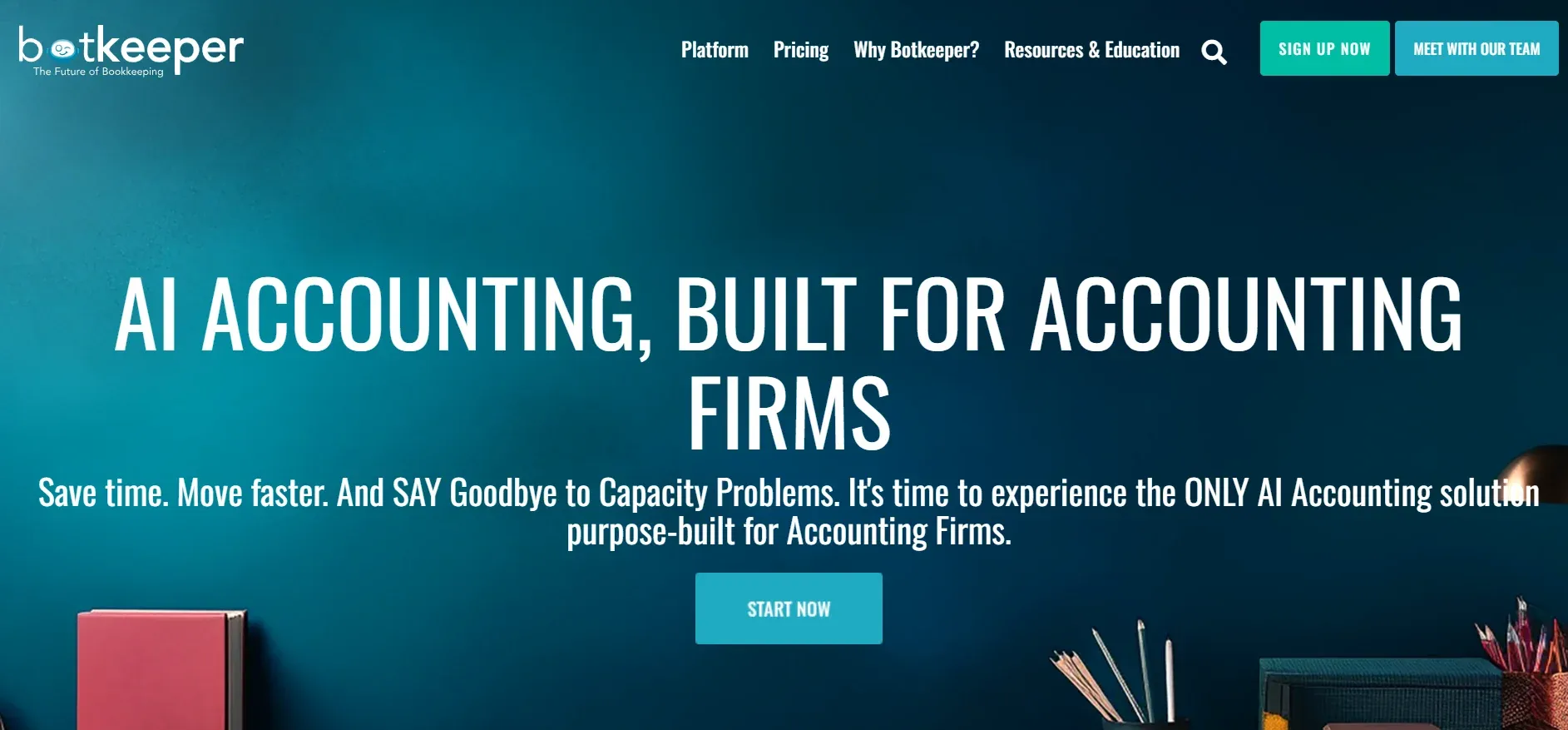
Botkeeper uses artificial intelligence and machine learning to automate bookkeeping tasks, targeting accounting firms that want to scale without hiring more staff. Botkeeper blends software automation with human oversight, routine tasks are handled by bots, but humans are available for support and exception handling.
Pricing: Custom pricing, typically starting around $155/month.
- Reduces manual data entry and reconciliations.
- Combines automation with human support.
- Integrates with major accounting platforms.
- Custom pricing can be high for small firms.
- Some workflows may not be fully automatable.
- Automation logic is not owned by the client.
With Devaims, automation is tailored to your exact needs, and you own the logic.
5. Bench (Hands-off)
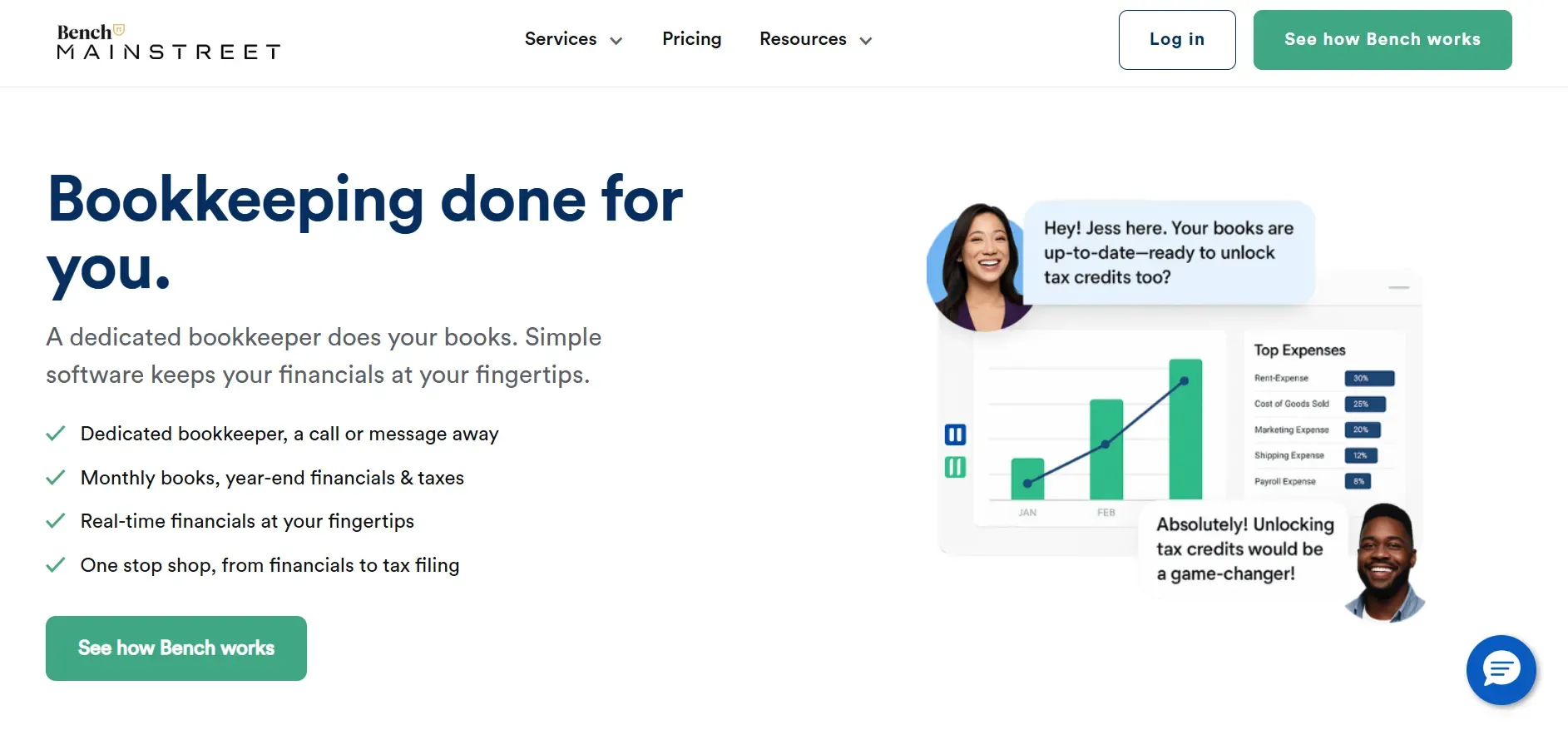
Bench offers a hybrid approach: software plus a dedicated team of bookkeepers. It’s designed for business owners who want to be completely hands-off with bookkeeping, trusting Bench to handle everything from monthly reconciliations to year-end financials. Bench is often compared to Pilot for its full-service model, but with a more personalized touch.
Pricing: Starts at $299/month, with additional fees for tax filing and catch-up bookkeeping.
- Dedicated bookkeeping team for each client.
- Monthly financial statements and tax-ready reports.
- Hands-off experience for business owners.
- Limited direct software access and customization.
- Data export can be cumbersome for migration.
- High monthly fees compared to DIY platforms.
6. Synder (E-commerce)
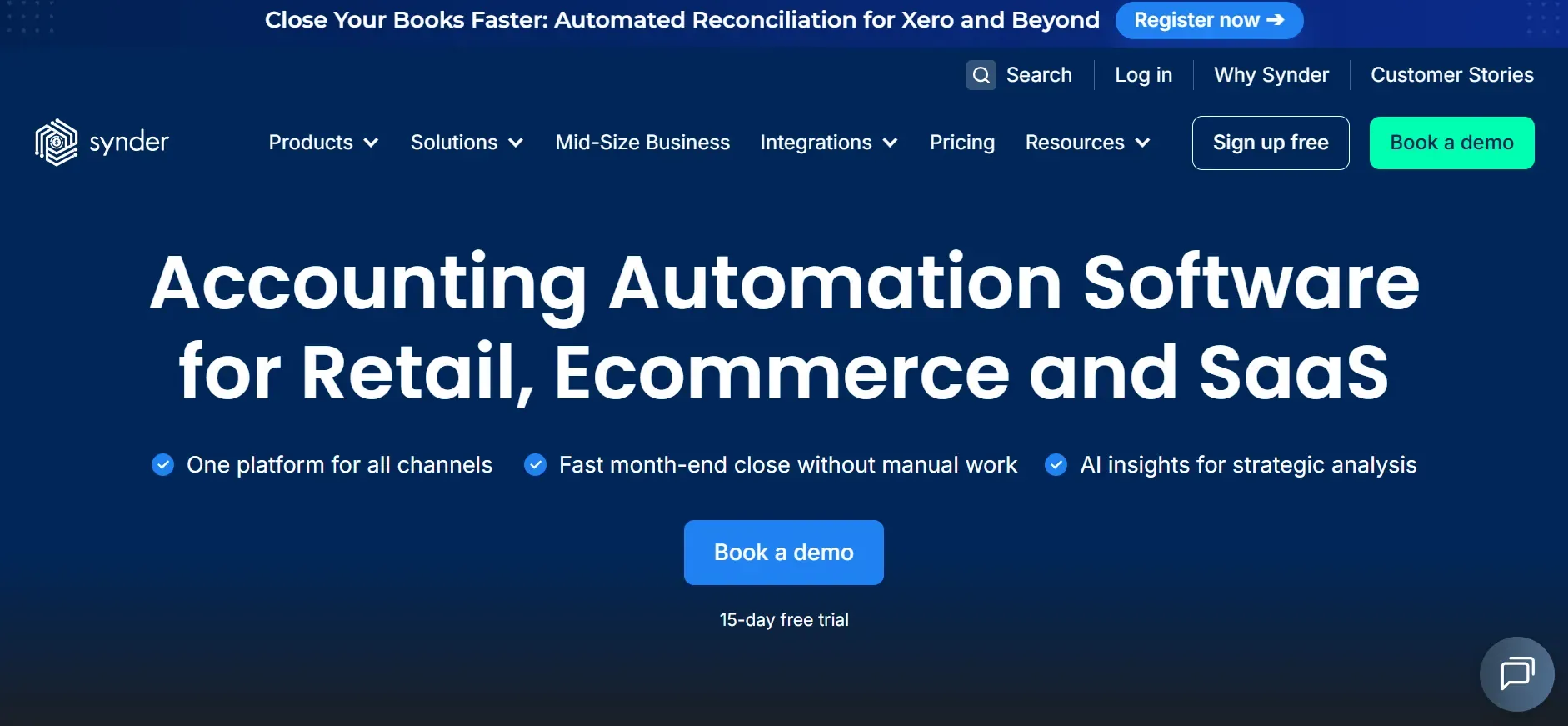
Synder is purpose-built for e-commerce businesses and firms managing high transaction volumes across multiple sales channels. Its core strength is syncing sales data from platforms like Shopify, Amazon, Etsy, Stripe, and PayPal directly into your accounting system, eliminating manual data entry and reconciliation headaches.
Pricing: Starts at $48/month, with extra charges for higher transaction volumes.
- Automates e-commerce data syncing and reconciliation.
- Supports multi-currency and multi-channel sales.
- Integrates with major accounting and e-commerce platforms.
- Not a full accounting platform, best as a connector.
- Payroll and inventory features are limited.
- Automation logic is not owned by the user.
7. Gusto (Payroll)
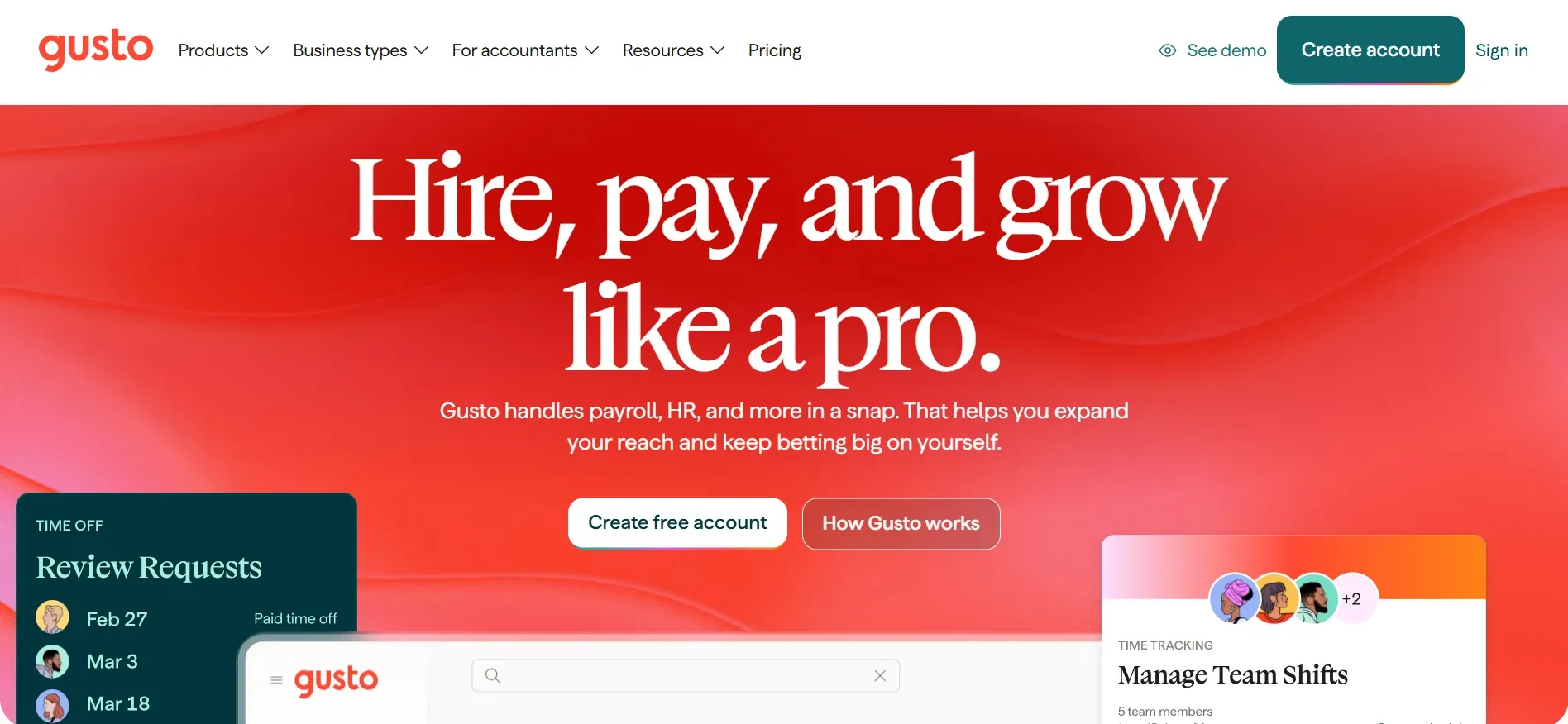
Gusto is a payroll and HR platform that automates payroll processing, tax filings, and employee onboarding. It’s frequently paired with accounting platforms like Xero or QuickBooks to provide a complete back-office stack. Gusto is known for its ease of use, clear pricing, and fast setup.
Pricing: Starts at $40/month base plus $6 per person.
- Automates payroll, tax filings, and benefits administration.
- Integrates with major accounting and HR tools.
- Easy onboarding and employee self-service.
- Not a bookkeeping platform, requires integration.
- Per-employee fees can add up as you scale.
- Advanced HR features only on premium plans.
On an owned Devaims platform, payroll and books can live in one system, no double entry, and you control the process end-to-end.
8. Bill.com (AP/AR Automation)
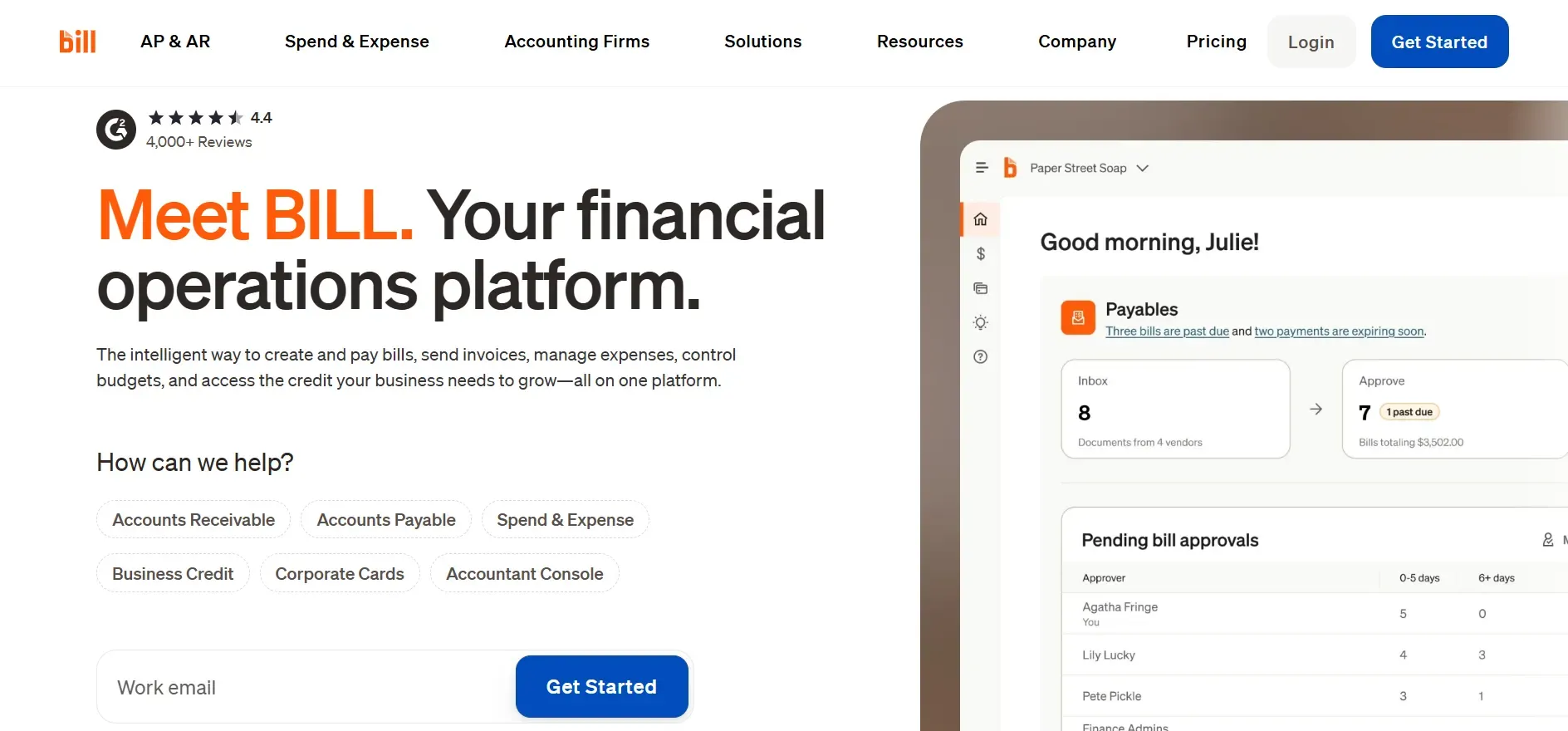
Bill.com is focused on automating accounts payable (AP) and accounts receivable (AR) workflows. It’s designed for firms and businesses that process a large volume of bills, invoices, and payments, providing strong controls, approval workflows, and audit trails.
Pricing: Starts at $45/month, with higher tiers for advanced features.
- Automates bill capture, approvals, and payments.
- Integrates with major accounting platforms.
- Provides audit trails and role-based permissions.
- Handles only AP/AR, not full bookkeeping.
- Per-user pricing can climb for larger teams.
- Customization limited to platform capabilities.
9. Devaims (Owning your system)
Devaims builds custom bookkeeping, payroll, and workflow platforms that you own outright. Unlike every other Pilot alternative on this list, you’re not renting a SaaS subscription. You keep the code, control the data, and can adapt the system as your bookkeeping business changes, without waiting for a vendor’s roadmap or approval.
Pricing: One-time build cost, plus flat maintenance. You own the platform.
- Full ownership of code, data, and workflows.
- Custom features, dashboards, and integrations built to your spec.
- No per-user or per-entity fees, and no lock-in.
With Devaims, you stop paying for features you’ll never use and get exactly what your firm needs, on your terms. You own the code, the data, and the roadmap.
Other Pilot alternatives worth knowing
- Dext (formerly Receipt Bank): Outstanding for automating receipt capture and expense management. Dext integrates with major accounting platforms, but is not a full bookkeeping system, it’s best as a supplement to QuickBooks or Xero.
- Hubdoc: Focused on document automation and data extraction for accountants. It’s best for streamlining document collection and syncing with Xero or QuickBooks, but lacks core bookkeeping features.
- Wave: Free for core invoicing and bookkeeping, with paid add-ons for payroll and payments. Wave is best for solo operators or very small businesses, but support and advanced features are limited. For more, see PCMag's review.
- ZipBooks: Simple bookkeeping for small businesses, with a basic free plan. Paid tiers add advanced reports, but the platform is best for micro-firms and freelancers.
How to choose the right Pilot alternative
- By budget: For low monthly costs, Xero and FreshBooks are strong contenders. If you’re scaling or need automation, expect to pay more for add-ons and premium tiers. Free options like Wave or ZipBooks are viable for simple needs, but you’ll likely outgrow them.
- By complexity: Full-service options like Bench or Botkeeper relieve manual work but come with higher fees. If your firm has unique workflows, a custom solution may be the only way to automate without compromise.
- By size: SaaS platforms like Gusto, Bill.com, or Karbon get expensive as your headcount or transaction volume grows. Per-seat or per-transaction models can balloon costs for multi-entity or fast-growing firms.
- By control: If data export, custom workflows, or true ownership are priorities, SaaS solutions will always have limits. Only a custom build gives you total control and portability.
- Vertical fit: E-commerce? Synder. Project-based billing? FreshBooks. Firm-wide workflow? Karbon. But only Devaims gives you the option to own your platform and adapt it freely as your business evolves.
If you’re tired of the rent-never-own cycle, here’s how Devaims changes the math.
Stop paying rent on bookkeeping software you could own
Every bookkeeping SaaS platform, Pilot included, charges you for features that may not fit your workflow, locks you into a stack, and charges you again if you want to leave. The "all-in-one" promise is always rented, never yours. Even the best alternatives above share the same problem: pay monthly, forever, for something you never own.
Devaims builds custom bookkeeping, payroll, and reporting software where you keep the source code and your own data. No subscriptions, no per-seat surprises, no waiting for a vendor’s roadmap. You set the process, pick the integrations, and own the platform outright.
- No more per-user or per-entity rent: With your own system, add as many users or entities as you want. There’s no meter running, no surprise bills, and no need to negotiate with a vendor as you grow.
- Custom workflows, forever yours: Your dashboards, your reports, your automations, built to your spec, not a vendor’s template. Make changes as your business evolves, without waiting for feature requests or platform updates.
- No lock-in: Want to change, scale, or pivot? You own the code. No more costly migrations, manual data exports, or forced resets. Your data remains accessible and portable.
| Platform | Ownership | Ongoing cost | Custom fit | Contract lock-in |
|---|---|---|---|---|
| Pilot | Rented SaaS | High monthly | Low | Yes |
| QuickBooks Online | Rented SaaS | Monthly + add-ons | Medium | Optional |
| Bench | Rented SaaS | High monthly | Low | Yes |
| Devaims | You own it | One-time build + flat maintenance | Full | No |
| Year | Rent (SaaS cumulative) | Own (Devaims cumulative) |
|---|---|---|
| 1 | $5,000 | $27,400 |
| 2 | $10,000 | $30,200 |
| 3 | $15,000 | $33,000 |
| 4 | $20,000 | $35,800 |
| 5 | $25,000 | $38,600 |
Here’s the typical math: If you have three bookkeepers and pay $139 per seat (a common SaaS scenario), that’s $417 per month or $5,000 per year, forever. Over five years, you’ll have spent $25,000 and still own nothing. With Devaims, you make a one-time investment (plus flat maintenance), and after five years, you’re ahead. The more users, entities, or custom features you need, the faster you reach break-even, and the more control you keep.
Want to see your own numbers? We’ll run the cost math for your firm, tailored to your headcount, client base, and workflow needs.
How to switch from Pilot
- Export all data: Download your full client, transaction, and report history from Pilot in CSV or compatible formats. Review what exports cleanly and what may need manual extraction.
- Select your new platform: Choose the alternative that matches your needs, QuickBooks, Xero, Devaims, etc. Consider demoing platforms and mapping features before committing.
- Import and map data: Import your historical data into the new system, carefully mapping fields (clients, accounts, transactions, notes) to ensure nothing is lost. Some platforms offer migration tools or paid migration support.
- Reconnect integrations: Re-establish bank feeds, payment gateways, payroll providers, and any third-party integrations. This step is crucial for real-time data and automation continuity.
- Train your team: Walk your team through new workflows, dashboards, and reports. Provide documentation and encourage hands-on testing to build confidence.
- Test side-by-side: Run the new system in parallel with Pilot for at least one cycle (month or quarter) to verify data accuracy, complete workflows, and identify any gaps.
- Review and cancel: Once you’re confident all data and processes are live, review with your team and cancel your Pilot contract to avoid double billing.
With a custom Devaims build, the migration process is managed end-to-end as part of the project, including data mapping, validation, and onboarding support.
Frequently asked questions
What is the best Pilot alternative for full-service bookkeeping?
QuickBooks Online and Xero are the most comprehensive out-of-the-box alternatives, offering deep accounting features, strong reporting, and broad integrations. Both are supported by large communities of accountants and third-party apps. However, if you want to truly own your stack, including custom workflows, data models, and integrations, a custom Devaims build is the only way to avoid ongoing rental costs and lock-in.
Which Pilot alternative is cheapest for a small firm?
Xero and FreshBooks both start under $20 per month, making them affordable for small firms or solo bookkeepers. However, be cautious: add-on fees for payroll, advanced reporting, or extra users can push costs higher. Free options like Wave or ZipBooks are viable for basic needs, but support and features are limited, if you plan to grow, you’ll likely need to upgrade or migrate later.
Is there a free alternative to Pilot?
Wave offers free invoicing and basic bookkeeping, but lacks advanced features, integrations, and dedicated support. It’s best for freelancers or micro-businesses with simple needs. For anything more complex, or if you need reliable support, paid tools are a safer bet.
What is the best alternative for e-commerce bookkeeping?
Synder is purpose-built for e-commerce, automatically syncing sales, fees, and payouts from platforms like Shopify, Amazon, and PayPal into your accounting system. This eliminates manual data entry and reduces reconciliation errors. Xero is also strong when paired with e-commerce integrations. For firms with unique needs (like custom inventory logic or multi-store rollups), a custom Devaims build offers full flexibility.
When should I switch from Pilot to another platform?
If you’re frustrated by per-entity fees, lack of customization, feature limitations, or want true ownership of your books and workflows, it’s time to evaluate alternatives. The sooner you switch, the sooner you stop paying rent on your own data. Consider switching before a new fiscal year, or during a lull in business activity, for a smoother transition.
Can I keep my historical data when leaving Pilot?
You can export transactions and reports from Pilot, but the process may require manual mapping and data cleanup. Some fields or attachments may not export cleanly, especially custom notes or non-standard data. A custom Devaims build includes a tailored migration plan, ensuring historical data and workflows are preserved and validated in the new system.
Which Pilot alternative lets me own my software?
All major SaaS alternatives, QuickBooks, Xero, Bench, etc., are rented subscriptions. Only a custom build with Devaims gives you full ownership of both the code and your data. This provides unmatched flexibility, security, and long-term cost control.
The bottom line
The best Pilot alternatives each solve a different pain, but every SaaS option keeps you renting. Here’s the test: add up what this tool will cost you over the next five years. If that number would have built you something you own, you already have your answer. Owning isn’t for everyone, but for bookkeeping firms tired of moving platforms and facing surprise price hikes, it’s the only way to control your stack and your costs for good.
Looking for more? See the Devaims blog for honest software advice, or check out our deep dives on QuickBooks Online alternatives, Xero alternatives, and Bench alternatives.