



Your urgent care center deserves more than endless software rent. Kareo (Tebra), with its familiar interface and bundled features, hooks you early, then the monthly fees, upcharges, and "you're not on that tier" roadblocks start to dig in. The longer you stay, the more it feels like you’re paying off someone else’s mortgage, with nothing to show for it at the end.
If you’ve ever done the math on what you’ll spend over five years with Kareo (Tebra) or any major vendor, you know the answer isn’t pretty. This year’s "special rate" becomes next year’s new baseline. And try to leave? Good luck prying your data out for free. Here, we break down the 9 Kareo (Tebra) alternatives that urgent care operators actually choose, why most still keep you renting, and the one owned option that lets you keep your code: a custom build from Devaims.
Let’s pull back the curtain on the real contenders, with honest tradeoffs and a clear path to ownership.
Why urgent care centers look for Kareo (Tebra) alternatives
Recurring per-provider fees add up quickly. Most urgent care software, including Kareo (Tebra), charges you for every provider, and those costs multiply as you grow.
Locked feature tiers force expensive upgrades. Need advanced reporting or custom integrations? Expect to hit a paywall or get upsold into a pricier plan.
Vendor lock-in makes switching hard. Extracting your data or integrating with other systems can be a hassle, and sometimes, you’ll pay extra just to leave.
Support that slows down when you need it most. As urgent care volumes spike, so do support response times with most major vendors.
Hidden fees and surprise price hikes. From "implementation fees" to "annual rate adjustments," today’s affordable plan can become tomorrow’s budget headache.
These pain points are why more urgent care operators are searching for Kareo (Tebra) alternatives that offer more control and less vendor friction.
Quick comparison of the best Kareo (Tebra) alternatives
| Tool | Best for | Starting price | You own it? |
|---|---|---|---|
| Experity | High-volume urgent care | Reported $500+/mo | No |
| AdvancedMD | Integrated billing | Reported $429+/mo | No |
| Athenahealth | Multi-location groups | Percentage of collections | No |
| eClinicalWorks | Flexible EHR | Reported $449+/mo | No |
| NextGen | Customization | Custom quote | No |
| Epic | Enterprise operators | Custom quote | No |
| Healow | Patient engagement | Reported $300+/mo | No |
| iPatientCare | Interoperability | Custom quote | No |
| Devaims | Owning your own urgent care system | One-time build | One-time build, you own it |
Always confirm current pricing before you decide, as vendor rates and included features change frequently.
The 9 best Kareo (Tebra) alternatives
1. Experity (Best for high-volume urgent care)
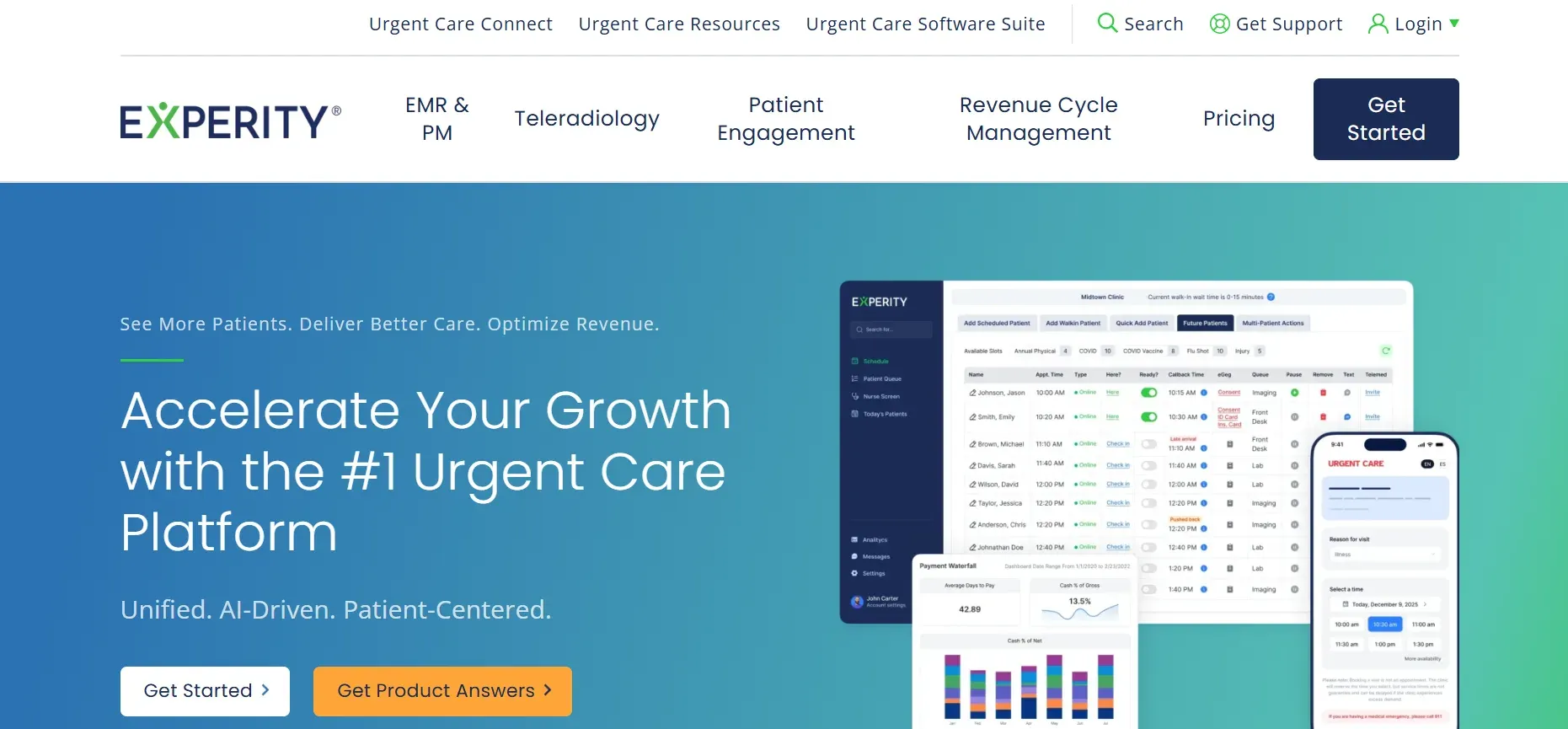
Experity is purpose-built for urgent care, offering check-in, queue management, and integrated billing. It has a smooth interface and deep support for walk-in workflows, making it a top Kareo (Tebra) alternative for centers that see high patient throughput. Experity’s acquisition of Clockwise.MD added strong scheduling and waitlist tools, but the cost structure and vendor lock-in are familiar territory.
Pricing: Reported starting at $500+/month per location, custom quotes for larger deployments.
- Tailored urgent care workflows
- Queue and appointment management
- Integrated billing and reporting
- High base cost plus per-location fees
- Locked into Experity’s ecosystem for integrations
- Data export can be costly and complex
With a Devaims build, you can own your check-in and queue logic outright, with no recurring per-location charges.
2. AdvancedMD (Best for integrated billing)
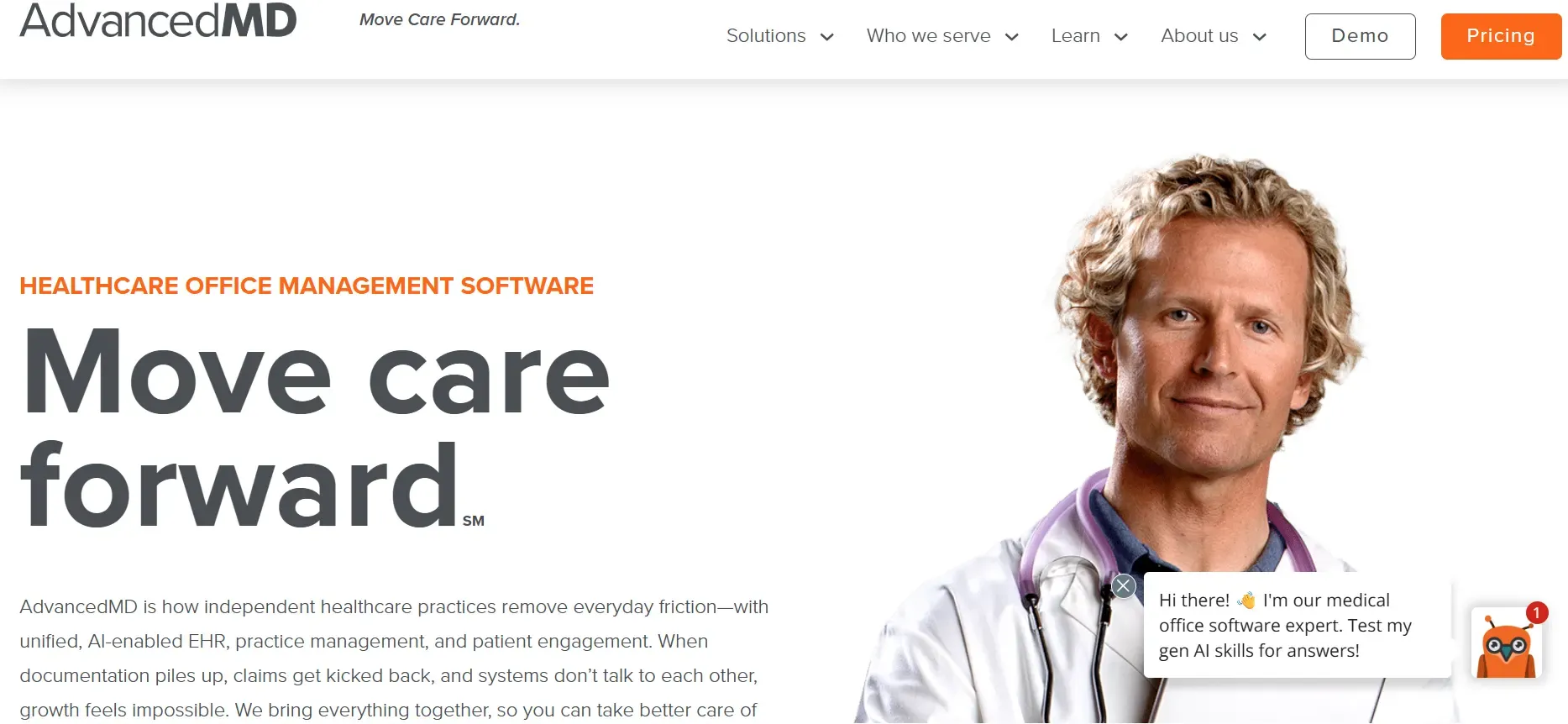
AdvancedMD is known for its all-in-one EHR and practice management, with strong billing capabilities and customizable scheduling. It’s often chosen by clinics that need strong claim handling and payer integration, but like Kareo (Tebra), you pay recurring fees and rarely get meaningful ownership.
Pricing: Reported $429+/month for the base platform, plus add-ons for telemedicine and analytics.
- Comprehensive billing tools
- Good payer network integrations
- Customizable scheduling features
- Extra charges for telemedicine and analytics
- Long onboarding and training times
- Limited flexibility for unique workflows
If your urgent care has a unique workflow, a one-size-fits-all vendor like this may never fit as tightly as a system built for you.
3. Athenahealth (Best for multi-location groups)
Athenahealth is a cloud-based EHR and practice management giant, widely used across specialties for its broad feature set and "network effect" on payer connections. For urgent care, it’s picked for multi-site operations, but the percentage-of-collections pricing means the more you make, the more you pay, with no path to true ownership.
Pricing: Typically a percentage of collections (around 4% to 7%), plus implementation fees.
- Strong payer connectivity
- Broad support for multi-location setups
- Regular updates and compliance support
- Costs scale with your revenue
- Feature access tied to contract tier
- Long contracts with auto-renewals
On a Devaims-owned system, your revenue stays yours, with no percentages and just flat maintenance if you want support.
4. eClinicalWorks (Best for flexible EHR workflows)
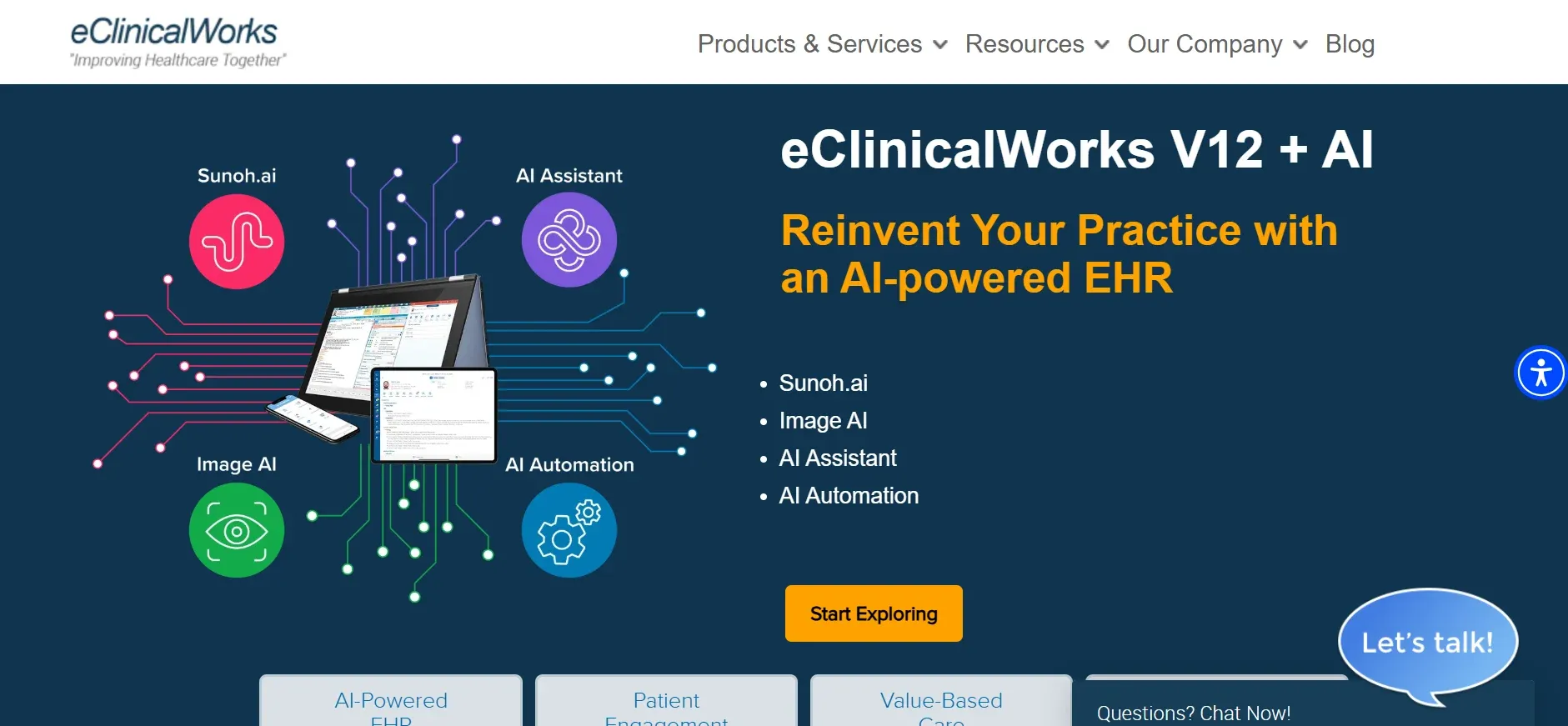
eClinicalWorks offers a widely used cloud-based EHR with strong customization and a large install base. Many urgent care operators choose it for its flexible templates and ability to support a range of specialties. The recurring per-provider fees and "closed garden" API policies echo Kareo (Tebra)’s limitations.
Pricing: Reported $449+/month per provider; implementation fees may apply.
- Highly customizable templates
- Large user community
- Regular updates and integrations
- Per-provider pricing adds up fast
- APIs often require premium access
- Data portability challenges
When you own your code, that "integration available on premium" is just a config file away.
5. NextGen (Best for heavy customization)
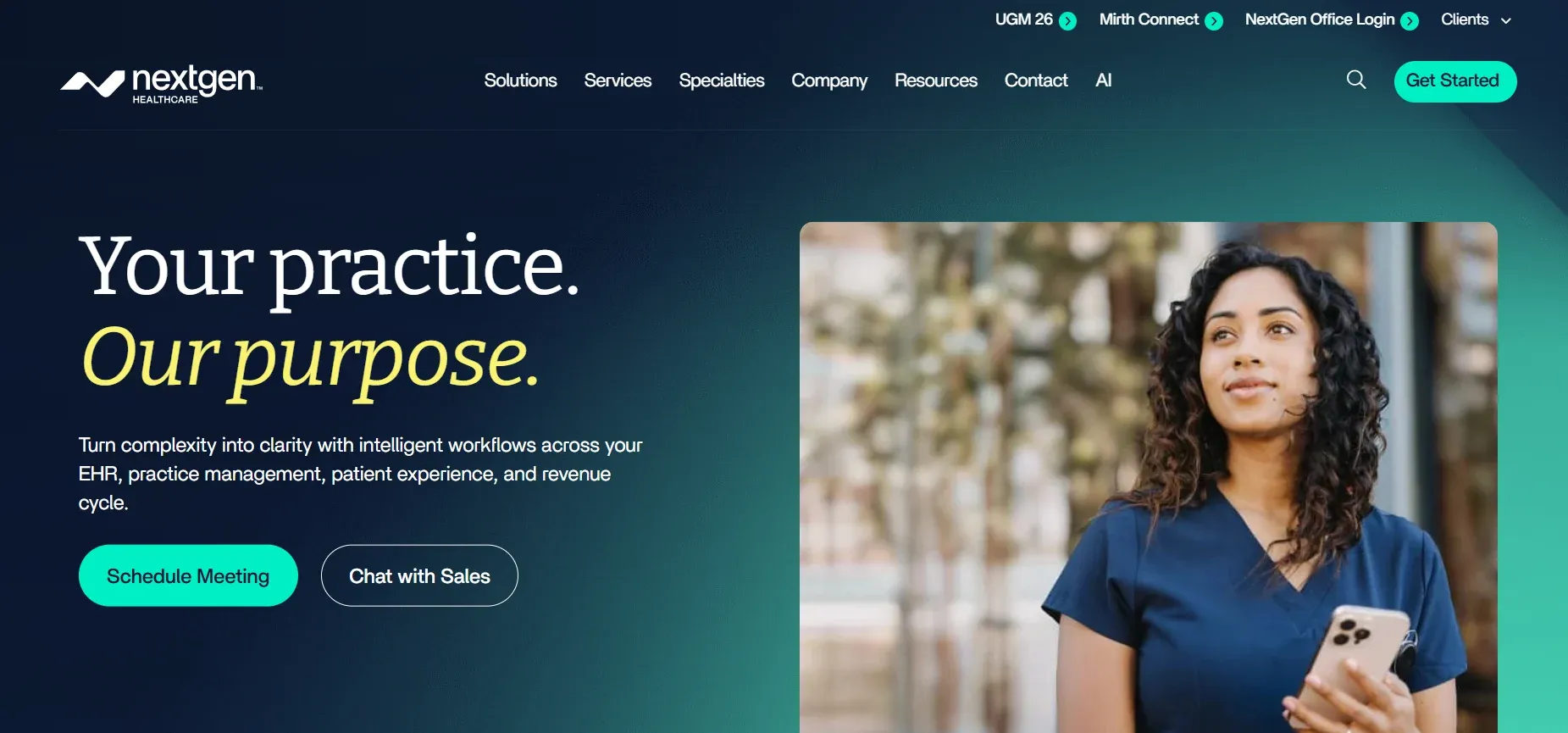
NextGen targets midsize to large clinics with its customizable EHR and practice management tools. It’s chosen by urgent care centers needing deep workflow tailoring. Like Kareo (Tebra), you’re still renting: upfront implementation, then recurring charges, with complex contracts and upsells.
Pricing: Custom quotes only; expect $300 to $600+/month per provider depending on modules.
- Powerful workflow customization
- Integrated analytics
- Good for multi-location urgent care
- Complex onboarding and setup
- Expensive support for deep customizations
- Long-term contract commitments
6. Epic (Best for enterprise urgent care operators)
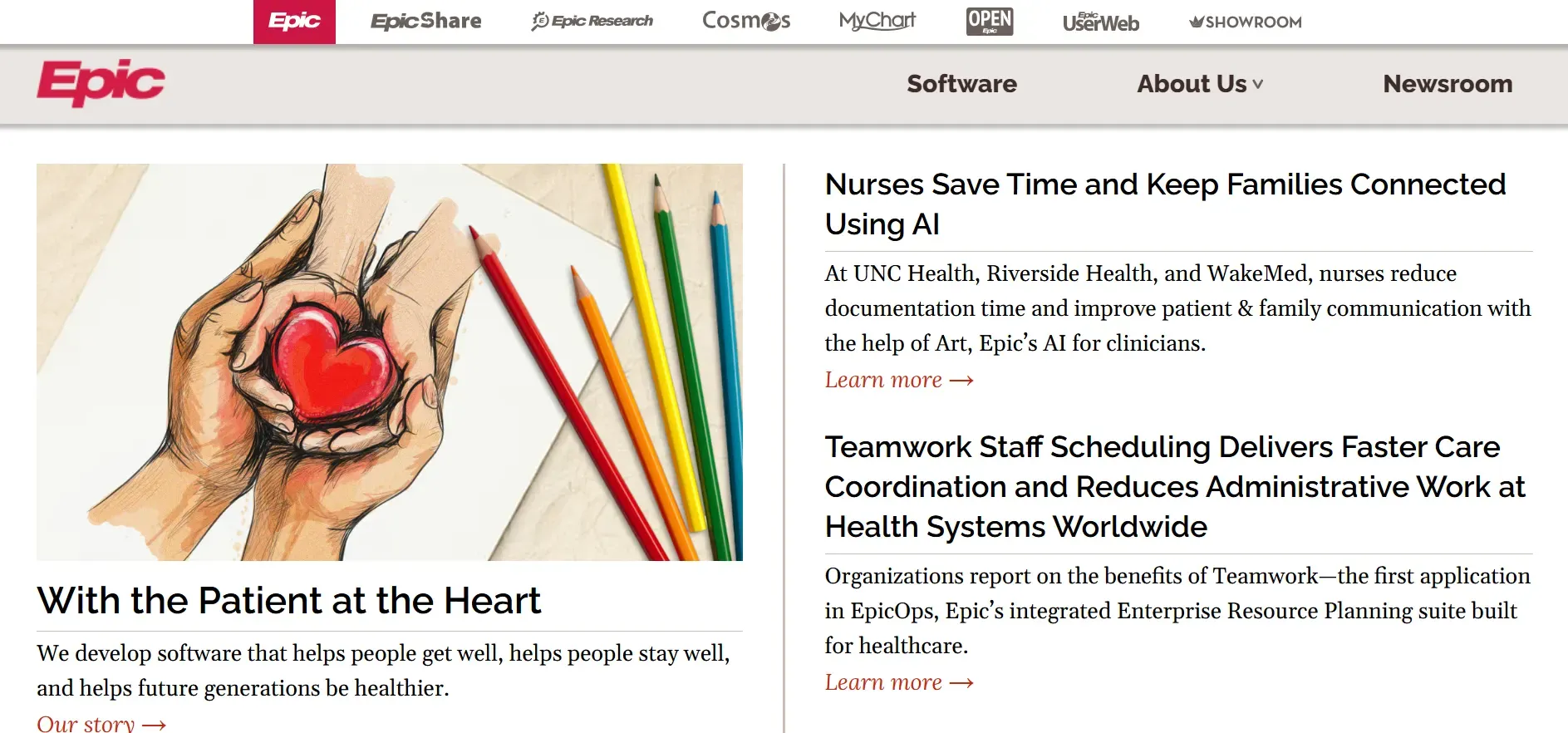
Epic dominates the enterprise EHR space, and while rarely seen in smaller urgent care, it anchors health systems that want everything under one roof. Epic’s power comes with enterprise pricing, long contracts, and a "walled garden" approach that keeps you renting, never owning.
Pricing: Custom enterprise quote; high upfront implementation, ongoing per-user fees.
- Comprehensive feature set
- Strong compliance and security
- Enterprise-grade integrations
- Prohibitive costs for smaller operators
- Very limited data portability
- Long project timelines
When you own your platform, scaling up is just a function of your infrastructure, not a new invoice per user.
7. Healow (Best for patient engagement)
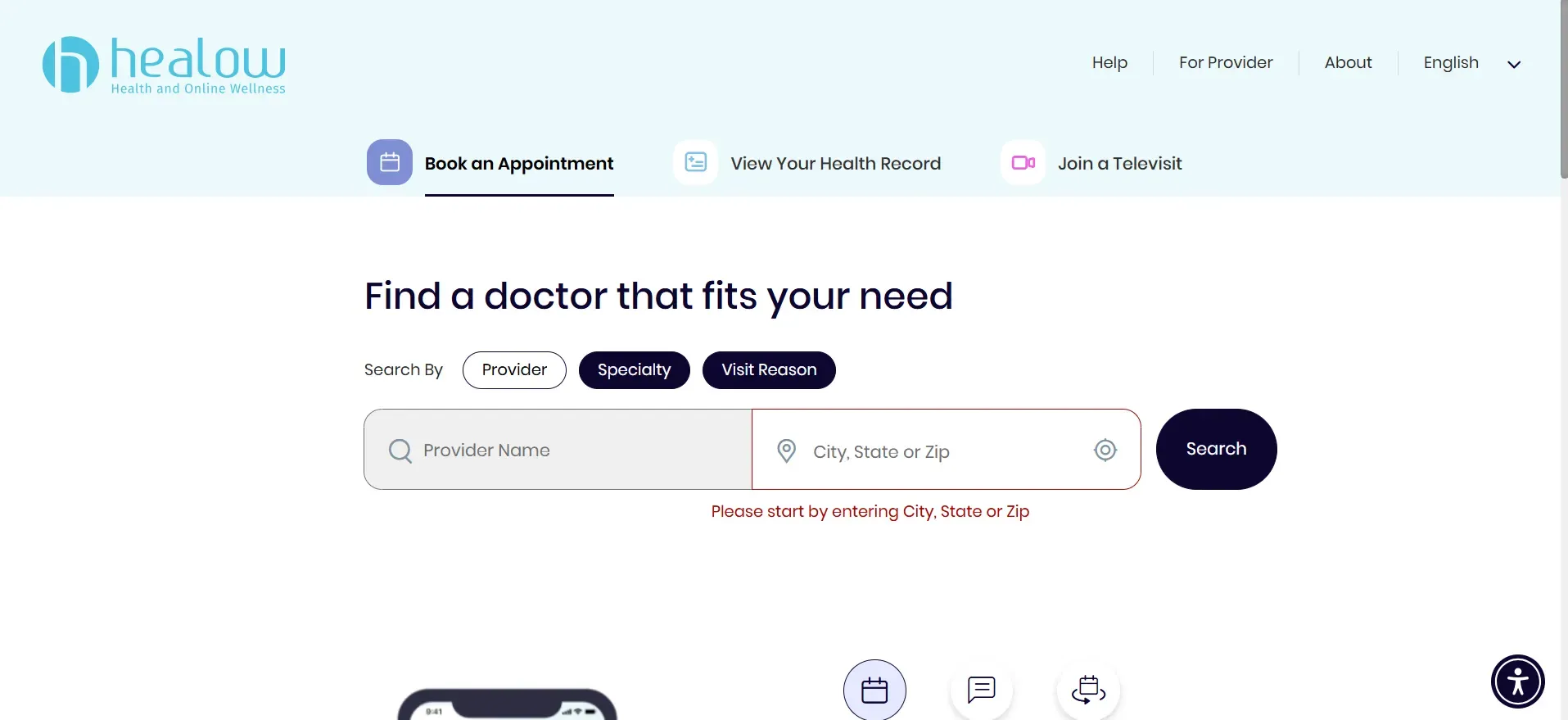
Healow is an eClinicalWorks spin-off focused on patient engagement: online scheduling, mobile check-ins, and telehealth. It’s a bolt-on for clinics that need better patient interfaces, but it’s not a complete EHR replacement and adds to your monthly IT stack.
Pricing: Reported $300+/month per location, with additional charges for some modules.
- Excellent patient self-service tools
- Mobile-friendly experience
- Quick deployment
- Limited as a standalone urgent care solution
- Extra fees for key features
- Integrates best with eClinicalWorks
8. iPatientCare (Best for interoperability)
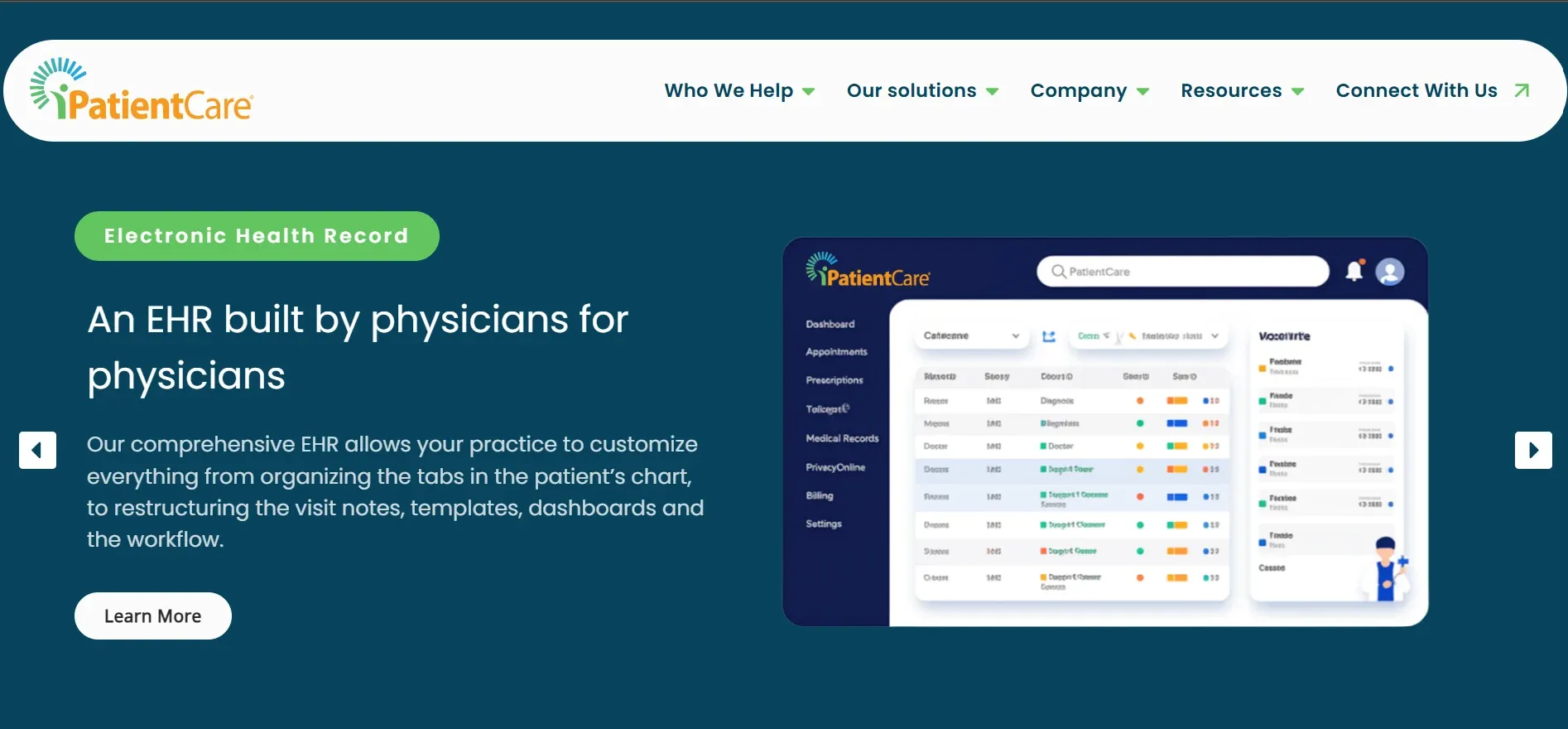
iPatientCare is built around interoperability and connecting disparate systems. Urgent care centers use it when they need to move data across varied platforms, but its interface can feel dated and customizations mean more monthly spend.
Pricing: Custom quote; usually per-provider per-month pricing.
- Strong on interoperability
- Good for multi-system clinics
- Customizable modules
- Can require third-party support for full integration
- Interface less modern than most rivals
- Recurring charges for premium modules
9. Devaims (The only own-it alternative)
Devaims is the only Kareo (Tebra) alternative on this list that leaves you with true ownership at the end. Instead of renting a generic platform, Devaims builds your urgent care software to your exact workflows, then hands you the source code. There are no per-provider fees, no feature gates, and no vendor lock-in, just a platform that’s yours to keep and adapt as your practice grows.
- One-time build, you own the code and data
- No recurring per-provider or per-location fees
- Custom features, workflows, and integrations built for you
- Flat, predictable maintenance if you want support
- No contracts, no forced upgrades, your rules
Other Kareo (Tebra) alternatives worth knowing
- Meditech: More common in hospital systems, less urgent-care focused.
- Nuvolo: Asset management first, not a clinical EHR, but sometimes used for urgent care facility ops.
- DrChrono: A solid practice management option for smaller clinics, but lacks urgent care-specific features.
- PracticeFusion: Affordable, but limited customizability and now part of a larger corporate stack.
How to choose the right Kareo (Tebra) alternative
- Budget: Know your real all-in costs, including per-provider, per-location, and add-on fees.
- Workflow fit: Make sure your urgent care processes, such as walk-in, scheduling, and discharge, are supported natively, not as a workaround.
- Integration needs: If you use third-party labs, billing, or patient engagement, check API openness and export options.
- Growth plans: Confirm how pricing scales as you add providers or locations.
- Ownership: Decide if you want to keep renting, or if now is the time to own your software with a custom Devaims build.
If you’re tired of endless rent and want to control your future, Devaims offers a way out, with no more per-provider fees and no more waiting for someone else’s roadmap.
Stop paying rent on software you could own
Every urgent care platform on this list, aside from Devaims, keeps you in the rent cycle. Per-provider fees and feature lockouts aren’t accidents, they’re the model. Kareo (Tebra), Experity, and the rest all monetize your growth. When you own your software, every new provider, location, or feature doesn’t mean a higher monthly bill.
Devaims is a custom software development partner that builds your urgent care center an EHR, practice management, or billing platform tailored to your exact needs. You keep the code, control your data, and pay only for the features you use. There are no forced upgrades, no contract auto-renewals, and no hidden "integration" fees.
- Tired of per-provider fees? Owning your system means every new hire costs you zero in software.
- Worried about data portability? You control your own database, not the vendor.
- Need a feature not on the roadmap? If you own it, it’s just a build, not a negotiation.
- Concerned about price hikes? With Devaims, your costs are flat and predictable.
| Solution | Ownership | 5-Year Cost Model | Contract? |
|---|---|---|---|
| Kareo (Tebra) | Vendor-owned | Recurring per-provider fees | Yes |
| Experity | Vendor-owned | Recurring per-location fees | Yes |
| AdvancedMD | Vendor-owned | Recurring per-provider fees | Yes |
| Devaims | You own it | One-time build + flat maintenance | No |
Let’s do the five-year math:
| Year | Rented (e.g. Kareo/Experity) | Owned (Devaims) |
|---|---|---|
| 1 | $18,000 | $32,000 |
| 2 | $36,000 | $33,800 |
| 3 | $54,000 | $35,600 |
| 4 | $72,000 | $37,400 |
| 5 | $90,000 | $39,200 (now ahead) |
For a typical urgent care running at $1,500/mo for 5 providers (software, support, integrations), you’ll pay $90,000 in five years and own nothing. With Devaims, a $32,000 one-time build and $150/month maintenance means you pull ahead before year five and never look back. We can run your exact numbers if you want a tailored cost comparison.
If you plan to stick around and grow, the sooner you own, the bigger the payoff. A Devaims build is for urgent care owners who want to invest once and keep every improvement forever.
How to switch from Kareo (Tebra)
- Export all patient and billing data from Kareo (Tebra) in available formats (CSV, HL7, FHIR, etc).
- Choose your new platform or custom solution and map your workflows.
- Import data into the new system, verifying integrity and completeness.
- Reconnect payment processors, labs, and third-party integrations.
- Train staff on the new workflows and run parallel for 2 to 4 weeks.
- Review your old Kareo (Tebra) contract for termination terms, and close out the account safely.
With a custom Devaims build, the migration is handled as part of the project.
Frequently asked questions
What is the best Kareo (Tebra) alternative for urgent care centers?
Experity is a strong alternative for urgent care operations with high patient volumes, while AdvancedMD and Athenahealth stand out for integrated billing and multi-site management. If you want to own your system and eliminate recurring fees, Devaims is the only real option.
Which Kareo (Tebra) alternative is the cheapest?
PrognoCIS and Healow offer some of the lowest reported monthly rates (starting around $250 to $300/month per provider), but these savings can vanish quickly with add-on fees and limited features. Over five years, an owned Devaims build often comes out ahead.
Are there any free Kareo (Tebra) alternatives?
There are no truly free, full-featured urgent care platforms. Some EHRs offer "lite" or freemium tiers, but these lack critical integrations and support. Devaims can scope a minimal viable build if you need a cost-sensitive entry point.
Which Kareo (Tebra) alternative is best for multi-location urgent care?
Athenahealth and NextGen both support multi-location setups well, with strong scheduling and reporting. Remember, ownership and export options are still limited compared to a Devaims build.
How hard is it to switch from Kareo (Tebra) to another platform?
Switching requires careful data export, workflow mapping, and a structured onboarding plan. Most vendors make data export possible but not always easy. Devaims includes migration as part of your build process, so you’re not left in the dark.
Can I keep my data if I leave Kareo (Tebra)?
You can export patient and billing data, but formats and completeness vary, and some vendors charge for full exports. With Devaims, your data is always yours, no questions asked.
Is there an urgent care platform I can own instead of rent?
Yes, Devaims is the only Kareo (Tebra) alternative that builds your software to keep. You get the source code, full data ownership, and the freedom to run your urgent care your way.
The bottom line
You don’t need to rent your software forever. Experity, AdvancedMD, and Athenahealth all bring solid features, but their pricing models keep you paying and locked in year after year.
Here’s the real decision-maker: Add up your five-year vendor spend. If that number could build you something you own, it’s time to get off the subscription treadmill. Owning your system means every provider, every workflow, every improvement is truly yours.
For more on urgent care tech and ownership, visit the Devaims blog, or check out our alternatives guides: Experity alternatives, AdvancedMD alternatives, and Athenahealth alternatives.