


Every podiatry owner knows the pain: the bill for your EHR and practice management software keeps climbing, but your workflows are stuck in place. Maybe you started with Kareo (now Tebra), thinking the all-in-one platform would finally simplify your day. Instead, you find yourself paying $599 a month per provider, plus a $500 onboarding fee, just to rent, not own, the tools your practice runs on. Frustration sets in when you need a custom report, but it’s locked behind another tier or a support ticket that goes unanswered for days. The longer you stay, the more you realize that your data, your workflows, and even your patient communications are in someone else’s hands.
If you’re reading this, you are probably weighing Kareo (Tebra) alternatives and wondering if the grass is any greener. The short answer: most alternatives offer similar features, but nearly all share the same rental business model. The best picks for 2026? AdvancedMD for big practices, DrChrono for Apple-heavy teams, Office Ally for low-budget clinics, Practice Fusion for simplicity, and Devaims if you want to stop paying rent and actually own your platform.
Ready to see the real numbers, the honest trade-offs, and why some owners are finally breaking free and building their own? Let’s dig in.
Why podiatry practices look for Kareo (Tebra) alternatives
Per-provider fees stack up fast: $599 per doctor, every month, is a steep price when you have multiple providers, or a growing team. Even low-volume practices can feel pinched when every new hire means another license fee. The math can be sobering: a four-provider group pays nearly $2,400 a month, not including add-ons or billing modules. Over five years, that’s enough to buy a new system outright. Yet you own nothing.
Annual contracts and onboarding costs: Tebra requires a year-long commitment and typically a $500 onboarding fee. If you want to leave, you need to give 60 days’ notice in writing, adding friction to any switch. Miss the window, and you’re locked in for another year. Upfront onboarding can also include hidden costs: data migration, training, and customizations are rarely included in the sticker price.
Feature access locked behind tiers: Want advanced patient engagement or automation? That’s another $200 a month per provider on top of the essentials package. Key features often cost extra, meaning the initial price quickly balloons as you add e-prescribing, telehealth, or analytics. Many podiatry practices report surprise invoices after activating “trial” features that then auto-renew at full price.
Customer support bottlenecks: Many users complain about slow response times and issues going unresolved. When you need help, waiting days is not an option, especially for billing, claims, or urgent clinical issues. Online user forums like Capterra and G2 are filled with stories of support tickets languishing for weeks.
Downtime and system glitches: Even a few hours of downtime can throw your schedule and billing into chaos. Users have reported these interruptions more than once. For podiatry, where daily volume is high and follow-up is critical, these outages are more than a nuisance. They are a business risk.
Together, these pain points drive podiatry owners to search for Kareo (Tebra) alternatives that don’t just reshuffle the same deck, but offer real improvement, especially in cost control, workflow flexibility, and data ownership.
Quick comparison of the best Kareo (Tebra) alternatives
| Tool | Best for | Starting price | You own it? |
|---|---|---|---|
| AdvancedMD | Enterprise practices | $399/mo/provider | No |
| DrChrono | Apple-centric clinics | Variable | No |
| Medisoft | Legacy workflows | Variable | No |
| Office Ally | Budget-focused | $29.95/mo/provider | No |
| Practice Fusion | Simplicity seekers | $149/mo/provider | No |
| Amazing Charts | Small practices | $199/mo/provider | No |
| ClinicTracker | Behavioral health | Reported | No |
| Experity | Urgent care | Contact for quote | No |
| Devaims | Ownership, custom fit | One-time build | One-time build, you own it |
Confirm current pricing before you decide. Fees, included modules, and contract terms change frequently and may not be updated on vendors’ websites in real time.
The 9 best Kareo (Tebra) alternatives
1. AdvancedMD (Enterprise practices)
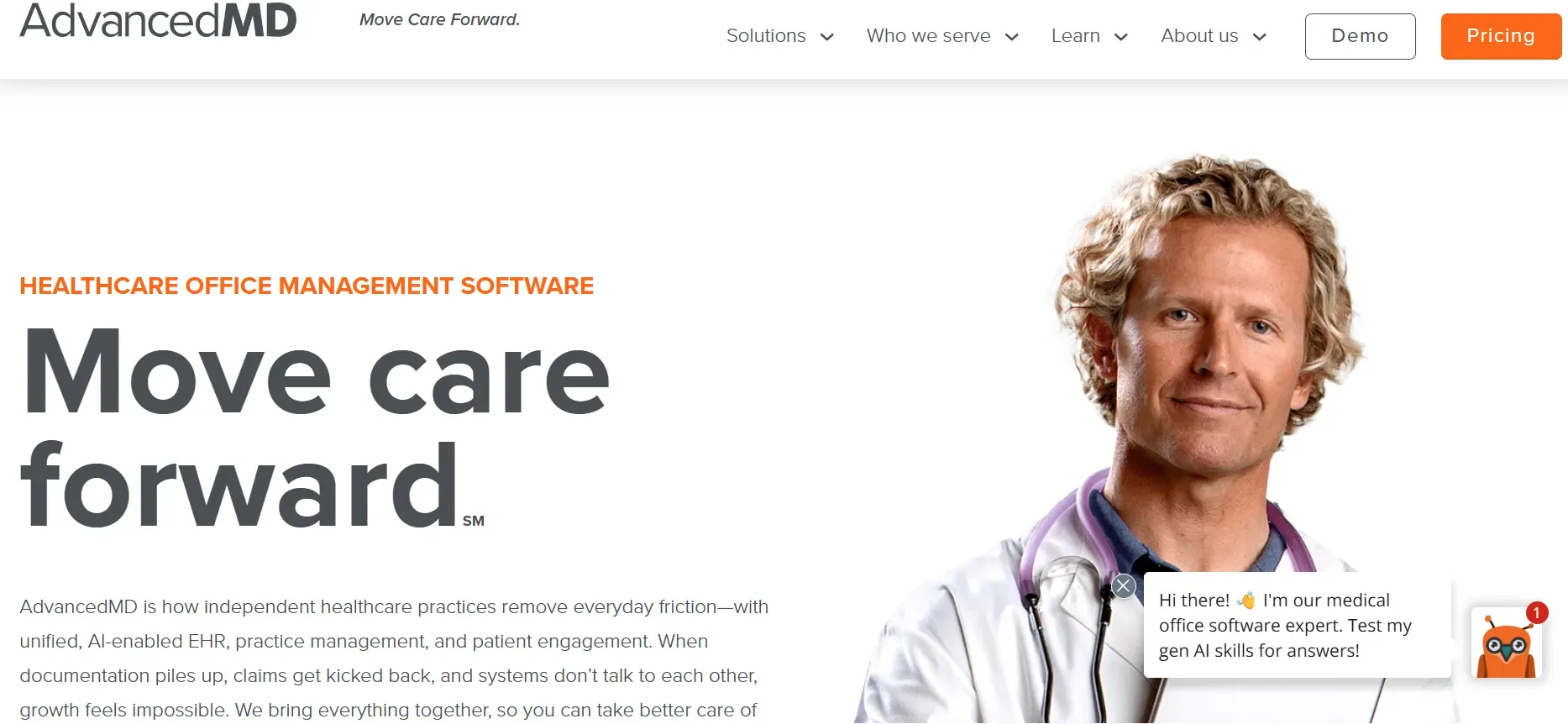
AdvancedMD is a comprehensive platform tailored for medium to large practices. It is best known for its deep feature set and strong focus on enterprise-scale reporting, workflow automation, and billing. AdvancedMD’s cloud-based platform includes robust scheduling, telemedicine, e-prescribing, and patient engagement tools. This makes it a one-stop solution for growing clinics.
Pricing: Starts at $399/month per provider (see pricing). Actual costs rise with add-ons like patient texting, custom analytics, or population health modules. Setup fees and contract terms are not always transparent. Expect to negotiate.
-
Key limitations:
- Steep learning curve for new users
- Customizations may require vendor services
- Per-provider fees add up as you grow
-
Strengths:
- Comprehensive feature set for enterprise needs
- Advanced analytics and reporting
- Integrated telemedicine and patient engagement
If you owned your system, you could add advanced reporting or tweak workflows directly. Here, you’ll wait for vendor roadmaps.
2. DrChrono (Apple-centric clinics)
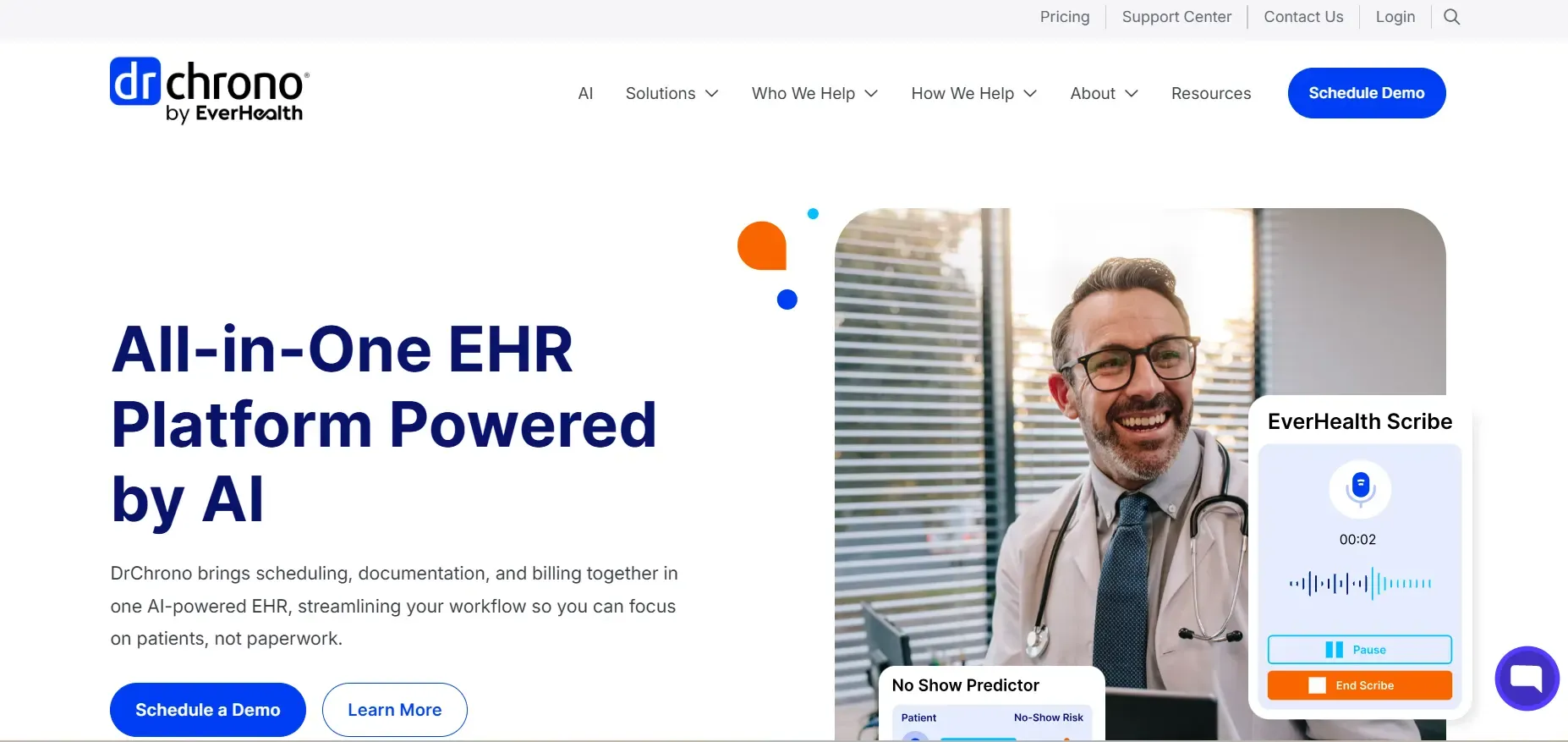
DrChrono is known for its iPad-first, mobile-centric interface. It is ideal for clinics where providers move between rooms and want to chart at the point of care. The EHR is fully cloud-based and tightly integrated with Apple Health, offering voice dictation, photo capture, and even Apple Watch support.
Pricing: Variable by plan and features (view tiers). Basic plans start lower, but advanced billing and RCM features push costs into the $300 to $500/month per provider range for most podiatry practices. Add-ons such as telehealth and custom forms increase the total.
-
Key limitations:
- Billing features can lag for complex scenarios
- Support and pricing clarity can be inconsistent
- Mobile focus may not suit all workflows
-
Strengths:
- Mobile-optimized for iPad/iPhone
- Customizable charting and podiatry templates
- Open API for integrations
Owning your platform would let you design mobile workflows and integrations tailored to your exact practice needs, rather than adapting to what’s available.
3. Medisoft (Legacy workflows)

Medisoft has been a staple in medical billing for decades. Many practices stick with Medisoft due to its reliability, especially for billing and claims processing. It is primarily a desktop-based solution, though some cloud options exist. The interface is old-school, but some podiatry practices rely on its familiar workflows and deep insurance integration.
Pricing: Varies by edition and deployment (on-premises or cloud). Expect to pay for software licenses, plus annual support or cloud hosting fees. See official pricing for details. Expect costs to range from a few hundred to over a thousand dollars per provider per year.
-
Key limitations:
- Dated interface and limited modern features
- Cloud options are less mature
- Support is often via resellers
-
Strengths:
- Reliable billing and claims management
- Customizable superbills and charge capture
- Longstanding insurance integrations
If you want a modern, cloud-native solution, Medisoft may not be the best fit. If you owned your platform, you could modernize at your own pace while keeping legacy billing flows.
4. Office Ally (Budget-focused)
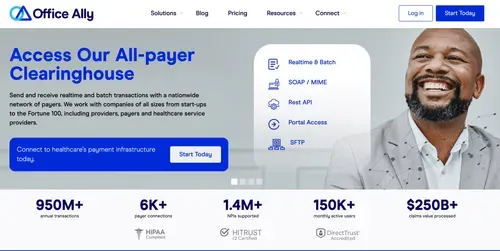
Office Ally is the budget leader for podiatry practices that want the basics at the lowest possible cost. Its EHR 24/7 platform and Practice Mate scheduler cover essential workflows, and the included clearinghouse is popular for claims submission. The biggest appeal: $29.95/month per provider, with no annual contracts or setup fees.
Pricing: $29.95/month per provider (see pricing). The clearinghouse is free for standard claims, and there are no upfront or cancellation fees.
-
Key limitations:
- Interface is functional but dated
- Advanced features are limited
- Support response times can vary
-
Strengths:
- Lowest monthly cost among mainstream EHRs
- Integrated clearinghouse for claims
- No contracts or setup fees
With a custom platform, those per-provider fees disappear, and you gain full control over your interface and integrations.
5. Practice Fusion (Simplicity seekers)

Practice Fusion is designed for practices that want simplicity and quick onboarding. It is entirely cloud-based, easy to set up, and offers a clean, intuitive interface. There are no setup fees, and contracts are month-to-month, making it easy to test before committing long term.
Pricing: $149/month per provider (see pricing). Labs and e-prescribing are included, but advanced analytics or patient messaging may require add-ons.
-
Key limitations:
- Limited customization and reporting
- System slowdowns during peak hours
- May not scale for larger practices
-
Strengths:
- Simple, intuitive interface
- Quick onboarding and setup
- Month-to-month contracts
If you want full control, owning your platform is the only way to guarantee your workflow is always a match for your practice.
6. Amazing Charts (Small practices)
Amazing Charts is aimed at small and solo practices that want an affordable, straightforward EHR. The platform includes essential charting, scheduling, and e-prescribing, with a focus on ease of use. There is a one-time $1,200 setup fee, and contracts are annual, not monthly.
Pricing: $199/month per provider, $1,200 setup fee (see pricing). Add-ons for billing, population health, or telemedicine are extra.
-
Key limitations:
- Setup fee adds upfront cost
- Annual contract limits flexibility
- Limited advanced features and customization
-
Strengths:
- Gentle learning curve for small practices
- Affordable for solo providers
- Basic EHR and scheduling included
Practices with unique workflow needs may find themselves boxed in after a year or two. Owning your platform removes these ceilings.
7. ClinicTracker (Behavioral health)
ClinicTracker is best known in behavioral health but is used by specialty practices (including podiatry) that need highly configurable workflows. The system is modular, letting you add features for billing, scheduling, patient engagement, and analytics as needed.
Pricing: Not public; reported to vary by modules and number of users. Expect enterprise-level quotes for larger practices, and per-module pricing for smaller clinics.
-
Key limitations:
- Pricing can add up quickly
- Steep learning curve for full customization
- Customizations often require vendor support
-
Strengths:
- Highly customizable EHR templates and workflows
- Integrated billing and claims processing
- Extensive reporting and analytics
If you want to own and tweak every aspect of your platform, building your own may be more cost-effective long term.
8. Experity (Urgent care and high-volume clinics)
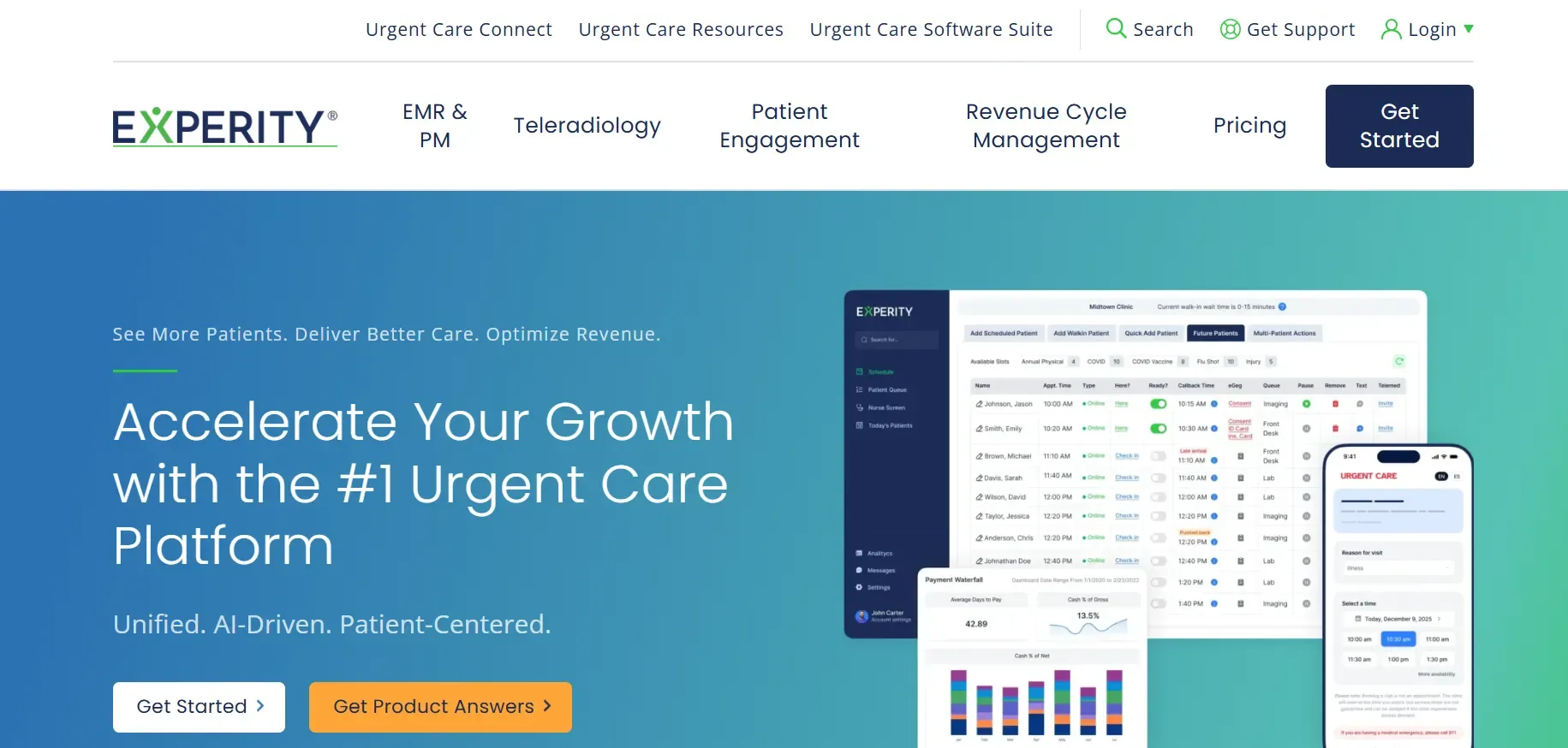
Experity is tailored for urgent care and high-volume practices. Its EHR and PM platform is designed for speed, from rapid charting to batch billing. While not podiatry-specific, it is used by clinics that prioritize throughput and need robust integrations with labs and imaging centers.
Pricing: Contact for quote. Typically enterprise-level pricing, based on provider count, locations, and modules selected.
-
Key limitations:
- Overkill for solo or small podiatry practices
- Lacks some specialty podiatry features
- Setup can be complex and expensive
-
Strengths:
- Designed for high-volume, rapid workflows
- Batch claims processing and payer analytics
- Integrations with labs and imaging
If you want a lean, specialty-focused workflow, custom ownership is more efficient.
9. Devaims (Ownership, custom fit)
Devaims builds custom EHR and practice management platforms for podiatry clinics that want to own, not rent, their core software. With Devaims, you get a system built to your exact workflows, reporting, and integration needs. The platform is delivered with source code, full documentation, and no per-provider or per-location fees. Maintenance is a flat, predictable fee, and you can upgrade or expand on your own schedule.
- One-time build fee, flat maintenance, and no per-unit or per-provider costsFull customization: every workflow, report, and integration is tailored to your clinicYou own the code and the data, no vendor lock-in or access feesNo contract lock, platform grows as your practice growsDirect integration with labs, imaging, billing, and analytics tools of your choiceMigration from Kareo (Tebra) is handled as part of the project
- One-time build fee, flat maintenance, and no per-unit or per-provider costs
- Full customization: every workflow, report, and integration is tailored to your clinic
- You own the code and the data, no vendor lock-in or access fees
- No contract lock, platform grows as your practice grows
- Direct integration with labs, imaging, billing, and analytics tools of your choice
- Migration from Kareo (Tebra) is handled as part of the project
With Devaims, migration from Kareo (Tebra) is managed as part of the project, including data extraction, field mapping, and validation. Your team receives training and support to ensure a smooth transition. Because the platform is custom, legacy workflows and data structures can be replicated exactly or improved as part of the build.
Growing podiatry groups tired of per-provider fees, practices with unique documentation or billing needs, and clinics that want to integrate with local labs, specialty imaging, or analytics partners benefit most. Also ideal for practices planning to add locations or expand services without ballooning software costs.
With Devaims, there are no per-provider fees, no contract lock-in, and you keep full control of your data and workflows. Ownership means your platform evolves with your practice, not a vendor’s roadmap.
Other Kareo (Tebra) alternatives worth knowing
- Plexicon: Niche EHR for podiatry, but less widely adopted and limited integrations. The community is small, so peer support and updates can lag.
- Podiatry Hotline EHR: Designed for podiatrists, but lacks the broader feature set and third-party integrations of mainstream tools. May work for solo practices but is rarely used in larger groups.
- Practice Automation: A newer entrant focused on workflow automation, but public information and user reviews are thin. Risk of limited support and uncertain long-term viability.
Some options are very niche or lack the support ecosystem most podiatry practices rely on. Always review trial accounts before committing. Check for HIPAA compliance, regular updates, and an active user community before trusting your core operations to a lesser-known vendor.
How to choose the right Kareo (Tebra) alternative
- Budget: Calculate your monthly and five-year costs, including all add-ons and per-provider fees. Be sure to factor in onboarding, support, and migration costs. For example, Office Ally looks cheapest month-to-month, but if you need custom reporting or integrations, hidden costs add up fast.
- Practice size: Some tools scale better for solo practices (Amazing Charts, Practice Fusion), others for multi-location operations (AdvancedMD, Experity). Consider future growth. Will per-provider fees balloon as you add staff?
- Customization needs: If you want unique workflows, custom reporting, or deep integrations (labs, imaging, billing partners), look for platforms with strong configuration, or consider owning with Devaims. Most rental EHRs offer limited customization without additional fees or vendor involvement.
- Support and training: Evaluate how quickly you get real help and whether onboarding is included. Rapid response is essential for billing and clinical workflow issues. User reviews on Software Advice, Capterra, and G2 can be invaluable for real-world insights.
- Ownership preference: If you are tired of renting and want to control your platform and data, custom ownership is the only path. Owning your software means you set upgrade schedules, never lose access to your data, and avoid surprise price hikes.
Most podiatry EHRs rent you the same features, just with different price tags. If you are serious about breaking the rent cycle, ownership changes the equation. Consider not just today’s needs, but where your practice will be in five years, and how much you’ll have paid in rental fees by then.
Stop paying rent on software you could own
The real problem isn’t just Kareo (Tebra)’s price or support. It’s that every alternative here is rented. You pay per provider, per month, and after five years you have nothing to show for it except another renewal email. Every time staff grows, so does your bill. Every new feature, another upsell. This business model is great for vendors, but not for practices trying to control costs and retain flexibility.
Devaims is what happens when you decide to own your core software. We build exactly what your practice needs, your workflows, your reports, your integrations. You get the source code. You keep the data. There is no subscription treadmill, no contract lock, and no per-seat surprise hikes. You decide when and how to upgrade or expand, and you never risk losing access to the heart of your operations.
- No more per-provider fees: Once built, your cost stays flat even as you grow. Add providers, locations, or services without renegotiating contracts or facing surprise invoices.
- No contract lock-in: You decide when and how to upgrade, with no penalties. Maintenance is transparent and predictable.
- Full ownership: Move data, customize features, and integrate with anything, because it’s yours. Your data never gets held hostage, and your workflows evolve with your practice, not a vendor’s roadmap.
| Tool | Contract | Per-provider fees | Custom workflows? | Ownership |
|---|---|---|---|---|
| Kareo (Tebra) | Annual, 60-day cancel | $599/mo/provider | Limited | Vendor-owned |
| AdvancedMD | Annual | $399/mo/provider | Moderate | Vendor-owned |
| Office Ally | Monthly | $29.95/mo/provider | Minimal | Vendor-owned |
| Devaims | No contract | None | Fully custom | You own it |
| Year | Rent (Kareo, 4 providers) | Own (Devaims) |
|---|---|---|
| 1 | $28,752 | $35,000 |
| 2 | $57,504 | $37,760 |
| 3 | $86,256 | $40,520 |
| 4 | $115,008 | $43,280 |
| 5 | $143,760 | $46,040 (now ahead) |
For a four-provider podiatry practice, renting Kareo (Tebra) for five years costs nearly $144,000, while owning a custom Devaims build (with annual maintenance) totals just over $46,000. Break-even hits late in year four. From there, every year you own, the gap only widens. If you ever add providers or locations, your savings accelerate dramatically.
The practices that benefit most are those planning to grow, have unique workflow needs, or want long-term control without vendor surprises. If you have ambitions to add locations, expand services, or integrate with new partners, owning your platform gives you a permanent advantage. We can run your real numbers, just ask.
How to switch from Kareo (Tebra)
- Export your patient records, billing data, and schedules from Kareo (Tebra). Be sure to request a full data extract, including all scanned documents, chart notes, and custom fields. Confirm file formats (CSV, HL7, CCD) and ask for a data dictionary.
- Choose your new EHR or practice management platform. Consider running trial accounts or demos with your real workflows before making a decision.
- Import your data into the new system, mapping fields as needed. Watch for mismatches in demographics, insurance information, and clinical notes. Some platforms provide migration scripts or support; others require third-party services.
- Reintegrate payment processors, labs, eRx, and any other third-party tools. Test each integration with real data to ensure claims, lab orders, and e-prescriptions process correctly.
- Train staff on new workflows and interfaces. Provide hands-on sessions, documentation, and a feedback channel for early issues.
- Run both systems in parallel for at least a week to catch any issues. Validate that schedules, billing, and clinical documentation are accurate in the new system before fully cutting over.
- Review your old contract and confirm final billing or cancellation steps. Return or destroy any hardware tokens, and request a written confirmation of account closure.
With a custom Devaims build, the migration is handled as part of the project, including data mapping, field validation, and staff onboarding. You retain full access to your legacy data and can even design your new workflows to match, or improve on, your old system.
Frequently asked questions
What is the best Kareo (Tebra) alternative for podiatry in 2026?
For most podiatry practices, AdvancedMD is a strong plug-and-play alternative at a similar price point, offering enterprise-scale features and reporting. Practice Fusion and Office Ally work for smaller budgets and practices that value simplicity over customization. If your goal is to own your platform, eliminate all per-provider fees, and future-proof your workflows, Devaims is the only true ownership option. Each alternative has strengths: AdvancedMD for depth, Office Ally for price, Practice Fusion for ease, and Devaims for control and customization.
What is the cheapest Kareo (Tebra) alternative?
Office Ally is the most affordable mainstream option at $29.95 per provider per month, with no setup fees or contracts. For bare-bones EHR and claims management, it is hard to beat. However, you still rent the system and face interface limitations, and advanced features are limited. Devaims lets you skip per-provider fees altogether with a one-time build, offering long-term savings and full ownership. If you plan to grow, the break-even point comes quickly.
Is there a free Kareo (Tebra) alternative?
While Office Ally’s clearinghouse is free, its EHR is not. There are no truly free, HIPAA-compliant, and podiatry-ready alternatives on the market. Some clinics experiment with open-source EHRs (like OpenEMR), but ongoing support, compliance, and data migration risks make this a challenge for most practices. Free options often lack the support, certifications, and integrations required for real-world podiatry use.
Which Kareo (Tebra) alternative is easiest for staff to use?
Practice Fusion is known for its intuitive interface and simple onboarding, making it popular with smaller teams and practices transitioning from paper. Amazing Charts is also straightforward for solo or small clinics with limited IT resources. If you want workflows designed around your team’s habits, a Devaims build offers full customization, letting you design interfaces, shortcuts, and automations that match exactly how your staff works.
When should a podiatry practice switch EHRs?
If your current system’s fees outpace its value, staff are frustrated, or you want control over your data and features, it’s time to consider Kareo (Tebra) alternatives. Other triggers: poor customer support, frequent downtime, or a vendor roadmap that doesn’t align with your needs. Don’t wait until renewal season. Plan your switch proactively, and allow time for migration, training, and parallel testing.
Can I keep my data if I leave Kareo (Tebra)?
You can export patient and billing data from Kareo (Tebra), but formatting and field mapping can be tricky. Always request a full data dump, including all attachments and custom fields. Some vendors charge extra for full data exports or delay delivery. With Devaims, your data and code are yours from day one, so you never risk losing access or being held hostage by a vendor.
How long does migration from Kareo (Tebra) take?
Migration timelines depend on data volume, complexity, and target platform. For small practices with standard templates, migration can be completed in a few weeks. For larger clinics with custom workflows, expect 4 to 8 weeks for data mapping, validation, and staff training. With Devaims, a dedicated migration plan is included in the build process to minimize downtime and ensure data accuracy.
Is owning my own EHR really less expensive over time?
Yes, if you plan to grow or stay in business for more than three years. The math is clear: per-provider fees accumulate rapidly, especially as you add staff or locations. For a four-provider practice, renting Kareo (Tebra) costs $143,760 over five years; owning a custom Devaims build costs about $46,000 over the same period (including maintenance). After the break-even point, every year you own is pure savings, and you keep full control.
The bottom line
The top Kareo (Tebra) alternatives all get you the basics, but none solve the core issue: you are still renting. The most useful decision rule is this, add up your five-year cost. If that number could have built you a system you own, you are paying rent on your own workflows. Ownership is the move when you want out of the per-seat rat race and need real control. If you’re ready to stop renting and start owning, it’s time to talk to Devaims.
Want more real-world insights? Read more on the Devaims blog, and see other alternatives like AdvancedMD alternatives, Office Ally alternatives, and DrChrono alternatives.