


You know the drill: another month, another invoice for catering software. Maybe your per-user cost creeps up every season. Maybe you’re stuck on a plan that almost fits your workflow, but not quite. Or you want to own your system, not rent it forever. If any of that hits home, you’re already thinking about Flex Catering alternatives.
Here’s the real talk: Flex Catering is respected, but it’s not cheap (from $250 to $450 a month) and you’re locked into someone else’s roadmap. We’ll break down how it stacks up against the likes of 17hats, Caterease, Total Party Planner, HoneyBook, and more. And if you’re tired of renting, we’ll show you how Devaims lets you own your catering platform outright.
Why caterers look for Flex Catering alternatives
Recurring fees that never stop: Every month, you pay again. Flex Catering starts at $250/month, and that’s before you add users or features. Five years in, it adds up to real money. Most rental platforms quietly increase fees over time, especially as you expand your team or need extra modules. It’s common to see annual price hikes, and with usage-based pricing, your bill can balloon as your business grows.
Limited flexibility and forced tiers: Want a feature that’s not in your plan? You’re upgrading, like it or not. Custom workflows or reports? Forget it unless you build your own. Rental SaaS platforms often bundle must-have features in higher tiers, so even if you only need one or two extras, you pay for a package. Many caterers find themselves paying for features they never use, while still lacking the custom workflows their business actually needs.
Setup fees and onboarding surprises: Some alternatives charge onboarding fees or per-user launch fees (Caterease: $200 per user up front), and contracts are annual or longer. It’s rarely as simple as it looks. Even platforms that advertise low monthly rates may require a hefty setup or training cost, and some demand multi-year commitments to access the best pricing. These costs are rarely obvious until you’re deep in the sign-up process.
No ownership, ever: You’re always renting. When you leave, you lose your stack. Data exports are often limited or clunky. Most SaaS vendors provide data export, but it’s rarely a simple, one-click process. You may lose access to historical reports, custom templates, or even invoice PDFs. If you move, you usually have to rebuild workflows, templates, and sometimes re-enter critical business data by hand.
Interface fatigue: Many platforms have a steep learning curve (see Caterease, Total Party Planner), so onboarding new staff means more time and more lost events. Training costs add up, and if the platform’s interface feels dated or unintuitive, your team’s efficiency takes a hit. Friction here can lead to missed orders, double bookings, and dissatisfied clients.
If you’re searching for Flex Catering alternatives, you’re not alone, and you’re right to look at both cost and control.
Quick comparison of the best Flex Catering alternatives
| Tool | Best for | Starting price | You own it? |
|---|---|---|---|
| Flex Catering | Established caterers needing all-in-one SaaS | $250/month | No |
| 17hats | Simpler event shops and solo operators | $60/month | No |
| Caterease | Complex, high-volume caterers | $99/month + $200/user setup | No |
| Total Party Planner | Growing teams needing scale | $119/month | No |
| HoneyBook | Budget-conscious caterers | $29/month | No |
| Curate | Event-heavy businesses | $275/month | No |
| Tripleseat | Venue-focused operations | $99/month per user | No |
| Planning Pod | Event and catering hybrids | Reported: $89/month | No |
| Devaims (owned) | Teams ready to own their platform | One-time build, you own it | Yes |
Always confirm current pricing before you decide. SaaS rates and tiers change fast, and discounts or promotions may apply depending on your business size or annual commitment.
10 Flex Catering alternatives that fit real catering workflows
1. 17hats: Simple, affordable for solo and small event caterers
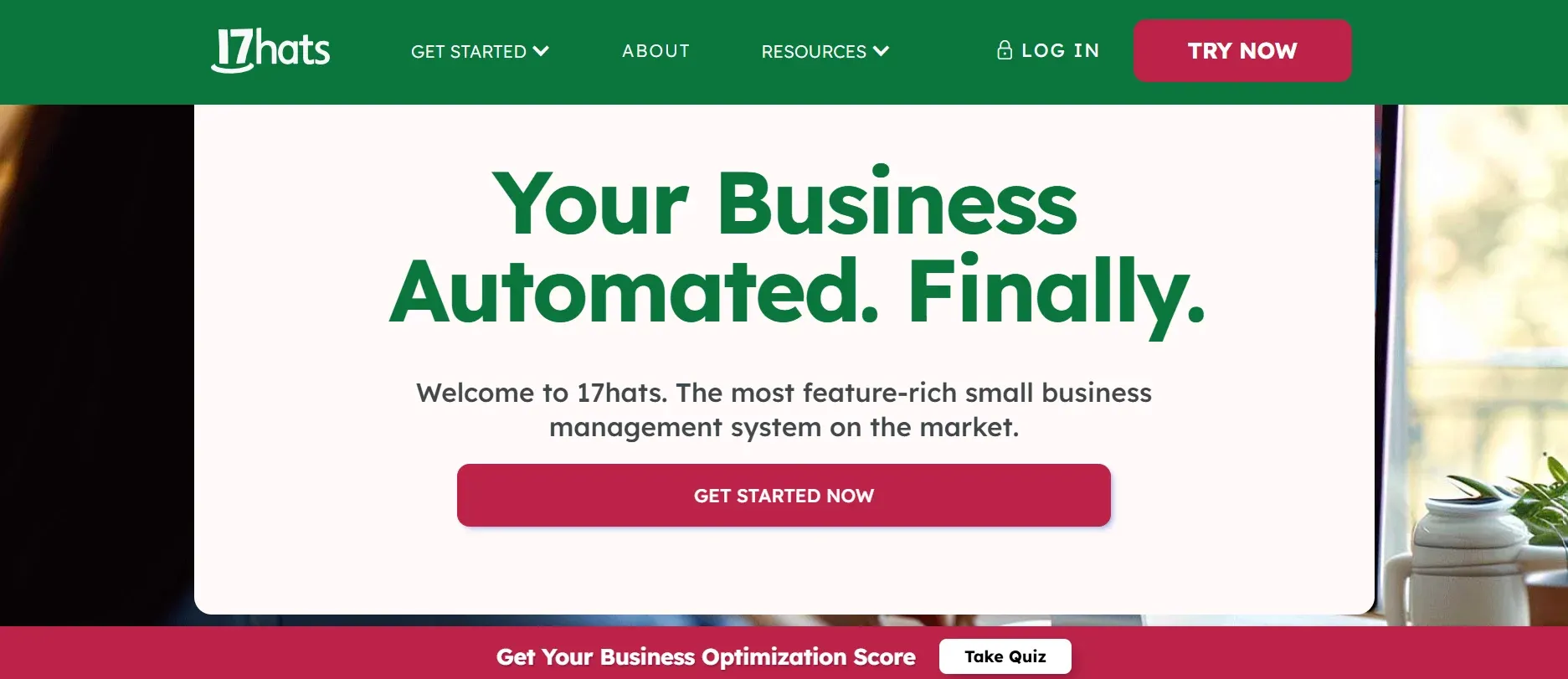
17hats is built for simplicity: project tracking, invoices, and contracts all in one. If you’re running a smaller catering operation or juggling side events, it beats Flex Catering on price and ease of use. But it’s lighter on deep catering features.
17hats is ideal for solo caterers, food trucks, or micro-catering businesses where the owner wears many hats. You get a streamlined dashboard for inquiries, contracts, proposals, payments, and workflow automation. The platform automates reminders, payment tracking, and client communications, which is a lifesaver if you’re managing all operations yourself.
Key features:
- Project and task tracking (with customizable workflows)
- Online contracts, e-signatures, and proposals
- Automated payment reminders and invoice generation
- Basic client portal for communication and document sharing
- Lead capture forms and simple CRM tools
Integrations: Integrates with QuickBooks, Google Calendar, Zapier, Stripe, and Square. However, deep integrations (like kitchen management or delivery logistics) are limited compared to heavier catering platforms.
Migration friction: You can import client and project data via CSV, but menu and inventory data must be rebuilt. There is no direct migration from Flex Catering, so expect some manual setup for templates and forms.
Concrete use cases: A solo caterer managing wedding tastings, a food truck operator handling bookings, or a small bakery offering event catering.
Trade-offs: While 17hats is affordable and easy to deploy, it lacks menu costing, kitchen prep sheets, or event staffing modules. If your business grows or you need complex event workflows, you’ll quickly run into its limits.
Pricing: $60/month, $600/year, or $800 for two years. 7-day free trial. Pricing details on their site.
- Affordable entry point
- Easy onboarding for small teams
- No setup fees
- Interface less intuitive for complex workflows
- Limited catering-specific features
- No true ownership, your data stays on their system
2. Caterease: Deep event tools for high-volume caterers
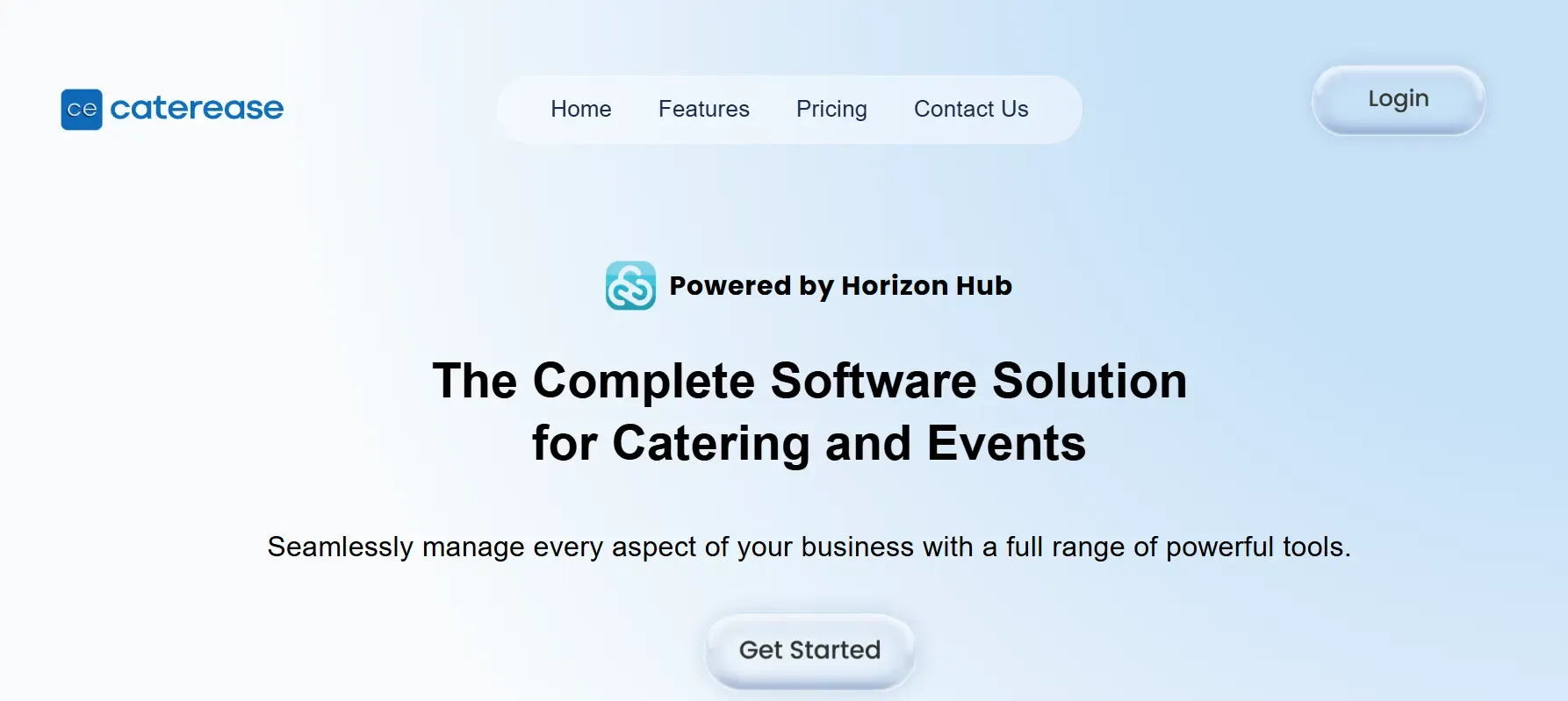
Caterease is powerful, especially if you’re handling dozens of events a week. Compared to Flex Catering, Caterease lets you go deeper on event logistics, but expect a learning curve and a $200 per-user launch fee up front.
Caterease is built for scale: large catering companies, banquet operations, and event venues with high transaction volume. Its structure is highly modular, letting you add advanced event management, menu costing, and even staff scheduling as your business grows.
Key features:
- Detailed event and function management (multiple rooms, timelines, resources)
- Menu engineering and recipe costing
- Client CRM with marketing tools
- Contract, proposal, and payment automation
- Advanced reporting (profitability, labor, food costs, and more)
- Staff scheduling and task assignment modules
Integrations: Connects to QuickBooks, Outlook, various payment gateways, and select POS systems. Offers API access for custom integrations, but these may require support from Caterease or a consultant.
Migration friction: Caterease provides onboarding support, but data import can be complex. You may need to reformat client, menu, and order data for upload. Historical event data may not transfer cleanly, and custom reports/templates must be rebuilt.
Concrete use cases: A full-service catering company managing 100+ events per month, a corporate caterer with multiple sales reps, or a venue with in-house catering and frequent room reconfigurations.
Trade-offs: Caterease delivers power and customization, but at the cost of complexity. Staff training is essential. Per-user setup fees and annual contracts can make onboarding expensive for growing teams. The interface feels dated compared to newer SaaS tools, and customization beyond what’s offered can be costly or impossible.
Pricing: $99/month (Express), $149/month (Standard), $199/month (Professional), annual billing, plus $200/user setup.
- Feature-rich for complex events
- Scalable for multi-user teams
- Reliable support
- Steep learning curve for new staff
- Annual contracts and setup costs
- Per-user fees add up fast as you scale
On a system you owned, adding a new user costs you nothing. It's just your platform.
3. Total Party Planner: Scalable for growing catering businesses
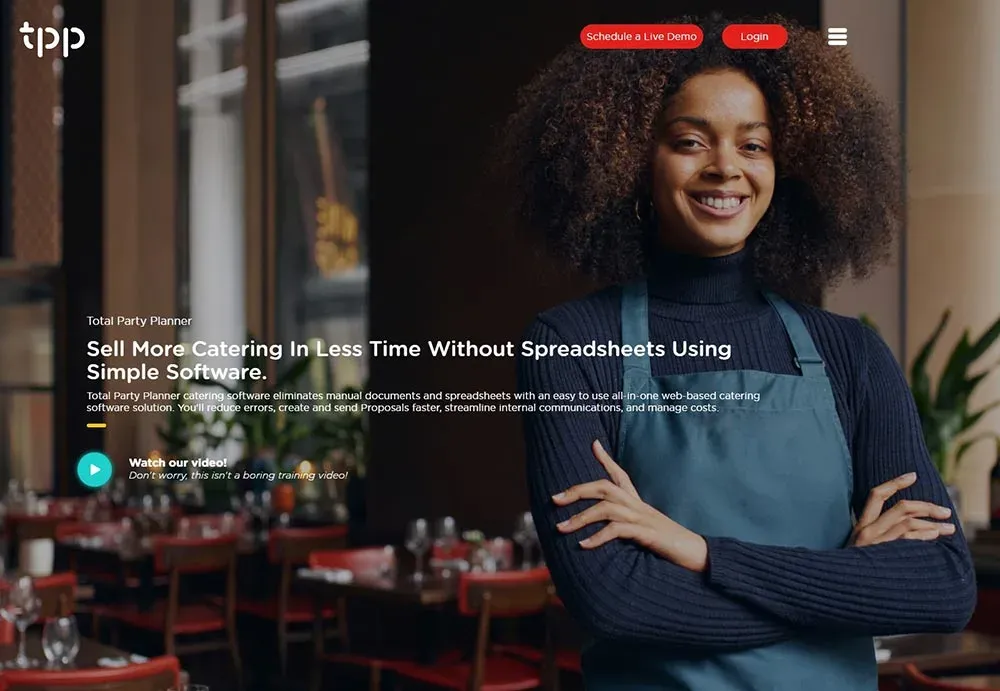
Total Party Planner covers the whole event workflow, proposals, food costing, scheduling. It competes with Flex Catering head on for established caterers but is reported as complex for new users. Setup fees apply.
Total Party Planner is suited to caterers who have outgrown spreadsheets but don’t want to invest in a fully custom build. Its interface is slightly more modern than Caterease, and it offers deep food costing and event management features.
Key features:
- Menu and recipe costing with allergen tracking
- Proposal and contract builder with e-signature
- Event scheduling and staff management
- Inventory tracking and purchase order management
- Production sheets and delivery logistics
- Reporting (sales, profitability, food/labor cost analysis)
Integrations: Integrates with QuickBooks, Square, DocuSign, and select accounting platforms. API access is limited and may require a higher-tier subscription.
Migration friction: Imports from Excel/CSV are supported for contacts and menus, but more complex data (like historical events or custom reports) may need manual setup. Onboarding support is available but may come at an extra cost.
Concrete use cases: A mid-sized caterer expanding to multiple locations, a catering company with onsite and offsite events, or a business seeking detailed production and costing control.
Trade-offs: The platform’s depth can overwhelm new staff, and required training can slow adoption. Setup and annual contracts lock you in, and per-user pricing can escalate quickly. Customization is limited to what’s built in, unique workflows may not be supported.
Pricing: Starts at $119/month for a single user; up to $429/month for higher tiers. One-time setup fee (amount not specified).
- Strong reporting and costing tools
- Good for growing teams
- Wide feature set
- Complex navigation for new staff
- Setup fees add to first-year cost
- Annual contracts
4. HoneyBook: Budget-friendly for small and new caterers
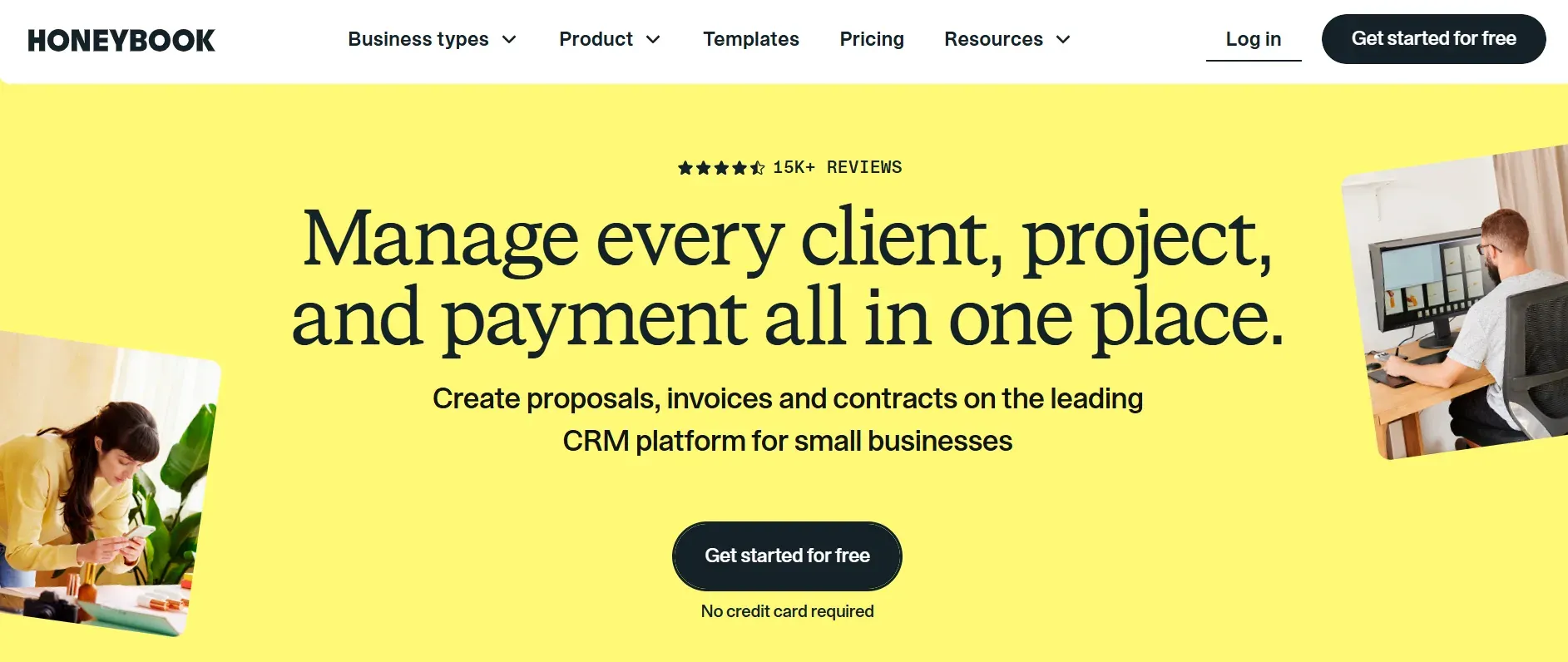
HoneyBook is a favorite for freelancers and small shops. It’s less catering-specific than Flex Catering, but the starter plan is just $29/month. Customization is limited compared to others.
HoneyBook is popular among photographers, event planners, and solo caterers who want a clean, modern interface and simple automation. While it lacks deep food costing or kitchen management, it excels for client communication, payment collection, and project tracking.
Key features:
- Client portal for proposals, contracts, and messaging
- Automated invoicing and payment reminders
- Templates for contracts, proposals, and forms
- Task lists and workflow automation
- Mobile app for managing bookings on the go
Integrations: Connects to QuickBooks, Zapier, Google Calendar, and Stripe. No direct integrations for kitchen or delivery management.
Migration friction: Basic data import from CSV is available for contacts and projects, but you’ll need to rebuild menus and event templates. HoneyBook’s onboarding is straightforward, but customizing for catering use cases may require extra effort.
Concrete use cases: A home-based catering business, a side-hustle caterer, or a bakery offering event services who wants simple invoicing and a professional client experience.
Trade-offs: HoneyBook is affordable and intuitive but lacks catering-specific modules. If you need menu costing, kitchen prep, or delivery logistics, you’ll need to supplement with other tools or consider a more specialized platform.
Pricing: $29/month (Starter), $49/month (Essentials), $109/month (Premium), billed annually. Free trial available.
- Very affordable entry price
- Simple, modern interface
- No setup fees
- Customization options are limited
- Not built for complex catering events
- No source code ownership
For shops with unique workflows, Devaims can build you exactly what you need, no compromises on features or branding.
5. Curate: Event automation for frequent, large events
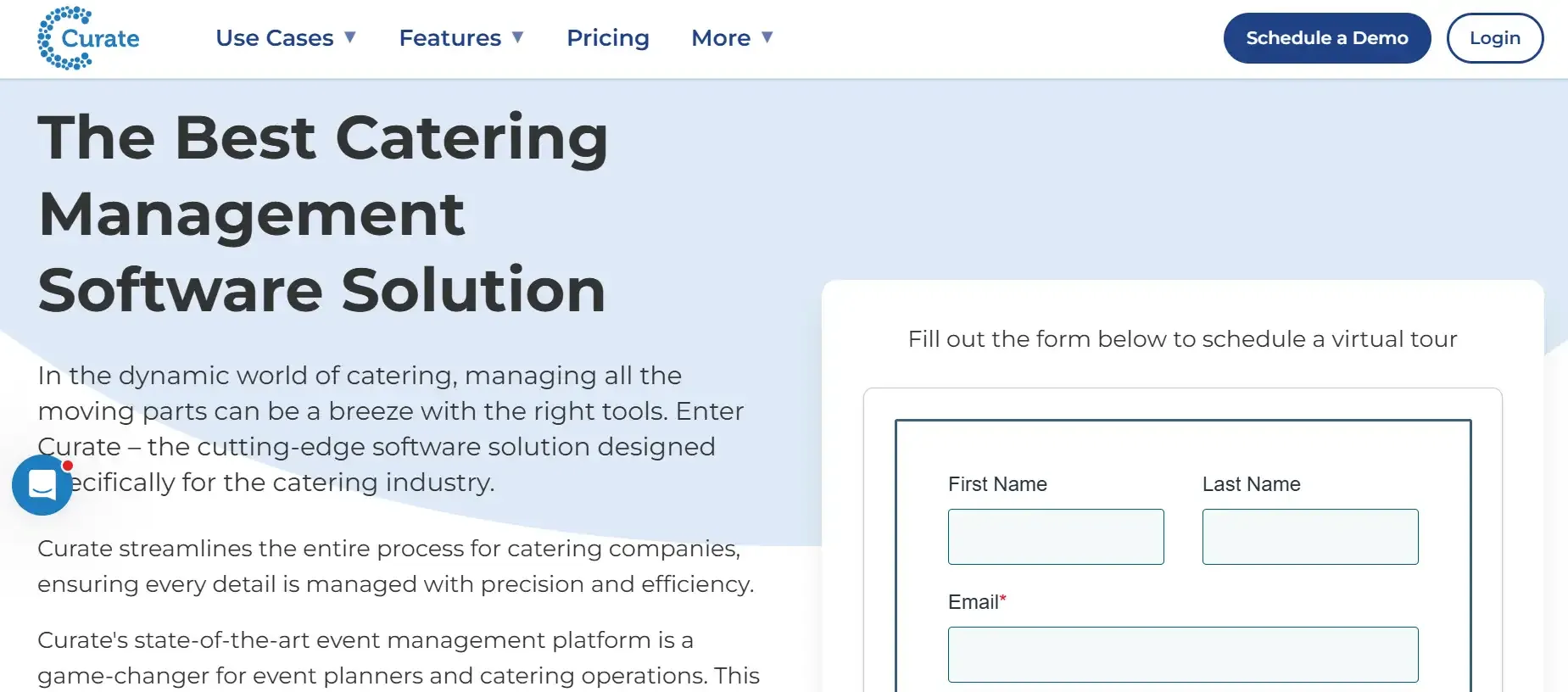
Curate is tailored for flower shops and caterers who run high volumes of events. It’s more expensive than Flex Catering for many, but power users appreciate its event tools.
Key features:
- Event proposal and quote builder with drag-and-drop menus
- Inventory tracking for food, floral, and rental items
- Automated production sheets for kitchen and event teams
- Task management and event timeline tools
- Client communication and document sharing
Integrations: Connects with QuickBooks, Google Calendar, Stripe, and select POS systems. Curate’s API allows some custom integrations, but advanced connections may require developer help.
Migration friction: Curate offers onboarding support but importing historical data from Flex Catering is manual. Menu and inventory items must be recreated, and custom workflows rebuilt.
Concrete use cases: A large-scale wedding caterer managing hundreds of events annually, a floral shop expanding into catering, or a rental business offering event packages with food service.
Trade-offs: Curate’s price is steep for occasional caterers or small shops. Its feature set is extensive but can be overwhelming if you only need basic event management. Customization is limited to what’s in the platform.
Pricing: Starts at approximately $275/month. Details at agiled.app.
- Event-focused automation
- Good for high-volume caterers
- Solid client management
- Expensive for shops with fewer events
- Feature set overkill for occasional use
6. Tripleseat: Venue-first platform for event-based catering
Tripleseat is built for venues and event spaces with catering on the side. If your business is venue-first, it’s a contender, though pricing is per user and can add up faster than Flex Catering.
Key features:
- Venue and room management (multiple spaces, availability calendar)
- Event booking and contract automation
- Client CRM and communication tools
- Menu and package builder for events
- Integration with POS and accounting systems
- Reporting on bookings, revenue, and event performance
Integrations: Connects to Square, Toast POS, QuickBooks, and Google Calendar. API available for custom integrations, but setup may require technical assistance.
Migration friction: Tripleseat supports CSV imports for bookings and contacts but requires manual recreation of event templates, packages, and menus. Transitioning from Flex Catering can take several weeks depending on data volume.
Concrete use cases: A banquet hall with multiple rooms, a brewery hosting private events, or a country club with in-house catering.
Trade-offs: Per-user pricing can make scaling expensive for teams with many event coordinators. The platform is built for venues first, so pure catering features are secondary. Custom workflows may not be supported.
Pricing: Around $99/month per user, billed annually.
- Strong for venue management
- Useful event calendar
- Good integrations with POS
- Per-user pricing gets expensive as you scale
- Venue-focused, not catering-first
7. Planning Pod: Flexible for event/catering hybrid businesses
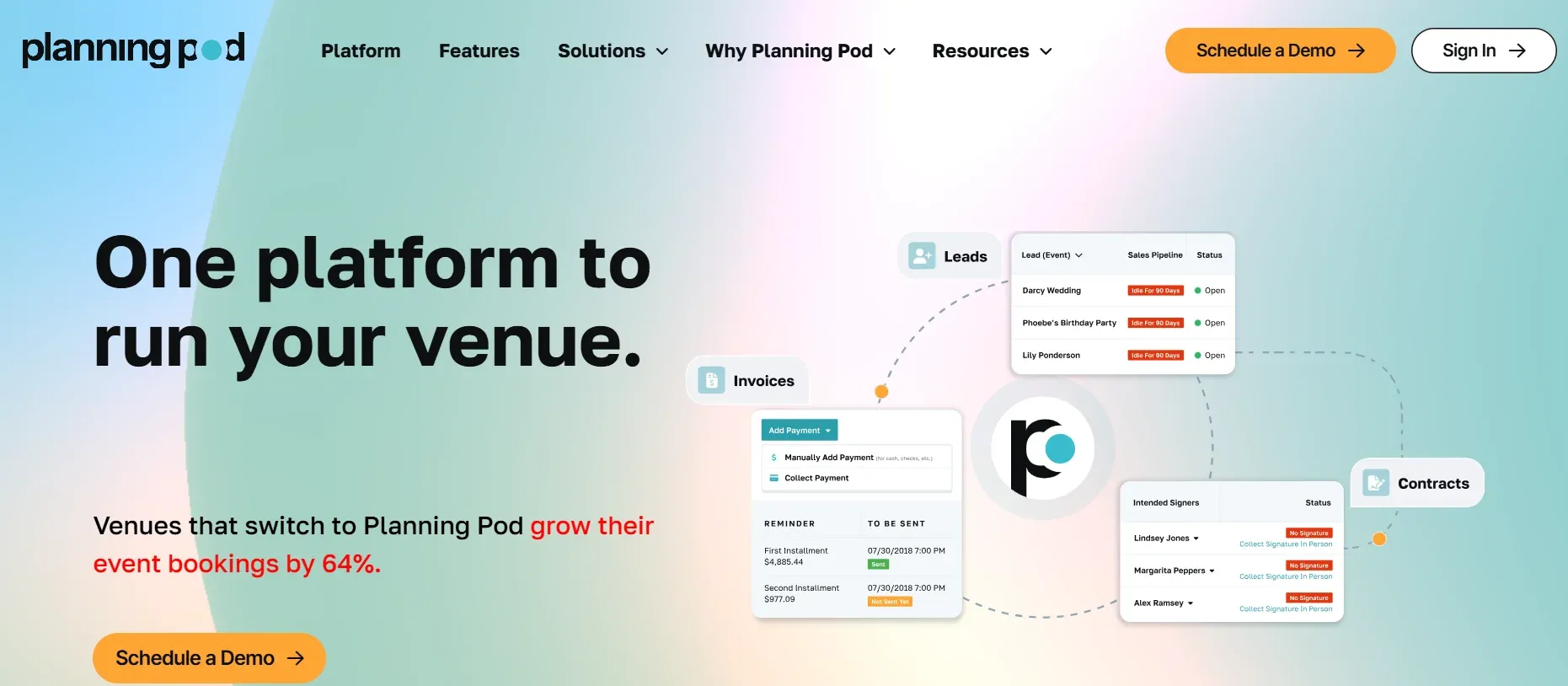
Planning Pod blends event planning and catering features. It’s a fit for hybrid shops but doesn’t go as deep on catering-specific needs as Flex Catering. Pricing is reported at $89/month, not confirmed on the official site.
Key features:
- Event booking and timeline tools
- Guest list management and RSVP tracking
- Menu planning and proposal builder
- Budgeting and vendor management
- Shared calendars and task lists
Integrations: Integrates with Google Calendar, QuickBooks, and Zapier. No direct POS or kitchen management integrations.
Migration friction: Contact and event import is supported via CSV, but menu and inventory data require manual setup. Some templates can be imported, but complex workflows may need to be rebuilt.
Concrete use cases: An event planner adding catering services, a small venue offering in-house food, or a caterer running private parties and corporate events.
Trade-offs: Planning Pod is flexible but not specialized. If you need deep kitchen management, food costing, or logistics, you’ll need to supplement with other tools. Its design is more event-planner-centric than catering-centric.
Pricing: Reported $89/month. Confirm details with vendor.
- All-in-one event/catering management
- Easy calendar tools
- Affordable for small teams
- Not tailored to pure catering operations
- Workflow can feel too generic
8. Devaims: Own your catering system, not just rent it
Devaims builds custom catering software that fits your workflows, your branding, and your exact needs. Unlike every other alternative, you keep the source code and run it on your terms. No forced upgrades, no per-user or per-event fees, no contract lock-in. The platform is yours to own and grow, forever.
Key features (tailored to you):
- End-to-end event management: proposals, contracts, menus, kitchen sheets
- Custom dashboards and reporting (built for your KPIs)
- Role-based access for unlimited users (sales, kitchen, delivery, admin)
- Integrated kitchen, delivery, and inventory modules
- White-labeled client portals and branded communications
- API and custom integrations with your POS, accounting, and logistics tools
Integrations: Built to your specification. Devaims can connect with payment processors (Stripe, Square, Adyen), accounting (QuickBooks, Xero), logistics (Onfleet, Bringg), and more. You define the stack, Devaims builds the connectors.
Migration friction: As part of the build, Devaims handles end-to-end migration: extracting your data from Flex Catering or other platforms, mapping fields, and ensuring nothing is lost. Custom tools are built to mirror your previous workflows, minimizing retraining.
Concrete use cases: A fast-growing catering company with multiple trucks and teams, a group with complex menu costing, or a business that needs branded client portals and unique production workflows.
- One-time build, you own the code
- Unlimited users and events, no added fees
- Customized to your exact process and branding
- No contracts, no forced upgrades
- Flat, predictable maintenance cost only
With Devaims, you never pay per-user or per-event fees, so your costs stay predictable as you grow.
Devaims can build custom integrations for your accounting, POS, or logistics tools, so you never have to compromise on your workflow.
If you need unique reporting or dashboards, Devaims delivers exactly what your team needs, not just what comes in a package.
Other Flex Catering alternatives worth knowing
- CaterZen: Focused on catering delivery logistics, but less full-featured for event management than Flex Catering. Great for drop-off caterers, but lacking in menu costing and event scheduling.
- Better Cater: Budget pick for small caterers, but lacks advanced event planning tools. Good for basic invoicing and order tracking, but limited integrations.
- Event Temple: Strong for venues and event sales, but not catering-first. Integrates well with sales and CRM tools, but food costing and kitchen features are minimal.
- Spiffy: Simple invoicing and scheduling, but not a full catering platform. Ideal for one-off events or micro-caterers, but not for scaling teams.
How to choose the right Flex Catering alternative
- By budget: Solo caterers may stretch further with HoneyBook or 17hats. Larger shops should price out per-user costs on Caterease and Flex Catering. Always factor in setup, onboarding, and annual renewal costs, as well as any required add-ons.
- By workflow: If you need venue management, Tripleseat or Planning Pod fit. If you want precise food costing and reporting, look at Total Party Planner. For deep event logistics, Caterease or Curate may be better, but custom builds shine for unique workflows.
- By ownership: If you’re tired of renting, Devaims is the only option that builds a system you own. No other alternative offers source code ownership, unlimited users, and flat costs.
- By event volume: High-frequency shops may justify Curate or Caterease. Lighter users will overpay monthly. If you have seasonal swings, look for platforms with flexible pricing or consider owning to avoid overpaying in quiet months.
- By staff size: Watch per-user fees. These add up quickly as you grow. Calculate your five-year cost for any platform before signing.
If none of the rental models fit, it might be time to own your stack.
Stop paying rent on software you could own
Here’s the truth: every Flex Catering alternative on this list rents you access. The more you scale, the more they collect, per user, per event, per month. They hold the code, your data lives on their terms, and the price is never truly yours. If you’re ready to break the cycle, Devaims lets you build a catering platform that’s yours to keep.
Devaims is a team of custom software builders who hand you the source code. You get the workflows, reports, and integrations you want, no forced templates, no features locked behind higher tiers. When the project is done, the platform is yours. You run it. You brand it. No one can hike your price or lock you out.
- Per-user fees vanish: Unlimited users, drivers, and events. Add as many as you need without a surprise bill.
- Reports and workflows fit you: If you need a custom dashboard or a unique order process, it’s just part of the build.
- Flat, predictable costs: Pay once to build, then a flat monthly maintenance. No contracts, no forced upgrades, and you keep the code.
| Platform | Ownership | Per-user/event fees | Contract | Custom features |
|---|---|---|---|---|
| Flex Catering | No | Yes | Monthly, no trial | Only as offered |
| Caterease | No | Yes ($28/user/month + launch fee) | Annual, setup fee | Limited |
| HoneyBook | No | No | Monthly/Annual | Limited |
| Devaims | Yes, source code is yours | No | No contract | Anything you need |
| Year | Rented (Flex Catering @ $450/mo) | Owned (Devaims build) |
|---|---|---|
| Year 1 | $5,400 | $32,400 ($30,000 build + $2,400 maint) |
| Year 2 | $10,800 | $34,800 |
| Year 3 | $16,200 | $37,200 |
| Year 4 | $21,600 | $39,600 |
| Year 5 | $27,000 | $42,000 |
With a team of 5 to 10, renting Flex Catering means $27,000 in five years, and you still own nothing. Devaims passes that break-even in year 5, then every year after, you’re ahead. If your operation is growing, or you want control and predictability, owning is the smarter move.
How to switch from Flex Catering
- Export your data from Flex Catering: clients, menus, orders, and invoices. Flex Catering offers CSV export for basic records, but custom fields and historical event data may require support tickets or manual effort.
- Pick your new platform or custom build. Vet features, costs, and contract terms. Request demos and trials, and ask for a full cost breakdown, including onboarding and support fees.
- Import your data into the new system, mapping fields as needed. Some platforms have import wizards; others require manual entry or paid onboarding services.
- Reconnect payment processors, email, and any integrations. Ensure your new platform supports your existing payment gateways, accounting tools, and communication channels.
- Train your staff on new workflows (plan for a parallel run if possible). Schedule training sessions and run both systems side by side for a few weeks to avoid disruption.
- Test thoroughly before making the switch official. Review your old contract for any cancellation terms. Make sure all data and workflows function as expected before cutting over.
With a custom Devaims build, the migration is handled as part of the project, including data cleaning, template recreation, and staff training.
Frequently asked questions
What is the best overall Flex Catering alternative?
If you want a rental platform, Caterease is a feature-rich pick for high-volume caterers, while HoneyBook is strong for budget setups. But if you want to own your platform and never pay rent again, Devaims is the only real alternative. The best choice depends on your size, complexity, and appetite for ownership versus convenience.
What’s the cheapest Flex Catering alternative?
HoneyBook is the lowest-price option at $29/month, with no setup fees. But watch for feature limitations if your operation grows. Devaims is a larger upfront investment but wins on cost after a few years. Factor in all costs, monthly fees, setup, training, and scaling, when comparing options.
Is there a free Flex Catering alternative?
None of the major platforms offer a truly free, full-featured version. Most have limited free trials. Open source event management tools exist, but they require technical skills and lack catering-specific features. If you want to avoid monthly fees entirely, owning your software through Devaims is the way to go.
Which Flex Catering alternative is best for large teams?
Caterease and Total Party Planner both scale well, but watch out for per-user fees and setup costs that climb with your team size. Devaims lets you add unlimited users for no extra cost, since you own it. For teams with 10+ users, the cost of renting usually exceeds the cost of ownership within five years.
Can I keep my data when switching from Flex Catering?
You can export most data from Flex Catering, but the process can be clunky and may not cover every field. Menus, recipes, and custom reports may need to be rebuilt. With a Devaims build, your data is always yours and exportable in any format you want. You can even automate regular backups to your own storage.
When should I switch from renting to owning?
If your monthly fees are adding up, your team is growing, or you want custom workflows, it’s time to compare the five-year rent versus own math. Many shops break even on a Devaims build by year five or sooner, especially if you have more than 5 users or require frequent feature updates.
Can Devaims integrate with my existing tools?
Yes, Devaims builds integrations to fit your stack, POS, payment, logistics, and more. You define what your platform needs to do, and it’s built to spec. Devaims can connect with popular tools like QuickBooks, Stripe, Square, Onfleet, Mailchimp, and custom in-house systems.
The bottom line
Here’s the decision rule no one tells you: add up your real five-year cost for any rental platform. If that number could have built you a system you own, you’re paying rent for nothing. Flex Catering alternatives range from budget picks to deep event tools, but all are rented, not owned. With Devaims, you control your costs, your features, and your future. If you’re ready to own your catering software, the first step is a real conversation about your numbers.
Dive deeper on the Devaims blog at devaims.com/blog. Related reads: 17hats alternatives, Caterease alternatives, HoneyBook alternatives.