



Ever get that sinking feeling when another $400 payroll fee hits your books and you realize you still don’t own a line of code? Bookkeepers are supposed to make the money flow, not watch it drain into rented software. Gusto makes onboarding and paying teams simple, sure, but it’s another monthly subscription with limits that grow as you do.
Whether you’re tired of per-employee fees, frustrated by missing features unless you pay up, or just done with the SaaS hamster wheel, you’re not alone. The real Gusto alternatives for bookkeeping services aren’t just a list of other subscriptions, they’re the tools that fit your workflow and, for some, the chance to actually own your system. QuickBooks Online, Xero, and FreshBooks are the top picks for most, but there’s one honest way to break out of the rent loop: custom software you fully own, built by Devaims.
Why bookkeeping services look for Gusto alternatives
Per-employee fees add up fast: What starts as $40 a month can morph into triple digits with a growing team, eating margins every pay run. As your headcount grows, so does your monthly bill. Bookkeeping firms serving multiple clients may see these costs skyrocket, especially if you’re handling payroll for each client through Gusto.
Locked-in features and surprise upgrades: Core functions like custom reports or time tracking appear, but only on higher tiers, so you end up paying for extras you never wanted. It’s not just about features, sometimes, access to priority support or even compliance updates means another jump up the pricing ladder.
Integration limitations: You’re stuck with a narrow list of supported apps, and getting your bank feeds or CRM to sync often means manual workarounds or extra middleware. For firms that rely on niche industry apps or need to pull data from multiple sources, this can mean hours lost to manual imports and exports, or expensive third-party connectors.
Endless subscription cycle: The software never becomes yours. Stop paying, lose access, and your data sits on someone else’s servers, sometimes at a ransom price for exports. This can be especially painful if you ever want to migrate to another platform or need to comply with a client’s data retention policy.
Compliance changes and regional headaches: Keeping up with payroll law, tax rules, and local reporting often means bolt-on modules, not baked-in solutions. If you operate in multiple states or countries, you may find yourself patching together solutions to stay compliant, with no guarantee the SaaS vendor will keep up with every local nuance.
Bookkeeping firms and accounting professionals who want to keep their margins, streamline their workflows, and future-proof their operations are increasingly looking for alternatives that offer more control, better integration, and, most importantly, the ability to own what they build.
Quick comparison of the best Gusto alternatives
| Tool | Best for | Starting price | You own it? |
|---|---|---|---|
| QuickBooks Online | Most bookkeeping shops | Reported $30/mo | No (subscription) |
| Xero | Firms needing international support | Reported $15/mo | No (subscription) |
| FreshBooks | Small businesses & freelancers | Reported $19/mo | No (subscription) |
| Botkeeper | Automated bookkeeping at scale | Reported $155/mo | No (subscription) |
| Pilot | Startups & fast-growth firms | Reported $499/mo | No (subscription) |
| Bench | Hands-off bookkeeping | Reported $299/mo | No (subscription) |
| Synder | Ecommerce integrations | Reported $48/mo | No (subscription) |
| Devaims | Owning your own bookkeeping system | One-time build | One-time build, you own it |
Always confirm current pricing before you decide. Published rates change, and add-ons can drive up real costs fast. Be wary of "introductory pricing" that jumps after the first year, and always calculate your expected total cost based on the number of users, transactions, and integrations you need.
The 9 best Gusto alternatives
1. QuickBooks Online (Most bookkeeping shops)
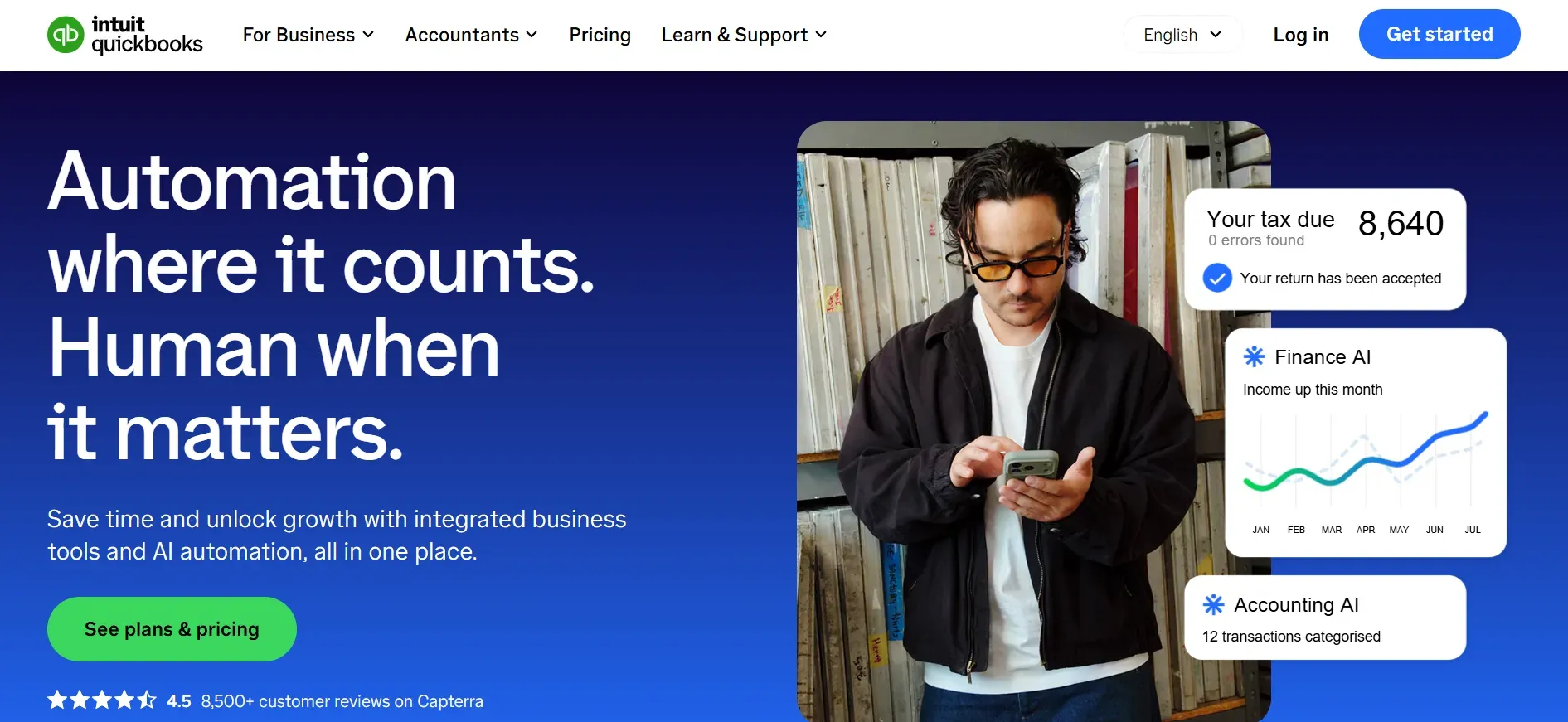
QuickBooks Online is the industry’s go-to for bookkeeping and small business accounting. Its cloud-based platform covers payroll, invoicing, expense management, tax workflows, and an enormous library of third-party integrations. For firms looking to leave Gusto, QuickBooks Online is the most familiar all-in-one option, but it comes with its own ecosystem of fees and limitations.
Pricing: Starts at $30/month, with payroll and advanced features as paid add-ons.
- Extensive integrations with banks, CRMs, and payment platforms.
- Familiar interface and strong support network for bookkeepers.
- Customizable reporting and accountant collaboration tools.
- Payroll and time tracking require separate add-ons, increasing costs.
- Per-user pricing can double or triple costs for larger teams.
- Some integrations and advanced reporting require third-party apps.
Devaims lets you avoid per-user fees and build custom integrations for your exact workflow.
2. Xero (Firms needing international support)
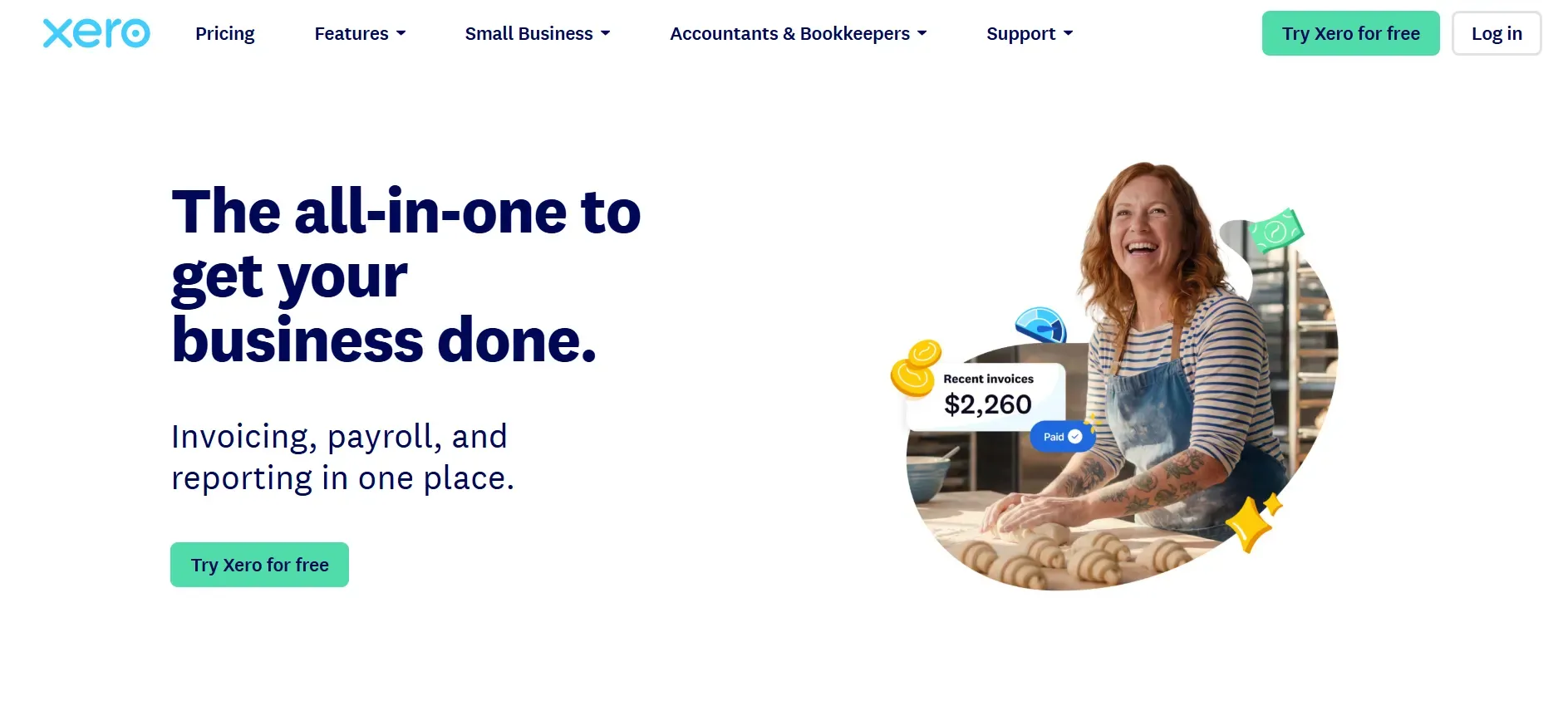
Xero is a favorite among bookkeeping and accounting firms serving clients with international or multi-entity needs. It’s built for global compliance, with strong multicurrency features, seamless bank feeds, and an open API.
Pricing: Starts at $15/month, with higher tiers for advanced analytics and multi-entity support.
- Excellent multicurrency and international compliance features.
- Large app marketplace and open API for integrations.
- Modern UI and consolidated reporting for multi-entity firms.
- Payroll support is limited in the US and requires integrations.
- Bulk transaction entry is capped on lower plans.
- Advanced analytics and custom workflows need higher tiers or add-ons.
With Devaims, you can build global compliance and reporting into your own system from day one.
3. FreshBooks (Small businesses & freelancers)
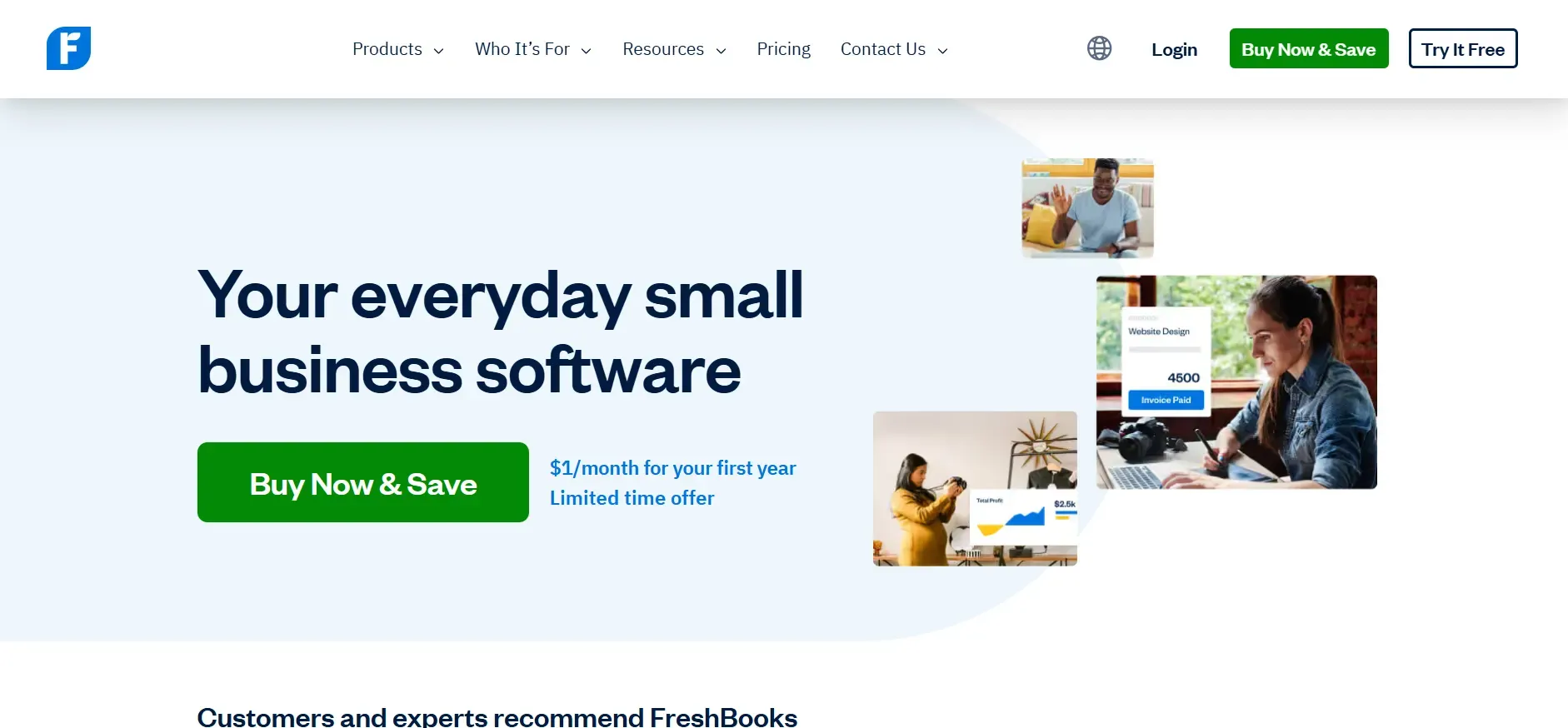
FreshBooks is designed for solo bookkeepers, freelancers, and small service businesses who want intuitive invoicing, time tracking, and simple expense management. Unlike Gusto, FreshBooks puts invoicing and client collaboration front and center, but payroll is not core to its platform.
Pricing: Starts at $19/month, with limits on billable clients at lower tiers.
- Intuitive invoicing and client collaboration tools.
- Easy time tracking and expense capture for small teams.
- Simple, user-friendly interface for solo bookkeepers.
- Payroll only available via integrations, not native.
- Advanced reporting and automation require higher plans.
- Limits on billable clients at entry-level tiers.
Custom builds let you design client access and reporting from scratch, no more tier limitations.
4. Botkeeper (Automated bookkeeping at scale)
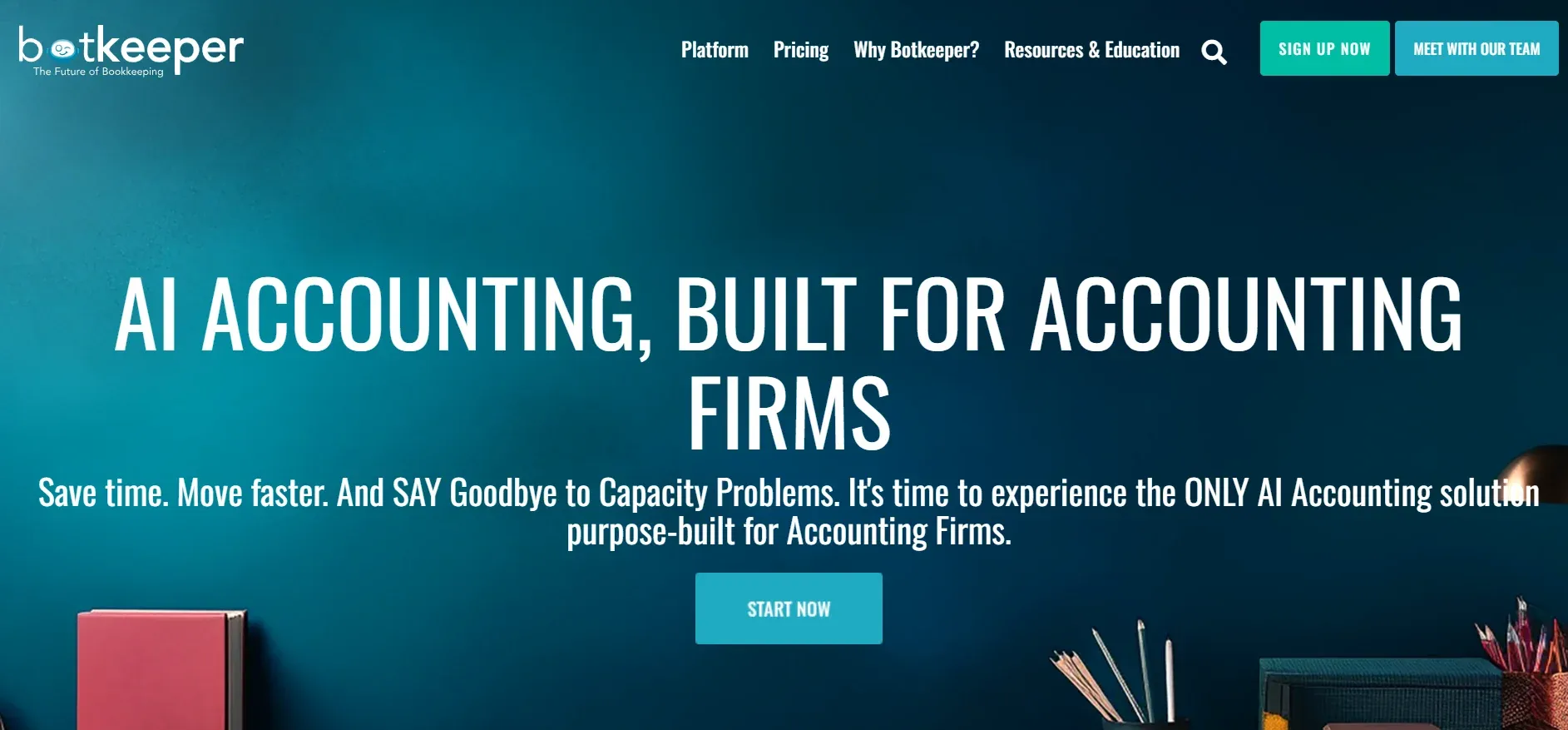
Botkeeper leverages AI and machine learning to automate bookkeeping data entry, reconciliation, and reporting. It’s aimed at bookkeeping and accounting firms managing high client volumes, where speed and automation are crucial.
Pricing: Starts at $155/month, with costs scaling by transaction volume and client count.
- Automates repetitive bookkeeping tasks at scale.
- Improves accuracy over time with AI learning.
- Centralized dashboard for multi-client management.
- Custom setup required for complex workflows.
- Manual review still needed for edge cases.
- Deep customization is limited compared to owning your platform.
With Devaims, you can automate and customize every workflow to your firm’s needs.
5. Pilot (Startups & fast-growth firms)
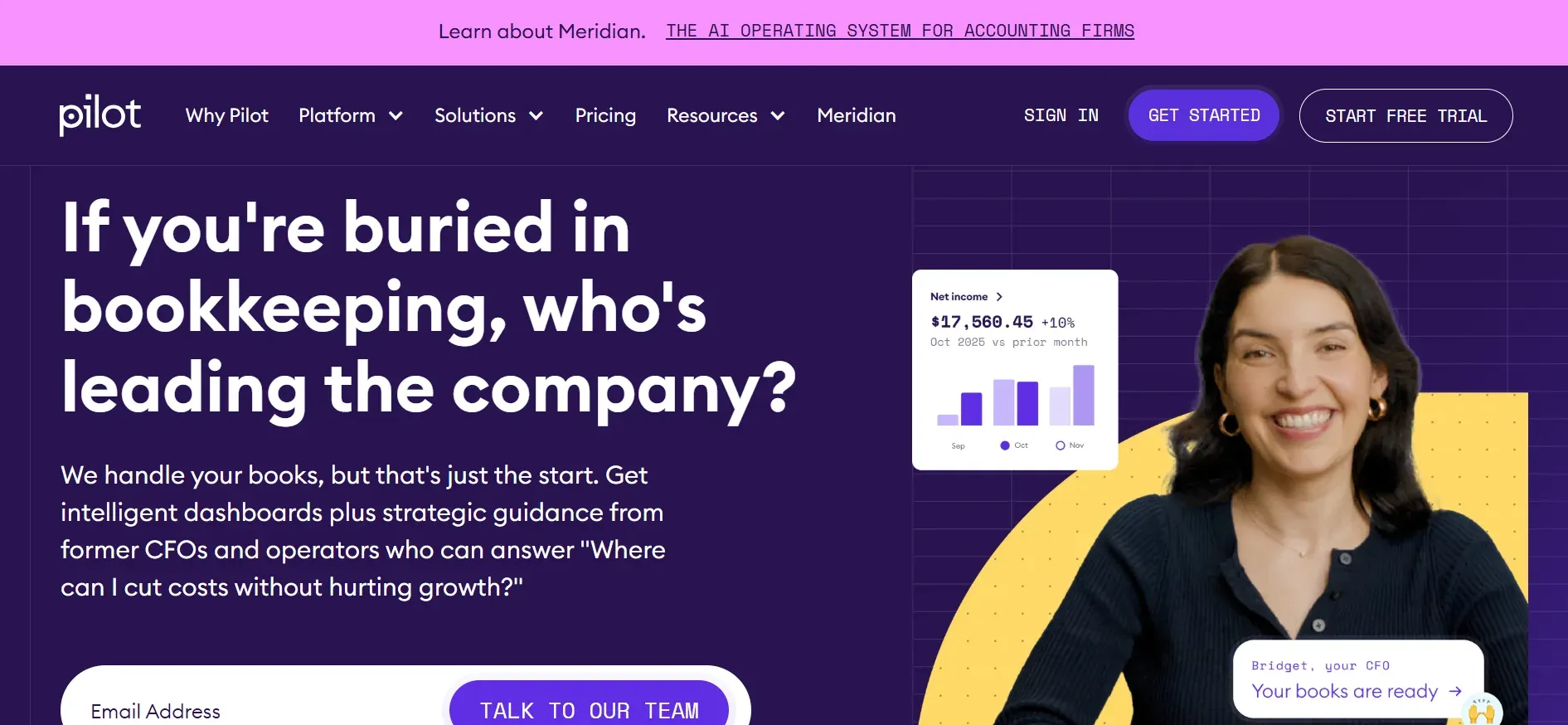
Pilot is a full-service finance firm that handles bookkeeping, tax, and CFO-level reporting for startups and fast-growth companies. Unlike most SaaS, Pilot is a hybrid service: you pay for both the platform and a dedicated team of experts who manage your books.
Pricing: Starts at $499/month, with additional fees for CFO services and complex requirements.
- Hands-off bookkeeping and tax prep by experts.
- Investor-ready financials and advanced reporting.
- Direct integration with major business tools.
- High cost for small or early-stage firms.
- Limited customization, workflows follow Pilot’s service model.
- You do not own the underlying platform or data structure.
Devaims gives you full ownership and the ability to tailor every workflow as you grow.
6. Bench (Hands-off bookkeeping)
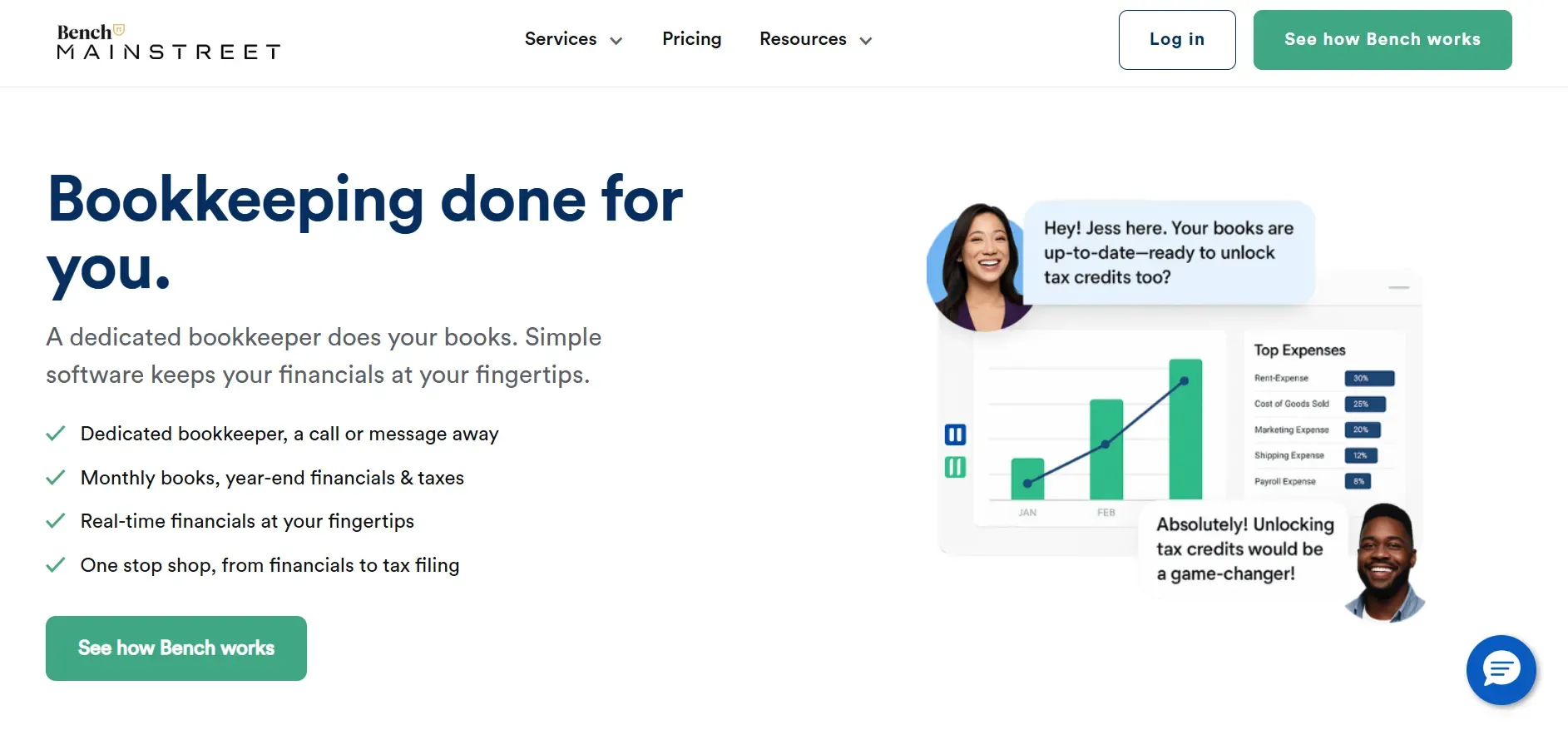
Bench combines proprietary software with a team of bookkeepers to deliver monthly financial statements and year-end tax support. It’s a popular pick for business owners who want to be entirely hands-off with their books.
Pricing: Starts at $299/month, with tax prep as an add-on.
- Simple dashboard and easy communication with bookkeepers.
- Monthly financial statements and tax-ready reports.
- Ideal for small businesses wanting to offload bookkeeping.
- Standardized workflows with limited customization.
- Not built for complex or multi-entity businesses.
- Minimal self-service features, all data on Bench’s servers.
Devaims lets you own your data and customize workflows for any business structure.
7. Synder (Ecommerce integrations)
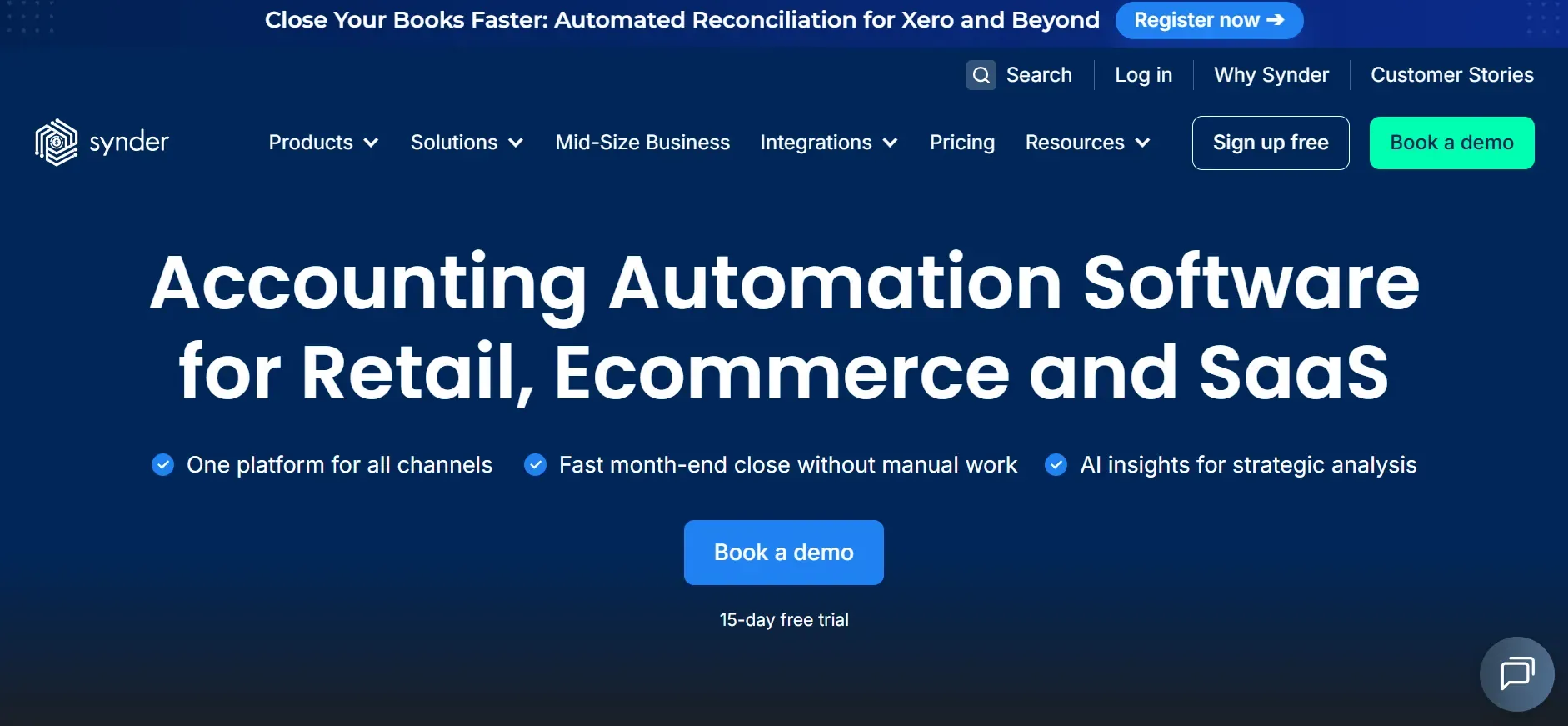
Synder is built for ecommerce bookkeeping, specializing in syncing sales and payment data from platforms like Shopify, Amazon, WooCommerce, Stripe, and PayPal. It automates sales, fees, and tax handling for firms with heavy online transaction volume.
Pricing: Starts at $48/month, with plan limits on transaction volume and integrations.
- Automates ecommerce transaction syncing and reconciliation.
- Supports multi-currency and real-time inventory sync.
- Customizable rules for mapping transactions.
- Strict plan limits can increase costs for high-volume users.
- Some integrations only available at premium tiers.
- Custom mapping for unique stores requires setup and maintenance.
With Devaims, you can automate ecommerce workflows and reporting without volume-based fees.
8. Bill.com (AP/AR automation)
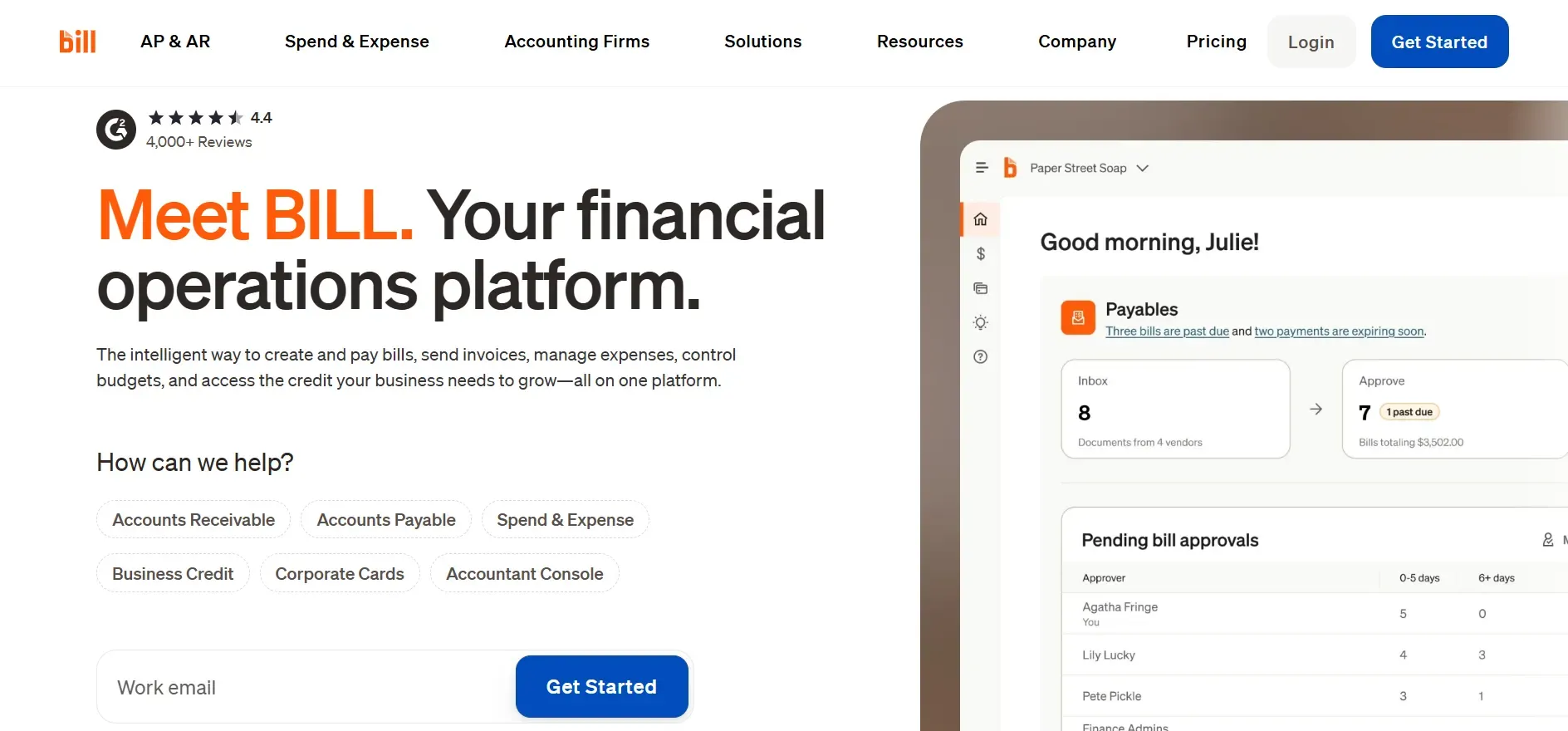
Bill.com specializes in automating accounts payable and accounts receivable, offering tools for approval workflows, digital payments, and audit trails. It’s a popular supplement for firms dealing with high invoice volumes or complex payment approvals.
Pricing: Starts at $45/month per user, with extra fees for international payments.
- Automates AP/AR and approval workflows.
- Strong audit trails and compliance features.
- Integrates with major accounting software.
- Per-user pricing adds up for larger teams.
- Approval workflow customization is limited.
- Not a full accounting platform, works best as an add-on.
Devaims can build AP/AR automation directly into your owned platform, tailored to your approval flows.
9. Devaims (Owning your own bookkeeping system)
Devaims builds custom bookkeeping, payroll, and business management software that you own outright. No monthly rental, no forced updates, and no contract lock-in. Where every other Gusto alternative is rented, a Devaims build is fully yours: source code, data, and all. You shape every feature for your business, not the other way around.
Pricing: One-time build cost, with optional flat-rate maintenance.
- Every feature and integration is tailored to your exact needs.
- Full ownership of code, data, and workflows, no vendor lock-in.
- Unlimited users and clients, no recurring per-user fees.
Devaims handles migration, integration, and ongoing support as part of your project. You keep your margins and your code, forever.
Other Gusto alternatives worth knowing
- Dext (Receipt Bank): Great for automated receipt scanning and expense management, but not a full bookkeeping platform. Works best as an add-on to Xero or QuickBooks.
- Karbon: Leading for accounting practice management, workflow automation, and team collaboration. However, you’ll still need a core bookkeeping tool like Xero or QuickBooks for accounting functions.
Some firms also use Wave for free invoicing and basic accounting, though payroll is limited and not available in all regions. If you’re just after payroll, Paychex and ADP are established, but you’re still renting and paying per-employee fees. For a broader list, see recent comparisons from Capterra and Software Advice.
How to choose the right Gusto alternative
- Budget: Add up all-in costs, including per-user, per-employee, and add-on fees. Most SaaS tools cost more than you think at scale. Don’t forget to factor in future growth: a tool that fits now may become unaffordable as you add clients or staff.
- Features: Do you need built-in payroll, AP/AR automation, or just core bookkeeping? Match the tool to your workflow, and make sure essential features aren’t locked behind expensive tiers. List your must-haves and nice-to-haves.
- Growth: If you’re scaling, look for platforms with open APIs or ownership options. Renting gets expensive fast as you add users and clients, and switching later can mean costly migrations.
- Integrations: List your bank, payment, and CRM systems. Will they sync out of the box, or require custom build-out? Check for support of your niche industry tools, and ask about migration support.
- Ownership: Decide if you want to rent forever or build something you actually own. That’s where Devaims stands apart: you get the code, the data, and the power to adapt as your business evolves.
When the numbers start to look more like rent than investment, it’s time to consider owning your system.
Stop paying rent on bookkeeping software you could own
Every Gusto alternative on this list solves a few pain points, but none break the core pattern: you rent, the vendor controls the roadmap, and the monthly fee never goes away. The only way to own your solution is to build it for your business, custom, with the features and integrations you actually need, and the code deeded to you, not the provider.
Devaims builds bookkeeping, payroll, and business management platforms you own outright. You get the full source code, control every workflow, and keep your data on your terms. No forced upgrades. No per-employee or per-client tax. It’s your system, forever.
- Per-user fees? Gone. Add as many users or clients as you want, no new charges.
- Locked features? Every report, export, or automation can be baked in, no premium tier needed.
- Integration limits? Tie into any bank, CRM, or platform your firm runs on. If it has an API, we can wire it.
- Data hostage risk? Your data, your server, your code. No vendor lock-out, ever.
| Tool | Ownership | Customization | 5-year cost (est.) |
|---|---|---|---|
| Gusto | No | Low | $18,000 |
| QuickBooks Online | No | Medium | $12,000 |
| Bench | No | Low | $18,000 |
| Devaims | Yes | Full | $29,800 |
| Year | Rented (Gusto) | Owned (Devaims) |
|---|---|---|
| 1 | $3,600 | $27,500 |
| 2 | $7,200 | $28,900 |
| 3 | $10,800 | $30,300 |
| 4 | $14,400 | $31,700 |
| 5 | $18,000 | $33,100 |
For a bookkeeping shop with 15 staff, Gusto’s $40 per user per month is $600/month, $7,200/year, $36,000 over five years, and you never own it. A Devaims build is yours for under $30,000 plus flat maintenance, and you keep the code. The bigger your firm, the faster owning pulls ahead.
Firms with stable processes or unique needs get the most: custom builds pay off fastest for teams of 10 or more, or anyone tired of rent hikes and vendor limits. We’ll run your numbers for free, no strings.
How to switch from Gusto
- Export all payroll and bookkeeping data from Gusto: Download all employee records, payroll histories, tax filings, and accounting data in CSV, PDF, or via API. Be thorough, some data may require support tickets or a specific export request.
- Choose your new platform and set up your account or deployment: Whether moving to a SaaS alternative or deploying a custom Devaims build, ensure all users have access and initial settings (chart of accounts, user roles) are configured.
- Import historical data, map chart of accounts, and check for missing entries: Most platforms offer import tools, but mapping fields (especially for payroll and compliance data) may require manual review. Test with a sample batch first.
- Reconnect banks, payment processors, and third-party integrations: Set up new bank feeds, payment gateways, and integrations with CRMs or document management. Test each connection to ensure data syncs correctly.
- Train your team on the new workflows and test payroll runs in parallel: Run at least one payroll cycle side-by-side with Gusto to catch discrepancies. Provide training or documentation for new processes and features.
- Review contract terms with Gusto and formally cancel after a trial period: Only close your Gusto account when you’re confident all historical data is safe and the new system is live. Keep export backups for compliance.
With a custom Devaims build, the migration is handled as part of the project, including data mapping, user training, and integration setup.
Frequently asked questions
What is the best Gusto alternative for bookkeeping services?
QuickBooks Online and Xero are the most widely used alternatives for bookkeeping firms, offering integrated payroll, tax, and reporting features. QuickBooks is a strong choice for US-based operations and firms wanting an extensive support network, while Xero is ideal for international and multi-entity needs. However, if you want to stop renting and own your system, custom workflows, integrations, and code included, Devaims is the only alternative that gives you complete ownership and flexibility.
Which Gusto alternative is cheapest?
Wave offers basic free accounting, but its payroll features are minimal and only available in select regions. FreshBooks and Xero provide the lowest monthly entry points for firms who just need invoicing and bookkeeping. However, the true cost at scale comes from add-ons and per-user fees, what starts cheap can become expensive as you grow. Owning your own system with Devaims is a higher upfront investment, but after a few years, the total cost is often less than ongoing SaaS subscriptions, especially for larger teams.
Is there a free Gusto alternative?
Wave is the closest free alternative, covering invoicing and basic accounting. However, it lacks comprehensive payroll, compliance, and advanced reporting. For most professional bookkeeping firms, a paid tool is necessary. A custom Devaims build is not free, but it’s a one-time investment that eliminates ongoing rental costs and per-user fees, you own the code and data forever.
Which Gusto alternative is best for multi-entity or international firms?
Xero is a strong option for multi-entity and international support, with strong multicurrency features and global compliance options. If you need consolidated reporting across subsidiaries or unique compliance workflows, a custom Devaims build is the only way to guarantee every requirement is met, with custom reporting, integrations, and user permissions tailored to your exact needs.
How do I avoid per-employee or per-client fees?
Most Gusto alternatives charge per user, employee, or client. The only way to eliminate these recurring fees is to own your own platform. Devaims builds you a custom system where you can add unlimited users and clients at no extra charge, future-proofing your margins as you grow.
Can I keep my data if I switch from Gusto?
Gusto allows export of basic employee and payroll records, but detailed historical data or reports may require support requests or additional fees. Many SaaS platforms limit data export formats. With Devaims, every data field, transactions, payroll, user actions, is yours to keep, migrate, or archive as you wish, with no vendor restrictions.
When should I switch from Gusto to an alternative?
Switch when your subscription fees outpace the value you receive, or when feature limitations, integration gaps, or compliance needs disrupt your workflow. If you’re planning to scale, want to eliminate surprise fees, or need to own your tech stack for security or client requirements, now is the time to consider a custom solution like Devaims.
The bottom line
The right Gusto alternative depends on what you value most: out-of-the-box speed, specialized integrations, or true ownership. The real question isn’t just which SaaS is cheapest this month, it’s how much you’ll pay in five years, and who holds the keys to your data and workflow. Here is the test: add up what you’ll pay for subscriptions over the next five years. If that number would cover a custom build you own, you already have your answer.
For more ownership-minded guides, see the Devaims blog, plus our deep dives on QuickBooks Online alternatives, Xero alternatives, and Bench alternatives. For user reviews and more SaaS comparisons, check G2 and TrustRadius.