



Your urgent care runs seven days a week, but your software never gives you a break. If you have ever been shocked by an eClinicalWorks renewal quote, or watched your bill climb with every new provider seat, you are not alone. The real headache starts when you try to pull your own data, or hit a ceiling on features locked behind another paywall. That is the moment most owners start hunting for eClinicalWorks alternatives.
After years of working with urgent care clinics, I have seen the same pattern: SaaS solutions promise simplicity, then pile on fees. The best alternatives? Experity for urgent care workflows, Kareo (Tebra) for billing, Athenahealth and NextGen for scale, and a custom Devaims build if you want to finally own what you run. Let us break down where each shines, where they fall short, and why owning your system is the only way to turn software from rent into an asset you control.
Why urgent care centers look for eClinicalWorks alternatives
Per-provider pricing stacks up fast. Adding a new provider or location is never just a click, it is another monthly fee, sometimes hundreds per seat. For a medium-sized clinic, what starts as a manageable monthly payment quickly balloons as your team grows. Each nurse practitioner, physician assistant, or part-time doctor triggers a new charge, making budgeting a challenge and penalizing success.
Surprise price hikes at renewal. Many owners report 10 to 20 percent increases every contract cycle, with little warning and no added value. These increases are rarely justified by meaningful improvements in service or features, leaving clinics feeling squeezed and powerless, especially when you have already invested in training and data migration.
Locked-down data exports. Getting all your patient data or reports out for analytics or migration can be a slow, expensive ordeal, your own data held hostage. Some platforms limit exports to basic formats, charge hefty fees for custom extracts, or throttle access. This can delay your reporting, hinder compliance, and make switching vendors daunting.
Features locked behind higher tiers. The modules you need for labs, billing, or telemedicine are often upsold as pricey add-ons. Need e-prescribing, electronic lab orders, or advanced analytics? Be prepared to upgrade to a premium tier, often doubling your monthly cost. This nickel and dime model frustrates owners seeking a streamlined workflow without constant upsell pressure.
Long contracts and exit fees. Multi-year agreements and high switching costs keep you tied in longer than you want. Early termination can trigger penalties, and some vendors require notice periods of 90 days or more. These pain points drive many to search for eClinicalWorks alternatives that offer more flexibility and transparency.
Quick comparison of the best eClinicalWorks alternatives
| Tool | Best for | Starting price | You own it? |
|---|---|---|---|
| Experity (Clockwise.MD) | Urgent care workflow | Reported $500+/provider/mo | No |
| Kareo (Tebra) | Billing and RCM | Reported $125+/provider/mo | No |
| AdvancedMD | Integrated suites | Reported $485+/provider/mo | No |
| Healow | Patient engagement | Usually bundled, contact for quote | No |
| iPatientCare | Customizable EHR | Reported $150+/provider/mo | No |
| Meditech | Enterprise scale | Custom quote | No |
| Nuvolo | Asset management | Custom quote | No |
| PrognoCIS | Telemedicine | Reported $250+/provider/mo | No |
| Devaims | Owning your urgent care platform | One-time build, you own it | Yes |
Always confirm current pricing before you decide. Bundled modules and add-ons can change the picture. Consider not just base fees, but integration costs, support tiers, and any required training or onboarding charges.
The 9 best eClinicalWorks alternatives
1. Experity (Clockwise.MD) (Best for urgent care workflow)
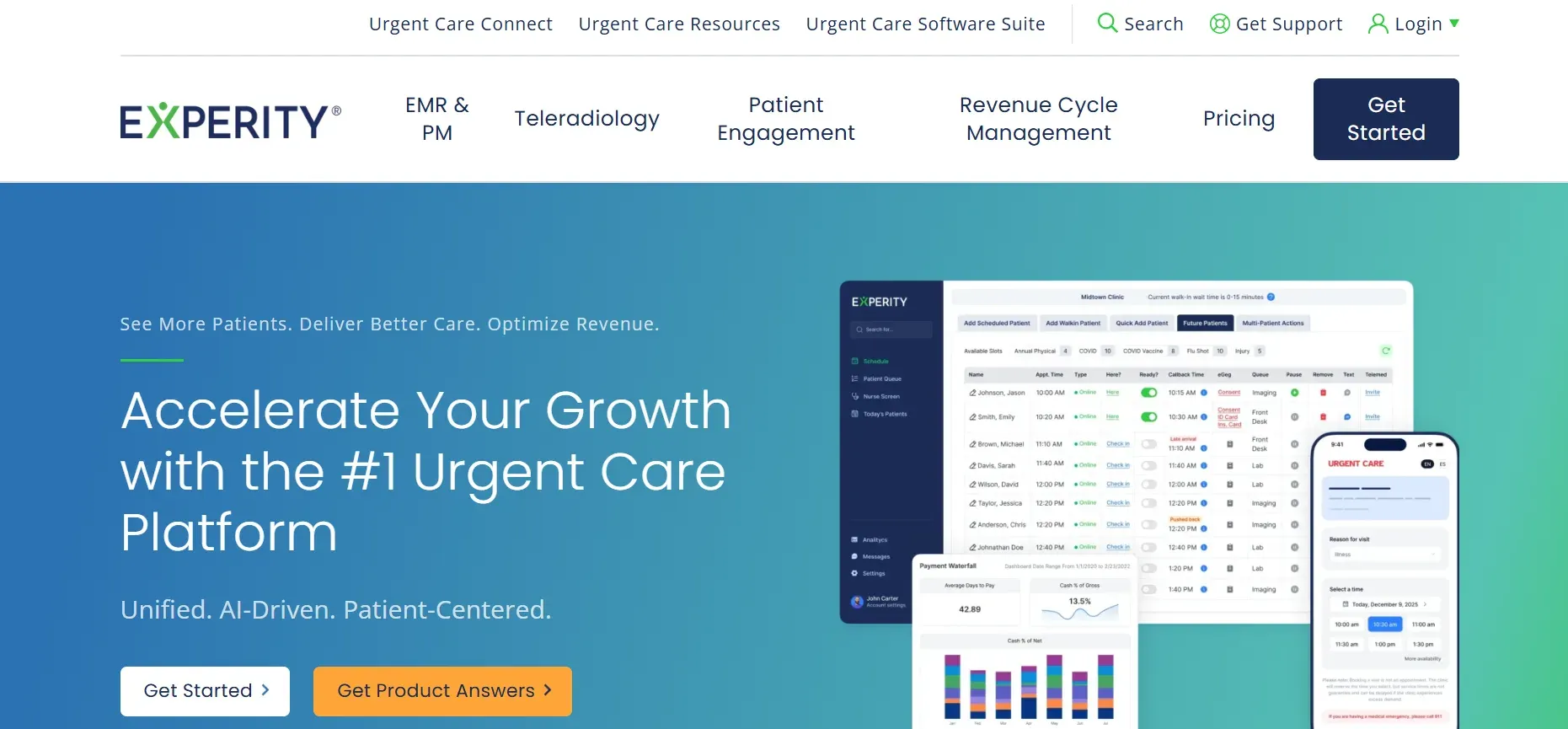
Experity is purpose-built for urgent care, offering a full suite that includes EHR, practice management (PM), and Clockwise.MD for patient engagement. Its design caters to high-volume, walk-in clinics with streamlined triage, fast charting, and strong billing tools. The platform supports rapid patient registration, check-in kiosks, and real-time queue management, helpful for clinics with unpredictable patient flow. Experity's integration with Clockwise.MD enables online scheduling, waitlist management, and automated patient reminders, reducing front desk bottlenecks.
Experity also offers built-in telemedicine, occupational medicine modules, and real-time insurance verification. Its analytics dashboards give urgent care administrators visibility into throughput, patient satisfaction, and billing performance. The system integrates with major labs (LabCorp, Quest), imaging centers, and billing clearinghouses. However, migration into or out of Experity can be complex due to proprietary data formats, and extracting raw data often requires a paid support engagement.
Pricing: Reported $500+ per provider/month, plus implementation and support fees. Contact for quote.
- Key limitations:
- Per-provider pricing and add-on modules increase total cost
- Customization limited to pre-set templates and workflows
- Data export and migration can require paid support
- Strengths:
- Purpose-built for urgent care workflow
- Integrated patient engagement and telemedicine
- Strong analytics and reporting tools
If you want to avoid per-provider fees and own your system, Devaims is the only option that puts you in control.
2. Kareo (Tebra) (Best for billing and RCM)
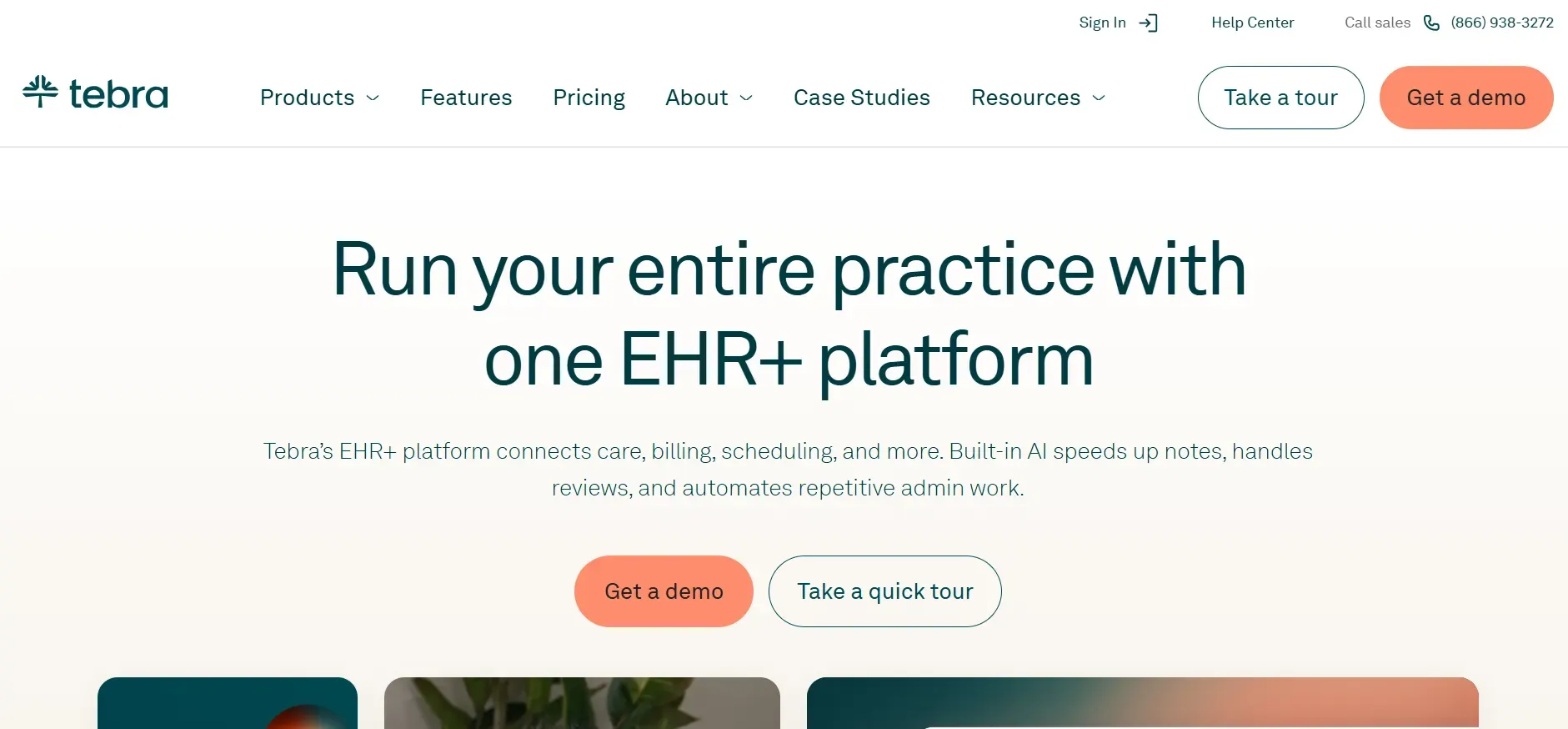
Kareo, now under the Tebra brand, is best known for its user-friendly billing and revenue cycle management (RCM) focus. It is a favorite among smaller clinics and those who want a quick path to insurance claims submission, eligibility checks, and denial management. Kareo’s interface is modern and intuitive, with dashboards for claims status, patient balances, and A/R follow-up. The platform connects directly to hundreds of insurance payers and clearinghouses, supporting electronic remittance advice (ERA) and automated posting.
Kareo integrates with popular EHRs, labs, and pharmacy platforms, though its own EHR module is less robust than some competitors. Migration from other billing systems is straightforward, but porting complex custom reports or macros may require professional services. For urgent care clinics, Kareo streamlines front-desk collections, copay management, and statement generation, but workflow customization is limited. Telemedicine, if needed, is sold as a separate module, and advanced analytics incur additional costs.
Pricing: Reported $125+ per provider/month. See Kareo pricing.
- Key limitations:
- Clinical documentation and engagement features are basic
- Customization options are limited
- Data export for large sets may incur fees
- Strengths:
- Excellent billing and claims management
- Fast onboarding for billing staff
- Direct payer and clearinghouse integrations
For clinics wanting to own their billing and clinical data, Devaims offers a custom solution with no recurring per-seat fees.
3. AdvancedMD (Best for integrated suites)
AdvancedMD is an all-in-one, cloud-based platform offering EHR, practice management, telemedicine, patient engagement, and business analytics in a unified dashboard. It is especially strong for clinics that want to minimize the number of vendors they manage. The interface is highly configurable, with customizable templates, e-prescribing, lab integrations, and patient portal access. AdvancedMD supports e-faxing, appointment reminders, and document management, making it a strong fit for clinics juggling multiple service lines.
AdvancedMD’s billing engine is strong, supporting complex coding, automatic claim scrubbing, and payer-specific rules. The analytics module allows administrators to monitor KPIs, patient flow, and revenue trends. Integrations are available for labs, imaging, and clearinghouses, but some require custom API work. Migration from other platforms is well-supported, with dedicated onboarding teams, but moving away from AdvancedMD can be labor-intensive due to proprietary data structures.
Pricing: Reported $485+ per provider/month. AdvancedMD pricing.
- Key limitations:
- High per-provider fees and costly add-ons
- Learning curve for new staff
- Urgent care-specific workflows less developed
- Strengths:
- Unified EHR, PM, and telemedicine suite
- Customizable templates and analytics
- Strong onboarding and migration support
Devaims can build you a platform with every feature you need, tailored to your workflow, and without ongoing per-user fees.
4. Healow (Best for patient engagement)
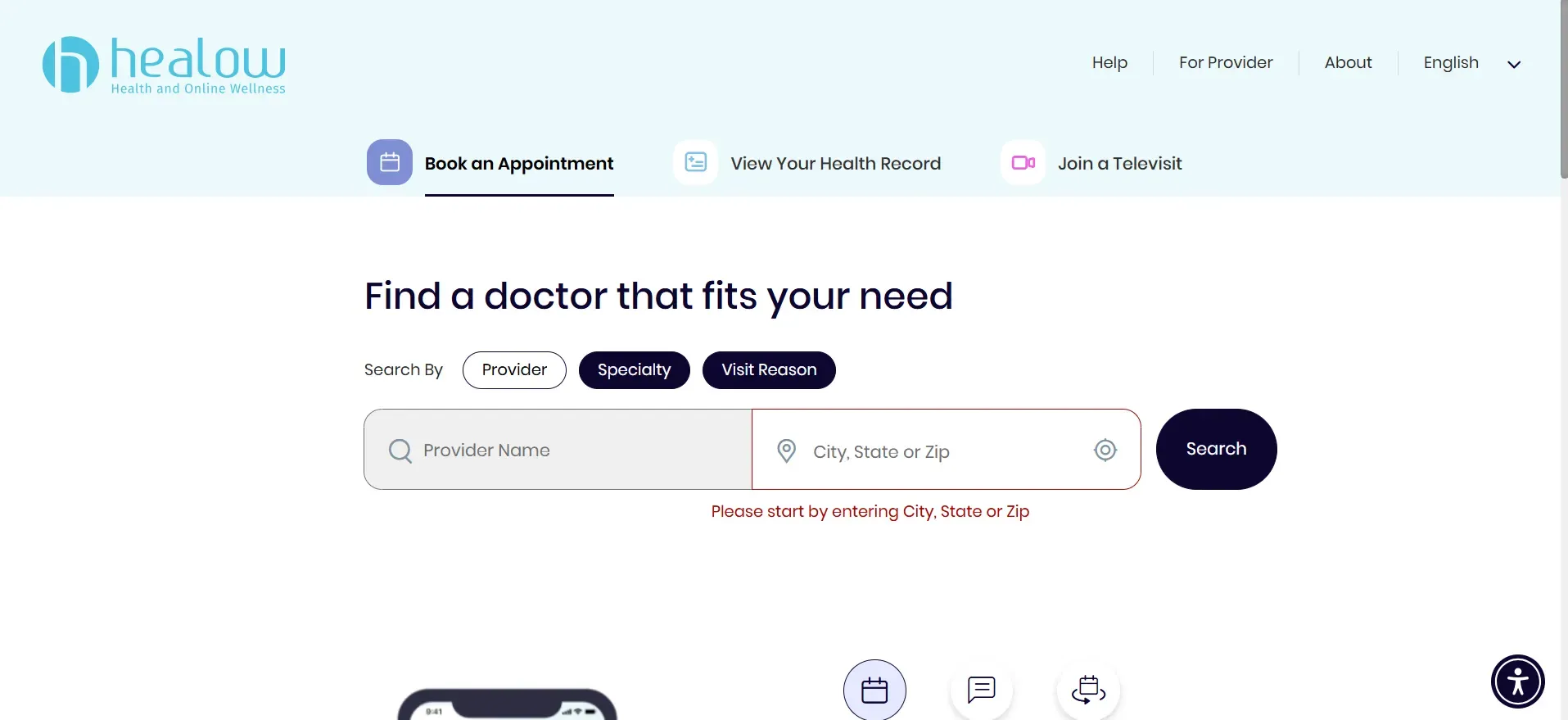
Healow, owned by eClinicalWorks, is a patient-facing platform that emphasizes digital engagement: patient portals, online scheduling, telehealth, and two-way messaging. Many clinics use Healow as an add-on to their EHR to provide patients with mobile check-in, appointment reminders, digital intake forms, and access to visit summaries. Healow’s telemedicine tools allow for secure video visits, direct messaging, and document sharing between patients and providers.
Healow integrates tightly with eClinicalWorks but is also compatible with other EHRs via APIs. For clinics looking to improve patient satisfaction scores or reduce no-shows, Healow’s automated reminders and self-scheduling features can boost efficiency. However, it does not replace a full EHR or practice management system and is usually bundled as a module. Data migration is not relevant unless you are moving away from eClinicalWorks entirely.
Pricing: Usually bundled with other EHRs; contact for quote.
- Key limitations:
- Limited utility without a compatible EHR
- Pricing transparency is low
- No path to software ownership
- Strengths:
- Strong patient engagement tools
- Telemedicine and mobile check-in features
- Automated reminders and self-scheduling
If you want to own your patient engagement platform and data, Devaims can build a custom solution integrated with your EHR.
5. iPatientCare (Best for customizable EHR)
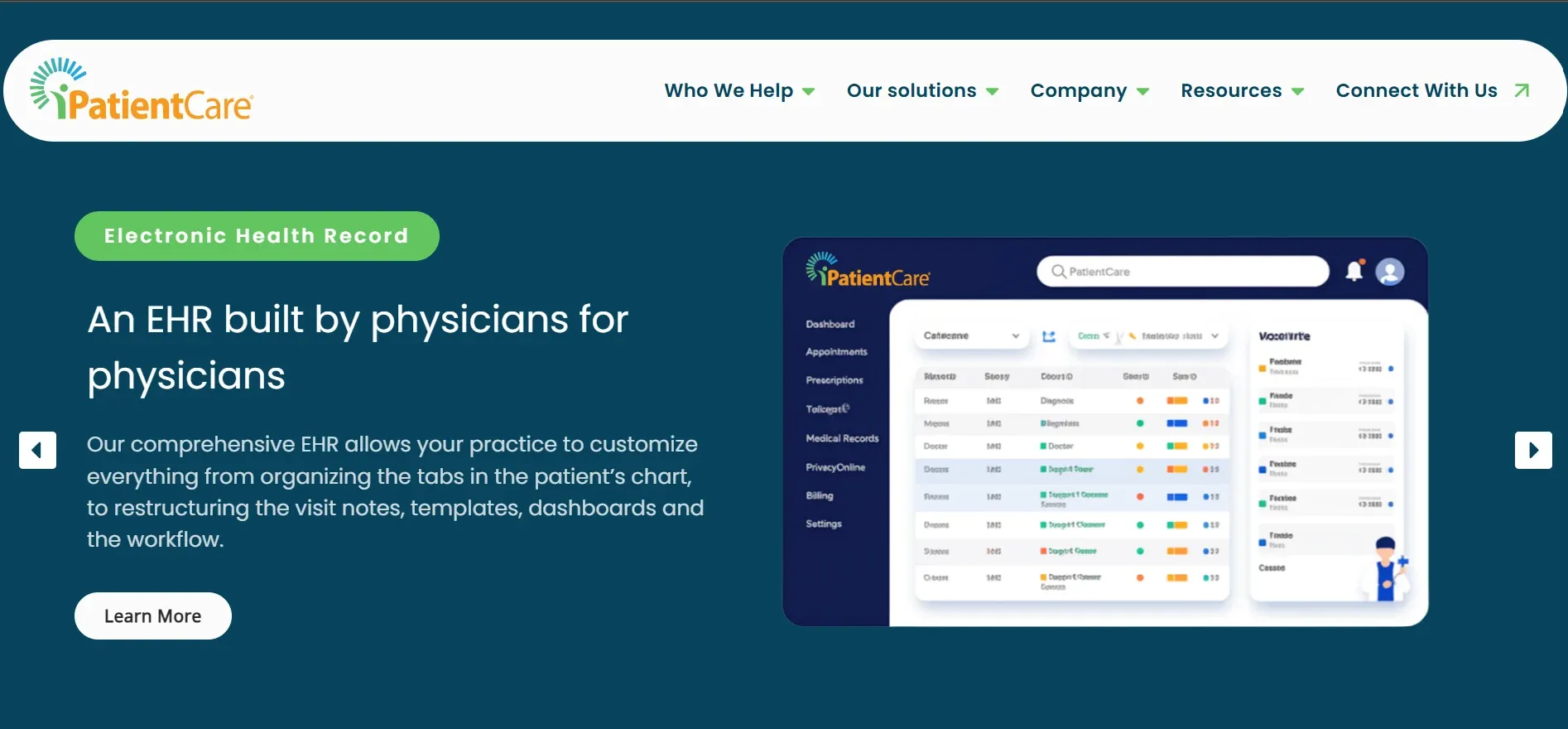
iPatientCare stands out for its customization options. Clinics can tailor templates, workflow steps, and data input screens to match their documentation requirements, useful for urgent care centers offering occupational health, travel medicine, or unique clinical services. The platform supports e-prescribing, lab integration, appointment scheduling, and revenue cycle management. iPatientCare’s open API allows for integration with third-party systems (labs, billing partners, CRM tools), and the team offers custom development for specialized needs.
Migration into iPatientCare is supported by dedicated onboarding teams, but moving data out can be challenging if you have heavily customized templates or workflows. The platform offers built-in patient portals and telemedicine, but advanced features may require extra development work and associated costs. Support response times can be variable, particularly for advanced customization requests.
Pricing: Reported $150+ per provider/month. Request a demo.
- Key limitations:
- Customizations increase vendor reliance
- Per-provider fees still apply
- Complex projects may have slow support
- Strengths:
- Highly customizable templates and workflows
- Open API for integrations
- Built-in patient portal and telemedicine
For clinics wanting full control and ownership, Devaims delivers a platform with every customization you need, without vendor lock-in.
6. Meditech (Best for enterprise scale)
Meditech is a leading EHR for hospitals, health systems, and large urgent care chains. Its platform is known for deep interoperability, advanced clinical decision support, and strong population health tools. Meditech can handle complex, multi-site operations with centralized scheduling, cross-location reporting, and integrated patient records. The system supports HL7/FHIR standards, integrating with national health information exchanges, labs, and imaging centers.
Implementation is a major project, often taking months with a dedicated IT team. Meditech provides migration support, but extracting data or switching away is a significant investment. The platform offers advanced analytics, custom forms, and modules for pharmacy, radiology, and care management. For urgent care, Meditech is often used by organizations with hospital affiliations or those planning rapid expansion.
Pricing: Custom quote only, often six figures annually for multi-site clinics.
- Key limitations:
- High cost and complexity for independent clinics
- Long-term contracts and training costs
- Customization can be slow and expensive
- Strengths:
- Enterprise-grade interoperability
- Centralized management for large networks
- Advanced analytics and reporting
Devaims gives you enterprise-level customization and ownership, without the overhead or lock-in of a hospital system.
7. Nuvolo (Best for asset management)
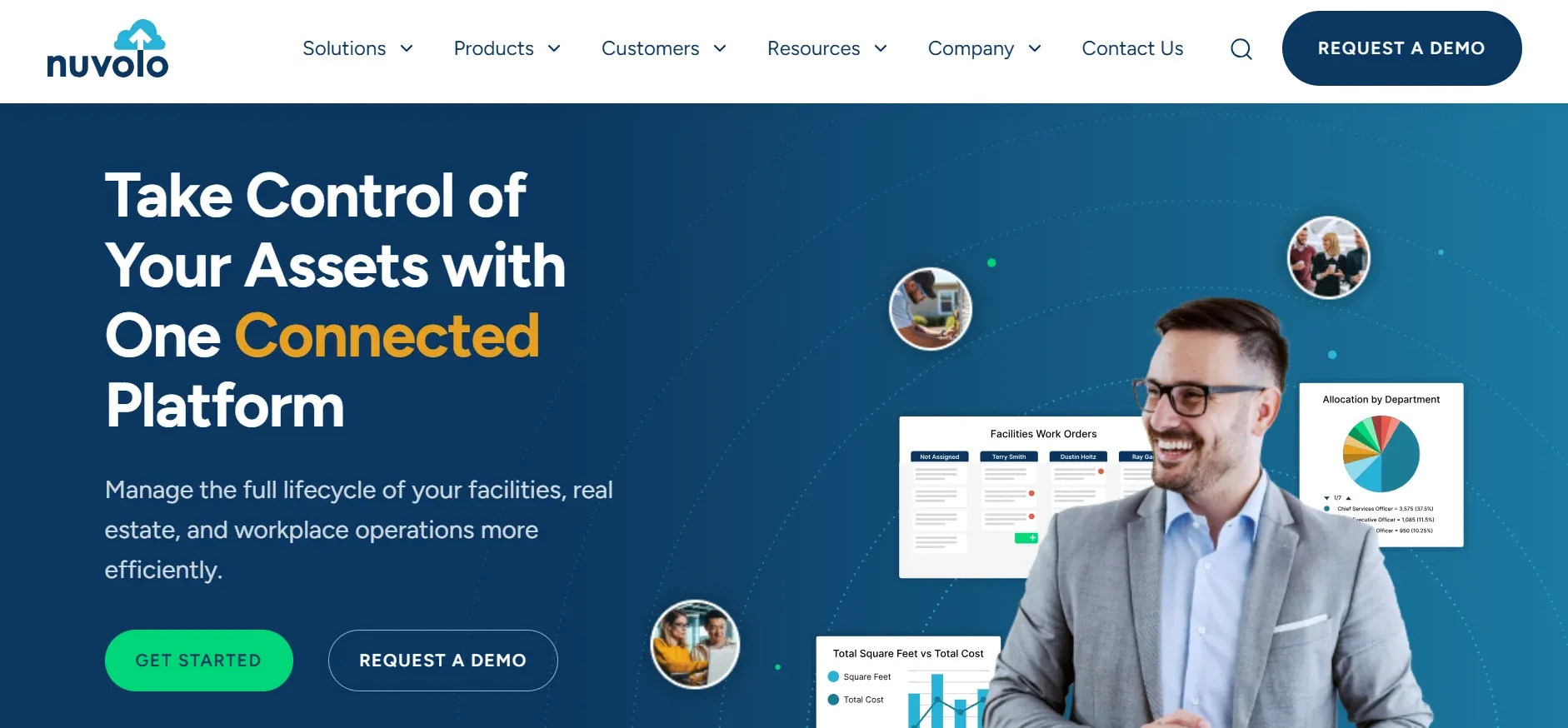
Nuvolo specializes in medical asset, facilities, and maintenance management. It is not an EHR, but for urgent care chains with substantial infrastructure, multiple sites, diagnostic equipment, or on-site labs, Nuvolo tracks inventory, schedules preventive maintenance, and manages compliance for devices and facilities. The platform automates work orders, logs repairs, and provides reports for regulatory audits.
Nuvolo integrates with leading EHRs (such as Epic, Cerner, and Meditech) and can sync with procurement and finance systems. For urgent care, it is valuable when you need to maintain accreditation, manage biomedical assets, or ensure equipment uptime. Implementing Nuvolo requires a separate contract, and staff training is needed for full adoption. Migration from spreadsheets or legacy CMMS (computerized maintenance management systems) is supported, but integration with clinical data is limited to asset tracking and compliance reporting.
Pricing: Custom quote; generally enterprise pricing.
- Key limitations:
- Does not replace EHR or PM
- Extra cost center for clinics
- Limited integration with clinical workflow
- Strengths:
- Comprehensive asset and facility management
- Automated compliance and maintenance tracking
- Integrates with major EHRs and finance systems
Devaims can integrate asset management features directly into your custom urgent care platform, so you own every workflow and report.
8. PrognoCIS (Best for telemedicine)
PrognoCIS offers a modular EHR, practice management, and billing platform with a strong telemedicine component. Its HIPAA-compliant video visits, patient messaging, and e-prescribing are well-suited for urgent care clinics expanding into virtual care. The platform allows for configurable templates, custom intake forms, and specialty modules (such as occupational medicine and immunizations).
PrognoCIS supports integration with labs, imaging, and eRx networks, and offers patient portals for communication and document sharing. Migration from other EHRs is supported, but transitioning custom workflows or templates may require manual effort. The user interface is functional but less polished than some competitors, and performance can lag with high volumes.
Pricing: Reported $250+ per provider/month. See pricing.
- Key limitations:
- Charges per provider and for higher feature tiers
- Interface less modern than some competitors
- Data export may incur fees for large migrations
- Strengths:
- Strong telemedicine and specialty modules
- Configurable templates and forms
- Lab and e-prescribing integrations
Devaims can build telemedicine and specialty modules to your exact needs, with no recurring per-provider costs.
9. Devaims (Best for owning your urgent care platform)
Devaims builds custom EHR and urgent care management software that you own outright. Unlike every other option above, Devaims delivers a platform tailored to your exact workflow, patient volume, and integration needs. You receive the source code, full data access, and the ability to adapt or extend your system as your clinic evolves. There are no per-seat, per-visit, or surprise fees, just a one-time build cost and flat monthly maintenance for ongoing support and updates.
Devaims projects start with a deep workflow discovery, mapping your front desk, triage, charting, billing, and reporting requirements. The team builds integrations with your existing labs, payers, and telemedicine partners, ensuring a smooth transition. Data migration from eClinicalWorks or other platforms is handled as part of the project, preserving patient records and compliance history. You retain full access to all your data, with no gatekeepers or hidden exports.
- You own the software and all your data
- Every feature, report, and integration is tailored to your clinic
- No surprise fees, no contracts, no lock-in, ever
Other eClinicalWorks alternatives worth knowing
- NextGen: Strong for multi-specialty practices, but more expensive and less nimble for urgent care. NextGen offers strong population health and specialty-specific templates, but requires extensive configuration for urgent care workflows.
- Epic: Leading system for large health systems, but overkill and cost-prohibitive for most urgent care clinics. Epic’s implementation and maintenance costs often exceed $1M annually, making it suitable only for enterprise-level organizations.
- DrChrono: Good mobile experience, but lacks urgent care-specific modules and is not as customizable. DrChrono’s iPad-first design is appealing for some, but limited template flexibility and weaker reporting limit its fit for urgent care.
- Practice Fusion: Budget-friendly, but sunsetting urgent care support and limited walk-in workflow. Practice Fusion was once widely adopted by small clinics, but recent changes have reduced urgent care-specific support and the company’s long-term roadmap is uncertain.
How to choose the right eClinicalWorks alternative
- By budget: If you want predictable costs and no surprise hikes, look at alternatives with transparent pricing, or consider owning with Devaims. SaaS models may seem cheaper at first, but year-over-year increases and per-provider fees quickly add up.
- By workflow: If urgent care flow is your top priority, Experity and AdvancedMD are strong, but only a custom build gives you full control. Consider how each platform handles walk-in visits, rapid triage, and after-hours documentation.
- By size: For multi-site operations, Meditech scales up, but the per-provider pricing gets steep. Devaims offers a single platform you own, no matter how many locations you add.
- By data ownership: If you want to own your data and your stack, Devaims is the only way to escape the rental treadmill. Most SaaS vendors restrict access to raw data or charge fees for exports.
- By integration: Make sure your pick integrates with labs, billing, and telehealth platforms you already use. Ask vendors for a list of supported interfaces and any additional costs for custom connections.
When you are ready to own your urgent care platform and cut the SaaS cord, it is time to look at Devaims.
Stop paying rent on software you could own
The real pain of eClinicalWorks, and every alternative listed above, is that you never own what you pay for. Every provider you add, every integration, every year, you pay again. That is how the SaaS model works, and it is why urgent care centers are stuck in a cycle of rising costs and little control.
Devaims is the custom development team behind urgent care platforms you own. We build your EHR, PM, and telemedicine tools to your exact workflow. You get the code, the data, and the freedom to run your clinic your way. No contracts. No per-provider fees. No lock-in, ever.
- Per-provider fees: Gone. You pay once, not forever.
- Feature upsells: Every feature you need is built in, no “upgrade” required.
- Data lock-in: You keep all your data, always accessible, never held hostage.
- Pricing hikes: Flat maintenance, no surprises. Your costs are predictable.
| Platform | Ownership | 5-year cost (est.) | Contract |
|---|---|---|---|
| eClinicalWorks | Rented | $90,000+ | 3-year min, auto-renew |
| Experity | Rented | $110,000+ | 3-year min |
| Meditech | Rented | $120,000+ | 3-year min |
| Devaims | Your asset, you own it | $37,800 (one-time build + 5 years flat maint) | None |
| Year | Rented (SaaS) | Owned (Devaims) |
|---|---|---|
| 1 | $18,000 | $27,000 (build) + $1,800 (maint) = $28,800 |
| 2 | $36,000 | $27,000 + $3,600 = $30,600 |
| 3 | $54,000 | $27,000 + $5,400 = $32,400 |
| 4 | $72,000 | $27,000 + $7,200 = $34,200 (now ahead) |
| 5 | $90,000 | $27,000 + $9,000 = $36,000 |
You have 6 providers. That SaaS platform runs $250 per provider per month, so $1,500 per month, about $18,000 per year, roughly $90,000 over five years, and you never own it. We can build you one that is yours to keep.
Clinics who benefit most from owning are those growing fast, adding providers, or wanting full control of their data and workflow. If you are tired of software that never really fits or costs that never stop, owning is the obvious next step. For more on the real cost calculus, see Becker's Hospital Review and HealthIT.gov's TCO guide.
How to switch from eClinicalWorks
- Export all patient, scheduling, and billing data from eClinicalWorks. This may require a support ticket and could take days to weeks. Ensure you request data in a standardized format (CSV, XML, HL7) for easier import.
- Choose your alternative and plan integrations (labs, pharmacy, billing). Map out which third-party tools and partners must connect to your new system, and confirm these integrations are supported, or plan for custom API work.
- Import and validate data in your new platform. Work with your new vendor or development team to map fields, catch errors (duplicates, missing data), and run test imports before going live.
- Reconnect payments and third-party integrations. Ensure credit card processors, clearinghouses, and e-prescribing networks are re-linked to your new platform. Test each integration before launch.
- Train staff on the new workflows and interfaces. Provide role-based training, quick reference guides, and hands-on sessions to minimize downtime and errors.
- Test the new system in parallel with the old for at least two weeks. Run both platforms side by side to catch issues with billing, scheduling, or clinical documentation before fully cutting over.
- Review your old vendor contract for termination dates and fees. Avoid auto-renewal penalties by submitting cancellation notices in writing, and retain all proof of data export and transition steps.
With a custom Devaims build, the migration is handled as part of the project, including data mapping, integration setup, and staff onboarding. You get a dedicated project manager to guide you through each step, minimizing disruption.
Frequently asked questions
What is the best eClinicalWorks alternative for urgent care?
For urgent care clinics, Experity is a strong SaaS match for walk-in workflow, with features like real-time queue management, rapid charting, and urgent care-specific billing. However, only Devaims lets you own your software and data outright, with every workflow tailored to your clinic and no ongoing per-seat fees.
Which eClinicalWorks alternative is cheapest?
Practice Fusion and Kareo (Tebra) offer low entry pricing, but their costs rise quickly as you add providers or features. Over five years, a custom Devaims build can be cheaper for clinics with more than three providers, since you pay once, not per seat forever. Consider not just monthly fees, but also the value of data ownership and the elimination of surprise charges.
Is there a free eClinicalWorks alternative?
Fully free urgent care EHRs are rare. Some open-source options exist, such as OpenEMR or Oscar EMR, but none are truly ready for UCC-level compliance, integrations, or support without custom development. Devaims can build on top of open-source tools to deliver a compliant, supported platform you own and control, but expect a one-time build investment.
Which eClinicalWorks alternative is best for multi-site urgent care?
Meditech is the most scalable SaaS option for multi-location clinics, with robust scheduling, centralized billing, and consolidated reporting. However, their per-provider and integration costs multiply as you grow. A custom Devaims build can be designed for multi-site management, with unified dashboards, cross-site reporting, and no extra fees for new locations or users.
Can I keep my eClinicalWorks data if I switch?
Yes, but exporting data from eClinicalWorks can be slow, complex, and sometimes costly. You may need to pay for a full data extract or work with a migration partner. Most alternatives support importing, but only with Devaims do you own every record and the platform itself from day one. This means you control your data format, accessibility, and future migrations, without vendor-imposed barriers.
How hard is it to migrate from eClinicalWorks?
Migration can be complex, especially if your data is not clean or you have custom modules. Common hurdles include mapping custom fields, converting legacy notes, and ensuring billing histories are preserved. A phased rollout, running systems in parallel, reduces risk and catches errors early. With Devaims, migration support is built into the project scope, including data validation, integration setup, and staff training, making the transition as smooth as possible.
When should I switch from eClinicalWorks?
The best time is before your contract auto-renews or when a price hike hits. Review your five-year total cost of ownership: if it exceeds the investment in a custom build you own, it is time to stop renting and start owning. Switching is also wise if your current workflow is being held back by feature gaps, data export restrictions, or poor vendor support.
The bottom line
If you are searching for eClinicalWorks alternatives, the honest math is simple: renting adds up fast, and every SaaS tool keeps you on the hook. The right alternative depends on your size, workflow, and appetite for long-term savings. Consider not just the sticker price, but the total cost of ownership, data control, and your ability to adapt as your clinic grows.
Here is the test: add up what your current platform will cost you over the next five years. If that number could have built you something you own, you already have your answer. Owning your urgent care platform is not just about cost, it is about control, freedom, and never being at the mercy of a vendor again.
Looking for more? Read the Devaims blog, or check out our latest alternatives guides: Experity alternatives, Athenahealth alternatives, and AdvancedMD alternatives. For more on EHR selection and migration, see HIMSS Health IT Selection Resources.