


If you have ever been hit with a surprise DocVerify invoice after a busy quarter, per-notarization fees stacked on a monthly plan, plus an "integration" upcharge, you are not alone. Many notary shops only realize after their first renewal that digital notarization platforms quietly favor rent over ownership. The pricing math gets ugly as your volume grows, and every new staffer means more seats or more add-on charges. Sound familiar?
For 2026, there are real DocVerify alternatives worth a look: Notarize for scale, Stavvy for real estate, Snapdocs for workflow, and BlueNotary for flexible RON. But if you want to break the rental cycle and actually own your notary platform, Devaims is the only option on this list that puts the code in your hands. Here are the best DocVerify alternatives, how they really compare, and why owning might finally make sense for your business.
Why notary and legal shops look for DocVerify alternatives
Surprise per-signature fees: Many notary SaaS tools charge per notarization or signature, making costs unpredictable and hard to budget if your volume spikes. As your business grows or has seasonal surges, these fees can balloon, often outpacing what you budgeted for the year. This unpredictability makes financial planning difficult, especially for firms with variable workloads.
Locked features behind higher tiers: Need advanced audit trails, multi-user access, or integrations with CRMs and e-signature platforms? Often, these are only available on premium plans or as pricey add-ons. You may start on a basic tier but quickly discover that essential compliance features or workflow automations are locked behind higher monthly fees, leading to a creeping increase in your total software spend.
No ownership of your data or workflow: With DocVerify and most competitors, you are renting access. If you leave, you lose your history and integrations. Your document archives, user logs, and workflow automations are tied to their platform, and exporting data often means cumbersome downloads or partial exports that lose context or metadata.
Complex integration fees: Want your notary platform to talk to your CRM, title production system, or payment processor? Expect another line item on your bill for API or integration access. Some platforms charge per integration, or require you to upgrade to an enterprise plan for basic API access, making true automation expensive and sometimes out of reach for smaller teams.
Scaling penalizes success: As your team or transaction count grows, so do your recurring fees. The SaaS model rewards the platform, not your shop. Every new notary, admin, or client portal user is another seat or user fee, and high-volume operations can end up paying tens of thousands annually without ever gaining equity in their workflow.
These are the reasons many are searching for DocVerify alternatives that give them more control and predictability.
Quick comparison of the best DocVerify alternatives
| Tool | Best for | Starting price | Per-signature fees? | You own it? |
|---|---|---|---|---|
| Notarize | High-volume online notary | Reported $99/mo | Yes | No |
| Stavvy | Title & real estate | Custom quote | Yes | No |
| BlueNotary | Flexible RON | From $24/mo | Yes | No |
| SigniX | Compliance-focused orgs | Custom quote | Yes | No |
| RON (Proof) | Quick online notarization | $25/notarization | Yes | No |
| Snapdocs | Workflow automation | Custom quote | Yes | No |
| NotaryCam | Global remote notarization | $99/mo + fees | Yes | No |
| NotaryPro | Canadian notary | $29.99/mo | Yes | No |
| Pandadoc | Blockchain notarization | Varies | Yes | No |
| Devaims | Ownership, custom workflow | One-time build | No | One-time build, you own it |
Always confirm current pricing before you decide. Fees and tiers can change fast in this space, and many platforms only reveal their true cost after a sales call or once you scale beyond a certain volume.
The 10 best DocVerify alternatives
1. Notarize (High-volume online notary)
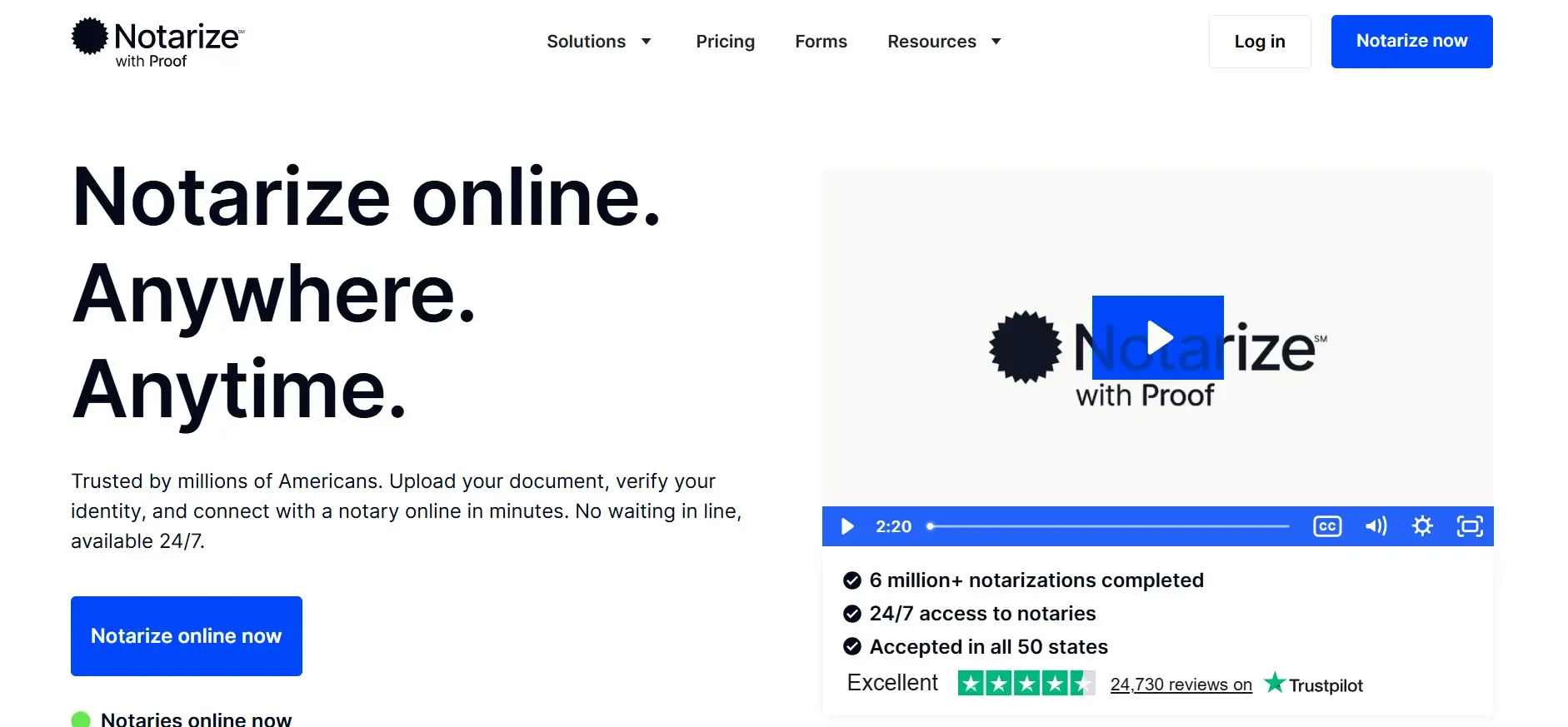
Notarize is a pioneer in remote online notarization (RON) for both individuals and businesses. It is widely used by high-volume notary teams who need a scalable, compliant way to notarize documents anywhere in the US. Compared to DocVerify, Notarize is often seen as more user-friendly with broader integrations, but its per-transaction pricing can sting as your usage grows.
Pricing: Starts at $99/month plus per-notarization fees.
- Broad integrations with CRMs and title systems
- Strong compliance and security certifications
- User-friendly dashboard and onboarding
- Recurring per-notarization fees increase with volume
- Advanced integrations require enterprise plans
- Data and workflow ownership remain with the vendor
With Devaims, you can own your integrations and data, avoiding recurring fees as you scale.
2. Stavvy (Title & real estate)
Stavvy focuses on real estate, mortgage, and title workflows, offering RON, e-sign, and secure document management. If DocVerify feels generic to your closing process, Stavvy brings industry-specific features, but you are still renting the platform and subject to usage-based pricing.
Pricing: Custom quote, typically includes per-use fees.
- Tailored for title and real estate workflows
- Deep integrations with title production systems
- Strong compliance and audit tools
- Opaque pricing, must contact sales
- Per-transaction fees apply to most features
- Limited ownership or workflow customization
3. BlueNotary (Flexible RON)
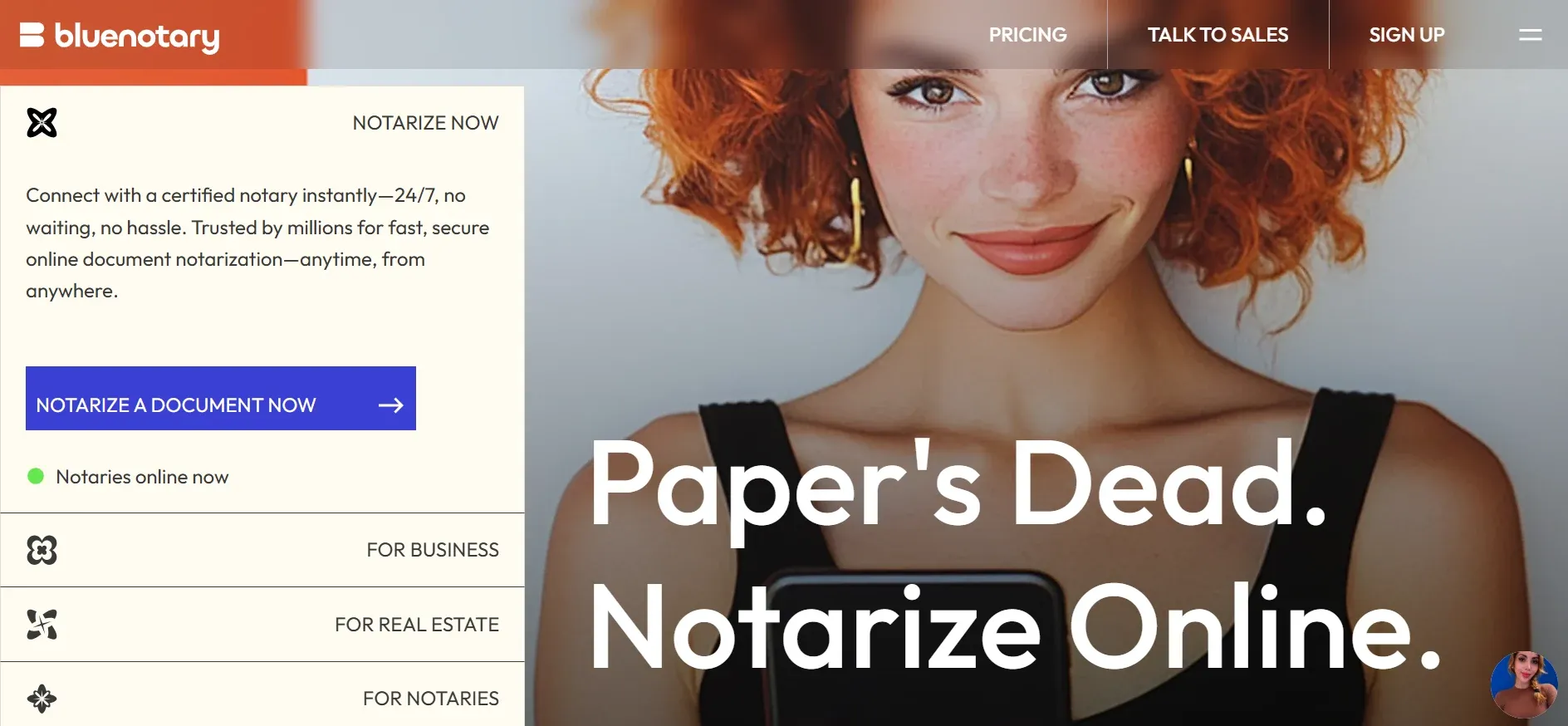
BlueNotary is popular for independent notaries and small teams who need affordable, flexible remote notarization with easy video calls and e-signature. It is more affordable upfront than DocVerify, but per-session charges can add up, and you are renting, not owning, the workflow.
Pricing: From $24/month plus per-session fees.
- Low entry cost for solo notaries
- Quick onboarding and simple interface
- Compliant with state RON regulations
- Per-session fees add up with higher volume
- Limited workflow customization
- Few advanced integrations
With Devaims, your exact workflow is built for you and belongs to you, with no per-use fees or seat licenses.
4. SigniX (Compliance-focused orgs)
SigniX is known for its digital signature and remote notarization platform, favored by banks and organizations with strict compliance needs. It often matches DocVerify on security, but its pricing is opaque and can escalate with usage or compliance modules.
Pricing: Custom quote, typically includes per-use fees.
- Strong compliance and audit features
- Integrations with enterprise document systems
- Detailed signer authentication options
- Pricing is not transparent
- Advanced modules increase total cost
- Customization limited to platform boundaries
5. RON (Proof) (Quick online notarization)
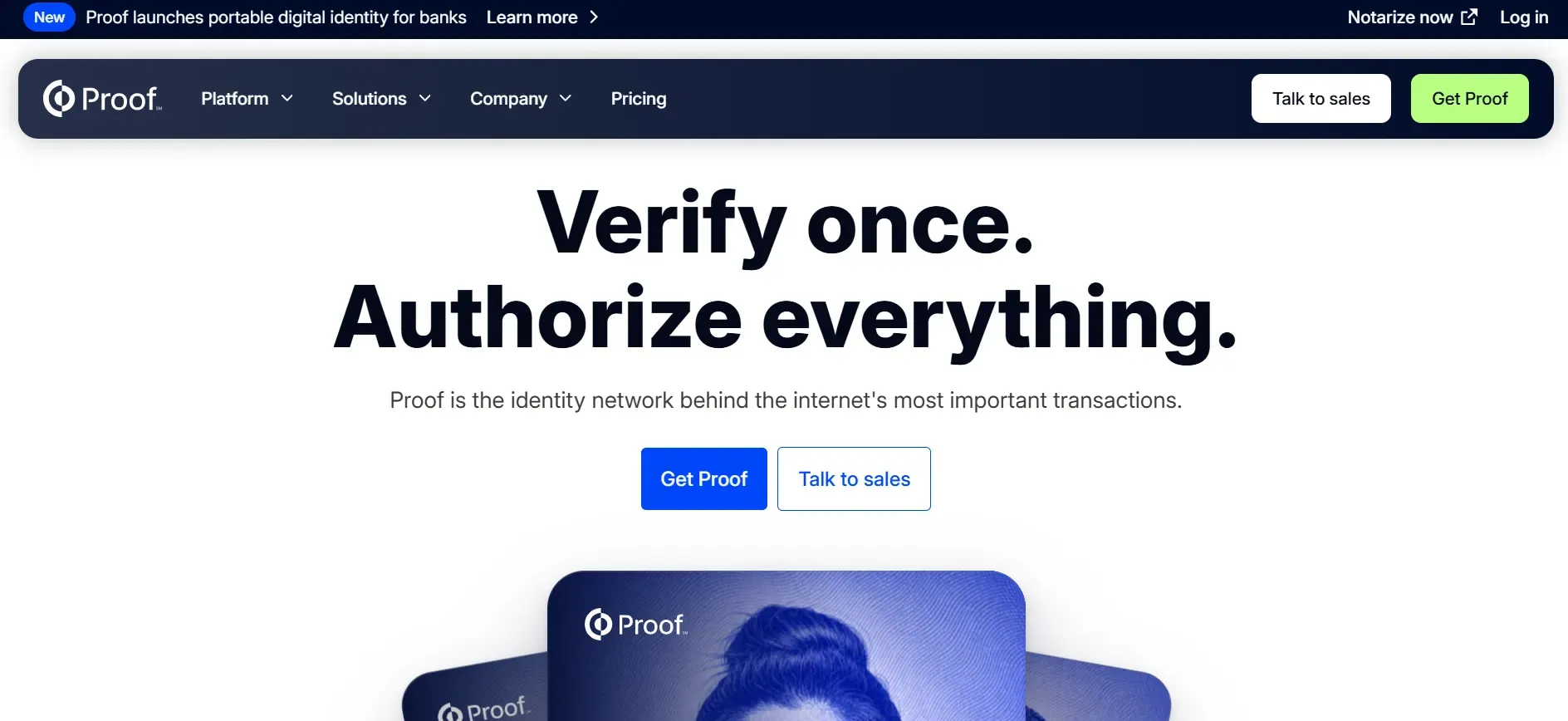
Proof (formerly NotarizeMe, now branded as "Proof") offers a quick, pay-per-use approach for those who want to notarize documents fast online. For episodic users, it can be cheaper than DocVerify, but there is no volume discount and you are always paying per use.
Pricing: $25 per notarization, no subscription required.
- Fast, simple online notarization
- No monthly commitment
- Mobile-friendly and easy to use
- No workflow customization or bulk discounts
- Minimal integrations
- Not suited for ongoing high-volume needs
6. Snapdocs (Workflow automation)
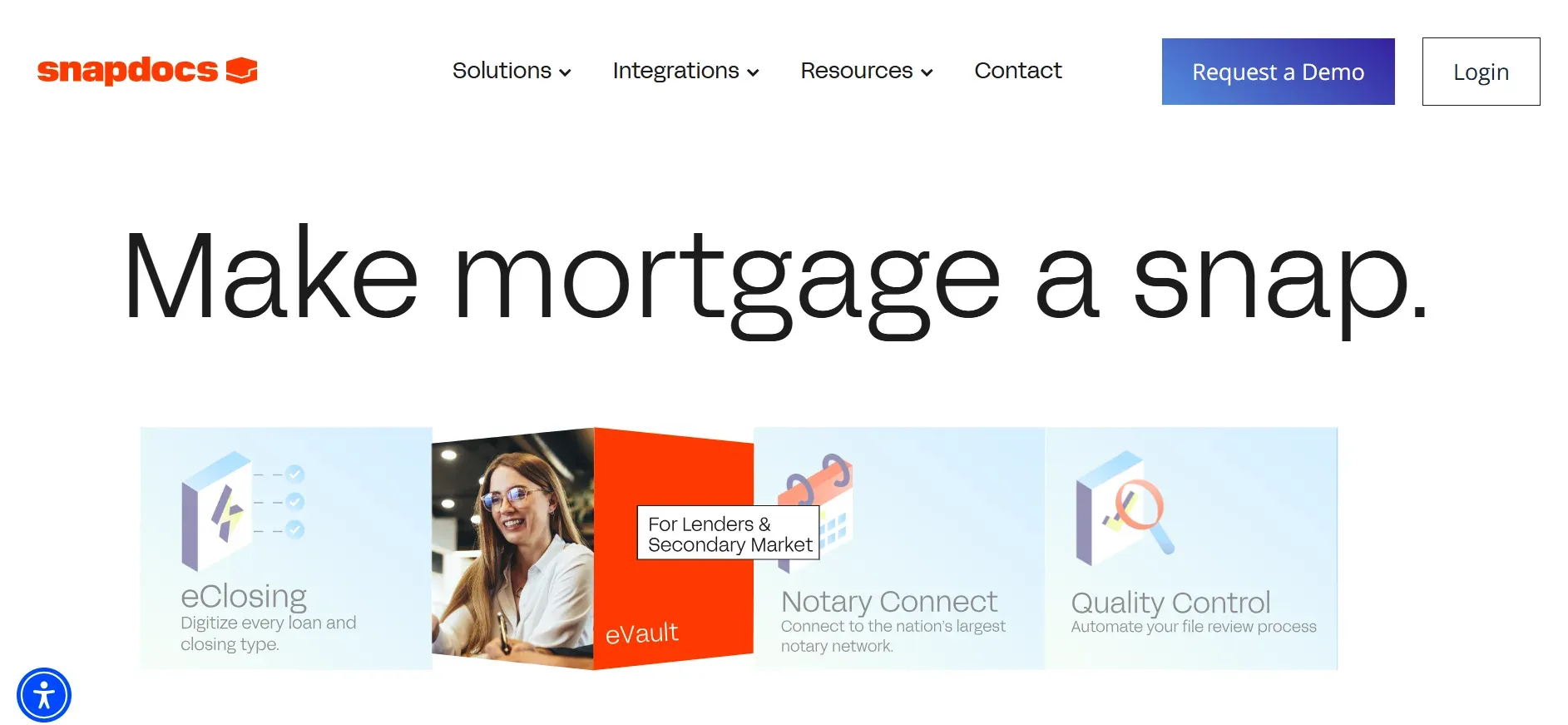
Snapdocs is a heavyweight for closing workflows, automating notary assignments, document tracking, and compliance. If DocVerify feels too narrow for your back-office, Snapdocs goes broader, but every automation step adds to your monthly bill.
Pricing: Custom quote, includes per-use and automation fees.
- Powerful workflow automation
- Deep integrations with title and mortgage systems
- AI tools for document prep and compliance
- Complex pricing with automation add-ons
- Requires IT support for setup
- No platform ownership or data control
With an owned platform from Devaims, automation is built to fit your process, not locked to someone else's roadmap.
7. NotaryCam (Global remote notarization)
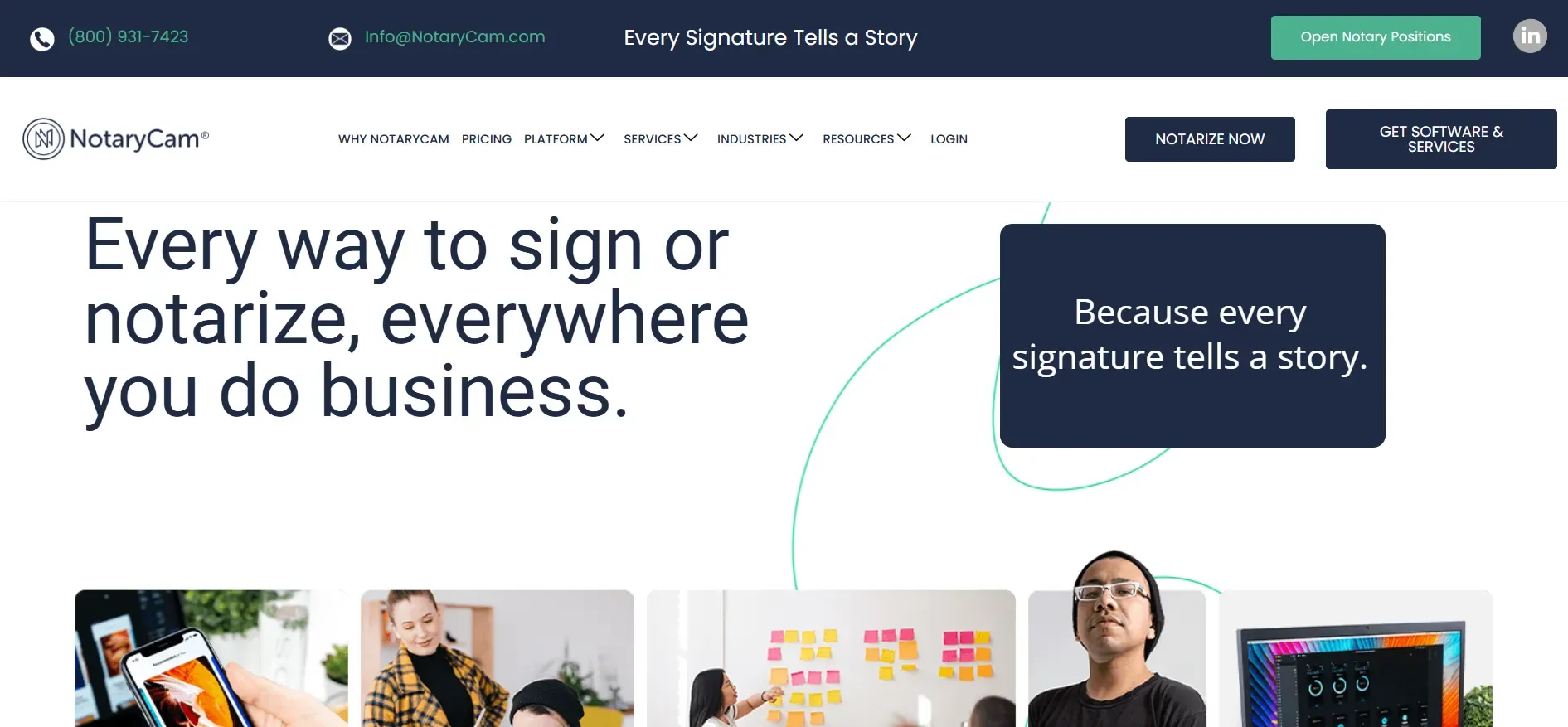
NotaryCam enables global, remote online notarization for individuals and businesses. It is used by those who need cross-border notary services or support for international clients. Compared to DocVerify, NotaryCam is more global but still charges both subscription and per-use fees.
Pricing: $99/month plus per-use fees.
- 24/7 access and multi-language support
- International jurisdiction coverage
- Detailed audit logs and secure storage
- Subscription plus per-use fees
- Advanced integrations require enterprise plans
- Coverage limited by jurisdiction
8. NotaryPro (Canadian notary)
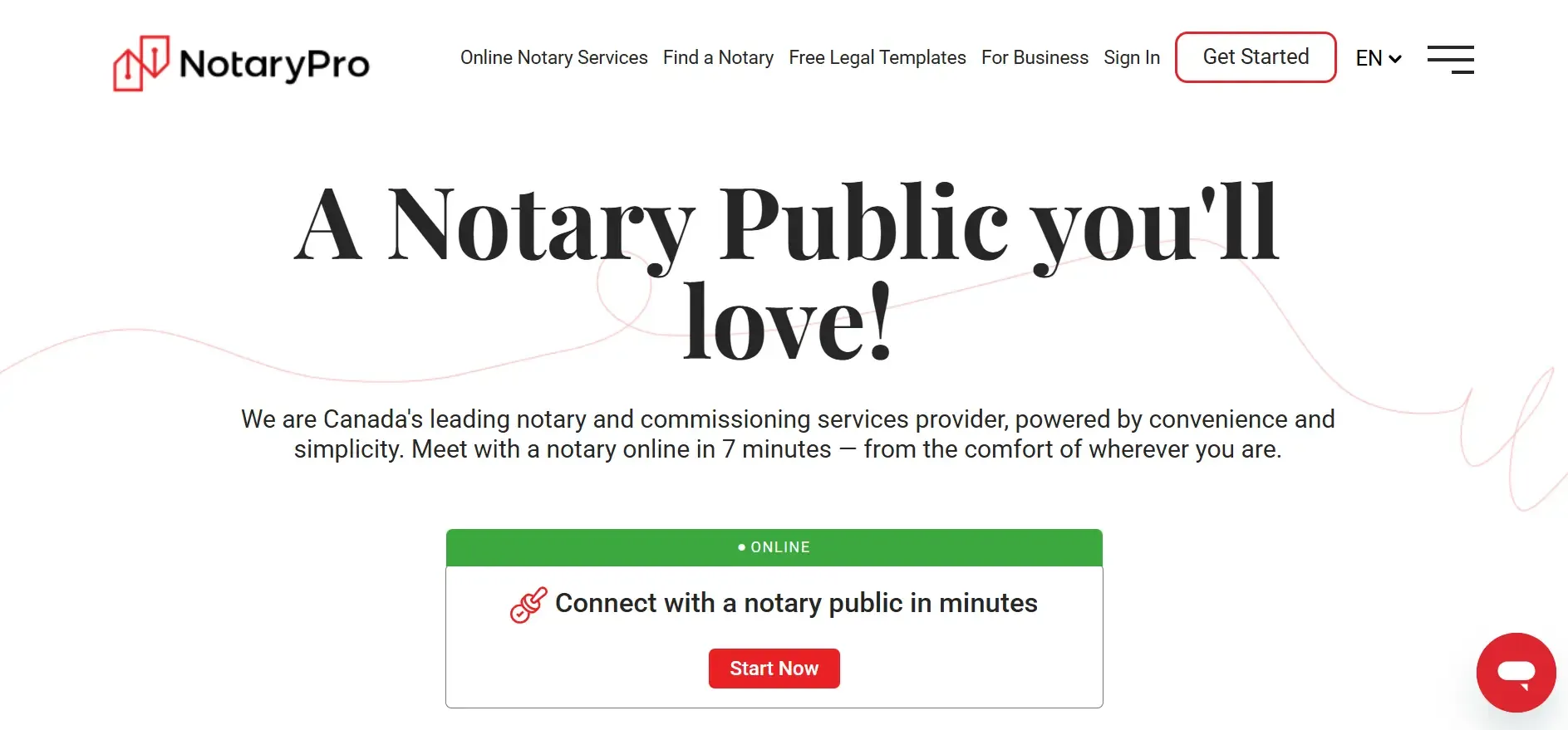
NotaryPro specializes in remote and in-person notarization for the Canadian market. It is a direct DocVerify alternative for Canadian notaries, with transparent pricing and accessible support, but still charges monthly plus per-use fees.
Pricing: $29.99/month plus per-use fees.
- Canadian law compliance and bilingual support
- Remote and in-person notarization options
- Simple onboarding for solo notaries and firms
- Limited integrations
- Per-use fees for each notarization
- Workflow customization is basic
9. Pandadoc (Blockchain notarization)
Pandadoc applies blockchain technology to notarization, creating tamper-evident, timestamped digital documents. If you want a decentralized DocVerify alternative, Pantograph is unique, but its pricing and support model are not always a fit for regulated US notary shops.
Pricing: Varies by usage and blockchain fees.
- Immutable blockchain records
- APIs for custom integrations
- Public verification of notarized documents
- Not widely recognized by all regulators
- Pricing can be unpredictable
- Workflow customization requires developer resources
10. Devaims (Ownership, custom workflow)
Devaims is the only DocVerify alternative here that builds your notary and legal document platform for you, then hands you the code. You own the software outright, set your own rules, and are never billed per signature, per user, or per feature. Every workflow, integration, or compliance requirement is tailored to your actual business, not locked to someone else's roadmap. If you are tired of paying rent for your own process, this is the alternative that ends the cycle.
Pricing: One-time build cost, plus optional flat-rate maintenance.
- Full ownership of your platform and data
- Unlimited users, workflows, and integrations
- Custom compliance and reporting for your jurisdiction
With Devaims, you never pay per signature or user, and your platform grows with your business, no recurring rent, no vendor lock-in.
Other DocVerify alternatives worth knowing
- Title Express: Best for large title agencies, but not a notary-specific SaaS and more a title production tool.
- DocuSign Notary: Offers e-notary features but primarily an e-signature platform; may lack true RON compliance in all states. Learn more.
- OneNotary: Flexible for small teams, but similar rental pricing structure to others listed above. See details.
- eNotaryLog: Gaining traction for remote notarization, but pricing is not public and it is a newer player. Official site.
- Pavaso: Focused on digital mortgage and e-closing, strong for lenders but less so for general notaries. More info.
How to choose the right DocVerify alternative
- By volume: If you notarize a handful of documents a month, pay-per-use like Proof can work. For high volume, watch per-signature fees, they compound fast. Calculate your five-year cost, not just the monthly rate, and consider growth projections.
- By geography: NotaryPro is best for Canada, NotaryCam for global reach, others serve primarily US markets. Always verify jurisdictional compliance for your state or province before committing.
- By compliance: Regulated industries need strong audit trails and SOC2/ISO certifications, SigniX and Snapdocs are strong here. Confirm your regulator or underwriter accepts the platform’s compliance claims.
- By workflow: If you want unique integrations or custom workflows, only a custom build like Devaims delivers true flexibility and ownership. Off-the-shelf SaaS tools are limited to what is on their roadmap.
If you are tired of the rent cycle or want to keep your data, the next section shows how owning your notary platform actually pencils out.
Stop paying rent on software you could own
The elephant in the notary software room is that every DocVerify alternative above is rented. No matter which SaaS you pick, your costs scale with usage, and you are always one fee hike from a budget headache. Add up the per-signature, per-user, and "integration" fees over five years, they can easily pay for a custom platform you own outright.
Devaims builds your notary and legal document platform to your exact specs, then hands you the source code. You own the workflows, the data, and the integrations. There is no contract, no lock-in, no per-unit penalty. It is your system, running your business, on your terms. This means you are protected from vendor sunsets, feature removals, or unplanned price increases.
- Per-use fees disappear: Every notarization is yours, not another line item.
- Custom reports and integrations: If you want a dashboard or CRM sync, it is part of your build, not a "premium" add-on.
- Endless upgrades stop: With ownership, you are never forced into a higher tier to keep your history or access key features.
- Data sovereignty: Your clients’ sensitive data remains under your control, which can simplify compliance with privacy regulations.
| Tool | Ownership | Recurring fees | Custom workflows | Data control |
|---|---|---|---|---|
| DocVerify | No | Monthly + per-use | Limited | No |
| Notarize | No | Monthly + per-use | Some | No |
| Snapdocs | No | Monthly + per-use | Some | No |
| Devaims | Yes | One-time build, flat maintenance | Full | Full |
| Year | Rented (Notarize/Snapdocs at $349/mo + $2/signature, 100/month) | Owned (Devaims: $29,000 build, $180/mo maint) |
|---|---|---|
| Year 1 | $349 x 12 = $4,188 + $2 x 100 x 12 = $2,400 Total: $6,588 |
$29,000 + ($180 x 12) = $31,160 |
| Year 2 | $13,176 | $31,160 + ($180 x 12) = $33,320 |
| Year 3 | $19,764 | $35,480 |
| Year 4 | $26,352 | $37,640 |
| Year 5 | $32,940 | $39,800 |
Break-even: At just over four years, owning your platform pays for itself, and from then on, you are saving thousands every year. If your shop notarizes more than 100 docs a month or is planning to scale, the gap widens fast. For high-volume notary businesses, title agencies, and legal firms, ownership is finally not just possible, it is a smart financial move. And with ownership, you can reinvest those savings into marketing, training, or client experience instead of sending them to a SaaS vendor.
How to switch from DocVerify
- Export all document histories, audit logs, and user data from DocVerify. Use their export tools or request a full data dump from support to ensure you have every file and log needed for compliance.
- Choose your new platform or custom build (gather requirements for workflows, integrations, compliance). Document your must-have features, compliance needs, and integration points. Involve stakeholders from legal, IT, and operations to avoid missing critical requirements.
- Import your data and set up user accounts and permissions in the new system. For SaaS tools, use their onboarding wizards. For custom builds like Devaims, this is handled as part of the delivery process, including validation of data integrity.
- Reconnect payment processors, e-signature, and CRM integrations. Test each integration thoroughly, API endpoints and authentication flows can differ between platforms.
- Train staff on any new processes or features unique to the new platform. Provide documentation and run live training sessions to reduce errors and speed adoption.
- Test workflows in parallel for at least one busy week to catch edge cases. Simulate high-volume days and special scenarios to ensure no business-critical steps are missed.
- Review and terminate your old DocVerify contract to avoid surprise renewals. Confirm all data is offboarded securely and that you have met compliance requirements for document retention.
With a custom Devaims build, the migration is handled as part of the project, with a dedicated team to manage data transfer, user setup, and workflow recreation.
Frequently asked questions
What is the best DocVerify alternative for high-volume notary shops?
For established notary teams handling hundreds of documents monthly, Notarize offers scale and broad integrations, but Devaims is the only alternative where you own the entire workflow and control your costs long-term. If your business depends on custom integrations, unique compliance requirements, or you want to avoid the risk of SaaS vendor changes, Devaims is the only solution that puts you in the driver's seat.
Which DocVerify alternative is the cheapest for solo notaries?
For solo or low-volume notaries, BlueNotary or pay-per-use platforms like Proof minimize upfront spend, but recurring per-use fees add up fast if your volume grows. Calculate your total cost over several years, not just the first month, and remember that as your business grows, so do your SaaS fees, sometimes faster than your revenue.
Is there a free DocVerify alternative?
There are no truly free remote online notary platforms with full compliance. Some offer free trials or demo versions but all production-grade tools, including DocVerify alternatives, charge per use or per month. Free tools may lack security, audit trails, or legal recognition. Always verify compliance before using a "free" tool for client work.
What is the best DocVerify alternative for Canadian notaries?
NotaryPro is tailored for the Canadian legal market, offering both remote and in-person notarization with Canadian law compliance. It supports bilingual workflows, province-specific requirements, and is recognized by most Canadian regulators. For custom needs, Devaims can also build Canadian-compliant platforms with your exact features.
Can I own my notary platform instead of renting?
Yes, Devaims is the only DocVerify alternative that delivers a custom-built notary platform you own outright. This ends recurring per-signature and per-user fees and gives you full control over your data, workflow, and integrations. Ownership means you are protected from changing vendor policies, can add features as needed, and keep your client data in-house.
When should a notary business consider switching from DocVerify?
If your per-use fees, seat licenses, or integration costs are eating into your margins, or if you need custom workflows not available elsewhere, it is time to weigh DocVerify alternatives and consider owning your solution. Also consider switching if you are planning to scale, want to future-proof your operation, or need guarantees on data privacy and system continuity.
Can I keep my data and history when switching from DocVerify?
Most SaaS alternatives let you export documents, audit trails, and account settings, but you cannot export the workflow or system itself. With a Devaims build, your data and the entire platform belong to you, future-proofing your operation and making future migrations easier, since you own the source code and database.
What if I need ongoing support or want to add features after launch?
With Devaims, you can contract for ongoing maintenance or feature development as needed, or use your own IT team. You are never locked out of your own system, so you can extend, integrate, or customize as your business evolves, without waiting for a SaaS vendor's roadmap.
The bottom line
Most DocVerify alternatives only change where you rent your notary platform. If you are scaling, it pays to do the math: in less than five years, recurring fees can easily buy you a system you own.
The single most useful takeaway? Add up your per-user, per-signature, and "integration" fees for the next five years. If that number is closing in on a custom build, it is time to stop paying rent for your own process. You can own your notary platform, and Devaims is how you do it without compromise.
For more practical insights, visit the Devaims blog or explore related reads: Notarize alternatives, Snapdocs alternatives, BlueNotary alternatives.