


Ever get the invoice for your notary platform and think, “How did it get this high?” Or maybe you hit your fifth “Please upgrade for this feature” popup while a client waits on the other line. If you’re using BlueNotary, you already know the drill: slick interface, but the costs and limits add up fast.
Most legal shops hit a point where BlueNotary’s per-transaction fees, rigid workflows, or integration walls stall their growth. If you’re ready to own your tech stack, or at least stop renting every signature, here are the best BlueNotary alternatives for 2026. Notarize, Stavvy, and DocVerify stand strong for out-of-the-box needs, but only Devaims lets you own the platform and the code. If you’re thinking long-term, keep reading for the rent to own math that will change how you buy software forever.
Why notary and legal teams look for BlueNotary alternatives
Pay-per-notarization fees stack up fast. When every signature costs you again, your profit margin shrinks with each transaction. At scale, BlueNotary’s fee model can eat a chunk of your revenue. For high-volume shops, this means your notary solution becomes a major variable expense, impacting your ability to forecast and manage costs.
Locked features on higher tiers. Need bulk uploads or advanced reporting? With BlueNotary, get ready to pay for an upgrade, or live without it. Many features that seem essential, like multi-party signing or integrations, are restricted to premium plans, which can be frustrating for growing firms who need flexibility but not a full enterprise commitment.
Integration headaches. Custom API work or plugging into your case management system is rarely as smooth as promised, and can be paywalled entirely. BlueNotary’s integration ecosystem is limited compared to some competitors, and even when APIs exist, they may be restricted or require additional contracts.
Data ownership concerns. Your clients’ documents and signatures live on their servers, not yours, which may not fly for sensitive legal work. For firms handling regulated documents or high-profile clients, this can be a dealbreaker, especially if you need to meet specific compliance or data residency requirements.
Surprise contract renewals and price hikes. You rarely see them coming. Rented platforms like BlueNotary can, and do, change terms or pricing with little notice. This unpredictability can wreak havoc on long-term planning and client commitments.
If any of these sound familiar, you’re not alone. Plenty of legal teams search for BlueNotary alternatives to regain control, cut recurring costs, and secure their client data.
Quick comparison of the best BlueNotary alternatives
| Tool | Best for | Starting price | You own it? |
|---|---|---|---|
| Notarize | High-volume remote notarizations | Reported $25/user/mo + per-notarization fees | No |
| Stavvy | Real estate closings | Contact sales | No |
| DocVerify | API integrations | Reported $20/mo + $10/notarization | No |
| SigniX | Enterprise digital signatures | Contact sales | No |
| RON (Proof) | Banking and financial docs | Contact sales | No |
| Snapdocs | Title and escrow | Contact sales | No |
| NotaryCam | On-demand remote notarization | Reported $25/session | No |
| NotaryPro | Canadian notarization | Reported $49.95/session | No |
| Pantograph | Specialized document workflows | Contact sales | No |
| Devaims | Owning your custom notary platform | One-time build, you own it | Yes |
Always confirm current pricing before you decide. Vendors update plans and fees often, and hidden costs can surface during implementation.
The 10 best BlueNotary alternatives
1. Notarize (Best for high-volume remote notarizations)
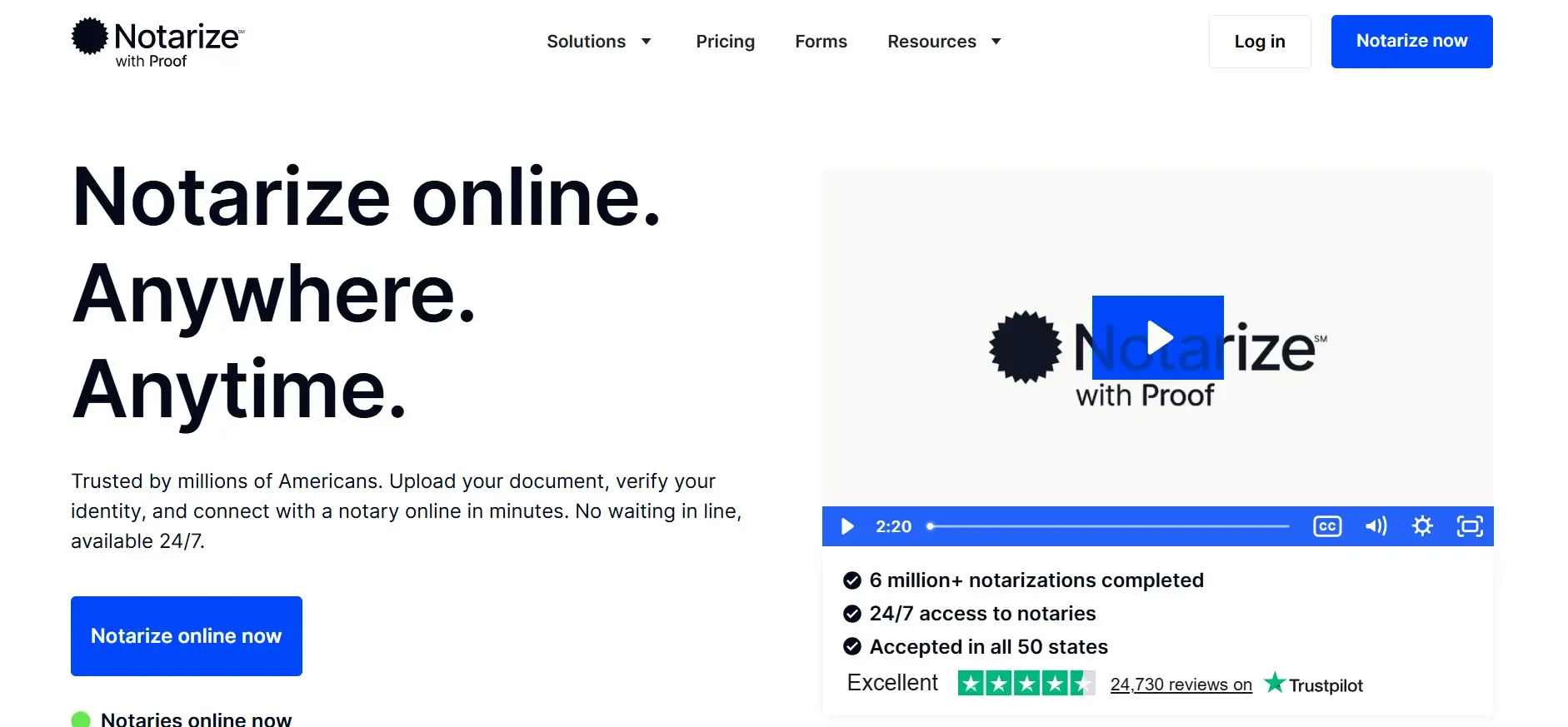
Notarize is one of the largest remote online notarization (RON) platforms in the United States, with a strong focus on compliance and scalability for legal, financial, and real estate use cases. It supports both in-house notaries and a network of commissioned notaries for on-demand sessions, making it a favorite for law firms, banks, and enterprise clients with national reach.
Features & Integrations: Notarize offers integrations with leading platforms such as Clio (legal practice management), DocuWare (document management), and several title and mortgage systems. It supports multi-party notarizations, real-time video, identity verification (including KBA and credential analysis), and robust audit trails. Advanced reporting, workflow automation, and API access are available, but often require higher subscription tiers.
Migration Friction: Moving from BlueNotary to Notarize is relatively straightforward for firms with standard document types, but complex integrations and bulk data imports may require technical support. Notarize offers onboarding specialists for enterprise deals, but smaller firms may need to self-navigate the transition.
Concrete Use Cases: High-volume legal practices, mortgage closings, insurance forms, POAs, and any business with recurring, multi-state notarization needs. Many large title agencies and banks use Notarize as their RON backbone.
Pricing: Reported $25/user/month plus per-notarization fees. See pricing.
- Trusted by large legal and financial organizations
- Strong compliance and audit trails
- Wide integration support with legal and real estate tools
- Per-user and per-notarization fees add up quickly at scale
- Advanced features and integrations require higher-tier plans
- Data is stored in Notarize's cloud, not on your servers
On software you owned, each notarization would cost you nothing extra once built.
2. Stavvy (Best for real estate closings)
Stavvy is designed specifically for the real estate, title, and mortgage markets. Its platform combines e-signature, e-notary, remote online notarization, digital closing, and secure document management. Stavvy’s edge is its deep integrations with title production software and mortgage LOS platforms, making it a go-to for lenders, title agencies, and closing attorneys.
Features & Integrations: Stavvy integrates with title production systems (e.g., SoftPro), mortgage origination software, eVault providers, and supports MISMO-compliant RON. It includes advanced closing workflows, real-time status tracking, and secure document storage. Automation features extend to scheduling, reminders, and compliance checks.
Migration Friction: Migration is smoothest for firms already using compatible title or mortgage systems. Firms outside real estate may find the workflows rigid and the platform less adaptable. Data export and import options exist, but customization is limited by the platform’s real estate focus.
Concrete Use Cases: Title agencies processing hundreds of closings a month, real estate law firms, lenders managing multi-state transactions, and mortgage servicers needing to streamline closings and e-notarizations.
Pricing: Contact sales for a quote. No public self-serve plan.
- Deep integrations with title and mortgage systems
- Advanced closing workflows and compliance features
- Trusted by leading real estate and lending firms
- Opaque pricing with no public self-serve plan
- Highly specialized for real estate, less flexible for other verticals
- Data and workflows are hosted and controlled by Stavvy
If you want flexible workflows outside real estate, a custom platform from Devaims fits better.
3. DocVerify (Best for API integrations)
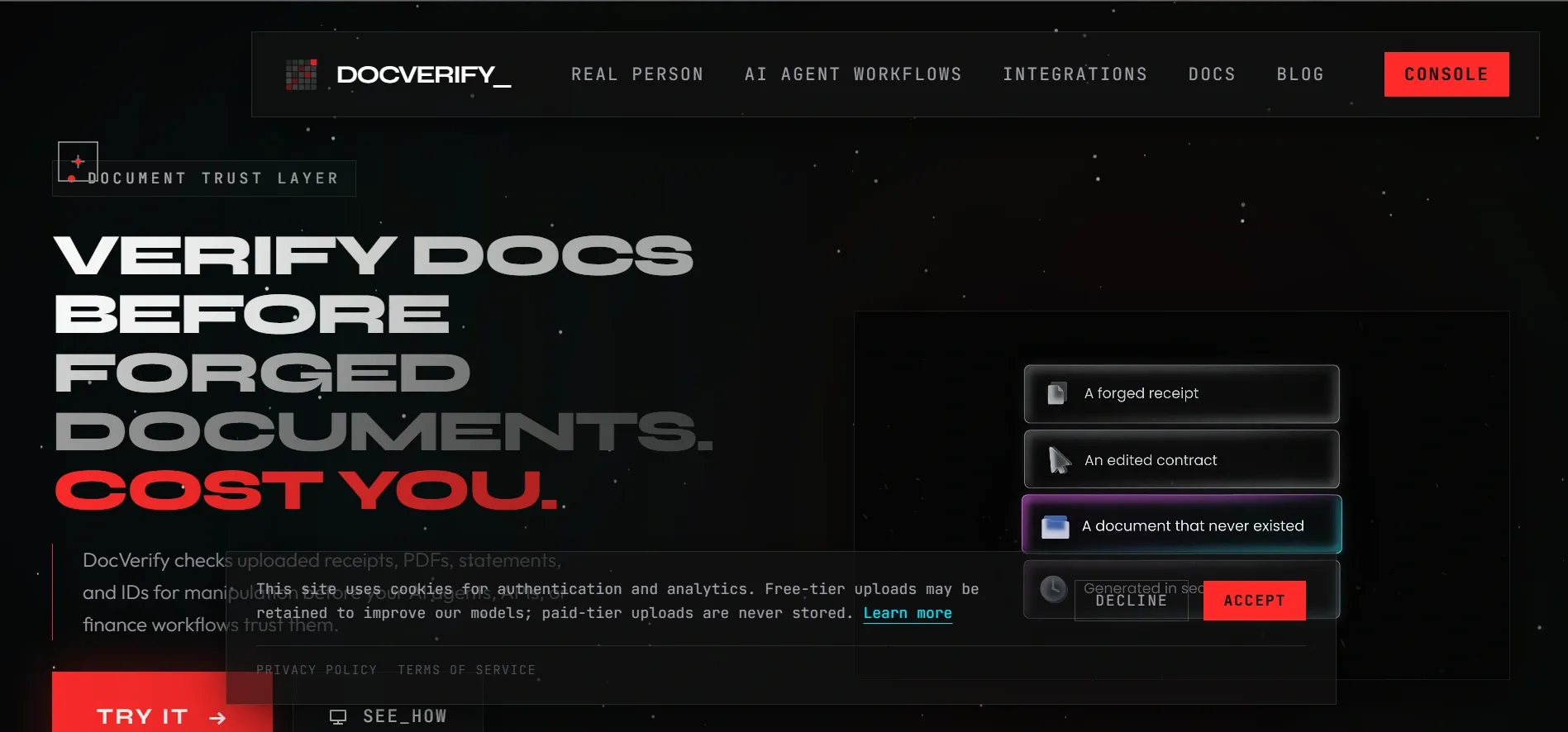
DocVerify stands out for its API-centric approach and long history in digital notarization. It is often chosen by legal and financial teams that want to embed notarization into their own portals, apps, or customer-facing workflows. DocVerify supports e-signatures, RON, and document management.
Features & Integrations: The DocVerify API allows for deep automation and integration with CRMs (like Salesforce), case management systems, and custom line-of-business apps. The platform supports in-person electronic notarization (IPEN), remote online notarization, and offers a white-label option for branding. Webhooks and event notifications support real-time workflow updates.
Migration Friction: Firms with IT resources can migrate existing data and workflows with the API, but less technical users may find the interface outdated and onboarding documentation lacking. API access requires higher-tier plans, and legacy documentation may create a learning curve.
Concrete Use Cases: Banks automating loan document notarization, law firms embedding notarization into client portals, and insurance companies using DocVerify for policy signings. It excels where workflow automation or bulk notarization is needed.
Pricing: Reported $20/month plus $10/notarization. See pricing.
- Powerful API for deep workflow automation
- White-label and branding options
- Supports both in-person and remote notarization
- Per-notarization fees even with monthly subscription
- API access requires higher-tier plans
- User interface is less modern than newer platforms
That’s the kind of automation you just have if the platform is built for your workflow.
4. SigniX (Best for enterprise digital signatures)
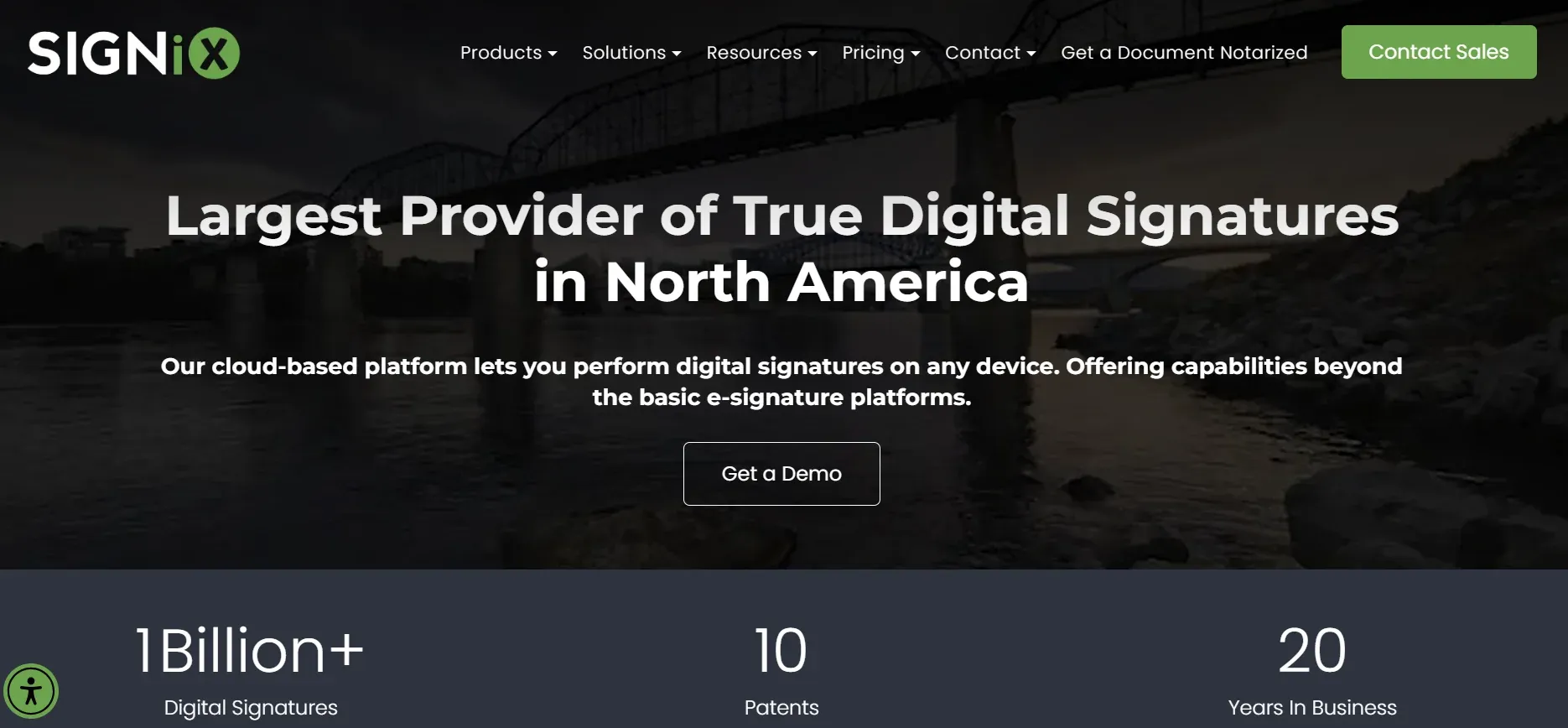
SigniX is an enterprise-grade digital signature and online notarization provider trusted by highly regulated industries, including banks, hospitals, government agencies, and insurers. It focuses on advanced PKI-based digital signatures, granular audit trails, and compliance with federal and state regulations.
Features & Integrations: SigniX supports advanced identity verification, long-term document retention, and customized branding (white-label). Integrations with document management systems, enterprise content management, and custom workflows are available through API and SSO (Single Sign-On). The platform is SOC 2 Type II, HIPAA, and GLBA compliant.
Migration Friction: Onboarding is handled by dedicated enterprise teams, but the process can be lengthy and requires significant planning. Data migration and integration with legacy systems are project-based and may require custom development. Smaller firms may find the sales cycle and onboarding too heavy.
Concrete Use Cases: National banks rolling out digital signature solutions, healthcare providers needing HIPAA-compliant notarization, and insurance companies automating policy issuance.
Pricing: Contact sales for pricing, typically custom contracts. See more.
- Enterprise-grade compliance and security
- Advanced digital signature technology
- Custom integrations for large organizations
- Not suitable for small or midsize firms due to custom contracts
- No public pricing or instant signup
- Customization only through vendor engagement, no code ownership
For smaller firms, Devaims can build only what you need, without the enterprise overhead.
5. RON (Proof) (Best for banking and financial docs)
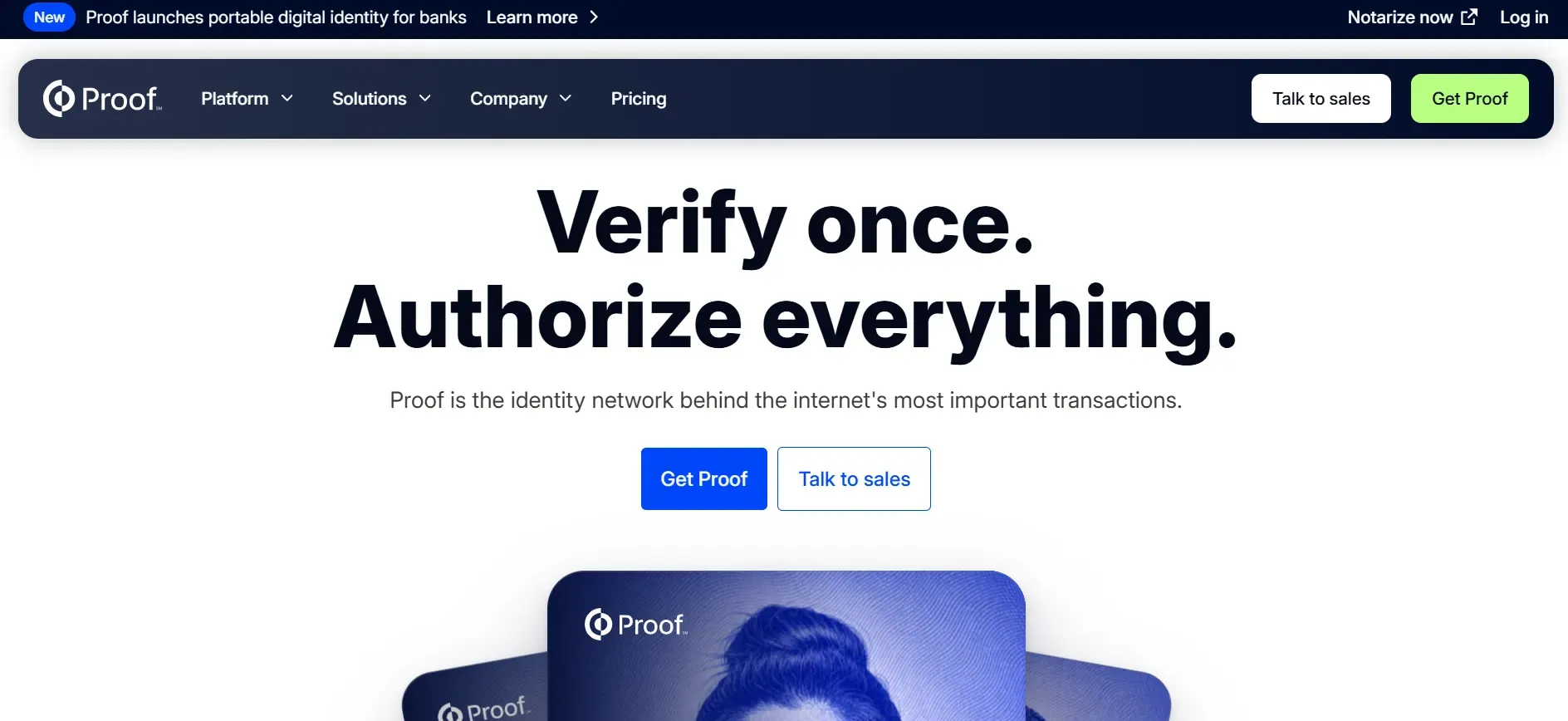
Proof (formerly Notarize for Business) is designed for the banking, lending, and financial services sector. Its compliance-first approach, robust identity verification, and integration with banking infrastructure make it a solid fit for regulated environments.
Features & Integrations: Proof offers integrations with loan origination systems (LOS), document management, and KYC/AML providers. Its platform supports large-scale notarization, multi-party workflows, and detailed audit trails. It also provides API access for custom integration and supports enterprise SSO for secure user management.
Migration Friction: Proof’s onboarding is highly guided for enterprise clients, but smaller teams may face a sales-heavy process with longer lead times. Data migration is available but typically requires technical assistance.
Concrete Use Cases: Banks automating mortgage notarization, fintechs embedding RON into their onboarding, and lenders with strict compliance needs.
Pricing: Contact sales for a quote.
- Strong compliance and security for financial services
- Integrates with banking and lending infrastructure
- Supports high-volume, multi-party workflows
- No public pricing, minimums may be high for small firms
- Customization limited to vendor roadmap
- All data hosted by Proof, no direct ownership
6. Snapdocs (Best for title and escrow)
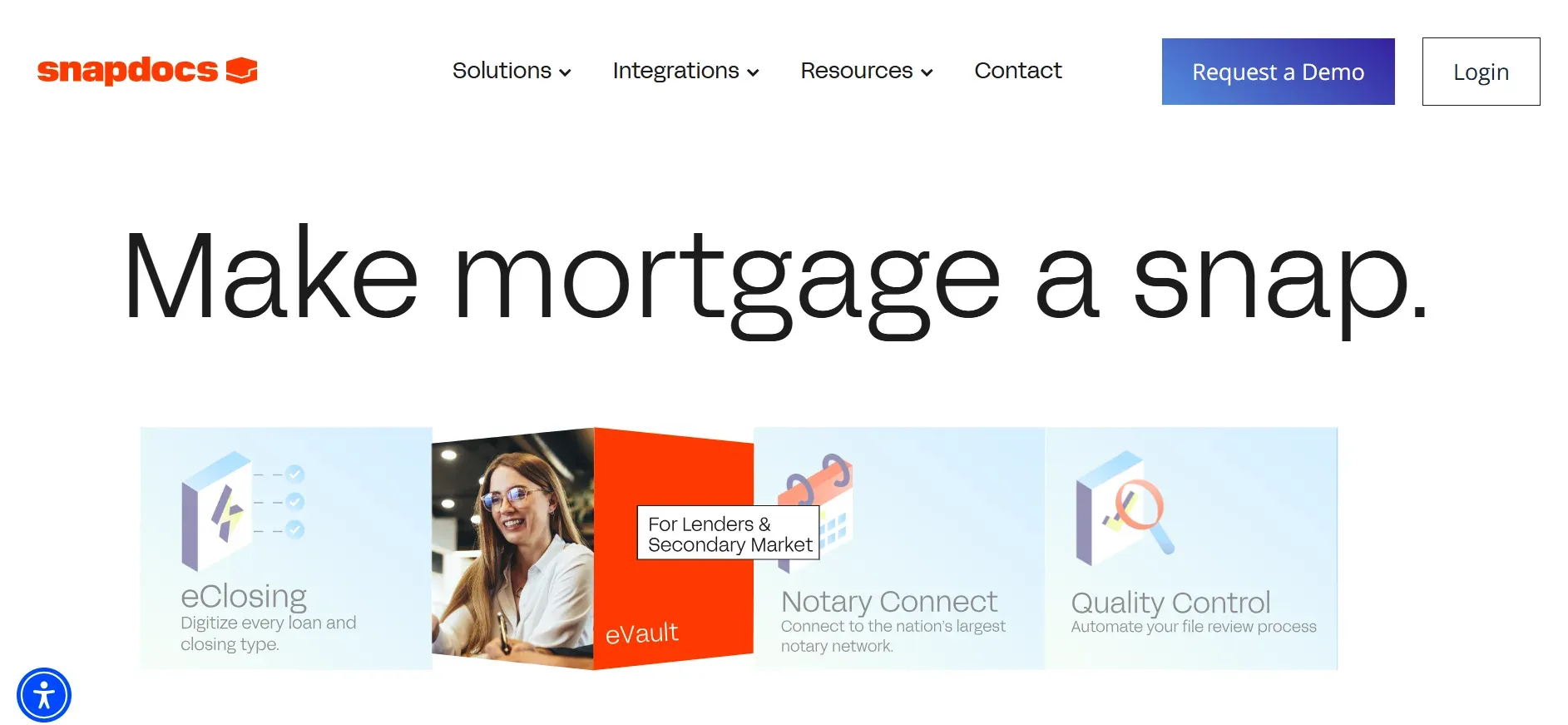
Snapdocs is a dominant player in the title, escrow, and mortgage closing space. Its platform is built to streamline the entire closing process, from document preparation to e-signature, notarization, and post-closing workflows. Snapdocs is trusted by national lenders and thousands of title agencies.
Features & Integrations: Snapdocs integrates with lender and title production software, eVaults, and payment processors. It features automated scheduling, notary assignment, compliance checks, and a large national notary database. The platform supports both in-person and remote notarizations and offers detailed analytics dashboards for closing performance.
Migration Friction: Migration is easiest for firms already using compatible title software. For others, importing data and adjusting to Snapdocs’ workflow-centric model can require significant process changes. Snapdocs offers onboarding support for enterprise clients.
Concrete Use Cases: Title agencies processing hundreds of closings monthly, lenders coordinating multi-party signings, and escrow teams managing complex transactions.
Pricing: Contact sales for a quote.
- Streamlined title and escrow workflows
- Large notary network and automation features
- Trusted by national lenders and title agencies
- Pricing is not transparent, with multiple fee types
- Highly specialized for real estate, less useful for general legal
- No platform or data ownership, limited customization
With Devaims, you can have your own title workflow, no monthly seat fees.
7. NotaryCam (Best for on-demand remote notarization)
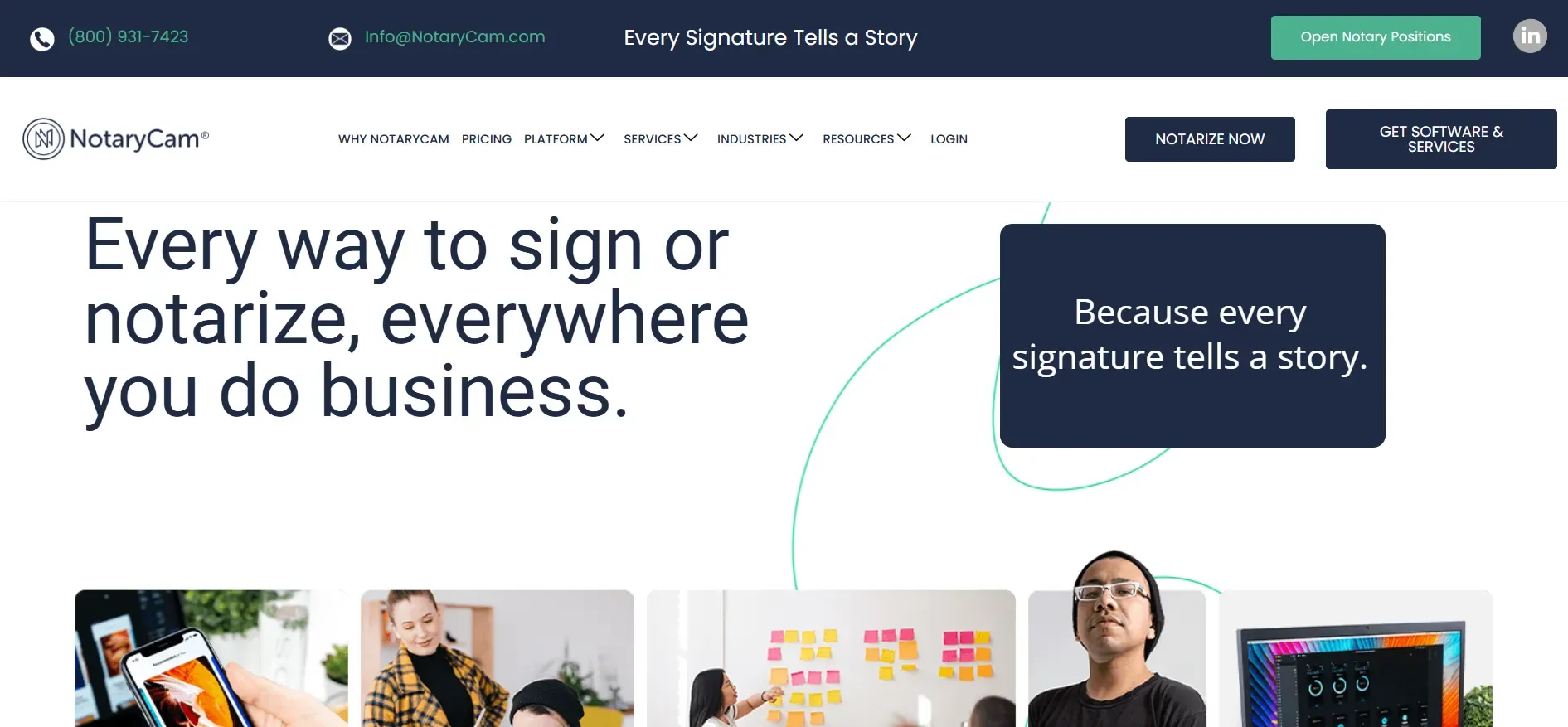
NotaryCam is known for its instant, on-demand remote notarization service, accessible 24/7. It caters to both individuals and businesses needing quick, one-off notarizations. NotaryCam is especially popular for international clients and those outside major metro areas.
Features & Integrations: The platform supports real-time video notarization, multi-party signings, and international document acceptance. It offers integrations with some real estate and mortgage systems, but lacks deep automation or workflow customization found in more enterprise-focused platforms.
Migration Friction: NotaryCam is best used as an add-on for occasional needs. Firms looking to migrate full workflows may find the platform too limited for high-volume or highly customized processes.
Concrete Use Cases: Individuals needing a single document notarized, law firms with occasional remote clients, and businesses with sporadic notarization needs. Good for serving clients in different time zones or countries.
Pricing: Reported $25 per notarization session. See FAQ.
- 24/7 on-demand access for remote notarization
- International document acceptance
- Simple for occasional or urgent needs
- High per-session fees for frequent users
- No batch processing or workflow automation
- Data stored on NotaryCam’s infrastructure, limited export
8. NotaryPro (Best for Canadian remote notarization)
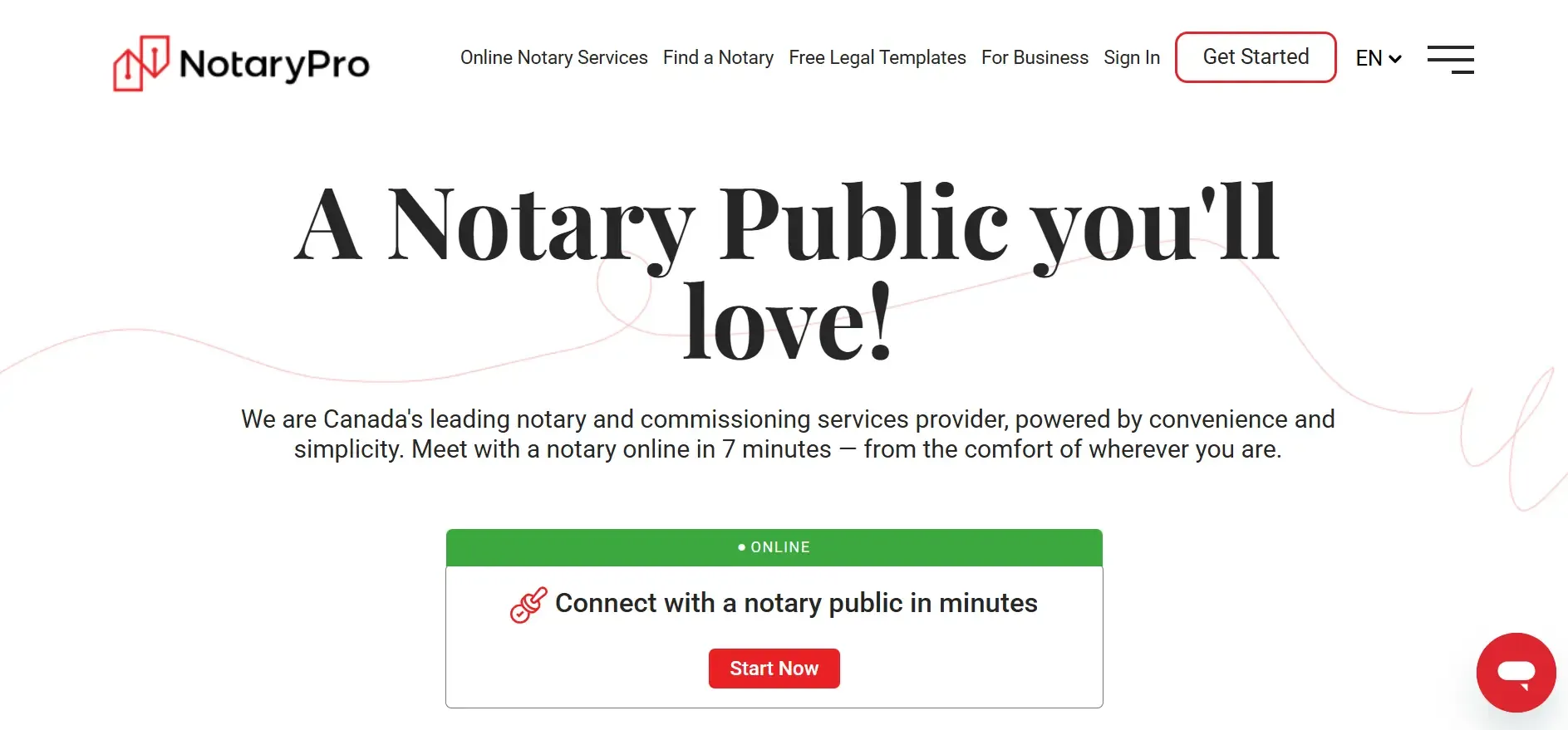
NotaryPro is Canada’s leading remote online notarization platform, compliant with provincial and federal regulations. It is the go-to for firms and individuals needing legally valid Canadian notarizations online.
Features & Integrations: NotaryPro offers real-time video notarization, digital signature, and document management, with a focus on Canadian legal requirements. It has some integrations with payment processors and document storage, but lacks the deep API and workflow automation of US-based competitors.
Migration Friction: NotaryPro is best for Canadian firms or those with occasional Canadian clients. Migration from BlueNotary is straightforward for basic use, but those needing advanced integrations or custom workflows will find the platform limiting.
Concrete Use Cases: Canadian law firms, immigration consultants, and individuals needing Canadian legal documents notarized remotely.
Pricing: Reported $49.95 per notarization session. See pricing.
- Compliant with Canadian legal requirements
- Simple for one-off or occasional use
- Trusted by Canadian law firms and consultants
- Expensive per-session pricing for high-volume users
- Limited automation and integration options
- All data managed by NotaryPro, no ownership
9. PandaDoc (Best for specialized document workflows)
Pandadoc is built for organizations with highly specific or unusual workflow requirements. It offers customized document workflows, automation, and support for niche use cases that standard notary platforms may not address.
Features & Integrations: Pantograph supports custom workflow development, document templating, and process automation within its platform. Integrations are available via API, but deep changes or unique connections often require vendor assistance. The platform can handle specialized document types, multi-party signings, and conditional approvals.
Migration Friction: Migration is possible but may be slow, as customizations require Pantograph’s development team. Firms needing to rapidly iterate or frequently change workflows may find the process frustrating compared to owning their own system.
Concrete Use Cases: Large organizations with regulatory-driven document flows, law firms with unique approval chains, or companies needing highly tailored onboarding or compliance documentation.
Pricing: Contact sales for a quote.
- Highly customizable workflows for niche needs
- Supports complex approval chains and document types
- API available for integrations
- Customizations require vendor involvement and can be slow
- No direct code or data ownership
- Ongoing subscription fees
If your workflow needs keep changing, owning your own platform with Devaims may be the better long-term move.
10. Devaims (Best for owning your notary platform)
Devaims builds custom web and mobile notary platforms that you own outright, including source code and database. Unlike every other BlueNotary alternative on this list, you pay once for the build (plus flat maintenance), and the codebase is yours. No forced per-user, per-notarization, or per-feature fees. Every workflow, integration, and report is tailored to your process and can be updated as your business evolves.
Features & Integrations: With Devaims, every feature is built to your spec: custom approval chains, branded client portals, real-time notifications, bulk document processing, and integrations with any system you use (from Clio to legacy CRMs or payment processors). You can connect directly to e-signature APIs, identity verification tools, or even proprietary line-of-business apps. Reporting, analytics, and audit trails are fully customizable and exportable.
- One-time build, then flat maintenance, never rent again
- You own the code, the data, and the roadmap
- Unlimited users, notarizations, and workflows
- Integrates with your existing systems, your way
- No surprise price hikes, no lock-in, full transparency
With Devaims, migration is handled as part of the project, including data export/import, integration mapping, and user onboarding. You work directly with the build team for a smooth transition from BlueNotary or any other platform.
Legal shops, title agencies, and growing notary firms with recurring business gain the most from owning. If you’re tired of paying rent forever, it’s time you owned your core system.
Other BlueNotary alternatives worth knowing
- Title Express: Popular for title agents but less relevant for broader legal needs.
- SIGNiX: Sometimes listed as a separate brand, but it’s the same platform as SigniX above.
- DocuSign Notary: Heavyweight in e-sign, but not as strong on remote online notarization. See DocuSign Notary for more details.
- OneNotary: Small but growing; generally best for freelancers or those with lightweight needs.
How to choose the right BlueNotary alternative
- By volume and budget: Pay-per-notarization models work for low volume. At scale, recurring fees quickly outpace a one-time build. Run the math on your actual usage before committing.
- By vertical: Real estate and title? Look at Stavvy or Snapdocs. Banking? Proof (RON) or SigniX. Broad legal? Notarize or Devaims.
- By data ownership: If keeping your records in-house matters, only a custom build with Devaims gives true ownership. This is especially important for regulated industries or firms with strict client confidentiality policies.
- By integration needs: Off-the-shelf tools have limits. If you need deep connections or custom logic, renting may hit a wall. Evaluate whether your current and future systems are supported.
- By workflow flexibility: If your process is unique or keeps evolving, owning your platform is the best long-term bet. Vendor-driven platforms may not keep pace with your needs.
If you’re done with renting and want to control your own system, Devaims is the endpoint. Here’s how that stacks up.
Stop paying rent on every notarization: own your notary platform
Here’s the real problem: Every BlueNotary alternative is a rental. Whether it’s a per-session, per-user, or per-feature fee, you’re always paying for access, never owning the system. That’s fine for one-off shops, but if you’re growing, it’s like leasing your most valuable tool indefinitely. Over time, these recurring fees can eclipse the cost of building a custom platform several times over, and you’re still left without control or true ownership.
Devaims builds custom platforms you own, source code and all. You get every workflow, integration, and feature you need, with no lock-in or surprise hikes. Your data, your rules, your pricing, forever.
- No per-user or per-transaction fees: Flat maintenance means your costs don’t grow with your business. Your return on investment increases with every additional user or notarization.
- Your data stays yours: Every document, signature, and report is stored on your own infrastructure. This is crucial for firms needing to comply with data privacy laws like GDPR or HIPAA, or those handling sensitive client information.
- Integrate anything: If you use a niche CRM or case management tool, it connects directly, no third-party bottlenecks. You can build connectors for legacy systems, automate notifications, or even integrate with payment gateways for end-to-end workflow automation.
- Customize for your team: Unique approval chains, automated reminders, branded portals, if you can map it, we can build it. Your platform evolves with your business, not the other way around.
| Tool | Ownership | Custom Workflows | Recurring Fees |
|---|---|---|---|
| BlueNotary | No | Limited | Yes, per notarization/user |
| Notarize | No | Some | Yes, per user/transaction |
| DocVerify | No | API available | Yes, monthly and per notarization |
| Devaims | Yes | Fully custom | Flat maintenance only |
Now, the 5-year math. Say you have 10 notary agents, each averaging 50 notarizations per month. At $25/user/month plus $10 per notarization, your monthly bill is:
- $25 x 10 users = $250/month
- $10 x 500 notarizations = $5,000/month
- Total: $5,250/month, or $63,000/year
| Year | Rented (cumulative) | Owned (cumulative) |
|---|---|---|
| 1 | $63,000 | $32,000 (build: $28,000 + maint: $4,000) |
| 2 | $126,000 | $36,000 |
| 3 | $189,000 | $40,000 |
| 4 | $252,000 | $44,000 |
| 5 | $315,000 | $48,000 (now ahead) |
By year two, you’ve paid off the build. By year five, you’re over $250,000 ahead, and you own everything. If your volume is lower, the break-even shifts, but the logic holds. Want the actual numbers for your team? We’ll run them, no charge.
With Devaims, you can own your notary platform and avoid recurring fees. If you want to see how much you could save, ask for a custom cost analysis.
How to switch from BlueNotary
- Export your client, document, and notarization data from BlueNotary (CSV, PDF, or API). Check for data mapping issues, fields may not align perfectly with your new platform.
- Decide which BlueNotary alternative fits your firm’s needs (rent or own). Compare not just features but long-term costs, data policies, and integration support.
- Import your data into the new system (test a sample batch before full migration). Validate document integrity and ensure audit trails are preserved.
- Reconnect payment processors, e-sign integrations, and case management tools. Test these connections thoroughly to avoid workflow interruptions.
- Train your team on the new workflows and security protocols. Provide documentation and run live sessions to smooth adoption.
- Run both systems in parallel for a short transition period. This reduces risk and ensures business continuity.
- Review contract terms and cancel BlueNotary when you’re ready. Double-check for auto-renewal clauses or data retention policies.
With a custom Devaims build, the migration is handled as part of the project, including custom scripts to match your existing data structure and workflows.
Frequently asked questions
What is the best BlueNotary alternative for legal teams?
For most legal teams, Notarize and Stavvy are strong choices if you want a ready-made online notary platform with proven compliance and integrations. Notarize is broad and flexible, while Stavvy excels in real estate. If you need ownership, full customization, and no recurring per-notarization fees, Devaims is the standout option, especially for firms with unique requirements or high volume.
Which BlueNotary alternative is cheapest for high volume?
Most rented tools, like Notarize or DocVerify, charge per user and per notarization, so costs climb fast at scale. A custom Devaims build wins on 5-year cost once you’re handling hundreds of notarizations a month. The higher your volume, the faster you break even on a custom solution, with the added benefit of full data and workflow control.
Is there a free BlueNotary alternative?
There are no truly free, fully compliant BlueNotary alternatives for remote online notarization. Some vendors offer limited free trials or pilot programs, but ongoing use always has a fee. Open-source projects exist for e-signature, but not for compliant RON. Owning your platform with Devaims controls long-term costs and eliminates per-transaction fees.
Which BlueNotary alternative is best for real estate closings?
Stavvy and Snapdocs are built for real estate and title workflows, with integrations for lenders and escrow. Both are robust but come with recurring fees and no ownership. For firms wanting to own and customize their real estate notary process, Devaims is the best long-term choice, your workflows, your integrations, and your data, all in your control.
How do I migrate my data from BlueNotary?
Export your client, document, and transaction histories via CSV or BlueNotary’s API, then import into your chosen alternative. Most major vendors provide migration support, but you may need to map fields and verify data accuracy. With Devaims, migration, including custom mapping and validation, is handled as part of the build, ensuring a seamless transition with minimal disruption.
Can I keep my existing integrations with a new platform?
Some BlueNotary alternatives support common integrations (like DocVerify’s API or Notarize’s Zapier support), but many integrations are locked to higher tiers or require extra fees. With Devaims, all your integrations are built to fit your stack and process, whether you use legacy systems or modern cloud tools, your platform can connect to anything with an API or export/import capability.
Why should I consider BlueNotary alternatives in 2026?
With rising per-unit fees, stricter compliance, and the need for unique workflows, legal teams are seeking BlueNotary alternatives to control costs, ensure data ownership, and build competitive advantage through tech they own. The market is shifting toward ownership and flexibility, and firms that invest in their own platforms can respond faster to regulatory change, client demands, and workflow innovation.
The bottom line
Every major BlueNotary alternative rents you access, except Devaims, which lets you own your notary platform, code and all. Here’s the real test: add up what you’ll pay to rent your software over the next five years. If that number could have built you something you own, you already have your answer.
Ownership isn’t just about cost. It’s about control, security, and building your firm’s future on your terms. If you’re ready to break the rent cycle, let’s talk.
Looking for more? Visit the Devaims blog for tech insights, or see our latest alternative guides: Notarize alternatives, DocVerify alternatives, and Snapdocs alternatives.