


Ever get that invoice from your EMR and wonder how you’re paying more, but not getting more? Or watched your urgent care team waste time wading through screens that never quite fit your workflows? AdvancedMD does a lot, but between per-provider fees, contract lock-in, and nickel-and-dime add-ons, it leaves many urgent care owners looking for a better fit.
If you’re hunting for AdvancedMD alternatives, you probably want two things: a platform that actually fits urgent care, and a way to avoid the endless rent cycle. The truth? Every off-the-shelf EMR has its own quirks, but only a custom build means you own the software, and your future. Here’s how the big names compare, and why more urgent care operators are asking about owning their stack.
Why urgent care centers look for AdvancedMD alternatives
Mounting monthly fees: Most EMRs charge per provider, then tack on fees for e-prescribing, telehealth, or reporting modules. AdvancedMD is no exception, what starts as $485 per provider per month can balloon fast, especially as you layer on essentials like e-prescribing, telemedicine, analytics, or patient engagement. For a five-provider clinic, the annual spend can easily exceed $30,000, and that’s before factoring in setup, support, and integration costs. Over five years, the cumulative “rent” can rival the cost of owning a home. Except you never gain equity.
Lock-in contracts: Year-plus commitments and early termination fees are standard. If you want to switch, expect penalties and data extraction hassles. AdvancedMD and its competitors often require one to three year contracts with steep early termination penalties. Even after you’ve paid, getting all your data exported (in a usable format) can be a drawn-out, fee-laden process. This lock-in model can make urgent care operators feel stuck, unable to adapt as their business grows or pivots.
Feature gaps for urgent care: Many platforms are built for general practice, not high-volume, fast-turnover urgent care workflows. You end up hacking together workarounds or chasing upgrades locked behind higher tiers. Features like rapid check-in, walk-in queue management, and on-the-fly charting are either missing or require expensive customization. This slows down throughput and forces your staff to click through irrelevant screens or duplicate data entry.
Integrations are a headache: Labs, billing, and check-in kiosks often require custom connections, or force you to use the vendor’s own partners for another fee. For example, connecting to your preferred reference lab or billing partner may require costly API work, or you may be pressured into using the EMR’s in-house (and often pricier) solutions. This can limit your flexibility and increase operational costs.
Data ownership is murky: Most SaaS platforms keep your data on their servers. Getting a full export (or your source code) is rarely included. While you may be able to download basic clinical data, the full dataset, including attachments, scanned forms, and audit trails, is often provided in proprietary formats or with incomplete records. True data portability remains elusive, and you never own the underlying software, so you’re always dependent on the vendor’s roadmap and pricing.
That’s where the search for AdvancedMD alternatives begins. Owners want speed, lower costs, and the option to actually own their system.
Quick comparison of the best AdvancedMD alternatives
| Tool | Best for | Starting price | You own it? |
|---|---|---|---|
| Experity | High-volume urgent care | Custom quote | No, rented |
| Kareo (Tebra) | Small to mid urgent care | Reported $125+/provider/mo | No, rented |
| Healow | Patient engagement | Custom quote | No, rented |
| iPatientCare | Multi-site clinics | Custom quote | No, rented |
| Meditech | Enterprise urgent care | Custom quote | No, rented |
| Nuvolo | Facility management | Custom quote | No, rented |
| PrognoCIS | Customizable EMR | Reported $250+/provider/mo | No, rented |
| eClinicalWorks | Integrated urgent care | Reported $449+/provider/mo | No, rented |
| Athenahealth | Insurance workflows | Reported 4 to 7% of collections | No, rented |
| Devaims | Urgent care owners who want to own | One-time build | One-time build, you own it |
Always confirm current pricing before you decide. Fees change and deals vary by size.
The 9 best AdvancedMD alternatives
1. Experity (Best for high-volume urgent care)
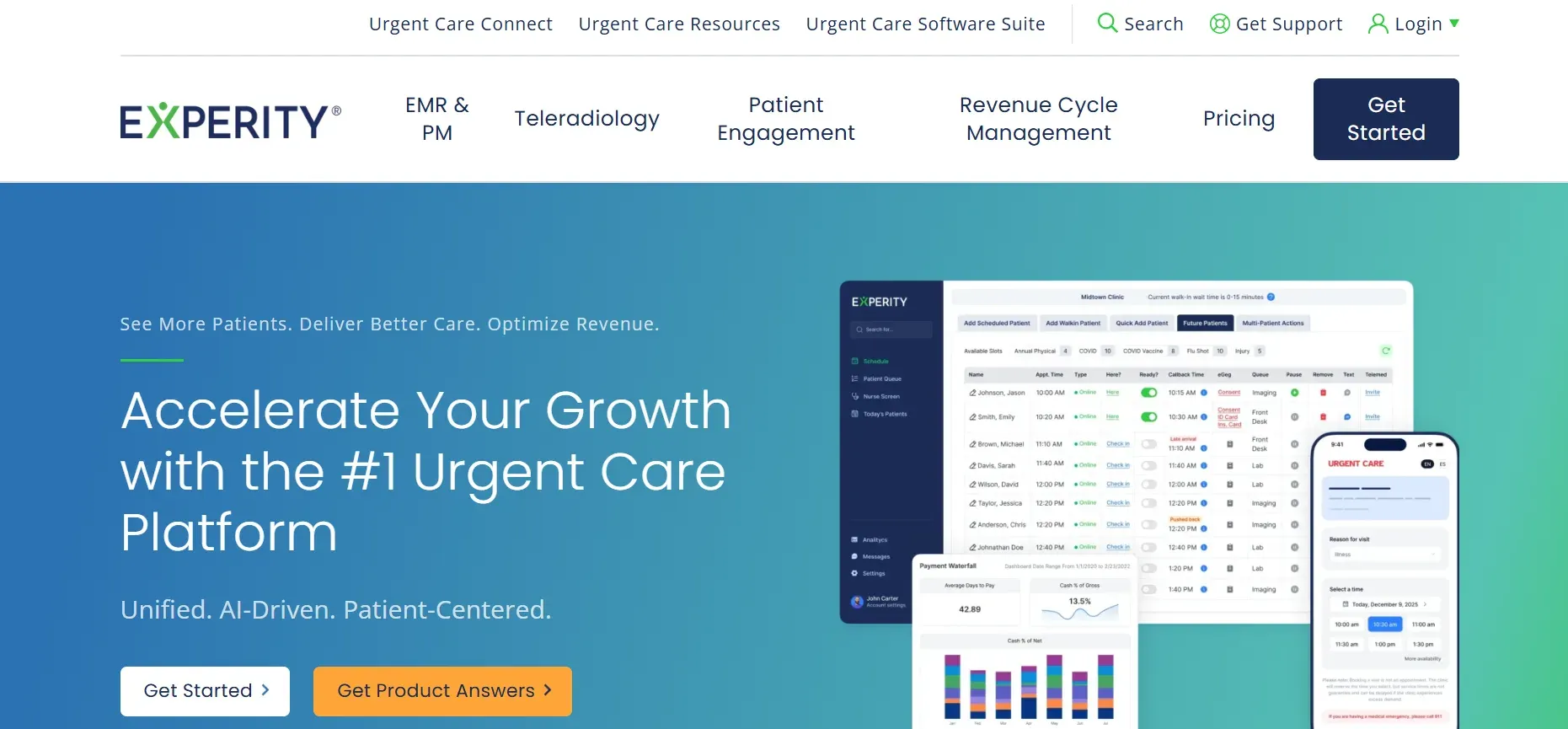
Experity is one of the few EMRs designed specifically for urgent care. Its platform is built around speed, with features like rapid chart templates, walk-in queue management, and kiosk-based self check-in that can cut patient wait times. The user interface is tailored for high-throughput clinics, allowing providers to chart common urgent care visits (e.g., lacerations, respiratory complaints, minor injuries) with minimal clicks. Experity also supports digital registration, insurance verification, and integrated radiology ordering, making it a fit for clinics with onsite x-ray or lab capabilities.
Integrations: Experity has pre-built integrations with major labs (e.g., Quest, LabCorp), digital payment processors, and pharmacy networks. It also offers APIs for custom integrations, though these may require additional setup fees. Its billing and revenue cycle management (RCM) modules are comprehensive, supporting both in-house and outsourced billing teams. For multisite operators, Experity centralizes scheduling, reporting, and analytics across locations.
Migration friction: Experity provides data migration services, but the process can be complex, especially if your legacy data is not in a standard format. Expect several weeks of parallel system operation, and budget for potential downtime or retraining. Some clinics report that custom templates or historic attachments don’t always migrate cleanly.
Use cases: Ideal for urgent care centers with high daily patient volumes, walk-in clinics, and operators who value throughput and operational efficiency. Also suited for multi-location clinics that need centralized oversight.
Pricing: Custom quotes only, often tiered by location and provider count.
- Fast urgent care workflows
- Excellent queue and kiosk tools
- Comprehensive billing and RCM integrations
- Purpose-built for urgent care, less need for workarounds
- Opaque pricing, hard to budget at scale
- Long contracts and migration fees
- Per-location or per-provider costs add up
If Experity’s rental costs ever feel like a ceiling, that’s where an owned platform from Devaims can become a real asset.
2. Kareo (Tebra) (Best for small to mid-size urgent care)
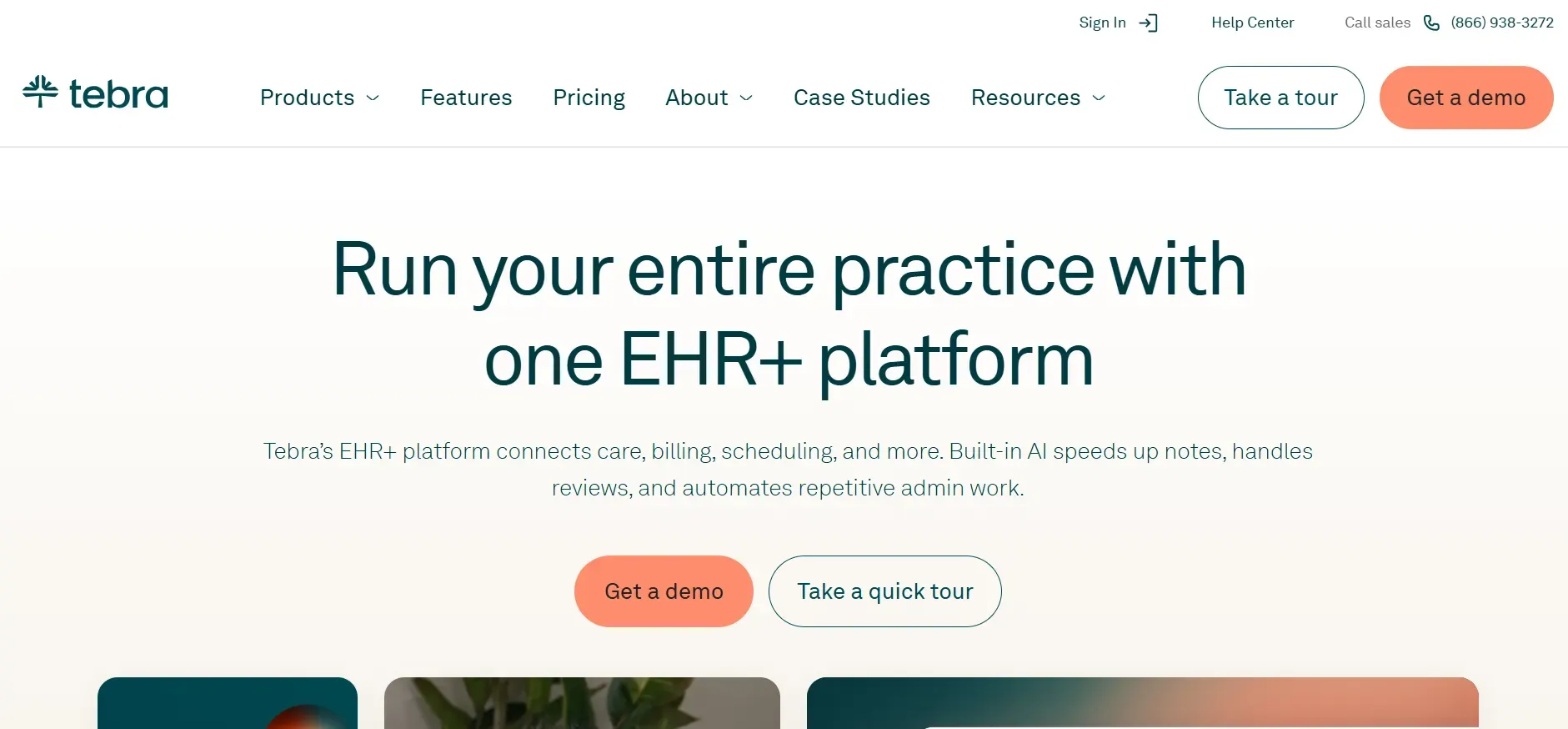
Kareo, now under the Tebra brand, is popular with independent clinics and small urgent care groups for its approachable interface and quick onboarding. Kareo provides core EMR, practice management, and billing features in a web-based platform. It’s easy to set up, and staff can usually get up to speed in a few days. The system offers basic urgent care templates and supports electronic prescribing, appointment reminders, and claims management.
Integrations: Kareo integrates with common labs, e-prescribing networks, and several billing partners. Patient engagement tools, such as texting and telemedicine, are available as add-ons. However, some integrations (especially custom ones) may require additional fees or technical assistance. Kareo’s API is limited compared to larger platforms, so deep customization can be challenging.
Migration friction: Kareo offers onboarding support and can import patient demographics and appointments, but migrating complex chart data, scanned documents, and billing history can be labor-intensive. Expect to manually recreate some forms and templates if coming from a more specialized EMR.
Use cases: Suited for new urgent care clinics, small practices, or groups transitioning from paper or low-feature systems. Kareo is ideal if you want to get up and running quickly without a major upfront investment.
Pricing: Reported $125+ per provider per month, with add-ons for billing and telehealth (see pricing).
- Quick setup and onboarding
- Integrated billing is strong
- Low entry price for new clinics
- Simple, user-friendly interface
- Limited urgent care templates
- Extra fees for e-prescribe and telehealth
- No true ownership, you rent forever
- Less suited for high-volume or multi-site urgent care
With Kareo, your urgent care grows, but so do the monthly costs. Owning your system means those units cost you nothing more.
3. Healow (Best for patient engagement)
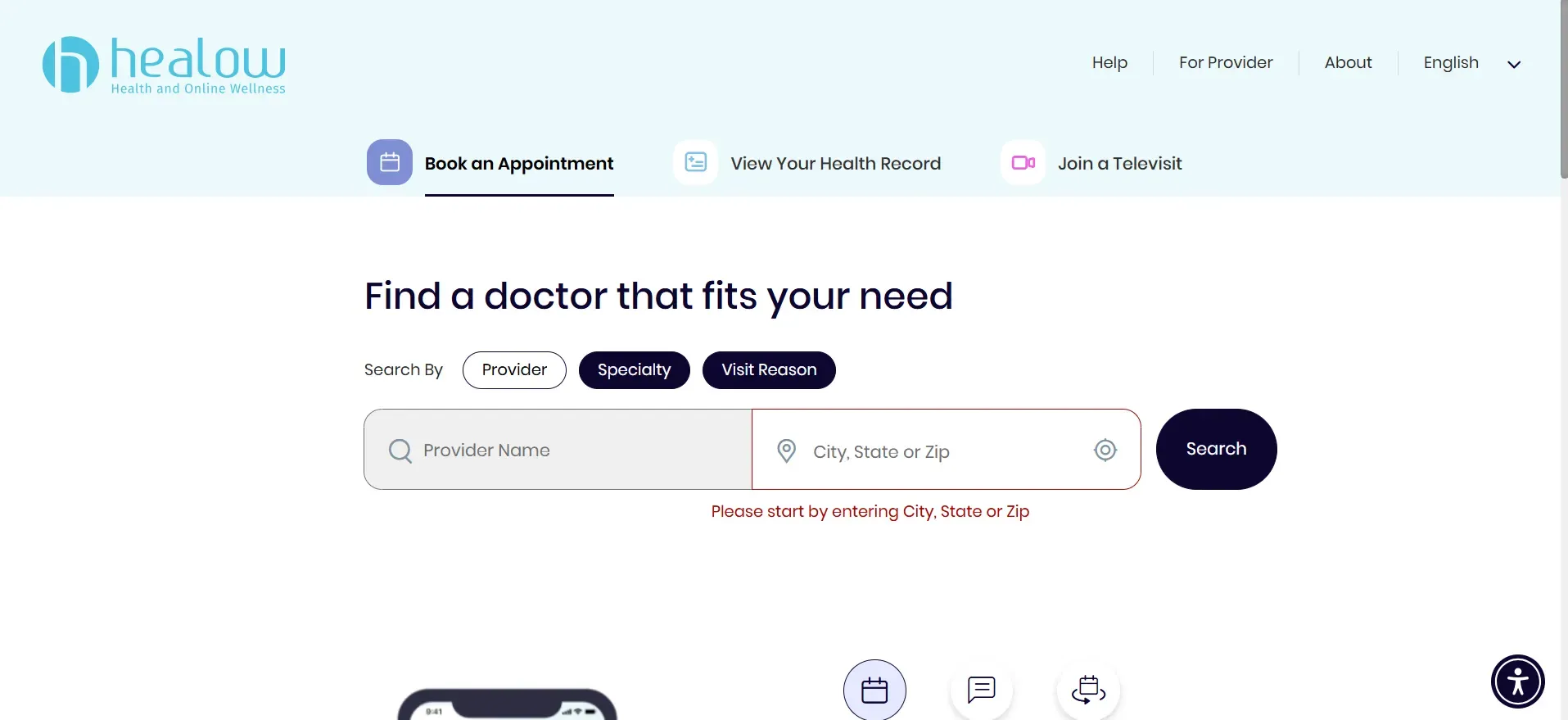
Healow is focused on patient-facing digital tools, online scheduling, secure messaging, telehealth, and mobile check-in. Healow is actually a patient engagement suite built by eClinicalWorks, and is often used as an add-on to existing EMRs. Its mobile app is highly rated for enabling patients to manage appointments, access test results, and communicate securely with providers.
Integrations: Works seamlessly with eClinicalWorks, and can be integrated with other EMRs, but the process may require middleware or custom development. Integrates with telemedicine platforms, payment processors, and can push reminders via SMS, voice, or email.
Migration friction: As Healow is often layered on top of another EMR, migration typically means connecting your existing system rather than moving data. However, if you’re switching core EMRs, you’ll need to reconfigure Healow and ensure patient accounts are linked to the new backend.
Use cases: Ideal for urgent care centers prioritizing patient convenience, online scheduling, self-registration, post-visit follow-up, and telehealth. Useful for clinics wanting to drive higher patient retention and satisfaction, or to offer digital front-door services.
Pricing: Custom quote, often tied to eClinicalWorks platform.
- Excellent patient engagement features
- Strong telehealth platform
- Mobile-first design
- Boosts patient retention and satisfaction
- Works best as an add-on, not a core EMR
- Integration can be tricky
- No ownership, SaaS only
4. iPatientCare (Best for multi-site urgent care)
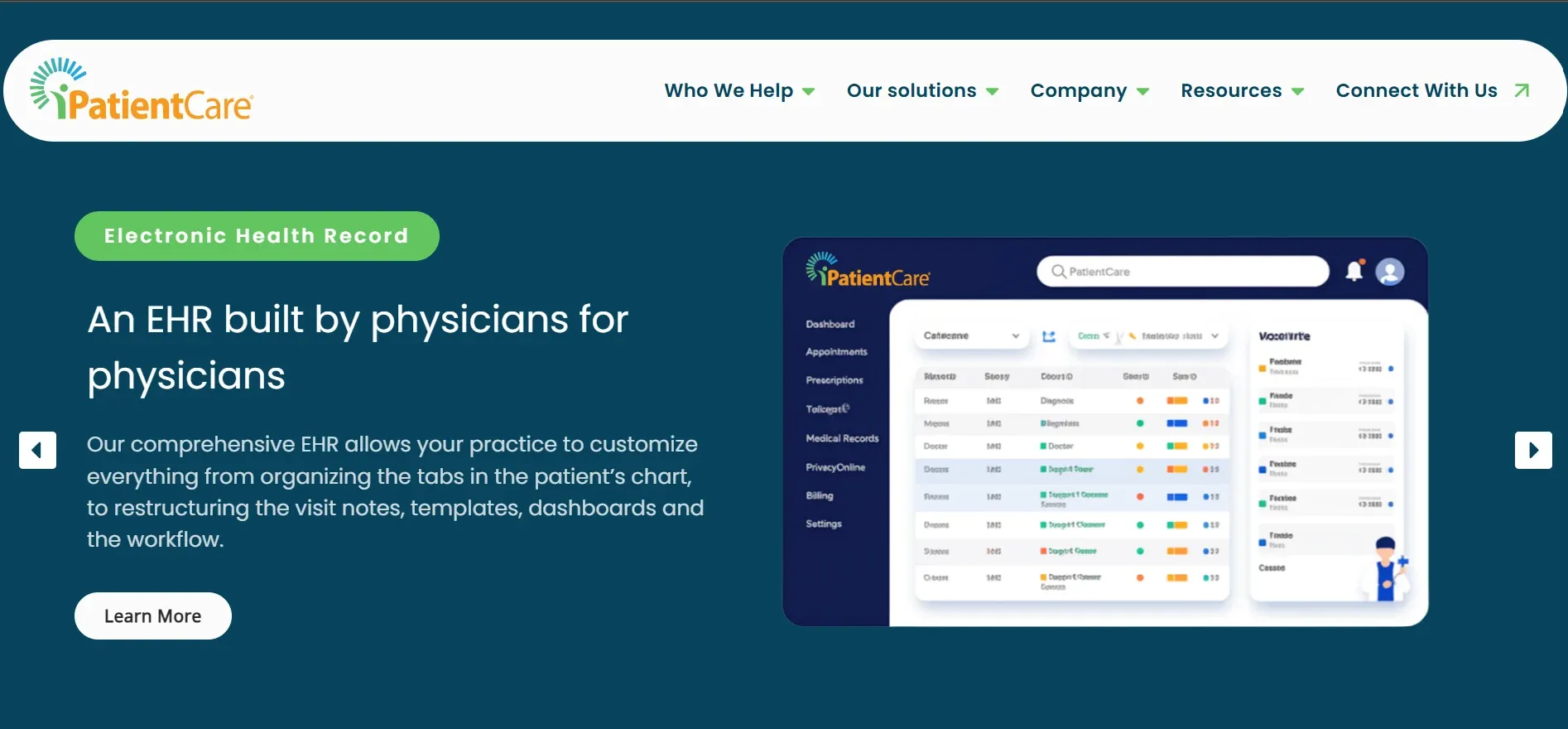
iPatientCare is a mature EMR with strong multi-location support, making it a fit for urgent care groups with multiple clinics. The platform emphasizes compliance, flexible reporting, and interoperability. It offers modules for scheduling, billing, electronic prescribing, and population health.
Integrations: iPatientCare integrates with labs, imaging centers, and clearinghouses via HL7 and X12 standards. It supports direct messaging for referrals and can connect to state immunization registries. API access is available for custom integrations, but may require technical support from the vendor.
Migration friction: The system’s older architecture means that migrating data from modern cloud-based EMRs can require mapping legacy fields and formats. Custom workflows or templates may need to be rebuilt manually.
Use cases: Suited for urgent care chains, multi-site operators, and clinics with complex compliance or reporting needs. Also a fit for organizations seeking a single platform for multiple care settings.
Pricing: Custom quote, typically by provider and site.
- Multi-site scheduling and billing
- Good compliance tracking
- Flexible reporting
- Interoperability with labs and registries
- Older interface design
- Learning curve for customization
- Support can be slow
5. Meditech (Best for enterprise urgent care)
Meditech is an enterprise-grade EHR designed for large health systems, including hospital-affiliated urgent care centers. Its platform covers clinical, administrative, and financial workflows, with deep support for compliance, security, and interoperability. Meditech is known for its comprehensive audit trails, integrated ordering, and advanced analytics. It is a go-to for organizations that need to meet stringent regulatory requirements or operate across multiple facilities.
Integrations: Meditech offers extensive HL7 and FHIR-based interoperability, connecting to hospital systems, labs, imaging, and third-party billing engines. It also supports integration with population health management and analytics tools.
Migration friction: Implementing Meditech is a major project, often requiring months of planning, data mapping, and staff training. Data migration from smaller EMRs can be challenging, especially for custom fields and attachments. Meditech typically provides migration consultants, but the process is resource-intensive and expensive.
Use cases: Enterprise urgent care centers, hospital networks, and large multi-state operators. Meditech is best for organizations that need rigorous compliance, detailed reporting, and seamless integration with inpatient systems.
Pricing: Custom quote, usually high upfront and ongoing.
- Deep enterprise feature set
- Strong compliance and auditing
- Interoperability with hospital systems
- Advanced analytics and reporting
- Complex, lengthy onboarding
- Expensive implementation
- Hard to customize without consulting
- Recurring per-user and module fees
With Meditech, your urgent care gets scale but at the price of total dependence on a vendor. With Devaims, you can keep the power and the code.
6. Nuvolo (Best for facility management add-ons)
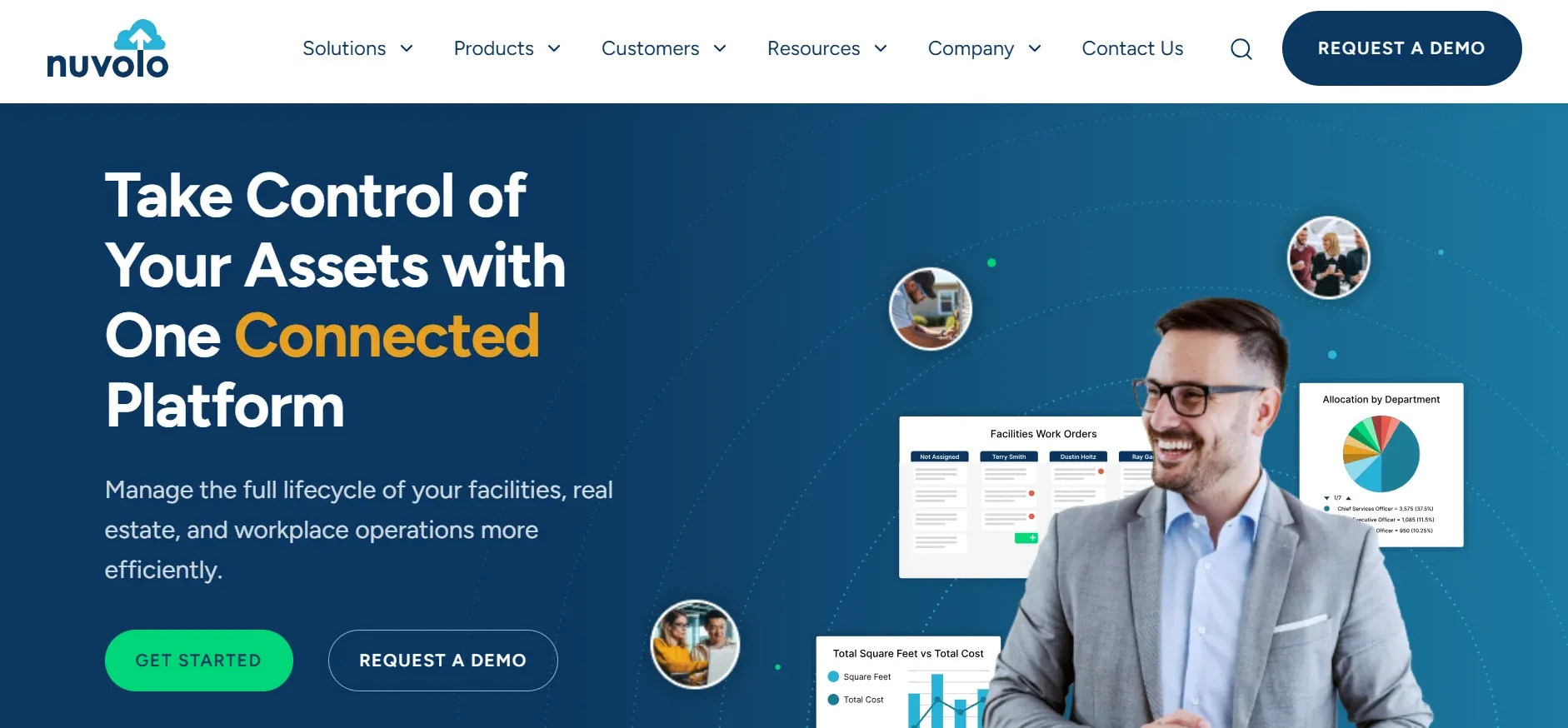
Nuvolo is not a traditional EMR, but rather a cloud platform for managing physical assets, facilities, and compliance. For urgent care centers, Nuvolo can fill gaps in maintenance tracking, equipment lifecycle management, and regulatory documentation, areas often underserved by clinical EMRs.
Integrations: Nuvolo integrates with leading EHRs, including Epic, Cerner, and Meditech, via HL7 and FHIR. It can also connect to building management systems and IoT devices for real-time asset monitoring. For urgent care, it often runs alongside your EMR, feeding compliance and maintenance data into your operational dashboards.
Migration friction: Onboarding requires mapping your facility assets and training staff on new workflows. If you’re integrating with your EMR, expect some setup work to sync compliance records and automate alerts.
Use cases: Urgent care operators responsible for multiple facilities, or those subject to strict compliance (e.g., Joint Commission, OSHA). Nuvolo is also valuable for groups wanting to centralize maintenance schedules and ensure readiness for inspections.
Pricing: Custom quote, often per facility.
- Excellent compliance modules
- Asset and maintenance tracking
- Mobile-friendly checklists
- Centralizes operational oversight
- Not a full EMR
- Requires integration with your clinical system
- Recurring subscription fees
7. PrognoCIS (Best for customizable EMR needs)
PrognoCIS is a cloud-based EMR known for its deep customization and specialty-specific templates. Urgent care clinics frustrated by rigid workflows in AdvancedMD often turn to PrognoCIS to tailor forms, charting templates, and reports to their exact needs. It supports electronic prescribing, telemedicine, and built-in billing.
Integrations: PrognoCIS integrates with a wide range of labs, imaging centers, and billing partners. Its open API allows for custom integrations, though you may need the vendor’s assistance for complex projects. Patient engagement modules include secure messaging, appointment reminders, and telehealth.
Migration friction: PrognoCIS offers data migration services, but importing custom fields and legacy documents may require manual work. Clinics should budget time for template building and staff retraining.
Use cases: Urgent care centers with unique workflows, custom intake forms, or specialty services (e.g., occupational medicine, travel clinics). Clinics that want to blend urgent and primary care can benefit from the flexible template system.
Pricing: Reported $250+ per provider per month (see pricing).
- Highly customizable templates
- Integrated telemedicine
- Good reporting suite
- Specialty-specific workflows
- Customization can require technical help
- Higher per-user cost than some rivals
- Locked into SaaS model
With PrognoCIS, custom fields are possible, but you still don’t own the platform. With Devaims, those features are yours to keep.
8. eClinicalWorks (Best for integrated urgent care)
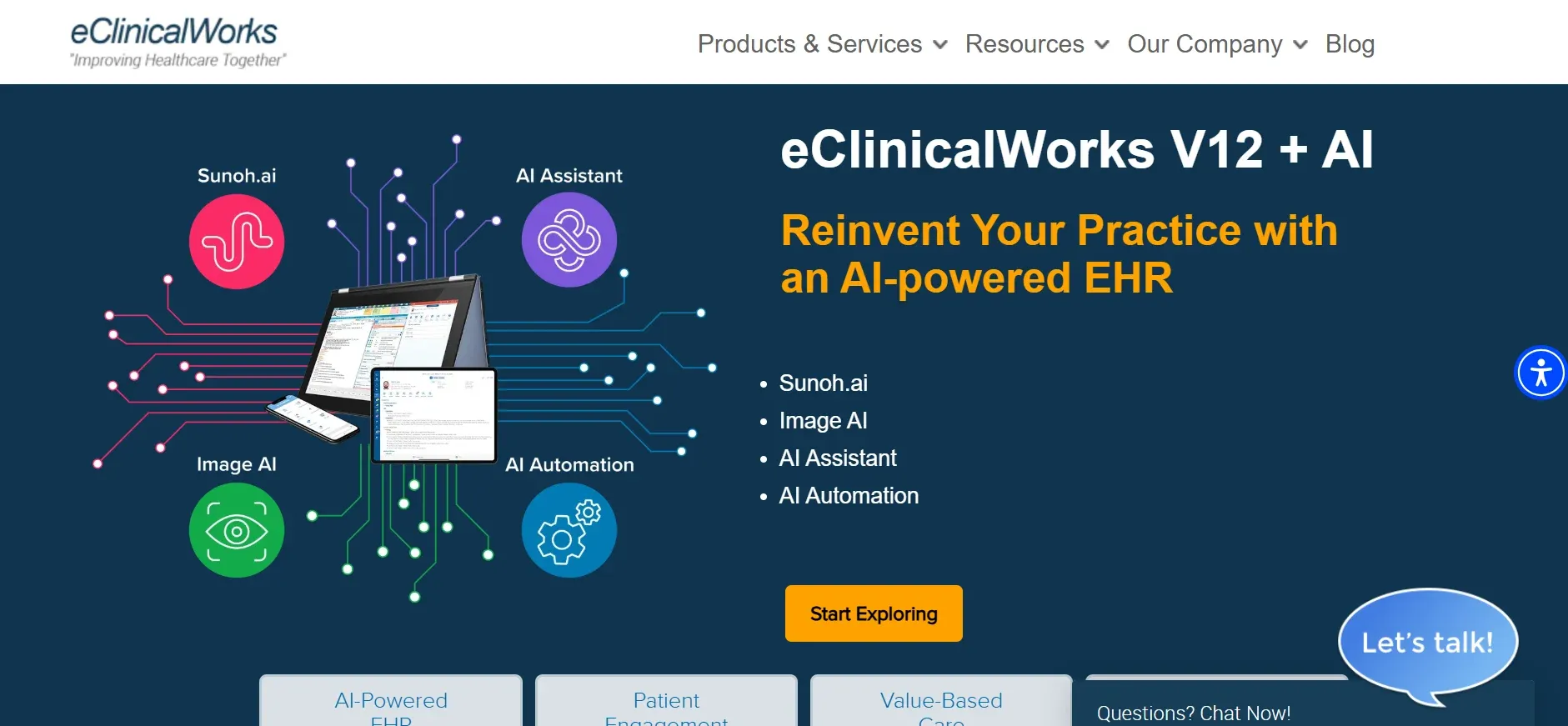
eClinicalWorks is one of the largest and most feature-rich EMRs on the market, with over 130,000 providers using its platform. For urgent care, it offers integrated scheduling, patient engagement, telehealth, and a wide range of templates. The system is cloud-based and supports centralized management for multi-location groups.
Integrations: eClinicalWorks boasts a deep integration ecosystem, including HL7/FHIR interfaces with labs, imaging, pharmacies, and billing partners. Its patient portal is highly customizable and supports online intake, secure messaging, and telehealth. The eClinicalWorks API allows for third-party connections, but advanced integrations may require developer support.
Migration friction: eClinicalWorks offers migration from most major EMRs, but clinics report that custom fields, non-standard documents, and legacy attachments can be difficult to import. Implementation can take months, with significant staff training required.
Use cases: Integrated urgent care clinics, multi-site operations, and groups that want to centralize scheduling, billing, and analytics. Also a good fit for organizations that value patient engagement and telehealth.
Pricing: Reported $449+ per provider per month, add-ons can increase costs (contact for pricing).
- Integrated telehealth and patient portal
- Strong analytics
- Large user community
- Scalable for multi-location operations
- High per-provider base cost
- Features split across paid modules
- Long onboarding periods
9. Devaims (The only urgent care EMR you own)
Devaims builds custom urgent care platforms that you own outright. No per-provider fees, no contracts, no data lock-in. Your workflows, your branding, your code, handed to you at project close. It’s the only way to stop renting and start building equity in your tech.
- Your urgent care, your way, tailored workflows and branding
- No monthly per-seat or per-location fees
- You keep the source code and control your data
- Integrates with your labs and billing partners
- Flat maintenance, no surprise hikes
- Scalable for any size clinic or network
Other AdvancedMD alternatives worth knowing
- NextGen, solid urgent care features but pricing is similar to AdvancedMD and ownership is not included.
- Epic, great for hospital-affiliated urgent care, but overkill for most independents and nearly impossible to own.
- Clockwise.MD (now Experity), great online queue tools, now rolled into Experity above.
- Practice Fusion, offers a low-cost cloud EMR, but limited urgent care workflows and no ownership.
- CureMD, cloud EMR with urgent care templates, but recurring fees and contract lock-in.
Not every EMR fits urgent care. Some, like Epic, are simply too big and locked down for most centers. Always evaluate the trade-offs between cost, flexibility, and true ownership.
How to choose the right AdvancedMD alternative
- Budget: Add up all recurring costs (per provider, per location, per feature) for five years, not just year one. Calculate the true total cost of ownership, including setup, training, and integration fees. For SaaS EMRs, costs can double or triple as you grow.
- Workflow fit: Does the EMR support urgent care check-in, walk-in, and rapid charting out of the box? Consider how much customization is needed to match your real-world operations. The less you have to hack, the better your throughput and patient experience.
- Integrations: Can you plug in your labs, billing, and patient engagement tools without paying for custom API work? Ask for a list of pre-built integrations and associated fees. If you rely on specific partners, make sure your EMR can connect without hidden costs.
- Data ownership: Can you get a full export, and do you ever actually own your platform? Ownership means not just exporting data, but having the ability to adapt, extend, or even sell your platform in the future. Most SaaS EMRs keep you dependent on their servers and contracts.
- Growth readiness: Will adding a new location, provider, or telehealth service trigger a big price hike? SaaS pricing models often penalize growth. With an owned platform, you can expand without multiplying costs.
When you add it all up, owning your urgent care platform starts to make sense for operators who want control and long-term savings.
Stop paying rent on software you could own
Here’s the truth: every urgent care EMR on this list, from AdvancedMD to Experity to Athenahealth, charges you rent, stacks fees, and keeps the code. The more you scale, the more you pay. That’s built into their business model. If you want to break out of that cycle, Devaims builds platforms that are yours to keep. No endless subscriptions. No lock-in. No surprise hikes.
Devaims is a custom software agency that builds urgent care platforms designed with your workflows, reporting, and branding in mind. At project close, you get the full source code and database, with no strings attached. You keep control, you keep your data, and you decide how and when to grow. Your platform can be hosted on your own infrastructure or in the cloud, giving you flexibility as your business evolves.
- No more per-provider or per-location fees. Add as many users as you like, no extra charges.
- Full data control. Your data stays in your hands, not locked on a vendor’s servers.
- Tailored to urgent care. Every workflow, report, and integration is built for you, not generic outpatient needs.
- Flat, predictable maintenance. You pay only for what you need, not for every new feature or user.
- Long-term value. Your platform becomes an asset you can improve, extend, or even sell as your business grows.
| Platform | Ownership | Recurring fees | Contract required? |
|---|---|---|---|
| AdvancedMD | Vendor keeps code | Yes, per-provider and add-ons | Yes, 1+ year |
| Experity | Vendor keeps code | Yes, per-location and add-ons | Yes, multi-year |
| Athenahealth | Vendor keeps code | Yes, % of collections | Yes, 1+ year |
| Devaims | You keep the code | Flat, predictable maintenance | No contract, yours to own |
Here’s how the five-year math really works:
| Year | Rented EMR (cumulative) | Devaims owned (cumulative) |
|---|---|---|
| 1 | $36,000 | $29,000 |
| 2 | $72,000 | $31,400 |
| 3 | $108,000 | $33,800 |
| 4 | $144,000 | $36,200 (now ahead) |
| 5 | $180,000 | $38,600 |
Assumes a 5-provider urgent care at $600/provider/month (typical for AdvancedMD/Experity with add-ons), versus a $29,000 Devaims build and $200/month maintenance. Adjust for your real numbers, most clinics see break-even by year 4. After that, your costs are essentially flat, while SaaS rent continues to climb each year you operate.
Who does this work for? Independent urgent care clinics with stable volumes, multi-site operators tired of per-unit fees, and any owner who wants to build long-term value instead of renting the same SaaS forever. If you want to run your practice, not your vendor’s roadmap, it may be time to own your platform. For larger groups, the savings and control multiply with each new provider or location you add.
How to switch from AdvancedMD
- Export all patient, scheduling, and billing data from AdvancedMD (use their export tools or request a full data dump). Be sure to request all attachments, scanned documents, and audit trails if available.
- Choose your new platform, another EMR or an owned build from Devaims. Assess your workflow needs, integration requirements, and budget for migration support.
- Map and import your data into the new system, including custom fields and attachments. For custom platforms, Devaims will handle this process, ensuring your data is structured for maximum usability and compliance.
- Reconnect labs, payments, and third-party integrations. Test all connections before going live to prevent workflow disruptions.
- Train your staff on new workflows and features. Plan for parallel operation or a staged rollout to minimize disruption.
- Run both systems in parallel for at least one full billing cycle to catch issues. Monitor for missing data, billing errors, or integration gaps.
- Review your AdvancedMD contract for any termination fees or final reconciliations. Notify the vendor in writing according to your agreement’s terms.
With a custom Devaims build, the migration is handled as part of the project. You receive support every step of the way, from data mapping to user training and go-live planning.
Frequently asked questions
What is the best AdvancedMD alternative for urgent care?
Experity is purpose-built for urgent care, with deep walk-in and queue management tools that speed throughput and reduce staff workload. Athenahealth stands out for its insurance and RCM capabilities. If you want ownership, Devaims is the only alternative that lets you keep your urgent care platform and code, with no recurring rent, no lock-in, and full control over your technology future.
What is the cheapest AdvancedMD alternative?
Kareo (Tebra) often has the lowest entry price for new clinics, but beware the add-on fees for essentials like telehealth, e-prescribing, or analytics. Over five years, Devaims is the only option that stops the rent cycle, ownership can be cheaper by year four, especially as your clinic grows. When factoring in setup, training, and support costs, the long-term math often favors ownership for stable or expanding practices.
Is there a free AdvancedMD alternative?
No full-featured urgent care EMR is truly free. Some vendors offer limited trials or low-cost starter tiers (like Practice Fusion), but free options lack compliance, support, and integrations required for urgent care. Devaims can scope a minimal build to fit smaller budgets, delivering essential features with a path to expand as your clinic grows.
Which AdvancedMD alternative is best for multi-location urgent care?
iPatientCare and eClinicalWorks both support multi-site scheduling and billing, but still charge per unit and can become costly as you expand. Athenahealth is another option for large groups, but its percentage-based pricing penalizes growth. A custom Devaims build can be designed from day one to run your entire network with no per-location fees, and full control over user roles, reporting, and integrations.
Can I keep my data if I leave AdvancedMD?
AdvancedMD allows data export, but full format and completeness vary. Often, you receive basic clinical data in CSV or PDF, but attachments, scanned documents, and custom fields may be missing or in proprietary formats. With most SaaS EMRs, you never get the source code. With Devaims, you get both the data and code, true ownership and the ability to adapt or migrate in the future without vendor permission.
When should an urgent care switch away from AdvancedMD?
If your monthly fees keep climbing, your workflows don’t fit, or you’re planning to add locations, it’s time to look at AdvancedMD alternatives. Other triggers include difficulty integrating with your chosen labs or billing partners, staff frustration with slow or clunky interfaces, or lack of control over your data. For centers planning to stay independent for years, owning your platform can save serious money and frustration.
Can Devaims match the urgent care features of these EMRs?
Yes. Devaims builds platforms with the same (or better) check-in, charting, scheduling, and reporting features, tailored to your urgent care’s exact needs, not a generic template. Whether you need custom intake forms, rapid triage, occupational health modules, or integration with specific labs and payers, Devaims delivers a solution that fits your practice, not the other way around.
The bottom line
The top AdvancedMD alternatives, Experity, Kareo, Athenahealth, and more, can ease some pains, but all keep you paying rent and ceding control. Here’s the test: add up what this tool will cost you over the next five years. If that number would have built you something you own, you already have your answer.
Ownership isn’t for everyone, but if you want control over your urgent care’s tech, and to stop writing checks for the same software forever, Devaims can help you build equity with every patient you see. The decision comes down to your long-term vision: do you want to rent, or do you want to own?
See more insights on the Devaims blog, or check out related guides: Kareo alternatives, Athenahealth alternatives, eClinicalWorks alternatives, and the ONC Health IT dashboard for broader industry data.