



You’re running a home care agency, and every month Rosemark pulls another fee, per client, per caregiver, per integration. Maybe it started affordable, but now you’re watching your costs climb with every new client you add. You want flexibility, but you get contracts and workarounds. Sound familiar?
There’s no shortage of Rosemark alternatives in 2026. AlayaCare, WellSky, MatrixCare, and others promise better features or support, but when you dig in, they’re all rented. The costs keep running, the data stays theirs, and the add-ons stack up. If you’re tired of paying to rent your own software, there’s one route left: build it, own it, and keep every line of code with Devaims. Here’s how the best Rosemark alternatives compare, and when making your own finally pays off.
Why home care agencies look for Rosemark alternatives
Per-client fees add up fast. As your census grows, so do your monthly costs. What started as $200/month can hit $800 or more for midsize agencies. This fee structure makes it difficult to plan for growth, and the cost per client can actually eat into your margins as you expand. Agencies with high client turnover or seasonal spikes can see unpredictable bills, making budgeting a challenge.
Locked into their stack. Integrations are often limited or come with extra charges, making it hard to connect payroll, billing, or care coordination tools. Many agencies need to connect with QuickBooks, ADP, or state Medicaid systems, but find Rosemark’s API access gated behind premium plans or setup fees. This forces manual workarounds and can slow down operations, especially when you need to automate time-sensitive tasks like payroll or billing.
Long contracts, little leverage. Multi-year agreements and tricky cancellation policies make it tough to leave if needs change. Many agencies report auto-renewals or early termination fees that can run into the thousands. This means you’re stuck even if your agency’s requirements shift, or if a better option emerges. The lack of leverage puts your business at the mercy of the vendor’s roadmap and support priorities.
Features held hostage to higher tiers. Essential reports, EVV compliance, and mobile access often require pricier plans or add-ons. A tool may advertise “compliance” or “advanced analytics,” but once you’re onboard, you may find your current plan lacks those features, pushing you into a higher monthly rate. Over time, these incremental upgrades can double your original spend.
Data ownership is murky. Exporting full data sets or switching platforms can mean friction, fees, or flat refusals. Many agencies search for Rosemark alternatives to regain control. Some vendors provide only partial exports, charge for data migration, or keep proprietary formats. This makes switching costly and time-consuming, and can even put your compliance at risk if state audits require access to historical data.
Quick comparison of the best Rosemark alternatives
| Tool | Best for | Starting price | You own it? |
|---|---|---|---|
| AlayaCare | Modern agencies, all-in-one | Reported $400+/mo | No |
| WellSky (ClearCare) | Large agencies | Custom, usually $300 to $800+/mo | No |
| Brightree | Clinical heavyweights | Custom quote | No |
| MatrixCare | Enterprise, post-acute | Reported $500+/mo | No |
| PointClickCare | Multi-site operations | Custom quote | No |
| Caremerge | Engagement & communications | Reported $7+/user/mo | No |
| CareVoyant | Integrated billing | Custom quote | No |
| Sandata | EVV compliance | Varies by state | No |
| HHAeXchange | Medicaid billing | Custom quote | No |
| Devaims | Ownership, custom fit | One-time build, you own it | Yes |
These are typical starting points. Confirm current pricing before you decide, as most providers adjust for agency size and requirements. Also consider the migration costs and the risk of vendor lock-in, which are rarely advertised up front.
The 10 best Rosemark alternatives
1. AlayaCare (Best for modern agencies wanting all-in-one)
AlayaCare is one of the fastest-growing platforms in the home care sector, appealing to agencies that want a modern, cloud-based system with a full stack of features. It covers scheduling, billing, care documentation, family portals, and analytics in a single platform. Agencies appreciate the intuitive interface and comprehensive mobile app, which supports in-field documentation, GPS clock-ins, and real-time updates for both caregivers and coordinators.
Pricing: Reported $400+/month, per-client pricing can escalate for larger agencies.
- Modern interface and mobile app
- Comprehensive scheduling and documentation
- Strong analytics and reporting
- Per-client pricing increases costs as you grow
- Advanced modules require higher tiers
- Some integrations need custom development
On software you own, adding new clients doesn’t increase your costs, your system grows with you.
2. WellSky (ClearCare) (Best for large, multi-location agencies)
WellSky, which acquired ClearCare, is a dominant player for large and multi-site home care organizations. Its platform is designed for scale, handling high client volumes, multiple branches, and complex payer mixes. WellSky’s strengths are in compliance, payroll, billing, and eMAR (electronic medication administration records), which are essential for agencies operating across state lines or with skilled nursing components.
Pricing: Custom, usually $300 to $800+/month depending on modules and agency size.
- Enterprise-grade compliance tools
- Deep integrations with payers and payroll
- Robust reporting and audit trails
- Steep learning curve for new users
- Pricing escalates with modules and branches
- Some customizations require paid services
When you own your platform, you decide which features to keep or expand, no module upsells.
3. Brightree (Best for clinical-heavy agencies)
Brightree is a leading solution for home health and hospice agencies whose core operations revolve around clinical documentation and compliance. It is designed to meet the requirements of Medicare-certified agencies, offering advanced tools for OASIS, care planning, and clinical workflows.
Pricing: Custom quote, typically higher for clinical agencies.
- Advanced clinical documentation
- Comprehensive compliance features
- Mobile point-of-care tools
- Complex for non-clinical agencies
- Per-visit or per-user pricing can inflate costs
- Implementation and support costs are significant
4. MatrixCare (Best for post-acute and enterprise)
MatrixCare is an enterprise-grade platform serving post-acute care providers, including home health, hospice, skilled nursing, and senior living. Its breadth of features is unmatched for agencies managing multiple service lines or operating across state or regional boundaries. MatrixCare’s reporting and compliance tools are a major draw for agencies subject to complex regulatory environments.
Pricing: Reported $500+/month, modular pricing based on features and locations.
- Comprehensive EHR and care planning
- Multi-site scheduling and coordination
- Powerful analytics and reporting
- Complex implementation and onboarding
- High cost for smaller agencies
- Advanced features often require extra fees
5. PointClickCare (Best for multi-site senior care)
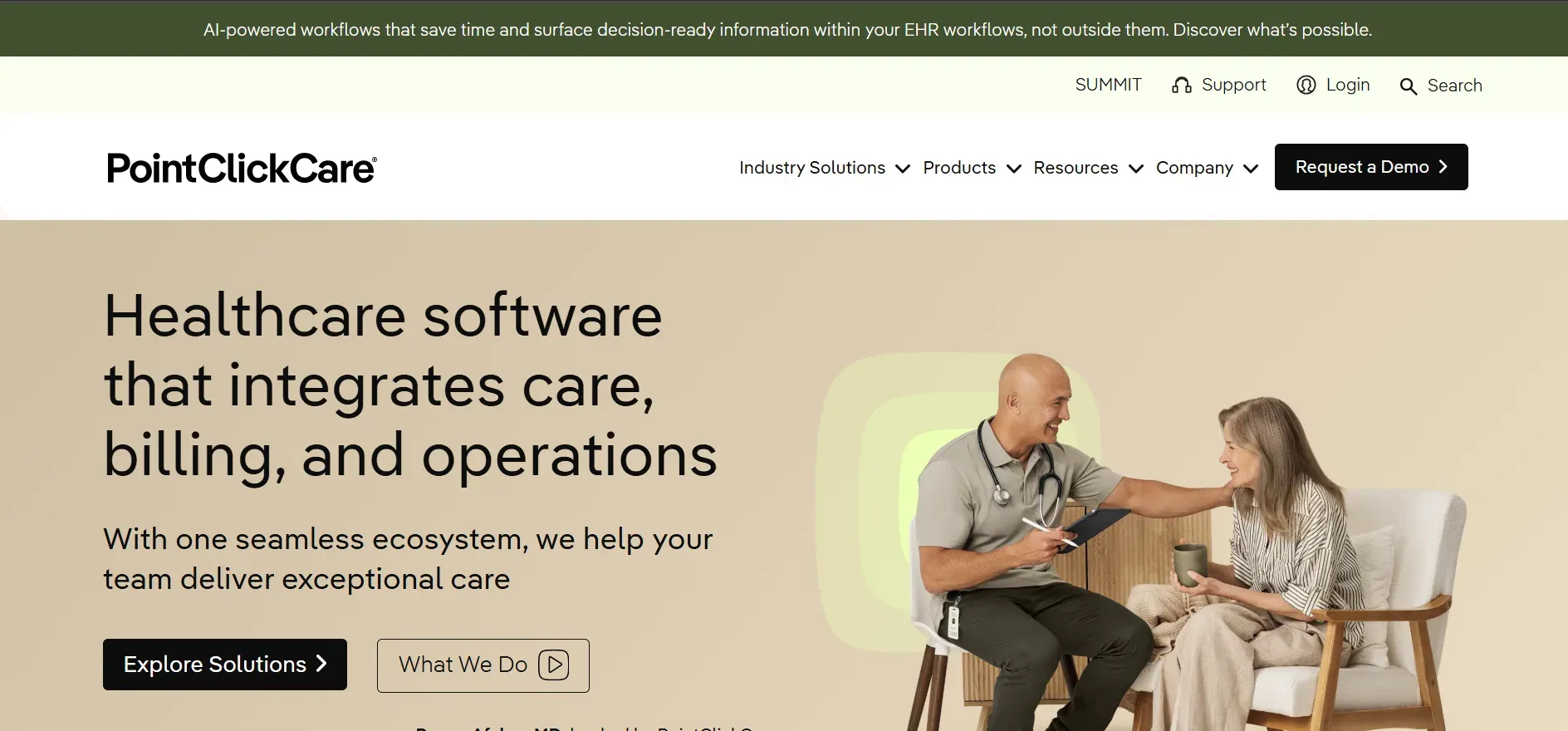
PointClickCare is a leading EHR and care coordination solution for senior living, skilled nursing, and multi-site organizations. Its strengths are in resident care management, medication tracking, and interoperability across care settings. PointClickCare is best suited for organizations managing multiple facilities or service lines under a single umbrella.
Pricing: Custom quote, varies by organization size and modules.
- Strong resident management and EHR
- Interoperability with partner systems
- Family engagement tools
- Resource-intensive implementation
- Advanced analytics require extra modules
- Can be overwhelming for small agencies
6. Caremerge (Best for client and family engagement)
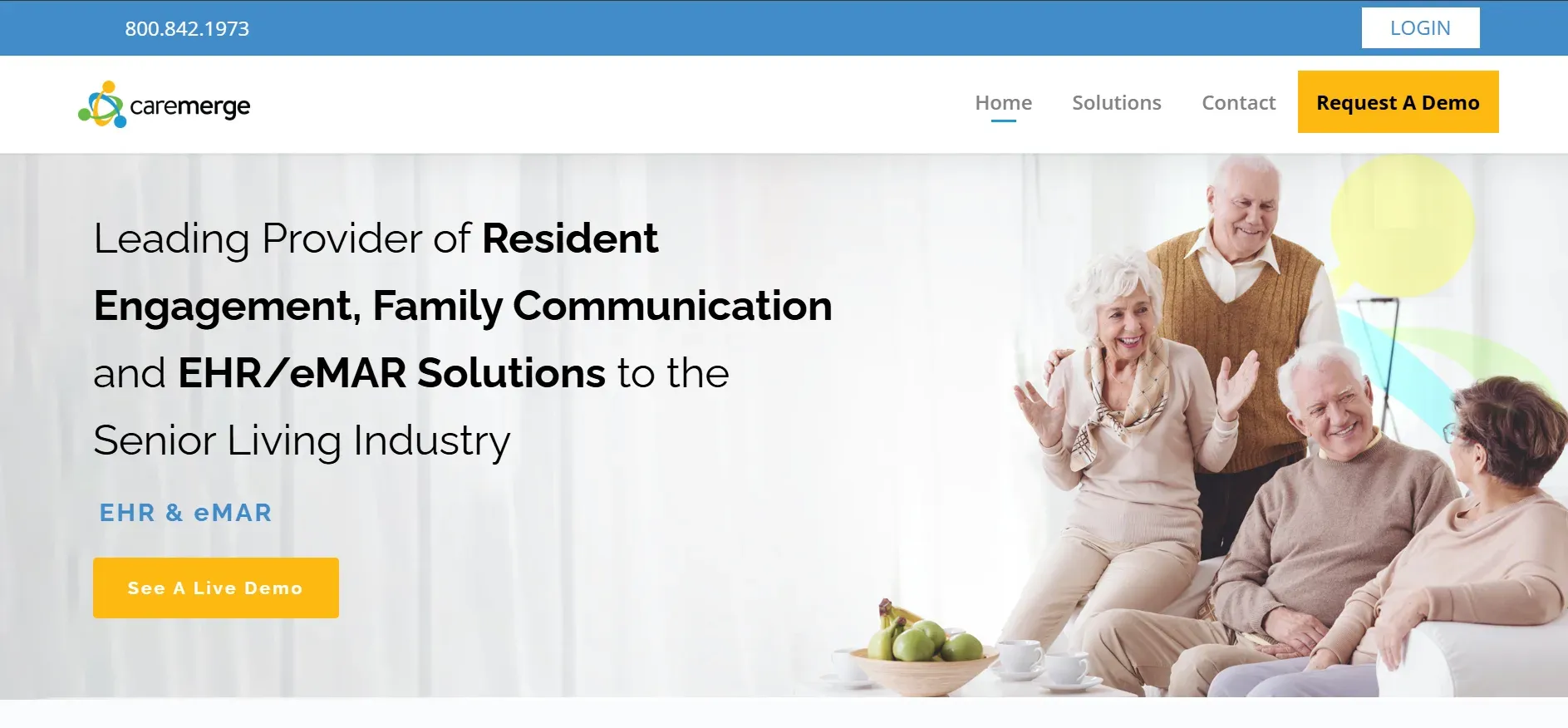
Caremerge is a specialized platform focusing on engagement, communication, and activity management for home care and senior living. Rather than a full EMR, it is often layered alongside an existing system to boost family and client satisfaction.
Pricing: Reported $7+/user/month, per-user pricing can add up.
- Excellent family engagement features
- Quick implementation
- Mobile app for families and staff
- Not a full EMR or scheduling system
- Per-user pricing increases with growth
- Limited integration depth with some EMRs
That’s the kind of engagement you’d just have if the platform were built for you.
7. CareVoyant (Best for integrated medical billing)
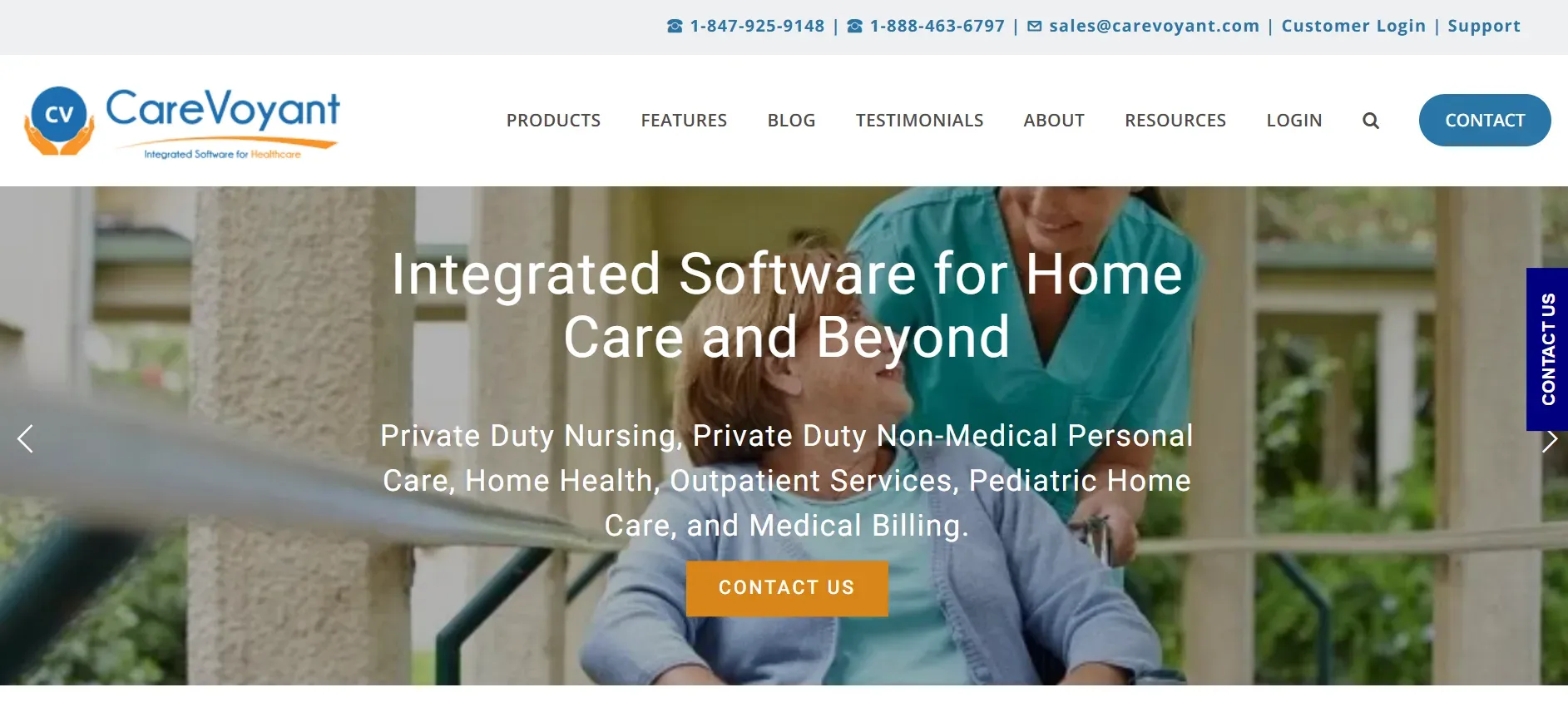
CareVoyant is a comprehensive platform designed for agencies that handle complex billing across Medicaid, Medicare, and private pay. Its unified approach to billing and care documentation makes it a strong fit for organizations managing diverse payer sources and workflows.
Pricing: Custom quote, based on agency size and modules.
- Unified billing for all payer types
- Customizable dashboards and alerts
- Integrated clinical and non-clinical documentation
- Onboarding can be complex
- Interface less modern than some competitors
- Premium features are add-ons
8. Sandata (Best for Medicaid EVV compliance)
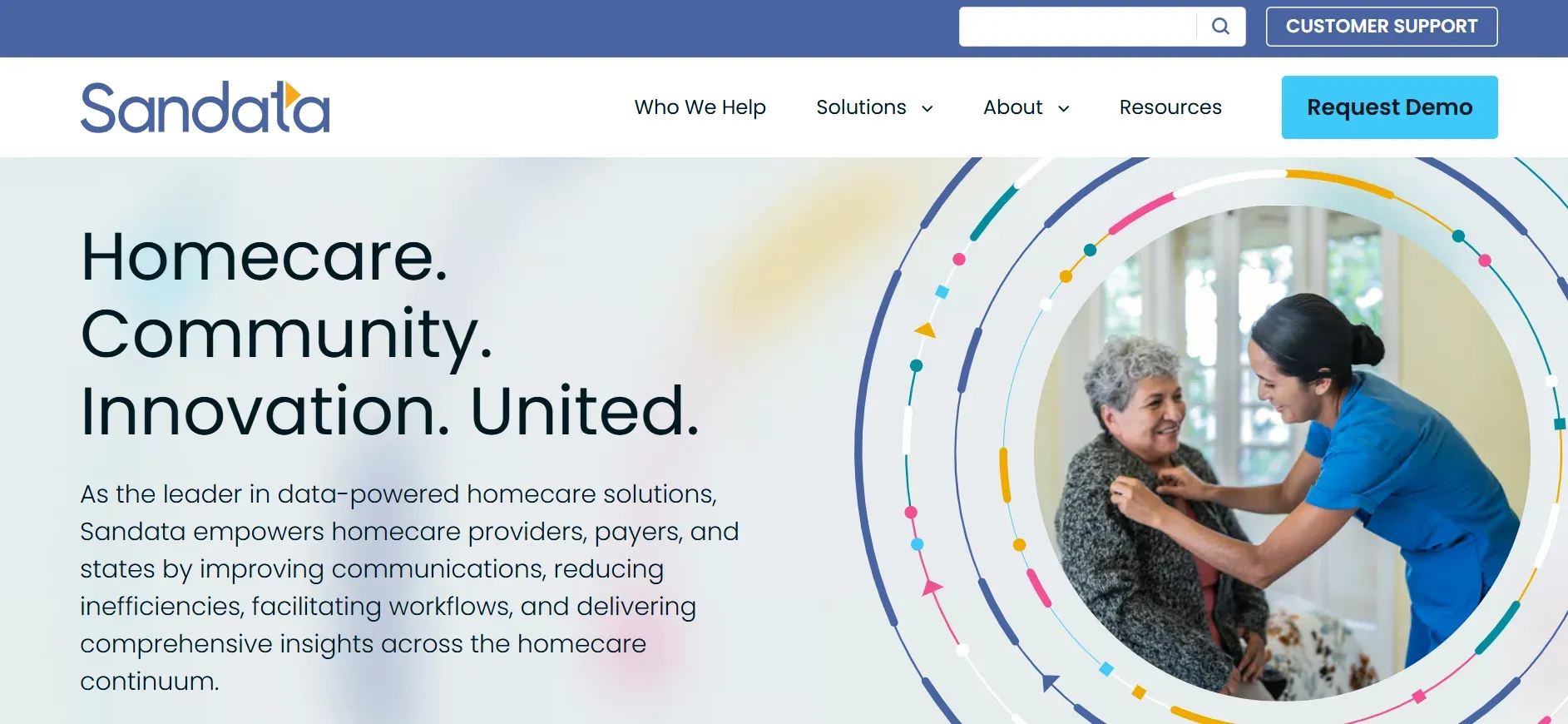
Sandata is a leading provider of Electronic Visit Verification (EVV) solutions, often selected by state Medicaid programs as the mandated EVV vendor. For agencies working primarily with Medicaid, Sandata ensures compliance with federal and state EVV mandates and offers reliable visit tracking and audit trails.
Pricing: Varies by state contract, typically included in Medicaid reimbursement or as a separate fee.
- State-approved EVV compliance
- Automated timesheets and payroll exports
- Trusted for Medicaid billing
- Limited features outside EVV and Medicaid
- Support can be slow via state contracts
- Manual workarounds for private pay clients
9. HHAeXchange (Best for Medicaid billing and managed care)
HHAeXchange is a leader in Medicaid billing, claims management, and managed care coordination. The platform automates the process of authorizations, claims, and remittances, reducing manual entry and errors for agencies working with multiple payers.
Pricing: Custom quote, based on Medicaid volume and features.
- Deep Medicaid and MCO integrations
- Automated claims and authorizations
- Mobile app for caregivers
- Focused on Medicaid and MCO workflows
- Limited features for private pay or skilled nursing
- Training required for claims workflows
10. Devaims (Best for agencies ready to own their software)
Devaims builds custom web, mobile, and back-office platforms for home care agencies, then hands you the source code. You own every field, workflow, and integration. No per-user fees, no contracts, and no risk of losing your data or features. Devaims works closely with your team to design, develop, and deploy a platform tailored to your agency’s exact needs, whether that’s EVV compliance, custom billing, unique scheduling models, or proprietary family engagement tools.
Pricing: One-time build (typically $27,000+), then flat maintenance ($150/month or as quoted).
- Full ownership and control, no per-user fees
- Custom workflows, integrations, and reporting
- Future-proof: add features or integrations anytime
With Devaims, you keep your code, your data, and your leverage. No lock-in, no surprise fees, and a system that grows with your agency.
Other Rosemark alternatives worth knowing
- CareAcademy: Focused on caregiver training and compliance, not a full EMR or scheduling system, but works alongside other tools. Agencies use it to meet state training mandates and track continuing education. Integrates with several scheduling platforms.
- eRSP: Popular with non-medical home care, but similar SaaS fee structure and lock-in as Rosemark. Offers scheduling, billing, and HR modules. Notable for its onboarding tools but still charges per-client.
- AxisCare: Used by many private-duty agencies, but pricing is per-client and features are tiered. Offers strong mobile apps and reporting, but advanced modules cost extra.
- Homecare Homebase: Enterprise-class, but can be overwhelming for smaller agencies. Strong clinical documentation and billing, but high implementation and support costs.
How to choose the right Rosemark alternative
- Budget: SaaS is fast to start, but costs balloon with every new client or branch. Custom is upfront, then flat. Run a five-year projection before committing.
- Feature fit: Do you need clinical workflows, Medicaid billing, or just scheduling and payroll? Match your platform to your current and planned service lines.
- Ownership: If data access, control, or customization matter, renting always has limits. Consider your risk tolerance for vendor lock-in and price hikes.
- Growth plans: Will you double headcount, add new lines, or expand into new states? SaaS costs often scale linearly; owned platforms scale at marginal cost.
- Support and contract terms: Watch for auto-renewals, migration fees, and data lock-in. Read the fine print on export rights and contract renewals.
If you’re eyeing long-term savings and full control, it’s time to talk about owning your platform.
Stop paying rent on software you could own
Here’s the real kicker: every Rosemark alternative above is rented. The per-client fees, surprise rate hikes, and locked features don’t go away when you switch, they just change logos. That’s why more agencies are choosing Devaims for a platform they own outright, built to fit their exact workflows, and never held hostage by a vendor again.
Devaims is a custom software development agency that builds web, mobile, and business platforms specifically for home care. Unlike SaaS, you keep the source code, the data, and the freedom to change or expand as needed, no contracts, no per-user fees, and no risk of losing features to a tier change.
Here’s how owning with Devaims solves the pains of Rosemark and every other SaaS in the field:
- No per-client fees: Grow your agency without monthly cost spikes. Your technology becomes a fixed asset, not a variable expense.
- No surprise price hikes: One-time build, then flat maintenance. You control the budget and can forecast costs with certainty.
- Full data ownership: Move, export, or integrate however you want, no friction, ever. You meet audit and compliance requirements on your own terms.
- Custom workflows: From EVV to payroll to family engagement, every feature is built for you, not for the masses. You get only what you need, nothing you don’t.
- No contract lock-in: You own the system, so no one can pull it out from under you. Your business is insulated from sudden vendor changes or buyouts.
| Tool | Pricing model | Ownership | Support |
|---|---|---|---|
| Rosemark | Per-client/month + add-ons | Vendor, rented | Standard, ticket-based |
| AlayaCare | Per-client/month + modules | Vendor, rented | Standard + onboarding |
| MatrixCare | High monthly, modular | Vendor, rented | Enterprise support |
| Devaims | One-time build + flat maintenance | You own it | Direct, relationship-based |
| Year | Rented (SaaS) cumulative | Owned (Devaims) cumulative |
|---|---|---|
| Year 1 | $9,600 | $28,800 |
| Year 2 | $19,200 | $30,600 |
| Year 3 | $28,800 | $32,400 (now ahead) |
| Year 4 | $38,400 | $34,200 |
| Year 5 | $48,000 | $36,000 |
Assumes $800/month rented (100 clients x $8) and a $27,000 build with $150/month maintenance. Break-even: just after year 3. After five years, owned is $12,000 less, and you keep your system.
Agencies with even modest growth quickly reach the point where owning outpaces renting. If you want full control, predictable costs, and a platform that works for you, not the other way around, let’s talk.
How to switch from Rosemark
- Export your client, caregiver, schedule, and billing data from Rosemark (CSV or via API if available). Confirm with Rosemark support if you’ll receive all historical data and in what format.
- Choose your new platform (SaaS or custom with Devaims). Consider the features, pricing, and migration support offered.
- Import or map your data into the new system, resolving any field mismatches. Many platforms provide migration tools or paid onboarding services. For custom builds, Devaims handles mapping and normalization for you.
- Reconnect payroll, EVV, billing, and integrations. Test each connection to ensure data flows correctly and meets compliance standards.
- Train your staff on the new workflows and mobile apps. Provide reference guides and schedule Q&A sessions to smooth the learning curve.
- Run both systems in parallel for at least two weeks to catch any issues and ensure compliance. Validate that all records, schedules, and billing outputs match between systems.
- Review your Rosemark contract and close out any obligations. Watch for auto-renewal clauses or data retention policies. Request written confirmation of contract closure and data deletion (if desired).
With a custom Devaims build, the migration is handled as part of the project, including data normalization, field mapping, and staff training.
Frequently asked questions
What is the best Rosemark alternative for midsize home care agencies?
AlayaCare and WellSky are popular Rosemark alternatives for midsize agencies, thanks to their comprehensive feature sets, advanced compliance options, and strong integrations. They are both scalable and supported by solid onboarding teams, making them suitable for agencies with 50 to 300 clients. However, be aware that both platforms use per-client or per-module pricing that can escalate as you grow. If long-term ownership and total customization are your goals, Devaims is the clear endpoint, offering a system that grows and adapts with your agency, with no per-client fees.
Which Rosemark alternative is cheapest for small teams?
Caremerge and eRSP are often more affordable for small agencies, with lower starting costs and simpler interfaces. However, their per-user or per-client pricing can add up fast as you grow, and advanced features may cost extra. For agencies that expect to grow or want to avoid future price hikes, owning your own software with Devaims offers predictable costs and eliminates surprise fees. Always run a multi-year cost projection to see which model fits your agency’s growth plans.
Is there a free Rosemark alternative?
There are no truly free Rosemark alternatives that offer full compliance, scheduling, and documentation. Some platforms (like AxisCare or Caremerge) offer free pilots or limited trials, but ongoing use always carries fees. Open-source options exist, but require significant IT investment and lack compliance guarantees. Devaims offers a fixed, upfront model with no ongoing per-user costs, giving you full control over your budget and system.
Which Rosemark alternative is best for Medicaid billing?
HHAeXchange and Sandata are strong for Medicaid workflows and EVV, with deep integrations into state systems and automated claims processing. Both require contracts and per-transaction or per-client fees, which can add up over time. If your agency has complex Medicaid billing needs but wants to avoid ongoing rent, a custom build with Devaims can match these workflows, automate claims, and adapt to future Medicaid or MCO requirements as they arise.
How hard is it to switch from Rosemark to another platform?
Switching from Rosemark involves exporting all relevant data (clients, caregivers, schedules, billing), mapping fields to the new platform, reconnecting integrations, and retraining staff. The process can be smooth with careful planning and vendor support, but agencies report that historical data exports can be incomplete or require additional fees. Running both systems in parallel for a few weeks is recommended to ensure accuracy. If you choose Devaims, the migration is managed for you, including data validation and staff training.
Can I keep my historical data when switching from Rosemark?
Exporting full historical data from Rosemark can be tricky and may require support or additional fees. Some agencies receive only partial exports or data in proprietary formats. It’s critical to clarify export rights before canceling your contract. With Devaims, you own all your data and can migrate seamlessly, ensuring compliance with audits and regulatory requirements.
When should I consider building my own platform instead of switching SaaS?
If your agency is growing, needs unique workflows, or pays more than $800/month in SaaS fees, the five-year math often favors owning. Agencies that want guaranteed data ownership, total flexibility, and the ability to adapt to future requirements without vendor approval should consider a custom build. Devaims is the only Rosemark alternative that puts you in full control.
The bottom line
Every Rosemark alternative in home care is rented, and the monthly fees stack up fast as you grow. If you want to break the cycle, add up your five-year total and ask: could you have built something you own for less?
The decision test: if your five-year SaaS spend would build your dream system, it’s time to stop renting and start owning. Devaims lets you keep your code, your data, and your leverage, forever.
Explore more on the Devaims blog. You might also like AlayaCare alternatives, WellSky alternatives, and MatrixCare alternatives. For more on Medicaid billing and EVV, see CMS EVV guidance and Medicaid EVV resources.