


Ever get a bill from your home care software and wonder if you're paying for features you barely use, or paying more each year for the same old system? CareVoyant is everywhere in home care, but so are the headaches: per-visit and per-user fees, contracts, data that stays locked up unless you keep paying. If you’re looking for CareVoyant alternatives, you’ve probably lived the frustration of a platform that works, but only if you keep renting it forever.
The good news: there are real alternatives, each with their own quirks and gotchas. AlayaCare and WellSky (ClearCare) are popular with mid-size agencies. MatrixCare and PointClickCare win points for integration, but charge for every extra. And if you want to stop renting and actually own your platform, a custom build from Devaims is the only route to full control. Let’s break down where each option wins, where it annoys, and how to know when it’s time to stop paying rent on software you could own.
Why home care agencies look for CareVoyant alternatives
Recurring per-user and per-visit fees: Many agencies are shocked by how quickly costs climb as they add clients or staff. A 'starter' price rarely stays low if you grow. Even a small uptick in census or hiring can push your monthly bill into territory that strains margins. Agencies with high turnover or seasonal spikes feel this keenly, as each new staff account or client triggers a new fee line.
Contract lock-in and limited flexibility: Year-long contracts and early termination fees are the norm, not the exception. Want to leave? Prepare for red tape and data export headaches. Many providers require 12, 24, or even 36-month commitments, with strict notice periods for cancellation. If your agency pivots, merges, or needs to downsize, you may find yourself paying for unused licenses or facing penalties.
Features gated by higher tiers: That "compliance report" or mobile feature you need is often locked behind the next plan up, or an add-on fee. The nickel-and-diming gets old. Especially frustrating is when a feature you assumed was included turns out to be an expensive add-on, common with advanced reporting, integrations (like QuickBooks or payroll), or mobile EVV tools.
Data belongs to the platform, not you: If you ever leave, extracting your data and history can be a project in itself, and some platforms charge extra for it. Data export formats may be proprietary, incomplete, or require paid “data liberation” services. For agencies that need full audit trails (for compliance or litigation), this can become a significant risk.
Surprise price hikes: Yearly rate increases or suddenly "mandatory" add-ons turn a predictable expense into a moving target. These are common complaints among those searching for CareVoyant alternatives. Annual “cost of living” increases of 5 to 10% are increasingly standard, and some vendors have begun charging for previously free features or APIs.
These pain points drive many agencies to re-evaluate not just CareVoyant, but the entire rental software model.
Quick comparison of the best CareVoyant alternatives
| Tool | Best for | Starting price | You own it? |
|---|---|---|---|
| AlayaCare | Cloud-first agencies | Reported $350/mo | No |
| WellSky (ClearCare) | Large agencies | Reported $400/mo | No |
| Brightree | Home health & hospice | Quotes only | No |
| MatrixCare | Enterprise-level | Quotes only | No |
| PointClickCare | Senior care networks | Quotes only | No |
| Caremerge | Engagement & EHR | Reports $8/user/mo | No |
| Sandata | EVV compliance | Quotes only | No |
| HHAeXchange | Medicaid-focused | Quotes only | No |
| Rosemark | Small to midsize | Reported $125/mo | No |
| Devaims | Ownership, total control | One-time build, you own it | Yes |
Prices vary by agency size, features, and region. Confirm current pricing before you decide. Ask about hidden costs: onboarding, integrations, and data exports can all add up.
The 9 best CareVoyant alternatives
1. AlayaCare (Cloud-first, multi-branch agencies)
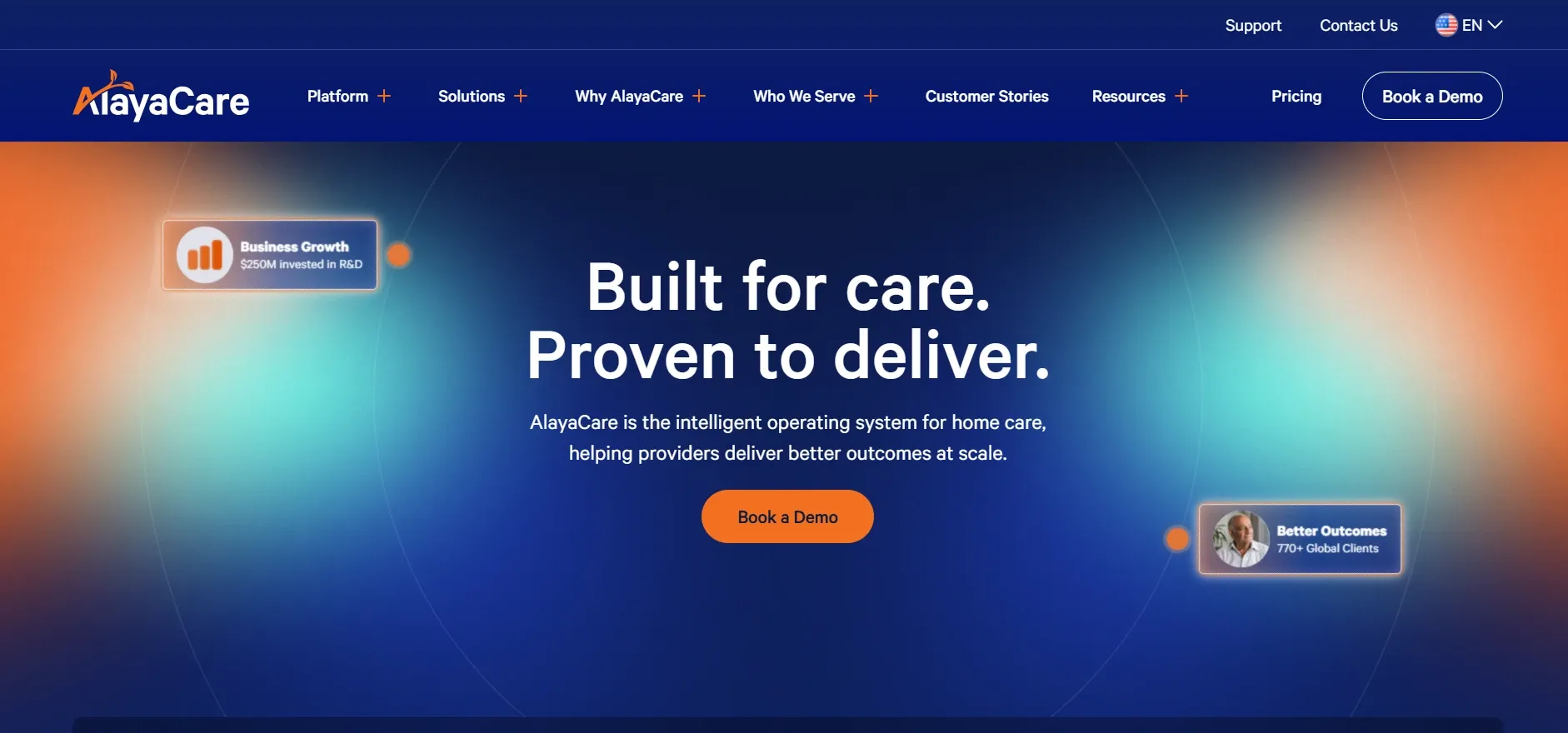
AlayaCare is a cloud-native platform designed for agencies that want mobile-first tools, real-time data, and flexibility to scale across multiple offices or states. Its interface is more modern and intuitive than CareVoyant’s, making it a favorite among agencies upgrading from legacy systems. AlayaCare stands out for its mobile caregiver app, live visit tracking, and strong clinical documentation. Agencies can manage personal care, skilled nursing, and therapy visits in one place, and the platform supports both private-pay and Medicaid workflows.
AlayaCare’s open API and integration marketplace allow agencies to connect with payroll, HR, and billing tools. Integrations with QuickBooks, ADP, and even custom EMRs are possible, but often require additional configuration or fees. The platform’s analytics dashboard is strong, offering customizable KPIs for operations, compliance, and care outcomes.
Pricing: Reported starting at $350/month, with per-user and per-client fees that increase with agency size.
- Modern, mobile-first interface with real-time visit tracking
- Open API and integration marketplace for payroll, HR, and billing
- Strong analytics and customizable dashboards
- Per-user and per-client fees can escalate as you grow
- Advanced modules and integrations often require higher-tier plans
- Migration from legacy systems can be complex and time-consuming
If you want to avoid per-user fees and contract lock-in, consider Devaims for a platform you own outright.
2. WellSky (ClearCare) (Large and multi-location agencies)
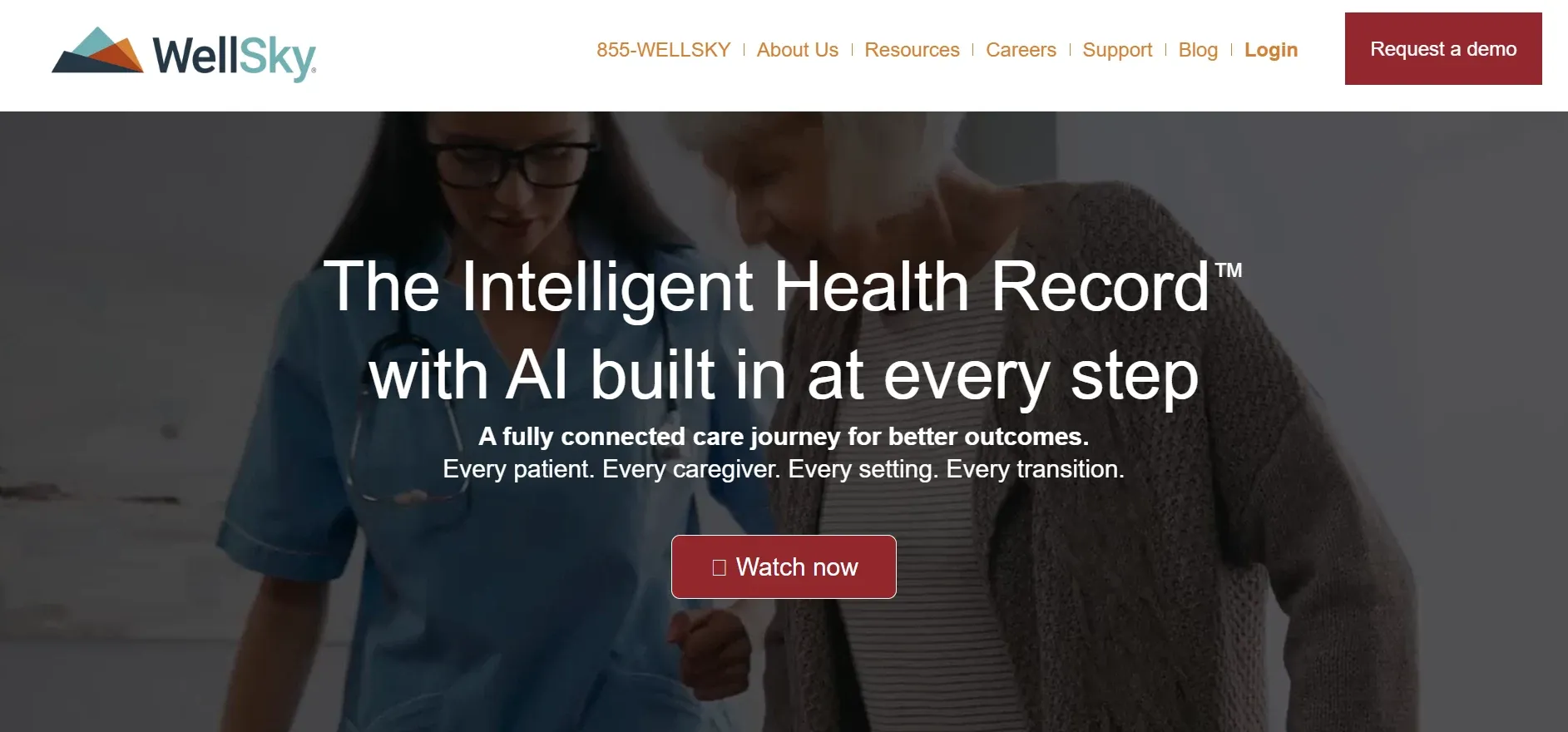
WellSky (ClearCare) is built for scale, serving some of the largest private-duty and Medicaid agencies nationwide. Its greatest strengths are compliance, integration with referral sources (like hospitals and ACOs), and its deep support for Electronic Visit Verification (EVV) at both state and federal levels. The platform offers advanced scheduling, billing, and two-way communication tools for care teams and family members.
WellSky’s integration ecosystem is extensive: agencies can link with clearinghouses, payors, payroll providers, and CRM systems. The platform’s Care Insights module leverages predictive analytics to flag high-risk clients or missed visits. Customizable dashboards and workflow automations are available, but often require training or paid setup. Data export is possible but may require support tickets or professional services, particularly for full historical data.
Pricing: Reported starting at $400/month, with per-client fees and additional charges for integrations and premium support.
- Extensive compliance and EVV support
- Robust integration ecosystem
- Predictive analytics for care management
- Per-client fees increase as your census grows
- Additional fees for integrations, data exports, and premium support
- Complex implementation may require IT staff involvement
For agencies seeking to own their platform and avoid recurring fees, Devaims offers a custom solution with no per-user charges.
3. Brightree (Home health & hospice providers)
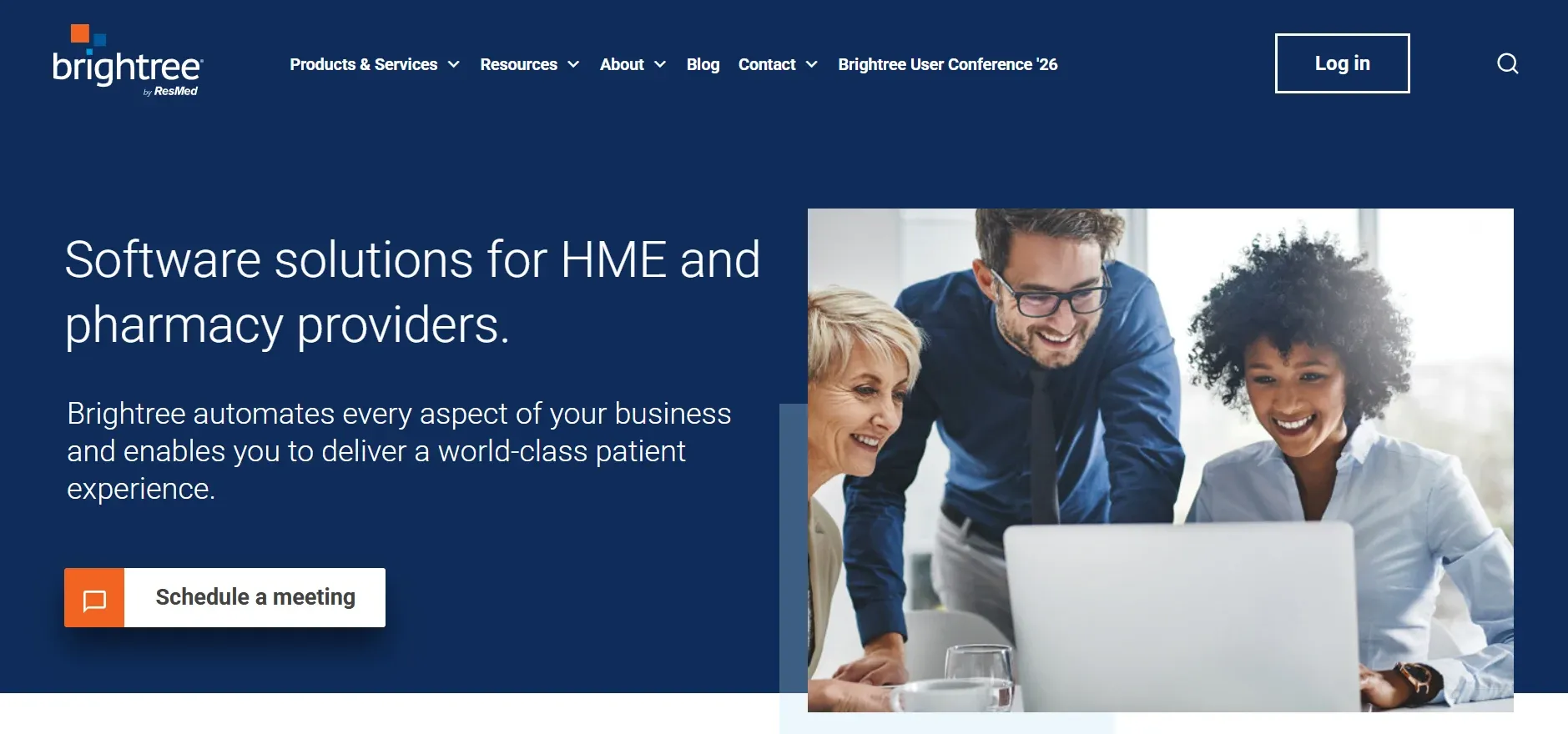
Brightree is a leading choice for home health, hospice, and post-acute care organizations with complex clinical and billing needs. Its EHR module excels at multidisciplinary care planning, medication management, and outcome tracking. Brightree’s workflow engine supports skilled nursing, therapy, and palliative care, with detailed documentation templates for regulatory compliance.
Integration options are strong: Brightree connects to clearinghouses, pharmacy systems, labs, and external EHRs using HL7 and FHIR standards. Agencies can automate OASIS and HIS submissions, and the billing engine handles intricate Medicare and Medicaid rules. However, these advanced features require configuration and training, with costs rising for each integration or custom module. The onboarding process is thorough but lengthy, so agencies should expect several months from kickoff to go-live if migrating large data sets or building custom interfaces.
Pricing: Quotes only, with costs rising for advanced modules and integrations.
- Comprehensive EHR for clinical and billing needs
- Strong integration with external systems
- Advanced compliance and regulatory support
- High cost and complexity for smaller agencies
- Most features are bundled, so you may pay for unused modules
- Custom integrations and reporting often incur extra fees
If you want to avoid bundled costs and own your platform, Devaims can build a system tailored to your needs.
4. MatrixCare (Enterprise-level, integration-first)
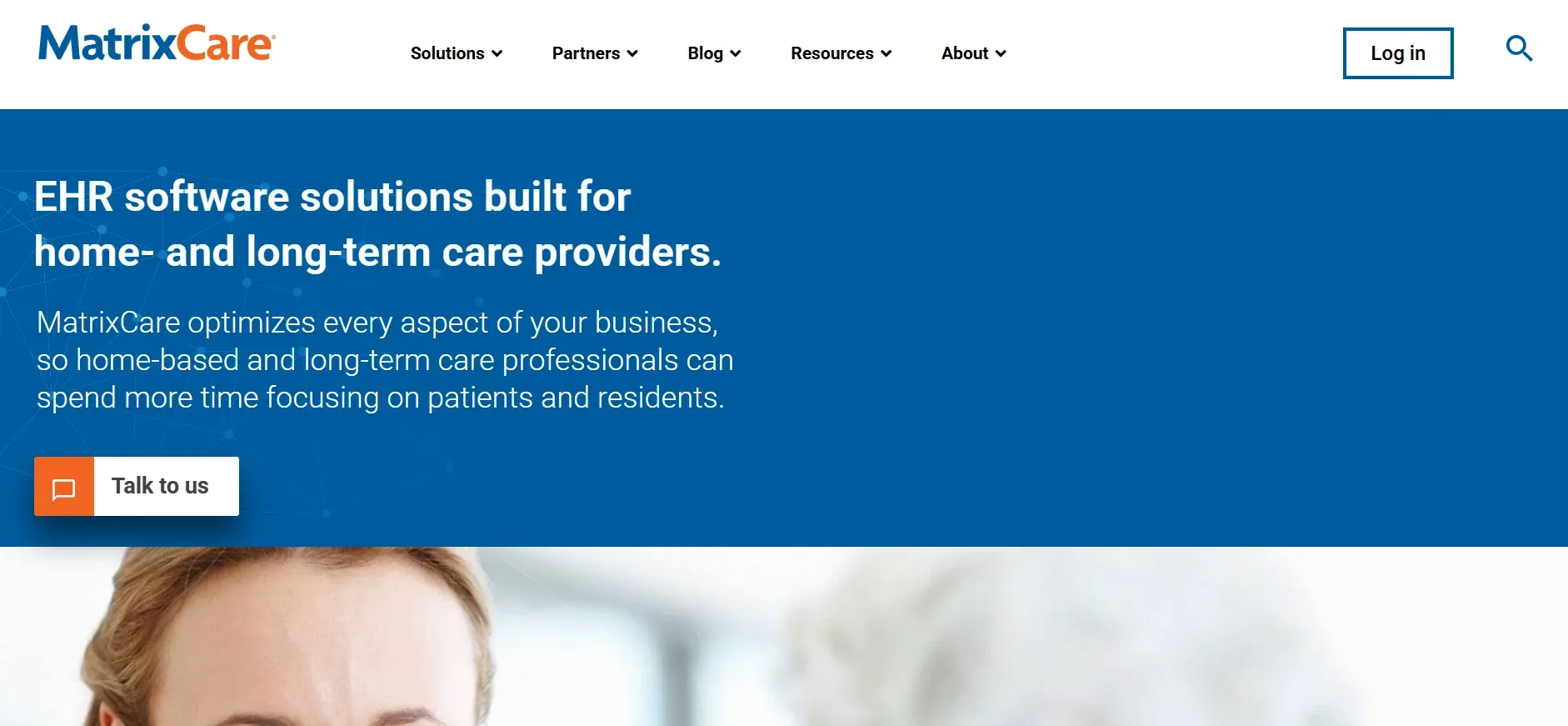
MatrixCare is built for enterprise agencies that demand interoperability across the care continuum. It is a top choice for organizations managing skilled nursing, home health, hospice, and private duty care under one umbrella. MatrixCare’s EHR is among the most comprehensive, supporting complex care plans, medication administration, and outcome measurement. The platform is ONC-certified and supports value-based care models.
MatrixCare’s integration capabilities are a standout: it offers APIs, HL7, and FHIR connectivity for interoperability with hospitals, labs, payors, and pharmacy systems. Agencies can automate referrals, admissions, and discharge summaries. The business intelligence suite enables deep analytics across locations and service lines, with the ability to create custom dashboards for operations, compliance, and financial performance.
Pricing: Quotes only, with high per-user or per-location fees and additional charges for premium integrations.
- Comprehensive EHR and business intelligence suite
- Strong interoperability with external systems
- Automated reporting and analytics for compliance
- High per-user or per-location fees
- Long-term contracts and additional charges for integrations
- Customization limited to supported workflows
For agencies needing full customization and ownership, Devaims offers a platform built to your exact requirements.
5. PointClickCare (Senior care networks)
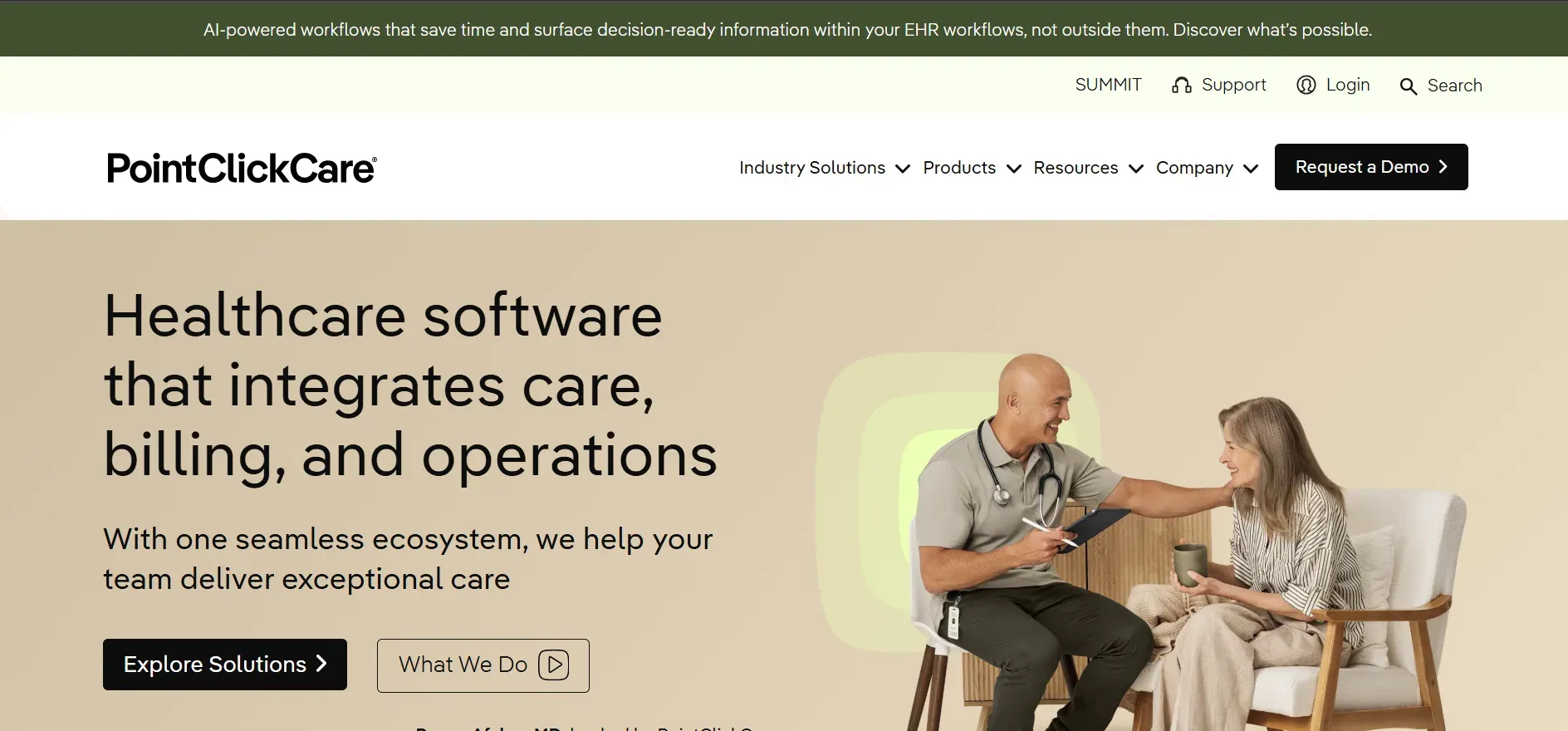
PointClickCare is the industry leader for large senior living networks, assisted living, and skilled nursing facilities. Its platform offers a unified EHR, medication management, care coordination, and analytics designed for the senior care continuum. PointClickCare’s modules cover everything from clinical documentation and incident tracking to financials, occupancy, and resident engagement.
Integration is a core strength: PointClickCare connects with pharmacy systems, labs, diagnostic imaging, and a growing ecosystem of third-party apps through its partner marketplace. Agencies can automate MDS submissions, billing to Medicare and Medicaid, and share data with acute care partners. The analytics suite offers predictive insights into rehospitalization risk, census trends, and staffing needs.
Pricing: Quotes only, with modular pricing and additional fees for analytics and advanced features.
- Unified EHR and analytics for senior care
- Strong integration with pharmacy and acute care partners
- Predictive analytics for quality improvement
- Modular pricing can be confusing and costly
- Contract lock-in and annual price increases are common
- Customization limited to marketplace offerings
For agencies seeking to avoid modular fees and own their platform, Devaims provides a fully customizable solution.
6. Caremerge (Resident engagement and EHR)
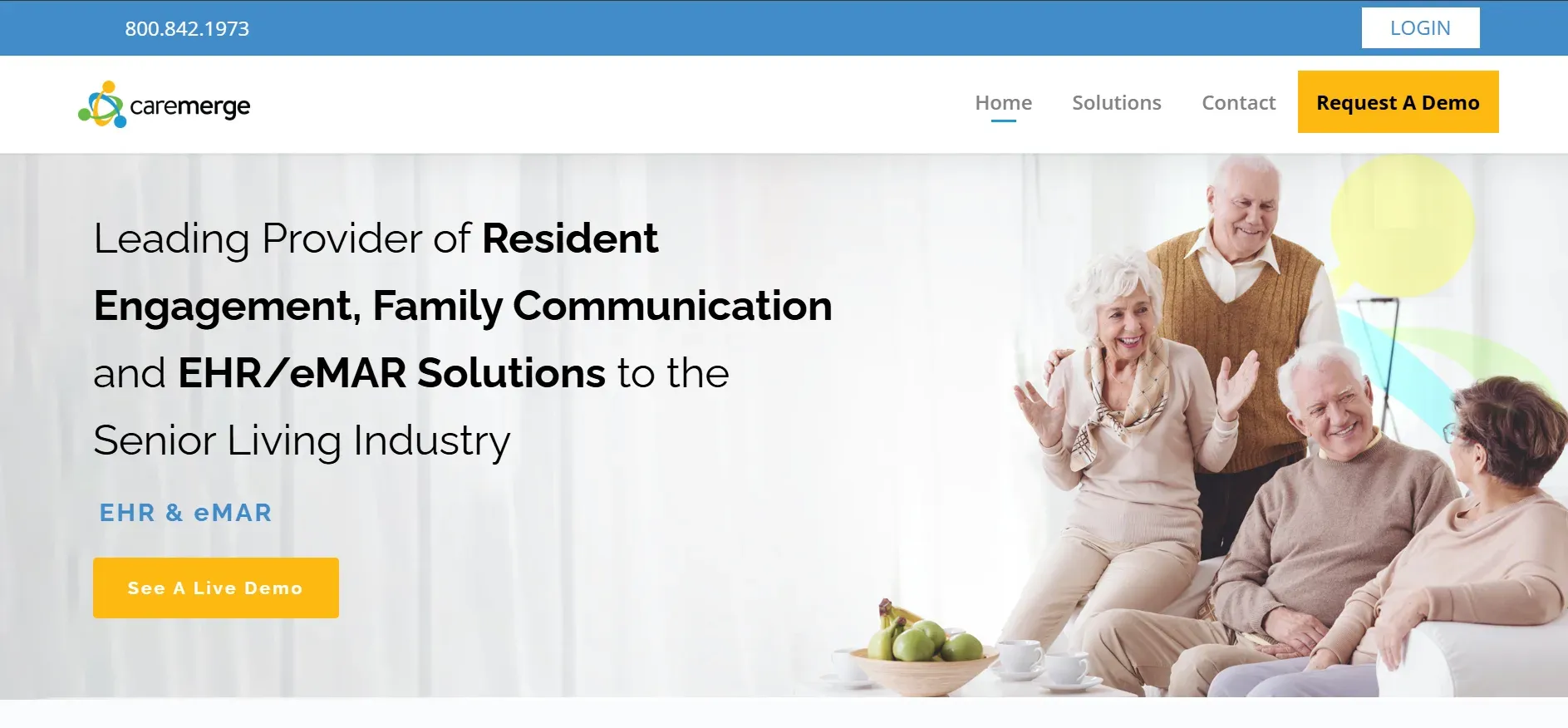
Caremerge is designed for agencies and facilities that prioritize resident and family engagement alongside core EHR features. Its platform excels at communication, offering secure messaging between staff, residents, and families, event/activity calendars, and digital bulletin boards. The EHR module covers basic care documentation, medication reminders, and incident tracking, but is less robust than platforms like MatrixCare or Brightree for clinical workflows.
Caremerge integrates with health monitoring devices, family portals, and select billing systems. The mobile app is intuitive, making it easy for caregivers to log visits, update care plans, and share updates with families in real time. Agencies can automate notifications for medication times, appointments, or activity reminders.
Pricing: Reports $8/user/month, with costs increasing for larger teams and advanced features.
- Strong resident and family engagement tools
- Easy-to-use mobile app for caregivers
- Quick implementation for engagement-focused agencies
- Per-user pricing can escalate for larger agencies
- Limited clinical depth compared to enterprise EHRs
- Some integrations are basic or require custom development
If you need deeper clinical features and want to own your platform, Devaims can build a system with full engagement and EHR capabilities.
7. Sandata (Compliance and EVV-first)
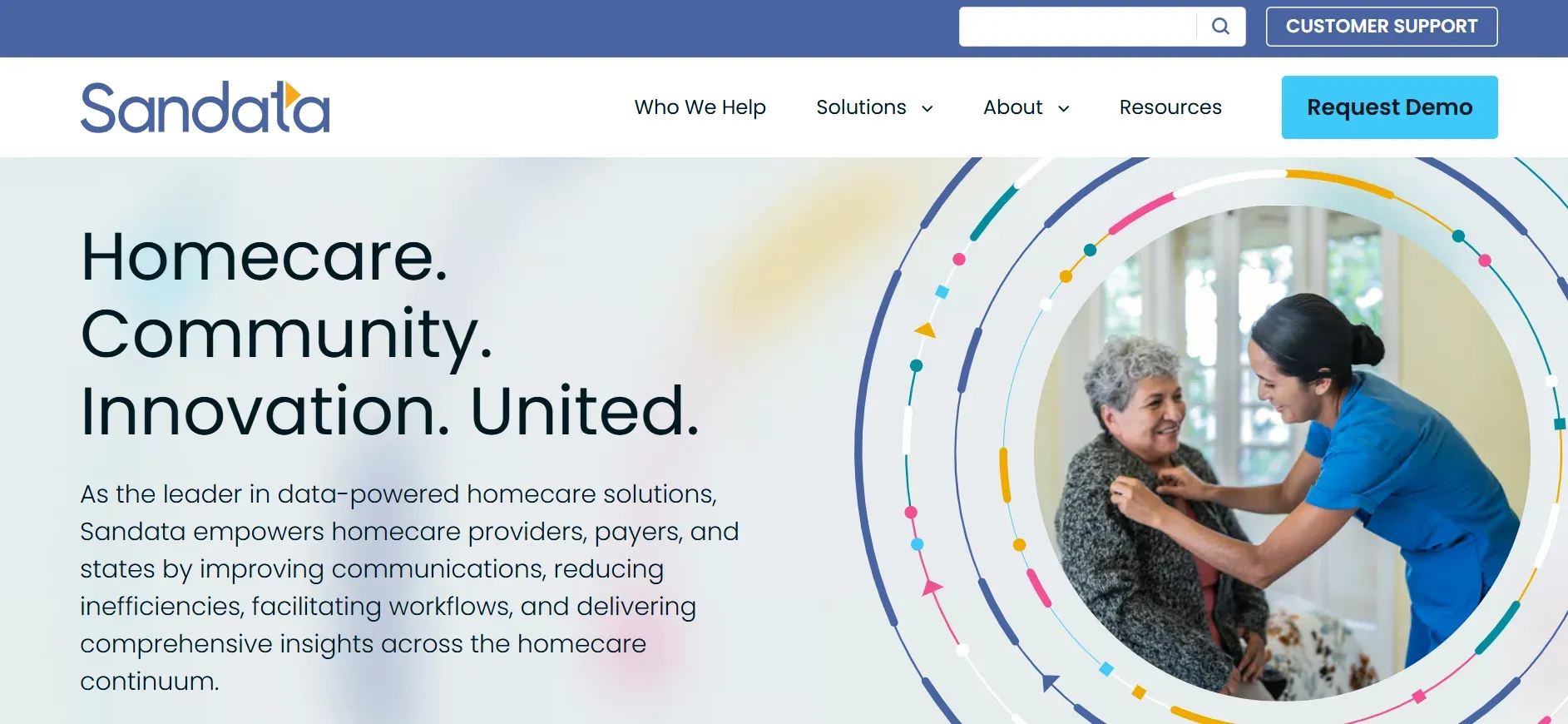
Sandata is the go-to for agencies that must meet strict Electronic Visit Verification (EVV) mandates for Medicaid and state programs. Sandata is often the state-mandated vendor for EVV in many regions, making it a requirement rather than a choice for some agencies. Its platform focuses on visit verification, time and attendance, and Medicaid billing. The user interface is functional but utilitarian, prioritizing compliance over user experience.
Sandata integrates with state Medicaid systems, clearinghouses, and select payroll and billing systems. Agencies can automate claim submissions and receive real-time alerts for missed or late visits. The platform includes audit trails and reporting tools required for compliance audits. Implementation is often streamlined if Sandata is the state’s preferred vendor, but agencies using it voluntarily may find setup and training challenging.
Pricing: Quotes only, with per-client or per-visit fees that can rise quickly.
- Meets strict EVV and Medicaid compliance requirements
- Direct integration with state Medicaid systems
- Automated claim submission and audit trails
- Limited flexibility and customization
- Per-client or per-visit fees can escalate
- Not a full care management suite
For agencies needing a full care management suite and ownership, Devaims can build EVV and compliance features into your custom platform.
8. HHAeXchange (Medicaid-focused agencies)
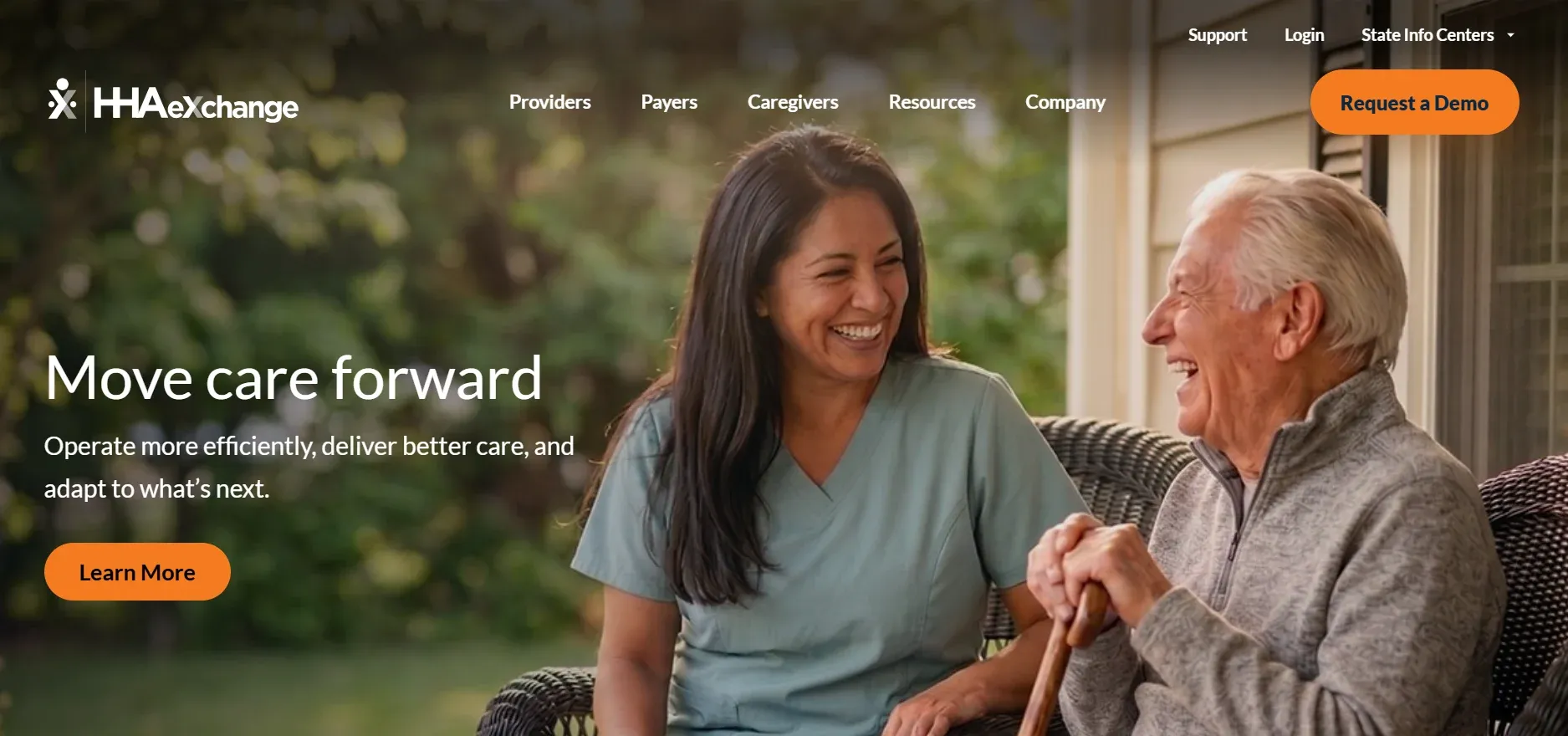
HHAeXchange is purpose-built for agencies with a heavy Medicaid or managed care population. Its platform automates Medicaid billing, EVV compliance, and managed care reporting, with prebuilt connections to state and MCO portals in many regions. HHAeXchange’s workflow engine supports visit scheduling, care plan management, claims submission, and remittance tracking.
Integration strengths include direct connections to Medicaid portals, payroll systems, and select EHRs. Agencies can automate eligibility checks, prior authorizations, and payment reconciliations. The platform’s analytics tools help agencies track denials, unpaid claims, and compliance metrics.
Pricing: Quotes only, with per-client or per-visit pricing that can escalate for high-volume agencies.
- Automates Medicaid billing and EVV compliance
- Direct connections to state and MCO portals
- Analytics for denials and compliance tracking
- Narrow focus on Medicaid and managed care
- Limited private-pay features
- Custom integrations may require additional work
If you want a single platform for all payer types and ownership, Devaims can build Medicaid and private-pay workflows to your needs.
9. Rosemark (Small to midsize agencies)
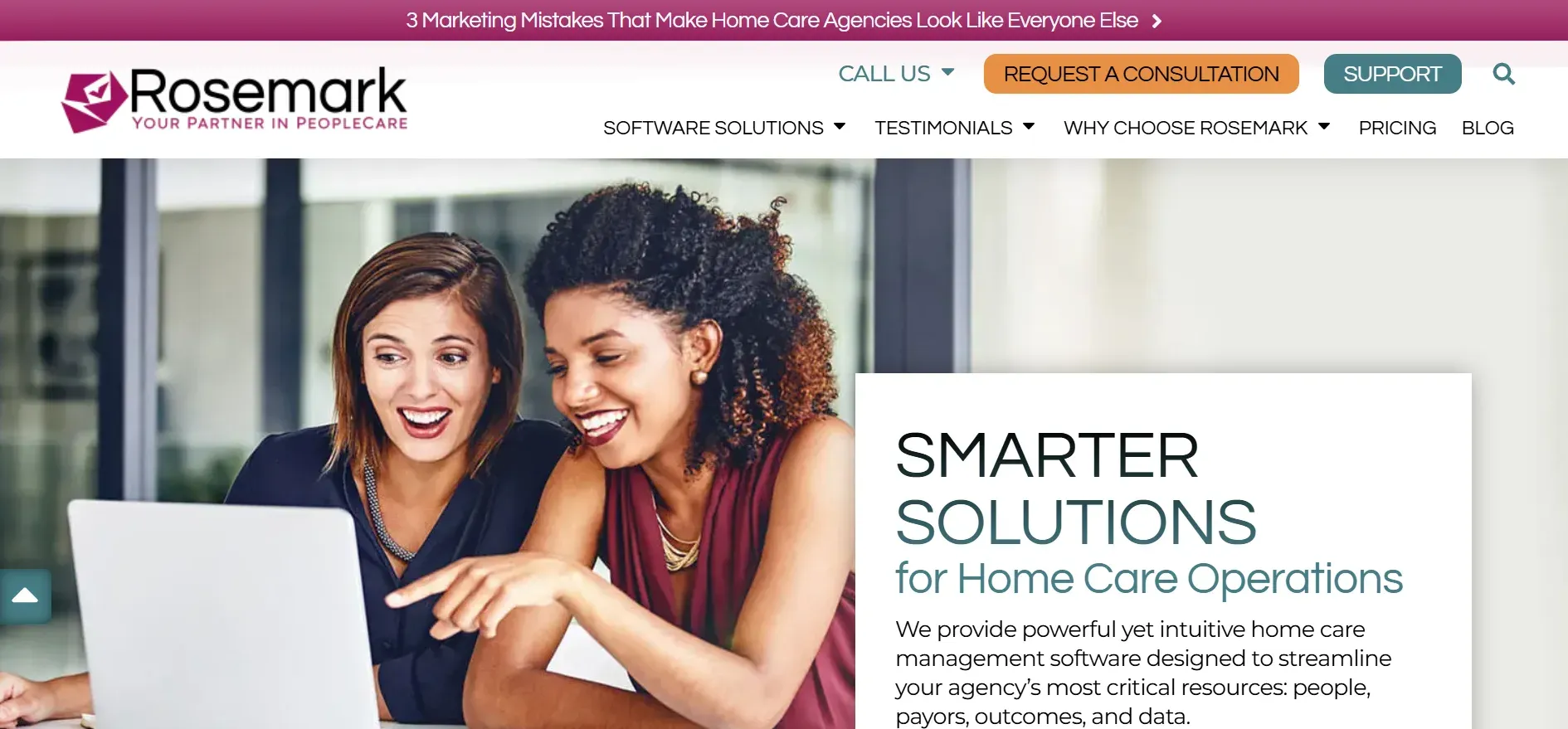
Rosemark is a favorite among small and midsize agencies seeking an affordable, easy-to-use platform for scheduling, billing, and EVV. Its interface is clear and straightforward, with minimal training required for new staff. Rosemark supports both private-pay and Medicaid workflows, and includes basic EVV tools for compliance in most states.
Rosemark integrates with payroll systems, QuickBooks, and select clearinghouses. Agencies can manage caregiver schedules, automate billing, and track visit compliance in one place. The customer support team is known for responsiveness, and onboarding is typically measured in days, not weeks. Data export is available, but advanced reporting or custom exports may require support.
Pricing: Reported starting at $125/month, with per-user fees for additional staff or clients.
- Affordable and easy to implement
- Responsive customer support
- Supports both private-pay and Medicaid workflows
- Limited enterprise features and deep integrations
- Rental model means you never own the platform
- May not scale well for larger agencies
If you want to avoid outgrowing your platform and own your system, Devaims offers a scalable solution you keep as you grow.
Devaims (Ownership and total control)
Devaims is the only alternative on this list that gives you true ownership: you get the source code, control all data, and can customize every workflow, report, and integration to fit your agency’s needs. Devaims builds your platform from day one around your requirements, so you are never stuck paying for features you do not use or missing features you need.
- True ownership: source code, data, and full customization
- No per-user, per-client, or per-visit fees, flat, predictable costs
- Unlimited users, clients, and locations at no extra charge
With Devaims, you avoid contract lock-in, forced migrations, and surprise fees. Your platform evolves as your business does, and you never pay rent on your software again.
Other CareVoyant alternatives worth knowing
- CareAcademy: Focused on caregiver training and compliance education. Useful as a supplement to agency management, but not a full replacement.
- eRSP: Popular for scheduling, billing, and EVV, especially with mid-sized agencies. Offers some customization, but still a rental model with per-user fees.
- AxisCare: Known for user-friendly scheduling and mobile EVV, with transparent pricing for small and mid-sized agencies.
- Shoshana Technologies: Scheduling and billing software for private-duty agencies, with a focus on simplicity and customer support.
These tools offer niche capabilities but do not fully replace a comprehensive home care management system. For agencies with specialized needs (e.g., training, engagement, or basic scheduling), they can be valuable supplements.
How to choose the right CareVoyant alternative
- Budget: If you’re watching recurring costs, compare total per-user, per-client, and per-visit fees, not just the base price. Ask vendors for five-year projections and clarify what is included versus what is an add-on.
- Agency size: Some tools (like MatrixCare or PointClickCare) are best for large operations, while Rosemark, AxisCare, and eRSP work for small teams. Consider your growth plans: will you outgrow a “starter” platform?
- Workflow fit: Need deep EHR, Medicaid billing, or advanced engagement? Prioritize platforms built for your core needs. Demo workflows with your actual staff to ensure usability.
- Growth plans: If you expect to add clients or staff, beware of per-unit pricing models that scale up with you. Calculate your costs at double your current census to avoid surprises.
- Ownership vs rental: If you want to own your platform, Devaims is the only real alternative. Owning means no forced migrations, no lock-in, and the freedom to evolve your platform as your business changes.
If you’re tired of per-user fees and want to keep your data and workflow, owning your platform could be the smarter long-term move. Agencies that plan to grow, merge, or diversify services should consider ownership to future-proof their tech stack.
Stop paying rent on your software, here’s how owning saves you
Here’s the truth: every CareVoyant alternative above is another version of renting. The names and features change, but the model is the same: monthly fees, per-user add-ons, contracts, and you never get to keep the engine that runs your business. That’s the pain Devaims was built to solve.
Devaims builds you a custom home care platform that you own outright. You get the source code, your data, and a system designed around your workflows. No more “that’s not included in your tier” or "we can't export that for you." You pay a one-time build cost, then a flat, predictable maintenance fee. There’s no contract lock-in, no per-user or per-visit surprises, and no artificial limits.
- Recurring fees go away: add staff, clients, or locations with zero penalty.
- Your data, your way: full access, custom reports, no extra charge for exports.
- Integrations are built for you: no monthly add-on for that "must-have" feature.
- No rate hikes: your cost is flat and predictable, year after year.
| Tool | Ownership | Per-user/client fees | Contract lock-in |
|---|---|---|---|
| CareVoyant | No | Yes | Yes |
| AlayaCare | No | Yes | Yes |
| MatrixCare | No | Yes | Yes |
| Devaims (custom) | Yes | No | No |
| Year | Rented (cumulative) | Owned (cumulative) |
|---|---|---|
| 1 | $18,000 | $28,000 |
| 2 | $36,000 | $29,800 |
| 3 | $54,000 | $31,600 |
| 4 | $72,000 | $33,400 |
| 5 | $90,000 | $35,200 (now ahead) |
If your agency has 50 staff and the typical rented platform runs $30 per user per month, that’s $1,500/month, $18,000/year, and $90,000 over five years, with nothing to show for it when you’re done. With Devaims, you own your system after year two, and your cost never spikes as you grow. Most agencies break even around year 2, and after that, every new hire is pure margin. Ownership also means you avoid forced migrations, vendor shutdowns, or sudden policy changes. Your platform is future-proofed and under your control.
How to switch from CareVoyant
- Export all your client, staff, and visit data from CareVoyant, including historical records. Request full data sets in open formats (CSV, XML) to avoid re-entry or data loss.
- Assess and shortlist your replacement tool or custom solution. Demo each platform with real workflows, and ask about migration support and data mapping.
- Import or migrate your data into the new platform, mapping fields as needed. For custom builds like Devaims, this process is managed end-to-end as part of the project.
- Reconnect integrations: payroll, billing, EVV, and payment gateways. Test each integration thoroughly to ensure no disruption to payroll or claims cycles.
- Train your team on the new system and set up user permissions. Use sandbox environments and step-by-step guides to ease the transition.
- Run both systems in parallel for a short period to catch any issues. Validate data integrity, workflow accuracy, and reporting outputs before fully switching over.
- Review and terminate your CareVoyant contract per its terms. Document your transition for compliance and audit purposes.
With a custom Devaims build, the migration is handled as part of the project, including data mapping, integration rebuilding, and user training. This reduces risk, minimizes downtime, and ensures your agency is fully operational on day one.
Frequently asked questions
What is the best CareVoyant alternative for home care agencies?
For most agencies, AlayaCare and WellSky (ClearCare) offer the broadest features and compliance, especially for mid-sized to large organizations. They provide strong EVV, scheduling, billing, and compliance modules with ongoing updates. However, if you want to own your software and avoid recurring per-user fees, Devaims is the only alternative that gives you true ownership, full customization, and no contract lock-in. The right choice depends on your agency’s size, workflow needs, and appetite for upfront investment versus ongoing rental fees.
Which CareVoyant alternative is cheapest for small agencies?
Rosemark is widely regarded as the most affordable for small to midsize home care agencies, with transparent monthly pricing and minimal onboarding costs. AxisCare and eRSP are also competitive for basic scheduling and EVV. Remember, even "cheap" rental adds up over time, so calculate your five-year cost before deciding. For agencies planning to grow, consider ownership to avoid outgrowing your platform and facing costly migrations.
Is there a free CareVoyant alternative?
There is no truly free, full-featured platform for home care management. Some tools offer limited free trials or basic plans (e.g., AxisCare’s starter plan), but all major alternatives, including AlayaCare, Sandata, and HHAeXchange, are paid rental models. Open-source options exist for tech-savvy agencies but require significant IT investment and are rarely tailored for compliance. If you want to escape monthly fees, owning your own platform with Devaims is the only path.
Which alternative is best for Medicaid billing and EVV compliance?
HHAeXchange and Sandata specialize in Medicaid billing and EVV compliance. Both are widely used for agencies with a heavy public-payor mix, and are often required or strongly recommended in certain states. Devaims can also build Medicaid and EVV integrations directly into your owned platform, tailored to your state’s requirements, supporting both public and private payers with custom workflows.
When should I switch from CareVoyant?
If you’re frustrated by rising per-user fees, contract lock-in, or need more control over your data and workflow, it’s time to consider CareVoyant alternatives. Common triggers include expanding to new states, adding service lines, or facing a major price hike. The cost of switching is often less than staying on a system that no longer fits your agency’s needs, especially when factoring in hidden costs like lost productivity, limited flexibility, and data export fees.
Can I keep my historical data when switching from CareVoyant?
Most vendors let you export data, but expect to pay for support or custom exports from CareVoyant. Data may be provided in raw tables, which require mapping to your new system. With Devaims, you retain all your data in your own format, with no future lock-in or export fees. Data migration is handled during your custom build, including validation and integrity checks to ensure a complete transition.
Are there CareVoyant alternatives that let me own my software?
Devaims is the only alternative in this list that builds you a platform you own outright, including source code, data, and full customization. All other options are rental models, regardless of feature set. With Devaims, you avoid contract lock-in, future rate hikes, and forced migrations when vendors sunset products or change policies.
The bottom line
If you’re tired of paying more each year for a platform you never own, there’s finally a way out. AlayaCare, WellSky, MatrixCare, and the rest will rent you solid tools, but the math rarely gets better over time.
Here’s the test: add up what this tool will cost you over the next five years. If that number could have built you something you own, you already have your answer. Owning your system puts you in control, saves you money, and means you never have to migrate again. Agencies that switch to ownership often report not only lower total cost, but greater peace of mind, deeper integration with their workflows, and the ability to innovate on their own schedule, not the vendor’s.
For more insights, visit the Devaims blog. Explore related alternatives: AlayaCare alternatives, WellSky alternatives, and Brightree alternatives. For industry research, see HomeCare Magazine and McKnight’s Home Care.