



Ever get that sinking feeling when your EHR sends a surprise bill for e-prescribe, or locks you out of a feature until you upgrade tiers? Most urgent care owners know the pain. PrognoCIS isn’t the only system that can leave you stuck, contract lock-ins, nickel-and-dime fees, and workflows that never quite fit your clinic. You start out thinking it’s just a tool, but by year three, it feels like the tool owns you.
If you’re searching for PrognoCIS alternatives, you’re not alone. Owners are switching to Athenahealth, Epic, Experity, and NextGen for more control or cleaner workflows. But here’s the catch: every one of these is rented. Only a custom build lets you break free and actually own your software. Let’s dig in, compare the top tools, and talk about the one option that never charges you per click, patient, or physician: Devaims.
Why urgent care centers look for PrognoCIS alternatives
Urgent care clinics face unique operational challenges that mainstream EHRs like PrognoCIS often fail to address. Here’s why more centers are making the switch:
Surprise per-provider fees: Most EHRs, including PrognoCIS, charge monthly per user, plus extra for telehealth, e-prescribe, or additional modules. As your team grows, so does your bill. Even minor increases in provider count or staff can result in thousands in unplanned expenses each year. For clinics with high turnover or seasonal staffing, forecasting becomes a headache.
Locked reporting and integrations: Advanced analytics, custom reporting, and API access are often restricted to premium plans or require expensive add-ons. This is a dealbreaker for multi-site urgent care groups that depend on real-time reporting across locations, or those integrating with external billing, lab, or marketing systems. Even basic integrations with local labs or pharmacies can require costly custom work or ongoing fees.
Long-term contracts and data lock-in: Many EHRs lock you into multi-year contracts. Exiting early can trigger penalties, and even when your contract ends, getting your data exported in a usable format often means paying high fees and navigating complex processes. Some platforms will only export PDFs or limited CSV files, making true migration or analytics difficult.
Clunky urgent care workflows: Most generalist EHRs are built around primary care, not the walk-in, speed-focused model of urgent care. This means templates require excessive clicks, intake is slow, and workarounds become the norm. Time lost on the wrong workflow adds up, especially when patient volume peaks.
Ever-increasing costs: Vendors often raise prices annually, citing inflation, compliance updates, or new features. The "all-in" cost creeps higher with each contract renewal. Many clinics find themselves paying for features they never use, or unable to access the ones they truly need without additional contracts.
These pain points drive the search for alternatives that offer more flexibility, transparency, and control, ideally without the perpetual rent model.
Quick comparison of the best PrognoCIS alternatives
| Tool | Best for | Starting price | You own it? |
|---|---|---|---|
| Athenahealth | Enterprise urgent care | Reported $140+/provider/mo | No, SaaS |
| Experity (Clockwise.MD) | High-traffic clinics | Custom quote | No, SaaS |
| Kareo (Tebra) | Small to midsize practices | Reported $125+/provider/mo | No, SaaS |
| AdvancedMD | Integrated billing | Custom quote | No, SaaS |
| eClinicalWorks | All-in-one suite | Reported $449/provider/mo | No, SaaS |
| NextGen | Customization | Custom quote | No, SaaS |
| Epic | Large networks | Enterprise RFP | No, SaaS |
| Healow | Patient engagement | Custom quote | No, SaaS |
| Devaims | Full ownership | One-time build | One-time build, you own it |
Always confirm current pricing and contract terms before you decide. Rates and terms change fast in healthcare IT. Vendor transparency varies, so ask for detailed quotes including all modules, integrations, and support.
The 9 best PrognoCIS alternatives
1. Athenahealth (enterprise urgent care)
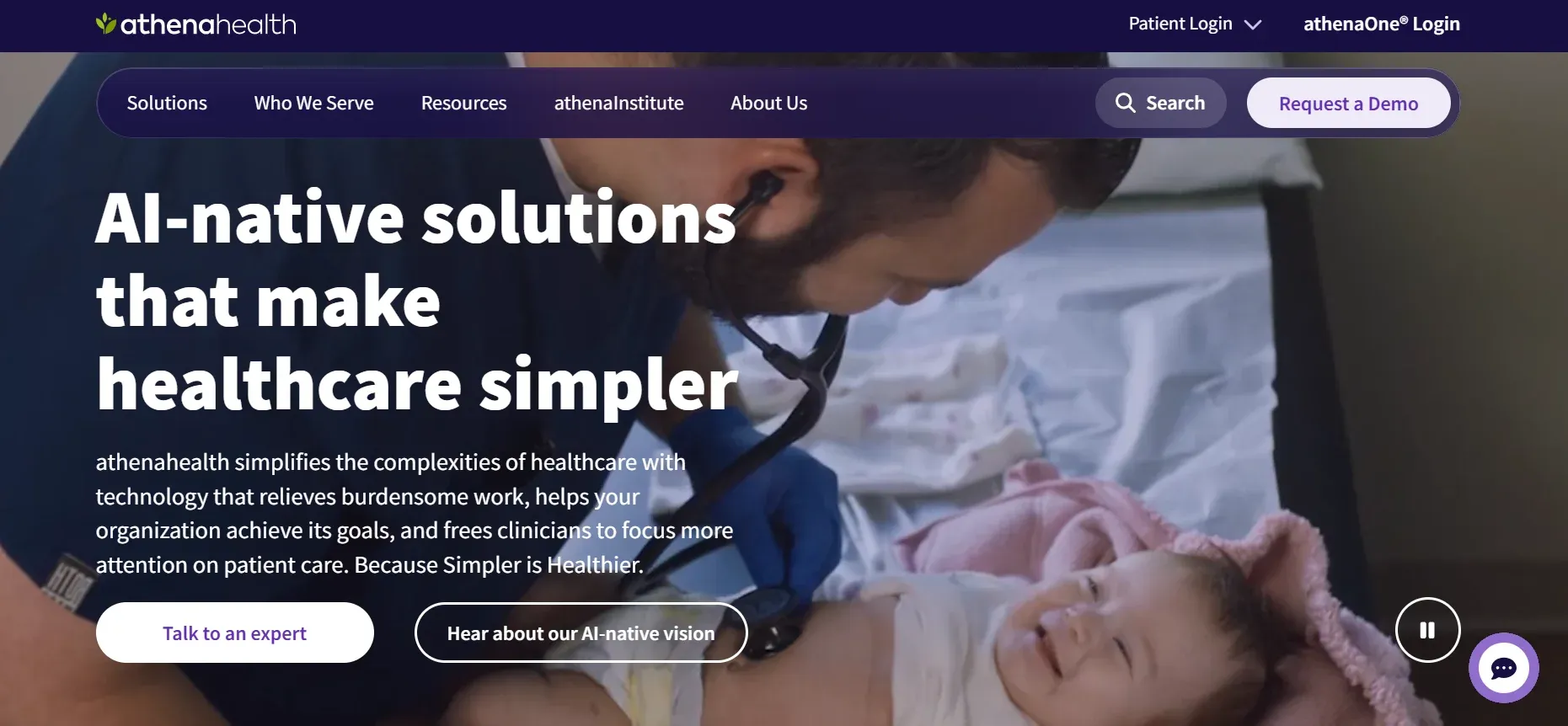
Athenahealth is a cloud-based EHR and medical billing platform designed for scale. It is popular among urgent care groups, especially those with multiple locations or that require strong integration with billing and population health tools.
Pricing: Reported $140+ per provider per month. Always confirm at Athenahealth pricing.
- Modern interface and streamlined workflows
- Strong billing and population health tools
- Pre-built integrations with major labs and pharmacies
- Annual price increases and add-on fees
- Custom integrations require extra contracts
- Advanced analytics only at higher tiers
If you need more control over integrations, Devaims can build custom connections without recurring API fees.
2. Experity (Clockwise.MD) (high-traffic clinics)
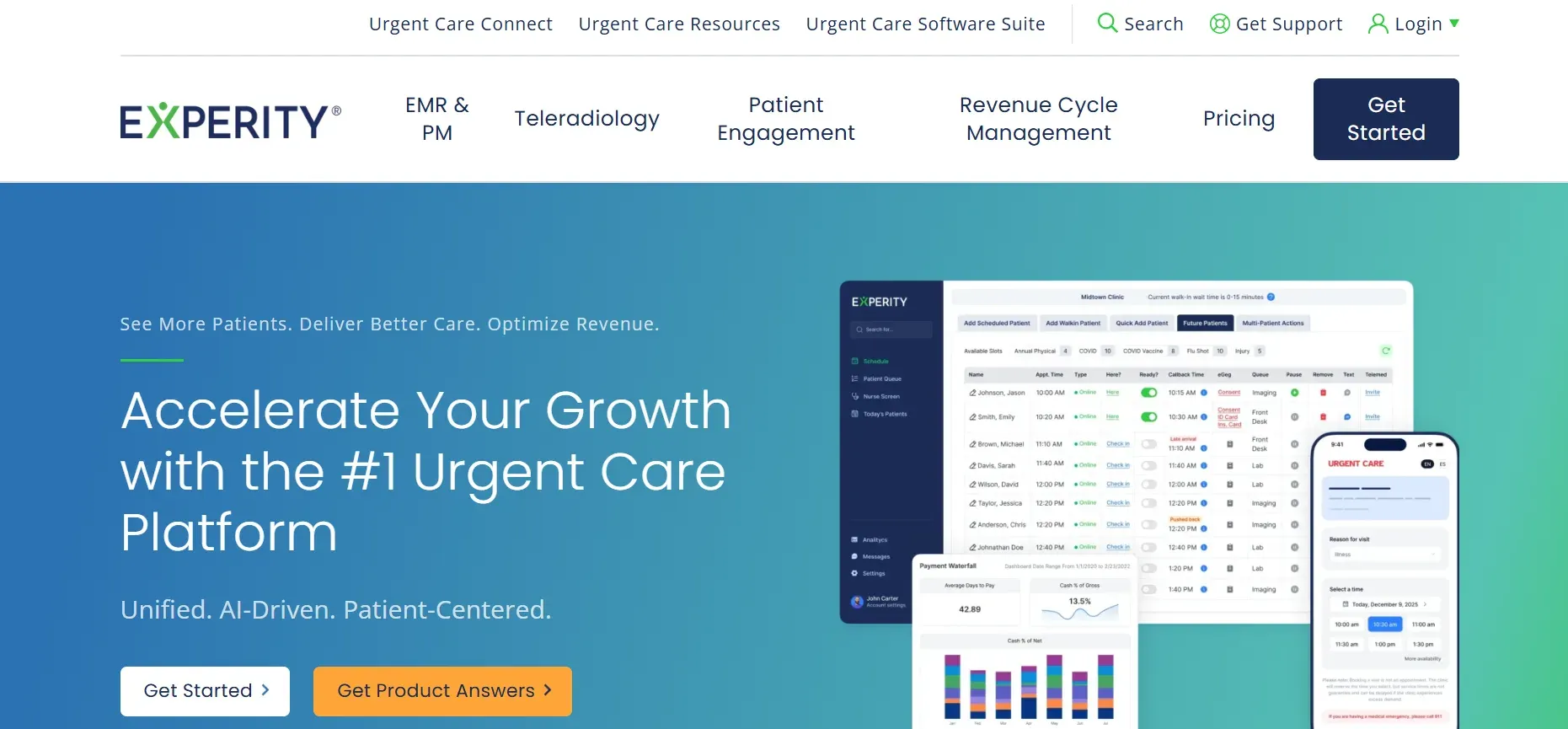
Experity is purpose-built for urgent care, merging EHR, practice management, and Clockwise.MD for patient queuing and waitlist management. It's engineered for high-volume, fast-paced clinics where speed and queue transparency are essential.
Pricing: Custom quote only. Expect bundled pricing for EHR, practice management, and queue.
- Urgent care-specific templates and queue management
- Integrated billing and RCM
- Centralized reporting for multi-location groups
- Opaque pricing and escalating costs for add-ons
- Custom reporting and integrations often extra
- Workflow customization limited without premium services
With Devaims, you can own your queue and reporting tools, adapting them as your clinic grows.
3. Kareo (Tebra) (small to midsize practices)
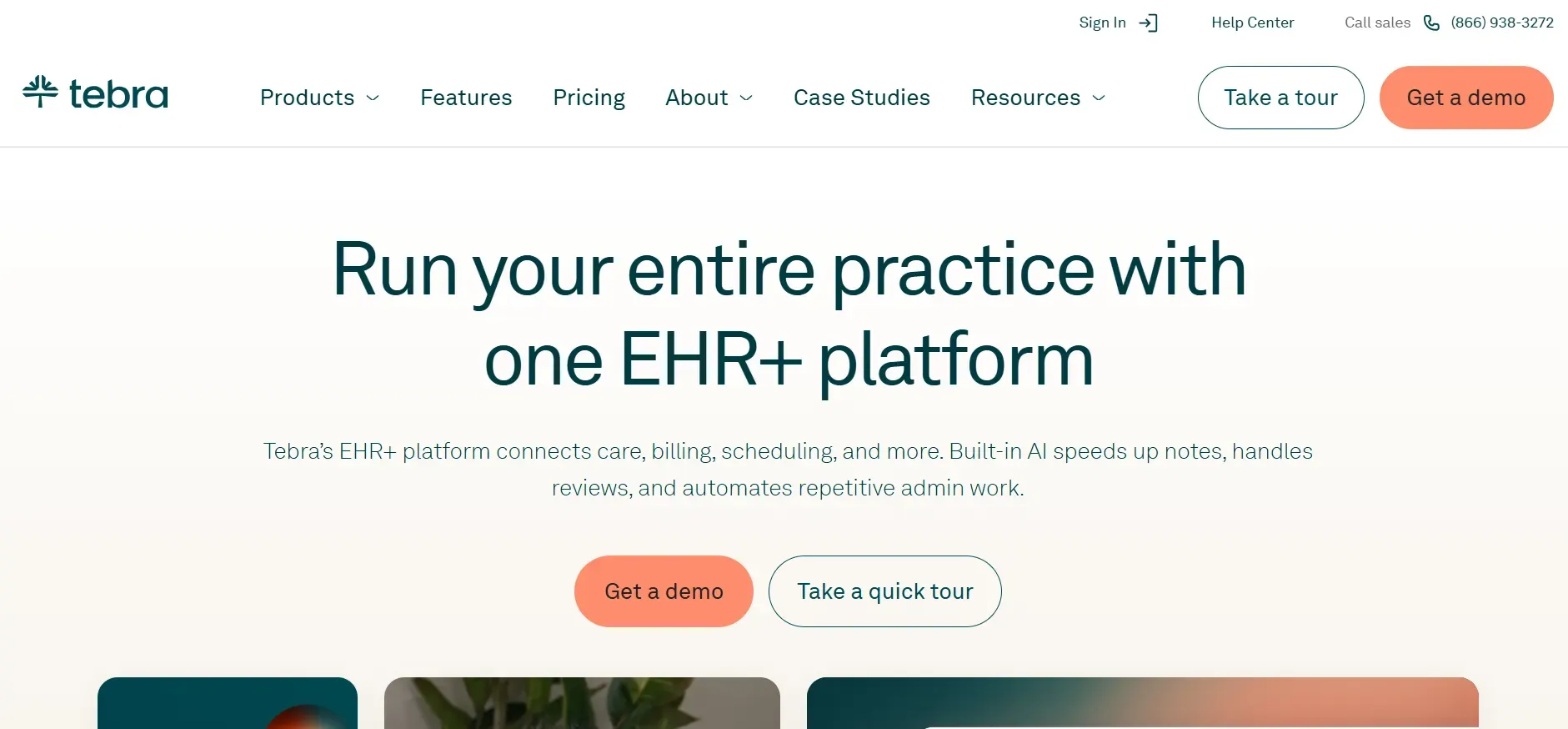
Kareo, now part of Tebra, is a cloud EHR and practice management system designed for simplicity and affordability. It’s particularly popular with small to midsize clinics that want to avoid enterprise complexity.
Pricing: Reported $125+/provider/mo for EHR. See Kareo pricing.
- Easy onboarding and intuitive interface
- Affordable for small clinics
- Integrated claims and billing
- Limited urgent care-specific features
- Custom workflows may require consulting
- Annual contracts and per-provider fees
Devaims eliminates per-provider fees and lets you scale without contract lock-ins.
4. AdvancedMD (integrated billing)
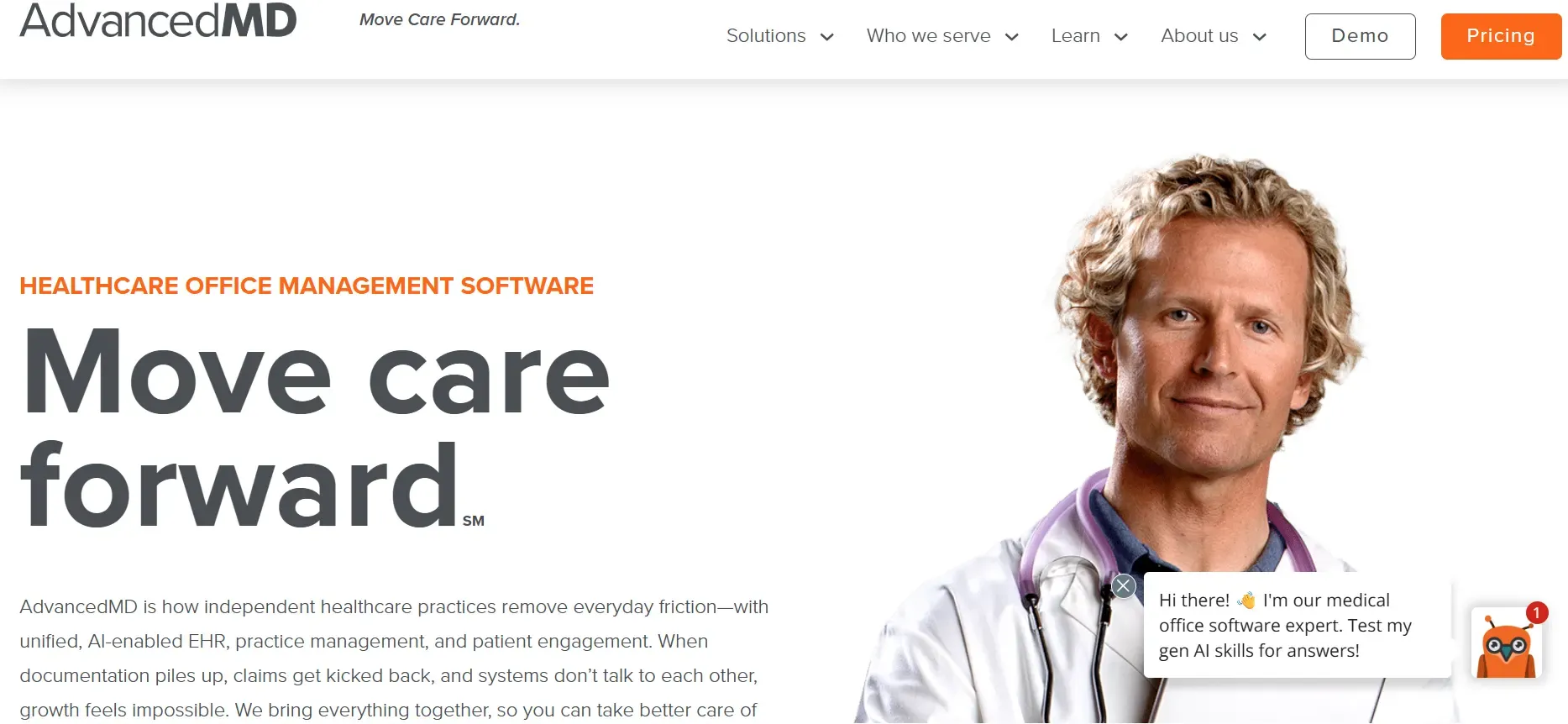
AdvancedMD is a modular EHR and practice management suite known for its strong billing and revenue cycle management tools. It appeals to urgent care clinics that want an all-in-one solution with deep billing workflow integration.
Pricing: Custom quote depending on features and provider count. See AdvancedMD pricing.
- Powerful billing and RCM tools
- Customizable templates and workflow automation
- Advanced analytics and business intelligence
- Pricing can be unpredictable due to modular add-ons
- Customization often requires consultants
- Migration services billed separately
With Devaims, you can design billing workflows and analytics dashboards to your exact needs, with no surprise fees.
5. eClinicalWorks (all-in-one suite)
eClinicalWorks is one of the largest EHR vendors in the US, offering a comprehensive platform for clinics of all sizes. Its breadth of features makes it a fit for urgent care centers with diverse needs.
Pricing: Reported $449/provider/mo. For details, see eClinicalWorks contact.
- Comprehensive feature set
- Strong patient portal and telehealth tools
- Population health and analytics modules
- High cost, especially with add-ons
- Steep learning curve for new users
- Proprietary data formats complicate migration
Devaims gives you open data formats and custom integrations, so you’re never stuck with proprietary exports.
6. NextGen (customization)
NextGen is known for its deep configurability, making it a favorite for urgent care operators who want precise control over workflows and documentation. It is often chosen by groups with complex operational requirements or who need to interface with multiple external systems.
Pricing: Custom quote required. Request a NextGen demo.
- Highly customizable templates and workflows
- Strong interoperability and compliance tools
- Integrated billing and practice management
- Steep learning curve for customization
- Upfront costs can be high
- Ongoing support may require dedicated admin
Devaims lets you own your configuration and adapt as your business evolves, without vendor restrictions.
7. Epic (large networks)
Epic is the market leader for hospital and multi-site health system EHRs. Its power and breadth are unmatched, but it is designed for large organizations with significant IT budgets.
Pricing: Enterprise RFP only. Expect high six figures for full deployment.
- Comprehensive EHR with deep specialty support
- Industry-leading interoperability
- Robust compliance and reporting
- Not accessible to small or midsize clinics
- Complex system requiring certified consultants
- Upfront and ongoing costs are high
Devaims offers a path to ownership and flexibility, even for growing multi-site groups.
8. Healow (patient engagement)
Healow is a patient engagement and telehealth platform created by eClinicalWorks, designed to extend EHR functionality to patients and providers on the go. While not a full EHR, it is often bundled as an add-on.
Pricing: Custom quote, often bundled with eClinicalWorks.
- Mobile-first patient portal and telehealth
- Automated reminders and outreach
- Online intake and self-scheduling
- Not a full EHR, must be paired with another system
- Per-provider fees apply
- Standalone use is limited
With Devaims, you can build patient engagement tools tailored to your clinic, fully integrated and owned.
9. Devaims (full ownership)
Devaims builds custom EHR and urgent care platforms that you own outright. Unlike SaaS EHRs, there are no per-provider fees, no contract auto-renewals, and no feature gating. You receive the full source code and documentation, with workflows and integrations tailored to your exact clinical and business needs.
- You keep the code and control
- No per-provider or per-patient fees
- Custom workflows for urgent care, not just templates
- Integrations and reporting built to your spec
- Flat maintenance, no surprise hikes
Other PrognoCIS alternatives worth knowing
- iPatientCare: A smaller EHR with decent telehealth and mobile features, but limited scalability for high-volume urgent care. Reporting and urgent care templates are basic, and integration with third-party billing or queue management is limited.
- Nuvolo: Primarily a facilities management platform, not a true EHR, but sometimes used for asset tracking in urgent care chains. Not suitable as a replacement for clinical documentation or billing.
- Practice Fusion: Once a free EHR, now owned by Allscripts, offering low-cost plans for small practices. Feature set is limited for urgent care, no robust queue management or advanced billing, but can work for single-provider clinics with basic needs.
If you need specialized urgent care billing or patient engagement, these tools may fill certain gaps, but they aren't full EHR replacements for most centers. Always assess integration needs and data ownership terms before considering them.
How to choose the right PrognoCIS alternative
- Budget-conscious? Watch for per-provider and add-on fees. Ownership costs less after a few years at scale, especially for clinics planning to grow.
- Need urgent care speed? Prioritize tools (or a custom build) with walk-in flow, rapid intake, and minimal clicks. Test workflows in demos and ask for urgent care references.
- Multi-site or high volume? Choose platforms with real-time reporting, reliable uptime, and proven scalability, or have Devaims build it to your spec. Ask vendors for uptime SLAs and multi-location support details.
- Integration-heavy? If you need billing, labs, and telehealth in one, check for open API access, or own the platform so you never need to ask permission. Make sure you can integrate with local labs, pharmacies, and marketing tools without extra fees.
- Data ownership matters? If you want to keep your data forever, a custom Devaims build is the only way out of the rent cycle. Confirm export formats and costs before signing any contract.
When you want a system that’s yours, not just another monthly expense, owning is the path to consider. Always demand references, detailed pricing, and sample contracts before making a decision.
Stop paying rent on software you could own
Here’s the truth: every urgent care EHR on this list, including PrognoCIS, keeps you renting. Add a provider, pay more. Need a feature, pay more. Switch vendors, pay a migration fee or risk losing your data. The SaaS model works for the vendor, not for your bottom line.
Devaims builds urgent care platforms you own outright. You get the code, not a license. Every workflow, every integration, every report, tailored to your clinic, yours to keep, and with no seat-based pricing or contract lock.
- No per-user or per-location fees: Add as many staff or sites as you want, at no extra charge. Scaling your business does not mean scaling your software bill.
- Own your data and stack: No more ransom for exports or forced upgrades. Your data is always accessible, in your preferred format, and you decide how it is used.
- Flat, predictable maintenance: No surprise hikes or “required” add-ons. Maintenance contracts are simple and renewable annually at a flat rate.
- Custom urgent care features: Your intake, your queue, your compliance needs, built in from day one. You can adapt workflows as your business evolves, without waiting for vendor roadmaps.
| Platform | Ownership | Per-provider fee | Contract lock | Customization |
|---|---|---|---|---|
| PrognoCIS | No | Yes | Yes | Limited |
| Athenahealth | No | Yes | Yes | Partial |
| Experity | No | Yes | Yes | Partial |
| Devaims | Yes, you keep the code | No | No | Full, built for you |
Let’s run the math. Say you have 8 providers and pay $140/provider/mo for your EHR. That’s $1,120/month, or $13,440/year, not counting add-ons. Over five years, that’s $67,200, and you still own nothing. This does not include the inevitable price hikes, feature upgrades, or support fees that come with most SaaS solutions. By contrast, a custom build from Devaims is a one-time investment, followed by flat, predictable maintenance.
| Year | Rented (cumulative) | Owned (cumulative) |
|---|---|---|
| Year 1 | $13,440 | $30,000 (build + $1,800 maint) |
| Year 2 | $26,880 | $31,800 |
| Year 3 (now ahead) | $40,320 | $33,600 |
| Year 4 | $53,760 | $35,400 |
| Year 5 | $67,200 | $37,200 |
Remember, these numbers are conservative. Most SaaS EHRs increase prices 3 to 7% annually, and you may need to pay for additional modules, integrations, or support calls. If you expect to be in business more than three years, owning your urgent care software pays off. Want to see your real numbers?
How to switch from PrognoCIS
- Request and export all your patient and billing data from PrognoCIS. Ask for both structured (CSV, XML) and unstructured (PDF, images) formats to ensure nothing is missed.
- Choose your new platform or custom Devaims build and sign your agreement. Clarify timelines and what is included in migration services.
- Import your data, mapping patient histories, appointments, codes, and attachments. Validate that all critical data (including allergies, medications, and insurance info) is correctly transferred.
- Reconnect payment processors, labs, and any third-party integrations. Test each integration to confirm data flows and error handling.
- Train staff on the new interface and workflows. Provide hands-on sessions and reference guides tailored to urgent care scenarios.
- Test run in parallel for a week to ensure data and billing accuracy. Run real patient encounters in both systems and reconcile results.
- Review your PrognoCIS contract for exit clauses and finalize the switch. Notify all stakeholders, and archive legacy system access for compliance.
With a custom Devaims build, the migration is handled as part of the project. This includes data validation, workflow mapping, and post-launch support to ensure a smooth transition.
Frequently asked questions
What is the strongest PrognoCIS alternative for urgent care?
Athenahealth and Experity are popular PrognoCIS alternatives for urgent care, thanks to their urgent care-specific workflows, queue management, and billing integration. However, both are SaaS solutions with per-provider fees and contract lock-ins. If you want to break free from these constraints, Devaims is the only alternative that gives you full ownership and control, letting you adapt and scale without vendor restrictions.
Which PrognoCIS alternative is the cheapest?
For small clinics, Kareo (Tebra) and Practice Fusion offer the lowest monthly costs, especially for solo providers. However, urgent care features are limited, and costs rise as you add staff or require additional modules. Over five years, Devaims can be cheaper for clinics that plan to grow, since the one-time build cost is offset by the elimination of recurring per-provider fees.
Are there any free PrognoCIS alternatives?
Practice Fusion offers a free or low-cost EHR for small clinics, but urgent care functionality is basic, and the platform is supported by ads or limited support. Free EHRs may also restrict data export or integration, so hidden costs can emerge as your clinic grows. Custom builds with Devaims require upfront investment but eliminate ongoing user fees and give you full ownership.
What is the best alternative for multi-site urgent care groups?
Epic and Athenahealth scale well for large operators, providing robust multi-site support, compliance, and reporting. However, these platforms are expensive and keep you tied to vendor contracts. Devaims can build a custom multi-site platform tailored to your workflows and integrations, with no per-site or per-user fees, giving you full control as you grow or merge locations.
When should I switch from PrognoCIS?
If you are paying rising per-provider fees, struggling with limited customization, or want to truly own your data, it’s time to look for PrognoCIS alternatives. The sooner you switch, the sooner you can start controlling costs and adapting your workflows to fit your clinic’s unique needs.
Can I keep my data when switching from PrognoCIS?
PrognoCIS allows data export, but may charge fees and limit export formats (for example, providing only PDFs or incomplete CSVs). Always negotiate for full, structured exports before terminating your contract. With Devaims, your data is always yours, stored in your preferred format, and accessible at any time, no vendor permission required.
Is Devaims really different from SaaS EHRs?
Yes, Devaims builds platforms you own outright. There are no per-provider or per-patient fees, no contract lock-ins, and you keep the code, ending the rent-forever cycle of most PrognoCIS alternatives. You gain the freedom to choose your hosting, integrations, and support arrangements, adapting as your business evolves.
The bottom line
Every urgent care EHR on this list, from Experity to Epic, is rented. Only Devaims gives you a path to full software ownership, no more per-provider fees, no more lock-in, no more surprise hikes. If you value control, transparency, and the ability to shape your workflows and integrations, owning your urgent care software is the logical next step.
Here is the test: add up what you will spend on your EHR over the next five years. If that number could have built you a platform you control, it’s time to own instead of rent. Ready to see what ownership looks like for your clinic?
Explore more on the Devaims blog: Athenahealth alternatives, Epic alternatives, eClinicalWorks alternatives.