



Your fertility clinic is growing, but PracticeSuite’s monthly fees and rigid workflows are starting to sting. Maybe you’ve hit a reporting wall, or watched your bill balloon as you add users, labs, or locations. Or you just want to stop paying rent for the same features every month, forever.
If you’re hunting for PracticeSuite alternatives, you already know the pain points: per-user fees, limitations on integrations, and a sense that you’re renting your own data. The top picks clinics actually switch to are eIVF, MediTEX IVF, and Kareo for SaaS, or Devaims if you want to own your system outright. Below, we compare 9 real alternatives, the true costs, and why more clinics are asking for a build they keep. If you’re tired of renting, the last entry is for you.
Why fertility clinics look for PracticeSuite alternatives
Hidden per-user, per-module costs: As your clinic expands, adding more physicians, embryologists, or administrative staff, monthly costs can double or triple, with every add-on a separate line item. Even small upgrades (like enabling a new lab module or telehealth feature) can trigger significant price jumps. This is especially painful for clinics with seasonal volume shifts or fluctuating staff, as you’re billed for peak headcount every month.
Contract lock-in and migration pain: Long minimum terms (often 12 to 36 months) and tricky data export make switching a headache. Many SaaS EMRs, including PracticeSuite, require notice periods and levy penalties for early exit. Data export is rarely one click. It may involve CSV dumps missing key relationships (such as patient to embryo links) or require expensive API access. If your clinic needs to move fast, perhaps due to expansion, acquisition, or compliance changes, this friction can be a real business risk.
Reporting limitations: Fertility clinics often have unique reporting needs: success rates by protocol, granular cycle outcome tracking, or custom insurance audits. PracticeSuite’s standard dashboards may not cover these, and custom reports can require premium tiers or paid support. For clinics focused on continuous improvement or compliance with SART, HFEA, or ESHRE standards, this is a major constraint.
Integration headaches: Connecting lab systems, appointment reminders, payment gateways, or patient portals usually means workarounds, third-party middleware, or manual steps. PracticeSuite’s API coverage is limited, and integrations with specialized fertility lab equipment or genetic testing vendors are rarely out of the box. Clinics end up with fragmented workflows or duplicated data entry, increasing error risk and hurting efficiency.
Ownership questions: At the end of five years, you’ve paid tens of thousands in rent, but own nothing. Your data, workflows, and even patient communications are tied to the vendor’s platform and roadmap. That’s why more clinics are searching for PracticeSuite alternatives they can truly own, giving them control over costs, features, and future growth.
Quick comparison of the best PracticeSuite alternatives
| Tool | Best for | Starting price | You own it? |
|---|---|---|---|
| eIVF | All-in-one IVF EMR | Reported, tiered | No |
| MediTEX IVF | European clinics | Reported | No |
| iClinic | Practice management | Reported | No |
| Ovation Fertility | Lab connectivity | Reported | No |
| Repromed | Clinic-lab integration | Reported | No |
| Embryoscope | Embryo monitoring | Reported | No |
| Kareo (Tebra) | Billing-focused | Starts ~$125/mo | No |
| Devaims | Clinics that want to own | One-time build | One-time build, you own it |
Always confirm current pricing before you decide, as fees vary by clinic size and features. Also, factor in migration and support costs, which are often excluded from base pricing.
The 9 best PracticeSuite alternatives
1. eIVF (Best for all-in-one IVF EMR)
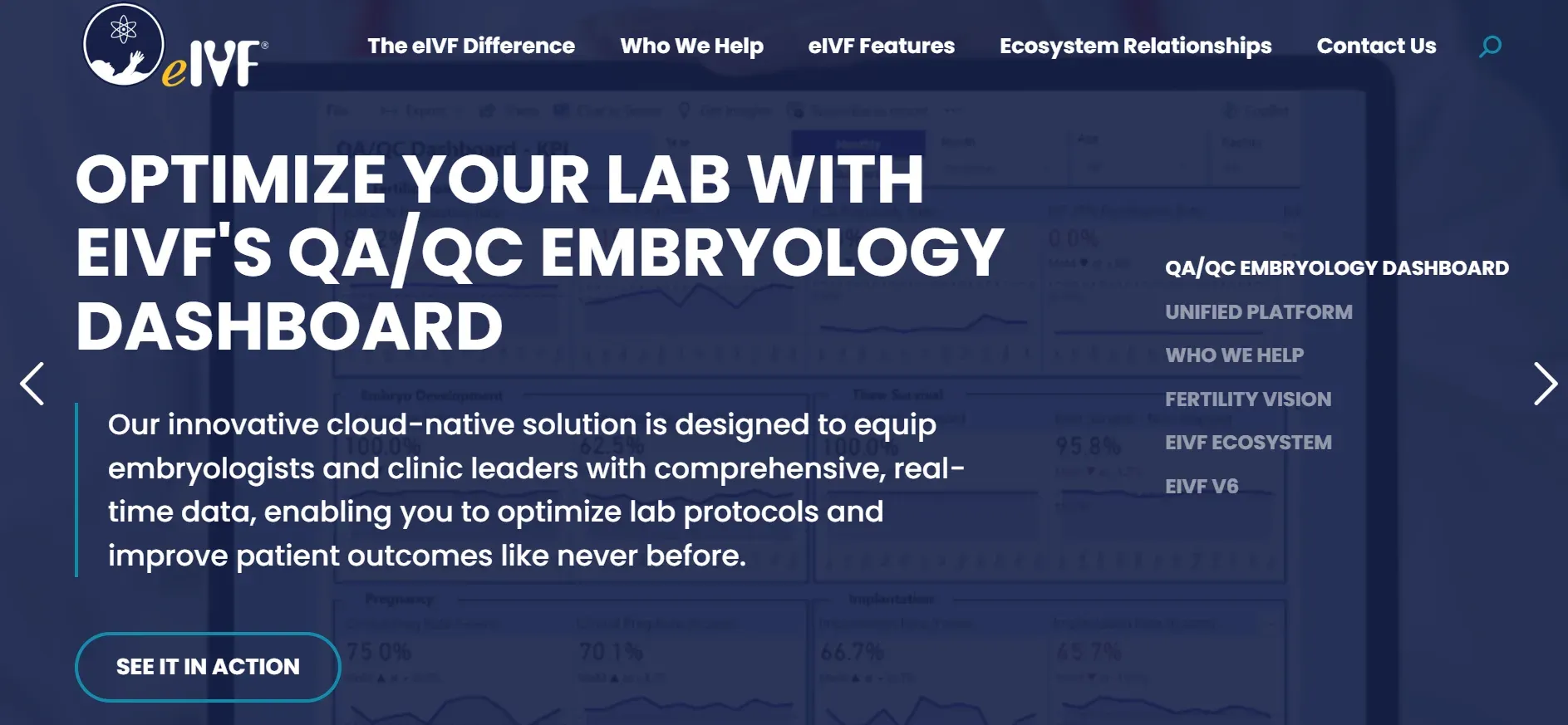
eIVF is one of the most widely adopted fertility-focused EMR platforms in North America. It is built specifically for reproductive medicine, supporting the full cycle from patient intake to embryology, billing, and analytics. Unlike generic EMRs, eIVF offers cycle tracking, gamete and embryo inventory, patient communication tools, consent management, and comprehensive lab integration. Its focus on IVF and related treatments makes it a top choice for clinics seeking depth in reproductive workflows.
Pricing: Tiered, reported by clinic size and modules.
-
Key limitations:
- Per-user and per-module fees increase with scale
- Custom integrations require paid services
- You do not own the code or platform
-
Strengths:
- Deep IVF and fertility workflow support
- Comprehensive lab and registry reporting
- Strong patient portal and communication tools
2. MediTEX IVF (Best for European clinics)
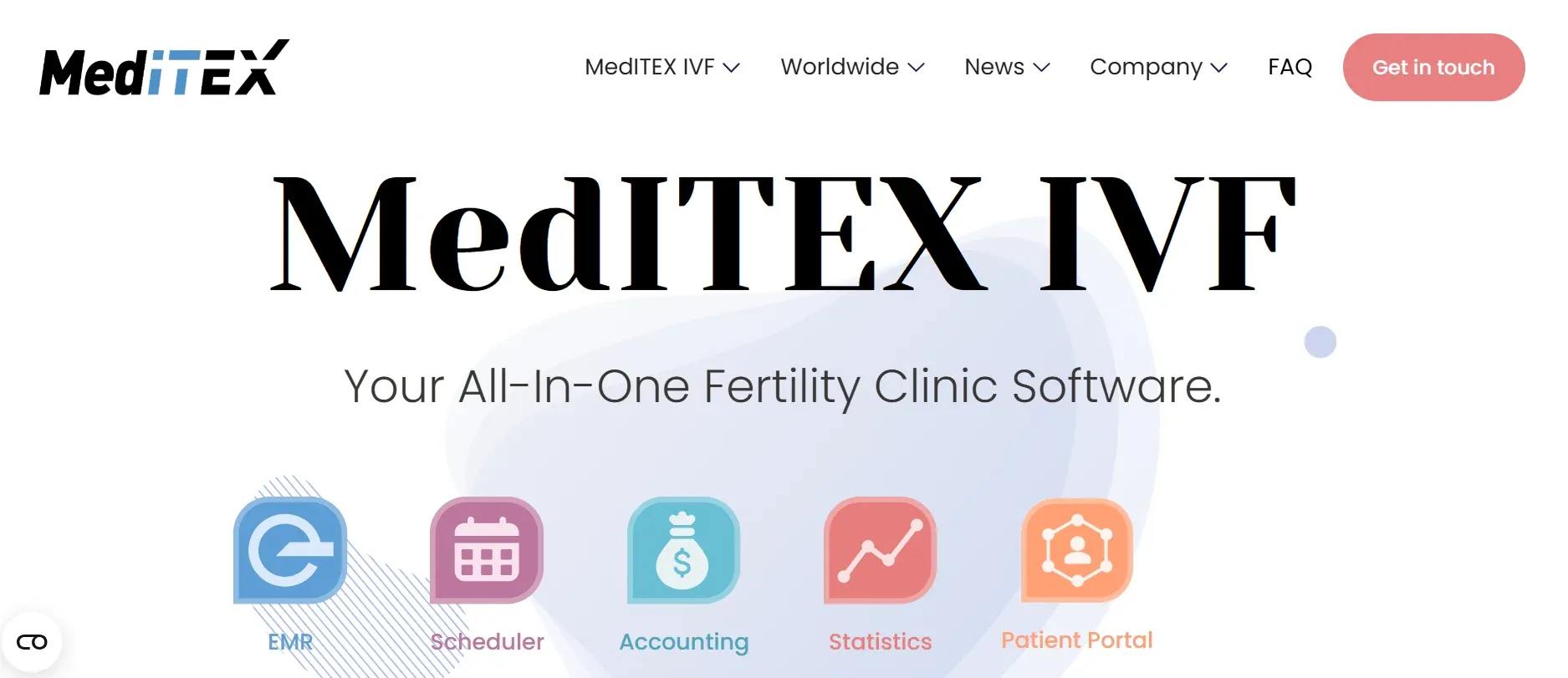
MediTEX IVF is a highly regarded EMR for fertility clinics across Europe. It is designed with European compliance and reporting standards in mind, supporting GDPR, HFEA, and ESHRE requirements. MediTEX IVF covers the full spectrum of fertility workflows, with particular strength in donor program management and multi-language support.
Pricing: Reported, annual license.
-
Key limitations:
- Annual renewals and add-on fees
- Less customizable for North American clinics
- Exporting data to non-European platforms is complex
-
Strengths:
- Strong compliance for European clinics
- Comprehensive donor and recipient tracking
- Multi-language support
3. iClinic (Best for general practice management)

iClinic is a broad-spectrum practice management and EMR solution, popular in both specialty and multi-specialty clinic settings. Fertility clinics sometimes migrate to iClinic for its flexible scheduling, billing, and telehealth, especially if they have multiple service lines (e.g., OB/GYN plus IVF).
Pricing: Subscription, reported by clinic size.
-
Key limitations:
- Fertility-specific workflows are not native
- Customization can be slow and costly
- Per-user or per-module billing
-
Strengths:
- Flexible for multi-specialty clinics
- Integrated telemedicine and billing
- Basic patient portal included
If you need specific fertility workflows, a custom build by Devaims can reflect exactly how your clinic operates.
4. Ovation Fertility (Best for lab connectivity)

Ovation Fertility is unique in that it operates both as a fertility lab network and as a provider of lab connectivity software. Its digital platform focuses on bridging the gap between clinics and labs, offering real-time specimen tracking, chain-of-custody documentation, and regulatory compliance tools. Ovation’s platform is often used by clinics that send samples to external labs or manage multiple lab partners.
Pricing: Negotiated, based on clinic and lab volume.
-
Key limitations:
- Focused on labs, not full clinical workflows
- Requires separate EMR for patient management
- Custom integrations are a paid service
-
Strengths:
- Robust specimen tracking and compliance
- Automated lab-to-clinic reporting
- Strong chain-of-custody documentation
5. Repromed (Best for clinic-lab integration)

Repromed provides both fertility services and digital solutions, with a platform that excels at integrating disparate systems within the clinic and between clinic and lab. Its software modules cover lab data tracking, outcomes analysis, and custom reporting, making it attractive to clinics seeking a middle ground between full replacement and targeted integration.
Pricing: Subscription, per clinic.
-
Key limitations:
- Not a full EMR replacement
- Recurring fees for ongoing support
- Deep customizations require support contracts
-
Strengths:
- Strong clinic-lab data integration
- Customizable dashboards and reporting
- Responsive support for workflow changes
6. Embryoscope (Best for embryo monitoring automation)

Embryoscope is a solution for time-lapse embryo monitoring. It combines hardware (the Embryoscope incubator with built-in cameras) and software to automate image capture, annotation, and documentation of embryo development. While it does not replace an EMR, it fills a crucial gap for clinics that want to improve embryo selection and documentation.
Pricing: Hardware purchase plus annual support fees.
-
Key limitations:
- Significant hardware and support costs
- Does not address scheduling or billing
- Limited integration with practice management systems
-
Strengths:
- Automated, high-resolution embryo monitoring
- Annotation and documentation tools for embryologists
- Data export for research and compliance
7. Kareo (Tebra) (Best for medical billing and RCM)
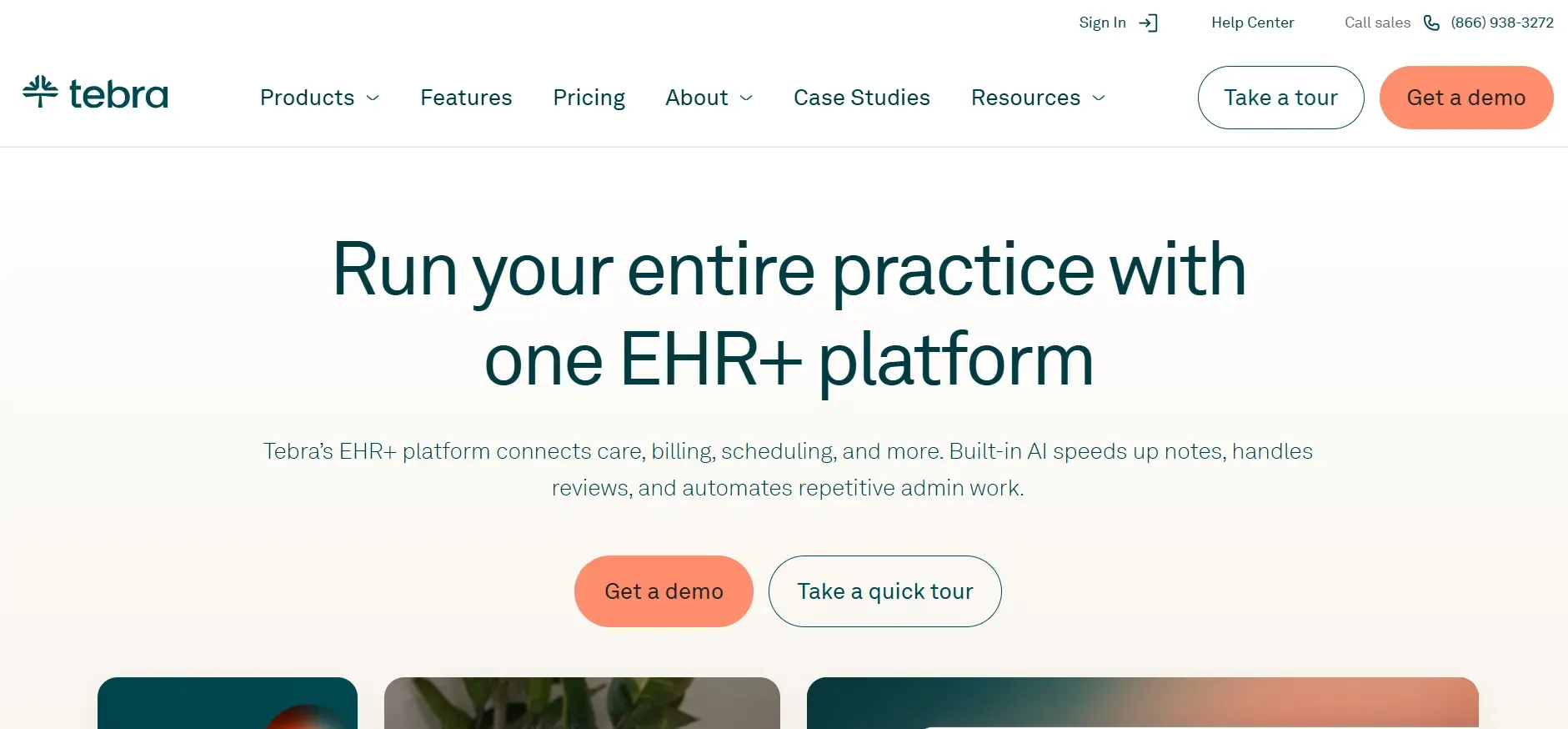
Kareo (now part of Tebra) is a cloud-based medical billing and revenue cycle management (RCM) platform. Fertility clinics often adopt Kareo when PracticeSuite’s billing tools prove too rigid or lack advanced claim management. Kareo is known for its streamlined claims workflow, payer connectivity, and billing team productivity features.
Pricing: Starts at ~$125 per provider per month.
-
Key limitations:
- Billing-focused, not a full EMR
- Per-provider pricing adds up for larger teams
- Fertility-specific billing customizations may require paid setup
-
Strengths:
- Streamlined insurance and claim management
- Automated patient payment tools
- Integrates with several EMRs
If you’re tired of per-provider fees, an owned system from Devaims means you pay once for your whole team, not forever per seat.
8. Devaims (Best for clinics that want to own their platform)
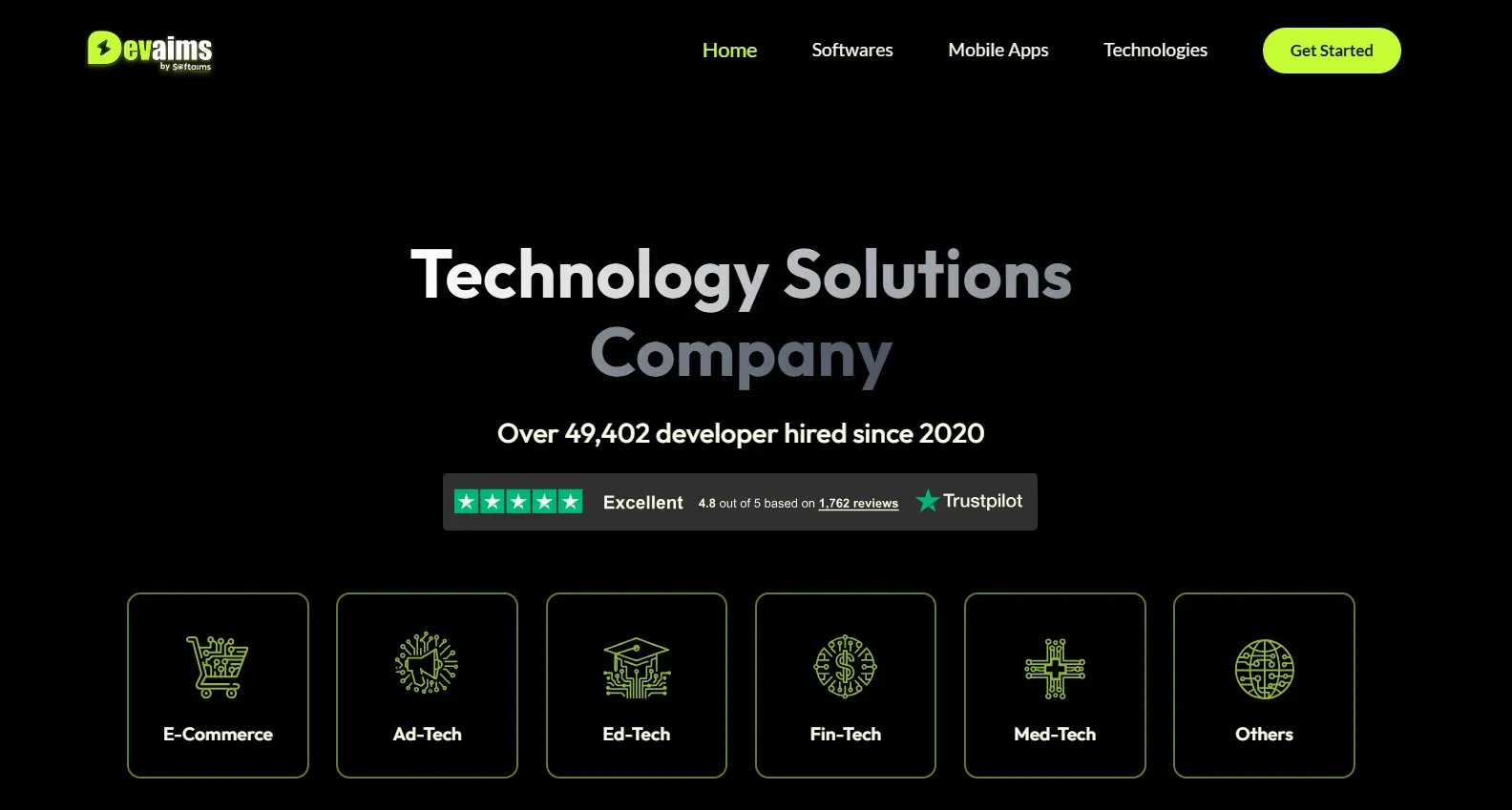
Devaims builds custom software for fertility clinics who want to own the code, keep their data, and never pay per-user or per-module fees again. Unlike every other option on this list, you get the full source code. The system is tailored to your workflows, not a generic template, and you decide how it grows over time.
- Every workflow and report built to your exact needsCustom integrations with labs, billing, analytics, and patient toolsRole-based access control and audit trailsAutomated data export for compliance and researchMobile and web interfaces for staff and patientsFull migration and training included in every buildYou own the code, data, and future, no lock-in
- Every workflow and report built to your exact needs
- Custom integrations with labs, billing, analytics, and patient tools
- Role-based access control and audit trails
- Automated data export for compliance and research
- Mobile and web interfaces for staff and patients
- Full migration and training included in every build
- You own the code, data, and future, no lock-in
Other PracticeSuite alternatives worth knowing
- Ngenix: Offers advanced digital lab management, including specimen inventory and workflow automation. Best suited for clinics with complex lab operations; less useful as a full EMR replacement. Integrates with some EMRs and lab hardware, but depth for clinical charting is limited.
- Clinisys: A global leader in laboratory information systems (LIS), Clinisys is strong in lab workflow automation, compliance, and analytics. However, it is rarely used as a standalone EMR for fertility clinics; best for large enterprise labs or as a lab-side add-on.
- OvaPortal: A niche patient portal solution, OvaPortal offers cycle tracking and basic communication. It is a solid add-on for clinics using legacy EMRs, but lacks the depth needed for full clinical documentation, billing, or lab integration.
If you’re deep into lab management or need only a portal layer, these fit, but rarely replace a full EMR or practice platform. For more on lab-specific solutions, see the Clinisys LIMS overview.
How to choose the right PracticeSuite alternative
- By clinic size: Small clinics (1 to 3 providers) may prefer all-in-one SaaS platforms for lower upfront costs and quick onboarding. Larger clinics (5 or more providers, multiple locations, or in-house labs) often outgrow SaaS limitations and need custom workflows, reporting, and integrations.
- By budget: Per-user SaaS is cheaper upfront, but total cost of ownership rises fast as you add providers, staff, or modules. Custom builds (like Devaims) require higher initial investment, but become cheaper long-term for growing teams (see the cost math below).
- By vertical needs: If you need deep fertility or lab features, specialized EMRs like eIVF or MediTEX IVF fit the bill. If your clinic’s workflows are highly unique, or you want full control over data, only a custom build will match.
- By integration: If your clinic relies on specific labs, appointment tools, or analytics, check if your alternative supports them out of the box. Otherwise, budget for custom integration work, either up front or as ongoing fees.
- By future growth: If you plan to add locations, providers, or new service lines, calculate how quickly recurring fees will outpace the cost of ownership. Factor in migration and training costs for future transitions.
Ready to stop renting and actually own your clinic’s software? The next section is for you.
Stop paying rent on software you could own
Every PracticeSuite alternative above is a rental: you pay per user, module, or clinic, and after five years you own nothing. Even the most specialized platforms lock your data and workflows to their roadmap. Owning your system, by contrast, means you control features, costs, and integrations, and never face a surprise fee hike or migration disaster again.
Devaims builds you a custom platform, then hands you the full source code and documentation. You keep your data, own every workflow, and pay only flat maintenance, not per-seat or per-module add-ons. No lock-in. No recurring “just for access” bill. You grow on your terms.
- Per-user and per-module fees: With your own build, you pay once, add as many users, clinics, or modules as you want.
- Integration pain: Every integration is built to spec, so your labs, billing, and patient tools talk to each other from day one.
- Reporting limitations: All the reports you need are built in, or you add them as your clinic grows.
- Support and migration: Devaims includes migration, training, and ongoing tweaks, no nickel-and-diming.
| Platform | Ownership | Per-user fees | Custom workflows | Data export |
|---|---|---|---|---|
| PracticeSuite | No, rented | Yes | Limited | Export possible, not simple |
| eIVF | No, rented | Yes | Strong, but extra cost | Export possible |
| Kareo (Tebra) | No, rented | Yes | Limited for fertility | Export possible |
| Devaims | Yes, you own it | No | Built to your spec | You keep everything |
| Year | Rented: Total paid | Owned: Total paid |
|---|---|---|
| 1 | $18,000 | $31,800 |
| 2 | $36,000 | $33,600 |
| 3 | $54,000 | $35,400 (now ahead) |
| 4 | $72,000 | $37,200 |
| 5 | $90,000 | $39,000 |
Assumes a 12-user clinic at $125/user/month (Kareo’s entry price, but many platforms run higher for full EMR); custom build at $30,000 with $150/month maintenance. Break-even is just after year 3. If you plan to grow, the savings multiply. Want the real math for your clinic? We’ll run the numbers for you free.
Let’s break down the math:
- Year 1: SaaS is cheaper upfront, but only by deferring the true cost. You pay $18,000 for a 12-user team, but this is just for access, no asset created.
- Year 3: Recurring fees catch up fast. At $54,000 paid, you are closing in on twice the cost of a custom build.
- Year 5: $90,000 spent, still renting, and if you grow or add modules, this number rises. The custom build is $39,000 total, and you own the system, code, and all data. Maintenance is predictable and not tied to user count.
For clinics with more than 10 users, or plans to add locations, the cost advantage of ownership accelerates. Subscription vendors may also increase rates or introduce new add-on fees over time. Ownership insulates you from this risk.
How to switch from PracticeSuite
- Export all patient, billing, and scheduling data from PracticeSuite. Use CSV, HL7, or API access if available. Review data structure and note any custom fields or relationships (e.g., cycle history, donor links) that may need special handling.
- Pick your new platform and plan your migration timeline. Schedule for a low-volume period if possible. Assign team leads for clinical, billing, and IT migration tasks.
- Import data into the new system, mapping fields and reconciling differences. Validate data accuracy, especially for clinical history and billing records. Plan for multiple test imports before go-live.
- Reconnect labs, payment processors, portals, and other integrations. Test all data flows, appointment reminders, and lab result imports/exports.
- Train your team on the new workflows and permissions. Provide hands-on sessions and documentation. Allow for a transition period with support on hand.
- Run the new system in parallel with PracticeSuite to catch any issues before going live. Monitor for discrepancies and resolve them before full cutover.
- Review and close out your old PracticeSuite contract. Confirm all data has been exported and that you are compliant with any notice or exit provisions.
With a custom Devaims build, the migration is handled as part of the project, with dedicated support for data mapping, validation, and training. You get comprehensive documentation and direct access to your database for future needs.
Frequently asked questions
What is the best PracticeSuite alternative for fertility clinics?
For most fertility clinics, eIVF is a strong SaaS alternative, thanks to its comprehensive fertility workflows, regulatory reporting, and patient portal. However, you remain on a recurring fee model, and customizations are limited by the vendor’s roadmap and support contracts. Devaims is the only option if you want to own the system outright and escape recurring fees, giving you control over features, integrations, and costs. The right choice depends on whether you want to rent or own, and how specialized your workflows are.
What is the cheapest PracticeSuite alternative?
Kareo (Tebra) offers entry-level pricing around $125 per provider per month, often making it the cheapest SaaS option for very small clinics. However, as your team grows, costs rise rapidly. For teams of 10 or more, a Devaims build is often cheaper over five years, and you own the asset. Always calculate your five-year total cost, including migration and support, before deciding.
Are there any free PracticeSuite alternatives?
There are no free, full-featured EMR systems for fertility clinics. Some open-source EMRs (like OpenEMR) exist, but lack fertility-specific features and require substantial IT resources to customize and maintain. For clinics with unique needs, Devaims can build only what you need, so you pay once and own it, with no ongoing license or user fees.
Which PracticeSuite alternative is best for labs?
Ovation Fertility and Repromed are strong for lab integration, with robust specimen tracking and chain-of-custody features. However, most clinics still need a full EMR for scheduling, billing, and patient management. Devaims can build deep lab integration directly into your own platform, tailored to your lab and clinical processes, so you avoid patchwork solutions.
How hard is it to switch from PracticeSuite to another system?
Switching takes planning and effort. Key steps include data export (which may involve manual work to preserve relationships and custom fields), mapping and importing to the new system, and team training. Expect several weeks of overlap and testing. With a custom Devaims platform, migration and training are part of the build, reducing headaches and ensuring you keep all data and workflows intact.
Can I keep my data if I leave PracticeSuite?
You can export data from PracticeSuite, but the process can be complex and not all formats are easy to import elsewhere. Some data (such as imaging, attachments, or custom tables) may require special handling or scripting. With Devaims, you own your database and all exports, no restrictions, no extra fees, and you have direct access to all raw data and backups.
When should a clinic consider building its own platform?
If monthly fees are outpacing your growth, or you need features the SaaS platforms won’t build, owning starts to make sense. The 5-year cost math tips in your favor for most clinics after year 3, especially if you plan to grow, add locations, or require custom reporting and integrations. Clinics that want to future-proof their operations and control their digital assets should strongly consider ownership.
The bottom line
If recurring costs, lock-in, and limited reporting are holding your clinic back, you have real PracticeSuite alternatives, but only one lets you own the system you run. The rest are just different versions of renting.
Here is the test: add up what your current platform will cost you over the next five years. If that number would have built you something you own, you already have your answer. Owning means you set the rules, not your vendor.
For more insights on owning your software, see the Devaims blog. You may also like Kareo alternatives, AdvancedMD alternatives, and eIVF alternatives.