


Ever get that sinking feeling when the EMR bill hits your inbox? You start off with iClinic because it looks simple, but a year or two in, the monthly fees add up and you realize you are renting your own data, forever. Worse, you want more control or features, but you are boxed in by their roadmap and support queues. Fertility clinics need more than another SaaS contract. They need real options, especially as regulatory, reporting, and patient demands keep climbing.
If you are searching for iClinic alternatives, you are not alone. Clinics are moving to platforms like eIVF, MediTEX IVF, or Kareo, looking for more flexibility and better pricing. But here is the honest truth: unless you own your system, you are always at the mercy of another vendor's rules and price hikes. At the end of this list, you will see one path that breaks the cycle, custom software you own outright, built by Devaims.
Why fertility clinics look for iClinic alternatives
Steep per-provider fees: Costs rise fast as your team grows, especially for multi-physician clinics or those adding new specialties. What started affordable can suddenly become a major monthly expense. EMR providers often use pricing models that penalize growth: each new provider or staff account triggers a new charge. For clinics that scale, or simply want to bring in part-time or consulting specialists, these costs can balloon unpredictably. In some cases, even adding lab techs or billing staff incurs extra charges, making it hard to forecast costs as your clinic evolves.
Data export headaches: Getting your data out of iClinic for migration or analytics is harder than it should be, with limited export formats and extra fees for large datasets. Many clinics find that when they request a full data export, the process is slow, sometimes requiring vendor approval, and the resulting files (often PDFs or proprietary formats) are not easily imported elsewhere. For clinics that need to meet reporting requirements or want to run advanced analytics, this lack of open access is a major roadblock.
Feature gatekeeping: Want advanced reporting or lab integrations? They are often locked to higher tiers, meaning another jump in monthly cost. It is common for EMR vendors to advertise a wide set of features, only for clinics to find that essentials like analytics, patient portals, or third-party lab integration require a costly upgrade. Over time, as your clinic's needs grow, you may find yourself forced into expensive tiers or add-ons just to keep up with basic workflow demands.
Vendor lock-in: Customizations are minimal, and you're stuck waiting for generic updates that may not fit your workflow. Even if you submit feature requests, they may go into a queue with no guaranteed timeline, and updates may not align with your clinic's unique processes. This lack of flexibility can slow down your ability to adapt to new treatments, regulatory changes, or innovations in fertility care.
Support bottlenecks: Clinics report slow ticket turnarounds and limited hands-on help when it matters most. When an outage or data issue occurs, you may be one of hundreds of clinics waiting in line. Some vendors offer premium support, at a premium price, leaving smaller clinics at the back of the queue. For fertility clinics, where timing and data accuracy are critical, this support lag can directly affect patient outcomes.
These pain points push more clinics to look for iClinic alternatives that give them control, flexibility, and a better long-term deal. As the fertility field becomes more competitive and regulated, owning your clinical data and workflows is no longer a luxury, it's a necessity.
Quick comparison of the best iClinic alternatives
| Tool | Best for | Starting price | You own it? |
|---|---|---|---|
| eIVF | All-in-one fertility EMR | Reported $500/mo+ | No |
| MediTEX IVF | IVF cycle management | Reported €250/mo+ | No |
| Ovation Fertility | Lab and genetics | Custom pricing | No |
| Repromed | Lab-centric clinics | Custom pricing | No |
| Embryoscope | Incubator imaging | Device+SaaS fees | No |
| PracticeSuite | Billing & scheduling | Reported $195/mo+ | No |
| Kareo (Tebra) | Insurance billing | Reported $125/mo/provider | No |
| AdvancedMD | Enterprise clinics | Reported $429/mo/provider | No |
| Devaims | Full clinic ownership | One-time build, you own it | Yes |
Always confirm current pricing before you decide. EMR fees shift fast in this market, and add-ons or integration costs are often not mentioned upfront.
The 10 best iClinic alternatives
1. eIVF (Best for: All-in-one fertility EMR)
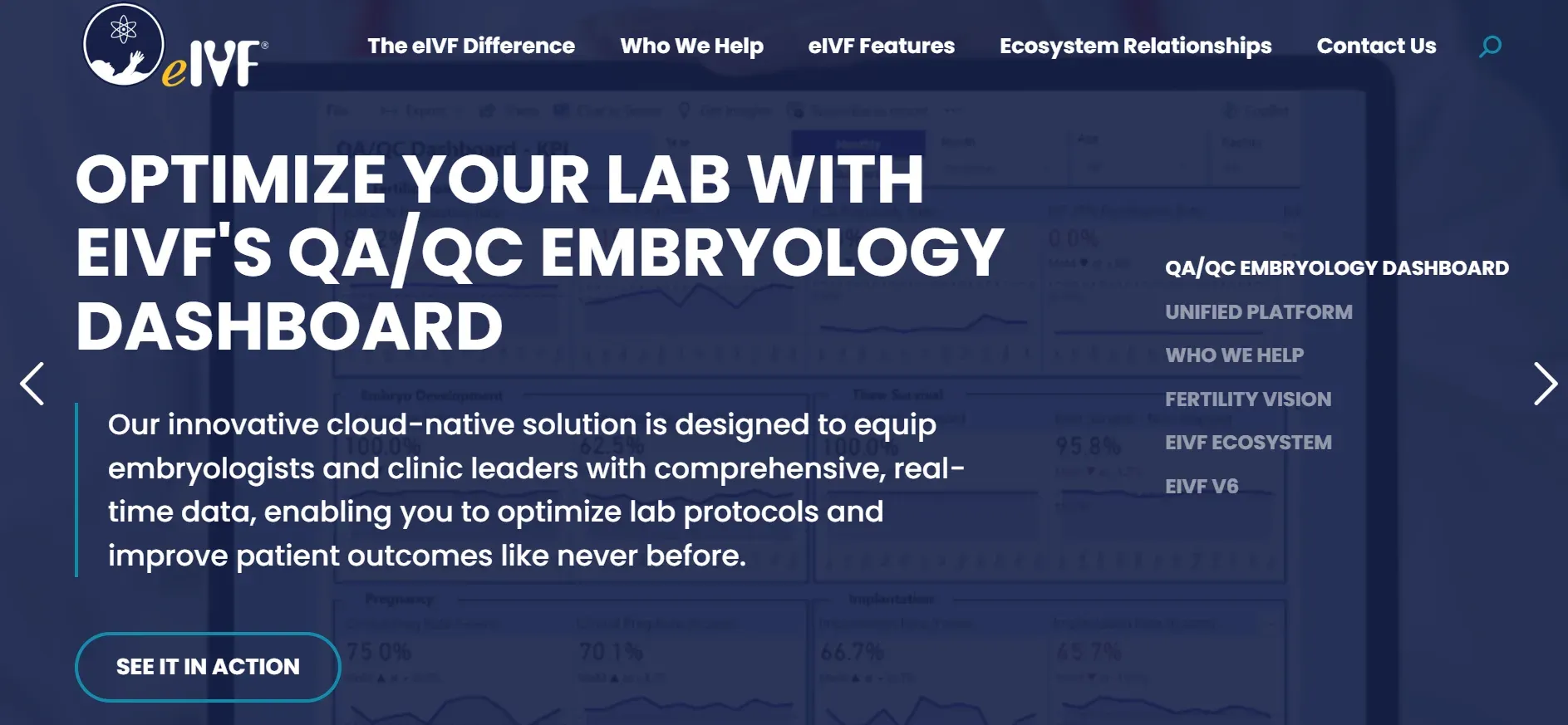
eIVF is a leading EMR platform purpose-built for reproductive medicine, offering a comprehensive suite of features that cover everything from patient registration to lab management. Many clinics switch from iClinic to eIVF for its fertility-specific modules and its ability to centralize the patient journey, including ovulation tracking, cycle scheduling, medication management, and embryology records. eIVF also provides a robust patient portal, allowing patients to view test results, communicate securely with staff, and manage appointments.
Features and integrations: eIVF offers real-time lab integration, electronic consent forms, medication inventory management, billing and claims, and advanced analytics for both clinical outcomes and operational performance. The system integrates with major laboratory instruments via HL7, and supports third-party billing systems and even telehealth modules. Its API allows for some level of custom integration, but deep workflow changes are limited to what is on eIVF's roadmap.
Migration friction: Migrating to eIVF can be complex, particularly for clinics with large historical datasets or custom workflows. eIVF provides migration support, but full data mapping and validation often require extra services. Data exports from iClinic may need to be converted, and some older records may not map cleanly to eIVF's fields, especially for non-standard treatments or research notes.
Concrete use cases: eIVF is used by multi-provider clinics, high-volume IVF centers, and clinics seeking to streamline both clinical and admin operations. Its patient portal is favored by clinics prioritizing patient engagement and remote communication. eIVF's lab integration is a draw for clinics with in-house labs or those outsourcing to commercial labs that support HL7 data exchange.
- Fertility-specific modules and patient portal
- Strong lab and billing integrations
- Widely adopted in reproductive medicine
- Advanced modules and users increase monthly costs
- Custom workflow changes limited to vendor roadmap
- Full data ownership and export may be restricted
On a system you own, per-provider costs are fixed no matter how many clinicians you add.
2. MediTEX IVF (Best for: IVF cycle management)
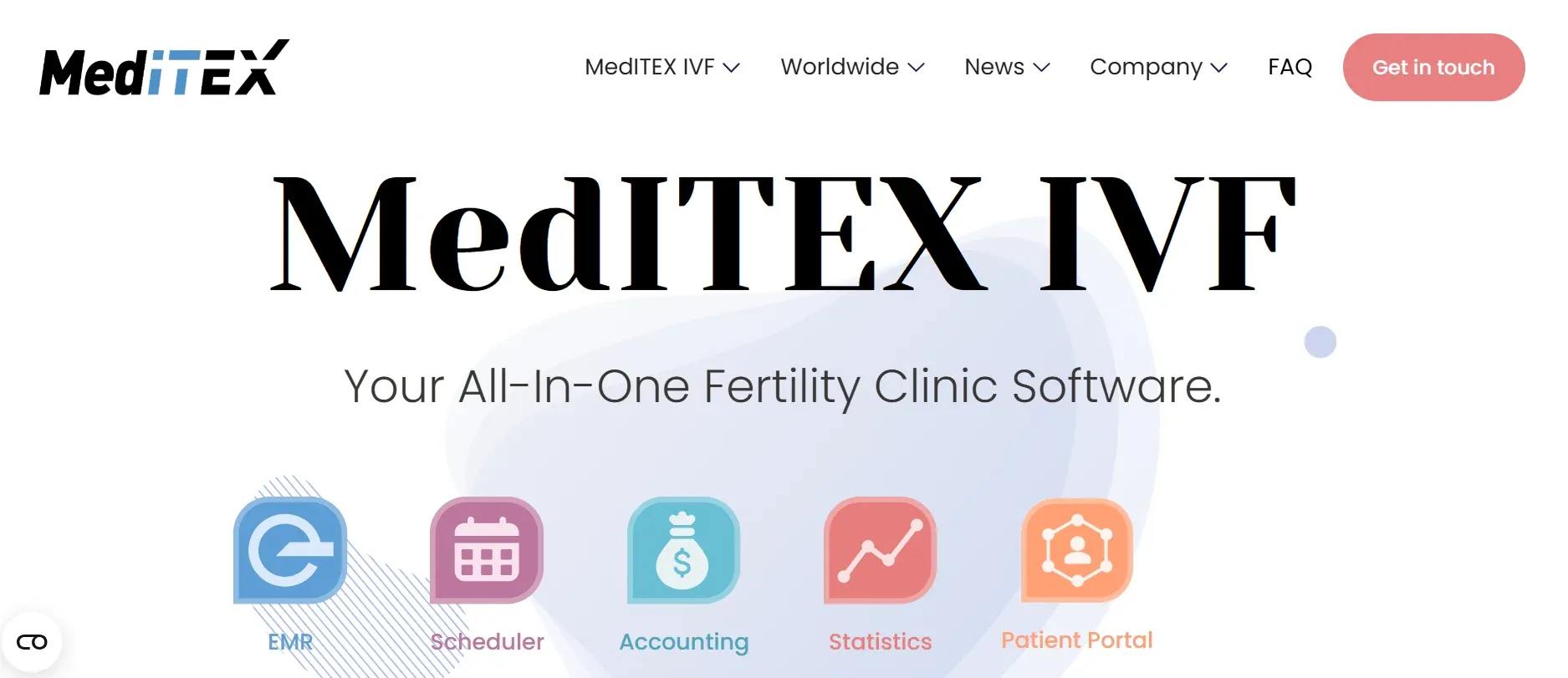
MediTEX IVF is a specialized EMR platform favored by European clinics for its detailed IVF cycle management and donor tracking capabilities. It is known for strict adherence to European regulations (such as EU Tissue and Cells Directive), making it a strong choice for clinics that must meet rigorous audit and compliance requirements.
Features and integrations: MediTEX IVF offers comprehensive cycle tracking, donor and partner management, genetics and embryology modules, and integrated document management. The platform supports HL7 and ASTM interfaces for lab device integration, and includes modules for quality assurance, incident reporting, and traceability. MediTEX also provides regulatory audit tools and supports multi-language deployments, which is valuable for clinics serving international patients.
Migration friction: Migration to MediTEX IVF often requires significant planning, especially for clinics with custom workflows or non-European data structures. Implementation and training fees are common, and mapping legacy data to MediTEX's detailed schema can take time. Clinics report that while the software is powerful, the onboarding process is complex and often requires hands-on vendor support.
Concrete use cases: MediTEX IVF shines in high-volume IVF centers, clinics with in-house labs, and those running donor programs or clinical research. Its detailed audit trails and compliance features are used by clinics facing frequent regulatory inspections. The system is also popular in markets where strict data protection and traceability are mandated by law.
- Deep IVF and donor management modules
- Strong compliance and audit features
- Multi-language and international support
- Complex onboarding and training process
- Customizations can be slow and costly
- Subscription model, no code ownership
When you own your platform, integrations cost you nothing after launch.
3. Ovation Fertility (Best for: Lab and genetics clinics)

Ovation Fertility is not a traditional EMR, but a lab management and genetics platform offering advanced workflow, specimen tracking, and genetic testing integration. Clinics frustrated with iClinic's limited lab modules often turn to Ovation for more sophisticated reproductive science support. Ovation is best seen as a complement to a clinical EMR, not a replacement.
Features and integrations: Ovation provides specimen management, chain-of-custody tracking, genetics reporting, and advanced lab workflow automation. It supports integration with clinical EMRs via HL7 or custom APIs, and offers reporting for regulatory compliance (CAP, CLIA, and FDA in the US). The system is built to handle high-volume genetic testing and large-scale lab operations, and includes patient result portals for direct-to-patient reporting.
Migration friction: Since Ovation is often added alongside a clinical EMR, migration focuses on integrating lab workflows and ensuring data flows smoothly between systems. Initial setup requires mapping specimen IDs, workflows, and result formats. Full data migration is less relevant unless moving from another LIMS.
Concrete use cases: Ovation is used by clinics with in-house genetics labs, third-party testing partnerships, or those running large-scale donor programs. It is especially valuable for clinics offering preimplantation genetic testing (PGT), carrier screening, or egg/sperm banking with complex consent and regulatory requirements.
- Advanced lab and genetics workflow support
- Regulatory reporting and compliance tools
- Integrates with clinical EMRs and patient portals
- Not a full EMR, requires pairing with clinical system
- Pricing varies, can be high for large labs
- Customization may require extra development
4. Repromed (Best for: Lab-centric clinics)
Repromed is a regional leader in IVF and fertility lab management, especially across Australia and New Zealand. The platform was designed by clinics for clinics, focusing on high-throughput sample tracking, compliance, and regulatory reporting. Repromed's software is best suited for clinics that place lab operations at the center of their workflow.
Features and integrations: Repromed offers sample tracking with barcode/RFID, chain-of-custody management, automated reporting for regional health authorities, and integration with local billing and patient management tools. The platform supports multi-site lab operations and includes modules for quality assurance, incident management, and consent tracking.
Migration friction: Repromed provides migration support for clinics moving from iClinic or other EMRs, but as with most lab-centric platforms, mapping clinical notes or billing data may require custom work. The platform is optimized for AU/NZ regulatory standards, so international clinics may need to adapt workflows or pair with a clinical EMR.
Concrete use cases: Repromed is used by IVF labs processing high sample volumes, clinics with strict compliance needs, and those participating in regional data-sharing programs. It is also suited for clinics running research arms or collaborating with hospitals on multi-site projects.
- Strong lab workflow and compliance features
- Multi-site and research support
- Automated regulatory reporting
- Not a complete EMR, lacks clinical charting
- Customization options are limited
- Support may be slower outside AU/NZ
5. Embryoscope (Best for: Incubator imaging)
Embryoscope is a time-lapse incubator system that enhances embryo monitoring and selection. Rather than a full EMR, Embryoscope is a device/software hybrid that augments clinical workflows by providing continuous, high-resolution imaging of developing embryos. Many clinics pair Embryoscope with their EMR to improve selection outcomes and patient communication.
Features and integrations: Embryoscope offers real-time video capture, annotation tools for embryologists, automated scoring algorithms, and secure cloud storage for imaging data. It integrates with major EMRs and LIMS via API or HL7 and supports exporting time-lapse videos for patient review. The system can be configured to trigger alerts or flag embryos based on customizable criteria.
Migration friction: The main friction is in integrating imaging data with your EMR or lab platform. Some clinics report that full export of historical imaging data is limited unless you maintain a subscription. Setting up seamless workflow integration often requires IT and vendor support.
Concrete use cases: Embryoscope is used by clinics aiming to boost implantation rates, offer transparent embryo selection to patients, or differentiate their services with advanced technology. It is also valuable for clinics conducting research or publishing outcome data, as it enables detailed review of embryo development.
- Continuous, high-resolution embryo imaging
- Integrates with EMRs and LIMS
- Supports research and patient engagement
- Significant upfront hardware and ongoing SaaS fees
- Data export may be limited by vendor
- Not a replacement for clinical or lab EMRs
If your EMR was built for you, imaging data could be integrated on your terms.
6. PracticeSuite (Best for: Billing & scheduling)
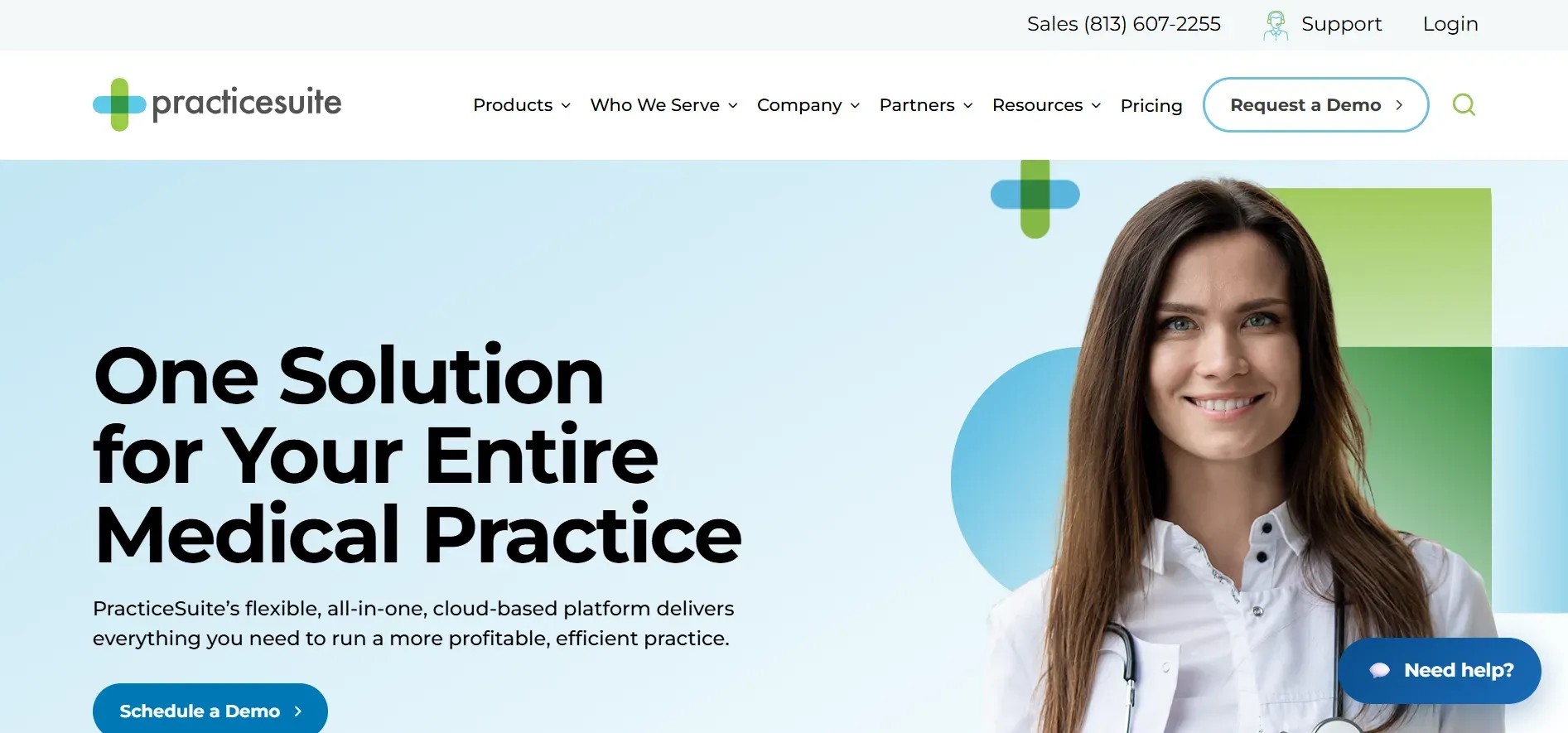
PracticeSuite is a cloud-based practice management and EMR system known for its billing and scheduling features. Fertility clinics often look to PracticeSuite to streamline insurance claims, manage appointments, and automate revenue cycle management. While the platform is not fertility-specific, it is highly customizable for billing workflows.
Features and integrations: PracticeSuite supports electronic claims submission, eligibility checks, automated patient reminders, and robust reporting for financial performance. Its appointment management tools allow for custom scheduling templates, waitlists, and multi-provider calendars. The system integrates with popular clearinghouses, accounting software, and basic EHR modules, but lacks deep fertility or lab support.
Migration friction: Migrating billing and scheduling data from iClinic is usually straightforward, but clinical notes and fertility workflows may not map directly. Adding fertility-specific fields or reports may require custom forms or external tools.
Concrete use cases: PracticeSuite is ideal for clinics that prioritize efficient billing, insurance reimbursement, and minimizing administrative overhead. It is also used by multi-specialty clinics that need flexible scheduling and reporting across different service lines.
- Strong billing and scheduling tools
- Customizable for multi-specialty clinics
- Integrates with clearinghouses and accounting systems
- Limited fertility-specific features
- Advanced analytics require higher-priced plans
- Separate systems needed for lab management
7. Kareo (Tebra) (Best for: Insurance billing)
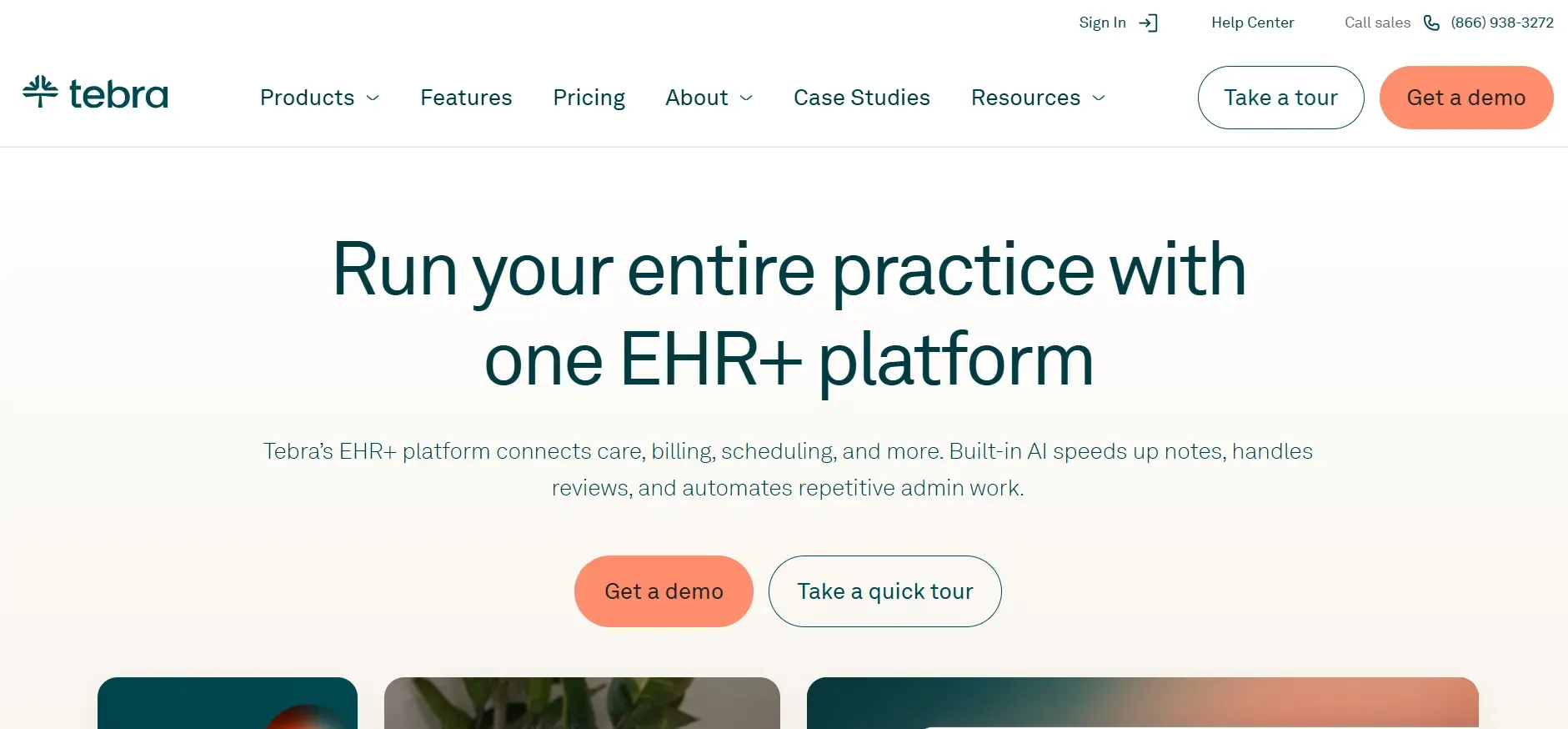
Kareo (now part of Tebra) is widely used by clinics seeking strong insurance billing, claims management, and eligibility verification. Kareo is popular for its clean user interface, quick onboarding, and focus on minimizing revenue leakage. While not fertility-specific, many practices use Kareo alongside clinical EMRs to handle the financial side of operations.
Features and integrations: Kareo provides insurance verification, automated claims scrubbing, denial management, patient billing, and reporting. The platform integrates with clearinghouses, accounting systems, and some EHRs, but fertility or lab modules are limited. Kareo's API allows for basic data exchange with external platforms.
Migration friction: Moving financial data from iClinic to Kareo is usually smooth, but clinical data is not migrated. Clinics often run Kareo in parallel with a dedicated EMR, requiring dual data entry or interface development for full workflow integration.
Concrete use cases: Kareo is a fit for clinics with high insurance claim volume, those looking to reduce denials and speed up reimbursement, or clinics seeking to streamline patient billing. It is also favored by practices that outsource billing or use remote billing teams.
- Efficient insurance billing and claims management
- Easy onboarding and user interface
- Integrates with EHRs and accounting tools
- Per-provider pricing increases with team size
- Minimal fertility-specific features
- Advanced reporting may require extra fees
With Devaims, your team size does not change your monthly cost after launch.
8. AdvancedMD (Best for: Enterprise fertility clinics)
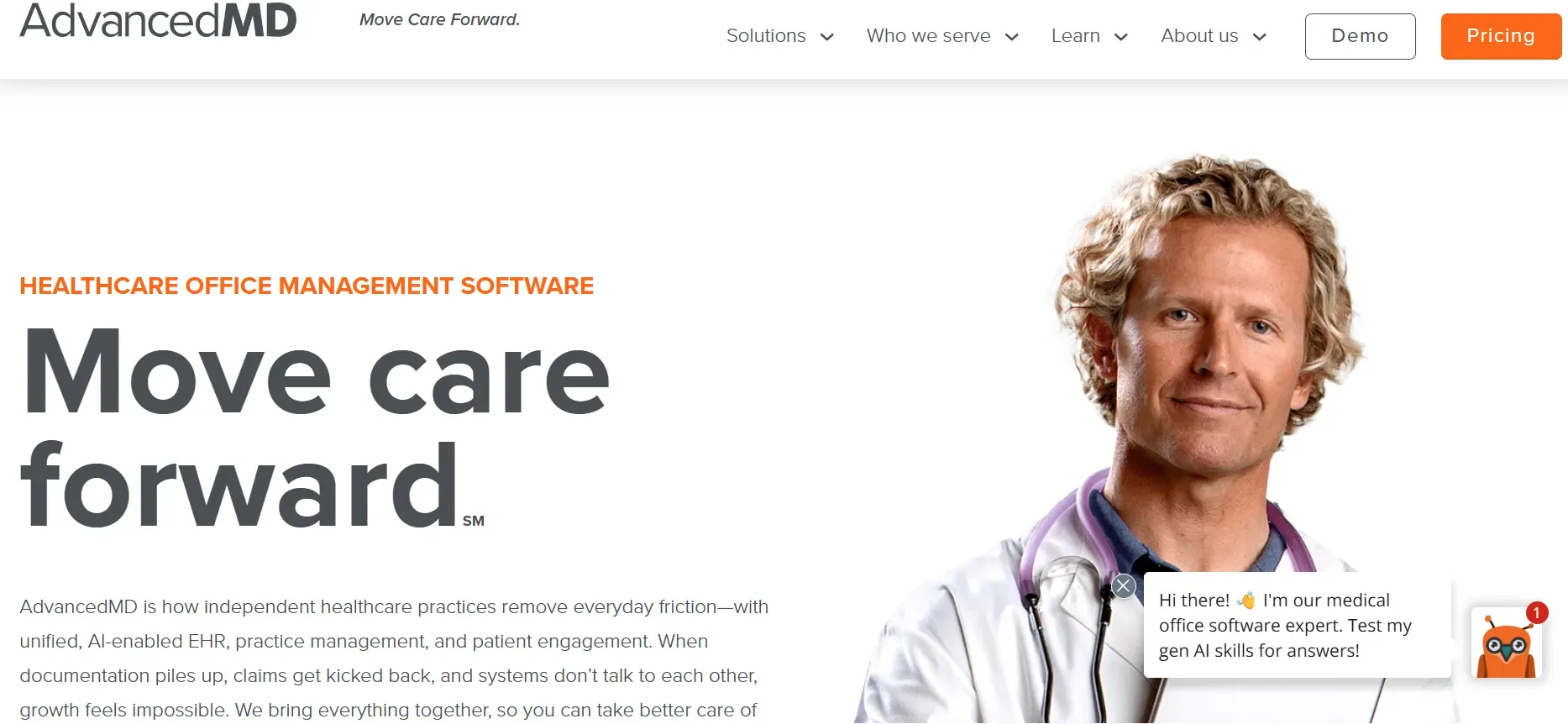
AdvancedMD is a premium cloud-based EMR and practice management platform designed for enterprise clinics and large fertility groups. It offers deep analytics, customizable workflow engines, and strong security and compliance features. Fertility practices that have outgrown iClinic often turn to AdvancedMD for its scalability and breadth of features.
Features and integrations: AdvancedMD provides enterprise-grade scheduling, document management, e-prescribing, telemedicine, and comprehensive financial analytics. The system supports custom workflow automation, multi-location management, and granular user permissions. It integrates with laboratory systems, imaging platforms, and third-party billing systems, though some fertility modules are sold as add-ons.
Migration friction: Migrating to AdvancedMD can be resource-intensive, with dedicated project management and data mapping required. Clinics with years of historical data should expect a multi-phase migration, including validation and staff retraining. AdvancedMD provides professional services for onboarding, but these come at a cost.
Concrete use cases: AdvancedMD is best for fertility organizations with multiple locations, research arms, or high patient volumes. Its analytics and workflow engines are suited for clinics that want to standardize processes, report outcomes to regulators, or manage complex billing.
- Enterprise-grade analytics and workflow automation
- Multi-location and research support
- Strong security and compliance features
- High per-provider fees and multi-year contracts
- Fertility modules may require extra cost
- Customization limited by vendor roadmap
9. Devaims (Best for: Clinics that want to own their EMR and data)
Devaims is the only alternative in this list that delivers a fully custom EMR or practice management system built just for your fertility clinic, and hands you the source code to own outright. No monthly license, no forced upgrades, no per-provider pricing. You define the features, integrations, and reports your workflow needs, and keep the code and data for good.
- One-time build, then flat maintenance, no hidden fees
- You own the code, data, and roadmap
- Custom features, lab integrations, and compliance reporting
- Built for your exact fertility workflow, not a generic template
Other iClinic alternatives worth knowing
- Ngenix: Known for its lab workflow modules, but not a full EMR replacement for clinical notes and scheduling. Ngenix works best as a LIMS add-on for clinics that already have a robust EMR.
- Clinisys: Strong in lab management and LIMS, but requires pairing with a clinical EMR. Better fit for large, multi-site labs or reference laboratories. Learn more about Clinisys LIMS.
- OvumView: A niche European EMR for IVF, but limited support outside the EU. OvumView is chosen by clinics with European regulatory needs but is not widely adopted elsewhere.
Some of these tools are lab-focused or region-specific, so confirm fit before considering them as an iClinic replacement. Always check for local support and regulatory compatibility.
How to choose the right iClinic alternative
- By budget: Count all monthly, per-provider, integration, and migration fees, costs add up fast. Do not forget to include costs for support, training, and required add-ons (like analytics or lab modules). For custom builds, compare total five-year cost, not just upfront spend.
- By size: Single-provider clinics can get away with lighter platforms, but multi-physician groups hit cost ceilings quickly with SaaS. Consider how your costs will scale as you add staff or new locations.
- By feature need: If you need custom reporting, deep lab integration, or unique patient workflows, off-the-shelf tools may leave you short. List your must-have features and see which platforms support them natively or via integration.
- By data control: If you want true data ownership or plan to scale, only an owned system gives you control. Consider future needs: will you want to run advanced analytics, participate in research, or expand to new services? Data portability is key.
If your clinic is tired of endless rent and wants to own your software, there is a better way with Devaims.
Stop paying rent on software you could own
The single biggest pain with iClinic, and every other EMR in this list, is the endless rent. All the alternatives above are SaaS: recurring monthly bills, per-provider fees, and change requests that take months. You never own the platform, and your data is only as portable as their export button allows. With Devaims, you break that cycle. You own the code, data, and the roadmap. No more forced upgrades or price hikes. You get exactly the features and integrations your clinic needs, built for you, not for the mass market.
Devaims builds custom EMR and lab platforms for fertility clinics. You keep the source code, control your data, and pay a flat maintenance fee, no per-user charges, no contracts you can't escape. Want a new report or integration? It's your system, so you decide what gets built and when.
- Per-provider fees? Gone. Your costs are fixed after launch.
- Feature gatekeeping? You define your own features and integrations.
- Export headaches? Your data, your format, anytime.
- Support bottlenecks? Direct support from the team that built your system.
| Platform | Ownership | Per-provider fees | Custom features | Contracts |
|---|---|---|---|---|
| iClinic | No | Yes | Limited | Yes |
| eIVF | No | Yes | Some | Yes |
| Kareo | No | Yes | Few | Yes |
| Devaims | Yes, you own it | No | Unlimited | No contract |
For a typical fertility clinic with 5 providers paying $400/month each plus $200/month in add-ons, you are spending $2,200/month, or $26,400/year, just to rent your EMR. Over five years, that is $132,000, and you own nothing at the end. With Devaims, a one-time build of $32,000 and flat $180/month maintenance ($2,160/year) totals $43,200 over five years. You break even after less than two years, then save every month after.
| Year | Rented (cumulative) | Owned (cumulative) |
|---|---|---|
| 1 | $26,400 | $34,160 |
| 2 | $52,800 | $36,320 (now ahead) |
| 3 | $79,200 | $38,480 |
| 4 | $105,600 | $40,640 |
| 5 | $132,000 | $42,800 |
Clinics with more than 3 providers, custom workflow needs, or long-term growth plans see the biggest upside from owning. Want to run your real numbers? We will calculate your break-even for free.
For more on the ownership cost equation, see HealthIT.gov's EHR cost breakdown.
How to switch from iClinic
- Export all patient, clinical, and billing data from iClinic (CSV, HL7, or PDF as available). Be sure to request full data extracts, including attachments, lab results, and historical notes. Some vendors require notice or a formal request for data export.
- Choose your new EMR or platform (from the list above, or a custom Devaims build). Evaluate not just features, but migration support and data mapping capabilities.
- Map and import your data into the new system, validating patient records and billing histories. Work with your new vendor or IT partner to ensure all data fields are captured and correctly assigned.
- Reconnect payment processing, lab integrations, and external modules. Test all integrations (lab devices, billing clearinghouses, patient portals) to ensure smooth operation.
- Train physicians, staff, and lab techs on the new workflows and reporting. Provide hands-on sessions and reference guides for each user role.
- Test in parallel for at least one week to catch workflow or data issues. Run both old and new systems side by side to ensure nothing is missed and staff are comfortable with the transition.
- Review your contract status with iClinic to confirm cancellation and final billing. Get written confirmation of account closure and data destruction, if required by your compliance policy.
With a custom Devaims build, the migration is handled as part of the project, including data mapping, validation, and user training.
Frequently asked questions
What is the best iClinic alternative for fertility clinics?
For most clinics, eIVF and MediTEX IVF are strong rented options, each offering deep fertility support and integrations. eIVF is a good choice for clinics wanting an all-in-one SaaS solution, while MediTEX IVF is favored by clinics needing strict European compliance or advanced donor programs. However, Devaims is the only alternative that lets you own the code, data, and features. If long-term cost, workflow control, or data sovereignty matter, custom is the right fit, especially for clinics planning to scale or differentiate their services.
Which iClinic alternative is the cheapest?
Kareo and PracticeSuite often have the lowest per-provider starting rates, but costs rise as you add users and integrations. For long-term savings, owning with Devaims wins after the second year for most multi-provider clinics, since your costs stay flat as you grow and you avoid forced upgrades or add-on fees.
Is there a free iClinic alternative?
There are no truly free EMRs built for fertility clinics. Some open-source tools exist (such as OpenEMR or OSCAR EMR), but none match fertility workflow needs out of the box, customization, support, and regulatory compliance will require investment. A custom Devaims build is not free, but after a few years it can be cheaper than SaaS rent, and you own the result.
Which iClinic alternatives offer the best lab integration?
eIVF, MediTEX IVF, and Ovation Fertility all offer strong lab and genetics modules, with HL7 and device integration support. Repromed and Ngenix are strong for lab-centric workflows but may lack clinical charting. If you want labs wired in exactly your way, down to device protocols, custom analytics, or research data capture, a custom system from Devaims is the only real option, since you define the integrations and own the code.
When should a clinic switch from iClinic?
If your monthly fees outpace your value, or you are hitting feature walls or integration limits, it is time to consider iClinic alternatives. Clinics planning to scale, add new services, or seeking true data ownership should look at custom builds. If regulatory requirements or patient expectations are growing faster than your EMR can adapt, a switch is overdue.
Can I keep my historical data when moving from iClinic?
Most clinics can export key clinical and billing data, but export formats may be limited (CSV, HL7, or proprietary formats) or require paid support. Attachments, images, and custom fields may need special handling. With a Devaims build, your data is migrated and mapped as part of the project, ensuring nothing is lost and all records are accessible.
How does Devaims handle compliance and security?
Devaims builds every system to meet HIPAA, GDPR, and local fertility regulations. You own the code, so you can always audit, update, and prove compliance with your own team or a third party. Security best practices, encryption, access controls, audit logging, and data backup, are built in, and you can add new compliance features as regulations evolve. Devaims also supports third-party security audits and penetration testing if required.
The bottom line
Every iClinic alternative on this list rents you a platform, but only Devaims builds one you own. When the math works, owning is the smarter long-term move.
Here is the real test: add up what you will spend on SaaS over the next five years. If that number could have built you a clinic platform you own, you already know your answer. Clinics ready to invest in themselves, not another vendor, should consider Devaims.
Explore more insights on the Devaims blog, or see related guides: eIVF alternatives, Kareo alternatives, AdvancedMD alternatives.