
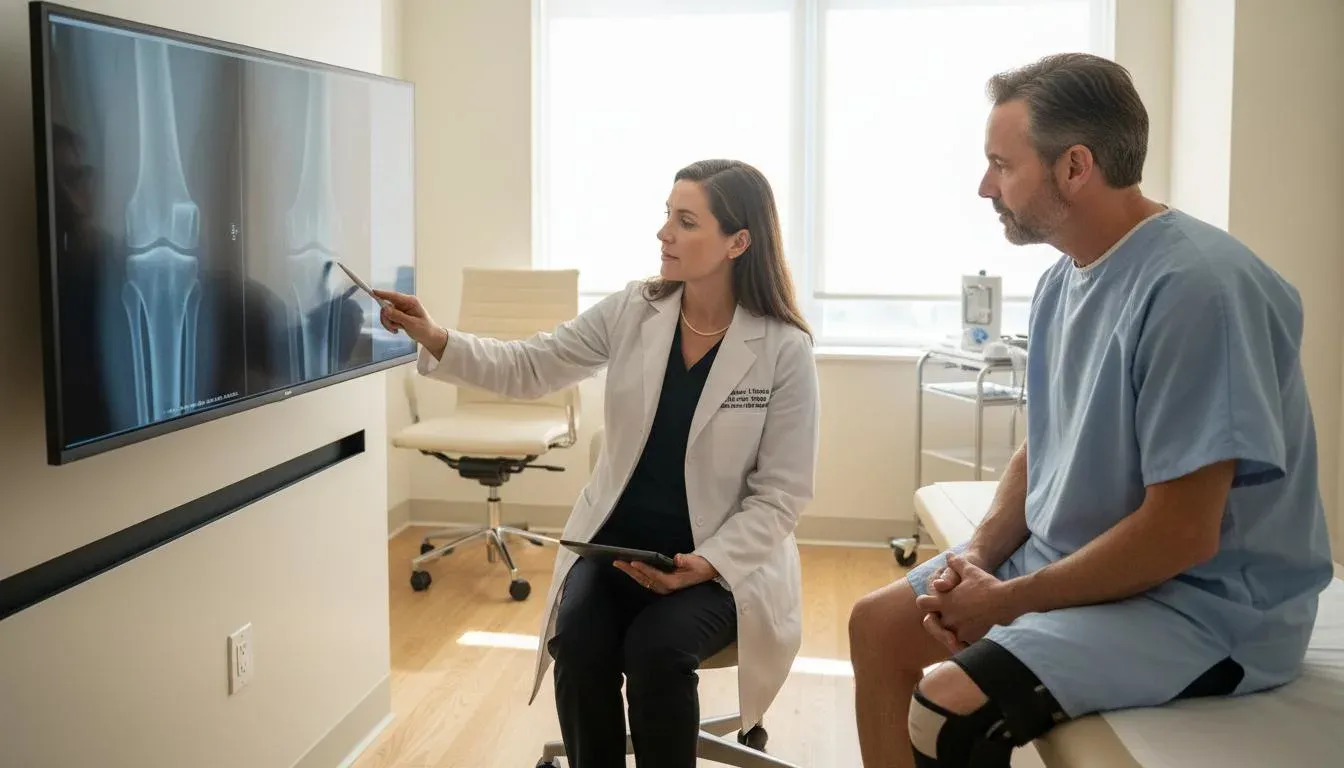


Ever felt that OpNote's "pay-per-use" model quietly eats a bigger slice of your orthopedic clinic's margins each year? Or that the moment you want a new workflow, you're stuck waiting, paying, or both? You are not alone. Many clinics realize their EMR or op note platform is less a tool and more a landlord that never lets you own. The pain points are real: ever-increasing fees, inflexible workflows, and the constant sense you are building value for someone else’s business, not your own.
So, what are the strongest OpNote alternatives? What actually fits clinics doing real volume, with real needs? Here are the top picks: Modernizing Medicine for all-in-one specialty workflows, Athenahealth or Greenway for scale, and WebPT for therapy-heavy shops. But every one rents you access. If you want out of the rent trap, a custom Devaims build puts you in the owner's seat, your system, your data, your rules.
Why orthopedic clinics look for OpNote alternatives
Per-provider and per-case fees add up fast. Many platforms start cheap but grow pricey as you add surgeons, clinics, or cases. This makes budgeting unpredictable, especially as your practice grows or you add new providers. What looks like a manageable monthly fee can balloon into a major line item. Sudden price increases are not uncommon.
Locked-in workflows frustrate fast-moving teams. Most EMRs let you customize only so much, so real-world workarounds and double entry become the norm. If your clinic innovates or adapts its care pathways, you may find yourself limited by rigid templates, slow-to-update forms, or vendor-controlled feature releases. This stifles efficiency and can even impact patient care if your team is forced to operate outside the system.
Data is hostage to the platform. Exporting case notes, images, or histories often means incomplete data or formats you cannot use elsewhere. True data portability is rare. Many clinics discover too late that they cannot get surgical images, structured op notes, or billing histories in a usable format, which complicates switching and can even create regulatory headaches.
Surprise "integration" costs. Connecting billing, PACS, or e-prescribing? That often means another monthly fee, sometimes with setup costs you did not bargain for. Integration pricing is rarely transparent. "Native" integrations may not go as deep as you expect. For example, a PACS integration might only support basic image viewing, not full DICOM manipulation or annotation.
Support that slows when you need it most. Vendor lock-in means you wait in line for fixes and new features, on their timeline, not yours. If your workflow changes or you need a new report, you may be told it is in the queue for the next major release or that it will cost extra. This lack of agility is a major reason clinics search for OpNote alternatives.
Quick comparison of the best OpNote alternatives
| Tool | Best for | Starting price | You own it? |
|---|---|---|---|
| Modernizing Medicine (Ortho) | Specialty EMR, large clinics | Reported $729/mo/provider | No, subscription |
| Nextech | Multi-location, advanced imaging | Custom quote | No, subscription |
| Kareo (Tebra) | Small practices | Reported $125/mo/provider | No, subscription |
| AdvancedMD | Integrated RCM | Reported $485/mo/provider | No, subscription |
| Athenahealth | Enterprise, cloud-based | Custom quote | No, subscription |
| ChartLogic | Dictation, surgical workflow | Reported $350/mo/provider | No, subscription |
| Greenway Health | Customizable templates | Reported $400/mo/provider | No, subscription |
| WebPT | Physical therapy | Reported $99/mo/user | No, subscription |
| Devaims | Full ownership, custom fit | One-time build, you own it | One-time build, you own it |
Always confirm current pricing before you decide. Add-ons and per-provider fees can change your total cost quickly. Also, ask about data migration, contract length, and true integration costs, as these can be significant line items over the life of your system.
The 9 best OpNote alternatives
1. Modernizing Medicine (Ortho) (Best for deep specialty features)
Modernizing Medicine’s orthopedic EMR (EMA Ortho) is tailored for high-volume, specialty-focused clinics. It stands out with its visual, touch-based interface and comprehensive orthopedic content, including pre-loaded templates for common procedures, built-in orthopedic-specific ICD-10 codes, and support for imaging workflows. Its analytics suite offers benchmarking and outcomes tracking, which is valuable for clinics seeking to optimize care and demonstrate value to payers.
Pricing: Reported $729 per provider per month. Confirm with vendor for your clinic size and needs.
- Key limitations:
- Customization is limited to vendor options and may require extra fees
- Data remains on proprietary cloud, limiting full portability
- Migration from legacy systems can be complex and time-consuming
- Strengths:
- Deep orthopedic templates and specialty content
- Visual, touch-based interface for rapid charting
- Strong analytics and benchmarking tools
Modernizing Medicine’s per-provider pricing can add up quickly as you grow. If you want to avoid these recurring costs, Devaims offers a flat-fee, own-it model with no per-user charges.
2. Nextech (Best for multi-location orthopedic clinics)
Nextech is built for multi-site orthopedic groups, combining robust EHR, practice management, imaging integration, and RCM. The platform is modular: clinics can select only the features they need, but core modules like scheduling, charting, and billing are highly interconnected. Nextech’s imaging integration is a standout, allowing for direct PACS connectivity and in-chart viewing of images and studies. The scheduling engine supports complex provider and resource allocation, which is a must for clinics running multiple operating rooms or satellite offices.
Pricing: Custom quote based on features and clinic size.
- Key limitations:
- Pricing is opaque and can be substantial as you scale
- Long contracts and onboarding timelines are common
- Custom features may require extra fees or development time
- Strengths:
- Robust imaging and scheduling integrations
- Modular platform for tailored feature selection
- Strong compliance and reporting tools
Nextech’s long contracts and scaling costs can be a challenge. With Devaims, you own your platform and can add locations or users without extra fees.
3. Kareo (Tebra) (Best for small practices and startups)
Kareo, rebranded as Tebra, is designed for smaller practices that need simplicity and affordability. The platform offers a clean, intuitive interface and rapid onboarding. Kareo’s EMR includes basic orthopedic templates and integrates with billing, scheduling, and telehealth. However, its specialty content is limited compared to larger platforms.
Pricing: Reported $125 per provider per month. Confirm with vendor for current rates.
- Key limitations:
- Limited specialty content and customization
- Data export options are basic, especially for images
- Costs rise quickly as you add providers
- Strengths:
- Affordable entry-level pricing
- Simple, intuitive interface for quick onboarding
- Integrated billing and scheduling
Kareo’s per-user pricing can become expensive as your clinic grows. Devaims lets you add users at no extra cost, supporting your growth without penalty.
4. AdvancedMD (Best for integrated RCM and EHR)
AdvancedMD targets clinics seeking a unified clinical and billing platform. It combines EHR, scheduling, billing, telemedicine, and patient engagement in one system. AdvancedMD’s customizable workflow engine lets you adapt templates and forms for orthopedic use. Its reporting and analytics tools provide detailed insights into clinical and financial performance, and the system is certified for all major compliance frameworks.
Pricing: Reported $485 per provider per month. Confirm with vendor for your requirements.
- Key limitations:
- Per-provider and per-feature pricing increases with growth
- Custom workflow changes may require vendor assistance
- Data exports may not include all custom fields or attachments
- Strengths:
- Unified clinical and billing workflows
- Customizable templates and forms
- Detailed analytics and compliance support
If you want to avoid per-feature and per-provider fees, Devaims offers a single upfront investment for full ownership and customization.
5. Athenahealth (Best for enterprise scalability)
Athenahealth is known for its cloud-based, highly scalable EMR and practice management suite. It is a favorite of enterprise clinics and health systems due to its robust integrations, regular feature updates, and compliance support. Athenahealth’s network effect allows for rapid deployment of new payer rules and regulatory updates, which can help clinics stay ahead of compliance changes.
Pricing: Custom quote, often percentage of collections or per-provider.
- Key limitations:
- High cost and complex pricing structure
- Workflow customization often requires vendor involvement
- Long contract terms and expensive exit process
- Strengths:
- Enterprise-grade scalability and integrations
- Regular updates and compliance support
- Robust analytics and reporting
With Athenahealth, costs and complexity can rise as you grow. Devaims gives you full control and predictable costs, with no contract lock-in.
6. ChartLogic (Best for surgical workflow and dictation)
ChartLogic is designed for surgical practices and offers advanced dictation, surgical scheduling, and EHR features. Its voice-to-text engine allows surgeons to dictate operative notes directly into structured templates, saving time and improving accuracy. ChartLogic’s OR scheduling is tightly integrated with documentation and billing, streamlining the entire surgical episode.
Pricing: Reported $350 per provider per month. Confirm with vendor for your needs.
- Key limitations:
- User interface is dated compared to newer platforms
- Specialty modules carry extra charges
- Data export options are basic, making switching difficult
- Strengths:
- Advanced dictation and surgical workflow tools
- Integrated OR scheduling and billing
- Voice-to-text for rapid documentation
If you want modern UI and full data control, Devaims builds your surgical workflow to your exact specs, with no extra module fees.
7. Greenway Health (Best for customizable orthopedic templates)
Greenway Health’s Intergy platform is known for its flexible template system. It allows clinics to adapt forms, flowsheets, and order sets to fit their exact orthopedic workflows, reducing double entry and manual workarounds. The system is cloud-based and supports real-time collaboration across locations. Greenway also offers built-in patient engagement tools, such as messaging, appointment reminders, and telehealth.
Pricing: Reported $400 per provider per month. Confirm with vendor for your configuration.
- Key limitations:
- Per-provider and per-location fees increase with growth
- Deep template customization may incur extra charges
- Data exports may require technical support
- Strengths:
- Highly customizable templates and workflows
- Cloud-based with real-time collaboration
- Patient engagement and telehealth features
Greenway’s fees can add up as you expand. With Devaims, you pay once for unlimited users and full customization.
8. WebPT (Best for therapy-heavy clinics)
WebPT is the leading EMR for physical and occupational therapy clinics, with a focus on documentation efficiency, compliance, and billing. Its workflows are optimized for therapy visits, including outcome tracking, therapist scheduling, and patient engagement. The platform includes built-in compliance checks to reduce audit risk, and offers robust reporting for therapy-specific metrics.
Pricing: Reported $99 per user per month. Confirm with vendor for your team size.
- Key limitations:
- Not designed for surgical workflows
- Per-user pricing increases with team size
- Advanced analytics and reporting are limited
- Strengths:
- Optimized for therapy documentation and scheduling
- Compliance checks and audit support
- Patient engagement and telehealth options
If your clinic needs both surgical and therapy workflows, Devaims can combine both in one platform, with no extra user fees.
9. Devaims (Best for owning your orthopedic workflow)
Devaims is unique: instead of renting a platform, you own it outright. Devaims builds a custom EMR and workflow platform tailored to your orthopedic clinic’s exact needs. Every template, workflow, and integration is built to your specification, and you receive the source code, no licensing or user fees. The platform can include surgical and therapy modules, imaging, billing, analytics, and any custom features your clinic requires.
- You own the code, platform, and all data
- Fully custom workflows and integrations
- No per-user, per-provider, or per-location fees
With Devaims, you control your system, your data, and your costs. There are no recurring rent fees, and your platform evolves as your clinic grows.
Other OpNote alternatives worth knowing
- Epic: Enterprise EMR, huge install base, but expensive and complex for most private orthopedic clinics. Implementation can take over a year. Epic is best for hospital-owned or very large multi-specialty practices, and its customization requires a dedicated IT team. Learn more.
- Cerner: Another hospital-scale EMR with strong data analytics, but rarely fits private orthopedic practices without significant customization and ongoing support costs. Learn more.
- DrChrono: User-friendly for general practices, mobile-optimized, and affordable, but lacks deep orthopedic templates and surgical workflows. Best for general outpatient clinics. Learn more.
- Practice Fusion: Low-cost, cloud-based, but too generic for surgical clinics and lacks imaging and advanced billing features. Suitable for non-surgical primary care. Learn more.
How to choose the right OpNote alternative
- By clinic size: Small practices may favor Kareo or WebPT for their simplicity and cost. Larger groups with complex scheduling or billing should look at Nextech, Athenahealth, or Greenway.
- By specialty: Surgery-focused clinics benefit from ChartLogic or Modernizing Medicine’s deep templates. Therapy-heavy or rehab-focused clinics get more value from WebPT. For clinics with both, only a custom solution like Devaims truly combines both workflows without extra fees.
- By integration needs: If you need deep PACS, billing, or eRx integration, scrutinize what is included natively versus what is an add-on. Ask vendors for real-world examples and references. Consider the cost and timeline for integrating with your exact imaging or billing vendors.
- By budget: Calculate all-in costs, including per-provider, per-location, and per-case fees, plus add-ons and data migration. Do not forget about contract minimums and the cost of switching (staff retraining, downtime, data mapping).
- By ownership mindset: If you want to stop renting and start owning, only a custom build like Devaims delivers true control, unlimited users, and the ability to evolve your system on your own terms.
Still on the fence about renting versus owning? The next section breaks down the math and the long-term impact for orthopedic clinics.
Stop paying rent on software you could own
The core pain with OpNote and every alternative above? You rent access, forever. Add more surgeons, more cases, or more clinics, and your monthly bill jumps. Want a workflow change or custom report? Wait in line, pay more, or both. Even your data stays hostage if you ever want to leave. But when you build with Devaims, you step off that treadmill and into true ownership.
Devaims is a custom software partner for orthopedic clinics that want their workflow, not the vendor's. You own the code, the platform, and every integration. It is built to your exact needs, from templated op notes to deep imaging and billing, and you keep everything.
- No per-provider or per-location fees: Add users, clinics, cases, your cost stays flat. This makes financial planning predictable and supports growth without penalty.
- Full workflow, your way: Every field, report, and integration is custom, not boxed in. Your system can evolve with your practice, not the other way around.
- Your data, always: Export, migrate, or build new features without permission or extra cost. You have full access to all structured and unstructured data, including images and attachments.
- No contract lock-in: You own the code and can switch vendors or support at any time. There is no risk of forced upgrades or price hikes.
| Tool | Ownership | Per-provider fees | Custom workflows |
|---|---|---|---|
| Modernizing Medicine | No, subscription | Yes | Limited, extra cost |
| Nextech | No, subscription | Yes | Limited, extra cost |
| Greenway Health | No, subscription | Yes | Some, extra cost |
| Devaims | Yes, you own it | No | Fully custom, yours |
| Year | Rented cumulative | Owned (Devaims) cumulative |
|---|---|---|
| 1 | $48,000 | $30,100 |
| 2 | $96,000 | $32,700 |
| 3 | $144,000 | $35,300 |
| 4 | $192,000 | $37,900 |
| 5 | $240,000 | $40,500 (now ahead) |
For a 4-provider orthopedic clinic (typical $1,000/month total for rented EMR plus billing and imaging add-ons), you will pay roughly $240,000 over 5 years and still own nothing. A custom Devaims build runs around $27,500 upfront and $2,600/year for maintenance. By year 2, you are close to even; by year 5, you are far ahead, with a platform that's all yours. This is the math that changes the rent-versus-own equation for clinics ready to grow.
It is important to note that the cost advantage of ownership grows with your clinic. As you add providers, locations, or new service lines (such as physical therapy or imaging), the marginal cost with a custom platform remains near zero, while rental fees rise exponentially. Ownership also future-proofs your practice against vendor-driven changes or discontinuation of features you rely on.
How to switch from OpNote
- Export all patient, case, and billing data from OpNote (in the most complete format available). Request structured exports (CSV, XML) wherever possible, and ensure you receive all attached documents, images, and scanned forms.
- Choose your new platform and confirm all required integrations (imaging, billing, eRx). Work with your new vendor to map out a migration plan, including timelines and responsibilities.
- Import data into the new system, checking for format and completeness. Test that all critical fields (procedure notes, surgical images, billing codes) are present and correctly mapped.
- Reconnect payment, scheduling, and external integrations. Ensure all workflows function end-to-end before going live.
- Train your staff on the new workflows and templates. Provide hands-on sessions and quick-reference guides to minimize disruption.
- Test in parallel with your current system to ensure no data or workflow loss. Run both systems for a short period if possible to identify and fix gaps.
- Review and close out your OpNote contract, ensuring no data is left behind. Confirm with OpNote that your account is closed, and request written confirmation that all data has been transferred or deleted as required.
With a custom Devaims build, the migration is handled as part of the project, with a dedicated team ensuring completeness and minimal downtime. You retain full control of your data and can request custom reports or exports at any time.
Frequently asked questions
What is the best OpNote alternative for large orthopedic clinics?
Modernizing Medicine and Athenahealth are top choices for large, multi-specialty orthopedic groups. Both offer advanced features, deep analytics, and strong integrations. However, both also keep you in a subscription model, with costs scaling as you add providers or service lines. For clinics seeking to break out of the rent cycle and own their system, only a custom Devaims build gives you full control, unlimited users, and the ability to evolve your workflows on your own timeline.
What is the cheapest OpNote alternative?
Kareo (Tebra) and WebPT are the most affordable options for small clinics, with entry-level pricing under $150 per provider per month. However, as your clinic grows, these costs rise quickly due to per-user fees. Over five years, even "cheap" platforms can cost 2 to 3 times more than owning. Devaims’ custom build model means you pay once and save year after year, especially as your staff or locations expand.
Is there a free OpNote alternative?
No fully-featured, free orthopedic EMR exists with surgical workflow at OpNote’s level. Some open-source projects, like OpenEMR, offer a starting point but require significant customization, technical expertise, and ongoing support. For clinics without in-house IT, the cost and risk can outweigh any savings. Paid platforms or a custom build are the only realistic options for reliability, compliance, and support.
Which OpNote alternative is best for physical therapy clinics?
WebPT is the market leader for therapy-centric practices, offering streamlined documentation, therapist scheduling, and outcome tracking. If your clinic needs both surgical and therapy workflows, consider a custom Devaims build, which can combine both in one platform, no extra user fees, and all data stays under your control.
When should my clinic switch from OpNote?
If OpNote’s per-case or per-provider fees are climbing, or your workflows no longer fit the platform, it is time to evaluate alternatives. The switch pays off fastest when you are growing, adding new services, or need integrations that rented platforms cannot deliver. Many clinics make the move when their five-year rent total equals or exceeds the cost of full ownership. Also, consider switching if you are facing regulatory changes or need custom reports not supported by your current vendor.
Can I keep my OpNote data when switching?
You can export most data, but the format and completeness depend on your OpNote subscription and the vendor’s export policies. Always request a full data export before canceling, and verify that all notes, images, and attachments are included. With a Devaims build, you have full access to all data, in any format you choose, at any time, no restrictions or extra fees.
Where does Devaims fit among OpNote alternatives?
Devaims is the only true own-it option among OpNote alternatives. Every other platform rents you access and controls your data, workflows, and upgrade cycles. If you want a system built to your exact needs, with unlimited users and no ongoing rent, Devaims is the only provider that hands you the source code and the keys. You control your data, your costs, and your future.
The bottom line
Modernizing Medicine, Kareo, Greenway, and others are strong OpNote alternatives, but every one rents you access. The decision line is simple: if your five-year rent bill would buy you full ownership, renting stops making sense. Add up your numbers, and decide if it is time to keep what you pay for.
If you are tired of per-provider fees, locked templates, and owning nothing at the end, it may be time to build your own. With Devaims, you get a system that fits your clinic, is yours forever, and never charges you rent for your own data or workflows. The future of orthopedic clinic software is ownership, and it is within reach.
See more insights on the Devaims blog, and explore related posts like Modernizing Medicine alternatives, Nextech alternatives, and WebPT alternatives.